

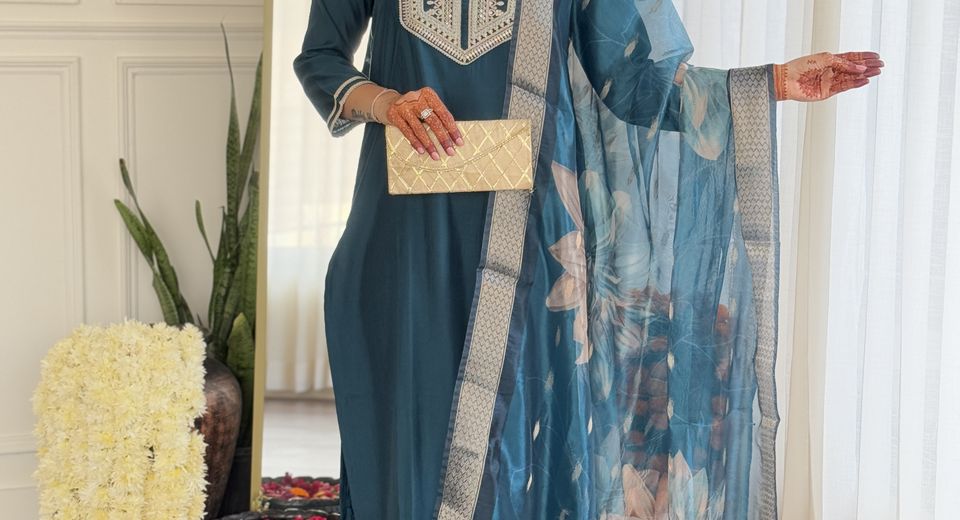
Choosing the Best Fabrics for Salwar Suits in winter depends on more than colour or embroidery. The right salwar suit should keep enough warmth for your climate, allow comfortable movement, and layer neatly without making the kurta look bulky. Rayon, wool blends, velvet, silk blends, heavier cotton and quilted fabrics each solve a different winter-dressing problem. A cool Delhi morning, a damp Bengaluru evening and a mild Mumbai night don't need the same fabric choice.
Fabric weight, weave, fit and lining work together. A medium-weight rayon suit with a full-sleeved kurta can feel warmer than a thin wool-blend garment with an open neckline. A silk-blend dupatta can add useful wind protection, while a loosely woven Chanderi layer may look festive but offer little insulation by itself. This guide explains how to select, combine and care for winter salwar suits without sacrificing the movement and polish expected from Indian ethnic wear.
What makes a fabric suitable for a winter salwar suit?
A winter-suitable salwar suit combines moderate thickness, close weave, comfortable coverage and enough breathability for indoor wear. The best option should also suit the humidity and temperature range of the place where it will be worn.
Thickness alone doesn't guarantee warmth. A dense fabric traps more still air between its fibres, while a close weave slows the movement of cold air through the garment. A brushed or textured surface can feel warmer against the skin than a smooth, lightweight surface. Lining matters too: cotton lining improves comfort, while polyester lining can reduce wind penetration but may feel less breathable.
Look for full or three-quarter sleeves, a neckline that can accommodate a base layer, and a kurta length that covers the upper hip. A straight suit with side slits may feel less restrictive over thermal leggings. Anarkali silhouettes can provide more fabric around the legs, but a very wide flare may be inconvenient under a long coat. Dupatta size also matters because a broad, opaque dupatta provides more practical coverage than a narrow decorative one.
Best Fabrics for Salwar Suits in winter by warmth and use
The Best Fabrics for Salwar Suits in winter include rayon, wool blends, velvet, silk blends, heavier cotton and lined synthetic blends, but each fabric performs differently in real wardrobes.
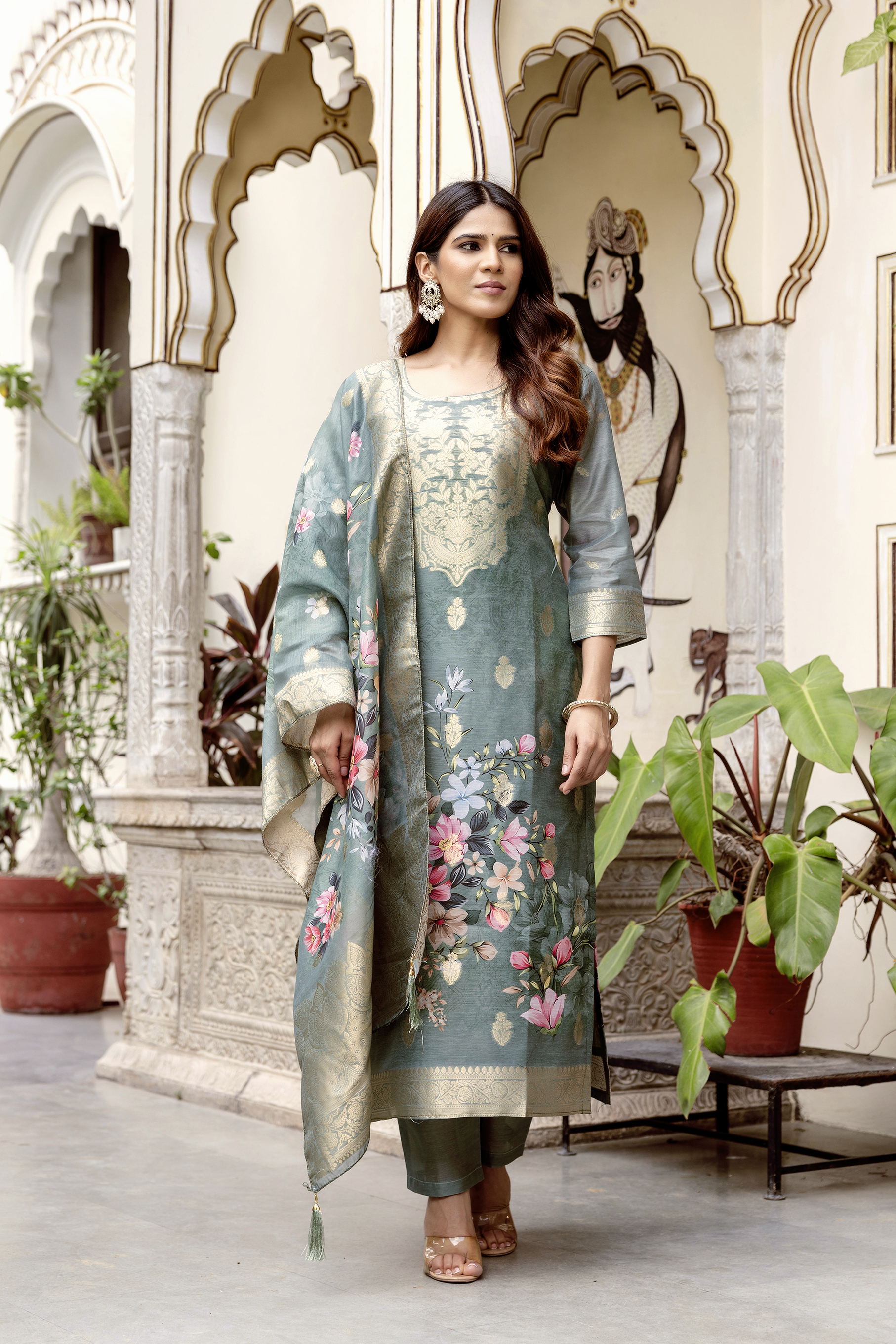
Rayon for soft, medium warmth
Rayon is a comfortable choice for mild to moderate winter because its fluid drape, smooth surface and medium weight make it easy to layer. Rayon doesn't provide the insulation of wool or velvet, but a dense rayon weave works well with a thermal camisole, cardigan or shawl.
Rayon suits are especially useful in cities where daytime temperatures rise and indoor spaces are not heated. Teal Rayon Threadwork Salwar Suit and Pista Green Rayon Threadwork Salwar Suit illustrate how a flowing rayon base can support threadwork without becoming stiff. Check the garment measurements carefully because rayon can drape close to the body; a little ease is helpful when wearing a warm inner layer.
Wool blends for colder mornings
Wool-blend fabric is one of the warmest practical choices for a salwar suit because wool fibres trap air and regulate temperature better than many purely synthetic materials. Blending wool with polyester, acrylic or rayon can reduce itchiness, improve durability and make pressing easier.
Wool blends suit northern Indian winters, early-morning commutes and outdoor functions. Inspect the fibre composition rather than relying on the word "wool" in a product description. A low percentage of wool may provide softness but limited insulation, while a heavier blend may require a roomier fit. Wear a breathable cotton or modal inner layer if wool feels scratchy around the neck and arms.
Velvet for evening and festive wear
Velvet is a strong winter choice for evening functions because its dense pile blocks some airflow and gives the garment a warm hand feel. Velvet also supports rich jewel tones and formal embroidery, making it suitable for receptions, winter weddings and festive dinners.
Velvet requires careful fitting because its thickness can add visual volume at the sleeves, shoulder and waist. A velvet kurta paired with a lighter trouser or churidar creates balance. Avoid folding velvet pile against a rough surface, and never press the right side directly with a hot iron; steam from a distance or use professional cleaning when the care label requires it.
Silk blends for polished warmth
Silk-blend fabric offers moderate warmth, a smooth fall and a dressier finish than everyday cotton. Silk itself isn't a substitute for a thermal layer in severe cold, but its low heat conductivity and dense construction can make a silk-blend suit comfortable for indoor celebrations.
White Embroidered Salwar Suit with Orange Silk-Blend Dupatta demonstrates how a silk-blend dupatta can add colour, sheen and an extra layer around the shoulders. Use silk blends for festive lunches, family gatherings and venues where you'll move between cool outdoor air and warm indoor rooms. Keep perfume, deodorant and oily skincare away from silk surfaces because marks can become difficult to remove.
Heavier cotton for breathable daytime layering
Heavy cotton is useful in dry, mild winter weather because it breathes well and feels comfortable against the skin. Cotton flannel, brushed cotton, cotton satin and tightly woven cotton offer more cold protection than very thin voile or lawn.
Cotton doesn't dry quickly in damp weather, so it may feel chilly in coastal or rainy conditions. Pair a heavier cotton kurta with a woollen shawl, quilted jacket or lined waistcoat. Woven Chanderi Cotton Readymade Salwar Suit may work for a mild winter day when layered thoughtfully, but Chanderi cotton alone should not be treated as a cold-climate insulating fabric.
How do rayon, Chanderi and organza compare in winter?
Rayon is the most practical of the three for everyday winter wear, Chanderi is better for breathable festive layering, and organza is primarily a decorative dupatta fabric rather than a warm base fabric.
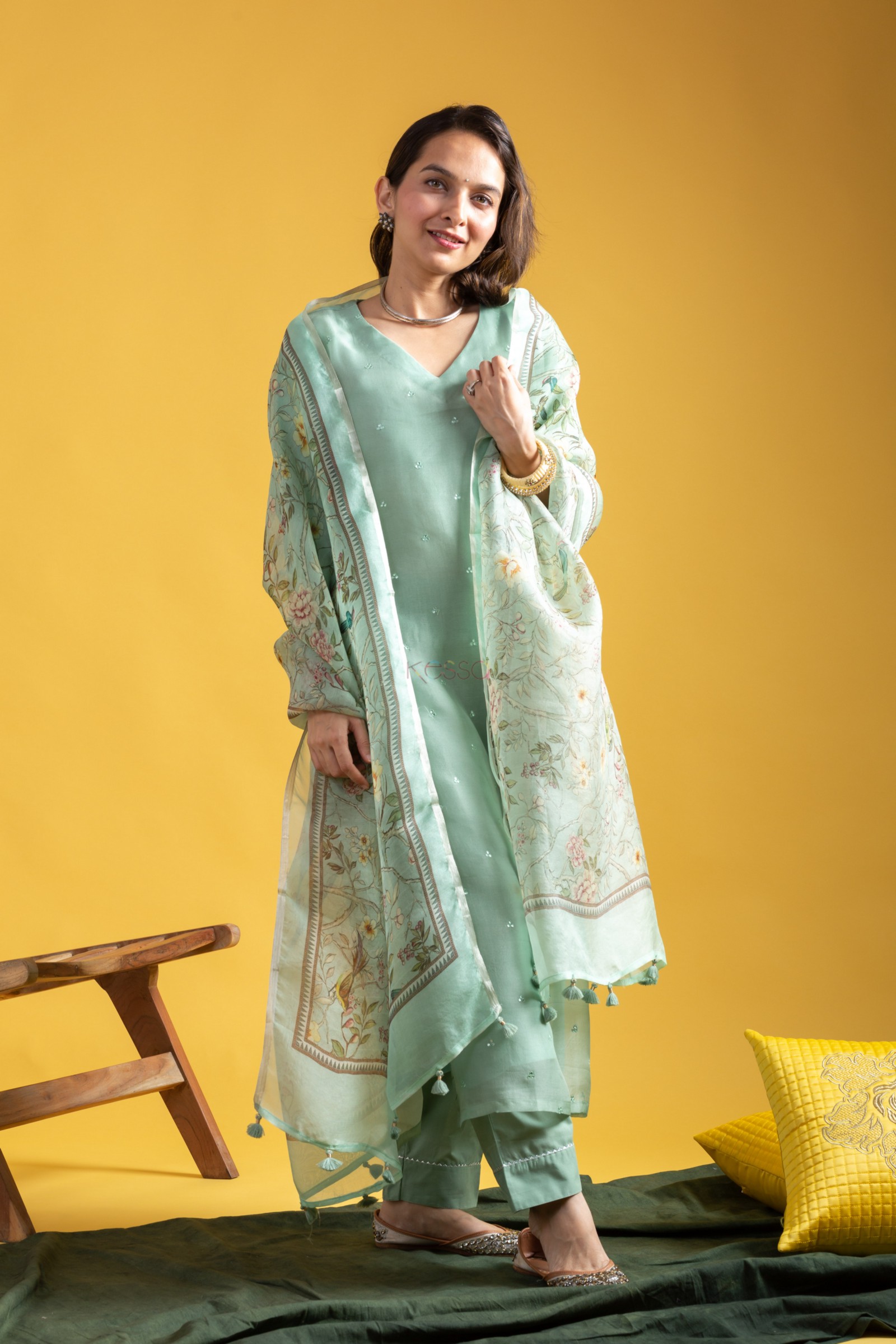
Rayon has a fluid fall and usually gives more coverage than a very sheer weave. Chanderi, including Chanderi silk and Chanderi cotton, is lightweight, crisp and breathable, making it comfortable when winter temperatures are mild. Chanderi isn't inherently warm; its value lies in polish and easy layering.
Organza is sheer, crisp and lightweight, so it adds visual structure rather than meaningful insulation. Threadwork Salwar Suit with Pure Organza Dupatta can be attractive for a daytime event, but the organza dupatta should be supplemented with a wool shawl, stole or jacket when the temperature drops. A dupatta's fibre content and density are more important for warmth than embroidery alone.
Elegant White Chanderi Threadwork Suit with Dupatta is suited to a layered winter wardrobe in places with gentle daytime cold. A fitted knit cardigan worn over the kurta or a warm stole placed under the dupatta can improve comfort without hiding the embroidery. Avoid assuming that a festive finish means a garment is winter-weight.
How should you choose a winter salwar suit for your climate?
Choose fabric according to your lowest expected temperature, humidity, time outdoors and access to indoor heating rather than choosing one universal winter material.
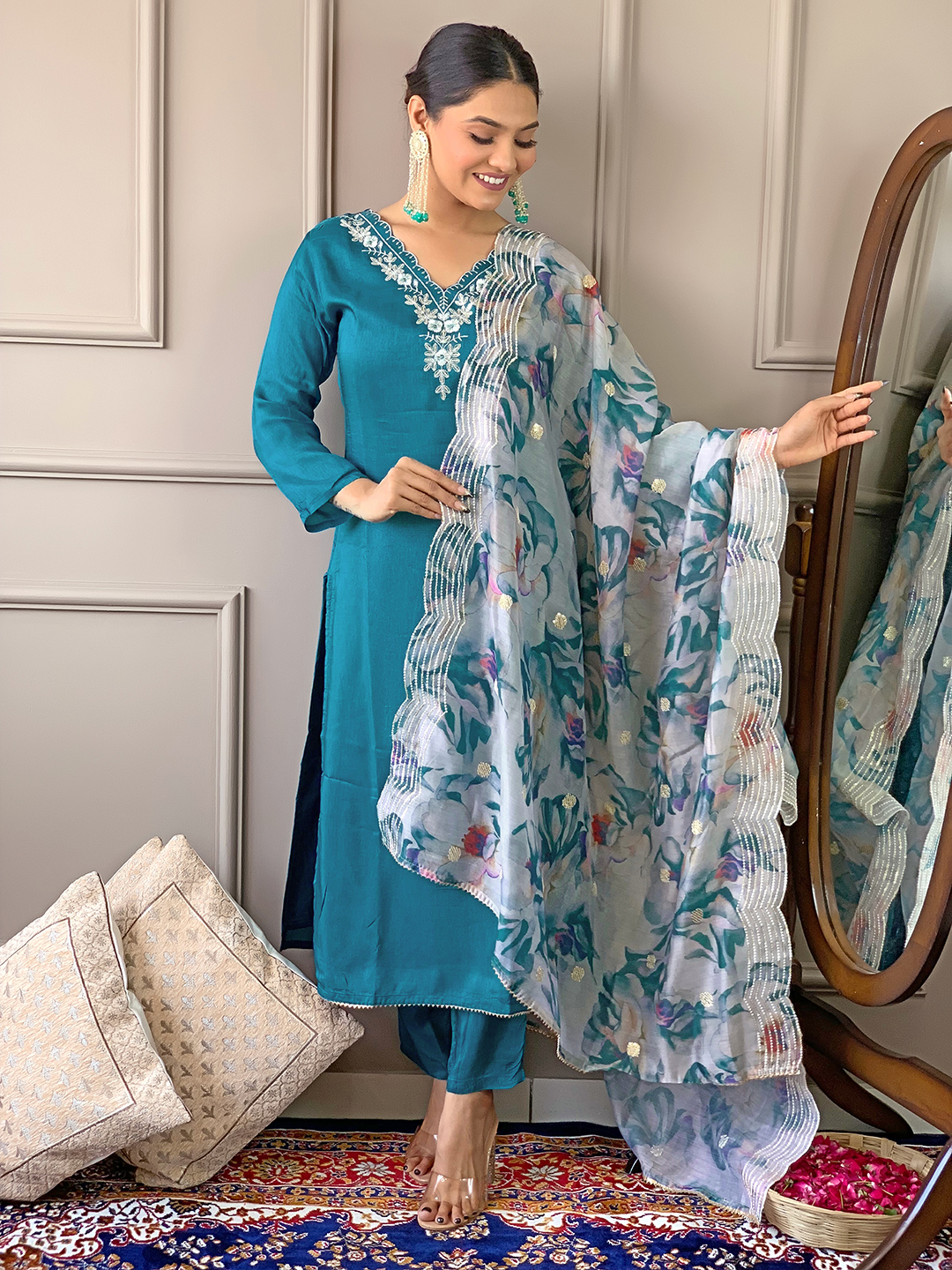
North Indian cold and dry weather
Delhi, Chandigarh, Jaipur, Lucknow and parts of Punjab can have cold mornings and evenings, so wool blends, velvet, quilted cotton and lined rayon are dependable choices. Select full sleeves, a higher neckline and a substantial dupatta for outdoor travel. A thermal top, wool socks and closed footwear often improve warmth more effectively than choosing a heavily embellished kurta.
Cool but moderate western and central winters
Mumbai, Pune, Ahmedabad, Indore and similar climates usually suit medium-weight rayon, silk blends, heavier cotton and Chanderi with a warm outer layer. A removable jacket or shawl is useful because afternoons may feel comfortable while evening temperatures fall. Avoid very heavy velvet unless the event is outdoors or held in a strongly air-conditioned venue.
Southern and coastal winter conditions
Bengaluru, Hyderabad, Chennai and coastal regions generally call for breathable layers rather than maximum insulation. Rayon, cotton blends and silk blends can work well, while a light wool stole handles cooler mornings. In humid weather, choose fabrics that dry reasonably quickly and avoid wearing multiple non-breathable synthetic layers close to the skin.
How can you layer a salwar suit without looking bulky?
Layer a salwar suit in thin, coordinated pieces, beginning with a close-fitting breathable base and adding warmth only where the weather requires it.
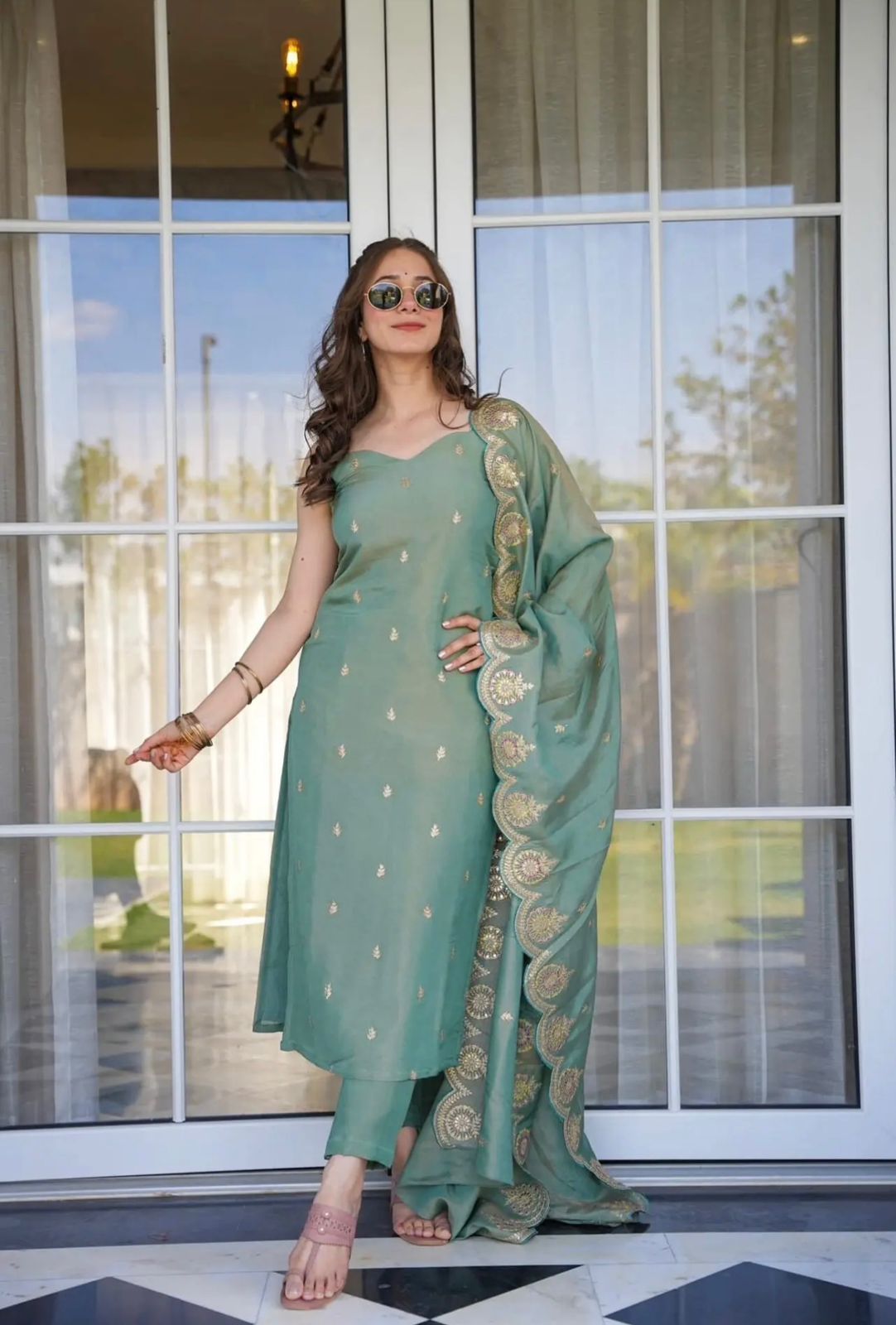
- Start with the base layer: Wear a cotton, modal or lightweight thermal camisole under the kurta. Choose a neckline that stays hidden and sleeves that don't bunch beneath the kurta.
- Allow movement: Add approximately 2.5 to 5 centimetres of ease around the chest and upper arm if a long-sleeved inner layer will be worn. Tight layers trap sweat and restrict movement.
- Use the dupatta strategically: Drape a dense silk-blend, wool or jacquard dupatta around the shoulders and upper chest. A long, narrow wrap can provide warmth without adding volume at the waist.
- Add one visible outer layer: A cropped jacket, longline cardigan, shawl or sleeveless waistcoat usually looks more intentional than several thin pieces. Match the outer layer to one colour in the embroidery for a composed finish.
- Balance the bottom: Straight trousers or churidars fit more easily beneath a long coat than a very voluminous salwar. Palazzo trousers can work with a shorter jacket, but bulky fabric at both the upper and lower body may feel cumbersome.
Embroidered Salwar Suit Set for Women can be styled for winter by keeping the embroidery visible and adding warmth through a plain shawl or tailored jacket. Off White Threadwork Salwar Suit with Green Jacquard Dupatta already brings a denser-looking dupatta layer, so a neutral inner layer can provide warmth without competing with the green jacquard.
What should you check before buying a winter salwar suit?
Check fibre composition, fabric weight, lining, measurements, sleeve construction, transparency and care instructions before buying a winter salwar suit.
- Fibre composition: Identify whether the garment contains rayon, wool, cotton, silk, polyester or a blend. Fibre names provide more useful information than labels such as "premium" or "winter collection."
- Fabric density: Hold the fabric against light if possible. A very transparent base may need a lining or an additional inner layer.
- Lining: A lined kurta can block drafts, but synthetic lining may feel warm and clammy in humid climates. Cotton lining usually feels more comfortable for long wear.
- Garment measurements: Compare bust, waist, hip, sleeve and kurta-length measurements with a garment you already own. Ready-to-wear sizing varies between cuts.
- Seams and embroidery: Dense threadwork can make a fabric less flexible. Check whether the armhole and side seams allow comfortable sitting and reaching.
- Care requirements: Dry-clean-only velvet, silk blends and heavily embroidered pieces need more maintenance than washable rayon or cotton blends.
For shoppers comparing seasonal wardrobes, Ladies Dress Anarkali Salwar Suits may offer fuller coverage through the flare, while Dress Materials allow a tailor to add lining, sleeve length and a slightly looser winter fit. Discount labels such as Salwar Suits with 30% Off, Salwar Suits Flat 40% Off and Salwar Suits On Sale should not replace checking fabric details and measurements.
How should winter salwar suit fabrics be washed and stored?
Wash and store winter salwar suits according to fibre, embellishment and lining, and keep every garment completely dry before storage.
Wash rayon in cool water on a gentle cycle or by hand when the care label permits, then reshape it while damp and dry it away from direct, harsh sunlight. Rayon can shrink, lose shape or develop surface distortion when exposed to hot water and aggressive wringing. Heavy cotton generally tolerates more washing, but embroidery still benefits from a laundry bag and low agitation.
Silk blends, velvet, heavily embroidered suits and garments with zari should usually follow the stated dry-cleaning instructions. Zari can tarnish when exposed to moisture, perfume or chemical residue. Do not iron directly over metallic thread; place a pressing cloth between the iron and the garment and use the lowest suitable temperature.
Store winter suits clean and fully dry, preferably on padded hangers for structured pieces and folded with acid-free tissue for heavy embroidery. Do not compress velvet under dense stacks because the pile can flatten. Leave space between garments, use breathable cotton covers and inspect stored clothing every few months for moisture, odour or insect damage.
Which fabric gives the best balance of warmth and everyday wear?
For most Indian winter wardrobes, a medium-weight rayon or cotton blend gives the best balance of comfort, movement and easy layering, while wool blends and velvet are better for colder or more formal settings.
Choose rayon for versatile office-to-evening dressing, wool blends for genuinely cold climates, velvet for formal winter nights, silk blends for polished celebrations and heavier cotton for breathable daytime use. Treat Chanderi and organza as elegant layering or occasion fabrics rather than automatic warmth solutions.
The most useful winter salwar suit is the one that matches the weather you'll actually face. A well-fitting kurta, a breathable base layer and a carefully chosen shawl can make a medium-weight suit more wearable than an overly heavy garment that restricts movement. Fabric knowledge lets you build a smaller, more comfortable wardrobe without confusing decoration with insulation.
Common Questions About Choosing Winter Salwar Suit Fabrics
Which fabric is warmest for salwar suits in winter?
A wool blend is generally the warmest practical fabric for a salwar suit, followed by velvet and heavier lined fabrics. Rayon and silk blends provide moderate warmth and work better for mild winters or layered outfits.
Is rayon suitable for winter salwar suits?
Rayon is suitable for mild to moderate winter because it drapes well and layers comfortably. Rayon needs a thermal inner, cardigan or shawl in cold northern weather because it is not as insulating as wool or velvet.
Are Chanderi salwar suits warm enough for winter?
Chanderi salwar suits can work in mild winter when paired with a warm inner layer, jacket or shawl. Chanderi is lightweight and breathable, but it should not be considered a high-insulation fabric by itself.
Can organza dupattas keep you warm?
Organza dupattas provide very little warmth because organza is sheer and lightweight. Use an organza dupatta for its crisp festive appearance, then add a wool, silk-blend or jacquard stole when warmth is needed.
How can I wear a salwar suit in winter without looking bulky?
Wear one thin breathable base layer, select a salwar suit with modest ease, and add one structured outer layer such as a shawl, jacket or waistcoat. Coordinating the outer layer with an embroidery colour keeps the outfit visually streamlined.
How should embroidered salwar suits be washed in winter?
Follow the care label and dry the garment completely before storing it. Rayon can often be gently hand-washed, while velvet, silk blends, zari and heavily embroidered suits commonly need careful professional cleaning.





