The best cotton sarees for summer are not defined by one weave, colour or price point. A saree that feels comfortable in dry Delhi heat may behave differently in humid Kolkata weather because fibre blend, yarn density, finish and border weight all affect airflow and drape. The right purchase should match your climate, commute, workday and preferred level of ironing.
This guide explains how to read a cotton saree description, compare cotton with linen-cotton and cotton-silk, select useful colours and prints, and care for the garment after repeated summer wear. The aim is a saree that remains practical beyond one photograph or occasion.
Best cotton sarees for summer: Why does cotton work in hot weather?
Cotton sarees suit hot weather because cotton fibres absorb moisture and usually feel less clingy than many synthetic fabrics. A breathable weave allows air movement, while a lightweight construction reduces the amount of fabric pressing against the body.
Comfort still depends on construction. A tightly woven cotton saree can feel warmer than a light, open-weave cotton saree. Heavy zari borders, dense embroidery and several layers of lining can also reduce ventilation. A soft cotton saree with a narrow border is often more useful for commuting than a stiff ceremonial saree labelled only as cotton.
Humidity changes the buying decision. In a humid city, a fabric that doesn't cling and can be aired easily is valuable. In a dry, hot climate, a loose drape and breathable weave may matter more than quick drying. Cotton-linen blends can feel airy, but linen often has a more textured and crisp hand-feel than familiar cotton.
Moisture absorption isn't the same as instant drying. Cotton can hold perspiration, so a worn saree should be aired promptly rather than folded into a cupboard. A summer saree feels comfortable during wear only when the weave, weight and after-wear care work together.
Best cotton sarees for summer: How do cotton, linen-cotton and cotton-silk compare?
Cotton, linen-cotton and cotton-silk differ mainly in breathability, texture, fall, sheen and maintenance.
Pure or predominantly cotton sarees
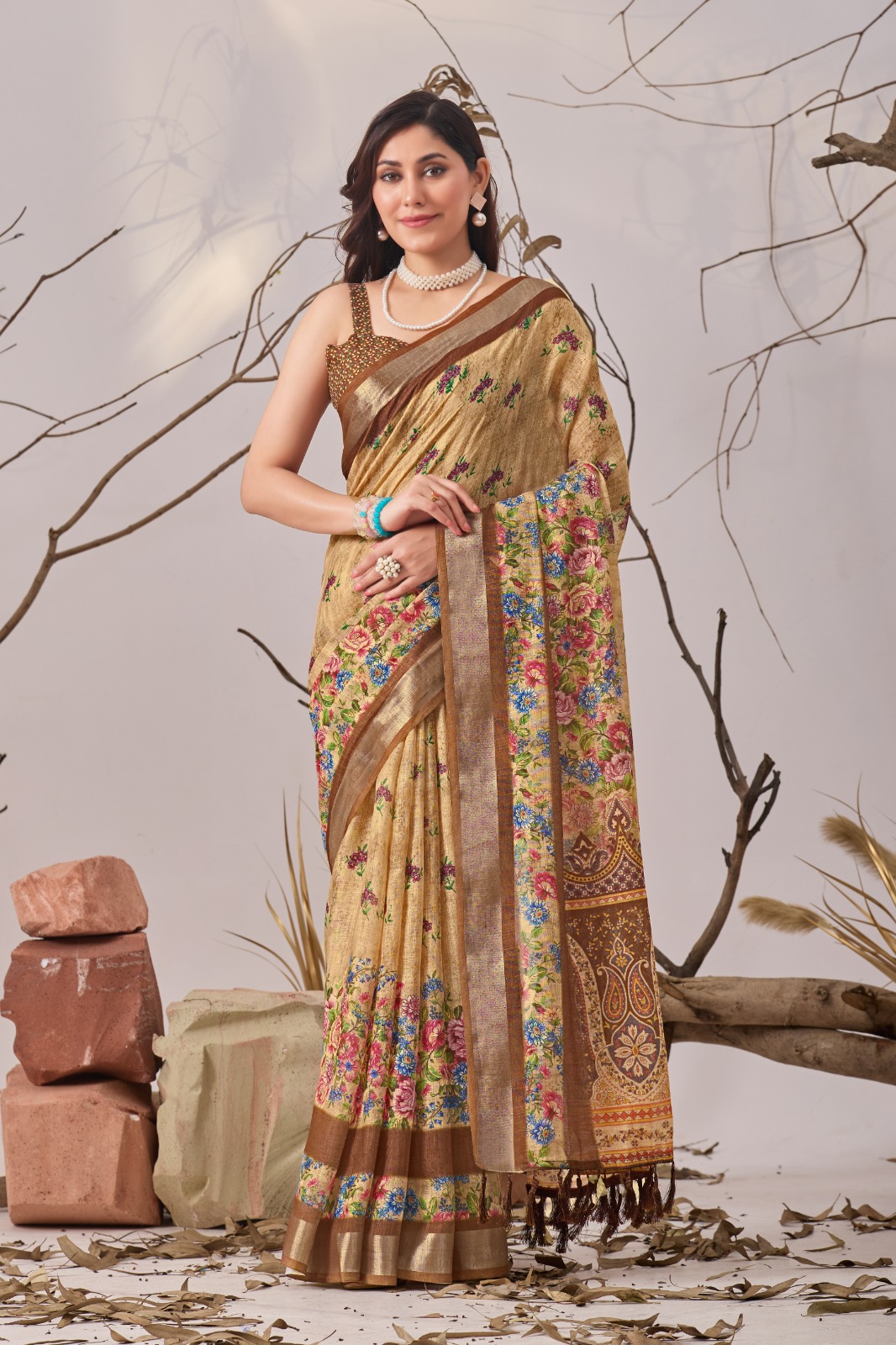
Predominantly cotton sarees usually provide a familiar matte or softly textured summer feel. Cotton absorbs moisture and works well for office hours, household routines and daytime travel. Cotton can crease around the waist and pleats, so pressing the saree before wearing improves the finish.
A printed cotton saree is often a practical first purchase because a small print can make minor creasing less noticeable. Soft Cotton Taupe Brown Floral Saree With Border illustrates an useful everyday formula: a gentle floral surface, a grounded neutral colour and a defined border. A border gives visual structure without requiring sequins or heavy embellishment.
Linen-cotton sarees
Linen-cotton sarees generally provide a dry, textured hand-feel and a crisper fall than ordinary cotton. The precise comfort level depends on the cotton-to-linen ratio and finishing process. Linen-cotton can crease visibly, but those creases are part of the fabric character rather than automatic evidence of poor quality.
Beige Kalamkari Printed Linen Cotton Saree Online demonstrates how a breathable-looking blend can carry a detailed surface design without sequins. Brown Digital Printed Linen Cotton Patola Saree Online takes a stronger, pattern-led approach that can make a simple blouse feel intentional. Peach Linen Cotton Printed Saree for Women Online shows why soft warm colours are useful in a summer wardrobe: the colour looks light while remaining more distinctive than plain white.
Cotton-silk sarees
Cotton-silk sarees combine cotton's relative ease with silk's smoother surface and subtle sheen, but cotton-silk isn't always as airy as lightweight pure cotton. Cotton-silk works well for a meeting, dinner or small celebration when you want polish without the weight of a formal Banarasi silk or Kanjeevaram saree.
Beige Grace Cotton Silk Saree for Daily Wear is an useful transitional option because beige coordinates with several blouse colours and the cotton-silk category gives the outfit a more dressed-up finish. Check the care label before washing cotton-silk, because silk content and surface finishing can make colour bleeding or rough handling more noticeable.
Best cotton sarees for summer: What should you check before buying?
Before buying a summer cotton saree, check the fibre composition, approximate weight, transparency, border construction, blouse piece and care instructions.
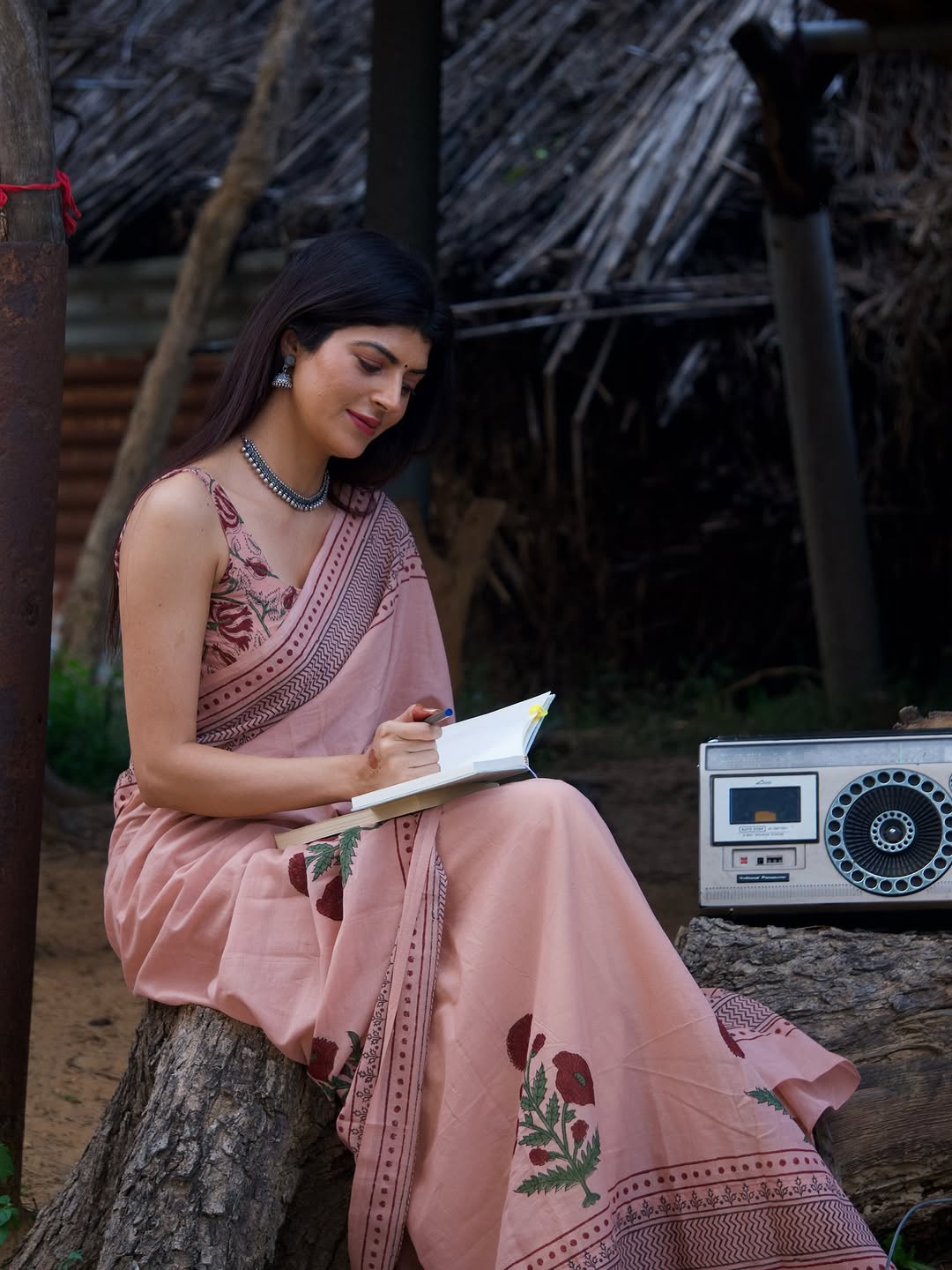
- Fibre composition: Confirm whether the saree is cotton, cotton-linen, cotton-silk or a mixed fibre. A description such as "cotton feel" isn't the same as a stated fibre composition.
- Weight and fall: A lightweight saree is easier to wear in hot weather, but an extremely light saree may need a well-fitted blouse and suitable petticoat for secure draping.
- Transparency: Pale pink, cream, ivory and beige can be slightly translucent under strong light. A well-matched petticoat creates a cleaner finish.
- Border weight: A broad zari or embellished border adds visual impact but can pull the saree down and make pleats less comfortable during a long day.
- Print scale: Small florals look understated and disguise light creasing. Large digital motifs create a stronger focal point and usually work best with a plain blouse.
- Blouse provision: Confirm whether a blouse piece is included and whether its colour suits the intended styling. A coordinated blouse can reduce alteration time.
- Care instructions: Read whether the saree requires hand washing, cold water, mild detergent or dry cleaning. A fabric should fit your real laundry routine.
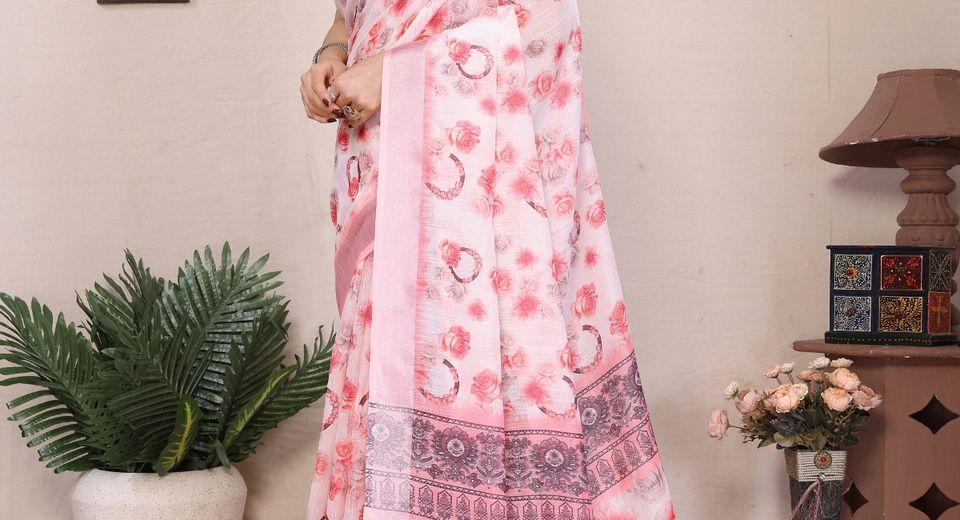
Elegant Pink Floral Cotton Designer Saree with Blouse is useful when coordinated dressing matters because the included blouse provision can simplify first wear. Pink Floral Cotton Linen Printed Saree offers another floral, breathable-looking direction that can move from daytime errands to a relaxed lunch.
Price should be judged alongside construction. A lower-priced saree may be excellent for frequent use if the print, weave and care requirements suit your routine. A more expensive saree may not be practical if a heavy border, delicate finish or complicated wash instruction discourages regular wear.
Best cotton sarees for summer: Which colours and prints are most practical?
The most practical summer colours are colours that reflect light, coordinate with existing blouses and suit the amount of maintenance you can manage. Cream, ivory, beige, peach, powder pink, pale blue, sage and soft yellow generally create a lighter visual impression. Brown, indigo and charcoal are more forgiving of everyday marks.
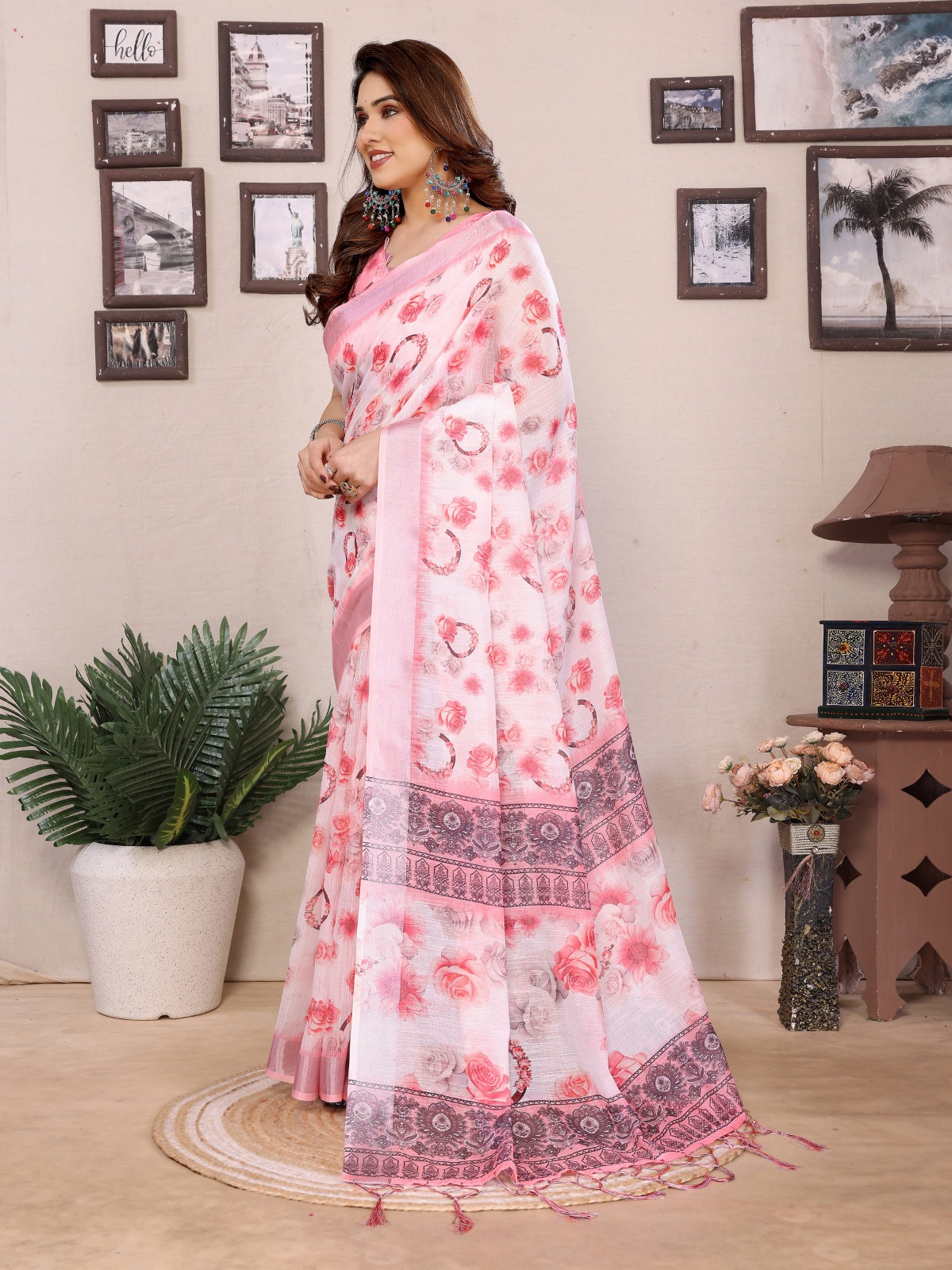
Colour doesn't determine physical temperature by itself. A dark cotton saree can remain comfortable when the weave is breathable, while a pale saree can feel unpleasant when the fabric is dense, lined or heavily embellished. Choose the fabric first, then use colour to solve styling and maintenance needs.
Floral prints are practical for summer because floral motifs soften the appearance of creasing and don't require elaborate jewellery. Kalamkari-inspired motifs bring an artisanal appearance to linen-cotton. Geometric and Patola-inspired patterns create definition with a plain blouse. A narrow printed border is easier to manage than a heavy border when you walk, travel or sit for several hours.
For a light wardrobe palette, White Silk Sarees in Cream Ivory and Off White gives useful colour references even when you're shopping for cotton. Cream and ivory blouses can accompany beige, peach and pastel sarees. A muted brown blouse can anchor a floral print without making the outfit feel visually heavy.
When buying a very pale saree, consider cosmetics, food stains and transport conditions. A pale cotton saree may need more careful washing than a medium-toned printed saree. A small floral print or darker border can make everyday maintenance less stressful without sacrificing a summer appearance.
Best cotton sarees for summer: How can you style one for different days?
You can style one summer cotton saree for office, travel and celebrations by changing the blouse structure, footwear, pleat width and accessories rather than replacing the entire wardrobe.
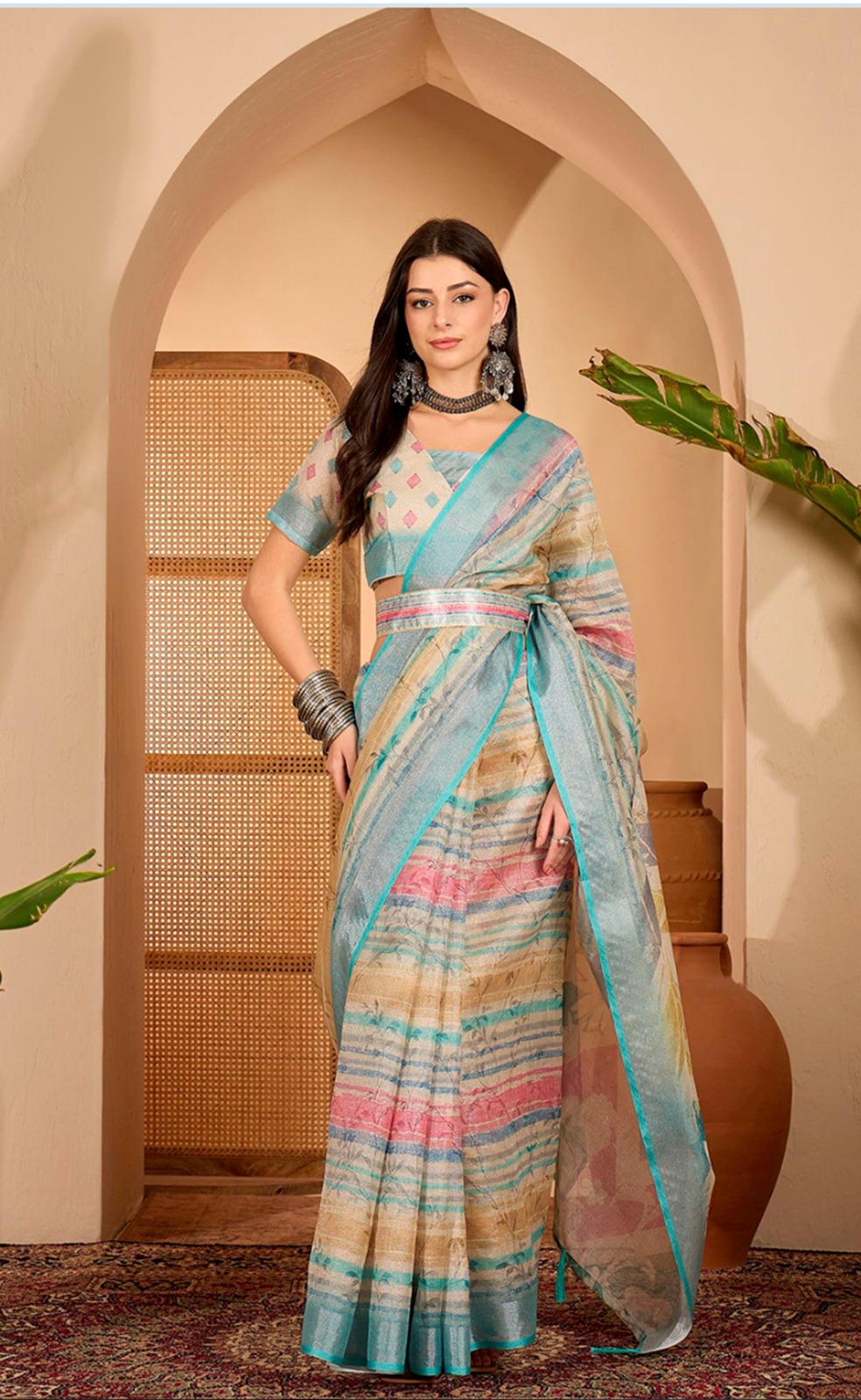
Office styling
A breathable cotton saree with a controlled print, comfortable blouse neckline and moderate border works well for office wear. An elbow-length cotton blouse creates a polished silhouette and supports arm movement. Flat sandals, a structured tote and small metal earrings keep the outfit practical for commuting.
Keep the pallu secure with one discreet pin near the shoulder and another near the waist if you use public transport. Excessively sharp pleats may look formal but require more adjustment throughout the day. Medium-width pleats often balance neatness with comfort.
Travel and daily errands
A soft cotton or linen-cotton saree with a secure petticoat, pinned shoulder pleat and flexible blouse is suitable for travel and daily errands. A relaxed drape is easier to maintain during walking and sitting than a heavily structured drape. A crossbody bag can be more convenient than a shoulder bag that repeatedly disturbs the pallu.
Party Wear Sarees can provide ideas for festive styling, but a summer cotton look doesn't need to copy a heavily embellished party outfit. The useful principle is proportion: combine a visually active saree with a quiet blouse, or combine a plain saree with a more detailed blouse.
Small celebrations
Cotton-silk or printed cotton with a defined border adds polish for a lunch, family gathering or small celebration without the weight of a formal silk saree. Add one focal accessory, such as oxidised silver earrings or coloured glass bangles, instead of combining a heavy necklace, large earrings and an embellished blouse.
A warm-toned saree can take gold-plated jewellery, while a beige, grey or taupe saree often suits silver, pearl or oxidised metal. Blouse sleeves should be chosen according to heat and movement rather than trend alone. A sleeveless blouse may feel cooler, but elbow-length sleeves can be more comfortable for air-conditioned offices and provide additional sun coverage.
Best cotton sarees for summer: How should you wash and store them?
You should care for cotton sarees by following the fibre-specific care label, using gentle washing methods, drying the saree in shade and storing it only when completely dry.
- Air the saree first: Hang the saree in a shaded, ventilated place for several hours after wearing. Airing helps release body moisture before storage.
- Test colour fastness: Dab a hidden section with a damp white cloth before the first wash, especially for dark prints, Kalamkari-style designs and strong digital colours.
- Use cool water: Cold or cool water is generally safer for cotton prints than hot water, which can encourage colour loss or shrinkage.
- Choose mild detergent: Use a small amount of mild detergent and avoid aggressive rubbing on printed areas, zari, borders and blouse pieces.
- don't wring: Press excess water out gently rather than twisting the saree. Twisting can distort the weave and crease the border.
- Dry in shade: Direct, harsh sunlight can fade coloured prints over time. Dry the saree inside out or in indirect sunlight when possible.
- Iron with care: Iron cotton while slightly damp on the recommended heat setting. Use a pressing cloth over delicate prints, zari or silk-blend areas.
- Store with airflow: Fold the saree along its length and refold it differently every few months. Avoid sealing a damp saree in plastic for long-term storage.
Cotton may shrink slightly after washing depending on pre-treatment and weave. Avoid making a blouse before checking whether the saree has been washed or pre-shrunk. If a saree contains silk, zari or colour-sensitive printing, professional cleaning may be safer than repeated home washing.
Regular use also benefits from rotation. Allowing a saree to rest between wears reduces repeated stress at the same fold lines. Refolding cotton sarees every few months helps prevent permanent creases along the pallu and pleats.
Best cotton sarees for summer: How do you choose the final saree?
The best final choice is the saree whose fabric, weight, colour and care requirements match your most common summer day.
Choose predominantly cotton for maximum everyday practicality and a familiar matte finish. Choose linen-cotton for a crisp, textured appearance and a slightly more structured drape. Choose cotton-silk when you need a smoother, subtly luminous finish for a meeting or celebration. Choose floral or small-scale prints when easy repeat wear matters, and choose stronger digital or geometric prints when the saree is intended to be the main visual feature.
Before ordering, imagine wearing the saree for six hours rather than viewing it for six seconds. Consider whether the border will feel heavy, whether the colour will work with your existing blouse collection, whether the fabric can be washed at home and whether the saree will remain comfortable while travelling. Those practical questions usually lead to a better purchase than choosing only by colour or discount.
Common Questions About Choosing Cotton Sarees for Summer
Which cotton saree is best for hot and humid weather?
A lightweight, predominantly cotton saree with a breathable weave is usually the most comfortable choice for hot and humid weather. Choose a moderate border, avoid excessive lining and air the saree thoroughly after wearing because cotton absorbs perspiration.
Are linen-cotton sarees cooler than pure cotton sarees?
Linen-cotton sarees can feel airy and dry because linen adds a crisp, textured hand-feel, but the actual comfort depends on the blend, weave and finishing. Pure cotton may feel softer, while linen-cotton may provide a more structured drape.
Can cotton-silk sarees be worn in summer?
Cotton-silk sarees can be worn in summer when you want more sheen and polish than everyday cotton provides. Cotton-silk may feel less airy than lightweight pure cotton, so it is better suited to shorter events, office meetings or evening gatherings than extended outdoor wear.
What colour cotton saree is easiest to maintain in summer?
Medium-toned colours and small prints are generally easiest to maintain because they disguise minor marks and light creasing. Beige, peach and pale colours look summery but may require more careful handling around food, cosmetics and transport.
How should a printed cotton saree be washed?
Wash a printed cotton saree according to its care label, preferably in cool water with mild detergent and minimal rubbing. Test colour fastness first, avoid wringing, dry the saree in shade and iron it on the appropriate setting.
How can I stop a cotton saree from looking too crumpled?
Press the saree while it is slightly damp, use a suitable petticoat and fold the pleats carefully before draping. Choosing a small print or textured linen-cotton weave can also make normal summer creasing look intentional rather than untidy.