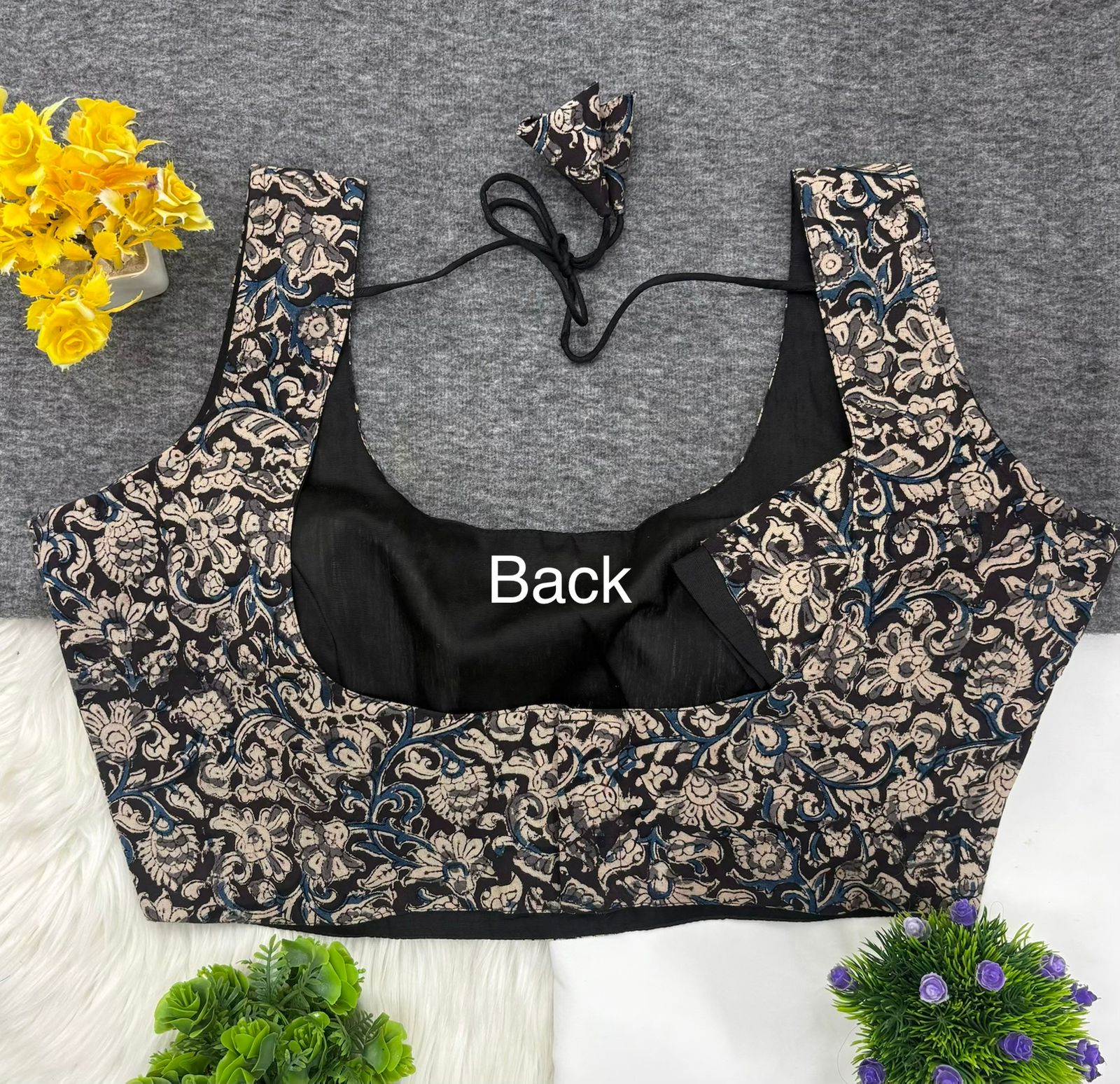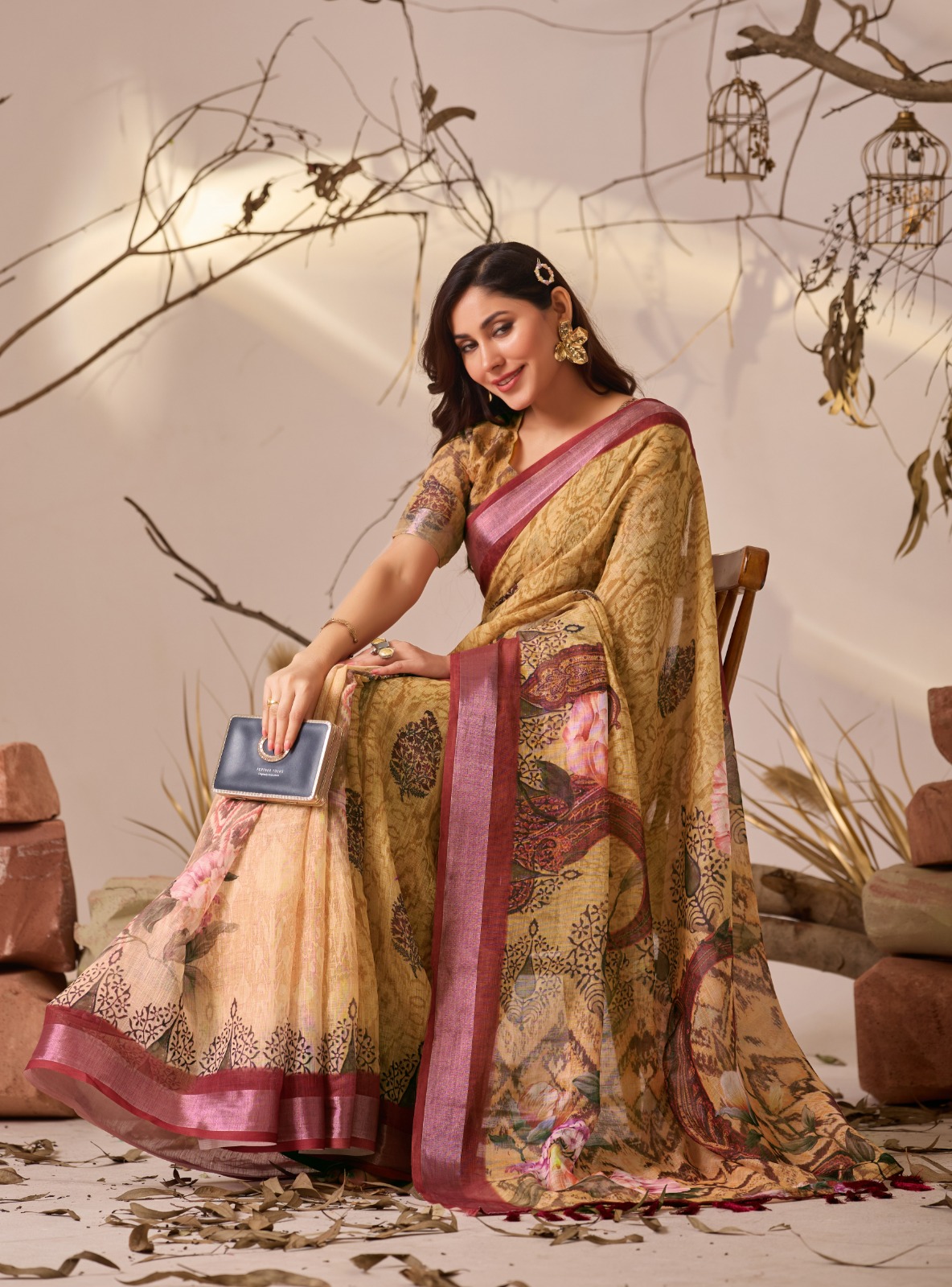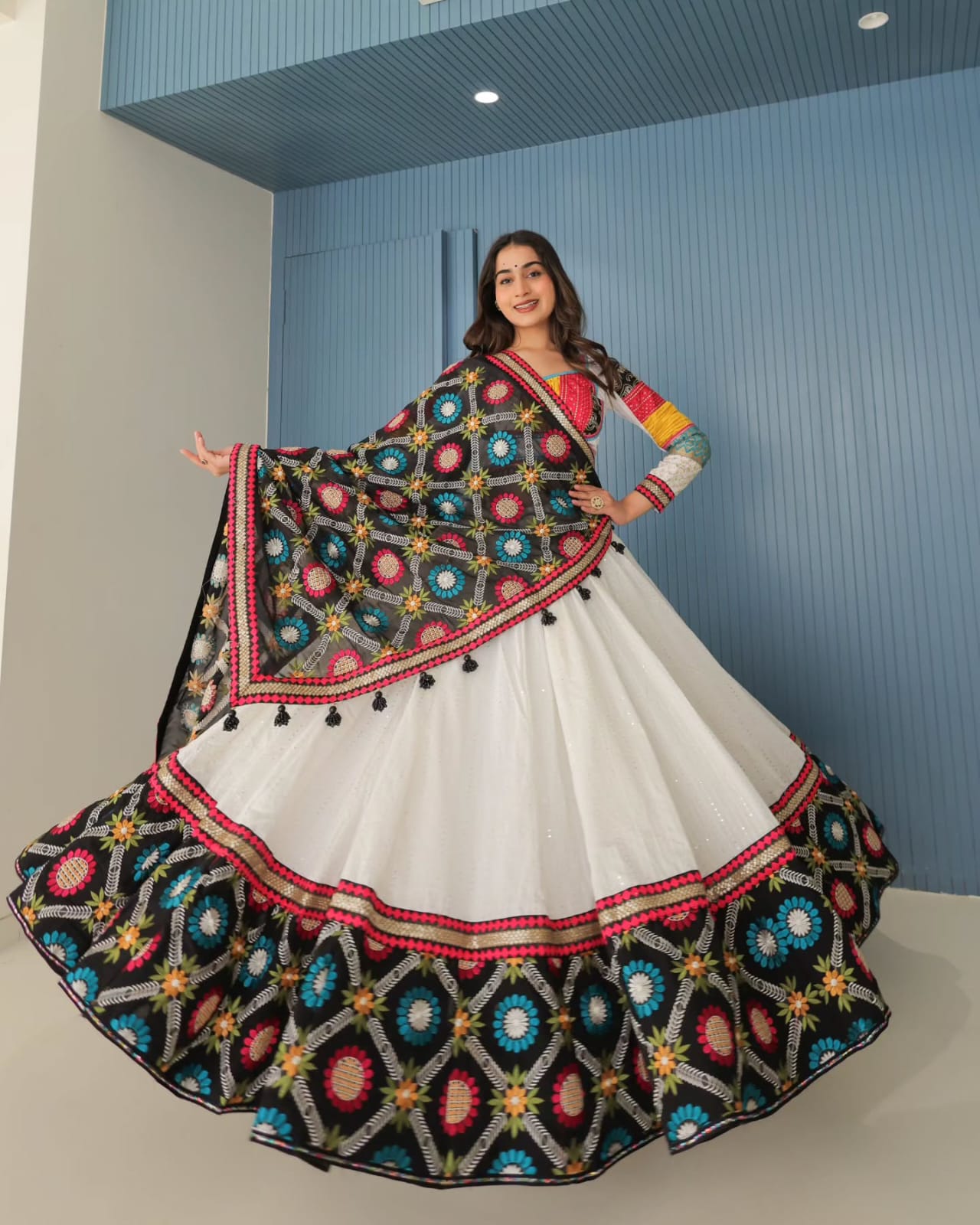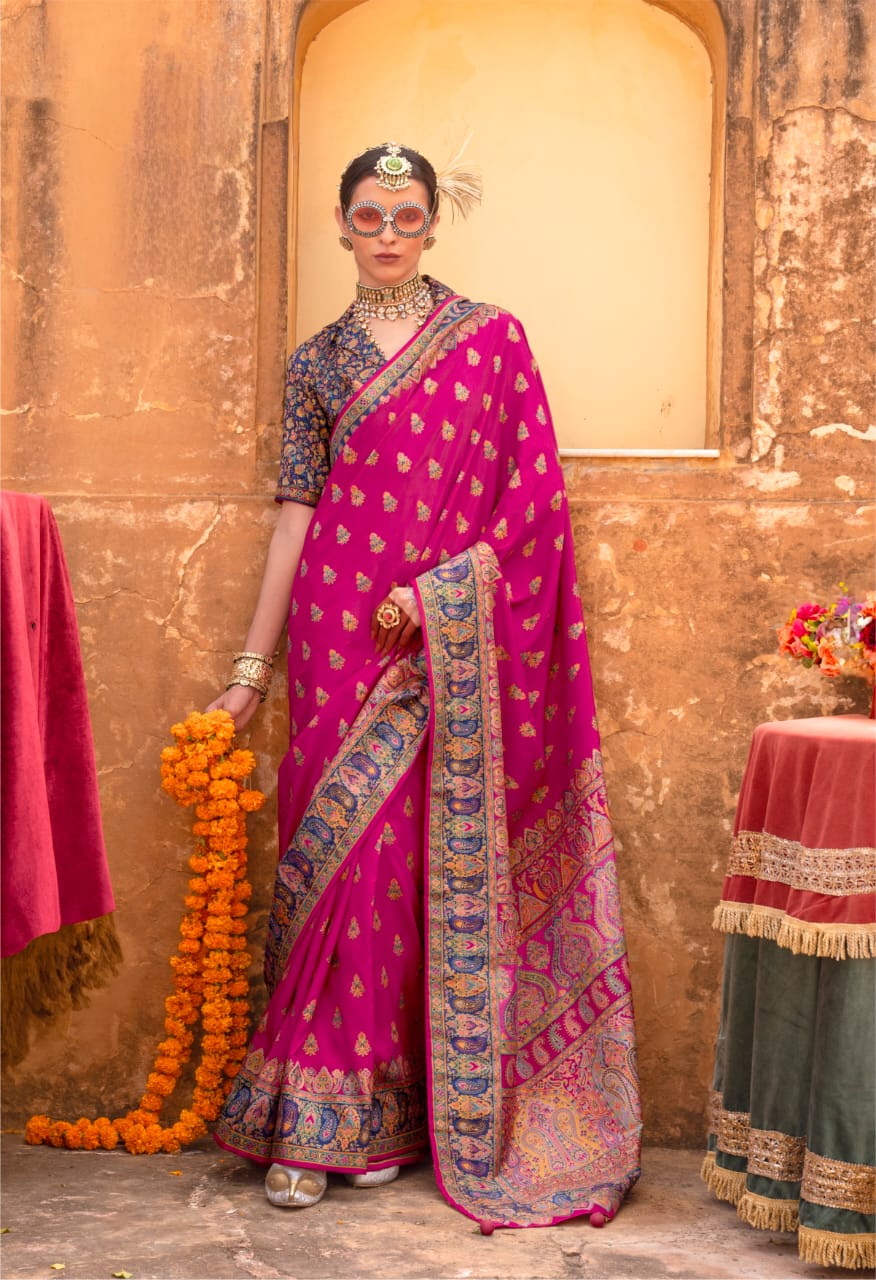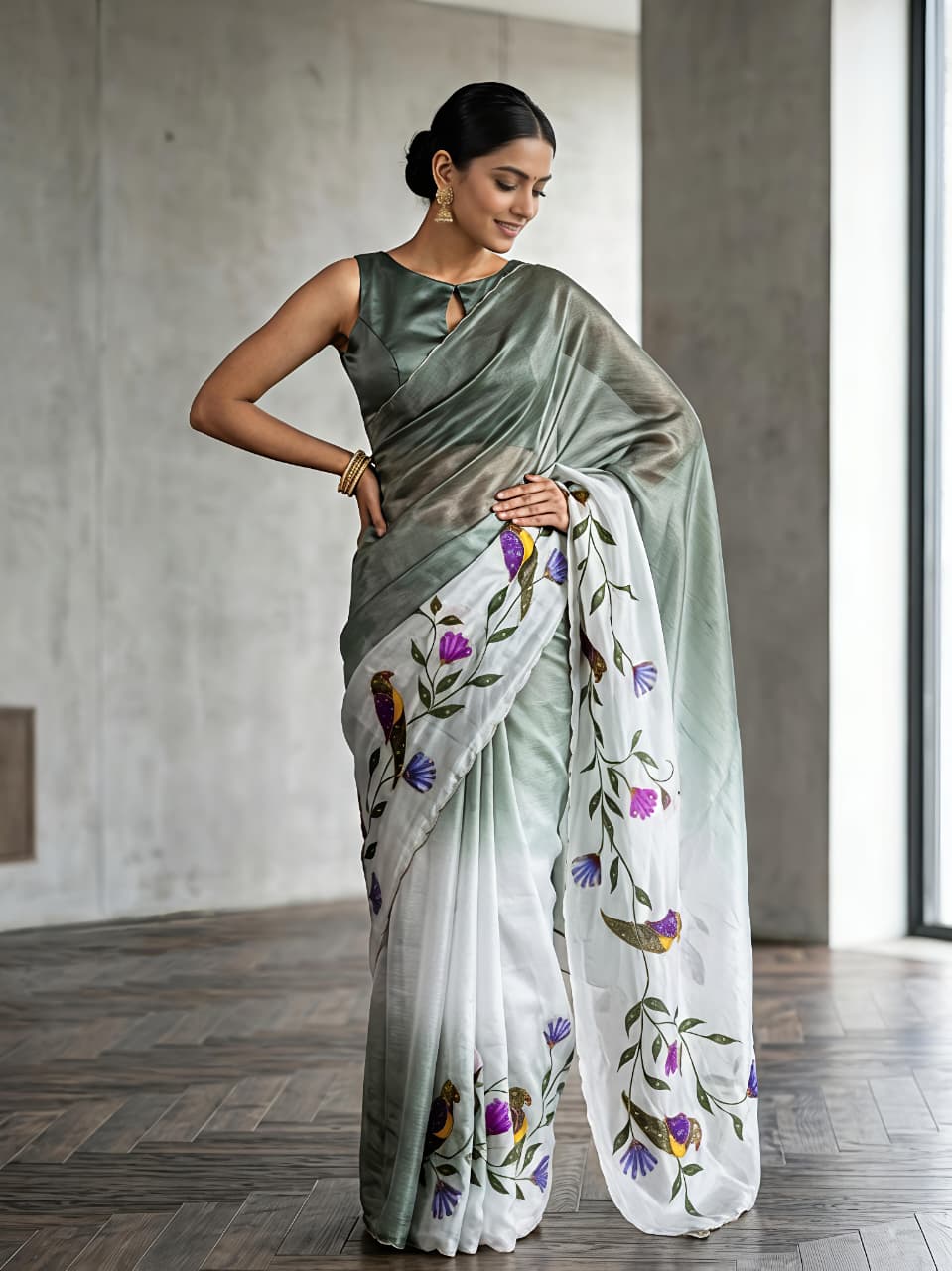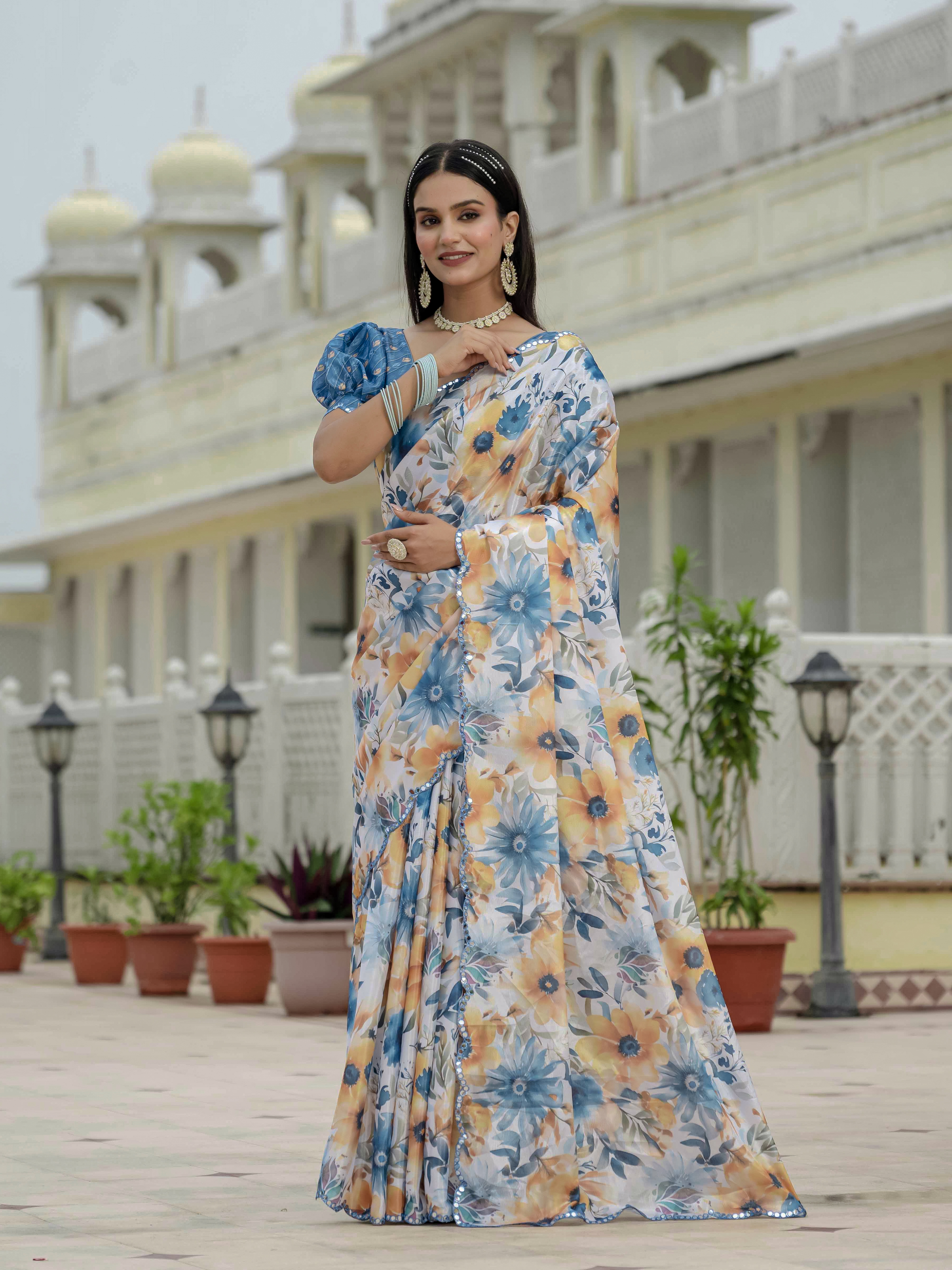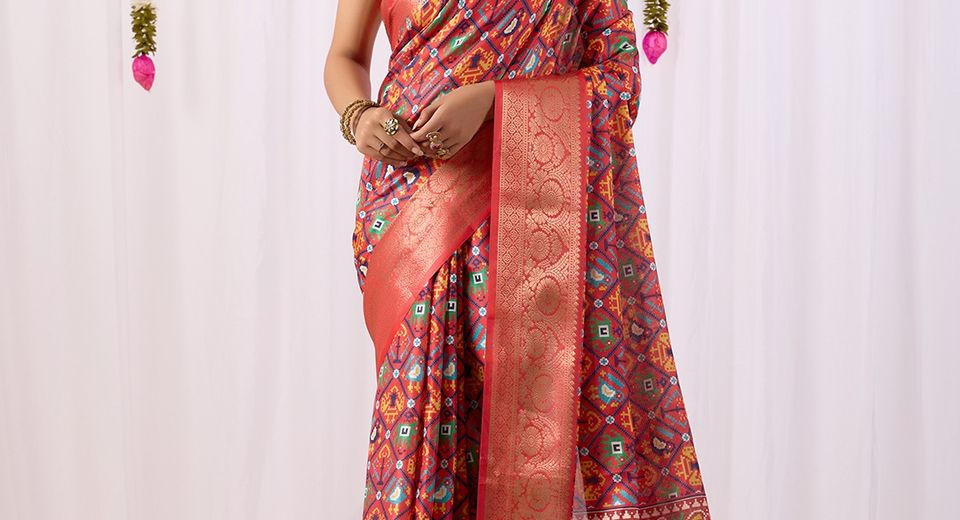
Best Blouse Designs for Pochampally Ikat Sarees begin with one simple decision: should the blouse calm the saree's geometry or echo it? Pochampally Ikat usually brings strong diamonds, stripes, checks or resist-dyed motifs, so the most successful blouse isn't always the most decorative one. Colour placement, neckline depth, sleeve length and fabric weight determine whether the finished drape looks balanced or visually crowded.
An useful starting rule is to repeat one colour from the saree, then introduce only one deliberate contrast. A wine blouse with a cream-and-red Ikat saree, for example, creates depth without competing with the weave. A plain silk blouse can also make a richly patterned saree suitable for a wedding, office celebration or women's party-wear gathering without changing the character of the handloom fabric.
How to Read a Pochampally Ikat Saree Before Choosing a Blouse
Read the saree's dominant colour, motif scale and border width before selecting a blouse. These three details reveal whether the blouse should be quiet, contrasting or lightly embellished.
The dominant colour is the shade that occupies the largest visual area, not necessarily the brightest shade. In a navy, rust and ivory Pochampally Ikat saree, navy may be dominant while rust acts as the accent. A navy blouse gives a long, uninterrupted line, whereas a rust blouse draws attention to the upper body and makes the border look more prominent.
Motif scale matters because large diamonds and broad checks already create visual movement. Pairing those motifs with a heavily embroidered blouse can make the outfit appear busy from a distance. Smaller Ikat motifs allow more freedom with textured sleeves, zari edging or a patterned back panel.
Border width also changes the ideal blouse proportion. A wide zari or contrast border benefits from a clean blouse with a defined sleeve edge. A narrow border can support a more detailed blouse, especially when the saree itself has a restrained field of colour.
Which saree details should the blouse repeat?
The blouse should usually repeat one secondary colour, one metallic element or one geometric quality from the saree. Repeating all three can look overly matched.
For example, a saree with a thin gold zari line can take a blouse with a narrow zari piping rather than a fully brocaded bodice. A saree with angular Ikat motifs can be paired with a square neckline or sharp sleeve cuff, while a softer floral accent can be repeated through a rounded neckline or fabric-covered buttons.
Best Blouse Designs for Pochampally Ikat Sarees by Neckline
The best neckline depends on the saree's visual density, the wearer's comfort and the jewellery planned for the outfit. A clean neckline is generally more versatile than a highly cut or heavily embellished one.

Round and boat necks
Round necks work well with medium-scale Pochampally Ikat patterns because they soften the saree's angular geometry. A shallow round neck suits office wear and daytime functions, while a slightly wider round neck creates room for a short necklace or a string of pearls.
Boat necks give a horizontal finish that pairs particularly well with striped Ikat sarees. A boat neck with elbow-length sleeves looks polished with a neatly pleated drape, but the neckline should not be so wide that the blouse slips under the saree's pallu.
Square and sweetheart necks
Square necks complement geometric Ikat motifs by repeating their structured lines. The design works best when the blouse fabric is plain and the border is used sparingly around the neckline or sleeve hem.
Sweetheart necks bring a softer, more occasion-focused effect to a saree with diamonds or checks. This option suits evening receptions and wedding guest dressing, especially when paired with a silk blouse in a deep shade drawn from the saree's border.
High and V-necks
High necks are practical for formal events because they provide a composed base for a statement earring. A high-neck blouse in matte raw silk or cotton-silk can prevent a bright Ikat saree from looking too casual without requiring heavy embellishment.
V-necks visually lengthen the upper body and suit heavier sarees that need a little vertical balance. Keep a deep V neckline supported with proper lining, shoulder fit and a secure back closure; comfort matters more than increasing the depth.
Colour Pairings That Make Ikat Patterns Easier to Wear
The most reliable colour pairing uses a plain blouse in a shade already present in the saree or border. Contrast works best when the saree's base is subdued and the blouse echoes a strong accent colour.

Red, maroon and wine blouses add warmth to cream, beige, black and mustard Ikat sarees. A wine blouse can also bring a dressier finish to a cotton handloom saree without making the whole outfit look like formal bridal wear. The Red Patola Design Lichi Silk Saree Online - Varnavi demonstrates why a related red or deep maroon blouse can support a patterned silk drape while keeping the focus on the saree.
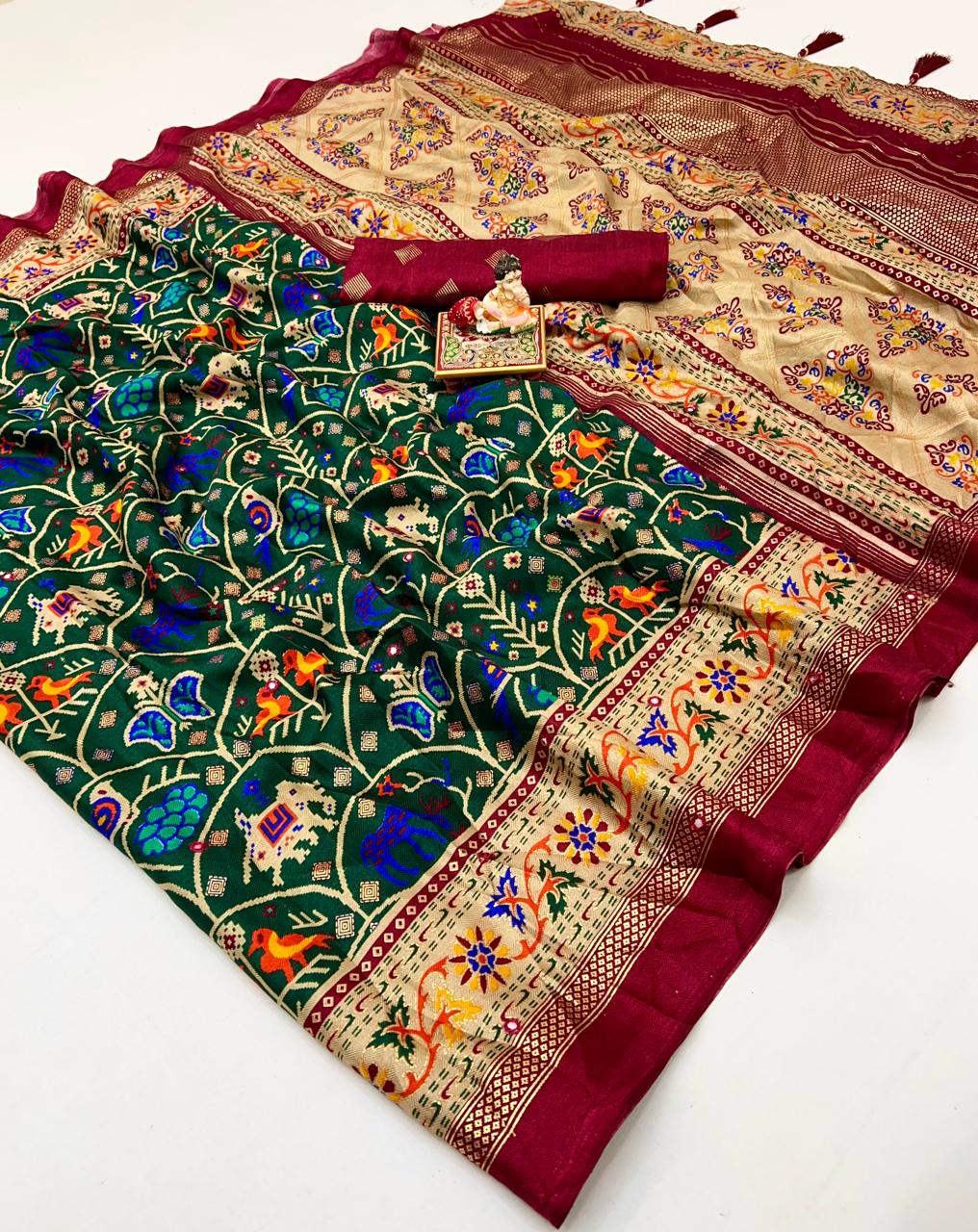
Green blouses suit sarees containing bottle green, olive, teal or gold. A dark green raw silk blouse is a dependable choice for evening functions, while a muted olive blouse works better for daytime gatherings. Traditional Bottle Green Patola Border Silk Saree is an useful reference for this approach because the dark base can carry a lighter contrast blouse or a tonal green blouse with zari piping.
Pink, peach and blush blouses soften navy, purple, grey and black Ikat sarees. A pink blouse need not be pastel; dusty rose and muted berry often look more refined with handloom patterns than an extremely bright pink.
Metallic gold and antique gold are effective when the saree already contains zari, but metallic fabric should be used selectively. A fully shiny blouse can reflect too much light around a geometric saree. A matte silk blouse with gold edging usually gives better definition in photographs and indoor lighting.
When does a contrast blouse work?
A contrast blouse works when the blouse colour appears in a small but meaningful part of the saree, such as the border, pallu or repeated motif. A completely unrelated contrast can divide the outfit into two competing blocks.
For instance, a purple blouse can complement a saree with purple pallu details even when the main body is blue or grey. Purple Zari Woven Lichi Silk Saree Online - Varnavi shows how a rich jewel tone can be supported by a tonal blouse, a muted gold blouse or a carefully selected contrast from the pallu.
Blouse Fabrics for Cotton, Silk and Tissue-Look Ikat Sarees
Blouse fabric should match the saree's fall and surface weight. A stiff blouse under a fluid saree can pull at the shoulder, while a thin blouse under a structured silk saree may look visually weak.
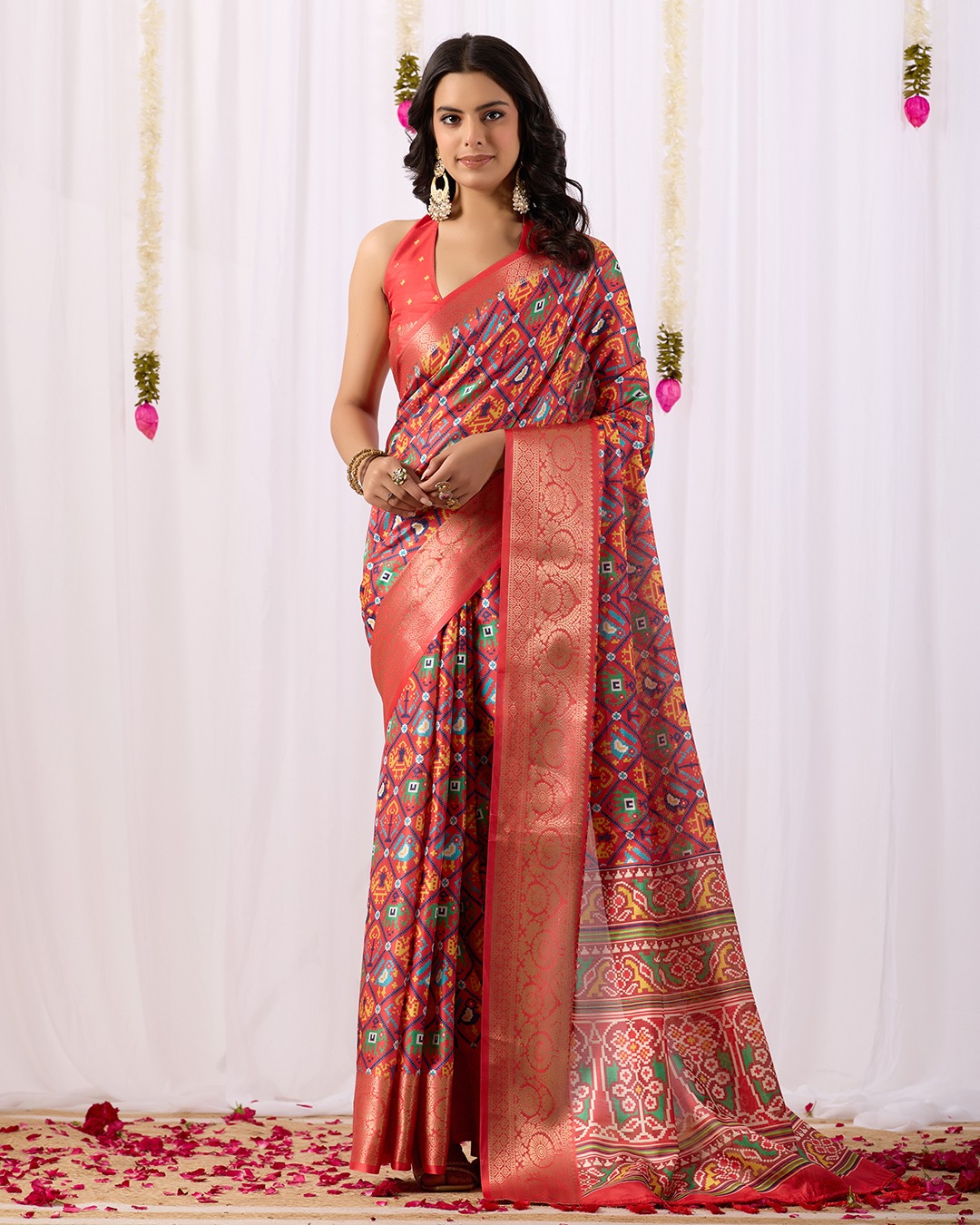
Raw silk and silk-cotton are strong choices for festive Pochampally Ikat styling because they hold a crisp neckline and sleeve shape. Banarasi silk can add zari depth for weddings, but a heavily patterned Banarasi blouse should be reserved for a saree with a relatively simple field.
Cotton and cotton-silk work well for everyday handloom sarees, summer functions and workwear. They breathe better than synthetic satin and usually create a more natural relationship with handwoven textures. The Pastel Floral Tissue Handloom Cotton Saree with Zari Weaves can be styled with a plain pastel cotton-silk blouse, while the Cream Pink Tissue Handloom Cotton Saree with Zari suits dusty rose, cream or muted gold.
Chanderi can be an useful blouse fabric when a light, slightly translucent texture is desired, but Chanderi requires a suitable lining for structure and modesty. Satin offers shine and photographs well, yet satin may cling to the body and can look disconnected from a matte Ikat weave unless the saree is intended for evening party wear.
For a more luxurious festive combination, a plain silk blouse can be paired with the Festive Olive Green Dola Butti Silk Saree With Blouse. The blouse should not duplicate every butti or zari detail; a clean neckline and a controlled sleeve border will preserve the saree's richness.
Sleeves, Backs and Trims That Suit Ikat
Elbow-length sleeves are the most adaptable sleeve design for Pochampally Ikat sarees because they create a neat proportion without overwhelming the saree pattern. Short sleeves suit casual styling, while three-quarter sleeves offer more coverage and a formal appearance.
Cap sleeves can look elegant with lightweight cotton or tissue sarees, but they need a well-fitted armhole to prevent gaping. Puff sleeves and gathered sleeves add volume, so they work best with a small-scale Ikat pattern and a simple pallu.
The back of the blouse should support the front design rather than introduce a second theme. A modest keyhole, a tie-back with fabric-covered tassels or a shallow square back can provide detail without competing with the saree. Large cut-outs, multiple tie strings and dense embroidery may be uncomfortable under a pinned pallu.
Use piping, narrow zari, fabric-covered buttons or a contrasting sleeve cuff to finish the blouse. A 1-centimetre metallic border is often enough to connect a plain blouse to a zari saree. Thick contrast bands can shorten the visual line of the arm, particularly when the sleeve ends at the fullest part of the upper arm.
How to Build the Look for Work, Weddings and Parties
Workwear styling needs a breathable fabric, a secure neckline and restrained contrast. Choose a plain cotton, cotton-silk or matte silk blouse with elbow-length sleeves, then keep jewellery to small earrings, a watch or a single bangle.
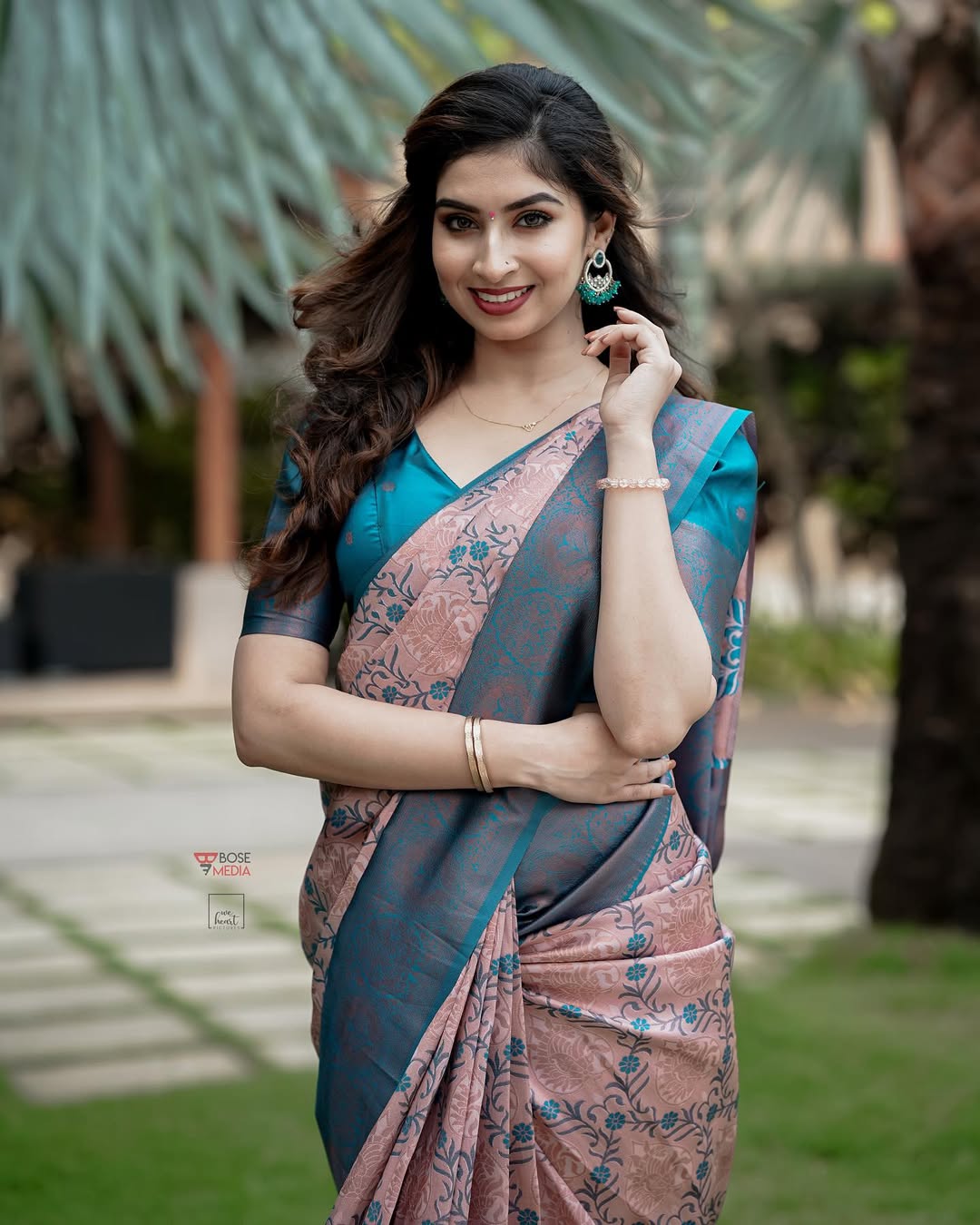
A wedding guest look can support more structure and shine. Pair a silk blouse with a square or sweetheart neckline, add a narrow zari edge and use one statement element such as jhumkas, a choker or a textured potli. The saree should remain the dominant patterned piece.
Women's party wear allows a little more experimentation with sleeve shape, metallic accents and blouse backs. A deep jewel-tone blouse, sculpted boat neck or elbow-length sleeve with a crisp cuff can make a handloom saree feel evening-appropriate without resorting to excessive sequins.
The Wine Tissue Handloom Cotton Saree with Zari & Floral Prints can guide a festive styling direction: repeat wine in the blouse, use a muted gold trim and select jewellery that picks up the zari rather than adding another bright colour. A simple blouse also lets floral prints and geometric Ikat elements coexist more comfortably.
Shopping and Tailoring Checks Before You Buy
Check the saree's blouse-piece measurements, fabric composition and fall before ordering a blouse online. A ready blouse may use standard measurements, while a stitched blouse needs accurate bust, underbust, shoulder, armhole, sleeve and blouse-length measurements.

Ask whether the blouse fabric is lined and whether seam allowance is available. At least 2 to 3 centimetres of usable seam allowance can make later fitting easier, especially around the side seams. Confirm the closure type as well: hooks provide adjustability, while a concealed zip gives a smooth back but requires precise sizing.
When comparing saree-shopping websites and brands, look for clear fibre information, close-up weave images, garment measurements, wash-care instructions and a visible exchange policy. A low price doesn't tell you whether a saree is handwoven, powerloom-made, printed or woven, so product descriptions should be read carefully.
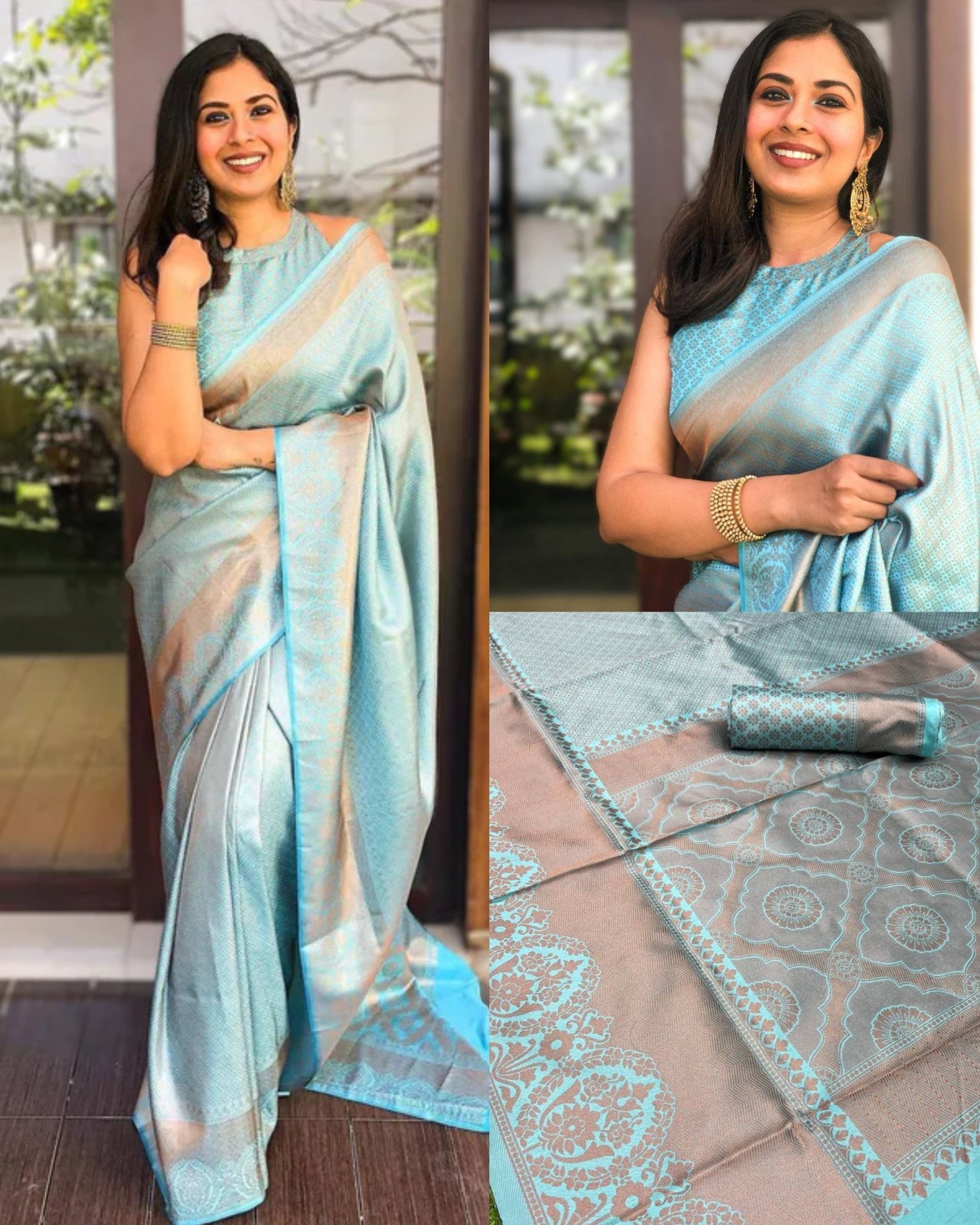
For shoppers considering silk sarees, compare the fabric name with the care instructions rather than relying only on the word "silk." Banarasi silk, Kanjeevaram silk and Lichi silk have different visual weights and styling expectations. The Pastel Aqua Lichi Silk Saree with Rich Jacquard Border, for example, calls for a blouse that can hold its own against a substantial border without adding an equally dense pattern.
Budget browsing can still produce useful references. Silk Sarees Under 3000 With Discount and Party Wear Sarees can help compare colour directions and blouse proportions, while Pink Georgette Sarees may offer ideas for lighter, softer contrast combinations. Red Banarasi Silk Sarees for Weddings Under 1100 and Gray Color Sarees Under 1000 are also useful search categories, but fabric quality, lining and finishing should be checked before purchase.
Care and Fit Details That Protect the Finished Look
A well-designed blouse needs correct pressing and storage to keep its shape. Press silk and zari garments on the reverse side at low to medium heat with a cotton pressing cloth, and avoid spraying perfume directly onto metallic trims.
Dry-clean heavily zari-worked silk blouses when the care label recommends it. Cotton and cotton-silk blouses may be hand-washed in cool water with a mild detergent, but colour bleeding should be tested on an inside seam first. Store blouses folded in breathable cotton covers rather than sealed plastic for long periods.
Fit should be checked while sitting, lifting both arms and wearing the intended saree petticoat or shapewear. Shoulder seams should remain flat, the armhole should not cut into the underarm and the neckline should stay in place when the pallu is pinned. These practical checks matter more than copying a blouse design from a photograph.
The strongest blouse pairing leaves the saree recognisable from across the room. For Pochampally Ikat, that usually means one clear colour relationship, one controlled design detail and a fit that allows the saree's weave to move naturally.
Practical Questions About Styling Pochampally Ikat Sarees
What blouse colour goes best with a Pochampally Ikat saree?
The best blouse colour usually repeats a secondary shade from the saree's border, pallu or motifs. Plain wine, bottle green, cream, navy, maroon and muted gold are dependable choices, but the final selection should match the saree's dominant colour and pattern scale.
Which blouse neck is suitable for an Ikat saree?
Round, boat, square and shallow V-necks are versatile choices for Pochampally Ikat sarees. Choose a cleaner neckline when the saree has large diamonds, checks or a wide border, and reserve heavier neckline decoration for simpler Ikat patterns.
Can I wear a silk blouse with a cotton Pochampally saree?
Yes, a plain silk or silk-cotton blouse can make a cotton Pochampally saree suitable for festive events. Choose a fabric with a compatible fall and avoid excessive zari if the cotton saree has a delicate or lightweight texture.
Are elbow-length sleeves good for Pochampally Ikat sarees?
Elbow-length sleeves are one of the most balanced options because they suit workwear, weddings and party wear. A narrow cuff, piping or zari edge can define the sleeve without competing with the saree's geometric motifs.
How should I shop online for a Pochampally Ikat saree and blouse?
Check fibre details, weave or print information, blouse-piece measurements, close-up images, wash care and exchange terms before ordering. Compare the stated measurements with a blouse that already fits you, because standard ready-to-wear sizing varies between websites and brands.
Can a heavily embroidered blouse be worn with an Ikat saree?
A heavily embroidered blouse can work when the Ikat saree has a restrained field and limited border detail. If the saree already contains large motifs, zari and a broad pallu, a plain silk blouse with one embellished edge will usually look more balanced.