

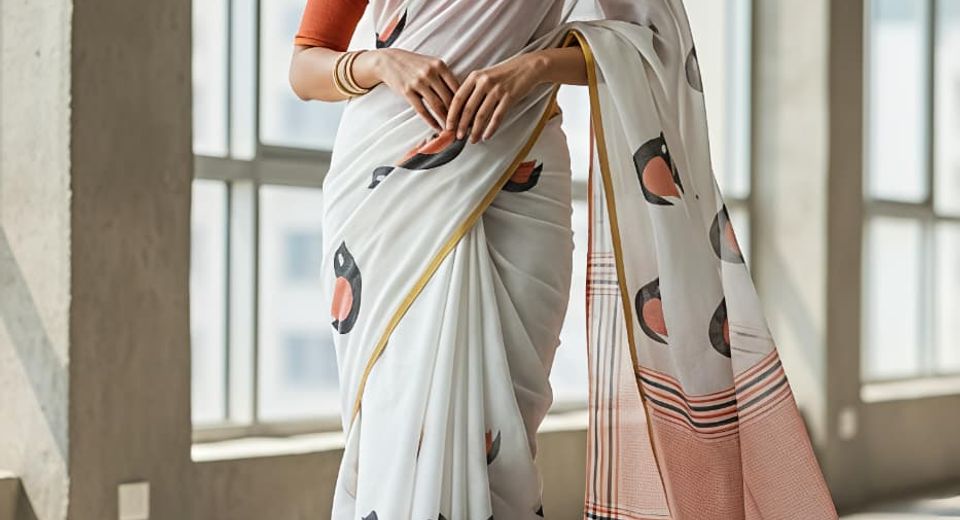
Choosing the Best Blouse Colours for White and Gold Kerala Sarees becomes much easier when you separate the saree's warm gold border from its cool white body. The strongest pairings either repeat the warmth of zari, create deliberate contrast, or introduce a deep jewel tone that gives the pale drape definition. Blouse fabric, jewellery and the event's formality then determine whether the finished look feels traditional, contemporary or understated.
What makes a white and gold Kerala saree distinctive?
A white and gold Kerala saree, commonly called a kasavu saree, has a restrained colour story built around an ivory, cream or white ground and a metallic-looking gold border. Time-honoured kasavu styling often uses an off-white handloom textile with a woven zari edge, although modern versions may use linen, tussar silk or printed fabrics. The limited palette makes the blouse highly visible, so a small shift from cream to maroon can change the entire impression.
Gold is a warm neutral rather than a completely yellow accent. Blouses with warm red, orange, mustard, rust or green undertones usually connect naturally with antique gold borders. Cool shades such as cobalt blue, bottle green and plum create stronger contrast while still looking polished. A bright white blouse can work, but ivory or cream generally produces a softer transition against an off-white saree.
The width and finish of the border also matter. A narrow zari border supports a stronger blouse colour because the saree remains visually light. A broad, bright gold border usually benefits from a solid blouse with a clean neckline, since elaborate embroidery can compete with the border. Printed Kerala sarees require an additional check: the blouse should pick one colour from the print or remain a quiet neutral rather than introduce a fourth dominant shade.
Which are the Best Blouse Colours for White and Gold Kerala Sarees?
The most dependable blouse colours are deep green, maroon, red, royal blue, mustard, black, ivory and muted pink. Each colour creates a different balance between tradition, contrast and occasion-appropriate elegance.
Emerald, bottle green and parrot green
Green is one of the most versatile blouse choices for a white and gold Kerala saree because green supplies contrast without overpowering gold. Emerald and bottle green look rich for evening weddings, receptions and temple celebrations. Parrot green feels brighter and more youthful for daytime functions and Onam gatherings.
Choose raw silk, silk-cotton or matte brocade when the green blouse needs structure. A gold zari sleeve border can echo the saree, but a plain neckline often looks more current. Green glass bangles and antique-gold jewellery reinforce the connection between the blouse and border without making the outfit appear overly coordinated.
Maroon, wine and deep red
Maroon is a reliable blouse colour for a formal Kerala saree because its depth gives the white drape definition and its red undertone complements warm gold. Wine, burgundy and brick red offer a quieter alternative to vivid scarlet. These shades suit evening weddings, family portraits and winter festivities particularly well.
Deep red works best when the blouse construction is simple. A high round neck, elbow-length sleeve or modest boat neck allows the colour to carry the look. For a softer heritage finish, select antique gold embroidery rather than highly reflective yellow zari. A wine blouse also creates an useful bridge to accessories in brown, copper or garnet tones.
Royal blue, navy and peacock blue
Blue creates the clearest cool-toned contrast against a white and gold Kerala saree. Royal blue looks festive and photographic, navy feels formal, and peacock blue adds colour without the hardness of pure cobalt. Blue is especially useful when the saree has a very bright gold border and needs a shade that visually cools the ensemble.
Pair royal blue with gold studs, a classic kasavu-style necklace or restrained temple jewellery. Navy satin can look too glossy beside a matte handloom saree, so silk, raw silk or cotton-silk usually gives a more balanced texture. Peacock blue is an effective choice for a contemporary blouse with pleated sleeves, a square neckline or a narrow back opening.
Mustard, turmeric yellow and rust
Mustard and turmeric yellow create a tonal relationship with the gold border, making them strong choices for Haldi ceremony dressing, daytime pujas and Onam celebrations. Rust adds more depth and is easier to wear when a bright yellow blouse feels too vivid. These colours also suit warm Indian skin undertones, although the exact intensity should be tested in natural daylight.
A yellow blouse should differ clearly from the saree border. Mustard, ochre or turmeric is more effective than a near-identical metallic yellow, which can make the blouse disappear into the zari. Cotton-silk and linen provide a pleasingly grounded finish for day events, while silk gives turmeric yellow a richer festive appearance.
Black, charcoal and chocolate brown
Black produces a sharp, up-to-date contrast with white and gold, while chocolate brown gives a softer, earthy version of the same idea. Black works well for an evening cultural event, a reception or a contemporary styling session, but the blouse design should remain refined so the look doesn't become visually severe.
Use a black blouse with antique gold earrings, a single statement bangle or a narrow gold sleeve detail. Charcoal is a less dramatic alternative for people who want contrast without a stark black-and-white effect. Chocolate brown pairs particularly well with antique zari and natural-finish textiles such as tussar silk or linen.
Ivory, cream, blush and muted pink
Ivory and cream create the most seamless time-honoured pairing because they continue the saree's pale base. Blush pink and dusty rose add gentle colour while preserving the softness of white and gold. These shades suit daytime weddings, naming ceremonies, temple visits and minimalist bridal wardrobes.
Neutral blouses need texture or tailoring to avoid looking unfinished. A cream blouse in raw silk, jacquard or textured cotton has more presence than a thin, shiny synthetic fabric. Blush pink becomes more sophisticated when paired with antique gold jewellery and a defined sleeve, rather than excessive pink accessories.
How should blouse colour change with the occasion?
The occasion should guide blouse depth, shine and contrast: lighter shades suit daytime and ceremonial settings, while saturated colours and richer fabrics suit evening celebrations.
For Onam, Vishu and daytime festivities
Choose mustard, parrot green, coral, blush pink, ivory or cream for a fresh daytime appearance. Natural light reveals whether a colour flatters the saree's undertone, so try the complete outfit near a window before making a decision. Cotton-silk, linen and matte silk keep the ensemble comfortable and prevent the gold border from looking too heavy.
A modest round neck with elbow-length sleeves remains practical for family gatherings and cultural programmes. Small jhumkas, a jasmine gajra and gold-toned bangles can complete the look without adding another strong colour.
For weddings and evening receptions
Choose maroon, emerald, navy, royal blue, wine or deep plum for evening events because darker colours retain visual depth under artificial lighting. Silk, raw silk, brocade and velvet details can add structure, but the blouse should remain breathable if the event involves extended dancing or outdoor travel.
A white and gold saree can look bridal when paired with a deep red blouse, time-honoured gold jewellery and a neatly pleated pallu. Guests may prefer emerald, navy or wine to avoid replicating a bridal red palette. Sequin work should be placed selectively on the sleeve or neckline rather than spread across the entire blouse.
For Haldi ceremonies and intimate rituals
Mustard, turmeric, marigold, coral and leaf green are practical choices for a Haldi ceremony because they complement the event's yellow floral setting. Select a washable or easy-care blouse if turmeric paste, sandalwood or flower water may come into contact with the garment. A slightly darker shade hides incidental marks better than pale ivory.
How do fabric and print affect the blouse choice?
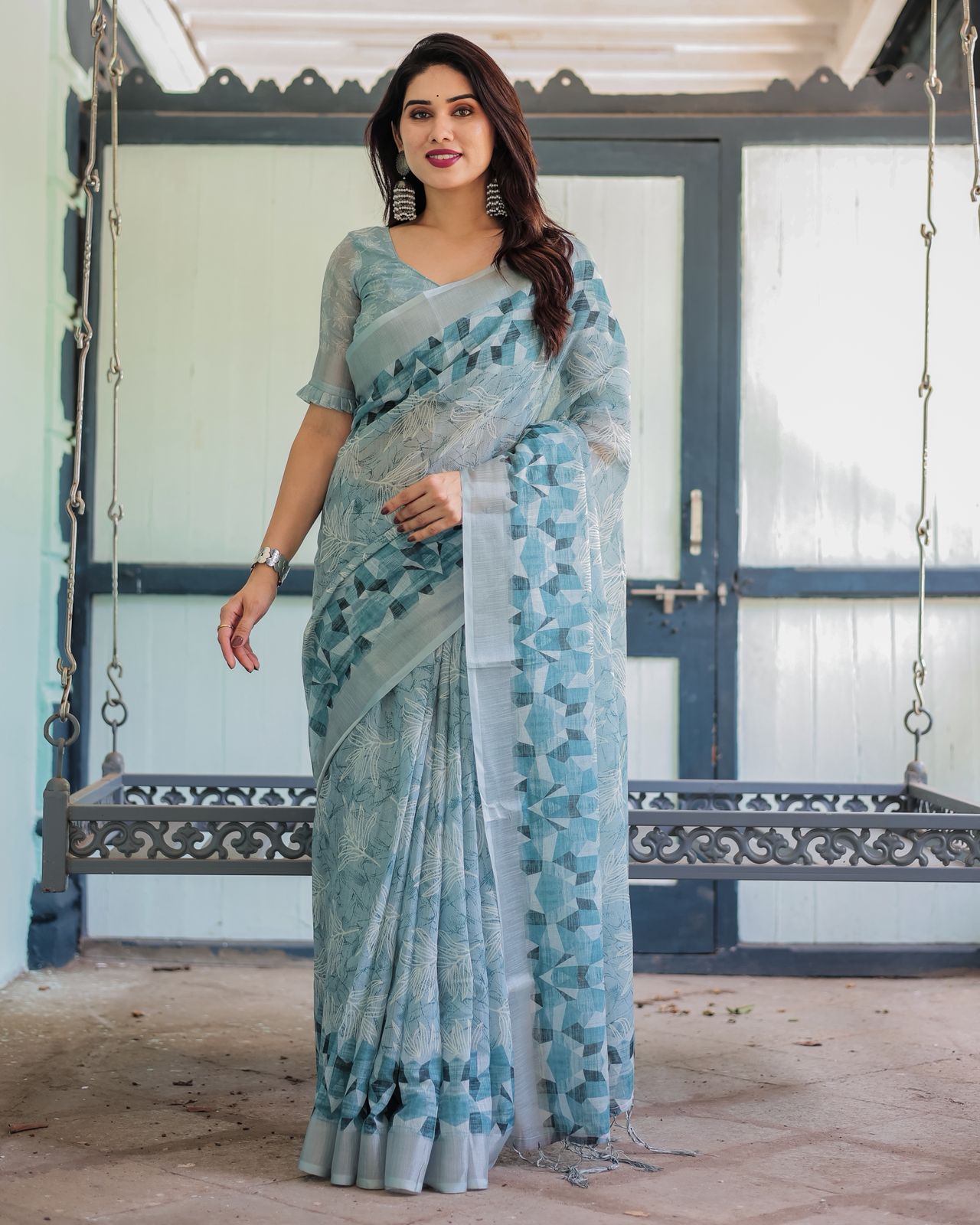
The blouse fabric should balance the saree's surface: a textured linen saree needs controlled structure, a glossy silk saree welcomes richer colour, and a printed saree needs one carefully selected supporting shade.
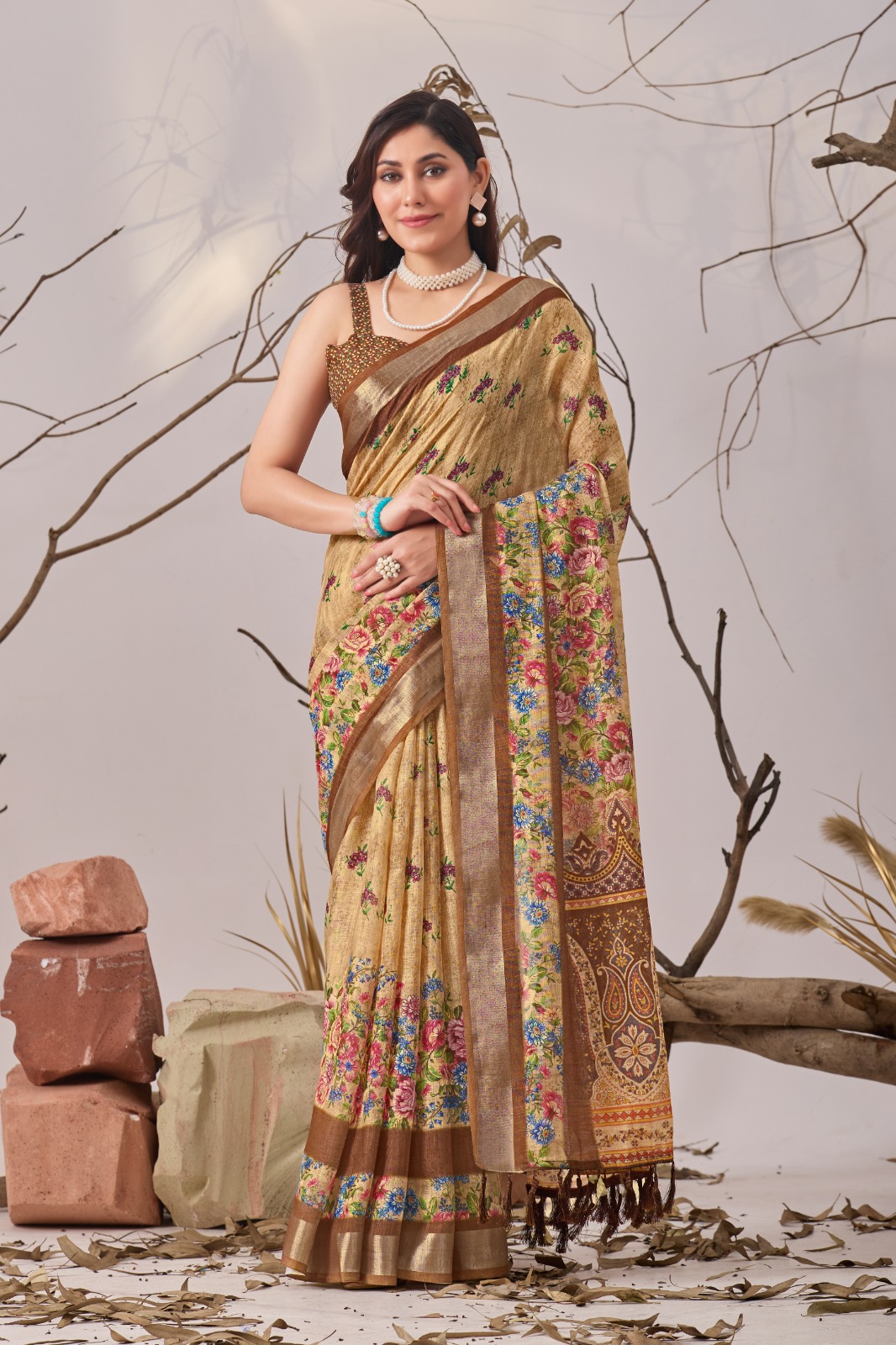
The Elegant White Linen Saree with Bird Digital Print & Gold Border has a light, illustrated character, so an ivory, muted green, terracotta or mustard blouse can support the print without competing with it. The Floral Linen Digital Print Saree with Gold Border already introduces botanical movement; a solid blouse in deep green, wine or cream keeps the outfit coherent.
The White Giraffe Print Linen Saree with Gold Border has a more graphic personality. Black, chocolate brown or rust can bring out the print's visual structure, while a plain ivory blouse creates a quieter interpretation. Linen blouses should be lined if the fabric is light-coloured, particularly when the neckline or sleeve is fitted.
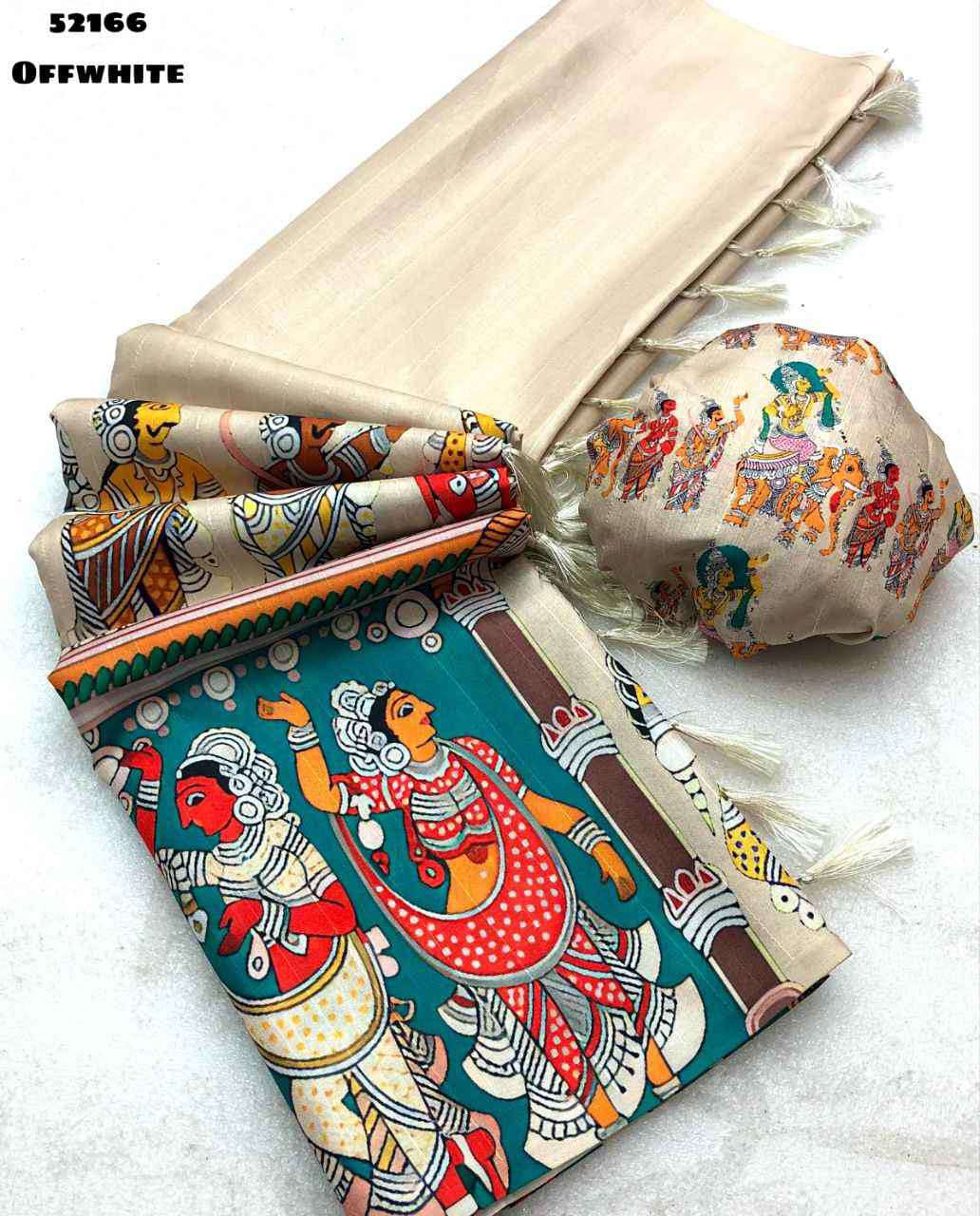
Silk changes the styling equation. The Off White Kalamkari Tussar Silk Saree with Blouse carries the natural irregularity and earthy character associated with Kalamkari-inspired design, so maroon, rust, mustard, bottle green or chocolate brown are logical blouse directions. The Designer Off White Tussar Silk Saree with Kalamkari Print can also take a blouse colour drawn directly from the printed motifs, which is usually more successful than adding a separate contrasting colour.
A bright or unusual saree can still demonstrate the same colour principle. Purple Gold Crush Saree with Floral Threadwork Border suits a blouse in deep plum, antique gold or muted green because those colours respect the existing gold and floral details. Wine Pink Gold Crush Saree with Floral Threadwork can be paired with wine, dusty rose or dark green when the goal is a coordinated festive outfit.
How can jewellery and accessories complete the colour pairing?
Gold jewellery is the most natural partner for a white and gold Kerala saree, but the jewellery finish should match the blouse's intensity and the border's tone.
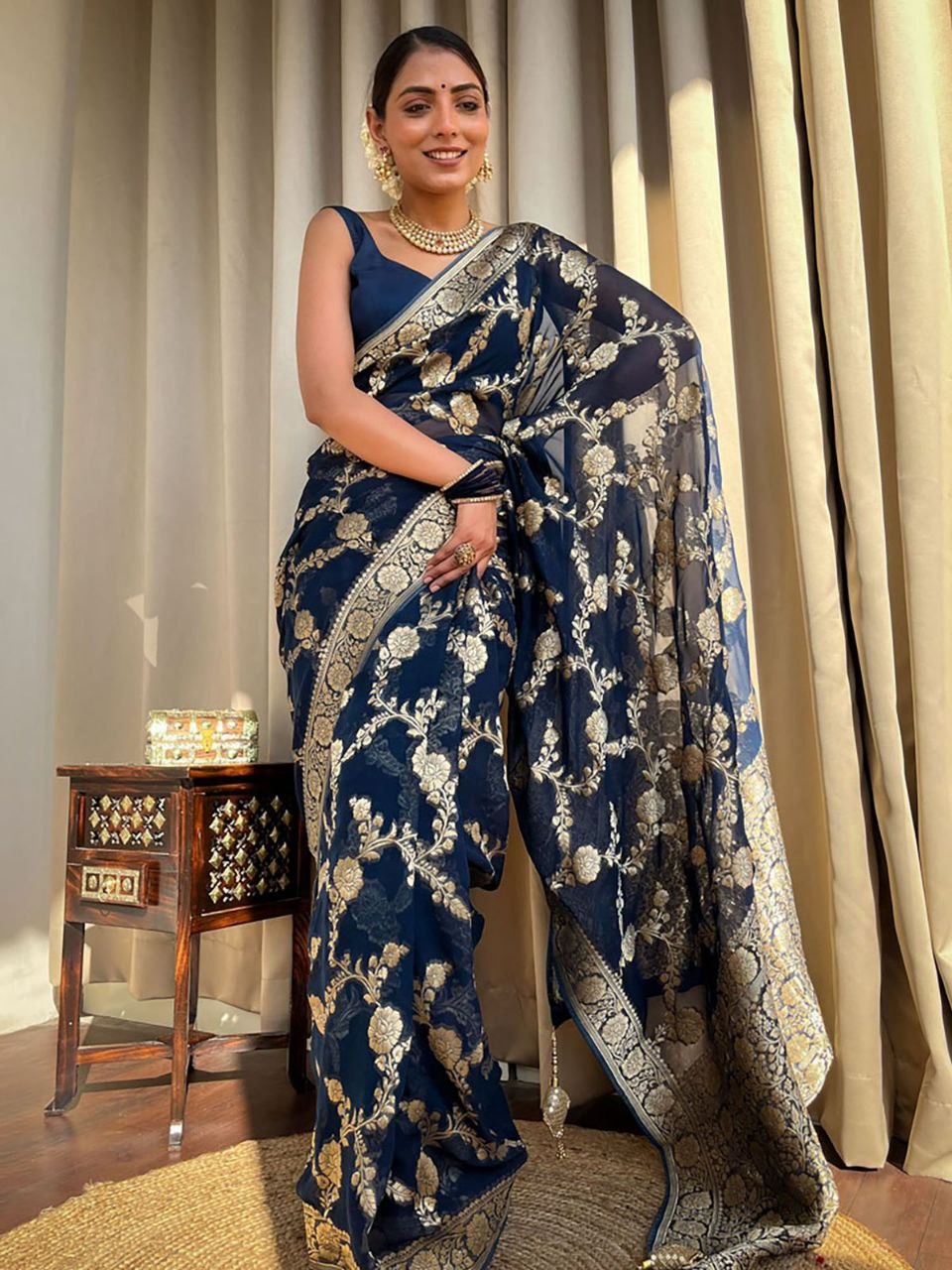
Antique gold and temple jewellery complement maroon, green, mustard and rust because their slightly aged finish prevents the outfit from looking overly shiny. Polished yellow gold suits ivory, red and royal blue when the event is formal. Pearl accents soften navy, emerald and wine, while a single ruby-toned accessory can connect a red blouse without introducing excessive colour.
Keep the handbag and footwear close to the saree's neutrals when the blouse is vivid. Gold, beige, tan, brown and ivory sandals are easier to style than a handbag that exactly matches a jewel-toned blouse. If the blouse is neutral, a coloured clutch can provide the needed accent, but repeating the accent in one small accessory is usually enough.
Hair and makeup also influence colour balance. A red or wine blouse can handle a defined lip, while emerald and navy often look polished with neutral makeup and a warm gold highlight. Jasmine, a low bun and a traditional braid work with the Kerala saree vocabulary, but a clean open hairstyle can make a high-contrast blouse feel more contemporary.
What should you check before ordering a blouse?
Check the saree's actual base shade, border finish, blouse measurements and return or alteration terms before ordering. Online product photographs can make ivory appear pure white and can shift gold from antique to bright yellow depending on lighting.

- Compare undertones in daylight: place a cream, ivory and pure white fabric beside the saree to identify the closest match.
- Measure the finished garment: record bust, underbust, shoulder, armhole and sleeve length rather than relying only on a familiar size label.
- Match texture, not only colour: a matte linen saree may look unbalanced with a very glossy blouse, while a silk saree can support a richer surface.
- Consider movement: allow enough room at the armhole and sleeve opening for pleating, pinning and sitting comfortably.
- Plan the event: choose washable, breathable materials for daytime rituals and structured silk or brocade for shorter evening functions.
Price can help organise the search, but it should not determine the blouse colour. A practical starting point for browsing is Sarees from Rs 1000 to Rs 1500, while Sarees Under 20% Off and Sarees Under 10% Off may help compare fabrics at different reductions. Larger sale groupings such as Sarees Flat 60% Off and Sarees Flat 50% Off are worth checking only after confirming fabric composition, lining, measurements and the final sale terms.
For a dependable first purchase, select one blouse in deep green, maroon or ivory. Those three shades cover most white-and-gold Kerala saree settings and can be restyled with different jewellery. Once the core wardrobe is established, mustard, navy, black or blush pink can add a more distinctive direction without making the saree less flexible.
Practical Questions About Styling a White and Gold Kerala Saree
Which blouse colour looks best with a white and gold Kerala saree?
Deep green, maroon, ivory, mustard and royal blue are among the most dependable choices. Deep green and maroon create formal contrast, while ivory and mustard offer a softer traditional appearance.
Can I wear a black blouse with a Kerala saree?
Yes, a black blouse creates a crisp contemporary contrast with white and gold. Antique gold jewellery, a simple blouse design and neutral footwear keep the combination elegant rather than severe.
Which blouse colour is suitable for an Onam saree?
Parrot green, mustard, coral, blush pink, ivory and cream work well for an Onam saree. Matte silk, cotton-silk or linen is generally more comfortable for daytime celebrations than heavy glossy fabric.
What blouse colour should I wear for a Kerala saree at a wedding?
Maroon, wine, emerald, navy and royal blue are strong wedding choices because they retain depth under evening lighting. Choose silk or raw silk and coordinate the jewellery finish with the saree's gold border.
Should the blouse match the gold border exactly?
The blouse does not need to match the gold border exactly. A warm shade such as mustard or maroon can harmonise with gold, while emerald or royal blue can create intentional contrast.
How do I choose a blouse for a printed white and gold saree?
Choose one noticeable colour from the print or use a quiet neutral such as ivory, cream or black. Avoid adding a completely unrelated bright shade because the print, border and blouse may then compete for attention.





