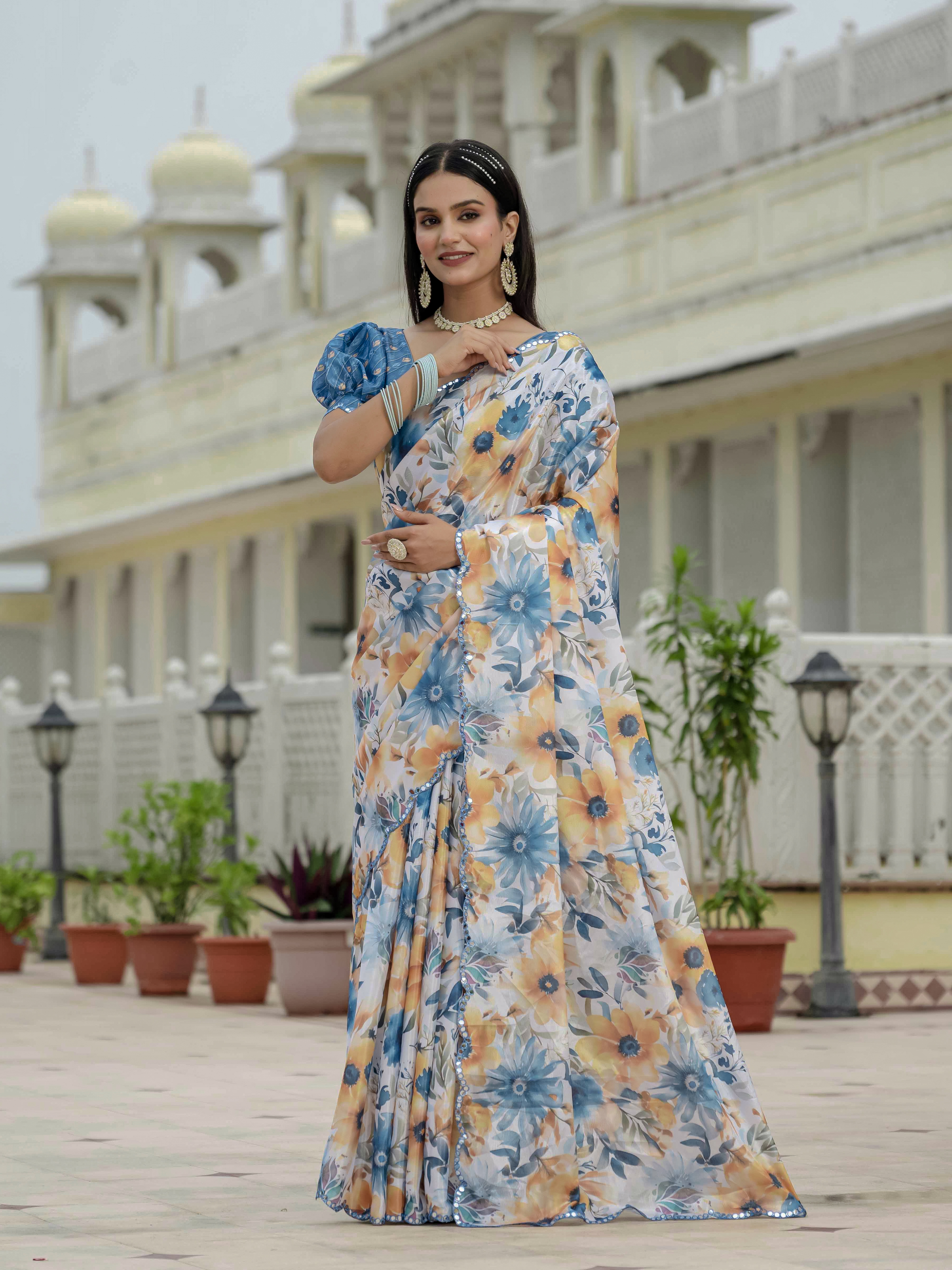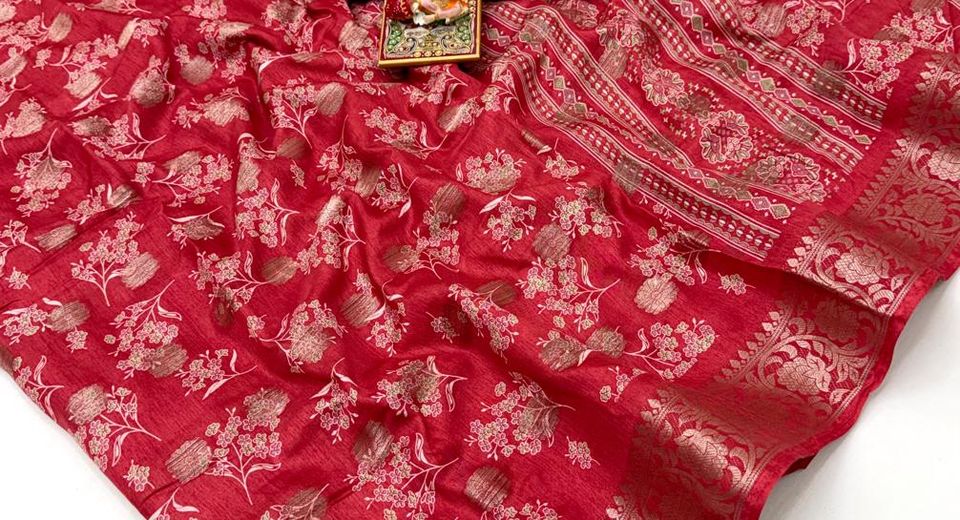
Bengali Sarees for Durga Puja carry memory, community and unmistakable visual symbolism. Laal Paar sarees bring the familiar white-and-red contrast, Garad sarees offer a quieter silk interpretation, and Tant sarees provide the breathable handloom option for long hours of pandal visits. The most convincing look doesn't depend on wearing the heaviest saree; it depends on choosing the right weave, border width, blouse construction and drape for your plans.
Red and white have a strong place in Bengali festive dressing, especially during Sindoor Khela on Bijoya Dashami, but the tradition is more varied than one colour formula. A red-bordered cotton saree can look perfectly appropriate with a simple blouse, while a red Banarasi silk saree suits evening Anjali, family gatherings and formal celebrations. Understanding the differences between the three saree types helps you dress respectfully without losing personal style.
How do Bengali Sarees for Durga Puja differ by weave?
Bengali Sarees for Durga Puja differ mainly in fibre, finish, border treatment and traditional use. Laal Paar describes a red-bordered saree, Garad usually refers to a pale silk saree with a red border, and Tant is a handwoven Bengal cotton saree known for its light weight and crisp texture.
What makes a Laal Paar saree distinctive?
Laal Paar is identified by a red paar, or red border, running along the saree edge. Heritage versions often have a white or cream ground with a red border and matching red pallu. Contemporary Laal Paar sarees may use richer red fields, printed motifs, zari accents or synthetic blends, so checking the fabric label matters before buying.
The border width changes the mood of a Laal Paar saree. A narrow border feels understated and practical for daytime Anjali, while a border measuring approximately 3 to 5 inches creates a more ceremonial silhouette. A broad red pallu also gives a stronger visual effect when the saree is draped in the Bengali style and pleated over the left shoulder.
What should you know about Garad silk?
Garad is traditionally a smooth, pale silk saree with a red border and red pallu, making it more polished and structured than everyday cotton. Garad silk often has a clean, relatively plain body, so the fabric's lustre and the clarity of the red border become the main design features.
Garad works well for Mahashtami or Dashami when you want a classic appearance with a dressier finish. Pure silk requires more careful storage and usually costs more than Tant cotton, but the fall photographs beautifully and holds formal pleats with less effort. A Garad-inspired silk blend can offer a similar appearance at a lower price, although the texture and drape won't be identical to silk.
Why is Tant useful for long puja days?
Tant is a lightweight handloom cotton associated with Bengal and is especially comfortable in warm, crowded puja environments. Tant sarees may feature red borders, temple motifs, checks, stripes, floral butis or woven pallus, allowing a time-honoured outfit to move beyond plain white and red.
The slightly crisp body of Tant makes it easy to create defined pleats, but the fabric can crease during travel or long walks. Light starching before wearing improves structure; excessive starch can make the saree brittle and uncomfortable. Tant is a strong choice for daytime pandal hopping because cotton absorbs moisture better than most synthetic fibres.
How should you choose Bengali Sarees for Durga Puja?
Choose Bengali Sarees for Durga Puja according to the time of day, expected heat, amount of walking and level of formality rather than choosing only by colour. Tant suits daytime movement, Garad suits a silk-focused time-honoured look, and Banarasi or silk blends suit evening events where zari and a luminous finish are appropriate.
- For morning Anjali: Select a light Tant or cotton saree with a manageable border and a breathable blouse. A red-and-white palette can remain simple because daylight highlights the weave.
- For pandal visits: Choose cotton, linen cotton or a soft silk that doesn't become heavy after several hours. A secure petticoat and low-heeled footwear are more useful than a very long pallu.
- For evening cultural programmes: Banarasi silk, Dola silk or a silk blend adds depth under warm lights. Zari should be balanced with a quieter blouse so the outfit doesn't look visually crowded.
- For Dashami and Sindoor Khela: A red-bordered white saree creates the classic festive impression, but a fully red saree with a defined border can also work when paired with an ivory or cream blouse.
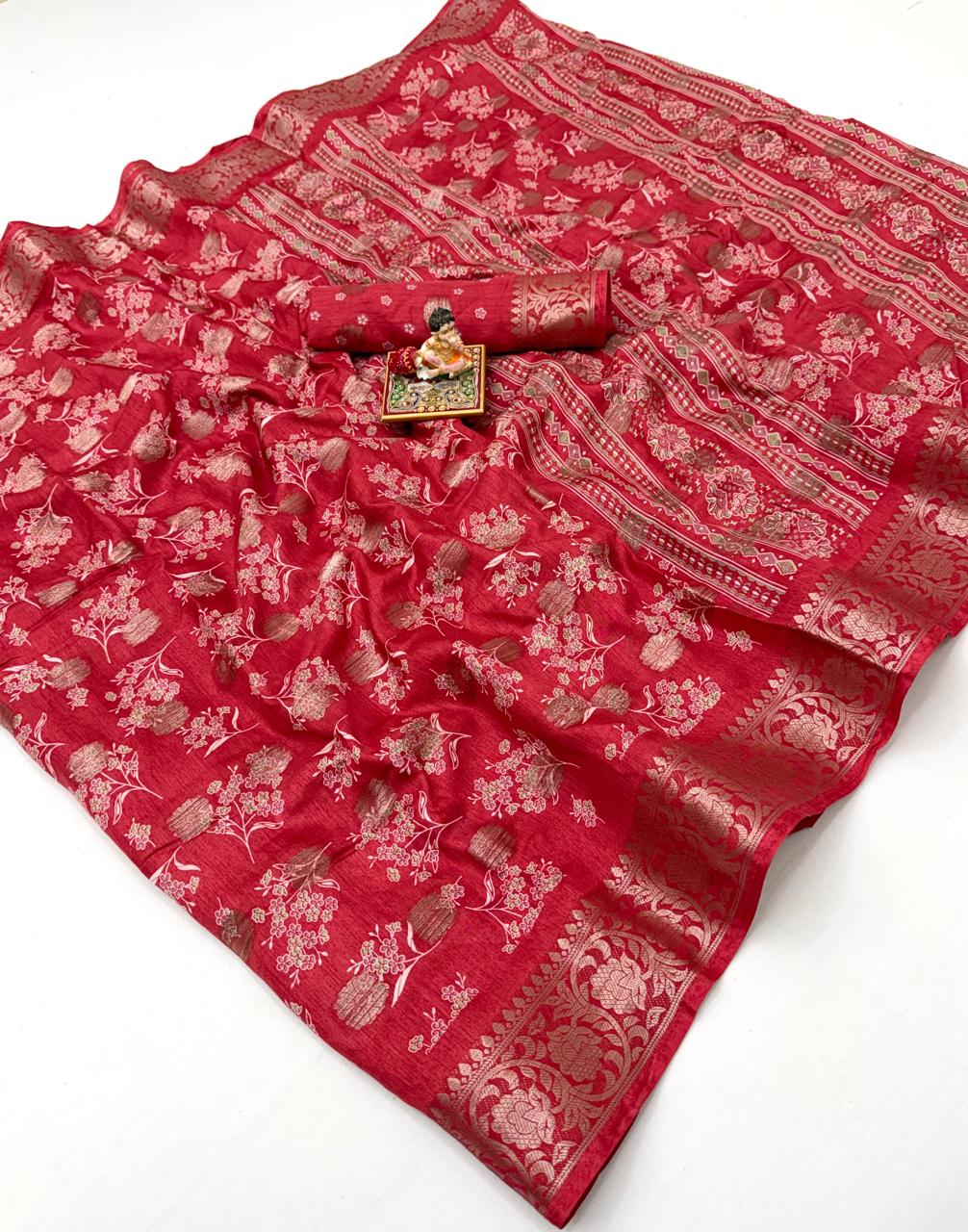
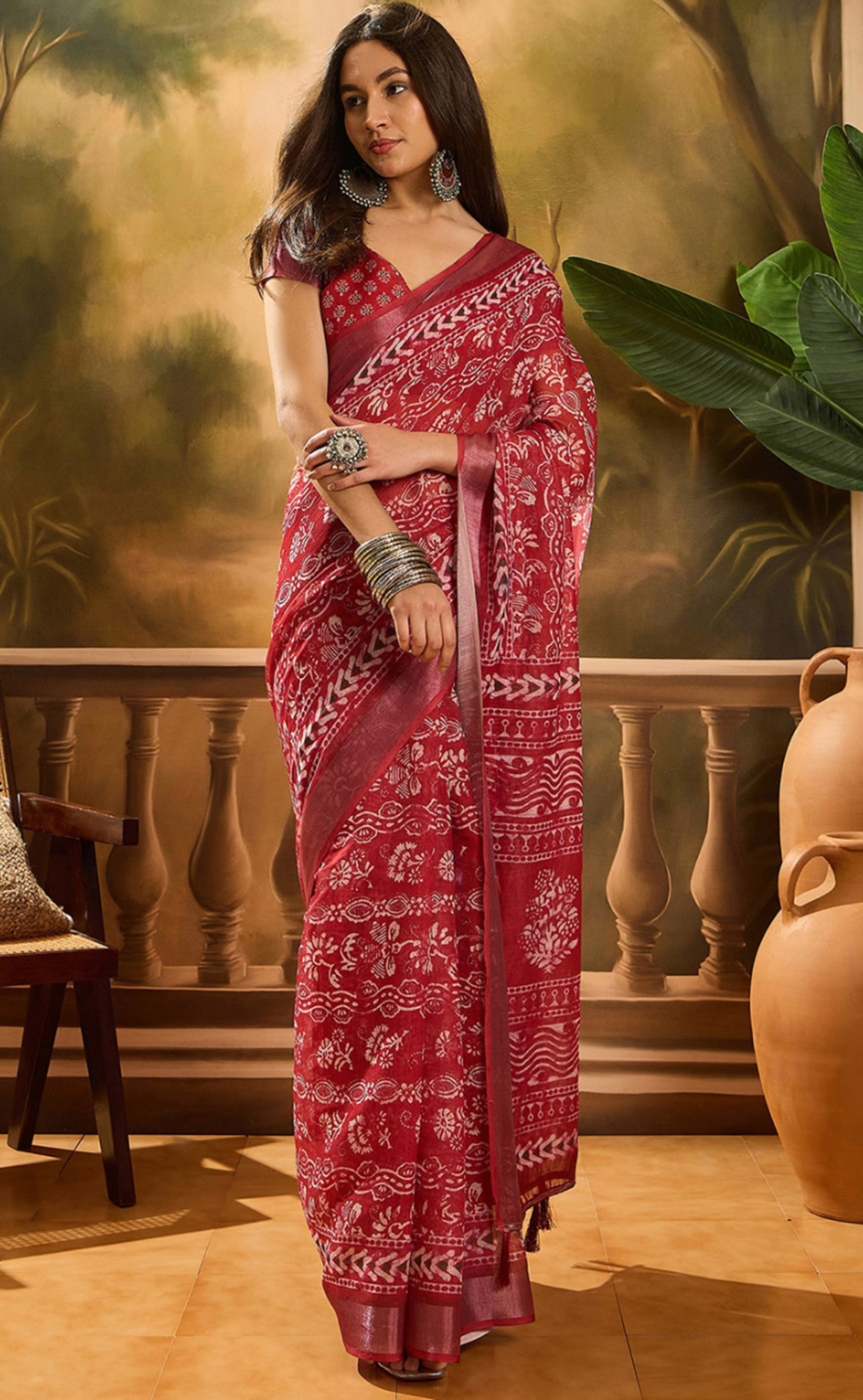
An useful buying check is to hold the saree by its pallu and inspect the underside of the border. Loose threads, uneven jacquard sections and an overly stiff finish may indicate that the saree needs careful handling. Red Floral Linen Cotton Saree with Beautiful Printed Border gives a lighter, contemporary route to festive dressing, while Red Banarasi Soft Silk Saree With Golden Zari Floral Border is better suited to a more formal evening finish.
Budget also affects fabric choice. Silk Sarees Under 3000 With Discount can be a practical starting point for shoppers comparing silk blends and lightweight silk options, but the product description should be checked for fibre composition, blouse-piece length and zari details. A low price doesn't automatically mean poor quality, and a high price doesn't guarantee pure silk.
How can Bengali Sarees for Durga Puja retain a heritage drape?
Bengali Sarees for Durga Puja retain their classic character when the drape, pallu placement and broad pleats remain recognisable, even if the blouse or footwear is contemporary. A secure waist tuck and discreet pins are more important than making the drape excessively elaborate.
What is the classic Bengali saree drape?
The classic Bengali saree drape is identified by broad front pleats, a pallu brought across the front and a relaxed pallu placement over the left shoulder. Many versions use a key ring, brooch or decorative pin at the pallu corner, although a concealed safety pin is more secure for crowded events.
- Wear a firm petticoat at the natural waist and tuck the saree securely before making pleats.
- Make broad, even front pleats and position them slightly to the left of the navel so walking remains comfortable.
- Wrap the saree around the body and bring the pallu from back to front over the left shoulder.
- Let the pallu fall broadly, then bring its far end back across the front and over the right shoulder if you're following the classic open Bengali style.
- Use two or three discreet pins at the waist and shoulder, leaving enough ease to sit, climb steps and move through a crowded pandal.
A saree with a firm cotton body usually holds this drape more easily than a slippery satin or very soft silk. A polished silk saree may need extra pins at the shoulder, especially when the pallu carries zari. Practising the complete drape once at home prevents last-minute adjustments on Ashtami morning.
How can the drape be adapted for comfort?
The Bengali drape can be adapted for comfort by reducing pallu length, securing the waist more firmly and choosing a breathable petticoat. Cotton leggings or a well-fitted underskirt can provide additional comfort when climbing stairs, but the petticoat should not be so tight that it restricts walking.
Keep approximately 2 to 3 metres of clear walking space around the saree hem when trying the outfit with footwear. A low block heel or embellished flat is safer for uneven pavements than a narrow high heel. A small crossbody bag worn beneath the pallu can also keep essentials secure without disturbing the shoulder arrangement.
Which blouse and jewellery suit Bengali Sarees for Durga Puja?
The best blouse and jewellery for Bengali Sarees for Durga Puja repeat one or two colours from the saree while leaving the border visible. Red, ivory, cream, muted gold and black can all work, but the blouse should match the saree's level of ornamentation.
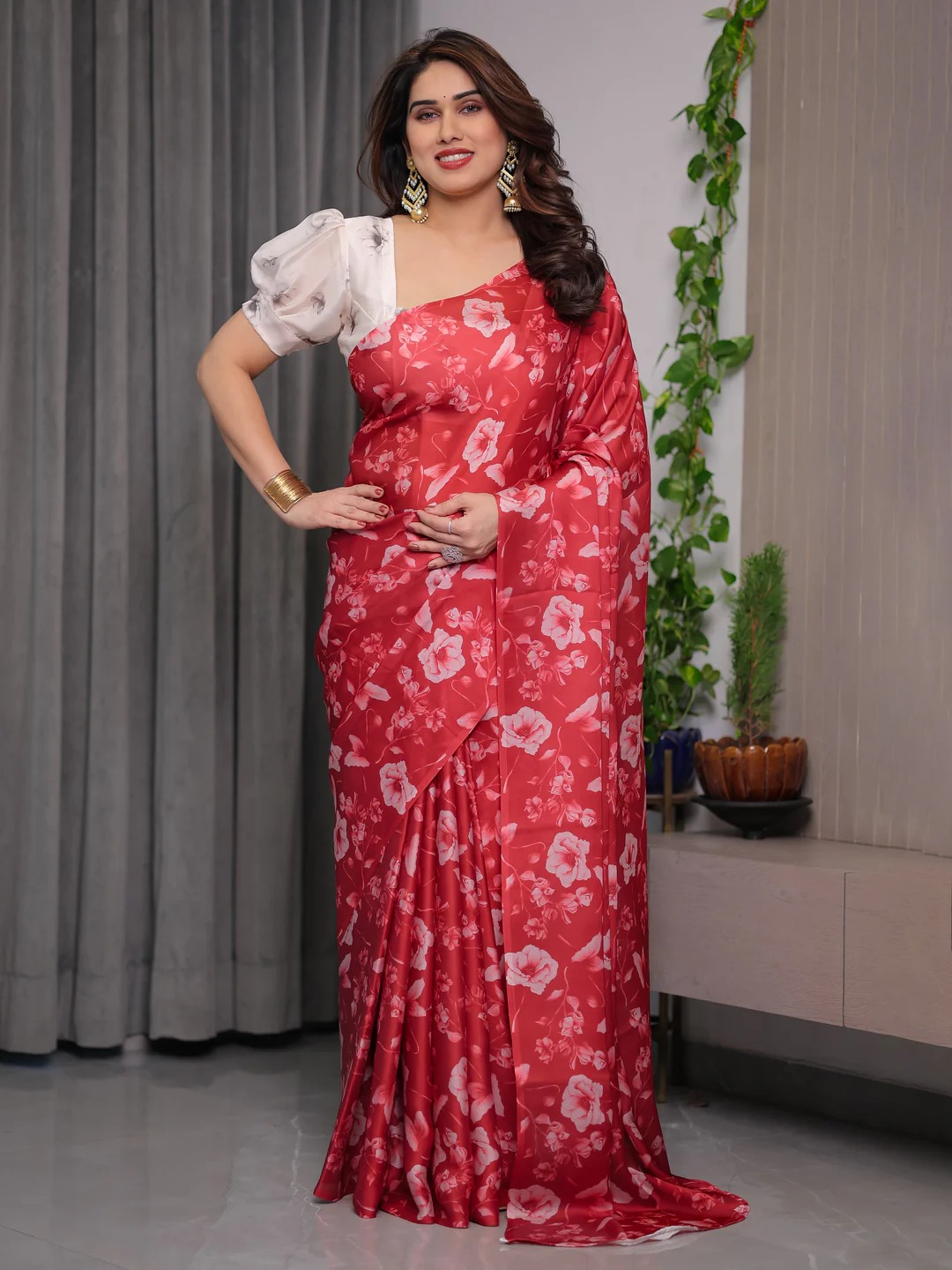
Which blouse colours work with Laal Paar and Garad?
A red short-sleeved blouse is the most recognisable pairing for a white Laal Paar saree, while an ivory, cream or muted gold blouse creates a softer interpretation. Elbow-length sleeves, a modest round neck and piping in the saree's border colour work particularly well with Tant and Garad.
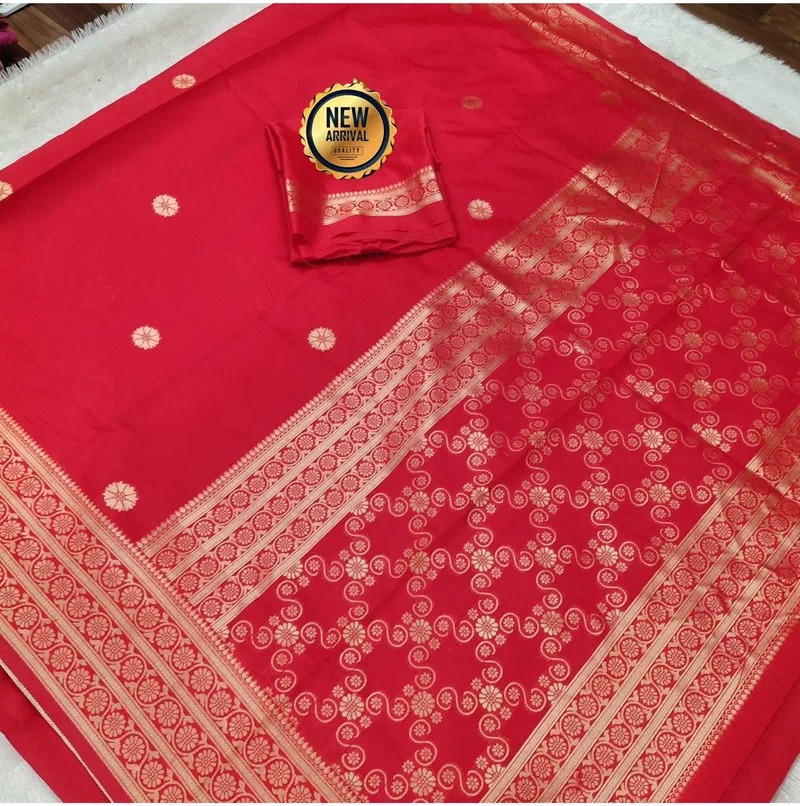
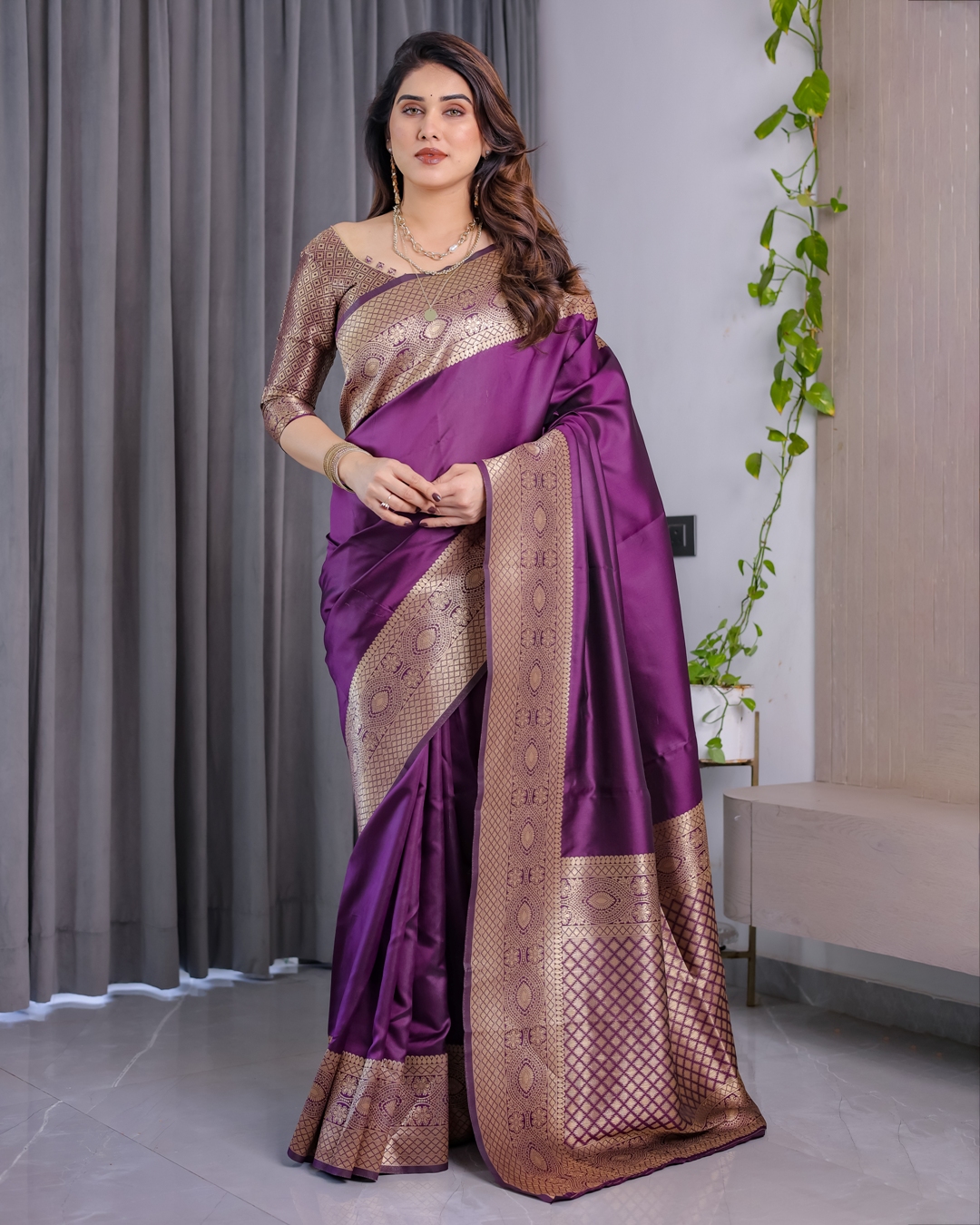
For a saree with a strong zari border, choose a blouse with one dominant detail: a gold sleeve edge, a woven texture or a simple embroidered neckline. Red Banarasi Silk Saree With Elegant Zari Borde and Red Banarasi Soft Silk Saree with Jacquard Zari Border already provide substantial surface interest, so a plain red blouse can look more refined than a heavily embellished one.
How should Bengali jewellery be balanced?
Classic jewellery can include a shankha pola-inspired bangle combination, gold-toned jhumkas, a long chain, a short necklace or a statement nath. Real conch-shell bangles may not suit every wearer or activity, so lightweight white-and-red bangles can provide the visual reference with greater comfort.
A red bindi, a low bun and a small amount of sindoor are styling choices, not requirements, and should never be treated as compulsory elements of Bengali identity. White flowers such as jasmine or tuberose can soften a red saree, while gold jewellery adds warmth to Garad silk without overwhelming its clean surface.
How can red Bengali Sarees for Durga Puja look contemporary?
Red Bengali Sarees for Durga Puja can look contemporary when a full red body is balanced with an ivory blouse, white flowers, gold jewellery or a contrasting red-and-white pallu detail. Modern styling should simplify the accessories around a printed or zari-rich saree instead of adding decoration everywhere.
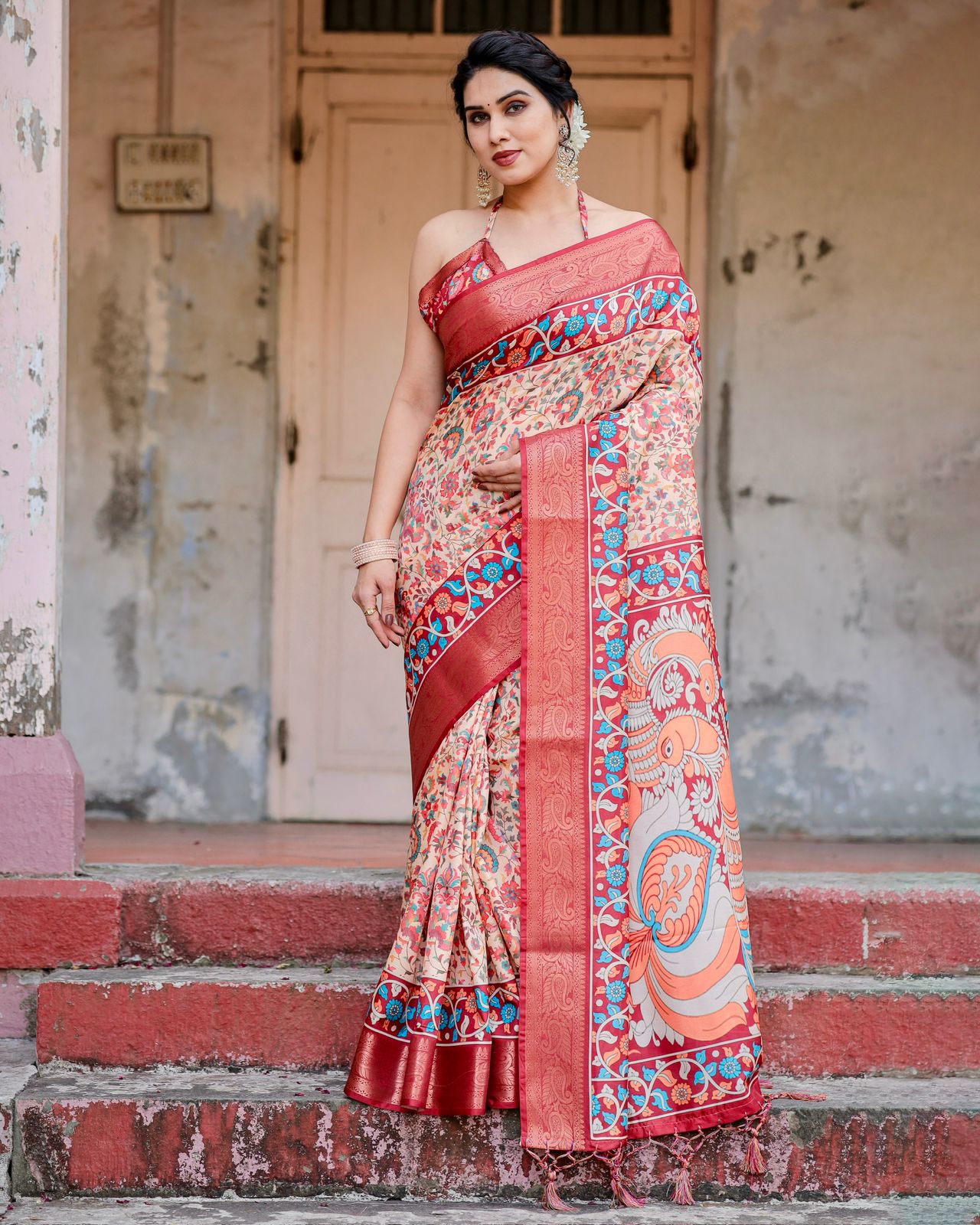
Red Dola Silk Butti Saree With Jacquard Border offers a softer silk texture with small woven or jacquard interest, making it suitable for a festive gathering where a plain Garad-like look feels too restrained. Red Banarasi Soft Silk Saree With Golden Zari Floral Border creates a richer evening appearance through floral zari rather than relying only on a bright red colour.
For a more graphic and contemporary outfit, Designer Red Patola Print Pashmina Silk Festive Saree can be paired with a solid blouse and minimal jewellery. The printed surface should remain visible, so avoid covering too much of the pallu with a large brooch or an oversized necklace. Red Satin Floral Print Saree with Unstitched Blouse Textile is another option for a dressier printed look, although satin can feel warmer and may need more careful pinning than cotton.
Collections such as Red Banarasi Silk Sarees for Weddings Under 1100 and Party Wear Sarees may include designs that work for Durga Puja, but wedding-oriented styling isn't automatically suitable for every puja visit. Compare the saree's weight, border scale and blouse requirements before choosing a formal design for a full day of movement. Pink Georgette Sarees can also provide contrast styling inspiration, particularly when a lighter pastel blouse is used with red accessories.
How should Bengali Sarees for Durga Puja be cared for?
Bengali Sarees for Durga Puja should be aired after wearing, cleaned according to their fibre and stored folded in breathable fabric. Cotton Tant, silk, zari and satin each need different handling, so one universal washing method can damage the saree.
What is the safest care routine for Tant?
Tant cotton can usually be gently hand-washed or professionally cleaned according to the care label, then dried in shade with the saree turned inside out. Avoid wringing the saree because twisting can distort the border and weaken delicate woven motifs. Iron Tant on the reverse side while the fabric is slightly damp, using a moderate temperature.
How should Garad, Banarasi silk and zari be stored?
Garad and Banarasi silk should be dry-cleaned when the care label recommends it, then folded with acid-free tissue or clean muslin between folds. Refold silk every few months to prevent permanent crease lines, and keep zari away from direct sunlight, moisture, perfume and plastic covers that trap humidity.
Remove safety pins before storage and check the saree for perspiration, food marks or sindoor residue. Store the saree in a dry cupboard rather than an attic or bathroom-adjacent cabinet. A neem leaf sachet or cedar block can discourage insects, but strong fragrance products should not touch silk directly.
Gray Color Sarees Under 1000 is an useful example of how colour-based collections can encourage broader wardrobe planning, but every saree should still be assessed by fibre and care requirement. A festive saree remains wearable for years when it's aired promptly, stored correctly and not sent for unnecessary washing after every brief use.
What should you check before buying Bengali Sarees for Durga Puja?
Before buying Bengali Sarees for Durga Puja, check the fibre composition, border dimensions, blouse-piece size, transparency, care instructions and return measurements. These details determine whether a saree will remain comfortable and structurally sound during several hours of festive wear.
- Fibre: Confirm whether the saree is pure cotton, silk, a silk blend, linen cotton, satin or synthetic fabric.
- Border: Measure or estimate the border width and check whether the red colour continues cleanly around the pallu.
- Blouse piece: Confirm whether the blouse textile is attached, unstitched and long enough for the chosen sleeve design.
- Transparency: Hold pale cotton or georgette against light and plan an appropriate petticoat colour.
- Weight: Consider whether zari, jacquard or multiple layers will remain comfortable in humid weather.
- Care: Read whether the saree requires hand-washing, dry-cleaning, shade drying or special zari protection.
A practical Durga Puja wardrobe often includes one breathable daytime saree and one dressier evening option. Tant or linen cotton handles movement and heat well, while Garad, Banarasi silk or Dola silk provides a more luminous finish for formal gatherings. Choosing by use rather than impulse makes the saree easier to wear repeatedly after the festival.
The most successful festive outfit leaves room for movement, personal expression and cultural context. A crisp Tant with a red border, a restrained Garad with gold jewellery or a richly woven red silk can all belong in a Durga Puja wardrobe when the styling respects the fabric and the wearer's comfort.
Common Questions About Bengali Sarees for Durga Puja
What is the difference between a Laal Paar and a Garad saree?
A Laal Paar saree is defined primarily by its red border, and it may be made from cotton, silk or a blend. Garad traditionally refers to a pale, smooth silk saree with a red border and pallu, so Garad is usually dressier and more structured.
Is Tant saree suitable for Durga Puja pandal visits?
Tant saree is highly suitable for daytime pandal visits because lightweight cotton absorbs moisture and allows airflow. The crisp weave also creates clear pleats, although the saree may crease more than silk during long walks.
Which blouse colour goes with a Bengali red-and-white saree?
Red, ivory, cream and muted gold are reliable blouse colours for a Bengali red-and-white saree. A plain red blouse gives the most traditional effect, while ivory or gold creates a softer and more contemporary finish.
How do you drape a Bengali saree for Durga Puja?
A Bengali saree drape uses broad front pleats, a pallu brought across the front and a broad fall over the left shoulder. Secure the waist and shoulder with discreet pins, then leave enough ease to walk, sit and climb steps comfortably.
Can I wear a red Banarasi silk saree for Durga Puja?
A red Banarasi silk saree is appropriate for evening puja gatherings, cultural programmes and family celebrations. Pair a zari-rich Banarasi saree with a simpler blouse and moderate jewellery so the weave remains the main feature.
How should a Tant or Garad saree be stored after Durga Puja?
Air the saree completely before folding it and store it in a clean muslin or breathable cotton cover. Tant can be gently cleaned according to its care label, while Garad silk and zari generally benefit from professional cleaning and should be protected from moisture, perfume and direct sunlight.