

A Bengali saree carries visual weight through its border, pallu and unmistakable drape, so the blouse neckline needs to support rather than compete with those features. Bengali Blouse Neck Designs for Traditional Sarees work especially well when the neckline is chosen according to the saree fabric, border width, jewellery and the wearer's shoulder proportions. A high back can echo the formality of a Kanjeevaram-style silk blouse, while a modest V-neck can make a cotton saree look lighter without losing its heritage character.
The most successful blouse decisions usually involve three measurements: the depth of the front neckline, the height of the back neckline and the width of the shoulder line. A difference of even 2 to 3 centimetres can change how a saree border frames the upper body. The following guide explains those choices for pujas, family ceremonies, weddings and other classic occasions.
Bengali Blouse Neck Designs for Heritage Sarees and neckline proportion
Neckline proportion determines whether a blouse appears balanced beside a Bengali saree's border and pallu. A wide, elaborate border generally benefits from a clean neckline, while a plain or fine-bordered saree can support more detailing around the neck.
Time-honoured Bengali sarees often feature a strong contrast between the body and border, such as an ivory or white base with a red border. A narrow round neck preserves that graphic contrast and leaves room for a long gold chain. A shallow V-neck creates a vertical line that works well when the saree has a broad red or maroon pallu. A square neckline exposes more of the collarbone and can suit a shorter necklace or a single statement pendant.
Neckline depth should also relate to the jewellery being worn. A 5 to 7 centimetre front opening below the collarbone normally leaves enough space for a choker without allowing the necklace and blouse edge to merge. A deeper neckline can work with a long haram, but it requires secure tailoring and careful movement checks before the event.
Back necklines deserve equal attention because the Bengali saree pallu is frequently arranged over the shoulder and across the back. A high round back or modest keyhole keeps the blouse visually composed when the pallu is narrow. A low back with tie details is better reserved for lighter drapes or evening receptions where the back is intentionally visible.
Bengali Blouse Neck Designs for Classic Sarees by neckline shape
Round and boat necks
Round and boat necks are the most adaptable choices for heritage Bengali sarees. A medium round neck, approximately 7 to 9 centimetres wide, pairs naturally with cotton sarees, Tant weaves and everyday silk because the shape looks neat without adding visual noise.
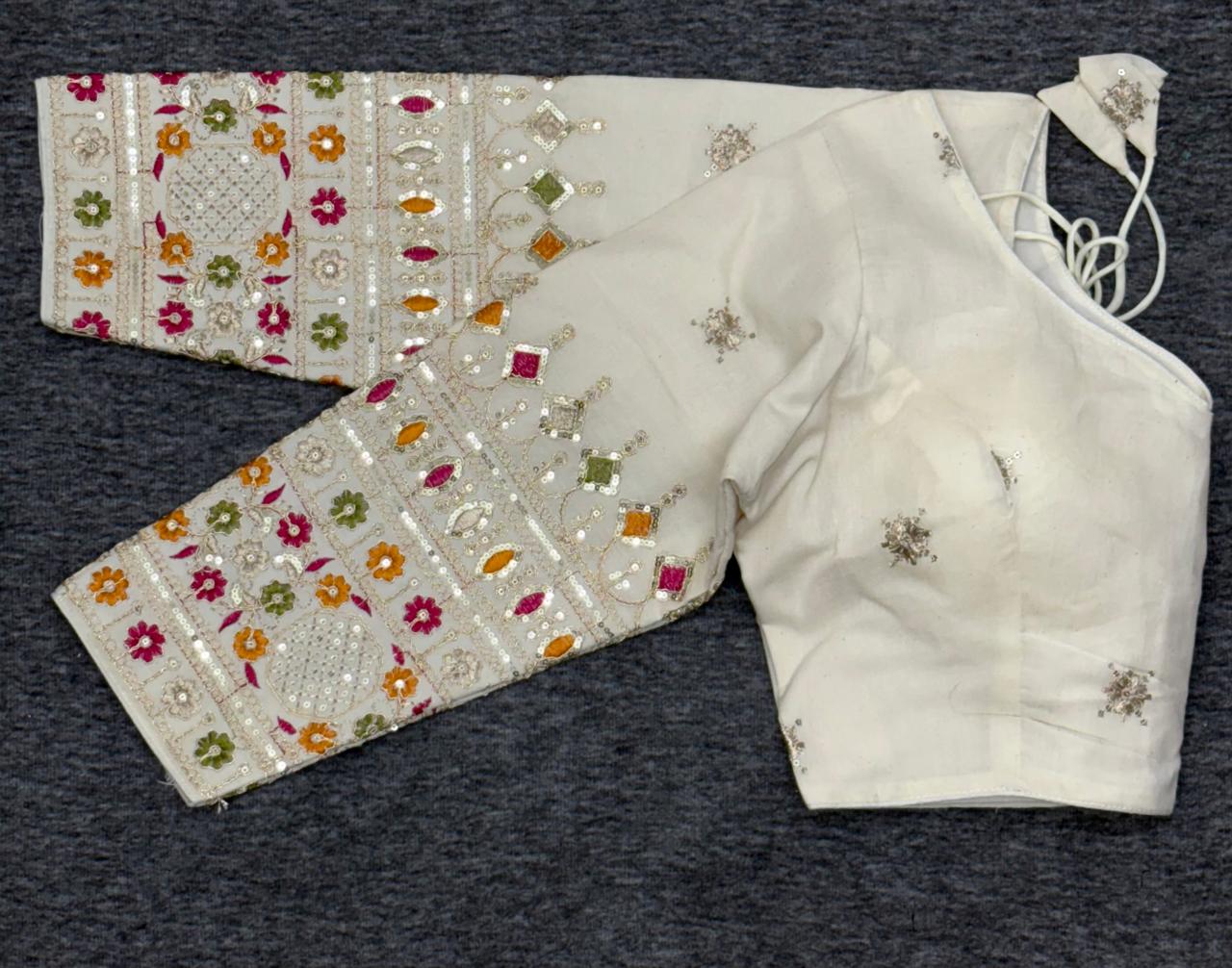
A boat neck extends horizontally towards the shoulder and can make a narrow shoulder line appear broader. The neckline should not reach the armhole. Leaving at least 3 centimetres of shoulder fabric helps the blouse retain structure. Boat necks look particularly polished with three-quarter sleeves and narrow piping in a contrasting colour.
V-necks and collar necks
V-necks create a vertical effect and suit sarees with broad borders or dense motifs. A moderate V, ending around 6 to 10 centimetres below the collarbone, lengthens the visible neck without making the blouse look overtly modern.
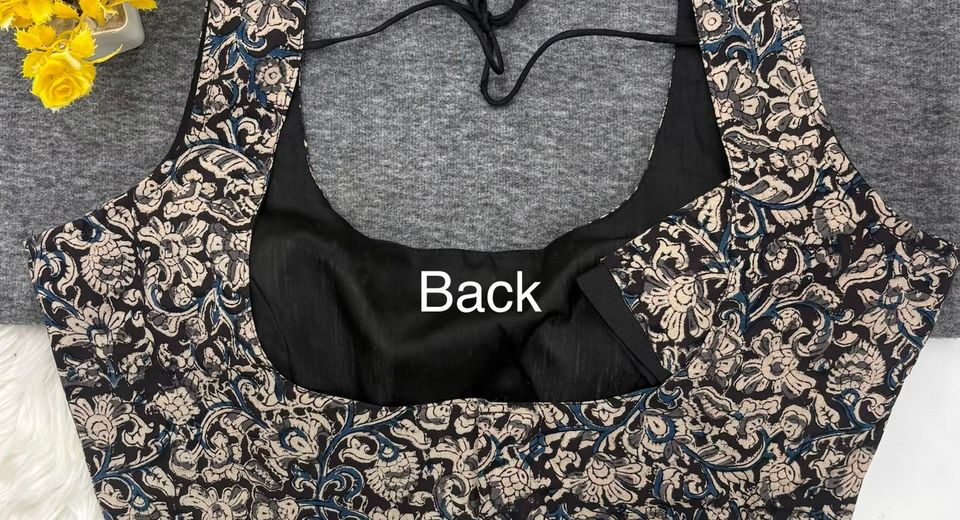
Kalamkari Cotton V Neck Collar Blouse for Women demonstrates how a V opening and collar detail can frame the face while retaining a structured heritage feel. A collar neckline works best with small jhumkas, a simple chain or no necklace when the print already has substantial visual detail.
Square, sweetheart and keyhole necks
Square necks suit festive silk sarees because their clean corners echo geometric zari borders. A square neckline should be softened with piping or a narrow facing if the fabric is stiff, otherwise the corners may stand away from the body.
Sweetheart necklines create a softer, more ornamental effect and pair well with Banarasi silk, brocade and wedding blouses. A keyhole neckline offers a small focal detail without requiring a deep front opening. The keyhole should remain centred and reinforced with interfacing, especially when the blouse has padded cups or heavier embellishment.
Bengali Blouse Neck Designs for Classic Sarees and fabric choices
Blouse fabric should match the saree's weight, texture and level of formality. A neckline that works on soft cotton may collapse under zari embroidery, while a heavily structured blouse can overwhelm a lightweight handloom drape.
Cotton, Tant and Kalamkari
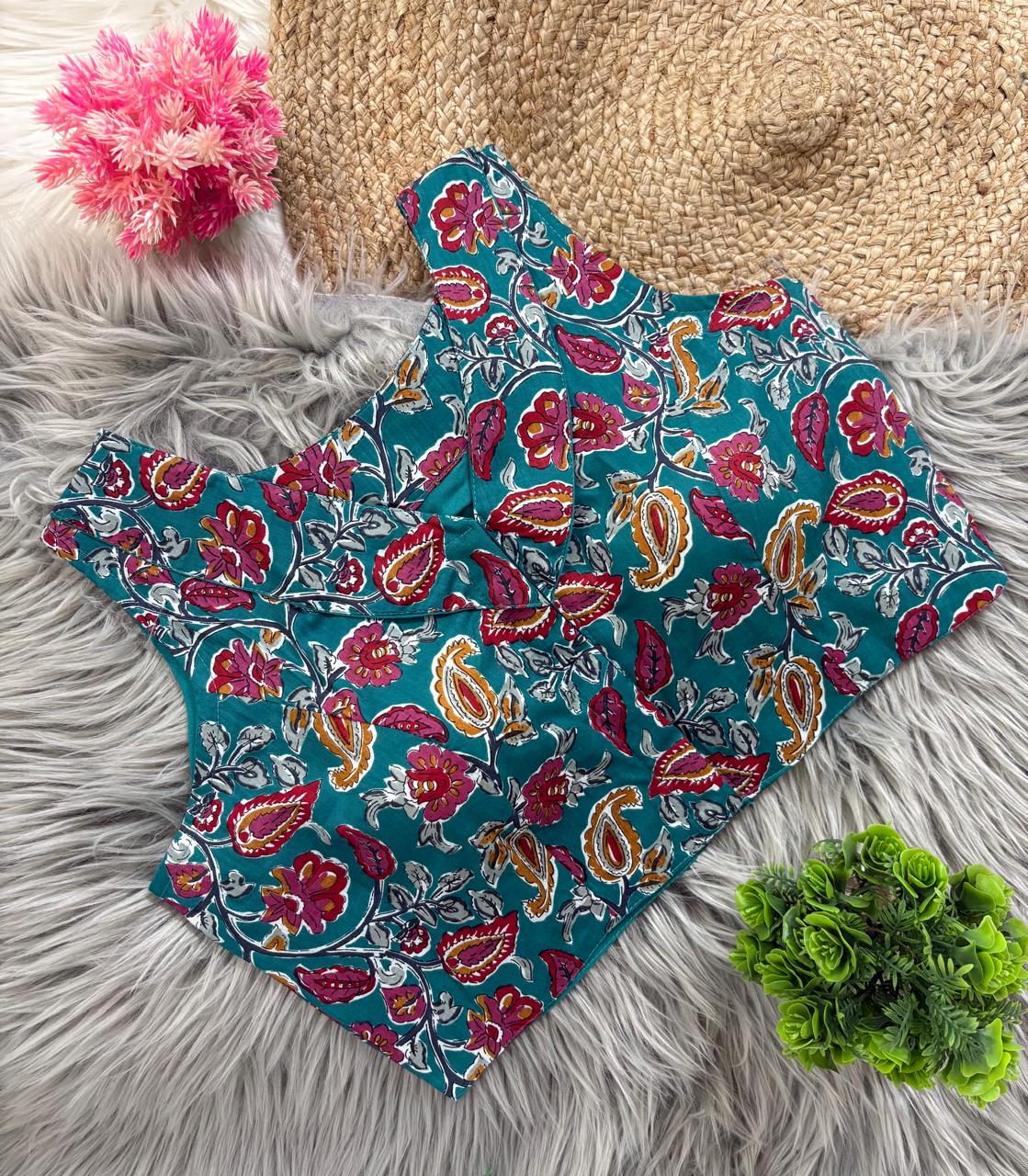
Soft cotton blouses are most comfortable with round, shallow V or modest boat necks. These shapes allow movement and don't require heavy internal support. Kalamkari prints already contain narrative motifs and multiple colours. A clean neckline usually looks more considered than dense neck embroidery.
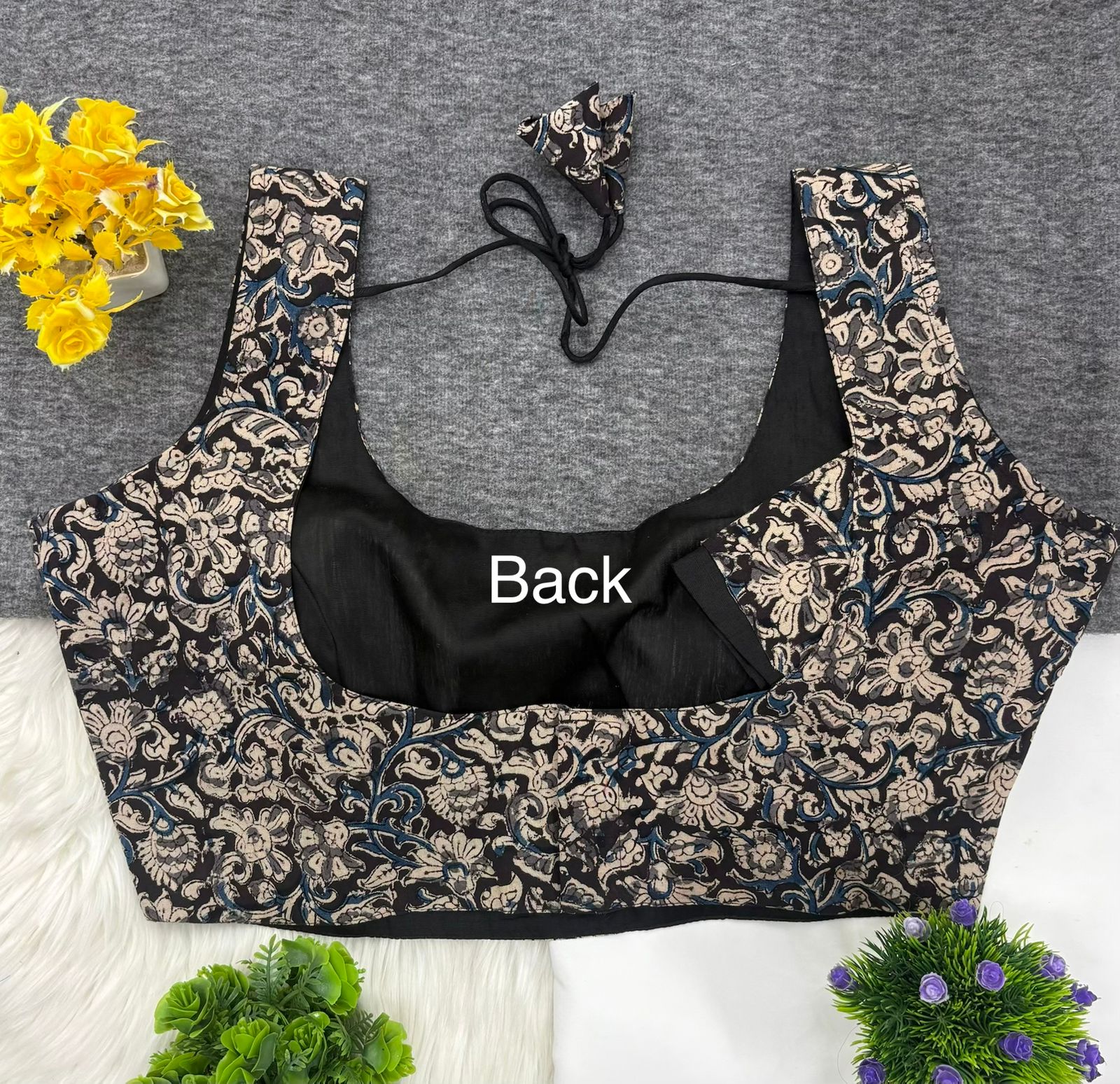
Pure Kalamkari Cotton Padded Blouse for Women is an useful reference for combining printed cotton with a supportive construction. Padded cotton blouses can reduce the need for multiple layers. But the padding should lie flat at the bust and should not push the neckline outward. Cotton lining is preferable to synthetic lining for long puja ceremonies in warm weather.
Kalamkari Cotton V Neck Collar Blouse for Women gives another practical direction for a handloom or printed saree. A collar can sharpen a relaxed cotton look, while the V opening prevents the upper body from appearing too enclosed.
Banarasi silk, Kanjeevaram and brocade
Banarasi silk and Kanjeevaram sarees support more formal blouse architecture because their weight and lustre can carry structured necklines. High round backs, square fronts, jewel necks and carefully finished V-necks all work well with zari borders.
Banarasi Silk Golden Jari Padded Blouse for Women illustrates why neckline simplicity can be valuable when the fabric already shines. A restrained round or square neckline allows golden zari to remain the central feature. Pairing a highly embellished blouse neck with a heavily woven Banarasi silk saree can make the upper half appear crowded.
For a wedding blouse, use a firm lining, covered seams and shoulder support strong enough to hold the saree pleats. A neckline facing of approximately 2.5 to 4 centimetres gives the edge stability and makes later alterations easier.
Chanderi, organza and lighter festive fabrics
Chanderi and organza need lightweight construction because excessive interfacing can make the blouse look rigid against the saree. Small round necks, shallow V-necks and narrow keyholes preserve the airy quality of these fabrics.
Light fabrics can still look festive through contrast piping, a small embroidered motif or fabric-covered buttons. Narrow zari piping is usually more proportionate than a wide metallic border on a delicate Chanderi blouse.
Bengali Blouse Neck Designs for Time-honoured Sarees with suitable sleeves
Sleeve length changes how a neckline is perceived, so neckline selection should never happen separately from sleeve planning. Short sleeves expose more of the upper arm and make a high neck look lighter, while three-quarter sleeves add a formal, heritage line.
Elbow-length sleeves are a dependable choice for Bengali sarees worn at pujas and family ceremonies. The sleeve hem should sit comfortably above or below the elbow rather than cutting directly across the joint. A sleeve circumference with 2 to 3 centimetres of ease allows the arm to bend without pulling the blouse neckline sideways.
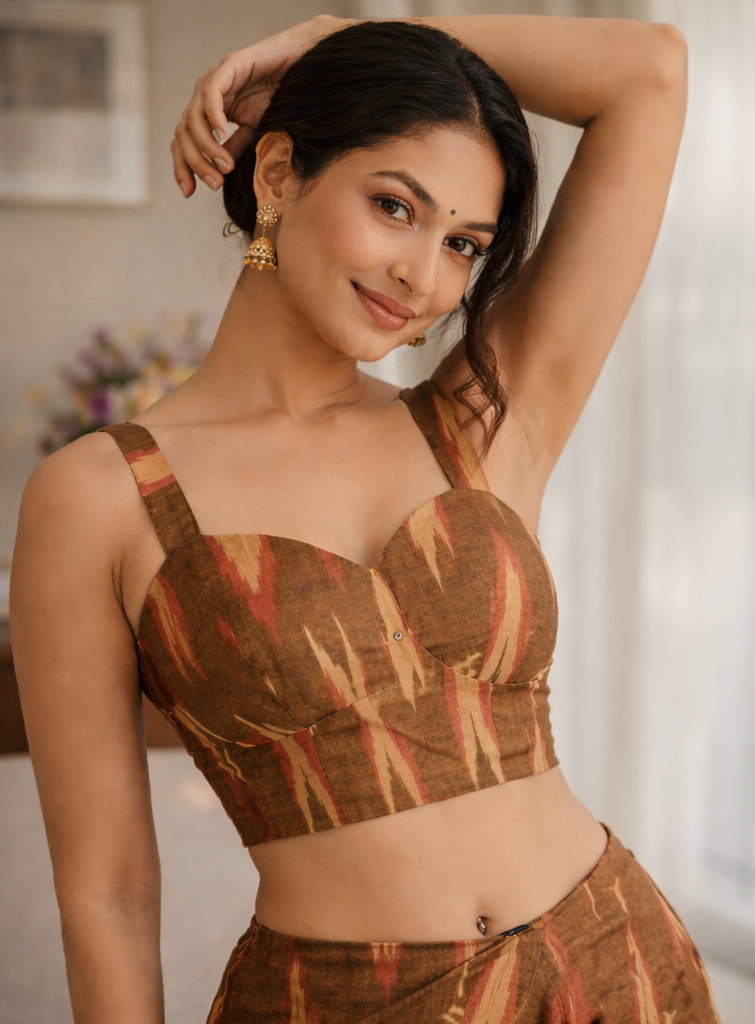
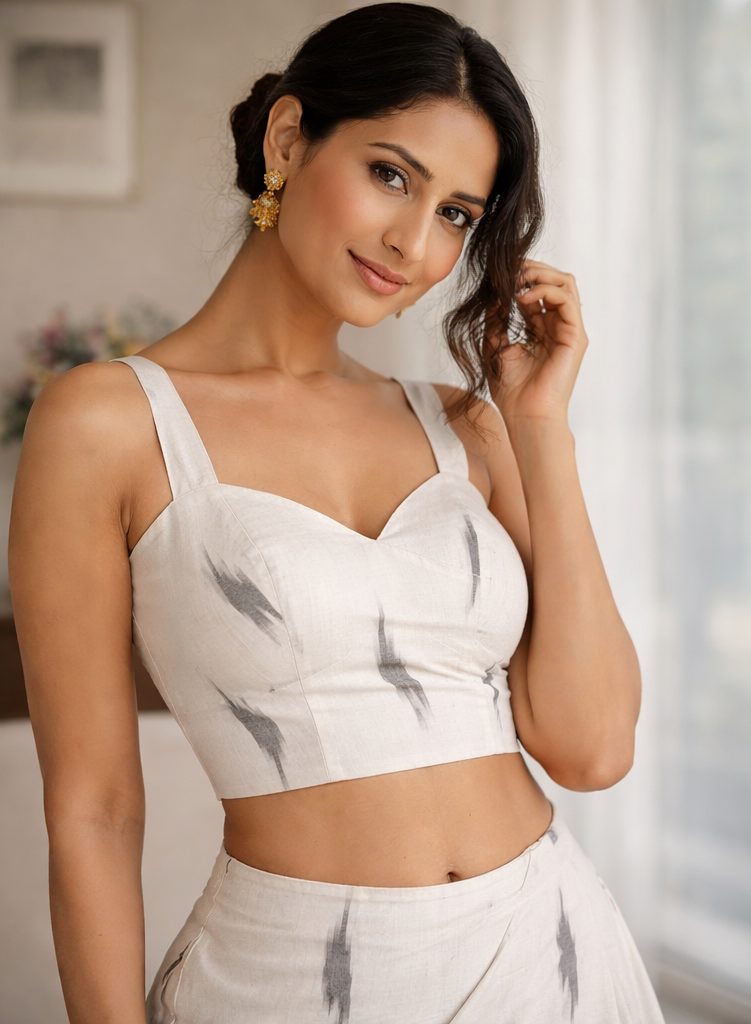
Sleeveless blouses can work with contemporary drapes and summer cotton sarees, provided the armhole is cut high enough to prevent gaping. Brown Ikat Cotton Padded Blouse Sleeveless Stylish and Cream Ikat Cotton Padded Blouse Sleeveless Trendy show how Ikat texture can provide interest when the neckline and sleeves remain clean.
Ikkat Cotton Padded Blouse for Women Sleeveless is another example of a sleeveless option that suits a patterned saree. Ikat has a naturally graphic surface, so a simple round, square or shallow V-neck prevents the pattern from competing with additional embroidery.
Broad shoulders often look balanced with a V-neck, narrow boat neck or gently curved neckline. Narrow shoulders can benefit from a boat neck, square neck or slightly extended shoulder seam. A tailor should make these adjustments through the pattern rather than simply deepening the neckline, because excessive depth can compromise coverage and support.
Bengali Blouse Neck Designs for Classic Sarees with Bengali details
A Bengali blouse gains its cultural character through proportion, colour, fabric and finishing details rather than through one compulsory neckline. Red-and-white combinations, gold borders, puffed sleeves, fabric-covered buttons and modest high backs are all recognisable styling references.
For a classic red-and-white saree, a red blouse with a gold-edged round neck creates a cohesive look. A white blouse with red piping gives sharper contrast and can make the saree border appear wider. Maroon, rust, bottle green and antique gold also work well with classic cotton and silk without copying the saree's exact colour.
Small puff sleeves can add a vintage Bengali reference, but the puff should be controlled. A sleeve head with approximately 2 to 4 centimetres of fullness is usually enough for shape; excessive fullness can interfere with saree pleats and make the shoulder appear bulky.
Fabric-covered buttons at the back or sleeve cuff add detail without covering the whole blouse in sequins. Zari piping, kantha-inspired running stitch and small paisley embroidery can connect the blouse to the saree while keeping the neckline readable.
Classic Festive Wear Blouse for Stylish Saree Look can provide an useful reference when the saree already has a prominent border and the blouse needs a versatile festive finish. The best styling choice is often one controlled detail, such as a contrasting edge or a small motif, rather than several competing decorations.
Bengali Blouse Neck Designs for Time-honoured Sarees and fitting care
Correct fit matters more than neckline novelty because a poorly fitted blouse can distort the saree drape, cause gaping and create pressure around the shoulders. A blouse should be tried on with the petticoat or shapewear used under the saree, since the final waist and bust position can change by several centimetres.
Check four movements during a fitting: raising both arms, sitting down, clasping the hands in front and turning the shoulders. The neckline should remain flat in all four positions. Gaping near the armhole usually indicates an armhole or bust adjustment problem, not a need for a tighter neck.
Padded blouses should have cups centred over the bust and padding that ends smoothly below the neckline. Thick padding can push a shallow V-neck open, particularly in cotton or satin. Removable pads are practical when the blouse will be worn in different seasons. But the inner pocket must be securely stitched.
Wash cotton blouses in cool water with a mild detergent, avoid wringing around the neckline and dry printed fabrics in shade. Banarasi silk and zari blouses should be dry-cleaned when possible and stored folded in unbleached cotton rather than plastic. Air the blouse after each wear for several hours before storage, and refold heavy zari pieces every few months to reduce permanent crease marks.
A final mirror check should include the neckline, saree border, necklace and pallu together. When the blouse neckline remains visible beneath the pallu and the jewellery has clear space around it, the complete Bengali saree look usually appears intentional, comfortable and traditional.
Common Questions About Bengali Blouse Neck Designs for Traditional Sarees
Which blouse neckline suits a traditional Bengali saree best?
A medium round neck is the most versatile choice for a traditional Bengali saree, especially with cotton, Tant or a red-and-white saree. A shallow V-neck suits broad borders, while a square neck works well with Banarasi silk and zari.
Which blouse design goes with a white and red Bengali saree?
A red blouse with gold piping creates a classic coordinated look with a white and red Bengali saree. A white blouse with red edging gives sharper contrast, while a maroon blouse offers a deeper festive interpretation.
Are sleeveless blouses suitable for traditional Bengali sarees?
Sleeveless blouses are suitable for lighter cotton sarees, summer ceremonies and contemporary Bengali drapes when the armhole fits securely. Three-quarter or elbow-length sleeves are generally more formal for pujas, weddings and conservative family events.
How deep should a Bengali saree blouse neckline be?
A front neckline extending about 5 to 10 centimetres below the collarbone usually provides a flattering and practical range. The final depth should depend on the jewellery, saree border, bust support and whether the blouse will be worn during active ceremonies.
Which fabric is best for a Bengali saree blouse?
Cotton works well with Tant, Kalamkari and everyday handloom sarees, while Banarasi silk and brocade suit formal silk sarees. Chanderi and organza need lighter lining and interfacing so the blouse does not look stiff.
How can a blouse neckline stay flat without gaping?
A neckline stays flat when the blouse has accurate bust, shoulder and armhole measurements, a properly cut facing and enough internal support. Try the blouse with the intended saree understructure and test arm movement before final stitching.




