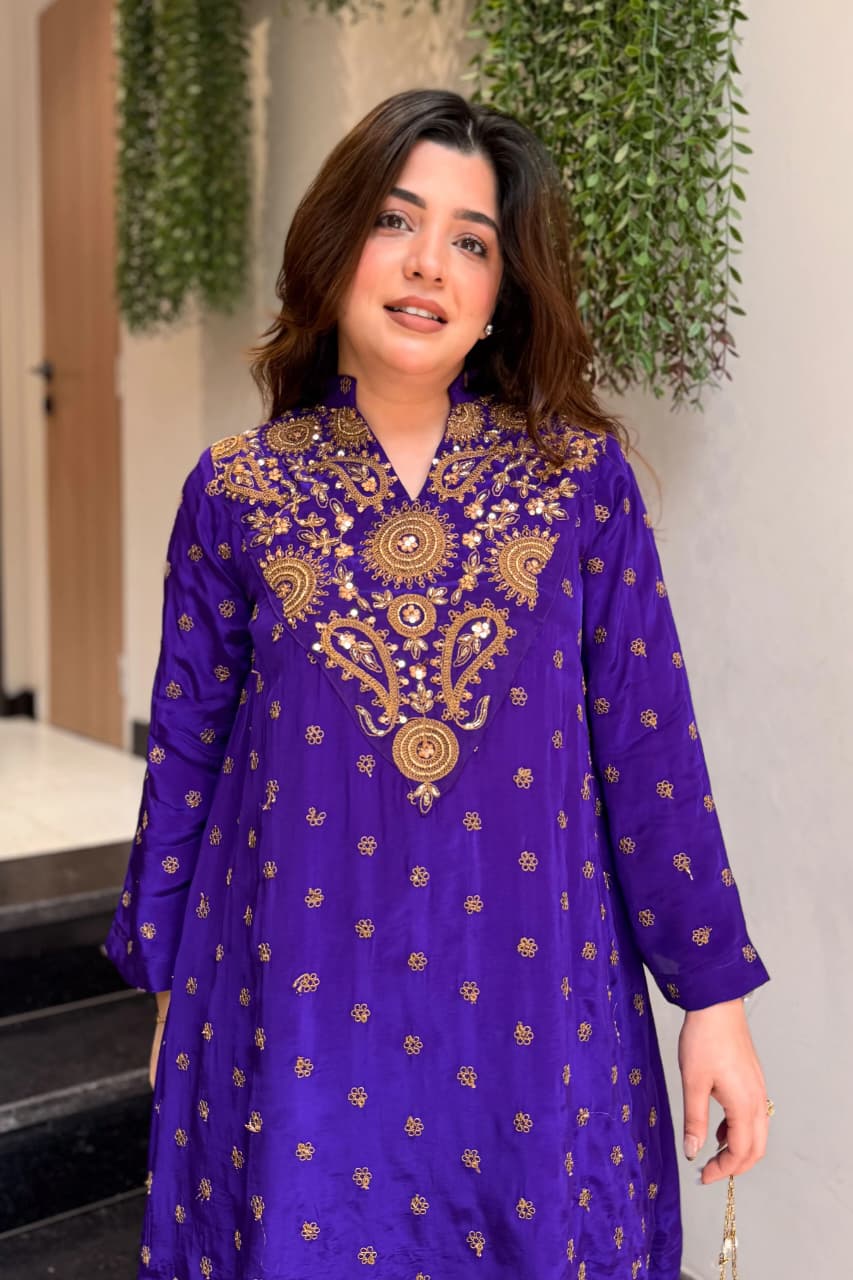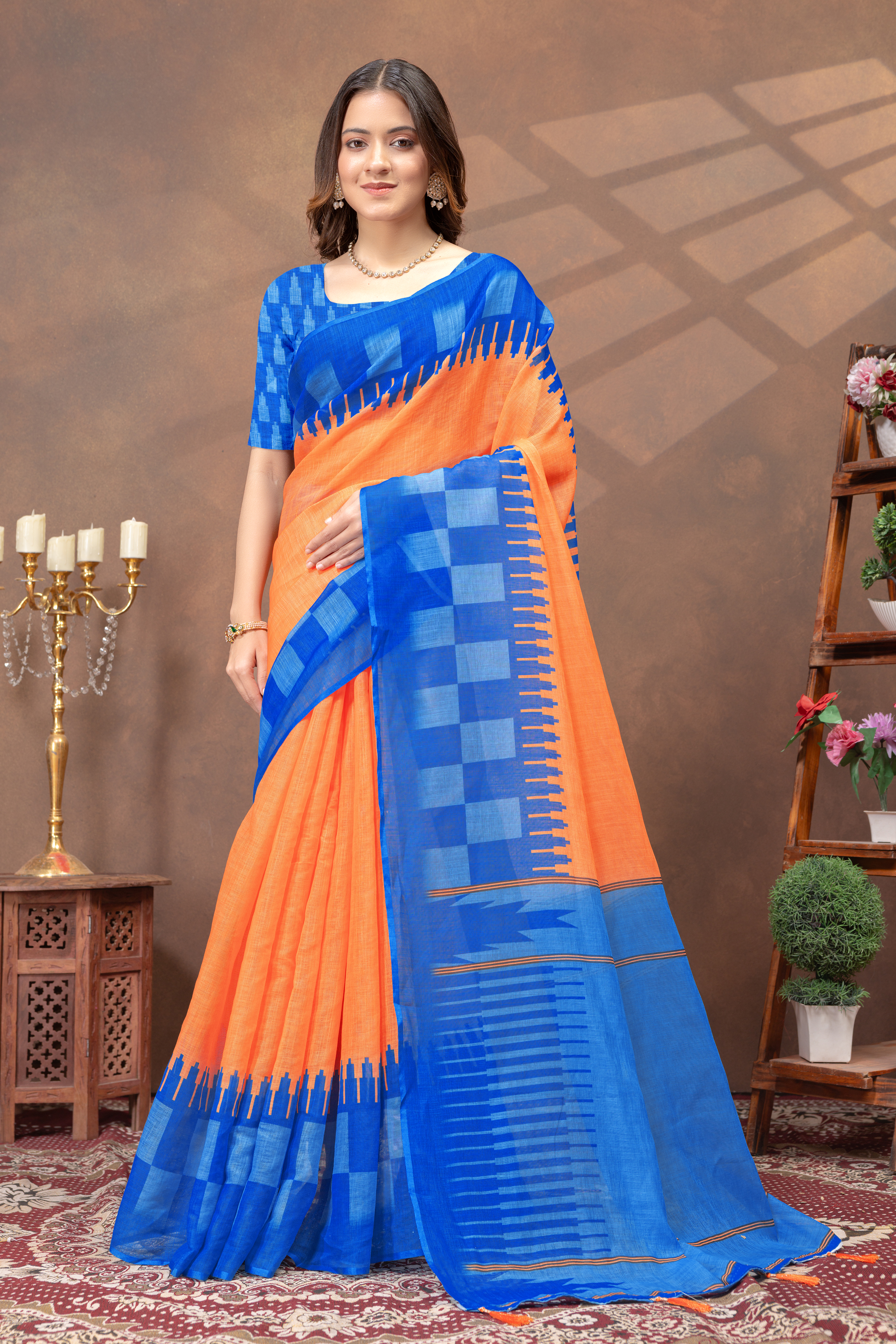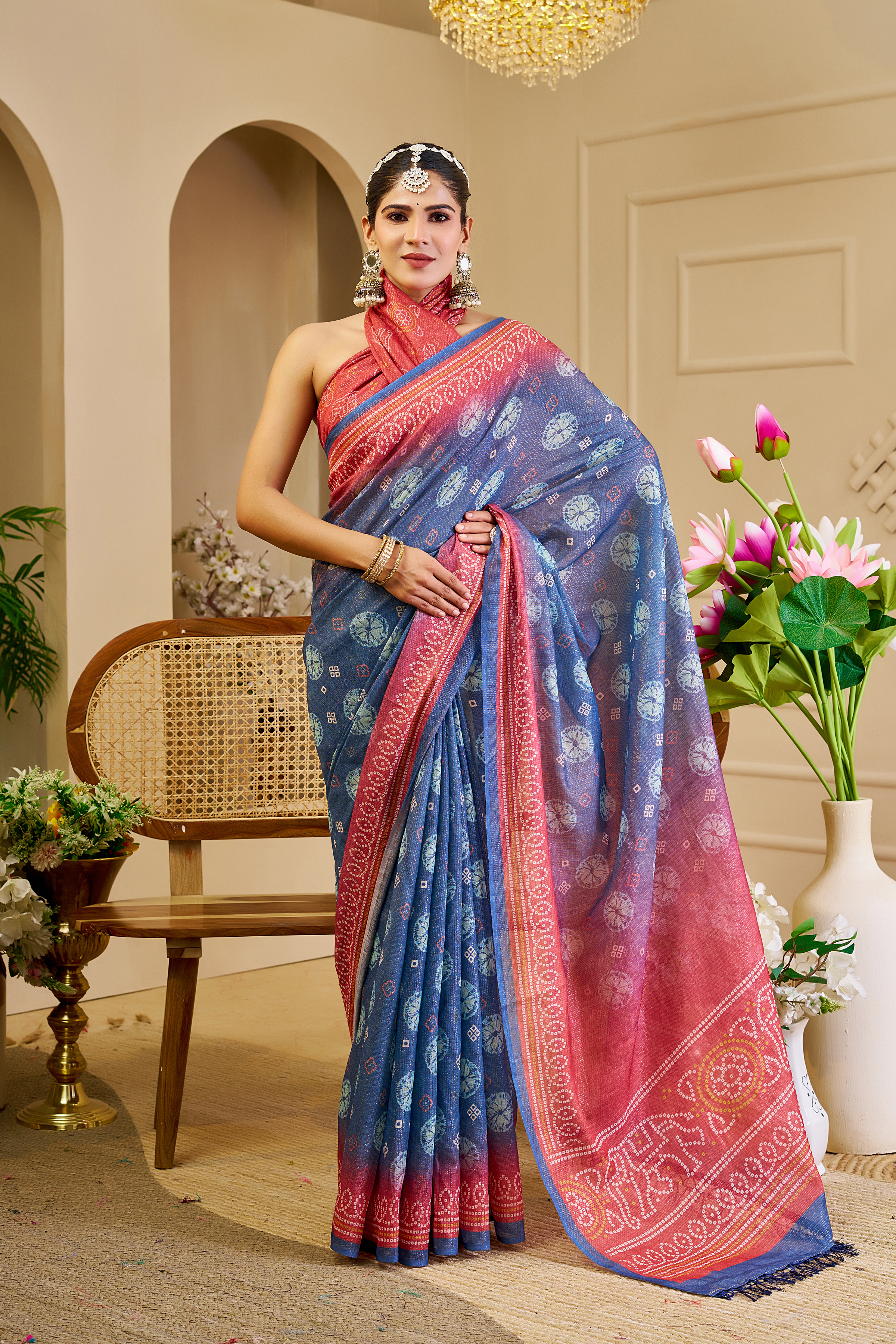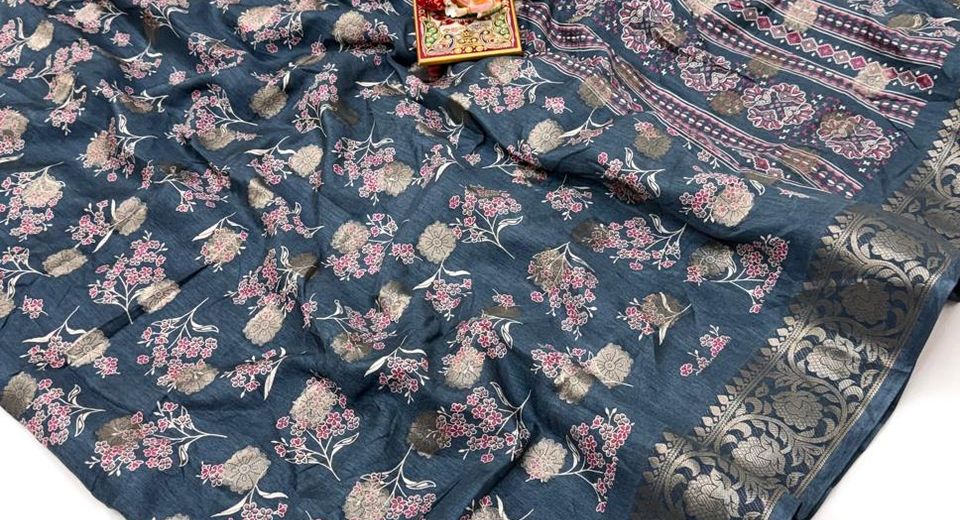
Beautiful Saree Looks for Celebrating Bhai Dooj at Home should make the rituals feel special without making you worry about a long pallu, heavy embellishment or uncomfortable fabric. A home celebration usually involves sitting on the floor, moving between rooms, serving sweets and greeting relatives, so the most successful festive outfit balances polish with ease.
Bhai Dooj has an intimate rhythm: the tilak ceremony, aarti, blessings, exchanging gifts and sharing a meal. A saree suits that rhythm particularly well because a simple change in drape, blouse neckline, jewellery or colour can shift the outfit from relaxed family wear to a more dressed-up festive look. The guide below explains how to choose each element with those real activities in mind.
Beautiful Saree Looks for Celebrating Bhai Dooj at Home: begin with the right fabric
The best Bhai Dooj saree fabric is one that holds a neat drape while remaining comfortable for several hours of sitting, walking and eating. Dola silk, soft silk, lightweight Banarasi silk, handloom cotton and tissue cotton each create a different balance of structure, sheen and breathability.
Dola silk is a practical choice when you want festive texture without the stiffness of a very heavy silk saree. A jacquard border gives the edge enough definition to frame the pleats, while the body remains manageable for a relaxed home gathering. The Blue Lehariya Print Dola Silk Saree With Rich Jacquard Border demonstrates how a patterned body can look celebratory even when the accessories stay restrained.
Banarasi silk works well when the family celebration includes photographs, several visiting relatives or a more formal lunch. Banarasi silk usually has a visible sheen and woven motifs, so it can look complete with only small earrings and a bindi. The Wine Banarasi Soft Silk Saree With Golden Zari Border offers an useful example of how a deep wine shade and zari border can provide occasion presence without requiring sequins across the entire saree.
Handloom cotton is useful for a warm afternoon, a home with active cooking or anyone who dislikes slippery drapes. Cotton generally needs sharper pleating and a firm tuck, but the fabric feels breathable and stays dependable while you move around. The Blue Tissue Handloom Cotton Saree With Zari | Varnavi's combines a lighter handloom character with a zari accent for a festive result that doesn't feel overdressed.
How much saree weight is comfortable indoors?
A lightweight or medium-weight saree is usually the most comfortable choice for an indoor Bhai Dooj celebration lasting three to six hours. Very heavy borders can pull the pallu backward, while dense embellishment can become uncomfortable when you sit cross-legged or bend to greet elders.
Before finalising the saree, check whether the border catches on bangles, whether the pallu can stay on your shoulder without repeated adjustment and whether the pleats remain flat after sitting for ten minutes. Those small tests predict comfort more accurately than appearance alone.
Colour choices that feel festive without looking too formal
Red, wine, blue, teal, pink and warm metallic shades all work for Bhai Dooj because they photograph well and suit the celebratory mood of the ritual. The right colour depends on the time of day, the lighting in your home and the amount of zari or border detail already present.
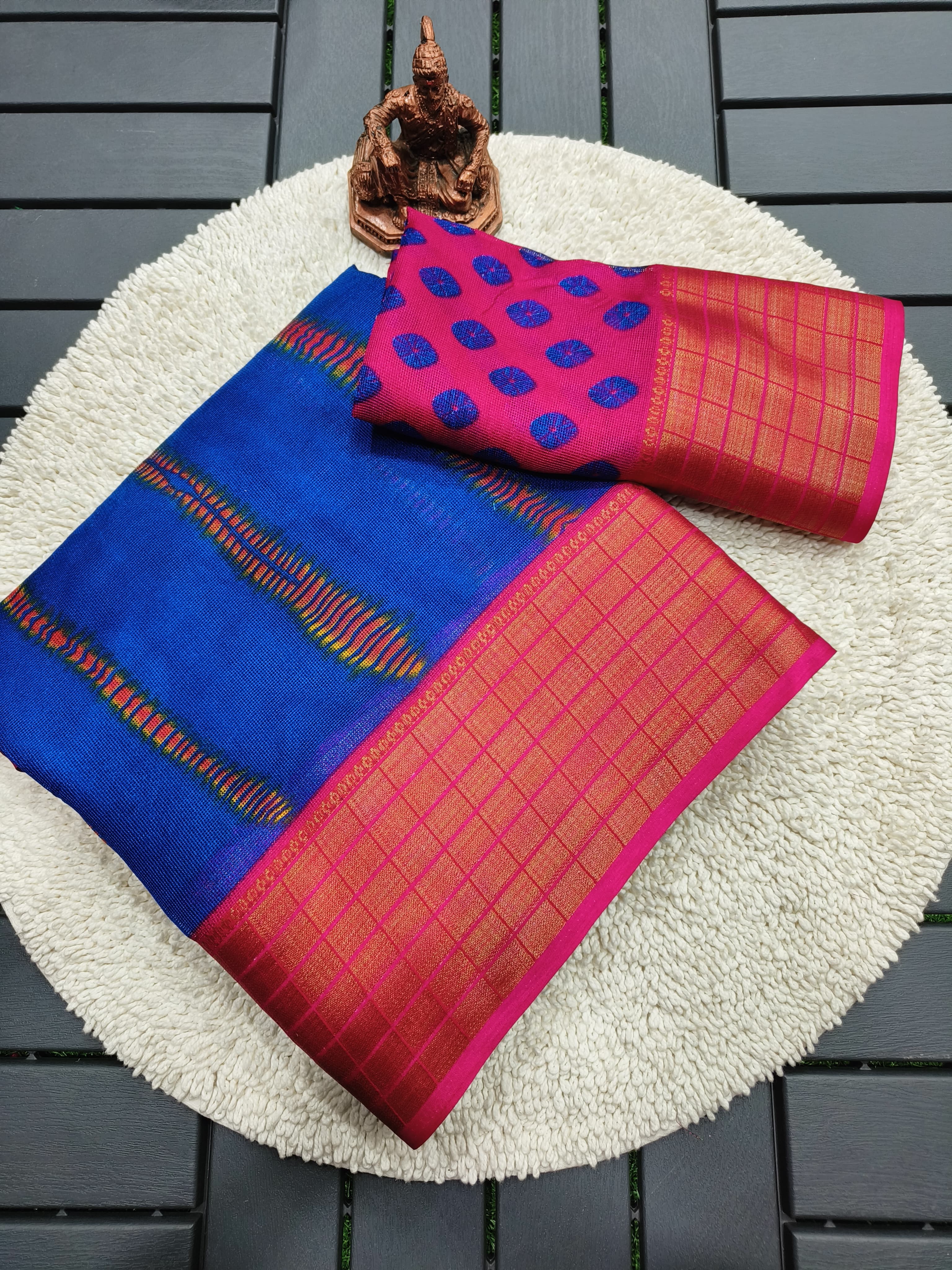 Festive Wear Blue Silk Saree for Women
Red communicates traditional festivity and pairs naturally with gold jewellery. The Red Dola Silk Butti Saree With Jacquard Border is a strong option when you want the colour to lead while the butti pattern adds detail at closer range. An Elegant Red Banarasi Silk Saree for Festive & Wedding Wear creates a more formal impression because Banarasi silk and a rich red ground already carry substantial visual presence.
Wine is an useful alternative to bright red when you prefer a deeper, more mature palette. Gold zari, antique jewellery and makeup in terracotta or rose tones complement wine without making the outfit appear too coordinated. Blue and teal create a fresher look for daytime celebrations, especially when paired with pearl, silver-toned or uncut-style jewellery.
The Teal Ethnic Dola Silk Saree With Elegant Jacquard Border illustrates how a cool jewel tone can remain festive through a structured border. The Elegant Royal Blue Silk Saree for Festive & Wedding Wear brings a deeper blue direction for evening gatherings, where warm lamps and gold accessories bring out the richness of the silk.
Pink can soften the overall look, particularly when a younger sister, daughter or niece is also dressing in the same family celebration. A saree from the Pink Georgette Sarees collection can work when you want fluid movement and a lighter visual effect, although georgette needs careful pinning because it can shift more easily than cotton or silk.
Blouse decisions that make a home celebration easier
The most practical Bhai Dooj blouse has a secure fit, comfortable armholes and enough coverage for sitting, greeting relatives and moving around the house. A blouse doesn't need heavy decoration when the saree already has a zari border, jacquard weave or Banarasi motif.
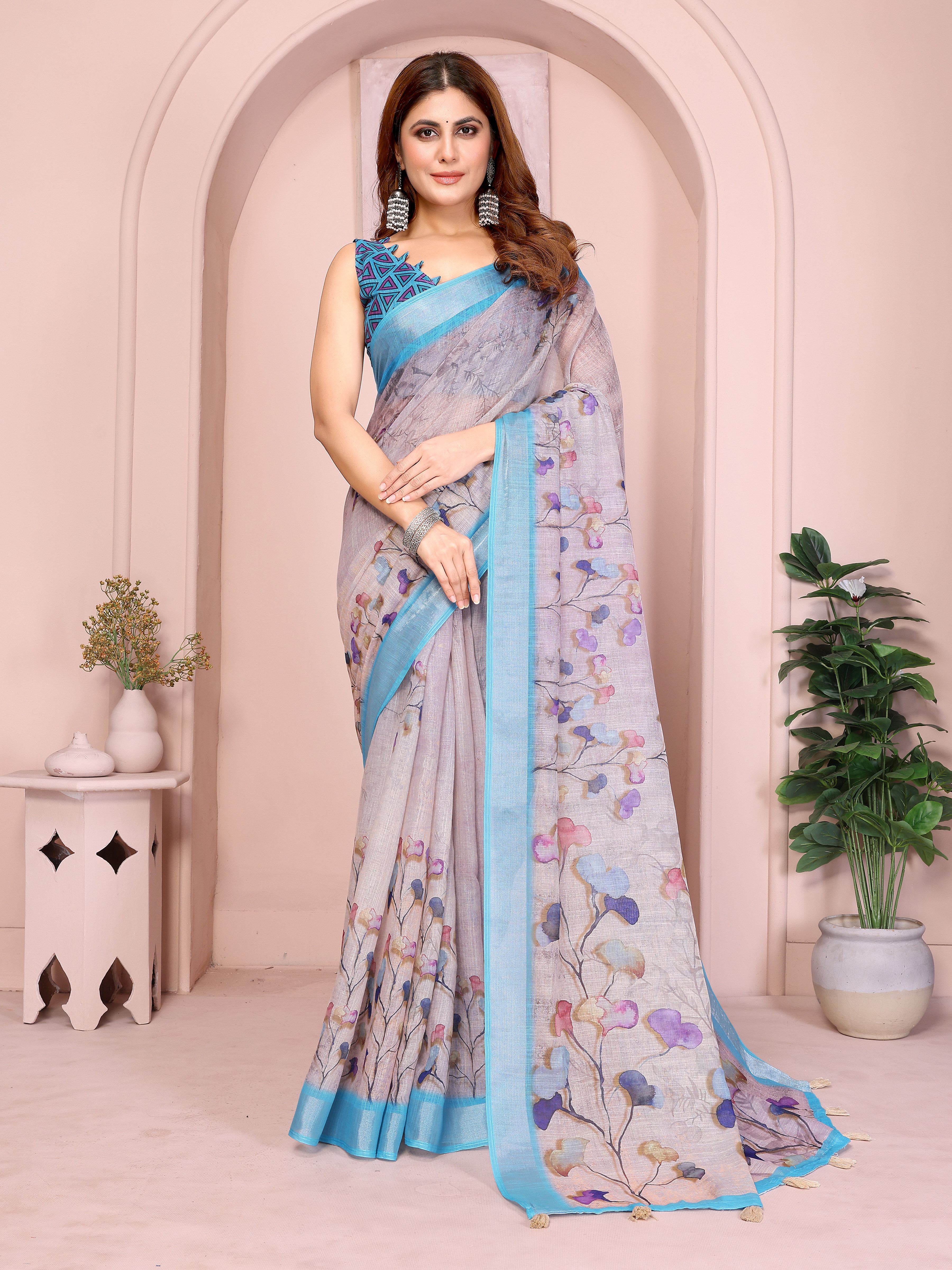 Pastel Linen Cotton Floral Print Saree with Designer Blouse
A high round neck or modest boat neck gives a polished appearance with Banarasi silk and works particularly well with a choker or short necklace. A V-neck or square neck can lengthen the upper body visually, but the neckline should lie flat when you bend forward for the tilak ritual. Sleeves ending around the elbow are useful if you expect to serve food or handle diyas because they provide coverage without restricting movement.
For a saree with a strong border, select a blouse in a related solid shade rather than adding a second elaborate print. A wine blouse with gold piping can support a Banarasi saree, while a teal blouse with a restrained sleeve border can echo a jacquard edge. A contrast blouse works best when the contrast appears deliberately in one place, such as a red blouse with a blue saree, rather than in several competing colours.
Check blouse comfort by lifting both arms, sitting down and reaching forward before the celebration. Tight armholes become especially noticeable during aarti, while loose shoulders can cause repeated pallu and blouse adjustments. A well-fitted blouse is more valuable than an ornate blouse that requires constant attention.
Drapes that stay neat during tilak, aarti and family photographs
The Nivi drape with five to seven front pleats and a securely pinned pallu is usually the easiest saree drape for Bhai Dooj at home. The familiar arrangement keeps the front tidy, leaves the hands free and photographs clearly from seated or standing positions.
 Pastel Floral Tissue Handloom Cotton Saree with Zari Weaves
Wear a cotton or smooth satin petticoat that matches the saree's movement, then tuck the saree firmly at the waist before making the pleats. Keep the pleats approximately 12 to 15 centimetres wide and align their lower edges before pinning them discreetly near the waistband. A slightly shorter fall, finishing just above the floor, reduces the chance of stepping on the saree while carrying a thali.
Pin the pallu at the shoulder if you'll be moving frequently, but avoid placing the pin so close to the neck that the fabric pulls across the blouse. A single hidden pin at the shoulder and another at the waist can stabilise a slippery silk or georgette saree. Cotton and textured Dola silk may need fewer pins because the fabric grips itself more effectively.
Can you wear an open pallu at home?
An open pallu can work for a seated family gathering when the pallu is broad, lightweight and secured at the shoulder. A pinned pallu is safer when you'll perform aarti, serve hot food or move between rooms.
For photographs, arrange the pallu so the border faces outward and falls in a clean vertical line. For the tilak ritual, keep the pallu away from the face and hands by placing one discreet pin below the shoulder or folding the leading edge inward.
Jewellery, footwear and makeup for a graceful indoor look
One coordinated jewellery group is enough for a home Bhai Dooj saree look. Choose gold jhumkas with a Banarasi or zari saree, pearls with blue or pastel tones, or oxidised silver with a printed saree that already has visual movement.
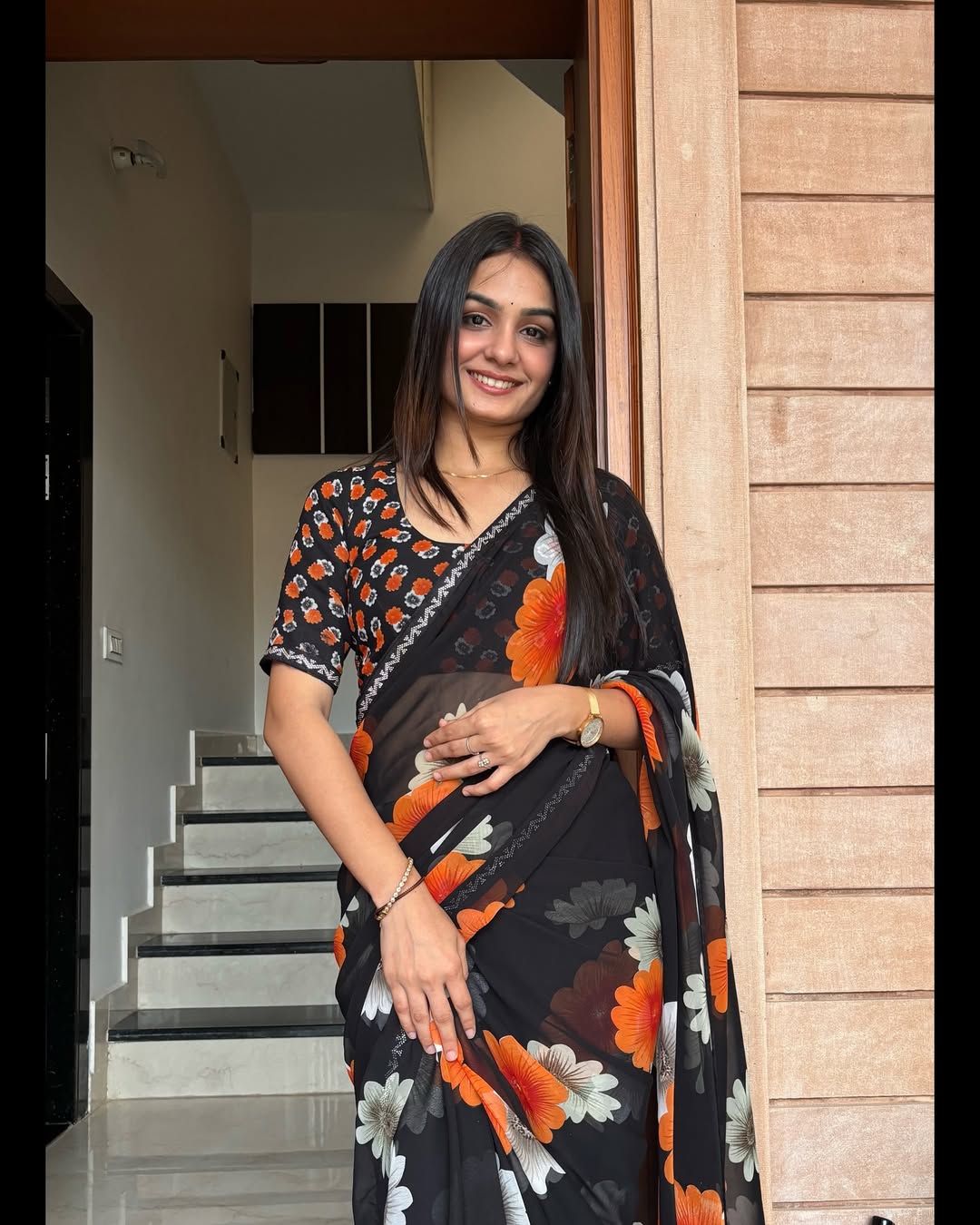 Designer Black Floral Saree With Sparkle Border Work
A bindi provides a clear festive finish without adding weight. For a rich red, wine or royal blue saree, a heritage round bindi in red, maroon or gold can connect the face to the saree. For a teal or blue saree, a small red bindi creates contrast, while a neutral makeup palette keeps the colour combination balanced.
Choose a low block heel, embellished flat or comfortable jutti rather than a narrow high heel. Indoor floors, rugs and stairs create enough movement to make stability important. The footwear should raise the saree slightly off the floor while allowing you to sit and stand without catching the hem.
Keep makeup suitable for warm indoor lighting. A light base, defined brows, kajal, rose or terracotta lipstick and a small amount of highlighter are usually sufficient. If the saree has a rich zari border, gold-toned eyeshadow used sparingly will support the fabric without competing with it.
How to adapt one saree to different Bhai Dooj home settings
A morning Bhai Dooj ceremony calls for breathable fabric, clear colours and modest accessories, while an evening gathering can support deeper shades, silk texture and more visible jewellery. The same saree can serve both settings when the accessories and drape change thoughtfully.
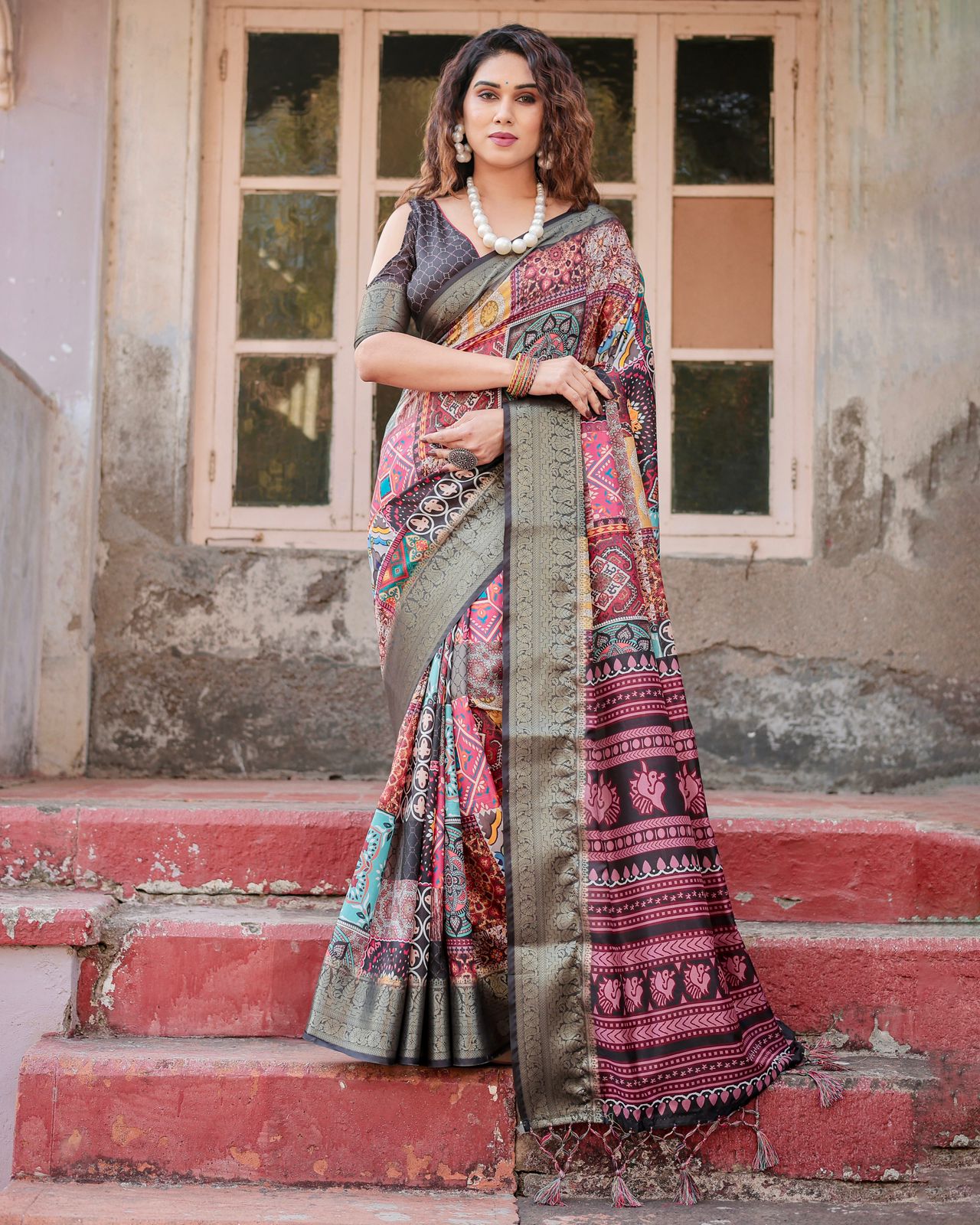 Multi Color Banarasi Silk Saree with Artistic Prints
For a small family ritual, pair a Dola silk saree with stud earrings, a slim bangle stack and a low bun decorated with one gajra strand. For a larger gathering, add a longer necklace, defined eye makeup and a pinned pallu so the outfit remains composed while you greet guests. For a video call with a brother living elsewhere, prioritise the upper half of the outfit: a clear blouse neckline, earrings, bindi and a well-arranged pallu will appear more strongly on screen than elaborate footwear.
If you're shopping with a firm budget, compare fabric and border before chasing embellishment. The Silk Sarees Under 3000 With Discount collection may suit someone seeking a silk-look festive option at a controlled price, while the Red Banarasi Silk Sarees for Weddings Under 1100 collection can be useful for comparing red Banarasi-inspired colourways and price points. A lower price doesn't remove the need to check measurements, blouse-piece details, fall and lining requirements.
Neutral shades can also look festive when the border and jewellery are chosen well. Gray Color Sarees Under 1000 can provide a restrained base for a bright pink, red or teal blouse, while Party Wear Sarees may offer more surface decoration for families that treat Bhai Dooj as a larger social event. The goal isn't to match the formality of a wedding; the goal is to look intentional in the setting where the ritual actually takes place.
Preparation and care before the family arrives
Prepare the saree at least one day before Bhai Dooj so creases, blouse alterations and missing accessories don't become last-minute problems. Hang the saree in a shaded room, check the border for loose threads and test the complete drape with the blouse, footwear and jewellery.
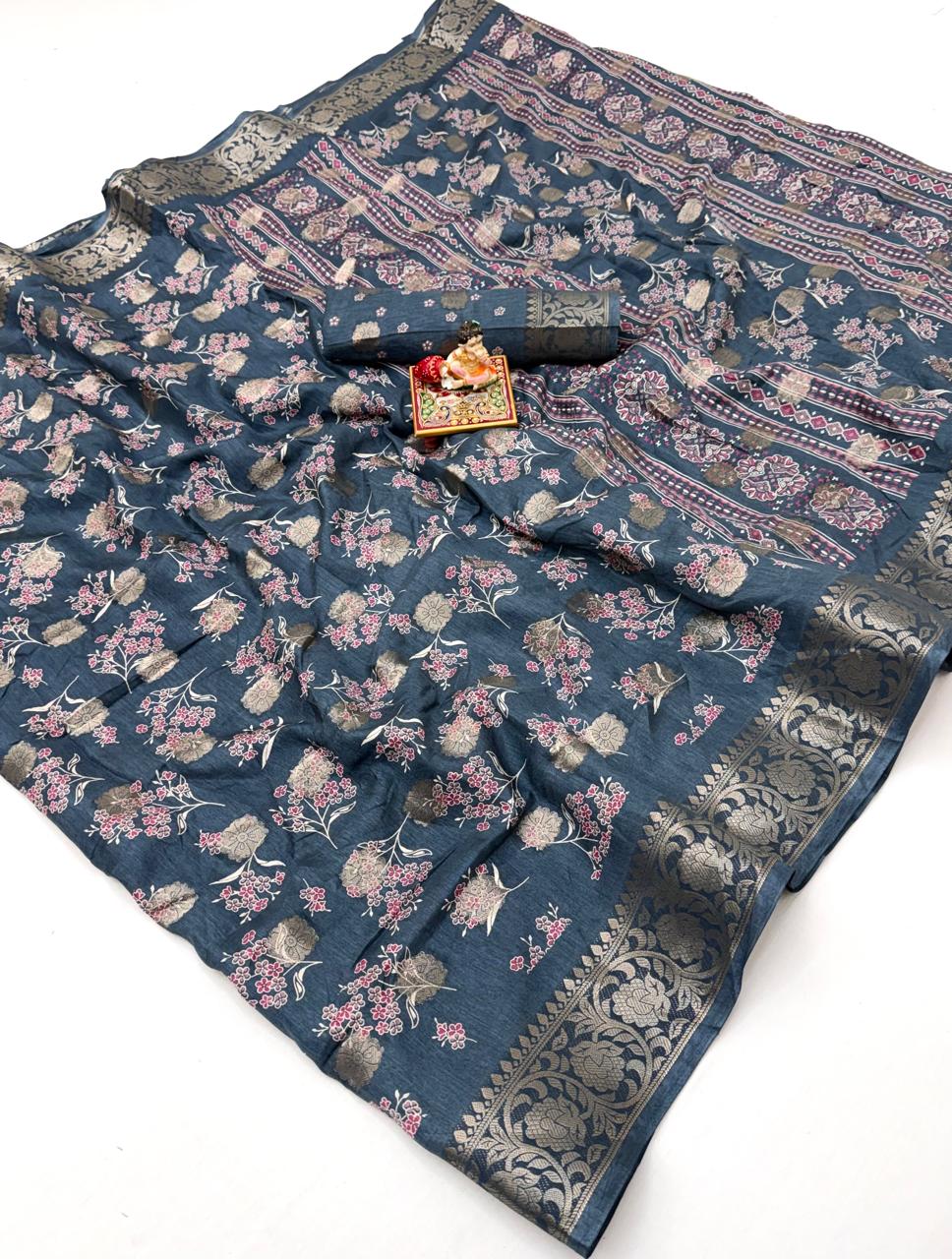 Blue Lehariya Print Dola Silk Saree With Rich Jacquard Border
Silk sarees should be aired briefly after wearing and stored folded in a clean cotton or muslin cloth rather than sealed immediately in plastic. Fold Banarasi silk with the zari facing inward to reduce direct abrasion, refold it every few months and keep it away from perfume, damp walls and direct sunlight. Dola silk and jacquard borders also benefit from gentle handling because repeated sharp creasing can weaken the fold lines.
don't rub a food or kumkum mark aggressively. Blot a fresh spill with a clean, dry cloth, avoid applying household stain removers and send silk or zari sarees to a reputable dry cleaner when the mark remains. A careful storage routine keeps a festive saree ready for future Raksha Bandhan, Diwali lunches and family weddings as well as Bhai Dooj.
A simple formula for choosing your final look
Choose the saree first, match the blouse to one colour in the border or motif, secure the drape for the activities you'll perform and add only the jewellery that improves the face and neckline. That sequence prevents the common mistake of selecting accessories first and then discovering that the saree feels too heavy, slippery or visually crowded.
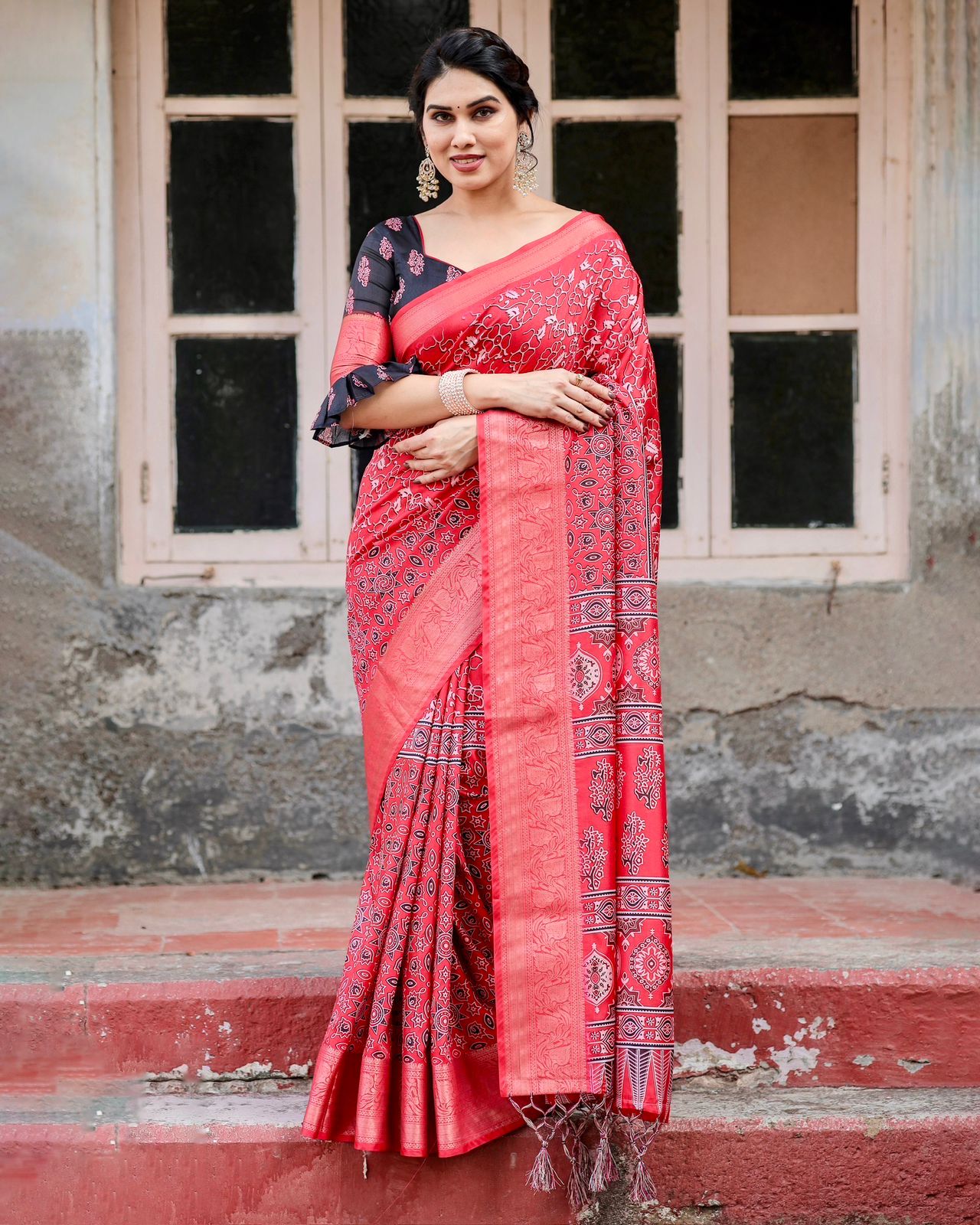 Bold Ajrakh Banarasi Saree for Elegant Festive Styling
For a classic result, select red or wine Banarasi silk, gold earrings, a round bindi and a pinned Nivi drape. For a lighter daytime result, select teal or blue Dola silk, small earrings, a comfortable blouse and a low bun. For a restrained modern result, select handloom cotton, one statement bangle, a clean blouse and a narrow pallu border.
Beautiful Saree Looks for Celebrating Bhai Dooj at Home become memorable when clothing supports the people and rituals rather than distracting from them. A saree that lets you sit comfortably, perform the tilak, share sweets and appear in family photographs with confidence will always serve the celebration better than an outfit chosen only for surface shine.
Practical Questions About Choosing a Bhai Dooj Saree at Home
Which saree fabric is most comfortable for Bhai Dooj at home?
Lightweight or medium-weight Dola silk, soft silk and handloom cotton are comfortable choices for a home celebration. Dola silk offers festive texture, while cotton is more breathable for warm rooms and active hosting.
What colour saree should I wear for Bhai Dooj?
Red, wine, teal, blue, pink and royal blue all suit Bhai Dooj. Choose red or wine for a traditional gold-accented look, and choose teal or blue for a fresher daytime appearance.
How can I stop my saree from coming loose during the tilak ceremony?
Use a firm tuck, five to seven aligned front pleats and one discreet pin at the shoulder. A second pin near the waist is helpful for slippery silk, georgette or tissue fabrics.
Can I wear a heavy Banarasi saree for a Bhai Dooj celebration at home?
You can wear a heavy Banarasi saree if you will spend most of the celebration seated and the pallu is secured. A soft or lightweight Banarasi silk is usually easier for serving food, moving between rooms and sitting on the floor.
What jewellery goes best with a festive Bhai Dooj saree?
Gold jhumkas and a bindi pair naturally with red, wine and zari sarees, while pearls or silver-toned jewellery suit blue and teal sarees. One coordinated jewellery group usually looks more balanced than wearing several unrelated statement pieces.
How should I store a silk saree after Bhai Dooj?
Air the saree briefly, fold it with the zari facing inward and wrap it in clean cotton or muslin. Keep the saree away from direct sunlight, moisture, perfume and plastic, and use professional dry cleaning for persistent stains.