

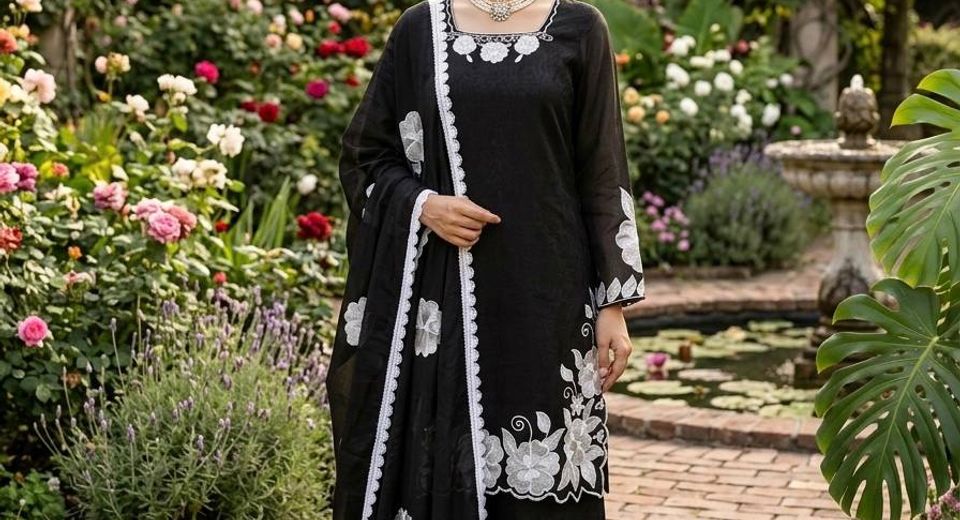
Beautiful Pakistani Salwar Suit Designs bring together a long, graceful kameez, a roomy salwar or trouser and a dupatta that often completes the outfit's visual balance. The most flattering choice depends on more than embroidery or colour: the cut, fabric weight, sleeve shape, hemline and dupatta width all affect how the suit moves and photographs.
Pakistani-inspired salwar suits can work for a family lunch, office celebration, Eid gathering, Haldi ceremony or evening wedding when the details are chosen with purpose. This guide explains the design vocabulary behind the look, how to match a silhouette to your proportions, and how to judge comfort and value before buying a ready-made set.
What defines Beautiful Pakistani Salwar Suit Designs?
Beautiful Pakistani Salwar Suit Designs usually feature a longer kameez, a coordinated bottom and a prominent dupatta, with the overall look shaped by fluid proportions rather than a single decoration. The kameez may be straight, flared, paneled or heavily embroidered, while the bottom can be a traditional shalwar, cigarette trouser, palazzo or narrow churidar.
The Pakistani shalwar has generous volume at the upper leg and gathers towards the ankle, creating a distinctive, comfortable silhouette. A straight trouser gives a cleaner contemporary line, while a palazzo adds width below the knee and works particularly well with a shorter or moderately long kameez. An Anarkali kameez spreads from the waist or upper body into panels, making the hem the main movement point.
A dupatta isn't merely an accessory in Pakistani dress. A 2.25 to 2.5 metre dupatta can be worn over one shoulder, across both shoulders or around the arms, and its border often provides the strongest contrast against the kameez. A heavily worked neckline may need a quieter dupatta, whereas a plain kameez can carry a printed, woven or embroidered drape.
Which silhouette should you choose?
The best salwar suit silhouette is the one that balances your preferred movement, body proportions and level of formality. Compare the kameez length, the amount of flare and the width of the bottom before giving priority to colour or embellishment.
Long straight kameez with trousers
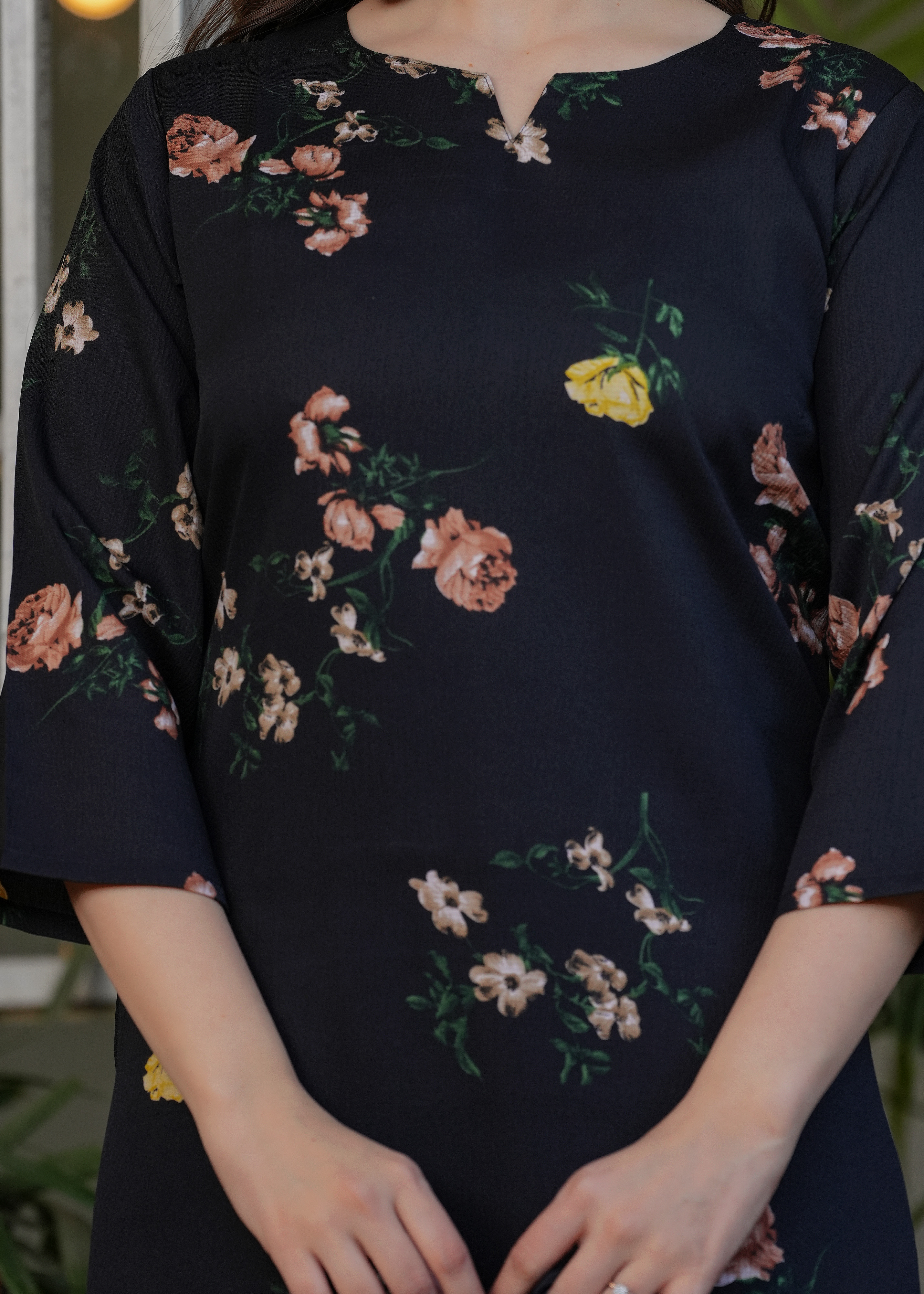
A long straight kameez creates a vertical line and is a dependable choice for work, dinners and semi-formal gatherings. A hem falling around mid-calf usually looks polished with cigarette trousers, straight pants or slim palazzos. Side slits improve walking comfort when the kameez is narrow.
The Black White Floral Embroidered Readymade Salwar Suit illustrates how a graphic floral surface can provide interest without requiring a dramatic flare. Black and white also make it easy to repeat one colour in footwear, a bag or a narrow bangle stack.
Anarkali and panelled styles
Anarkali suits are most effective when the flare begins at a deliberate point and the panels fall without pulling across the chest or waist. A 12 to 16-panel Anarkali can create substantial movement, but the finished outfit becomes warm and heavy if every panel carries dense zari or layered decoration.
The Ladies Dress Anarkali Salwar Suits collection is an useful reference when comparing flared proportions, embellished necklines and dupatta pairings. A fitted upper section suits a voluminous skirt, while a looser bodice generally looks better with a controlled flare.
Classic shalwar and relaxed bottoms
A heritage shalwar gives the outfit its most recognisable Pakistani character and offers more ease around the hips and thighs than a narrow trouser. Gather placement matters: excessive volume at the ankle can look unbalanced with a very long kameez, while a broad hem pairs naturally with a shorter or straight upper layer.
The Elegant Camel Shade Salwar Suit Set demonstrates why neutral shades are valuable in a relaxed silhouette. Camel, beige and tan allow the shape and border work to lead, and the same set can move from daytime dressing to a small evening gathering with a change of jewellery.
Which fabrics and surface details matter most?
Fabric choice determines how a Pakistani salwar suit drapes, breathes, creases and feels after several hours of wear. Cotton and cotton blends suit daytime heat, rayon usually gives fluid movement, and synthetic blends can resist creasing but may feel warmer against the skin.
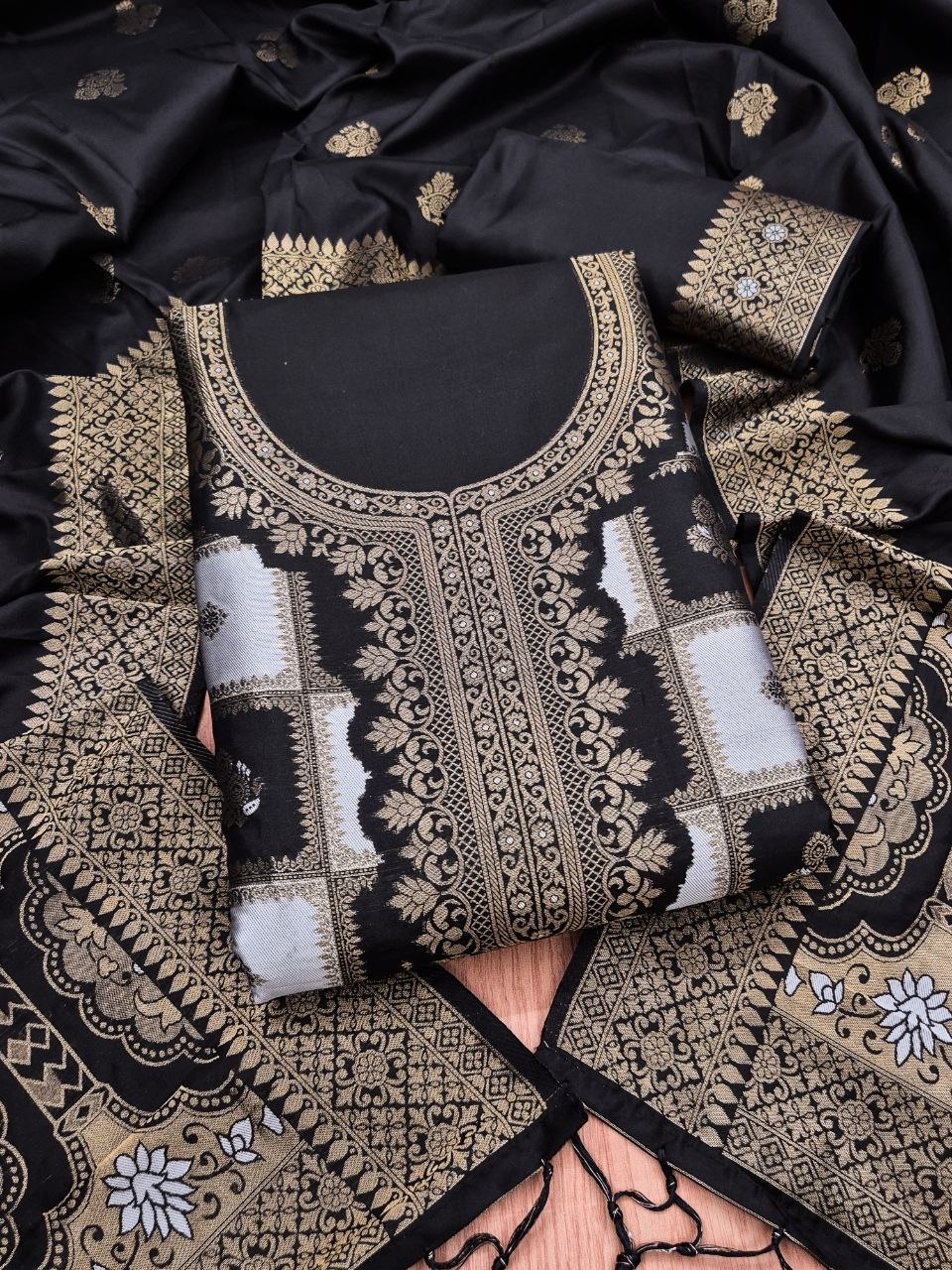
Chanderi creates a light, slightly crisp appearance and is often selected for festive layering. Banarasi silk has a richer hand and a naturally formal presence, while velvet suits cool-weather evening dressing because its pile absorbs light and adds depth. Fabric names alone don't guarantee comfort; check lining, weave density, transparency and the care label.
Embroidery changes both visual scale and garment weight. Thread embroidery gives a softer, more wearable finish, while zari creates reflective highlights that read strongly under wedding lighting. Sequins and dense metallic work can catch on jewellery, so inspect the reverse side and look for a secure lining if the outfit is intended for repeated use.
The Embroidered Salwar Suit Set for Women shows how a coordinated surface can make the kameez, bottom and dupatta look intentional without requiring additional pieces. For a long event, prioritise soft inner seams, a breathable lining and embellishment that doesn't sit directly against the underarm or neckline.
How should colour and embroidery be matched to the occasion?
Colour should reflect the event's lighting, time of day and formality, while embroidery should supply the amount of visual emphasis the outfit needs. Daytime events generally reward lighter or clearer shades, whereas evening functions can support deeper colours, metallic work and stronger contrast.
Pastel pink, pistachio, powder blue and ivory work well for daytime celebrations and daytime wedding functions. The Pista Royale Salwar Suit is an example of how a green-toned palette can feel festive without relying on very dark contrast. Pair a soft shade with pearl, kundan-inspired or gold-toned accessories according to the embroidery colour.
Yellow is especially useful for a Haldi ceremony, although the practical choice is a washable or easy-care fabric because turmeric, floral water and outdoor dust can mark the hem. The Designer Yellow Salwar Suit with Dupatta can be styled with minimal jewellery, comfortable footwear and a pinned dupatta so the colour remains the centre of attention.
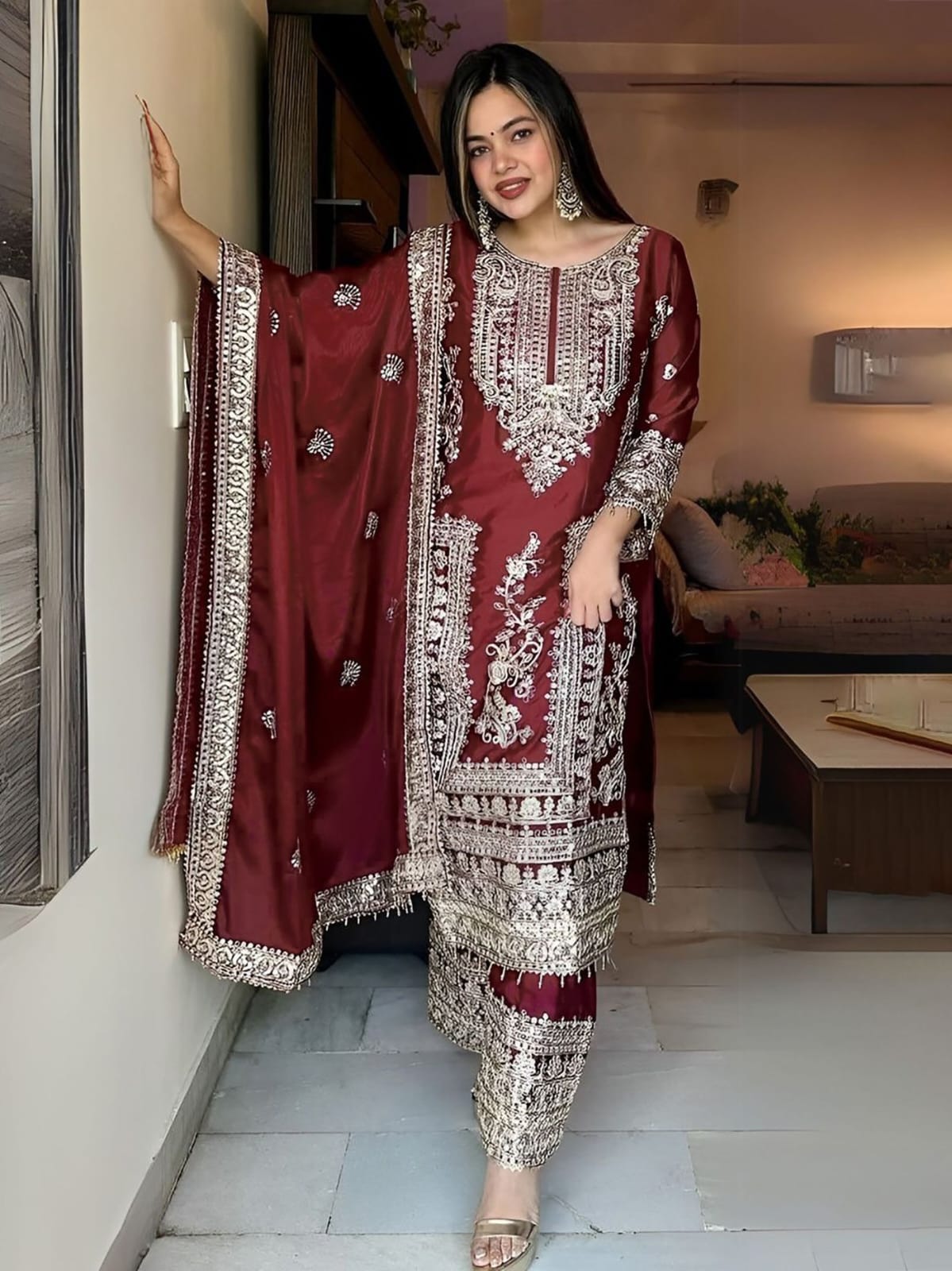
Navy, black, wine, emerald and deep plum make stronger evening choices because these colours absorb or frame artificial light. The Navy Blue Embroidered Salwar Suit can take silver, antique gold or tonal navy accessories depending on the zari and thread details. The Midnight Black Blossom Salwar Suit brings a more dramatic route, especially when floral motifs soften the depth of the base colour.
Use a simple proportion rule when the embroidery is bold: let one area lead. A heavily decorated neckline can be balanced by a quiet bottom and a restrained dupatta border; a plain neckline can support an ornate dupatta. Matching every accessory to every thread colour usually makes the look appear busier rather than more coordinated.
How can you style the dupatta and accessories?
The most practical dupatta drape keeps the fabric secure at the shoulder while leaving both hands free. Place one end over the opposite shoulder, pin the upper edge near the shoulder seam and allow the remaining length to fall beside the body.
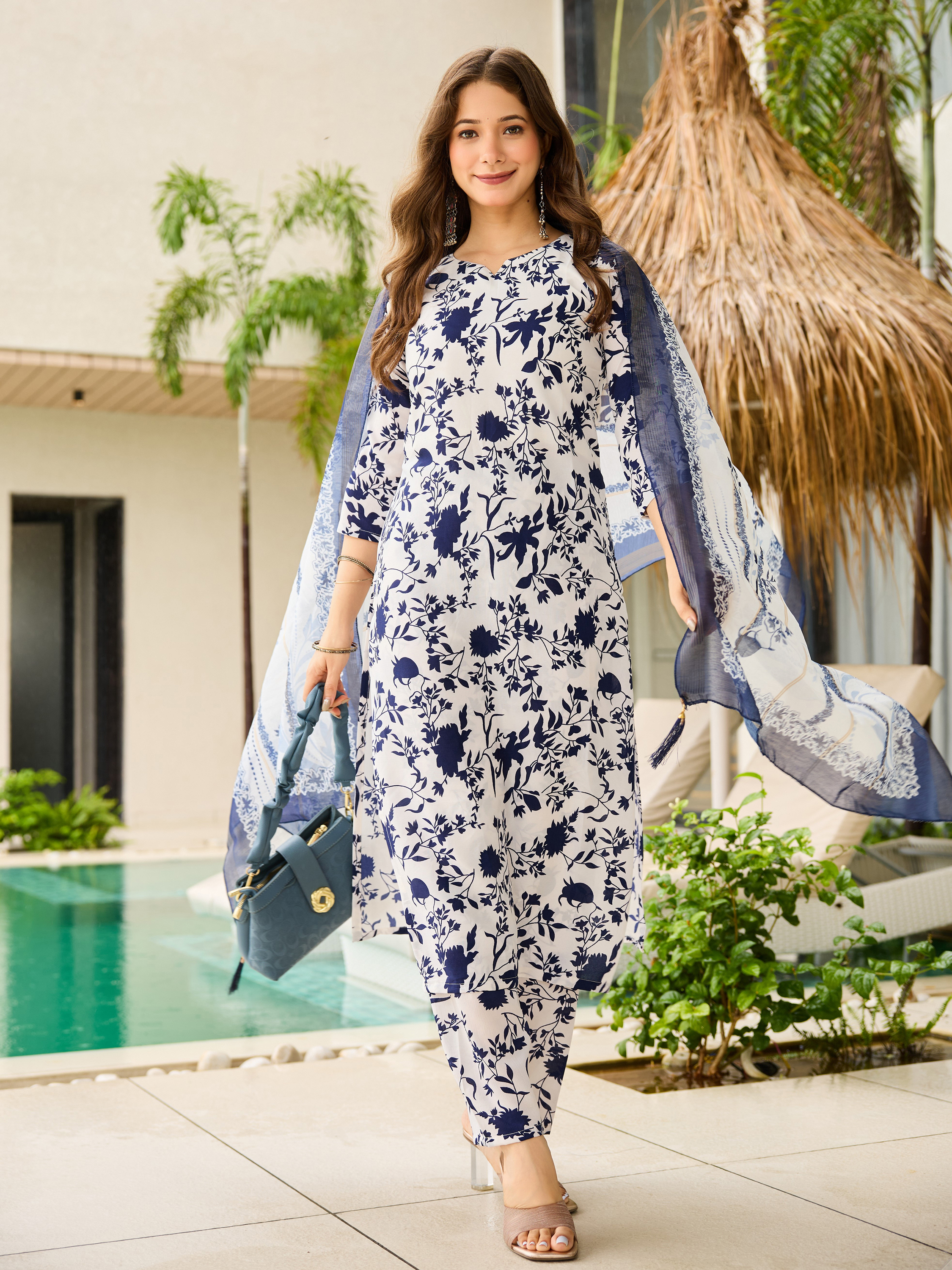
A single-shoulder drape shows an embroidered border and creates a clean vertical line, but it may slip if the dupatta is silky or heavily weighted. A two-shoulder drape distributes weight more evenly and works well for commuting, greeting guests or carrying a child. A front-facing drape highlights a central motif but requires more careful pinning.
Accessories should repeat either the suit's metal tone or one small colour from its embroidery. Jhumkas and a bracelet may be enough for a detailed neckline, while a plain suit can handle a longer necklace, layered bangles or a more noticeable ring. Choose a block heel or embellished jutti for formal wear, and a cushioned flat for long daytime functions.
The RoseGlow Designer Salwar Suit can support a soft romantic styling direction with delicate earrings and a low bun, while a more structured hairstyle gives a heavily flared suit a sharper finish. The exact balance depends on the neckline, so avoid covering an intricate collar with a large necklace.
How do you select the right size and fit online?
Online salwar suit sizing should begin with garment measurements, not the size label. Measure the fullest bust, natural waist, fullest hip and shoulder width, then compare each figure with the seller's chart because a size marked L can vary substantially between cuts.
Allow approximately 2 to 4 inches of ease at the bust for a straight or semi-fitted kameez, depending on the fabric and personal comfort. A fitted sleeve needs enough room to lift the arm, while a narrow armhole can make even a loose kameez uncomfortable. Check whether the waist is shaped, elasticated or completely relaxed.
Length deserves equal attention. A kameez that ends at mid-thigh gives a different proportion from one that falls below the knee, and the same difference affects whether a palazzo, shalwar or cigarette trouser looks balanced. Check the stated inseam or bottom length, especially if you're taller than average or prefer a full ankle break.
Readymade sets save tailoring time, but alterations may still be useful. Side seams can often be taken in, sleeves can be shortened and trouser hems can be adjusted. Major changes to a heavily embroidered neckline, armhole or panelled flare are harder and may disturb the design.
How can one suit create several useful looks?
A versatile salwar suit can create multiple outfits when the kameez, bottom and dupatta each work with at least one existing wardrobe piece. Start with the least interchangeable item, usually an embroidered kameez or distinctive dupatta, and plan the supporting pieces around it.
Wear an ornate kameez with plain ivory or black trousers for a quieter dinner look. Use the matching bottom with a solid kurta for a coordinated but less formal outfit. A printed or embroidered dupatta can also refresh a plain cotton suit, a long kurta or a simple sharara.
The Dress Materials collection suits shoppers who prefer to tailor the length, sleeve and neckline rather than accept a fixed ready-made cut. Custom stitching is particularly useful when your bust, shoulder and hip measurements fall into different standard size categories.
Budget-led shoppers may compare the Salwar Suits with 30% Off, Salwar Suits Flat 40% Off and Salwar Suits On Sale collections, but discount percentage should not replace a quality check. Confirm the fibre composition, included components, lining, measurement chart and care instructions before deciding that a set represents good value.
What care keeps a salwar suit wearable for longer?
Care instructions depend on the fibre and embellishment, but gentle handling protects most salwar suits better than routine machine washing. Separate dark colours, turn embroidered garments inside out, use cold water when washing is permitted and avoid wringing the dupatta.
Dry embroidered or dark garments in shade because direct sun can fade dyes and weaken delicate threads. Press from the reverse side at a low or medium temperature, placing a thin cotton cloth between the iron and zari, sequins or printed surface. Never iron directly over raised metallic work.
Store a fully dry suit on a broad hanger or folded with tissue paper around heavy embroidery. Avoid compressing a damp dupatta in a closed cupboard, and refold embellished pieces every few months so permanent fold lines don't form. Professional dry cleaning is the safer choice for dense zari, velvet, colour-sensitive dyes or garments labelled dry clean only.
One final inspection before purchase can prevent most disappointments: check the fabric composition, finished measurements, closure type, lining, transparency, embroidery attachment and the number of pieces included. Those practical details determine whether a beautiful design remains comfortable, reusable and suitable for the event you've in mind.
Questions Readers Ask About Pakistani Salwar Suit Designs
What makes a salwar suit look Pakistani?
A longer kameez, a roomy shalwar or coordinated trouser, and a prominent dupatta create the most recognisable Pakistani-inspired proportion. Panelled Anarkali cuts, ornate borders, floral embroidery and carefully finished necklines can strengthen the look without requiring a traditional shalwar.
Which Pakistani salwar suit is best for a wedding guest?
An embroidered Anarkali, a long straight kameez with zari or a rich-coloured three-piece suit usually works well for a wedding guest. Choose the fabric according to the season, keep the dupatta secure, and avoid a silhouette so heavy that it becomes uncomfortable after several hours.
What should I wear to a Haldi ceremony?
Yellow, pistachio, coral and other bright shades suit a Haldi ceremony, with yellow being the most traditional choice. Select an easy-care fabric, practical footwear and a pinned dupatta because turmeric, flowers and outdoor movement can stain or loosen delicate garments.
How do I choose a Pakistani suit online?
Compare your bust, waist, hip, shoulder and preferred garment length with the seller's measurement chart before choosing a size. Also verify the fabric, lining, included pieces, transparency, care instructions and whether the embroidery or zari may add weight.
Is a shalwar more comfortable than straight trousers?
A traditional shalwar generally offers more room around the hips and thighs, while straight trousers provide a neater, more structured line. Comfort depends on the rise, waistband, fabric, seam finish and correct size, so neither option is automatically better for every wearer.
How should an embroidered Pakistani salwar suit be washed?
An embroidered Pakistani salwar suit should be washed according to its care label, with cold water and gentle handling when washing is allowed. Turn the garment inside out, avoid wringing, dry it in shade and use professional dry cleaning for dense zari, velvet or fragile embellishment.





