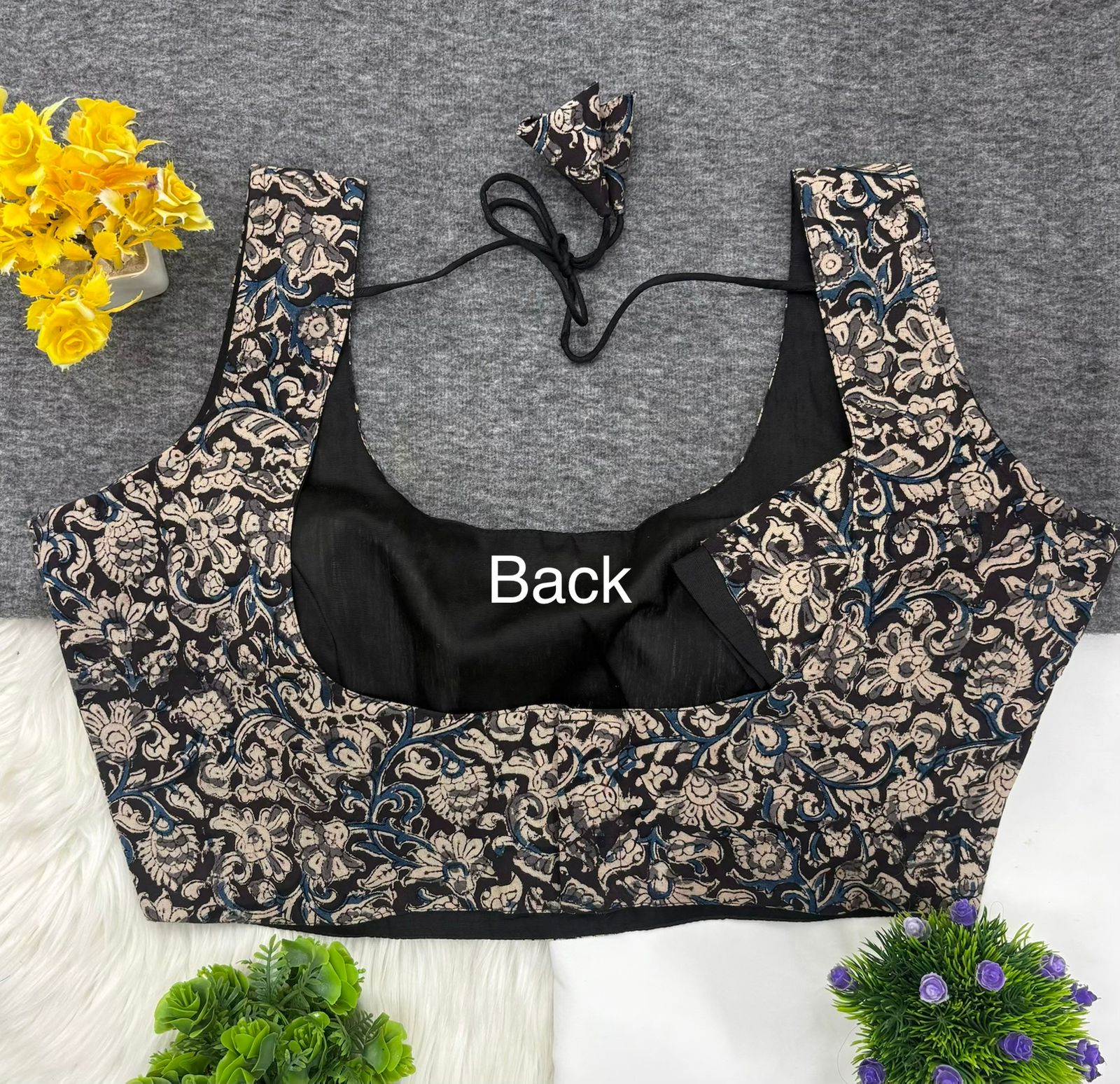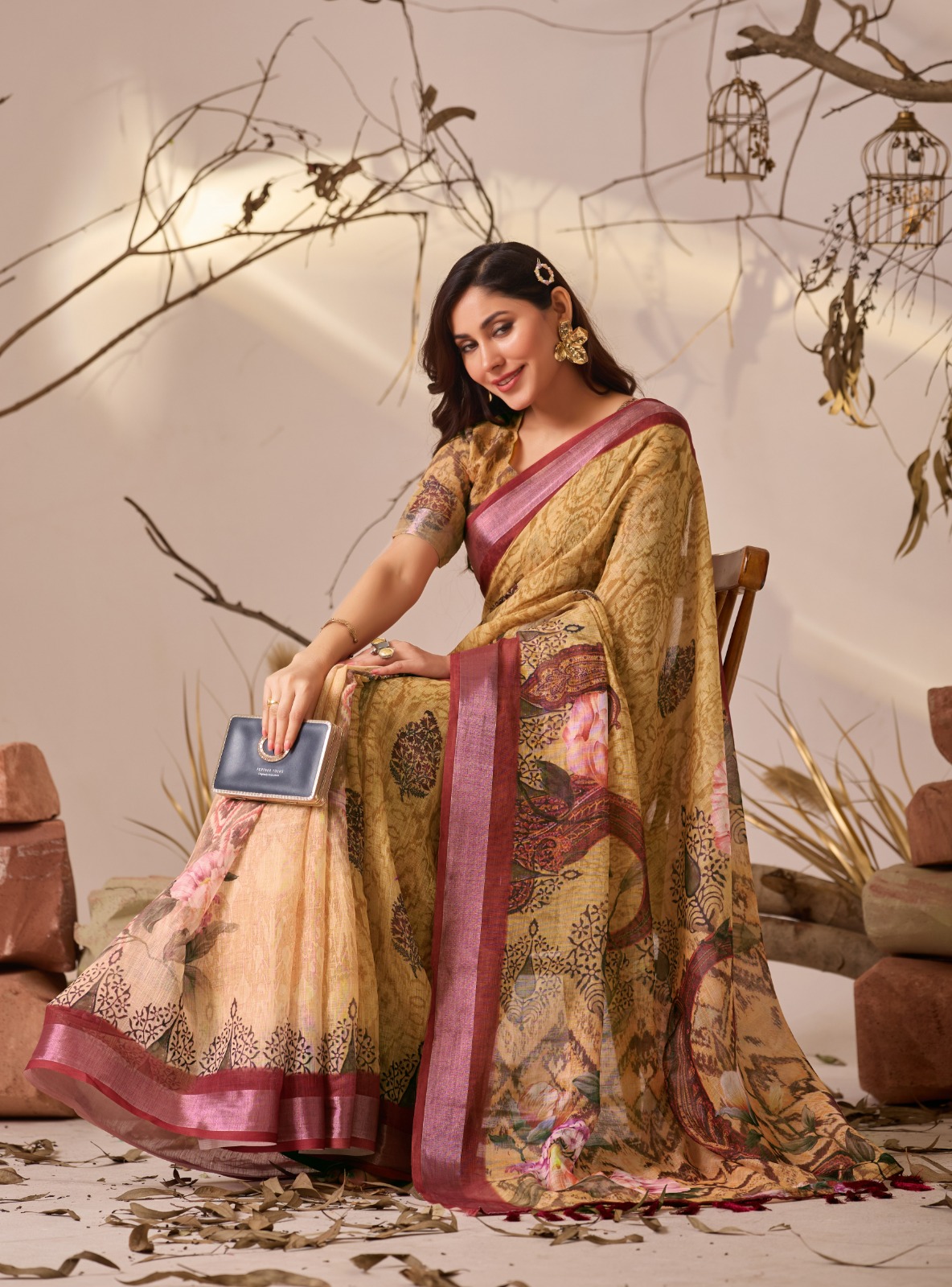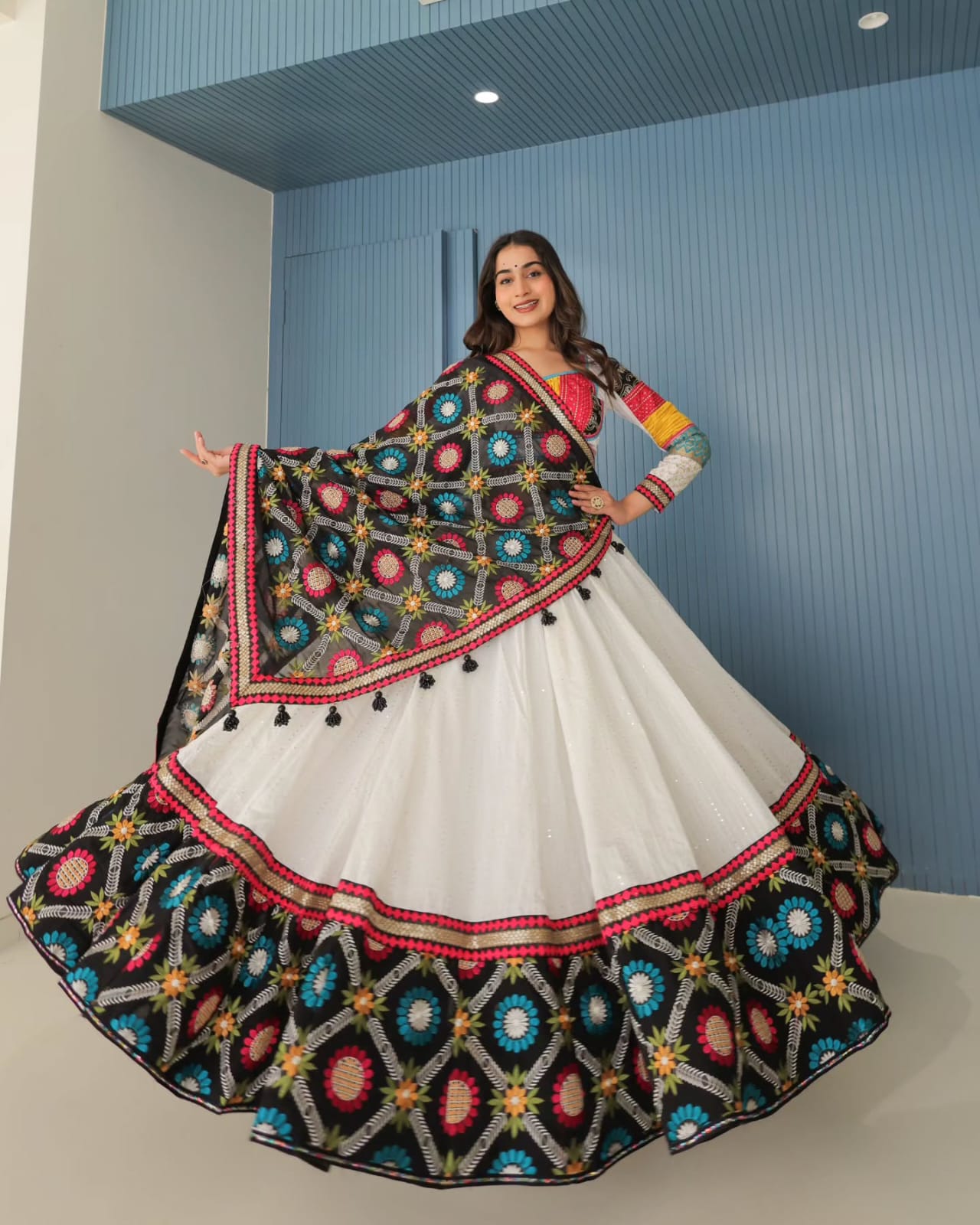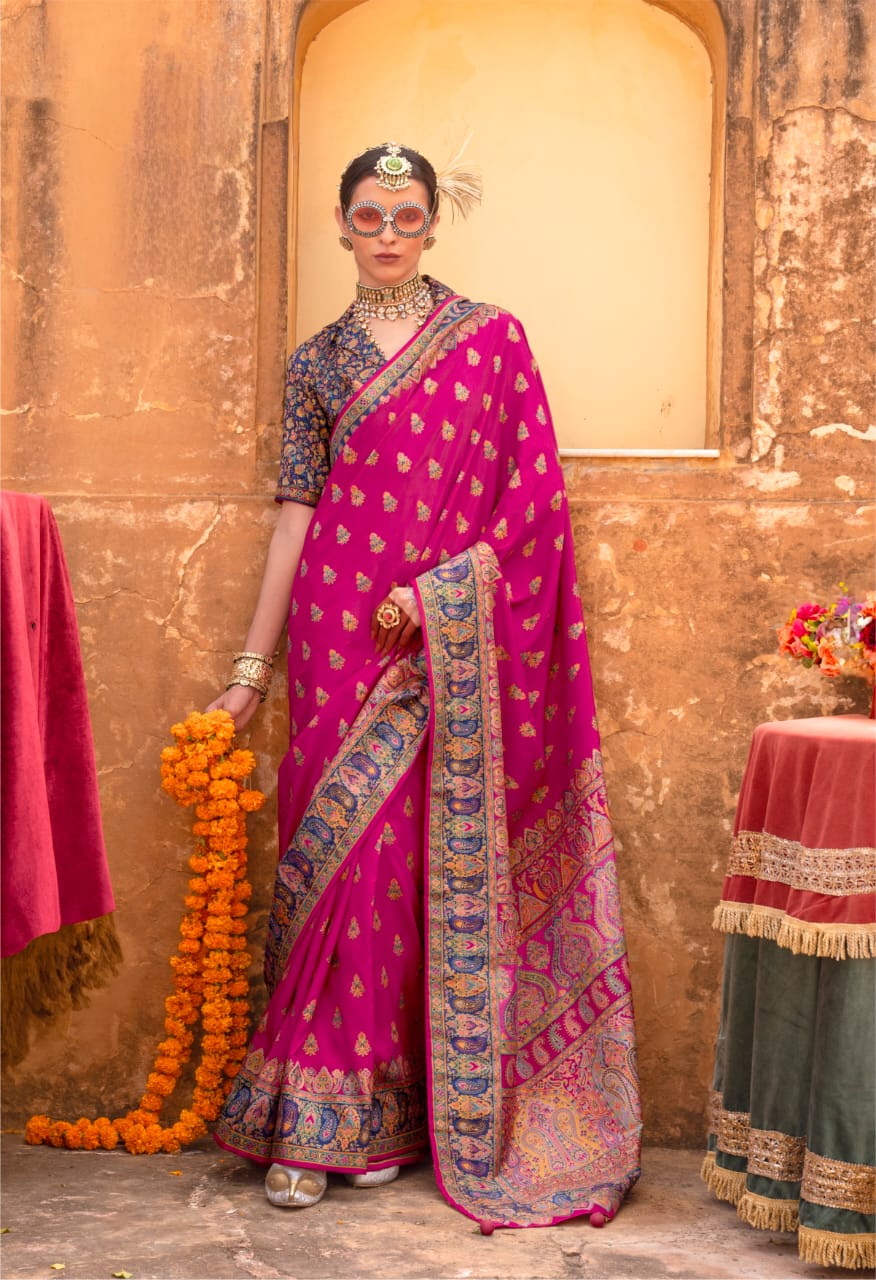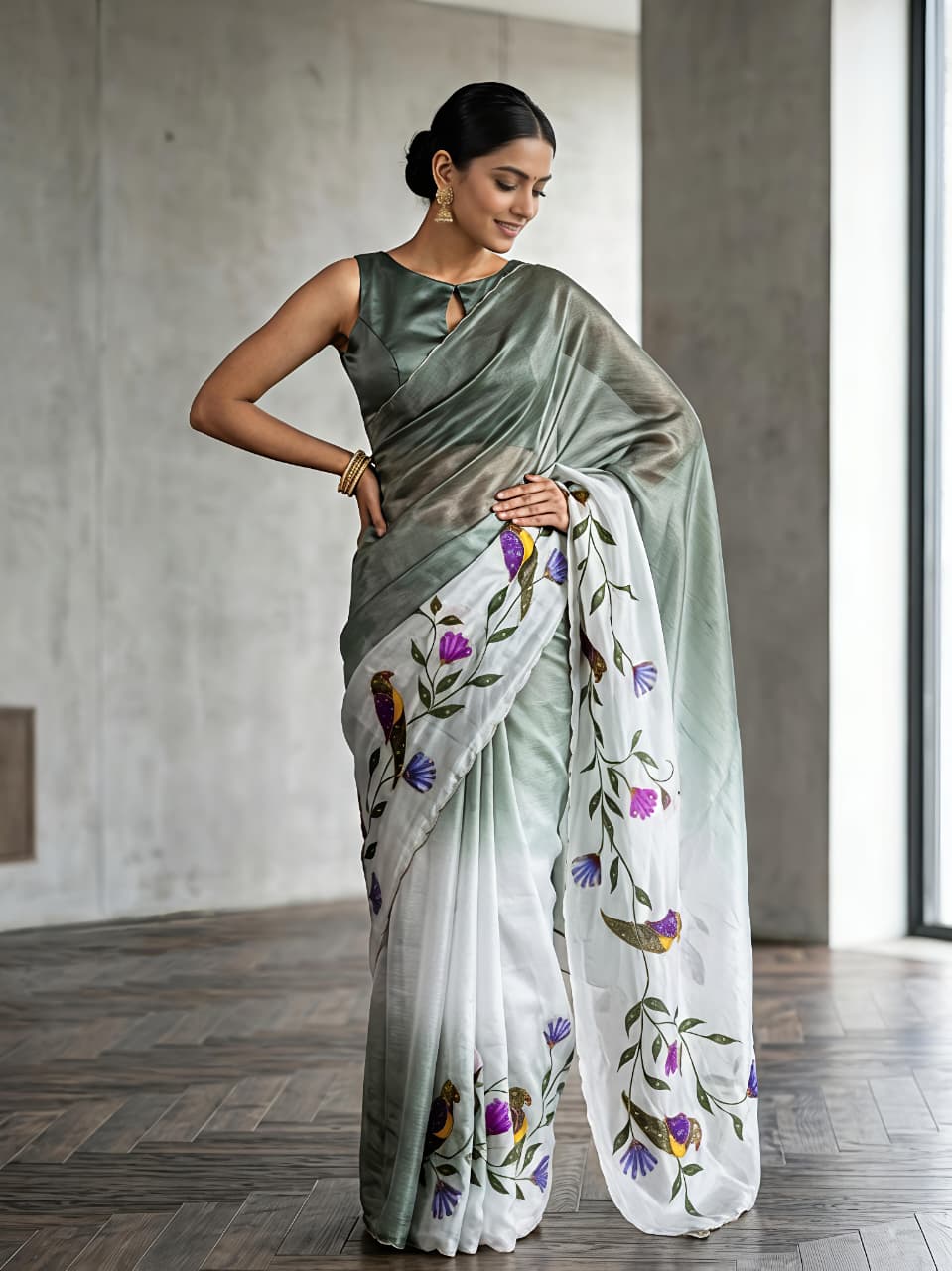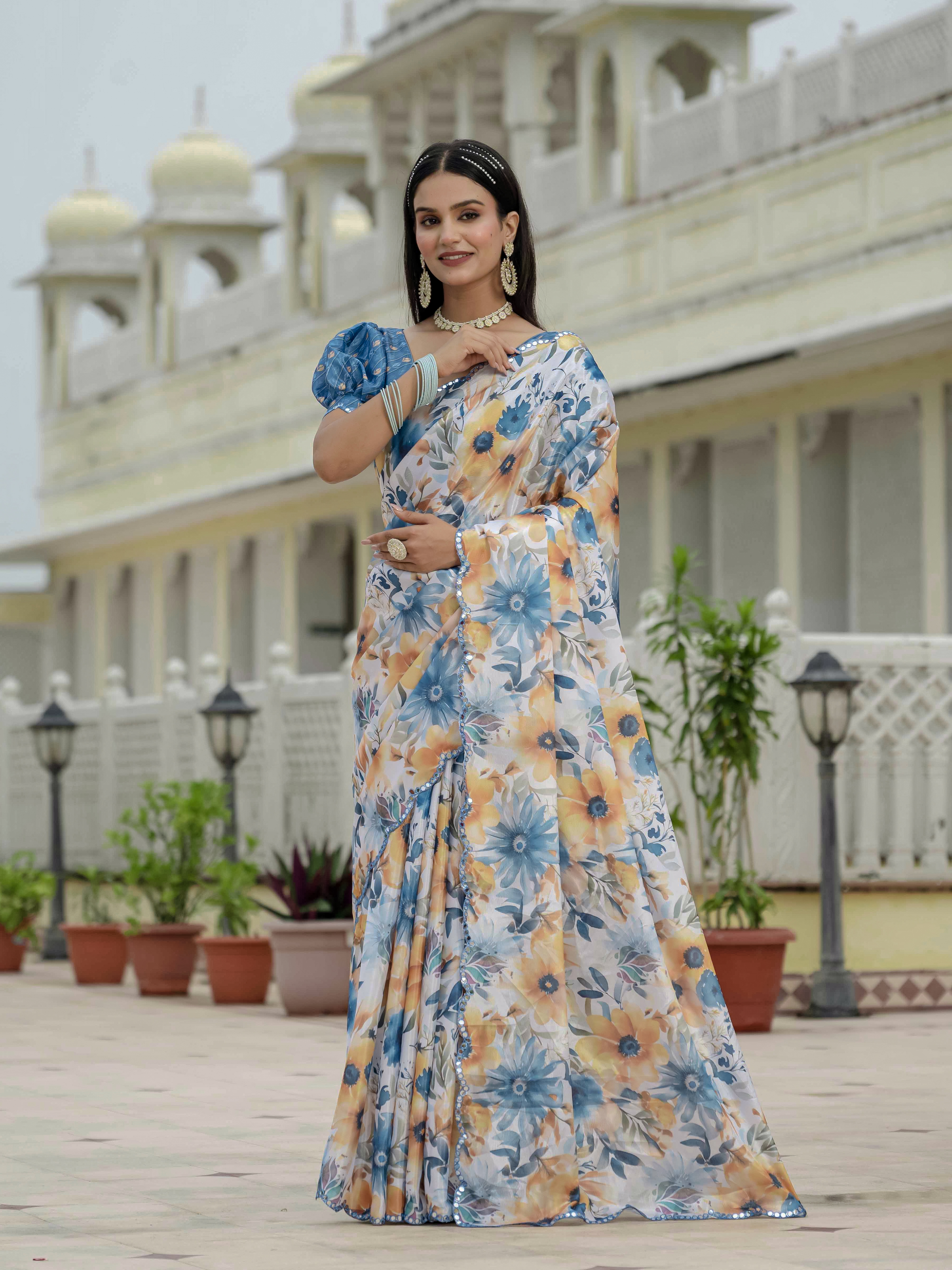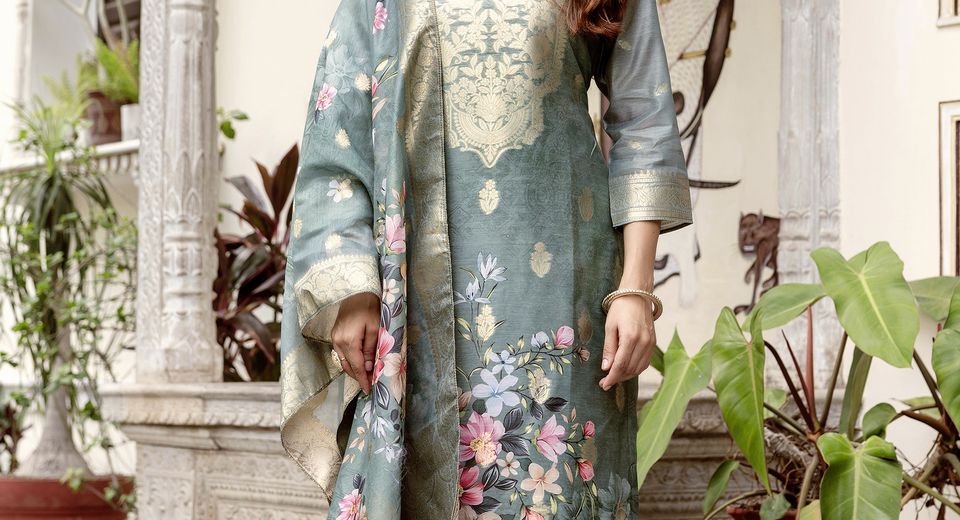
Beautiful Chanderi Salwar Suit Designs bring together a light hand-feel, a softly luminous surface and the graceful structure of Indian occasion wear. Chanderi can look polished without feeling heavy, which makes it useful for summer festivities, daytime ceremonies, office celebrations and intimate dinners. The most flattering choice depends on more than colour: the weave, lining, silhouette, dupatta, embroidery and intended use all affect how the suit feels and falls.
Chanderi is associated with the town of Chanderi in Madhya Pradesh and is traditionally woven with fine yarns that create a delicate, slightly sheer fabric with a characteristic sheen. Contemporary salwar suits may use cotton Chanderi, silk Chanderi, silk-cotton blends or Chanderi-inspired fabrics. Checking the fabric description matters because "Chanderi" describes a textile tradition and visual character, not one single fibre composition.
Why Beautiful Chanderi Salwar Suit Designs Feel Different
Beautiful Chanderi Salwar Suit Designs feel distinctive because the fabric combines low weight with a crisp, dressy surface. The weave can catch light gently while remaining more breathable than many densely embellished occasion textiles.
Cotton Chanderi usually feels more breathable and slightly more matte than a silk-rich version. Silk Chanderi generally has a clearer lustre, a smoother drape and a more formal appearance. A silk-cotton Chanderi blend can sit between the two, offering some sheen without making the outfit feel as ceremonious as a heavily worked silk suit.
The fabric's lightness doesn't mean that every Chanderi suit is fragile or unsuitable for regular wear. A simple straight kurta with limited embroidery may work for repeated daytime use, while a sheer dupatta, metallic threadwork or a fuller Anarkali silhouette can reserve the same textile for weddings and festive gatherings.
Chanderi also behaves differently from a thick cotton salwar suit. The fabric may hold a clean line rather than collapsing close to the body, so seam placement and lining influence comfort. If a kurta is lightly lined, the lining should be smooth and breathable; a heavy synthetic lining can remove the airy quality that makes Chanderi appealing.
How to Choose the Right Chanderi Weave and Finish
The right Chanderi weave depends on the weather, formality of the event and amount of movement expected during wear.
Cotton Chanderi for daytime use
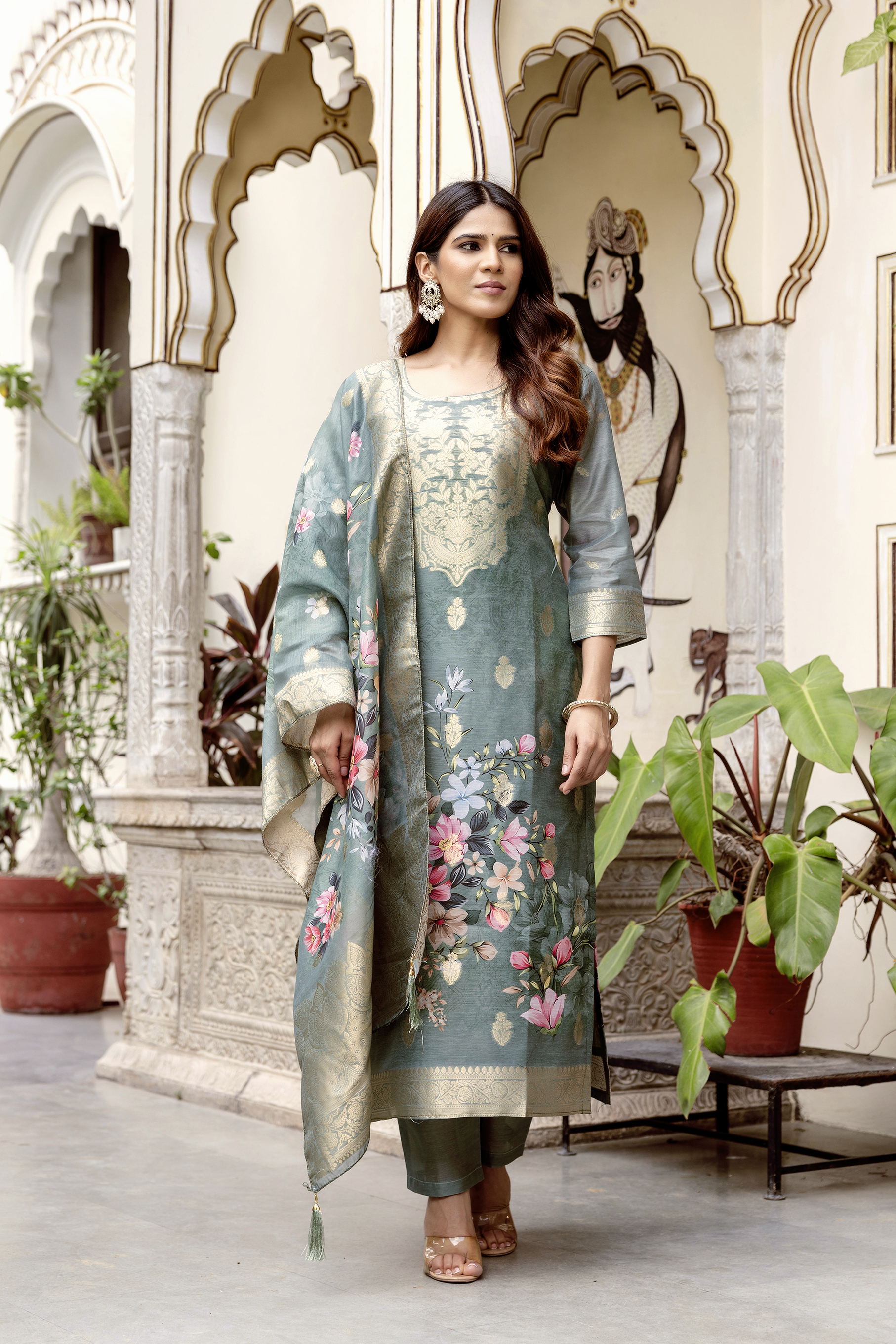
Cotton Chanderi is a practical choice for warm daytime events because it generally feels lighter and more breathable than a silk-rich suit. Look for soft embroidery, block-style motifs, restrained borders and a dupatta that doesn't require constant adjustment. The Woven Chanderi Cotton Readymade Salwar Suit illustrates how a simpler weave can retain a dressed-up appearance without excessive ornamentation.
A cotton suit can also answer the need for a cotton suit dupatta, particularly when the dupatta matches the kurta's breathability. A cotton or cotton-rich dupatta is easier to wear for long hours than a very slippery silk layer, especially during travel or outdoor ceremonies.
Silk-rich Chanderi for evening dressing
Silk-rich Chanderi suits suit evening celebrations because the silk content usually gives the fabric greater lustre and a more fluid fall. The finish can make pale colours appear luminous and allow zari, resham or tonal embroidery to stand out. The Lavender Chanderi Royale Embroidered Suit is the kind of colour-and-surface combination that can move naturally from a festive puja to a family dinner.
Pure silk suits are not automatically superior to cotton suits. Pure silk generally offers more sheen and a richer hand-feel, while cotton Chanderi can be cooler, easier to wear during the day and less formal. Choose based on use rather than fibre prestige: a breathable cotton suit is often the better decision for a six-hour daytime function.
Understanding "pure" Chanderi
Pure Chanderi usually refers to a fabric made with a single principal fibre category, such as pure silk Chanderi or pure cotton Chanderi, while mul Chanderi commonly refers to a very fine, lightweight cotton-based fabric. Retail descriptions can vary, so the fibre composition should be checked before purchase.
Mul Chanderi tends to feel especially airy and delicate, whereas pure silk Chanderi tends to look more lustrous and formal. Neither option is universally better; mul Chanderi is often suited to hot weather and gentle daytime dressing, while silk Chanderi can be appropriate for elevated festive styling.
Five Design Details That Change the Look
A Chanderi salwar suit can look minimal, regal or contemporary depending on five design decisions: silhouette, neckline, embroidery placement, bottom shape and dupatta treatment.
Silhouette and length
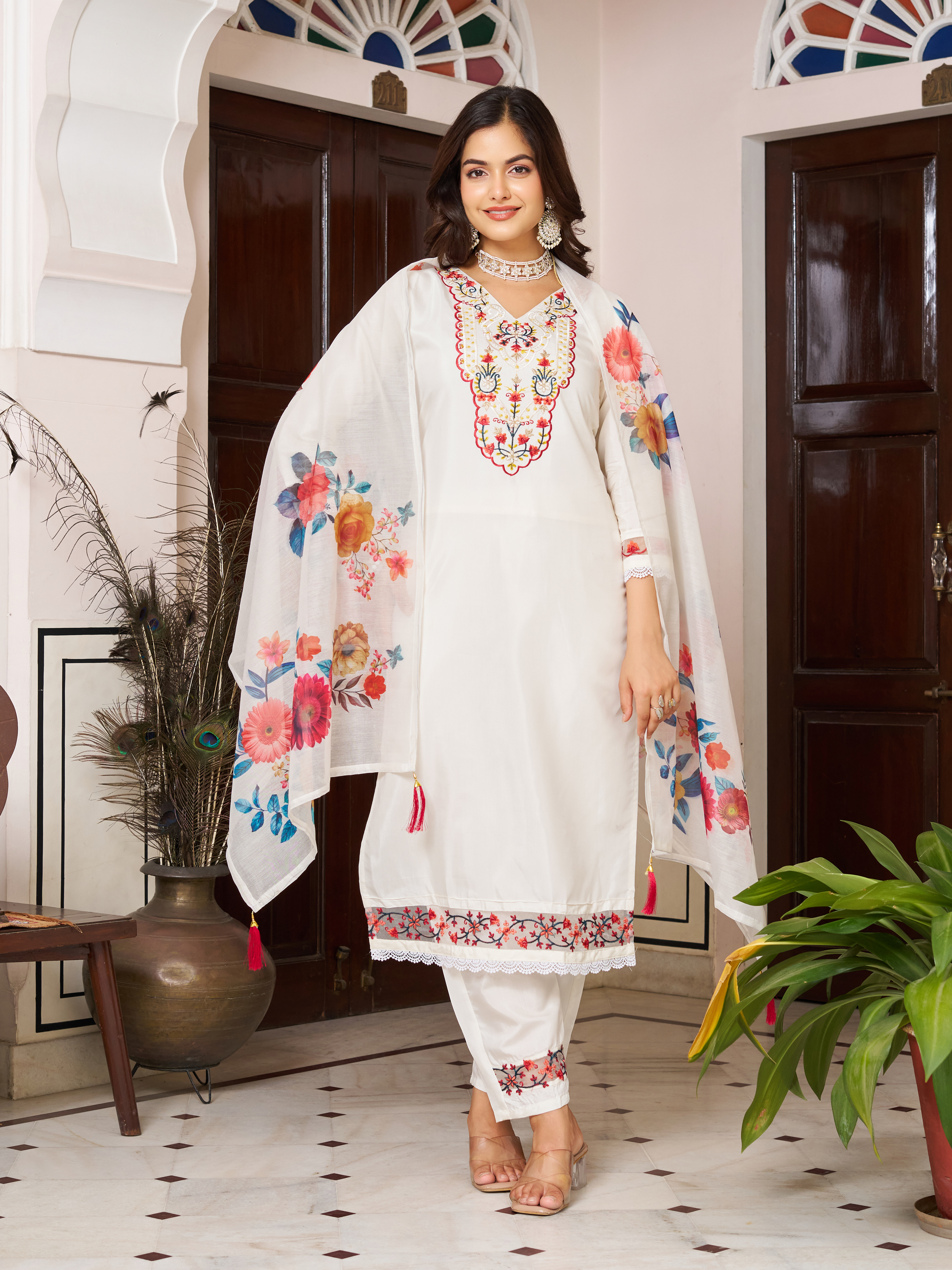
A straight kurta creates a clean vertical line and works well for office festivities, lunches and smaller gatherings. An Anarkali adds movement through panels and flare, making it useful for dancing or a more traditional event. A shorter kurta paired with a palazzo creates a modern proportion without losing the softness associated with Chanderi.
The collection titled Ladies Dress Anarkali Salwar Suits is relevant when a fuller, more fluid shape is the priority. An Anarkali should have enough room at the hem for walking and sitting; excessive flare can become cumbersome if the event involves stairs, travel or prolonged standing.
Embroidery and surface work
Embroidery looks most balanced when its scale matches the fabric's delicacy. Fine threadwork can preserve Chanderi's light appearance, while concentrated motifs at the neckline, cuffs or hem create definition without covering the entire surface.
The Elegant White Chanderi Threadwork Suit with Dupatta demonstrates why white threadwork can look refined without relying on strong contrast. The Green Chanderi Embroidered Salwar Suit with Organza Dupatta takes a more layered approach, using colour and a lighter organza accent to make the outfit feel more occasion-ready.
Colour selection
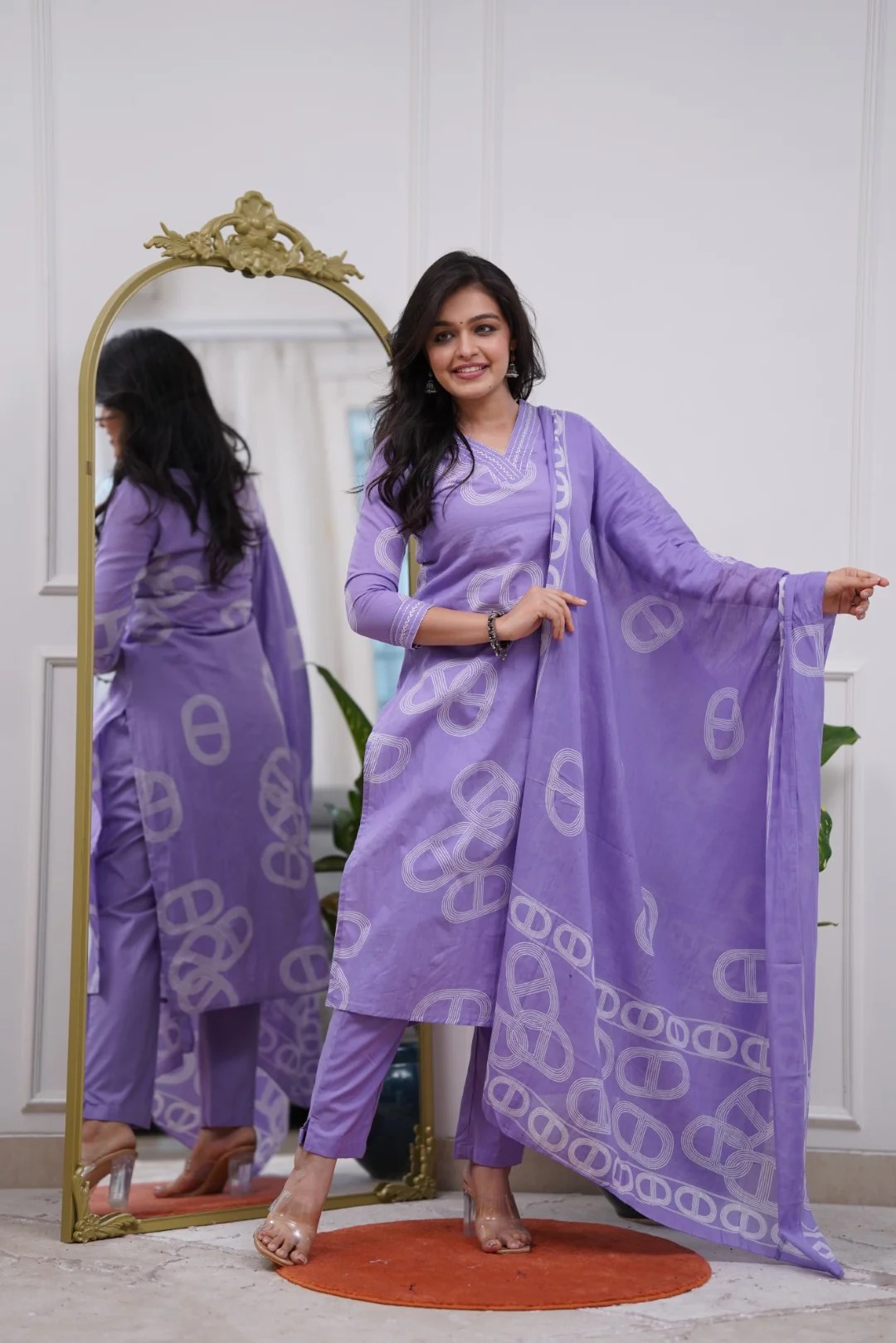
Pastel Chanderi shades such as lavender, ivory, blush and powder blue emphasise the fabric's translucent glow and work especially well for daytime celebrations. Jewel tones such as emerald, wine, royal blue and deep plum create stronger evening presence. Yellow Chanderi can be particularly effective for a Haldi ceremony because the colour feels celebratory while the lightweight textile remains comfortable in warm conditions.
The White Chanderi Blossom Salwar Suit suits a soft, daytime palette, while the Yellow Chanderi Radiance Embroidered Suit uses a brighter colour story for a more expressive festive appearance. Colour should also be assessed against the dupatta: a tonal dupatta looks streamlined, while a contrasting border can visually frame the face.
Bottomwear and proportion
Churidar bottoms create a heritage, fitted line and pair naturally with longer kurtas. Straight pants offer ease and a contemporary finish. Palazzos add volume below the waist and work best when the kurta isn't excessively wide.
The Lavender Chanderi Kurta with Olive Embroidered Palazzo Suit shows how a contrast bottom can give a soft kurta greater visual structure. When choosing a palazzo, check the hem width and fabric opacity because very wide, unlined bottoms can lose shape or reveal more than intended in strong light.
How to Style Chanderi Salwar Suits for Real Occasions
The best styling approach matches the amount of shine and movement to the event rather than adding every available accessory.
For a Haldi ceremony or daytime function
Choose a breathable cotton Chanderi or a lightly lined silk-cotton suit, then pair it with small jhumkas, flat sandals and a compact potli. Yellow, ivory, peach, green and lavender work well for a Haldi ceremony because they photograph brightly without requiring heavy jewellery. Keep the dupatta pinned at one shoulder if turmeric, food or outdoor movement is likely.
For a festive puja or family gathering
A straight suit with delicate embroidery needs only one strong accessory, such as pearl earrings, a slim bangle stack or embroidered juttis. A white or pastel suit can be warmed with gold-toned jewellery, while a jewel-toned suit can be balanced with antique gold or muted metallic accents.
For an evening reception
A silk-rich Chanderi suit with zari, tonal embroidery or a structured dupatta can replace a heavier silk salwar kameez when comfort matters. The Embroidered Salwar Suit Set for Women can be styled with heeled sandals, a small metallic clutch and a low bun to keep the neckline and embroidery visible.
For work and semi-formal dressing
Select a straight kurta in a restrained colour with minimal surface work, three-quarter sleeves and a dupatta that stays close to the body. Avoid very sheer layers or oversized embellishment in conservative workplaces. A readymade salwar suit can be especially useful when the measurements, lining and finishing are already resolved, but the garment should still be checked for shoulder width, sleeve comfort and trouser length.
Readymade, Unstitched or Custom: Which Format Works Best?
Readymade salwar suits are the most convenient option when the size chart matches your body measurements and the complete outfit is needed quickly. A readymade set usually reduces the decisions about neckline, sleeve finish and coordinated fabric, making it practical for travel or a near-term event.
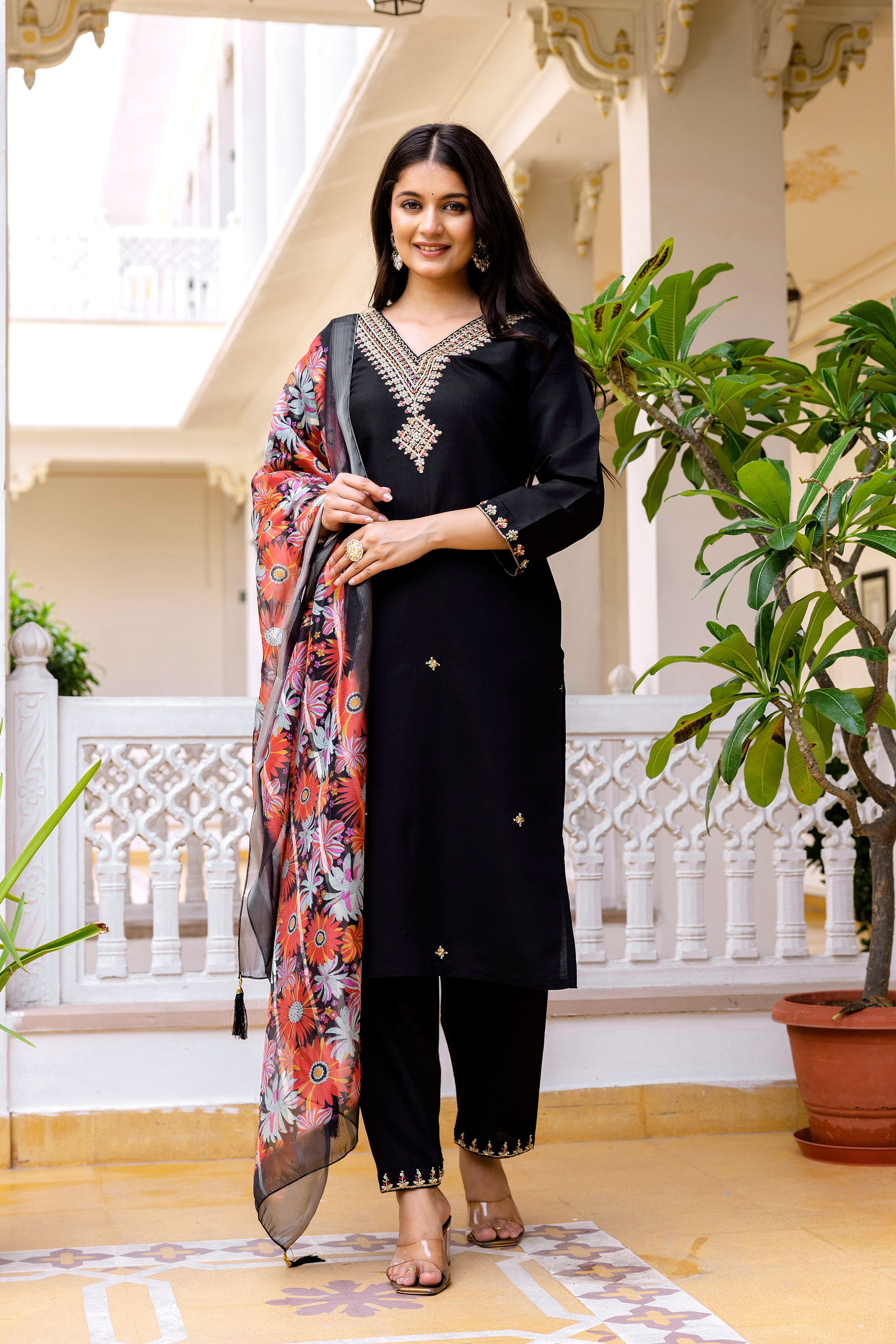
A Suit Set Unstitched gives more control over length, sleeve shape, neckline depth and ease at the waist. Unstitched fabric is useful when standard proportions don't fit, such as when a person needs a longer kurta with a narrower shoulder or a shorter trouser length. The additional cost of stitching and the time required for tailoring should be included in the budget.
Custom stitching is worth considering for a formal Chanderi suit with a specific fit requirement, but delicate fabrics need an experienced tailor. Ask for a lining that supports opacity without adding unnecessary weight, and request reinforced seams at areas that receive stress, such as the armhole and side slit.
The collections Dress Materials and Salwar Suits Flat 40% Off can be useful starting points for comparing fabric formats and price ranges, but a discount should never replace checking the fibre description, measurements and return conditions. A lower price is valuable only when the finished garment remains wearable.
How to Check Fit, Opacity and Construction Before Buying
A reliable Chanderi purchase requires three checks: measurements, transparency and finishing.
- Measurements: Compare bust, waist, hip, shoulder, sleeve and kurta-length measurements with a garment that already fits. Allow extra ease if the fabric has little give.
- Opacity: Examine the kurta and trousers in bright light, especially in white, ivory, peach and pastel shades. Confirm whether the lining extends through the body, sleeves and trousers.
- Dupatta size: A narrow dupatta may be elegant but less secure for full coverage. Check the length and width if you prefer a shoulder-to-shoulder drape.
- Seams and hems: Look for even stitching, finished side slits, secure embroidery and a hem that hangs level. Loose threads around zari or threadwork should be trimmed carefully rather than pulled.
- Colour balance: Compare the kurta, bottom and dupatta as a set. A contrast dupatta can be attractive, but the border should not overpower a delicate Chanderi surface.
Price comparisons become more meaningful when the garment type is identical. A two-piece kurta-and-bottom set can't be compared directly with a three-piece suit that includes a large embroidered dupatta. Collections such as Salwar Suits with 30% Off and Red Dress Materials Under 2000 may help establish a budget, but fabric composition and included pieces should be compared line by line.
Care Instructions That Preserve Chanderi's Finish
Chanderi garments last longer when they're cleaned gently, dried away from harsh sunlight and stored without crushing the weave.
Read the care label before washing, especially when zari, metallic thread, lining or colour-blocked panels are present. Dry cleaning is the safer choice for heavily embroidered or silk-rich suits. If hand washing is explicitly permitted, use cold water, a mild detergent and a short soaking time; don't twist, wring or scrub the fabric.
Dry the garment flat or on a broad padded hanger in shade, depending on the care instructions. Direct midday sunlight can fade lavender, yellow, green and other dyed shades over repeated exposure. Iron Chanderi from the reverse side on a low or medium setting with a pressing cloth, and avoid pressing directly over raised embroidery or zari.
Store the suit clean and completely dry. Fold embroidered pieces with soft tissue or plain muslin between embellished sections so the threads don't catch. Avoid sealing the garment in airtight plastic for long periods because trapped moisture can encourage odour or mildew. Refold the suit every few months to prevent permanent creases along the same fold line.
With the right fibre choice, proportion and care routine, Beautiful Chanderi Salwar Suit Designs can serve more than one season. Cotton Chanderi supports breathable daytime dressing, silk-rich Chanderi brings evening lustre, and thoughtful styling allows the same lightweight textile to suit a Haldi ceremony, a festive puja or a polished family gathering.
Questions to Ask Before Choosing a Chanderi Salwar Suit
Where can I buy Chanderi fashion online?
Chanderi fashion is available through established ethnic-wear websites, designer stores and curated textile retailers. Compare the fibre composition, garment measurements, included pieces, lining information and care instructions before choosing a suit online.
Which website is best for buying salwar suits?
The best website is one that provides clear size charts, detailed fabric descriptions, garment photographs, delivery information and a transparent exchange process. A reliable product page should also state whether the set is readymade, stitched or unstitched.
Is Chanderi silk better than cotton Chanderi?
Chanderi silk is better when you want more sheen, a smoother fall and a formal evening appearance. Cotton Chanderi is often better for hot weather, long daytime wear and breathable everyday dressing, so the suitable option depends on the occasion rather than a universal quality ranking.
What is the difference between mul Chanderi and pure Chanderi?
Mul Chanderi generally refers to a very fine, lightweight cotton-based fabric, while pure Chanderi usually identifies a fabric made from one principal fibre category, such as pure silk or pure cotton. Product descriptions can use these terms differently, so check the stated fibre composition before buying.
Are readymade Chanderi salwar suits a good choice for weddings?
Readymade Chanderi salwar suits can work well for weddings when the fit, opacity and level of embroidery suit the event. Silk-rich Chanderi with zari or detailed threadwork is more suitable for a formal function, while a simple cotton Chanderi design may be better for a daytime ceremony.
How should a Chanderi salwar suit be washed?
Follow the garment care label because silk-rich, embroidered and zari-work suits may require dry cleaning. When hand washing is permitted, use cold water and mild detergent, avoid wringing, dry the suit in shade and iron it from the reverse side with a pressing cloth.