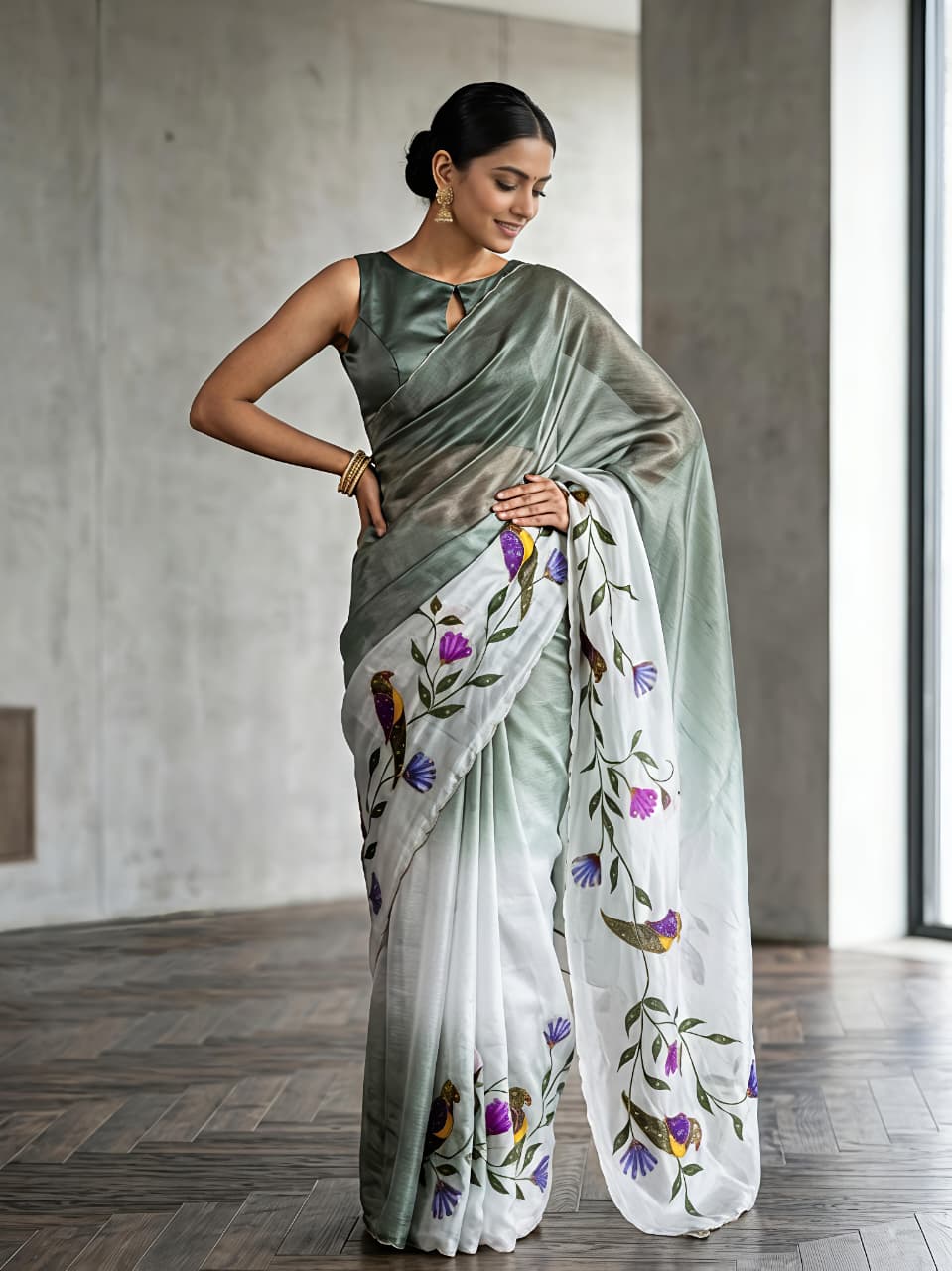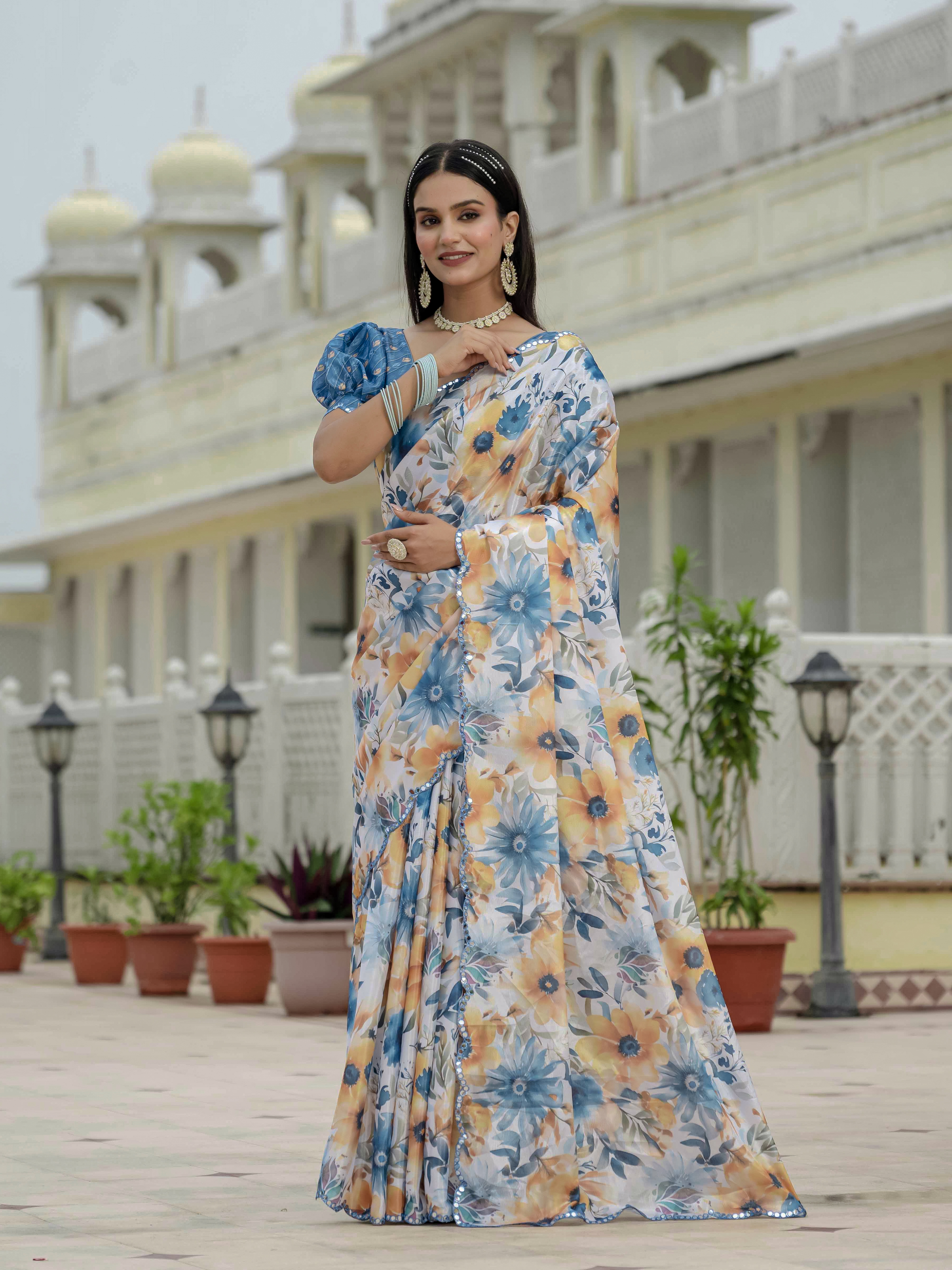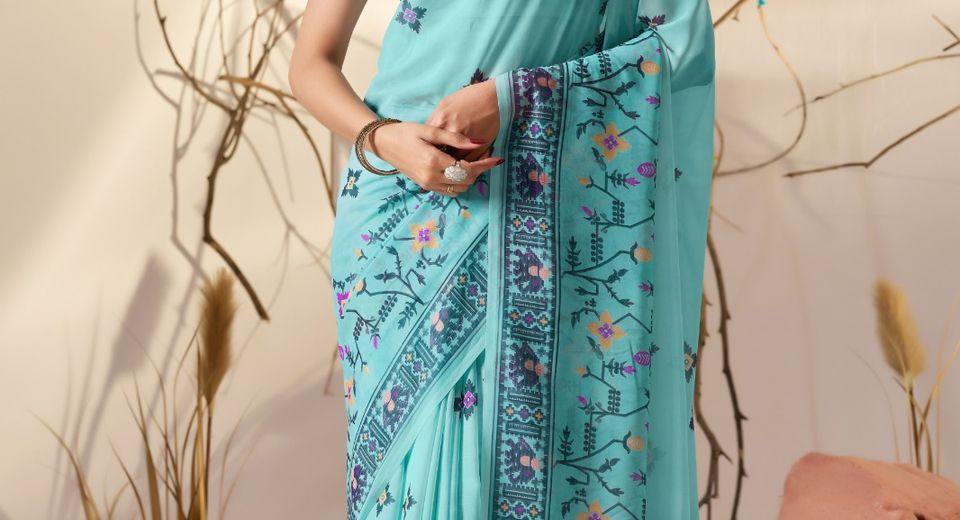
Bastar-Inspired Saree Styling: Tribal Textiles for Modern Women begins with one useful idea: let the textile's graphic language lead the outfit. Bastar-inspired motifs often bring together earthy contrasts, animal or botanical forms, repeated borders and a handmade visual rhythm. A modern wardrobe can balance those details with a clean blouse, measured jewellery and a drape that suits the wearer's movement.
The result doesn't need to look costume-like or heavily accessorised. Linen, lichi silk and cotton sarees can carry tribal-inspired patterns into office gatherings, daytime celebrations, cultural events and relaxed dinners when colour, proportion and texture are considered together.
Bastar-Inspired Saree Styling: Tribal Textiles for Modern Women and the Meaning of the Motif
Bastar-inspired sarees translate visual ideas associated with Bastar's tribal art and textile traditions into wearable motifs, borders and pallu compositions. A printed saree may suggest natural forms, geometric marks or animal figures without claiming to be an authentic handwoven Bastar textile.
Bastar is a region of Chhattisgarh known for rich Adivasi art traditions, including bell-metal craft, woodwork, painting and textile-related visual culture. Many contemporary sarees take inspiration from these forms through printed designs rather than reproducing one specific community's weaving technique. Checking a product description remains important when authenticity, handloom status or craft provenance matters to you.
Three design features usually shape the styling decision:
- Motif scale: Small repeated symbols feel quieter, while large figures or bold geometric panels become the main focus of an outfit.
- Colour contrast: Off white, beige, grey, teal, rust, black and muted green create an earthy palette that pairs well with natural-looking accessories.
- Pallu treatment: A designer pallu, tassel finish or zari border changes where the eye settles and influences how the saree should be pleated.
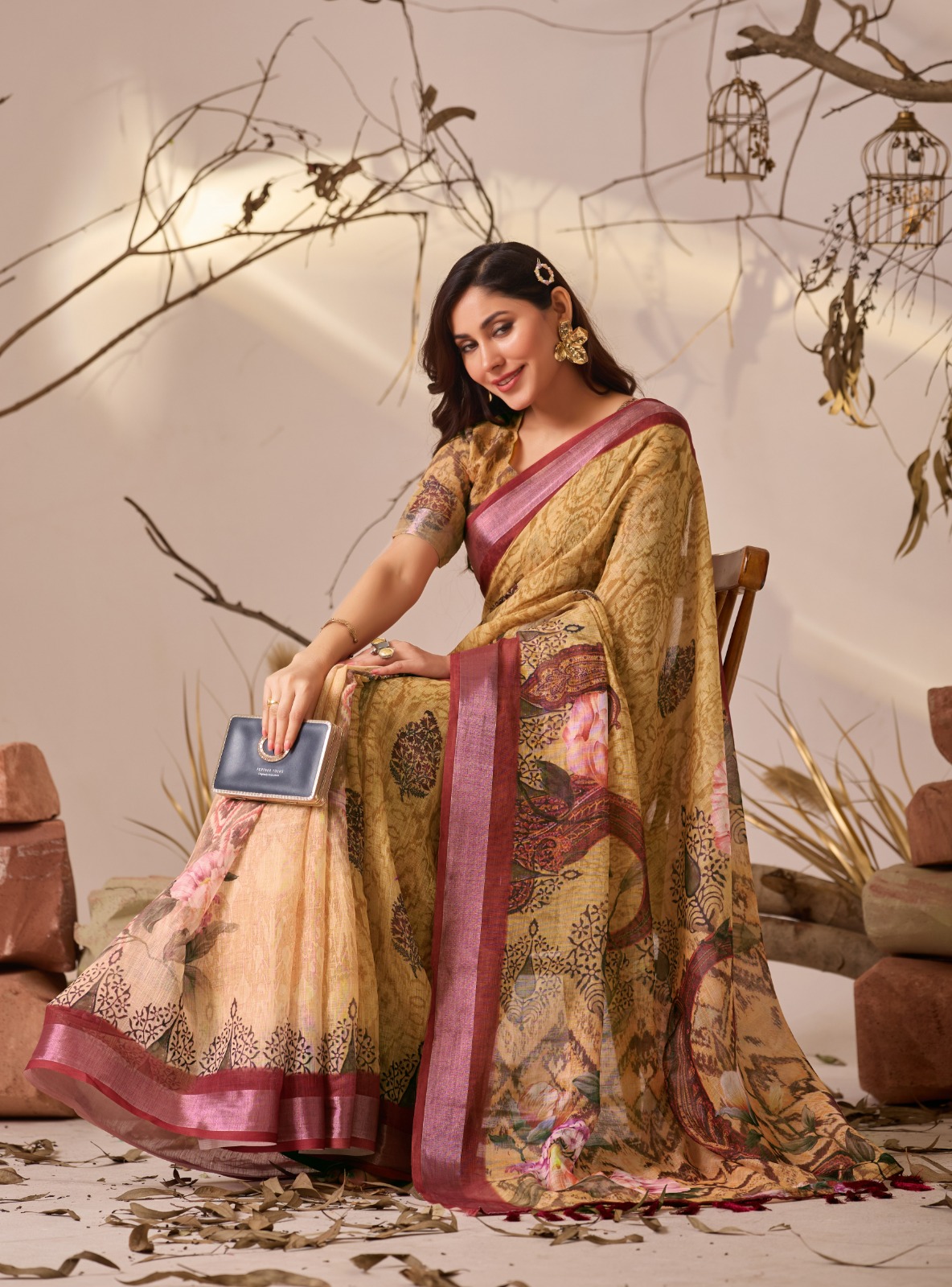
Off White Linen Saree with Tribal Prints & Designer Pallu already has a strong visual endpoint. A blouse should support the pallu rather than compete with it. Elegant Pastel Green & Beige Linen Saree with Tribal Design offers a softer route, making it easier to introduce colour through earrings, footwear or a contrasting blouse.
Bastar-Inspired Saree Styling: Tribal Textiles for Modern Women with the Right Blouse
A modern Bastar-inspired saree outfit works best when one traditional-looking element is balanced with two or three crisp contemporary choices. A structured blouse, a neat pleat line and restrained jewellery can make a graphic tribal print feel current without removing its cultural character.
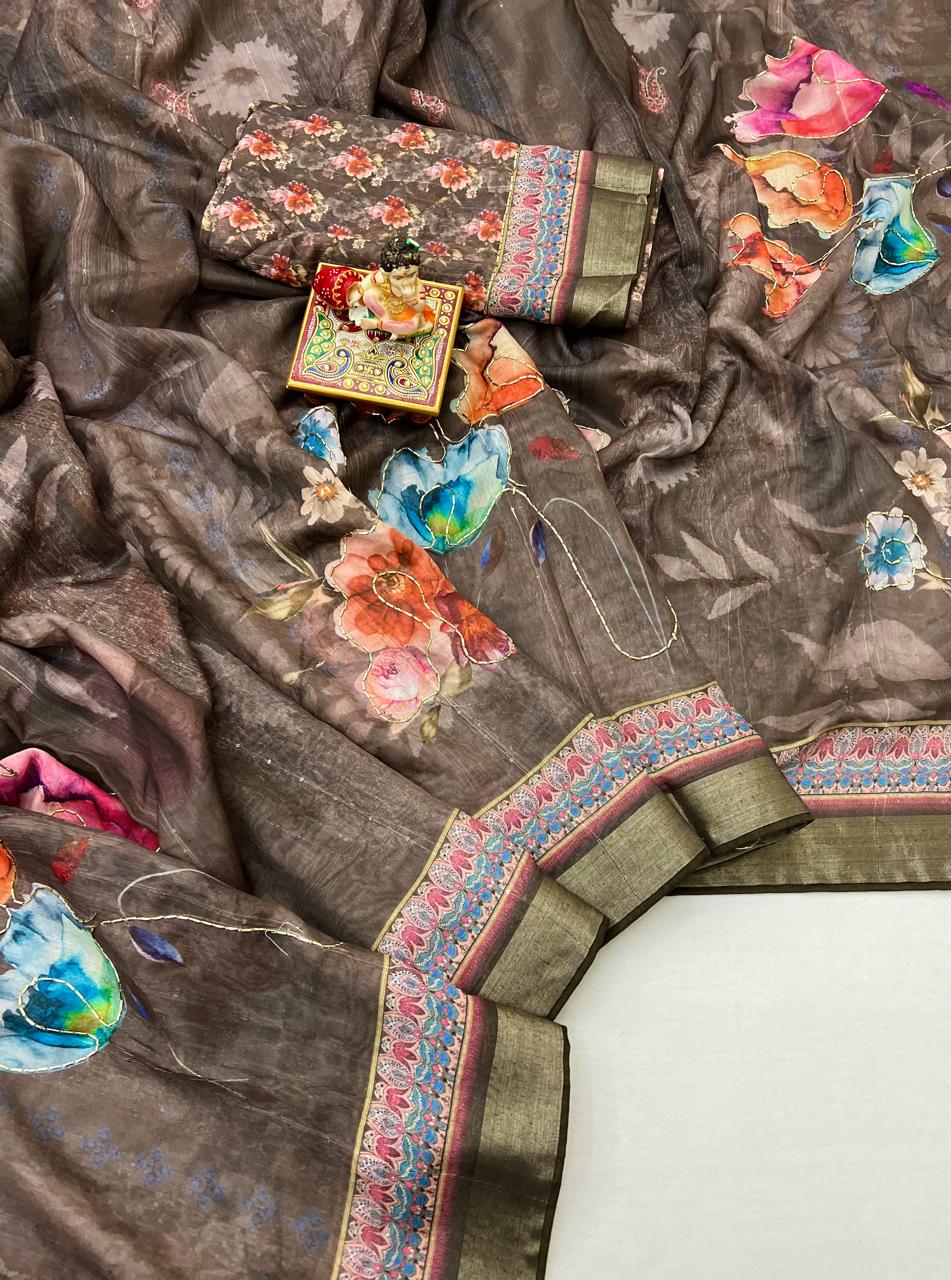
Choose the blouse by motif density
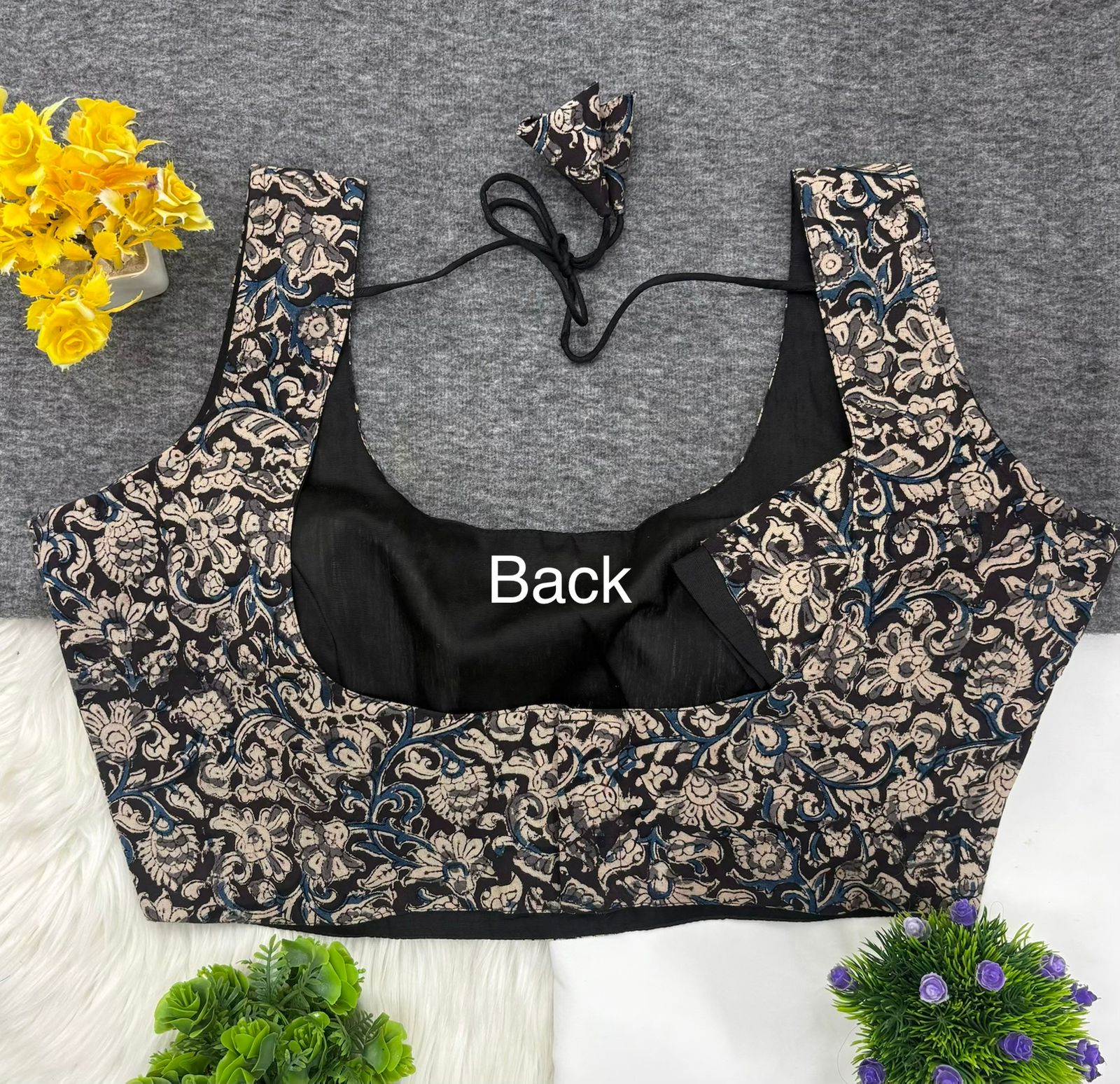
A plain blouse is usually the most versatile choice for a saree with dense tribal motifs. Select a shade already present in the print, such as charcoal, ivory, muted green, terracotta or deep teal. A square neckline, high neck, sleeveless cut or elbow-length sleeve can give the outfit a distinctly modern proportion.
A printed saree with a relatively open field allows more experimentation. A textured blouse in raw silk, cotton or linen can add depth without creating another competing pattern. Avoid matching a busy tribal print with an equally busy floral blouse unless the colour palette is tightly controlled.
Use tailoring to change the mood
Tailoring changes the same saree from relaxed to polished more effectively than adding extra jewellery. A close-fitting blouse with a clean shoulder line suits a gallery visit or evening gathering, while a comfortable cotton blouse with short sleeves works for daytime wear.
Pair Off White Tribal Print Pure Linen Saree with Tassel Pallu with a sleeveless blouse in warm brown or muted rust for a contemporary silhouette. The tassel pallu can remain visible over one shoulder, while a narrow belt may be added only if the saree is secured comfortably and the belt doesn't crush the linen.
Bastar-Inspired Saree Styling: Tribal Textiles for Modern Women and Practical Drapes
The most suitable drape for a tribal print saree keeps the main motifs and pallu visible while controlling bulk around the waist. A classic open pallu, a narrow pleated pallu or a lightly pinned shoulder drape generally works better than a highly elaborate drape.

Open pallu for graphic designs
An open pallu is effective when a saree has a striking border or designer pallu because the full design remains readable. Make five to seven front pleats, depending on the saree fabric and your height, and pin the shoulder section at two points to prevent the pallu from twisting.
Soft White Linen Saree with Grey Tribal Design suits this approach. Grey and white create a quiet base for oxidised silver earrings, a black blouse or a deep grey blouse. Keep the pallu broad enough to show the tribal design instead of folding it into a very narrow strip.
Narrow pleated pallu for movement
A narrow pleated pallu gives a sharper appearance and reduces snagging during commuting or active events. The drape works especially well with linen because pressed pleats create a defined line, although linen may develop natural creases during wear.
For a saree with tassels, place the tassel edge around hip level or slightly below the elbow rather than allowing it to drag near the floor. A concealed safety pin behind the shoulder pleats can keep the finish stable without flattening the tassels.
Pre-pleating for time-sensitive occasions
Pre-pleating is the most reliable option when a saree needs to be worn quickly or kept consistent through several hours. Press the pleats, place temporary clips along the waistband and store the folded saree on a wide hanger for a short period before wearing it.
Pre-pleating is particularly helpful for first-time saree wearers, petite frames and outfits involving a cropped blouse. The technique also prevents repeated handling of delicate printed surfaces and reduces last-minute adjustments.
Bastar-Inspired Saree Styling: Tribal Textiles for Modern Women with Colour and Jewellery
Colour and jewellery should echo the saree's natural palette rather than overwhelm its motifs. Bastar-inspired designs often look most balanced with one metal, one accent colour and a limited number of statement pieces.
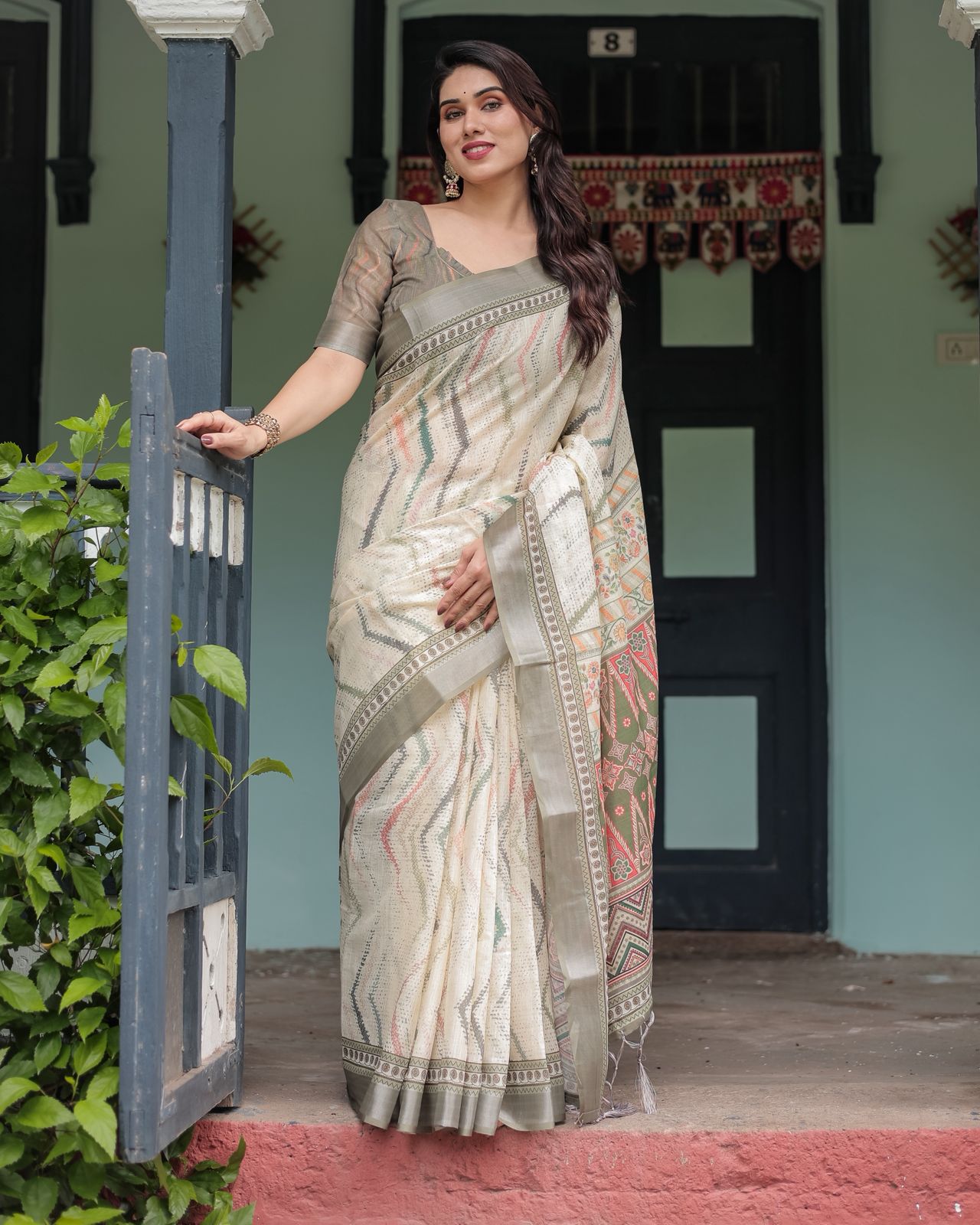
For off-white and beige sarees, antique silver, oxidised silver, brass and matte gold are dependable choices. Terracotta beads, wooden bangles and small stone earrings can add warmth. For teal, choose brushed silver, dark gold or a single rust accent instead of combining several bright colours.
Teal Tribal Art Printed Lichi Silk Saree with Zari Border demonstrates why fabric and border matter together. Lichi silk has a smoother, dressier surface than linen, while zari introduces light. Keep the blouse matte and the jewellery relatively clean so the zari border remains the evening detail.
Jewellery scale should respond to motif scale. Large printed symbols can handle medium or large earrings, but a heavily layered necklace may interrupt the design. Small motifs allow more freedom with a collar necklace, layered chains or a textile-inspired pendant.
- For work or daytime: Choose studs or medium hoops, one bangle stack and a practical watch.
- For a cultural event: Add oxidised silver jhumkas, a cuff or a single bold ring.
- For an evening gathering: Use one luminous element, such as zari, a metal choker or stone earrings, rather than all three together.
Footwear can complete the same logic. Tan leather sandals, juttis, black block heels and muted metallic flats are more adaptable than highly embellished shoes. Match footwear to the setting and walking requirement, not only to the saree's dominant colour.
Bastar-Inspired Saree Styling: Tribal Textiles for Modern Women from Day to Celebration
A Bastar-inspired saree becomes occasion-flexible when the base remains understated and the accessories change according to the setting. Linen and cotton can look polished for daytime gatherings, while lichi silk and zari naturally support more formal styling.
For office events and daytime meetings
A simple blouse, low-profile earrings and a secure open pallu suit an office event. Off-white, beige, grey and pastel green are easy to combine with neutral footwear and a structured tote.
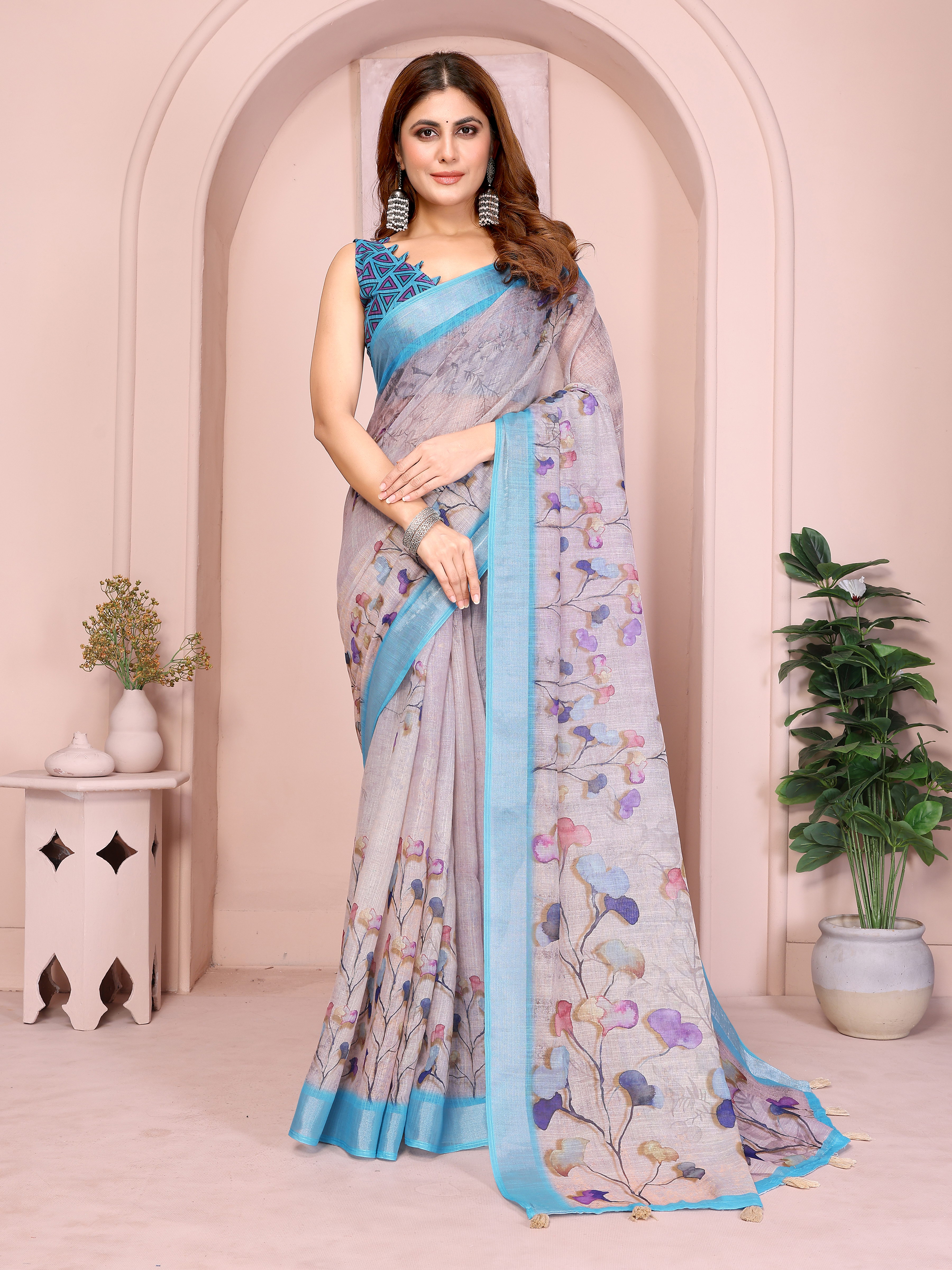
Pastel Linen Cotton Floral Print Saree with Designer Blouse shows how a softer print can be handled differently from a dense tribal design. Keep the styling fresh with a low bun, small earrings and minimal makeup, especially when the blouse already provides a designed finish.
For a Haldi ceremony
A Haldi ceremony calls for a breathable saree, secure pleats and accessories that can tolerate movement. Linen or cotton is generally more comfortable than a heavy silk weave in a warm daytime setting, but the saree should still be checked for colour-transfer or stain sensitivity before attendance.
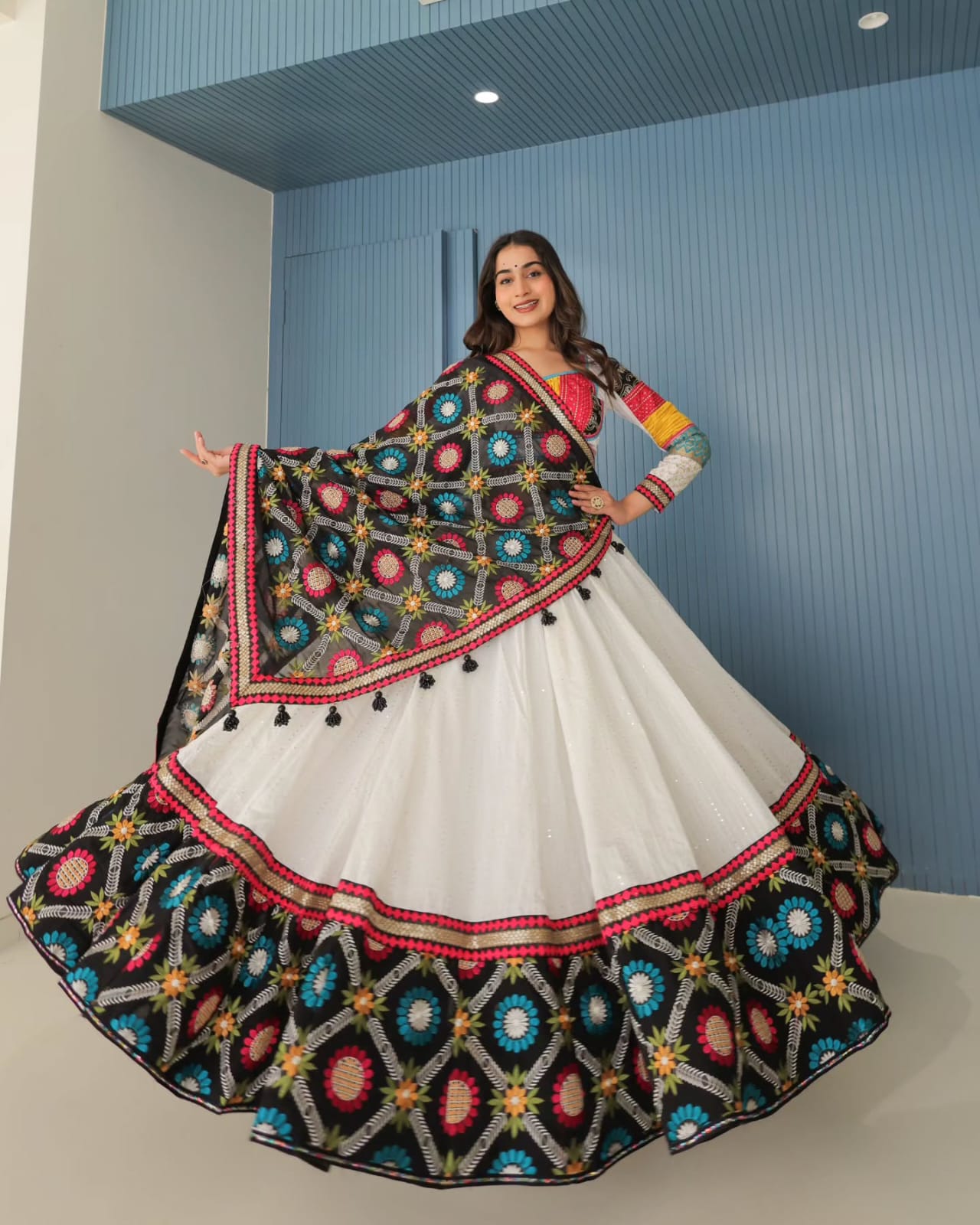
Pair an earthy tribal print with a yellow, marigold, green or ivory blouse. Use fabric-covered bangles or lightweight metal jewellery, pin the pallu securely and choose flat footwear. Avoid long tassels or loose chains if the event involves sitting on the floor, dancing or applying turmeric.
For a dinner or festive gathering
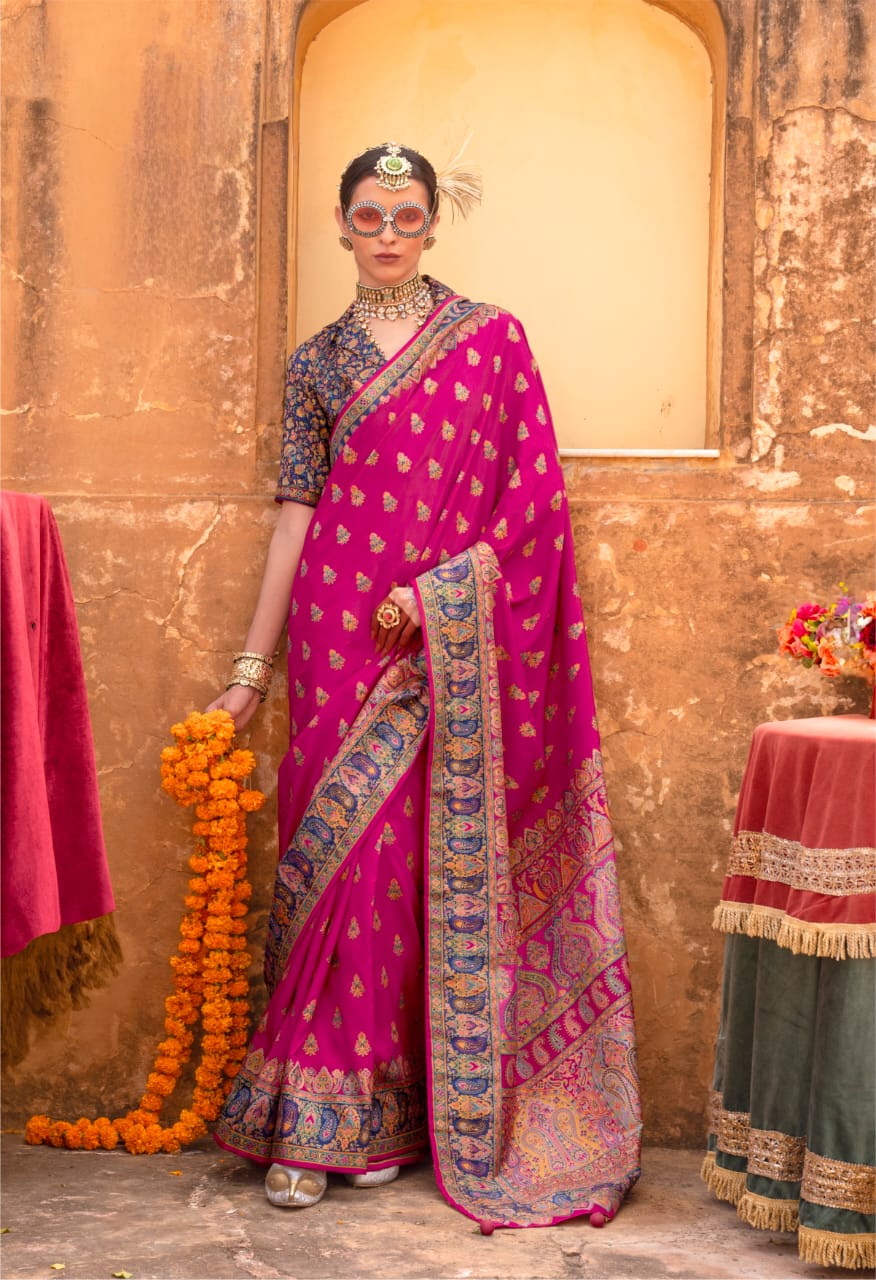
A silk saree with a restrained zari border can move into evening dressing through a sharper blouse and more deliberate lighting-friendly accessories. Purple Banarasi Silk Saree with Ethnic Print brings a richer alternative to the neutral tribal palette, so keep the rest of the look simple with a solid blouse, defined earrings and a compact clutch.
A Banarasi silk saree has more formal visual weight than linen. Let the weave and print remain visible by avoiding a heavily embroidered blouse. A low bun, side-parted hair or a clean ponytail can provide polish without adding another ornate element.
Bastar-Inspired Saree Styling: Tribal Textiles for Modern Women and Smart Buying
Buying decisions should begin with fabric, motif placement, blouse compatibility and care requirements rather than discount percentage alone. A lower price can be useful, but the saree must still suit the climate, frequency of wear and amount of maintenance you can provide.
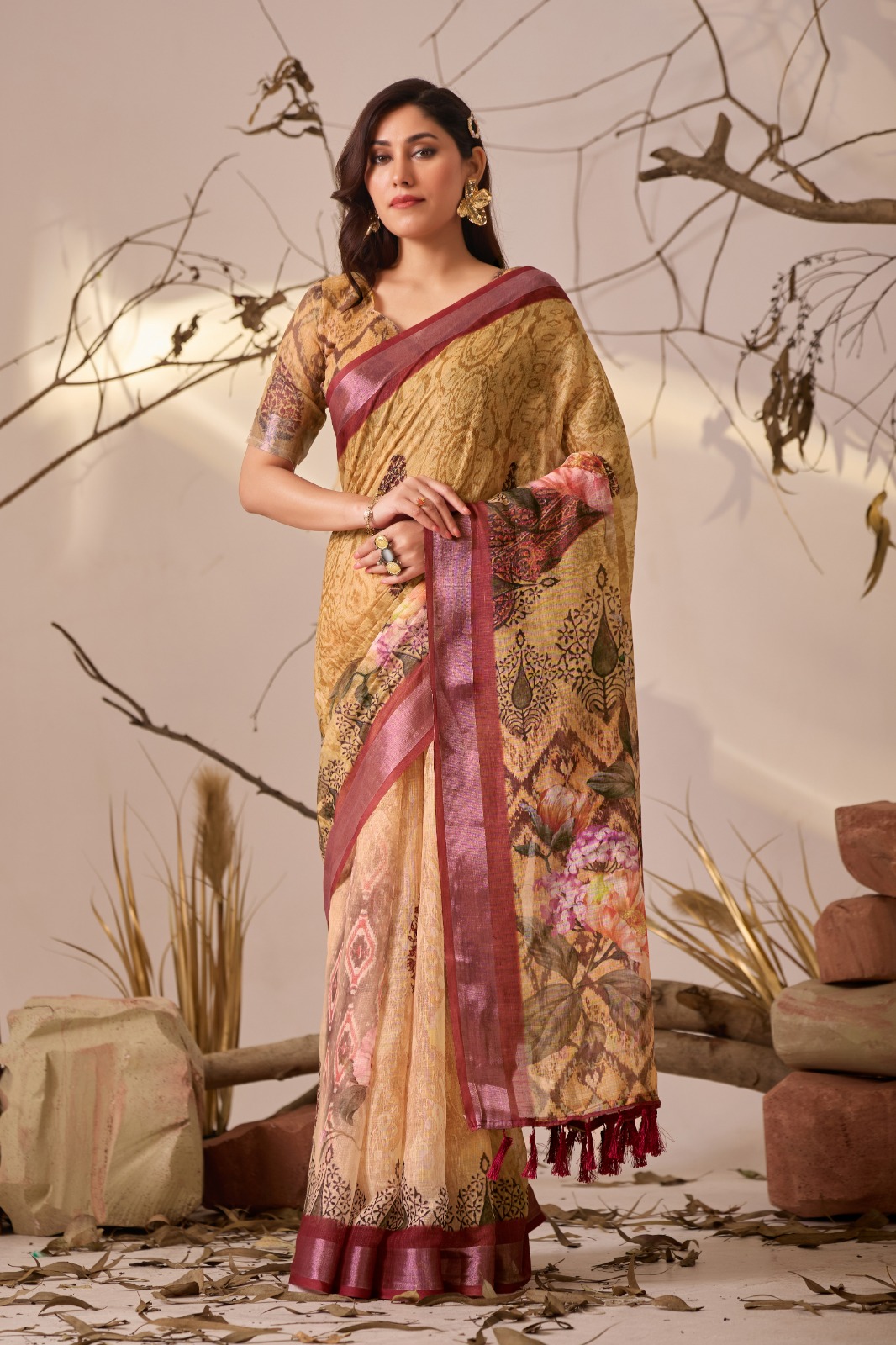
Linen is breathable and develops a natural crumpled character, making it practical for warm weather and daytime use. Lichi silk has a smoother fall and a more occasion-ready surface. Cotton is comfortable and often easier to wear repeatedly, while Banarasi silk needs more careful storage and handling because zari and woven surfaces can catch.
When comparing online sarees, check the stated length and width, fabric composition, blouse-piece availability, print placement and pallu finish. A saree measuring approximately 5.5 metres is common, but the exact width affects how much coverage and pleat volume you receive. A taller wearer or a person who prefers a longer pallu may need to check measurements more carefully.
Budget-led shoppers can compare Sarees from Rs 1000 to Rs 1500 with broader sale collections such as Sarees Under 20% Off and Sarees Under 10% Off. Larger markdown collections including Sarees Flat 60% Off and Sarees Flat 50% Off may be useful for price comparison, but the original price, final fabric details and return conditions should still be read before purchase.
Care after wearing
Air a linen or cotton saree in shade after wearing it, then fold it only when the fabric is completely dry. Store silk sarees in breathable cotton or muslin rather than plastic, refold stored silk every few months and keep zari away from damp cupboards.
Follow the garment's care label before washing. Avoid rubbing printed areas, soaking zari borders or applying perfume directly to the saree. Small stains should be handled promptly by a professional cleaner when the fabric, print or metallic work makes home treatment risky.
A well-chosen Bastar-inspired saree can therefore do more than provide a distinctive print. The right blouse controls visual noise, the right drape protects movement, and the right accessories allow tribal-inspired design to feel personal rather than over-styled. Begin with the motif, respect the fabric and let modern tailoring provide the final balance.
Questions About Bastar-Inspired Saree Styling for Modern Women
How do I style a Bastar-inspired saree without looking overdressed?
Use a solid blouse, one metal finish and a simple open or pleated pallu. Let the tribal print remain the main detail, and keep jewellery to earrings plus one bangle or ring.
Which blouse colour goes with an off-white tribal print saree?
Charcoal, ivory, muted rust, terracotta, deep teal and warm brown all work with an off-white tribal print saree. Choose a shade already present in the border or motif for the most cohesive result.
Is linen suitable for a Haldi ceremony?
Linen is suitable for a Haldi ceremony because it is breathable and comfortable in warm daytime weather. Secure the pleats and pallu, check stain sensitivity in advance and avoid delicate long tassels if the event involves dancing or turmeric application.
How should I drape a tribal print saree for work?
A narrow pleated pallu or a neatly pinned open pallu is practical for work. Five to seven front pleats, a comfortable blouse and low-profile jewellery keep the look polished while reducing snagging during commuting.
Can I wear oxidised silver jewellery with a saree that has zari?
Oxidised silver can be worn with zari when the jewellery is restrained and the saree has an earthy or contrasting palette. Choose either a prominent necklace or large earrings, rather than combining several bright metallic focal points.
How should I store a linen or silk saree after wearing it?
Air the saree in shade until it is fully dry before folding it. Store linen and cotton in breathable fabric, keep silk away from plastic and dampness, and refold stored silk every few months to reduce permanent crease lines.