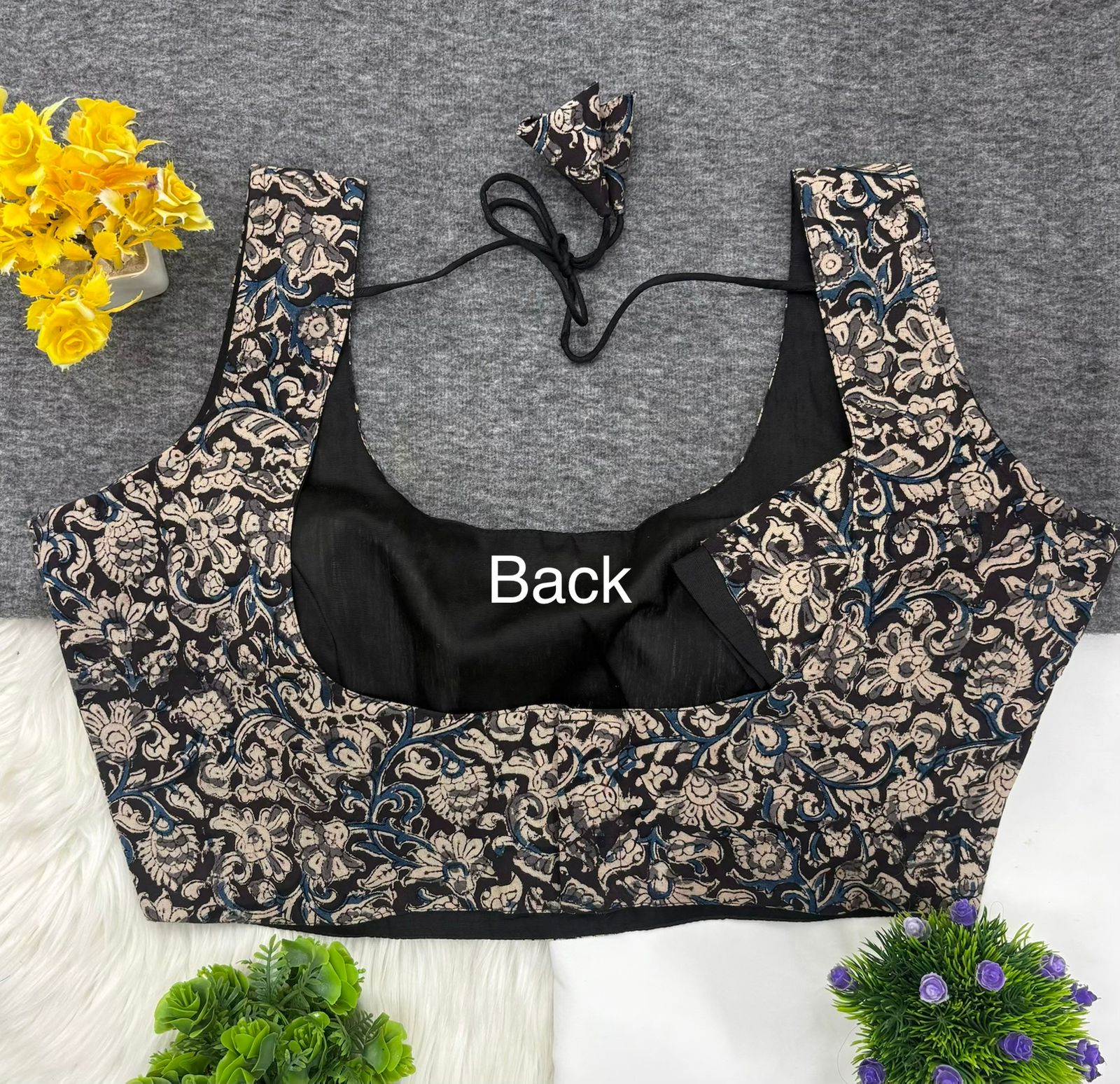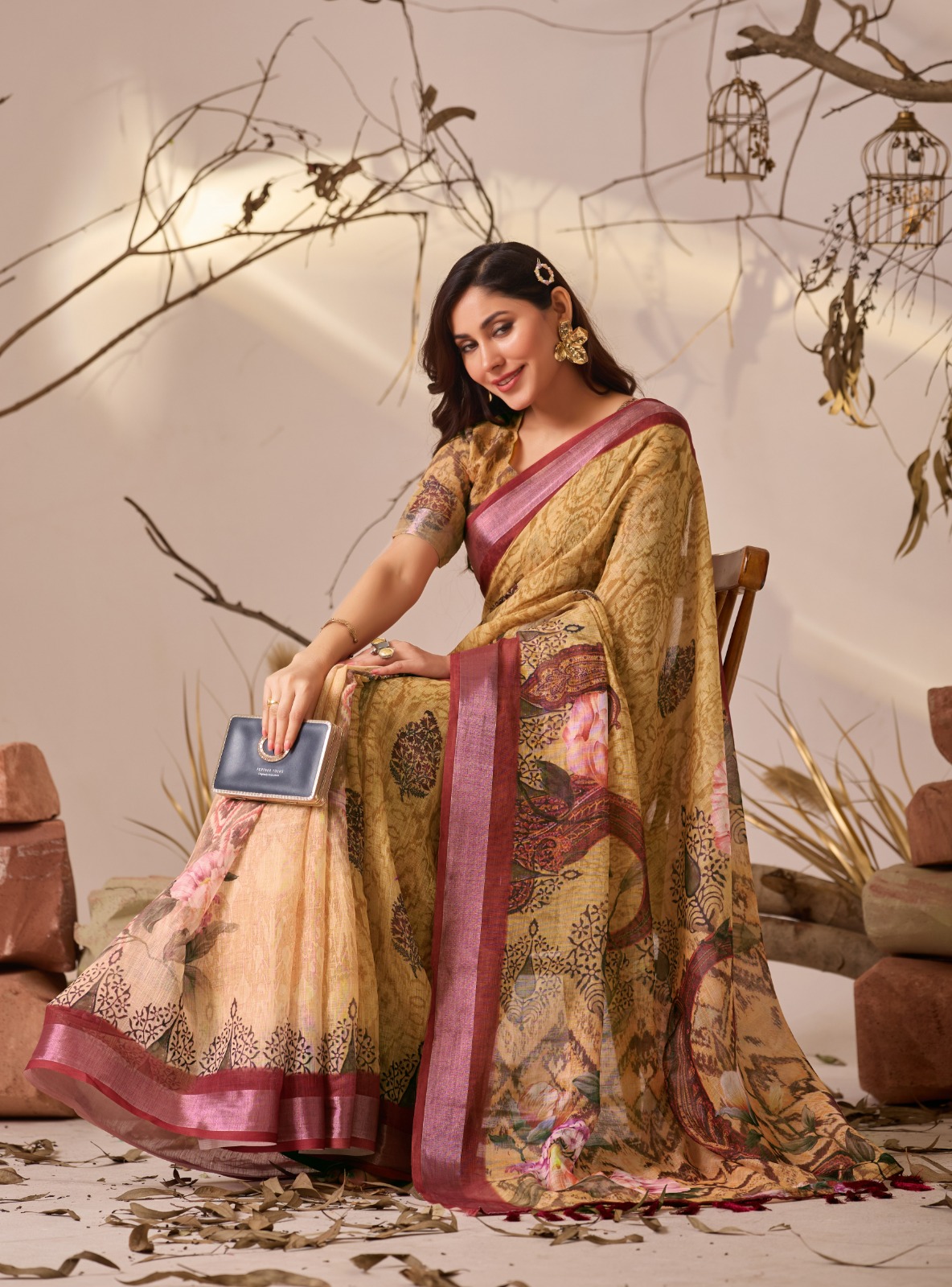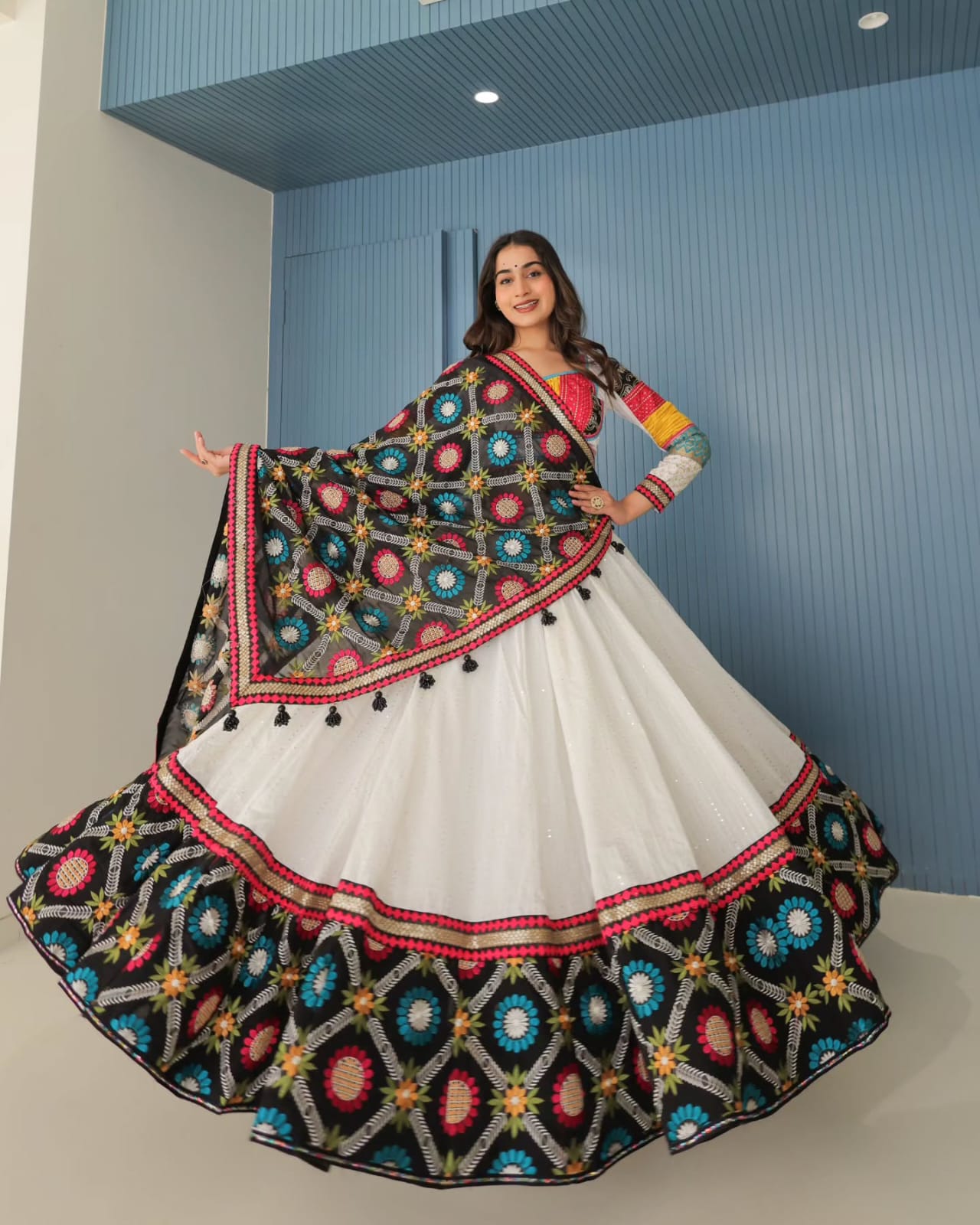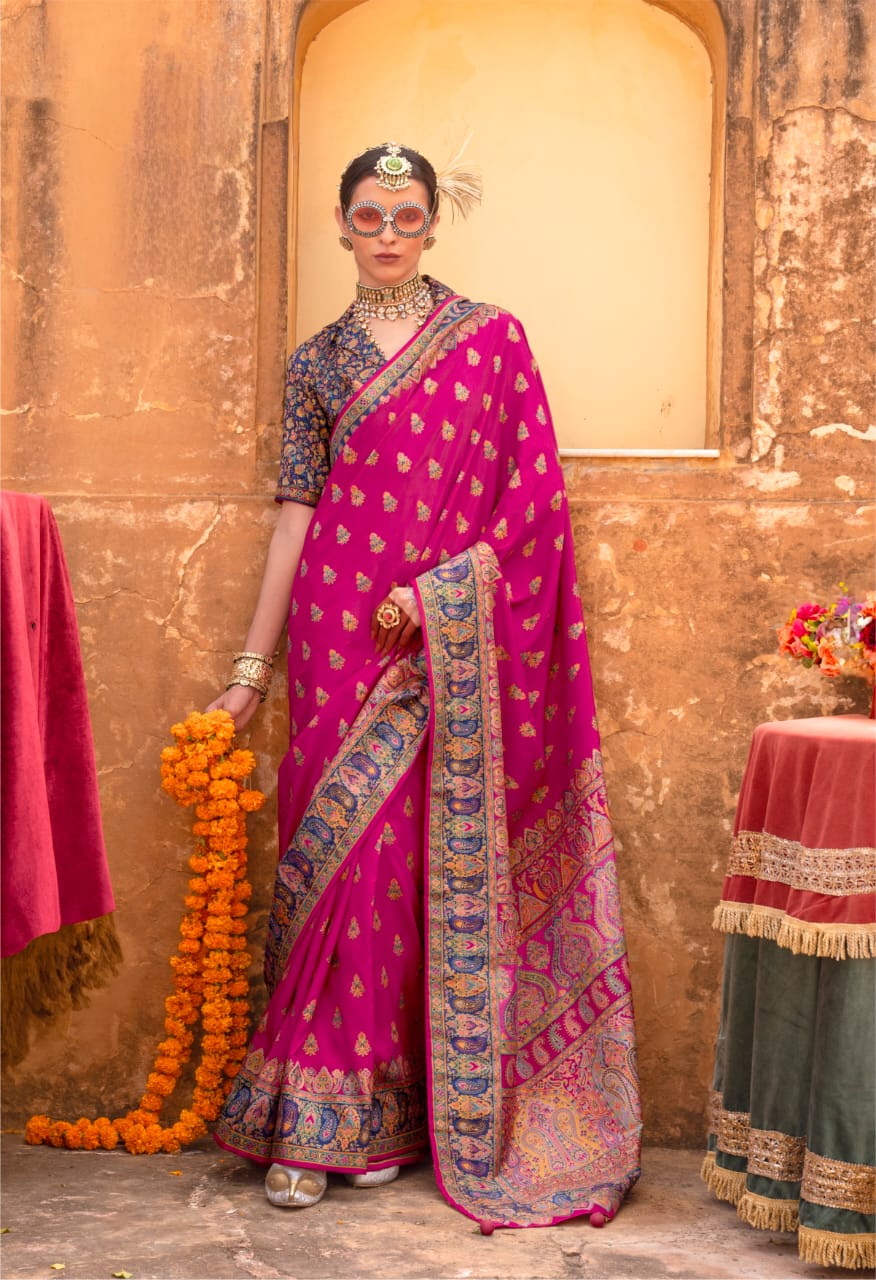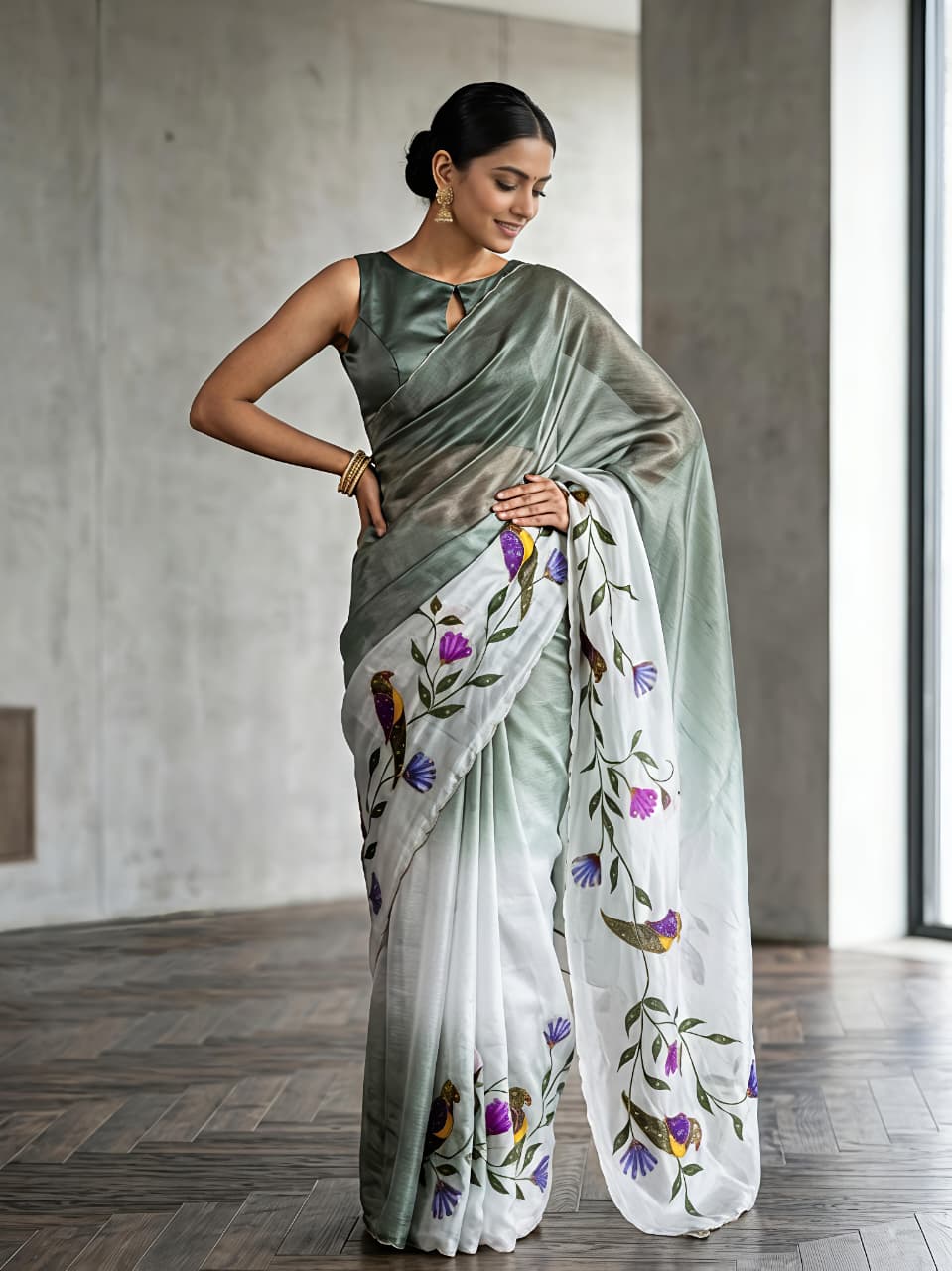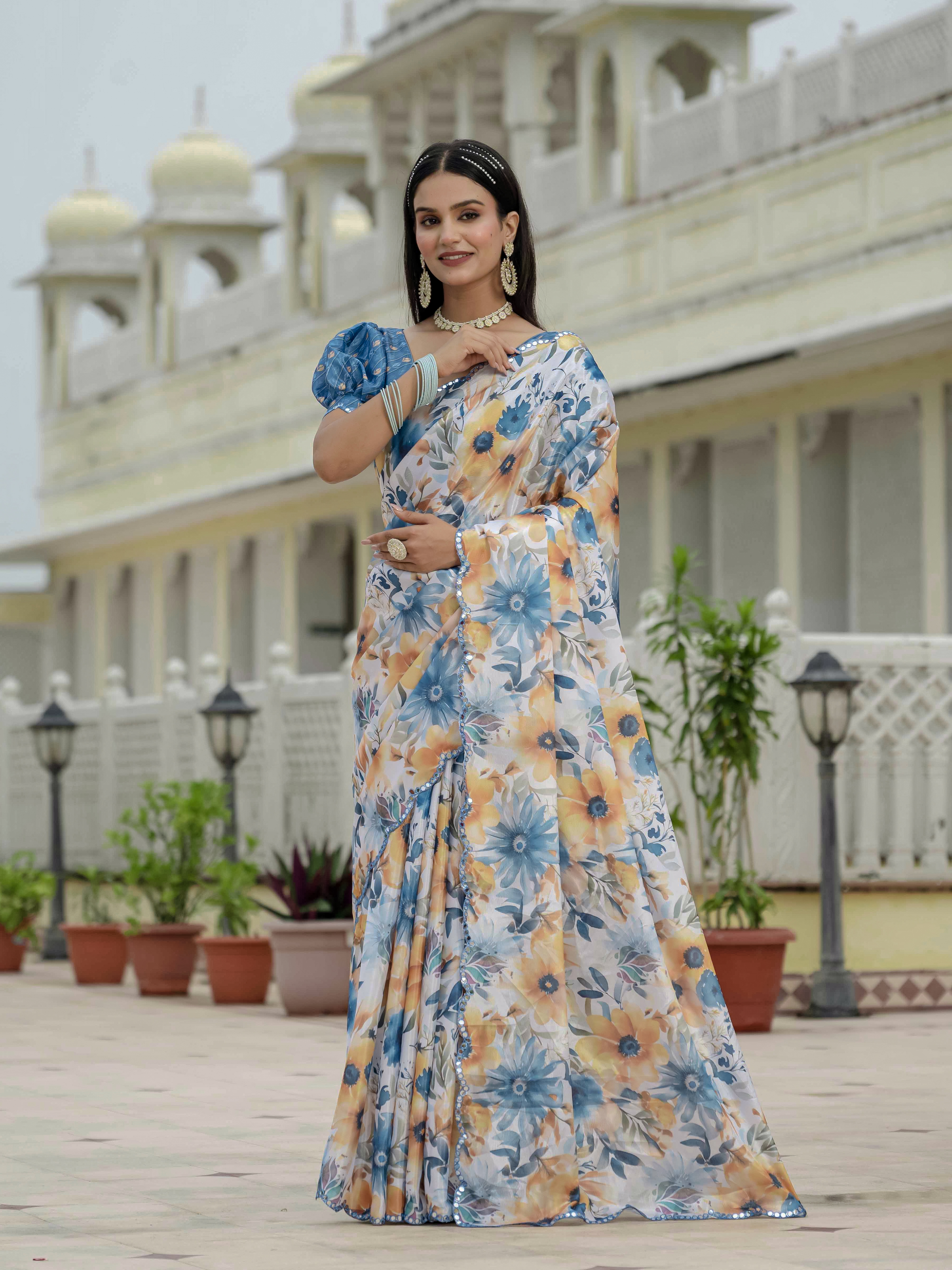
Bandhej Salwar Suits for Traditional Navratri Looks bring together two useful qualities for nine nights of celebration: the visual energy of Gujarati tie-dye and the movement-friendly structure of a salwar suit. The right outfit should handle dancing, standing, warm weather, crowded venues and repeated washing without losing its festive character. Colour, fabric, sleeve design, trouser shape and dupatta security all matter more than surface decoration alone.
Bandhej, also called Bandhani in many parts of India, is created by tightly tying minor sections of fabric before dyeing it. The hide areas resist the dye and form dots, rings, waves or clustered motifs. A good Bandhej-inspired Navratri outfit may therefore have a lively dotted pattern, intense colour contrast and a distinctly regional appearance. A printed imitation can still be attractive, but shoppers should identify it accurately rather than assuming every dotted design is tie-dyed.
Why Bandhej Salwar Suits for Traditional Navratri Looks work well for celebration
Bandhej salwar suits work well for Navratri because they combine a recognisable festive pattern with a silhouette that allows comfortable movement. Garba and Dandiya involve repeated steps, turns and arm movements, so a salwar suit offers practical coverage without requiring the wearer to manage a long skirt while dancing.
Traditional Bandhej commonly uses saturated shades such as red, fuchsia, saffron, green, royal blue and yellow. These colours hold their visual strength under indoor lighting and outdoor festoon lights. Small resist-dyed dots also create texture without depending entirely on heavy embroidery, which can make a garment warmer or less flexible.
A salwar suit has another advantage over a heavily layered lehenga: the kurta and bottom can be fitted separately. A straight kurta with a relaxed trouser, a short kurta with a Patiala bottom or an Anarkali with controlled flare each creates a different balance between tradition and mobility. The best choice depends on whether the event involves active dancing, family rituals, temple visits or a seated dinner after the celebration.
How to recognise Bandhej Salwar Suits for Traditional Navratri Looks before buying
A Bandhej fabric shows some irregularity in the tied dots and colour transitions, while a regular printed pattern usually repeats with machine-like precision. Examine close-up photographs, product descriptions and reverse-side images before buying a salwar suit labelled Bandhej or Bandhani.
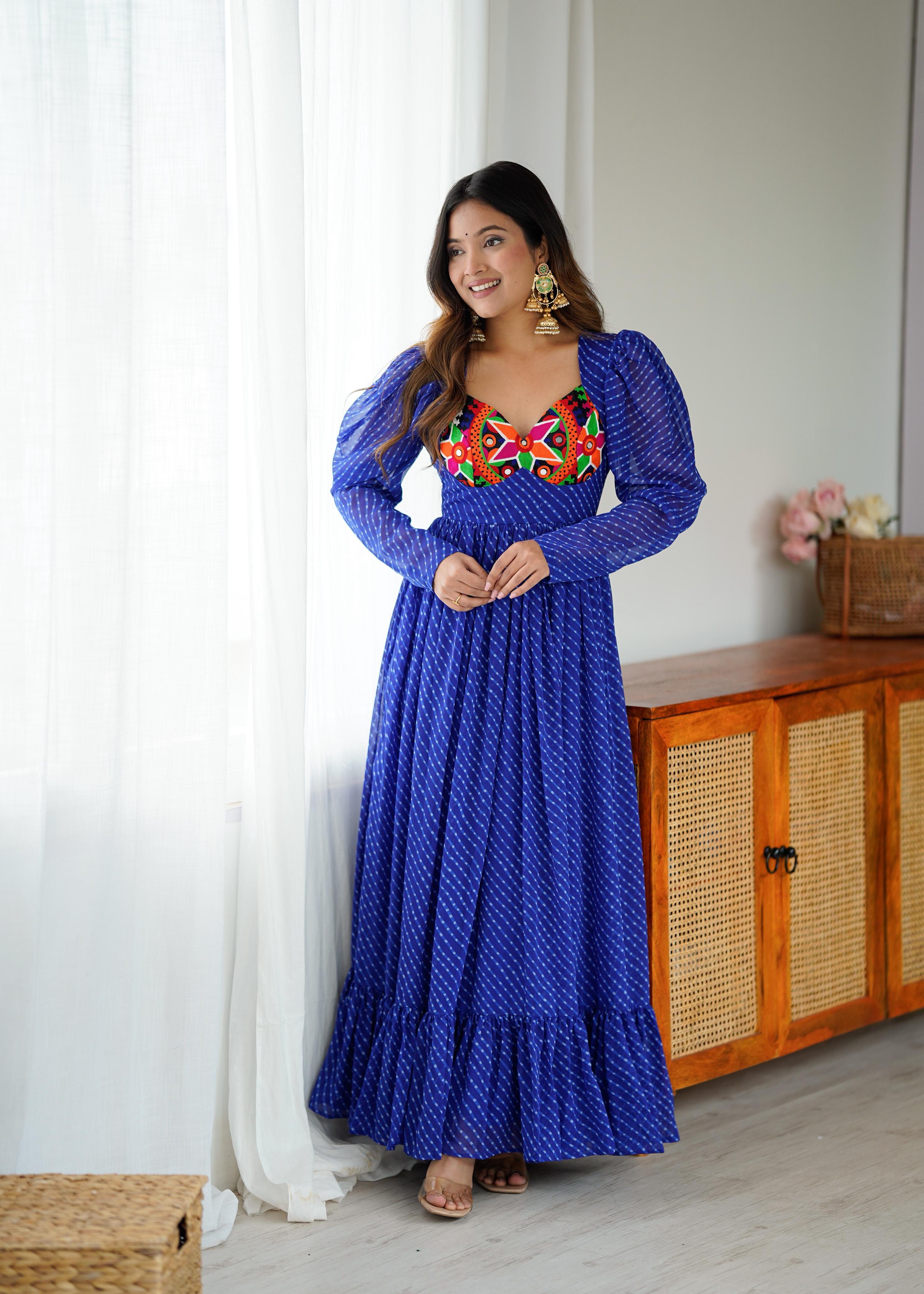
Signs of traditional tie-dye
Traditional Bandhej often has tiny circular or square resist marks with slight variation in size and spacing. The colour may appear denser in some tied areas and softer in others. A tied-and-dyed textile can also show small puckers around the dots because the fabric was compressed during dyeing.
Different regions use different names and arrangements. Leheriya creates diagonal or wave-like stripes, while Bandhani generally refers to dotted resist patterns. Gharchola is associated with a checked textile tradition that may include Bandhani details and zari. These terms describe techniques or textile traditions rather than a guarantee that a particular ready-made suit is hand-crafted.
Questions worth checking in a product description
- Fabric: Check whether the base is cotton, viscose, silk, georgette, chiffon or a synthetic blend, because the base affects breathability and fall.
- Technique: Look for explicit wording such as hand-tied, hand-dyed, Bandhani or Bandhej print rather than relying on a dotted appearance alone.
- Colour behaviour: Strong red, magenta, green and yellow dyes may bleed during the first wash, so care instructions are important.
- Transparency: Lightweight georgette and chiffon may need a lining, especially for a pale dupatta or an unlined kurta.
- Measurements: Check garment measurements instead of selecting only by a lettered size, particularly around the bust, armhole, waist and trouser length.
Which fabrics make Bandhej Salwar Suits for Traditional Navratri Looks comfortable?
Breathable cotton, cotton blends, viscose and lightweight Chanderi are generally more comfortable for active Navratri evenings than dense, fully embellished fabrics. Fabric weight, lining, embroidery density and venue temperature should be considered together rather than judging comfort from fibre name alone.
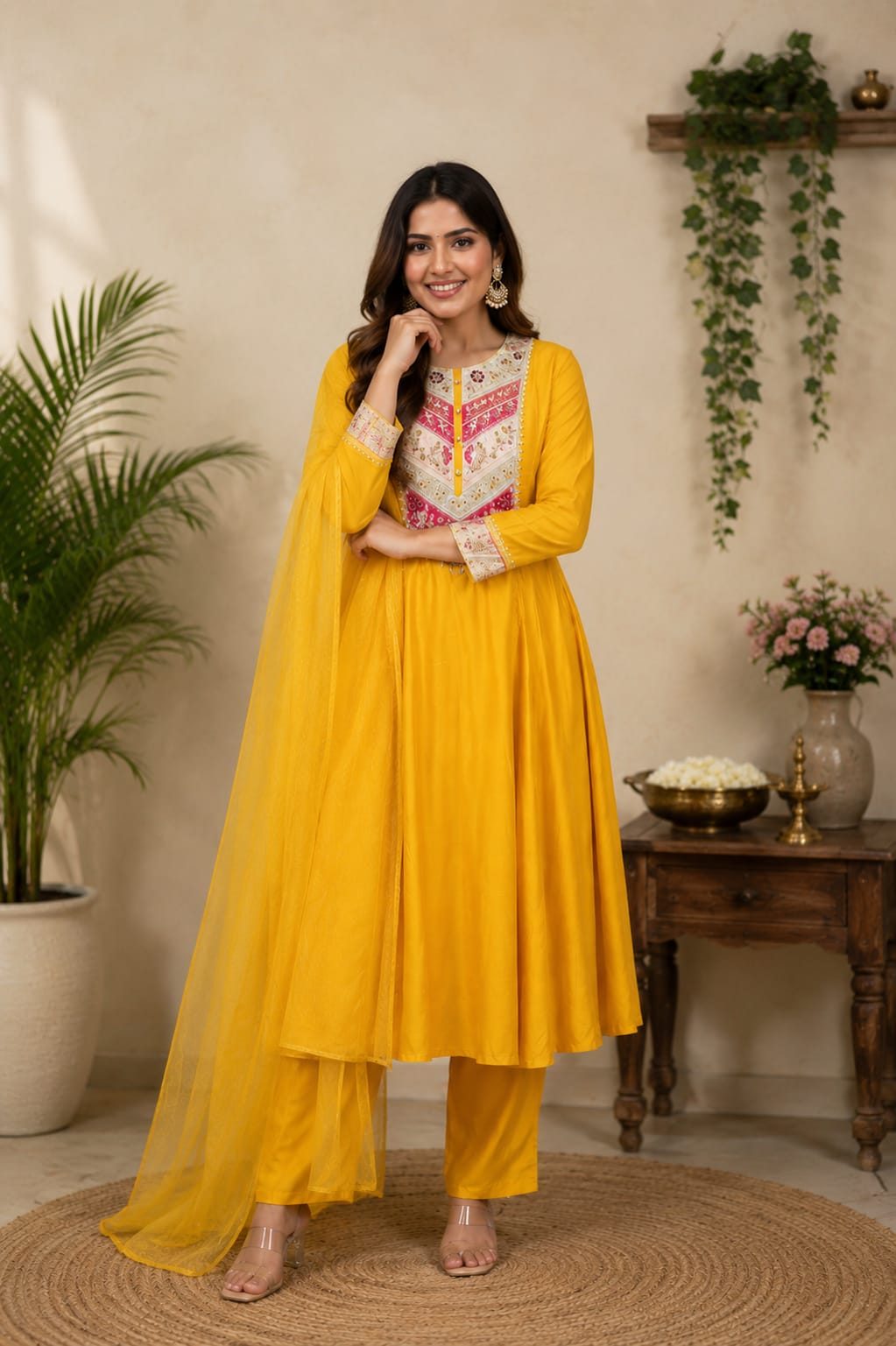
Viscose drapes smoothly and usually feels comfortable against the skin, making it useful for a flowing kurta or palazzo bottom. Chanderi has a lighter hand and a subtle sheen that suits festive styling without necessarily requiring extensive embellishment. The Mustard Viscose Chanderi Kurta Set with Sequence Embroidery demonstrates how a warm yellow base and restrained shine can create a celebration-ready direction, even when the design isn't Bandhej.
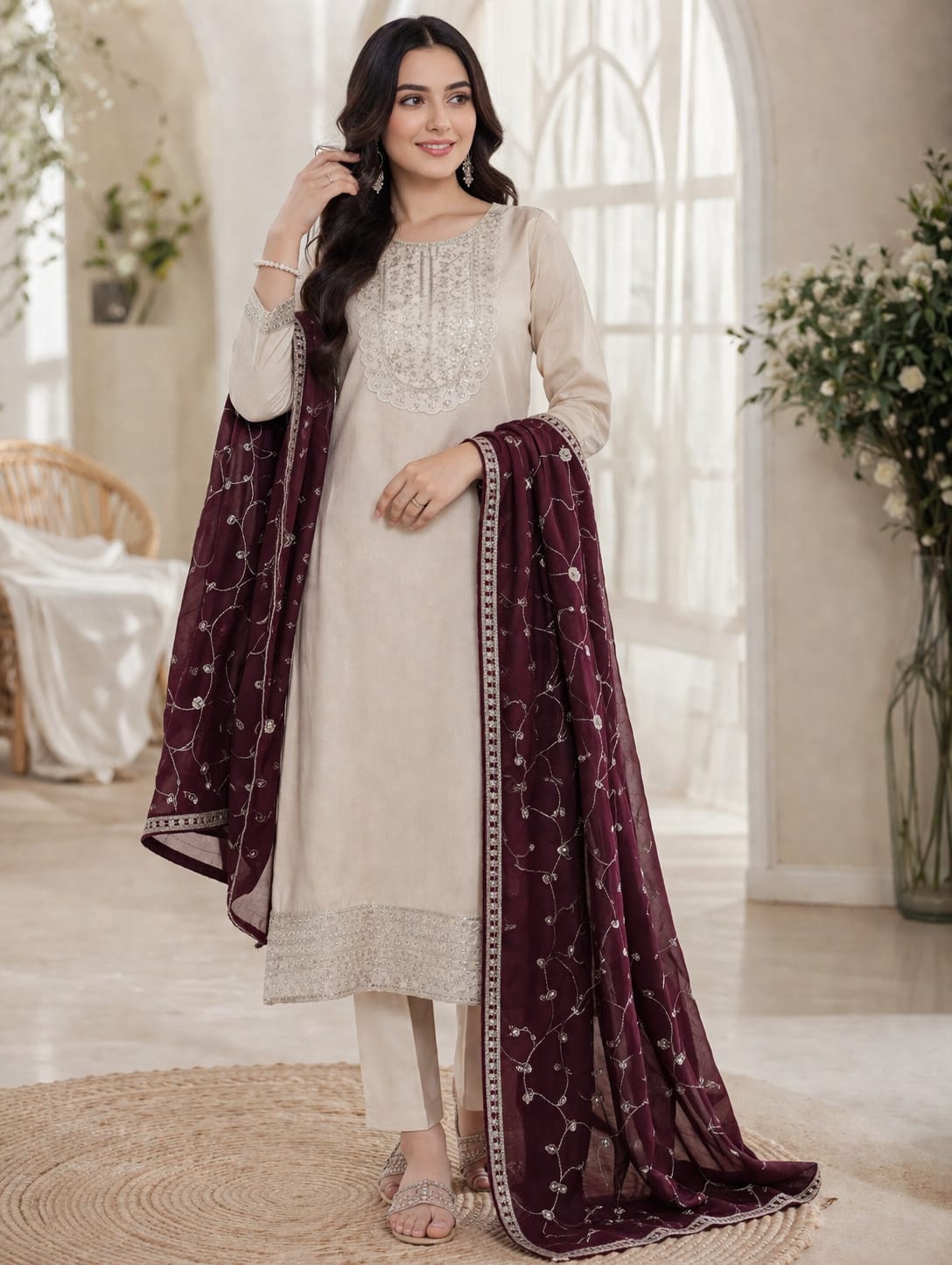
Georgette gives a fluid fall and can make a dupatta or gown move attractively during turns, but the fabric may need careful lining and pinning. Silk and silk-look fabrics provide richness, though they can feel warmer under stage lights or in crowded halls. The Elegant Beige Vichitra Silk Embroidered Kurta Set for Women brings an useful example of how a neutral, lustrous base can be made festive through embroidery and styling rather than relying only on bright colour.
For a practical Navratri wardrobe, reserve heavier silk, dense zari and multiple layers for shorter ceremonies or cooler venues. A lightweight kurta, secure waistband and breathable lining are usually better choices for two or three hours of dancing. Cotton or viscose trousers also reduce the friction and heat that can build up under a long kurta.
Which silhouettes suit Bandhej Salwar Suits for Traditional Navratri Looks?
A straight or gently flared kurta with a secure salwar, Patiala or palazzo bottom is usually the most practical silhouette for Garba and Dandiya. The shape should allow a full stride, lift the arms comfortably and stay clear of the feet during turns.
For energetic dancing
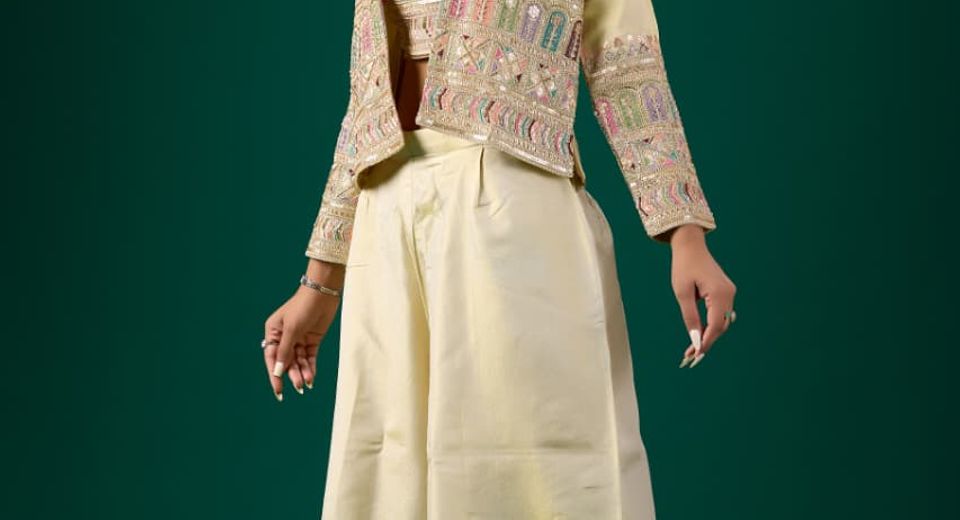
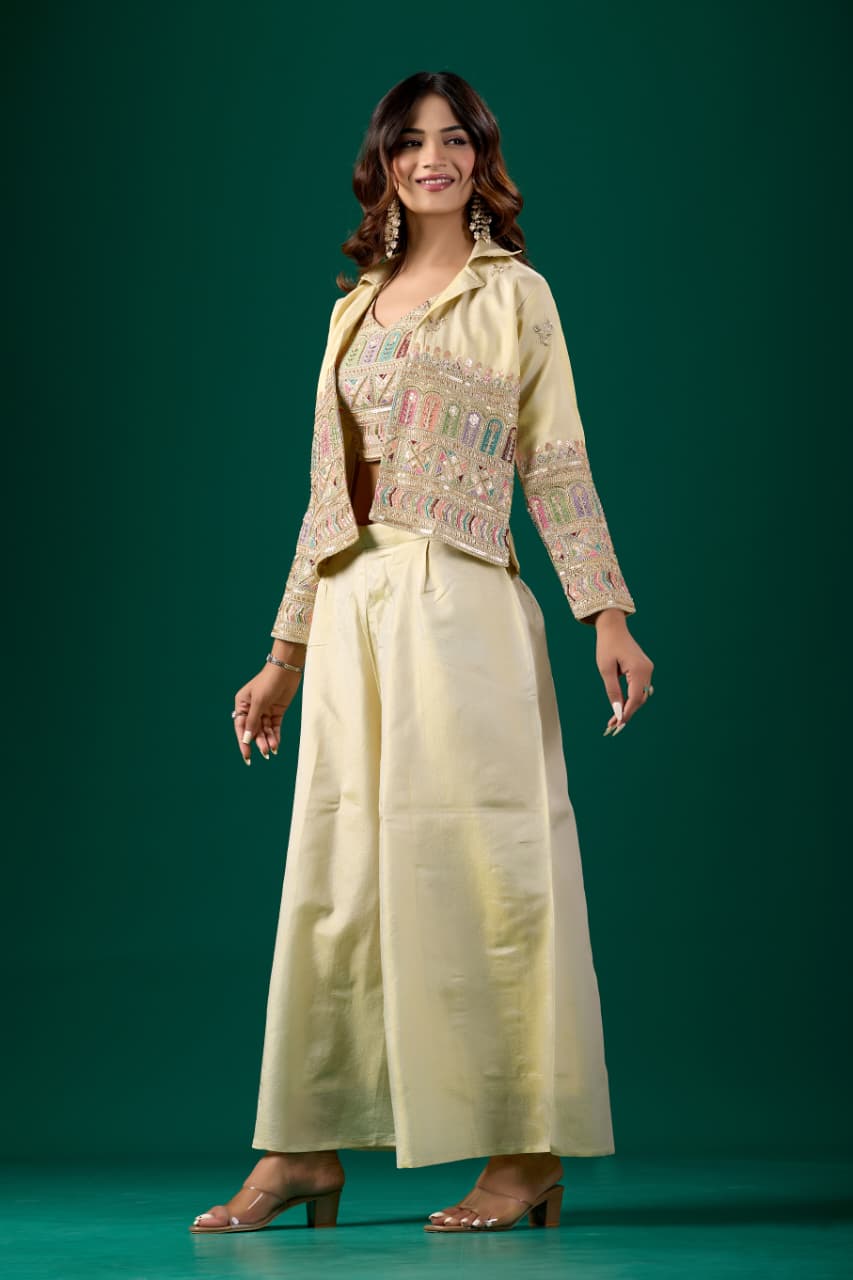
Palazzo trousers provide a broad, fluid line without the extra volume of a full lehenga. Choose a waistband that sits securely at the natural waist and check that the hem doesn't drag below the ankle. The Women's Embroidered Crop Top & Jacket Palazzo Set | Varnavi shows the appeal of separating the upper layers from a wide-leg bottom. Its crop-top format can be adapted for a festive look with a longer inner layer or a carefully placed dupatta when additional coverage is preferred.
A Patiala bottom creates a recognisably Punjabi shape with gathered volume around the hips and knees. The Midnight Blue Natural Crepe Patiala Kurta Set with Embroidery illustrates how a darker base can keep the silhouette grounded while embroidery supplies occasion detail. A Patiala is most comfortable when the crotch depth, waistband and gathering are generous enough for repeated bending and side steps.
For a graceful family or temple gathering
An Anarkali works well for family gatherings and slower movement because its flare creates a dramatic turn without requiring a separate skirt. The flare should finish above the floor and should not be so wide that it catches on chairs or another dancer's footwear. Collections such as Ladies Dress Anarkali Salwar Suits are useful starting points when comparing flare, sleeve length and dupatta proportions.
A straight kurta with cigarette pants or a relaxed salwar gives a cleaner appearance for temple visits and daytime puja. A moderate side slit improves stride, while a three-quarter sleeve protects the upper arm without trapping too much heat. A kurta that ends around the knee or mid-calf can also prevent the hem from sweeping the floor during crowded celebrations.
How should Bandhej Salwar Suits for Traditional Navratri Looks use colour?
Use one dominant Bandhej colour, one supporting neutral and one controlled metallic accent to keep a traditional Navratri outfit visually balanced. A suit with red and yellow dots doesn't need equally bright jewellery, footwear, dupatta borders and makeup.
Red Bandhej oxidized naturally with antique gold, ivory, beige and deep green. Yellow or mustard works with maroon, rust, bottle green and muted gold. Royal blue benefits from silver, pure, fuchsia or a minor amount of gold. Green Bandhani can be balanced with pink, orange, cream or warm metallic details.
A contrast dupatta can create the impression of a coordinated Garba ensemble. A yellow kurta with a red or green dupatta looks more regional than a head-to-toe neutral outfit, while a blue suit with a pink border gives contrast without requiring heavy embroidery. The Mustard Yellow Jacquard Kurta Set with Embroidery & Dupatta is an useful styling reference for combining a warm base, woven texture and a coordinated drape.
Neutral garments are not automatically plain. The Pastel Blue Embroidered Chanderi Kurta Set with Dupatta shows how a soft blue palette can remain festive through fabric sheen, embroidery and a well-proportioned dupatta. Add Bandhej through a small potli, hair ribbon, bangles or scarf if a full tie-dyed suit would feel too vivid.
Colour can also be selected according to the time and setting. Bright red, orange and yellow suit outdoor Garba events and evening photographs, while navy, wine, beige and pastel blue can feel more refined for indoor dinners or daytime puja. Navratri colour traditions vary by region and family, so personal or local convention should take priority over a fixed universal chart.
How can Bandhej Salwar Suits for Traditional Navratri Looks stay secure while dancing?
A dance-ready dupatta should be anchored at both shoulders or secured at one shoulder and the waist so that it can't slide into the feet. The drape should leave both hands and the upper arms free for Garba or Dandiya movements.
- Place the dupatta evenly over both shoulders and keep the front lengths similar.
- Use small safety pins on the inside of the shoulder seams rather than pinning only through a decorative border.
- For one-shoulder draping, anchor the fabric at the shoulder and waist so the lower edge can't swing across the knees.
- Keep the dupatta border away from bangles, Dandiya sticks and handbag chains.
- Test the complete outfit by raising both arms, taking several side steps and sitting down before leaving home.
A lighter dupatta is easier to control than a heavily embellished one. If the dupatta has zari, sequins or dense embroidery, use fewer folds and stronger hidden pins because the added weight can pull at the neckline. A narrow belt worn over the kurta can also hold the dupatta in place, provided the belt doesn't restrict breathing or bending.
Footwear deserves the same practical attention. Flat juttis, cushioned mojaris or low block heels are safer for dancing than narrow stilettos on uneven ground. Break in new footwear for at least two short indoor sessions, and carry blister patches if the Navratri event will last several hours.
How should you accessorise Bandhej Salwar Suits for Traditional Navratri Looks?
Choose accessories that repeat one colour or texture from the suit without competing with the Bandhej pattern. Oxidised silver works especially well with blue, green and fuchsia, while antique gold complements red, saffron, mustard and maroon.
Stacked glass bangles create movement and colour, but too many bangles can interfere with Dandiya sticks. A practical combination is two or three slim bangle stacks with one wider metal kada. Jhumkas, small chandbalis or a short necklace add festive definition without making the neckline heavy.
A Bandhej potli can reinforce the regional theme even when the suit itself is embroidered or printed. Keep the bag small enough to remain comfortable during dancing and select a wrist loop or crossbody option if carrying a phone, keys and compact essentials. Avoid long chains that can catch on jewellery or another dancer's clothing.
Hair can be worn in a braid, low bun or secured half-up style so that loose strands don't obscure vision during fast turns. A gajra, colourful ribbon or small bandhani hair accessory adds traditional detail without requiring an elaborate hairstyle. Makeup should be set for heat and movement, particularly around the forehead and upper lip.
Other festive references can help build a varied wardrobe. The Blue Printed Georgette Designer Gown for Women Festive gives a flowing evening direction, while the Modern Taupe Vichitra Silk Embroidered Co-Ord Set for Women shows how coordinated separates can look polished when a traditional Bandhej palette feels too vivid. These garments are not replacements for a Bandhej salwar suit; they illustrate how fabric, colour and proportion can shift the mood of Navratri dressing.
How should you care for Bandhej Salwar Suits for Traditional Navratri Looks?
Care for Bandhej garments by following the specific label instructions, using cold water and keeping strong colours separate during the first wash. Professional dry cleaning is safer for zari, sequins, silk blends and structured garments with multiple layers.
Test colourfastness by pressing a damp white cotton cloth on an inside seam for a few seconds. If the cloth picks up substantial colour, avoid soaking the garment and don't wash it with pale fabrics. Hand-wash suitable cotton or viscose garments briefly in mild detergent, rinse without twisting and dry them inside out away from direct sunlight.
don't wring a georgette, Chanderi or embellished dupatta because twisting can distort the weave and loosen decorative work. Roll the fabric in a clean towel to remove excess water, then dry it flat or on a broad hanger according to the care label. Iron on the reverse side at a low or medium temperature, placing a cotton cloth between the iron and embroidery.
Before storing the suit, ensure that it's completely dry. Fold heavy embroidered sections with tissue paper or soft cotton between layers, and store zari pieces away from damp walls and direct heat. Air the garment after each Navratri night before placing it in a breathable cotton cover.
Value-focused shoppers can compare options through collections such as Dress Materials, Salwar Suits with 30% Off, Salwar Suits Flat 40% Off and Red Dress Materials Under 2000. Price should be assessed alongside fabric, lining, finishing, included pieces and care requirements rather than discount percentage alone.
A successful Navratri outfit finally balances cultural character with real movement. When a Bandhej pattern, breathable fabric, secure fit, manageable dupatta and comfortable footwear work together, the salwar suit can remain festive from the first aarti through the ultimate Garba circle.
Common Questions About Bandhej Salwar Suits for Navratri
Are Bandhej salwar suits suitable for Garba dancing?
Yes, Bandhej salwar suits are suitable for Garba when the bottom has enough room for long steps and the dupatta is securely pinned. Palazzo, relaxed salwar and Patiala silhouettes generally offer better movement than narrow trousers or floor-length hems.
What fabric is most comfortable for a Navratri salwar suit?
Cotton, cotton blends, viscose and lightweight Chanderi are usually comfortable for active Navratri evenings. Heavy silk, dense zari and thick lining may feel warmer, especially at crowded indoor venues or under strong lights.
How can I stop my dupatta from slipping while dancing?
Pin the dupatta inside both shoulder seams, or secure one shoulder and the waist for a one-sided drape. Test the outfit by raising your arms, turning and taking several side steps before attending the event.
How can I tell whether Bandhej is hand-dyed or printed?
Hand-tied Bandhej usually shows small variations in dot size, spacing and colour intensity, along with slight puckering around resist marks. A printed pattern normally has highly uniform repetition, although close photographs and the product description provide the most reliable confirmation.
Which colours look traditional for Navratri Bandhej outfits?
Red, yellow, saffron, green, fuchsia and royal blue are widely associated with bright traditional Navratri dressing. Colour customs can differ by region and family, so a locally meaningful colour should take priority over a fixed fashion rule.
How should I wash a Bandhej salwar suit?
Follow the garment label, use cold water and wash strong colours separately during the first wash. Dry cleaning is safer for silk blends, zari, sequins and heavily embroidered pieces, while suitable cotton or viscose garments should be hand-washed briefly without twisting.