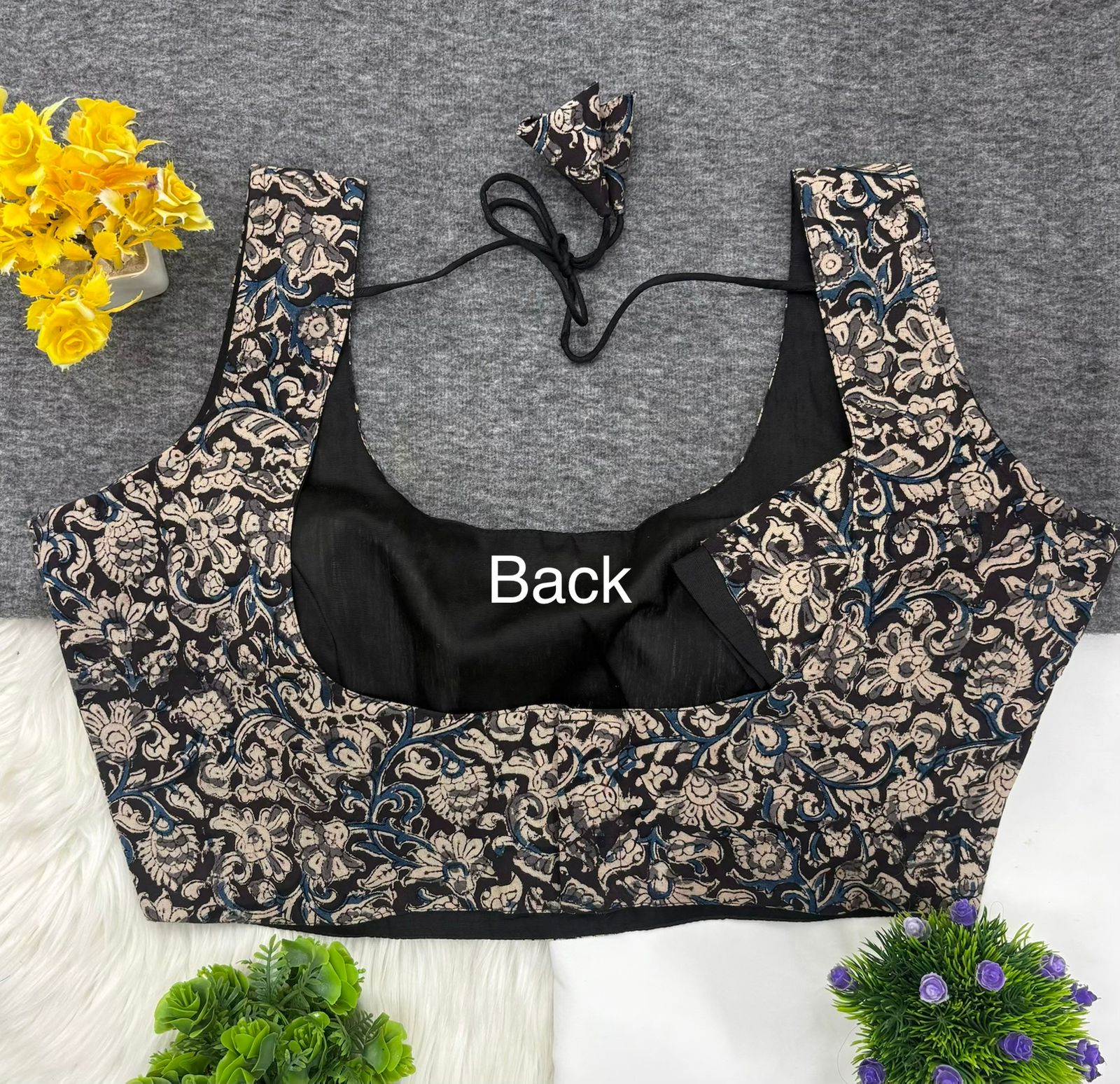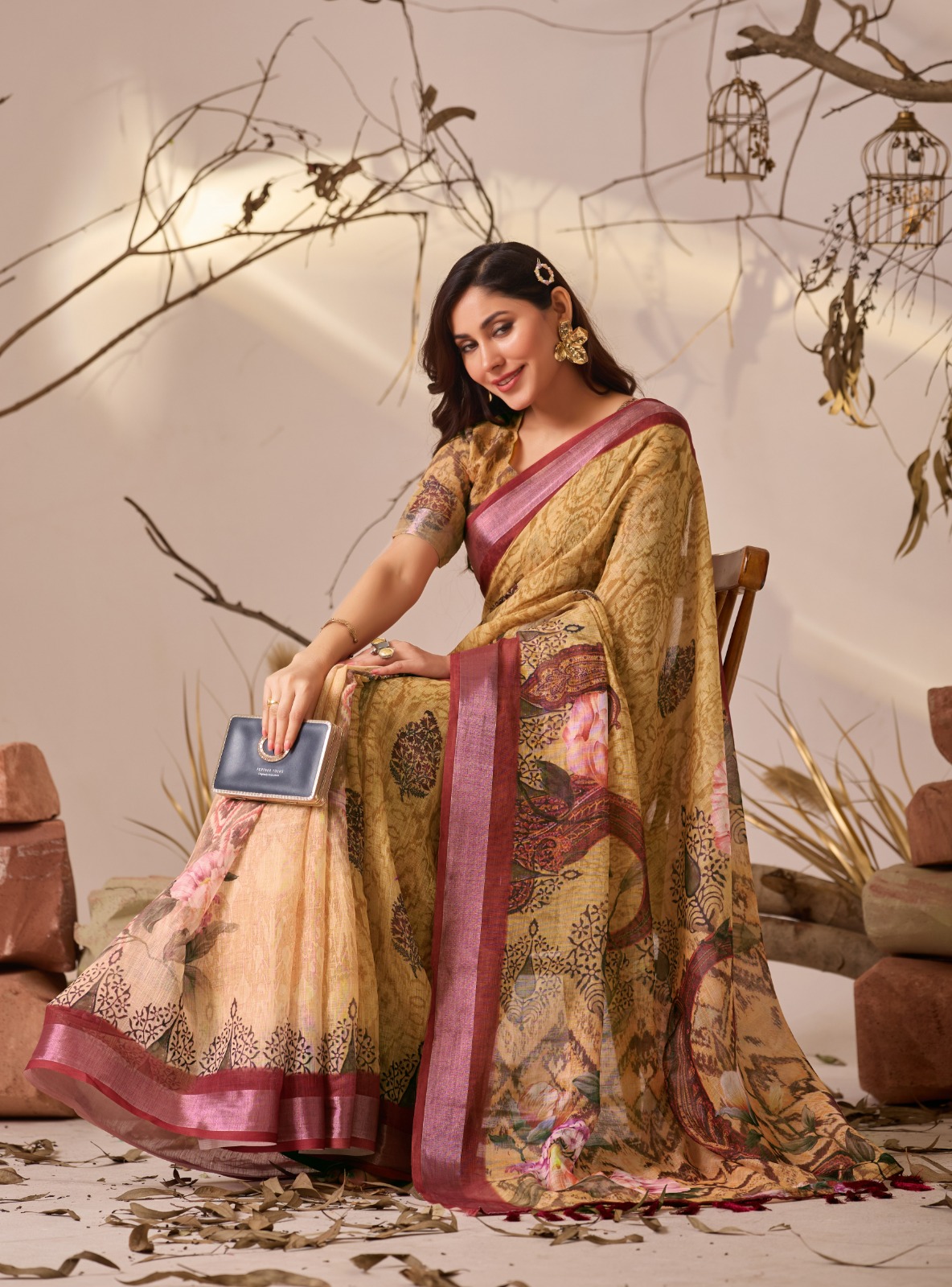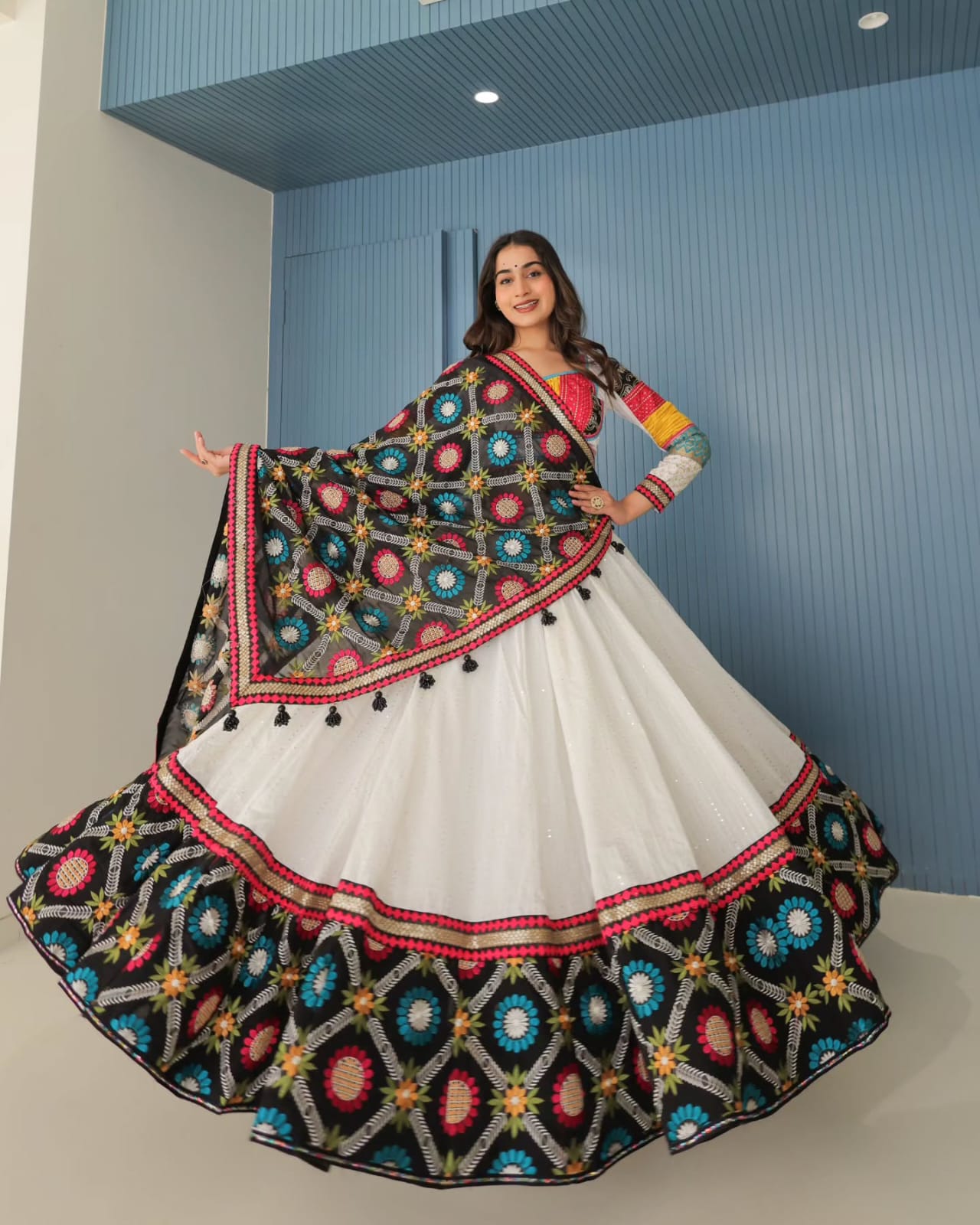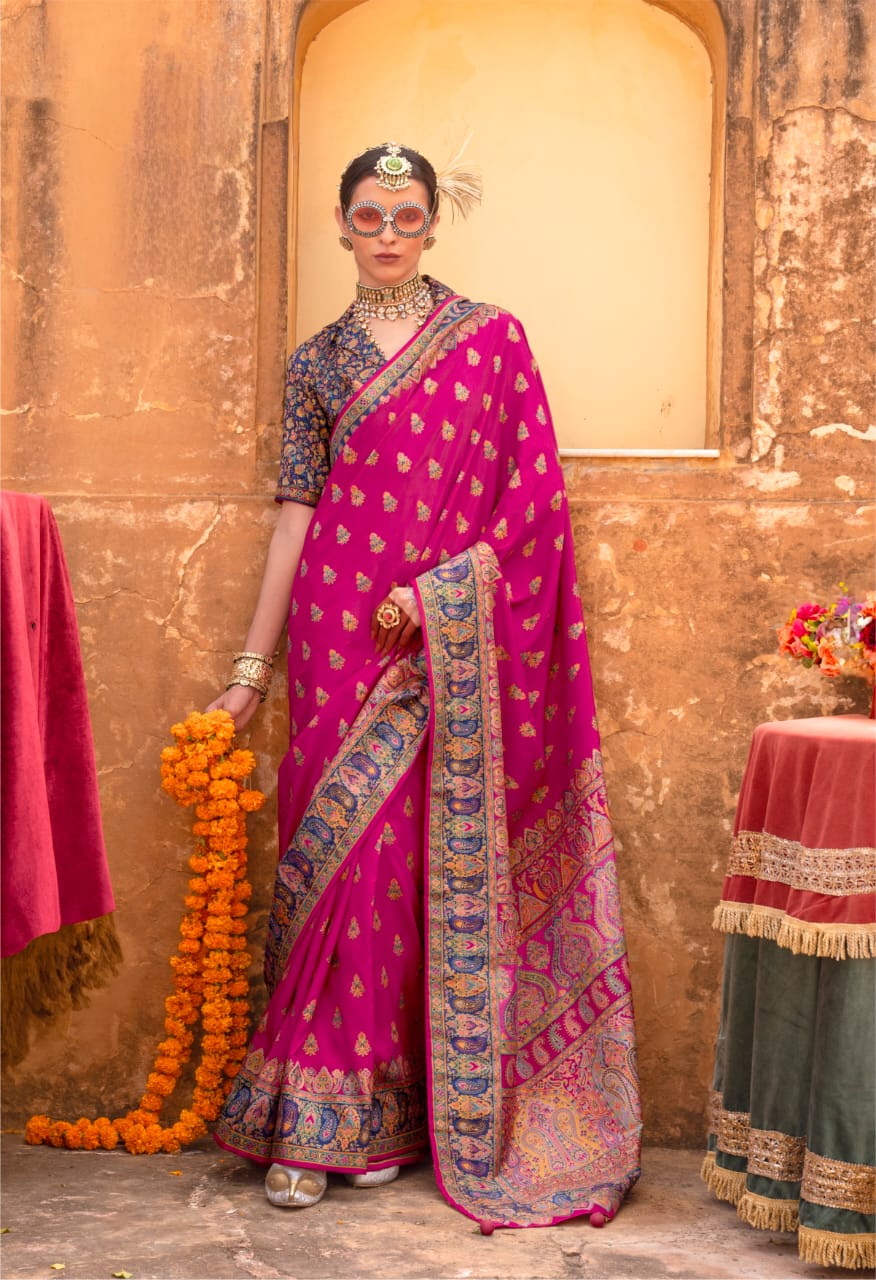
Bandhani Suit Styles for Gujarati Navratri and Garba need to do more than look festive in photographs. A good suit must allow repeated arm movements, quick turns, raised hands, warm evenings and several hours of dancing without constant adjustment. Bandhani brings the unmistakable tie-dye language of Gujarat through dotted patterns and bright colour contrasts, while the salwar suit provides practical coverage and easy movement.
The most useful approach is to choose the silhouette first and add Bandhani through a dupatta, kurta panel, yoke, border or coordinated accessory. That method creates a Gujarati Garba dress female shoppers can actually dance in, rather than an outfit that looks impressive but becomes uncomfortable after the first few rounds.
Bandhani Suit Styles for Gujarati Navratri and Garba: choosing a dance-ready silhouette
An Anarkali, straight-cut suit, short kurta with palazzo trousers or Patiala set can work well for Garba when the hem, armhole and waistband allow unrestricted movement. Each silhouette creates a different balance between comfort, visual volume and ease of styling.
Garba involves circular steps, clapping, raised arms and frequent changes of direction. A straight kurta with a side slit works well when the trousers are roomy, while an Anarkali silhouette gives a heritage-inspired flare if the hem doesn't drag. Patiala trousers provide volume and visual movement, but the pleats should not be so deep that they catch under the feet.
Check the finished garment length against your footwear before buying. A kurta hem that sits 2 to 4 centimetres above the ankle with flats is generally easier to manage than a floor-skimming hem. Sleeves ending between the elbow and wrist also reduce interference during clapping and dandiya movements.
Readymade salwar suits for Garba are convenient when the measurements are close to standard sizing, but the bust, upper-arm and trouser-waist measurements deserve separate attention. If a size chart gives only bust measurements, compare the garment's actual hip and armhole dimensions with a suit you already wear comfortably.
Anarkali silhouettes echo Garba's circular movement, especially when the flare begins below the waist and the hem remains light. The Ladies Dress Anarkali Salwar Suits collection is useful for comparing flare, lining and length. Look for evenly distributed gathers and a hem that can be lifted slightly with one hand on uneven flooring.
Straight-cut suits are the safest choice for long dance sessions because they give the legs and arms a predictable range of movement. A printed Bandhani dupatta can become the main festive feature without making the entire outfit visually crowded.
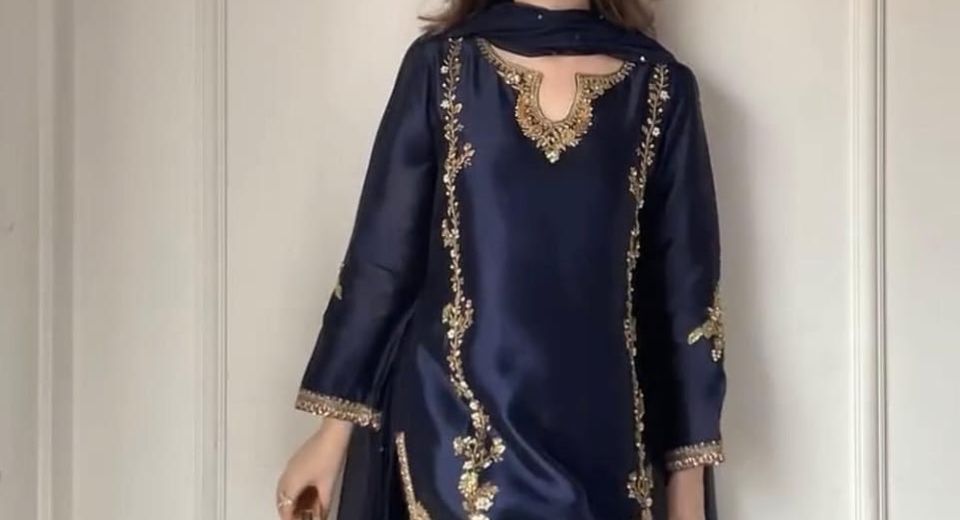
Patiala trousers create a lively, voluminous look, while palazzo trousers offer a smoother alternative. The Midnight Blue Natural Crepe Patiala Kurta Set with Embroidery shows how a deep base colour can support a bright Bandhani dupatta, colourful bangles or mirror-work earrings. A palazzo hem should finish above the floor and should not pool around the sandal.
Bandhani Suit Styles for Gujarati Navratri and Garba: selecting fabrics for comfort
Cotton, cotton blends, georgette, Chanderi and lightweight viscose are generally more comfortable for active Garba than dense, heavily layered fabrics. The best choice depends on the venue, weather, lining and amount of embroidery.
Cotton salwar suits for Garba are especially practical for outdoor grounds and warm community halls because cotton absorbs moisture and allows air circulation. Cotton may crease during travel, so fold the suit with tissue paper between embroidered areas to reduce hard fold marks. A cotton Bandhani dupatta feels comfortable, although a very stiffly starched version may become tiring around the neck.
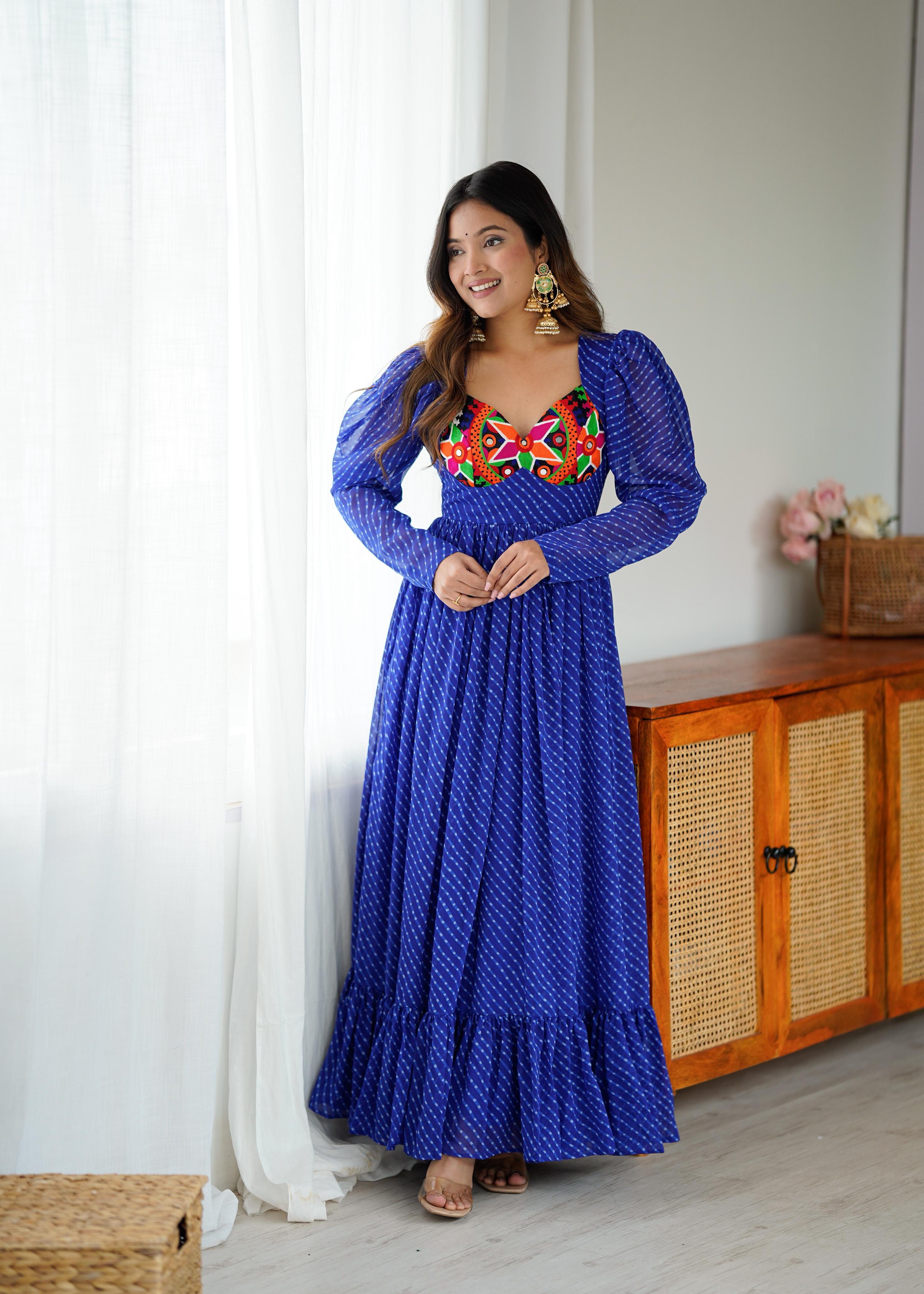
Georgette is light and fluid, which makes it useful for dupattas and gently flared kurtas. The Blue Printed Georgette Designer Gown for Women Festive demonstrates how a fluid fabric can create movement without requiring several heavy layers. If a georgette garment is sheer, check whether the lining ends at the same point as the outer layer and whether the lining restricts the stride.
Chanderi has a delicate, airy appearance and works well for an elegant Navratri gathering. The Mustard Viscose Chanderi Kurta Set with Sequence Embroidery offers a warm mustard direction, while the Pastel Blue Embroidered Chanderi Kurta Set with Dupatta creates a softer evening palette. Chanderi can snag, so avoid sharp metal bangles that catch the weave.
Viscose often gives a soft drape and a smoother feel against the skin. A viscose kurta set can be a sensible compromise when you want movement but prefer more body than georgette. Read the care label carefully because viscose may shrink or lose shape when washed in hot water.
Vichitra silk has more structure and a dressier finish than lightweight cotton, making it suitable for a formal Garba event or family celebration where dancing may be interspersed with sitting. The Elegant Beige Vichitra Silk Embroidered Kurta Set for Women can be styled with a bright red, fuchsia, emerald or saffron Bandhani dupatta. The Maroon Vichitra Silk Kurta Set with Elegant Embroidery Work can support a saffron or ivory accent without needing heavy additional jewellery.
Bandhani Suit Styles for Gujarati Navratri and Garba: planning colours and patterns
Choose one dominant colour, one supporting shade and one small accent instead of combining every bright colour in the wardrobe. A three-colour plan makes Bandhani dots, borders and jewellery look intentional while preserving the lively spirit of Navratri.
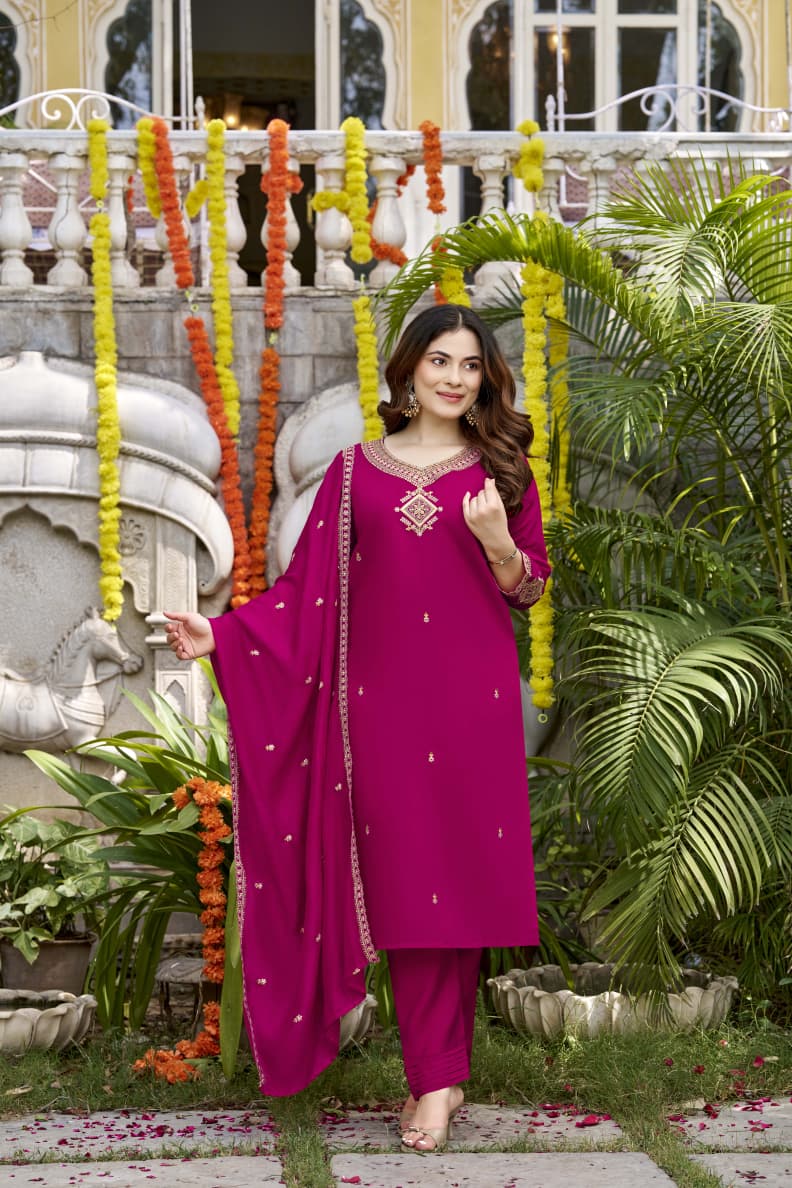
Red and ivory create a classic Gujarati contrast, while fuchsia and orange produce a more energetic Garba palette. Royal blue with mustard looks crisp under bright lights, and emerald with pink gives a jewel-toned effect. Black can be striking with red or mirror work, although families and venues may have their own preferences about Navratri colours.
The Mustard Yellow Jacquard Kurta Set with Embroidery & Dupatta already has a strong festive presence. A small Bandhani accent at the wrist, in the earrings or along a contrasting stole may therefore be more balanced than another large print.
Bandhani patterns vary in scale. Small, dense dots look classic and detailed, while larger tied circles create a bolder appearance from a distance. A large-patterned dupatta works particularly well with a plain kurta, while a heavily embroidered kurta needs a quieter Bandhani accessory to avoid competing surfaces.
Red Dress Materials Under 2000 can be useful for shoppers who want to customise a Bandhani-inspired suit through a local tailor. Ask for enough fabric for the kurta, trousers and dupatta before cutting, and confirm whether the printed border should run along the dupatta's length or width.
Bandhani Suit Styles for Gujarati Navratri and Garba: securing the dupatta
A dupatta stays secure during Garba when it's anchored at the shoulder, kept clear of the feet and draped with enough freedom for arm movement. Two small safety pins placed discreetly at the shoulder and waist are usually more effective than one large pin at the neckline.
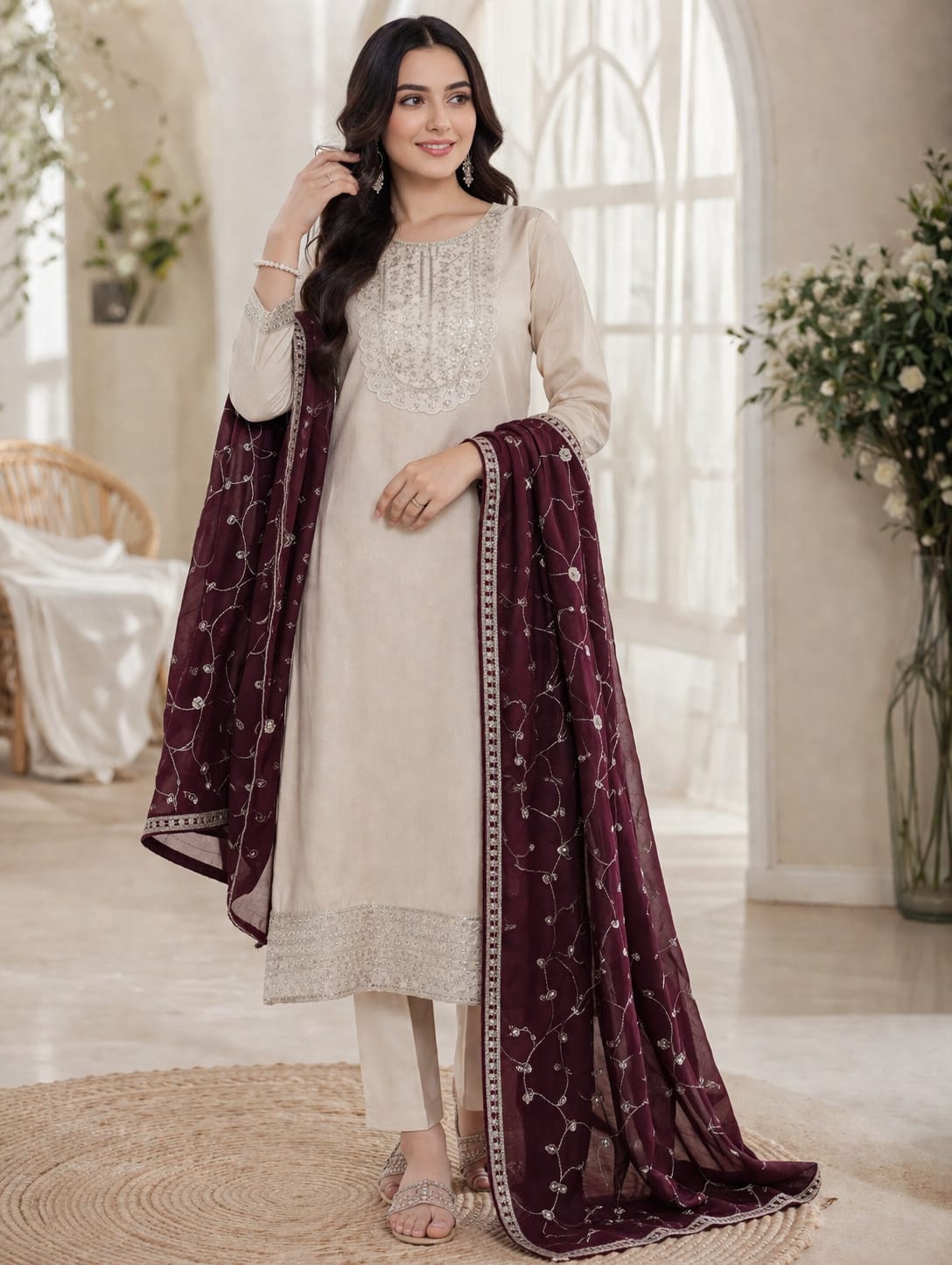
For a traditional appearance, place the Bandhani dupatta over one shoulder and bring the other end across the opposite forearm or waist. Pinning the shoulder section to the kurta prevents repeated slipping, while a soft fold at the elbow preserves movement. Avoid pinning the dupatta tightly across the chest because the fabric needs to expand slightly when you raise your arms.
A narrower dupatta is easier for high-energy dancing than an oversized, heavily embellished one. If the dupatta has mirror work, zari or dense sequins, test its weight before committing to a full evening. Zari borders can catch on bangles, and sequins may scratch the neck if the fabric is repeatedly pulled.
The Lavender Georgette Kurti Pant Set with Embroidery & Dupatta suggests a lighter styling route for a softer palette. A georgette dupatta can be pleated into a narrow band, pinned at the shoulder and allowed to fall behind the arm rather than across the front of the body.
A front drape can look attractive for photographs, but it should not hang below the hip during active dancing. Tuck the loose end into the waistband temporarily, or secure it with a small hidden pin, when moving through a crowded Garba circle.
Bandhani Suit Styles for Gujarati Navratri and Garba: accessories that support movement
Lightweight oxidised earrings, a limited stack of bangles, comfortable juttis and a small crossbody or belt pouch complete a practical Gujarati Garba outfit. Accessories should support movement rather than create loose parts that can catch during dandiya.
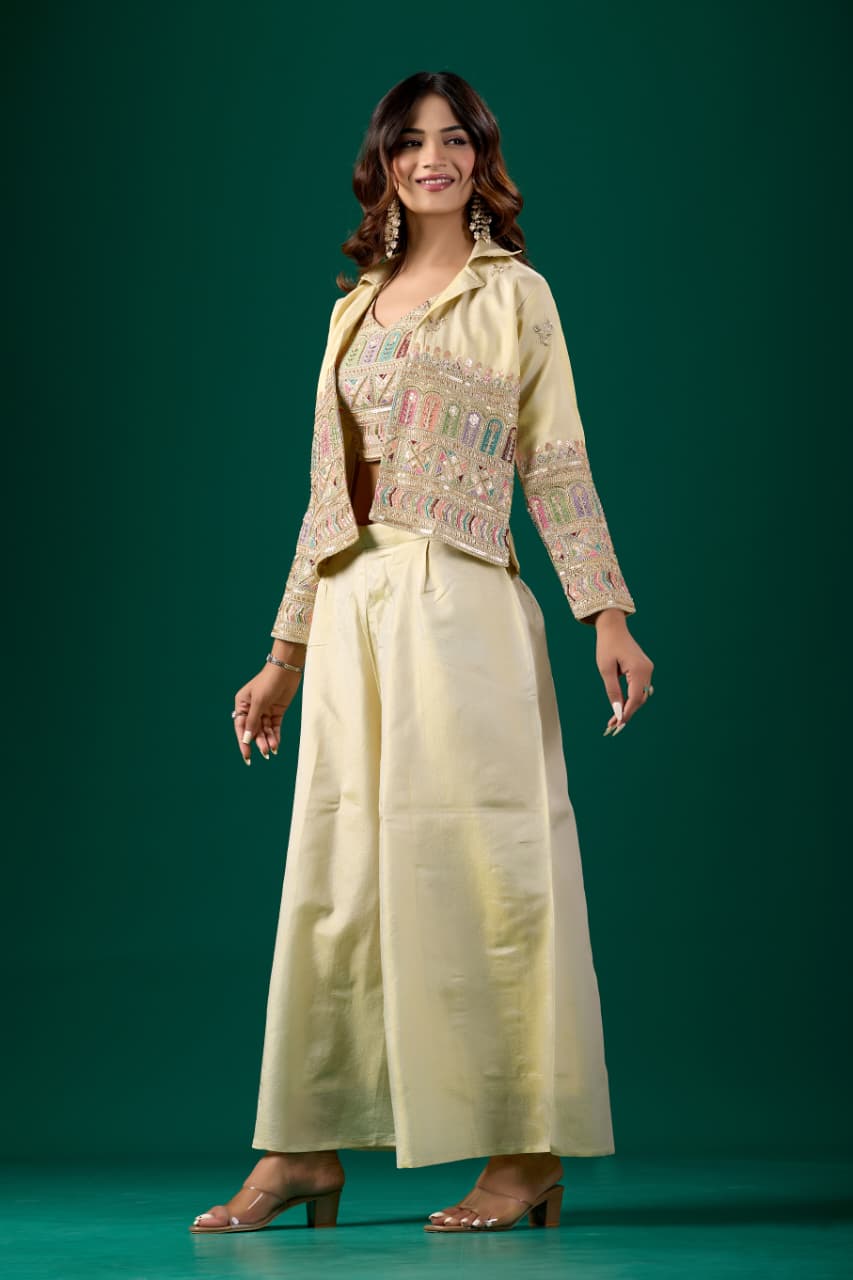
Jhumkas, chandbalis and short beaded necklaces suit a Bandhani palette without requiring a full jewellery set. Choose bangles without sharp edges, especially when playing with wooden dandiya sticks. Cushioned juttis or low wedges are safer for extended dancing than narrow heels, and footwear should be worn indoors for a short period before Navratri to identify rubbing points.
Mirror work, gota patti and zari can connect a salwar suit to Gujarati festive dressing, but one or two statement details are usually enough. A mirror-work earring with a Bandhani dupatta may be more comfortable than a heavily embellished neckline that rubs against the skin.
Keep phones, cards and keys in a compact zippered pouch worn close to the body. A long loose strap can interfere with arm movements, while a pouch with a secure closure reduces the chance of losing essentials in a crowded venue.
Bandhani Suit Styles for Gujarati Navratri and Garba: shopping and care decisions
The most reliable buying decision comes from checking fabric, lining, measurements, embellishment weight and washing instructions together. A visually festive suit can become impractical if any one of those details is overlooked.
The Salwar Suits with 30% Off and Salwar Suits Flat 40% Off collections can help shoppers compare silhouettes and price points, but a discount should not replace measurement checking. Inspect seam finishing, zipper placement, trouser elastic and the attachment of decorative elements before choosing a set for repeated wear.
For a suit intended for all nine Navratri nights, rotate at least two dupattas and allow each garment to air fully after wear. Sweat and perfume should not be sealed into a garment immediately after dancing. Hang the suit in shade, empty the pockets and store it only when completely dry.
Follow the care label for embroidered Chanderi, georgette, viscose and Vichitra silk. Hand washing in cool water is often gentler than a hot machine cycle, but some embellished garments require professional cleaning. Never wring a delicate dupatta because twisting can distort the weave and loosen attached decoration.
A well-planned Bandhani outfit can also be reworn beyond Navratri. Pair the dupatta with a plain kurta for a family lunch, style the trousers with a shorter festive top, or use the embroidered kurta for Diwali gatherings. Rewear potential makes a more restrained, comfortable purchase valuable than a heavily themed outfit that works only for one night.
Bandhani Suit Styles for Gujarati Navratri and Garba: practical outfit formulas
The easiest outfit formula is a breathable base, one Bandhani statement and secure low-profile accessories. This formula keeps the look recognisably festive while leaving enough freedom for dancing.
For an outdoor evening, choose a cotton or viscose straight kurta, relaxed trousers, a red-and-ivory Bandhani dupatta and cushioned juttis. For a more formal venue, choose a Vichitra silk or Chanderi kurta set, add a bright Bandhani stole and keep the jewellery to earrings plus bangles.
A pastel outfit can look festive when the contrast is placed in the dupatta, footwear or earrings rather than throughout the entire suit. A mustard, maroon or midnight-blue base can similarly be softened with ivory, blush or pastel blue accents.
Men's Garba dressing can coordinate without becoming identical. A man can wear a solid kurta in the dominant colour from a woman's Bandhani suit, while women in the group use the same accent colour through dupattas or jewellery. Matching colour families create a coordinated group photograph without requiring matching prints.
The strongest Garba outfit is the one that remains comfortable after the music, lights and first hour of dancing have begun. When the hem clears the floor, the waistband stays secure, the dupatta is anchored and the fabric allows airflow, festive style becomes much easier to enjoy.
Common Questions About Bandhani Suits for Gujarati Garba Nights
What should women wear for Gujarati Garba?
Women can wear an Anarkali, straight-cut salwar suit, palazzo set or Patiala set with a Bandhani dupatta. Choose breathable fabric, a secure drape and footwear that remains comfortable during several hours of dancing.
Are cotton salwar suits suitable for Garba?
Cotton salwar suits are suitable for Garba, particularly for outdoor venues and warm halls. Cotton allows airflow and absorbs moisture, although it may crease more readily than georgette or viscose.
How can I keep a dupatta in place during Garba?
Pin the dupatta at the shoulder and waist, leaving enough looseness for raised arms. Keep the loose end above the ankles and avoid heavy borders or long unsecured drapes that can catch while dancing.
Which salwar suit silhouette is best for Navratri dancing?
A straight-cut suit with relaxed trousers is the most predictable choice for movement, while a light Anarkali provides a traditional circular flare. Palazzo and Patiala sets also work when the trouser hem is clear of the floor.
Can readymade salwar suits work as Garba outfits?
Readymade salwar suits work well when the bust, armhole, hip, waist and garment length match your measurements. Check those dimensions separately instead of choosing only by your usual size label.
How should a Bandhani salwar suit be washed after Navratri?
Follow the garment's care label and use cool water when hand washing is permitted. Do not wring embroidered Chanderi, georgette or viscose, and dry delicate garments in shade before storing them.