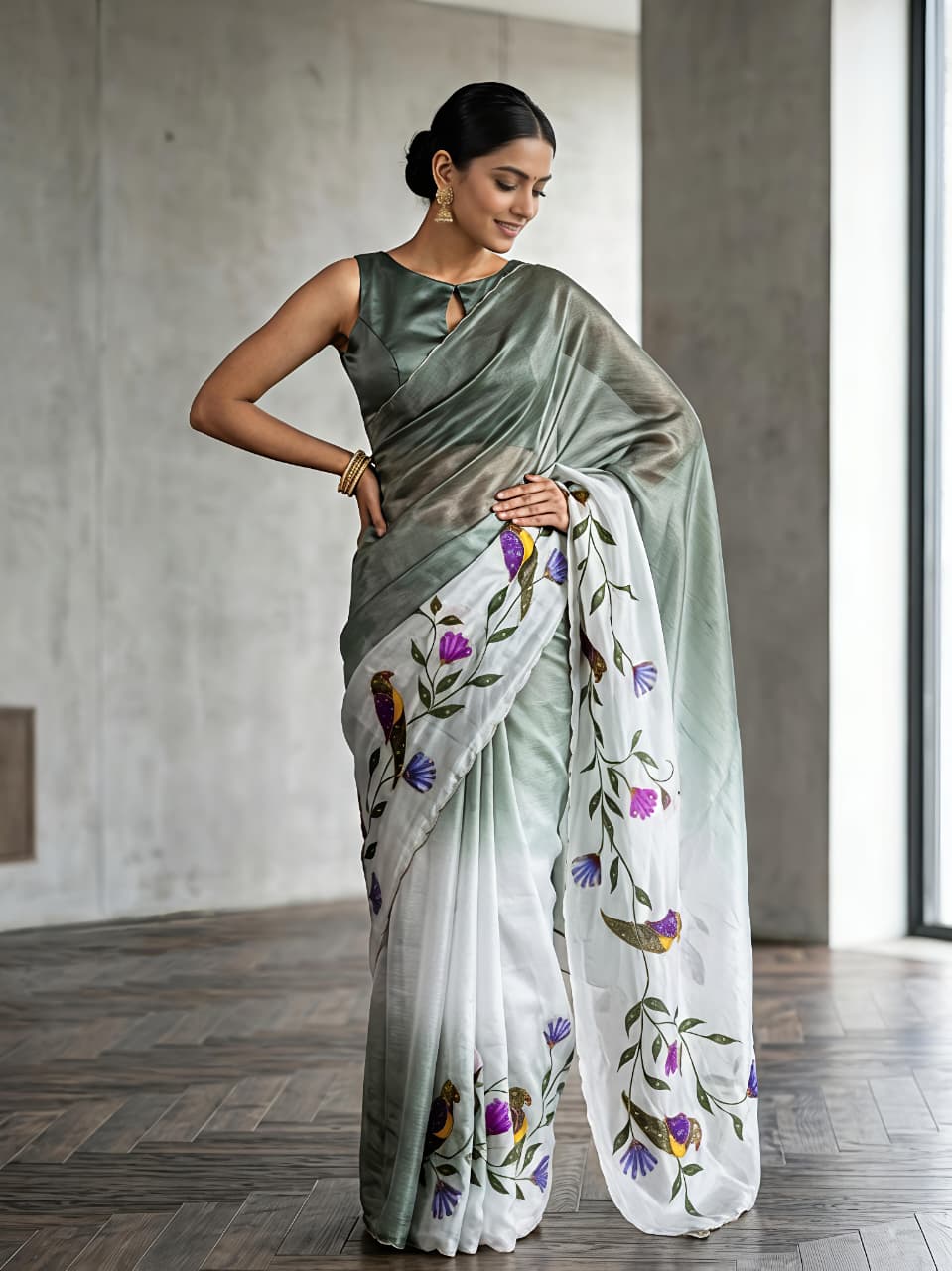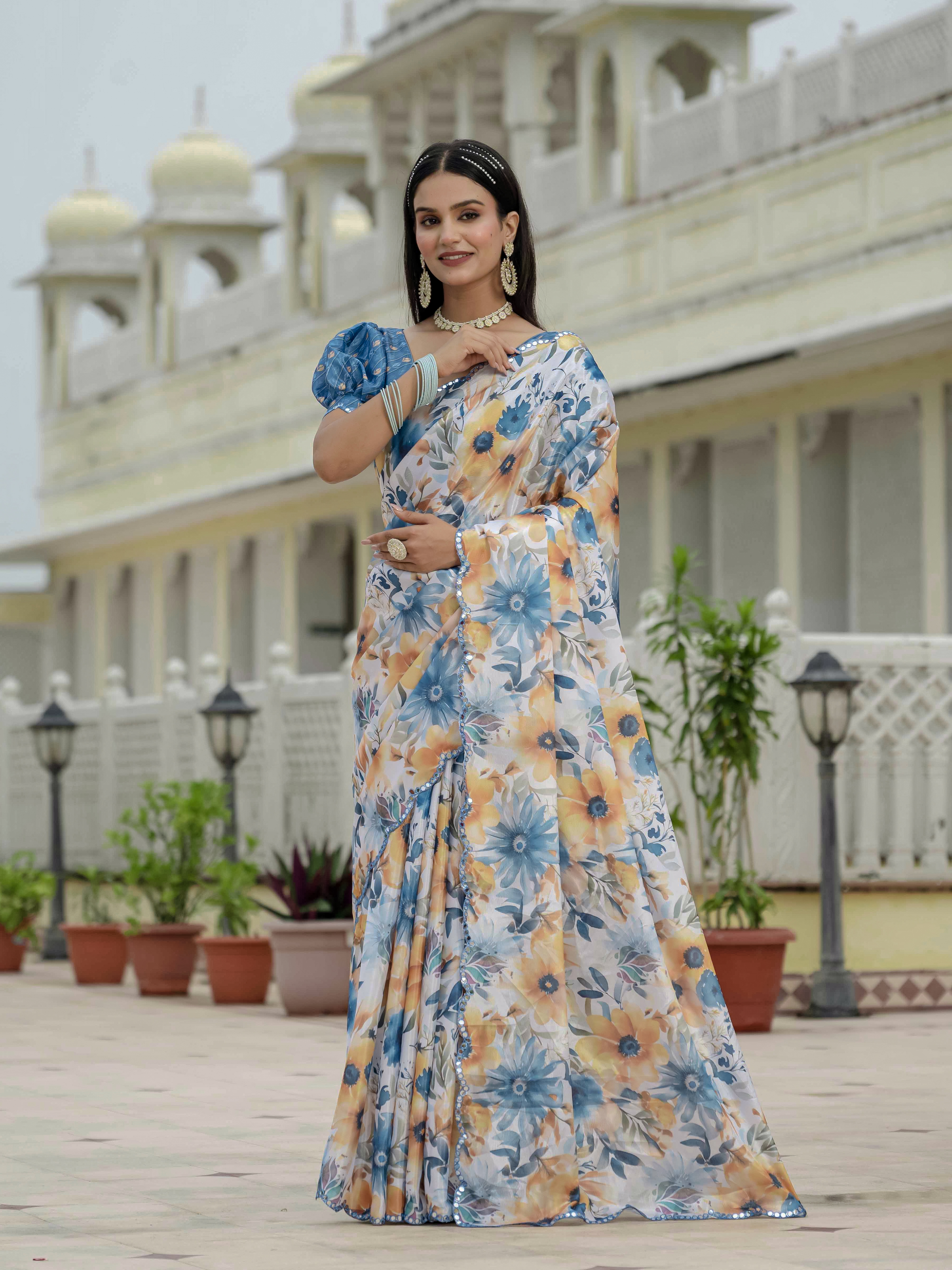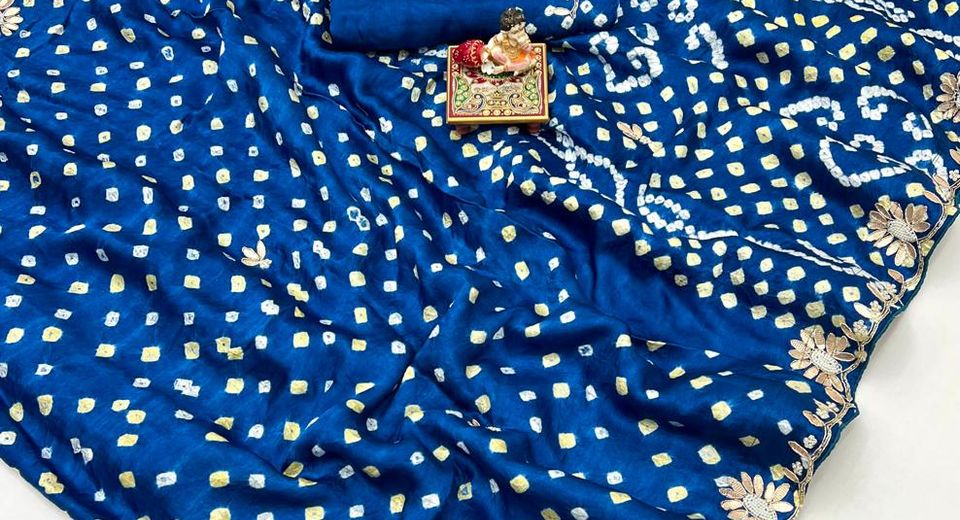
Bandhani Sarees of Gujarat: Bandhej, Colours & Styling Guide begins with a little but important detail: the identical dots are created by tying sections of fabric before dyeing, not by printing them afterwards. Gujarati Bandhani can therefore carry minor variations in dot size, spacing and colour depth. Those variations are evidence of the resist-dyeing process and help you judge the character of a saree before you buy it.
Bandhani works for more than Navratri or weddings. A lightweight viscose Gajji silk saree can suit a daytime celebration, while a silk Bandhani saree with a zari border can look composed at a formal family ceremony. The right choice depends on the fabric, density of the dots, border, colour contrast and the way the saree is draped.
Bandhani Sarees of Gujarat: Bandhej technique and regional identity
Gujarati Bandhani is a tie-resist textile tradition in which fabric is pinched into small points, secured with thread and dyed so the tied portions resist the colour. The technique is known as Bandhej in Gujarat, and finished patterns may contain thousands of individual tied points.
Jamnagar and Kutch are strongly associated with Bandhani production, although the craft is practised across Gujarat and neighbouring Rajasthan. Artisans use fingernails or small tools to lift minute portions of cloth before tying them tightly. A single saree may be tied and dyed more than once when it contains two or more colours.
Traditional motifs include regular dotted fields, clusters resembling flowers, waves, diagonal stripes and circular forms. Gharchola Bandhani is associated with Gujarati wedding customs and commonly combines checked layouts with zari work, while Panetar is traditionally linked with a red-and-white bridal palette. Not every red-and-white saree is a Panetar, so the name should be used carefully when checking a product description.
Why do Bandhani dots vary?
Bandhani dots vary because hand-tied resist points are not identical in size or tension. A pattern with crisp, evenly distributed points may indicate careful tying, but minor irregularity is normal in handmade Bandhej rather than proof of poor quality.
The reverse side can reveal useful clues. Tied points may show small puckers or gathered areas, especially before the saree is fully opened and pressed. Printed dots usually appear flatter and more uniform on both sides, whereas resist-dyed Bandhani often shows a subtle difference in colour concentration around the tied points.
Bandhani Sarees of Gujarat: understanding colour and symbolism
Bandhani colours communicate mood and regional styling more reliably than a fixed universal code. Red commonly suggests bridal celebration, yellow and orange suit auspicious daytime rituals, green connects easily with festive and spring palettes, and blue creates a cooler contemporary effect.
Colour symbolism changes across families, communities and occasions. A red Bandhani saree may be chosen for a wedding, but it can also be worn at a festival or anniversary. Yellow is especially natural for a Haldi ceremony, while pink offers a softer alternative for engagement functions, temple visits and daytime receptions.
- Red: A high-impact choice for weddings, Garba nights and evening celebrations; pair it with antique gold, green or ivory accents.
- Yellow and mustard: Useful for a Haldi ceremony and daytime pujas; maroon, rust and green accessories add depth.
- Green: Works well for festive lunches and family gatherings; gold, coral and pink create different levels of contrast.
- Pink: Suits daytime celebrations and romantic occasion dressing; silver, pearl or soft gold jewellery keeps the palette balanced.
- Blue: Gives Bandhani a modern, versatile direction; combine it with silver for a cool look or gold for a richer Gujarati finish.
- Orange: Brings warmth and visibility to Navratri or celebratory styling; brown, green and antique gold prevent the look from becoming overly bright.
Colour placement matters as much as the base shade. A saree with a contrasting border frames the body and strengthens the pleats, while a tonal Bandhani field feels quieter and can be easier to wear with statement jewellery. Zari borders reflect warm light and generally read as more formal than a plain selvedge.
Bandhani Sarees of Gujarat: choosing the right fabric
Gajji silk, viscose Gajji silk, silk and linen-cotton each produce a different Bandhani experience. Fabric weight affects pleat definition, fall, comfort in heat and the amount of structure needed from the blouse.
Which Bandhani fabric works for a formal celebration?
Silk or Gajji silk works best for a formal celebration because the fabric carries colour depth and supports a defined pallu and structured pleats.
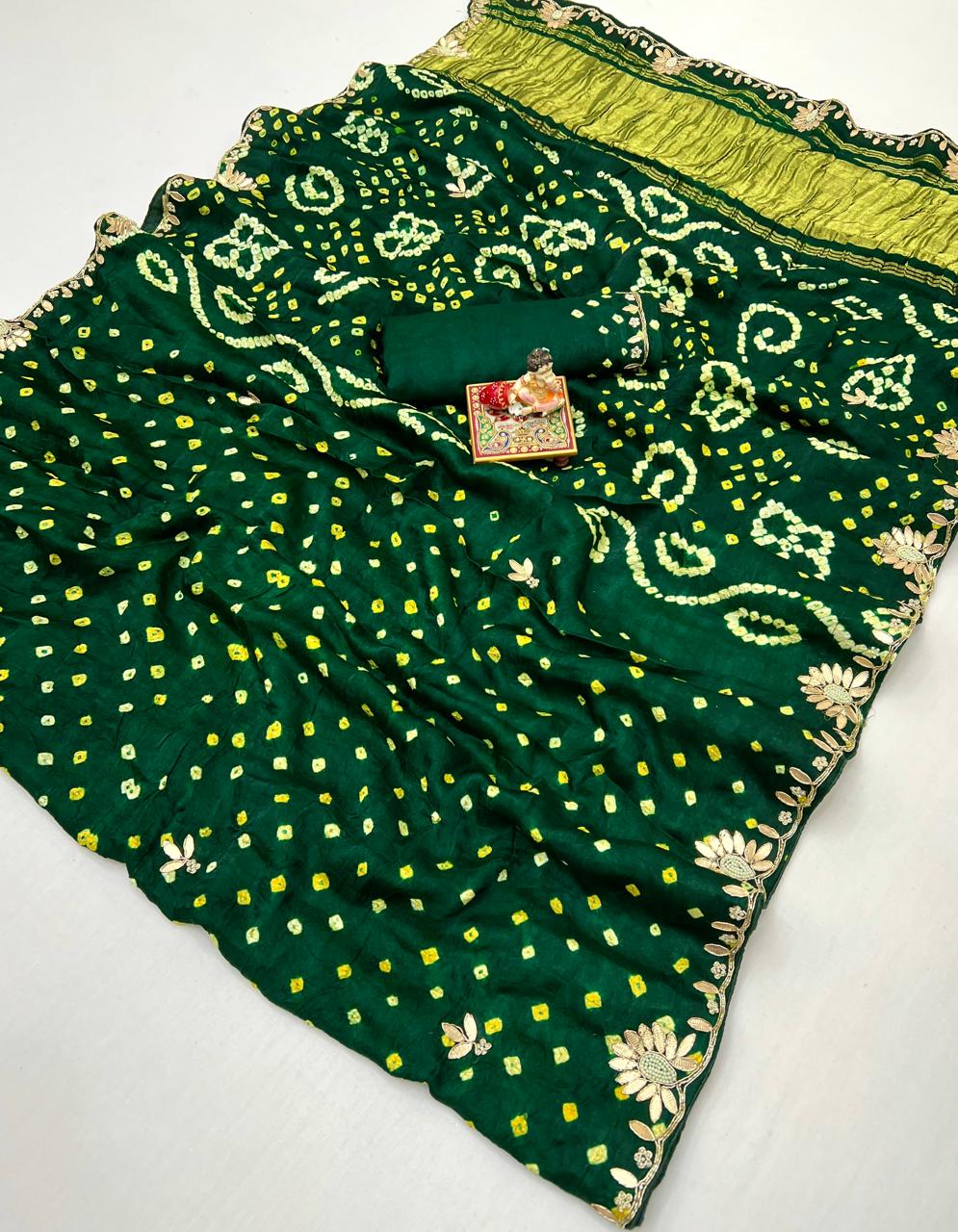
Gajji silk has a smooth surface and enough body to support neat pleats and a defined pallu. Classic Pink Bandhani Gajji Silk Saree with Border illustrates how a strong border can give a dotted field a polished outline. Viscose Gajji silk generally brings a fluid drape and a more accessible option for frequent festive wear.
Green Bandhani Viscose Gajji Silk Saree with Gota Patti and Blue Bandhani Viscose Gajji Silk Saree with Gota Patti show how gota patti can add shine without requiring a heavy zari construction. Gota patti details are especially useful when you want a celebratory finish but still need a relatively comfortable saree for several hours.
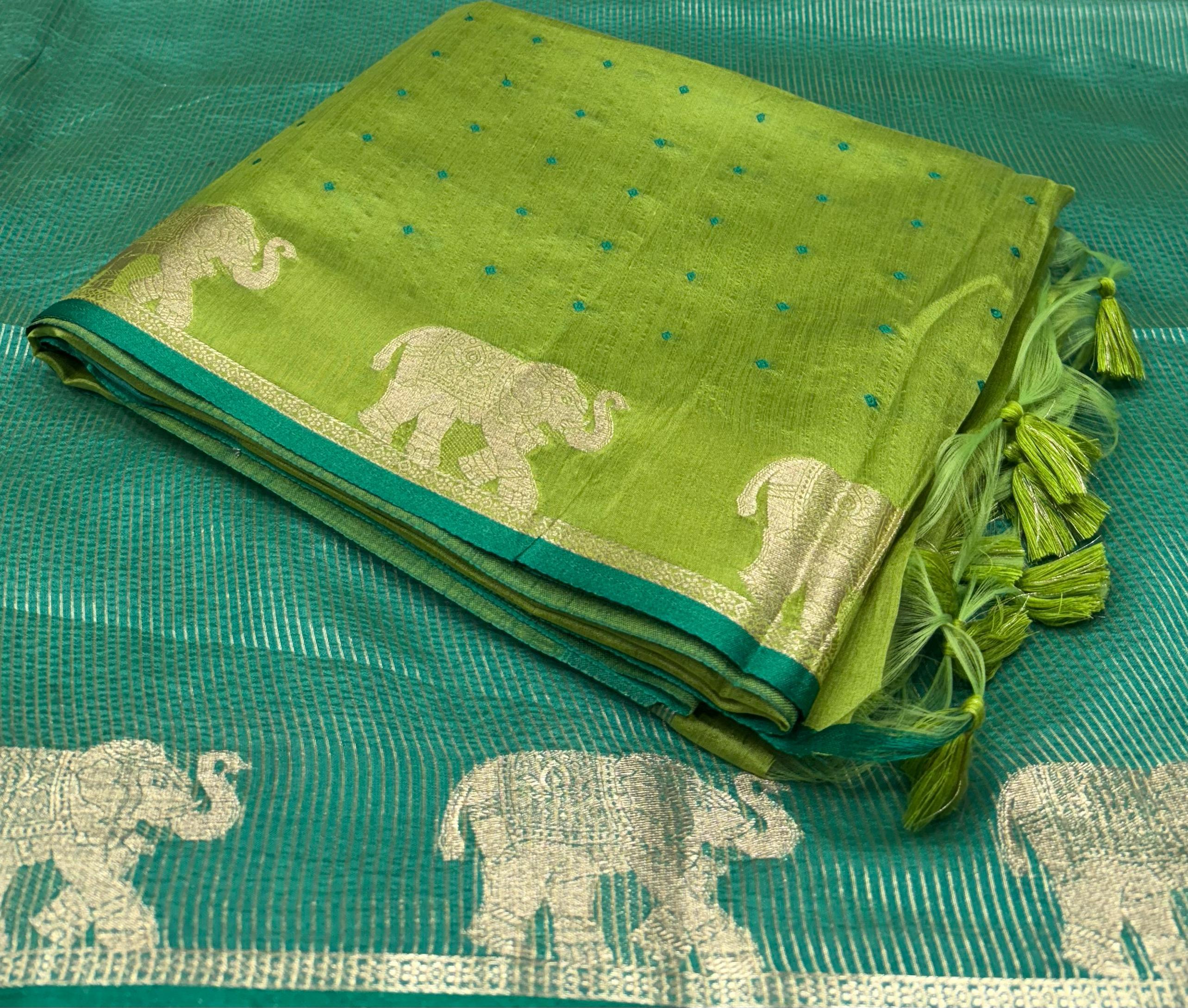
Silk Bandhani sarees suit formal celebrations because the fabric carries colour depth and supports richer borders. Mustard Yellow Bandhani Silk Saree with Zari Border and Green Bandhani Silk Saree with Zari Elephant Border demonstrate two different formal directions: one relies on a classic zari edge, while the other uses a distinctive elephant motif to make the border the visual focus.
Linen-cotton feels more breathable and usually gives a slightly crisper, less glossy drape. Orange Bandhani Kalamkari Linen Cotton Saree combines Bandhani-inspired colour energy with Kalamkari visual language, making it suitable for daytime cultural events, office festivities and intimate gatherings where a full silk look may feel too elaborate.
Bandhani Sarees of Gujarat: styling for weddings and festivals
Bandhani styling works best when the blouse, jewellery and drape repeat one detail from the saree instead of competing with every colour at once. Choose one anchor-border, gota patti, zari or a dominant dot colour-and let the other accessories support it.
How should you style Bandhani for a Haldi ceremony?
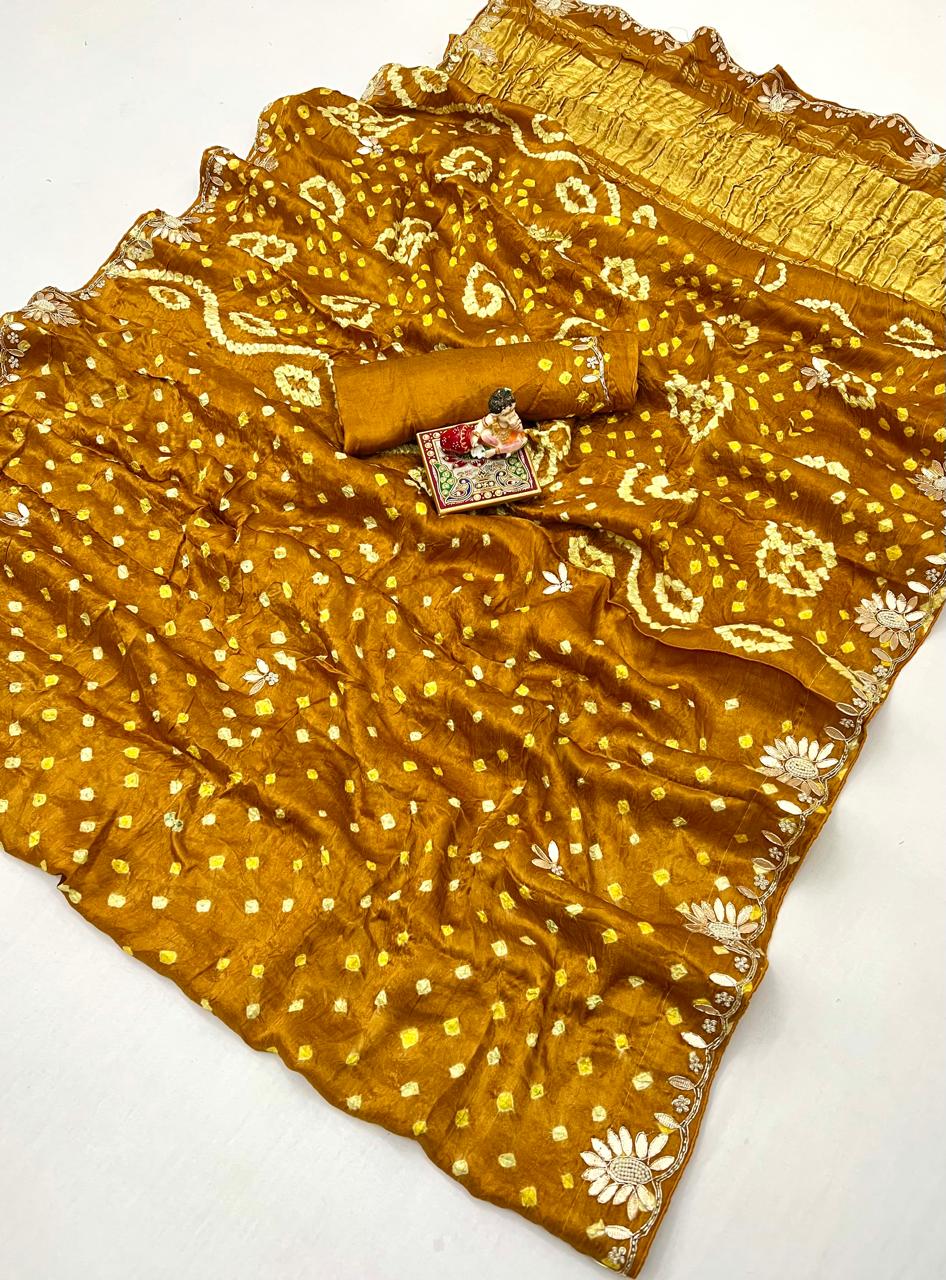
A yellow, mustard or orange Bandhani saree is the most natural choice for a Haldi ceremony because the palette photographs well in daylight and complements marigold décor.
Use a short-sleeved blouse in green, rust or ivory, keep the pallu pleated, and choose lightweight jhumkas so turmeric and movement don't make heavy jewellery inconvenient. Mustard Bandhani Viscose Gajji Silk Saree with Handwork can be styled with a deep green blouse and antique-finish earrings. Avoid excessive surface embellishment when the saree already includes handwork; a textured bangle stack and a low bun can provide enough finish.
How should you wear Bandhani for Garba and Navratri?
A breathable Bandhani saree with a secure pleat arrangement is practical for Garba and Navratri because dancing places stress on the pallu and waist pleats.
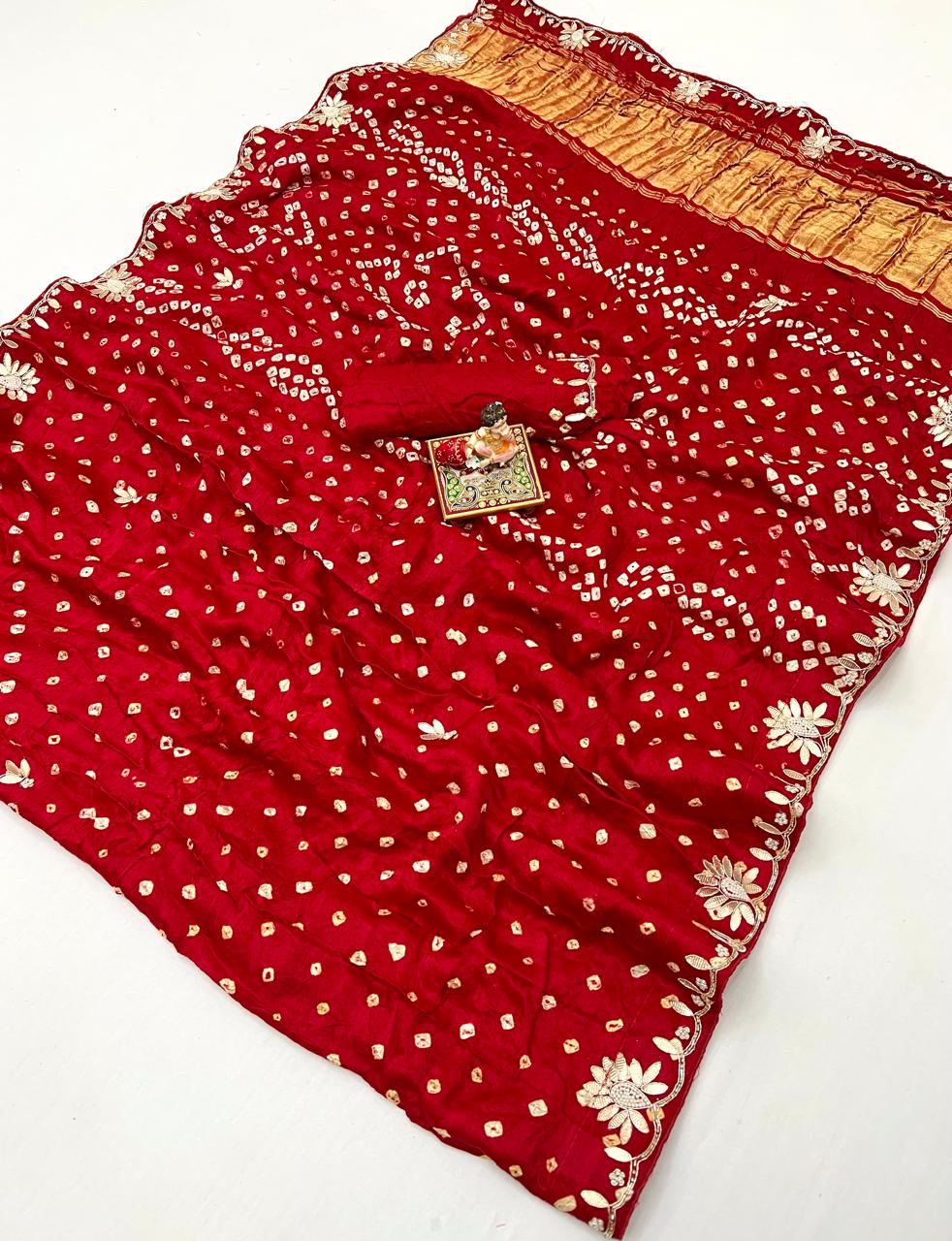
Choose a medium-weight fabric, pin the pallu at the shoulder and use a fitted blouse with comfortable armholes. Red Bandhani Gajji Silk Saree with Gota Patti Handworks can take a green, fuchsia or mirror-work blouse for a classic festive effect. Keep the jewellery close to the face and wrists rather than adding a long necklace that may move while dancing. Flat embellished footwear is safer than a high heel for a full evening of Garba.
What makes Bandhani suitable for a wedding reception?
A silk Bandhani saree with zari, gota patti or handwork is appropriate for a wedding or reception when paired with a structured blouse and deliberate jewellery.
The classic Gujarati seedha pallu can display the pallu design prominently, while a regular Nivi drape gives the look a more familiar, elongated silhouette. Pin the lower pleats at the waist and secure the shoulder pleats with discreet safety pins placed from the inside. A blouse with a higher back, elbow-length sleeves or a modest neckline can balance a bright saree without making the outfit look conservative.
Bandhani Sarees of Gujarat: seedha pallu and everyday draping
The Gujarati seedha pallu drape makes a Bandhani saree look most distinctly Gujarati because the pallu comes from the back over the right shoulder and spreads across the front. The decorative pallu remains visible, which is useful when the saree includes gota patti, zari or a large border motif.
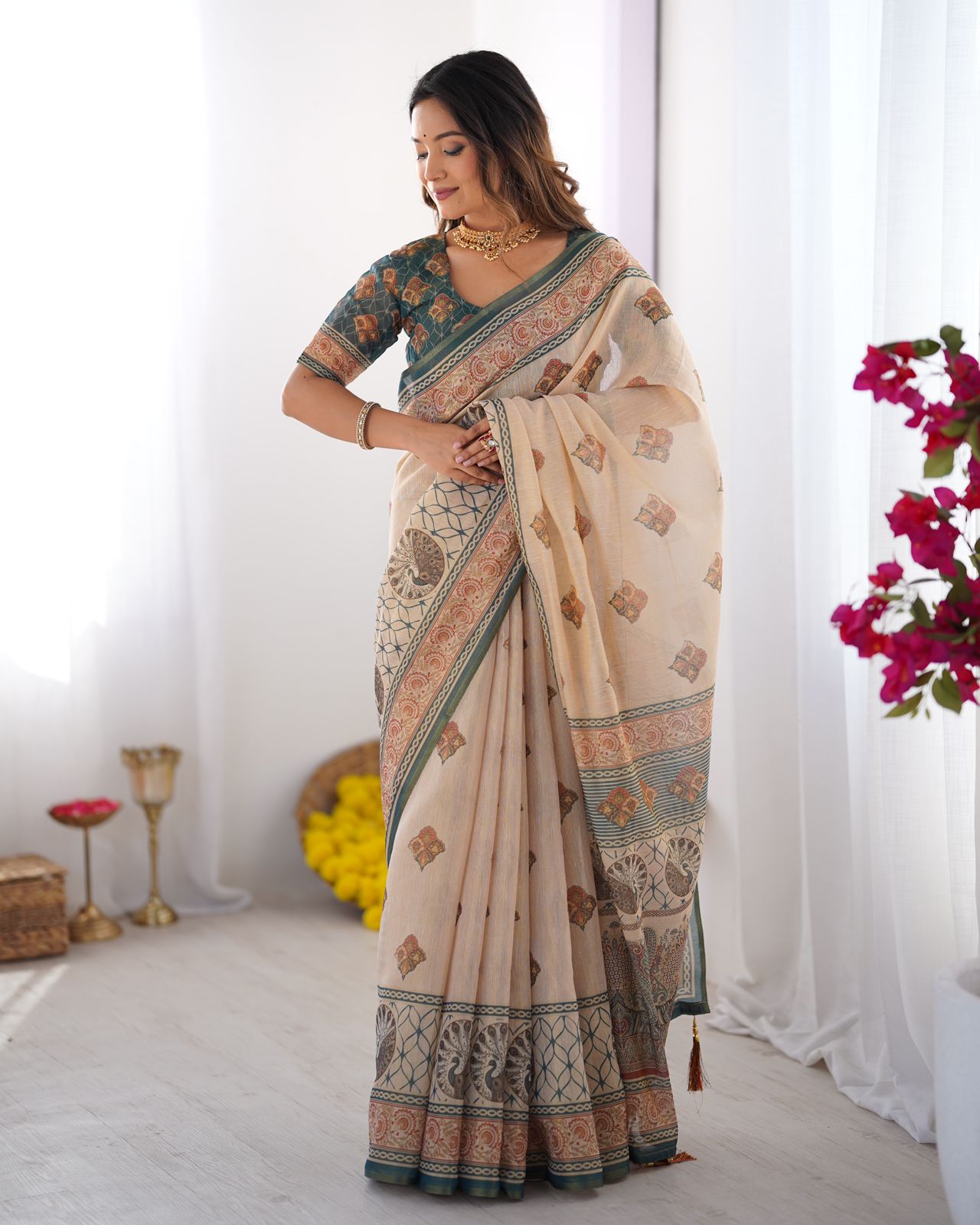
To create the drape, tuck the saree at the waist, form the front pleats, bring the remaining length around the body and take the pallu from the back over the right shoulder. Spread the pallu across the torso and secure it near the left waist if movement is expected. The Nivi drape, with the pallu over the left shoulder, is simpler for everyday movement and often makes the body appear longer.
Bandhani sarees with a visually important border need careful pleat placement. Keep the border aligned along the floor rather than allowing it to twist, and check the hem while standing in the footwear you intend to wear. A petticoat with a firm waist and a slightly flared lower shape gives the saree enough grip without creating bulk.
A contemporary option is to wear the Gujarati seedha pallu with a belt at the waist, provided the saree isn't so heavily embellished that the belt hides its details. A cropped jacket can work with a plain or lightly decorated Bandhani saree, while a time-honoured blouse is usually the better choice when the pallu contains prominent zari or gota work.
Bandhani Sarees of Gujarat: buying checks and value
Before buying Bandhani, check the fabric, dye pattern, border finish, blouse piece, measurements and care instructions rather than judging the saree by colour alone.
- Read the fabric description: Confirm whether the saree is silk, viscose Gajji silk, linen-cotton or another material because each fabric has a different drape and care requirement.
- Study the Bandhej pattern: Look for consistent pattern placement and natural resist details, while remembering that minor variations can occur in hand-tied work.
- Measure the saree: A standard saree is often around 5.5 metres, but the exact length and blouse-piece measurement should be checked before purchase.
- Inspect the border: Zari, gota patti and handwork add visual weight and may affect how the saree behaves in pleats.
- Match price with construction: Silk, dense handwork, zari and labour-intensive tying generally raise the price, while viscose blends can offer a lighter and more affordable festive option.
- Check the occasion: A breathable linen-cotton saree may be more useful for daytime wear than a heavy silk saree that's reserved for weddings.
Budget browsing can be organised through collections such as Sarees from Rs 1000 to Rs 1500, Sarees Under 20% Off and Sarees Under 10% Off. Larger promotional collections, including Sarees Flat 60% Off and Sarees Flat 50% Off, can also be useful, but a discount should never replace checking fabric composition, measurements and embellishment details.
Bandhani Sarees of Gujarat: care after wearing
Bandhani sarees last longer when they're aired after use, folded with clean tissue or soft cotton and stored away from direct sunlight.

Dry cleaning is the safest default for silk, zari, gota patti and handwork unless the care label specifically permits another method. Avoid soaking a strongly coloured Bandhani saree at home because excess water, detergent and rubbing can encourage colour transfer. If a saree becomes damp from perspiration or rain, dry it fully in shade before folding.
Refold a stored saree every few months so a permanent crease doesn't form along the same line. Keep zari and metallic embellishments from pressing directly against rough surfaces, and don't store the saree in an airtight plastic cover for long periods. A breathable muslin or cotton cover is more suitable for seasonal storage.
When ironing is necessary, use low heat and place a thin cotton cloth between the iron and the saree. Gajji silk, zari and gota patti can mark under excessive heat, so pressing from the reverse side is safer. These simple steps protect both the colour contrast and the raised texture that make Gujarati Bandhej distinctive.
Practical Questions About Bandhani Sarees of Gujarat
What is the difference between Bandhani and Bandhej?
Bandhani and Bandhej generally refer to the same tie-resist dyeing tradition, with Bandhej being a commonly used Gujarati term. Small fabric sections are pinched, tied and protected from dye to create dotted or patterned areas.
Which colour Bandhani saree is suitable for a Haldi ceremony?
Yellow, mustard and orange Bandhani sarees are especially suitable for a Haldi ceremony because they complement marigold décor and bright daylight. Green, ivory or rust blouses create balanced contrast with these shades.
Which drape is traditionally associated with Gujarati Bandhani sarees?
The Gujarati seedha pallu is traditionally associated with Gujarati Bandhani sarees. The pallu comes over the right shoulder from the back and spreads across the front, displaying decorative pallu work clearly.
Is Gajji silk Bandhani suitable for weddings?
Gajji silk Bandhani is suitable for weddings because the fabric has enough body for defined pleats and a polished pallu. Zari borders, gota patti and handwork can make the saree more appropriate for evening or formal celebrations.
How should a Bandhani saree be washed?
A Bandhani saree with silk, zari, gota patti or handwork should normally be dry-cleaned according to its care label. Avoid soaking, vigorous rubbing and direct sunlight because these can cause colour transfer or damage embellishments.
How can you tell whether Bandhani dots are resist-dyed?
Resist-dyed Bandhani dots often show tiny puckers, gathered points or subtle variation in colour concentration. Printed dots usually look flatter and more mechanically uniform, although photographs alone cannot establish authenticity with certainty.