A Banarasi Saree Guide: Banarasi Silk Types, Designs & Modern Styling becomes genuinely useful when it explains what the word "Banarasi" describes, how silk and zari change the way a saree behaves, and which details matter before purchase. Banarasi sarees are associated with Varanasi weaving traditions, figured motifs and metallic zari, but every Banarasi saree doesn't have the same weight, surface, price or level of handwork.
The right choice depends on four practical questions: how much structure you want, how often you'll wear the saree, whether the zari should be subtle or prominent, and how the blouse and drape will work with the fabric. A heavier Katan silk saree suits a formal wedding more naturally than a very light georgette version, while soft silk or organza can be easier for a first-time wearer.
Banarasi Saree Guide: What Makes a Banarasi Saree Different?
A Banarasi saree is identified by its connection to Banaras weaving traditions, especially figured silk surfaces, supplementary zari work and recognisable Indian motifs. The word doesn't guarantee one single fibre, weave structure or price category.
Traditional Banarasi weaving uses a figured technique in which patterns are created within the fabric rather than simply printed on top. Zari may be woven through the body, concentrated along the border, or used to outline butis and floral designs. Modern commercial sarees may also use powerloom production, blended fibres or Banarasi-inspired motifs, so a buyer should read the material and construction details instead of relying on the name alone.
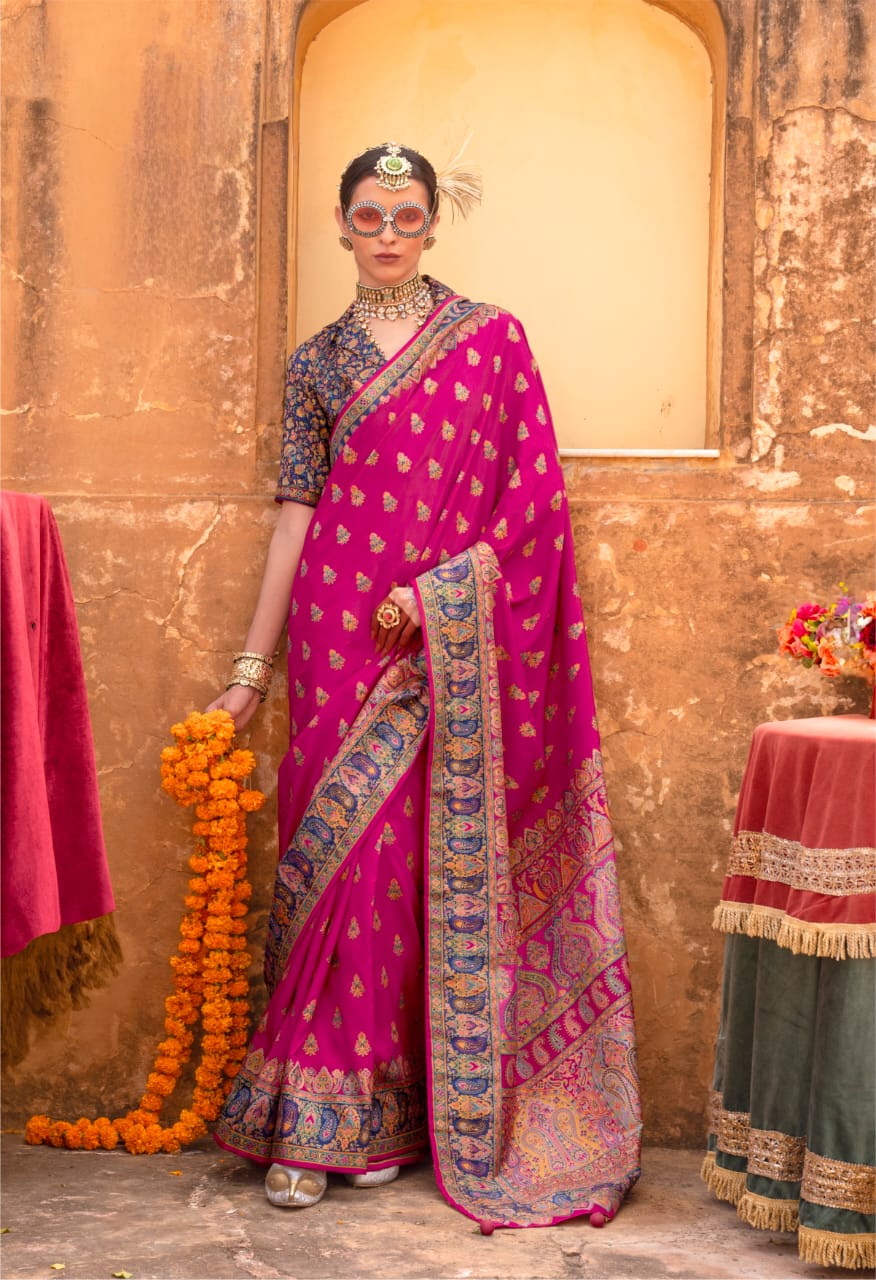
Common visual elements include small butis, jaal patterns that spread across the field, floral vines, paisley forms, kalga and bel motifs, and contrasting pallus. A saree with a wide zari border usually feels more ceremonial, while a sparse floral jacquard surface can transition into dinners, receptions and festive office events.
Banarasi silk is valued for its ability to hold colour, support detailed patterning and create a refined sheen without needing sequins or surface embellishment. Zari is generally a metallic thread, traditionally associated with gold or silver-toned effects; the exact fibre and finish should be checked in the product description.
Banarasi Saree Guide: Which Silk Types Should You Compare?
The most useful way to compare Banarasi silk types is by weight, fall, surface finish, breathability and the kind of event where each fabric will be comfortable.
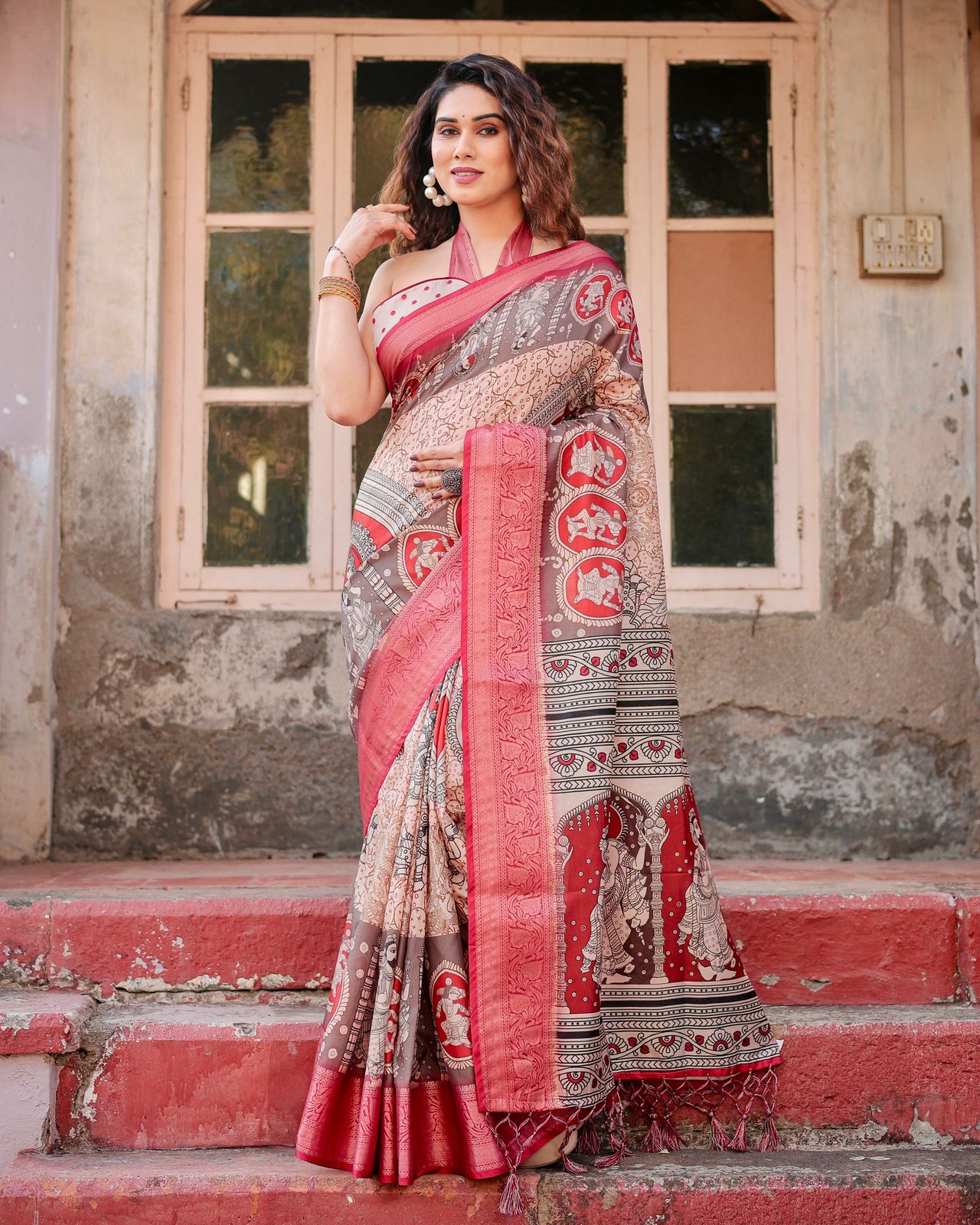
Katan silk
Katan silk usually has a smooth, structured hand and a polished appearance, making it suitable for bridal functions, wedding ceremonies and formal evening celebrations. The fabric can support dense zari, intricate jaal work and crisp pleats, although a heavily woven Katan saree may feel warmer and require more careful handling.
Katan silk works well when you want the saree to hold a defined silhouette. A high-neck blouse, elbow-length sleeve or sharply tailored raw-silk blouse can balance the fabric's formal character without competing with the woven motifs.
Soft silk
Soft silk Banarasi sarees are generally easier to drape and more comfortable for long functions because the fabric has a gentler fall than a stiff, densely woven silk. Soft silk is a practical choice for family celebrations, festive lunches and buyers who want traditional zari without a very rigid silhouette.
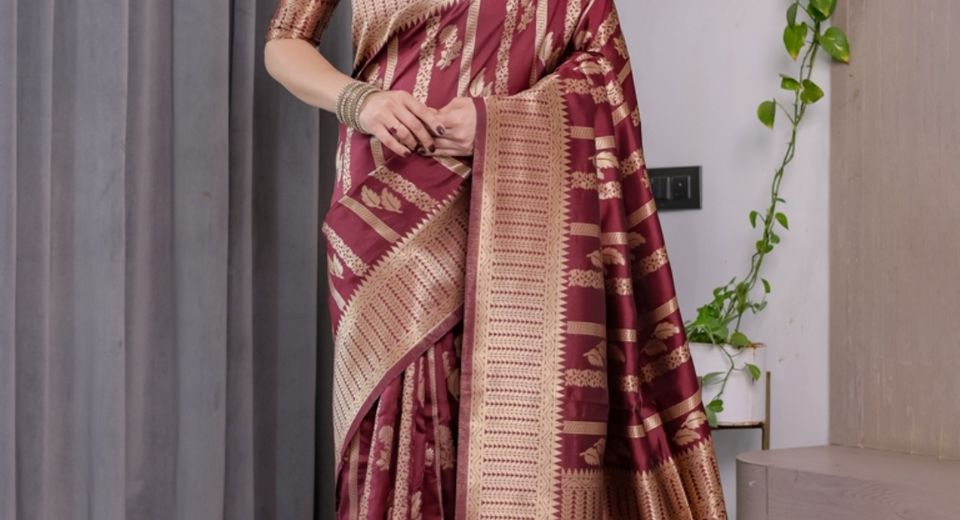
A soft silk saree can look especially graceful with medium-width borders and a restrained blouse. Maroon Banarasi Soft Silk Saree with Golden Zari Border illustrates how a strong colour and a defined zari edge can create occasion impact without requiring an all-over pattern.
Organza and tissue
Organza Banarasi sarees are lightweight, translucent and crisp, while tissue Banarasi sarees are known for a luminous, sometimes metallic surface. Both fabrics create sharper pleats than soft silk, but both can also show creases and pin marks more easily.
Organza suits daytime receptions, summer festivities and contemporary styling with a compact blouse. Tissue works well for cocktail-style wedding events when the wearer wants shine but not the visual weight of dense silk. A lining, careful petticoat choice and secure pleating are important because lightweight fabrics can shift during movement.
Georgette and lighter blends
Georgette Banarasi sarees have a fluid, slightly textured fall and are often easier to carry through dancing, travel or a long reception. The softer drape can make a broad border appear more relaxed, while a smaller motif keeps the saree from looking visually crowded.
Georgette, viscose and blended options should not automatically be judged as inferior; they serve a different purpose from handwoven pure silk. The important checks are fibre composition, zari description, transparency, finishing and whether the stated price matches the material.
Banarasi Saree Guide: How Do Designs Change the Look?
Banarasi designs change the visual weight of a saree through motif scale, pattern density, border width, pallu construction and the contrast between silk and zari.
Buti, bootis and jaal
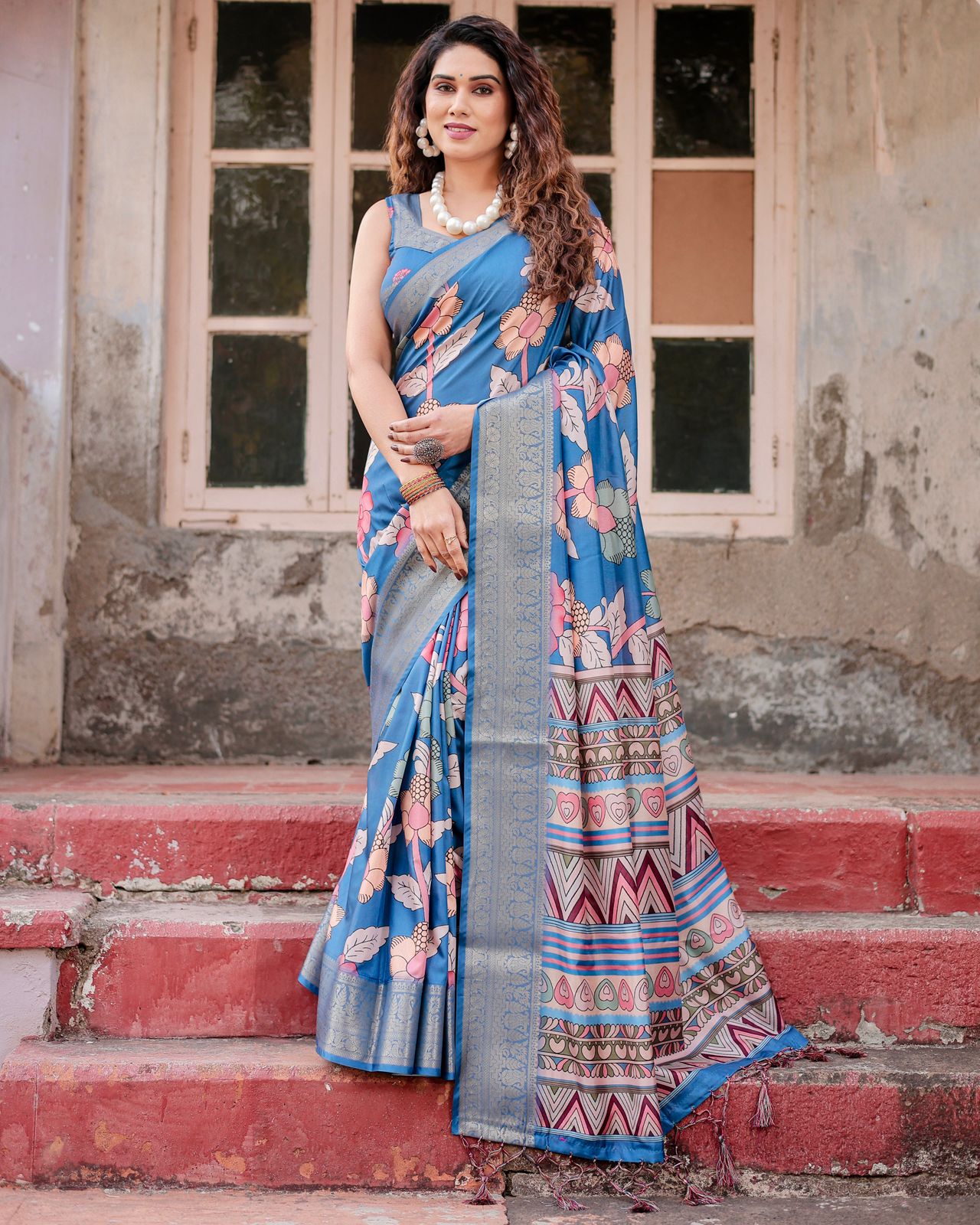
Butis are individual motifs distributed across the saree, while a jaal creates a connected pattern that covers much more of the field. Small butis leave more visual space and pair easily with printed, textured or embellished blouses. Dense jaal designs make the saree feel richer and usually need a simpler blouse.
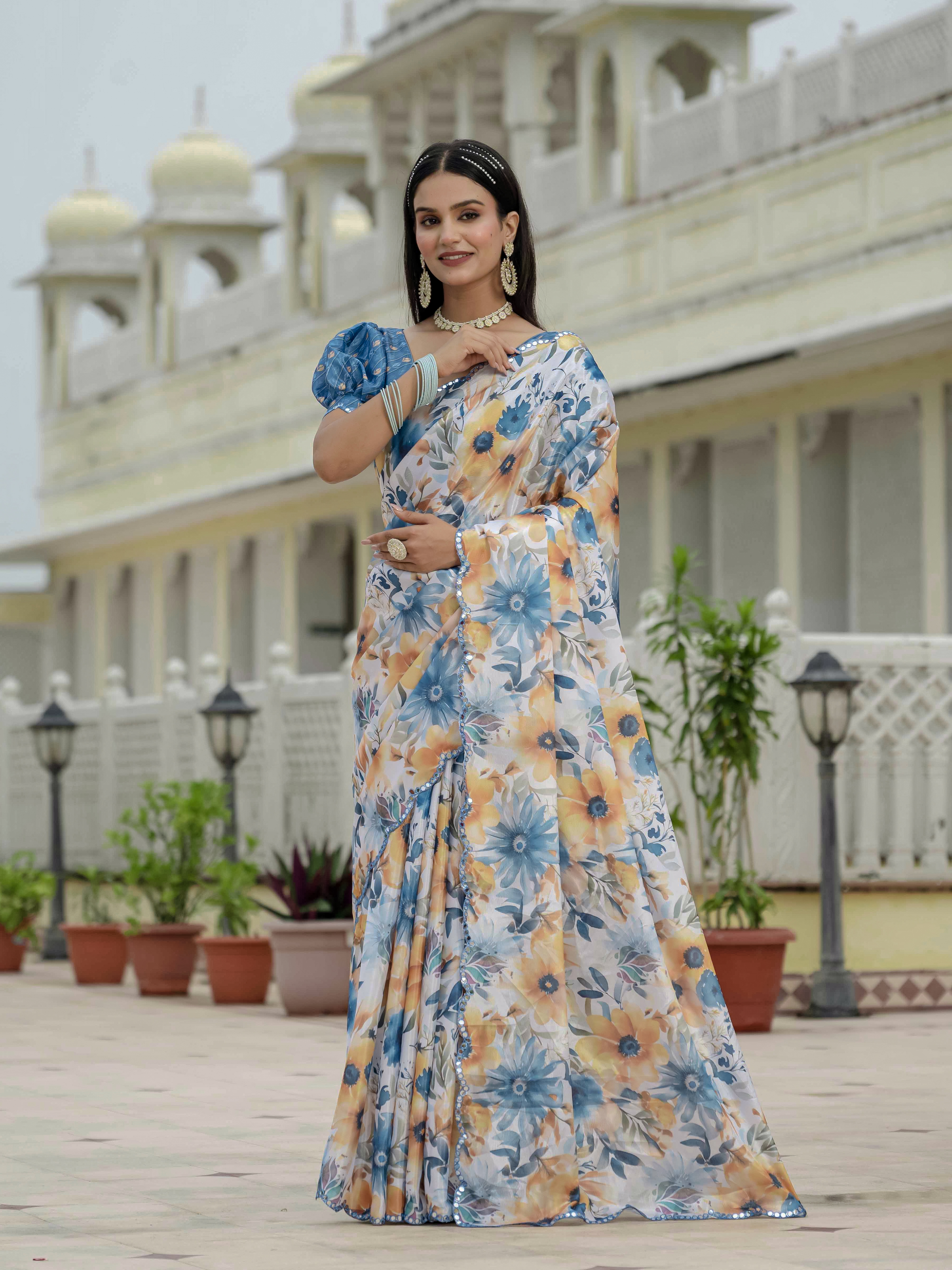
Floral motifs are versatile because they can read as traditional or contemporary depending on their size and spacing. Blue Banarasi Silk Saree with Floral Design demonstrates how colour can become the main modernising element when the floral pattern remains clear rather than overloaded with additional embellishment.
Border and pallu proportions
A broad zari border draws attention to the lower half of the outfit and gives the pleats a strong frame. A narrow border creates a lighter, more understated appearance and can work well with cropped blouses, belts or minimal jewellery.
The pallu deserves separate attention because it's visible in photographs and changes the drape's balance. A heavily patterned pallu can be worn open over one shoulder, whereas a simpler pallu may look better folded into neat pleats for a more architectural silhouette.
Zari and jacquard effects
Zari gives Banarasi sarees their characteristic metallic definition, but more zari doesn't always mean better quality or greater versatility. Check whether zari appears only on the border, throughout the body, or in floral jacquard motifs woven into the surface.
Maroon Banarasi Silk Saree With Floral Jacquard Zari Border is an example of a design where the border carries both pattern and shine. A saree with this kind of detail needs fewer accessories because the woven edge already supplies a focal point.
Banarasi Saree Guide: How Should You Choose One for an Occasion?
Choose the fabric and pattern according to the event's duration, formality, season and expected movement rather than choosing colour alone.
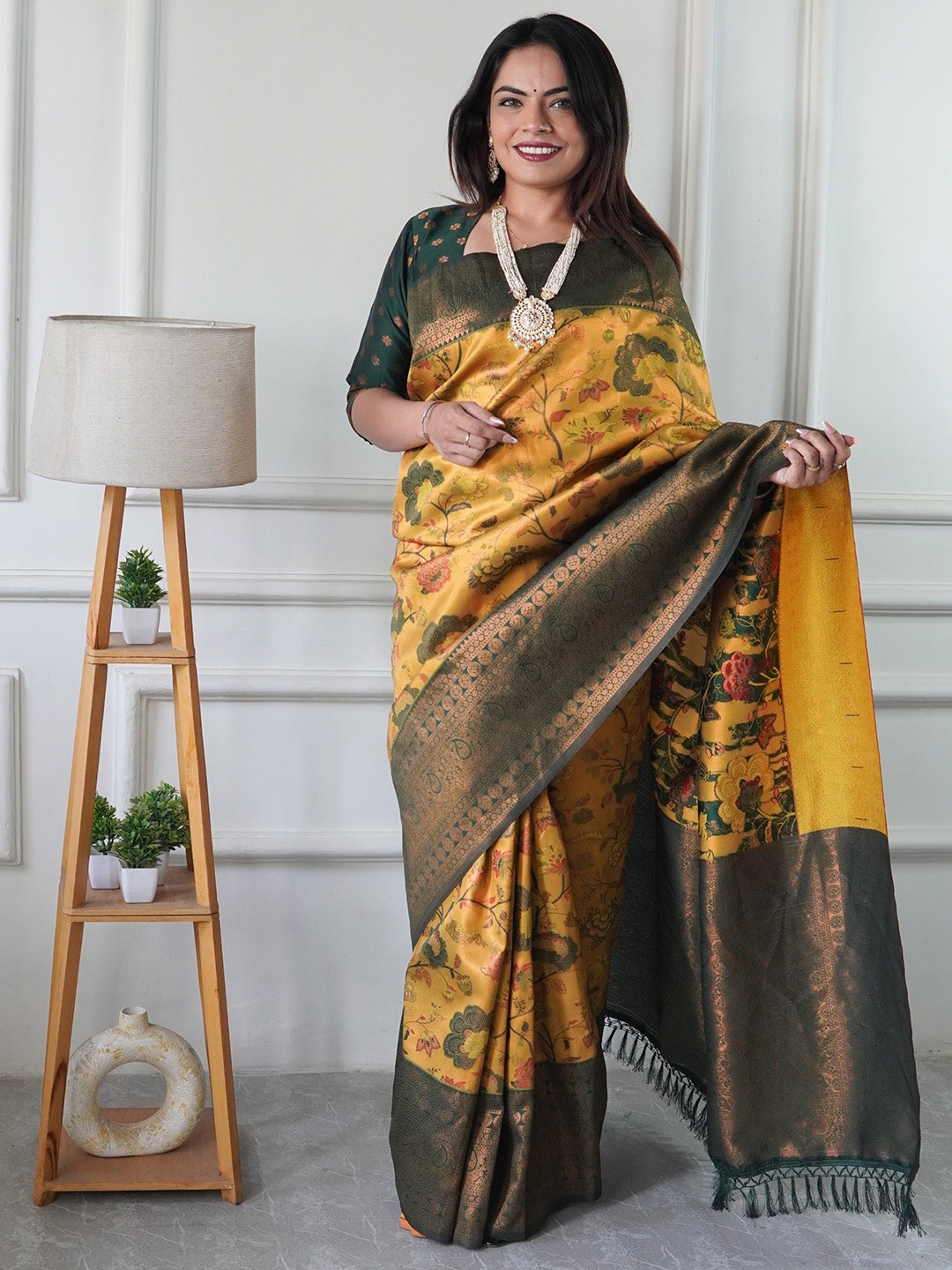
- Wedding ceremony: Katan silk, rich maroon, red, deep green or royal blue, and a defined zari border create a formal effect. A heavier saree is worthwhile when the event is short and ceremonial.
- Reception or evening party: Tissue, organza, soft silk or georgette can provide shine with less bulk. Metallic earrings and a clean blouse often look more current than a full traditional jewellery set.
- Haldi ceremony: Lightweight soft silk, organza or georgette in yellow, pink, green or coral is easier to move in. Avoid very delicate trailing pallus if turmeric, flowers and outdoor seating are likely.
- Festive lunch: Medium-weight soft silk with a small buti or floral border offers polish without excessive formality. Three-quarter sleeves and low-profile jewellery keep the outfit practical.
- Office or cultural event: A lighter Banarasi saree with a narrow border, solid blouse and restrained zari is more comfortable under indoor lighting and during commuting.
Colour also affects perceived formality. Maroon and red usually appear ceremonial, blue can look regal or contemporary depending on the blouse, and green brings a festive balance when paired with antique gold or muted zari.
Banarasi Silk Sarees Under 1100 with Up to 70% Off can be useful for experimenting with colour or a first Banarasi purchase, but a wedding purchase deserves closer inspection of fibre, border finishing, measurements and return conditions.
Red Banarasi Silk Sarees for Weddings Under 1100 is relevant when a traditional bridal palette matters but the buyer wants to compare accessible options. Silk Sarees Under 3000 With Discount can also help compare Banarasi against other silk saree constructions at a similar budget.
Banarasi Saree Guide: What Does Modern Styling Look Like?
Modern Banarasi styling keeps the woven saree as the focal point and updates the outfit through proportion, blouse construction, accessories and draping.
Blouse choices
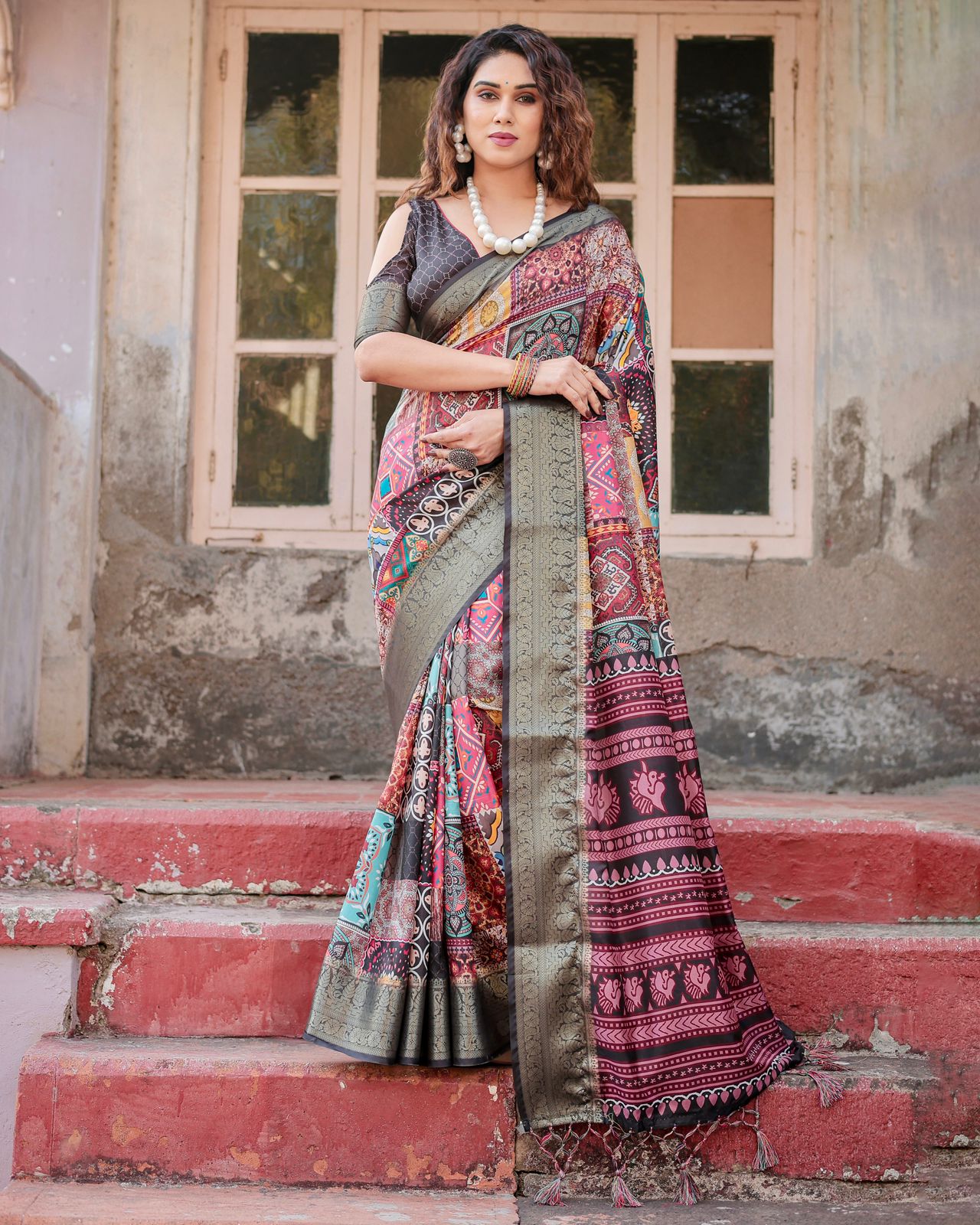
A plain blouse in raw silk, velvet, satin or matte crepe can make an ornate Banarasi saree look intentional rather than crowded. Match the blouse to a secondary colour in the border when possible; a blue saree may take a deep navy, ivory or antique-gold blouse, while maroon can work with wine, beige, black or muted rose.
A structured sleeveless blouse, square neckline or sculpted elbow-length sleeve gives a traditional saree a contemporary outline. A high-neck blouse is useful for a formal reception, but the neckline should leave enough visual space around a broad zari border and heavy earrings.
Drapes and accessories
The classic Nivi drape remains the most reliable choice because it shows the border and allows the pallu to be arranged neatly over the shoulder. Open-pallu draping highlights the zari surface, while a pleated pallu creates a sharper, more controlled look for photographs.
A slim belt over the waist can define a soft silk saree, but the belt should be plain when the border is elaborate. A single choker or long necklace, jhumkas, a small potli and metallic sandals are usually enough for a zari-rich saree. Mixing antique gold jewellery with bright yellow gold can make the finish look accidental, so select one dominant metal tone.
For a more relaxed interpretation, pair a lighter Banarasi saree with a crisp white shirt-style blouse, pearl studs and a low bun. A contemporary printed blouse can work with a saree carrying small butis, but a busy print should not compete with a dense jaal or elaborate pallu.
Party Wear Sarees is a useful reference point when styling Banarasi for receptions and evening gatherings, while Pink Georgette Sarees can offer ideas for lighter colour palettes and fluid drapes. A contrasting blouse is usually more effective than matching every shade in the saree.
Green Banarasi Soft Silk Saree with Floral Zari Borders shows how a floral border can support a modern blouse without losing its traditional identity. Maroon Banarasi Soft Silk Saree with Zari Border Online similarly demonstrates the value of a clearly defined border when the rest of the styling is deliberately minimal.
Banarasi Saree Guide: How Should You Buy and Care for One?
Buy a Banarasi saree by verifying fibre, weave description, dimensions, zari placement, transparency and care instructions before comparing discounts.
Checks before buying online
- Read the fibre composition: Confirm whether the saree is silk, soft silk, silk blend, viscose, georgette, organza or tissue. "Silk finish" doesn't necessarily mean 100% silk.
- Check the measurements: A saree commonly measures around 5.3 to 5.5 metres, with an additional blouse piece often measuring about 0.8 to 1 metre, but the listing should be treated as the final authority.
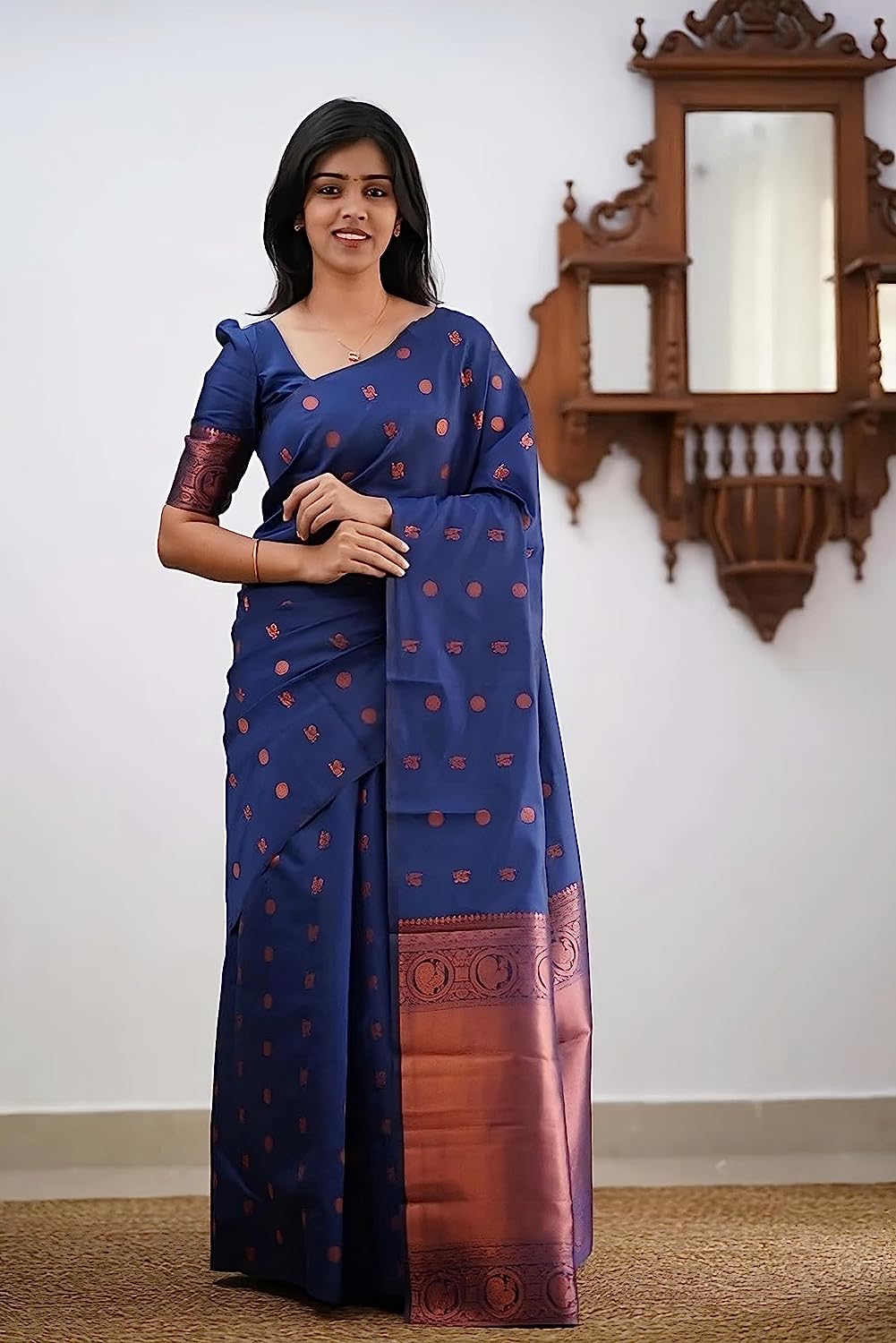
- Inspect close-up images: Look for the continuity of the border, the clarity of jacquard motifs, loose threads, uneven edges and whether the zari looks woven or surface-printed.
- Confirm colour conditions: Screens can shift maroon, red, green and blue tones. Product descriptions should indicate whether lighting may affect the displayed shade.
- Compare weight and occasion: A very light saree may be comfortable but less structured, while dense zari can be warmer and more expensive to maintain.
Care and storage
Professional dry cleaning is the safest routine for a silk Banarasi saree, especially when the fabric contains dense zari or has an elaborate finish. Avoid soaking, bleach, direct perfume spray and prolonged exposure to strong sunlight.
After wearing, air the saree in shade before storage so body moisture doesn't remain trapped in the folds. Refold the saree along different lines every few months, wrap it in breathable cotton or muslin, and store it away from damp walls and plastic bags. Keep zari away from rough jewellery, hooks and embroidered surfaces that can catch the threads.
Press Banarasi silk on the reverse side using low to medium heat and a pressing cloth. Do not place a hot iron directly on metallic zari because excessive heat can flatten the texture or alter the finish. A saree that's stored dry, folded gently and handled without friction can remain wearable for many years.
Common Questions About Choosing and Styling a Banarasi Saree
Which Banarasi silk type is easiest for a first-time wearer?
Soft silk Banarasi sarees are usually the easiest starting point because they have a gentler fall and are simpler to pleat than very stiff, heavily woven silk. Lightweight georgette can also be comfortable, but georgette may need extra pinning because it moves more easily.
Is every Banarasi saree made from pure silk?
No. Banarasi sarees may be made from Katan silk, soft silk, organza, tissue, georgette, viscose or blended fibres. Read the fibre composition and weave description rather than assuming that the word Banarasi means 100% silk.
Which Banarasi saree is suitable for a wedding?
Katan silk or a richer soft silk Banarasi saree with a defined zari border is suitable for a formal wedding. Maroon, red, deep green and royal blue create a traditional effect, while a simpler blouse prevents a heavily patterned saree from looking crowded.
How can I style a Banarasi saree in a modern way?
Use a plain structured blouse, a clean Nivi drape, restrained jewellery and one contemporary accessory such as a slim belt or sculpted blouse sleeve. Modern styling works best when the saree's zari and woven motifs remain the visual focus.
How should a Banarasi silk saree be washed and stored?
Professional dry cleaning is the safest option for Banarasi silk, particularly when zari is prominent. Air the saree in shade after wearing, store it in breathable cotton or muslin, refold it periodically and avoid direct heat, bleach and plastic storage.
What should I check before buying a Banarasi saree online?
Check the fibre composition, saree and blouse-piece measurements, close-up images of the zari and border, colour notes, care instructions and return terms. Product photographs alone cannot establish whether a saree is pure silk, blended or powerloom-made.