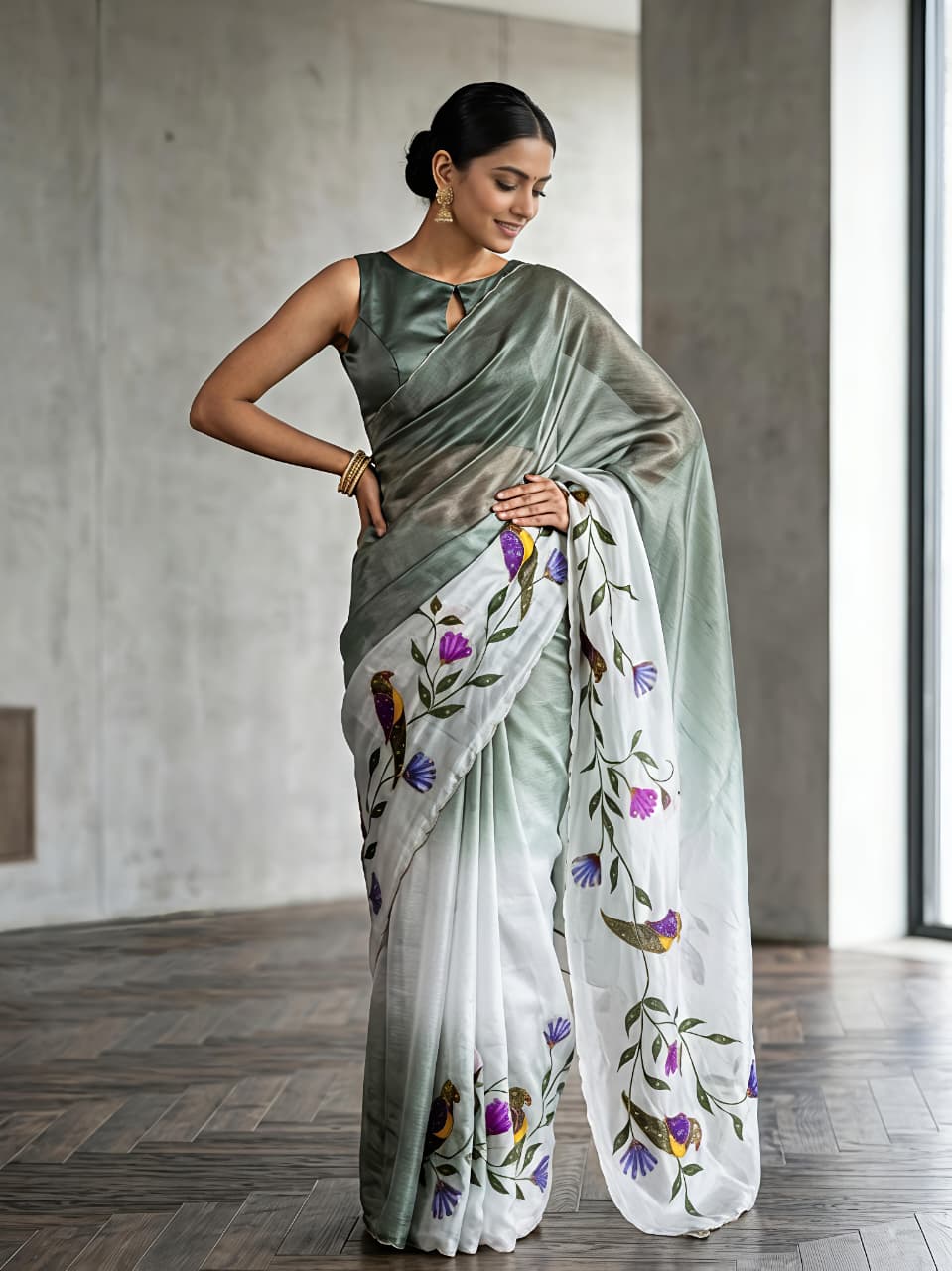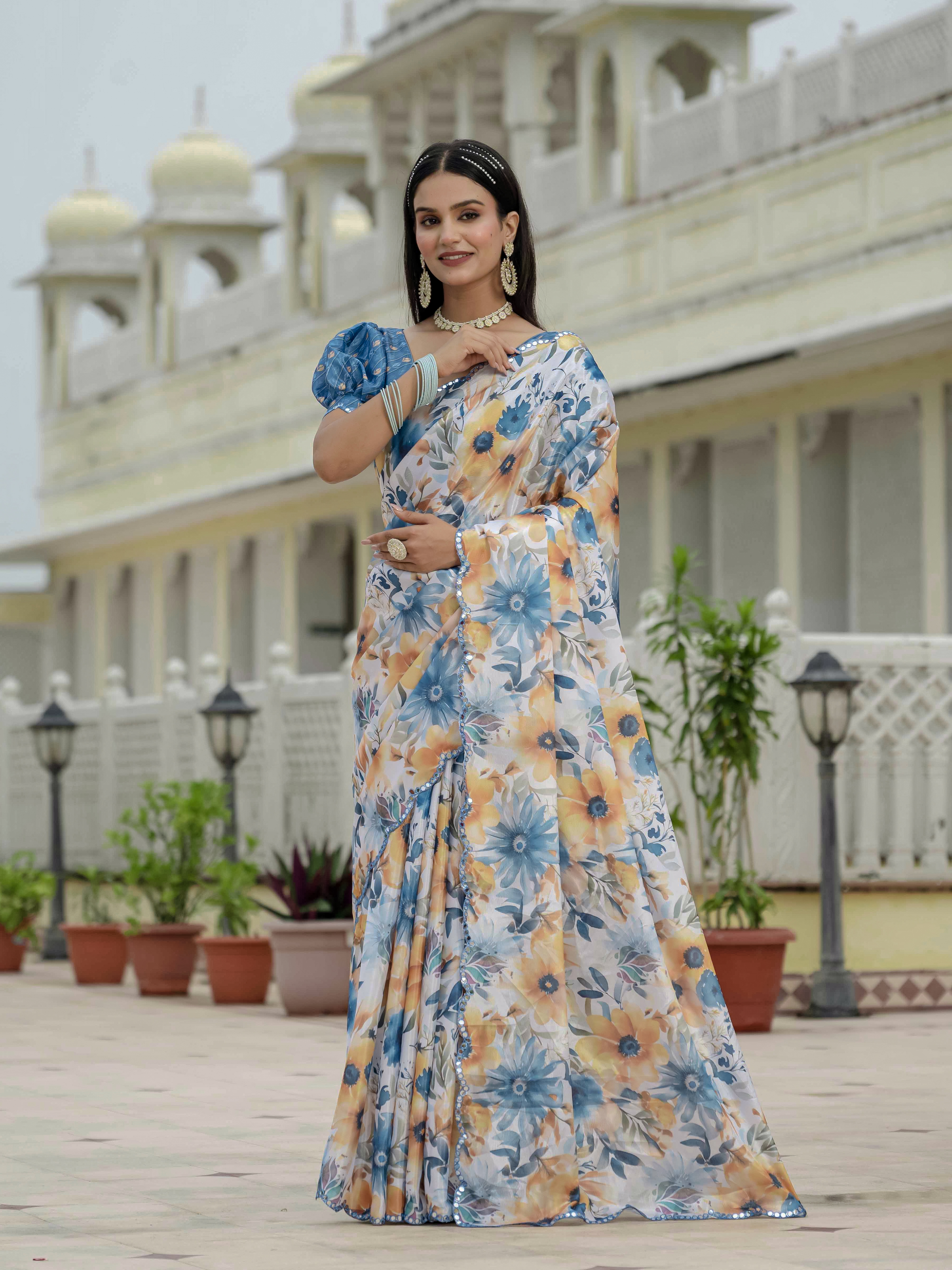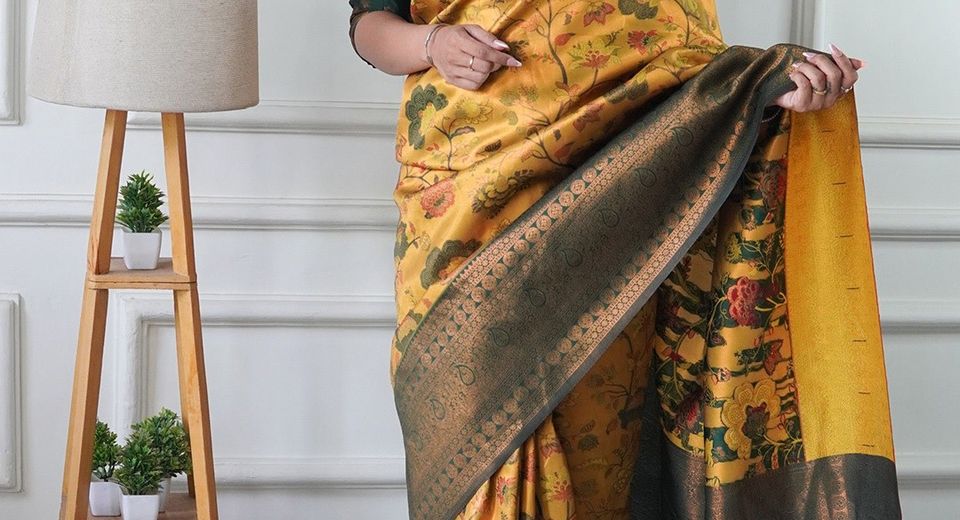
Assamese Wedding Sarees bring together the sculptural Mekhela Chador drape, handwoven silk, symbolic motifs and a colour language shaped by Assamese ceremony. The outfit isn't simply a saree worn in a regional style: a Mekhela Chador has a lower garment called the mekhela and an upper cloth called the chador, usually accompanied by a riha. Muga silk, Pat silk and Eri silk each create a different texture, weight and level of formality.
A wedding wardrobe becomes easier to plan when these distinctions are clear. A bride may reserve golden Muga silk for the main ceremony, choose red or white-and-red for a contemporary look, and use a lighter Pat silk or blended silk for the reception. Guests can borrow the same visual language through a traditional silk saree, a woven border and carefully chosen Assamese jewellery without copying the bride's full ensemble.
Assamese Wedding Sarees: What makes the traditional look distinctive?
Assamese Wedding Sarees are distinctive because the traditional silhouette depends on the Mekhela Chador's two-piece construction, Assamese weaving traditions and regionally meaningful motifs. The lower mekhela is pleated and wrapped around the waist, while the chador is arranged across the torso and shoulder in a clean, comparatively unbulky line.
In a conventional saree, one continuous length creates the lower drape, pleats and pallu. In a Mekhela Chador, the separate mekhela and chador allow the weaver to place borders and motifs with greater control. The riha, a narrower traditional cloth worn beneath or with the chador, can show at the upper body and adds another layer of cultural context.
The visual effect is often refined rather than heavily embellished. A strong woven border, a restrained field and a few recognisable motifs can communicate more regional identity than dense all-over sequins. Traditional Assamese textiles may feature flowers, birds, creepers, geometric forms and jaapi-inspired shapes, while red, ivory, gold and deep green remain popular wedding colours.
Assamese Wedding Sarees: How does a Mekhela Chador differ from a saree?
A Mekhela Chador differs from a saree because it uses a lower wrap and a separate upper drape instead of one continuous fabric length. The mekhela resembles a full, gently flared skirt with pleats gathered at the front, and the chador is folded over the shoulder and secured so that the border remains visible.
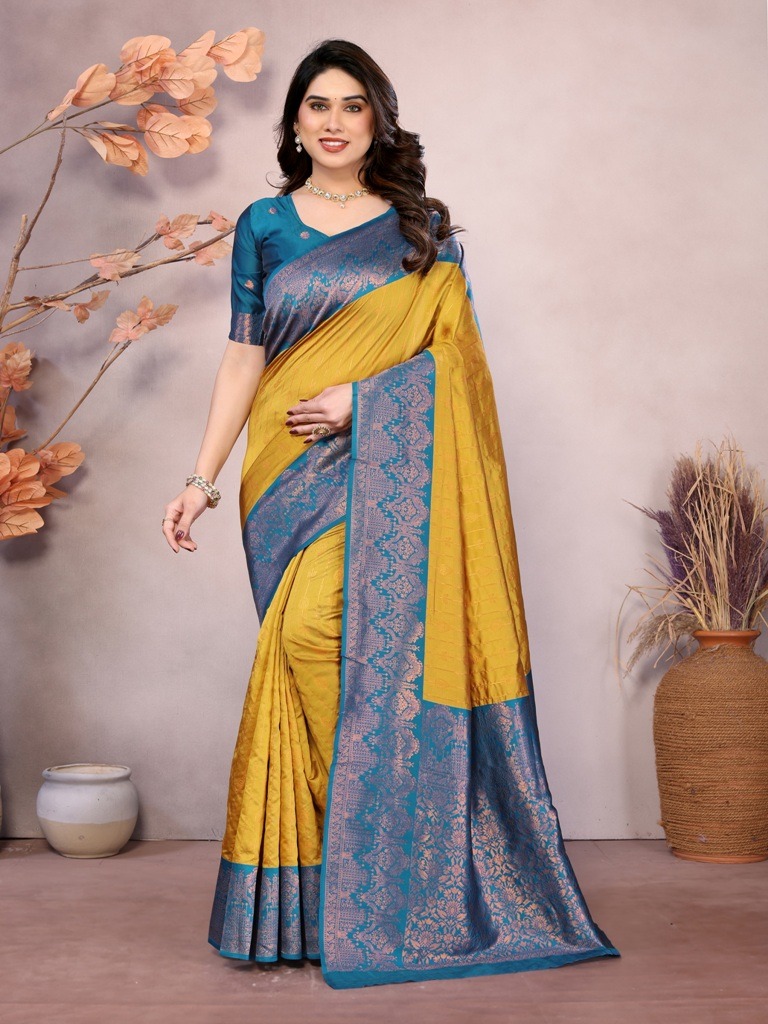
Assamese Wedding Sarees and the three essential components
The mekhela forms the foundation of the outfit. The garment is wrapped around the lower body, with the pleated section placed in front and the decorated border positioned near the hem. A well-made mekhela should sit securely at the waist without creating a thick knot under the chador.
The chador covers the upper body and shoulder. The chador may be worn from one shoulder across the front and back, or arranged in a more saree-like manner for a modern event outfit. The exact fold depends on the textile's stiffness, the border width and whether the wearer wants a formal or relaxed appearance.
The riha is a traditional Assamese cloth that may be worn as an inner upper wrap, a shoulder layer or a visible accent. A riha in contrasting red, cream or gold can give a bridal outfit more depth, but a simpler wedding-guest look may use only the mekhela and chador with a blouse.
Assamese Wedding Sarees and practical draping
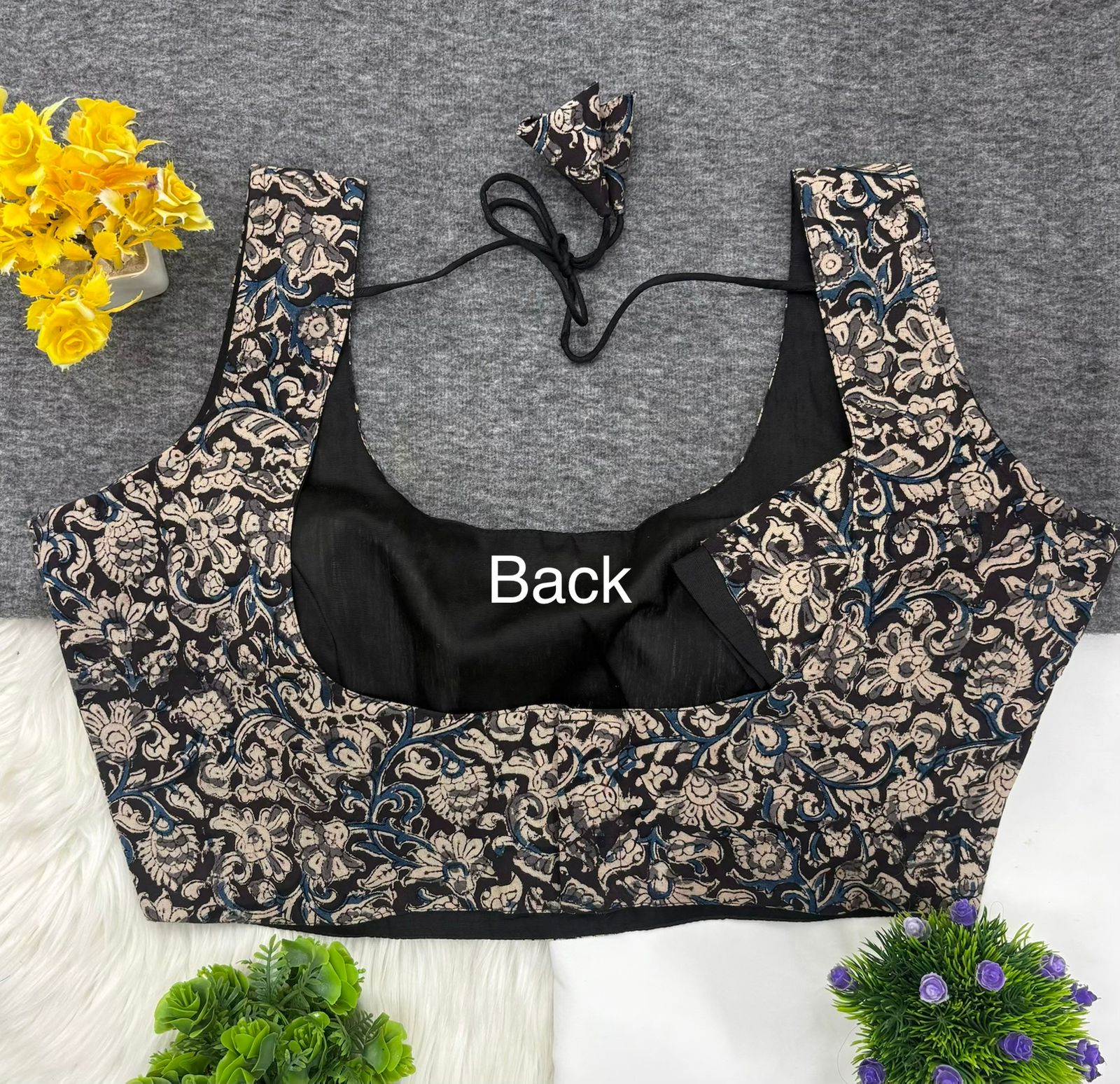
A Mekhela Chador needs blouse and petticoat planning different from a standard saree. The blouse can be fitted like a saree blouse, but its neckline, sleeve length and back detail should support the upper chador rather than compete with the border. A firm cotton or silk petticoat helps the mekhela hold its shape, especially when the fabric is smooth Muga silk.
Safety pins should be placed discreetly at the waist, shoulder and upper bust area. Too many pins can distort a handwoven border, while too few can allow the chador to slide during rituals. A trial drape at least one week before the wedding reveals whether the length, pleat depth and blouse fit work together.
Assamese Wedding Sarees: Which Assamese silks suit a wedding?
Muga silk, Pat silk and Eri silk are the principal Assamese silk choices, and each suits a different wedding requirement. Muga silk offers natural golden lustre, Pat silk gives a smooth pale sheen, and Eri silk provides a softer, warmer and more textured surface.
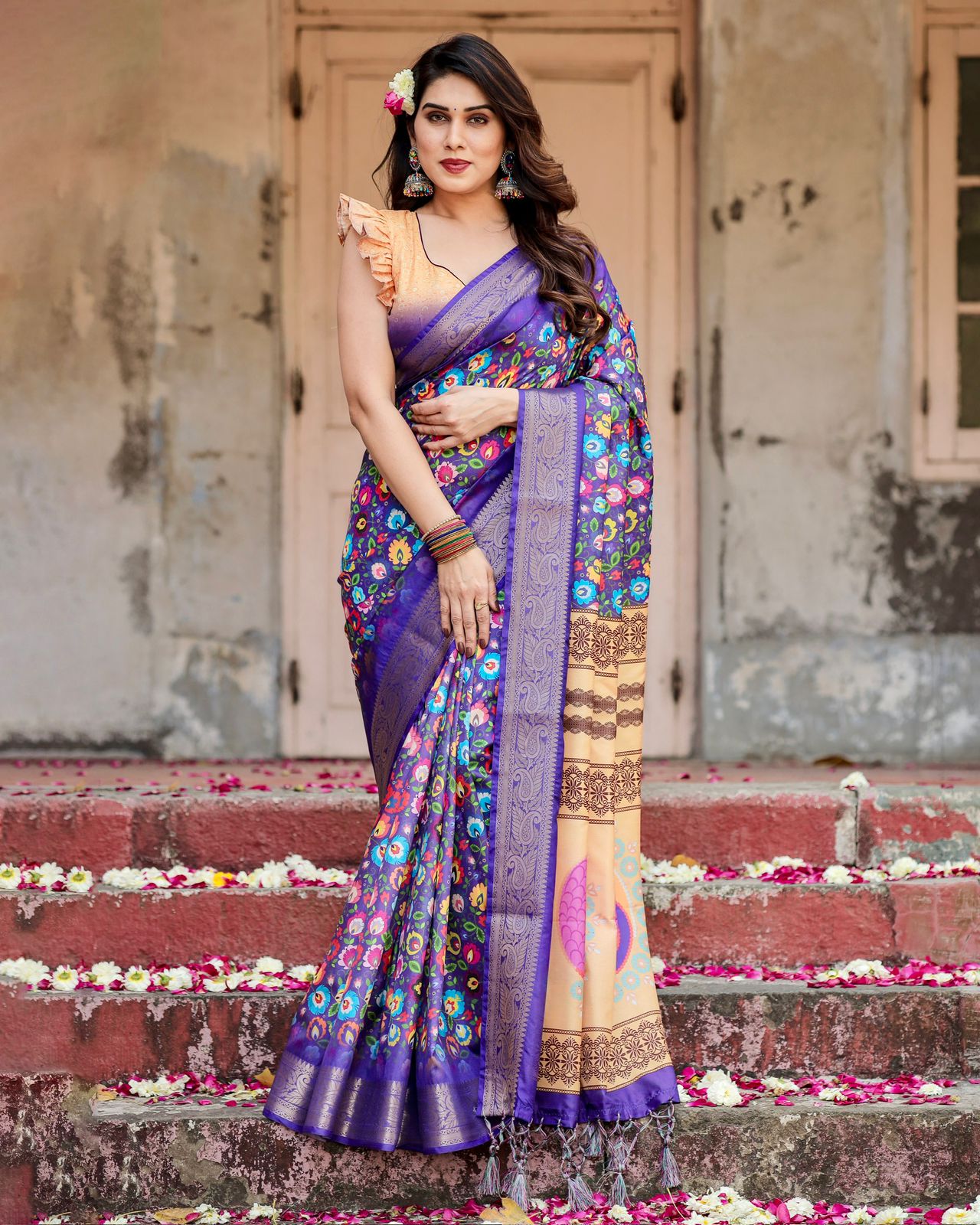
Assamese Wedding Sarees in Muga silk
Muga silk is prized for its naturally warm golden colour and exceptional durability. The golden tone develops character with use, which makes authentic Muga silk especially meaningful for a bride or close family member. Muga fabric can feel crisp at first and generally holds structured pleats well.
A genuine Muga silk garment is a considered investment rather than an impulse purchase. Buyers should check the fibre composition, weaving origin, border construction and care instructions instead of relying on the word "golden" in a product description. Synthetic fabric with a metallic finish can imitate the colour but won't have Muga silk's characteristic texture and longevity.
Assamese Wedding Sarees in Pat and Eri silk
Pat silk, also called Paat silk, is a smooth, lustrous silk traditionally associated with Assam. Pat silk works well for formal Mekhela Chador sets because the fabric catches light cleanly and supports precise folds without the heavier feel of brocade.
Ivory, cream, red and soft gold Pat silk can create a polished bridal appearance. A plain Pat silk base with a woven contrast border is often easier to repeat for later ceremonies than an extremely ornate design. The same principle applies to wedding guests who want a culturally grounded outfit that remains wearable after the event.
Eri silk has a soft, slightly wool-like hand and a matte texture compared with Muga and Pat silk. Eri silk can be comfortable for winter weddings, long ceremonies and people who prefer a less reflective fabric. Eri silk often appears in shawls, stoles and contemporary ethnic garments as well as traditional Assamese clothing.
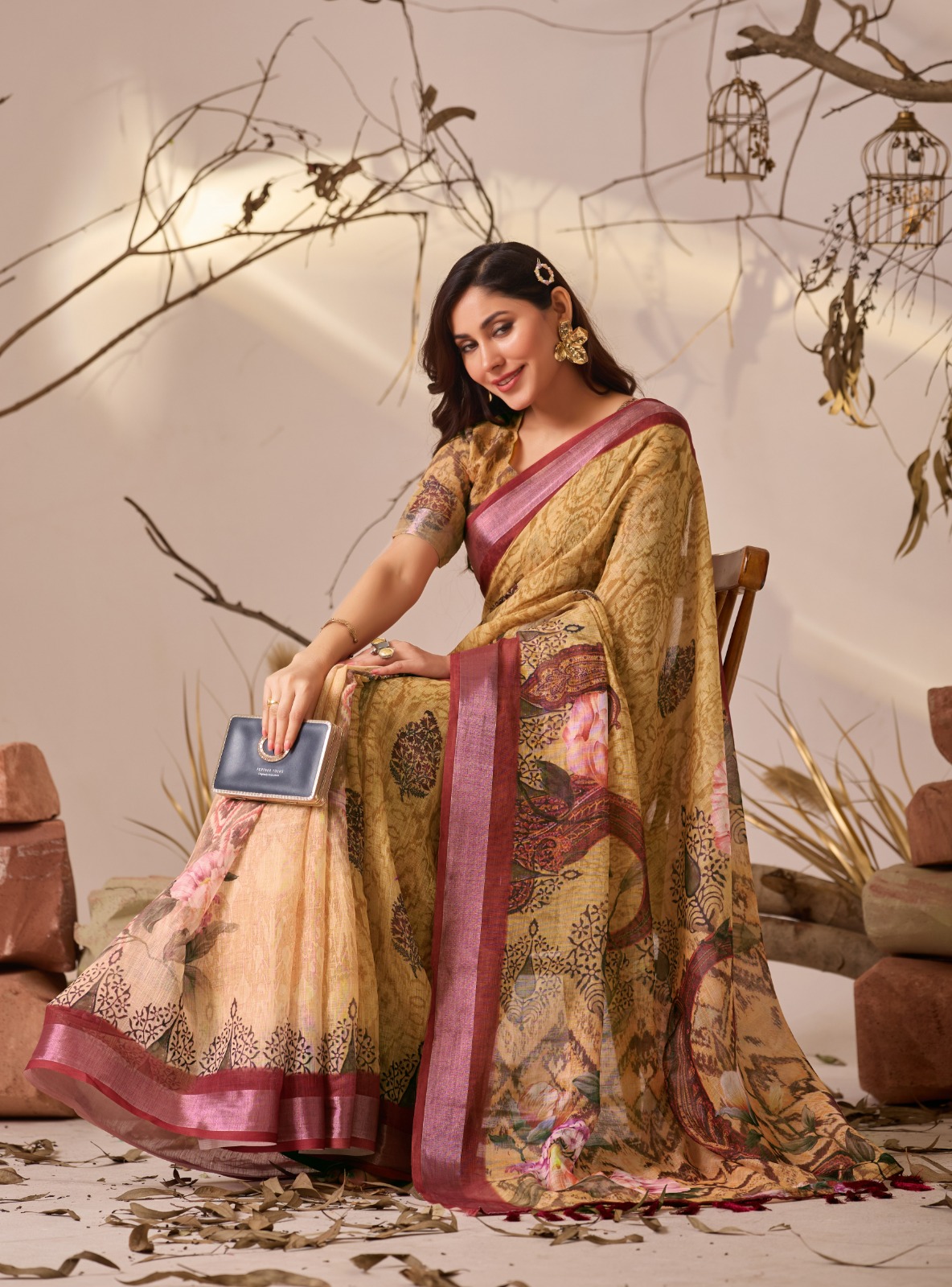
Commercial wedding sarees may also use Banarasi silk, georgette silk, dola silk or silk blends. These fabrics are not automatically Assamese textiles, but they can work for a regional-inspired outfit when the drape, colours and accessories are chosen respectfully. Teal Traditional Silk Saree with Copper Jacquard Border demonstrates how a strong woven border can carry much of the styling, even when the garment isn't a traditional Mekhela Chador.
Assamese Wedding Sarees: Which colours and motifs work best?
Red, white, ivory, gold, mustard and deep green are dependable Assamese wedding colours because they balance ritual symbolism with the natural warmth of silk. The best choice depends on the ceremony, the wearer's role and the amount of jewellery planned.
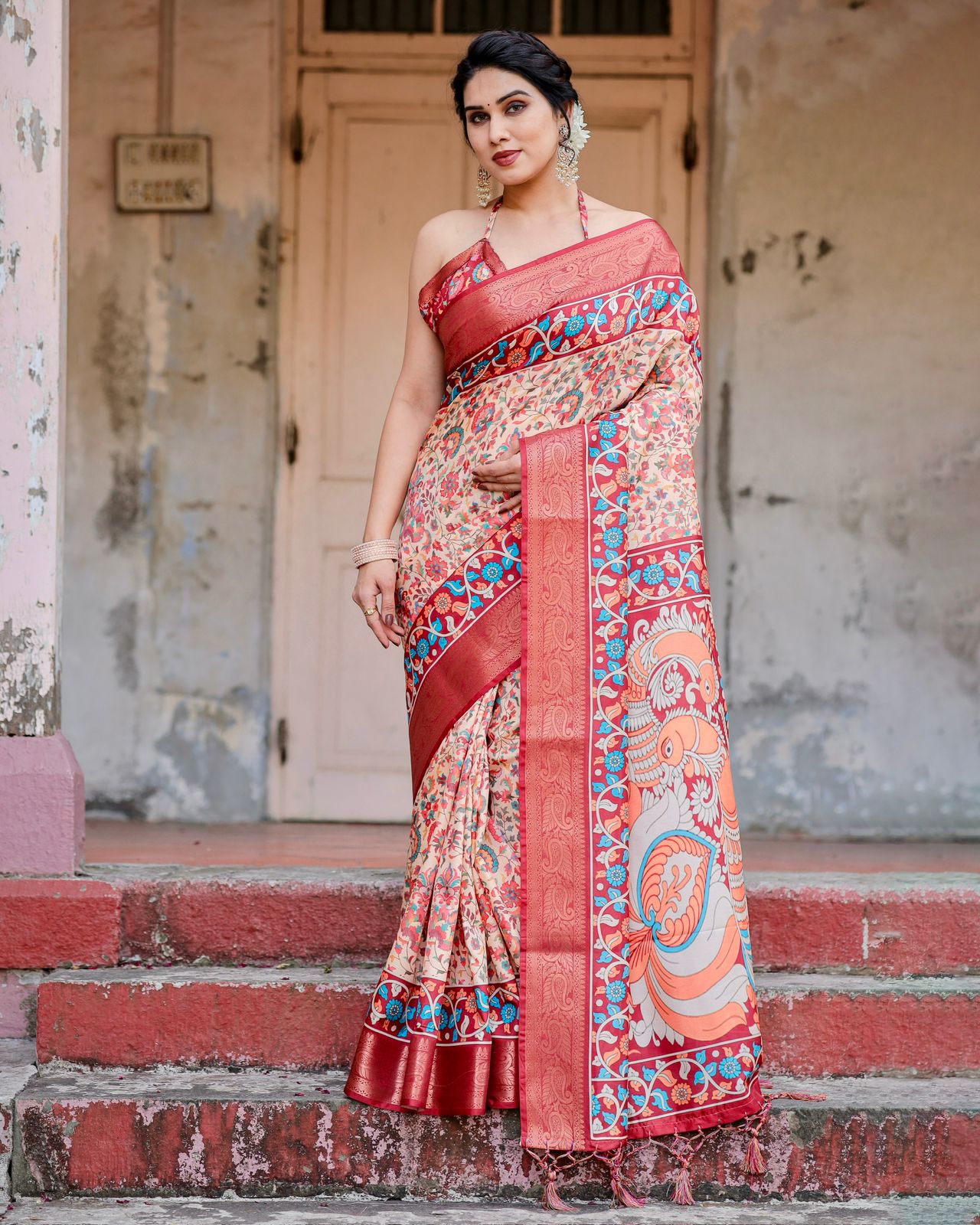
Red is widely associated with auspiciousness, celebration and bridal intensity. White and red together create a recognisable Assamese festive palette, particularly when the red appears in the border, riha or blouse. Gold and mustard echo Muga silk and work especially well with traditional gold jewellery, while teal and maroon provide depth for evening receptions.
Motifs can be more important than colour alone. A woven flower, bird, creeper or geometric border gives the outfit a regional vocabulary. Assamese textiles are also associated with motifs such as the jaapi, pepa, dhol and traditional floral forms, although their presence and interpretation vary by weaver and textile tradition.
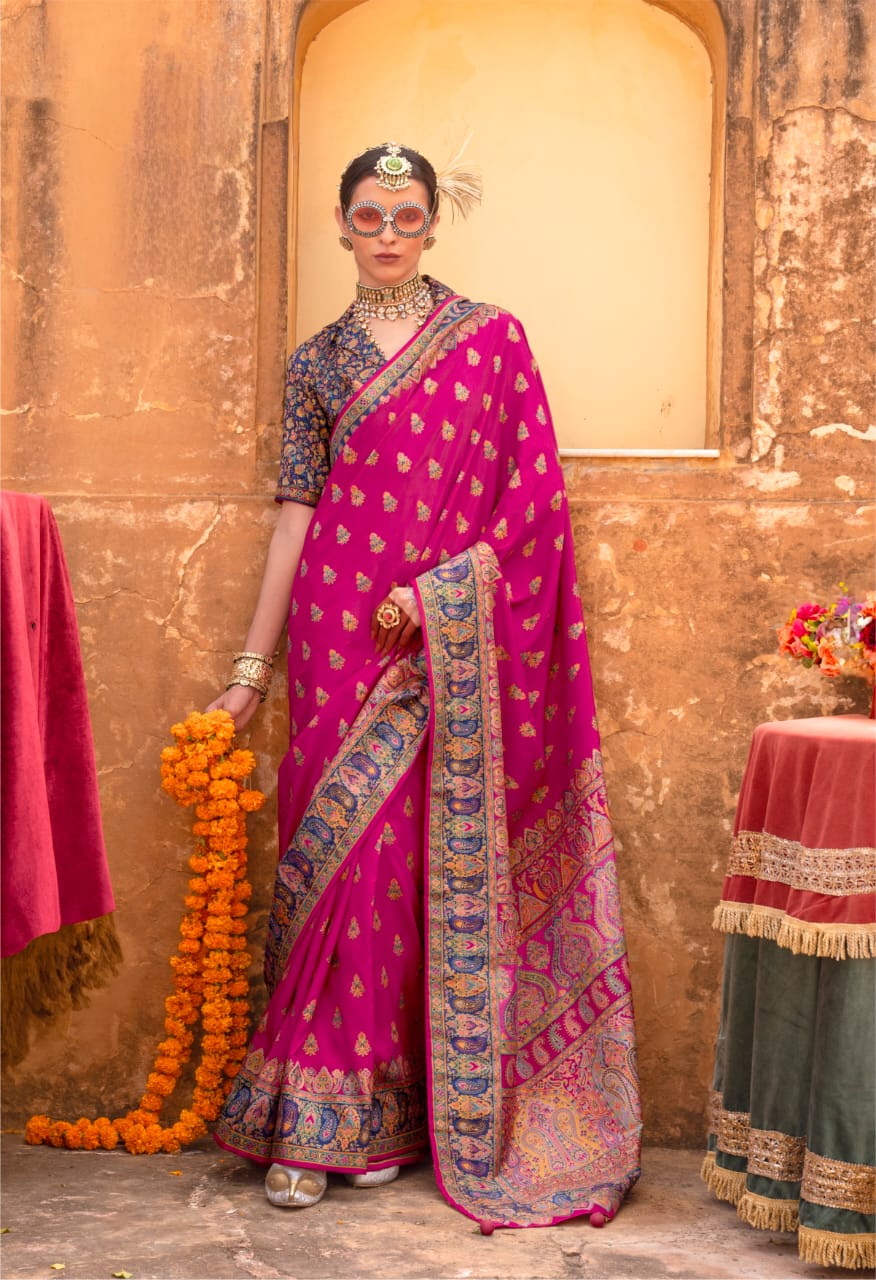
Heavy metallic work isn't essential for a wedding look. Mustard Teal Banarasi Soft Silk Zari Weave Saree uses contrast and zari to create ceremony-ready richness, while Maroon Banarasi Soft Silk Saree With Golden Zari Border gives a darker, evening-friendly combination. Both examples show why border scale matters: a broad zari border creates stronger visual weight than a narrow one and may need simpler jewellery.
For a softer daytime palette, Mustard Moss Georgette Silk Saree With Foil Work can demonstrate how muted mustard and restrained shine avoid overwhelming a daytime ceremony. A deeper festive red, such as the colour direction of Traditional Red Crush Georgette Silk Saree With Tassel Pallu, suits a reception or sangeet where movement and texture matter more than a strictly traditional weave.
Assamese Wedding Sarees: How should a bride style a Mekhela Chador?
A bride should style a Mekhela Chador by coordinating the blouse, riha, jewellery, hair and footwear around the textile's border and the ceremony's movement requirements. A structured silk outfit needs secure pleats, comfortable waist support and jewellery that frames the face without catching on the chador.
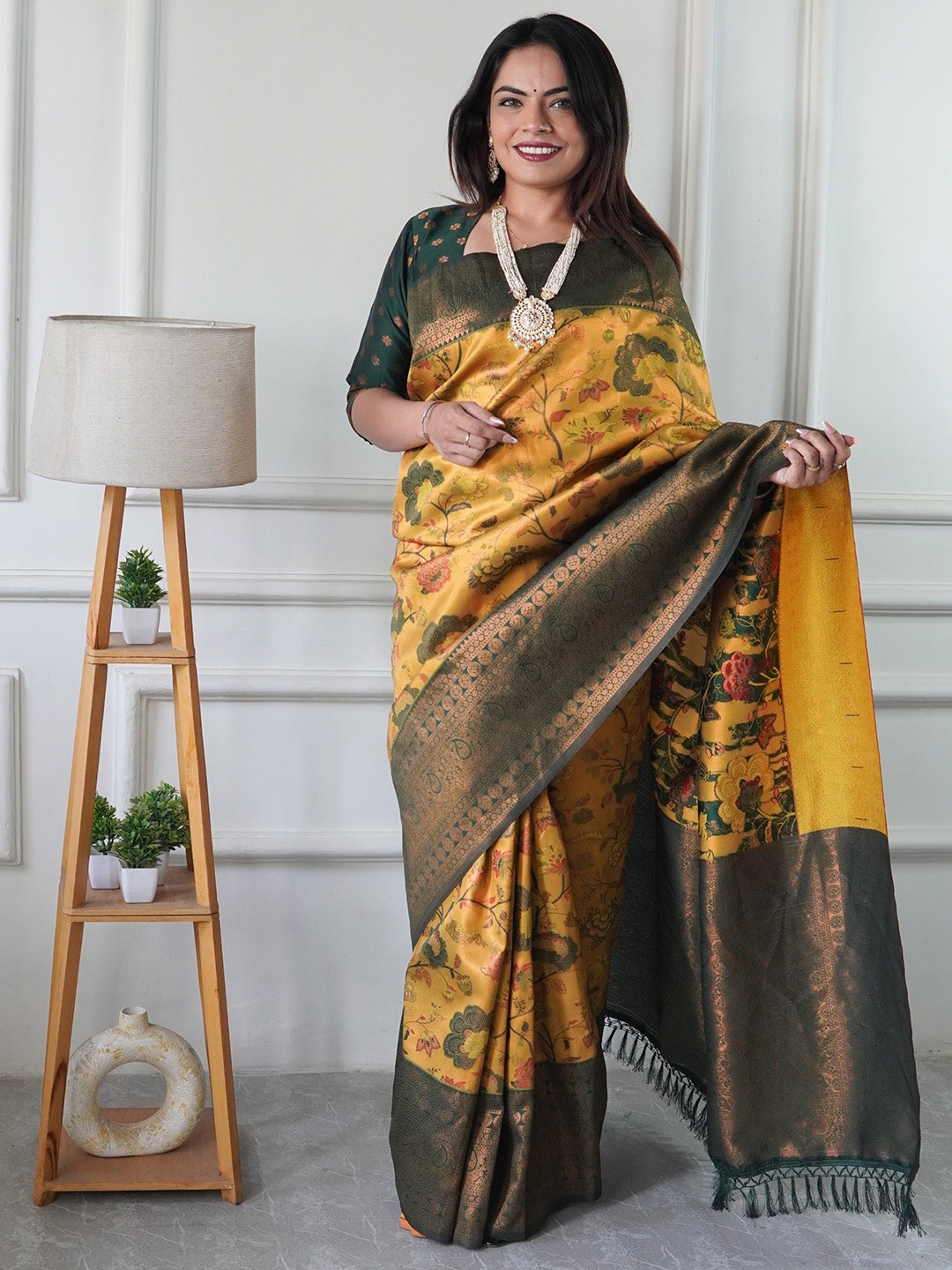
Assamese Wedding Sarees with blouse and riha coordination
A red blouse with a cream or golden Mekhela Chador creates a classic bridal contrast. A blouse matching the border produces a quieter, elongated line, while a contrasting blouse makes the riha more visible. High necklines and elbow-length sleeves suit formal ceremonies, whereas a square or sweetheart neckline can make a reception outfit feel more contemporary.
The riha should not be treated as an optional scarf when the intention is to present a strongly traditional Assamese look. A red riha beneath an ivory chador, or a gold-toned riha beneath a deep maroon chador, adds dimension at the neckline and shoulder. The riha can also provide modesty during rituals without requiring excessive pinning.
Assamese Wedding Sarees with jewellery and hair
Traditional Assamese jewellery often includes gold-toned pieces such as a gamkharu bracelet, thuria earrings, keru earrings, dugdugi pendants and a traditional necklace. The selection should match the neckline and fabric weight. One substantial necklace with earrings may look more composed than several competing necklaces over a detailed chador.
A low bun, braided bun or controlled braid keeps the shoulder line clear and makes the chador border easier to see. Fresh flowers, especially white flowers, can soften a gold-heavy ensemble. Hair accessories should be secured before the final drape because adjusting a hairstyle after pinning the chador can disturb the shoulder fold.
Assamese Wedding Sarees as contemporary alternatives
A guest who can't manage a two-piece drape can choose a traditional silk saree with Assamese-inspired colours and a handwoven-looking border. Royal Mustard Bloom Banarasi Silk Saree can suit a daytime celebration because mustard reads warm and festive without the intensity of bridal red. Teal Ethnic Dola Silk Saree With Elegant Jacquard Border brings a cooler alternative for an evening gathering.
Maroon Banarasi Soft Silk Saree with Golden Zari Border is another option for a formal evening appearance. The two maroon product names may look similar, so shoppers should verify the exact listing, border description and product details before ordering. Traditional Red Crush Georgette Silk Saree With Tassel Pallu can add movement for a sangeet, while the lighter surface of georgette may feel easier to wear during dancing.
Assamese Wedding Sarees: How can you choose and care for one?
Choose Assamese Wedding Sarees by checking textile composition, drape structure, border placement, measurements, occasion, climate and care requirements before comparing colour or price. A beautiful border can't compensate for a garment that's too short, too heavy or difficult to secure.
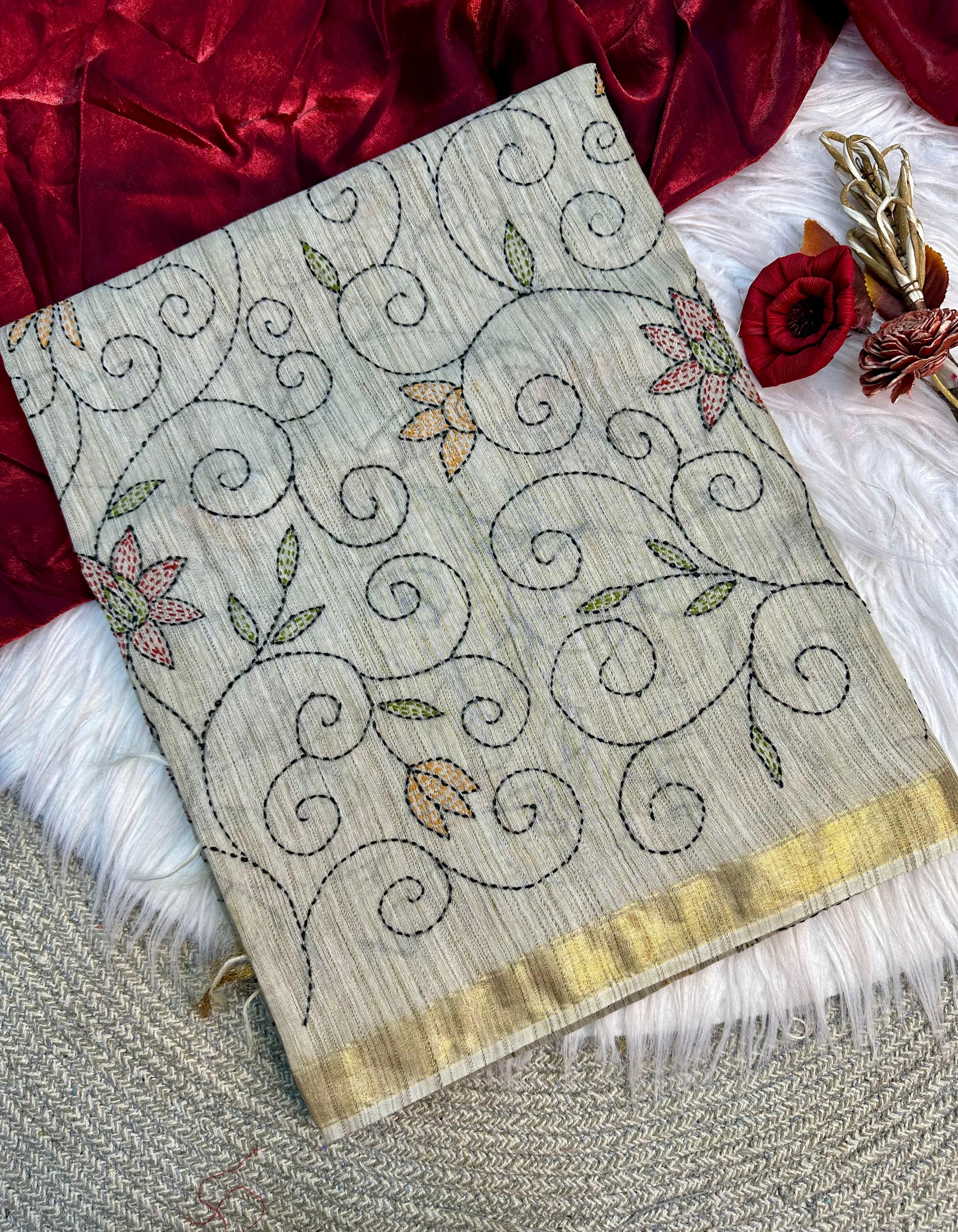
- Check the fibre: Confirm whether the garment contains Muga silk, Pat silk, Eri silk, Banarasi silk, georgette silk or a blend. "Silk finish" doesn't necessarily mean natural silk.
- Measure before ordering: Check the total length, blouse piece, border width and fall requirement. A Mekhela Chador set and a standard saree use different measurements.
- Match weight to weather: Crisp Muga silk and heavy zari can feel warm in humid weather. Lighter Pat silk, georgette silk or a silk blend may be more practical for a long summer ceremony.
- Inspect the border: Look for clear photographs of the zari, jacquard or woven edge. A broad border may require fewer accessories and more careful pleating.
- Plan the full cost: Include blouse stitching, alterations, lining, petticoat, fall, draping and jewellery when setting a budget. Collections such as Silk Sarees Under 3000 With Discount can help with price comparisons, while Red Banarasi Silk Sarees for Weddings Under 1100 may suit a guest seeking a lower-cost festive option.
Colour-based collections can also help narrow a search without replacing fabric checks. Pink Georgette Sarees may work for a reception guest who wants a lighter, contemporary palette, while Party Wear Sarees can offer embellished alternatives for a sangeet. Gray Color Sarees Under 1000 may be useful for a muted event look, but gray should be balanced with warm gold jewellery or a red accent if the outfit needs more ceremonial energy.
Store silk sarees and Mekhela Chador sets in a clean cotton or muslin cover away from direct sunlight. Refold the garment every few months so permanent creases don't form along the same zari line. Keep zari away from perfume, deodorant, damp walls and untreated wood, and allow perspiration to dry before storage.
Professional dry cleaning is safer for Muga silk, Pat silk, zari and foil work than home washing. Do not wring silk, soak metallic borders or iron directly over zari. If pressing is necessary, use low heat with a cotton cloth between the iron and the fabric, and test an inconspicuous area first.
The most convincing wedding outfit is one that respects the garment's textile, construction and cultural origin while remaining comfortable enough for real rituals. A bride choosing Muga silk, a guest wearing a bordered silk saree and a family member selecting a lighter Eri silk layer can all participate in the visual richness of Assamese dressing without treating tradition as a costume.
Questions About Assamese Wedding Sarees and Mekhela Chador Styling
What is the traditional Assamese bridal outfit?
The traditional Assamese bridal outfit is usually a Mekhela Chador, often made from Muga silk or Pat silk, and worn with a riha, blouse and Assamese gold jewellery. Red, ivory, cream and golden tones are common, although regional and family customs vary.
Is a Mekhela Chador the same as an Assamese saree?
A Mekhela Chador is not constructed like a standard saree because it has a separate lower mekhela and upper chador. Many people use "Assamese saree" informally for the complete outfit, but Mekhela Chador is the more precise name for the traditional two-piece drape.
Which silk is best for an Assamese wedding?
Muga silk is a strong choice for a formal bridal ceremony because of its natural golden lustre and durability. Pat silk is smoother and lighter-looking, while Eri silk is softer and more textured, making each option suitable for different weather, comfort and styling needs.
Can I wear a regular silk saree to an Assamese wedding?
You can wear a regular silk saree to an Assamese wedding, especially as a guest, if you choose a respectful colour palette and pair it with understated traditional jewellery. A woven border, red or gold accent and clean drape can create a regionally appropriate appearance without imitating a bridal Mekhela Chador.
How do I keep a silk Mekhela Chador safe after the wedding?
Store a silk Mekhela Chador in a breathable cotton or muslin cover away from sunlight, moisture and perfume. Refold it periodically, avoid home washing and use professional dry cleaning for Muga silk, Pat silk, zari or foil work.
What jewellery goes with Assamese Wedding Sarees?
Gold-toned Assamese jewellery such as gamkharu bracelets, thuria or keru earrings, dugdugi pendants and traditional necklaces pairs naturally with Assamese Wedding Sarees. Choose the number and size of pieces according to the border width and neckline so the jewellery complements rather than hides the textile.