

An Assamese Mekhela Chador: Traditional Dress, Fabrics & Styling Guide begins with an useful distinction: the Mekhela Chador is a two-piece Assamese ensemble, not a sari with an unusually arranged pallu. The lower garment is the mekhela, a broad cylindrical skirt made by pleating and tucking fabric at the waist, while the chador is the long upper cloth wrapped across the torso and shoulder. Together, the pieces reflect Assam's weaving traditions, regional motifs and practical knowledge of textiles.
The outfit appears at Bihu celebrations, Assamese weddings, cultural ceremonies and religious occasions, but its fabric and ornament determine how formal it feels. Assam silk gives a wedding-ready finish, cotton suits daytime festivities, and lighter blends can make the drape easier for first-time wearers. Understanding the construction helps you choose, style and care for the garment with greater accuracy.
Assamese Mekhela Chador: Traditional Dress, Fabrics & Styling Guide to its distinctive structure
The Assamese Mekhela Chador is distinctive because it combines a separately constructed lower wrap with a long upper cloth, usually finished with a woven border and regional motifs. The mekhela generally has a shaped, gathered appearance at the waist, while the chador crosses the front and rests over one shoulder.
A traditional set normally includes two coordinated lengths rather than a stitched blouse-and-skirt combination. The blouse is worn underneath the chador and may be made from matching silk, contrasting fabric or a material selected for comfort. A fitted blouse provides support, but the visible identity of the ensemble comes from the mekhela and chador's weave, border and drape.
The lower piece isn't tied exactly like a sarong. The wearer gathers the fabric into small or medium pleats, positions the pleated section at the front or slightly to one side, and secures the waist with a firm tuck. The chador is then arranged so its border remains visible without making the upper body look bulky.
Assamese textile vocabulary also matters. Assam silk may refer to several silk traditions, including Muga silk, Eri silk and Pat silk. Muga silk is naturally golden and develops a deeper sheen with age; Eri silk has a softer, often slightly textured hand; and Pat silk is smooth, lustrous and commonly used for formal woven garments. A seller describing a piece simply as Assam silk should ideally specify the exact fibre and weave.
Assamese Mekhela Chador: Traditional Dress, Fabrics & Styling Guide to Assam silk choices
Silk, cotton and silk-cotton blends are the main fabric choices for a Mekhela Chador, with each option affecting comfort, shine, weight and occasion suitability.
Which Assam silk suits a formal Mekhela Chador?
Muga silk is the most recognisable luxury choice for an Assamese ceremonial outfit because its natural gold tone and strong fibre create a distinctive, heirloom-like appearance. Muga silk can feel firmer than lightweight fashion silk, and its structured drape helps the border sit neatly. Pat silk has a smoother surface and brighter lustre, making it suitable for elaborate wedding sets and formal receptions.
High-quality silk should not feel excessively slippery or papery. Examine the reverse side for a consistent weave, check whether the border is securely integrated, and ask whether the textile has been handwoven or powerloom-produced. Handwoven fabric may show tiny variations in texture; those variations are not automatically defects.
When should you choose Eri silk or Assam cotton?
Eri silk is valued for its soft, warm handle and matte-to-subtle sheen. Eri silk works well for people who prefer a less glossy appearance or need a comfortable outfit for several hours. Assam cotton is breathable and practical for daytime Bihu events, summer ceremonies and informal cultural programmes.
Cotton Mekhela Chador sets can crease more quickly than silk, so light starching and careful folding may be useful. Cotton also shows woven motifs clearly, especially when the base is ivory, cream, red, black or natural beige. Silk-cotton blends offer an accessible middle ground: they retain some sheen while remaining less demanding than pure silk.
How should fabric weight be assessed?
A good fabric should hold the waist pleats without becoming stiff and should allow the chador to pass over the shoulder without sliding constantly. Measure the full length before buying, because a very short chador can force repeated adjustments and a very heavy one can pull on the blouse. A medium-weight fabric is often easiest for beginners.
Chanderi isn't a traditional Assamese silk category, but Chanderi silk and Chanderi cotton can provide a light, translucent alternative for coordinated ethnic dressing. Mauve Embroidered Chanderi Silk Kurti Pant Dupatta and Elegant Mustard Chanderi Cotton Kurta Set with Embroidery demonstrate how airy Chanderi texture can support Assamese-inspired colour planning without being mistaken for a traditional Mekhela Chador.
Assamese Mekhela Chador: Traditional Dress, Fabrics & Styling Guide to motifs and colour
Assamese motifs often draw from local flora, fauna, tools and geometric forms, with the jaapi, gamosa-inspired patterns, birds, flowers and stylised vines appearing frequently in regional textile design. The exact meaning varies by weaver, community and garment, so a motif should not be assigned a fixed symbolism without reliable regional context.

The jaapi, a traditional conical Assamese hat, is one of the most recognisable visual references in Assam. Woven border designs may also echo the red-and-white identity associated with the gamosa, although a Mekhela Chador need not reproduce a gamosa literally. Peacock, floral and geometric forms are popular because they translate well into borders and repeated woven panels.
Red and white remain important colours in Assamese ceremonial dressing, but a traditional palette is broader than those two shades. Ivory, cream, black, gold, green, deep blue, pink and mustard all appear in contemporary and historic textile work. A mustard base with a red or black border can feel festive without excessive surface decoration, while cream with gold zari creates a quieter formal look.
Border width changes the visual balance of the ensemble. A broad border draws attention to the hem and shoulder line, while a narrow border creates a lighter, more understated finish. If the fabric already contains dense motifs, choose a simpler blouse and restrained jewellery so the woven design remains legible.
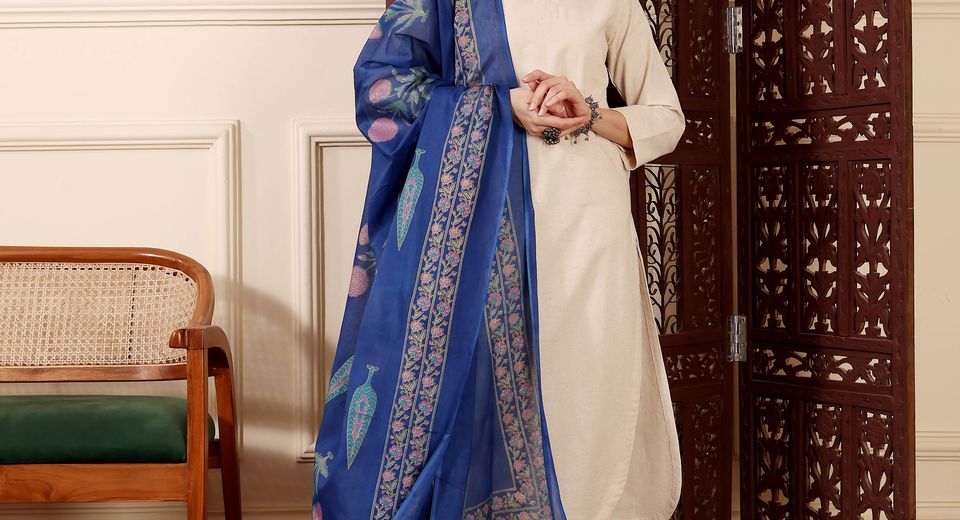
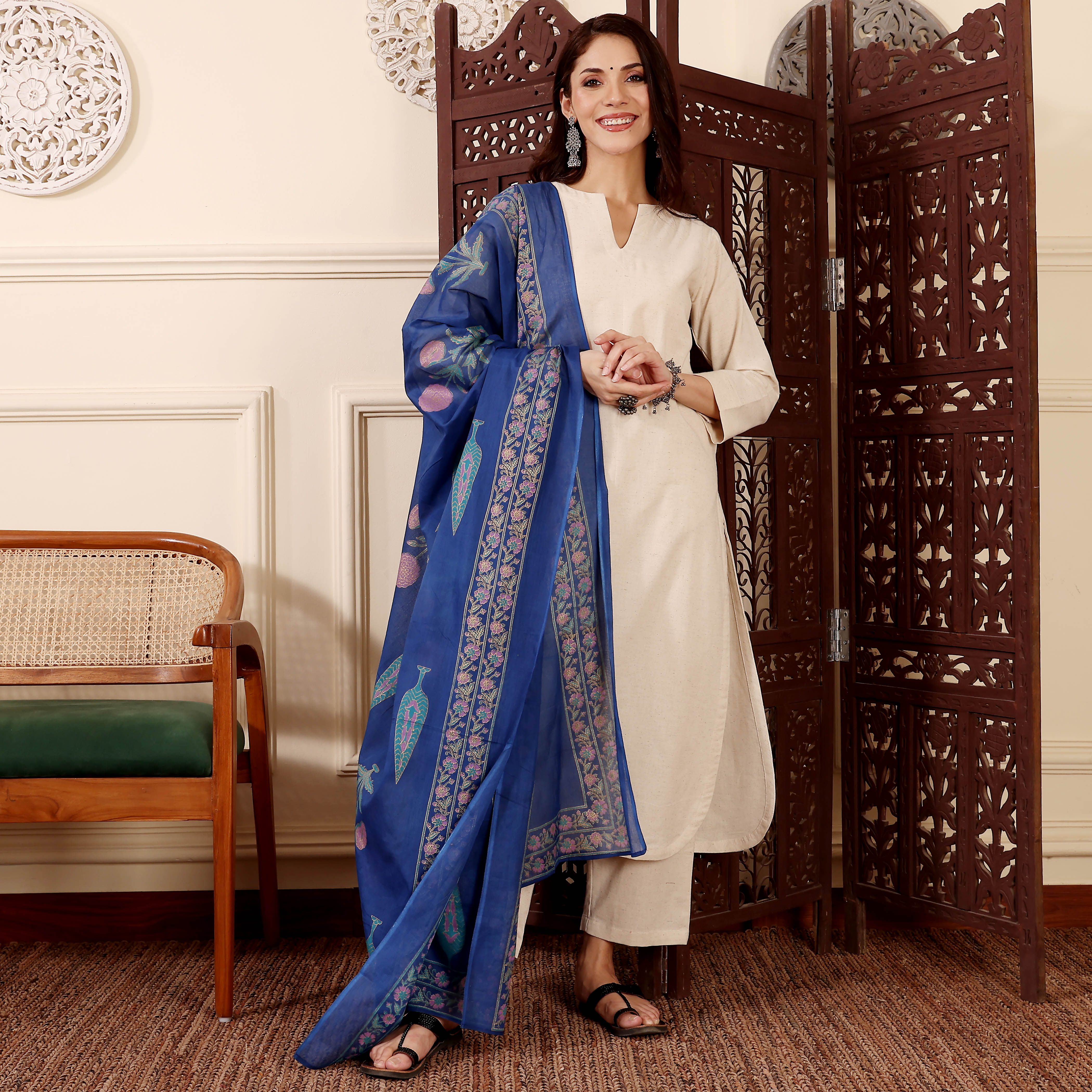
An useful contemporary colour reference is Beige Kurta Set with Blue Chanderi Dupatta for Women, where a neutral base is balanced by a cool blue accent. The combination isn't a traditional Mekhela Chador, but the same principle can guide a beige mekhela with a blue-bordered chador or a cream blouse with indigo accessories.
Assamese Mekhela Chador: Traditional Dress, Fabrics & Styling Guide for draping
You drape an Assamese Mekhela Chador by securing the mekhela first, forming controlled waist pleats, and then wrapping the chador across the body with the decorative border visible.
- Prepare the base layer. Wear a fitted blouse and a comfortable petticoat or underskirt if the fabric is light or slippery. The base layer should sit securely at the waist without creating a visible ridge.
- Position the mekhela. Wrap the lower piece around the waist and bring the ends together according to the garment's construction. Keep the hem level with the floor; a gap of approximately 1 to 2 centimetres above the floor usually prevents dragging while walking.
- Create front pleats. Gather the fabric into pleats of roughly 5 to 8 centimetres each. Keep the pleats even, smooth them downward, and tuck them firmly into the waist. A concealed safety pin can help during a long event.
- Check the side seam and fall. Walk a few steps before adding the chador. The lower garment should not twist, and the border should remain horizontal rather than rising sharply at one side.
- Arrange the chador. Drape the long cloth across the front, bring it around the back, and place the remaining length over the shoulder. The exact wrapping direction differs by household and styling preference, so comfort and border visibility are practical priorities.
- Secure the shoulder. Use one concealed pin at the blouse shoulder and another near the waist if needed. Avoid pinning through a delicate zari section because repeated punctures can weaken metallic threads.
Practise the full drape once before the event and photograph the front, side and back views. A trial fitting reveals whether the chador length, blouse neckline and border placement work together. A tailor can also add discreet hooks or waist ties if the set requires more security.
Assamese Mekhela Chador: Traditional Dress, Fabrics & Styling Guide for weddings and Bihu
An Assamese Mekhela Chador becomes occasion-appropriate through fabric, border scale, blouse design and jewellery rather than through heavy embellishment alone.
What works for weddings and receptions?
Muga silk, Pat silk or a rich Assam silk weave suits a wedding ceremony or formal reception. A blouse with elbow-length sleeves, a modest square or round neckline and woven border detailing creates a balanced silhouette. Gold earrings, a traditional gamusa-inspired accessory or a restrained Assamese necklace can complement the weave without competing with it.
Use zari selectively. A gold zari border looks refined when the textile already has a strong motif, while dense sequins may obscure the handloom character. A structured bun, centre-parted hair or a braid decorated with flowers keeps the shoulder line clear and helps the chador remain in place.
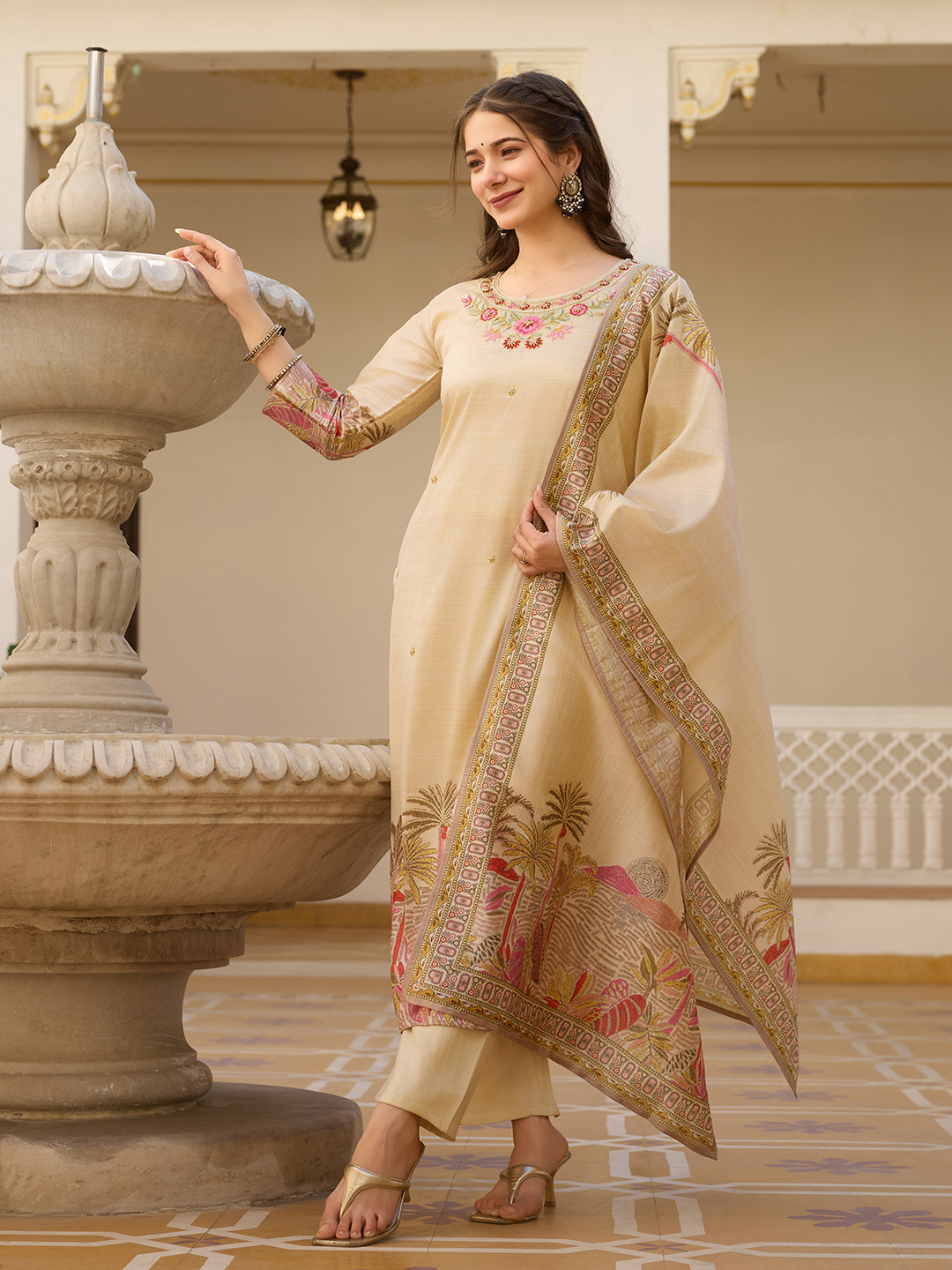
Cream Assam Silk Salwar Suit With Bead Embroidery offers an useful styling comparison for formal dressing. Bead embroidery creates a different surface from woven motifs, so an Assamese ensemble with a detailed border should usually be paired with quieter jewellery and a less embellished blouse.
What works for Bihu and daytime celebrations?
Light Assam cotton, Eri silk or a breathable silk-cotton blend is more comfortable for Bihu gatherings and warm-weather events. Red-and-white combinations are culturally recognisable, but mustard, ivory, green and blue can create an equally festive appearance when paired with a woven border.
Choose flat sandals or low block heels if the celebration involves standing, walking or dancing. Small earrings, glass bangles and a compact shoulder bag are usually more practical than long accessories that catch on the chador.
How can the silhouette feel contemporary?
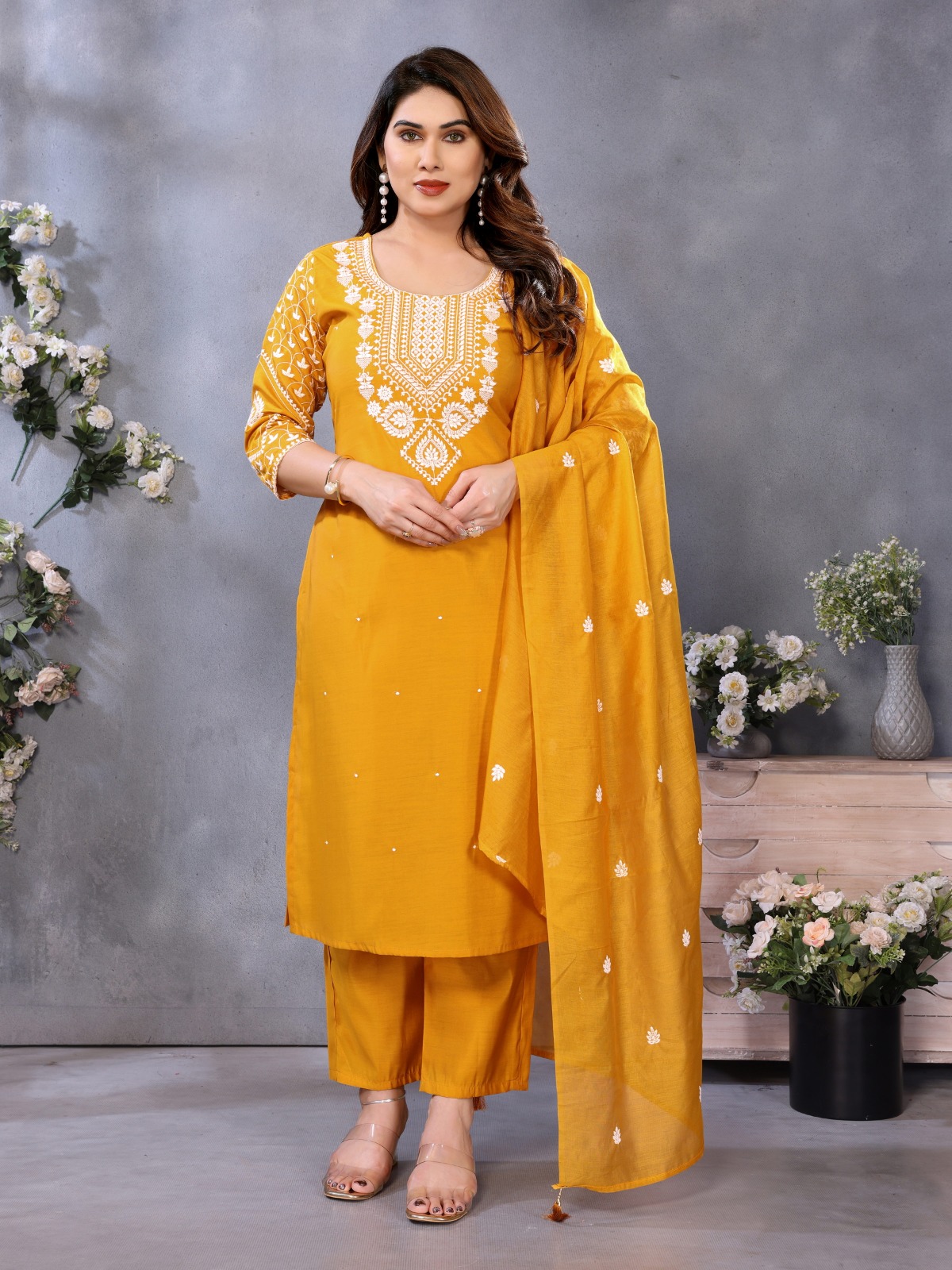
A modern interpretation can retain the two-piece idea while using a simpler blouse, a narrow border and minimal jewellery. Mustard Viscose Chanderi Kurta Set with Sequence Embroidery and Mustard Chanderi Embroidered Kurta Pant Dupatta Set show how a mustard palette can feel current through clean coordination, although neither garment should be described as a traditional Mekhela Chador.
A teal accent can also modernise a neutral Assamese-inspired outfit. Teal Ethnic Print Chinon Saree with Mirror Border illustrates the visual effect of pairing a saturated jewel tone with a decorative border. For a Mekhela Chador, teal works especially well with cream, ivory, antique gold or muted mustard.
Assamese Mekhela Chador: Traditional Dress, Fabrics & Styling Guide for contemporary wardrobes
A current wardrobe can include an Assamese Mekhela Chador without reducing the garment to a costume by respecting its two-piece construction, textile identity and regional context. The most effective styling changes are usually measured: a simpler blouse, a lighter border, practical footwear or one contemporary accessory.
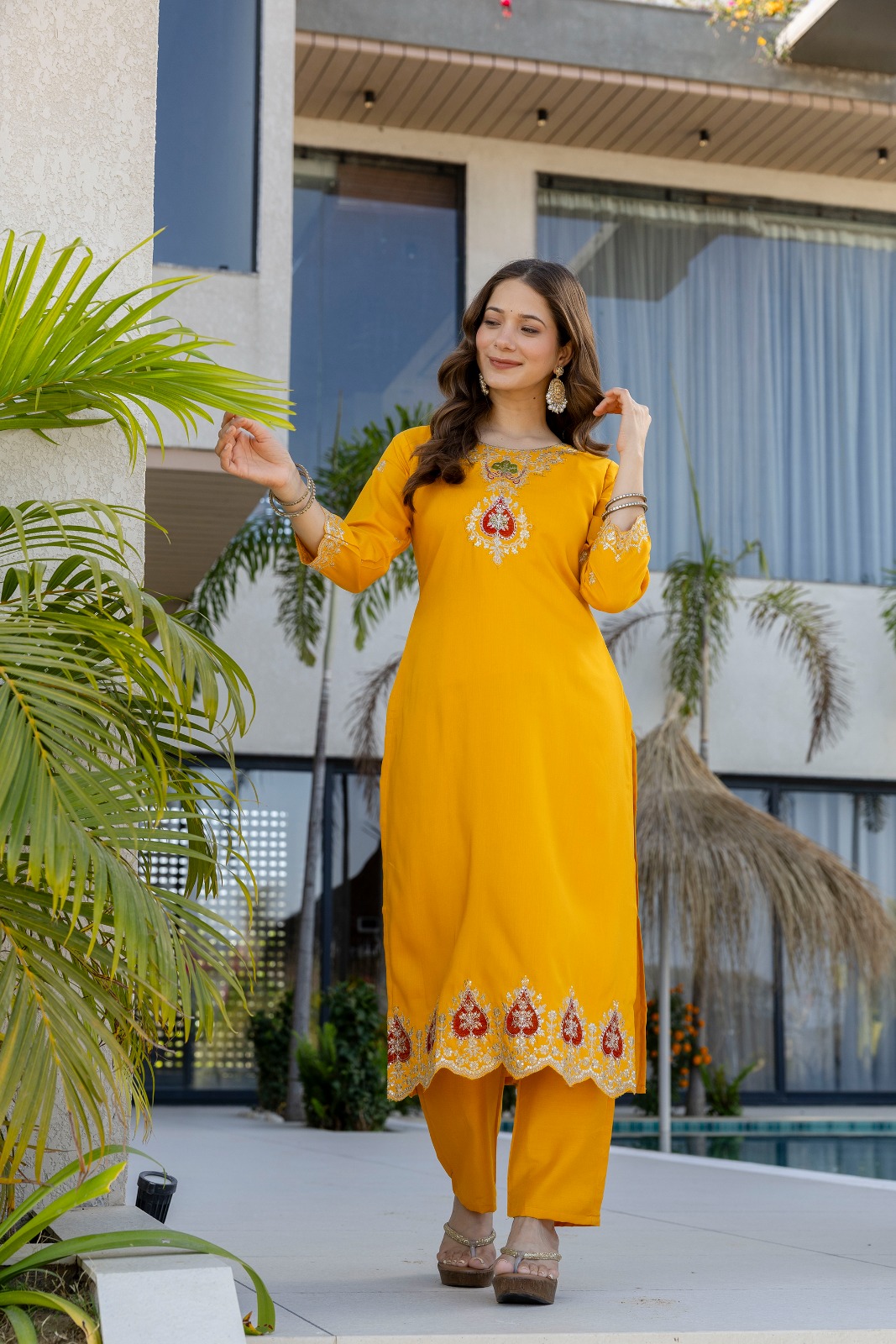
Blouse fit deserves particular attention. A blouse that's too loose can cause the chador to shift, while a tight armhole can become uncomfortable after several hours. Shoulder seams should sit flat, the neckline should support the chosen jewellery, and sleeves should allow the wearer to lift the arms without pulling the fabric.
Accessories should respond to the textile. Gold-toned jewellery suits Muga silk, zari and mustard palettes, while silver or oxidised metal can complement cotton, indigo, black and cooler blue tones. A small bindi, a low bun and flowers can provide cultural continuity without requiring a heavily traditional head-to-toe look.
Elegant White Chanderi Threadwork Suit with Dupatta gives another useful lesson in proportion: delicate white threadwork benefits from uncluttered styling. The same approach works with an ivory Mekhela Chador featuring a fine border, where pearl earrings or a single gold chain can be more effective than multiple statement pieces.
Assamese Mekhela Chador: Traditional Dress, Fabrics & Styling Guide for care and buying
You should buy a Mekhela Chador by checking fibre, dimensions, border construction, weave quality, blouse fit and care requirements before comparing colour or embellishment.
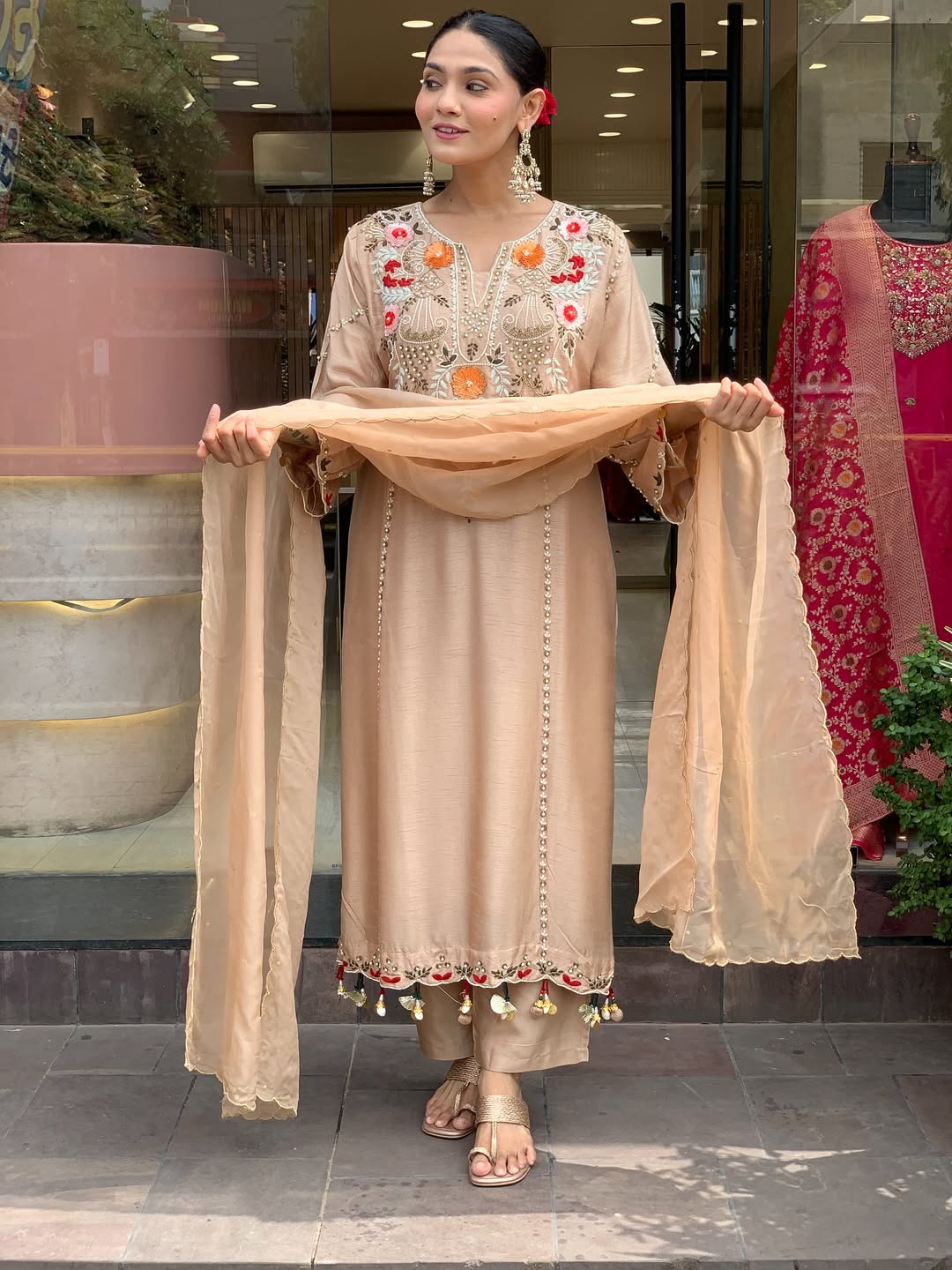
Ask whether the garment contains Muga silk, Eri silk, Pat silk, Assam cotton, a blend or a synthetic fibre. Request the approximate length and width of both pieces, because a chador that looks generous in a photograph may be difficult to arrange if the wearer is tall or wants a fuller shoulder drape. Also ask whether zari is real metallic thread, imitation zari or metallic-coated polyester.
Inspect the selvedge and border for loose threads, uneven tension and abrupt pattern breaks. Small variations can be normal in handwoven textiles, but holes, broken warp threads and unsecured tassels require attention before purchase. Colour bleeding is another reason to request washing instructions, especially for deep red, black, purple and indigo dyes.
Dry-clean silk unless the weaver or care label specifically permits another method. Store a clean silk Mekhela Chador folded in unbleached muslin, refold it every few months to prevent a permanent crease, and keep it away from direct sunlight, perfume and damp cupboards. Do not hang heavy zari pieces for long periods because the weight can distort the shoulder and border sections.
Cotton can generally be aired and lightly pressed from the reverse side, but the exact method depends on dye and finish. Use low heat for Chanderi or delicate blended fabrics, place a thin cotton cloth between the iron and garment, and never iron directly over sequins, beads or metallic embroidery. Proper storage often preserves a textile more effectively than occasional intensive cleaning.
Common Questions About Assamese Mekhela Chador: Traditional Dress, Fabrics & Styling Guide
What is an Assamese Mekhela Chador made of?
An Assamese Mekhela Chador may be made from Muga silk, Eri silk, Pat silk, Assam cotton or a silk-cotton blend. Muga silk offers a natural golden sheen, Eri silk feels softer and more matte, and cotton is usually more breathable for daytime wear.
How is a Mekhela Chador different from a saree?
A Mekhela Chador is a two-piece Assamese outfit consisting of a lower mekhela and an upper chador. A saree is generally one continuous length of fabric, whereas the Mekhela Chador uses separate pieces and a different waist-pleating structure.
How do you drape an Assamese Mekhela Chador?
Secure the mekhela around the waist, form even front pleats, tuck the pleats firmly, and then wrap the chador across the body and over one shoulder. Hidden pins at the shoulder and waist can improve stability during a long ceremony.
Is a Mekhela Chador suitable for a wedding?
A Mekhela Chador is suitable for a wedding when made from formal Assam silk such as Muga silk or Pat silk and paired with an appropriate blouse and jewellery. A broad woven border, selective zari and a structured hairstyle can create a ceremonial finish without excessive embellishment.
Which fabric is best for a summer Bihu celebration?
Assam cotton, lightweight Eri silk and breathable silk-cotton blends are practical choices for a summer Bihu celebration. These fabrics are generally more comfortable than heavy silk during extended outdoor gatherings, although cotton may require additional pressing.
How should an Assamese Mekhela Chador be stored?
A silk Mekhela Chador should be cleaned according to its care label, folded in breathable muslin and stored away from sunlight, perfume and humidity. Refolding the garment every few months helps prevent permanent creases, while heavy zari pieces are better folded than hung.





