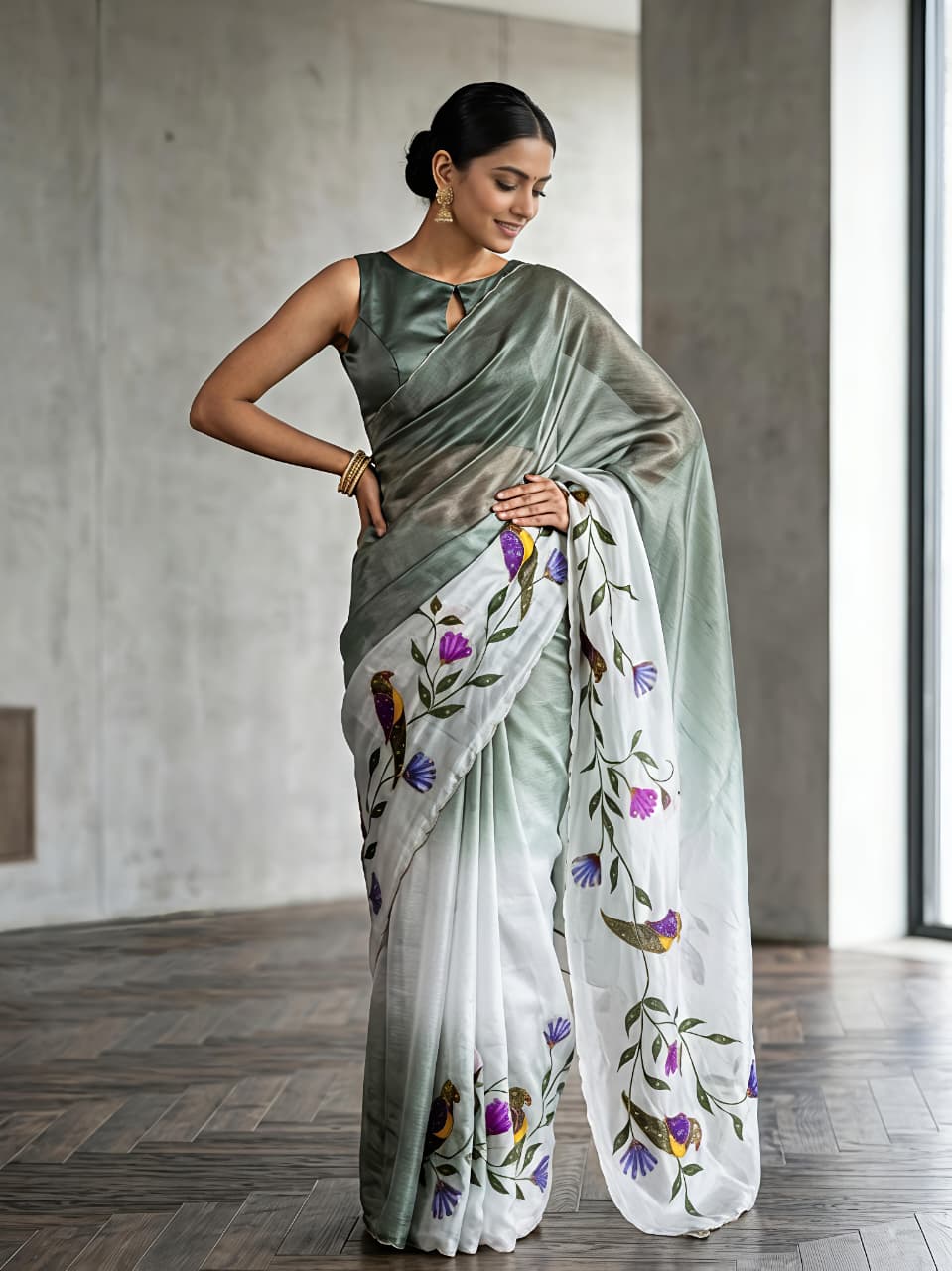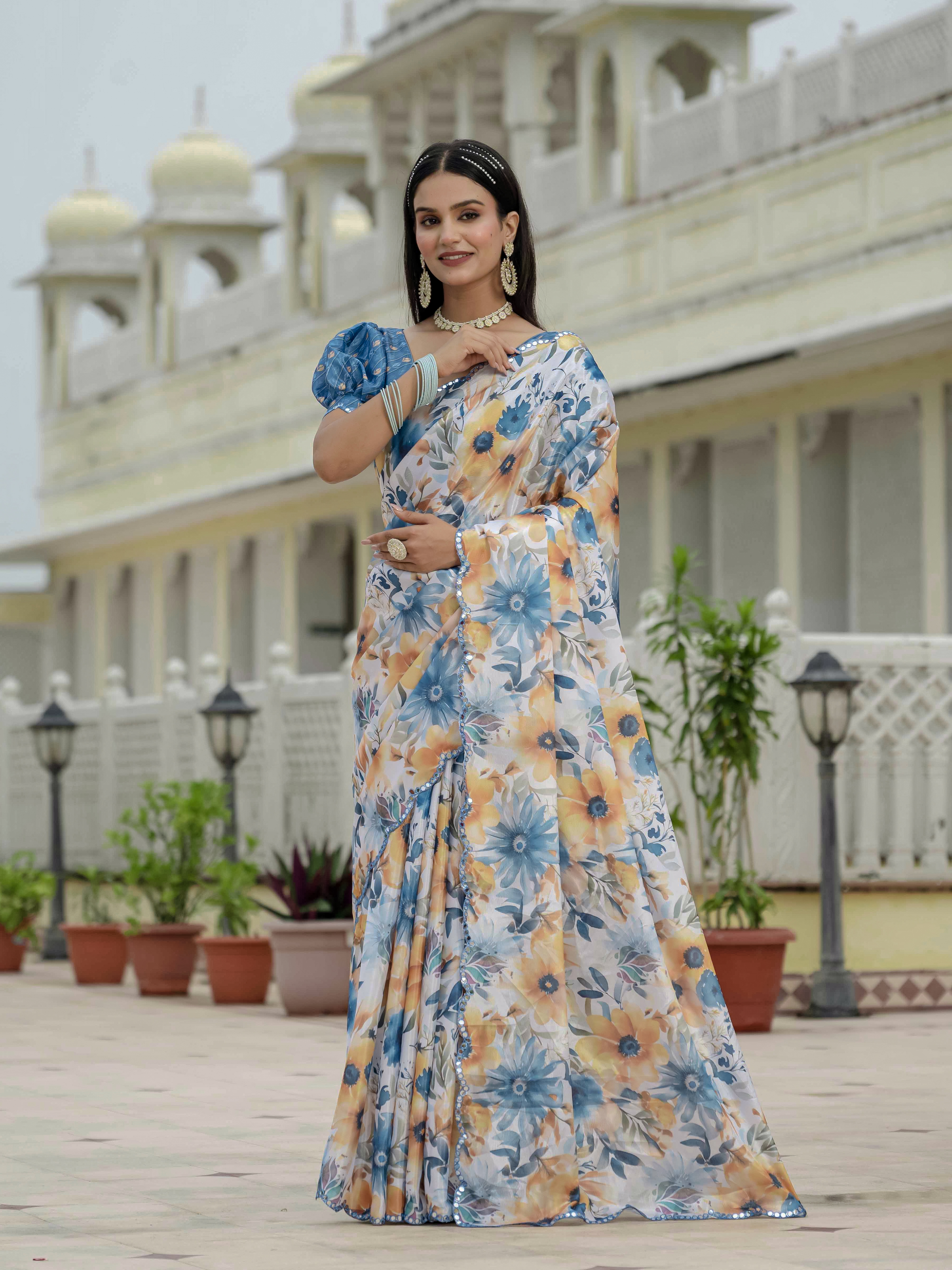
Assam Silk Sarees: Muga, Eri, Pat & Traditional Weaves Explained begins with an important distinction: Muga, Eri and Pat are not three decorative finishes, but three silk traditions with different fibres, textures, production methods and cultural histories. Muga is known for a naturally golden tone, Eri for a soft, wool-like hand, and Pat for a smooth, pale surface that accepts colour cleanly. Knowing those differences helps you select a saree for climate, drape, ceremony and long-term use instead of choosing by colour alone.
Assam's textile heritage is closely tied to household weaving, indigenous motifs and the practical demands of a humid, monsoon-heavy region. The mekhela chador remains a defining Assamese dress form, while the six-yard saree has become a popular format for festive and contemporary dressing. The same vocabulary of silk, borders, floral forms and geometric patterns can appear in both garments, although their construction and draping styles are not identical.
What makes Assam Silk Sarees: Muga, Eri, Pat & Traditional Weaves Explained distinctive?
Assam Silk Sarees: Muga, Eri, Pat & Traditional Weaves Explained are distinctive because their identity comes from the silk fibre and Assamese weaving culture together, not from one uniform appearance. Muga silk contributes golden lustre, Eri silk contributes a soft textured feel, and Pat silk contributes a fine, even surface suited to vivid colour and formal draping.
Assamese weavers traditionally work with handlooms, where the speed and movement of the loom allow subtle irregularities in texture. A small change in yarn thickness, a slightly uneven selvedge or a minor shift in motif placement doesn't automatically indicate poor quality. Large holes, weak joins, severe pulling and broken warp threads, however, are genuine construction concerns.
Assamese design language often includes stylised flowers, vines, birds, animals, diamonds and rhythmic border patterns. Red, cream, ivory, black and gold have strong visual associations with Assamese dress, but modern handloom sarees also use sage, lavender, blush, brown and jewel tones. Zari may add a festive finish, but zari alone doesn't make a saree an Assam silk saree.
How do Assam Silk Sarees: Muga, Eri, Pat & Traditional Weaves Explained compare?
Muga, Eri and Pat differ mainly in fibre source, surface appearance, warmth, weight and the way each silk accepts colour. The comparison below provides a practical starting point before you read an online product description or visit a handloom store.
- Muga silk: Muga is produced by the Antheraea assamensis silkworm, traditionally associated with Assam. Muga yarn has a natural yellow-gold to honey-toned lustre that can deepen with age and wear. Muga is comparatively strong and is often chosen for heirloom garments, festive sarees and ceremonial clothing.
- Eri silk: Eri, also called Endi or Errandi silk, comes from the domesticated silkworm Samia ricini. Eri yarn feels softer, more matte and slightly wool-like than Muga. Eri silk is valued for comfort, warmth and a textured drape, making it useful in cooler weather and for people who prefer low-shine fabrics.
- Pat silk: Pat silk generally refers to the white or pale silk tradition of Assam, produced from the domesticated mulberry silkworm. Pat silk has a smoother, more lustrous surface than Eri and usually gives a clean base for dyed colours, woven borders and formal motifs.
Fibre names can be used loosely in online listings, so check the exact composition. A saree described as "Muga cotton" may combine cotton with Muga yarn or use Muga-associated colouring; it should not automatically be treated as a pure Muga silk saree. The product specification should state whether the saree is pure silk, silk-cotton, cotton or a blend.
Which Assam silk feels most comfortable in warm weather?
A lightweight cotton, silk-cotton or breathable Eri weave is usually more comfortable in warm weather than a dense pure-silk saree. Muga and Pat can also work well when the weave is light, but the fibre name alone doesn't reveal the garment's weight or ventilation.
For an everyday wardrobe, inspect the fabric description, approximate weight, blouse-piece details and close-up photographs. A tightly woven saree with a heavy zari border may feel warmer than a plain handloom saree made from the same broad fibre category.
How do Assam Silk Sarees: Muga, Eri, Pat & Traditional Weaves Explained show Assamese craft?
You can recognise traditional Assamese weaving details by examining the border, pallu, motif vocabulary, selvedge and fibre description together rather than relying on one visual cue. A gold border or lotus motif can appear in many Indian textile traditions, so context matters.
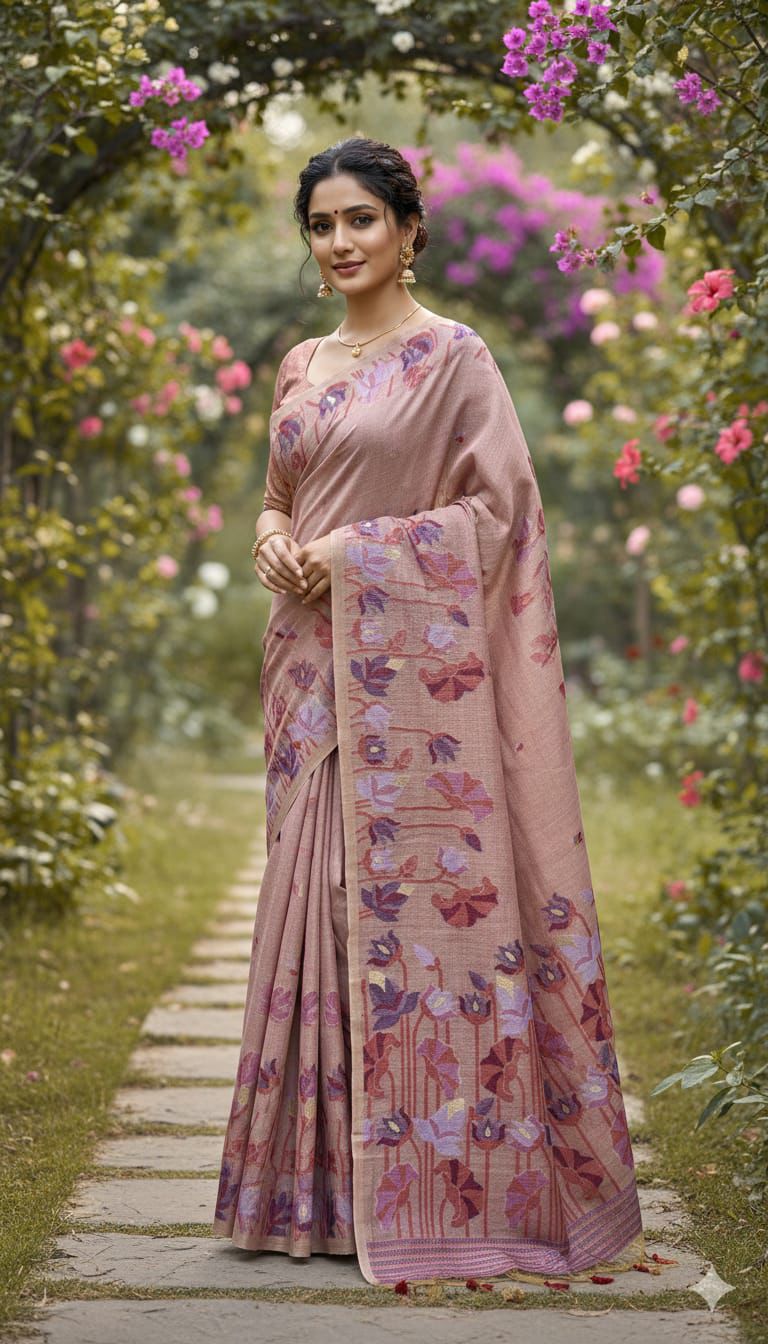
Motifs and layout
Assamese textiles often use repeated floral vines, stylised birds, animals, diamonds and geometric bands. Traditional red-and-cream combinations are strongly recognisable, while contemporary weavers reinterpret the same rhythm in pastel or neutral palettes. A motif woven into the fabric generally appears more integrated than a surface print, although photographs may not always make the difference easy to see.
Jamdani and supplementary patterning
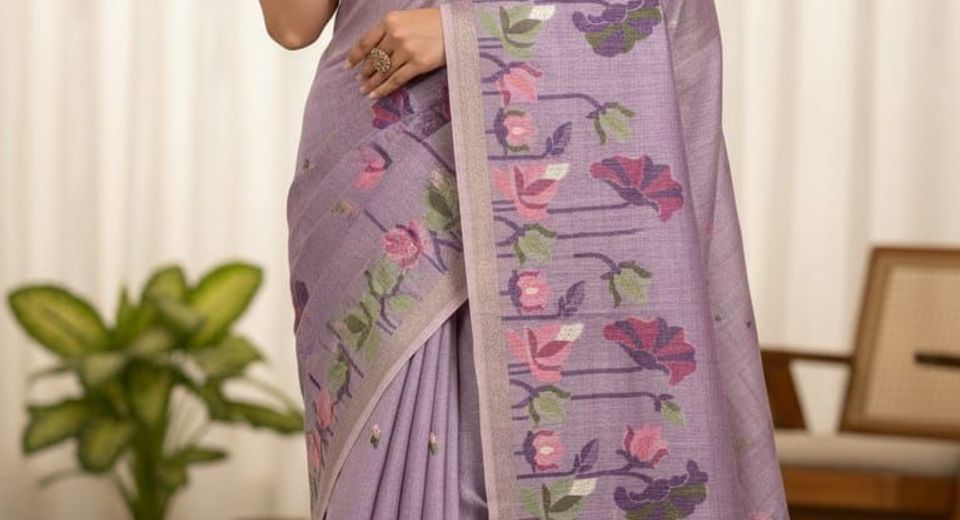
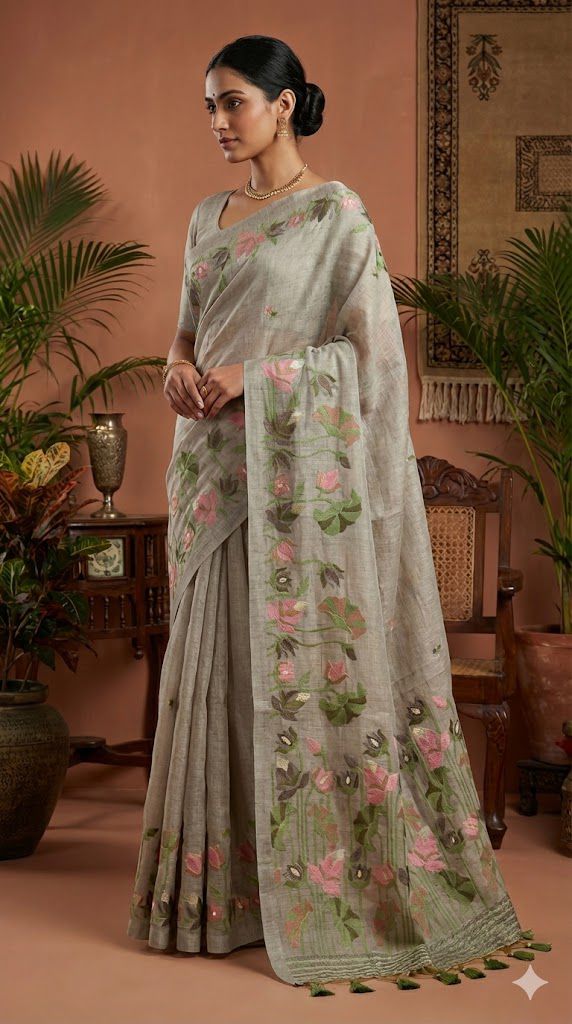
Jamdani describes a supplementary-weft technique in which small motifs are inserted into the ground during weaving. A Jamdani lotus pallu can therefore add a raised, patterned effect without making the entire saree a separate silk category. Blush Peach Muga Cotton Saree with Jamdani Lotus Pallu, Lavender Muga Cotton Saree with Lotus Jamdani Pallu and Sage Green Muga Cotton Saree with Lotus Jamdani Pallu show how a Muga-associated palette can be paired with a prominent floral pallu detail.
Lotus motifs have wide currency across Indian textiles, including Jamdani, Bengal cottons and contemporary handloom designs. The lotus alone can't prove Assamese origin. A more reliable assessment combines the stated weave, fibre composition, seller documentation, border construction and clear product photographs.
Assamese textiles compared with other Indian silks
Banarasi silk is usually recognised for intricate zari patterning and a rich brocade surface, Kanjeevaram for its distinctive South Indian silk structure and contrast borders, and Chanderi for its lightweight, translucent hand. Muga, Eri and Pat are identified first by Assam's silk traditions and the resulting fibre character, even when current designs borrow pan-Indian motifs.
Which Assam Silk Sarees: Muga, Eri, Pat & Traditional Weaves Explained suit occasions?
The best Assam Silk Sarees: Muga, Eri, Pat & Traditional Weaves Explained for an occasion depend on the required shine, structure, comfort and level of ornamentation. A light silk-cotton or Eri-style saree suits daytime gatherings, while lustrous Muga or refined Pat works well for ceremonies and evening events.
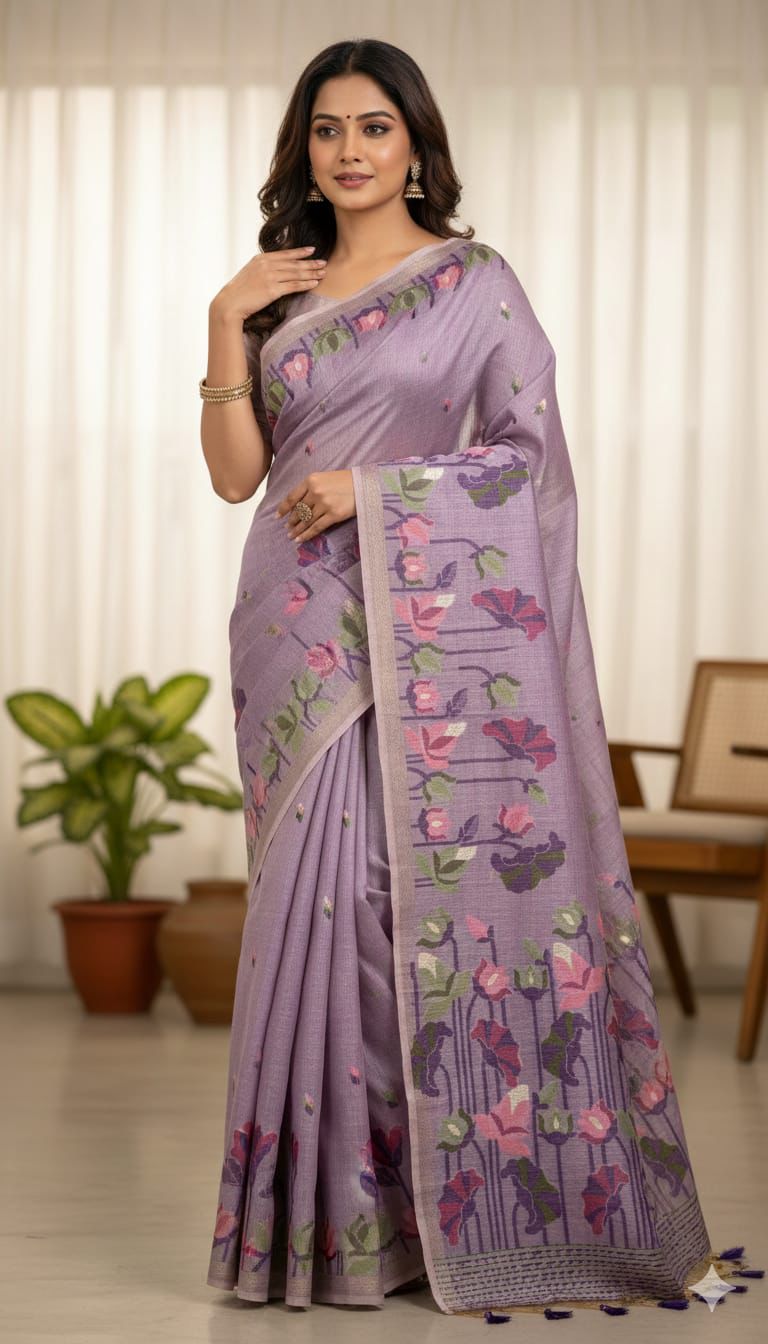
- Haldi ceremony: Choose a breathable yellow, turmeric, peach or pastel saree with a manageable border. A light Muga cotton saree can provide festive texture without the weight of dense brocade.
- Wedding guest dressing: Muga or Pat with a defined woven border creates a polished appearance. Pair the saree with a blouse in raw silk, cotton-silk or a restrained zari fabric so the blouse doesn't compete with a detailed pallu.
- Office and cultural events: Eri, silk-cotton and simple handloom sarees are practical because their lower shine and textured surface look composed under indoor lighting. Mushroom Brown Handloom Saree with Ethnic Striped Border illustrates how an earthy colour and linear border can feel formal without appearing bridal.
- Evening reception: A richer Pat or Muga saree with a controlled zari accent carries jewellery well. Premium Handloom Silk Saree with Handkatha is an useful reference for choosing a more artisanal, texture-led look rather than relying only on metallic embellishment.
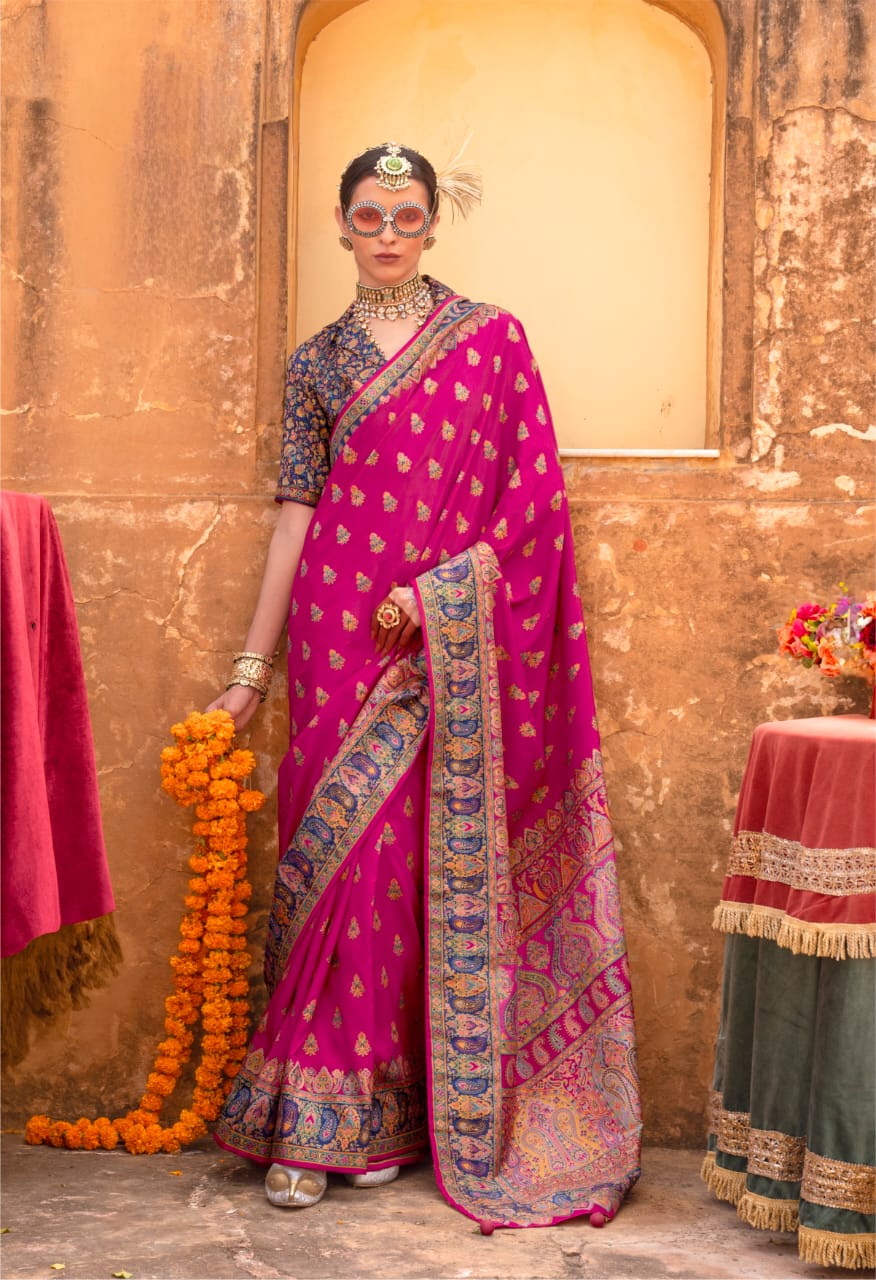
Colour temperature also affects styling. Lavender and sage harmonise with silver, pearl and oxidised metal jewellery, while blush, gold, rust and emerald support warm gold jewellery. Emerald Royal Weave Pashmina Silk Saree isn't an Assam silk reference, but it demonstrates how a deep jewel colour and substantial weave can shift a saree towards evening dressing.
How should Assam Silk Sarees: Muga, Eri, Pat & Traditional Weaves Explained be styled?
An Assamese silk saree looks most balanced when the blouse, pleats and jewellery respect the fabric's texture instead of hiding it. Keep the pallu visible, make the pleats even and choose accessories that repeat one colour from the border or motif.
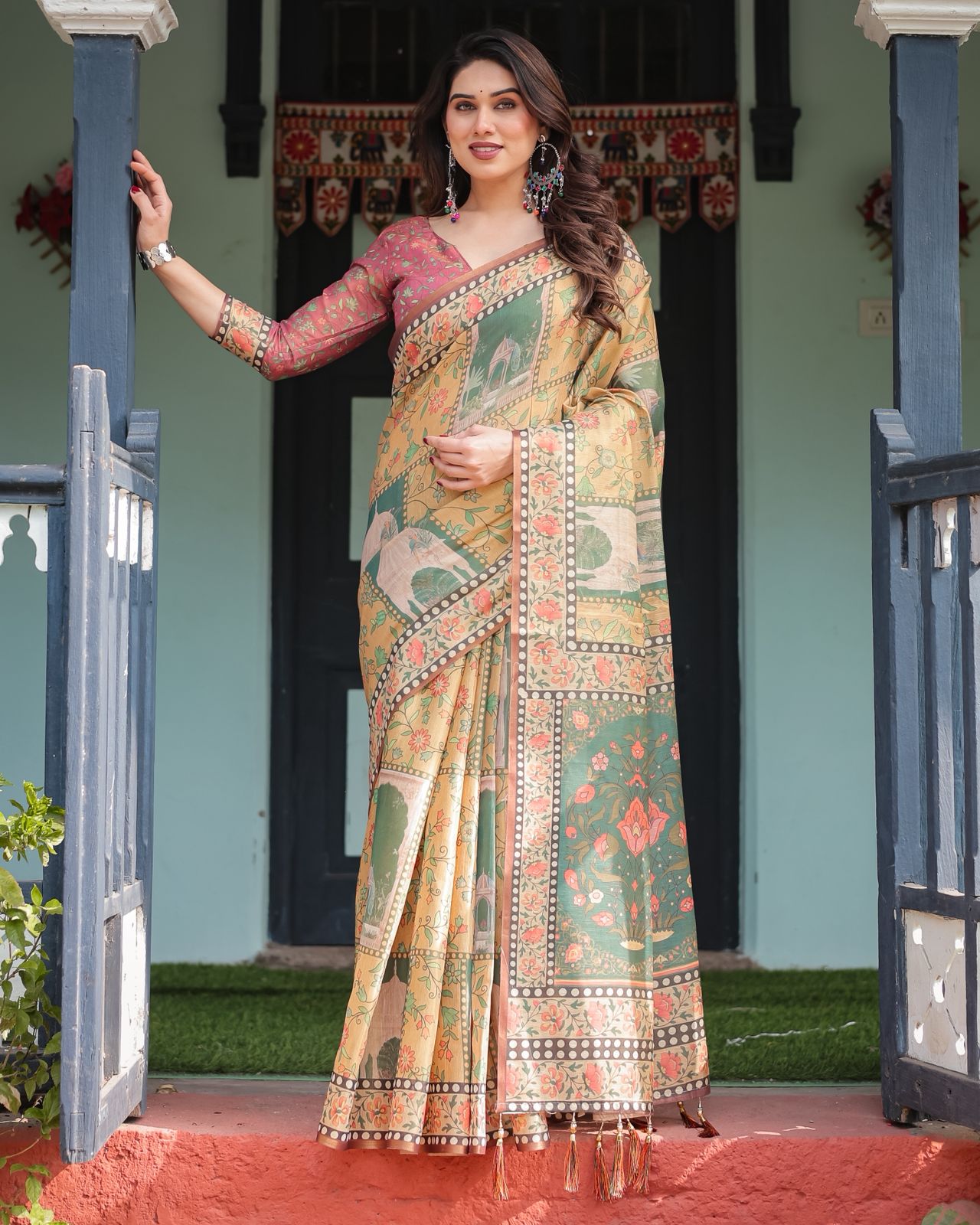
For a Muga cotton saree with a floral Jamdani pallu, a solid blouse in ivory, muted gold, terracotta or a shade drawn from the pallu usually works better than a competing floral print. A high-neck or elbow-sleeve blouse gives a traditional handloom saree a structured appearance, while a sleeveless blouse can make a lightweight weave feel more contemporary.
Pat silk can support sharper pleats and more formal blouse shapes because its smooth surface gives a clean fall. Eri silk benefits from softer tailoring: a lightly structured blouse, a narrow belt or an unforced pallu can preserve its relaxed texture. Avoid excessive pinning when the yarn is delicate or loosely woven, because repeated punctures can weaken the same area.
Jewellery doesn't need to be exclusively Assamese to create a respectful look. Silver, gold, beads, pearls and traditional Assamese-inspired forms can all work when proportion is controlled. Choose either a statement necklace or prominent earrings for a detailed pallu, rather than adding several unrelated focal points.
What should you check before buying Assam Silk Sarees: Muga, Eri, Pat & Traditional Weaves Explained?
Before buying Assam Silk Sarees: Muga, Eri, Pat & Traditional Weaves Explained, verify the fibre composition, weave description, saree length, blouse-piece inclusion, border details and care instructions. These facts tell you more about value and usability than the words "designer" or "premium".
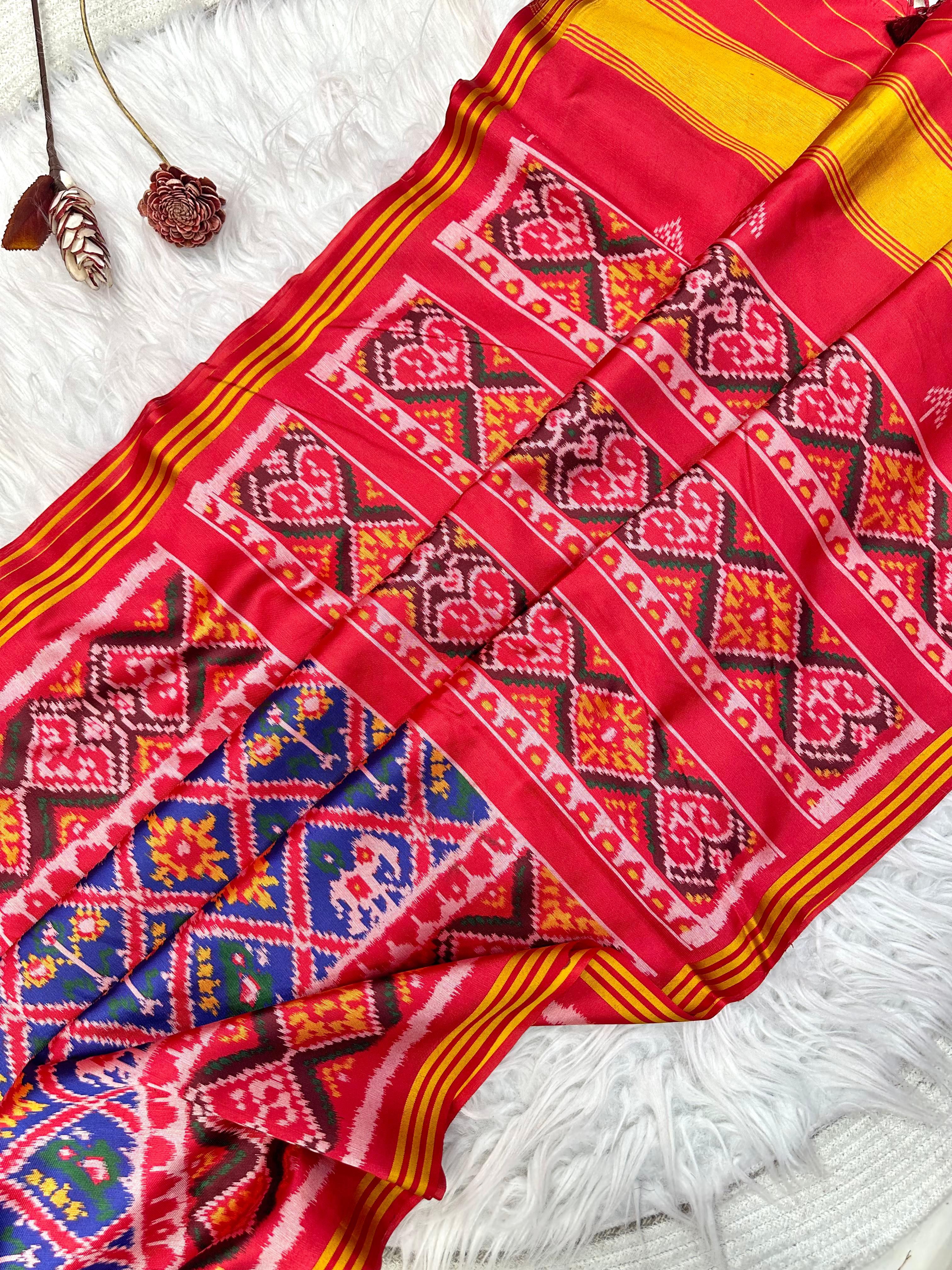
- Read the composition line: Confirm whether the saree is pure Muga, Eri or Pat silk, silk-cotton, cotton or another blend. Ask for clarification when "Muga" appears only in the colour name.
- Check dimensions: A standard saree is often about 5.5 metres, with an additional blouse piece of roughly 0.8 metres, but measurements vary. Confirm the actual length before ordering if you're tall, prefer a long pallu or need generous pleats.
- Study the weave: Zoom into the pallu, border and body. Woven motifs show the structure of the yarn more clearly than printed motifs, while zari should be described separately from silk content.
- Assess transparency and weight: A pale Pat silk or lightweight cotton may need a lining or suitable petticoat. A dense border can alter the fall and make pre-pleating useful.
- Review care instructions: "Dry clean only" is a different commitment from a saree that can be gently hand-washed. Keep the care method in mind before buying for frequent use.
Price is another useful clue, but price alone can't authenticate silk. A pure Muga saree requires different yarn and workmanship from a Muga-cotton blend, so unusually low pricing deserves a careful composition check rather than an automatic bargain assumption. For budget comparison, collections such as Sarees from Rs 1000 to Rs 1500, Sarees Under 20% Off and Sarees Under 10% Off can help you compare listed materials and construction without treating a discount label as proof of fibre quality.
Promotional collections such as Sarees Flat 60% Off and Sarees Flat 50% Off may include varied fibres and techniques. Read each individual product specification because a collection title doesn't describe every saree within it.
How should Assam Silk Sarees: Muga, Eri, Pat & Traditional Weaves Explained be cared for?
Assam silk sarees last longer when they're protected from moisture, direct sunlight, friction and unsuitable washing chemicals. Store each saree clean and completely dry, preferably folded in a breathable cotton muslin cover.
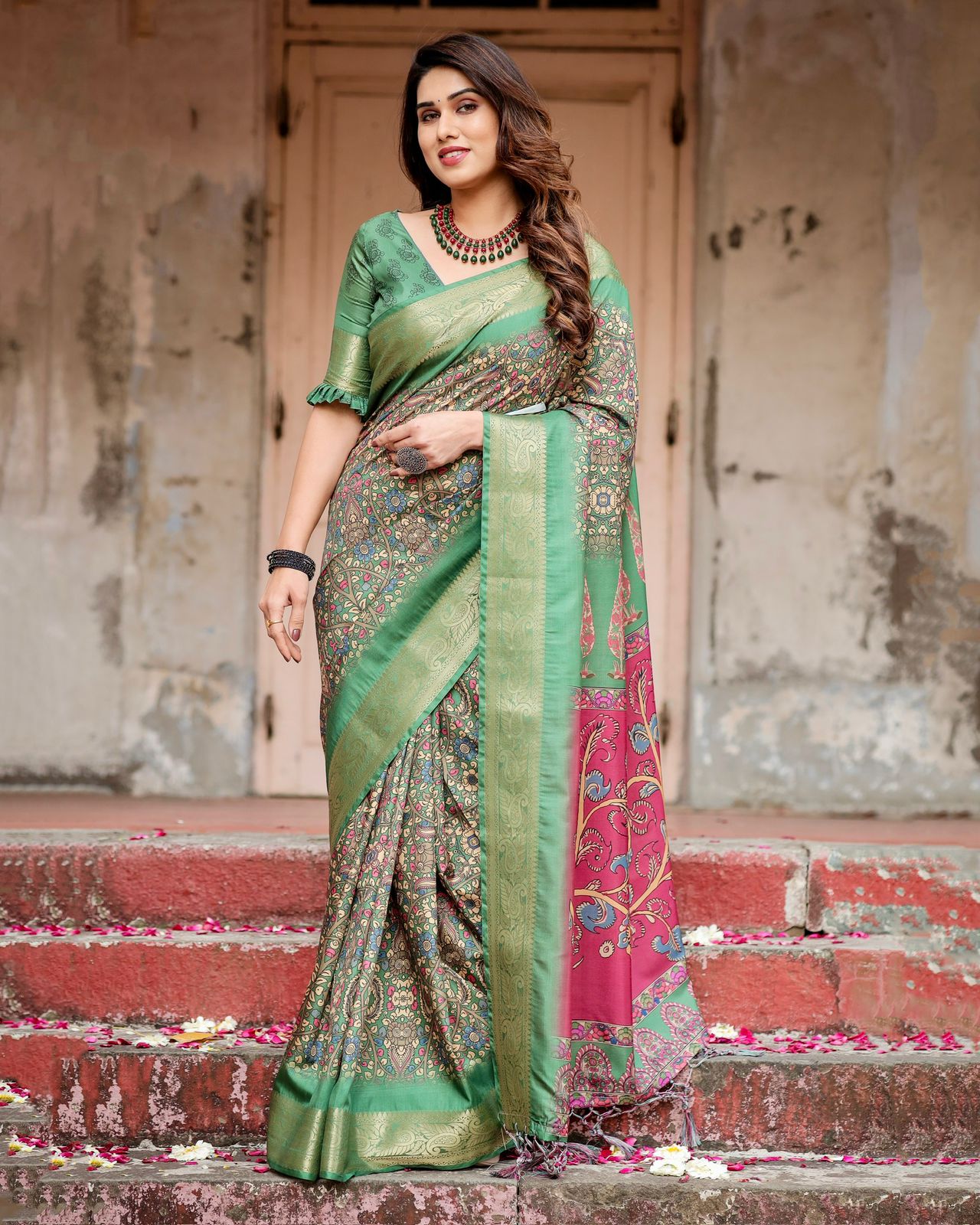
Refold a silk saree every few months so the same crease doesn't remain permanently pressed. Avoid plastic covers for long-term storage because trapped humidity can encourage odour, mildew or fabric damage. Keep zari away from rough wood, metal edges and jewellery boxes that can snag the yarn.
Air a stored saree in shade for a short period after wearing, especially during humid weather. Do not spray perfume directly onto Muga, Eri or Pat silk; apply fragrance to the skin and allow it to dry before dressing. Blot a fresh spill without rubbing, then send the saree to a professional cleaner if the stain is oily, coloured or extensive.
Use low heat only when the care label permits ironing. Place a thin cotton cloth between the iron and the saree, and avoid pressing directly over zari or raised Jamdani work. Professional dry cleaning is the safer choice for heavily embellished, antique, loosely woven or structurally delicate sarees.
The most reliable choice comes from matching fibre, weave weight and care requirements to your real wardrobe. Muga offers golden character, Eri gives softness and texture, and Pat brings a smooth formal surface; the right saree is the one you'll wear and maintain confidently.
What are common questions about Assam Silk Sarees: Muga, Eri, Pat & Traditional Weaves Explained?
Readers usually want to know how to distinguish the three silk types, whether Muga cotton is pure silk, how each fabric behaves in warm weather and which care method protects the weave.
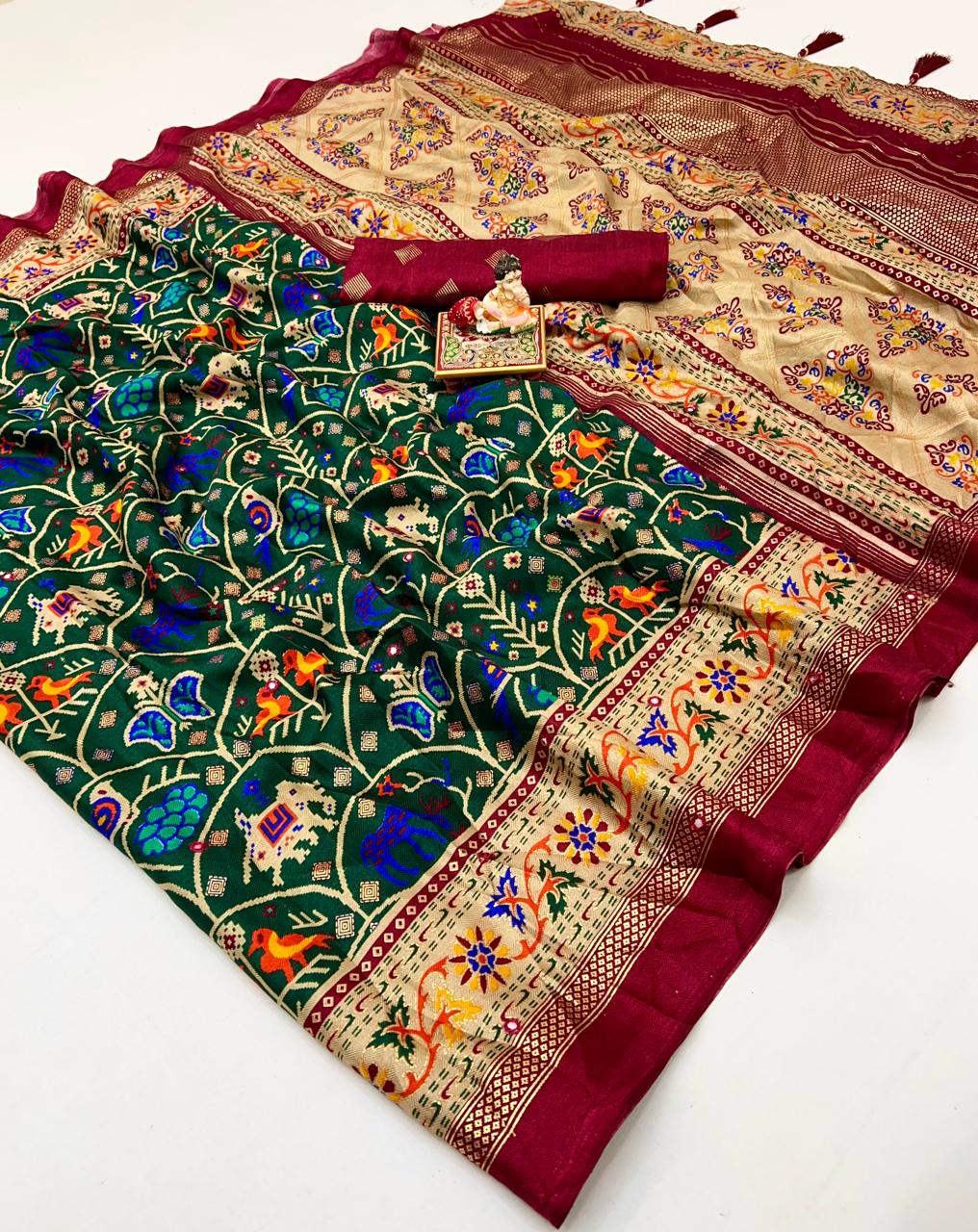
Common Questions About Assam Silk Sarees and Their Weaves
What is the difference between Muga, Eri and Pat silk?
Muga silk has a naturally golden lustre and a comparatively strong hand. Eri silk is softer, more matte and slightly wool-like, while Pat silk has a smooth, pale and lustrous surface suited to formal dyeing and weaving.
Is a Muga cotton saree made entirely from Muga silk?
Not necessarily. Muga cotton usually indicates a cotton saree combined with Muga yarn or associated with Muga-inspired colour and texture, while a pure Muga saree should be clearly labelled as 100% Muga silk or equivalent composition.
Which Assam silk saree is best for summer?
A lightweight cotton, silk-cotton or breathable Eri weave is generally the most comfortable for summer. A lightweight Muga or Pat saree can also work, but weave density, border weight and lining affect comfort as much as fibre name.
How can I check whether an Assamese saree is handwoven?
Look for a detailed fibre and weave description, close-up photographs, a selvedge, small handmade variations and information about the weaving process. A motif or zari border alone cannot prove that a saree is handwoven or authentically Assamese.
Can Assam silk sarees be worn for a Haldi ceremony?
Yes, a lightweight Muga cotton, Eri or silk-cotton saree in yellow, peach, ivory or a soft pastel can suit a Haldi ceremony. Choose a manageable border and avoid a fabric that requires elaborate care if turmeric stains are a concern.
How should Muga, Eri and Pat silk sarees be stored?
Store each clean, dry saree in breathable cotton muslin away from direct sunlight, moisture and rough surfaces. Refold the saree periodically, avoid plastic for long-term storage and follow the care label before washing or ironing.