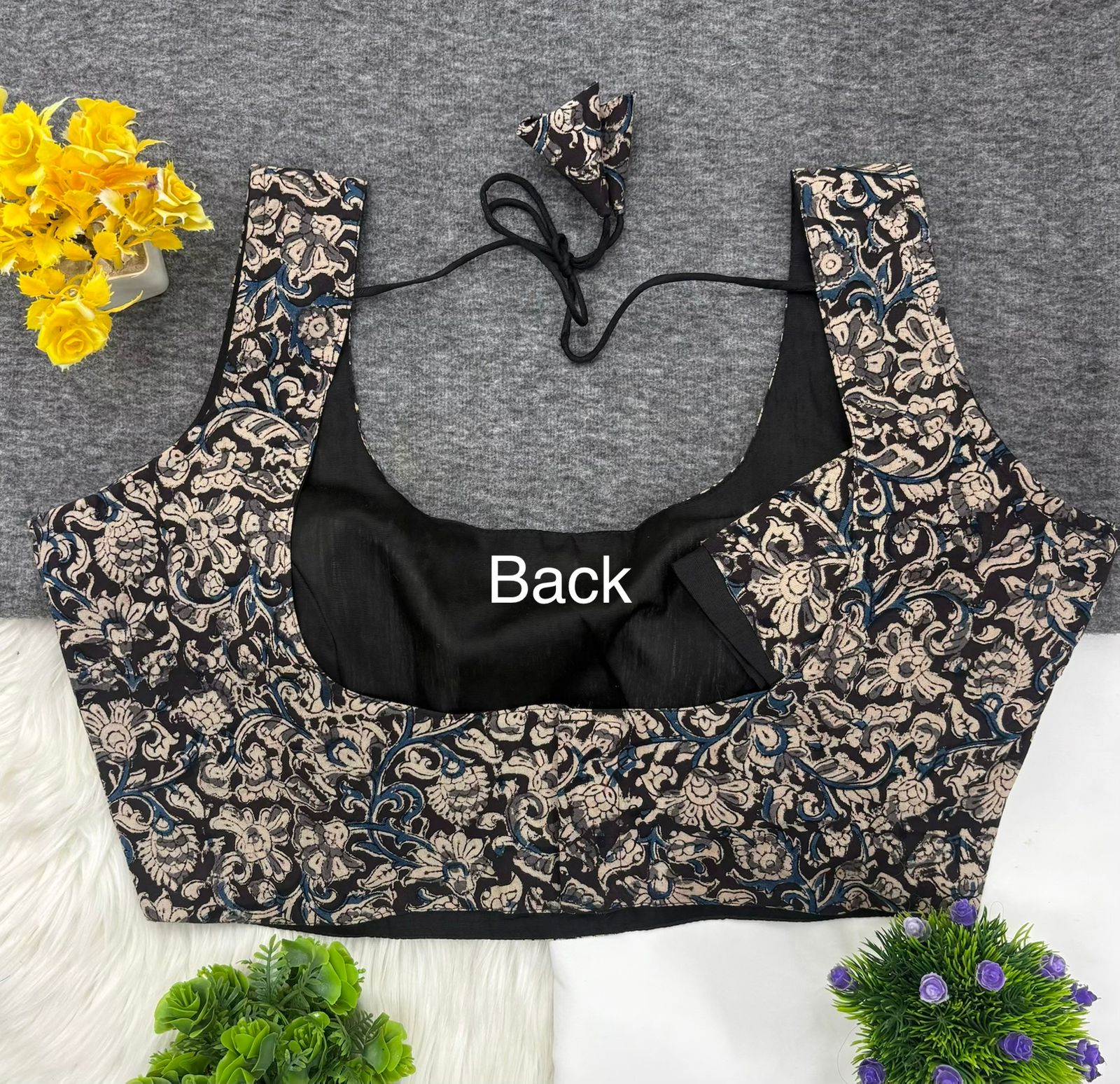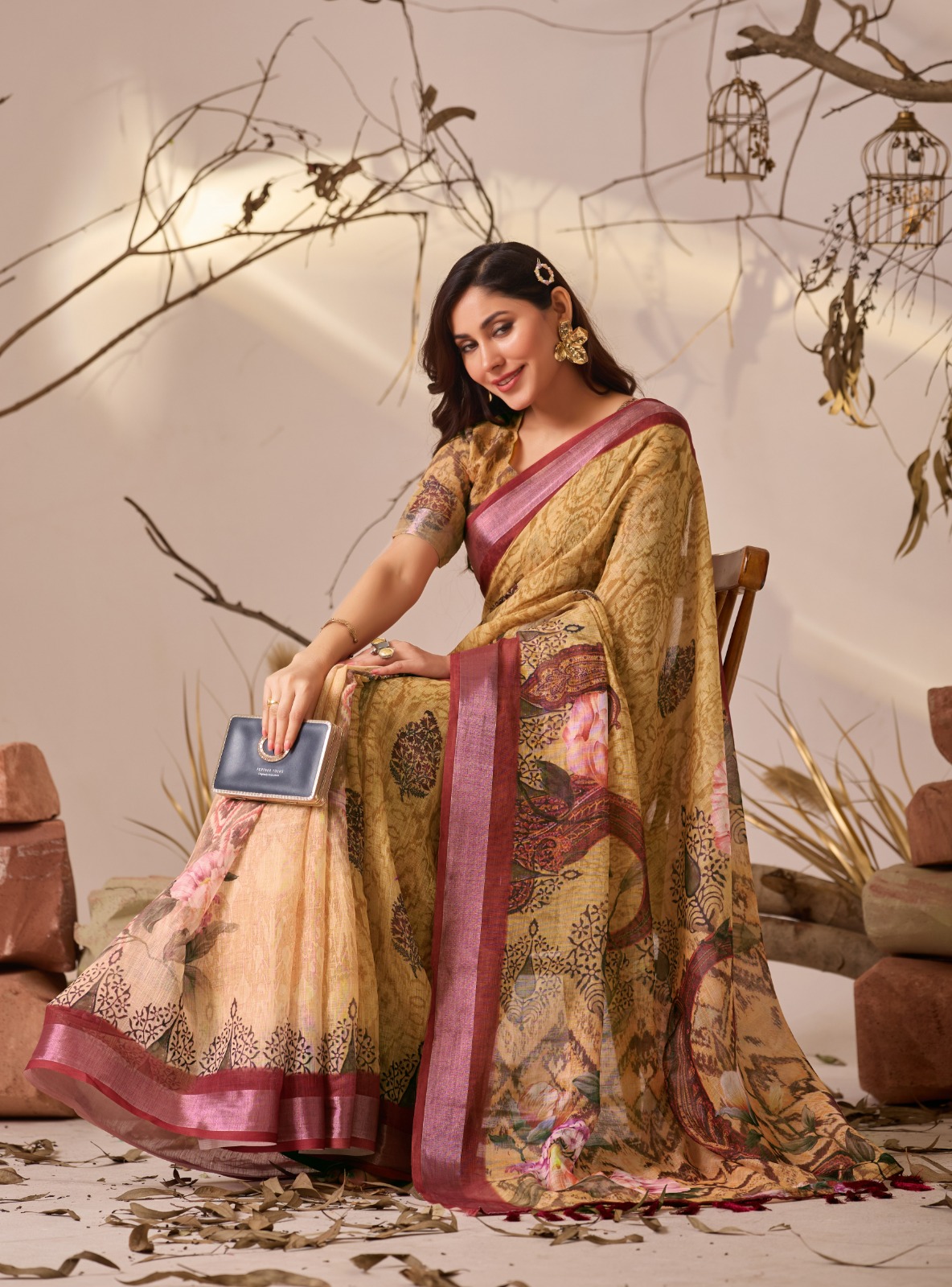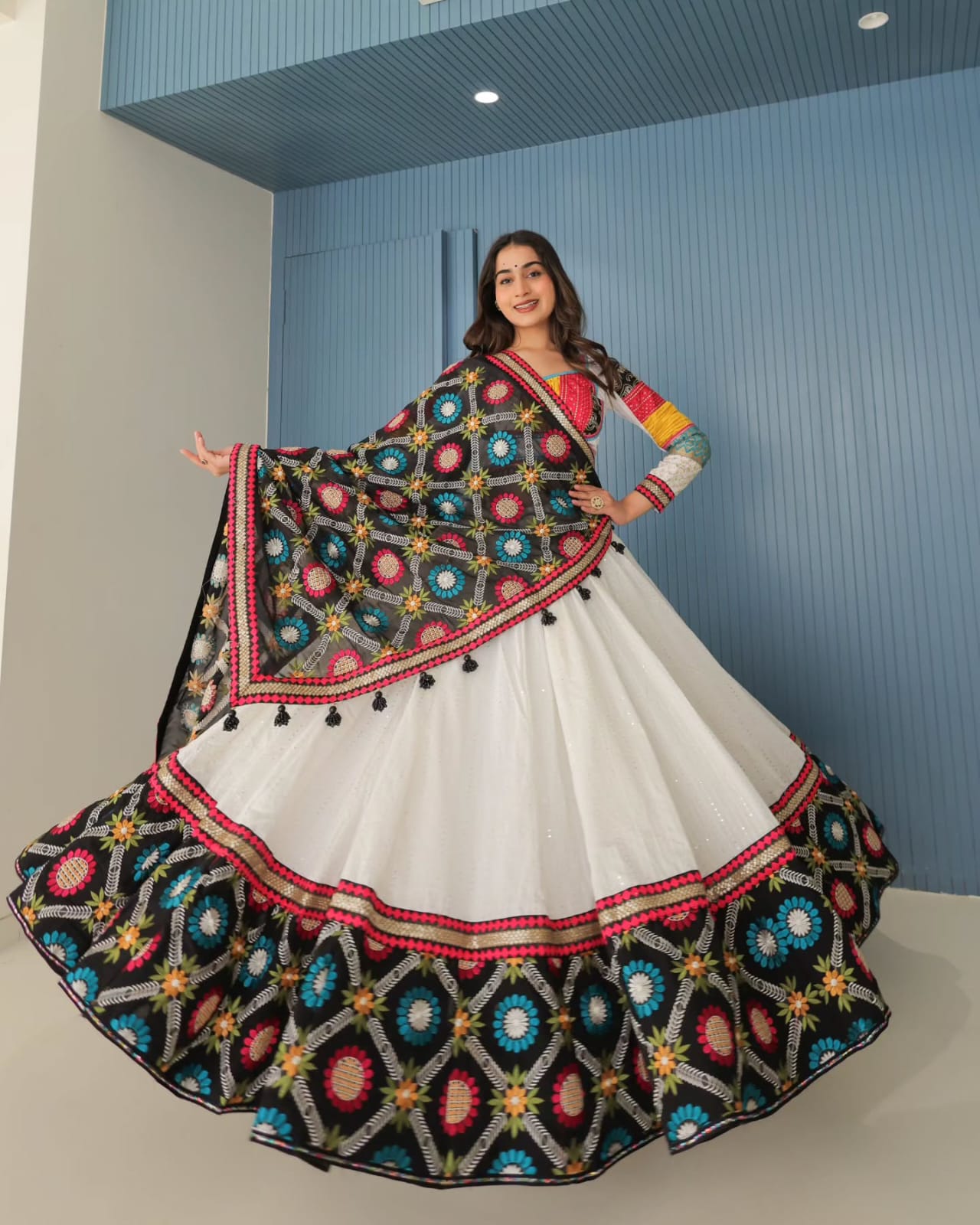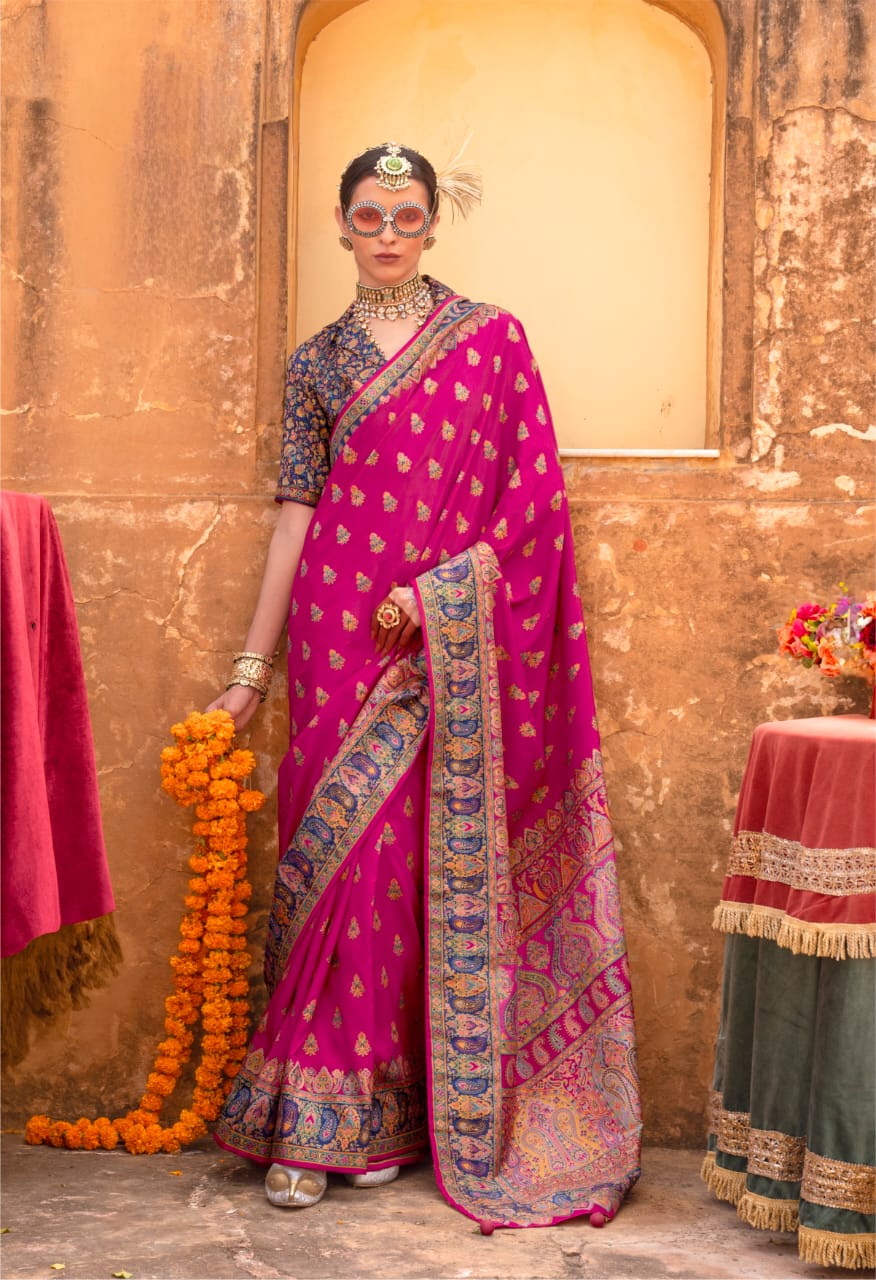
The Assam Festival Fashion Calendar: Bihu & Traditional Wear begins with the three Bihus, because each festival carries a different season, mood and dressing need. Bohag Bihu in April is energetic and social, Kati Bihu in October is quiet and devotional, while Magh Bihu in January is associated with harvest feasting and winter gatherings. Assam's traditional wardrobe offers several ways to dress for these occasions, including the mekhela chador, riha, muga silk, Assam silk, eri silk and handwoven cotton.
A suitable Bihu outfit does more than use Assamese-looking colours or motifs. Fabric weight, drape, ornament and comfort should match the festival setting. A lightweight mekhela chador can work for daytime Husori visits, while a richer silk saree or embroidered salwar suit may be more practical for an evening celebration outside Assam. The guide below connects the Bihu calendar to specific choices in fabric, colour, styling and care.
When do the three Bihus take place?
Bohag Bihu usually falls in April, Kati Bihu in October and Magh Bihu in January, although exact dates follow the Assamese calendar and can shift slightly each year.
Bohag Bihu, also called Rongali Bihu, marks the Assamese New Year and the arrival of spring. Celebrations generally continue for several days around the first day of Bohag, with singing, dancing, feasting, family visits and Husori performances. Bohag Bihu is the most visibly festive Bihu, so bright colours, fresh textiles and traditional woven details feel especially appropriate.
Kati Bihu, also called Kongali Bihu, is observed in October. Families light earthen lamps near the tulsi plant, granary and paddy fields while praying for a healthy crop. Kati Bihu has a more restrained character than Bohag Bihu, making simple cotton, muted Assam silk and minimal jewellery more suitable than heavily embellished partywear.
Magh Bihu, also called Bhogali Bihu, arrives in January after the harvest. Uruka, the night before Magh Bihu, is known for community feasts, while meji and bhelaghar traditions are associated with the celebration. Warm layers, comfortable separates and fabrics that can handle outdoor gatherings are useful choices for this winter festival.
Assam Festival Fashion Calendar: Bihu & Traditional Wear by month
The most useful way to follow an Assam Festival Fashion Calendar is to match an outfit's fabric weight and ornament level to the festival's climate and ritual setting.
April: Bohag Bihu and Rongali celebrations
April Bohag Bihu dressing works best with breathable silk, cotton or light silk blends in white, cream, red, yellow, green and soft pink.
The classic women's ensemble is the mekhela chador, a two-piece Assamese garment with a lower skirt-like mekhela and an upper chador. The riha may be worn as a separate traditional cloth, tucked under the chador or used as an additional layer depending on the drape. A red-and-white combination is strongly associated with Assamese festive identity, but ivory with red woven borders, yellow with green accents and coral with gold can also look seasonally appropriate.
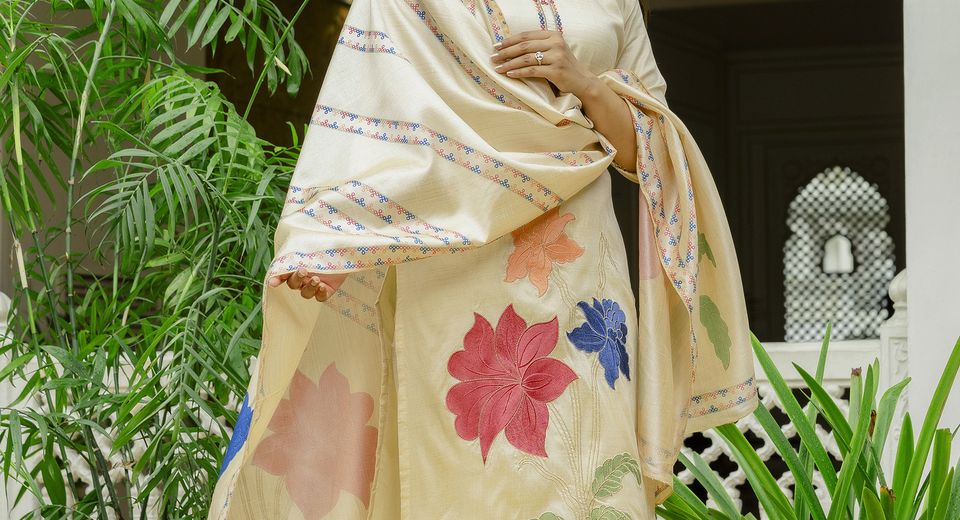
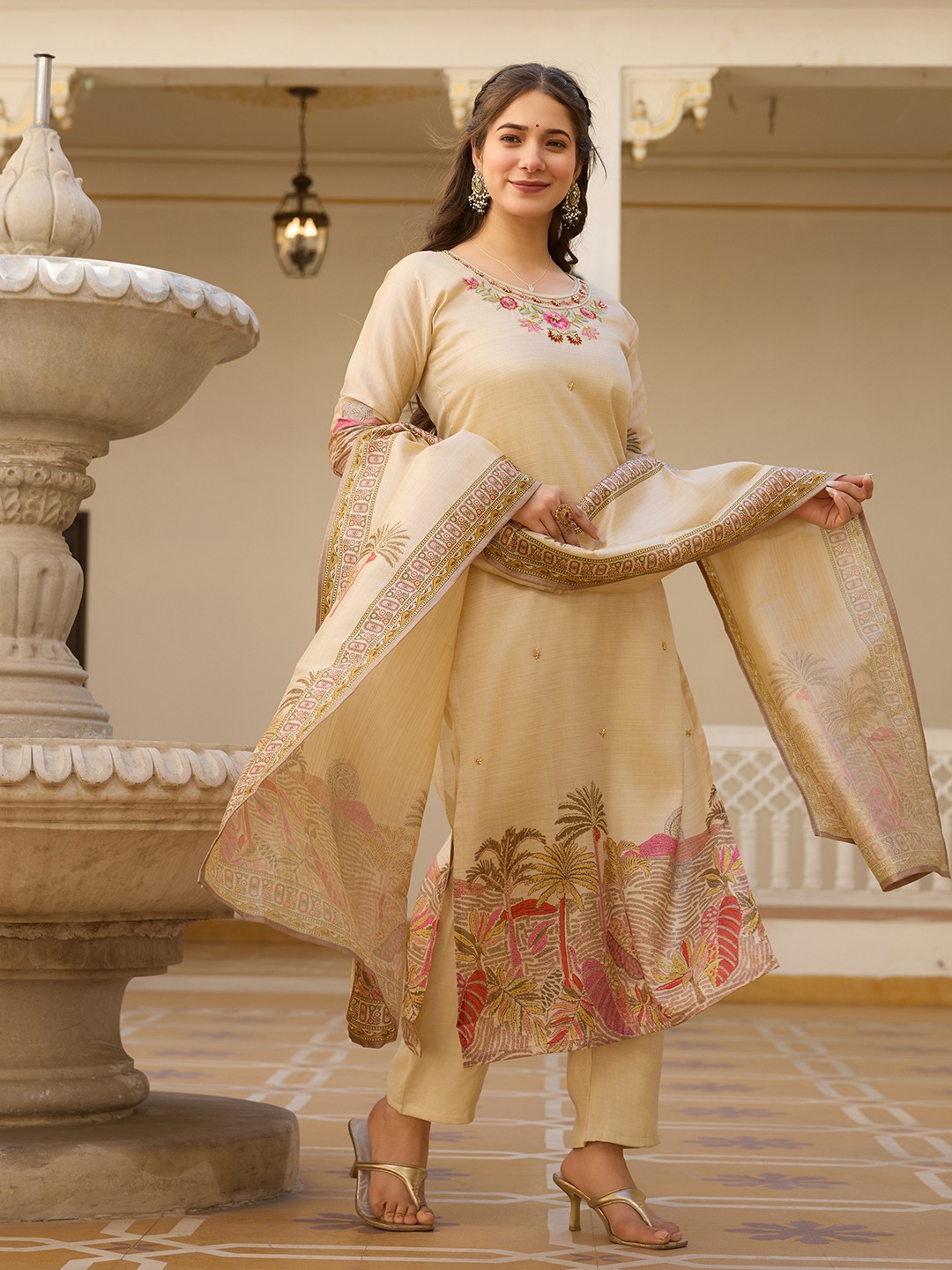
Choose a lighter Assam silk or cotton-silk weave for daytime events, particularly when you'll be moving between homes or attending an outdoor Husori performance. A silk kurti set can offer similar visual polish with less draping practice. Beige Embroidered Silk Kurti Pant Dupatta Set Women suits a contemporary Bohag Bihu gathering because the three-piece format gives coverage and movement without requiring a mekhela chador pleat.
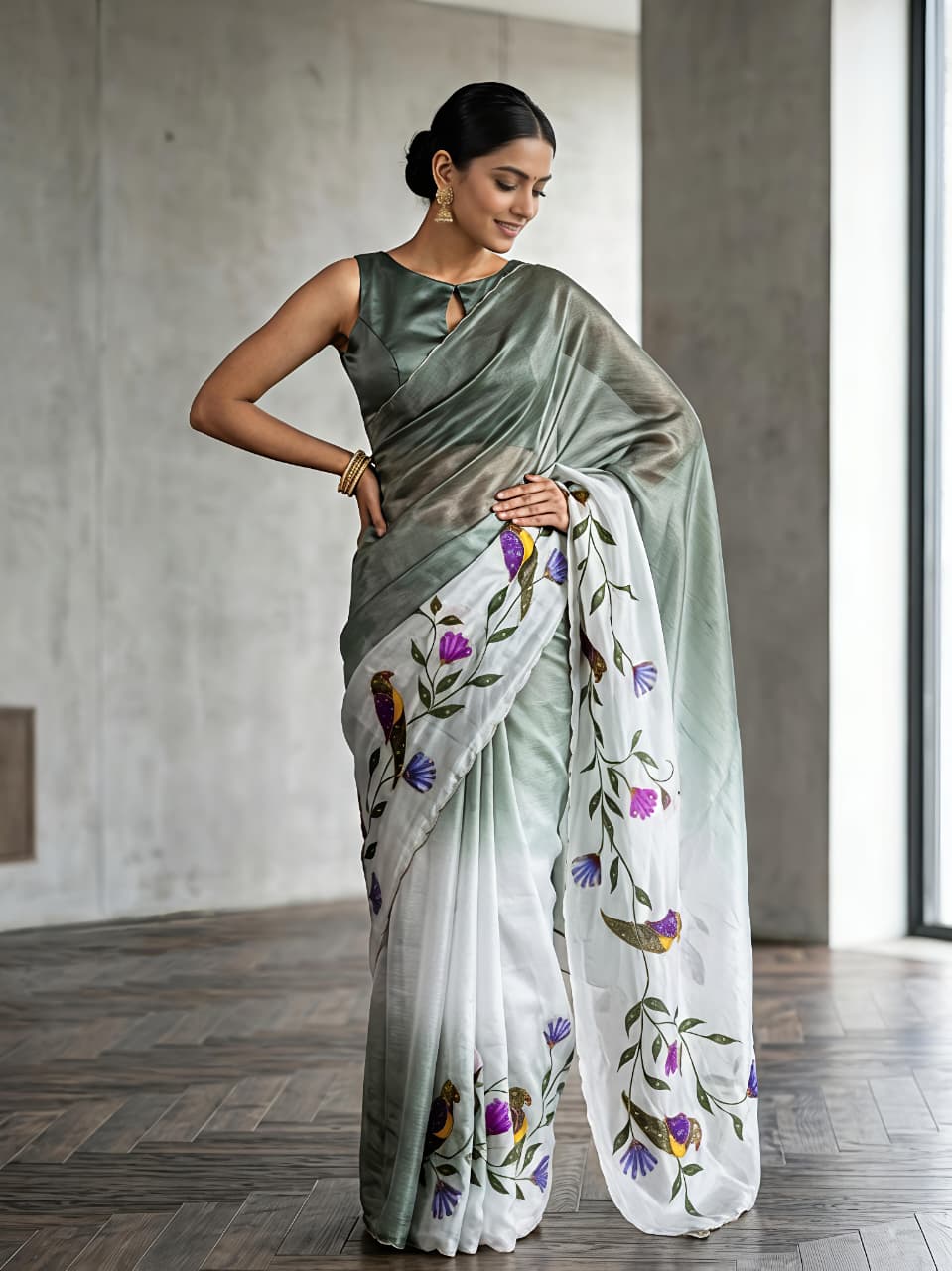
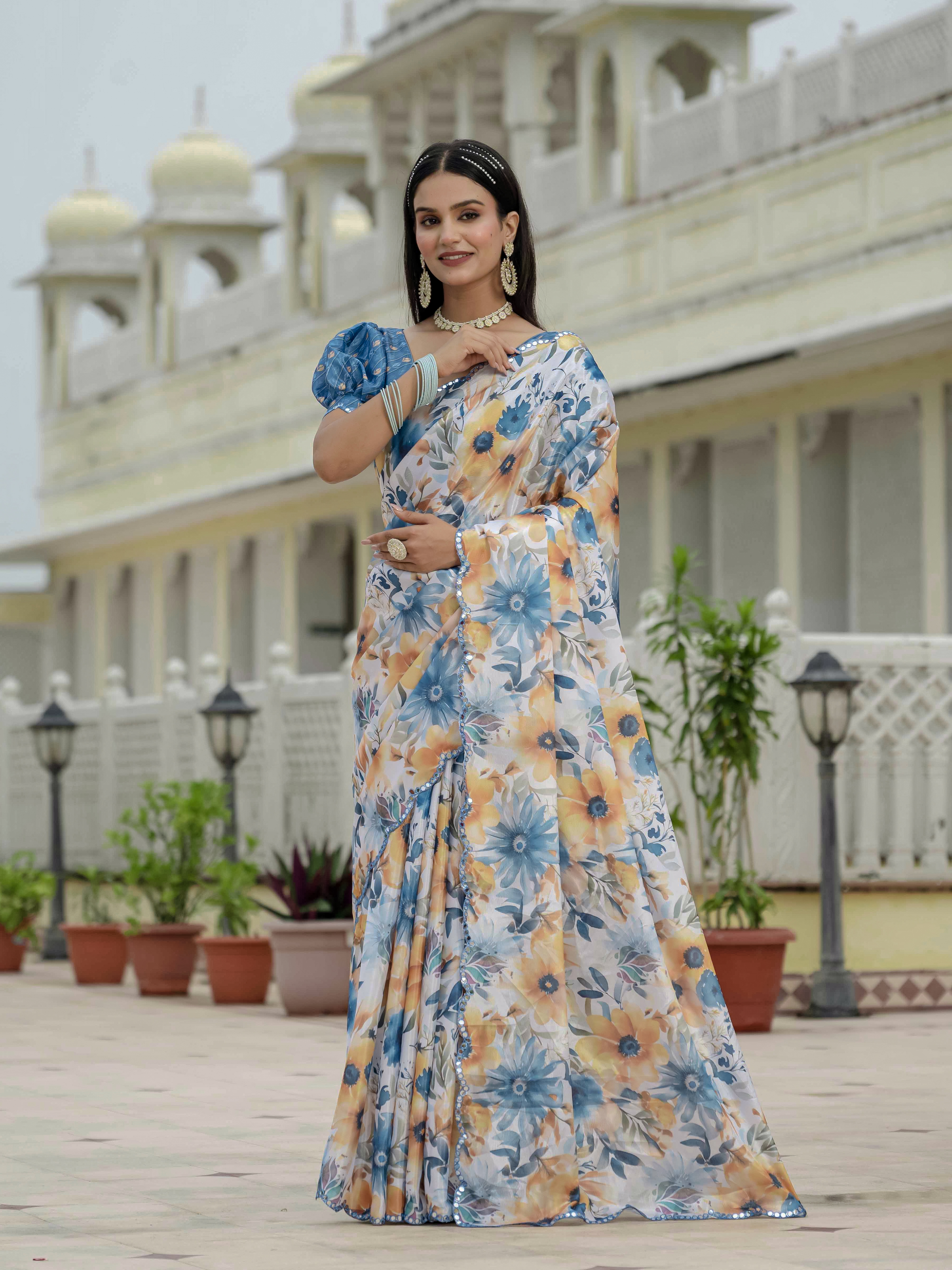
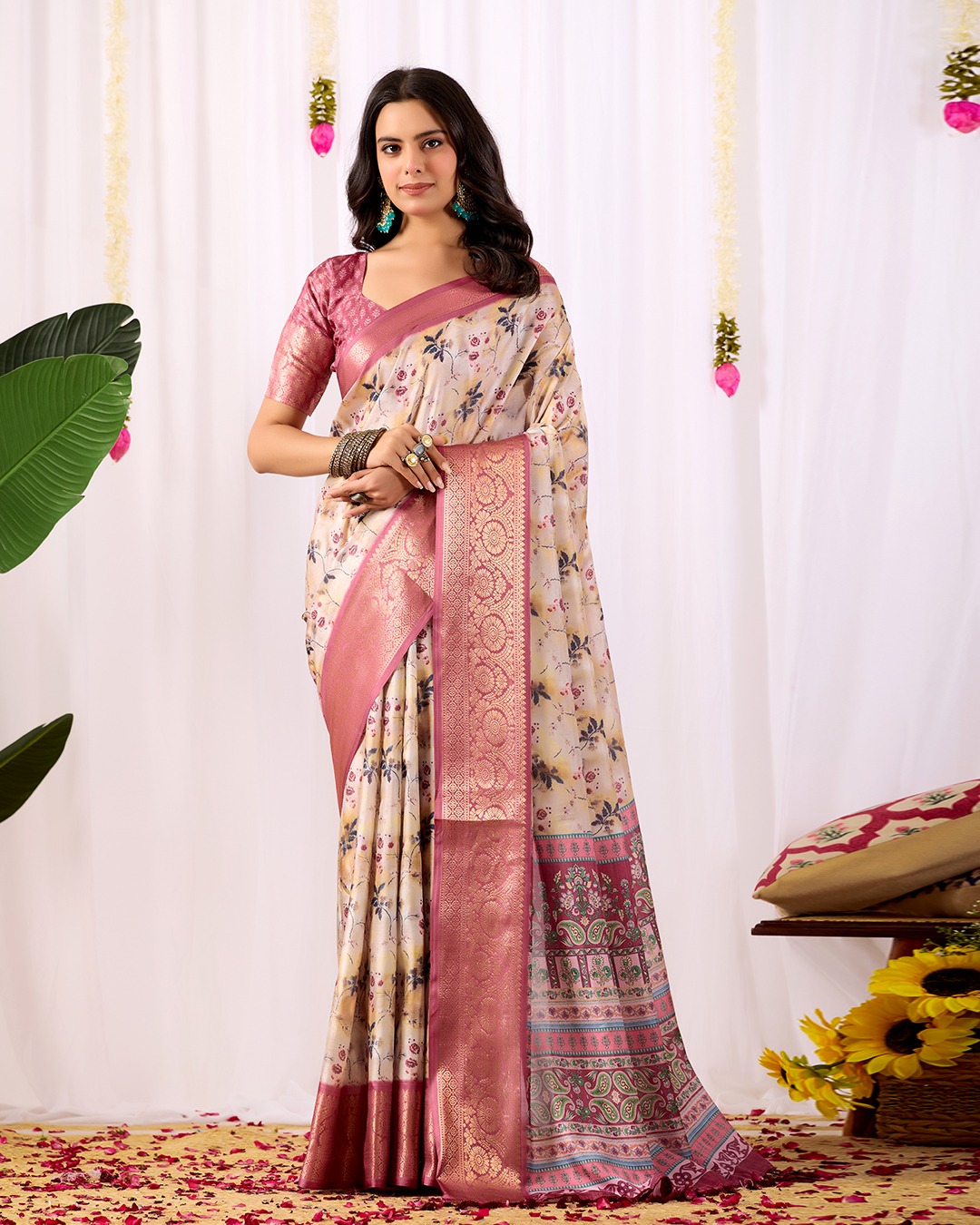
A saree can also suit Bohag Bihu when the border or blouse introduces a regional reference. Festive Beige Saree with Floral Print and Rich Zari Work brings floral pattern and zari into the look, while Festive Wear Blue Silk Saree for Women brings a cooler, more saturated alternative for an evening programme. Keep the jewellery focused: a pair of gold-toned earrings, a gamocha-inspired hair detail or a traditional Assamese necklace can be enough.
October: Kati Bihu and quiet observance
October Kati Bihu calls for modest, breathable clothing in calm colours and restrained ornament.
Kati Bihu isn't usually the moment for a heavily sequinned lehenga or a dramatic trailing dupatta. A simple off-white, beige, pale green or muted yellow cotton outfit can reflect the festival's agricultural and devotional setting. Assam silk remains suitable, but choose a matte finish, narrow border or limited embroidery rather than dense zari.
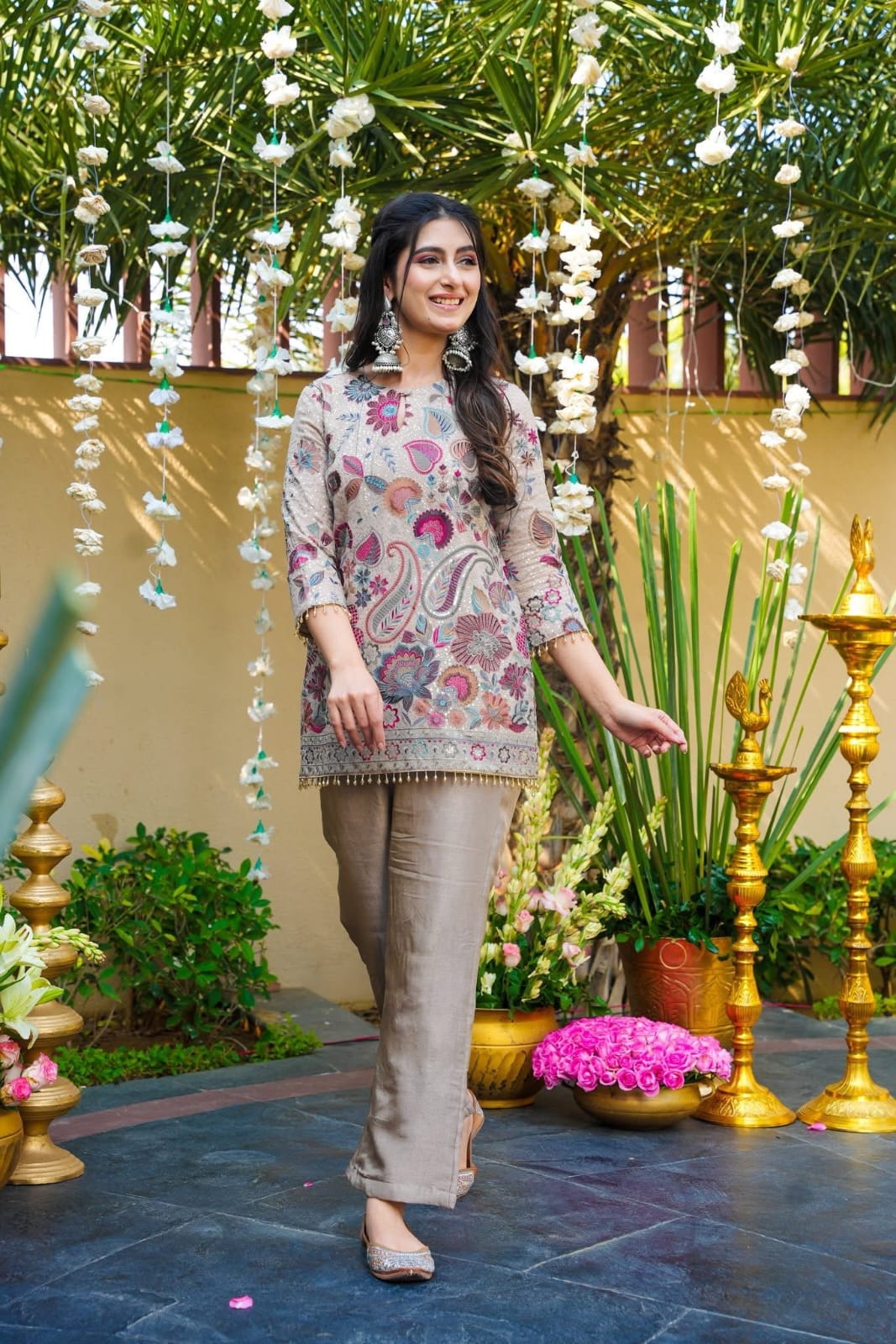
Elegant Cream Assam Silk Kurti Set with Floral Dupatta can be adapted for a family prayer or a small cultural gathering because cream and floral detailing provide festivity without excessive shine. Cream Assam Silk Salwar Suit With Bead Embroidery is another option when a salwar silhouette feels more comfortable than a saree or mekhela chador. Pair either outfit with small studs, a slim bangle and low-heeled footwear that won't sink into damp ground.
January: Magh Bihu, Uruka and harvest gatherings
January Magh Bihu outfits should provide warmth, easy movement and enough structure for outdoor community celebrations.
Layering is practical for Uruka because temperatures can fall sharply after sunset. A long-sleeved blouse, a fine shawl or a structured kurta worn under a dupatta can preserve a festive appearance without making the outfit cumbersome. Eri silk is especially useful in cooler weather because the fabric has a soft, warm hand, while medium-weight Assam silk gives a more formal finish.
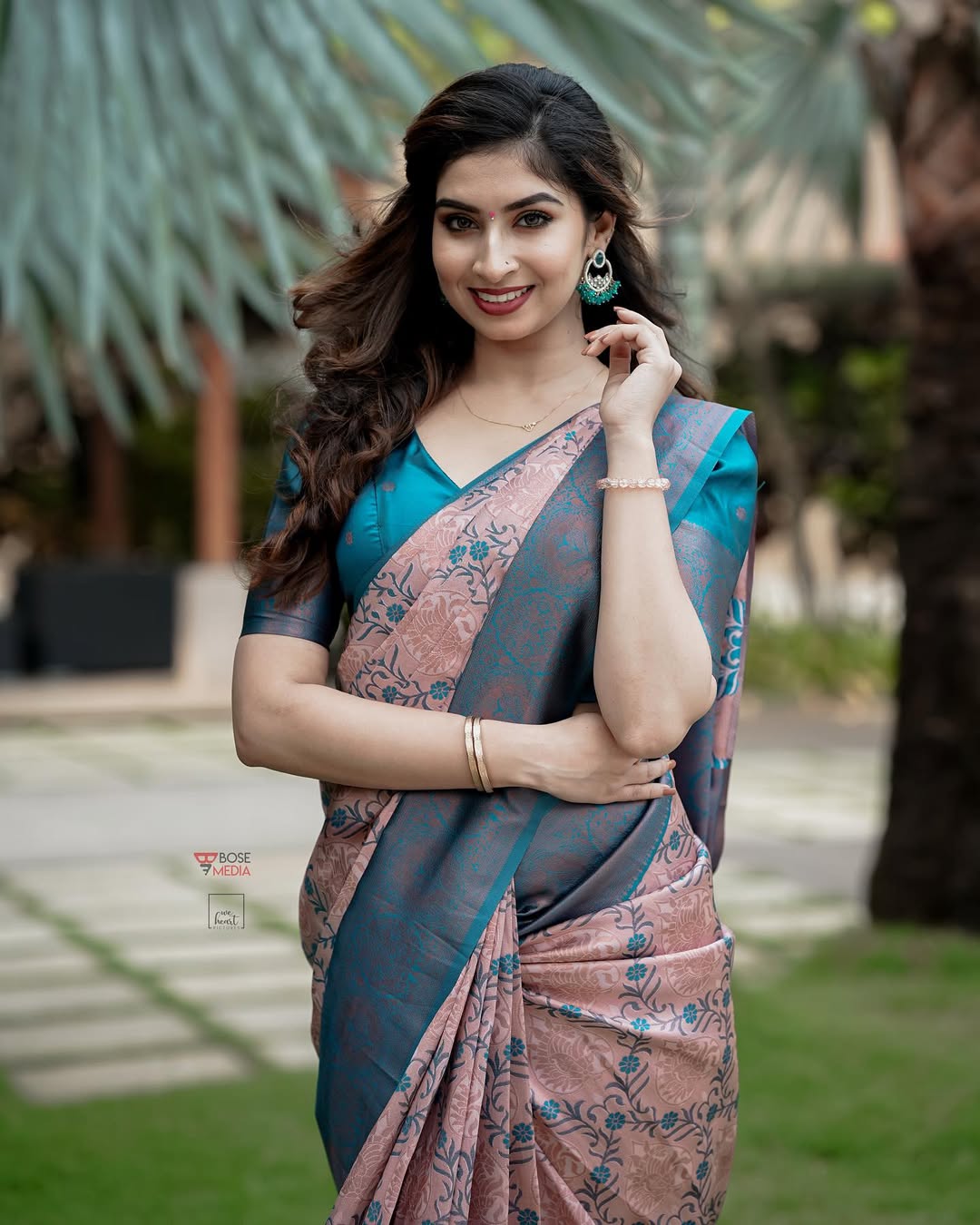
Peach Assam Silk Kurta Set with Printed Organza Dupatta suits a daytime harvest visit or a family lunch when you want a light, coordinated outfit. For a richer evening appearance, Pastel Peach Teal Banarasi Lichi Silk Saree Zari Work can be paired with a full-sleeved blouse and a plain shawl. Banarasi silk isn't an Assamese weave, so the saree should be presented as a festive Indian interpretation rather than described as traditional Assamese dress.
Which traditional garments belong in a Bihu wardrobe?
The mekhela chador, riha, gamocha, Assam silk and muga silk form the strongest foundation for a Bihu wardrobe.
Mekhela chador
The mekhela chador consists of a lower mekhela and an upper chador, usually worn with a blouse and sometimes a riha. The lower portion is pleated and tucked at the waist, while the chador is arranged across the upper body. A traditional mekhela chador may use handwoven cotton, Assam silk, muga silk or eri silk, with motifs and borders varying by region and weaver.
For a first purchase, choose a medium-weight fabric with a clearly finished border and a chador long enough to cover the torso securely. A very slippery silk can be difficult for beginners, especially in humid April weather. Cotton-silk or textured Assam silk generally stays more stable during walking, dancing and repeated sitting.
Riha and gamocha
A riha is a traditional Assamese cloth that can be worn with the mekhela chador or used as a meaningful styling layer. A gamocha is a rectangular woven cloth traditionally associated with Assamese identity, hospitality and daily use; the familiar red-and-white version is especially recognisable.
Gamocha details should be used thoughtfully rather than turned into random decoration. A narrow red-and-white border, a woven stole or a small hair accessory can acknowledge the textile tradition without overwhelming the outfit. Avoid placing a gamocha-inspired motif on every garment element, since one clear reference usually looks more considered.
Muga, eri and Assam silk
Muga silk is known for its natural golden sheen, eri silk for its soft and warm texture, and Assam silk for the broad family of silk textiles associated with Assamese weaving traditions.
Muga silk is particularly striking for a ceremonial mekhela chador, but genuine muga can be expensive and needs careful handling. Eri silk is a strong choice for cooler Magh Bihu conditions or for people who prefer a less glossy finish. Assam silk suits both traditional and modern silhouettes, including sarees, kurtas and salwar suits.
How should Bihu colours and motifs be styled?
Bihu colours work best when one dominant shade is balanced by a traditional border, a contrasting blouse or a restrained accessory.
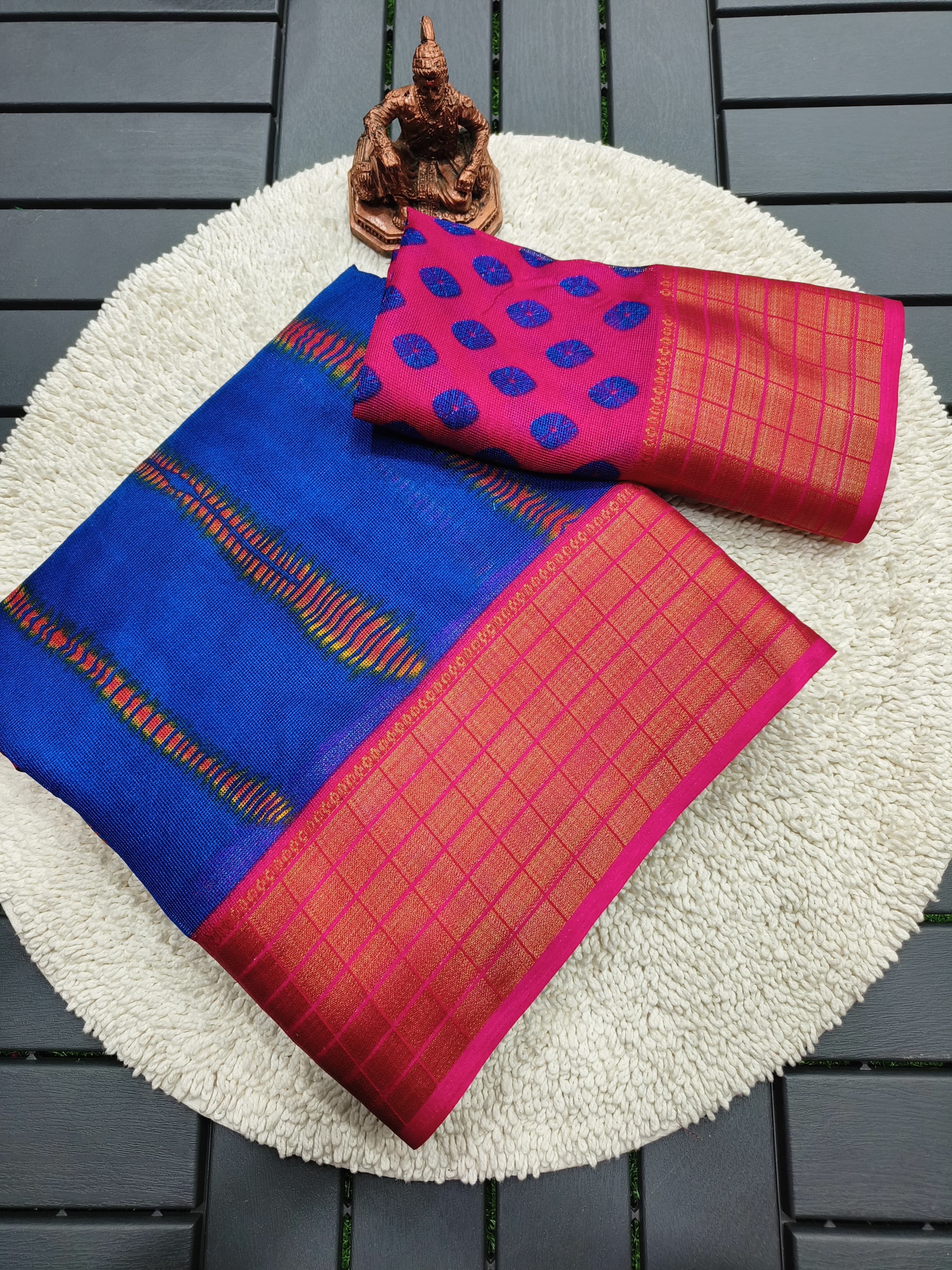
Red and white remain the most recognisable festive combination in Assam, particularly through gamocha-inspired checks and borders. Yellow reflects spring and harvest associations, while green can suggest new growth. Cream, beige and natural gold create a quieter look for Kati Bihu or daytime gatherings. Blue and teal are not excluded from Bihu dressing, but they look more culturally grounded when combined with a red, cream or gold accent.
Common visual references include floral forms, geometric borders, stylised leaves and woven patterns. A printed dupatta, zari border or brocade blouse can bring pattern into a current outfit without copying a traditional mekhela chador exactly. Aqua Printed Lichi Silk Saree with Zari Border Style, for example, can be styled with a plain cream blouse and red earrings so the border remains the focal point.
Jewellery should support the textile rather than compete with it. Gold-toned earrings, a gam-kharu-style bangle, a traditional Assamese necklace or a small nose pin can work with silk. If an outfit already contains zari, bead embroidery and a printed dupatta, select one or two jewellery forms instead of layering every festive accessory at once.
How can traditional Bihu wear work at a contemporary event?
A contemporary Bihu outfit feels culturally considered when it retains a recognisable textile, border, colour story or drape while adapting the silhouette to the wearer's comfort.
A mekhela chador can be pre-pleated before an event, secured with discreet safety pins and worn with a fitted blouse that allows the chador to sit firmly on the shoulder. A belt should be used carefully because a wide western belt can change the garment's visual balance. A narrow fabric tie or a concealed waist fastening is usually less distracting.
A saree can take on an Assamese accent through a red-and-white blouse, a gamocha-inspired stole, Assamese jewellery or a traditional hair arrangement. A kurta set can use a woven border, a riha-like stole or a red-and-cream colour scheme without claiming to be a mekhela chador. These distinctions matter because cultural styling is stronger when the garment's identity is described accurately.
For office celebrations, choose a straight kurta, a light Assam silk saree or a subdued salwar suit with one traditional accessory. For a stage programme or community dance, prioritise secure pleats, a non-slippery drape and flat footwear. For a family lunch, a printed silk kurta set or an ankle-length skirt with a simple blouse may provide enough movement and polish.
What should you check before buying a Bihu outfit?
Before buying a Bihu outfit, check the fabric composition, garment measurements, lining, transparency, care instructions and the amount of movement the design allows.
- Fabric: Confirm whether the garment uses Assam silk, muga silk, eri silk, cotton, Banarasi silk or a blend. Fabric names can indicate appearance and feel, but they don't always prove handloom origin.
- Measurements: Compare bust, waist, hip, kurta length, sleeve length and dupatta length with a garment that already fits. Ready-to-wear sizing can vary considerably between silhouettes.
- Transparency: Pale silk, organza and lightweight cotton may need a suitable camisole, lining or petticoat. Check the fabric against daylight before wearing it to a public event.
- Movement: Sit, walk and raise your arms in the outfit before finalising jewellery and footwear. A festive garment that restricts movement will be uncomfortable during Husori visits or long family gatherings.
- Embellishment: Inspect zari, bead embroidery and printed areas for loose threads. Heavy embellishment can snag against jewellery, bags and rough seating.
Care decisions also affect how long a Bihu outfit remains wearable. Store silk in a clean cotton cover rather than plastic, refold the garment every few months to prevent permanent creases, and keep zari away from moisture and perfume. Dry-clean heavily embellished silk when the care label recommends it. Air a silk garment in shade after wearing it, but avoid prolonged direct sunlight because strong light can fade dyes and weaken fibres.
How do you build one practical Bihu capsule wardrobe?
A practical Bihu capsule wardrobe can contain one traditional drape, one lightweight daytime set, one richer evening outfit and a small group of reusable accessories.
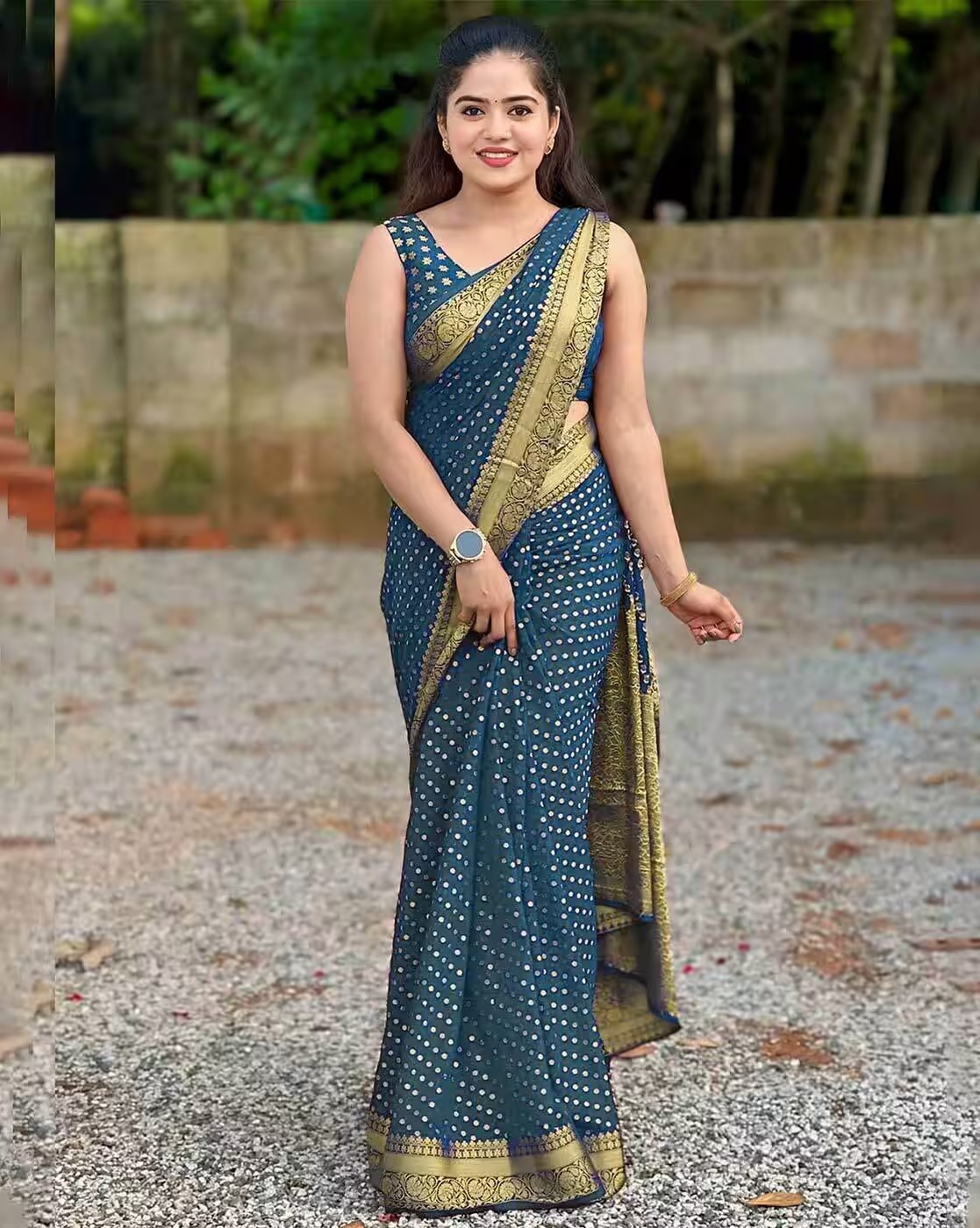
Start with a medium-weight mekhela chador or a silk saree in a versatile cream, red, yellow or muted gold combination. Add a breathable kurta set for Bohag Bihu daytime visits, a warmer eri or Assam silk layer for Magh Bihu and one restrained outfit for Kati Bihu. This approach avoids buying three heavily embellished garments for festivals that have different moods and climates.
Reuse accessories strategically. A red-and-white stole can work with cream, blue, peach and green outfits. Gold-toned earrings can complement muga silk, Assam silk and a contemporary saree. A plain shawl can make a short-sleeved Magh Bihu outfit more comfortable after sunset without hiding its main border.
The strongest wardrobe choice is the one that respects the festival, suits the weather and allows natural movement. Traditional Assamese clothing gives plenty of visual richness without requiring every element to be ornate. Choosing one clear cultural reference and wearing it comfortably usually creates a more convincing result than combining unrelated motifs, fabrics and accessories.
Practical Questions About Dressing for Bihu Festivals
What should women wear for Bohag Bihu?
Women can wear a mekhela chador in Assam silk, muga silk, eri silk or cotton, or choose a silk saree or kurta set with Assamese-inspired colours and borders. Red, white, cream, yellow and green are suitable, while lightweight fabrics work best for warm April weather.
What is the difference between a mekhela chador and a saree?
A mekhela chador is a two-piece Assamese garment made of a lower mekhela and an upper chador, while a saree is one long continuous cloth draped around the body. The mekhela chador has its own pleating and tucking method and should not be described simply as an Assamese saree.
What should I wear for Kati Bihu?
Kati Bihu suits simple cotton or Assam silk clothing in cream, beige, pale green, muted yellow or other subdued shades. Choose minimal jewellery and moderate embellishment because Kati Bihu has a quieter devotional and agricultural character.
Which fabric is suitable for Magh Bihu?
Medium-weight Assam silk, eri silk and layered cotton are suitable for Magh Bihu because January evenings can be cool. A full-sleeved blouse, fine shawl or structured kurta layer can provide warmth during Uruka and outdoor gatherings.
Can I wear a saree for Bihu celebrations?
Yes, a saree is appropriate for Bihu celebrations when the colour, fabric and styling suit the event. An Assam silk saree, a saree with a red-and-white accent or a contemporary silk saree with Assamese jewellery can create a respectful festive look.
How should Assam silk and muga silk be cared for after Bihu?
Store Assam silk and muga silk in a clean cotton cover away from direct sunlight, perfume and moisture. Follow the care label, use professional dry cleaning for embellished garments when advised, and refold silk periodically to prevent permanent fold marks.