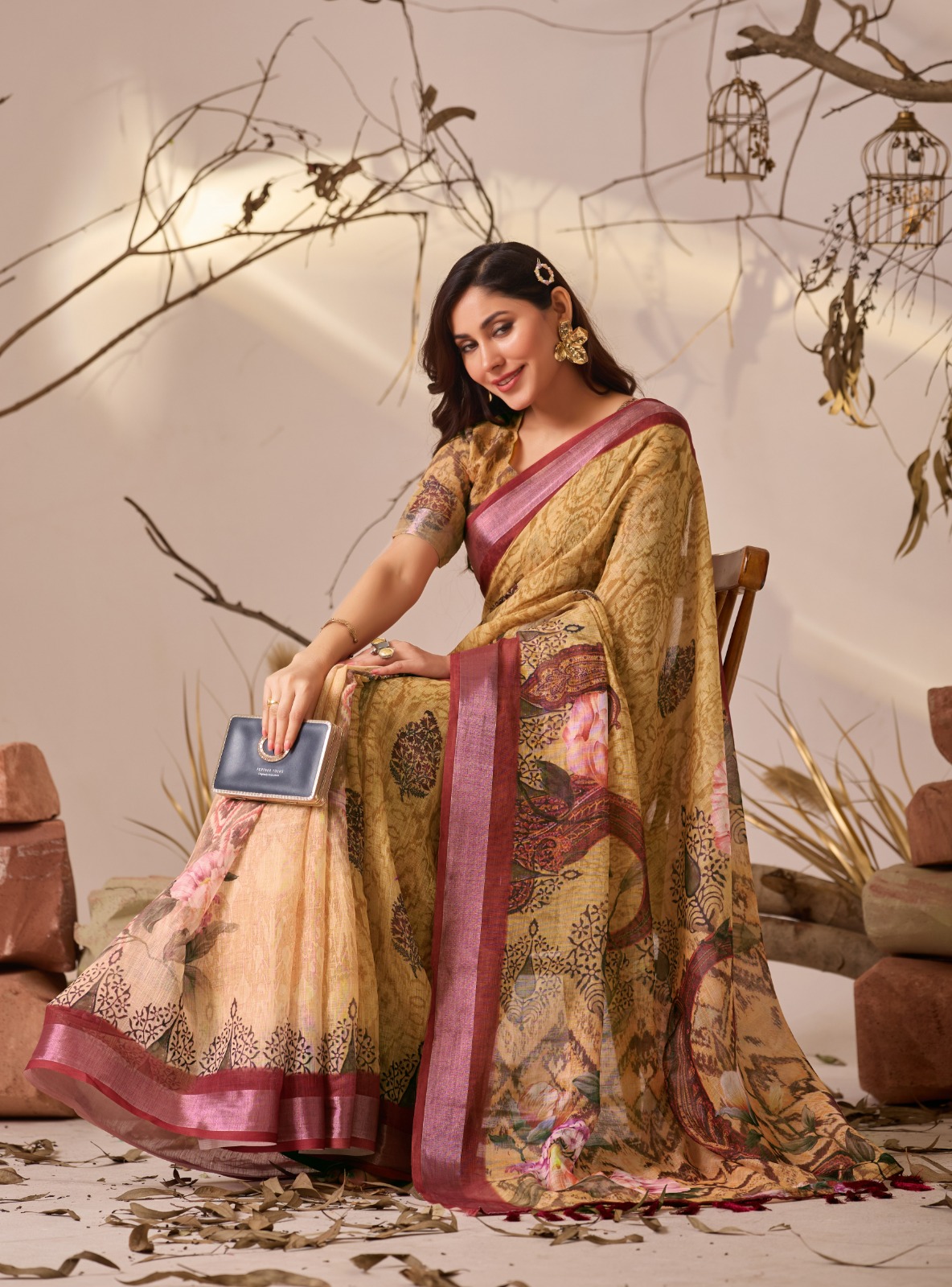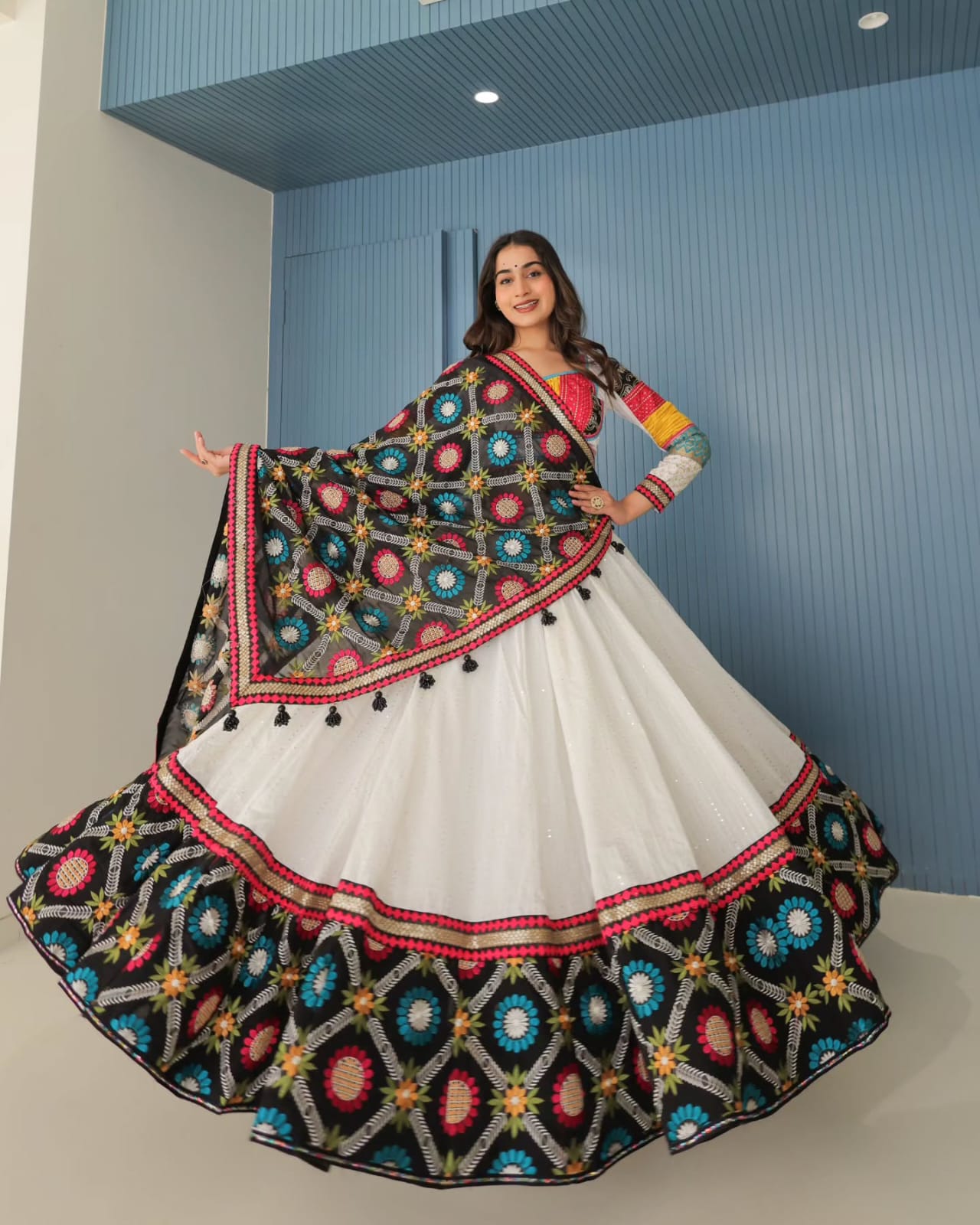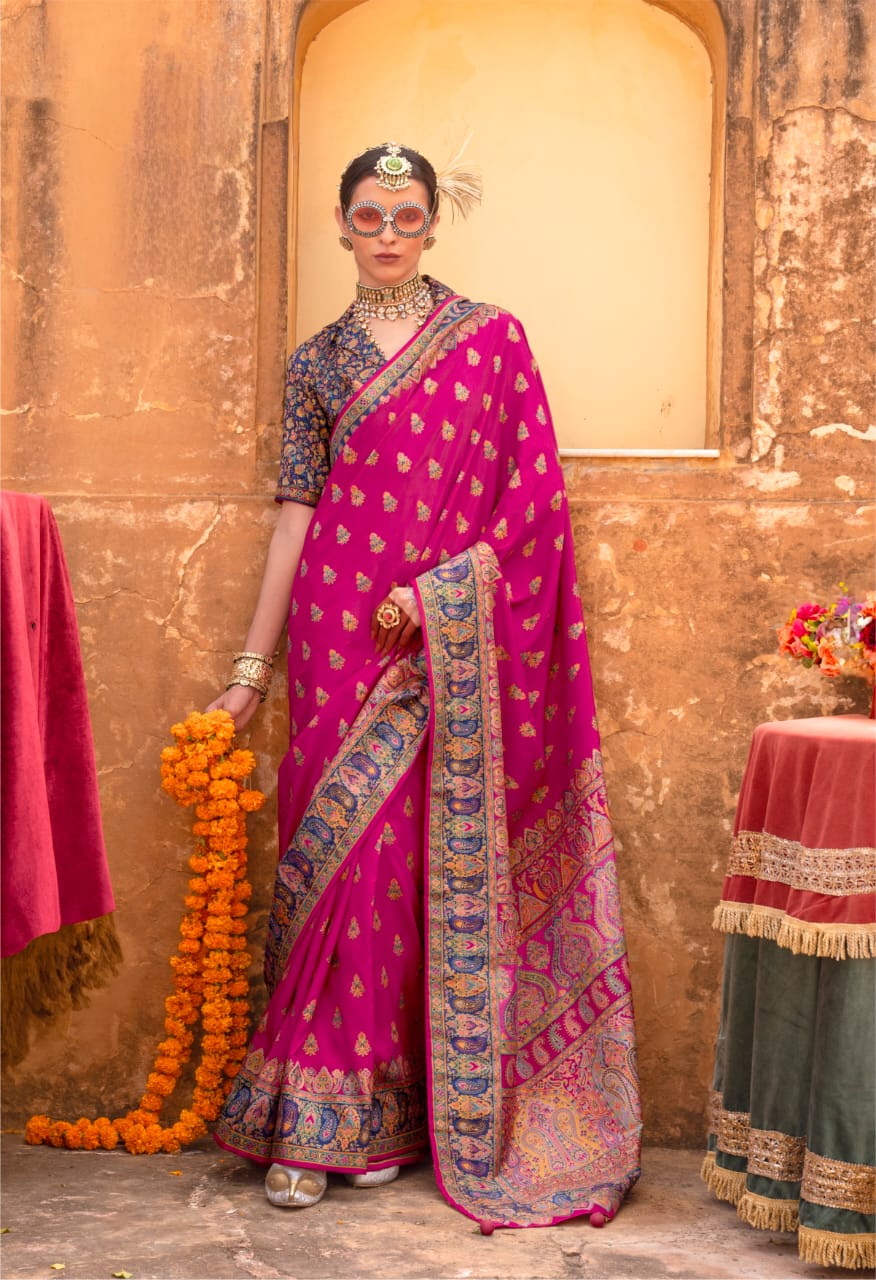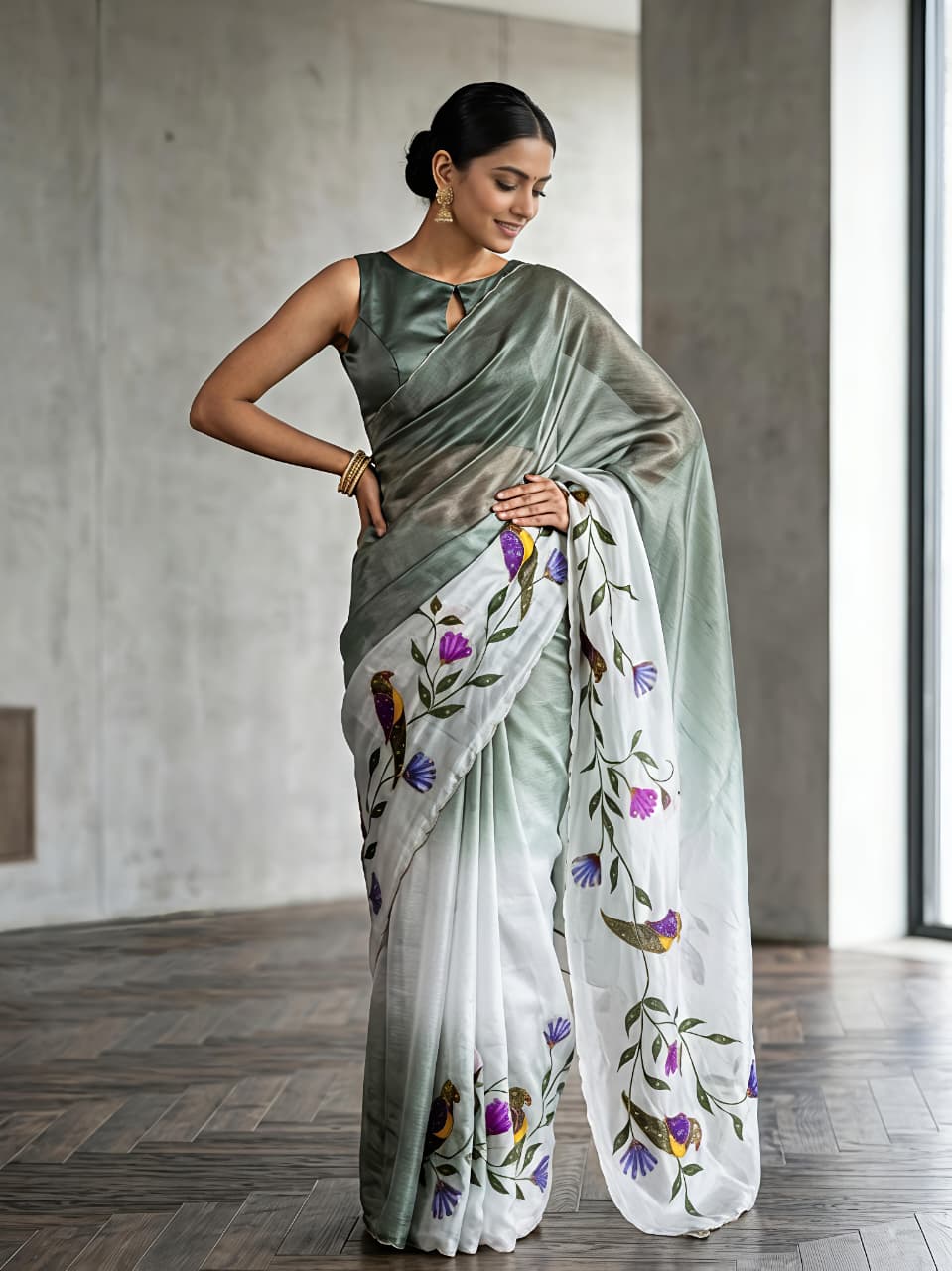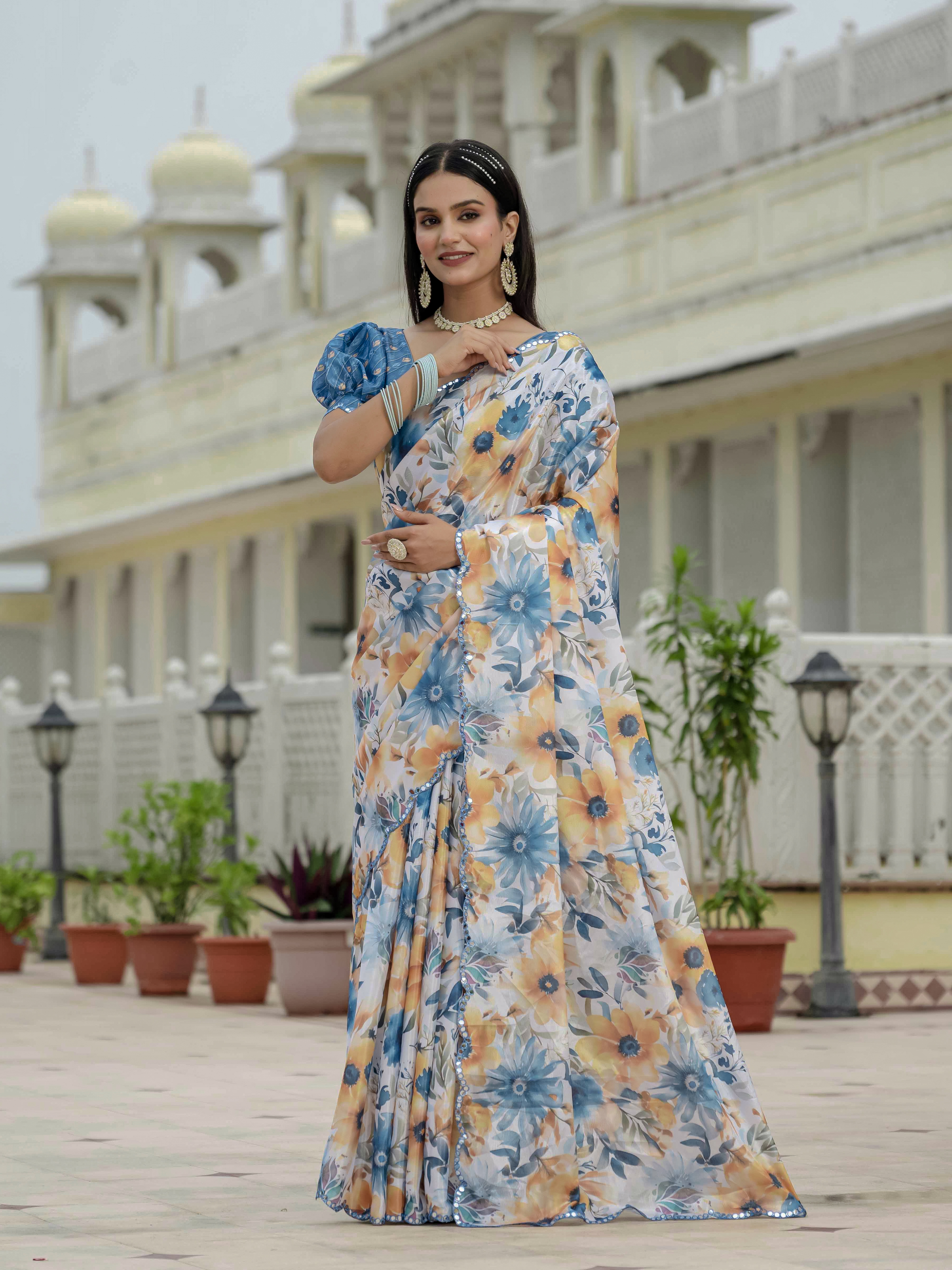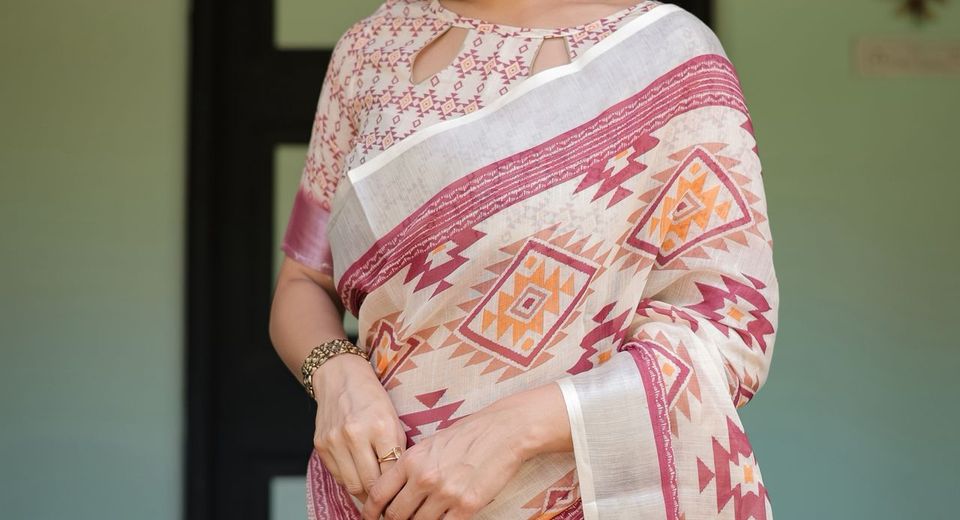
Arunachal Tribal Textile-Inspired Saree Styling Ideas work best when the saree's graphic language remains visible rather than being buried under excessive accessories. Geometric bands, earthy contrasts, asymmetric borders and hand-crafted-looking motifs can give a familiar saree a distinctly contemporary character. The most successful outfit usually combines one strong textile element with quiet styling choices: a clean blouse, deliberate jewellery and a drape that lets the pallu breathe.
Arunachal Pradesh contains many textile traditions, communities and visual vocabularies, so a printed saree inspired by tribal design should not be treated as a literal substitute for a community-specific woven textile. Thoughtful styling can acknowledge that diversity while using motifs as a starting point for colour, proportion and texture. The guide below explains how to build that look for work, festive gatherings, intimate celebrations and destination events.
What gives an Arunachal-inspired saree its visual character?
An Arunachal-inspired saree usually draws attention through repeated geometry, strong colour blocks, rhythmic borders and an artisanal surface effect rather than through dense ornamentation alone. The styling priority is to frame those elements clearly.
Many textiles associated with Northeast Indian weaving use visible rhythm: stripes, stepped forms, bands, checks and angular motifs arranged in measured intervals. A saree influenced by that approach may look nude even when the print is bold because the eye follows its repetition. A wide patterned pallu therefore needs room to fall vertically, while a narrow border can be shown through a pleat arrangement or a slightly shorter drape.
Colour also carries much of the design. Off-white, grey, beige, teal, muted green, rust, black and natural brown create an earthy foundation. A single brighter accent, such as coral, saffron or deep red in the blouse or earrings, can add energy without competing with the textile. Unlike a heavily embellished Banarasi silk saree or a ceremonial Kanjeevaram, a tribal-inspired linen saree often gains impact from restraint.
Printed designs and woven designs are not identical. A printed tribal motif can reproduce crisp imagery at an accessible price and with a lighter feel, while a woven motif is built into the structure of the fabric. Checking whether a design is printed, jacquard-woven, embroidered or created with zari helps you set realistic expectations about texture, durability and care.
Arunachal Tribal Textile-Inspired Saree Styling Ideas for choosing a colour story
The most reliable colour method is to select one base shade from the saree, one supporting neutral and one small accent colour.
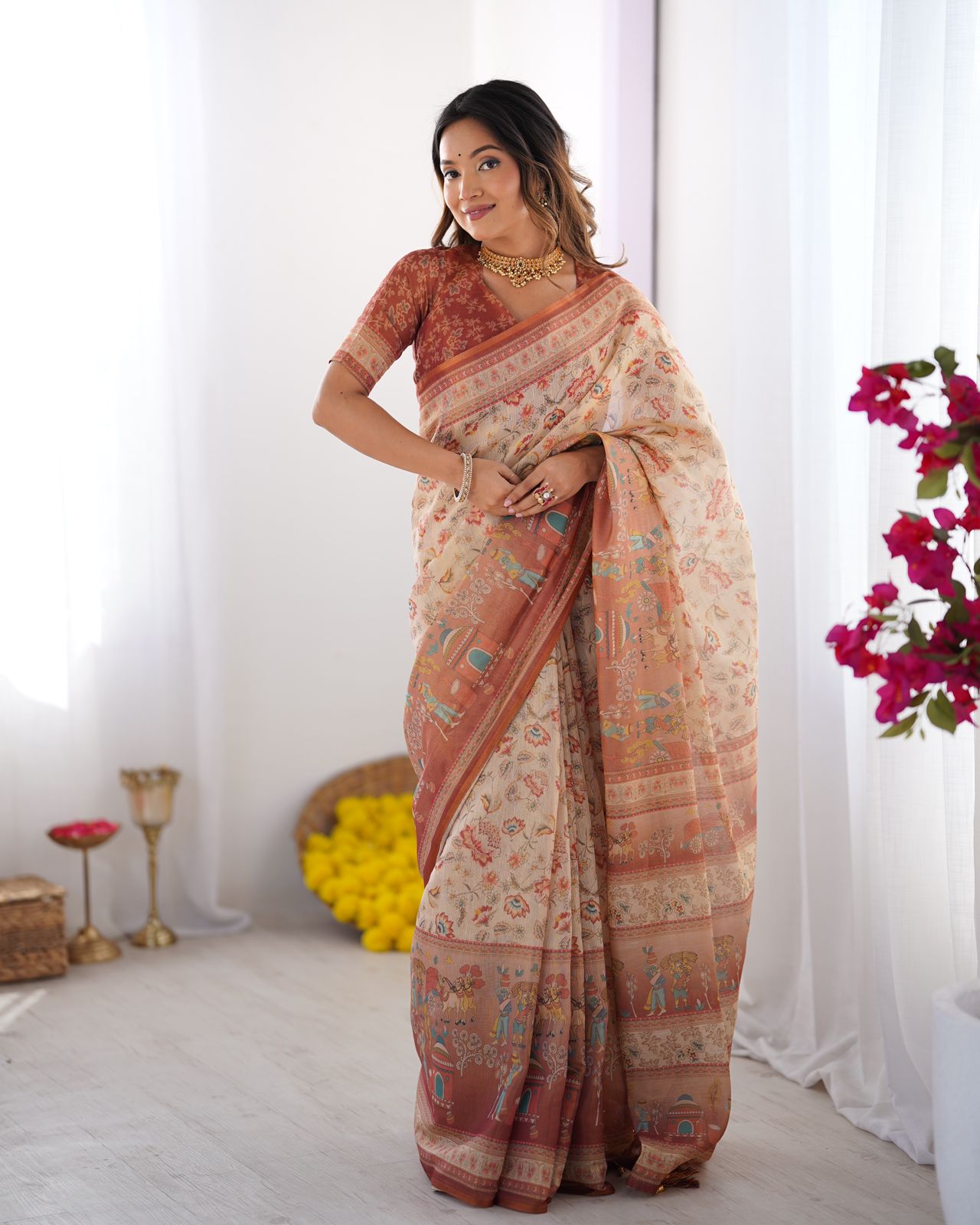
Soft neutrals for daytime
White, ivory, grey and beige create a polished daytime look when the saree includes angular or high-contrast motifs. A charcoal, slate or grey blouse can echo a border without making the outfit feel formal. A tan leather sandal, oxidised silver earrings and a structured cotton bag complete the palette for an exhibition, office celebration or lunch.
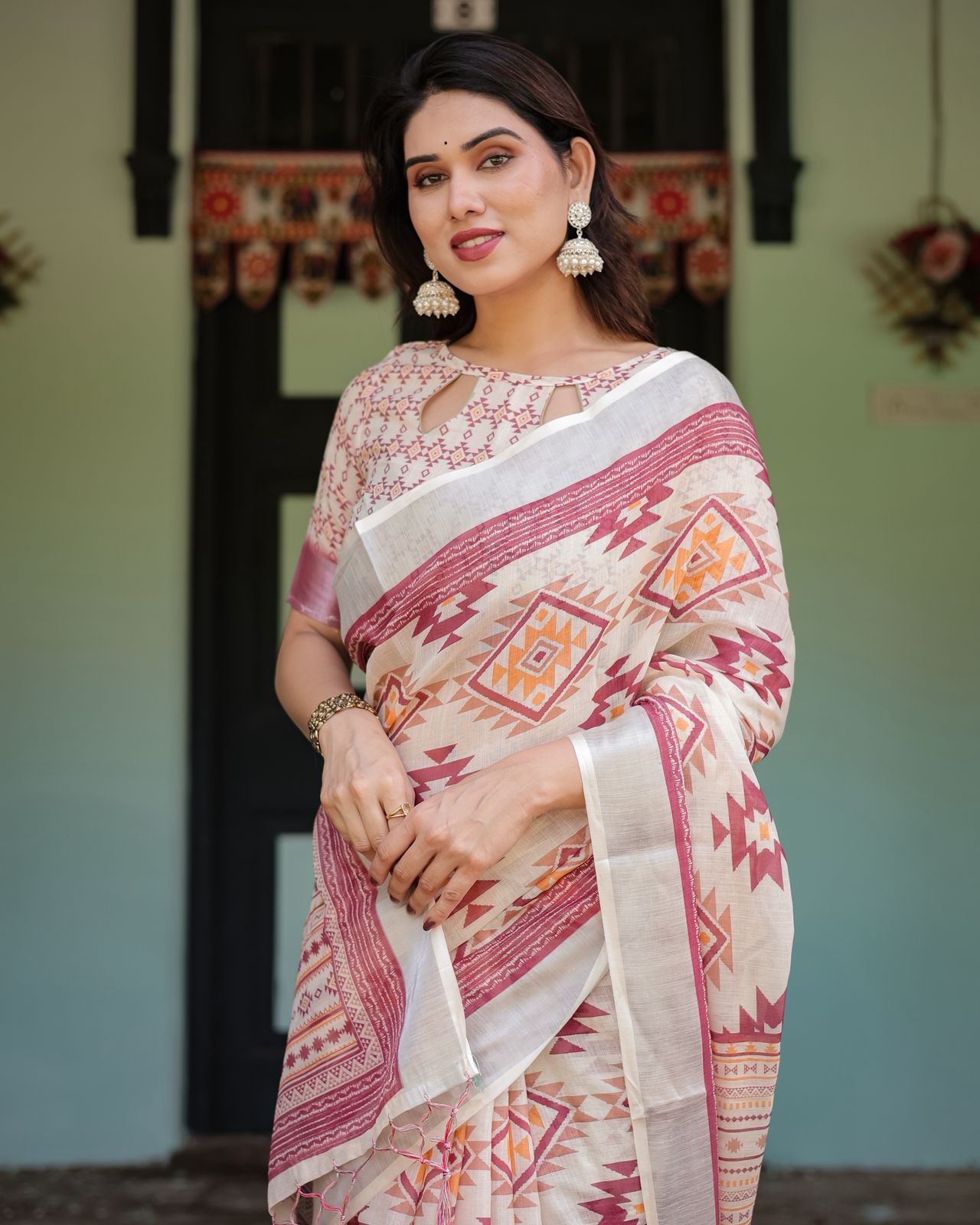
Soft White Linen Saree with Grey Tribal Design illustrates this approach clearly: a grey blouse with a high round neck will make the graphic design look intentional, while a white sleeveless blouse will make the outfit feel lighter and more summery. Off White Tribal Print Pure Linen Saree with Tassel Pallu suits a similar palette, but its tassel detail provides movement, so the accessories can remain minimal.
Green and beige for a calm festive look
Pastel green works especially well with beige, cream, antique gold and muted brown. Elegant Pastel Green & Beige Linen Saree with Tribal Design can be paired with a beige raw-silk blouse for a softly festive result or a deep forest-green blouse for greater evening contrast. Antique-gold jhumkas and a small potli introduce warmth without turning the outfit into a conventional glitter-heavy ensemble.
Teal for evening contrast
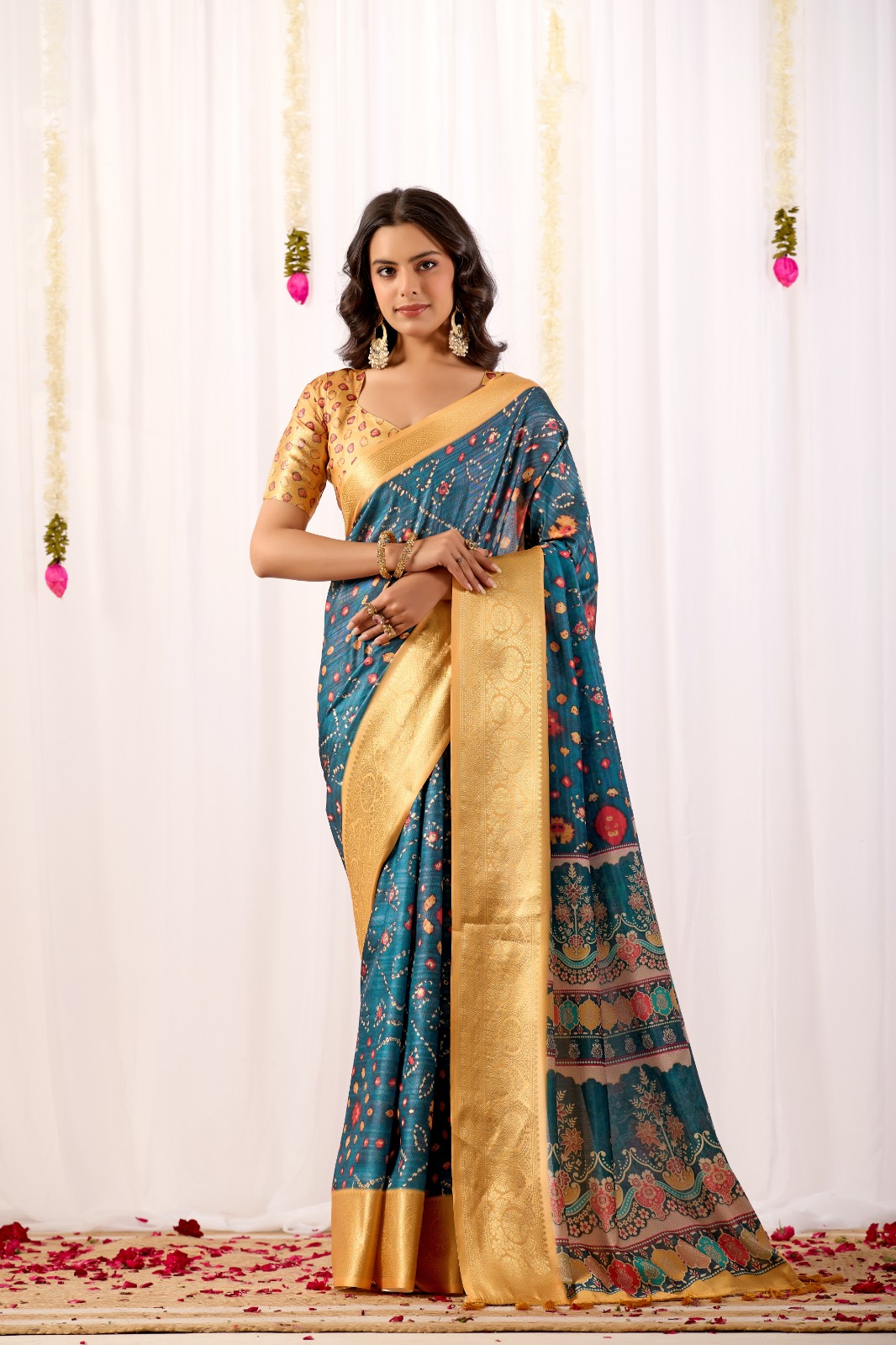
Teal can support silver, gunmetal, antique gold, ivory and black, depending on the mood you want. Teal Tribal Art Printed Lichi Silk Saree with Zari Border already includes a dressier surface through its silk-like fall and zari border, so a plain blouse usually looks more refined than a sequinned one. Choose a three-quarter sleeve blouse in deep teal for continuity, or use a muted copper blouse if the zari is warm-toned.
How should the blouse be styled with tribal prints?
A blouse with a clean shape and controlled texture allows a tribal print saree to remain the focal point.
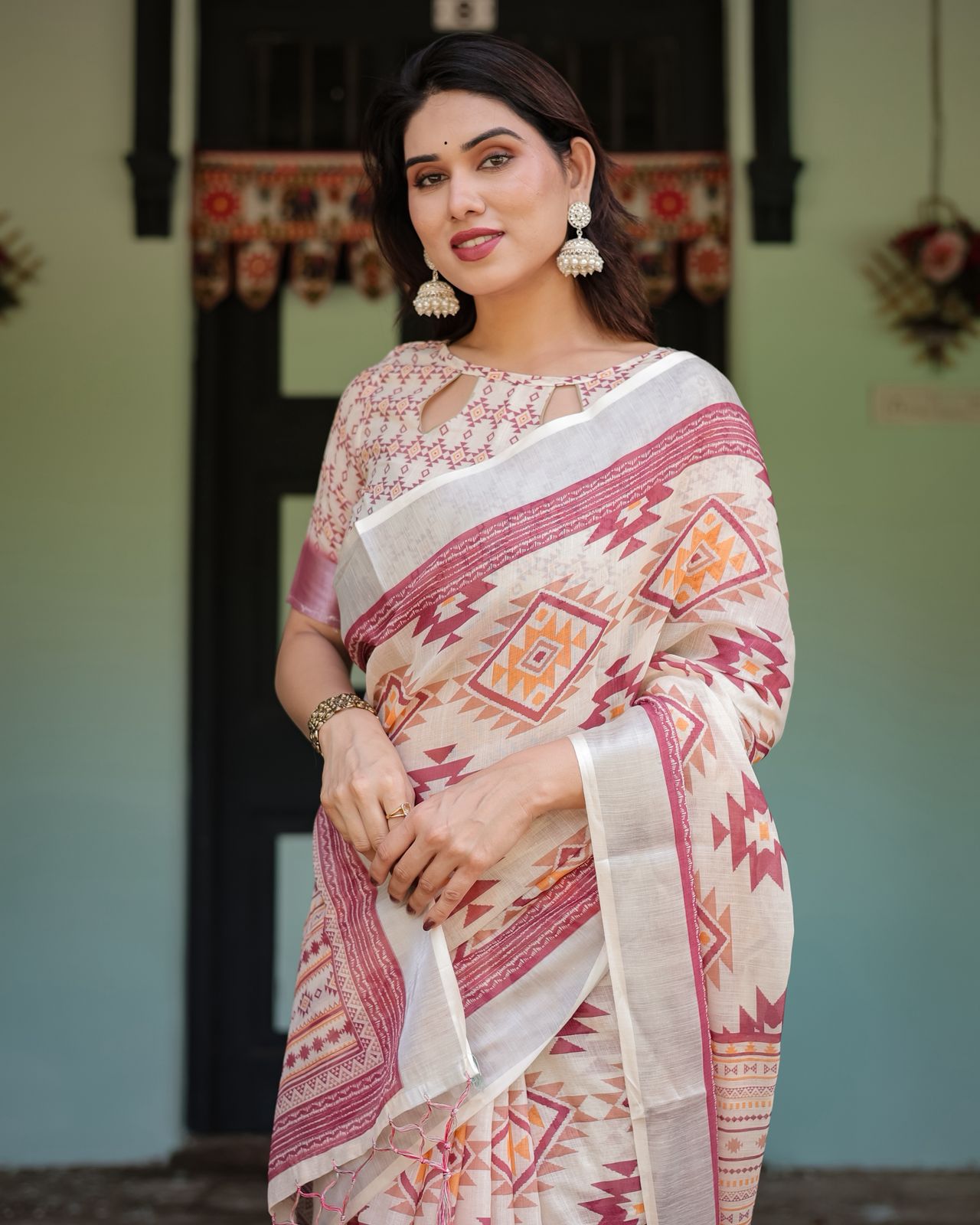
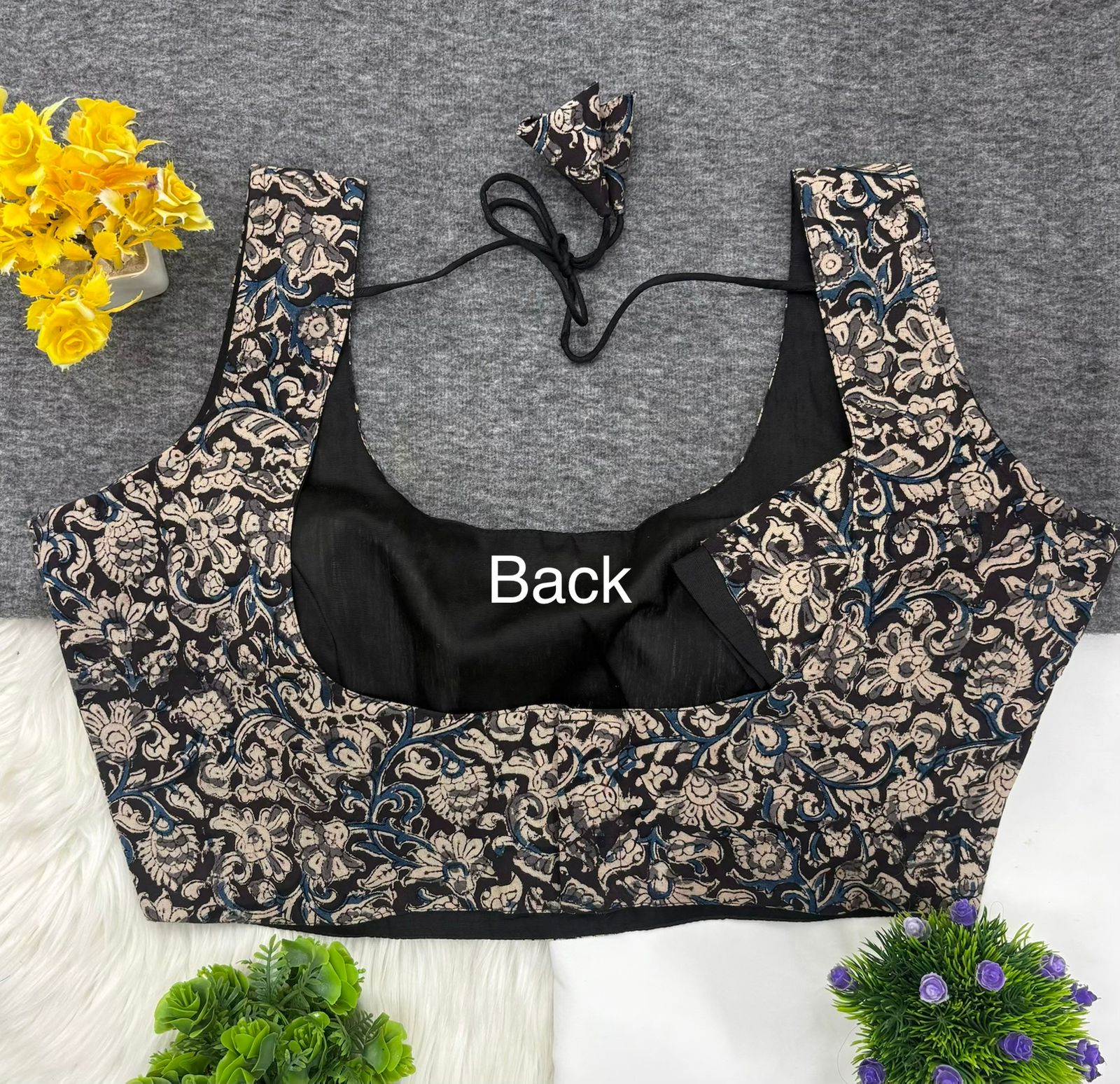
For a linen or linen-cotton saree, cotton-silk, raw silk, handloom cotton or matching linen can provide enough structure without creating an uncomfortable contrast. A high round neck gives a graphic, modern effect. A square neck exposes more collarbone and works well with a short necklace. A boat neck lengthens the shoulder line, while a modest V-neck softens a saree with strong horizontal bands.
Use the blouse to repeat a colour that appears only once in the saree. For example, a teal saree with a beige micro-detail can take a beige blouse, while an off-white saree with a dark border can take a charcoal blouse. Avoid copying every colour in the print; multiple competing accents make geometric designs appear busy.
Plain sleeves are usually the safest choice for a heavily patterned pallu. If the saree is understated, a textured sleeve can add interest. A narrow contrast piping, small fabric-covered buttons or a single row of tonal embroidery is enough. Heavy mirror work, large sequins and elaborate brocade may fight with the linear quality of tribal-inspired motifs.
Teal Abstract Printed Linen Cotton Saree with Blouse offers a useful shortcut for proportion because the blouse is already coordinated. Keep the jewellery and footwear simple if the printed surface and blouse together create a complete visual frame. Teal Floral Printed Linen Cotton Saree With Matching Blouse can be styled in the same way, although its floral direction permits slightly softer accessories such as pearl drops or a woven clutch.
Which drapes show the motif and pallu properly?
A neat Nivi drape with broad, evenly spaced pleats is the most effective option for displaying a printed border and a designed pallu.
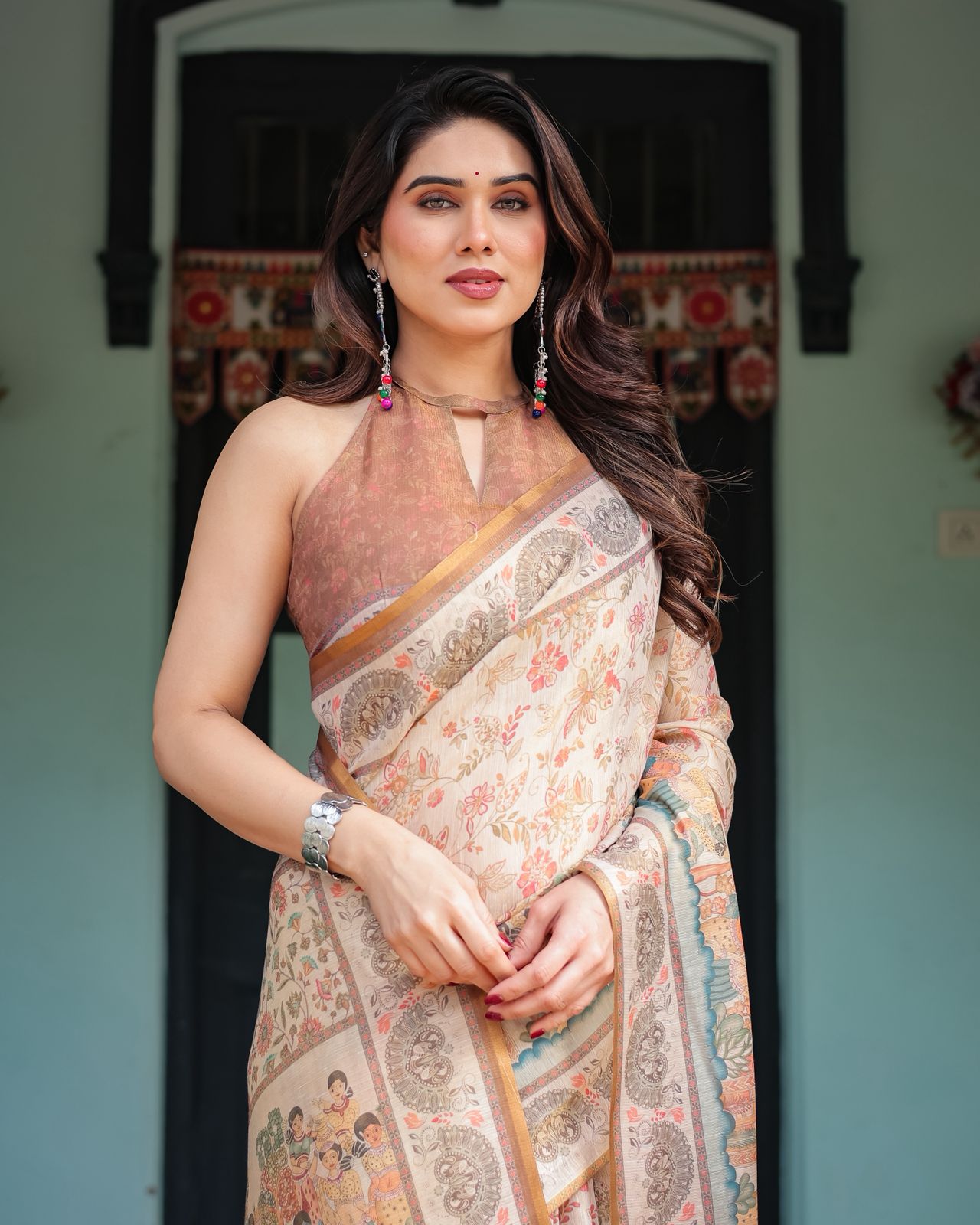
Make five to seven front pleats, depending on the fabric width and your height, and keep each pleat approximately the same width. Linen and linen-cotton hold pleats well after pressing, but very crisp pleats can add bulk at the waist; five wider pleats may feel more comfortable than seven narrow ones. Pin the pleats from the inside if the fabric is delicate, and place only one discreet pin at the shoulder so the pallu remains fluid.
An open pallu shows the full design and works well for photographs, gallery visits and seated events. A pleated pallu looks sharper for commuting or office functions. For a Haldi ceremony, a shoulder-secured pallu or a shorter pallu reduces the chance of dragging fabric through turmeric, flower petals or food. A belt can hold the saree in place, but use a narrow matte belt rather than a highly embellished one if the saree has a strong border.
The pallu deserves special attention because it often carries the largest version of the motif. Off White Linen Saree with Tribal Prints & Designer Pallu should be draped with the pallu opened at least once during the event so the designed end is visible. A loose front pleat or a relaxed shoulder fall will prevent the design from becoming a narrow strip hidden under the arm.
How can jewellery complement a tribal-inspired saree?
Oxidised silver, antique brass, wood, terracotta, beads and restrained gold usually complement tribal-inspired sarees better than a full set of high-shine jewellery.
For a daytime outfit, choose one main jewellery direction: large silver earrings with no necklace, a short bead necklace with small studs, or a cuff with slim hoops. Repeating the material in two places creates cohesion. For instance, oxidised silver earrings and a silver bangle feel considered, while silver earrings, gold necklace, pearl bracelet and bright enamel bangles may look disconnected.
Antique gold suits beige, pastel green, rust and warm zari. Gunmetal and oxidised silver bring definition to grey, teal and black. Terracotta earrings add an earthy accent to off-white linen. Wooden beads can soften a highly angular print, especially when the saree is worn to a daytime cultural programme or an informal dinner.
Keep the scale proportional to the border. A wide, intricate border can carry larger earrings, but a narrow border is easily overwhelmed by oversized necklaces. If the saree has a tassel pallu, let the tassels provide movement and skip long layered necklaces that may catch on them.
Where can these sarees be worn?
Tribal-inspired sarees work across occasions when the fabric weight, blouse finish and accessories match the setting.
Office events and daytime gatherings
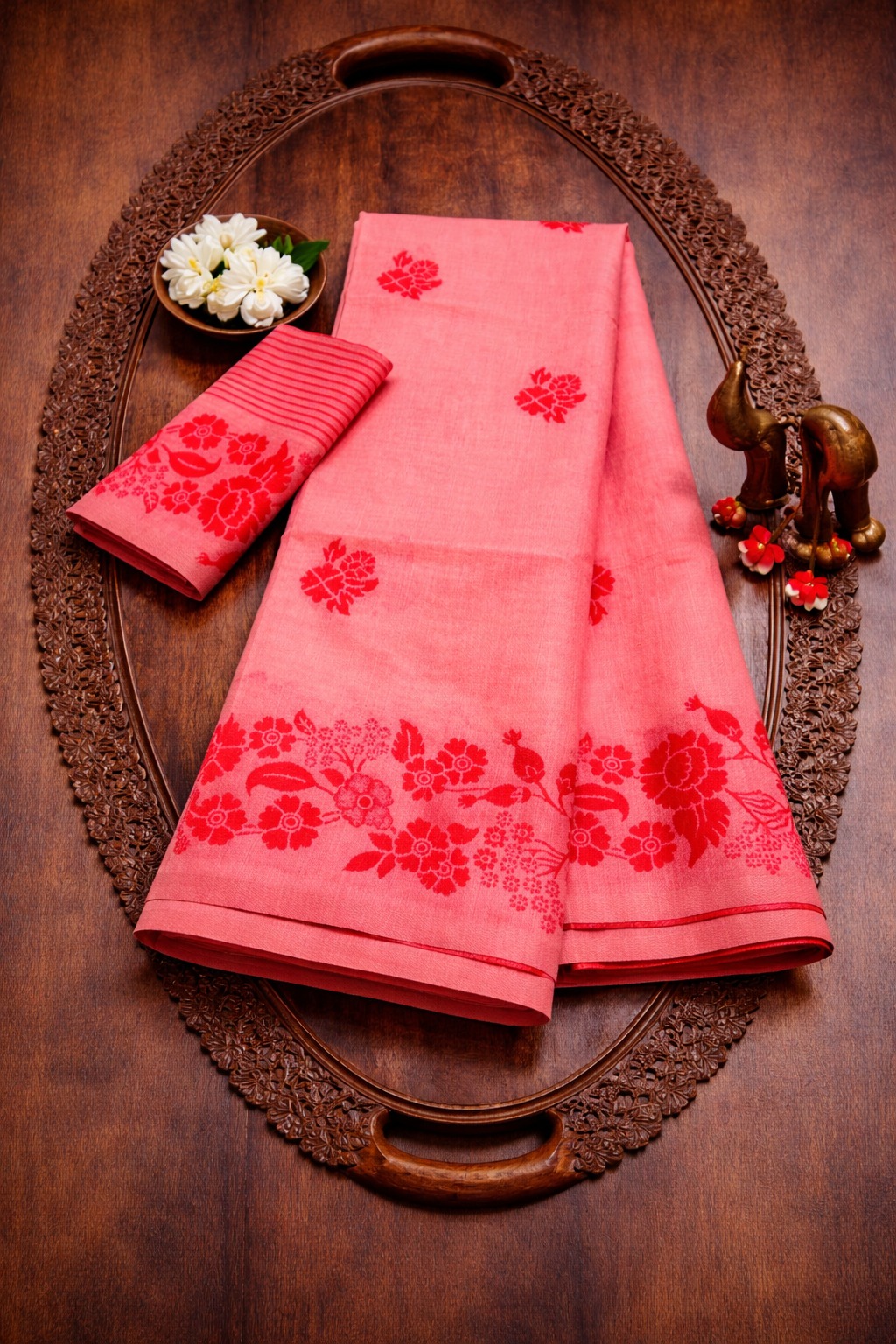
Linen, linen-cotton and understated prints are suitable for office celebrations, seminars, craft fairs and lunches because they look composed without feeling excessively ceremonial. Choose a closed or moderate neckline, low jewellery and comfortable block heels. A structured tote keeps the look practical.
Festive meals and cultural programmes
A zari border, silkier fall or antique-gold accessory raises the outfit for a festive meal, music programme or family gathering. Teal Tribal Art Printed Lichi Silk Saree with Zari Border is better suited to this level of dressing than a very casual cotton print. Use a plain blouse and one statement earring rather than adding embellishment everywhere.
Small celebrations and intimate weddings
For a small wedding function, pair an off-white or pastel saree with a richer blouse, a defined bun and a compact potli. A Banarasi silk blouse can add occasion value, but match its sheen carefully so the contrast feels deliberate. Chanderi accessories or a lightweight organza dupatta used as a shoulder wrap can add another layer, although the saree should remain the central garment.
For a Haldi ceremony, select a washable or easily spot-treated saree, avoid trailing tassels if people will move around quickly, and wear secure footwear. Yellow, marigold or green accents can be introduced through earrings or flowers rather than forcing the entire saree into a bright palette.
How should linen and printed sarees be cared for?
Most linen and printed sarees last longer when they're washed gently, dried in shade and stored without compression.
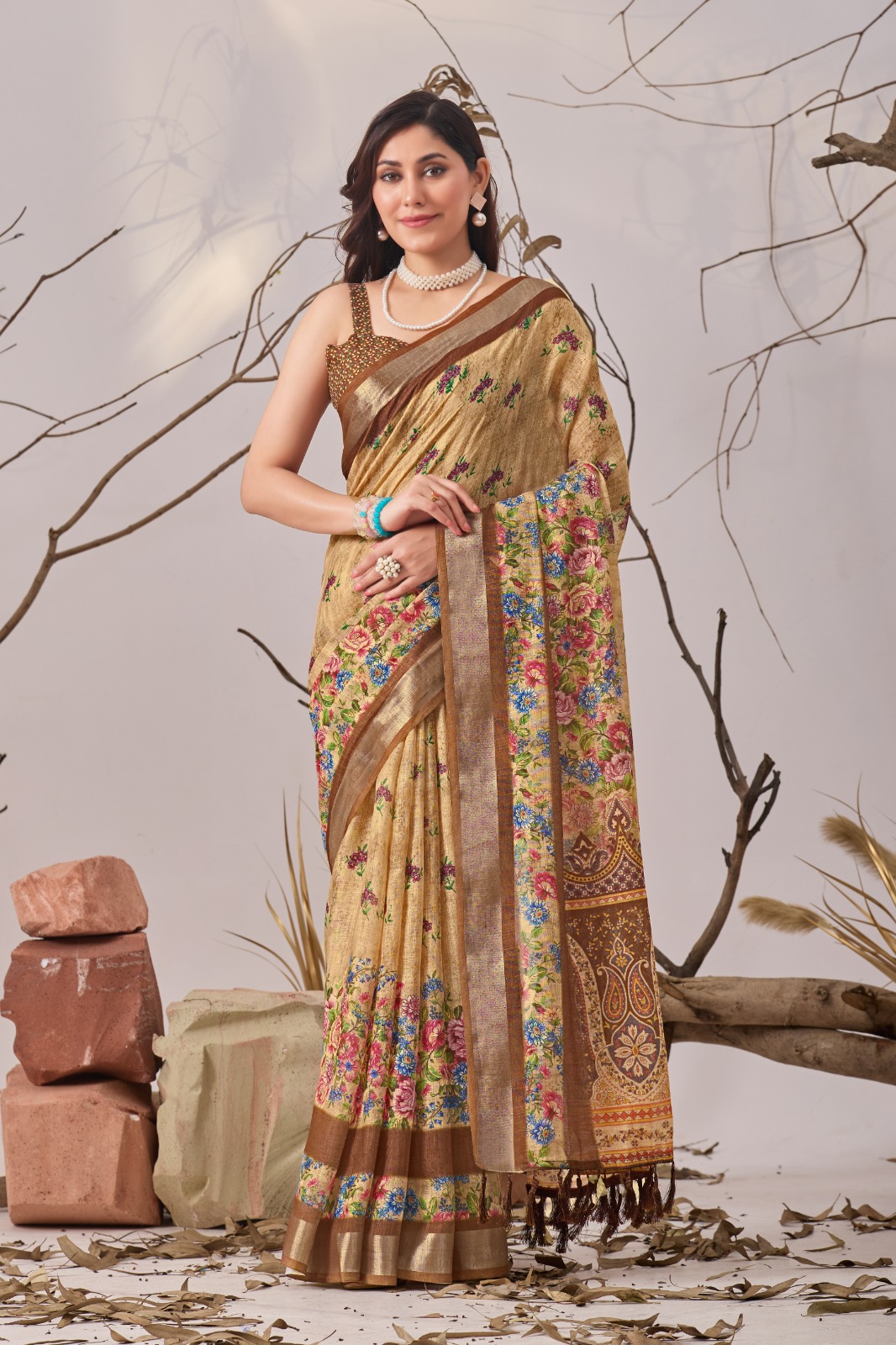
Read the garment label first because print, zari, tassels and silk blends require different handling. For linen, hand wash in cool water with a mild detergent when the care label permits it, and avoid soaking for long periods. Do not rub printed areas aggressively. Press excess water between clean towels instead of wringing the saree.
Dry the saree inside out in indirect light. Strong, prolonged sunlight can fade dark teal, grey and printed colours. Keep zari away from harsh detergent, perfume and direct ironing. Press linen on the reverse side while it's slightly damp, using a medium heat setting appropriate to the fibre. Place a thin cotton cloth between the iron and delicate printed or zari areas.
Air the saree after wearing it before folding. Store a clean, fully dry saree in a breathable cotton cover rather than sealed plastic. Fold along different lines every few months to reduce permanent creasing, and keep tassels straight by wrapping the pallu loosely rather than crushing it under heavy garments.
What should you check before buying a tribal-inspired saree?
Check the fibre, design method, measurements, transparency, finishing and care instructions before choosing a tribal-inspired saree.
- Fibre: Confirm whether the saree is pure linen, linen-cotton, cotton, lichi silk or a blend, because the fibre changes fall, breathability and ironing requirements.
- Design method: Look for clear information about whether motifs are printed, woven, embroidered or finished with zari.
- Length and width: A saree around 5.3 to 5.5 metres is common, but blouse-piece inclusion and usable width vary. Taller wearers may need to verify the exact length.
- Sheerness: Pale linen and cotton can be slightly translucent in bright light. Choose a slip in a close neutral shade rather than a starkly contrasting one.
- Blouse planning: Check whether a blouse piece is included. If not, photograph the border and carry a colour swatch when buying a separate fabric.
- Finish: Inspect the pallu, tassels, selvedge and zari edges for loose threads before wearing the saree outside.
Budget browsing can begin with Sarees from Rs 1000 to Rs 1500, while discount-led shoppers may compare Sarees Under 20% Off and Sarees Under 10% Off. Larger sale labels such as Sarees Flat 60% Off and Sarees Flat 50% Off can be useful for value comparisons, but the final decision should still rest on fibre, measurements and construction rather than the discount percentage alone.
Arunachal Tribal Textile-Inspired Saree Styling Ideas become most convincing when styling respects the textile's visual rhythm. Give the pallu space, choose one clear accessory language, repeat a colour with intention and let the saree's material determine the level of formality. The result can feel rooted, individual and wearable without turning cultural inspiration into costume.
Practical Questions About Styling Arunachal-Inspired Sarees
What blouse colour goes with an Arunachal-inspired tribal print saree?
The best blouse colour usually repeats one shade from the saree, such as grey, beige, teal, charcoal or forest green. A plain blouse is preferable when the saree has a large pallu or dense geometric print.
Which jewellery suits a tribal print saree?
Oxidised silver, antique brass, terracotta, wood and beads suit tribal-inspired sarees particularly well. Choose one or two materials and keep the jewellery scale proportional to the saree border.
Can I wear a tribal-inspired linen saree to a wedding?
Yes, a tribal-inspired linen saree can suit a daytime or intimate wedding when paired with a richer blouse, polished hair, dressier earrings and a refined clutch. For a more formal evening wedding, a silkier saree with a zari border may be more appropriate than very casual linen.
How do I keep a linen saree from looking too casual?
Use a structured blouse, sharp pleats, polished footwear and one intentional statement accessory. A defined bun, neat shoulder pinning and antique-gold or oxidised-silver jewellery can make linen look event-ready without adding heavy embellishment.
Are tribal prints and tribal weaves the same thing?
No, tribal prints reproduce motifs on the surface, while tribal weaves create designs through the structure of the textile. Product descriptions should be checked carefully so you understand whether a saree is printed, woven, embroidered or decorated with zari.
How should a printed linen saree be washed?
Follow the care label first, but printed linen generally benefits from cool-water hand washing with mild detergent, minimal soaking and shade drying. Avoid wringing, harsh bleach, direct prolonged sunlight and high heat on printed or zari sections.