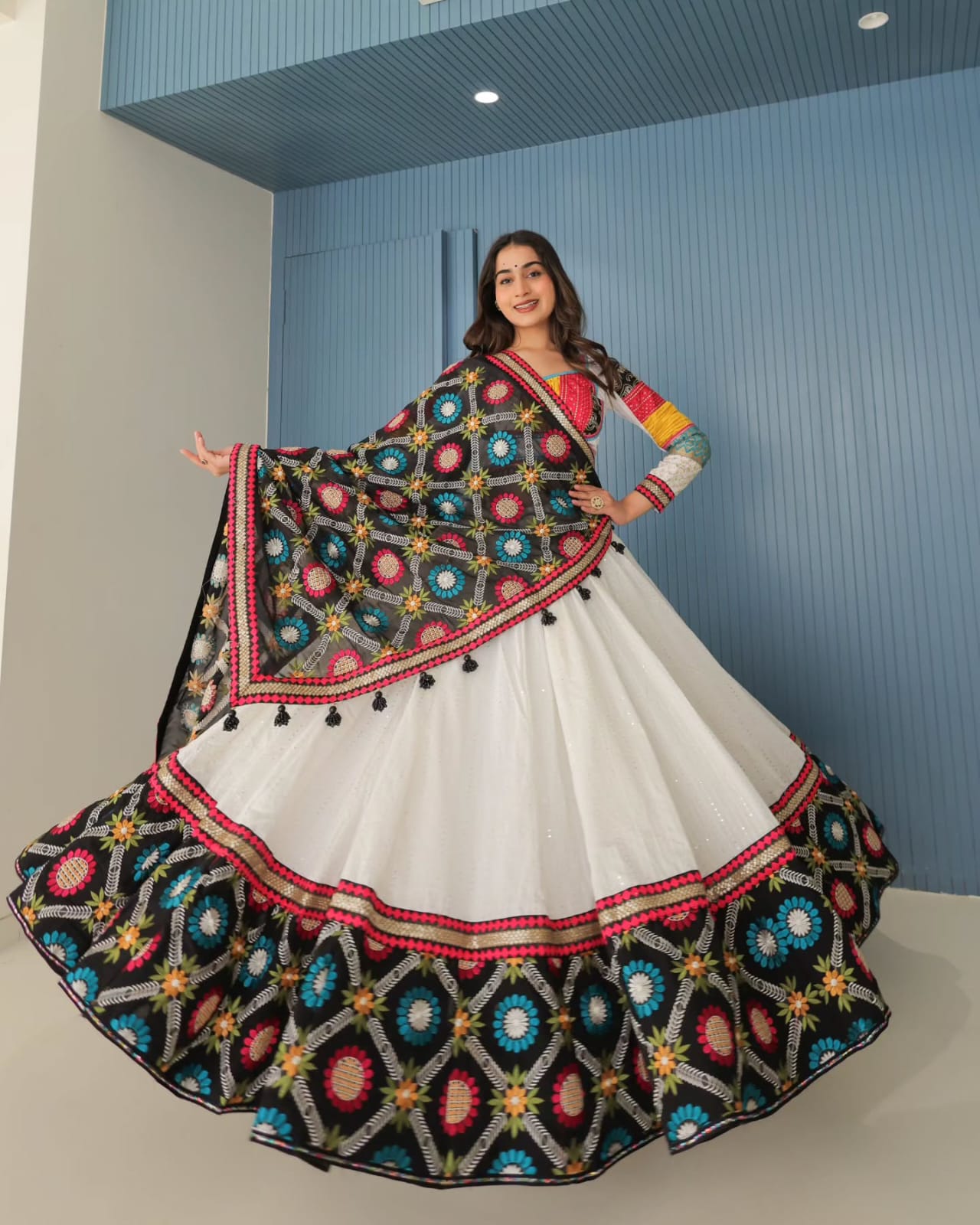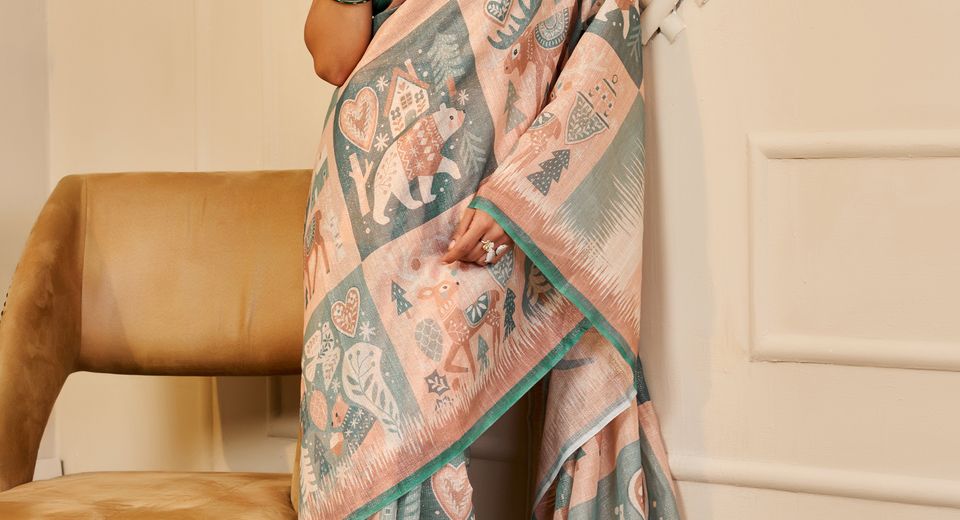
Arunachal Textile-Inspired Saree Ideas for Festivals begin with a thoughtful translation of colour, geometry and handwoven texture rather than a literal copy of a community garment. Arunachal Pradesh has many distinct textile traditions, so a festive saree look can draw from deep reds, black grounds, ivory contrasts, rhythmic stripes and geometric borders while remaining comfortable and contemporary.
The most useful method is to choose one visual reference, one supporting colour and one restrained accessory story. A floral saree with a structured blouse can suggest the richness of a woven textile without claiming to be an authentic Apatani, Adi, Monpa or Idu Mishmi garment. The result works for a puja, cultural programme, family gathering or evening celebration.
Arunachal Textile-Inspired Saree Ideas for Festivals: What makes the look distinctive?
An Arunachal-inspired festive saree look usually combines strong colour contrast, repeated geometric rhythm and a textural accent. Arunachal Pradesh is home to numerous communities with their own clothing languages, including the Apatani, Adi, Monpa, Nyishi and Idu Mishmi peoples; treating those traditions as one uniform tribal print removes important cultural detail.
Traditional woven garments from the region commonly use visual systems such as horizontal bands, narrow stripes, checks, stepped forms and geometric motifs. Exact meanings, weaving methods and garment uses vary by community and should not be casually assigned to a mass-produced print. Festive styling can borrow broader design principles such as contrast, proportion and handloom character without presenting a commercial saree as an authentic community textile.
The distinction matters when clothing is worn at a public cultural event. A description such as "inspired by Arunachal's woven colour stories" is more accurate than claiming that a floral or geometric saree reproduces a specific heritage wrap. Respectful wording allows the inspiration to remain visible while acknowledging that a fashion interpretation isn't the original textile.
Arunachal Pradesh's textile traditions also reflect climate, local materials, community identity and formal use. A saree inspired by those qualities should therefore find considered rather than overloaded. Strong colour placement, a fresh border and tactile fabric often communicate more effectively than adding several unrelated motifs.
Arunachal Textile-Inspired Saree Ideas for Festivals: Which colours work best?
Choose one deep anchor colour, one light balancing shade and one small accent to create an Arunachal-inspired festive palette. Brick red with black and ivory feels grounded; forest green with cream and rust feels softer; cobalt, maroon and muted gold create a stronger evening combination.
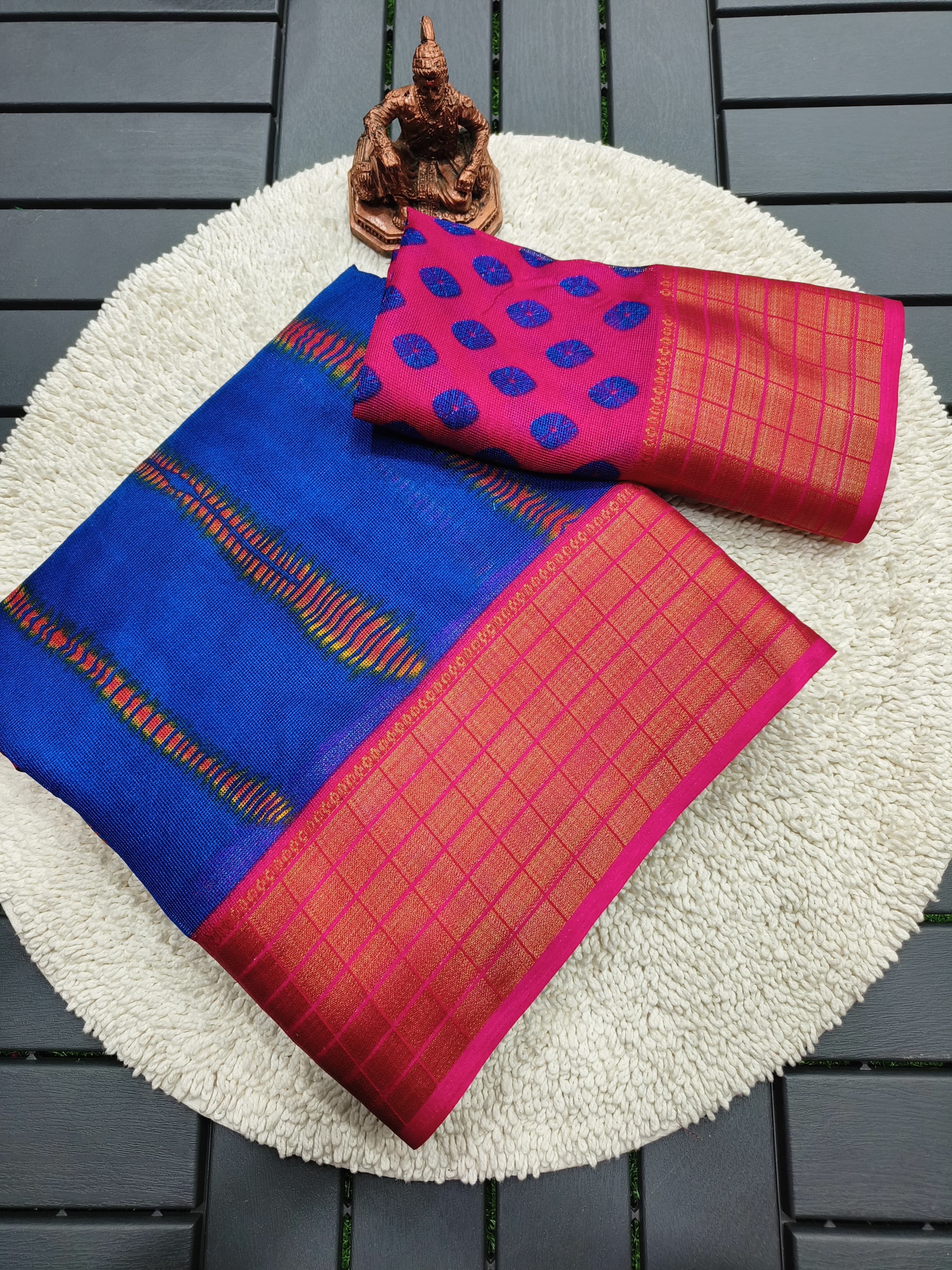
Red is effective for festivals because red photographs well and works with gold, brass and antique-finish jewellery. Designer Red Patola Print Pashmina Silk Festive Saree can provide the dense colour and patterned surface needed for a winter celebration or indoor evening function. A plain black, deep maroon or warm ivory blouse will create more balance than another competing print.
Pastels work when a darker border or a textured accessory provides definition. Pastel Linen Cotton Floral Print Saree with Designer Blouse creates a lighter daytime direction, while Peach Linen Cotton Floral Print Saree with Blouse for Women offers a warm base for rust, terracotta or oxidised silver accents. An all-pastel outfit can look delicate, but a darker accessory prevents the colour story from appearing flat.
Green gives an useful middle ground for a morning puja or harvest-themed gathering. Sea Green Tissue Handloom Cotton Saree With Floral Patterns can be paired with a black, red or cream blouse to sharpen the look. Gold jewellery should occupy small areas, such as earrings, bangles or a narrow waist belt, so the saree's colour structure remains visible.
Multicolour Floral Linen Cotton Saree with Blue Border Look already contains several visual notes, so a single-colour blouse will create more balance than a second multicoloured print. A cobalt blouse can intensify the border, while ivory can soften it for a daytime event. Rust or maroon accessories can connect the blue to a warmer festive palette.
Arunachal Textile-Inspired Saree Ideas for Festivals: Which fabrics suit the occasion?
Cotton, linen cotton, tussar silk, pashmina silk and tissue handloom cotton each create a different interpretation of Arunachal-inspired dressing. Fabric choice should follow the venue, weather, duration of wear and amount of movement rather than colour alone.
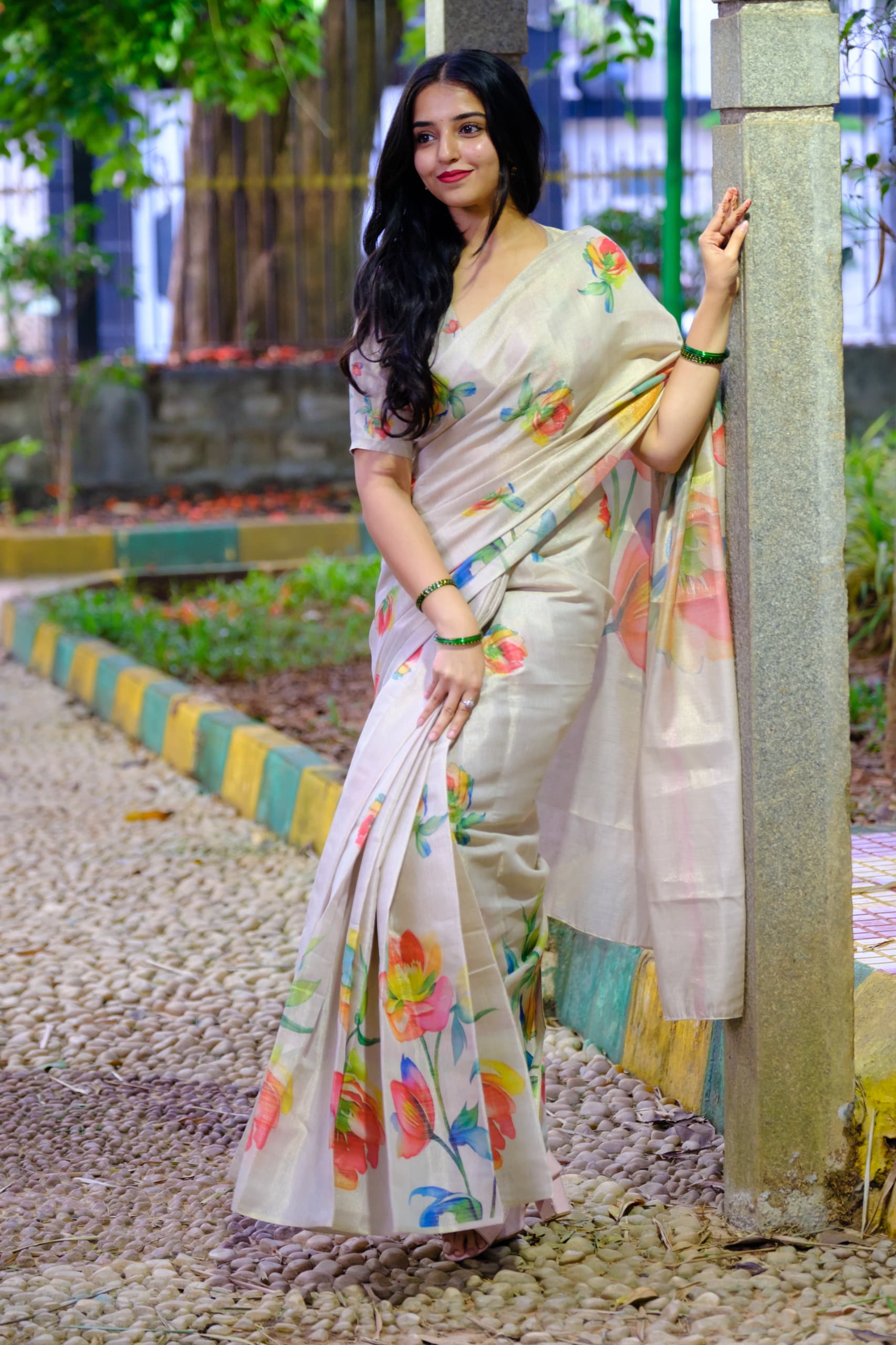
For daytime ceremonies
Linen cotton and handloom cotton are practical for daytime festivals because they breathe better than heavy synthetics and hold a structured pleat. Pastel Floral Tissue Handloom Cotton Saree with Zari Weaves adds a festive glint without the weight of a heavily embellished silk saree. Cotton-linen blends may crease during travel, so a small safety-pin kit and a firm cardboard strip for the folded pleats are useful additions to a handbag.
Handloom cotton also suits events where the wearer will sit on the floor, move between rooms or help with arrangements. The fabric generally feels less restrictive than a heavily decorated saree, although starch level and weave density vary. A trial drape at home can reveal whether the saree needs extra waist pins or a petticoat with a drawstring rather than elastic.
For evening gatherings
Tussar silk and pashmina silk suit evening events because their surfaces absorb and reflect light with more depth. Soft Tussar Silk Floral Saree For Festive Wear can be styled with a high-neck blouse and sculptural earrings for a polished, textural look.
Pashmina silk feels warmer and more substantial, making it useful for outdoor winter celebrations. The fabric should be stored folded in breathable cotton rather than sealed in plastic, and direct perfume spray should be avoided because alcohol and fragrance oils can mark silk surfaces.
For a lighter contemporary look
Subtle tissue and linen textures can carry a festive mood when the blouse, border or jewellery supplies definition. Fabric sheen should be balanced with matte accessories if the saree includes zari. Too many reflective elements can make a daytime outfit appear formal before the event has begun.
Arunachal Textile-Inspired Saree Ideas for Festivals: How can borders suggest woven geometry?
A border can suggest woven geometry through scale, repetition and contrast without reproducing a sacred or community-specific design. Look for stripes, stepped lines, checks, small diamonds or repeated rectangular forms, and keep the rest of the outfit visually quiet.
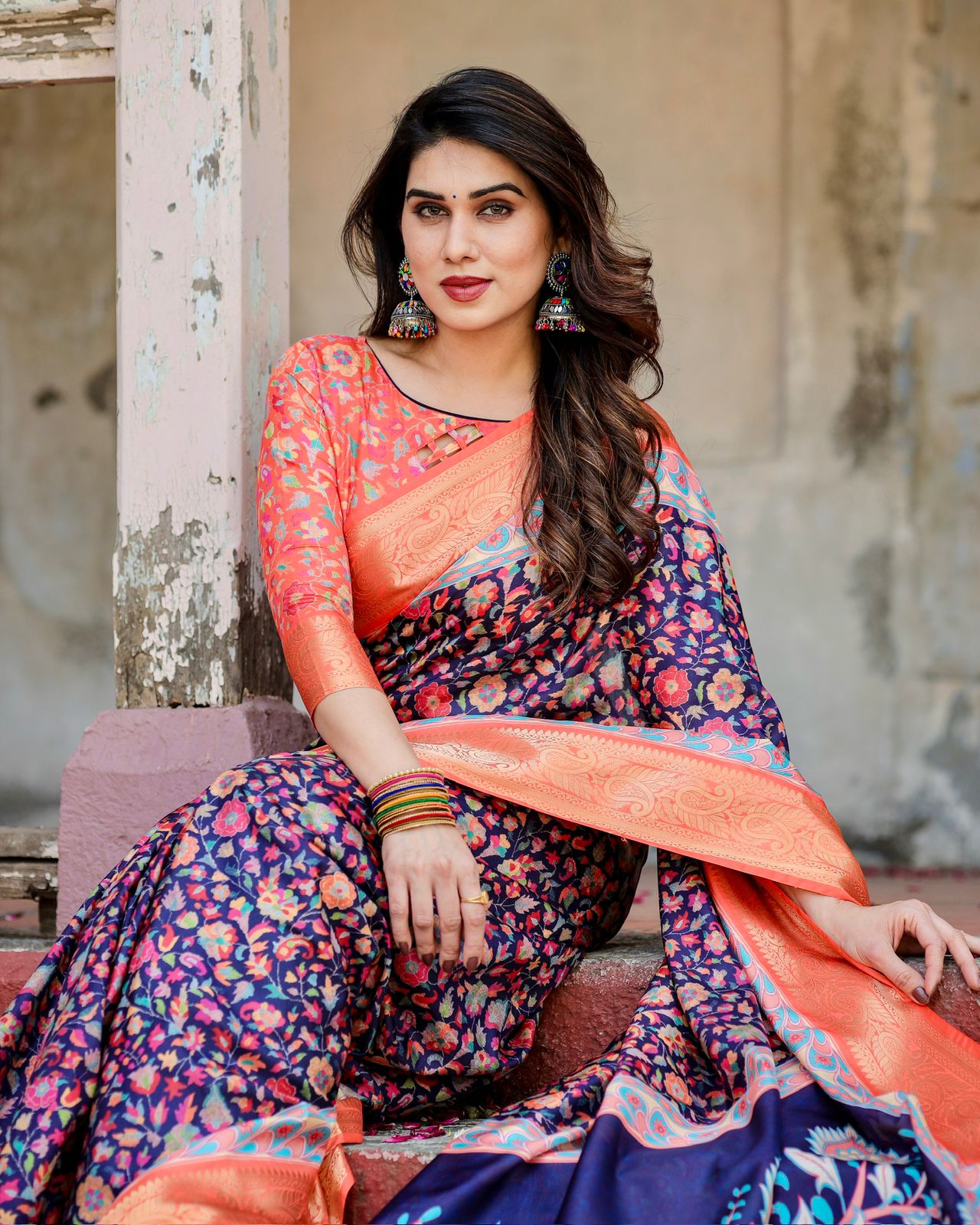
A wide border creates a ceremonial impression, while a narrow border feels more understated and versatile. Red Floral Linen Cotton Saree with Beautiful Printed Border shows how a defined edge can make a lightweight saree look more finished. A plain blouse in the border colour will usually look more polished than an identical all-over pattern.
Floral prints can also fit the concept when they're treated as a modern counterpoint to geometry. Floral decoration isn't a substitute for an Arunachal weave, but flowers can soften a strong red, green or black palette. The practical styling rule is to let one element carry the pattern: a floral saree needs a quieter blouse, while a geometric blouse needs a calmer saree.
Borrowed motifs should not be placed on a blouse and described as community symbols unless the source and meaning have been verified. Generic diamonds and stripes are design vocabulary; named cultural motifs require more care. The distinction protects the integrity of the reference and produces a cleaner outfit.
A border also affects the apparent height and proportion of the wearer. A broad, high-contrast border draws attention downward and can visually shorten the silhouette, while a narrow border creates a longer line. A medium-width border is often the easiest choice for petite wearers or anyone who wants the blouse and jewellery to remain part of the composition.
Arunachal Textile-Inspired Saree Ideas for Festivals: Which blouse designs create balance?
A high-neck, elbow-sleeve or square-neck blouse makes an Arunachal-inspired festive saree look intentional by adding clean structure to the drape. Blouse construction matters particularly when the saree has a soft floral print or fluid fabric.
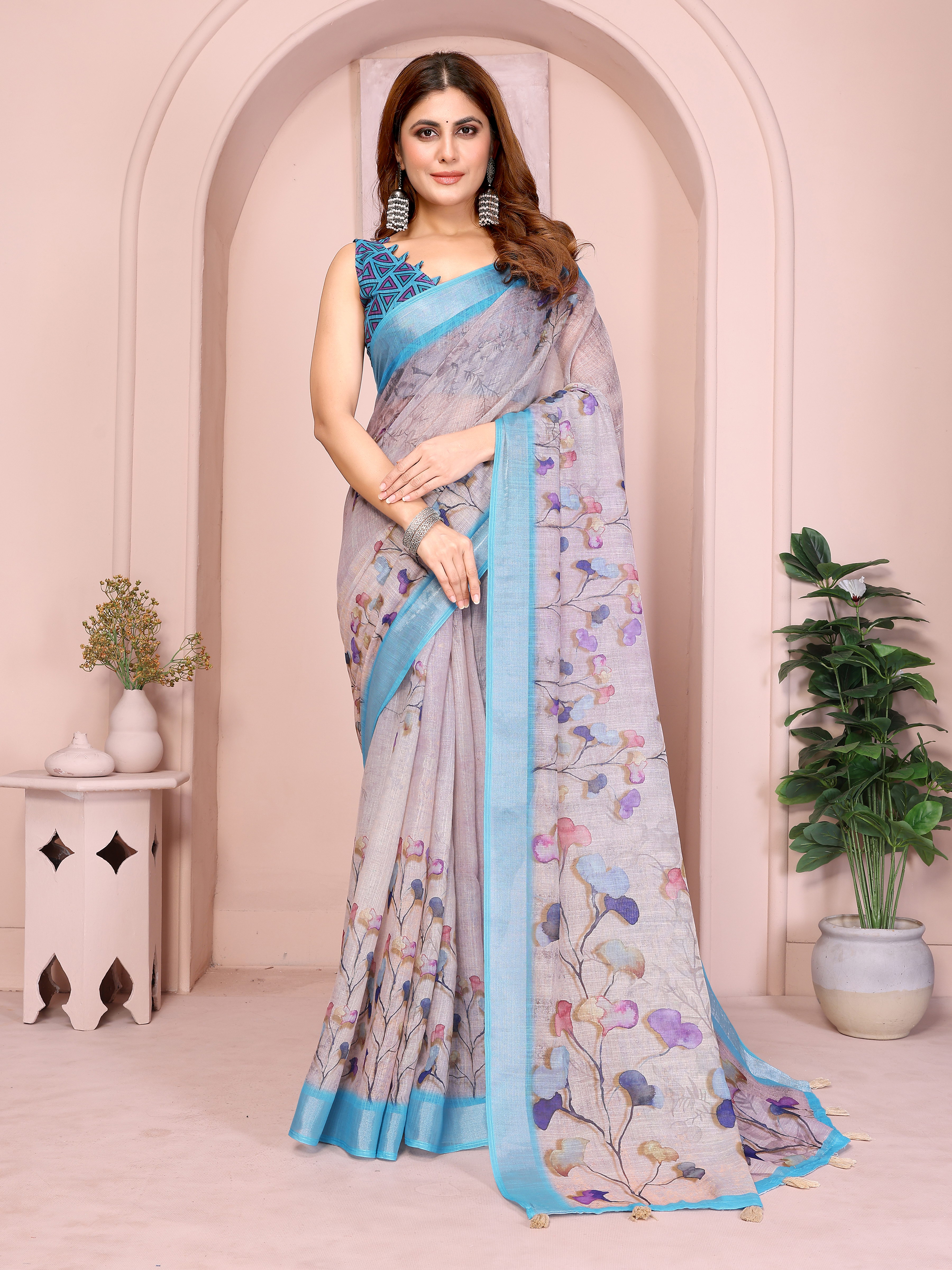
A high-neck blouse in black, ivory or deep red gives a graphic finish to a lighter saree. Elbow sleeves work well for morning ceremonies because they provide coverage without making the outfit excessively formal. A square neckline with a broad shoulder line suits a contemporary evening event, especially when paired with a simple drape and long earrings.
Blouse details should remain selective. A narrow row of contrast piping, small fabric-covered buttons or restrained zari at the sleeve edge can echo the idea of textile bands. Heavy mirror work, dense sequins and several competing motifs can shift the look toward generic party wear and away from the quiet strength of a woven reference.
For a saree with a strong border, match the blouse to the darkest colour in the border. For a saree with a pale ground, choose a blouse two or three shades deeper to create definition in photographs. A well-fitted blouse with a firm shoulder seam also keeps pleats stable during dancing, serving food or sitting through a long ceremony.
A blouse should be fitted at least 1 centimetre comfortably at the bust and upper arm rather than pulled tightly for a sharper photograph. The extra ease matters during long festive events, especially when the saree is worn for six or more hours. A cotton lining can improve comfort under silk, tissue and zari fabrics.
Arunachal Textile-Inspired Saree Ideas for Festivals: Which drape and accessories complete it?
A neat front-pleated Nivi drape with a visible pallu is the most adaptable choice for an Arunachal-inspired festive outfit. The familiar drape lets the saree remain the focus while the colour palette and accessories carry the regional reference.

Pin five to seven front pleats at the waist for a stable silhouette, then secure the pallu at the shoulder with two discreet pins. A shorter pallu is practical for crowded family gatherings, while a longer, softly arranged pallu works for photographs. Excessive pleat volume can make linen cotton sit unevenly at the waist.
Oxidised silver, antique brass and matte gold jewellery generally complement handloom-inspired textures better than highly polished, stone-heavy sets. Choose one dominant piece: a broad bangle stack, a long necklace, substantial earrings or a simple waist chain. Bamboo, cane or woven-fibre accessories may support the visual story, but they should be smooth, well finished and comfortable against the skin.
Footwear should be stable enough for uneven outdoor floors. Low block heels, embroidered flats or leather sandals are more practical than narrow stilettos for a courtyard puja or community celebration. A small fabric potli or structured shoulder bag in a saree accent colour completes the outfit without introducing another print.
For budget-conscious planning, Silk Sarees Under 3000 With Discount can help compare lighter silk options, while Party Wear Sarees gives a broader reference point for evening silhouettes. Pink Georgette Sarees can provide ideas for a softer colour direction, but georgette needs more pinning because its fluid surface can shift during movement.
Red Banarasi Silk Sarees for Weddings Under 1100 may be useful for studying red-and-gold combinations, although Banarasi silk represents a different weaving tradition from Arunachal textiles. Gray Color Sarees Under 1000 can inspire a quieter charcoal-and-ivory palette for a daytime gathering. These comparisons are styling references, not claims that the traditions are interchangeable.
Care begins before the event. Air a saree after wearing it for several hours, remove pins before folding, keep zari away from direct contact with rough jewellery and store silk in a breathable cotton cover. Cotton sarees can usually be hand-washed only when the care label permits it; silk, pashmina silk and zari-bearing sarees should generally be dry-cleaned by a service experienced with delicate Indian textiles.
A respectful Arunachal-inspired festive saree outfit succeeds when the reference is clear but not exaggerated. A considered palette, breathable fabric, structured blouse, stable drape and restrained jewellery can create a memorable look without reducing diverse Arunachal communities to a single decorative stereotype.
Questions About Arunachal Textile-Inspired Saree Styling for Festivals
How can I create an Arunachal-inspired saree look without copying a traditional garment?
Use broad design qualities such as strong colour contrast, repeated stripes, geometric borders and handloom texture rather than reproducing a community-specific garment or motif. Describe the outfit as inspired by Arunachal's textile colour stories unless the textile's exact community, technique and meaning have been verified.
Which colours work best for Arunachal Textile-Inspired Saree Ideas for Festivals?
Deep red, black, ivory, forest green, rust, maroon and cobalt work well because they create the high contrast often associated with visually strong woven compositions. Use one dark anchor colour, one balancing light shade and one smaller accent instead of combining many unrelated bright colours.
Which fabric is best for an Arunachal-inspired festive saree?
Linen cotton and handloom cotton suit daytime ceremonies, while tussar silk and pashmina silk work well for cooler evening events. Fabric choice should also account for movement, weather, event duration and care requirements.
What blouse should I wear with a textile-inspired festive saree?
A high-neck, square-neck or elbow-sleeve blouse gives the saree a structured, contemporary finish. Choose a plain blouse in the darkest border shade or a colour that appears in a small print detail, and avoid adding a second dominant pattern.
Can floral sarees work with Arunachal Textile-Inspired Saree Ideas for Festivals?
Floral sarees can work when flowers are treated as a modern styling element and balanced with a plain blouse and restrained accessories. Floral prints should not be described as reproductions of Arunachal woven motifs unless their source and cultural meaning are documented.
Which jewellery suits an Arunachal-inspired saree outfit?
Oxidised silver, antique brass, matte gold and carefully finished woven-fibre accessories complement handloom-inspired textures. Select one dominant jewellery piece and keep the remaining accessories simple so the saree's colour and border remain visible.