

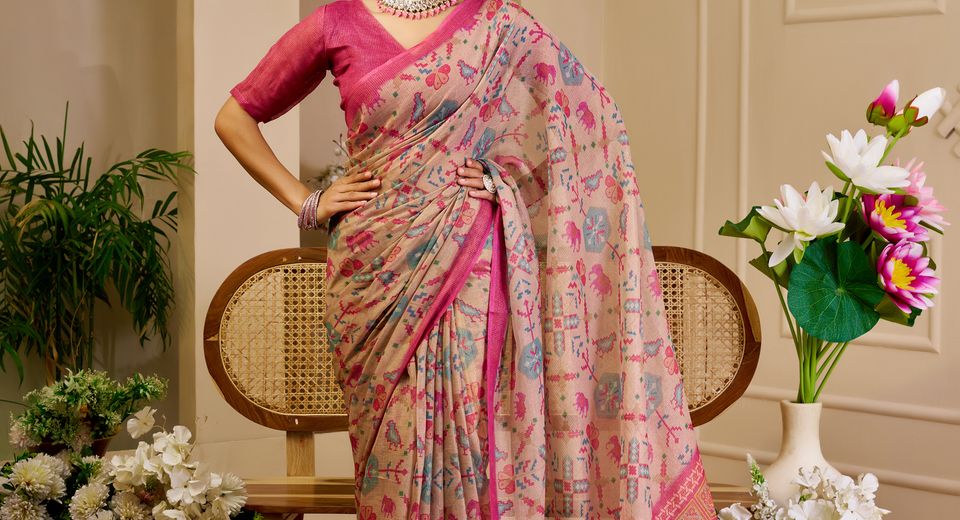
An Arunachal Handloom-Inspired Saree Styling Guide can help you build a look around quiet colour, tactile texture and nature-led detail instead of relying on heavy embellishment. The phrase describes a contemporary styling direction inspired by Arunachal Pradesh's landscape, craft sensibility and layered colours; it doesn't claim that every tissue cotton saree is an indigenous Arunachali textile. That distinction matters when choosing clothing for a cultural event or pairing handloom references with modern wardrobe pieces.
The most wearable interpretation combines a breathable cotton or tissue-cotton saree with a well-cut blouse, restrained jewellery and a drape that allows movement. Floral prints, zari lines, misty greens, peach, cream, grey and earthy olive can create a mountain-inspired palette without making the outfit look costume-like. The result works for daytime gatherings, office celebrations, intimate festive events and women's party wear when accessories are adjusted carefully.
Arunachal Handloom-Inspired Saree Styling Guide: What creates the visual mood?
Arunachal-inspired styling uses landscape-led colour, visible surface texture and a sense of practical layering. Snowy neutrals, forest greens, river blues, terracotta, berry shades and soft sunrise colours can suggest the eastern Himalayan environment, while handloom texture gives the outfit visual depth.
Arunachal Pradesh contains many distinct tribal communities, each with its own weaving traditions, motifs, garments and cultural meanings. A generic floral tissue saree should not be labelled as an authentic traditional textile unless its provenance and technique are documented. A respectful wardrobe approach uses inspiration as a colour and styling reference while crediting authentic regional textiles and artisans when they're genuinely part of the garment.
The visual connection usually comes from three choices: a natural-looking palette, a fabric that shows weave or slub, and accessories that resemble crafted objects rather than excessive costume jewellery. A narrow zari border can catch light like a fine metallic line, while floral patterns can echo foliage without copying a community-specific motif.
Arunachal Handloom-Inspired Saree Styling Guide: How do you choose fabric?
Choose tissue cotton or handloom cotton when you want structure, breathability and a softly luminous surface for an Arunachal Handloom-Inspired Saree Styling Guide look. Choose silk when an event demands more formality, but check the fabric weight and fall before selecting a blouse or pleat style.

Tissue cotton is useful because it occupies the space between everyday cotton and occasion fabric. The woven structure can hold pleats neatly, while the slight sheen makes a simple saree suitable for a lunch celebration or evening gathering. Cotton also absorbs moisture more comfortably than many synthetic blends, which is practical for warm-weather ceremonies and crowded indoor events.
Pastel Floral Tissue Handloom Cotton Saree with Zari Weaves demonstrates how soft colour and metallic detail can work together without overwhelming the wearer. Pair the saree with a matte blouse in sage, ivory or muted rose if the saree already contains a visible floral arrangement. A blouse with a high cotton content will maintain the handloom character better than a glossy satin piece.
For stronger colour contrast, Peach Green Tissue Cotton Saree With Print Blouse Piece already offers a coordinated starting point. Use the included print blouse when its scale complements the saree, or choose a plain peach blouse if the overall outfit needs more visual calm. A plain blouse is usually the better choice when the print is dense around the pallu.
Sea Green Tissue Handloom Cotton Saree With Floral Patterns suits daytime styling because sea green photographs softly in natural light and works with silver, pearl and antique-gold accents. Cream Floral Tissue Handloom Cotton Saree with Zari Weaving creates a neutral base for a festive blouse, especially when statement earrings should become the main focal point.
Banarasi silk, Kanjeevaram and Chanderi each create a different effect from tissue cotton. Banarasi silk brings a denser zari presence, Kanjeevaram generally creates a more formal architectural border impression, and Chanderi gives a lighter, translucent elegance. These fabrics can support the same nature-inspired colour story, but they should not be described as interchangeable with handloom cotton.
Arunachal Handloom-Inspired Saree Styling Guide: How should you balance colour?
Balance a handloom-inspired saree by repeating one colour from the saree in the blouse or jewellery while keeping the remaining accessories neutral. A three-colour formula-base shade, supporting shade and metal accent-usually prevents a busy result.
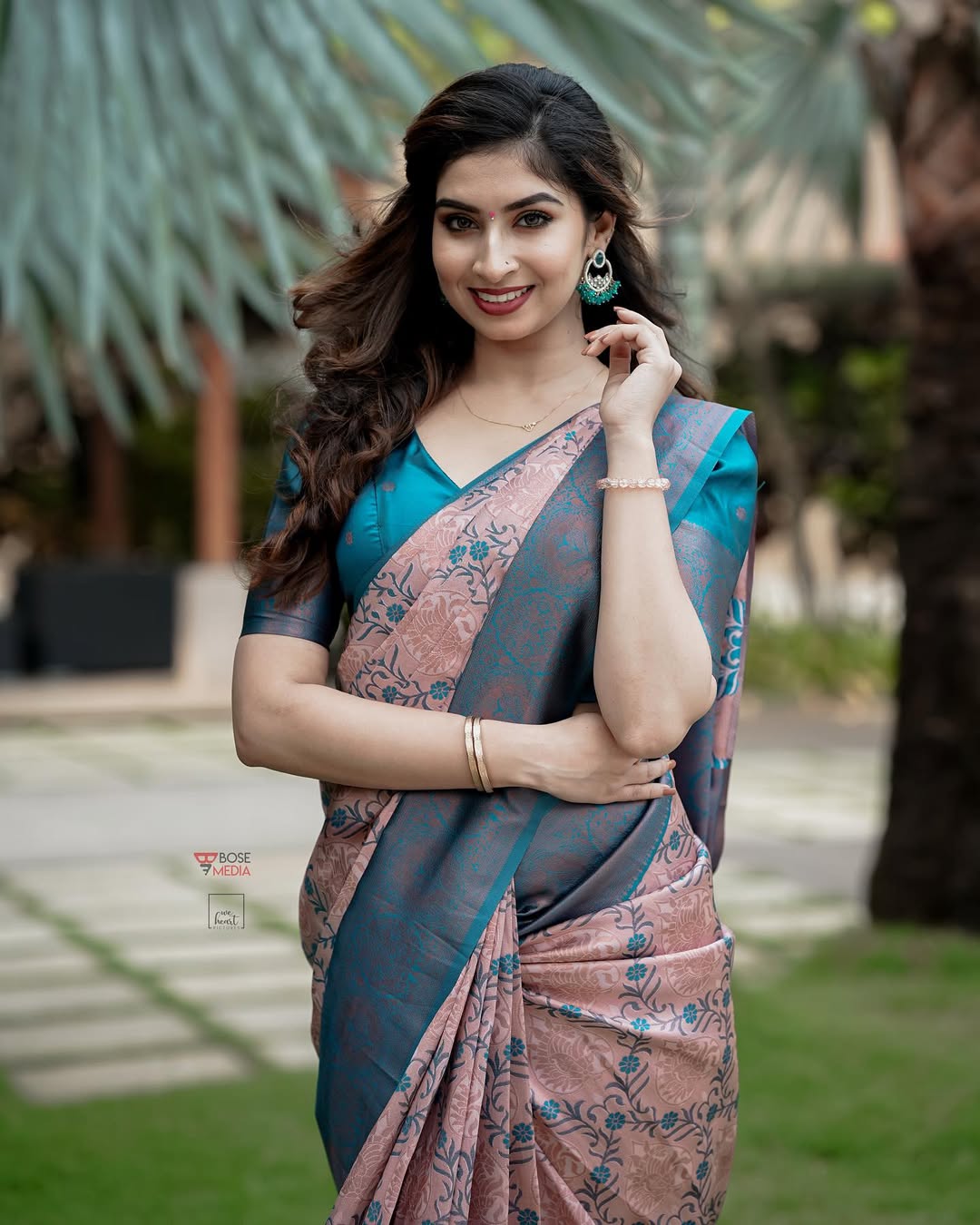
A pale saree can take a deeper blouse, but the contrast should be deliberate. Cream with rust, peach with bottle green, sea green with ivory and grey with plum are dependable combinations because each pair has a clear light-dark relationship. Avoid matching every element exactly; tonal variation makes woven texture easier to see.
Grey Tissue Handloom Saree With Floral Design - Varnavi is a useful example of a cooler neutral base. Style it with a dusty rose blouse for a soft evening look, a charcoal blouse for sharper definition or a muted maroon blouse for a festive gathering. Floral design can guide the accessory colour, but repeating every flower shade in the jewellery can make the outfit feel overly coordinated.
Olive Green Tissue Handloom Cotton Saree With Floral Prints supports a more earthy palette. A cream blouse, wooden bangles and antique-gold earrings create a grounded daytime outfit, while a copper blouse and structured clutch can shift the same saree towards evening wear. Olive green also pairs well with rust, mustard and muted coral, provided the floral print doesn't already contain several strong colours.
Metal choice changes the perceived temperature of a saree. Silver and oxidised metal sharpen sea green, grey and blue; antique gold warms olive, peach and cream; rose gold bridges pink and green when an outfit needs a softer contemporary finish. One dominant metal and one minor accent generally look more considered than three competing finishes.
Arunachal Handloom-Inspired Saree Styling Guide: Which blouse and drape work?
A structured blouse with a clean neckline gives a textured saree enough definition for a polished Arunachal Handloom-Inspired Saree Styling Guide outfit. Select the neckline and sleeve length according to the saree's ornamentation, the weather and the formality of the event.

A boat neck or modest square neck works well with floral tissue cotton because the uncluttered neckline leaves space for the print. A short sleeve keeps the silhouette light for daytime, while a three-quarter sleeve adds coverage and gives the outfit a more tailored appearance. Elbow-length sleeves in raw silk, cotton silk or textured cotton can echo the saree without creating too much shine.
Use a high-neck blouse when the saree has a narrow border and minimal pallu decoration. Use a sweetheart or V-neck blouse when the saree needs a softer, more open neckline, particularly for an evening party. A sleeveless blouse can work with a lightweight saree, but a properly fitted armhole prevents the outfit from looking unfinished.
The classic Nivi drape remains the easiest option because its front pleats create vertical lines and its pallu can be arranged either loosely or in narrow, secured pleats. A seedha-pallu arrangement gives a more formal, architectural finish, but it can hide a printed pallu if the design is the main attraction. Pin the shoulder pleats only after checking that the fabric falls comfortably across the chest and doesn't pull at the blouse.
For an office or daytime event, keep the pallu at mid-thigh or just below the hip and use two discreet safety pins. For a celebration, let the pallu fall slightly longer and add a brooch near the shoulder, provided the brooch doesn't snag the tissue weave. A belt can define the waist, but a narrow matte belt is more compatible with handloom texture than a wide patent belt.
Arunachal Handloom-Inspired Saree Styling Guide: Which jewellery completes it?
Choose jewellery that adds craft-like texture without competing with the saree's floral print or zari. Oxidised silver, antique gold, carved wood, enamel, beads and small pearls can all work, but the outfit should have one clear jewellery focal point.
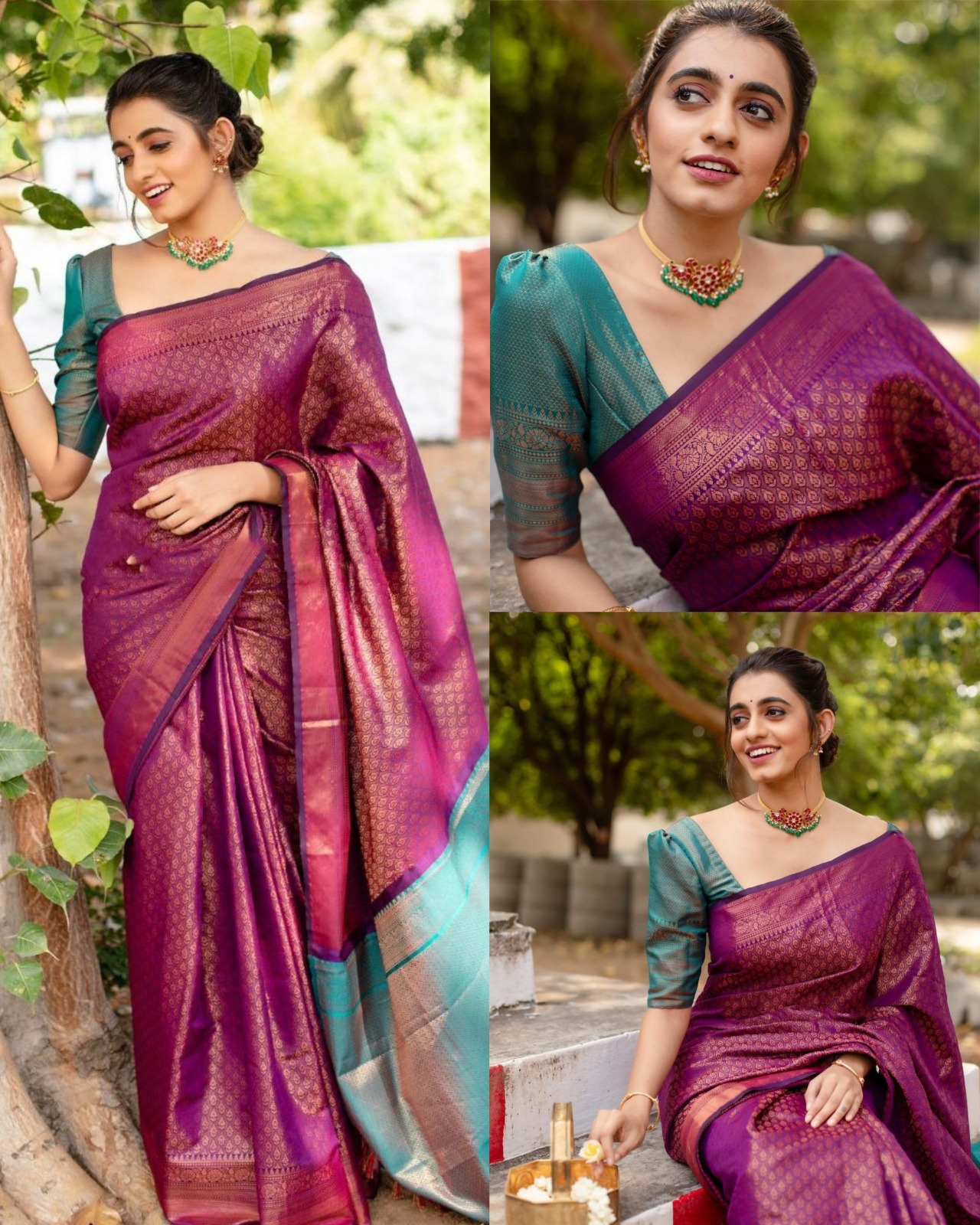
For a daytime drape, try medium jhumkas, a slim bangle stack and a small ring. A longer necklace is unnecessary when the blouse has a high neck or the saree contains a strong zari border. For an evening function, replace small earrings with one sculptural pair and carry a compact clutch in cream, tan, charcoal or a shade taken from the saree.
A handwoven-looking potli can reinforce the textile story, while a structured leather or vegan-leather bag makes the outfit feel more contemporary. Choose footwear with a stable three-to-five-centimetre heel when you need the saree to clear the floor. Flat embroidered juttis are practical for indoor events, but test the toe box before a long ceremony.
Hair should support the neckline and jewellery rather than follow a fixed rule. A low bun exposes earrings and works in humid weather; a side braid keeps the look relaxed; loose waves suit a contemporary party interpretation. A small cluster of fresh flowers can be appropriate for a festive gathering, but avoid adding flowers, a large necklace, heavy bangles and a dramatic hair accessory simultaneously.
Arunachal Handloom-Inspired Saree Styling Guide: How can you dress for each occasion?
Adapt the blouse, metal finish and drape-not the entire saree-to move from daytime to party dressing. The same handloom cotton saree can look informal at lunch or polished at an evening celebration when the styling variables are changed deliberately.

For work or a cultural presentation, choose a three-quarter-sleeve blouse, small earrings, a low bun and a secure Nivi drape. Keep the zari visible but avoid oversized sequins, very high heels or a large statement necklace. A grey, cream, sea-green or muted olive saree will usually feel appropriate in a professional setting.
For a Haldi ceremony, choose breathable cotton, low-maintenance jewellery and footwear that can handle turmeric, movement and outdoor seating. Peach, yellow, green and cream work naturally with the cheerful setting, but avoid wearing an outfit that's so pale that every accidental mark becomes prominent. A short-sleeve blouse and pinned pallu make sitting, walking and participating in rituals easier.
For a wedding guest look, increase formality through the blouse rather than covering the entire saree in embellishment. A silk-blend blouse, antique-gold earrings, a defined waist and a carefully pleated pallu can elevate tissue cotton. Red Banarasi Silk Sarees for Weddings Under 1100 is useful for comparing how a denser silk-and-zari visual differs from a lighter handloom-cotton approach.
For women's party wear, use a deeper blouse, sculptural earrings and a compact metallic or matte clutch. Party Wear Sarees can provide ideas for evening proportions, but a floral tissue saree often looks more distinctive when its natural texture remains visible rather than being overloaded with additional shine.
Arunachal Handloom-Inspired Saree Styling Guide: How should you shop online?
Shop online by checking fabric composition, blouse-piece details, measurements, care instructions, close-up photographs and return terms before comparing price. A low price alone doesn't establish handloom authenticity, durability or suitability for a particular event.

Read whether a listing says tissue cotton, cotton blend, silk, synthetic fibre or simply "tissue." These terms describe different wearing experiences. Check the saree length, width and blouse-piece length because a petite wearer may need fewer pleats, while a taller wearer may require enough length for a comfortable pallu.
Use a colour reference near a window when evaluating product photographs. Mobile screens can make peach appear pink, olive appear brown and sea green appear turquoise. Ask whether the zari is woven, printed or embroidered when that information affects your buying decision, and examine the pallu and border separately because a small screen can hide construction details.
Collection pages such as Silk Sarees Under 3000 With Discount may help with budget comparison, while Pink Georgette Sarees show how a lighter synthetic or blended drape changes the silhouette. Gray Color Sarees Under 1000 can help locate neutral colour options, but compare fibre, finishing and measurements before treating two similarly priced sarees as equivalent.
After delivery, inspect the saree in daylight before removing tags. Check the selvedge, blouse piece, woven areas, print alignment and any zari pulls. Keep the first drape short and indoors so you can identify whether the pleats, blouse fit and footwear are comfortable before wearing the saree to an important event.
Arunachal Handloom-Inspired Saree Styling Guide: How do you care for tissue cotton?
Care for tissue cotton by following the garment label, avoiding harsh friction and storing the saree in a clean, dry, breathable fold. Proper care protects the weave, print, zari and fabric fall more effectively than occasional emergency cleaning.

Air the saree after wearing it for several hours before folding it. Remove jewellery and pins slowly because sharp edges can catch tissue yarns. If the care label recommends dry cleaning, use a reputable cleaner and mention the presence of zari or delicate surface work.
For approved hand washing, use cool water, a small amount of mild detergent and minimal soaking. Do not wring, scrub the zari, bleach the print or dry the saree under intense direct sunlight. Press excess water between clean towels, dry the saree in shade and iron it inside out on a low setting with a pressing cloth.
Store the saree away from damp walls, strong perfumes and compressed plastic for long periods. Refold it every few months to avoid a permanent crease line, and place acid-free tissue or a clean cotton cover between layers when the saree contains metallic zari. These simple steps are especially important for tissue cotton because repeated abrasion can affect its crisp, lightly luminous surface.
Common Questions About Arunachal Handloom-Inspired Saree Styling
What is the best online store for sarees in India?
The best online store depends on verified fabric information, clear measurements, useful photographs, transparent delivery terms and a workable return policy. Compare those details rather than choosing only by discount or the number of designs shown.
Which company saree is best in India?
No single company makes the best saree for every wearer or occasion. A suitable saree should match the required fabric, budget, climate, drape and care commitment, with product information that explains fibre content and construction clearly.
Which app is best for saree shopping in India?
The best shopping app is one that displays accurate product measurements, fabric composition, customer-service contact details, delivery estimates and return conditions. Use the app to compare construction and fit, not just ratings or promotional prices.
Which online site is best for buying silk sarees?
The best site for silk sarees provides the silk type, zari details, blouse-piece measurements, care instructions and an authenticity or provenance explanation where relevant. Banarasi silk, Kanjeevaram and Chanderi have different appearances and handling needs, so a detailed listing is more useful than a generic "silk" label.
Can a tissue cotton saree be worn for a wedding?
A tissue cotton saree can work for a daytime or less formal wedding when the blouse, jewellery and drape are polished. For a highly formal ceremony, Banarasi silk or Kanjeevaram may provide a denser zari presence, while tissue cotton offers lighter movement and easier comfort.
How do you style a floral handloom saree without looking overdressed?
Pair a floral handloom saree with one plain blouse, one dominant metal finish and a single jewellery focal point. Keep the pallu secure, choose footwear suitable for standing or walking, and let the woven texture and floral design provide most of the visual interest.





