

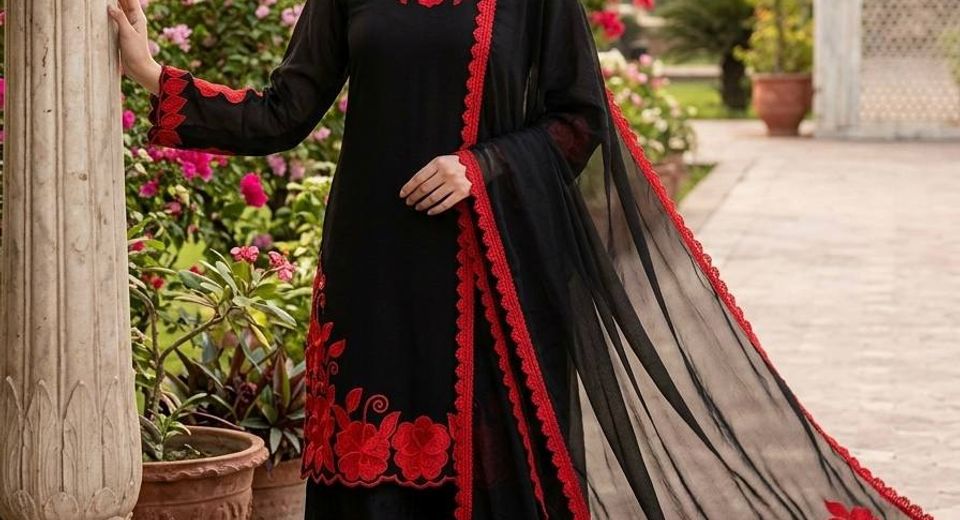
Arunachal Festival Salwar Suit Ideas for Women become especially useful when festive dressing needs to combine movement, colour and respect for local textile traditions. Arunachal Pradesh has many communities, ceremonies and regional dress practices, so a salwar suit should be treated as a practical contemporary choice inspired by the atmosphere of the celebration, not as a replacement for every traditional garment. The strongest outfit decisions begin with the festival setting, the weather, the amount of walking involved and the level of ornamentation that feels appropriate.
A well-chosen suit can carry visual references to the eastern Himalayas through saturated reds, forest greens, saffron, black, ivory, woven motifs and handcrafted-looking embroidery. The details matter: a breathable cotton or Chanderi base may suit a daytime gathering, while Banarasi silk, jacquard or a zari-accented Anarkali can work for an evening event. The goal is a polished outfit that remains comfortable after several hours of greeting relatives, attending performances, eating festive food and moving between indoor and outdoor spaces.
How should Arunachal Festival Salwar Suit Ideas for Women reflect the occasion?
Arunachal Festival Salwar Suit Ideas for Women should reflect the specific festival, venue and community setting rather than relying on one generic idea of Northeastern dressing. A family puja, cultural programme, monastery visit, harvest celebration and evening reception can each call for a different level of colour, coverage and embellishment.
Arunachal Pradesh includes communities such as the Nyishi, Adi, Apatani, Monpa, Galo and Mishmi, each with distinct textile traditions and ceremonial clothing. A ready-to-wear salwar suit isn't automatically classic Arunachali attire, so avoid presenting a mass-produced print as an authentic community garment. Instead, use respectful visual inspiration: a deep red palette can echo festive warmth, geometric borders can suggest woven craft without copying a sacred design, and a handloom-inspired dupatta can add texture without making unsupported cultural claims.
For a public cultural event, modest necklines, secure dupatta styling and comfortable hemlines are sensible choices. For a private family celebration, brighter embroidery and a more dramatic silhouette may be suitable. Guests attending a religious or heritage venue should check whether head covering, shoulder coverage or restrained jewellery is expected.
Which colours work well for an Arunachal-inspired festive suit?
Jewel tones, earthy neutrals and carefully placed metallic accents work well for an Arunachal-inspired festive suit. Red, maroon, rust, mustard yellow, emerald, pine green, black, ivory and muted pink create a palette that feels festive without requiring excessive decoration.
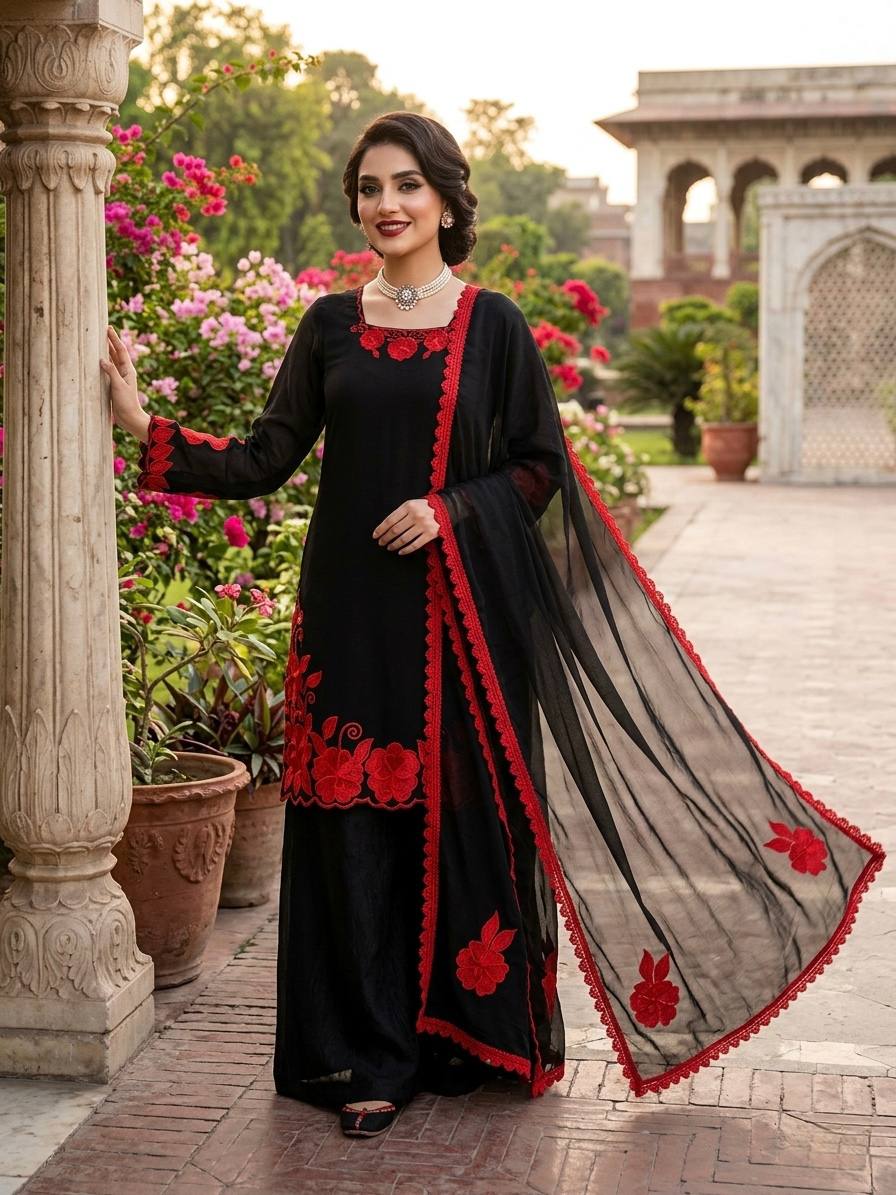
Red and black make a strong evening combination, particularly when black appears in the trousers or dupatta and red is reserved for the kurta or border. Mustard yellow pairs naturally with ivory, bottle green and antique gold. Lavender can look fresh for a daytime event when balanced with olive, beige or dull gold rather than bright silver. Mint green is an useful choice for warm-weather functions because it appears light while still looking celebratory.
Colour placement changes the visual effect of a suit. A dark dupatta can add structure to a pale kurta, while a bright dupatta can lift a neutral base. Petite wearers may prefer a single dominant colour with a narrow contrasting border, because too many horizontal colour breaks can shorten the appearance of the body. Taller wearers can carry a strong contrast between kurta, palazzo and dupatta with ease.
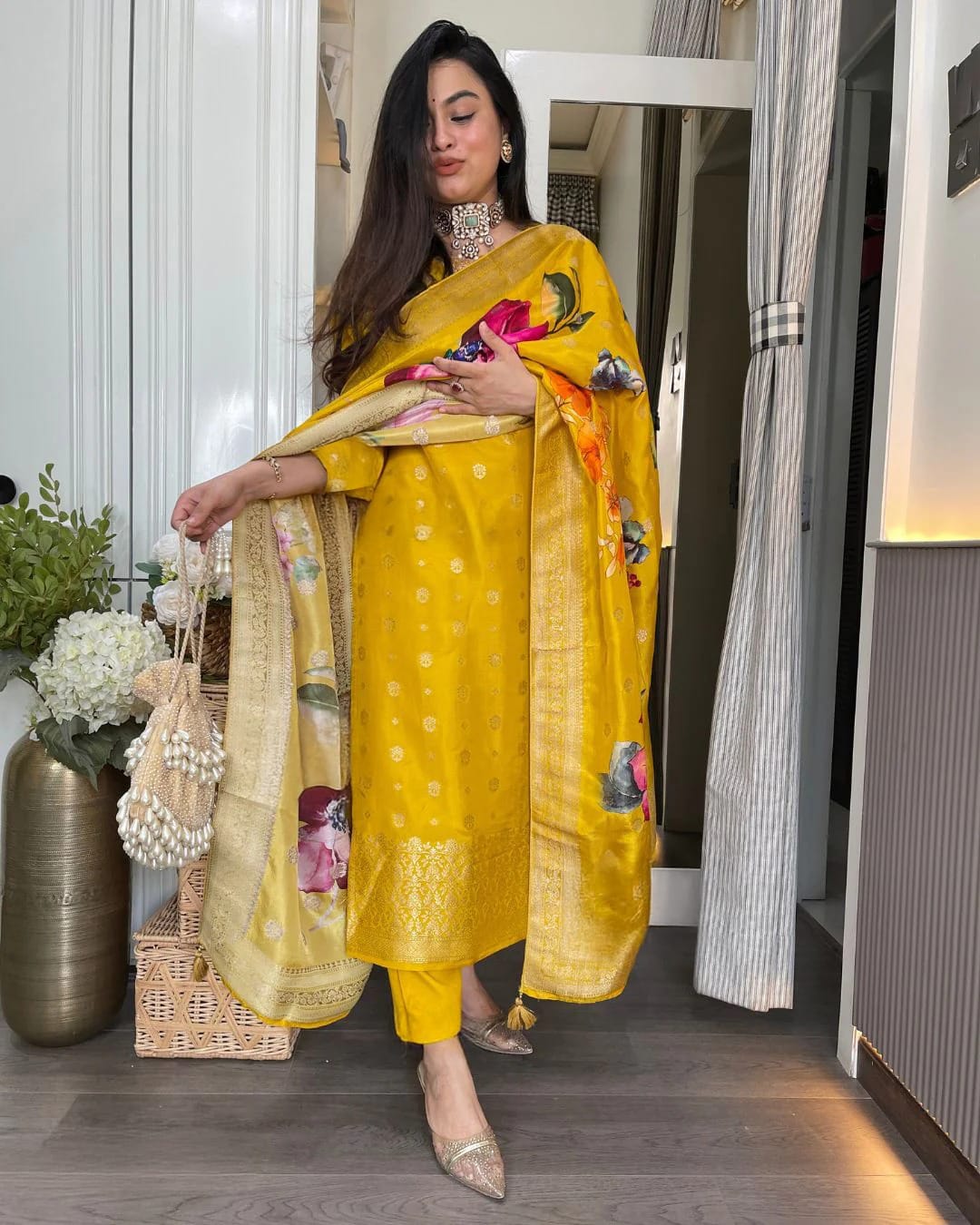
Mustard Yellow Jacquard Kurta Set with Embroidery & Dupatta demonstrates how one warm shade can carry an outfit when the fabric has enough surface texture. Black Red Fendy Silk 3 Piece Readymade Salwar Suit Set offers a more dramatic red-and-black direction for evening celebrations, especially when accessories remain restrained.
Which fabrics are practical for festivals in Arunachal Pradesh?
Cotton, Chanderi, silk blends, jacquard and lightweight crepe are practical festival fabrics, with the best choice depending on season, venue and travel conditions. Breathable fabrics are valuable for daytime gatherings, while silk and jacquard provide warmth and visual richness during cooler evenings.
Chanderi is light, slightly crisp and often translucent, making it suitable for elegant kurtas and dupattas when lined appropriately. Banarasi silk has a denser hand and prominent zari, so it creates a formal appearance but may feel warm in crowded indoor spaces. Paithani-style woven material brings a distinctive zari and colour contrast, although an unstitched piece requires tailoring time and a reliable lining plan.
Jacquard fabric contains woven patterns rather than only surface printing, which gives a kurta depth even when the embroidery is limited. Fendy silk and other synthetic silk-like fabrics can offer a smooth, glossy finish at a lower price than pure silk, but they may retain heat and show perspiration more readily. Crepe drapes neatly and resists some creasing, while cotton needs more pressing but is often the most comfortable option for long daytime wear.
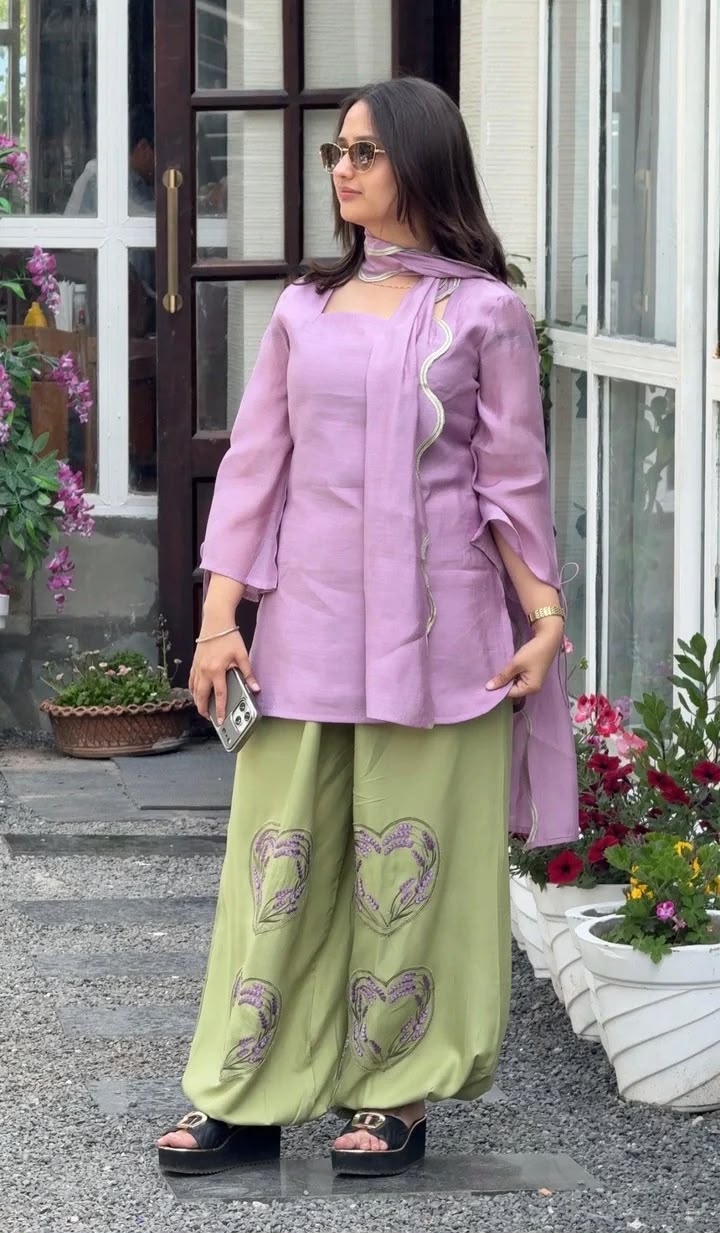
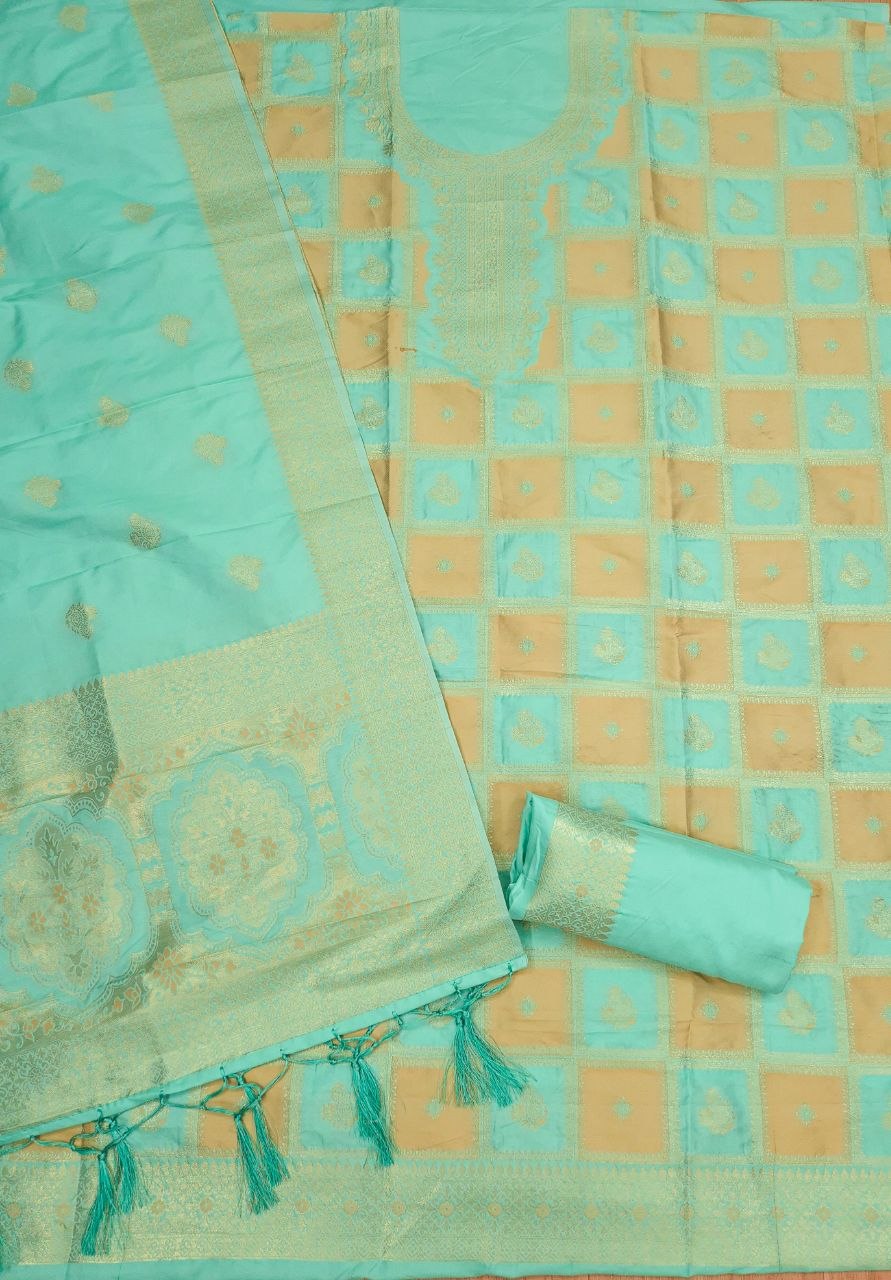
Lavender Chanderi Kurta with Olive Embroidered Palazzo Suit creates an useful balance between an airy textile and a grounded colour accent. Mint Green Paithani Style Zari Woven Unstitched Suit Material is better for shoppers who want a custom fit and can allow approximately one to three weeks for tailoring, depending on the tailor and detailing requested.
Which salwar suit silhouettes suit festival movement?
A straight kurta with tapered trousers, a palazzo suit or a moderately flared Anarkali usually gives the best balance of movement and festive presence. The correct silhouette depends on walking, sitting, dancing, stair use and whether the wearer will carry a bag or help with ceremony arrangements.
Palazzo and straight-cut suits
Palazzo trousers provide airflow and a generous stride, making them useful for outdoor celebrations and long-standing events. A straight kurta creates a clean vertical line and works well with a printed, woven or embroidered dupatta. Check the trouser hem before wearing the outfit outdoors; a floor-skimming palazzo can collect dust and become unsafe on uneven ground.
Anarkali suits
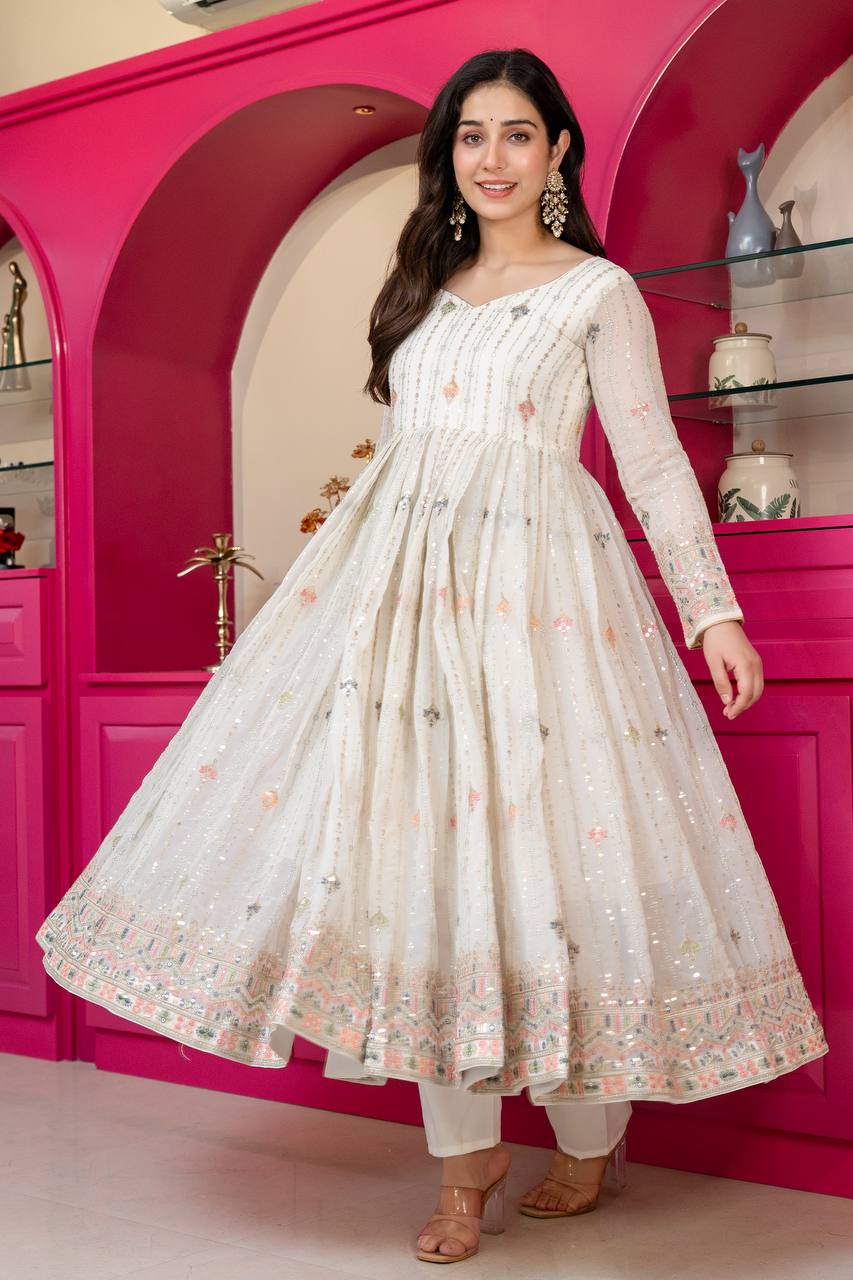
Anarkali suits are suitable for more formal festivals when the flare is controlled and the hem doesn't interfere with walking. A six- to eight-panel Anarkali can create graceful movement without the bulk of a very wide circular cut. Ivory Zari Sequins Embroidered Anarkali Suit Set | Varnavi illustrates a dressier direction, so pair it with low, stable footwear if the event involves outdoor movement.
Readymade three-piece sets
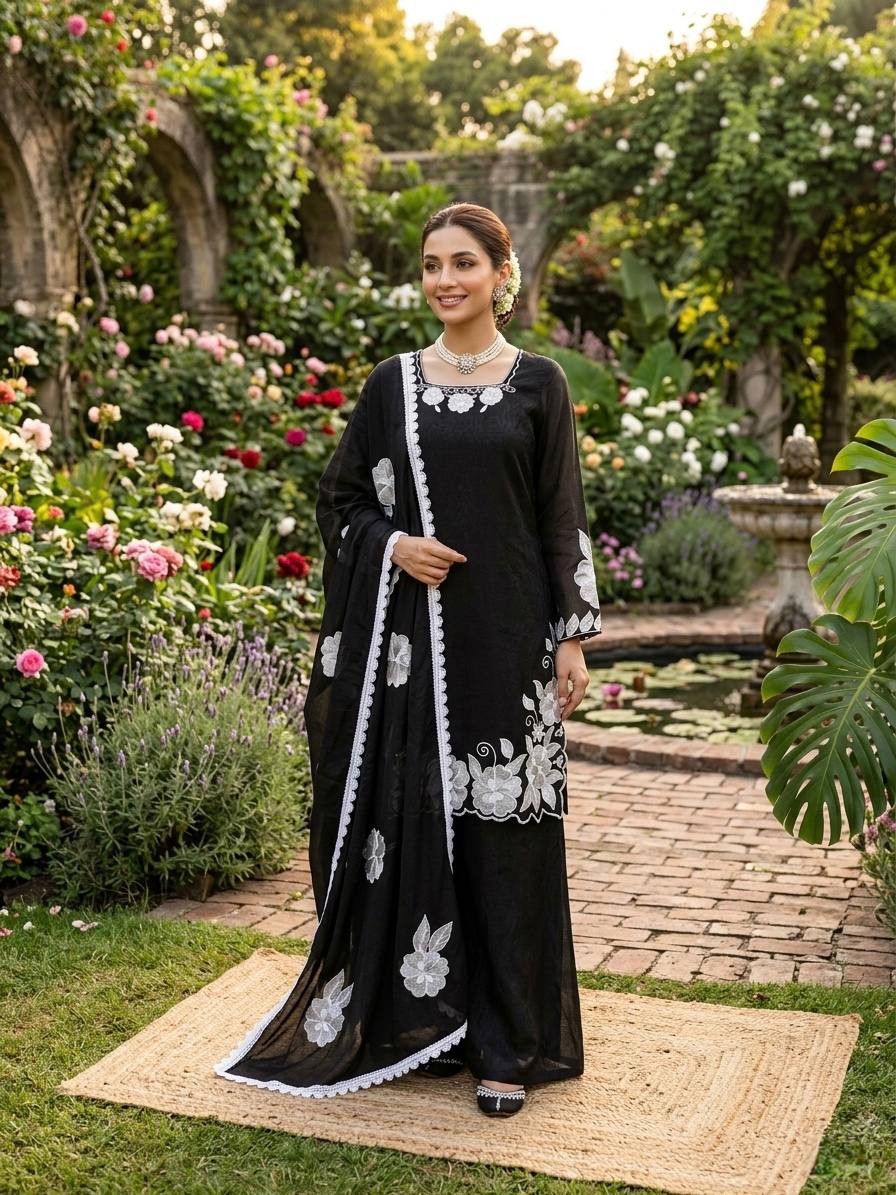
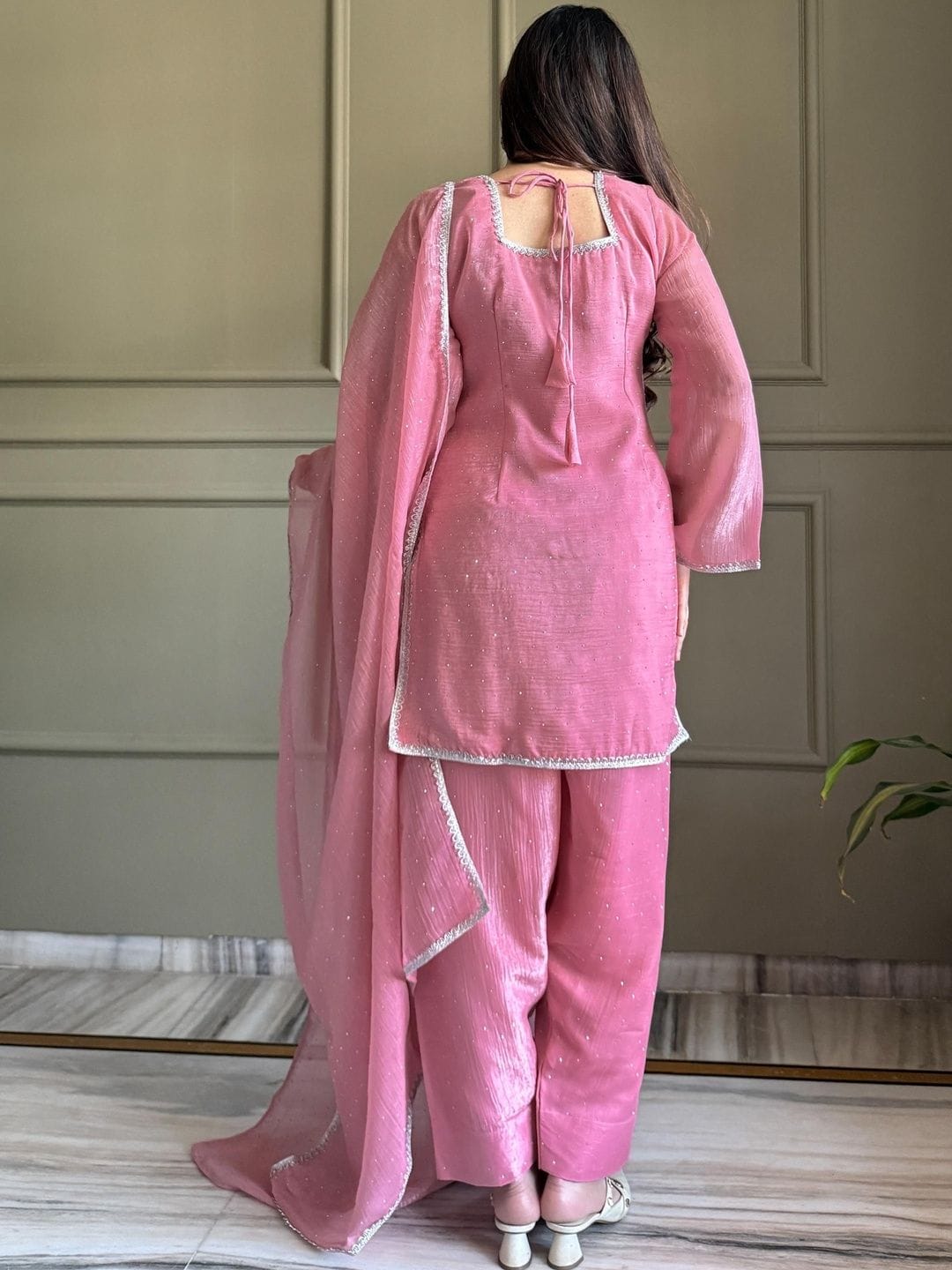
Readymade three-piece suits reduce preparation time because the kurta, bottom and dupatta are already coordinated. Black White Floral Embroidered Readymade Salwar Suit is a versatile example for a daytime or semi-formal gathering, while Pink Crunchy Silk Kurta Pant Set with Diamond Work, Dupatta creates a softer festive effect for an evening function.
How can textile traditions guide styling without copying them?
Textile traditions can guide colour, texture and proportion without encouraging inaccurate claims about cultural authenticity. Use named references such as Paithani, Phulkari, Kalamkari, Kanjeevaram and Kashmir embroidery accurately, because each term points to a particular region, technique or design vocabulary.
Maharashtra Paithani Inspired Salwar Suits can suggest jewel-toned silk, peacock-like colour relationships and zari borders, but Paithani inspiration doesn't make a suit an Arunachali garment. Punjab Phulkari Embroidered Salwar Suits bring bright floral threadwork and are visually distinct from Arunachal textile traditions. Kalamkari Print Salwar Suits (Copy) introduce narrative hand-painted or printed motifs associated with Andhra Pradesh and Telangana, making them suitable for a broader Indian craft theme rather than a claim of local Arunachali origin.
Karnataka Silk Salwar Suits can contribute a polished silk-and-border sensibility, while Kashmir Embroidered Salwar Suits are useful references for delicate floral embroidery and restrained base colours. A thoughtful wardrobe can include all these influences, provided each textile reference is named honestly and not merged into a vague label such as tribal print.
Geometric embroidery, narrow woven borders and textured dupattas can create a mountain-inspired mood without reproducing a community-specific ceremonial pattern. Avoid copying motifs from museum images without understanding their meaning. Avoid attaching sacred, clan or regional symbolism to a commercial design merely because the colours resemble a heritage textile.
What should you check before buying a festival salwar suit?
Check measurements, fabric composition, lining, transparency, care instructions and delivery time before buying a festival salwar suit. These practical details determine whether a beautiful outfit will remain comfortable and presentable through a full day.
- Measure the garment points: Compare bust, waist, hip, shoulder, sleeve and kurta length with a garment that already fits. A size label alone can't predict the fit of a palazzo or Anarkali.
- Check ease: Leave approximately 5 to 8 centimetres of comfortable movement ease around the bust and hip, depending on the cut and fabric. Very fitted festive clothing becomes uncomfortable while sitting or eating.
- Inspect transparency: Chanderi, organza-like dupattas and lightweight cotton may need a lining, slip or camisole. Ivory and pastel fabrics show lining colour clearly.
- Assess embellishment: Sequins and dense zari can catch on jewellery, chairs and bags. Run a hand lightly over the embroidery and inspect whether the reverse has a soft lining or exposed threads.
- Allow tailoring time: Unstitched material may need measurements, cutting, lining, finishing and a trial. Keep at least 7 to 14 days for ordinary tailoring and more time for complex embroidery or last-minute alterations.
- Consider weather: Layer a cotton lining or light stole for cooler evenings, but avoid thick synthetic layers in humid daytime conditions.
Black White Floral Embroidered Readymade Salwar Suit is convenient when the event is close and alterations are limited. A made-to-measure option brings better control over sleeve length, neckline depth and trouser width, but the extra fitting stage should be included in the purchase timeline.
How should you style accessories, hair and footwear?
Choose accessories that support the suit's strongest detail instead of competing with embroidery, zari or a printed dupatta. One prominent element, such as oxidised silver earrings, a woven stole or a slim gold necklace, is usually more effective than wearing several unrelated statement pieces.
Oxidised silver works well with black, red, indigo, olive and handloom textures. Antique gold complements mustard, maroon, ivory and Banarasi silk. Glass bangles add movement and colour, while a small pair of jhumkas keeps a heavily embroidered Anarkali from looking overloaded. A compact potli or crossbody bag is more practical than a large shoulder bag that may rub against sequins.
Choose juttis, low block heels or cushioned sandals for events involving walking. A heel between 2 and 5 centimetres provides elevation without the instability of a narrow high heel on grass, stone paths or uneven floors. Secure the dupatta with two discreet pins at the shoulder and one at the waist if dancing, serving food or travelling by car.
For hair, a low braid, low bun or half-up style keeps the face clear and reduces friction against embellished collars. Hair accessories should be selected after checking the neckline and earrings. A high neckline generally needs smaller earrings, while a simple round neck can accommodate a more visible necklace.
How can you care for an embellished salwar suit after the festival?
Air the suit in shade, remove surface dust gently and follow the garment's fibre-specific care label before storing it. Most zari, sequins, Chanderi and silk-like fabrics should not be treated as ordinary machine-wash clothing.
don't leave perspiration, food stains or dampness sealed inside a garment bag. Hang the kurta and dupatta in shade for several hours, then spot-test any stain treatment on an inside seam. Dry-clean zari-heavy silk, sequined Anarkali suits and structured jacquards when the care label recommends professional cleaning. Hand-wash only when the label permits it, using cold water and a mild detergent without wringing.
Fold embellished pieces with soft cotton or acid-free tissue between decorated surfaces so sequins and zari don't snag. Store silk and Chanderi in a breathable cotton cover rather than plastic, and refold the garment every few months to prevent a permanent crease. Keep neem leaves or a cedar block nearby if desired, but don't place strong fragrance directly against the fabric.
These care steps extend the usable life of festival clothing and make it easier to re-style one suit for a family lunch, cultural programme or formal evening. A well-maintained salwar suit can become a dependable part of a seasonal wardrobe rather than an one-event purchase.
Questions Women Ask About Arunachal Festival Salwar Suit Dressing
What colours are suitable for an Arunachal festival salwar suit?
Red, maroon, mustard yellow, forest green, black, ivory, rust and muted pink are suitable festive colours. Choose the combination according to the time of day, venue and the level of formality rather than treating one palette as universally traditional.
Which fabric is best for a salwar suit during a festival?
Cotton and Chanderi are usually best for breathable daytime comfort, while jacquard, silk blends and Banarasi silk suit cooler or more formal evenings. Always check lining, transparency and care requirements before choosing a fabric.
Can I wear a salwar suit to an Arunachal Pradesh cultural event?
Yes, a modest and comfortable salwar suit can be appropriate for many cultural events, especially when the invitation does not require community-specific traditional clothing. Avoid describing a commercial suit as authentic Arunachali attire unless its provenance and design have been properly established.
Is an Anarkali or palazzo suit better for festival celebrations?
A palazzo suit is generally better for walking, warm weather and long daytime events, while a moderately flared Anarkali offers a more formal evening appearance. Choose the silhouette that matches the venue and allows you to sit and move comfortably.
How early should I buy an unstitched salwar suit for a festival?
Buy an unstitched suit at least two to three weeks before the event to allow for measurement, tailoring, fitting and corrections. Add more time when the outfit includes lining, heavy embroidery, custom sleeves or a complex Anarkali flare.
How should an embellished salwar suit be stored after wearing it?
Air the suit in shade, spot-clean only when the care label permits it and store it folded with soft tissue between embellished surfaces. Use professional dry cleaning for many zari-heavy, sequined and silk garments, and avoid sealing damp clothing in plastic.





