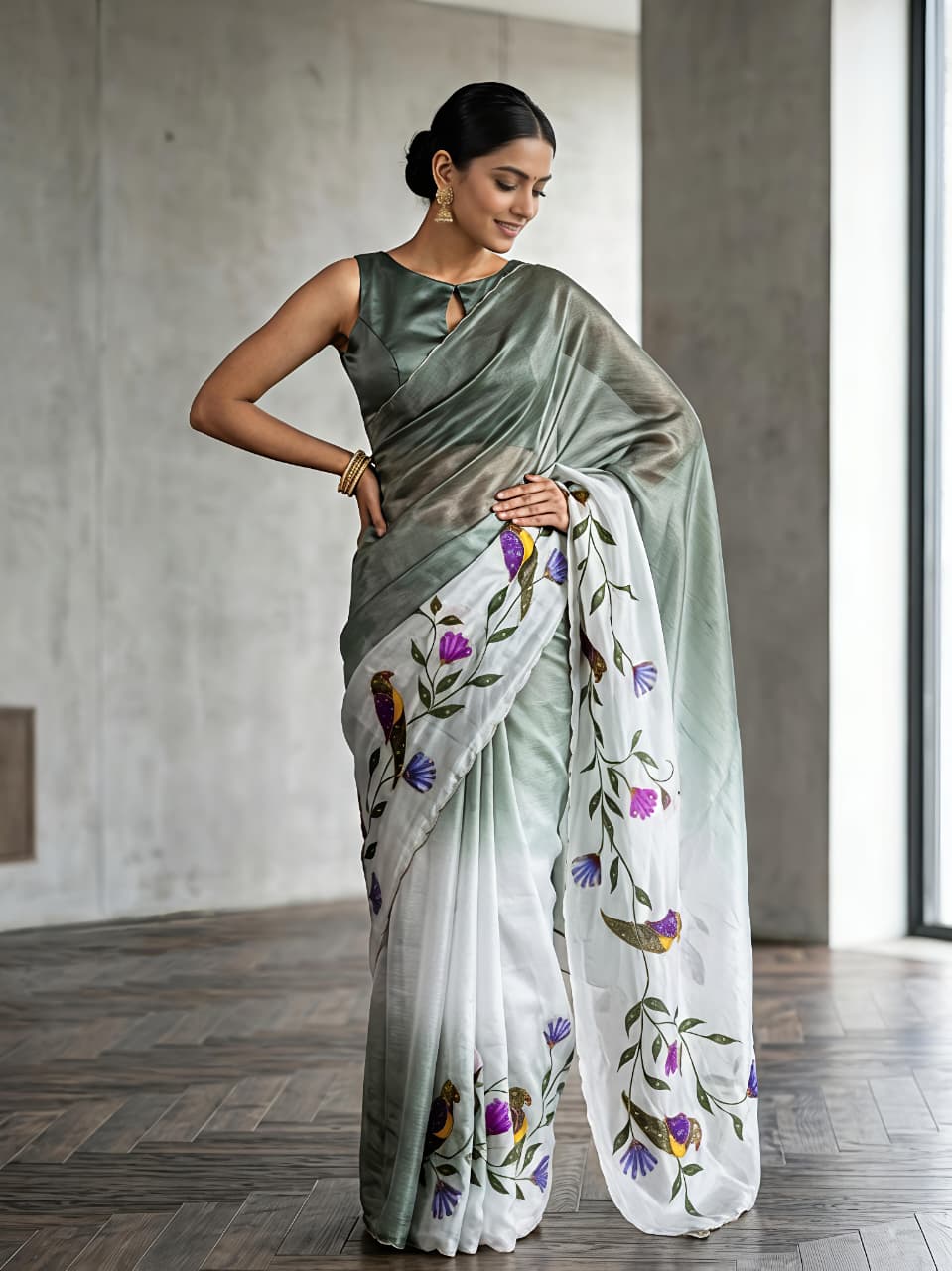
Andhra Festival Outfit Guide planning becomes easier when clothing reflects the ritual, weather and amount of movement involved in each celebration. Sankranti may include rangoli, outdoor visits, family meals and temple prayers, while Ugadi often brings a morning puja, Ugadi pachadi, relatives and a long festive lunch. A breathable cotton saree, soft silk saree, salwar suit or practical ready-to-wear saree can look ceremonial without making the wearer uncomfortable.
The most useful approach is to choose the fabric first, the silhouette second and the accessories last. A handloom cotton saree suits a warm daytime gathering, a Banarasi silk saree creates a richer formal effect, and an embroidered salwar suit may be easier than a saree when the day involves travel or hosting children.
Andhra Festival Outfit Guide for choosing the right level of formality
An appropriate Andhra festival outfit combines regional textile traditions, festive colour, comfortable movement and respectful coverage. The right level of formality depends on whether the event is a home puja, temple visit, family lunch, cultural programme or evening gathering.
Traditional Andhra dressing commonly includes silk sarees, cotton sarees, zari borders, gold-toned jewellery and well-fitted blouses. Kanjeevaram silk is a strong choice for a major family ceremony because its substantial body and contrast borders create a formal drape. Banarasi silk offers woven pattern and brocade depth, while soft silk generally falls more fluidly and can be easier to wear for several hours.
Colour contributes strongly to the festive impression. Maroon, red, mustard, parrot green, pink, orange, teal and ivory photograph well against mango-leaf toran, rangoli, brass lamps and marigold flowers. A gold zari border can make a restrained base colour look ceremonial without covering the entire garment in sequins or embroidery.
Coverage and secure construction matter as much as decoration. A blouse should fit closely at the bust and armhole without pulling across the back, and a salwar suit should have a dupatta that stays in place while greeting guests or serving food. Three-quarter sleeves, a lined bodice and a firmly finished neckline are practical choices for long family gatherings.
Andhra Festival Outfit Guide for Sankranti, Bhogi and Kanuma
Sankranti and Kanuma outfits should be bright, comfortable and easy to move in because the celebrations often involve early starts, outdoor rituals, household visits and festive meals. Cotton sarees, light silk sarees, festive salwar suits and ready-to-wear sarees are dependable options for January celebrations.
Bhogi and Sankranti morning dressing
A handloom cotton saree with a zari border suits a morning Bhogi or Sankranti gathering because cotton handles sunshine and household activity better than a heavy brocade. Neat pleats and a securely tucked pallu prevent repeated adjustments while drawing rangoli, arranging lamps or serving breakfast.
Teal Tissue Handloom Cotton Saree with Zari Weave | Varnavi shows how a jewel-toned colour and restrained zari texture can create a festive effect without excessive weight. Pair a teal saree with a mustard, maroon, antique-gold or deep-pink blouse. A three-quarter sleeve blouse provides coverage and remains practical during outdoor rituals.
Kanuma and family visits
Kanuma dressing can be slightly more relaxed than a formal puja outfit, particularly when the day involves travelling between relatives' homes. A soft silk saree, printed saree or embroidered salwar suit supplies colour and polish while allowing comfortable sitting and walking.
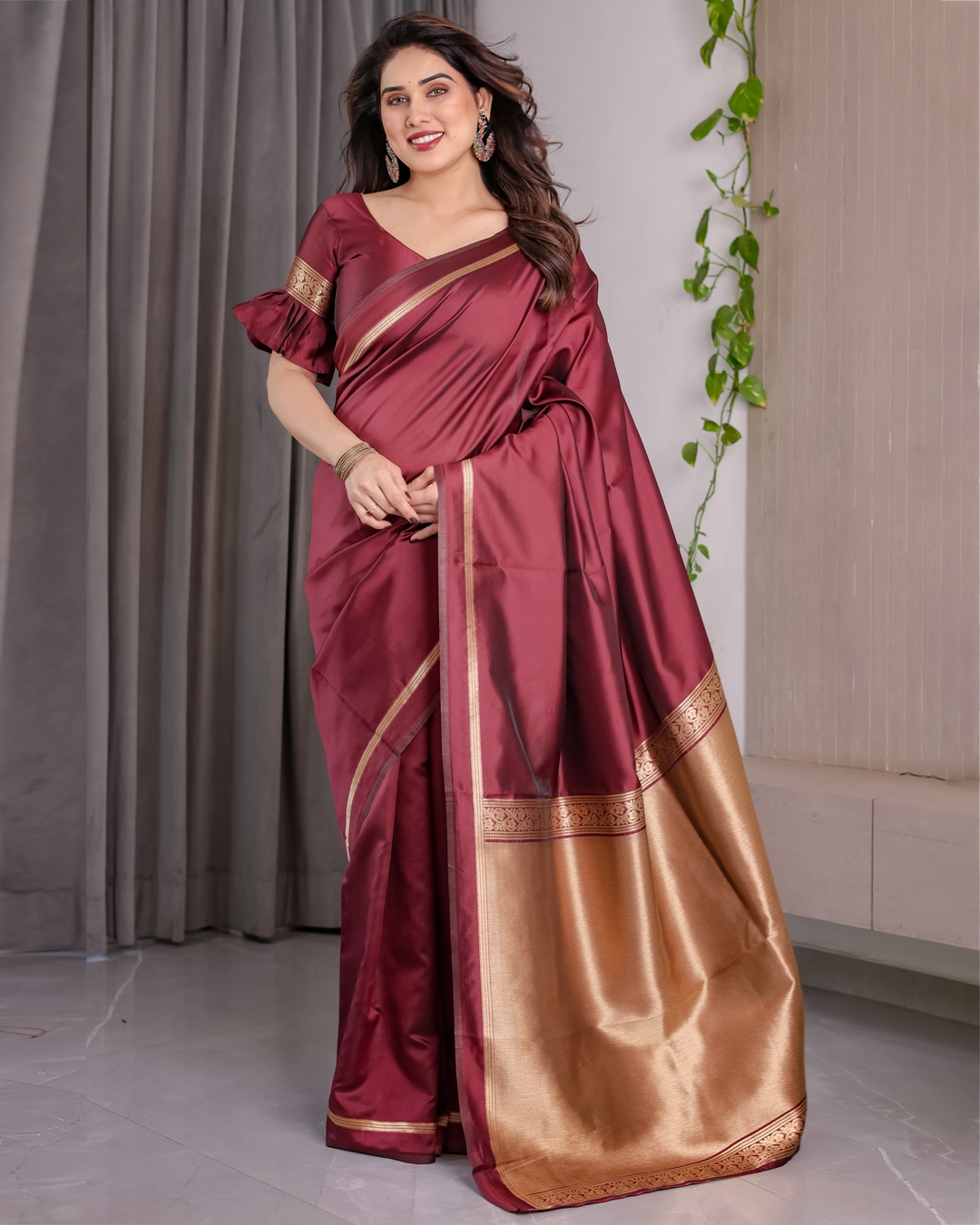
Maroon Banarasi Soft Silk Saree with Golden Zari Border suits a heritage-style Sankranti lunch or a family photograph because maroon photographs richly and golden zari connects naturally with festive décor. Choose an antique-gold, beige, black or matching maroon blouse, then balance the look with one noticeable necklace or a pair of jhumkas.
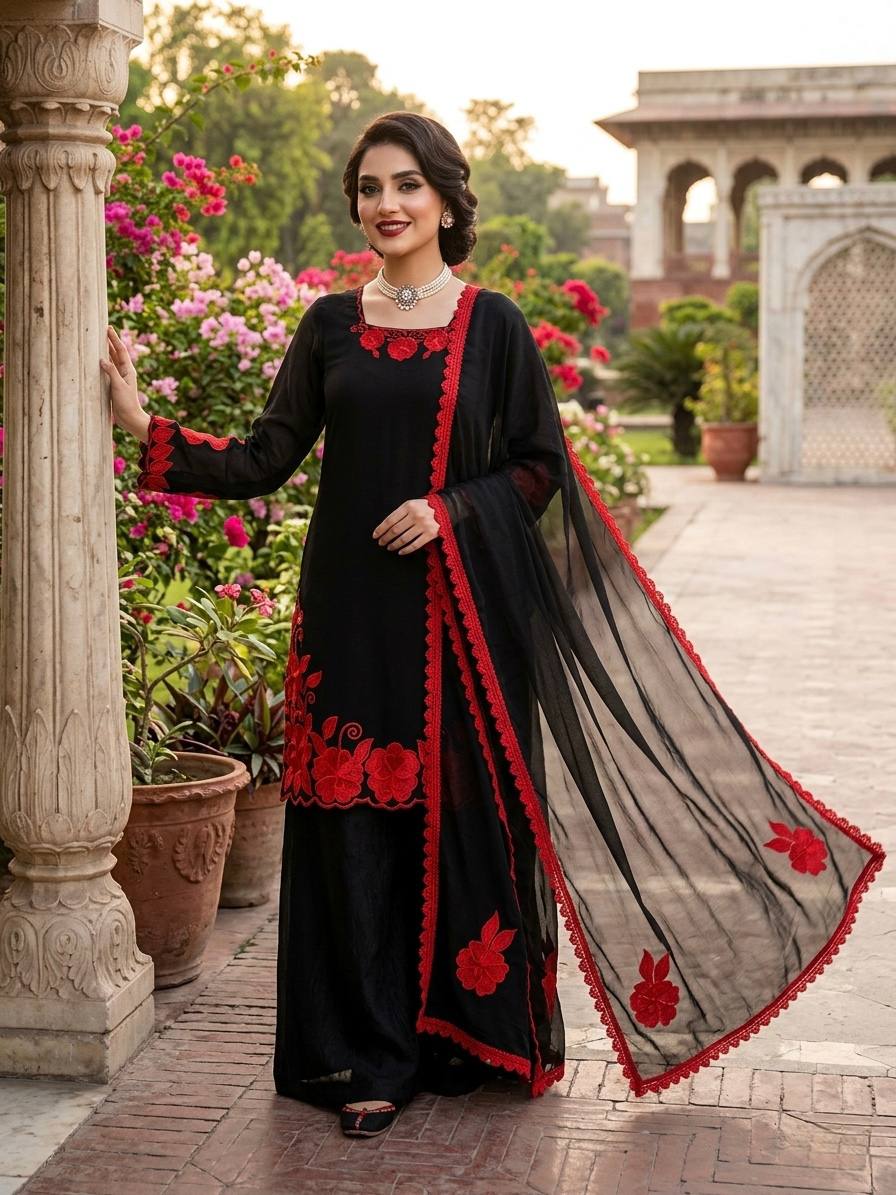
For someone who prefers trousers and a coordinated outfit, Black Red Fendy Silk 3 Piece Readymade Salwar Suit Set brings a practical alternative to a saree. The black-and-red contrast works especially well for an evening family gathering, while gold earrings and a restrained makeup palette keep the look balanced.
Andhra Festival Outfit Guide for Ugadi celebrations
Ugadi outfits should feel fresh, graceful and celebratory, with breathable fabrics and colours suited to a springtime New Year gathering. A saree, anarkali, salwar suit or sharara can work well, depending on the formality of the event and the wearer's preference for movement.
Ugadi usually includes a morning puja, preparation of Ugadi pachadi, visits from relatives and a festive meal. A saree with a clean border or an elegant salwar suit is therefore more versatile than an extremely embellished outfit. Chanderi, cotton silk, soft silk, chinnon and breathable georgette work well for indoor lunches and family gatherings.
Pink Banarasi Soft Silk Saree with Golden Zari Border brings a classic Ugadi direction through its cheerful base colour, silk surface and ceremonial zari. Style the saree with a green, gold, ivory or deep-pink blouse. A low bun decorated with jasmine connects the look with South Indian festive dressing without requiring complicated hairstyling.
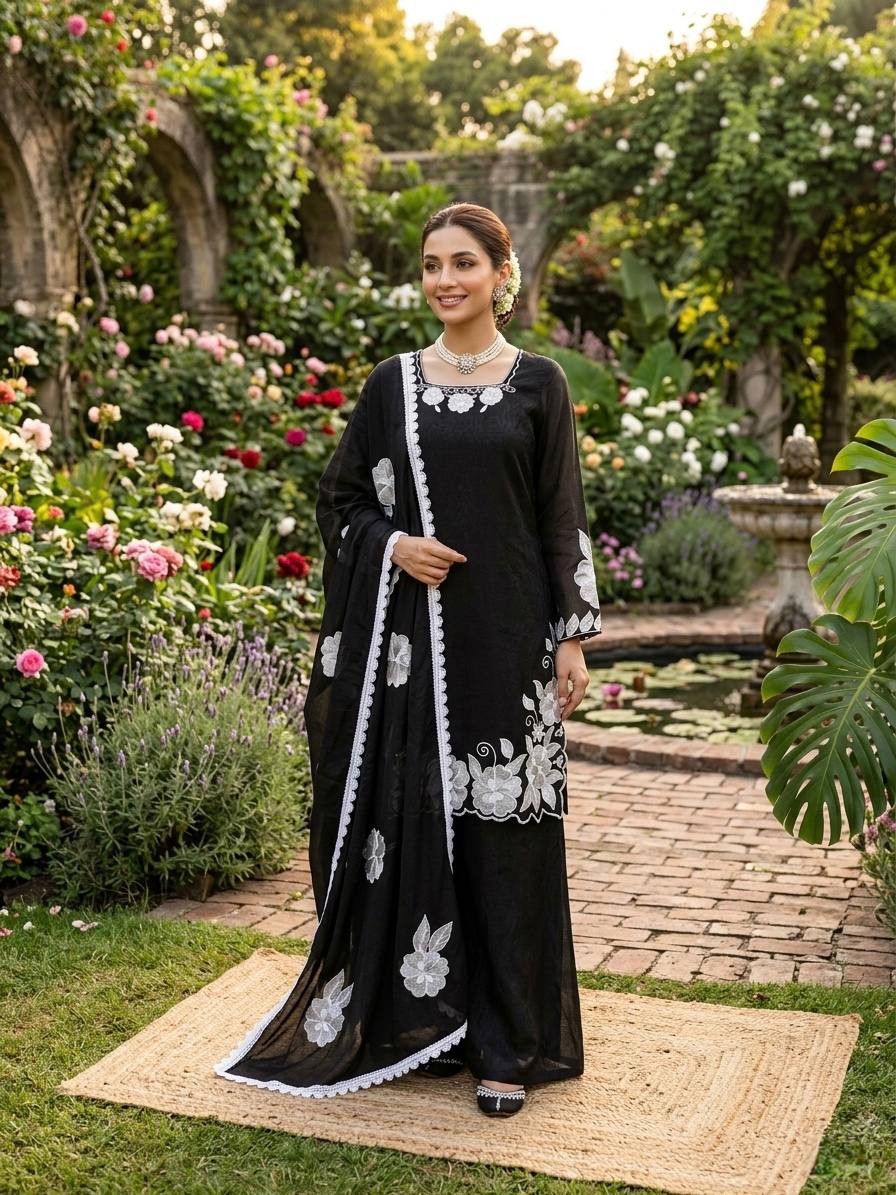
A lighter silhouette may be preferable for a daytime Ugadi gathering. Black White Floral Embroidered Readymade Salwar Suit gives a contemporary alternative to a saree, particularly for someone who expects to travel, host children or sit on the floor during rituals. Add a coloured dupatta, gold-toned earrings and a small bindi so the monochrome base feels festive rather than office-like.
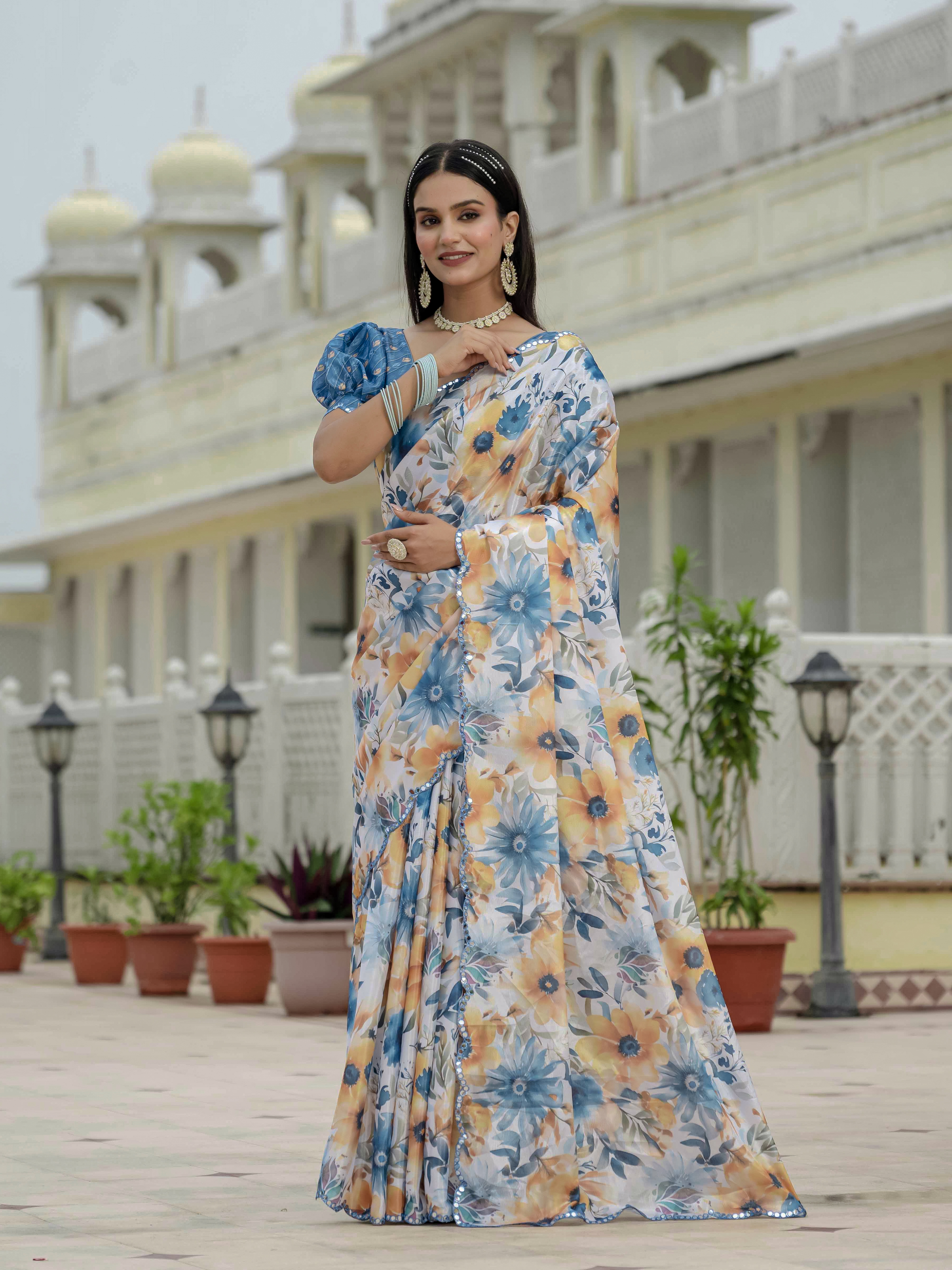
Peach Blue Floral Chinnon Ready To Wear Saree | Varnavi is another useful direction for an Ugadi event because a ready-to-wear construction reduces pleating time and a floral chinnon surface feels lighter than dense silk. Pair peach and blue with pearl jewellery, silver-toned accents or a soft gold blouse for a daytime gathering.
Andhra Festival Outfit Guide to fabrics, drapes and comfort
Fabric choice should follow the season, duration and physical demands of the celebration rather than the amount of shine alone. Cotton and tissue cotton suit warm daytime events, soft silk works for long festive gatherings, and Banarasi silk or Kanjeevaram suits formal ceremonies where a structured drape is desirable.

Silk, zari and soft silk
Banarasi silk contains woven pattern or brocade effects that give visual depth, while soft silk generally has a more fluid fall and can feel easier to drape for extended wear. Kanjeevaram is known for its substantial silk body and distinctive borders, making it especially suitable for milestone celebrations and formal temple visits.
Silk sarees should be aired after use and stored folded in clean cotton rather than sealed immediately in plastic. Refold a silk saree every few months along different lines to reduce permanent creasing. Keep zari away from direct perfume, moisture and damp storage because chemical residue and humidity can dull metallic threads.
Cotton, tissue and lighter fabrics
Handloom cotton absorbs moisture and remains comfortable in warm weather, but cotton creases more readily than silk. Tissue cotton adds subtle sheen while remaining lighter than heavily woven silk. Chanderi has an airy appearance and works well for an indoor Ugadi lunch or an evening cultural programme.
A cotton or lightweight saree benefits from a well-fitted petticoat and a blouse with secure shoulder seams. An adjustable cotton petticoat gives better control than a very loose underskirt, especially when the saree is worn for walking or temple visits.
Andhra Festival Outfit Guide for salwar suits, anarkalis and shararas
A salwar suit or sharara looks festive when the fabric, dupatta, jewellery and finishing details create a deliberate occasion look. Embroidery, zari, mirror work, a contrasting dupatta or a carefully chosen colour combination can provide ceremony without the maintenance of a full silk saree.
Pink Mirror Work Zari Sharara Suit Set Online - Varnavi demonstrates how mirror work and zari create a celebration-ready surface. Because mirror work catches light strongly, keep the rest of the styling controlled with a simple clutch, small earrings or one statement ring. Comfortable wide-leg sharara trousers also make the silhouette useful for standing, walking and dancing.
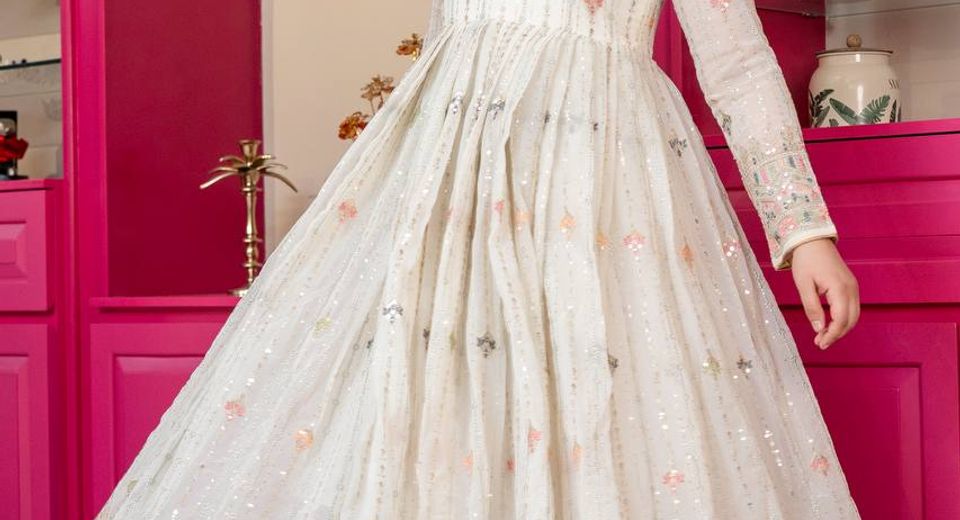
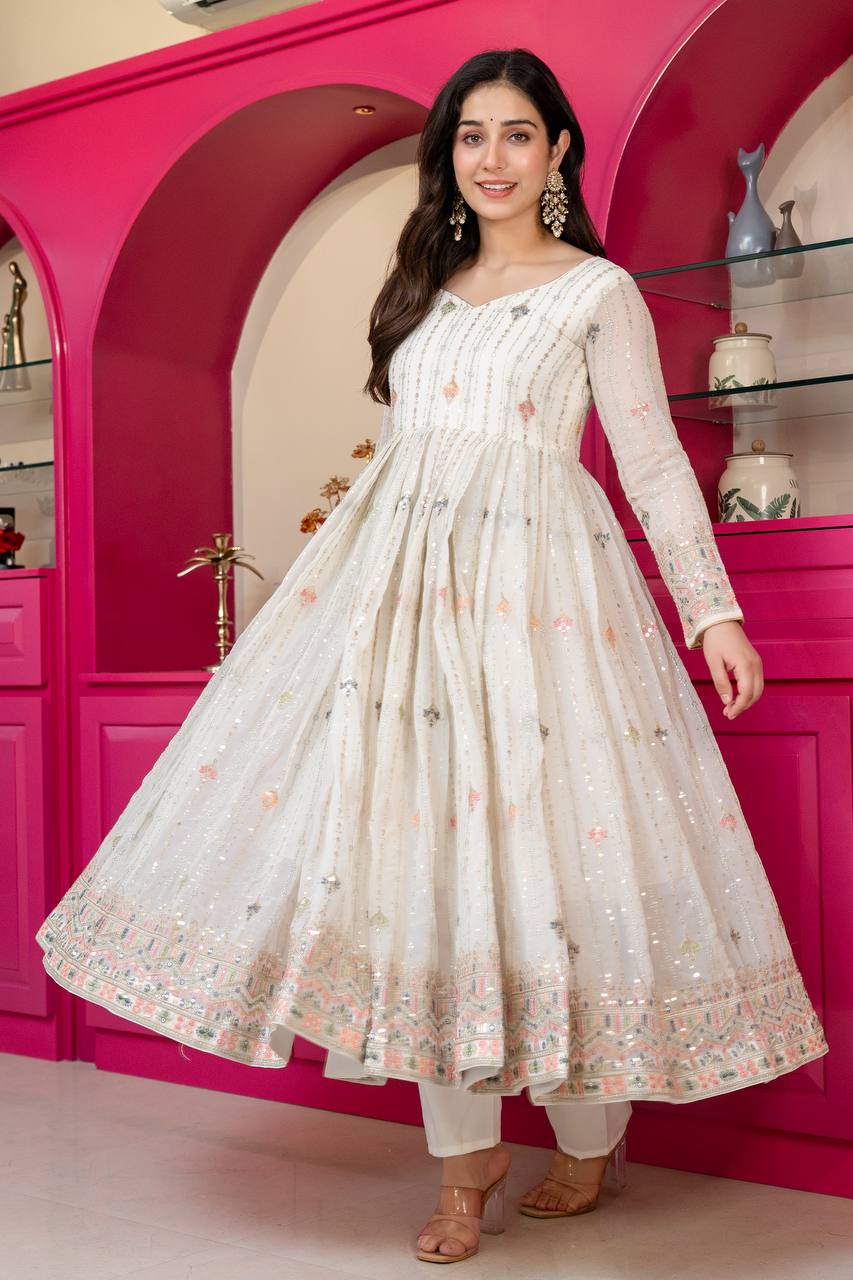
Ivory Zari Sequins Embroidered Anarkali Suit Set | Varnavi suits an Ugadi evening or formal family dinner with muted gold accessories. Ivory looks understated beside marigold and mango-yellow décor, although a lining that's not transparent remains important for comfortable movement and sitting.
Anarkalis are particularly useful for guests who prefer a long, flowing silhouette without managing saree pleats. A fitted upper section prevents the garment from looking shapeless, while a moderate flare allows easy movement. Keep the dupatta pinned at one shoulder when the event includes serving food or greeting several guests.
Andhra Festival Outfit Guide for colour, jewellery and blouse styling
Choose the main colour according to the time of day, then use the blouse and jewellery to introduce contrast. Bright pink, teal, maroon and red suit daytime festive photographs, while ivory, black, navy and jewel tones can look especially polished for evening events when paired with metallic accents.

A saree blouse should fit closely at the bust and armhole without pulling across the back. A loose blouse can make the saree slide, while a tight armhole becomes uncomfortable during meals and greetings. For a zari saree, a plain blouse often makes the border more visible; for a plain saree, embroidery, brocade or a contrasting sleeve can supply the decorative focus.
Gold-toned jhumkas, bangles and a small bindi form a dependable festive base. Temple jewellery works naturally with silk sarees and formal pujas, while pearls or delicate gold-plated pieces can soften an ivory, pastel or floral outfit. Avoid wearing a heavy necklace, large earrings and stacked bangles together when the garment already contains dense sequins or mirror work.
Hair and footwear should support the schedule. A low bun, braid or half-up style remains secure for several hours, and jasmine can add a traditional finish. Low block heels, embellished flats and cushioned sandals are generally more practical than narrow stilettos for temple steps and household visits.
Andhra Festival Outfit Guide for repeating outfits across events
One outfit can serve several festival events when the base garment remains simple and the accessories change according to formality. A saree can move from a morning puja to an evening visit through a different blouse, jewellery set, hairstyle and draping finish.
For a daytime Sankranti gathering, wear a cotton saree with small earrings, a secure braid and flat sandals. For a more formal lunch, change to a silk blouse, add a longer necklace and use a sharper pleat. For an evening Ugadi event, introduce a statement clutch, bolder earrings and a low bun while keeping the saree unchanged.
A three-piece salwar suit can also be restyled. Use the original dupatta for a family puja, replace it with a plain silk or tissue dupatta for a quieter lunch, or add a zari belt for an evening photograph if the cut permits. Repeating a garment becomes easier when the base colour is adaptable and the decorative details are concentrated in removable accessories.
Before the festival, test the complete outfit for at least 20 minutes. Sit on the floor, walk up stairs, raise both arms and check whether the pallu, dupatta, blouse hooks and footwear remain comfortable. This simple test identifies slipping fabric, tight armholes and unstable jewellery before the celebration begins.
Common Questions About Sankranti and Ugadi Festival Dressing
What saree is best for Sankranti in Andhra Pradesh?
A handloom cotton saree or lightweight soft silk saree is usually best for Sankranti because both provide festive colour while remaining comfortable for outdoor rituals and family visits. Choose a zari border when you want a more ceremonial finish without the weight of a heavily woven silk saree.
What should I wear for Ugadi if I do not want to wear a saree?
A salwar suit, anarkali or sharara suit is a suitable Ugadi alternative to a saree. Choose breathable chinnon, cotton silk, Chanderi or lightweight georgette, then add festive earrings, a bindi and a coordinated dupatta.
Which colours are traditionally suitable for Andhra festivals?
Red, maroon, pink, mustard, green, orange, teal, ivory and gold are all suitable festive colours for Andhra celebrations. Bright colours work well for daytime Sankranti events, while ivory, black and jewel tones can look polished for evening Ugadi gatherings when balanced with zari or gold-toned accessories.
Is Banarasi silk suitable for Sankranti and Ugadi?
Banarasi silk is suitable for formal Sankranti and Ugadi events, particularly family pujas, lunches and photographs. Soft silk or cotton may be more comfortable when the schedule involves extensive walking, outdoor activity or warm weather.
How should I care for a silk saree after a festival?
Air a silk saree before storing it, fold it in clean cotton and keep it away from direct perfume and damp conditions. Refold the saree along different lines every few months, and use professional dry cleaning when the care label recommends it.
How can I keep a saree comfortable during a long family function?
Use a well-fitted petticoat, secure the pallu with discreet pins and wear a blouse with comfortable armholes and shoulder seams. Test the complete outfit by sitting, walking and raising both arms before the festival so adjustments can be made in advance.