

Anarkali Suit Shopping for Women Who Prefer Less Flare starts with understanding volume, not simply choosing a smaller size. A graceful Anarkali can skim the body, fall in controlled panels and still retain the long, elegant line associated with the silhouette. The most useful checks are the number of gathers, the placement of flare, the fabric's weight, the hem circumference and the way the dupatta is worn. These details matter more than a product photograph taken while the garment is spread out.
A low-flare Anarkali works especially well for office celebrations, intimate festive gatherings, family lunches and ceremonies where easy movement matters. The right choice should allow you to sit comfortably, walk without lifting the hem and layer a dupatta without making the upper body look bulky.
Anarkali Suit Shopping for Women Who Prefer Less Flare: What creates a controlled silhouette?
A less-flared Anarkali comes from fewer gathers, a narrower hem and panels that open gradually from the waist or hip. A straight or lightly A-line cut usually creates less volume than a kalidar Anarkali with many triangular panels.
Designers create flare in several ways. Gathers inserted below the bust add fullness quickly, while multiple kalis distribute fullness around the entire skirt. A panelled Anarkali with six to eight moderate-width panels generally looks more controlled than one with twelve or more narrow panels. A straight Anarkali may have only a gentle opening from the waist to the hem and can resemble a long kurta while retaining the characteristic fitted upper section.
Check the hem circumference whenever the measurement is provided. A hem circumference of approximately 70 to 90 inches usually feels considerably more restrained than a ceremonial Anarkali with a 120-inch or wider hem. The exact effect also depends on height, fabric and lining, so the number should be treated as a comparison point rather than a universal rule.
Gather placement changes the visual balance. Gathers beginning at the natural waist make the lower half look fuller, whereas panels that remain close through the hip and open gradually create a longer, cleaner line. A seam below the bust can also add volume higher on the body, which may not suit shoppers seeking a streamlined shape.
Anarkali Suit Shopping for Women Who Prefer Less Flare: How can photographs reveal the cut?
You can estimate flare by examining the side view, hem spread and seam direction rather than relying on the front-facing photograph alone. A model standing with one foot forward can make a narrow Anarkali appear fuller, while a lifted hem can hide the actual cut.
Look for vertical seams running from the bodice towards the hem, a relatively narrow side profile and a hem that falls close to the legs when the model is standing still. Product descriptions using terms such as straight, lightly flared, panelled or A-line may be useful, but measurements remain more reliable than adjectives.
Anarkali Suit Shopping for Women Who Prefer Less Flare: Which fabrics control volume?
Medium-weight fabrics with moderate drape work best for controlled Anarkali volume because they fall close to the body instead of standing away from the legs. Silk blends, fluid rayon, crepe-like fabrics and soft georgette can produce a narrower line when the construction isn't heavily gathered.
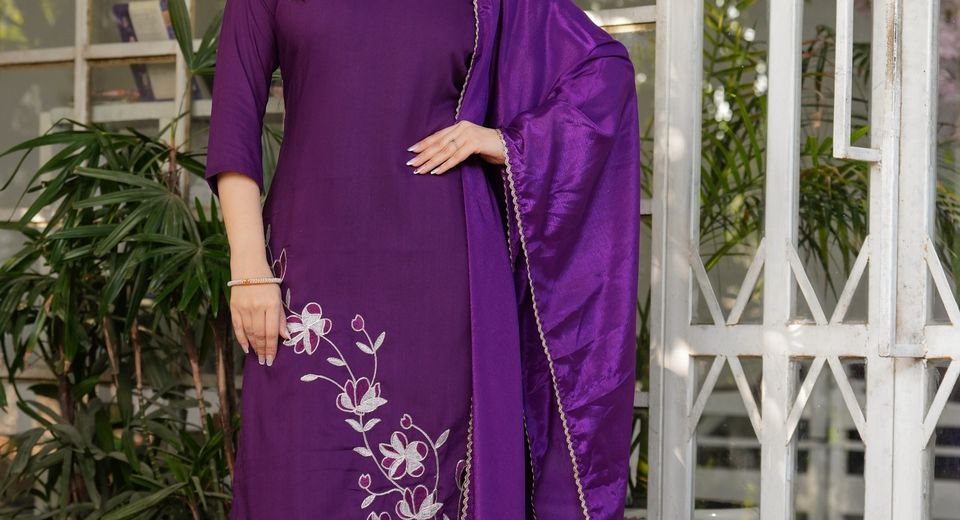
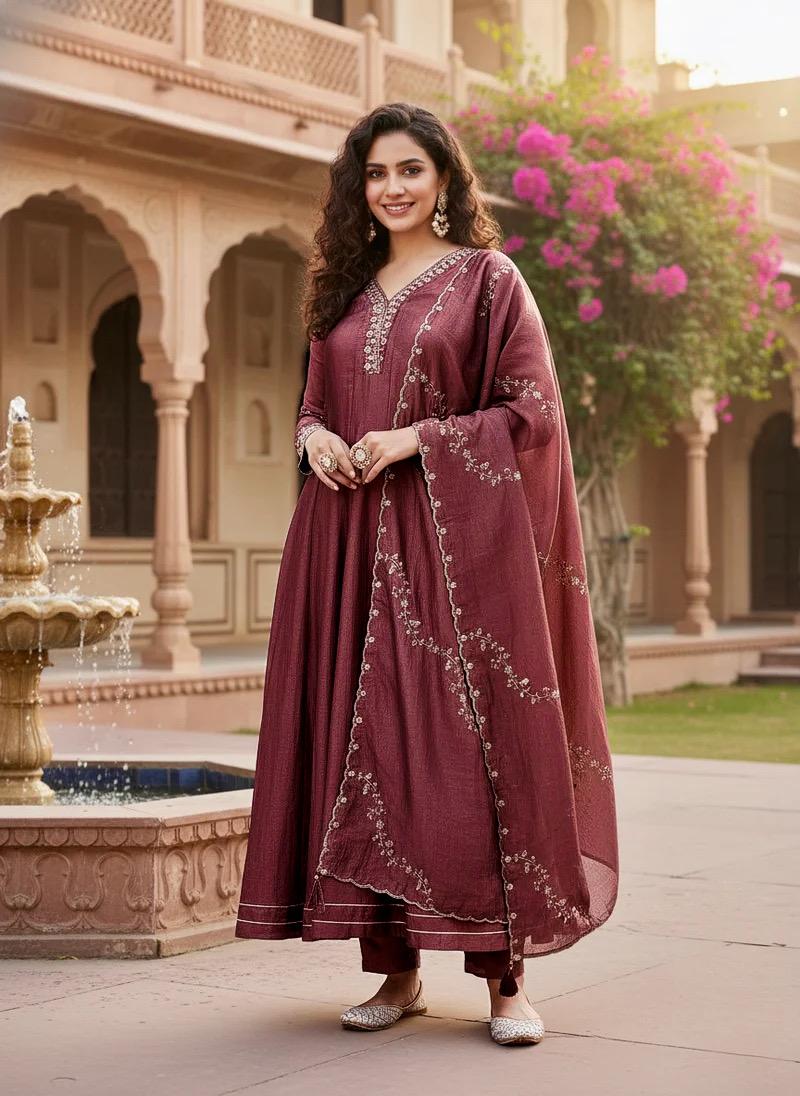
Banarasi silk and heavier brocade can hold their shape, so a small amount of flare may appear more pronounced. Festive Wear Maroon Silk Anarkali Suit Set for Women can suit a shopper who wants a rich occasion texture, but the garment measurements should be checked carefully if avoiding volume is the main priority. A silk Anarkali with a controlled hem can look polished; a heavily panelled silk Anarkali can feel substantial when walking or sitting.
Chanderi is lightweight and often has a crisp surface, which can create gentle structure without the weight of dense velvet or heavily layered net. Kanjeevaram-inspired textiles and zari-rich fabrics may also appear visually fuller because metallic motifs attract attention, even when the physical flare is moderate. Zari placement matters: vertical or scattered motifs tend to support a long line, while broad horizontal borders can visually widen the hem.
Rayon printed fabrics usually fall softly and can be comfortable for extended wear, but the lining deserves attention. A slippery lining may make the outer fabric cling at the knees, while a stiff lining can push the hem outward. Cotton lining is breathable but may add structure; a lightweight polyester lining can slide easily but may feel warmer in humid weather.
Anarkali Suit Shopping for Women Who Prefer Less Flare: Which fabrics need caution?
Very stiff brocade, layered net, thick raw silk and heavily starched cotton can make a modest cut look more voluminous. These fabrics are not automatically unsuitable, but they require a narrower pattern and a hem that's not overloaded with borders, lace or extra panels.
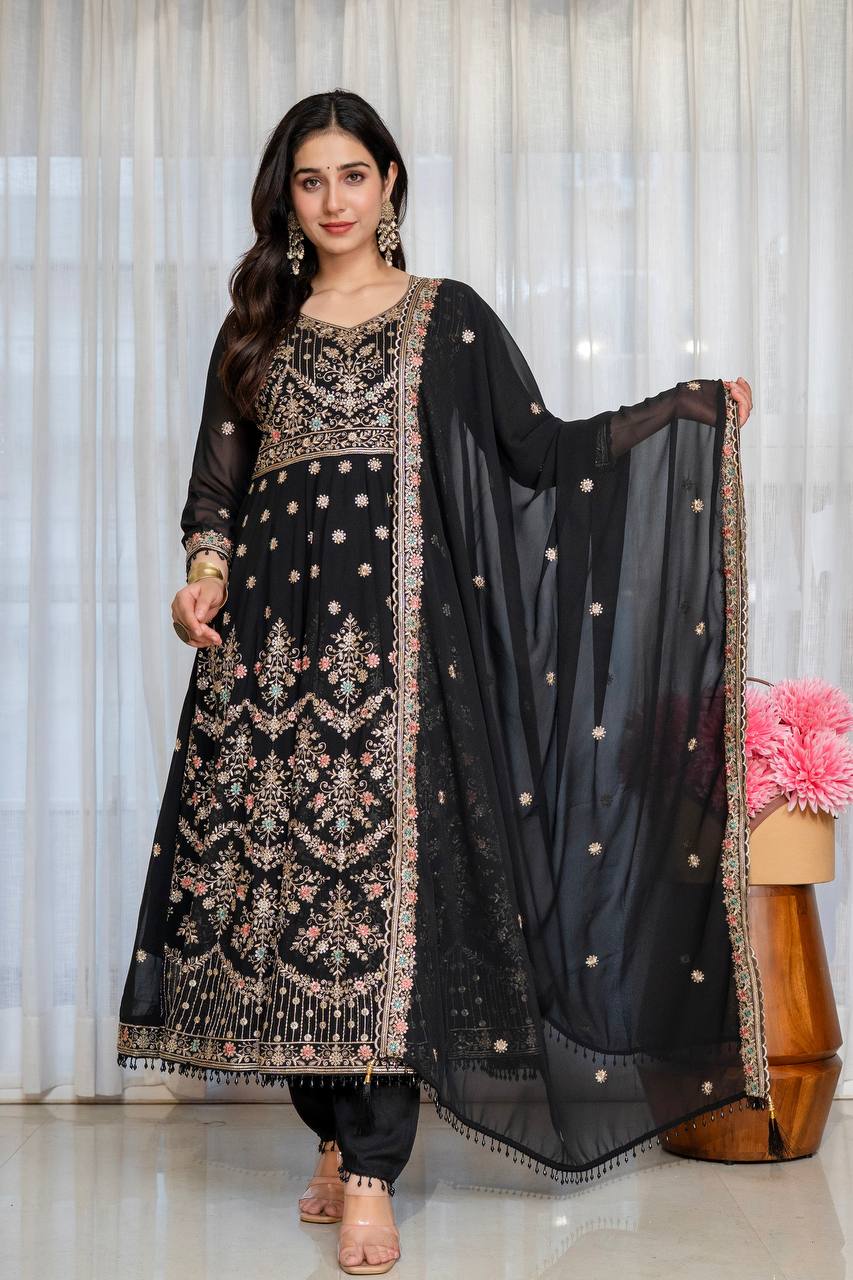
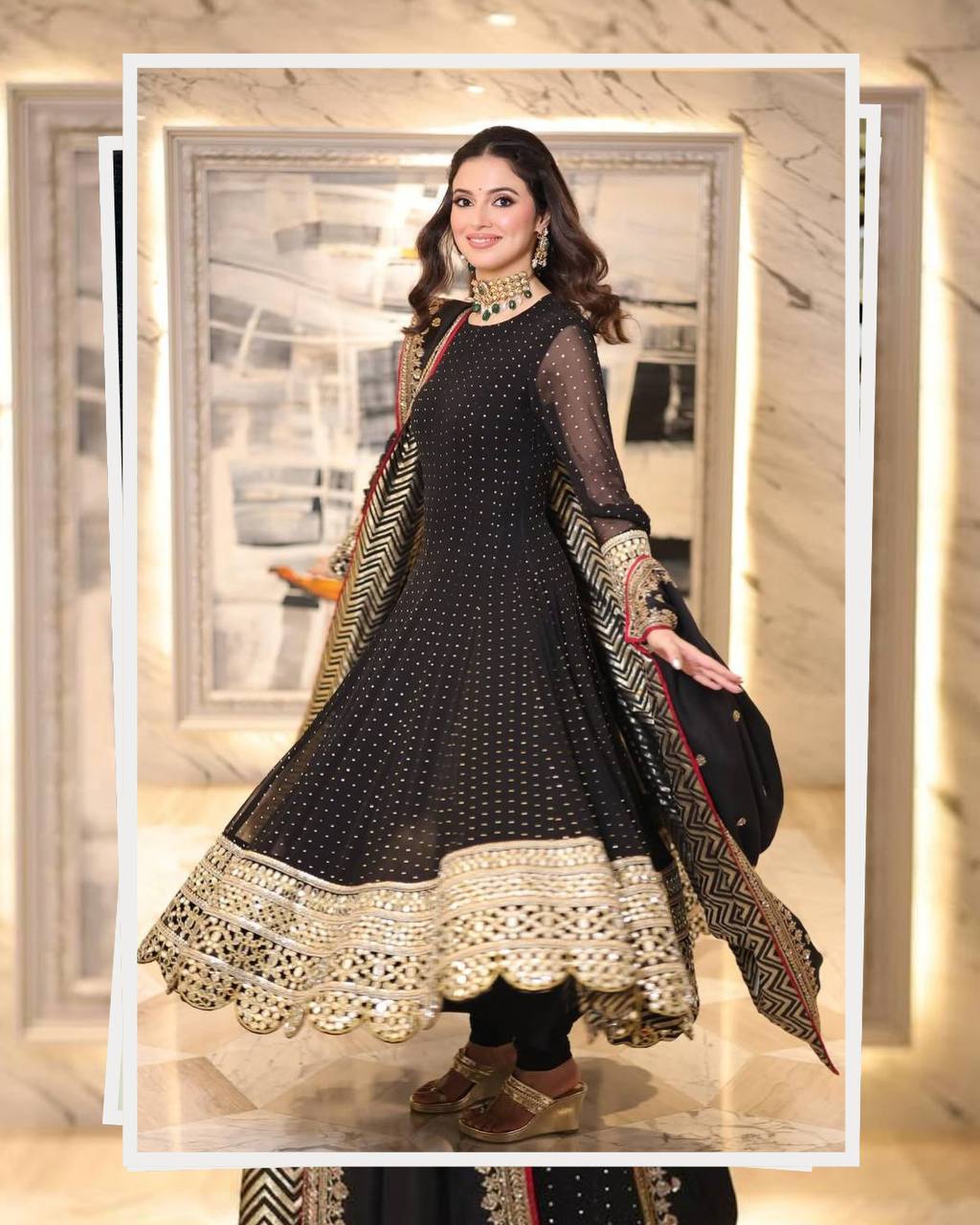
Sequins, zari and Moti lace work add visual and physical weight at the hem. Black Anarkali Suit Set with Sequin Zari and Moti Lace Work and Black Anarkali Suit with Zari, Sequins & Moti Lace Work illustrate why embellishment should be assessed alongside cut. A dark colour may create a visually sleek impression, but concentrated decoration near the bottom can still make the silhouette look broader.
Anarkali Suit Shopping for Women Who Prefer Less Flare: How should you measure before ordering?
You should compare your body measurements with the garment's bust, waist, hip, shoulder and length measurements, giving special attention to the largest measurement rather than ordering from height alone. A low-flare design still needs enough ease for sitting, breathing and raising the arms.
Measure the bust over the fullest point while wearing the bra you expect to use with the suit. Measure the waist at the natural crease, and measure the hip around the fullest point, usually 18 to 23 centimetres below the waist depending on body shape. Keep the tape parallel to the floor and avoid pulling it tight.
For a comfortable semi-fitted Anarkali, allow approximately 2 to 4 inches of ease at the bust and hip, depending on the fabric and the garment's construction. Stretch-free silk, brocade and woven cotton need more practical room than a fabric with natural give. A close fit at the upper arm can restrict movement even when the bust measurement is correct, so sleeve opening and bicep measurements are worth checking when listed.
Length should be measured from the highest shoulder point to the intended hem. A floor-grazing Anarkali can create a long line, but it may drag on stairs or collect dust. For regular movement, a length that finishes around the ankle bone or slightly above the foot is easier to manage. Add footwear height to the calculation, especially for a formal event.
Anarkali Suit Shopping for Women Who Prefer Less Flare: What if you fall between sizes?
Choose the larger size when the fabric has no stretch or when the larger measurement is at the bust, hip or upper arm. A tailor can reduce side seams or adjust the waist more easily than adding fabric to a tight bodice.
don't size down solely to reduce flare. A smaller size changes the fit of the bodice but doesn't reliably reduce the hem circumference, and it can create pulling across the bust. Ask whether the garment has seam allowance for alteration and whether the waist gathers can be adjusted without disturbing embroidery.
Anarkali Suit Shopping for Women Who Prefer Less Flare: Which details keep the look refined?
Vertical seams, restrained borders and balanced motifs make a low-flare Anarkali look understated without adding physical volume. The most useful details are those that guide the eye from the neckline towards the hem.
A V-neck, narrow U-neck or short embroidered placket can lengthen the upper body visually. Long sleeve cuffs and slim vertical embroidery have a similar effect. By contrast, a wide yoke, heavy shoulder ornamentation and a broad horizontal waist band can make the torso appear shorter.
Black Embroidered Anarkali Suit Set with Zari Work demonstrates how zari can provide occasion detail without requiring a very wide skirt. If the embroidery is concentrated on the bodice and continues in a vertical line, the suit can look ornate while remaining visually controlled. Black Zari Sequins Embroidered Anarkali Suit Set | Varnavi! Is another example where the placement of shine deserves as much attention as the base colour.
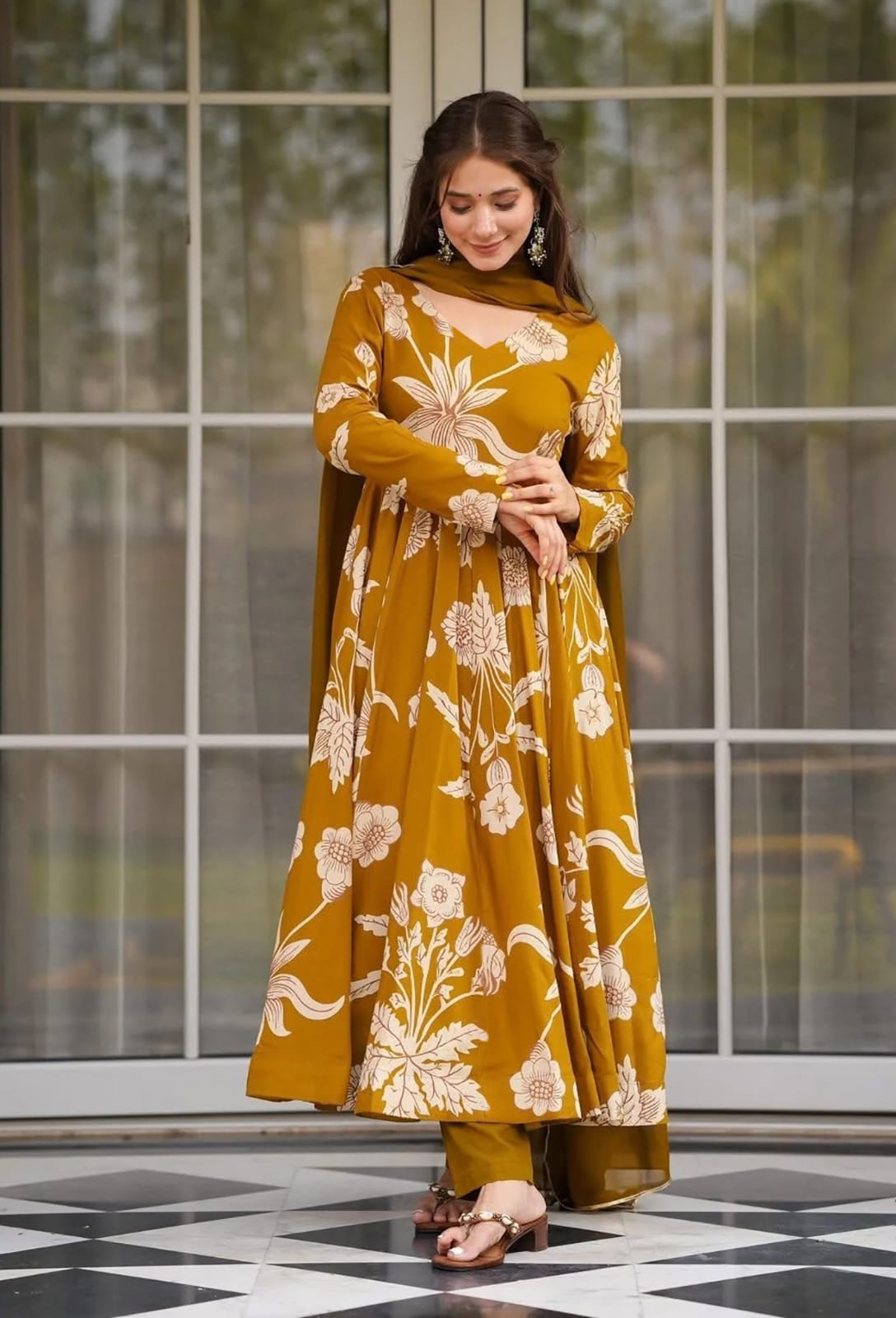
Print scale changes the impression of volume. Small or medium motifs distributed evenly across a mustard, green or cream base tend to look calmer than oversized blooms clustered around the lower skirt. Women's Mustard Printed Anarkali Suit with Dupatta can be considered for daytime festive dressing when print is preferred over dense surface work. Cream Printed Anarkali Gown with Ethnic Motif Design may appeal to shoppers who want a lighter visual effect, although a gown-style cut still needs a hem check.
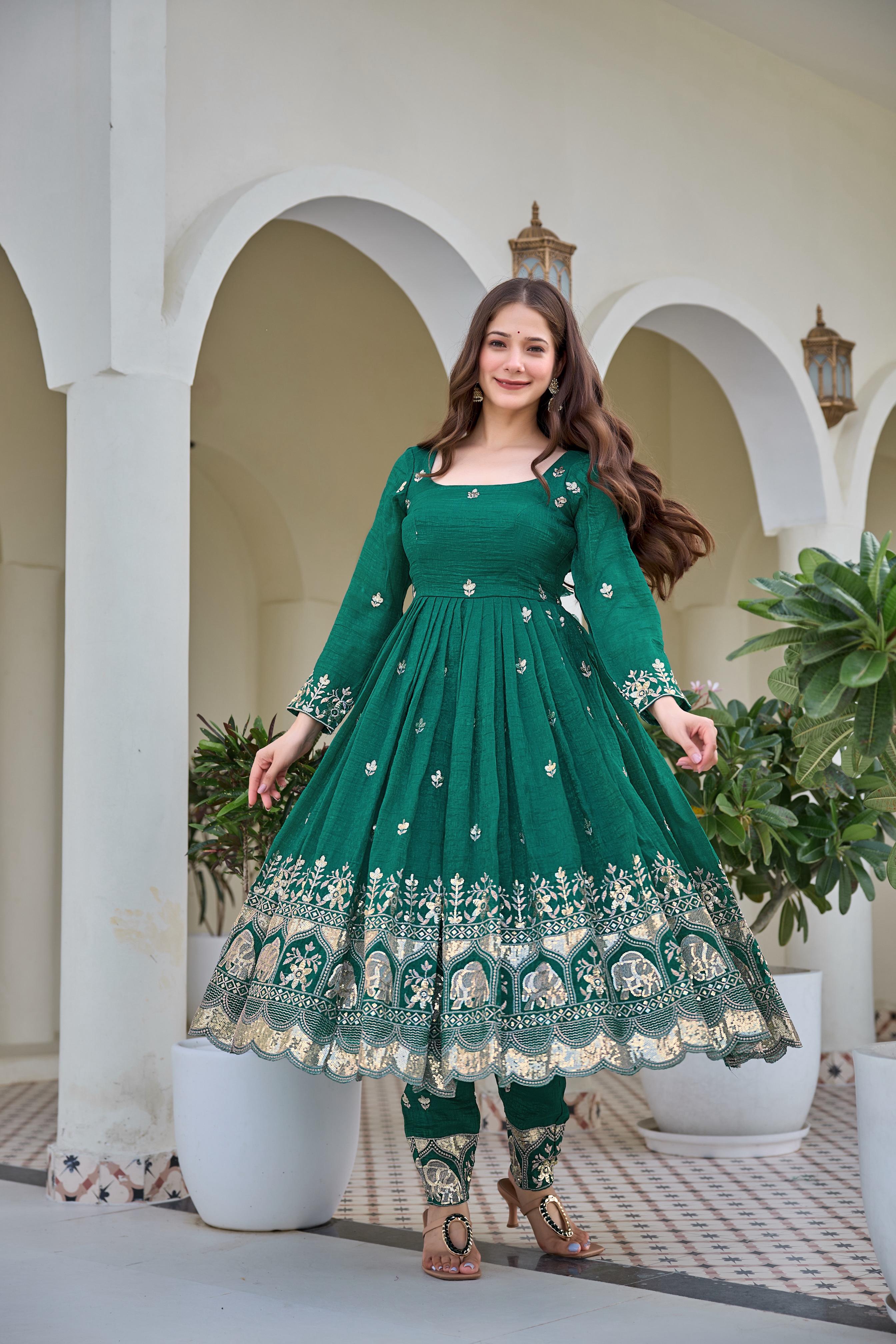
Green Embroidered Anarkali Suit Set for Women can work for a festive wardrobe when the embroidery is balanced across the bodice and skirt rather than concentrated in a wide lower border. Border width is particularly important for shorter shoppers. A broad contrast border at the hem creates a strong horizontal stop and may make the garment look shorter and wider. A narrow zari edge or a border that closely matches the base colour keeps the transition softer.
Anarkali Suit Shopping for Women Who Prefer Less Flare: How do regional styles fit?
Regional prints and embroidery can fit a streamlined wardrobe when the surface design is paired with a controlled cut and uncomplicated accessories. A traditional motif doesn't require a wide, heavily layered skirt.
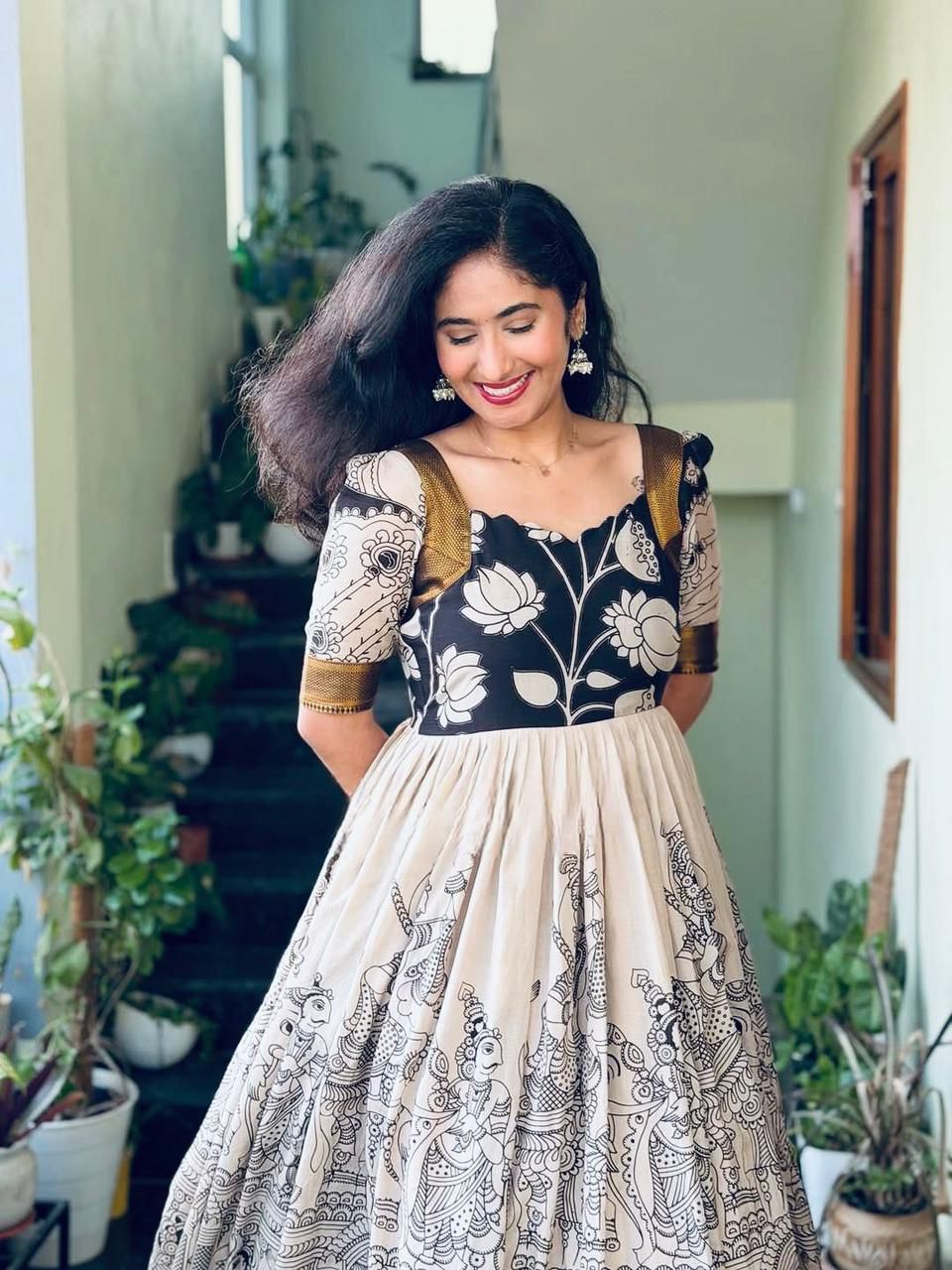
Kalamkari Print Salwar Suits can bring hand-drawn floral, mythological or nature-inspired character to a relatively simple silhouette. Choose a print with visible vertical spacing if you want the eye to travel down the body.
Maharashtra Paithani Inspired Salwar Suits often use jewel tones and peacock-inspired motifs; keeping the dupatta narrow and the jewellery compact can prevent a richly patterned outfit from looking crowded. Gujarat Bandhej Salwar Suits offer a lively dotted pattern, so a restrained Anarkali cut and a plain bottom can create useful balance.
Odisha Sambalpuri Salwar Suits can introduce geometric borders and classic woven motifs. If the border is broad, choose a hem that's not already very full. Punjab Patiala Salwar Suits are associated with generous lower volume, so shoppers who prefer a sleek Anarkali should distinguish the Patiala silhouette from a straight or lightly flared Anarkali before ordering.
Anarkali Suit Shopping for Women Who Prefer Less Flare: How should you style the finished outfit?
A narrow dupatta drape, low-bulk footwear and proportionate jewellery preserve the clean line of a less-flared Anarkali. Styling should support the garment's vertical shape rather than add width at the waist or hem.
Drape the dupatta over one shoulder with the front edge falling close to the body, or place it around the neck with both ends hanging vertically. Avoid creating a large fan across the waist if the aim is a streamlined silhouette. A dupatta with a narrow border is usually easier to manage than a heavily embellished piece with a stiff edge.
For a Haldi ceremony, printed cotton or fluid rayon can offer easier movement and a more relaxed finish. For an evening reception, zari, sequins or silk can provide formality without requiring a wide skirt. Small jhumkas, a slim bracelet stack and pointed or almond-toe footwear maintain visual proportion.
Check the hem after putting on the intended footwear. A low-flare Anarkali should not catch under the heel, and the lining should not extend below the outer hem. Sit on a firm chair, climb a few steps and raise both arms before finalising the outfit; these simple tests reveal restrictions that a standing photograph can't show.
Anarkali Suit Shopping for Women Who Prefer Less Flare: What should the final checklist include?
The final checklist should confirm cut, hem circumference, fabric behaviour, garment ease, length, embellishment placement and dupatta weight. A visually narrow product photograph isn't enough evidence of a low-flare fit.
- Cut: Look for straight, lightly A-line or gradually panelled construction.
- Volume: Compare hem circumference and gather placement with other options.
- Measurements: Check bust, hip, sleeve, shoulder and full length against your own measurements.
- Fabric: Consider whether the textile drapes, clings, stands away from the body or becomes heavy with lining.
- Decoration: Inspect whether zari, sequins, lace or borders are concentrated at the hem.
- Movement: Leave enough ease for sitting, walking, stairs and arm movement.
- Styling: Plan a dupatta and accessories that don't create extra width at the waist.
These checks make Anarkali Suit Shopping for Women Who Prefer Less Flare more precise. The goal isn't to remove every trace of movement from the garment, but to choose controlled volume that feels refined, practical and comfortable across the hours you plan to wear it.
Common Questions About Choosing a Low-Flare Anarkali Suit
What type of Anarkali suit has the least flare?
A straight-cut or lightly A-line Anarkali usually has the least flare. Look for fewer gathers, six to eight moderate-width panels and a hem circumference around 70 to 90 inches when measurements are available.
How can I reduce the flare of an Anarkali suit?
Choose a design with a narrower hem and gradual panel opening before considering alterations. A tailor may reduce fullness at the side seams, but reducing a heavily gathered hem can disturb the lining, embroidery and overall balance.
Is a silk Anarkali suitable for someone who dislikes volume?
A silk Anarkali can be suitable when it has a controlled cut and limited gathers. Heavy silk, brocade, stiff lining and a broad embellished border can make even a moderately flared design appear fuller.
Which fabric is best for a slim-looking Anarkali suit?
Fluid rayon, soft georgette, crepe-like fabrics and selected silk blends generally fall closer to the body. The pattern and lining still matter because a stiff lining or many panels can add volume to a soft outer fabric.
How much ease should an Anarkali suit have?
A semi-fitted Anarkali commonly needs about 2 to 4 inches of ease at the bust and hip, depending on fabric and construction. Stretch-free woven fabrics may need more room, particularly at the upper arm and hip.
Can short women wear a low-flare Anarkali suit?
Short women can wear a low-flare Anarkali successfully by choosing a length that finishes near the ankle, a narrow hem border and vertically oriented motifs. Footwear should be included when checking the garment length so the hem does not drag.




