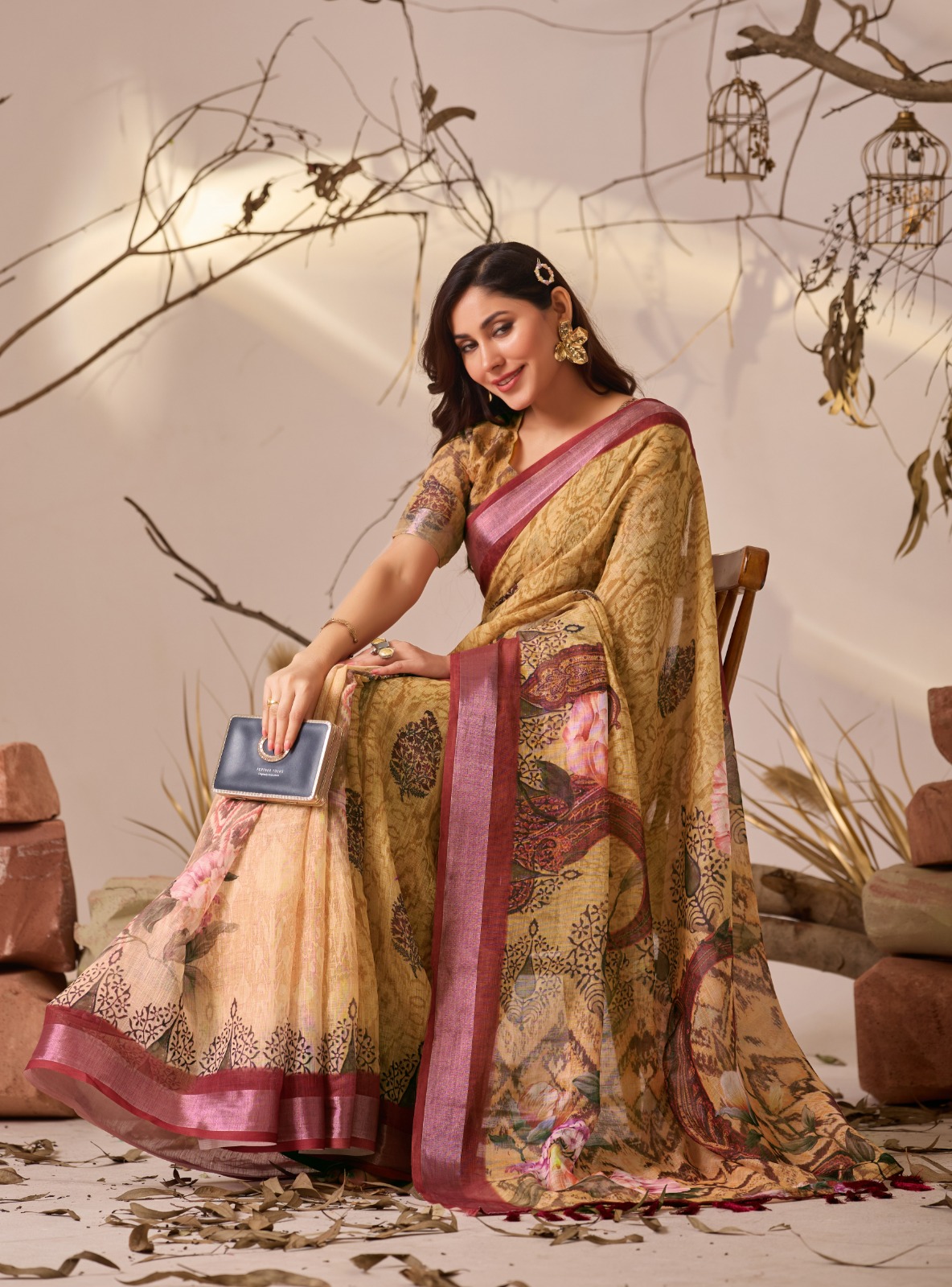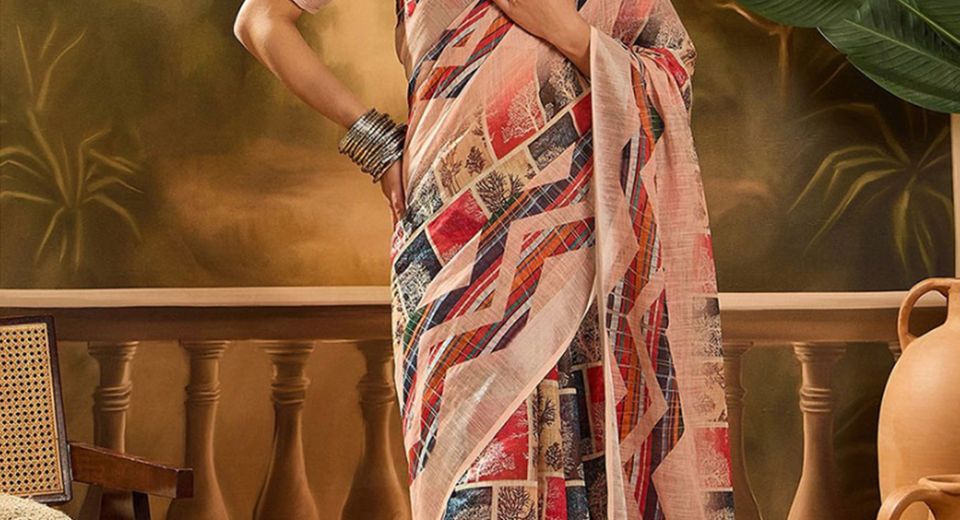
Aadi Festival Outfits: Traditional Tamil Saree Styles for Women should combine cultural familiarity with comfort for warm weather, temple visits and long family gatherings. Aadi, the fourth month in the Tamil calendar, usually falls between mid-July and mid-August, although the dates change each year. Women may dress for Amman temple prayers, Aadi Perukku celebrations, family pujas, house visits and evening functions during this period.
A saree doesn't need to be heavily embroidered or made from expensive silk to feel festive. A breathable cotton saree with a defined border can look more appropriate for a morning temple visit than a heavy formal drape. A lighter silk, silk-cotton or dressy printed saree may work better for an evening gathering. The best choice depends on the venue, time of day, expected movement and duration of wear.
Aadi Festival Outfits: Traditional Tamil Saree Styles for Women and the right fabric
The right Aadi saree fabric should feel breathable, remain manageable during movement and suit the formality of the event. Cotton, linen cotton and lightweight cotton blends are practical for daytime celebrations because they generally feel cooler and less restrictive than dense embellished fabrics.
Starched cotton gives a crisp silhouette and holds pleats neatly, making it useful for temple visits and morning rituals. Linen cotton has a slightly relaxed texture and often works well in humid weather. Lightweight printed sarees can provide colour and pattern without adding the weight associated with elaborate weaving or layered embellishment.
Silk remains a meaningful choice for significant family ceremonies. A lighter silk or silk-cotton saree can offer a festive sheen while being easier to wear for several hours. Kanjeevaram traditionally has a substantial silk body and a prominent woven border, while Banarasi silk is recognised for rich brocade patterns and metallic zari work. Both can look ceremonial, but both may feel warm or heavy in crowded daytime settings.
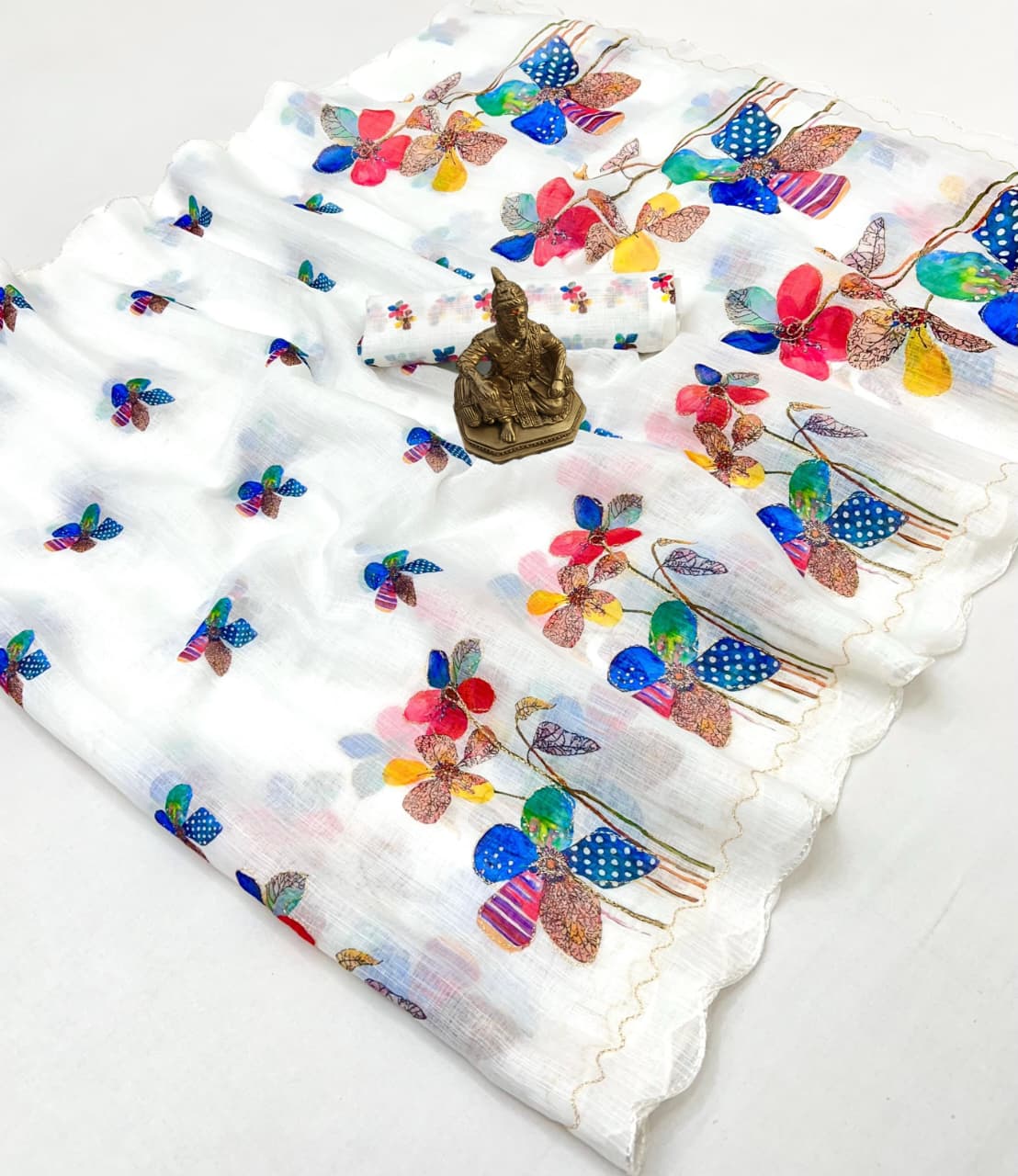
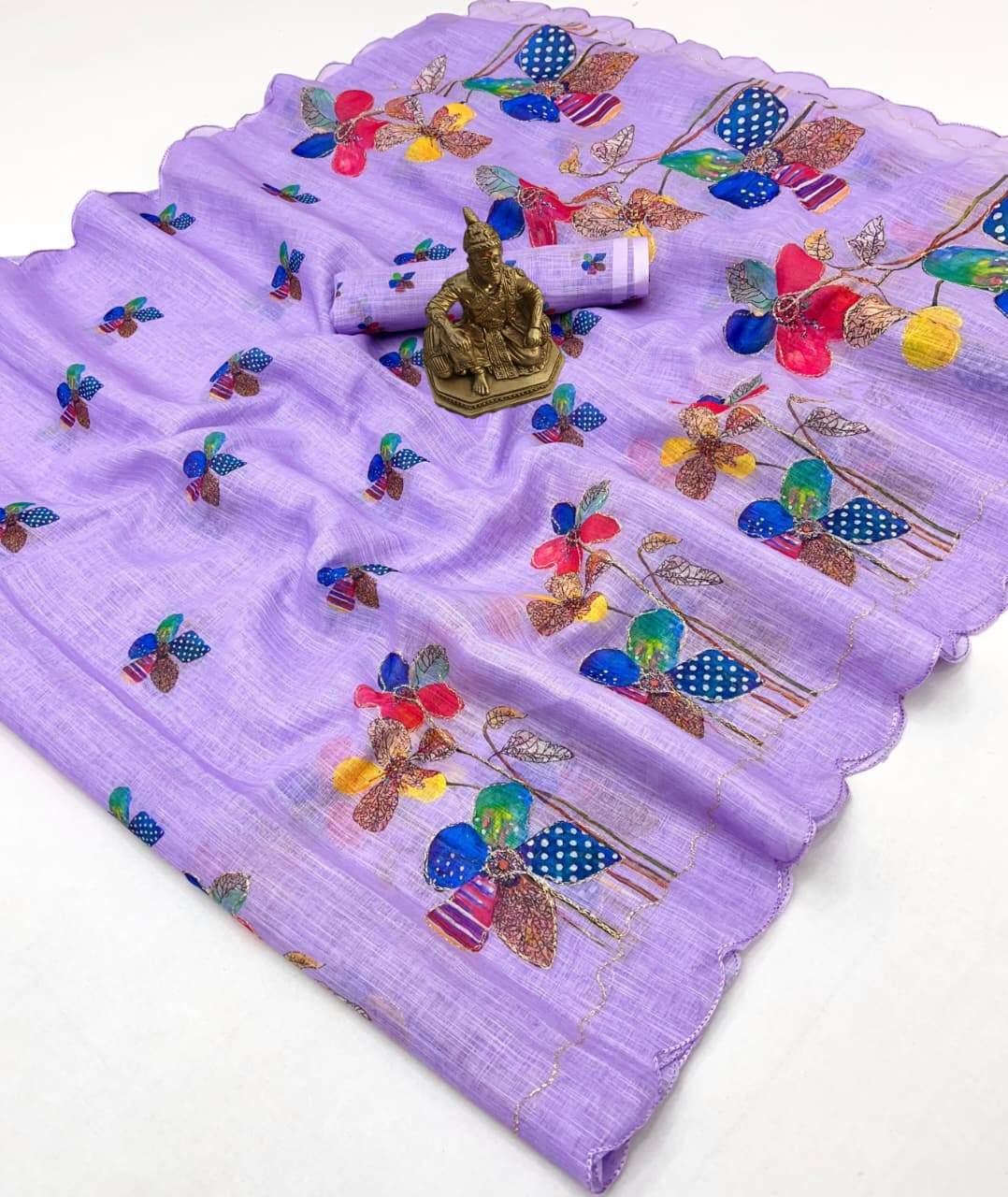
For a softer daytime appearance, the Pastel Linen Cotton Floral Print Saree with Designer Blouse offers a gentle floral direction that can be styled with small gold earrings and a simple bindi. The Red Floral Linen Cotton Saree with Beautiful Printed Border creates a brighter festive impression, especially when paired with a plain blouse and restrained jewellery.
Should Aadi sarees always be silk?
Aadi sarees don't always need to be silk; cotton, linen cotton, silk-cotton and lightweight printed sarees are all suitable when the event and styling support them. Silk is most useful for formal pujas, important family ceremonies and evening celebrations where a richer drape is comfortable.
Fabric choice should follow the activity rather than an assumption that traditional dressing requires heavy material. A woman walking between temple areas, sitting on the floor and standing during prayers may appreciate a light saree more than a formal weave. A woman attending a family reception may prefer a more structured fabric with zari or a lustrous border.
Aadi Festival Outfits: Traditional Tamil Saree Styles for Women at temples
Temple-ready Aadi dressing works best with a light saree, secured pleats, a manageable pallu and jewellery that won't interfere with prayer or movement. A saree for a temple visit should allow the wearer to walk, sit and stand without repeatedly adjusting the waist or shoulder drape.
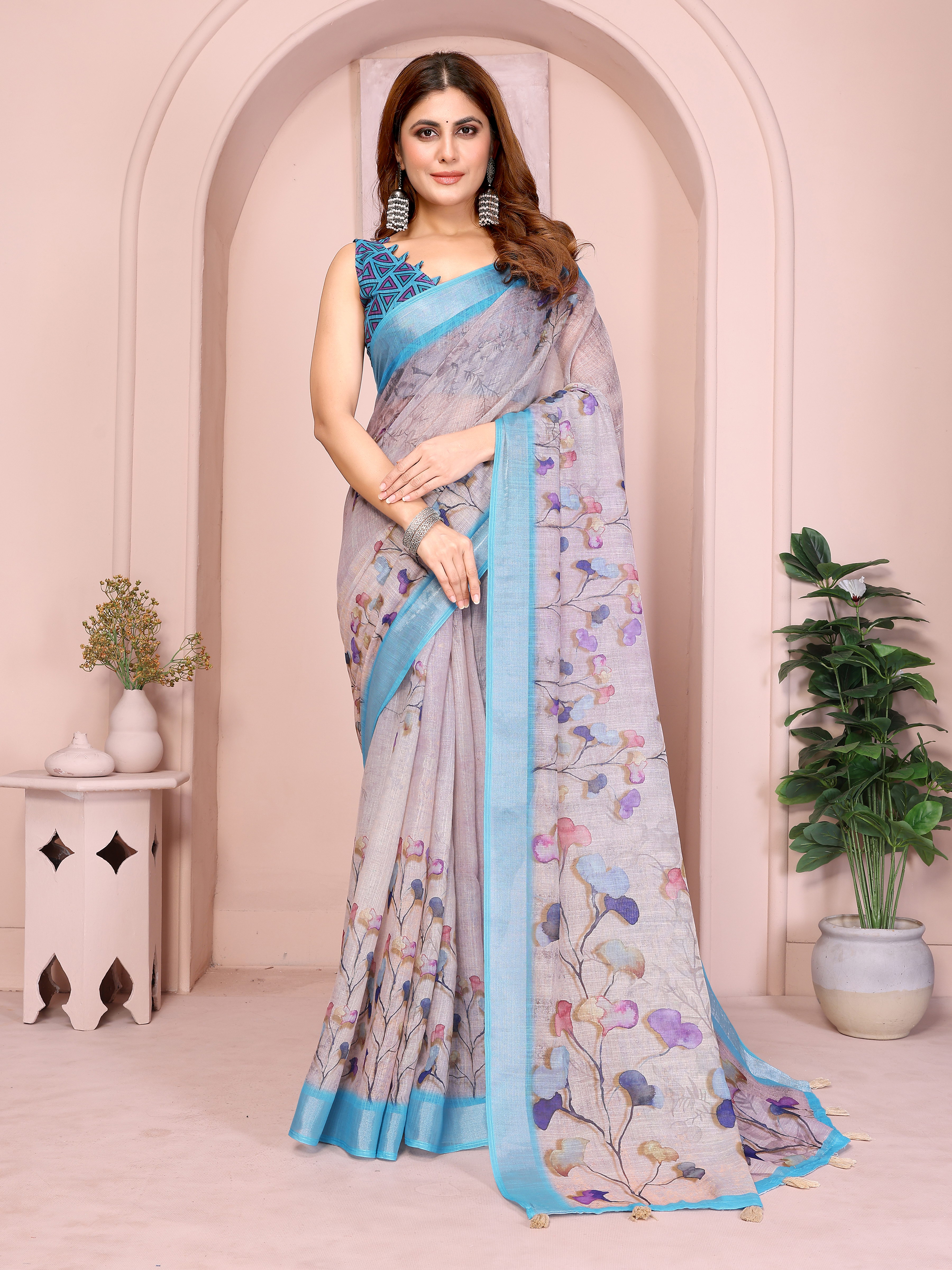
Pin the shoulder pleats close to the blouse seam and use a discreet waist pin if the fabric shifts while walking. Keep the pallu around mid-thigh to knee length rather than allowing it to trail near steps or crowded walkways. Flat sandals, cushioned flats or low block heels are generally safer than slippery high heels on stone floors and outdoor paths.
The Teal Floral Printed Linen Cotton Saree With Matching Blouse creates a coordinated daytime outfit without requiring extensive colour matching. Gold studs, a thin chain, a few glass bangles and a low bun keep the look polished but practical. A small jasmine gajra can add a recognisably Tamil festive detail when flowers are convenient for the weather.
The Teal Floral Printed Linen Cotton Saree with Blouse gives another easy route to coordinated dressing. Teal works particularly well with antique gold, copper, ivory and a small amount of deep red. A red bindi or red bangles can introduce a stronger Aadi accent without competing with the saree's floral print.
Which blouse details suit a daytime Aadi saree?
Elbow-length or three-quarter sleeves, a comfortable neckline and a properly fitted armhole suit a daytime Aadi saree particularly well. A solid blouse colour taken from the saree border usually creates a cleaner result than an unrelated contrast.
Round necks, shallow square necks and modest boat necks work with floral prints and traditional jewellery. Cotton blouses improve breathability, while a lining can give a very light saree a more stable finish. The armhole should allow the wearer to raise her hands comfortably during prayer without pulling the shoulder pleats out of position.
Aadi Festival Outfits: Traditional Tamil Saree Styles for Women in festive colours
Festive Tamil saree colours often include red, yellow, green, pink and orange, while teal, turquoise, ivory and pastel shades can also look traditional with the right border and accessories. The most successful colour choice considers the saree's existing print, the time of day and the lighting at the venue.
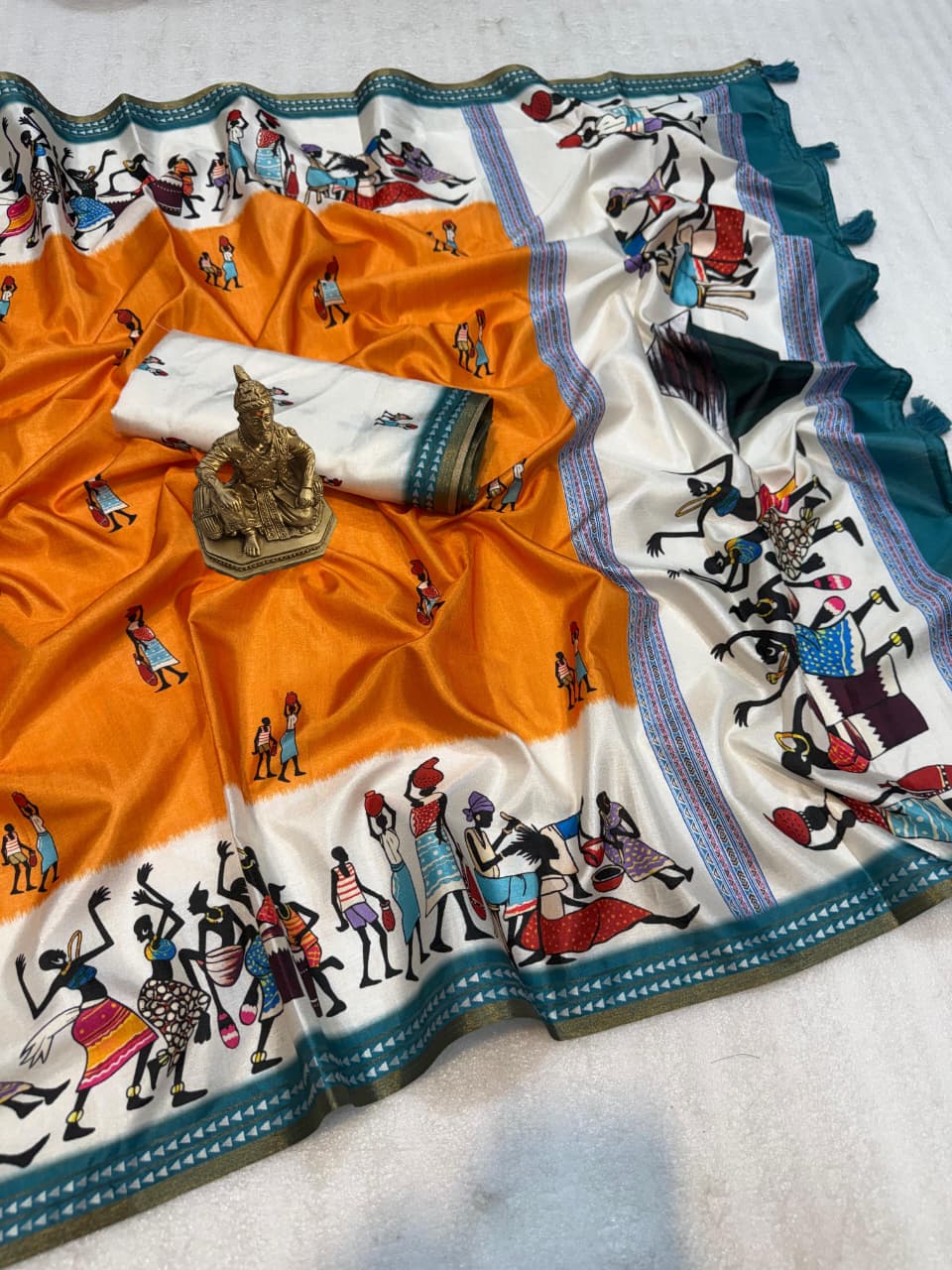
Teal can be made warmer with antique-gold jewellery, a copper-toned blouse or a red accent. Pink looks graceful with silver, pearl or soft gold details. Yellow and turmeric shades complement green borders and temple-inspired jewellery. Red creates immediate festive impact, so a red saree usually benefits from a simpler blouse and controlled accessories.
The Teal Floral Linen Cotton Saree with Elegant Contrast Border is useful when the border should define the outfit. Choose a blouse colour from the contrast border instead of matching the teal exactly. A contrast blouse helps the border remain visible after the saree is pleated and gives the silhouette more definition.
The Teal Abstract Printed Linen Cotton Saree with Blouse suits a wearer who wants a less conventional pattern while retaining a comfortable linen cotton base. Abstract prints can be made more traditional with a classic blouse, a bindi, gold-toned earrings and a neat braid or bun. A strong print usually needs fewer additional patterns in the jewellery and blouse.
How can a printed saree look more traditional?
A printed saree looks more traditional when it's paired with a classic blouse shape, gold-toned jewellery, a bindi, a neat drape and one recognisable festive detail such as jasmine flowers or a defined border. Heavy embroidery isn't essential for a Tamil festival look.
Traditional character often comes from proportion and grooming. A slightly wider sleeve, a low bun, a braid, a temple-style pendant or a pair of antique-gold jhumkas can change the mood of a contemporary print. Select one main feature, such as a bold border or statement earrings, instead of adding several competing accents.
Aadi Festival Outfits: Traditional Tamil Saree Styles for Women with jewellery
Aadi saree jewellery should repeat one metal direction, such as polished gold, antique gold, silver or temple-inspired metal. A printed cotton saree may need only jhumkas and bangles, while a formal silk saree can support a layered necklace, larger earrings and a more elaborate hair ornament.
Temple jewellery often uses motifs connected with coins, flowers, deities and traditional South Indian ornament. A Lakshmi pendant, kasu-style chain, simple vanki-inspired armlet or pair of jhumkas can suggest that influence without requiring a complete bridal set. Secure clasps matter because crowded celebrations and repeated movement can loosen poorly fitted pieces.
Hair styling should support the saree rather than compete with it. A low bun decorated with jasmine suits formal temple or family settings. A long braid brings a more traditional line and keeps hair controlled in humid conditions. A plain bun with a small gold hairpin provides a neat alternative when fresh flowers are unavailable.
Footwear should follow the activity. Cushioned flats, kolhapuri-style sandals and low block heels are more practical for walking and standing than narrow stilettos. A compact handbag should hold essentials without pulling against the pallu. Wear a crossbody bag before final pleating so its strap doesn't disturb the drape.
Aadi Festival Outfits: Traditional Tamil Saree Styles for Women at different budgets
A polished Aadi saree look can be created at several price levels by prioritising fabric quality, blouse fit and one carefully chosen accessory. A saree doesn't need a high price when the colour, border scale, finishing and styling work together.

The Red Floral Linen Cotton Saree with Beautiful Printed Border can support a complete festive look with a simple blouse, gold-colour studs and red bangles. Because the border already supplies visual structure, the outfit can remain affordable without looking unfinished.
Shoppers comparing value-led options may also review Silk Sarees Under 3000 With Discount when a formal Aadi family function calls for sheen and a dressier silhouette. A budget silk saree should be checked for accurate measurements, blouse-piece length, border finishing and care instructions before purchase.
Pink Georgette Sarees can suit an evening gathering when the wearer wants a softer, flowing drape. Georgette is lighter than many traditional silks, but its slippery surface may need additional pleat pins and a well-fitted petticoat. Red Banarasi Silk Sarees for Weddings Under 1100 may appeal to shoppers seeking a strong ceremonial colour, although the styling should remain proportionate to the Aadi venue rather than looking bridal.
Party Wear Sarees can work for an evening family celebration when their embellishment is moderate and the wearer can sit comfortably. Gray Color Sarees Under 1000 offer neutral options for shoppers who prefer understated dressing; adding a warm gold border, red bindi or colourful blouse can make grey feel more festive.
Aadi Festival Outfits: Traditional Tamil Saree Styles for Women and draping care
Aadi saree care begins before the celebration by checking the fabric, preparing the blouse and testing the drape at least one day in advance. A trial prevents last-minute problems with slipping fabric, uneven pleats, tight armholes or an unsuitable petticoat.
For linen cotton and printed sarees, fold along the existing lengthwise creases after the event and store the saree in a clean, dry cotton cover. Avoid leaving sweat, perfume or food stains untreated. Air the saree away from direct sunlight before folding it for storage.
Silk and zari need gentler handling. Dry-clean silk when the care label recommends it, avoid spraying perfume directly on zari and don't store zari against unbuffered plastic for long periods. Refold stored silk sarees every few months along different lines to reduce permanent creasing.
Washable cotton sarees should be tested against colour bleeding before a full wash. Use cool water and a mild detergent, avoid harsh scrubbing on printed borders and dry the saree inside out away from strong sunlight. Iron linen cotton and cotton on the recommended heat setting, placing a thin cloth over delicate prints when necessary.
A comfortable saree that remains secure through prayers, travel and family photographs will serve an Aadi celebration better than a dramatic look that requires constant adjustment.
Aadi Festival Outfits: Traditional Tamil Saree Styles for Women for every celebration
The most versatile Aadi wardrobe includes one breathable daytime saree, one brighter festive option and one dressier saree for evening family functions. The same saree can change character through blouse colour, jewellery, hair styling and the way the pallu is secured.
A pastel floral linen cotton saree can suit a morning puja with small jewellery and flats. A red printed saree can move into a family lunch with a contrast blouse and bangles. A teal saree with a clear border can become an evening outfit with larger jhumkas, a low bun and a more structured blouse.
Traditional Tamil dressing remains personal because Aadi celebrations vary from one household to another. Choose the fabric according to the weather, the colour according to the setting and the accessories according to the saree's strongest existing detail. That method creates an outfit that feels festive, culturally respectful and genuinely wearable.
Common Questions About Aadi Festival Saree Dressing
What saree is best for an Aadi temple visit?
A breathable cotton, linen cotton or lightweight printed saree is usually best for an Aadi temple visit. Choose a secure drape, a manageable pallu, comfortable footwear and jewellery that will not interfere with walking or prayer.
Can I wear a printed saree for Aadi celebrations?
Yes, a printed saree can suit Aadi celebrations when it has a neat drape, a classic blouse and festive accessories. Floral prints, border prints and abstract patterns can look traditional when paired with a bindi, gold-toned jewellery or jasmine flowers.
Which blouse colour goes with a teal saree?
Gold, copper, ivory, deep red and a colour taken from the saree's contrast border can work with a teal saree. A matching teal blouse creates a coordinated look, while a contrast blouse gives the border greater definition.
Do Aadi Festival Outfits have to include a Kanjeevaram saree?
Aadi Festival Outfits do not have to include a Kanjeevaram saree. Kanjeevaram is suitable for formal rituals, but cotton, linen cotton, silk-cotton and lightweight printed sarees can be more comfortable for daytime events and temple visits.
How can I stop a lightweight saree from slipping?
A well-fitted petticoat, neatly pressed pleats and discreet pins at the shoulder and waist help prevent a lightweight saree from slipping. Test the complete drape before the event and avoid placing pins where they could catch delicate printed or zari details.
How should I store a saree after an Aadi celebration?
Air the saree away from direct sunlight, treat stains promptly and fold it in a clean cotton cover. Silk and zari sarees may need dry cleaning, while washable cotton sarees should be cleaned with cool water and mild detergent according to the care label.