A Dupatta Free Suit Set for Women Who Travel Frequently solves a practical wardrobe problem: looking polished without carrying, folding and repeatedly adjusting an extra length of fabric. A two-piece kurta-and-bottom combination can work for airport transfers, work trips, family visits and short cultural holidays when the fabric, fit and styling details are chosen carefully. The best version isn't simply a suit with one piece removed; it's a coordinated outfit designed to stay comfortable, presentable and easy to manage for hours.
Frequent travellers should assess a salwar suit by weight, drying time, crease behaviour, pocket placement and versatility before judging its print or embroidery. An outfit that needs steaming, special washing and a separate dupatta for visual balance may become inconvenient after one long train journey. A practical suit should give you at least two complete looks with minimal accessories and fit into a small section of a suitcase.
Why does A Dupatta Free Suit Set for Women Who Travel Frequently make sense?
A Dupatta Free Suit Set for Women Who Travel Frequently reduces packing volume, styling time and the number of loose pieces that can be misplaced during travel. The shorter packing routine is especially useful when an itinerary includes hotel changes, airport security checks, public transport or quick outfit changes.
A standard dupatta can measure roughly 2 to 2.5 metres, so it occupies more space than its weight suggests. A two-piece set removes the need to fold that long rectangle separately, prevent it from catching on luggage handles and find a safe place for it during meals or commuting. A coordinated kurta and trouser also creates a complete visual line without requiring colour matching at the last minute.
The format is particularly useful for travellers who need one outfit to perform several jobs. A straight kurta with tapered pants can look composed with flat sandals during the day, then become dinner-appropriate with earrings, a structured handbag and low heels. A longer kurta can provide additional coverage on family visits or at religious sites without the constant adjustment associated with a flowing dupatta.
Not every three-piece salwar suit becomes a true two-piece travel outfit automatically. Many ready-made designs are proportioned with the dupatta included, and the kurta may look visually unfinished when worn alone. Check the neckline, sleeve finish, hem border and overall print placement before deciding that a listed three-piece suit can serve as a dupatta-free travel outfit.
What should you check before buying A Dupatta Free Suit Set for Women Who Travel Frequently?
Check the fabric, garment measurements, waistband construction, pocket details and washing instructions before buying a travel-friendly suit. These five checks reveal more about daily usability than a product photograph alone.
Fabric weight and recovery
Lightweight cotton, cotton blends, rayon and certain silk blends are generally easier to carry than heavily layered fabrics. A fabric that hangs well after sitting is more useful than one that looks perfectly pressed only when photographed. Rayon can feel fluid and comfortable, but it may need careful washing and can crease differently from cotton. Silk blends often look refined while remaining lighter than heavily embellished festive garments.
Chanderi can be elegant but may require more careful folding, particularly when the weave includes delicate zari. Banarasi silk and heavily woven brocade are better reserved for trips where occasion dressing matters more than luggage efficiency. A Chanderi or silk-blend kurta may still travel well when its surface is lightly embellished and the garment is protected from friction.
Fit and movement
A travel suit needs enough ease for sitting, walking and lifting a cabin bag without losing its shape. Measure the bust, waist, hip, kurta length and trouser inseam against the garment chart rather than relying on a familiar size label. A straight suit should not pull across the hip when seated, while an Anarkali should have enough flare to permit a long stride.
Elasticated or partially elasticated trousers are convenient for travel, but a narrow waistband can become uncomfortable after several hours. Look for a flat front, a secure drawstring or a broad elastic panel. Side slits, breathable sleeves and a hem that clears the ankle also make a difference when walking through stations or airports.
Pockets and closures
Useful pockets should hold a room key, card case or phone without distorting the kurta. Deep side-seam pockets are usually more comfortable than small decorative pockets, while a concealed pocket inside a trouser waistband can protect a folded note or spare key. Buttons should be firmly attached, and a back-up safety pin takes almost no space in a travel repair pouch.
Which fabrics suit A Dupatta Free Suit Set for Women Who Travel Frequently?
Cotton blends, rayon, lightweight silk blends and easy-care synthetic blends usually offer the best balance of comfort, appearance and packability for frequent travel. The right choice depends on climate, trip length and access to laundry.
- Hot and humid destinations: Choose breathable cotton or a light cotton blend with a relaxed fit. Avoid dense lining and extensive synthetic embroidery because trapped heat becomes uncomfortable during outdoor walking.
- Air-conditioned offices and flights: A rayon or silk-blend kurta can provide a smoother, slightly polished surface. Carry a thin stole or neutral cardigan separately if warmth is a concern, rather than relying on the suit itself to provide layering.
- Short trips with no laundry: Select darker prints, medium-weight fabric and a silhouette that doesn't show minor creasing quickly. A second bottom in a neutral shade can double the number of outfits.
- Monsoon travel: Avoid very long hems and fabrics that take a long time to dry. A quick-drying blend, cropped straight pant and washable sandals are easier to manage than delicate fabric and trailing layers.
An useful test is the three-hour sitting test. Fold the garment once, sit on it for several minutes, then hang it for an hour. If deep lines remain or the fabric feels clammy, the outfit may be inconvenient on a long journey. This simple test is more informative than judging crease resistance from a product description.
How can you style A Dupatta Free Suit Set for Women Who Travel Frequently?
Style a dupatta-free suit set by changing the accessories, footwear and second layer rather than packing another complete outfit for every setting. A small colour plan makes the process reliable.
Start with a base colour that already appears in the kurta, such as black, cream, mustard, maroon or off white. Add one pair of neutral trousers if the kurta allows separates, then pack one pair of comfortable flats and one compact dressier option. Gold-toned jewellery works with warm shades such as mustard and maroon, while silver or oxidised metal can sharpen purple, black and cool off-white outfits.
Women's Mustard Silk Blend Kurta Set with Dupatta demonstrates how a warm, polished colour can move from daytime sightseeing to an informal dinner when the dupatta is left at home and the look is finished with a small handbag. The product name identifies a three-piece set, so travellers should confirm whether the kurta and bottom look complete when worn without the supplied layer.
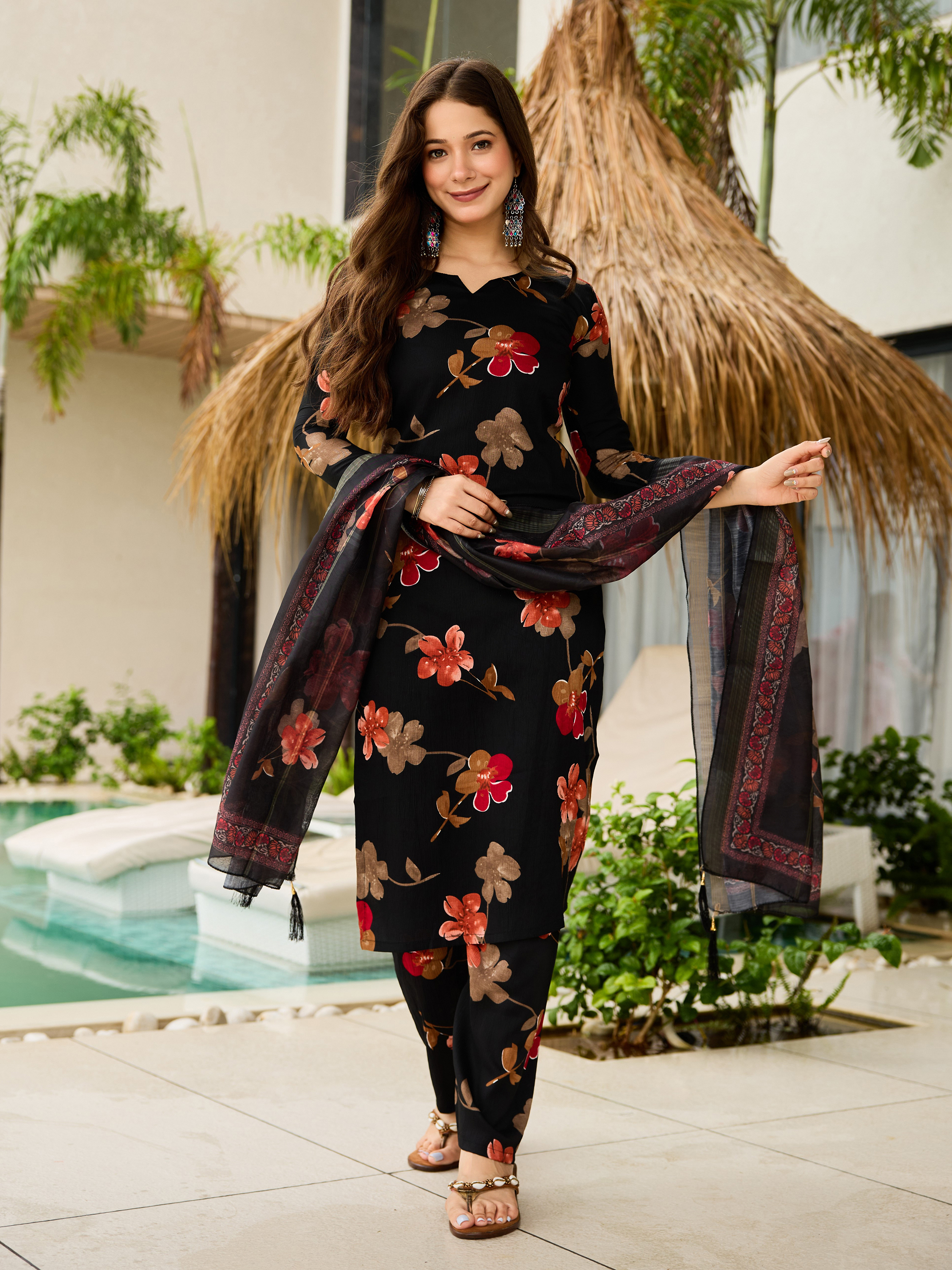
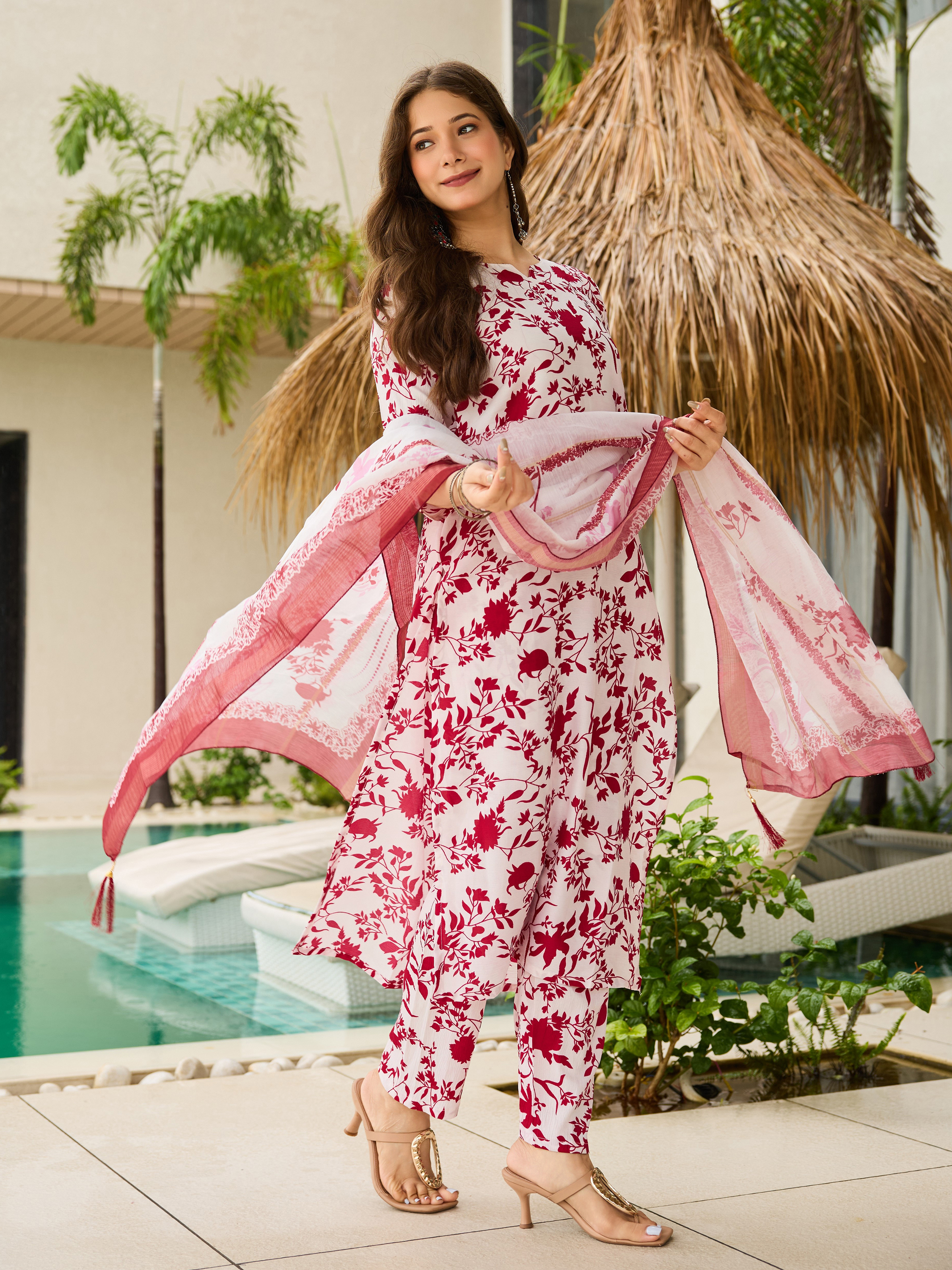
Black Floral Silk Blend Kurta Pant Dupatta Set Women offers a useful styling lesson for repeat wear: a dark floral base can be paired with tan footwear one day and black footwear the next. Chic Red Floral Silk Kurta Pant Dupatta Set for Women can serve as a stronger evening option, especially when the rest of the accessories remain simple.
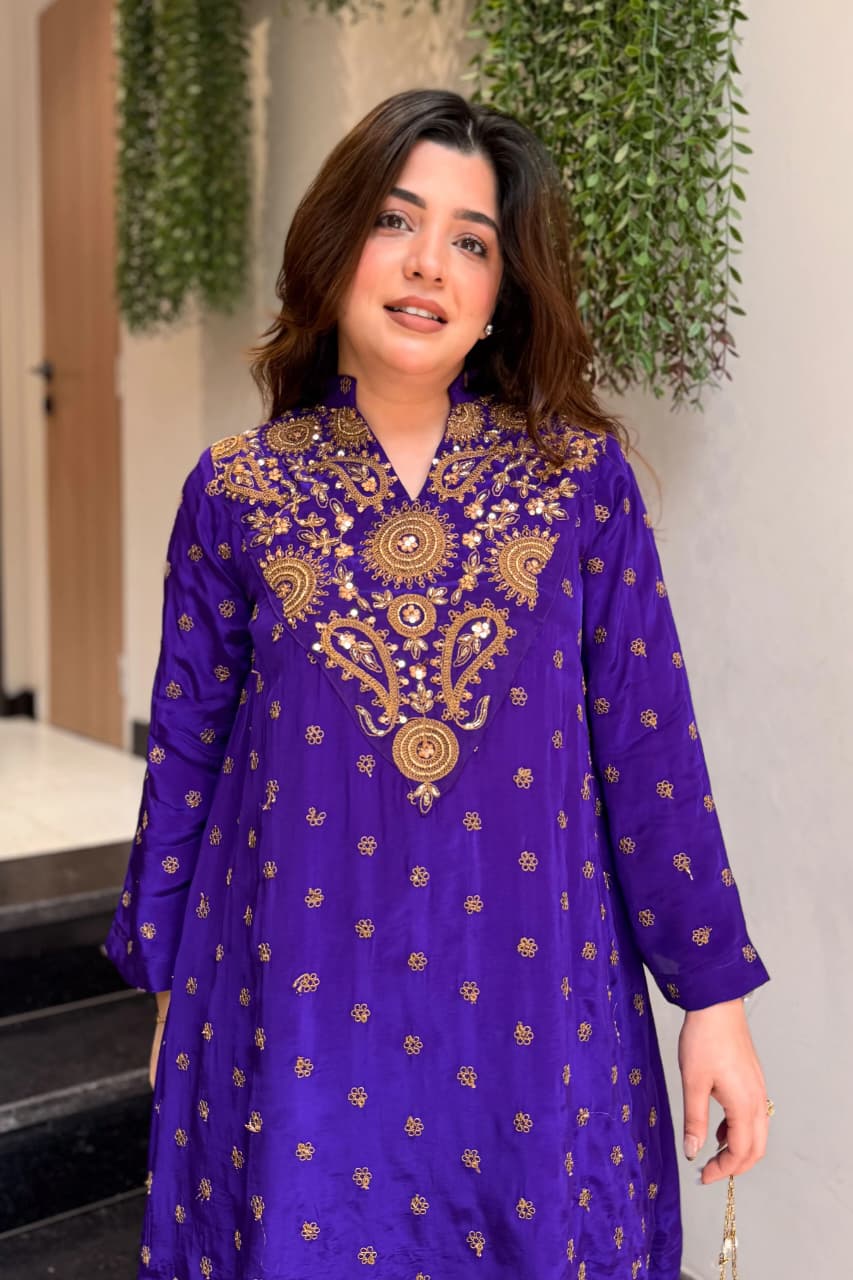
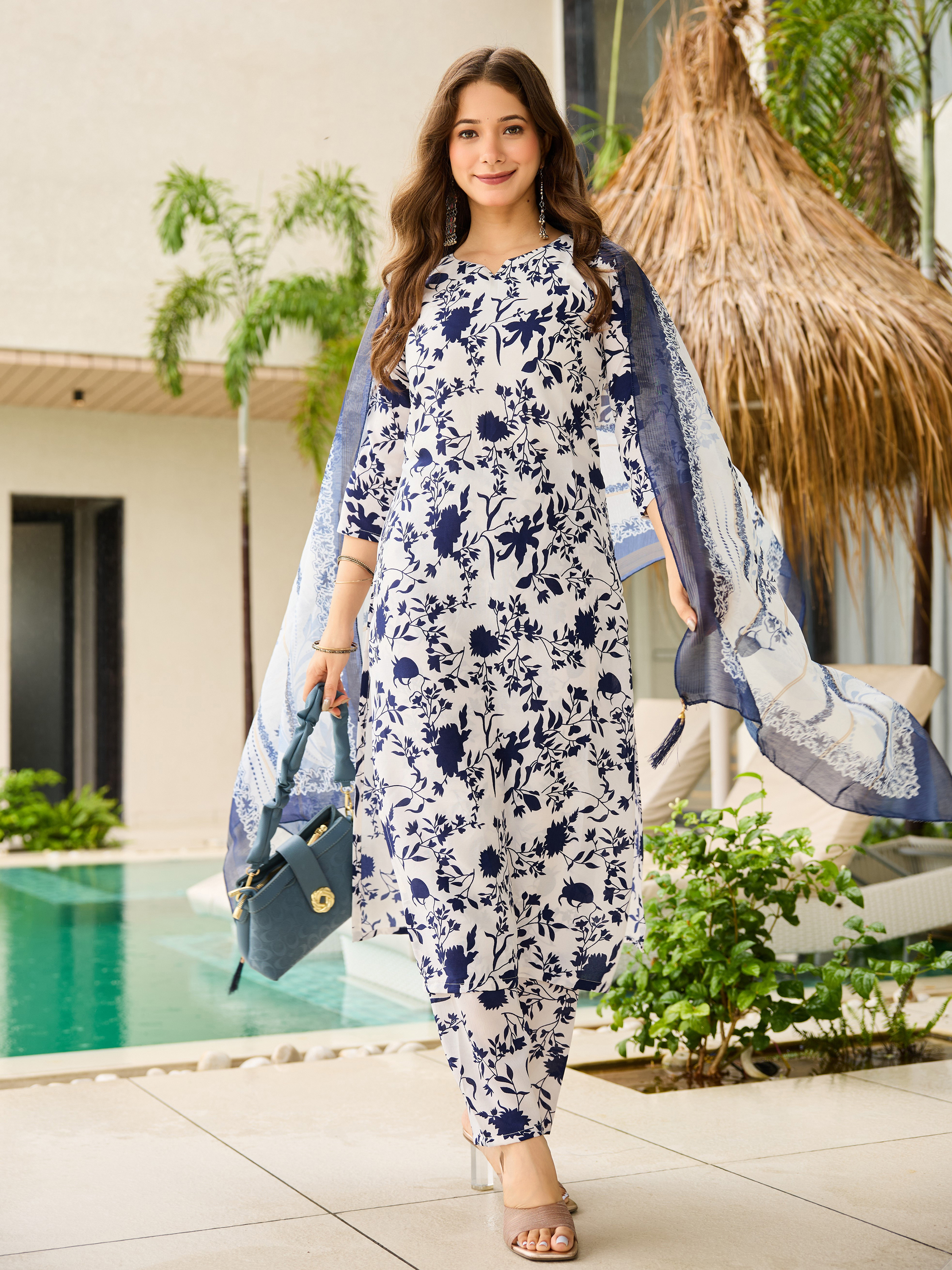
A light neutral gives the wardrobe a second direction. Off White Floral Embroidered Straight Suit Set can be styled with a contrasting stole, cropped jacket or longline cardigan when coverage or warmth is needed. Purple Embroidered Kurta Pant Dupatta Set Women shows why embroidery placement matters: if the neckline and hem carry enough detail, the outfit may not need a dupatta to look finished.
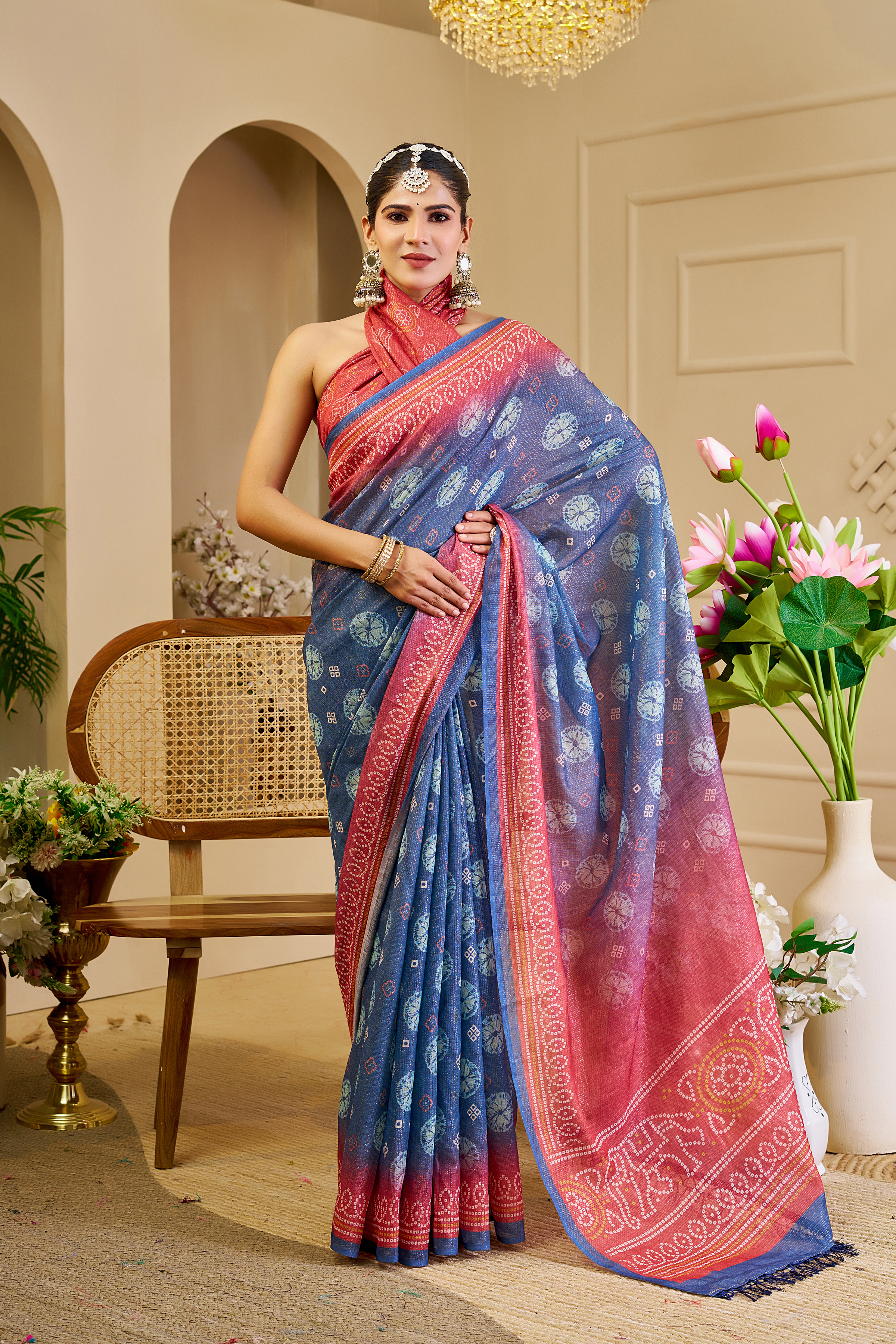
Regional design references can also guide a travel wardrobe without making it difficult to wear. Kalamkari Print Salwar Suits bring narrative floral and nature-inspired motifs to a practical kurta silhouette. Maharashtra Paithani Inspired Salwar Suits can introduce jewel tones and woven-design references for a dinner or family gathering. Gujarat Bandhej Salwar Suits and Odisha Sambalpuri Salwar Suits are useful sources of colour inspiration when choosing a compact stole, earrings or second outfit.
How should you pack A Dupatta Free Suit Set for Women Who Travel Frequently?
Pack a dupatta-free suit set by folding the kurta and trousers together along existing seams, placing soft items around them and keeping accessories in a separate pouch. The method prevents hard creases and makes the outfit easy to retrieve.
- Wash and dry it first: Pack only a completely dry garment because trapped moisture can create odour and mildew in a closed suitcase.
- Fasten the garment: Close buttons and zips, turn delicate embroidery inward and place a thin cotton layer over embellished areas.
- Fold by panels: Fold the kurta vertically along the side seams, then fold the sleeves inward. Fold trousers along the crease or centre seam instead of compressing them into a ball.
- Use a fabric pouch: A breathable cotton pouch protects the outfit from shoe soles, rough luggage lining and accidental spills. Plastic is useful only for a short transfer because it traps moisture.
- Place it near the top: Keeping the outfit in the upper third of the suitcase reduces compression and allows a quick change without unpacking everything.
Rolling may save space for plain rayon or cotton-blend garments, but rolling can distort embroidered panels and create horizontal ridges in structured trousers. A flat fold is safer for zari, sequins, raised threadwork and crisp collars. Steam the outfit in a bathroom after a shower only if the care label permits moisture; never press directly over zari or metallic embellishment.
How do you care for A Dupatta Free Suit Set for Women Who Travel Frequently?
Care for a travel suit by following its fibre-specific wash instructions, drying it fully and storing it without prolonged compression. Correct care preserves colour, shape and the crease resistance that made the outfit useful for travel.
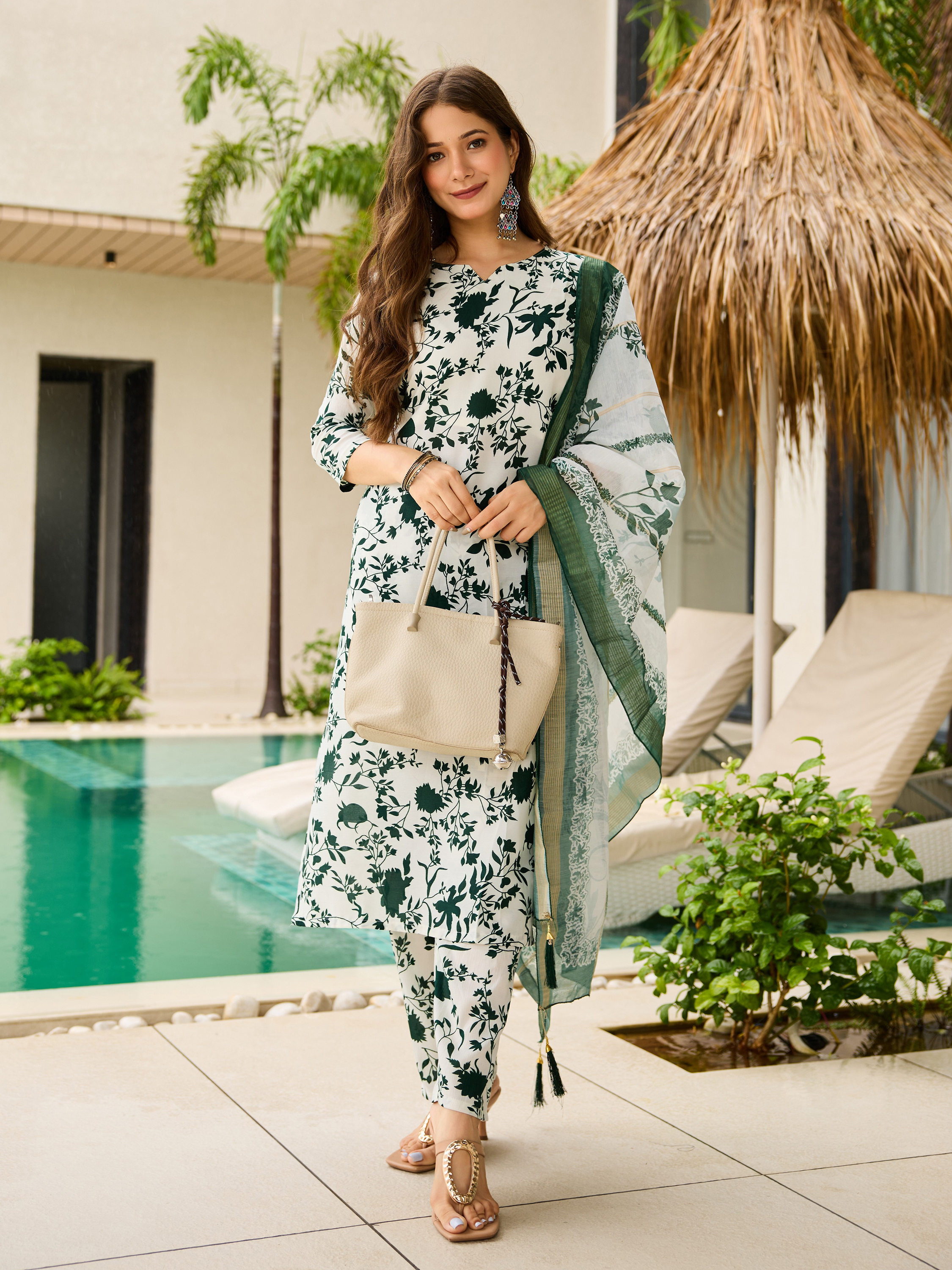
Wash printed cotton and rayon garments inside out in cool water when the care label permits home washing. Separate mustard, red, maroon and purple garments from pale off-white clothing during the first few washes because excess dye transfer is more likely when fabric is new. Do not leave a wet kurta in a machine or suitcase for several hours.
Delicate silk blends, Chanderi and zari details may require gentle hand washing or professional cleaning. A garment with embroidery should be dried flat or on a broad hanger, depending on the care instructions, because a thin hanger can pull the shoulders out of shape. Direct, harsh sunlight can fade printed and dyed fabrics, so shade drying is usually safer for long-term colour retention.
After returning from a trip, empty pockets, air the outfit for several hours and inspect the hem for dust or moisture. Store the kurta and trousers loosely folded rather than compressed under heavy denim or shoes. A small repair kit containing matching thread, a needle, two safety pins and a stain-removal wipe is more useful than carrying an emergency second dupatta.
When should you choose a dupatta-free suit instead of a three-piece salwar suit?
Choose a dupatta-free suit for commuting, sightseeing, business travel and repeated daily wear; choose a three-piece salwar suit when ceremony, formal styling or cultural dress requirements make the dupatta part of the outfit. The decision depends on the purpose of the trip, not merely on personal preference.
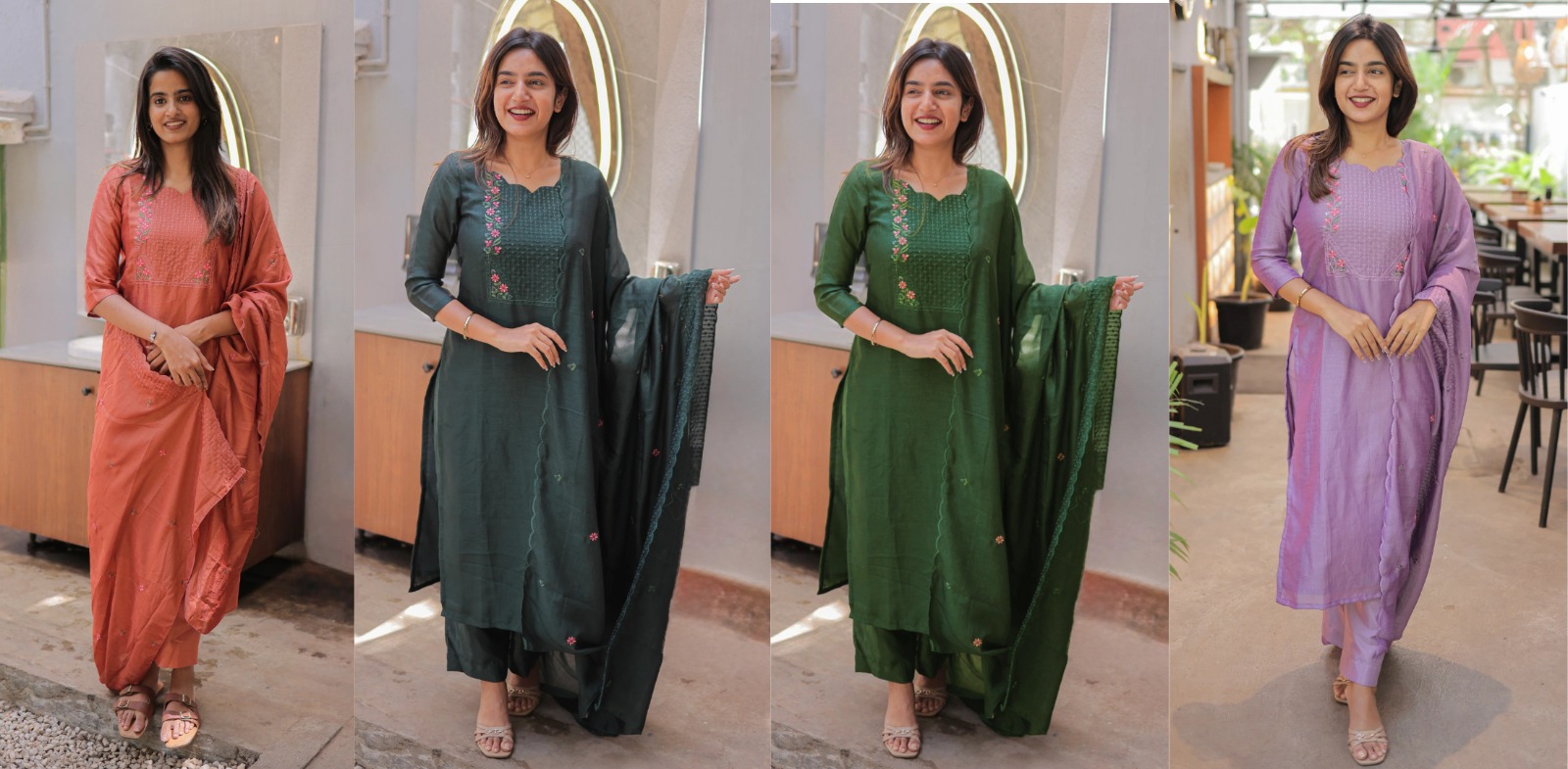
A dupatta-free set is usually more practical for a morning flight, a full day of meetings or a trip involving frequent walking. A Punjab Patiala Salwar Suits style, for example, may offer a relaxed silhouette and strong visual identity, but the volume of the salwar and accompanying dupatta should be considered when luggage space is limited. A straight kurta with a compact pant generally takes less room.
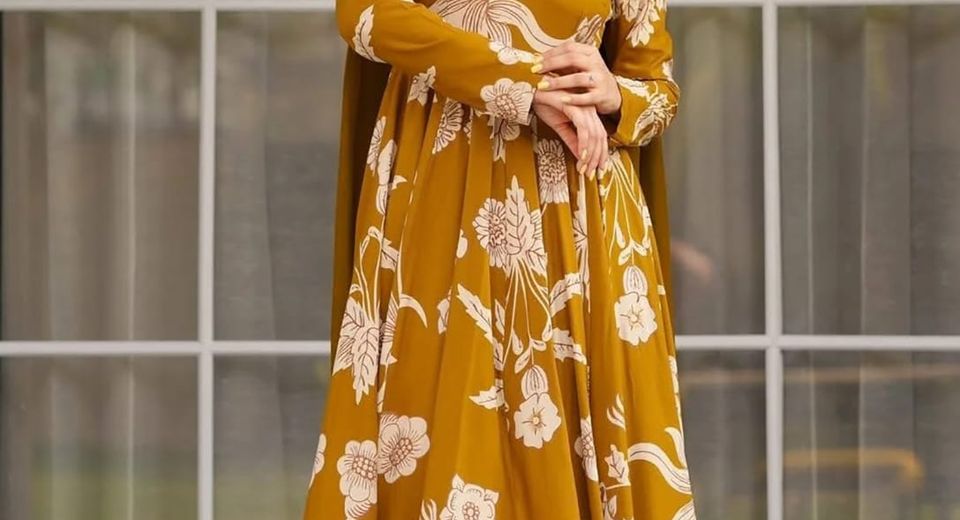
A three-piece set remains valuable for weddings, festive gatherings, temple visits with specific dress expectations and photographs where layered styling is important. Women's Mustard Printed Anarkali Suit with Dupatta may be a better choice when the flowing Anarkali shape and coordinated dupatta are central to the intended look. A practical compromise is to carry the dupatta only for the formal event and wear the kurta with simple trousers during transit, provided the pieces look complete together.
The strongest travel wardrobe doesn't reject dupattas; it assigns them to the occasions where they add real value. For ordinary travel days, a well-cut two-piece suit removes one source of bulk while retaining colour, print, embroidery and the comfort of Indian clothing.
Common Questions About Dupatta-Free Suit Sets for Frequent Travel
Can I wear a salwar suit without a dupatta?
Yes, you can wear a salwar suit without a dupatta when the kurta and bottom look visually complete together and the setting permits it. Check the neckline, hem, sleeve finish and coverage before leaving out the dupatta.
Which fabric is best for a travel-friendly salwar suit?
Cotton blends, rayon, lightweight silk blends and easy-care blends are generally practical for travel. Choose according to climate, laundry access and the care label rather than selecting a fabric by appearance alone.
How do I stop a kurta from creasing in my suitcase?
Fold the kurta along its side seams, turn embroidery inward, place it in a breathable fabric pouch and keep it near the top of the suitcase. Avoid compressing embellished garments under shoes or heavy denim.
Are silk-blend kurta sets suitable for frequent travel?
Silk-blend kurta sets can suit frequent travel when they are lightweight, lightly embellished and easy to care for. Check the washing instructions and test the fabric for creasing before taking it on a long trip.
What should I wear with a dupatta-free kurta set?
Wear a dupatta-free kurta set with comfortable flats, small earrings and a compact handbag for daytime travel. Add a thin stole, cardigan or cropped jacket when extra warmth or coverage is required.
Is a two-piece suit better than a three-piece suit for flights?
A two-piece suit is usually more convenient for flights because it occupies less luggage space and has fewer loose pieces to manage. A three-piece suit is preferable when the dupatta is required for a formal event or when layered styling is central to the outfit.