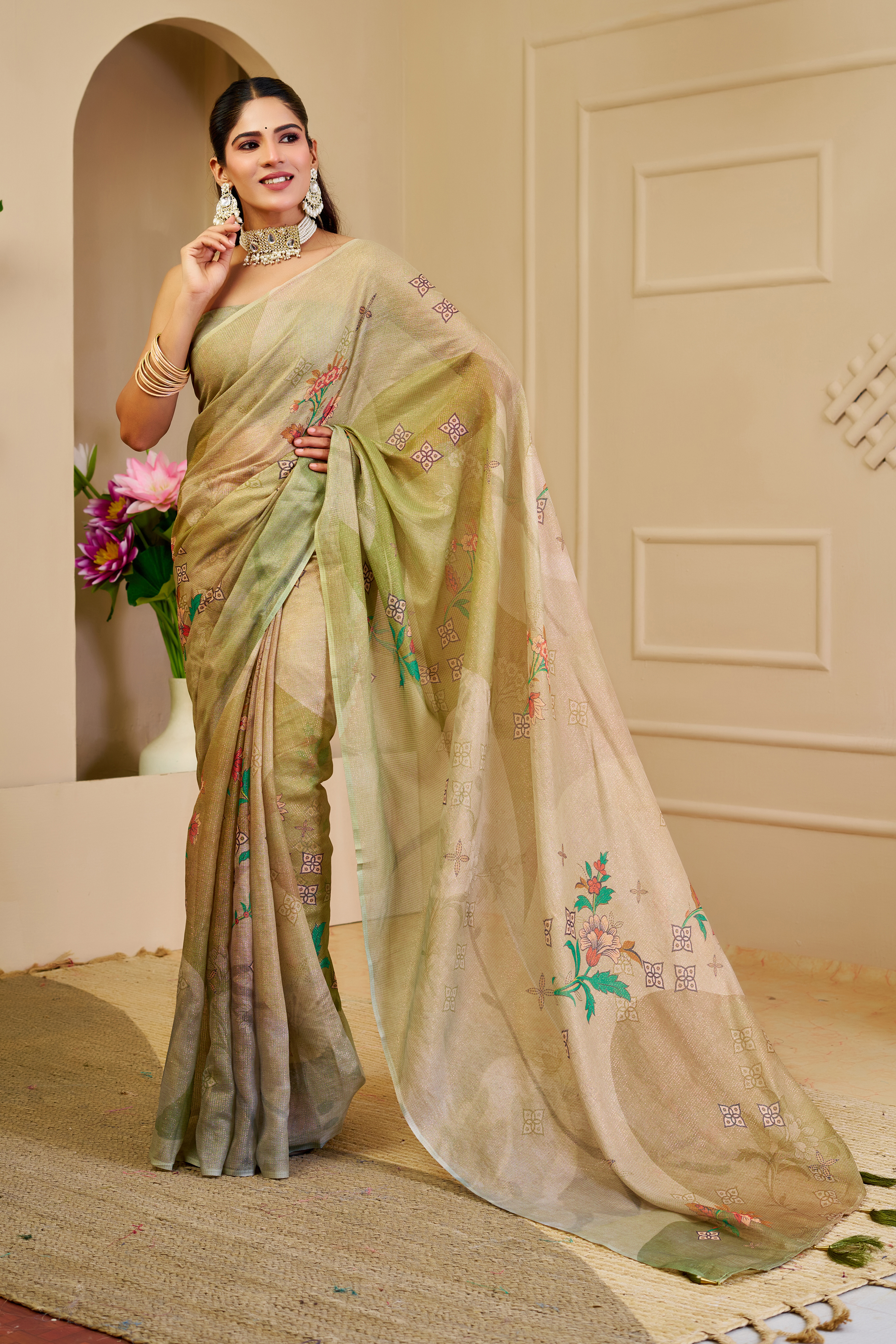
What to wear when the invitation says traditional Indian attire depends on the ceremony, region, time of day and level of formality. A silk saree, embellished Anarkali, lehenga, salwar suit or regionally inspired ensemble can all meet the dress code, but the fabric, coverage and styling should suit the event rather than simply look festive. The most reliable approach is to read "traditional" as a request for Indian clothing with recognisable craftsmanship, such as zari, handloom texture, regional prints, embroidery or a classic silhouette.
Traditional Indian attire doesn't require wearing a costume from a region that's not your own. Traditional Indian attire does require choosing clothing that feels intentional, allows comfortable movement and respects ceremonies where modesty or specific colours matter. The guide below breaks down the decision in a practical order: occasion first, silhouette second, fabric third and accessories last.
What to Wear When the Invitation Says Traditional Indian Attire: What Does the Dress Code Mean?
"Traditional Indian attire" usually means an Indian ethnic outfit rather than western formalwear, although the exact level of dressing varies by event. Sarees, lehengas, salwar suits, Anarkali suits, shararas, ghararas and regional dresses are all valid choices when styled with suitable jewellery and footwear.
An invitation using this wording usually leaves more freedom than a request for "traditional Gujarati," "South Indian silk" or "regional dress." A guest can therefore select a garment that reflects personal comfort and familiarity. A Banarasi silk saree with zari, a Chanderi suit with a dupatta, a Kanjeevaram saree or a printed cotton saree can each work when the colour and ornamentation match the occasion.
Dress codes also communicate effort. A plain everyday kurta with casual leggings may look underdressed at a wedding, while a heavily sequinned lehenga may look excessive at a daytime puja. Traditional Indian attire should look intentional through at least two coordinated elements, such as a woven saree with a structured blouse or a simple Anarkali with polished earrings and formal sandals.
What to Wear When the Invitation Says Traditional Indian Attire for a Wedding or Ceremony?
Choose the outfit by matching its formality to the ceremony, venue and time rather than relying on the word "traditional" alone. Daytime rituals generally suit lighter colours and breathable fabrics, while evening receptions allow deeper shades, metallic details and more elaborate embroidery.
For weddings and receptions
A wedding allows a saree, lehenga, sharara, embellished Anarkali or formal salwar suit. Banarasi silk, silk blends, velvet accents, brocade and zari borders create a dressier appearance, especially for evening celebrations. A guest should avoid white, ivory or very pale gold when those colours could resemble bridal clothing, unless the couple has specifically encouraged them.
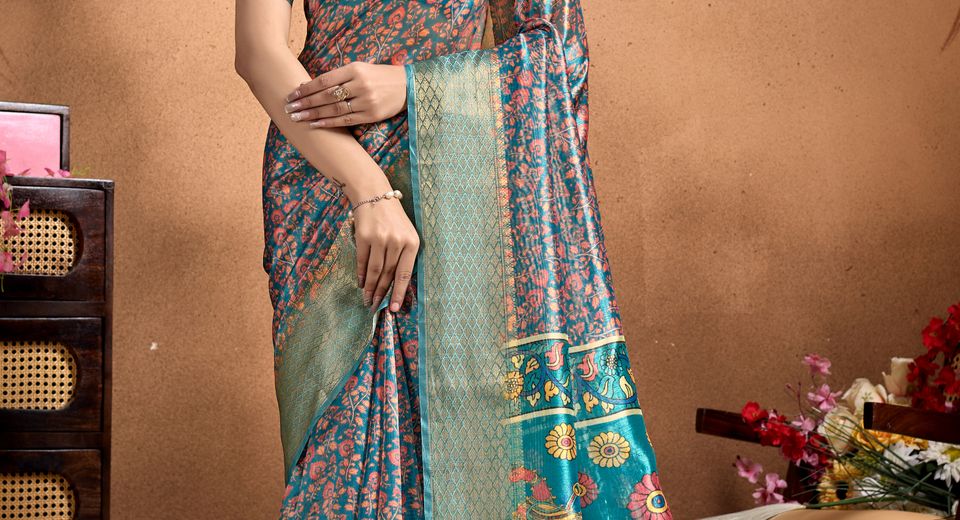
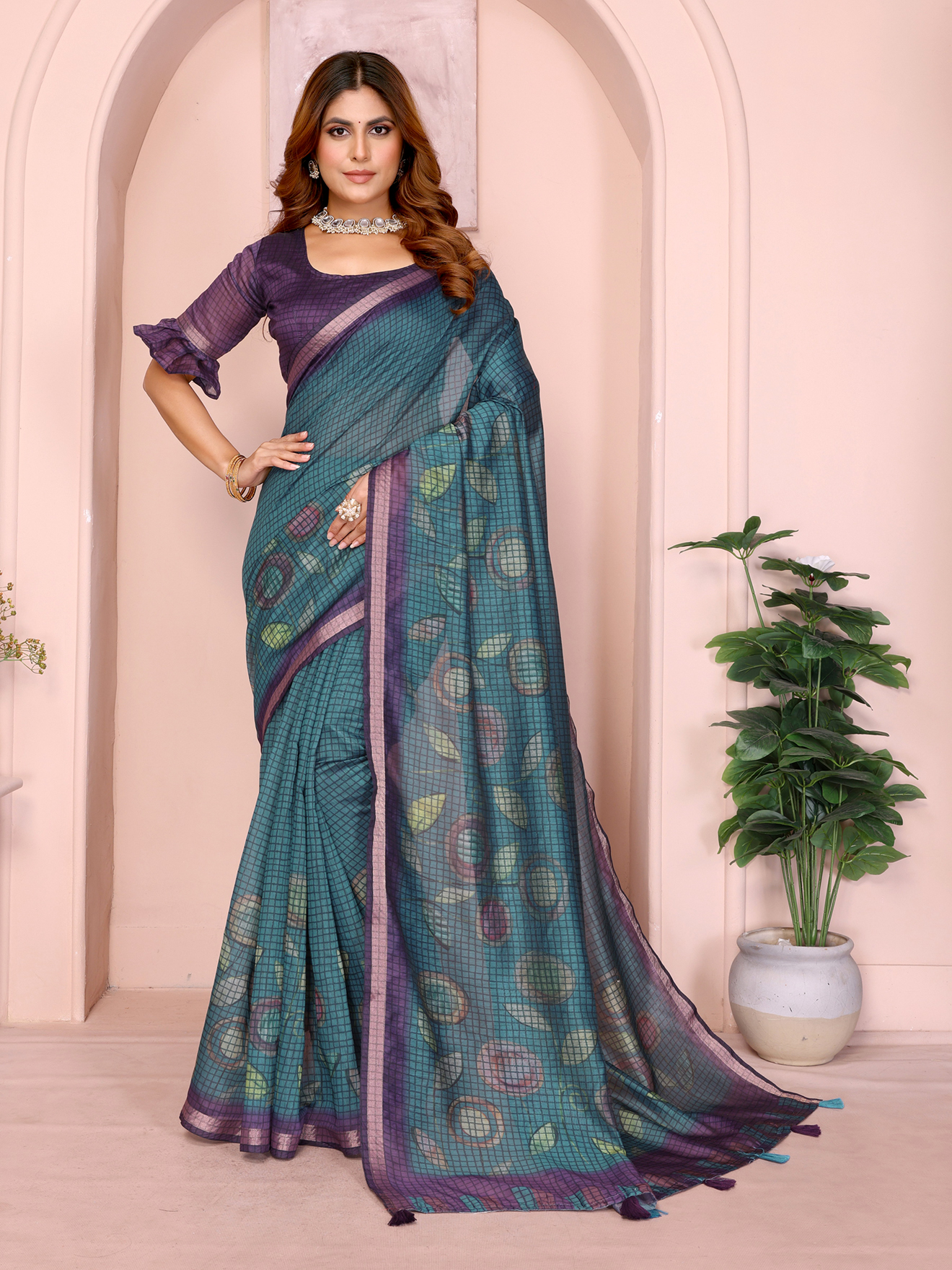
A saree remains one of the safest choices because the same garment can be made relaxed or formal through the blouse, drape and jewellery. A Mustard Satin Saree with Printed Pink Pallu & Blouse combines a strong colour contrast with a ready-made blouse, making it useful for a festive daytime or early-evening function. A Teal Cotton Saree with Peacock Kalamkari Print, Zari Border offers a more breathable option for a daytime celebration while retaining a clear Indian textile vocabulary.
For puja, havan and temple ceremonies
A modest saree, salwar suit or Anarkali with a secure dupatta is usually appropriate for a puja, havan or temple ceremony. Choose a blouse and neckline that allow comfortable sitting, and avoid long trailing hems or fragile embellishment if the ceremony involves moving between indoor and outdoor spaces.
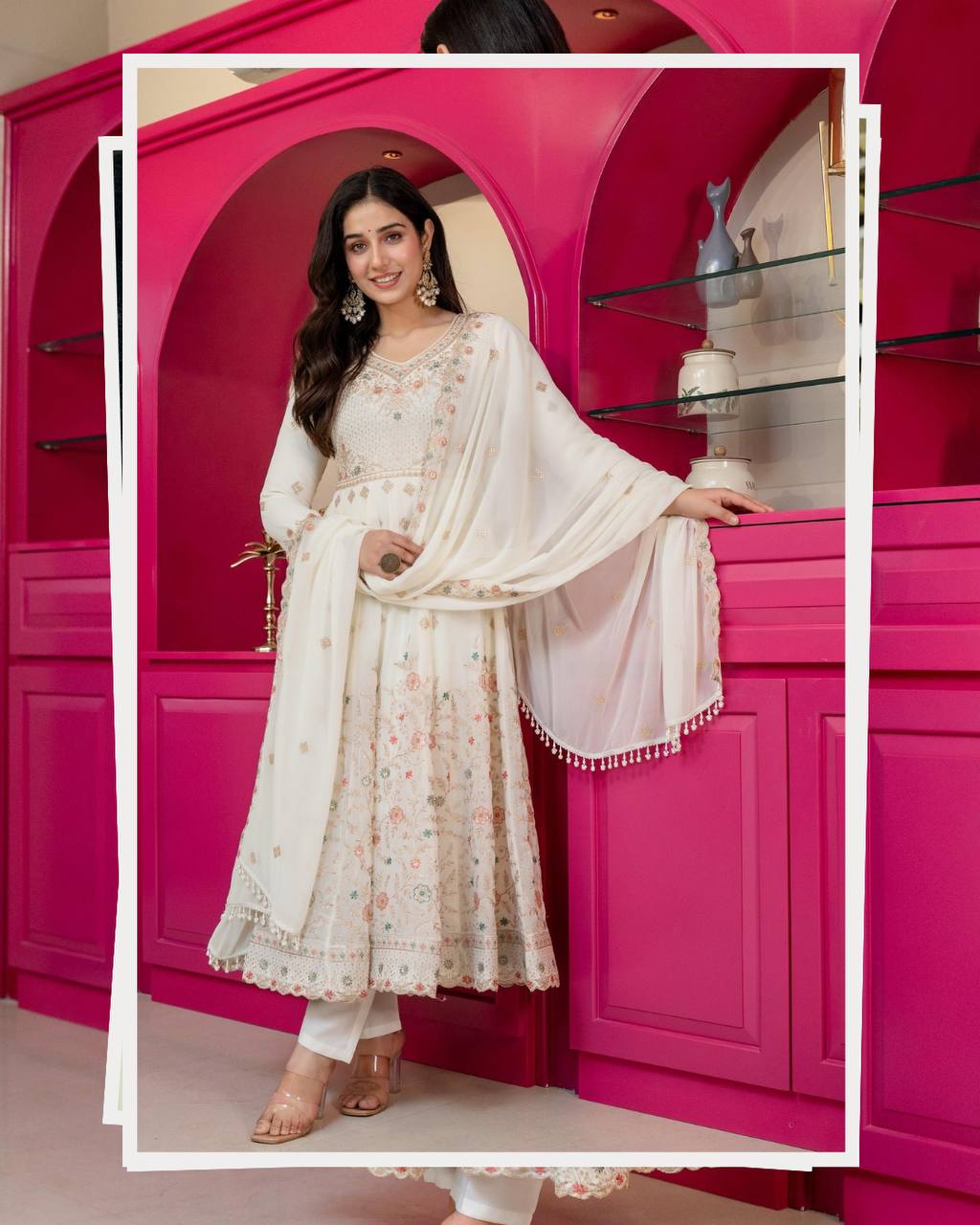
An Ivory Anarkali Suit With Sequin Zari Embroidery And Dupatta can suit a formal religious gathering when ivory is acceptable for the hosts and the embroidery remains elegant rather than bridal. Cotton, Chanderi, handloom silk and rayon are practical choices when the event is held during a warm afternoon. Closed-toe flats or low block heels are often more useful than stilettos when footwear must be removed.
For engagement parties and family celebrations
An engagement party or family celebration supports polished separates, a sharara, a co-ord set, a lighter lehenga or an embroidered gown with Indian detailing. The outfit can be contemporary, provided the fabric, print or construction retains a festive ethnic connection.
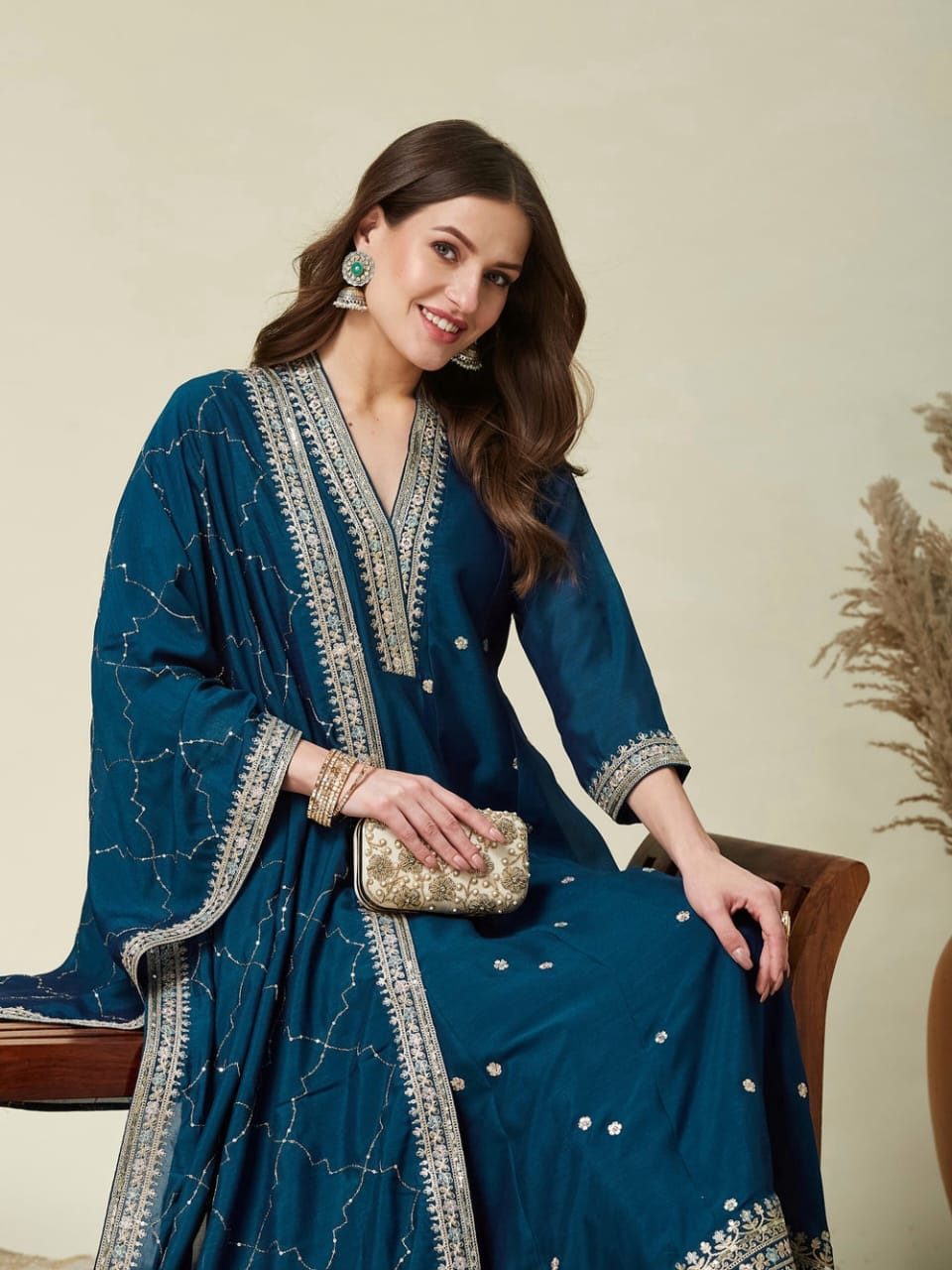
Teal Blue Vichitra Silk Embroidered Gown Set Online shows how a gown silhouette can work within a traditional dress code when silk texture and embroidery carry the cultural reference. Printed Rayon Co Ord Set for Women Online | Varnavi has a more relaxed construction, so it's better suited to a daytime gathering, informal mehendi or family lunch than to a highly formal wedding reception.
What to Wear When the Invitation Says Traditional Indian Attire for Easy Movement?
Choose a saree for versatility, an Anarkali or salwar suit for easy movement, a lehenga or sharara for a celebratory evening, and a regional dress when the invitation specifically names a community or state.
Saree
A saree works across age groups and formality levels because the drape, blouse and fabric can change the overall impression. Silk sarees, Banarasi silk, organza, Chanderi, cotton, satin and printed rayon each create a different result. Beginners may prefer a pre-stitched saree, a lightweight six-yard saree or a simple drape with a well-fitted blouse.
Measure the blouse carefully before the event. A blouse that pulls across the bust or slips from the shoulder will make sitting, eating and greeting guests uncomfortable. Test the pleats, pallu length and safety-pin placement at home, and carry two small safety pins in the same colour as the saree.
Salwar suit or Anarkali
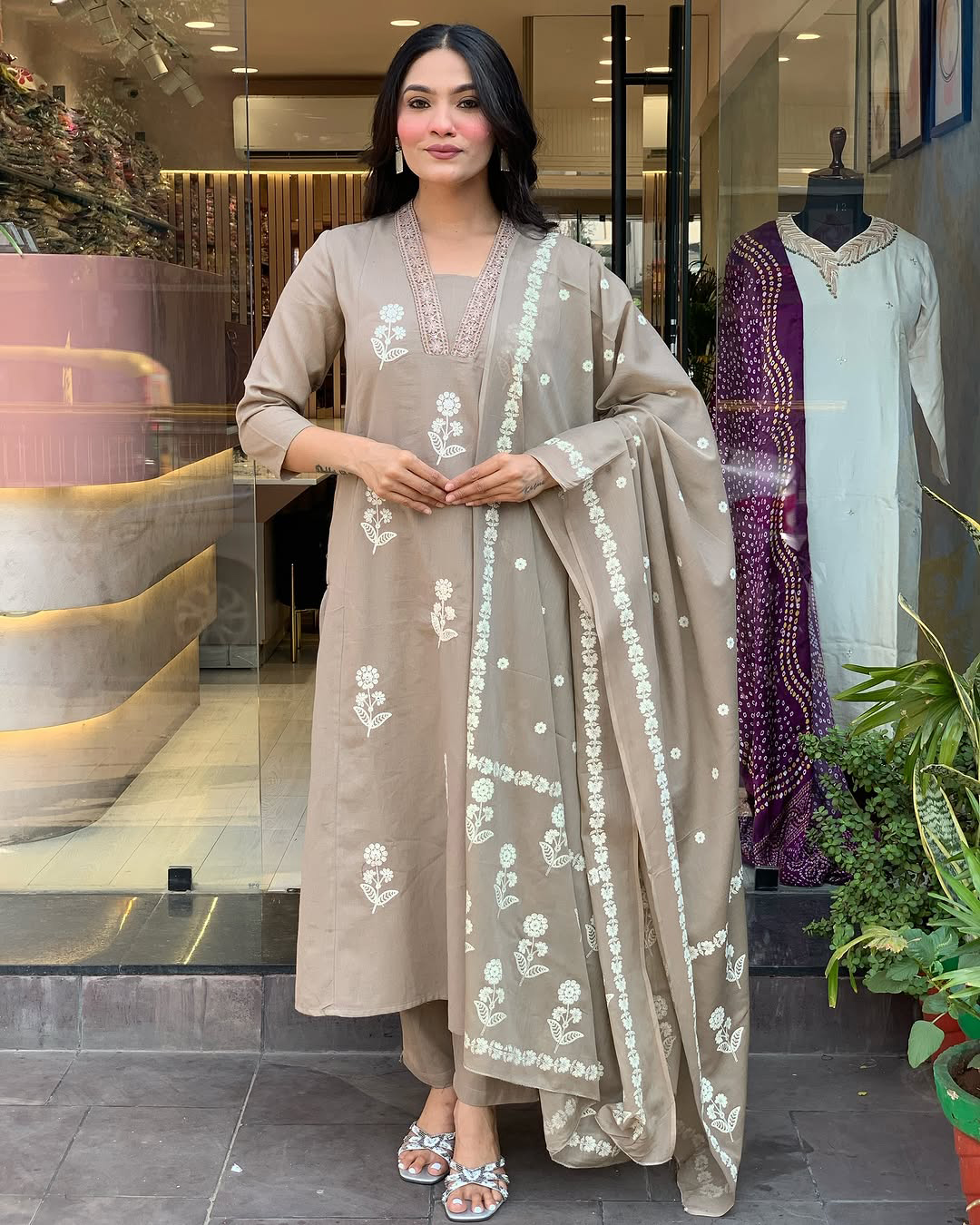
A salwar suit or Anarkali is the most practical choice for guests who want coverage and movement without managing a saree. Straight-cut suits look streamlined, while Anarkalis create a fuller, more ceremonial shape. A dupatta in chiffon, georgette, organza or silk can make the same suit appear more formal.
Keep the hem clear of the floor, particularly when an event includes grass, stairs or crowded seating. A dupatta with a narrow zari edge can provide enough occasion detail without adding the weight of dense sequins across the entire garment.
Lehenga, sharara or gharara
A lehenga, sharara or gharara is suitable for festive evening events and celebrations where a more decorative outfit is expected. A sharara has wide-legged trousers that flare from the knee or hip, while a gharara traditionally has a distinct gathered or panelled flare below the knee. The distinction helps when selecting the right shape for your height and preferred movement.
Balance volume with one controlled statement element. A heavily embroidered skirt already provides visual interest, so a quieter blouse and smaller earrings may look more refined than adding a large necklace, maang tikka and stacked bangles together.
Contemporary Indian sets
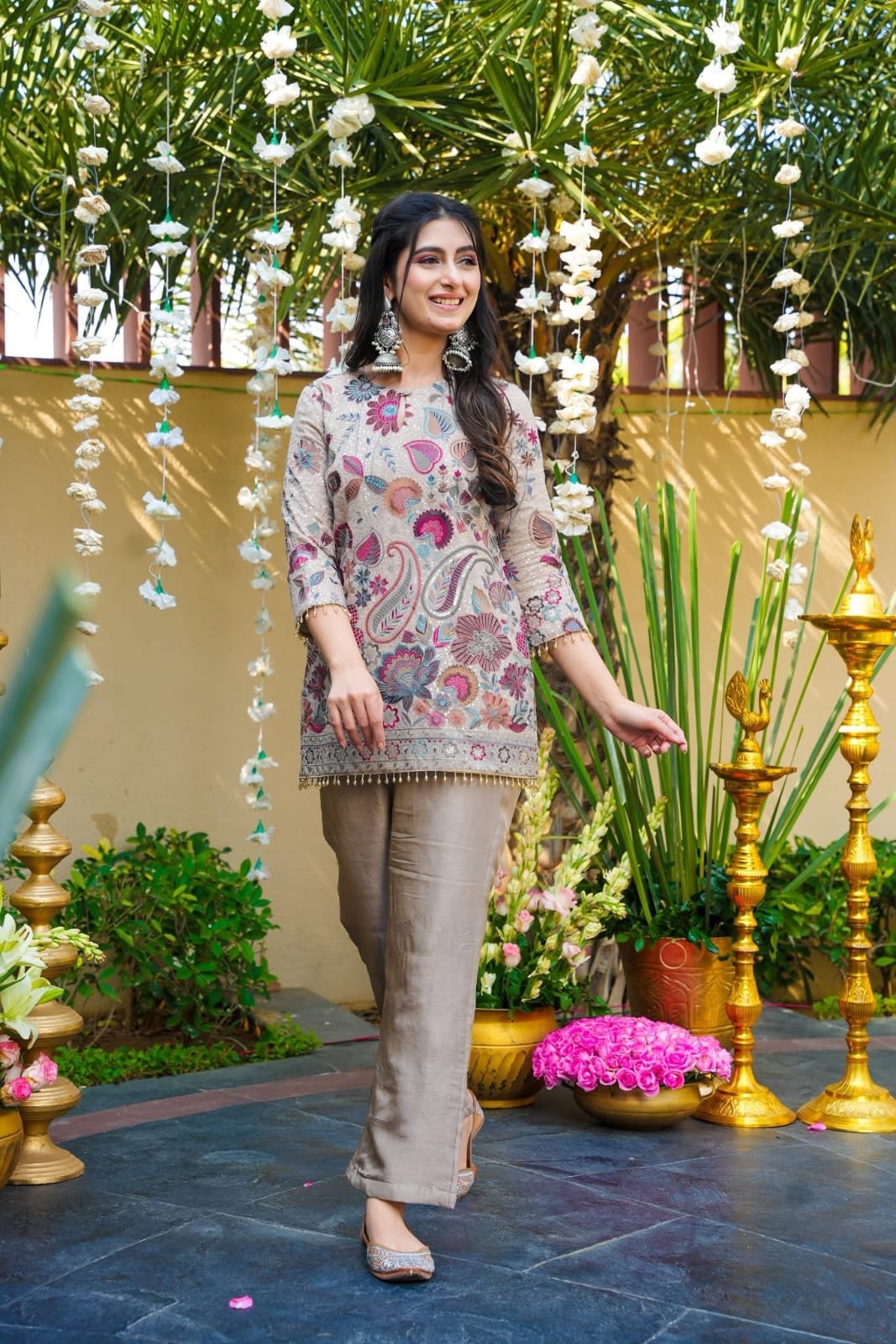
A contemporary Indian set can satisfy a traditional dress code when it uses Indian textiles, prints, embroidery or tailoring. Modern Taupe Vichitra Silk Embroidered Co-Ord Set for Women gives an example of a modern co-ordinated silhouette that keeps the richness of silk and embroidery without requiring a conventional saree drape.
Contemporary styling works best when at least one accessory reinforces the ethnic character of the outfit. Jhumkas, a woven potli, embroidered sandals or a traditional hair ornament can connect a modern set to the requested dress code without making the outfit look theatrical.
What to Wear When the Invitation Says Traditional Indian Attire in a Regional Setting?
Regional dress matters most when the invitation names a state, community, festival or cultural theme; otherwise, choose a respectful Indian silhouette without claiming an unfamiliar identity. Regional clothing often includes specific drapes, textiles, jewellery, head coverings and colour meanings that can't be reduced to a generic "ethnic" look.
For example, Kanjeevaram silk carries a strong association with Tamil Nadu ceremonial dressing, while a Mekhela chador belongs to Assam and a phanek is associated with Manipur. A Himachali, Uttarakhandi or Sikkimese outfit may include distinctive woollens, caps, wraps or woven patterns. Wearing a regional garment is most respectful when you understand its basic context and don't combine sacred or ceremonial elements as casual decoration.
The Sikkim Traditional Women's Dress Collection and Traditional Northeast Indian Dress Occasion Collection can help a guest recognise how regional silhouettes differ from mainstream wedding wear. The Traditional Uttarakhand Dress for Women and Traditional Himachal Dress for Women collections likewise point towards mountain textiles, layering and climate-conscious dressing rather than a single pan-Indian formula.
Traditional Goa Dress for Women is another reminder that regional clothing can be shaped by local history, climate and community practice. If an invitation says "traditional attire" for a region-specific celebration, ask the host whether guests should wear local dress, a colour associated with the celebration or simply Indian formalwear.
What to Wear When the Invitation Says Traditional Indian Attire in Different Fabrics and Colours?
Choose breathable cotton, Chanderi or light silk for daytime heat, and select heavier silk, brocade, velvet or embellished fabric for cool evenings and formal receptions. Fabric weight affects comfort, movement, drape and perceived formality as much as colour does.
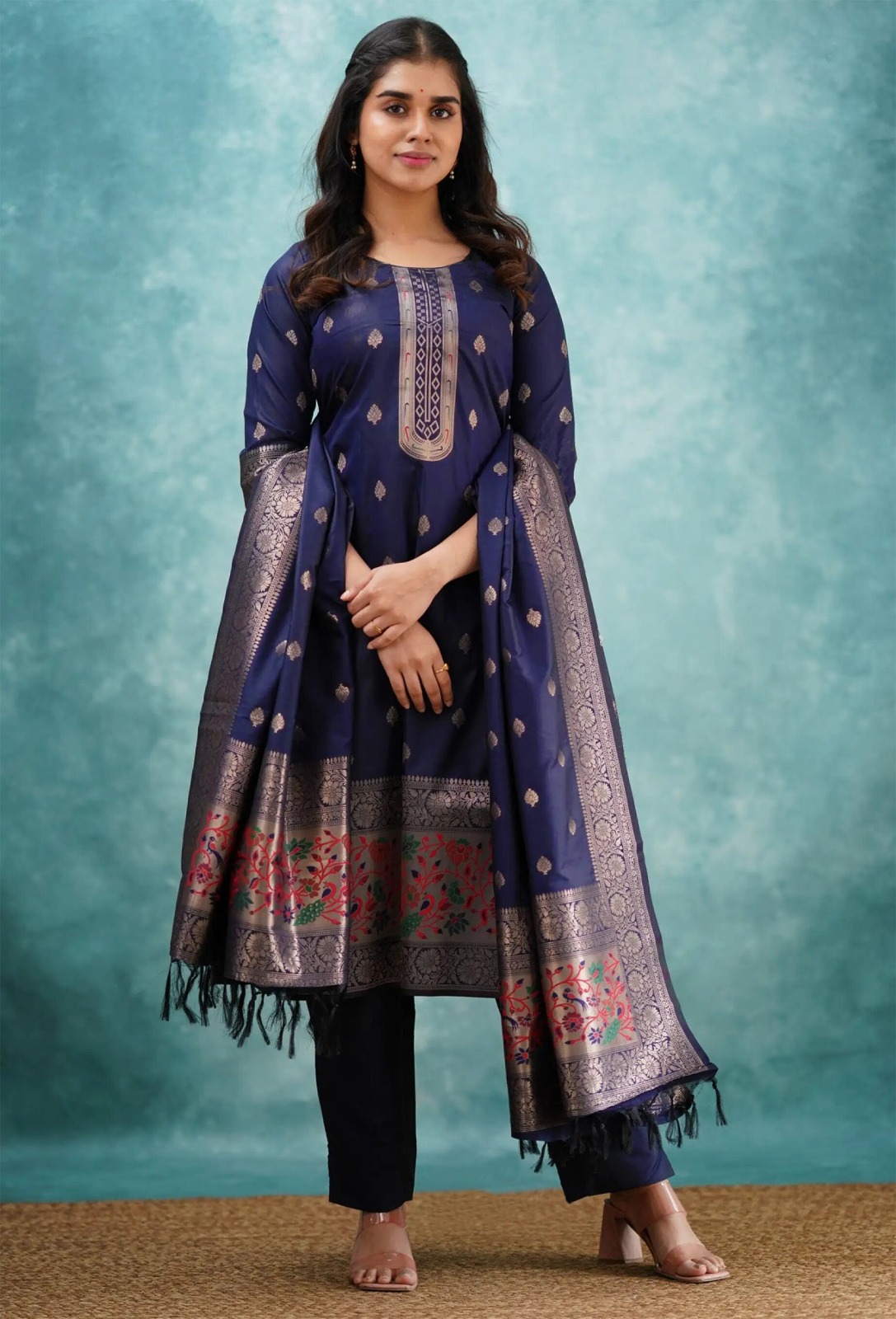
Cotton sarees and cotton salwar suits are useful for outdoor ceremonies, summer Haldi ceremonies and daytime family events because they absorb moisture and allow airflow. Rayon can offer a soft, easy-care option for less formal gatherings, while Vichitra silk, Banarasi silk and other silk varieties create more structure and sheen. Satin photographs well because of its reflective surface, but satin can feel warm and may show creasing around the waist after extended sitting.
Colour should respond to the time, season and ceremony. Jewel tones such as teal, emerald, ruby and sapphire suit evening celebrations. Mustard, coral, pink, turquoise and fresh green often work well for daytime events. Pastels can look refined in sunlight, but very pale shades may photograph close to white, so contrast them with a darker border, printed pallu or coloured blouse.
Haldi ceremony clothing deserves particular care because turmeric can stain silk, satin and heavily embellished garments. Cotton, washable rayon or an older festive outfit is safer than delicate Banarasi silk. For a mehendi, choose a sleeve and hem that allow your arms and feet to remain accessible, and avoid very long dupattas that can catch on chairs or wet henna.
What to Wear When the Invitation Says Traditional Indian Attire with Jewellery and Footwear?
Complete the outfit with one main jewellery statement, comfortable formal footwear and a secure drape. Accessories should support the garment's fabric and level of ornamentation rather than compete with every visible detail.
Jhumkas, chandbalis, pearl drops and small gold or silver hoops work with most Indian silhouettes. A necklace is useful with a low or open neckline, while statement earrings may be enough when the blouse has a high neck or dense embroidery. Bangles suit sarees and Anarkalis, but wear only enough to allow comfortable hand movement during meals and greetings.
Match metal thoughtfully. Gold-toned zari generally works with gold jewellery, while silver zari, mirror work and cool-toned embroidery can pair well with silver, oxidised metal or diamond-look accessories. Mixing metals can look deliberate when one finish is clearly dominant, such as gold earrings with a slim silver bracelet.
Footwear should be selected before the final hem alteration. Low block heels, embellished flats and secure wedges are practical for weddings, while stilettos can sink into lawns or become uncomfortable on uneven stone. Break in new footwear for at least two short periods before the event, and carry blister patches in a small clutch.
Secure a saree pallu or dupatta with concealed pins at the shoulder and waist when dancing, travelling or attending a crowded function. A small matching potli or structured clutch should hold a phone, compact, tissues, safety pins and any required medication without pulling the outfit out of shape.
What to Wear When the Invitation Says Traditional Indian Attire: A Practical Final Checklist
Confirm the event type, location, weather, expected seating and cultural instructions before choosing the final outfit. These details often matter more than whether the garment is new or expensive.
- Read the complete invitation. Look for words such as puja, wedding, reception, mehendi, Haldi ceremony, temple, regional theme or colour request.
- Check the venue. Outdoor lawns call for stable footwear and breathable fabric, while air-conditioned banquet halls allow silk, velvet and heavier embroidery.
- Choose a secure silhouette. Select a saree, suit, Anarkali, lehenga or sharara that allows sitting, walking and eating without constant adjustment.
- Test the outfit seven days before the event. Wear the full combination for 20 to 30 minutes and check the blouse, waistband, dupatta, footwear and jewellery.
- Respect specific instructions. Follow requests about head coverings, covered shoulders, barefoot entry, colour restrictions or regional clothing.
- Pack a repair kit. Carry safety pins, fashion tape, a small sewing kit, tissues and blister patches in your bag.
The strongest answer to what to wear when the invitation says traditional Indian attire is an outfit that's recognisably Indian, appropriate to the ceremony and comfortable enough to carry you through the entire event. A well-fitted saree, thoughtfully styled Anarkali, polished salwar suit or carefully chosen regional garment will meet the dress code more successfully than an uncomfortable outfit selected only for its decoration.
Common Questions About Choosing Traditional Indian Attire for Invitations
Can I wear a saree if the invitation says traditional Indian attire?
Yes, a saree is one of the most reliable choices for a traditional Indian dress code. Choose cotton or Chanderi for a daytime event and silk, Banarasi silk or zari work for a more formal evening celebration.
Is an Anarkali suitable for traditional Indian attire at a wedding?
Yes, an Anarkali is suitable for a wedding when the fabric, embroidery and accessories match the formality of the function. Silk, brocade, zari and tasteful sequin work generally look more formal than plain everyday cotton.
What should I wear to a Haldi ceremony?
Wear a comfortable, washable outfit in cotton or rayon because turmeric can stain delicate silk, satin and heavily embellished clothing. Yellow, green, orange and pink are common festive choices, but follow any colour guidance from the hosts.
Can a co-ord set count as traditional Indian attire?
A co-ord set can count as traditional Indian attire when it includes Indian prints, embroidery, silk texture, a dupatta or ethnic accessories. A relaxed printed set is better for a daytime or informal function than for a highly formal wedding reception.
What is the difference between a sharara and a gharara?
A sharara usually has wide-legged trousers that flare continuously from the hip or knee, while a gharara traditionally has a gathered or panelled flare below the knee. Both can suit festive events, but the best choice depends on comfort, proportion and the requested level of formality.
How should I dress if the invitation requests regional Indian clothing?
Ask the host whether guests should wear a specific regional garment or simply Indian formalwear. Learn the basic context of the named region, avoid mixing sacred elements casually and choose authentic-looking textiles, drapes and accessories rather than using unfamiliar cultural details as decoration.