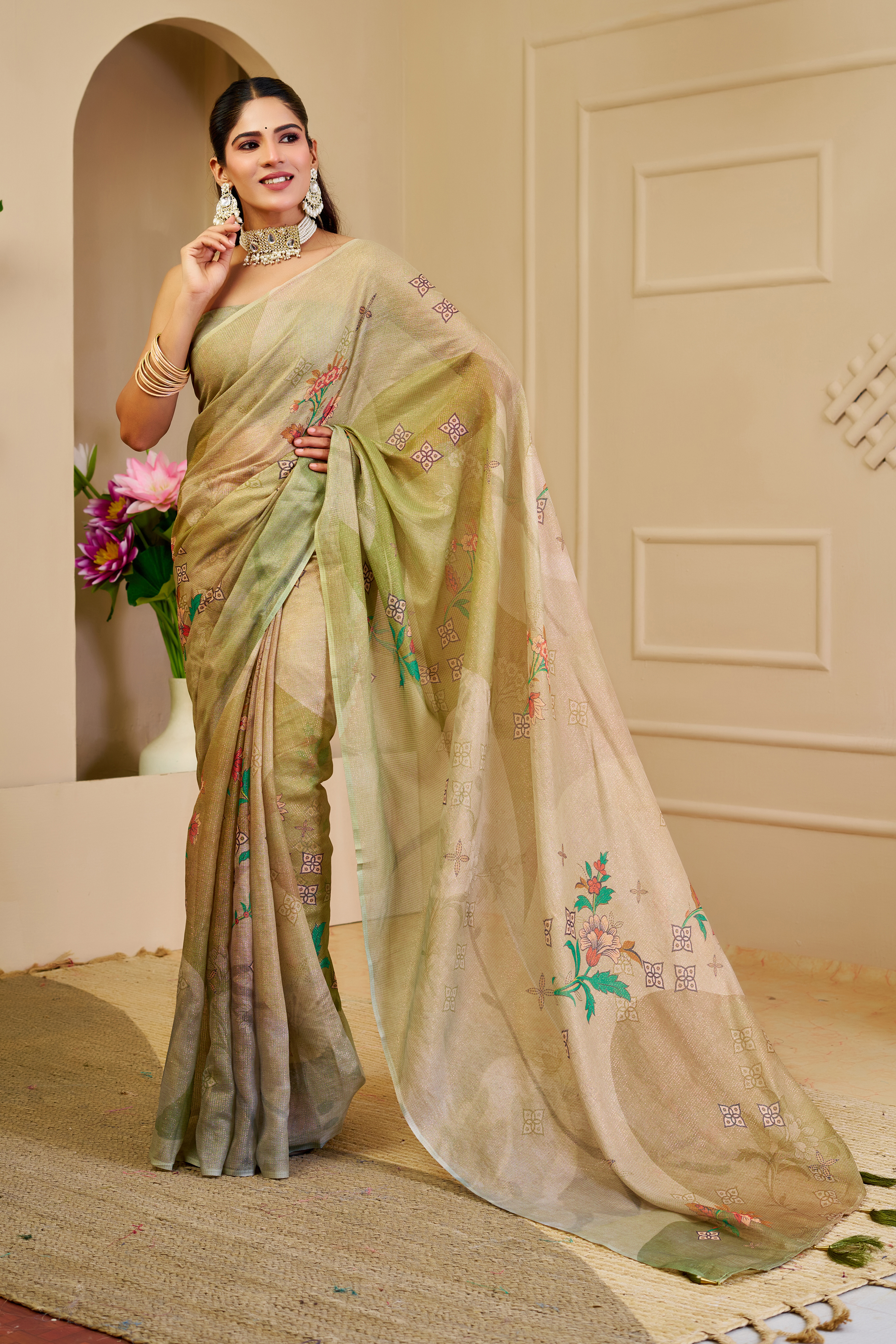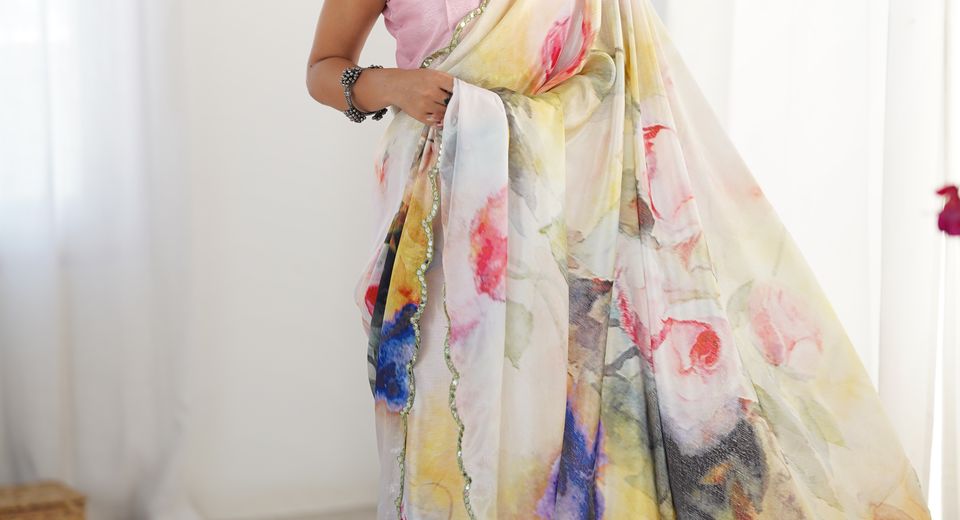
What to Wear to a Tamil Brahmin Wedding Without a Heavy Pattu Saree becomes much easier once tradition and fabric weight are considered separately. A guest doesn't need a thick Kanjeevaram silk saree to look appropriate at a muhurtham, reception or nalangu ceremony. A lightweight saree with a defined border, a well-fitted blouse, modest jewellery and practical pleats can look respectful while remaining comfortable through several hours of rituals.
Tamil Brahmin weddings often move between an early-morning wedding hall ceremony, a seated meal and a more relaxed reception. Your outfit therefore needs to accommodate movement, heat, photography and long periods of standing. The most successful alternative keeps the recognisable Indian saree silhouette while using a fabric that doesn't find bulky or difficult to drape.
What makes a saree suitable for a Tamil Brahmin wedding?
A saree suits a Tamil Brahmin wedding when the outfit looks festive, composed and culturally respectful, even when the fabric isn't traditional pattu silk. A six-yard saree, covered blouse neckline, anchored pallu and polished border create the formal structure associated with South Indian dressing.
The ceremony matters more than the label on the fabric. A morning muhurtham usually calls for a refined outfit in colours such as ivory, green, yellow, pink, peach, maroon or muted red. A reception permits more surface detail, shine and contemporary blouse styling. A nalangu or post-wedding gathering allows softer prints and lighter drapes, particularly when the event is held outdoors.
Choose a saree that stays in place without constant adjustment. A secure waist tuck, five to seven even front pleats and a pallu pinned at the shoulder are more useful than heavy embellishment. A saree that slips during a homam or bunches while you sit can make a beautiful outfit impractical.
What to Wear to a Tamil Brahmin Wedding Without a Heavy Pattu Saree
The most useful alternatives are linen cotton, Chanderi, georgette, chiffon, maslin silk and lightweight embellished sarees with an intentional border or festive finish. These fabrics preserve the saree's formal appearance while reducing the weight carried at the waist and over the shoulder.
Linen cotton for daytime ceremonies
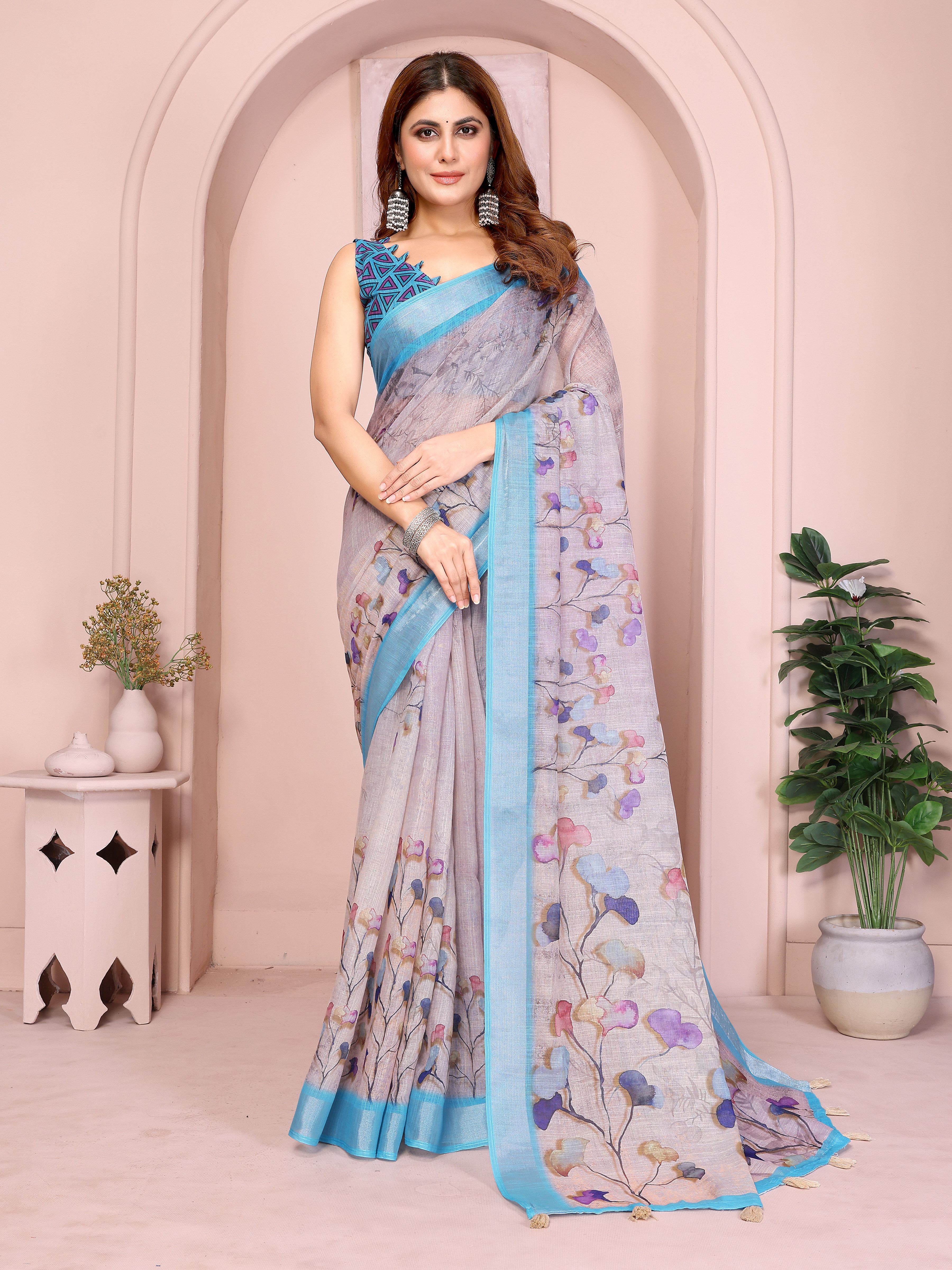
Linen cotton is a strong choice for a daytime Tamil Brahmin wedding because the blend is breathable, structured and less clingy than many synthetic fabrics. Floral prints work especially well when the blouse repeats one colour from the saree rather than introducing a competing pattern.
Pastel Linen Cotton Floral Print Saree with Designer Blouse offers a gentle palette for a morning function, while Peach Linen Cotton Floral Print Saree with Blouse for Women creates a warmer look without relying on bridal red. Linen cotton can crease during travel, so roll the saree around a broad towel or hanger instead of folding it into a small square.
Chinnon and georgette for a lighter festive drape
Chinnon and georgette create a fluid, low-bulk drape that works well for guests who dislike the rigidity of heavy silk. These fabrics need careful pinning because their smooth surface can shift more easily than cotton or silk.
Pastel Green Floral Heavy Chinnon Ready to Wear Saree and Turquoise Floral Heavy Chinnon Ready to Wear Saree show how a light base can still look celebratory through floral detail and a ready-to-wear construction. A ready-to-wear saree is useful for a reception or shorter ceremony, but check the pallu length, waist fit and hem position before the event.
Maslin silk for a silk-like appearance
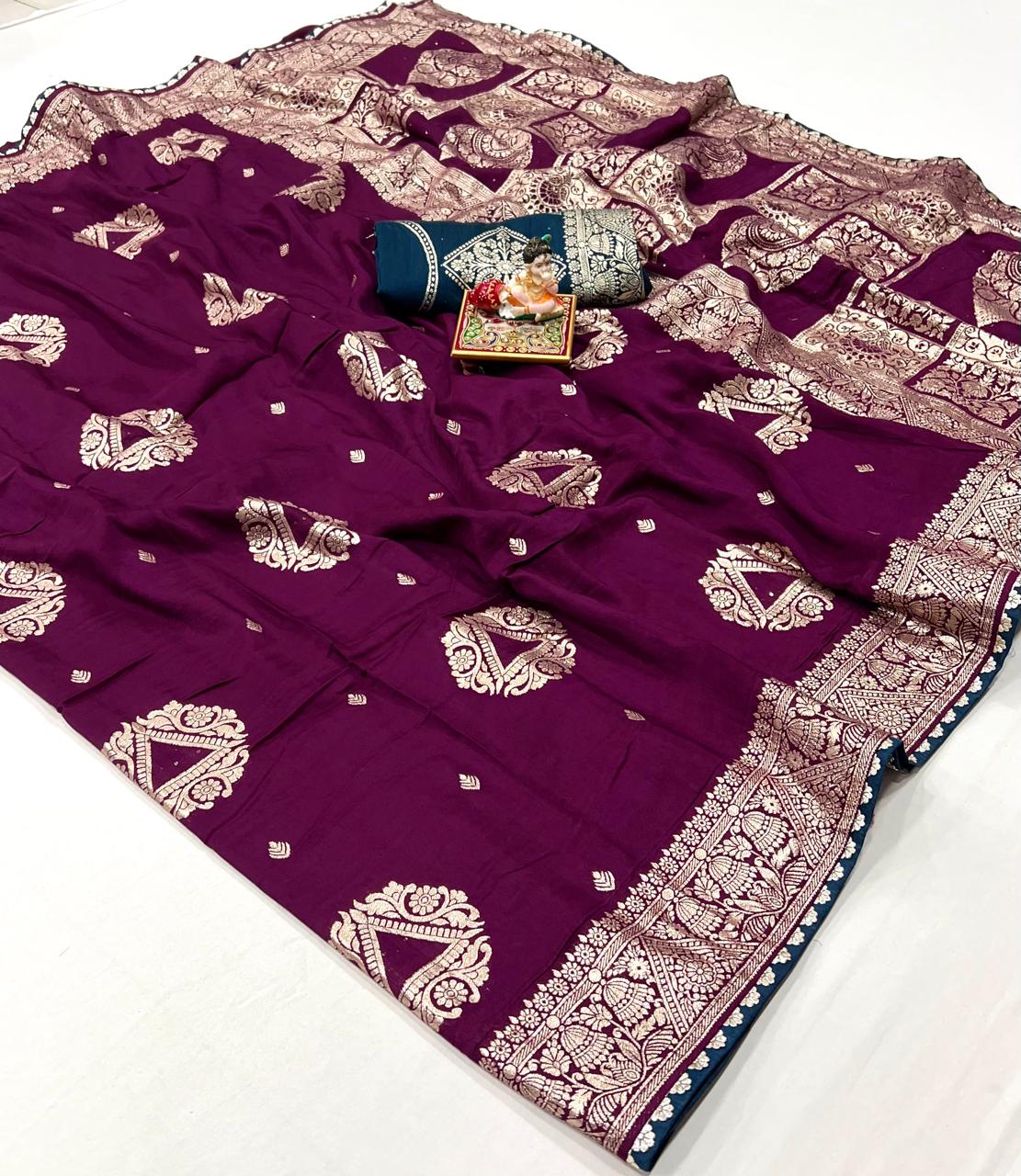
Maslin silk gives a soft sheen and graceful fall without the substantial feel of a heavy pattu saree. Wedding Wear Wine Purple Maslin Silk Saree suits an evening reception because wine purple photographs richly under warm lighting and gives a deeper alternative to bright red.
Heavy embellishment doesn't automatically make a saree more classic. A restrained border, small zari details and a clean blouse can look more appropriate for a family wedding than dense all-over sequins. Heavy Sitara Fancy Saree for Wedding & Party Wear is better suited to a reception or evening celebration than to a quiet morning muhurtham, where excessive sparkle may feel visually loud.
Which colours work for a Tamil Brahmin wedding guest?
Green, yellow, pink, ivory, peach, wine, turquoise and muted red are dependable guest colours for a Tamil Brahmin wedding because they look festive without requiring bridal-level ornamentation. Colour selection should also account for ceremony timing, venue lighting and whether the bride's family has requested a particular shade.
Ivory can look elegant when paired with a coloured border, blouse or jewellery, but an entirely plain white outfit may appear too subdued for a wedding and may carry different associations in some families. Ivory Bloom Heavy Chinnon Party Wear Saree becomes more ceremony-ready when styled with gold earrings, a coloured blouse and a visible pallu border.
Red deserves some thought. Bright bridal red, deep maroon and red Banarasi silk can look close to bridal styling when combined with a heavy border and extensive jewellery. The Red Banarasi Silk Sarees for Weddings Under 1100 collection can help compare deeper red options, but choose a smaller border or softer blouse when attending as a guest rather than as part of the bridal party.
Pink and green are versatile choices for guests. The Pink Georgette Sarees collection gives useful direction for a lightweight evening look, while a pastel green saree feels fresh for a morning function. Avoid fluorescent shades when the ceremony takes place in a heritage temple setting, because strong artificial colour can overpower photographs and the devotional atmosphere.
How should the blouse be styled with a lightweight saree?
A well-fitted blouse with moderate coverage makes a lightweight saree look formal and prevents the outfit from appearing casual. A sleeve ending near the elbow, a higher back neckline and a secure shoulder fit are practical choices for rituals, sitting on the floor or moving through a crowded wedding hall.

Match the blouse to one visible colour in the saree for a quiet, coordinated result. A contrast blouse can work when the saree has a small print or plain body. Wine with antique gold, green with pink, turquoise with ivory and peach with muted gold are easier to balance than several unrelated bright shades.
Designer cuts are not essential. A simple round neck, boat neck or square neck with piping can appear more polished than a complicated cut-out. Avoid very deep backs, narrow straps and unstable tie-up designs for a long ceremony. A blouse that requires repeated adjustment is especially inconvenient during central wedding rituals.
Pastel Linen Cotton Floral Print Saree with Designer Blouse demonstrates a practical approach because the coordinated blouse removes much of the guesswork. If a saree arrives without a blouse, allow at least seven to ten days for tailoring during a busy wedding season, and request a test fitting while wearing the intended bra and shapewear.
Which jewellery and accessories complete the look?
Temple-inspired or classic gold-toned jewellery completes a lightweight wedding saree without requiring a heavy silk base. Choose one dominant jewellery feature, such as jhumkas, a kasu-style necklace or a short mango-mala-inspired chain, and keep the remaining pieces proportionate.
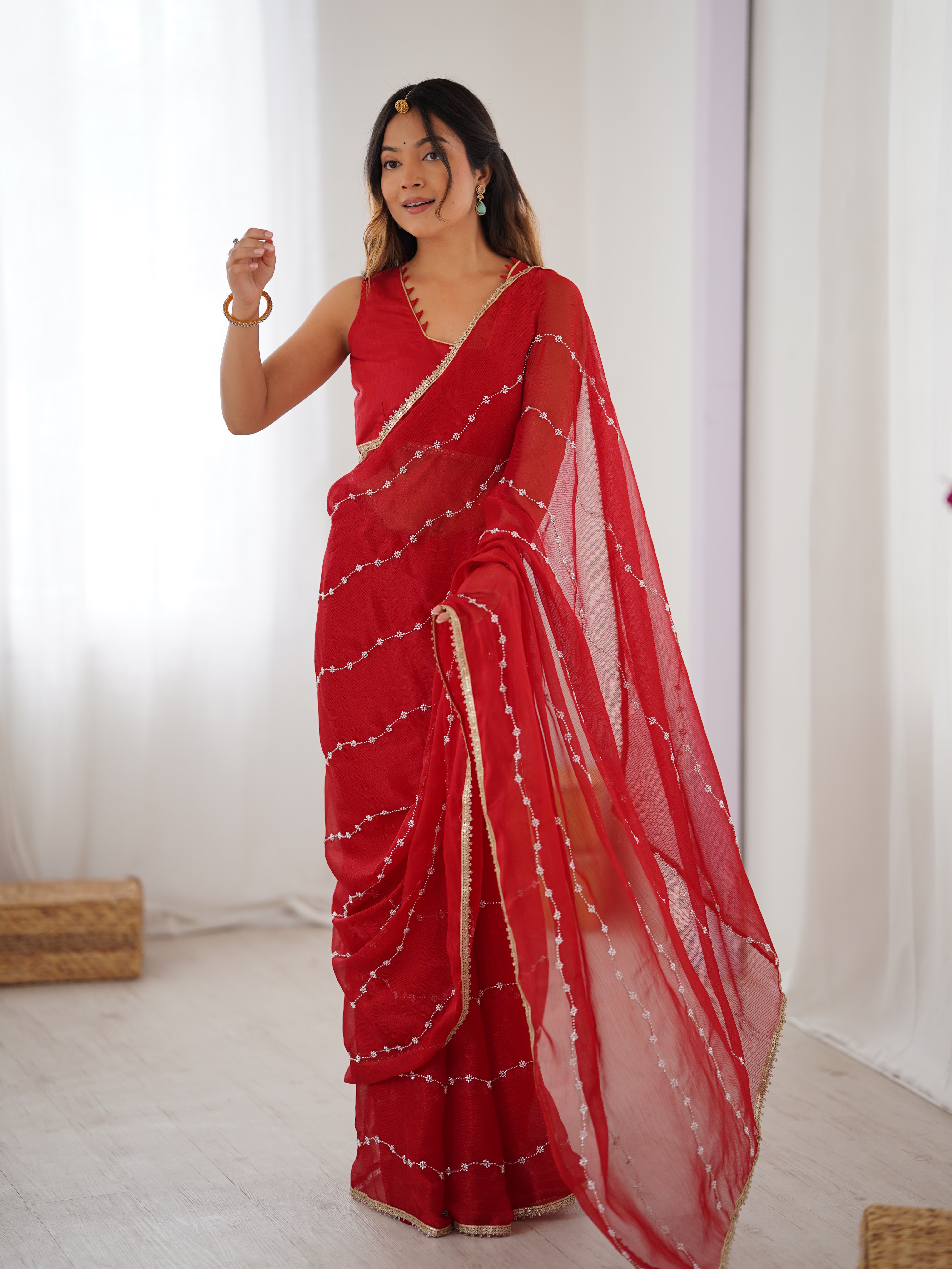
Jhumkas, a small bindi, glass bangles and a pair of anklets can establish a South Indian occasion look without making the outfit cumbersome. A single long necklace works well with a higher blouse neckline, while layered necklaces suit a plain blouse and a saree with limited embellishment. Gold-toned accessories harmonise with zari, while antique gold is especially forgiving with wine, purple, green and printed fabrics.
Flowers are particularly appropriate for a Tamil wedding. A short strand of jasmine fixed to a low bun or braid adds fragrance and ceremony-specific detail. Fresh jasmine can wilt in heat, so carry a small replacement strand when attending an outdoor wedding for more than three hours.
Use a compact potli or small shoulder bag rather than a large western tote. The bag should hold a phone, tissues, safety pins, a small comb and blotting paper. Pack two medium safety pins for the pallu and one concealed pin for the waist pleats; these small preparations are more valuable than carrying extra statement jewellery.
How do you drape a light saree for a long wedding day?
A lightweight saree stays comfortable when the inner tuck, pleats and pallu are secured before leaving home. Wear a cotton or moisture-wicking underskirt with a firm but comfortable drawstring, and place the knot slightly to the side so it doesn't create a visible bump beneath the pleats.

- Wear the blouse, footwear and intended jewellery before beginning the drape so the final length can be judged accurately.
- Tuck the saree at the natural waist rather than below the hip; a higher tuck keeps the hem clear of the floor and reduces dragging.
- Create five to seven pleats of equal width, depending on the saree fabric and your waist measurement.
- Secure the top of the pleats with a hidden pin before tucking them into the underskirt.
- Bring the pallu over the left shoulder and pin it near the shoulder seam and again below the bust if the fabric moves easily.
- Walk, sit and raise both arms once before leaving home to check that the hem, pleats and blouse remain comfortable.
Ready-to-wear construction can save time, but the final fit still matters. Check whether the pre-stitched pleats fall at the centre front, whether the pallu reaches below the hip and whether the waistband digs in after ten minutes of sitting. A professional draper can usually make small adjustments on the day, but a complete trial at least one day earlier is safer.
How can you choose within a wedding saree budget?
A practical wedding saree budget should include the blouse, tailoring, accessories and alterations rather than considering only the saree price. A saree listed below ₹4,000 may still need a blouse fitting, petticoat, fall and pico work, pins and footwear.
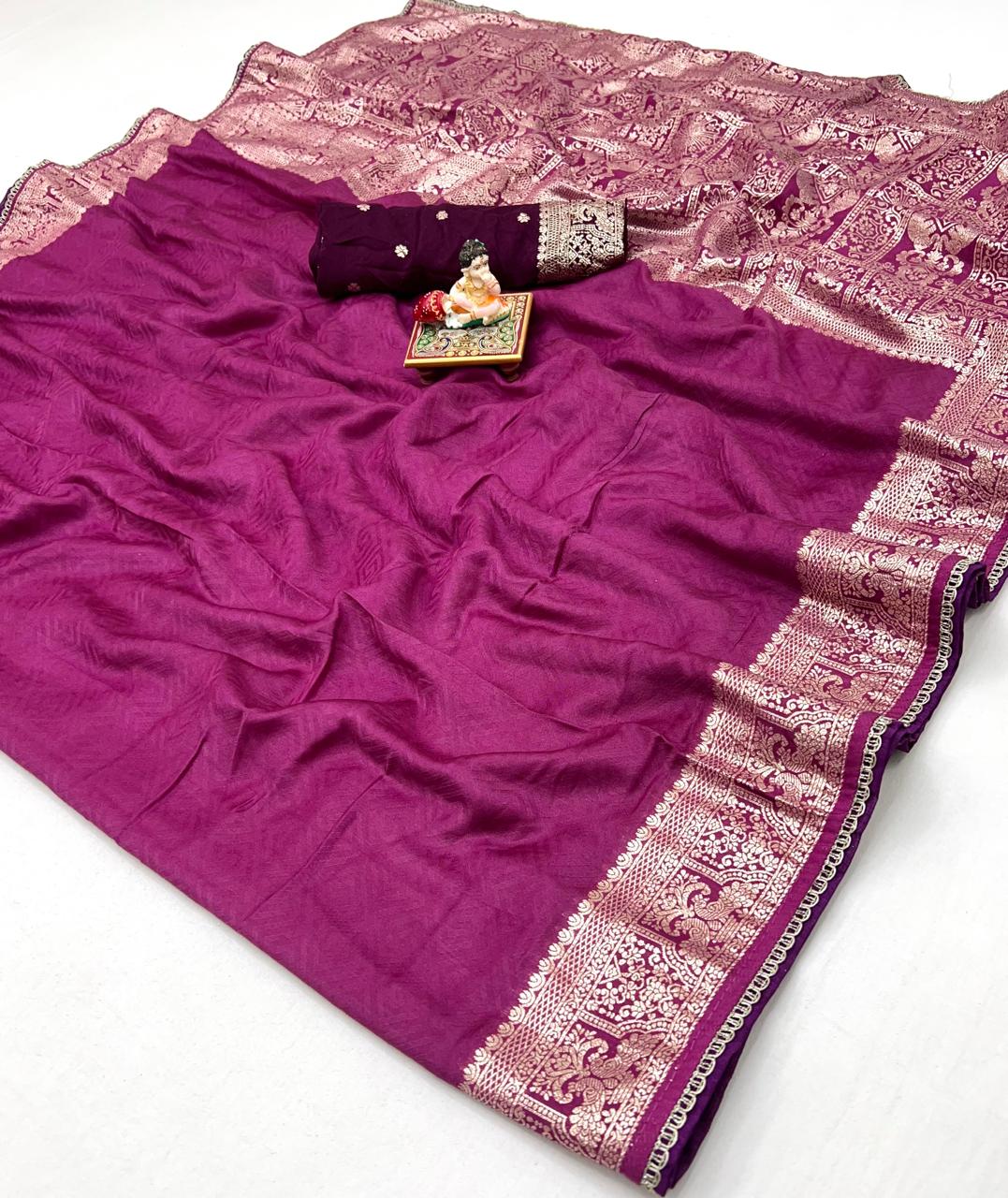
The Wedding Sarees Collection Under 4000 is an useful starting point for comparing lighter occasion fabrics without immediately moving into bridal pricing. The Silk Sarees Under 3000 With Discount collection can also help when you want a silk-like finish at a lower cost, although you should check the fabric composition and care instructions before purchase.
The Latest Wedding Sarees Collection is useful for comparing the broader range of prints, embellishments and ready-to-wear designs available for different ceremonies. Read the product measurements carefully, especially the saree length, blouse piece length and pallu construction. A petite wearer may need a shorter fall or altered blouse, while a taller wearer should confirm that the pallu provides adequate coverage.
Price should not be the only measure of formality. A well-fitted ₹2,500 linen cotton saree with considered jewellery can look more suitable than a poorly fitted heavily embellished saree. Spend first on fit, then on secure draping, and finally on decorative details.
What should you check before wearing the saree?
Check the fabric, measurements, blouse fit, colour balance, hem, pallu security and comfort before the wedding day. A complete trial should take place in the same footwear and undergarments planned for the ceremony.

- Fabric: Confirm whether the saree is linen cotton, Chanderi, georgette, chinnon, maslin silk or another material, because each fabric behaves differently during draping.
- Measurements: Check the total saree length and blouse measurements, especially if you're tall or prefer a longer pallu.
- Care: Follow the stated washing instructions and avoid last-minute ironing at very high heat on synthetic embellishments.
- Comfort: Sit for ten minutes, walk up stairs and raise your arms to test the drape.
- Respect: Keep the blouse and pallu secure for temple visits, homam rituals and family photographs.
What to Wear to a Tamil Brahmin Wedding Without a Heavy Pattu Saree ultimately comes down to balance: a recognisably time-honoured silhouette, a fabric suited to the weather, colours that honour the setting and accessories that complete rather than overwhelm the outfit. Linen cotton, Chanderi, georgette, chinnon and maslin silk can all work when the finish is elegant and the styling is intentional.
Common Questions About Choosing a Light Saree for a Tamil Brahmin Wedding
Can I wear a non-silk saree to a Tamil Brahmin wedding?
Yes, a non-silk saree can be appropriate when it has a polished drape, festive colour and sufficient coverage. Linen cotton, Chanderi, georgette, chinnon and maslin silk are practical alternatives to a heavy pattu saree.
What saree is best for a Tamil Brahmin wedding guest?
The best saree depends on the ceremony and weather, but a lightweight saree with a defined border and secure pallu is a reliable choice. Linen cotton works well for a daytime muhurtham, while maslin silk, georgette or embellished chinnon suit an evening reception.
Is it acceptable to wear a floral saree to a South Indian wedding?
Yes, a floral saree is acceptable when the print looks refined and the blouse provides a coordinated finish. Pastel or medium-scale florals work particularly well for daytime ceremonies, while darker floral palettes can suit an evening reception.
Which colours should a wedding guest avoid at a Tamil Brahmin wedding?
Guests should be cautious with extremely bridal red, very bright fluorescent shades and outfits that are entirely plain white. Family customs vary, so follow any colour request from the hosts and avoid a combination that could closely imitate the bride's outfit.
How do I keep a lightweight saree from slipping during a wedding?
Use a properly fitted underskirt, make five to seven even pleats and pin the pallu at the shoulder and below the bust when needed. Test the drape by walking, sitting and raising your arms before leaving home.
What jewellery should I wear with a lightweight saree for a Tamil wedding?
Gold-toned jhumkas, a small bindi, glass bangles and jasmine flowers create a traditional finish without adding excessive weight. Select one dominant necklace or earring style so the jewellery complements rather than competes with the saree.