What to Wear to a Gujarati Grah Shanti Ceremony at Home depends on three practical considerations: respectful presentation, comfort during a long pooja, and the informality of a family gathering inside a house. A lightweight saree, a modest kurta set, or a simple salwar suit usually works better than heavily embellished reception wear. Soft colours, breathable fabrics, secure draping and low footwear help you participate comfortably while keeping the outfit festive.
Grah Shanti is a Hindu house-blessing ritual performed to create an auspicious atmosphere in a new or newly occupied home. Gujarati families may include a Ganesh pooja, havan, kalash rituals, Vastu-related prayers, family blessings and a meal. Customs vary by family, priest and community, so the hosts' instructions should take priority over a fixed dress code.
What to Wear to a Gujarati Grah Shanti Ceremony at Home
A breathable saree or a modest kurta set in a festive colour is the most reliable choice for a Gujarati Grah Shanti at home. Choose clothing that covers the shoulders and knees, allows easy movement, and doesn't require constant adjustment while sitting on the floor or moving between rooms.
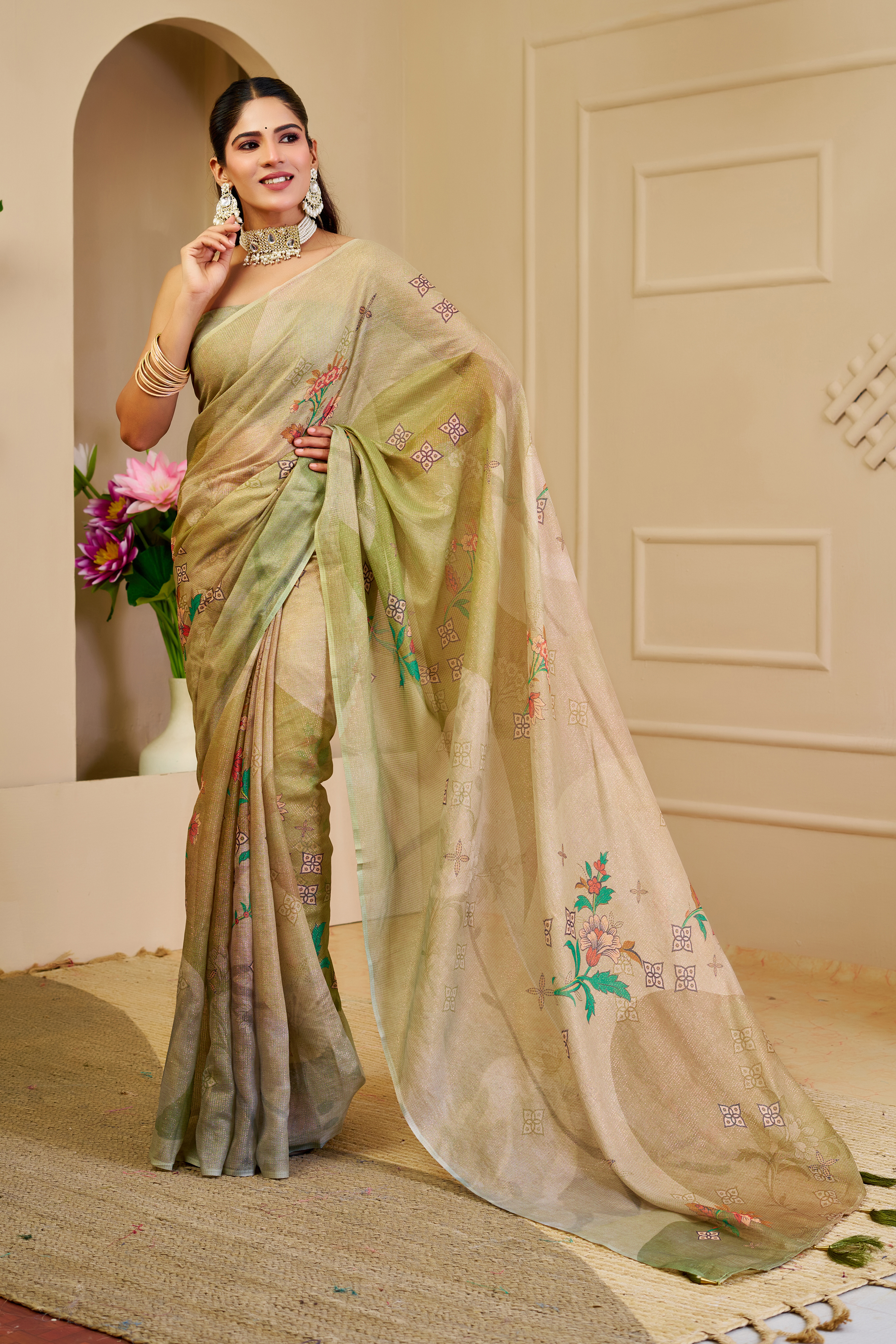
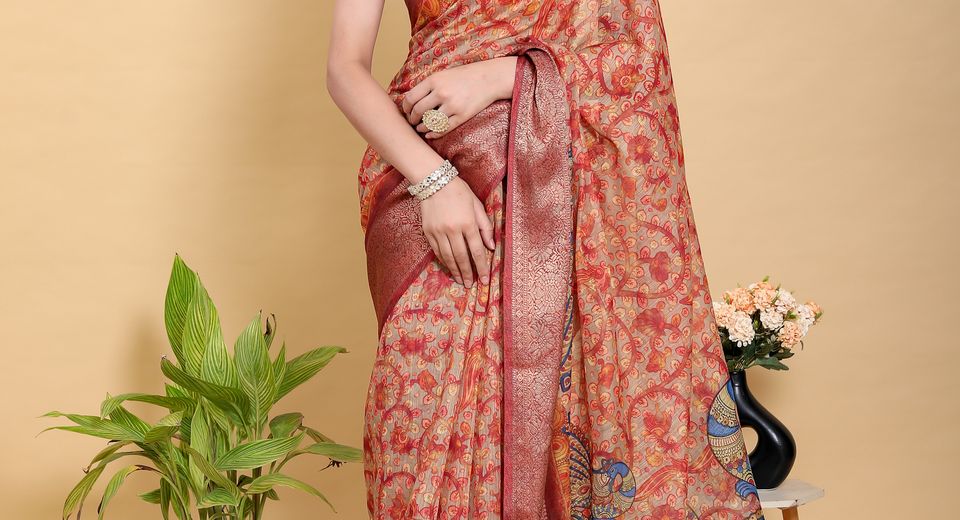
A saree creates a traditional silhouette without needing heavy decoration. A cotton, linen-cotton, Chanderi or soft silk saree can look ceremonial when paired with a well-fitted blouse, small earrings and a neat pallu. The Elegant Peach Linen Cotton Saree with Artistic Floral Print offers a gentle, daytime-appropriate look for a summer pooja, while the Peach Linen Cotton Saree with Floral Jacquard Border Design adds a little more texture without becoming wedding-heavy.
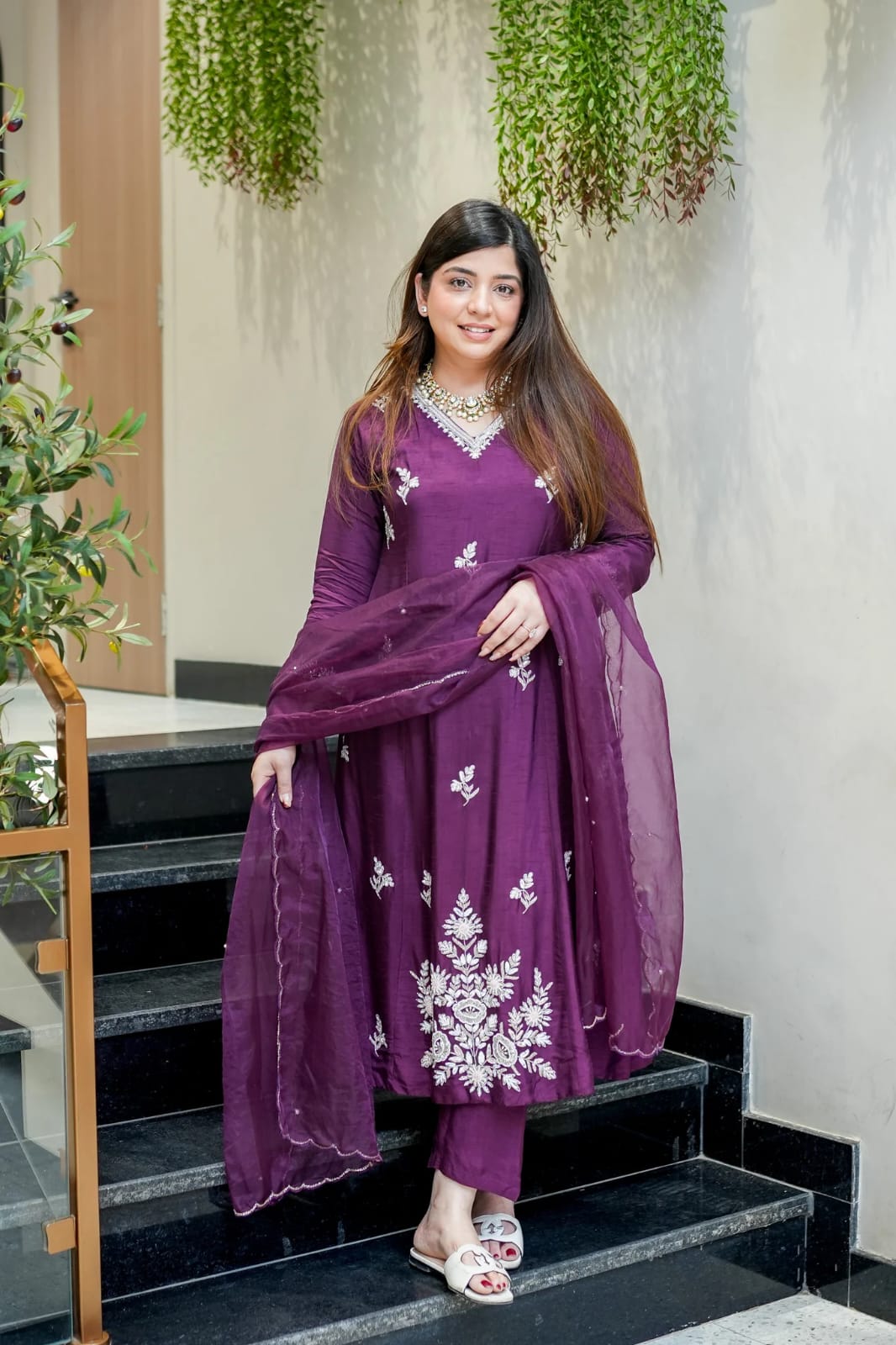
A kurta set is particularly practical when the ceremony involves floor seating, helping with relatives, serving prasad or walking around the house. The Veena Plum Purple Muslin Embroidered Kurta Set with Organza Dupatta brings embroidery and a dressy dupatta while retaining the ease of a coordinated outfit. The Mustard Viscose Chanderi Kurta Set with Sequence Embroidery suits someone who wants a festive appearance without managing a saree pleat.
How formal should a home Grah Shanti outfit be?
A home Grah Shanti outfit should generally be festive but less elaborate than clothing for a wedding reception or sangeet. Moderate embroidery, a woven border, a few pieces of jewellery and polished grooming are enough for most daytime ceremonies.
Heavy bridal zari, very long trains, dense sequins and stiff fabrics can become inconvenient during havan rituals. A guest may need to sit cross-legged, cover the head briefly, receive tilak, circle the fire or move away from smoke. Clothing that remains neat after two or three hours is more useful than clothing that looks dramatic for the first photograph.
Which Saree Fabrics Work Best for a Gujarati Home Pooja?
Cotton, linen-cotton, muslin, Chanderi and lightweight Banarasi silk are dependable saree fabrics for a Gujarati home pooja because they balance comfort, structure and festive appeal. The best fabric depends on the season, seating arrangement and duration of the ritual.

- Cotton: Cotton sarees breathe well in warm homes and stay manageable during floor seating. A woven border or small floral print gives cotton enough visual polish for a ceremony.
- Linen-cotton: Linen-cotton has a crisp fall and works well for daytime events. The blend can crease, so pre-pleating the saree or carrying a few safety pins is sensible.
- Muslin: Muslin feels soft and light, making it suitable for extended wear. A muslin kurta set with an organza dupatta gives softness with a more formal finish.
- Chanderi: Chanderi has a light, slightly sheer appearance and a refined surface. A lining or a suitable petticoat is important when wearing a Chanderi saree indoors under bright light.
- Banarasi soft silk: Banarasi soft silk provides richer colour and zari detail for winter ceremonies or guests who prefer a heritage silk look. Soft silk is easier to drape than many heavier bridal silks, but it can still feel warm in a crowded room.
The Mint Green Floral Cotton Saree with Woven Golden Edges Wear is an useful example of how cotton can look ceremonial through colour and a subtle golden edge. The Black Chanderi Cotton Saree with Contemporary Checked Weave creates a more modern interpretation, although black may not suit every family's preference for auspicious clothing. Asking the hosts about colour expectations is wise when the family follows a particularly classic dress code.
Which Colours Are Suitable for a Gujarati Grah Shanti?
Yellow, mustard, saffron, peach, pink, green, red, maroon and purple are commonly suitable colour directions for a festive Gujarati pooja, although family customs can differ. Warm, clear colours photograph well indoors and connect naturally with the auspicious atmosphere of a house-blessing ceremony.
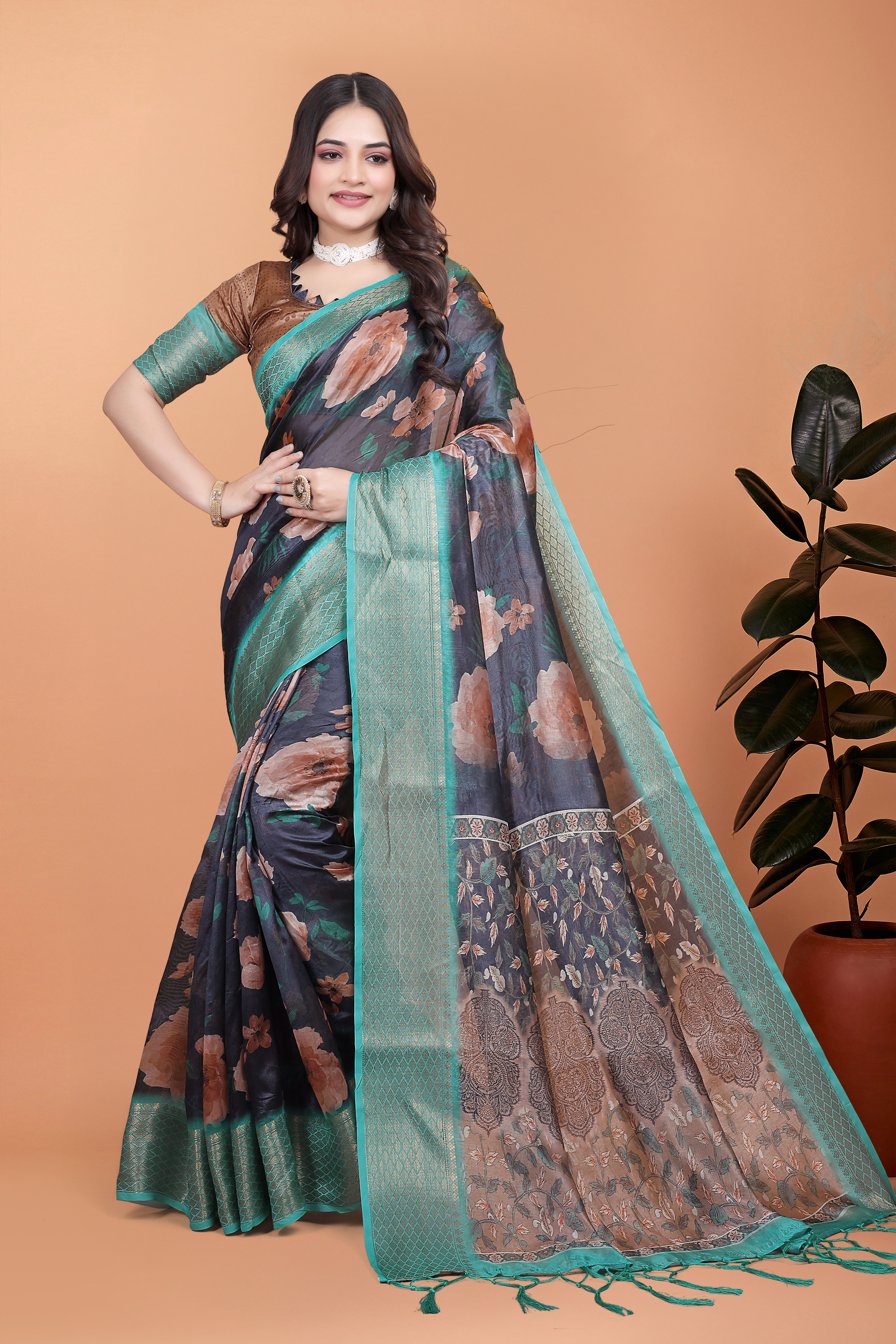
Yellow and mustard are associated with turmeric, sunlight and auspicious beginnings, which makes them especially appropriate for a morning or daytime pooja. Green can suggest renewal and works well for a new-home ritual. Peach, coral and pink feel celebratory without the intensity of bridal red. Maroon and plum provide depth for cooler weather or an evening gathering.
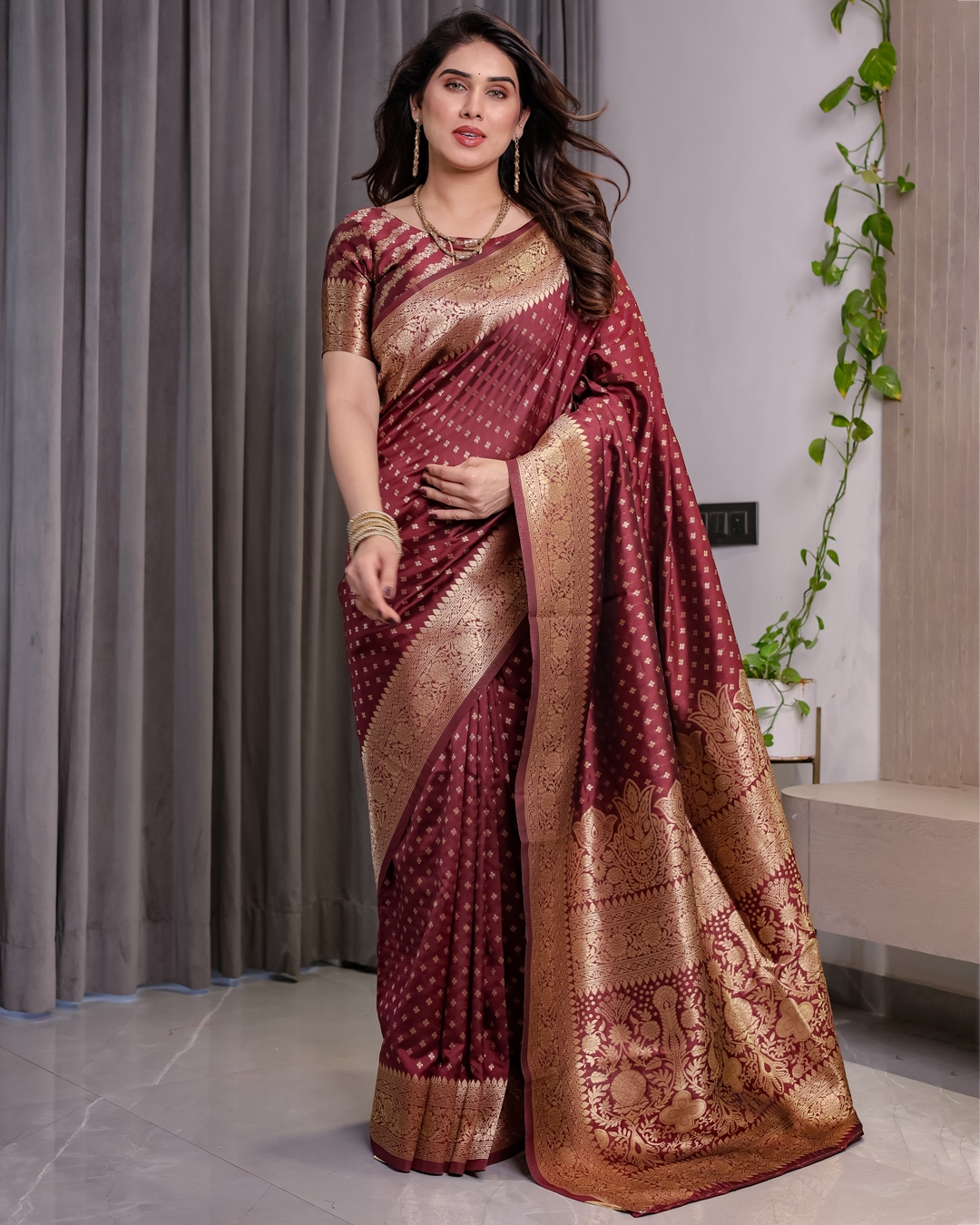
The Mustard Viscose Chanderi Kurta Set with Sequence Embroidery is a strong choice for someone who wants a turmeric-inspired colour with a structured silhouette. The Royal Plum Banarasi Soft Silk Saree With Golden Zari Border and the Maroon Banarasi Soft Silk Saree with Golden Zari Border are more time-honoured options when the hosts expect silk or zari.
White, beige or very pale neutrals are not automatically inappropriate, but they may appear less festive and can show turmeric, kumkum or food stains easily. Black is also a matter of family preference rather than a universal rule. Some Gujarati households welcome contemporary black-and-gold dressing, while others reserve black for non-festive settings. A small accent in green, yellow, gold or red can make a neutral outfit feel more aligned with the ceremony.
How Should You Style a Saree for Floor Seating and Rituals?
A saree for floor seating should have secure pleats, a comfortable petticoat and a pallu that stays in place without restricting the arms. The safest drape is a neatly pinned Nivi-style drape with medium-width pleats and a pallu placed over the shoulder or brought over the head when required.
Choose a petticoat with a firm but comfortable waistband rather than an overly loose drawstring. A cotton or blended petticoat gives the saree stability, while a shapewear petticoat can create a cleaner fall if it doesn't restrict sitting. Make five to seven front pleats of similar width, pin the pleats discreetly at the waist, and secure the shoulder pallu with one or two small safety pins.
Keep the pallu long enough to cover the head or shoulders if elders or the priest request it, but avoid allowing it to trail on the floor. A tucked pallu is especially useful near a havan because loose fabric can come too close to the sacred fire. Low heels or flat sandals also make standing after prolonged floor seating safer.
Should the head be covered during a Gujarati Grah Shanti?
The head may be covered during particular prayers, blessings or family customs, but a head covering isn't identical in every Gujarati household. Carrying a lightweight dupatta or arranging a saree pallu that can be lifted over the head gives you flexibility without committing to a heavy fabric.
Organza can look elegant but may slide, so a discreet hairpin or pallu pin can help. A cotton dupatta is more stable for longer rituals. The correct approach is to follow the priest's or host family's cue rather than treating head covering as a universal requirement.
What Jewellery and Beauty Choices Suit a Home Pooja?
Small to medium jewellery, a tidy hairstyle and restrained makeup suit a Gujarati home pooja better than heavily layered accessories. Gold-toned earrings, a fine chain, bangles, a bindi and one statement element can provide enough festive detail.
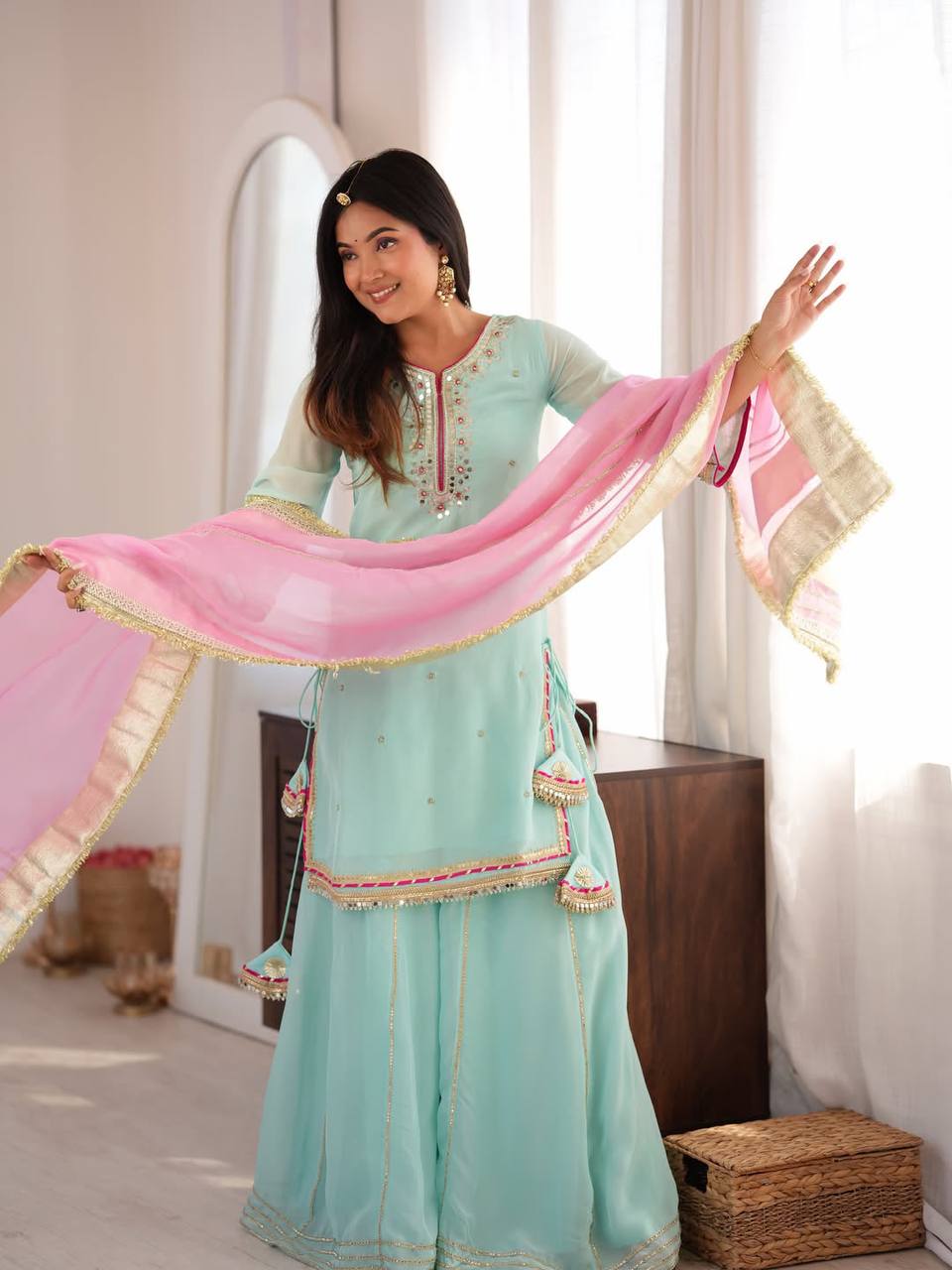
Jhumkas, pearl studs, small chandbalis or simple classic earrings work with both sarees and kurta sets. Two to six slim bangles are easier to manage than stacks that clink continuously during prayers. A small bindi can complement the outfit, while a maang tikka is optional rather than necessary for a home ceremony.
Use transfer-resistant lipstick and a light base if the ceremony takes place in warm weather. Hair tied in a low bun, braid or half-up style keeps strands away from the face during havan smoke. Avoid very long necklaces, loose tassels and oversized rings if you expect to help serve food or handle ritual items.
Footwear should be easy to remove and put back on because many Gujarati homes require guests to leave footwear near the entrance. Flat juttis, simple sandals or cushioned slip-ons are more practical than stilettos. Keep socks or foot covers in a bag if the floor may be cold or if you prefer additional hygiene after removing shoes.
How Can You Choose an Outfit by Season and Ceremony Timing?
Choose cotton and linen-cotton for hot daytime ceremonies, Chanderi or muslin for transitional weather, and soft silk for cooler months or more formal family gatherings. The duration of the ritual matters as much as the season because a three-hour havan demands more comfort than a brief blessing.
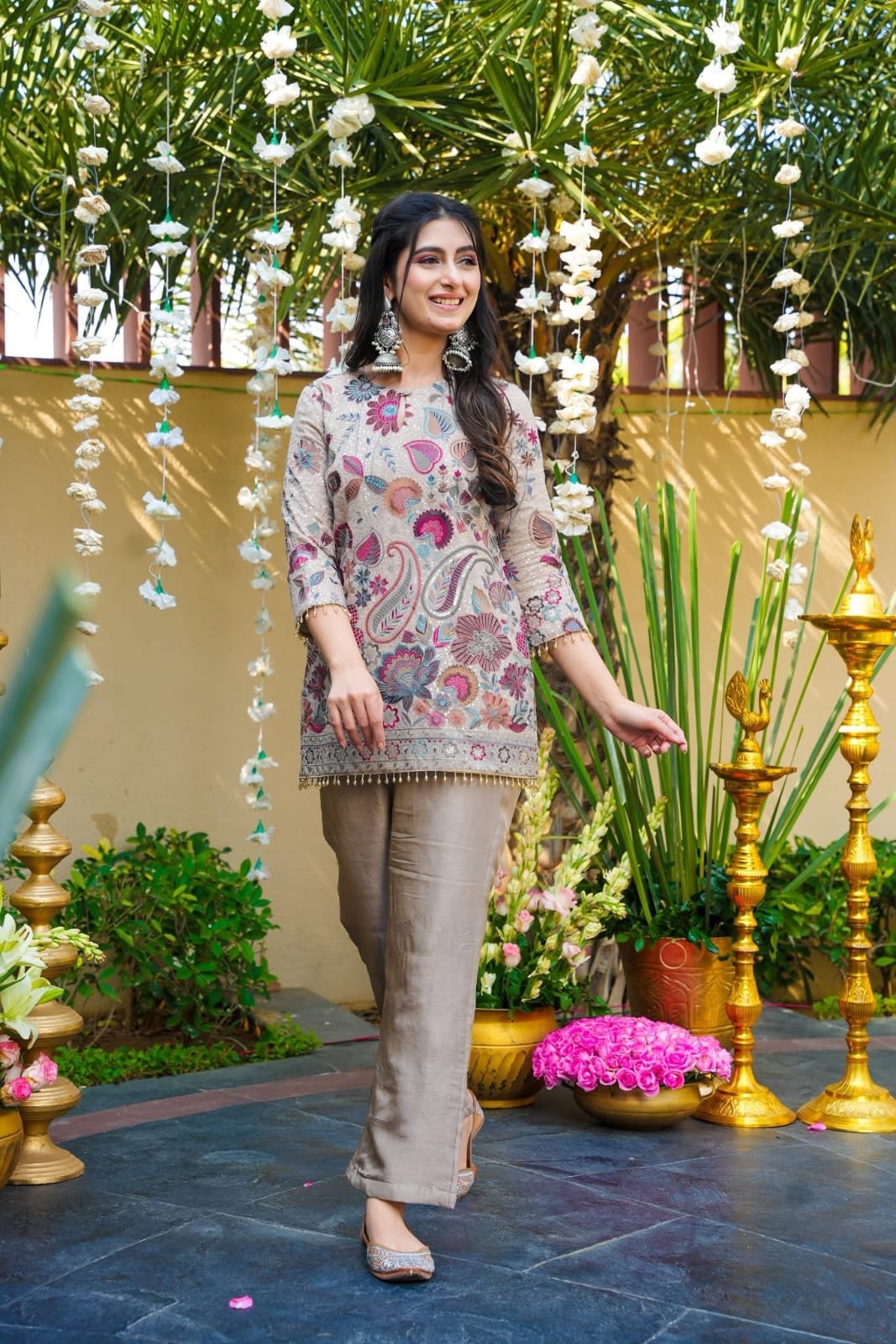
For summer, select light-coloured cotton, linen-cotton or muslin and avoid multiple synthetic layers. The Elegant Peach Linen Cotton Saree with Artistic Floral Print and the Mint Green Floral Cotton Saree with Woven Golden Edges Wear demonstrate how floral detail can make a breathable saree feel festive.
For winter, Banarasi soft silk can add warmth and ceremony without requiring heavy velvet or dense embroidery. The Maroon Banarasi Soft Silk Saree with Golden Zari Border gives a classic festive impression, while the Royal Plum Banarasi Soft Silk Saree With Golden Zari Border brings a deeper jewel-toned alternative.
For an evening Grah Shanti, deeper colours and modest zari can look balanced under indoor lighting. For a morning ritual, mustard, yellow, peach, mint green and soft pink tend to look fresh. Check whether the house has air-conditioning, outdoor seating or a crowded enclosed prayer area before choosing a thick fabric.
What Should You Avoid Wearing to a Gujarati Grah Shanti?
Avoid clothing that's unsafe near fire, difficult to sit in, excessively revealing, or so ornate that it competes with the family's ceremony. Practical restraint matters more than following a rigid list of forbidden garments.

- Avoid trailing hems, very long dupattas and unsecured pallu ends near a havan.
- Avoid slippery footwear that makes it difficult to stand after sitting on the floor.
- Avoid uncomfortable undergarments, stiff waistbands and fabrics that trap heat.
- Avoid excessive glitter or dense sequins if the invitation is for a simple family pooja.
- Avoid wearing a new outfit without testing the blouse fit, pleat placement and sitting comfort first.
- Avoid assuming that red, black, white or any other colour has the same meaning in every Gujarati family.
Try the complete outfit at least one day before the ceremony. Sit on the floor for 15 minutes, walk up and down stairs, raise both arms and check whether the blouse, dupatta or pallu shifts. This small test can reveal discomfort that a mirror doesn't show.
A Simple Checklist Before Leaving for the Ceremony
A successful Grah Shanti outfit should be comfortable, secure, modest and easy to remove at the entrance. A short preparation checklist prevents most wardrobe problems during a home pooja.
- Confirm whether the family has requested traditional clothing, a particular colour or head covering.
- Iron or steam the saree and test the blouse, petticoat and safety pins together.
- Carry two to four spare safety pins, a small stain-removal wipe and a hairpin.
- Choose flat footwear that can be removed quickly and worn again comfortably.
- Keep the pallu or dupatta long enough for prayer customs but short enough to stay away from the havan.
- Carry a light shawl or inner layer if the ceremony is in an air-conditioned room.
The most dependable answer to What to Wear to a Gujarati Grah Shanti Ceremony at Home is a neat saree or kurta set in a festive, breathable fabric, styled with secure details and modest accessories. Clothing that lets you sit, pray, receive blessings and participate in family moments comfortably will always serve the ceremony better than an outfit chosen only for photographs.
Questions About Dressing for a Gujarati Grah Shanti at Home
Can I wear a salwar suit to a Gujarati Grah Shanti ceremony?
Yes, a salwar suit is suitable for a Gujarati Grah Shanti when it has a modest neckline, comfortable length and a dupatta that can be secured. Cotton, Chanderi, muslin and lightly embroidered fabrics work particularly well for sitting and moving around the home.
Is a saree compulsory for a Gujarati Grah Shanti?
No, a saree is not compulsory unless the host family has specifically requested traditional saree dressing. A kurta set, salwar suit or modest ethnic outfit can be equally appropriate when it is neat, comfortable and suitable for the family's customs.
Which colour is best for a Gujarati home pooja?
Yellow, mustard, green, peach, pink, maroon and purple are generally festive choices for a Gujarati home pooja. Colour preferences vary by household, so ask the hosts if the family follows a specific tradition or has requested that guests avoid a particular shade.
Can I wear black to a Gujarati Grah Shanti ceremony?
Black may be acceptable in some contemporary Gujarati households but may not be preferred by more traditional families for an auspicious pooja. Ask the hosts beforehand or balance black with gold, green, yellow or another festive accent.
What jewellery should I wear to a Grah Shanti at home?
Small to medium earrings, a bindi, a fine chain and a few bangles are sufficient for most home Grah Shanti ceremonies. Avoid very heavy jewellery, loose tassels and oversized rings if you will sit on the floor or help with food and ritual arrangements.
What should I wear if the Grah Shanti includes a havan?
Wear fitted, breathable clothing with a securely pinned pallu or dupatta and avoid trailing fabric near the fire. Cotton, linen-cotton, muslin and lightweight silk are practical choices, while flat footwear helps you move safely around the ritual area.