What to buy when a teenager wants her first traditional jewellery set depends on more than colour or sparkle. The right set should be light enough for several hours, secure enough for dancing and photographs, versatile enough to pair with a kurta or lehenga, and reasonably priced while she is still discovering her personal style. A small coordinated set usually makes a better first purchase than a heavy bridal-style collection.
Traditional jewellery can mark a first Diwali outfit, a cousin's wedding, a school cultural programme or a Haldi ceremony. Teenagers also want a say in how they look, so the buying process works best when comfort, maintenance and personal preference are considered alongside age and occasion. The following guide explains what to choose, what to avoid and how to match jewellery with Indian ethnic wear.
What to Buy When a Teenager Wants Her First Traditional Jewellery Set: the essential pieces
A first traditional jewellery set should usually include one lightweight necklace, a pair of secure earrings and one optional accessory such as a bracelet, bangle or maang tikka. Three coordinated pieces create a complete look without requiring a teenager to wear every ornament at once.
A short necklace or adjustable chain is often more useful than a long, elaborate haar. A necklace measuring approximately 16 to 18 inches generally sits comfortably with a round-neck kurta, while an adjustable dori can work with higher or wider necklines. Teenagers who dislike tight neckwear may prefer a pendant or a slim choker with an extender.
Earrings deserve particular attention because uncomfortable earrings can ruin an entire event. Choose lightweight jhumkas, small chandbalis or stud-based drops with a broad, smooth backing. Earrings weighing roughly 3 to 7 grams per pair are usually easier to wear for a school function or family gathering than large layered designs.
A bracelet or two slim bangles adds colour without making the set look overly formal. A maang tikka should remain optional because hairstyle, forehead comfort and personal confidence vary considerably. A first set should feel like a group of pieces the teenager can mix, not a fixed costume that must always be worn together.
What to Buy When a Teenager Wants Her First Traditional Jewellery Set for comfort
Comfort comes from low weight, smooth edges, secure fastenings and materials that don't irritate the skin. A jewellery set can look delicate in a photograph and still become painful after two hours, so physical construction matters as much as appearance.
Check the weight and balance
Balanced earrings sit closer to the earlobe and pull less than long, front-heavy designs. A necklace with a flat back and evenly distributed stones is less likely to twist during movement. Bangles should slide over the hand without catching on embroidery, zari or loose threads.
Ask the wearer to keep the earrings on for ten minutes before an event. That simple test can reveal pressure, itching or an overly tight backing. For a teenager with newly pierced ears, choose hypoallergenic materials where possible and avoid wearing unfamiliar plated jewellery for an entire day without a trial.
Look for practical fastenings
Stud backs, screw backs and secure push backs are safer for active teenagers than very thin hooks. A necklace with a lobster clasp or a well-made hook-and-eye closure is easier to fasten than a tiny heritage clasp. Adjustable chains are especially useful when the same necklace will be worn with a kurta, an anarkali and a saree blouse.
Comfort also includes temperature and movement. Heavy metal collars can feel warm at an outdoor wedding, while dangling earrings may catch in long hair or a dupatta. A teenager who will dance, travel or move between indoor and outdoor spaces should choose fewer, lighter pieces.
What to Buy When a Teenager Wants Her First Traditional Jewellery Set in different materials
Gold-plated brass, alloy, sterling silver, oxidised silver and imitation kundan are common choices, and each suits a different budget and care routine. A first traditional jewellery set doesn't need to be made from solid gold to look festive or feel meaningful.
Gold-tone plated jewellery creates a warm match with zari, maroon, emerald green, rust orange and rani pink clothing. Plating can fade when exposed to sweat, perfume, water or friction, so gold-tone pieces should be removed before bathing and stored in a dry pouch. Brass and alloy pieces may darken over time, but careful storage can slow the change.
Oxidised silver finishes work particularly well with cotton kurtas, mirror work, indigo, black, ivory and earthy colours. Oxidised jhumkas are often forgiving because their intentionally aged finish doesn't depend on a perfectly bright surface. Darker metal also gives a teenager a less formal alternative to yellow-gold jewellery.
Sterling silver costs more than most fashion jewellery but can become a durable first keepsake. Silver should be kept away from humidity and stored in an anti-tarnish pouch. If a teenager has sensitive skin, nickel-free or sterling silver options are worth prioritising, although the product description should be checked rather than assumed.
Artificial kundan, meenakari and zircon-style stones offer colour and shine at a lower price than precious gemstones. The most important quality check is whether stones are firmly set and whether the reverse side has rough adhesive or exposed sharp edges. Smooth finishing makes a greater difference to daily comfort than a higher stone count.
What to Buy When a Teenager Wants Her First Traditional Jewellery Set to match ethnic wear
Jewellery should repeat one or two colours from the outfit while leaving enough visual space for embroidery, zari or mirror work. Matching every detail exactly can make a young outfit look heavy, whereas a restrained colour connection looks more current.
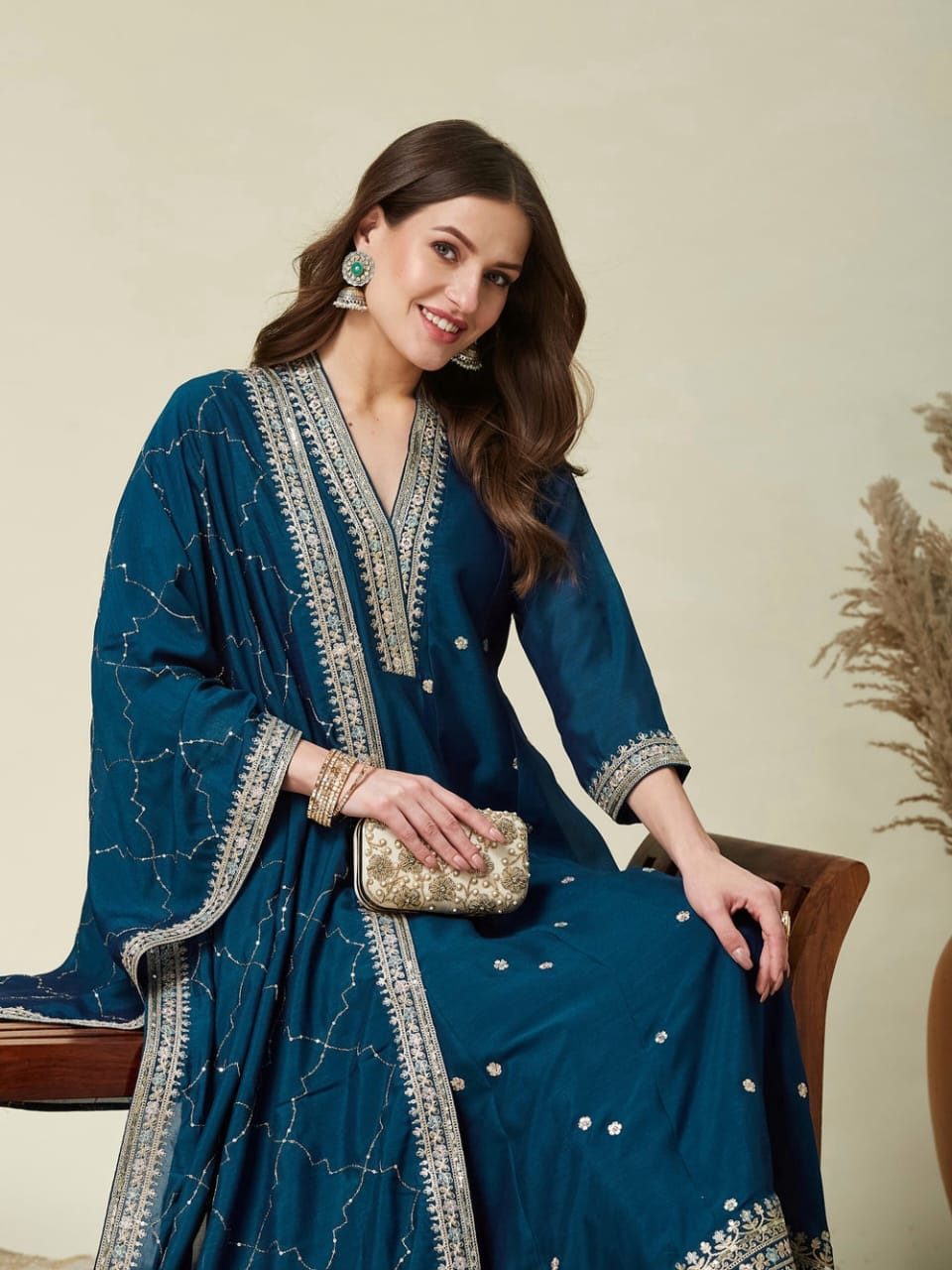
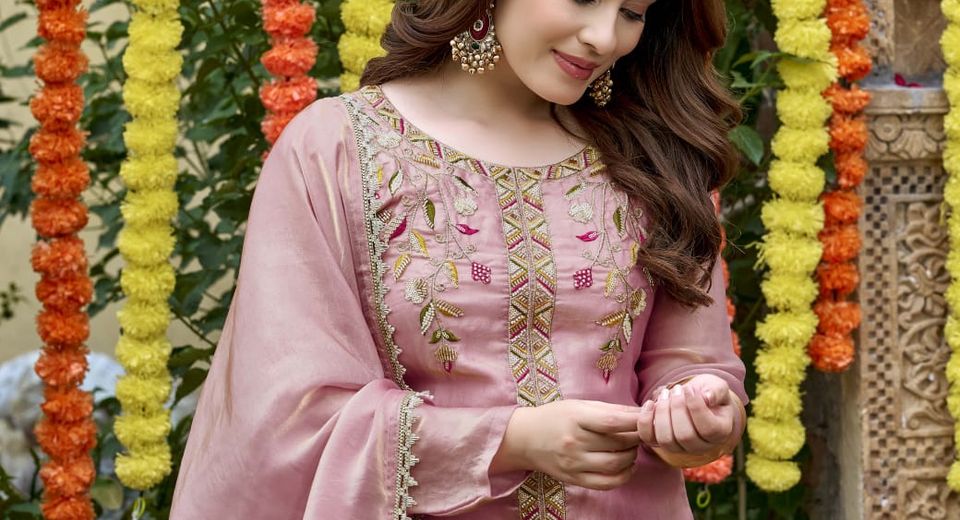
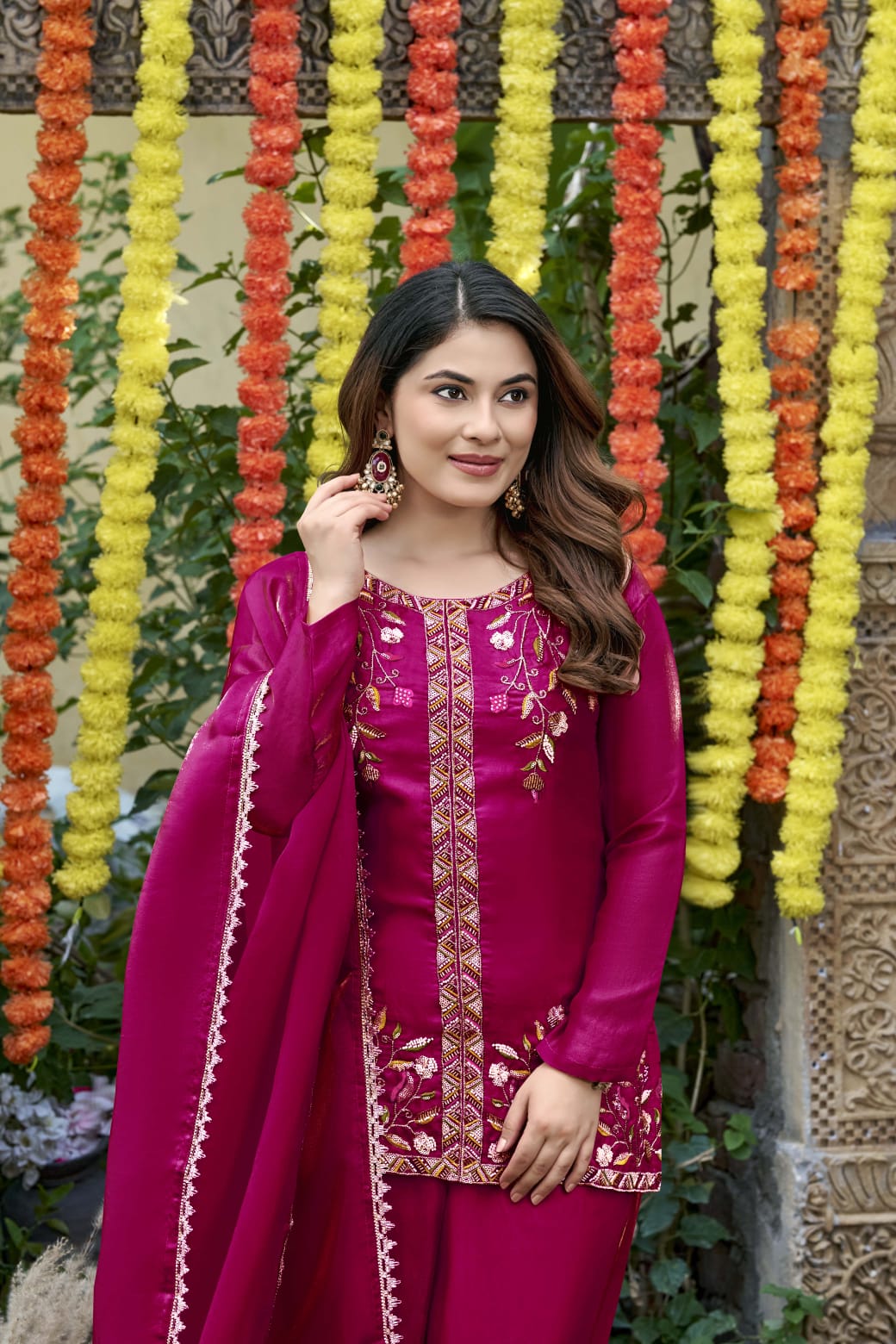
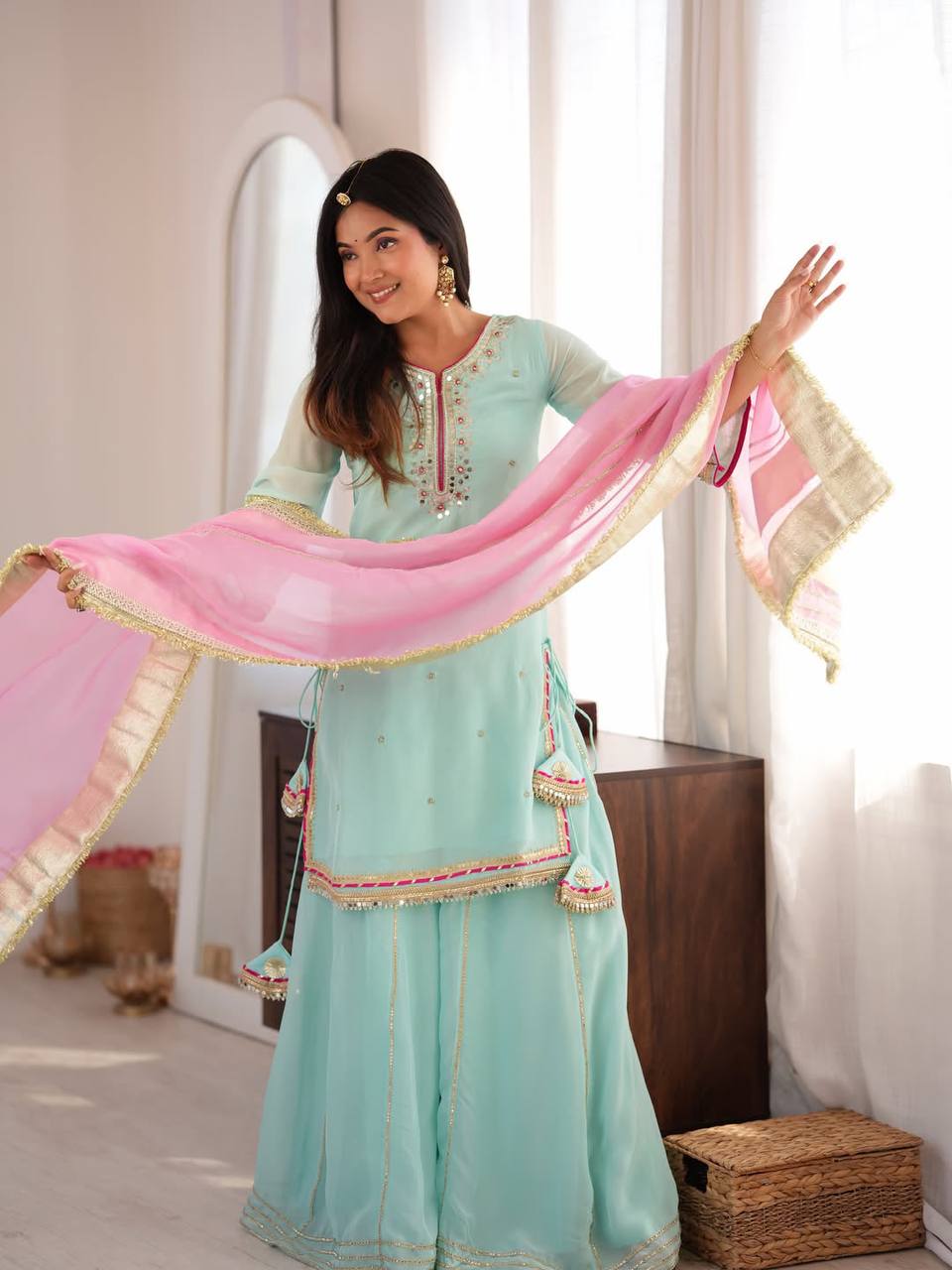
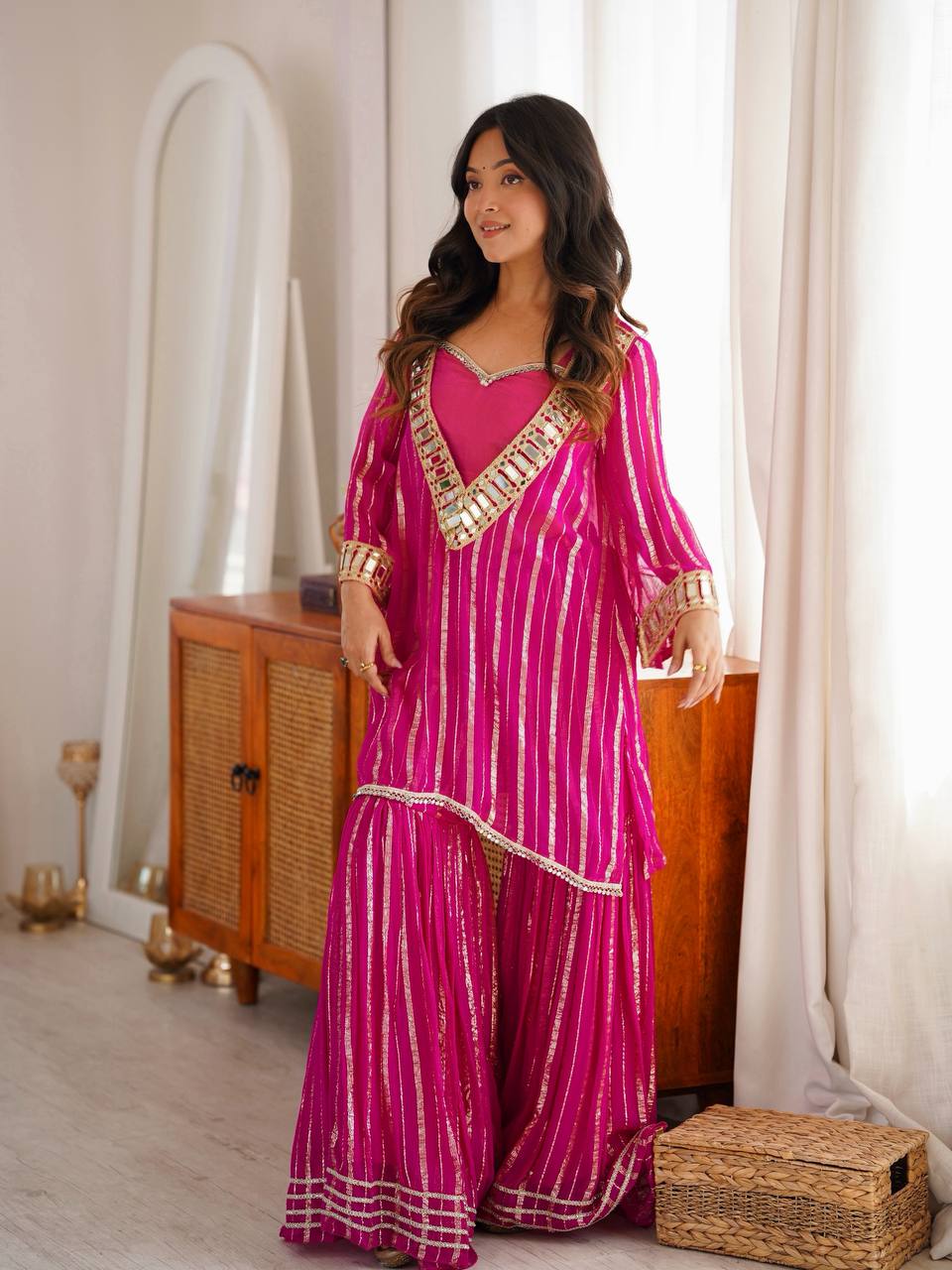
Soft pink outfits pair well with pearl, rose-gold, kundan or small gold-tone pieces. Dusty Pink Frendy Silk Embroidered Sarara Suit with Dupatta can take a delicate necklace and small jhumkas because the fabric and embroidery already provide texture. Rani Pink Frendy Silk Embroidered Sarara Suit Set with Dupatta can support slightly brighter kundan or gold-tone accents, especially for a wedding celebration.
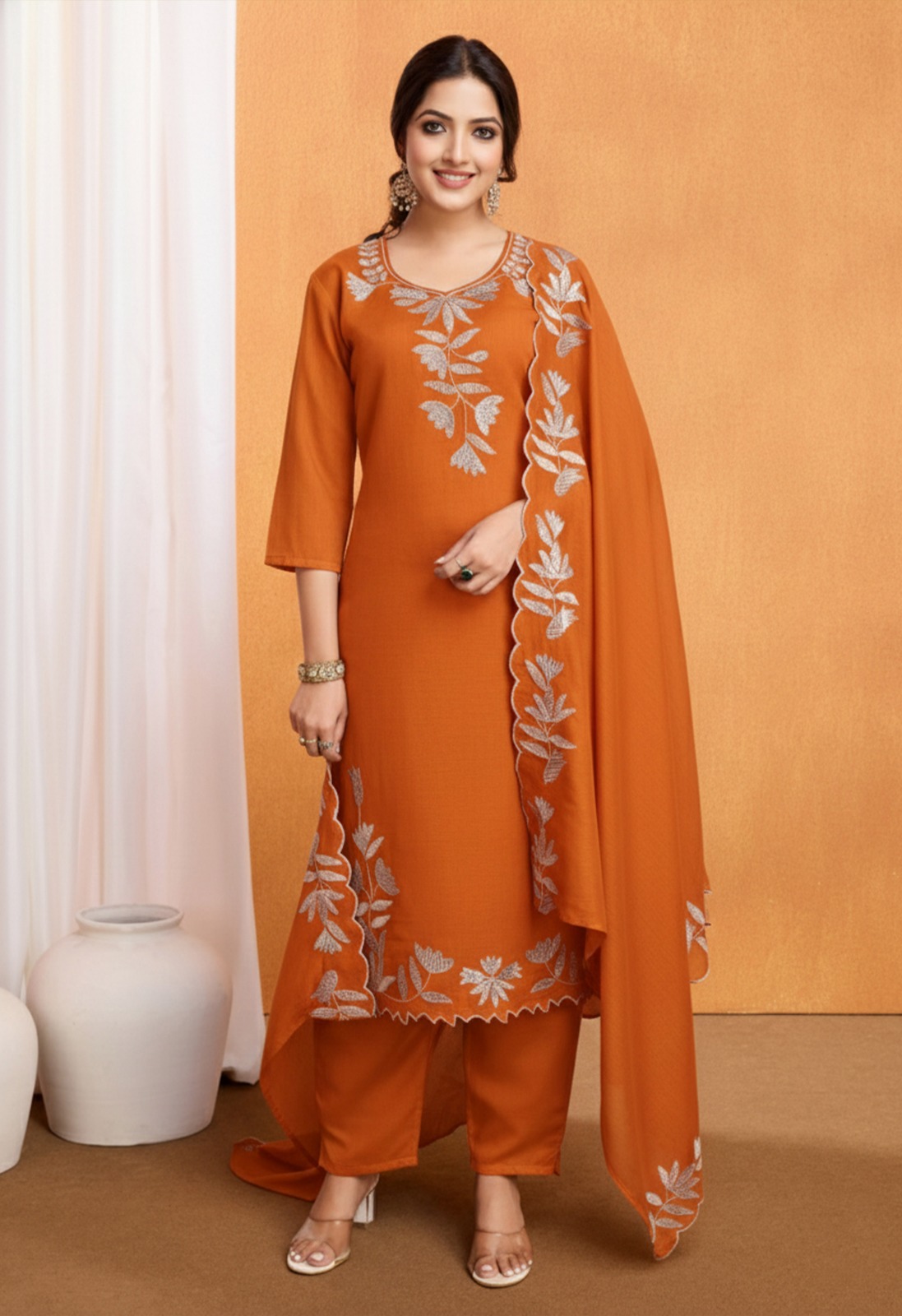
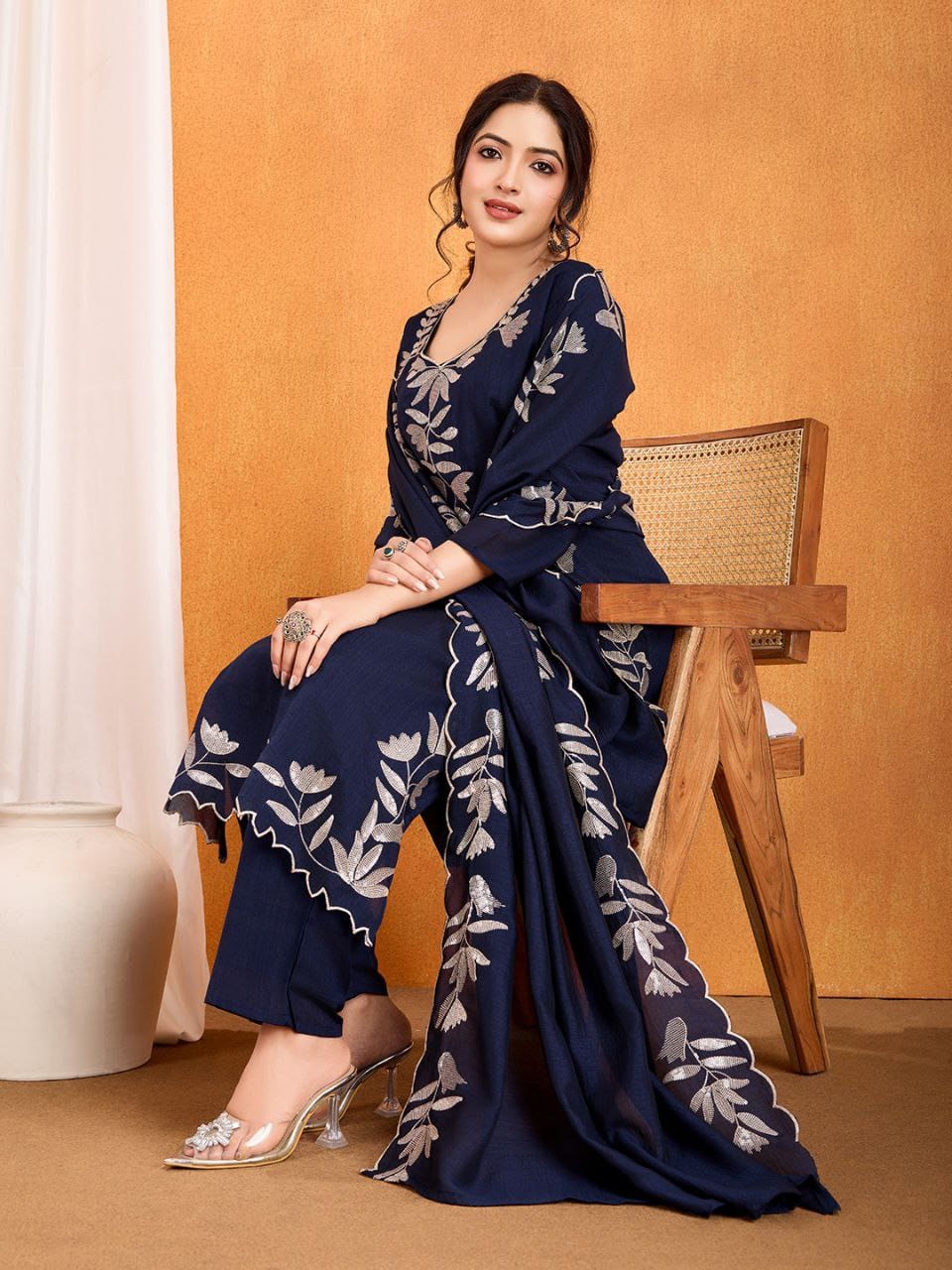
Orange and rust outfits benefit from antique gold, pearl, green stone or unpolished kundan details. Ruksha Orange Vichitra Silk Embroidered Kurta Set with Dupatta doesn't require a large necklace; medium jhumkas and a slim bracelet can keep the embroidered kurta visible. Rust Orange Vichitra Silk Embroidered Kurta Pant Set works well with earthy gold, oxidised accents or a small pendant for a less ceremonial look.
Rust Orange Embroidered Vichitra Silk Kurta Set Online can be styled with antique-finish earrings and one narrow bangle when the teenager wants a coordinated look without a full necklace. A warm rust palette also works with green stones, which create contrast without competing with the embroidery.
Emerald green clothing creates a strong contrast with antique gold, ruby pink, pearl and clear stones. Emerald Green Vichitra Silk Embroidered Kurta Set with Dupatta can be styled with a gold-tone necklace for a classic family function or with simple pearl drops for a more understated appearance.
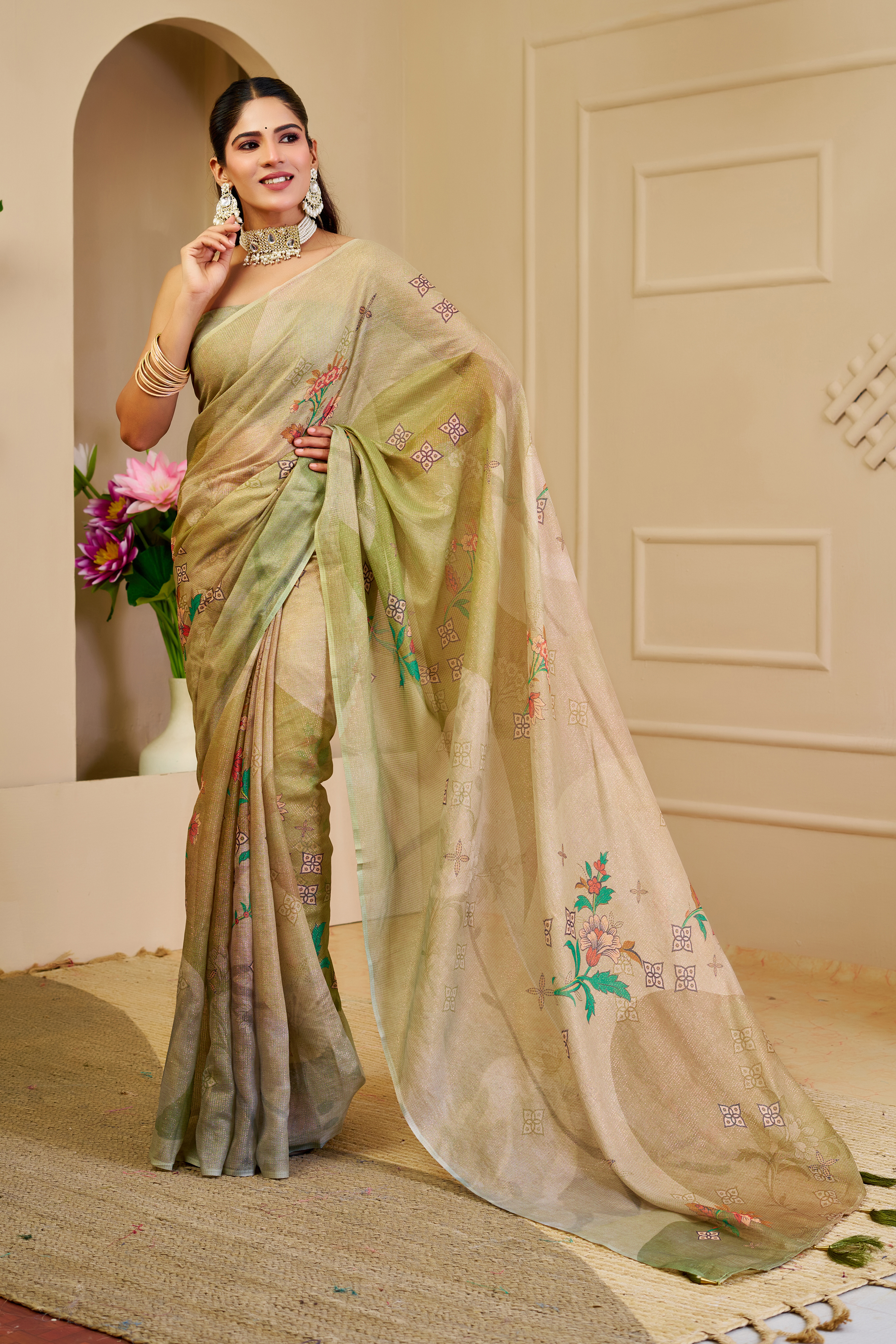
Mirror work and zari already reflect light, so jewellery should be scaled to the surface detail. Pink Mirror Work Zari Sharara Suit Set Online - Varnavi illustrates why large necklaces are not always necessary: the outfit can carry the sparkle while small chandbalis or a single bracelet complete the styling.
What to Buy When a Teenager Wants Her First Traditional Jewellery Set on a sensible budget
A sensible first-set budget is usually the cost of a few well-made lightweight pieces rather than the cost of a full ceremonial jewellery box. Fashion jewellery sets commonly sit in an entry-level range, while sterling silver, better plating and hand-finished pieces cost more; the correct amount depends on wear frequency, material and family budget.
Price should be judged by construction rather than by the number of pieces in the box. A set with a secure clasp, clean stone settings and comfortable earring backs may provide more value than a ten-piece set containing brittle bangles and oversized ornaments. Teenagers often get more use from two reliable pieces than from a large set worn once.
For a first purchase, divide the budget between one adaptable pair of earrings and one adjustable necklace. Add bangles or a maang tikka only if the teenager genuinely expects to wear them. A flexible purchase can work with a salwar suit, sharara, palazzo suit and lehenga, increasing the number of occasions on which the jewellery earns its place.
Riddhi Pink Frendy Silk Embroidered Palazzo Suit Set, for example, can be styled with the same small gold-tone earrings used with a festive kurta. Reusing jewellery across silhouettes helps a teenager build a personal wardrobe instead of treating traditional accessories as single-event items.
What to Buy When a Teenager Wants Her First Traditional Jewellery Set without common mistakes
Avoid jewellery that's too heavy, difficult to fasten, sharply finished or dependent on one highly specific outfit. A dramatic bridal set may look impressive in a display box but often remains unused after one wedding.
- Excessive weight: Large jhumkas, thick chokers and layered necklaces can cause soreness and headaches during long events.
- Unprotected edges: Rough metal, exposed wire and loose stone settings can catch on dupattas and scratch skin.
- Unclear materials: Missing information about plating or metal composition makes it harder to manage allergies and care expectations.
- Very delicate chains: Fine chains can break when pulled by hair, dupattas or bags, particularly during crowded celebrations.
- Too many colours: Multicoloured stones may be difficult to coordinate with more than one outfit.
- One-use styling: A set designed only for a heavily embroidered lehenga may not work with a simple kurta or palazzo suit.
Storage is part of the buying decision. A soft-lined box or separate zip pouch prevents stones from scratching one another, while small hooks or compartments stop chains from knotting. Jewellery should be put away only after perspiration, perfume and makeup residue have been gently removed with a dry, soft cloth.
Keep imitation jewellery away from bathrooms, windowsills and damp wardrobes. Do not use toothpaste, abrasive powders or strong chemical cleaners on plated surfaces. For costume pieces, a dry wipe and careful storage are safer than aggressive polishing.
How to make What to Buy When a Teenager Wants Her First Traditional Jewellery Set a personal choice
The teenager should make the final choice after trying the jewellery with the outfit and moving around in it. Personal preference predicts repeat wear better than a relative's idea of what looks traditionally suitable.
Ask practical questions before buying: Does she prefer gold-tone or oxidised finishes? Can she wear dangling earrings for four hours? Does she want a necklace, or would she rather wear statement earrings? Will the set work with clothes already in her wardrobe?
A first set can also introduce cultural details without requiring a formal bridal look. Kundan, meenakari, jhumka, chandbali and temple-inspired motifs each carry a distinct visual language, but a teenager can begin with one motif and learn how to style it gradually. The result should feel connected to Indian dress while still reflecting her age and personality.
The strongest purchase is usually a small, comfortable set with an adjustable necklace, adaptable earrings and one optional accent. Such a set can accompany a Haldi ceremony, Diwali gathering, family dinner or school event without looking exactly the same each time. That repeat usefulness is the clearest sign that the first jewellery purchase was chosen well.
Common Questions About a Teenager’s First Traditional Jewellery Set
What jewellery should a teenage girl wear with her first traditional outfit?
A teenage girl can start with lightweight earrings, an adjustable necklace and one slim bracelet or bangle. The jewellery should repeat one colour from the outfit and remain comfortable for the full event.
How heavy should a teenager’s first traditional jewellery set be?
A teenager's first set should be lightweight, especially around the ears and neck. Earrings weighing approximately 3 to 7 grams per pair are generally easier to wear for several hours than large, front-heavy designs.
Is imitation jewellery suitable for a teenager’s first traditional jewellery set?
Imitation jewellery is suitable when the pieces have secure fastenings, smooth edges and clearly described materials. Gold-plated alloy, artificial kundan and oxidised finishes can provide festive colour at a lower price than precious jewellery.
What jewellery matches a pink salwar suit or sharara?
Pearl, rose-gold, kundan and delicate gold-tone jewellery generally match pink salwar suits and shararas. Small jhumkas and a short necklace are often enough when the outfit already includes embroidery, zari or mirror work.
How can a teenager avoid jewellery allergies?
A teenager can reduce allergy risk by choosing nickel-free or sterling silver pieces where possible and testing unfamiliar jewellery before the event. The metal composition should be checked in the product information instead of being assumed from the colour or finish.
How should a first traditional jewellery set be stored?
A first traditional jewellery set should be wiped with a dry, soft cloth and stored in a separate soft-lined pouch or box. Keep plated, brass and imitation pieces away from water, perfume, humidity and direct sunlight to reduce tarnishing and fading.