Wedding Guest Clothing When the Ceremony Begins at Dawn needs a different kind of planning from an evening reception outfit. Cool air, low light, early travel and a long schedule can make heavy embellishment or delicate footwear uncomfortable before breakfast. The most reliable approach combines a breathable base, one practical warm layer, secure draping and colour that photographs well in soft morning light.
A dawn ceremony can begin between 5:00 and 7:00 a.m., depending on the wedding tradition, season and venue. Guests may move from an outdoor mandap to a dining area, then remain dressed for photographs or a later reception. Choosing clothing for the full temperature range, rather than only the ceremony, keeps the outfit elegant and wearable.
Wedding Guest Clothing When the Ceremony Begins at Dawn and the Weather Is Cool
A dawn wedding normally exposes guests to cooler temperatures, low light and a longer stretch of wear than a single evening function. A comfortable outfit therefore needs warmth, easy movement and enough visible definition to look finished before sufficient daylight arrives.
Outdoor lawns, temple courtyards and open-air wedding venues can feel noticeably colder before sunrise, especially in northern India during winter. Even in warmer regions, early morning humidity can make silk or synthetic layers feel clammy. A saree or sharara with a cotton-rich base, a lined blouse and a light shawl gives more control than a heavily layered outfit that can't be adjusted.
Low light also changes colour perception. Deep black, burgundy and navy can appear flatter in photographs taken before sunrise, while dusty rose, magenta, sky blue, ivory and olive green retain visible colour. Metallic zari and sequins catch the first available light, but excessive sparkle can look harsh once the sun rises. Balance is more useful than maximum shine.
The wedding timeline matters as well. A ceremony may involve standing, sitting cross-legged, walking across grass and greeting several relatives. A secure dupatta, a petticoat with a firm waistband and low or block heels are functional choices, not compromises in style.
Wedding Guest Clothing When the Ceremony Begins at Dawn: Choosing the Right Fabric
Natural or cotton-blend fabrics with moderate structure are usually the most comfortable choices for a dawn ceremony. Linen cotton, cotton, Chanderi, lightweight silk and breathable Chinon can all work when the garment has a suitable lining and the weather is considered.

Which fabrics suit cool or dry weather?
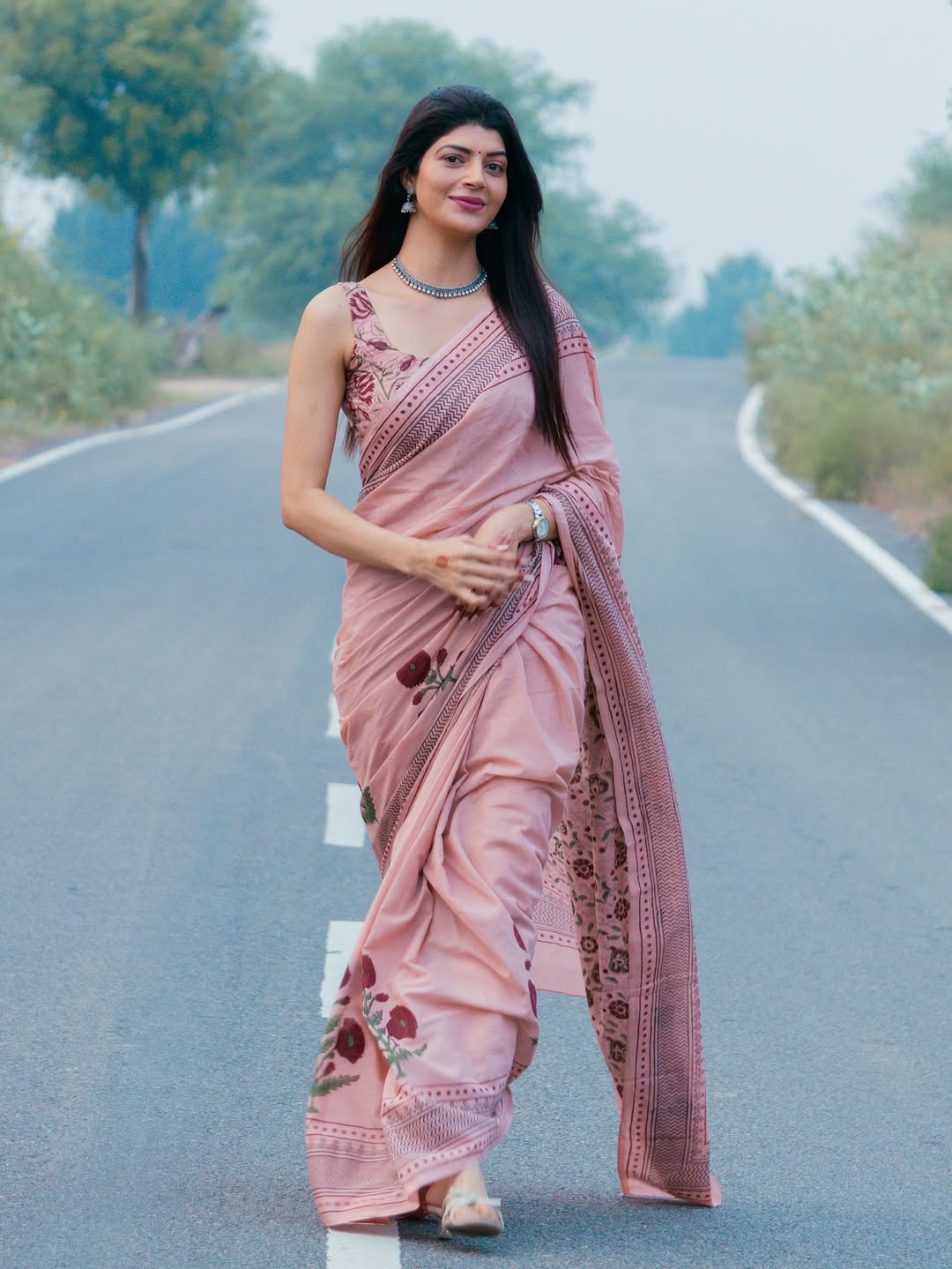
Linen cotton and cotton provide warmth without trapping as much heat as thick polyester. Linen cotton sarees also hold a crisp pleat, which is useful when guests have a long commute before the ceremony. Dusty Rose Floral Print Linen Cotton Saree with Maroon Border illustrates how a structured border can make a breathable fabric feel dressed up for a formal mandap.
Chanderi offers a lighter, more translucent finish and works well with a full-sleeved blouse or a fine shawl in winter. Banarasi silk is visually rich but can feel heavy when paired with a dense brocade blouse, so a lighter Banarasi silk saree with a simple blouse is more practical for an early start.
Which fabrics suit humid or warmer weather?
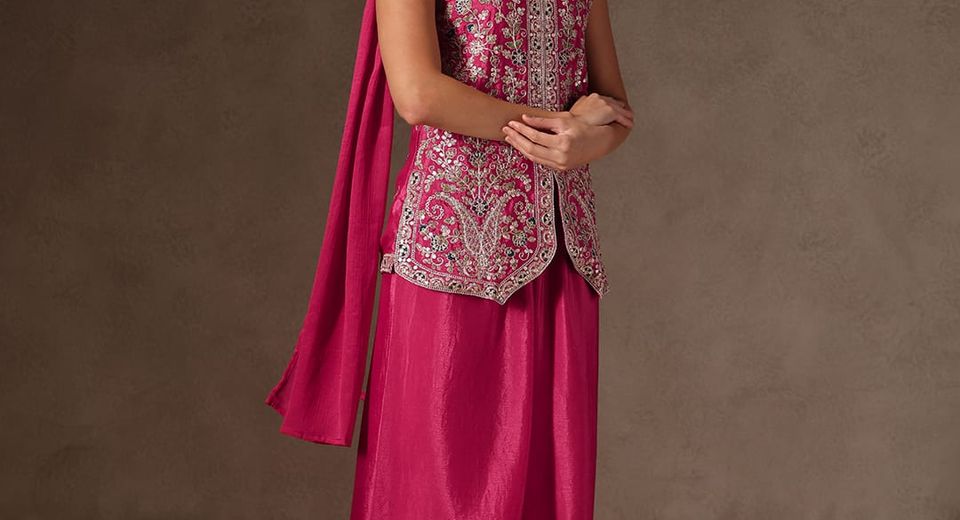
Cotton linen, lightweight cotton and lightly lined Chinon are useful in humid conditions because they allow more airflow than velvet or multiple synthetic layers. Magenta Chinon Sharara Set with Heavy Floral Embroidery for Women can suit a festive morning when the kurta lining is breathable and the dupatta isn't wrapped tightly around the neck.
Silk blends can be comfortable when the silk content is moderate and the garment isn't padded heavily. Kanjeevaram silk is magnificent for a formal wedding, but its weight and stiffness make it better suited to a shorter ceremony or an indoor venue than a long outdoor morning schedule.
Which fabrics are less practical?
Velvet, thick brocade, multiple stiff can-can layers and dense polyester lining can become uncomfortable as the temperature rises. Very slippery satin can also make saree pleats shift during movement. Guests who prefer a glossy finish should use it in a blouse, border or dupatta rather than across every garment.
Wedding Guest Clothing When the Ceremony Begins at Dawn: Colours for Morning Light
Soft jewel tones, muted florals and medium-depth colours generally photograph best during a dawn ceremony. Dusty rose, magenta, sky blue, olive green, ivory and warm maroon provide definition without appearing overly dramatic in pale light.
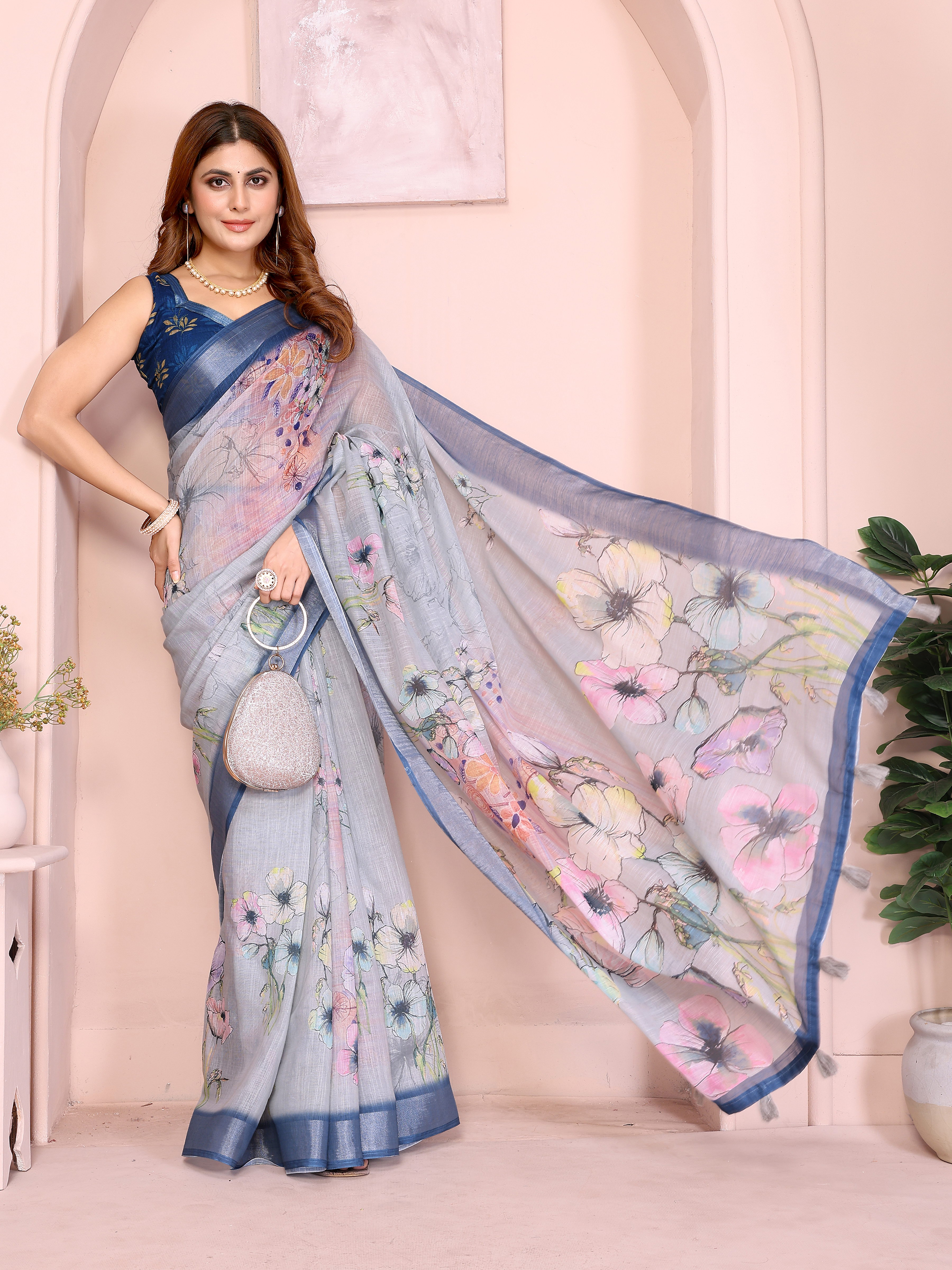
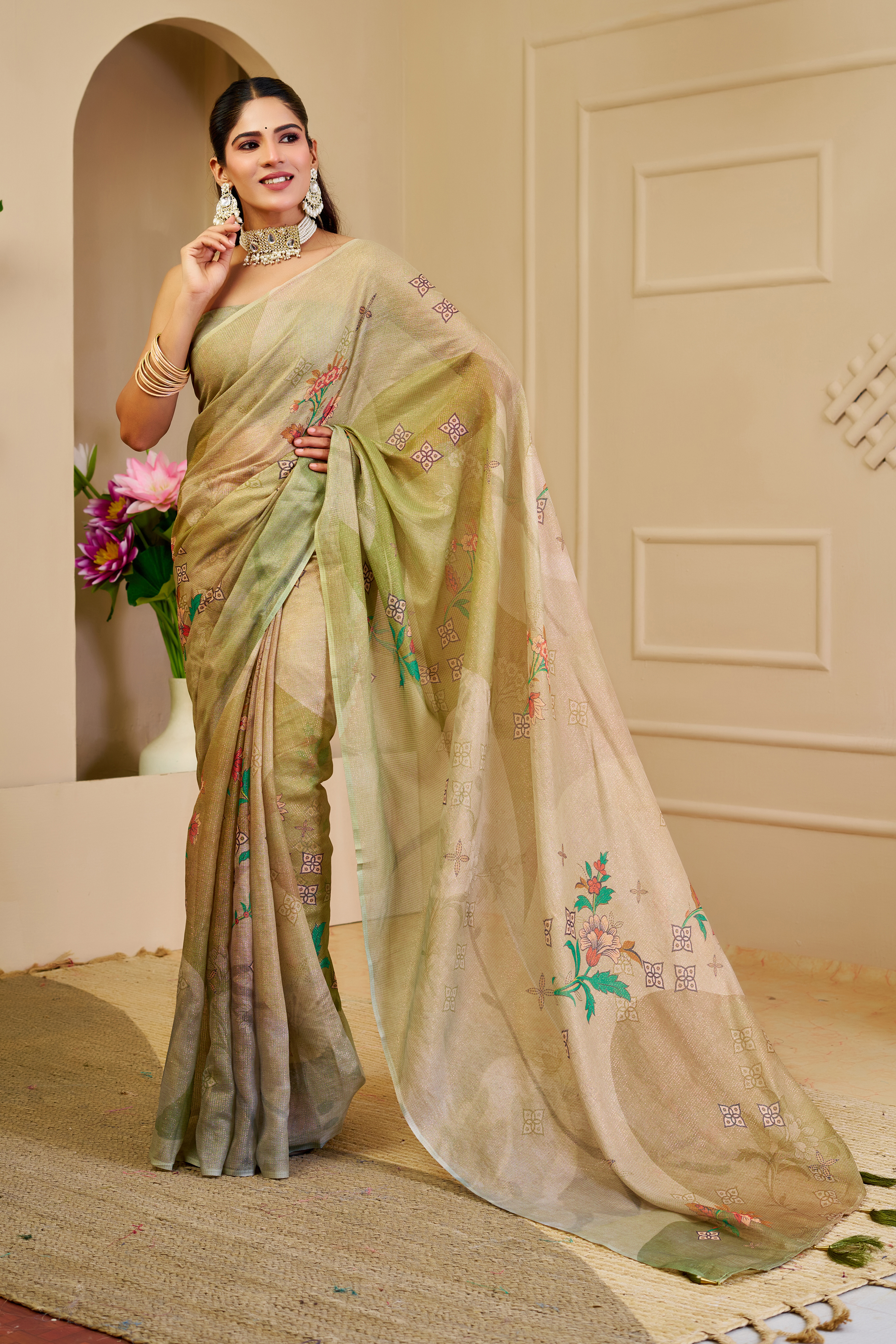
Pastels are especially effective when they include a visible print, border or embroidery detail. Dusty Rose Pink Cotton Linen Saree with White Digital Prints has enough tonal contrast to remain visible in early photographs, while the print keeps the look lighter than a solid dark saree. Pastel Linen Cotton Floral Print Saree with Designer Blouse gives a similar balance when the blouse supplies structure and the floral print prevents the outfit from looking washed out.
White and ivory need considered styling because camera exposure can make pale clothing lose detail. White Linen Cotton Peacock Floral Printed Saree with Blouse gains definition from its peacock motif, so it can work for a morning ceremony when paired with a coloured bangle stack, a defined lip or a blouse with a contrasting edge.
Green and blue are strong choices for outdoor venues because they complement grass, foliage and cool morning skies. Olive Green Chinon Sharara Set with Sequin Embroidery brings depth without relying on black, while Sky Blue Linen Cotton Floral Sarees with Printed Cow Motifs introduces a softer pastoral feel for a daytime wedding.
Bright red, neon shades and very dark monochrome outfits are not automatically wrong, but they require more care in sunrise light. A red outfit may dominate group photographs, while black can absorb detail. If a deep colour is preferred, add a lighter dupatta, antique zari or a printed blouse to create separation.
Wedding Guest Clothing When the Ceremony Begins at Dawn: Saree or Sharara?
A saree is ideal for guests who want a classic silhouette and can secure the drape, while a sharara is often easier for walking, sitting and moving between early-morning venue spaces. The right choice depends on the ceremony length, weather and amount of travel involved.
When does a saree make more sense?
A linen cotton saree is practical when the venue is warm, the guest wants a relatively light outfit and photographs are important. A saree also allows useful adjustments: the pallu can cover the shoulders during the cooler hour and later be shifted into a more relaxed drape. Cotton linen is less likely than fluid satin to move out of place when pleats are pinned correctly.
Pin the first three or four pleats together from the inside, secure the pallu near the shoulder and carry two spare safety pins in a small pouch. A well-fitted blouse is more important than elaborate jewellery because loose armholes and slipping straps become difficult to correct outdoors.
When is a sharara more practical?
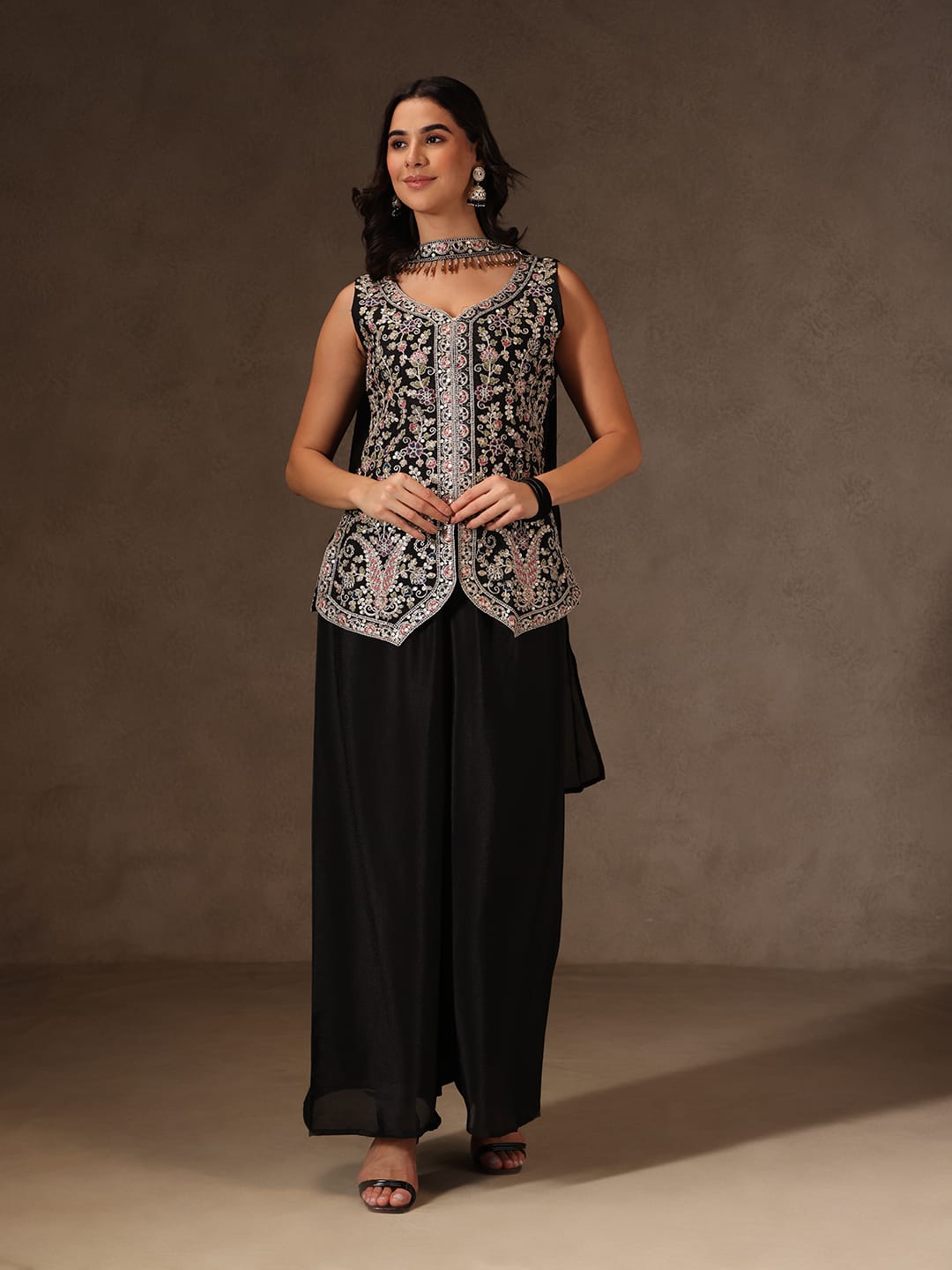
A sharara is a strong option when the guest expects substantial walking, wants more legroom or prefers not to manage saree pleats before sunrise. Black Chinon Sharara Set with Multicolour Embroidery for Women gives a dark base enough visual interest for photographs, while the embroidery can be balanced with restrained jewellery.
Sharara trousers should allow a full seated position without pulling at the waist or knees. Check the waistband, lining and trouser hem at home before the event. A long kurta should end above the widest part of the sharara flare or fall cleanly over it; an awkward stopping point can make the silhouette look shorter.
For a festive but softer result, Olive Green Chinon Sharara Set with Sequin Embroidery can be paired with gold-toned earrings and a lightweight dupatta. Heavy earrings are best tested with the outfit in advance because early travel and a long ceremony can make them uncomfortable.
Wedding Guest Clothing When the Ceremony Begins at Dawn: Layering Without Bulk
A fine shawl, lined blouse, full sleeves or a lightweight jacket provides enough dawn warmth without overwhelming Indian occasion wear. The best layer can be removed or folded into a handbag once the sun rises.
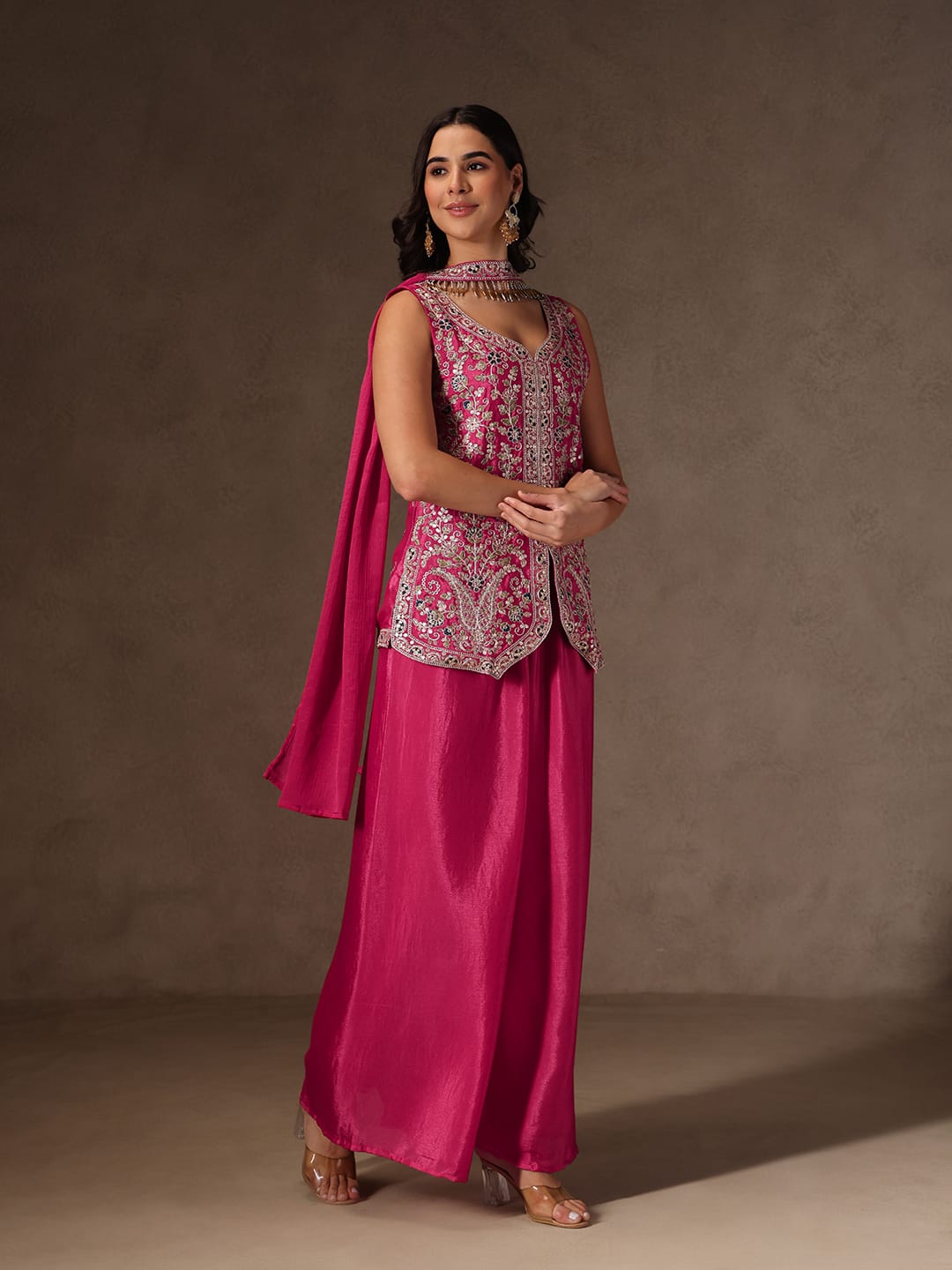
Choose a shawl in a colour already present in the outfit. A maroon shawl can repeat the border of Dusty Rose Floral Print Linen Cotton Saree with Maroon Border, while a muted gold layer can connect zari work to the rest of the accessories. Avoid a bulky winter sweater over a saree because the thickness can distort the pleats and blouse neckline.
A full-sleeved blouse works especially well for outdoor ceremonies. Sleeves made from the same fabric as the saree create a streamlined look, while a slightly contrasting fabric adds interest. Three-quarter sleeves are often easier for eating, applying makeup and adjusting jewellery than very wide cuffs.
For shararas, use the dupatta as the main adjustable layer. Drape the dupatta over both shoulders for the coldest part of the morning, then move it to one shoulder after the ceremony. A small brooch or hidden pin at the shoulder prevents repeated adjustment without making the drape look rigid.
Practical details beneath the outfit also protect comfort. Wear a slip or camisole that doesn't show at the neckline, choose seamless or low-profile undergarments for fitted garments and carry a compact scarf if the venue is expected to be windy. These details protect comfort while leaving the visible styling polished.
Wedding Guest Clothing When the Ceremony Begins at Dawn: Footwear and Accessories
Low block heels, embellished flats and cushioned sandals are safer choices than narrow stilettos for a dawn wedding. Early ceremonies often involve grass, uneven stone, temple steps and prolonged standing before guests reach a seated area.
Block heels between 1.5 and 2.5 inches provide height without placing excessive pressure on the forefoot. Guests wearing new footwear should walk in the shoes for at least 30 minutes at home and carry blister plasters. A pair of foldable flats can be useful for travel, but they should coordinate with the outfit rather than look like an emergency replacement.
Jewellery should support the colour and neckline instead of competing with embroidery. A printed saree can take a pair of jhumkas and a slim bangle stack, while a heavily embroidered sharara may need only earrings and a ring. Antique gold works with maroon, olive green and magenta; silver or pearl accents suit sky blue, white and dusty rose.
Makeup for sunrise photography benefits from defined eyes, a softly coloured lip and controlled shine. Dewy products can reflect unexpected light, especially in outdoor photographs, so a small setting powder or blotting paper is useful. A compact pouch should also hold safety pins, hairpins, tissues and a stain-removal wipe.
Wedding Guest Clothing When the Ceremony Begins at Dawn: A Preparation Checklist
The most dependable dawn-wedding outfit is tested from head to toe before the event. A short trial reveals whether the blouse restricts the arms, the saree pleats stay secure, the sharara waistband digs in or the footwear slips.

Check the local temperature for the ceremony hour and the expected temperature after sunrise.
Wear the complete outfit at home, including the blouse, petticoat, dupatta, jewellery and shoes.
Sit on a low chair or cross-legged on the floor for five minutes to test comfort and coverage.
Walk up and down a staircase or across an uneven surface to check the hem and footwear.
Take one indoor photograph and one outdoor photograph with a phone flash turned off.
Pack two safety pins, a hairpin, tissues, blister plasters, lip colour and a light layer.
Travel time should influence the final choice. A guest leaving home at 3:30 a.m. May need a simpler drape, a shawl and a breakfast-friendly blouse, while a guest staying near the venue can manage a more elaborate saree arrangement. Comfort during the journey often determines how fresh the outfit looks at the ceremony.
For a reliable final formula, select a breathable saree or sharara, add one removable warm layer, use secure footwear and choose a colour with enough contrast for low-light photographs. That combination keeps the outfit festive from the first ritual through the brighter, warmer hours that follow.
Common Questions About Dressing for a Dawn Wedding
What should I wear to an Indian wedding that starts at dawn?
Choose a breathable saree or sharara in linen cotton, cotton, Chanderi or lightweight Chinon, then add a removable shawl or full-sleeved blouse. Low block heels, secure draping and medium-depth colours make the outfit more comfortable and visible in early light.
Are pastels suitable for an early morning wedding?
Pastels are suitable when they include a print, border or embroidery that creates contrast. Dusty rose, sky blue, ivory and soft green photograph more clearly when paired with defined jewellery or a slightly deeper blouse.
Is a saree or sharara easier to wear for a dawn ceremony?
A sharara is usually easier for extensive walking and sitting, while a saree offers more draping flexibility and a classic formal silhouette. Secure saree pleats and a pinned pallu can make a linen cotton saree equally practical.
How can I stay warm at an outdoor morning wedding without ruining my outfit?
Use a fine shawl, a full-sleeved blouse, a lightweight jacket or a dupatta worn over both shoulders. Choose a layer that repeats a colour from the saree or sharara so the added warmth looks intentional.
What footwear is best for a wedding ceremony before sunrise?
Cushioned flats, embellished sandals and block heels between 1.5 and 2.5 inches are practical choices. Avoid untested stilettos when the venue includes grass, stone paths, steps or long periods of standing.
How should I prepare my outfit for a dawn wedding?
Try on the complete outfit at least one day beforehand and test sitting, walking, climbing stairs and taking photographs. Pack spare safety pins, tissues, blister plasters, hairpins and a light layer for changes in temperature.