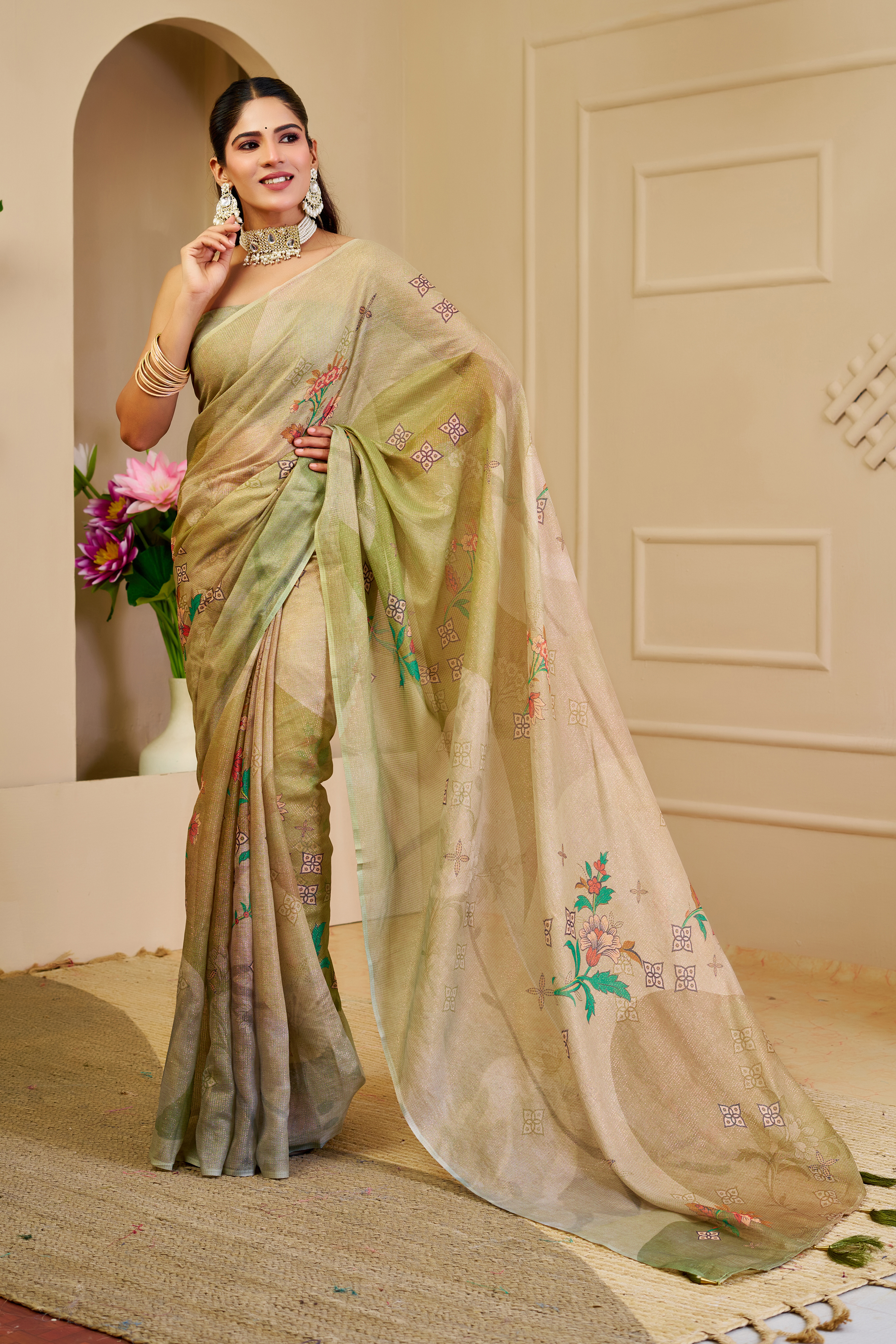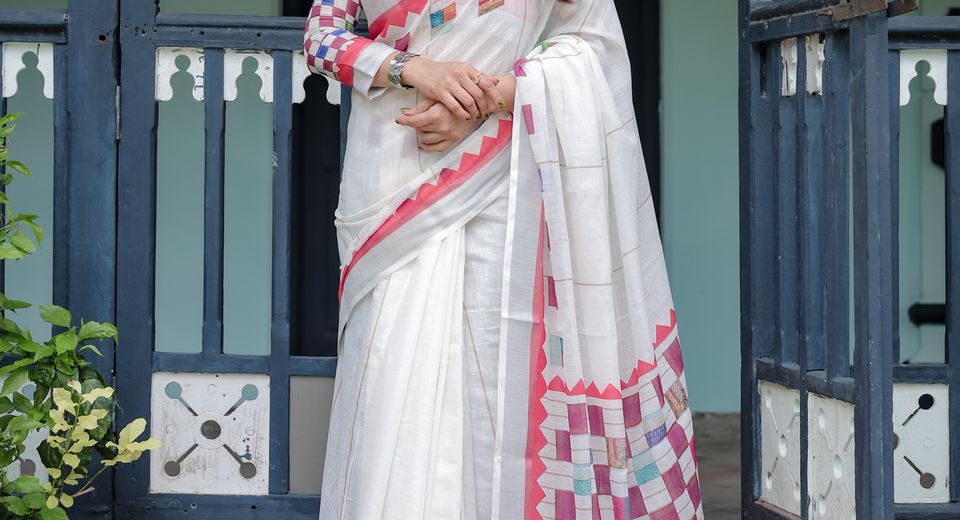
A school annual day asks for celebration without turning a child's outfit into a stage costume. Traditional Dresses for Girls at a School Annual Day Without Costume Excess work best when the silhouette allows movement, the fabric feels comfortable for several hours, and the cultural details are clear but not overloaded. A simple Anarkali, a lightweight lehenga set, or a neatly draped saree for an older student can look festive while still belonging in a school setting.
The most successful outfit usually has one recognisable traditional element, one restrained embellishment choice, and practical footwear. A child should be able to sit through rehearsals, walk to the stage, use the washroom, and participate in group photographs without constant adjustment. The annual day programme, school rules, child's age and performance role should guide the outfit before colour or ornament becomes the priority.
Traditional Dresses for Girls at a School Annual Day Without Costume Excess: What makes a polished look?
Traditional dresses for girls at a school annual day look polished when the outfit has a clear ethnic reference, a comfortable fit and no more than two prominent decorative features. A printed Anarkali with a contrasting dupatta needs little additional jewellery, while an embroidered gown may only need simple earrings and a neat hairstyle.
Costume excess usually appears when several attention-grabbing elements compete at once: heavy mirror work, a large tiara, multiple necklaces, glitter makeup, a stiff skirt and a long trailing dupatta. Removing two or three of those elements often makes the traditional detail more visible. A school annual day is also a shared event, so an outfit that photographs well without overwhelming the child's classmates is usually the more considered choice.
Proportion matters especially for younger girls. A floor-length hem should not drag, sleeves should not restrict arm movement, and a dupatta should be short enough to pin securely. Children under about eight years old generally manage a pre-stitched or lightly layered outfit more easily than a complicated drape. Older students may handle a saree or structured lehenga if the garment has been tested during rehearsal.
Traditional Dresses for Girls at a School Annual Day Without Costume Excess: Which silhouette suits each age?
A comfortable Anarkali, modest lehenga set or pre-stitched saree is usually the most practical silhouette for a school annual day. The correct choice depends on how much movement the performance requires, rather than on the perceived grandeur of the event.
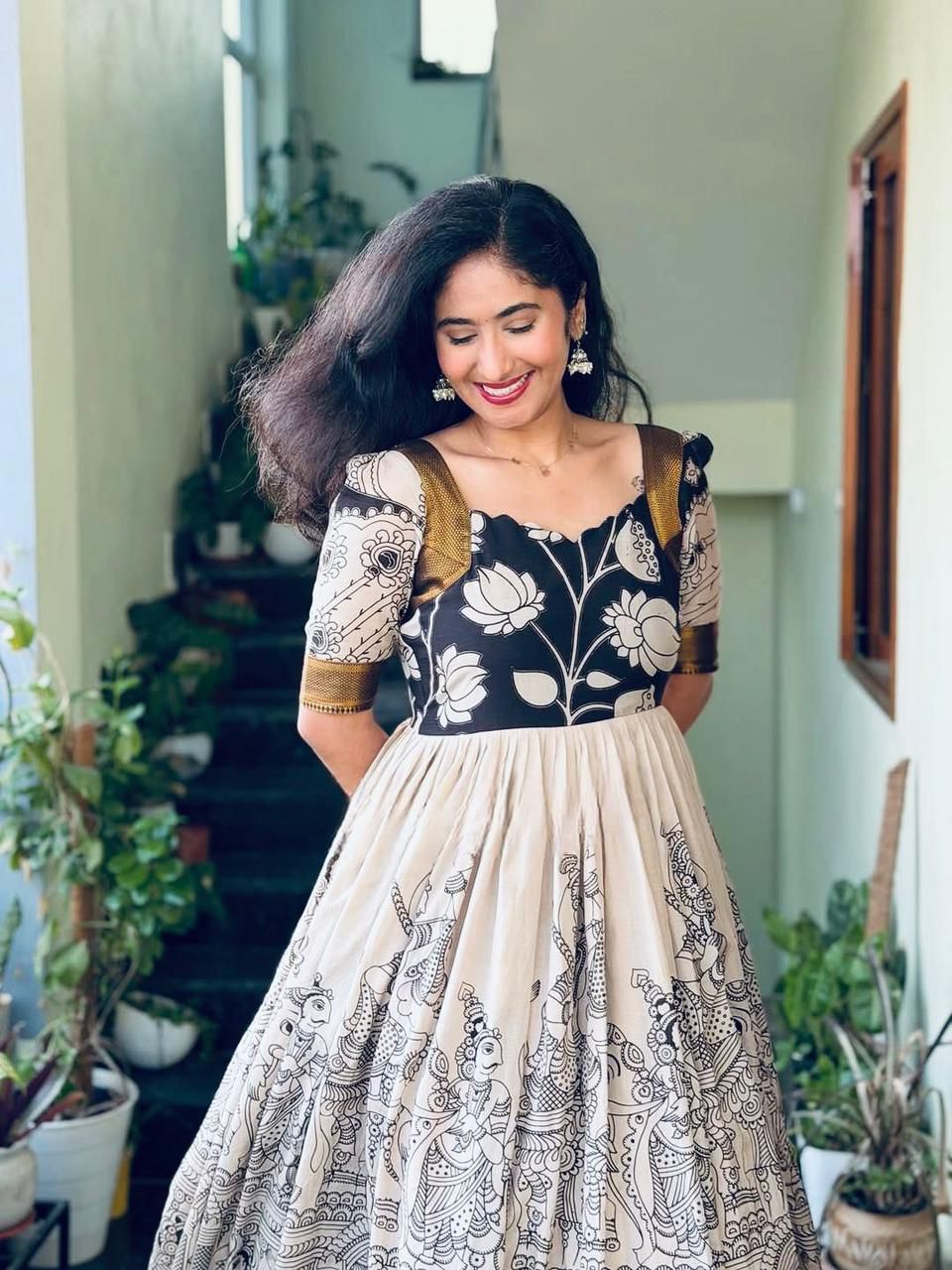
Younger children need secure, simple shapes
Anarkali dresses are useful for children who will dance, walk in a procession or change formations on stage. Cream Printed Anarkali Gown with Ethnic Motif Design demonstrates how a printed ethnic motif can provide visual interest without demanding heavy jewellery or elaborate makeup. A fitted inner layer, soft lining and a hem that sits 2-3 centimetres above the floor reduce tripping risks.
A-line dresses and short, layered lehengas are also manageable for younger girls. A skirt should have a secure waistband, while the blouse should remain comfortable when the child raises both arms. Avoid very wide can-can layers for school performances because stiff volume can make sitting, moving backstage and standing in rows difficult.
Older students can manage structured traditional wear
Older girls can wear a lightweight saree, a coordinated salwar suit or a lehenga with a shorter dupatta when the school permits it. Ivory Linen Cotton Saree with Multicolor Woven Border offers an useful direction for a mature student because a woven border creates traditional definition without relying on sequins. A pre-stitched saree or a saree secured with discreet safety pins is safer than a loose experimental drape during a performance.
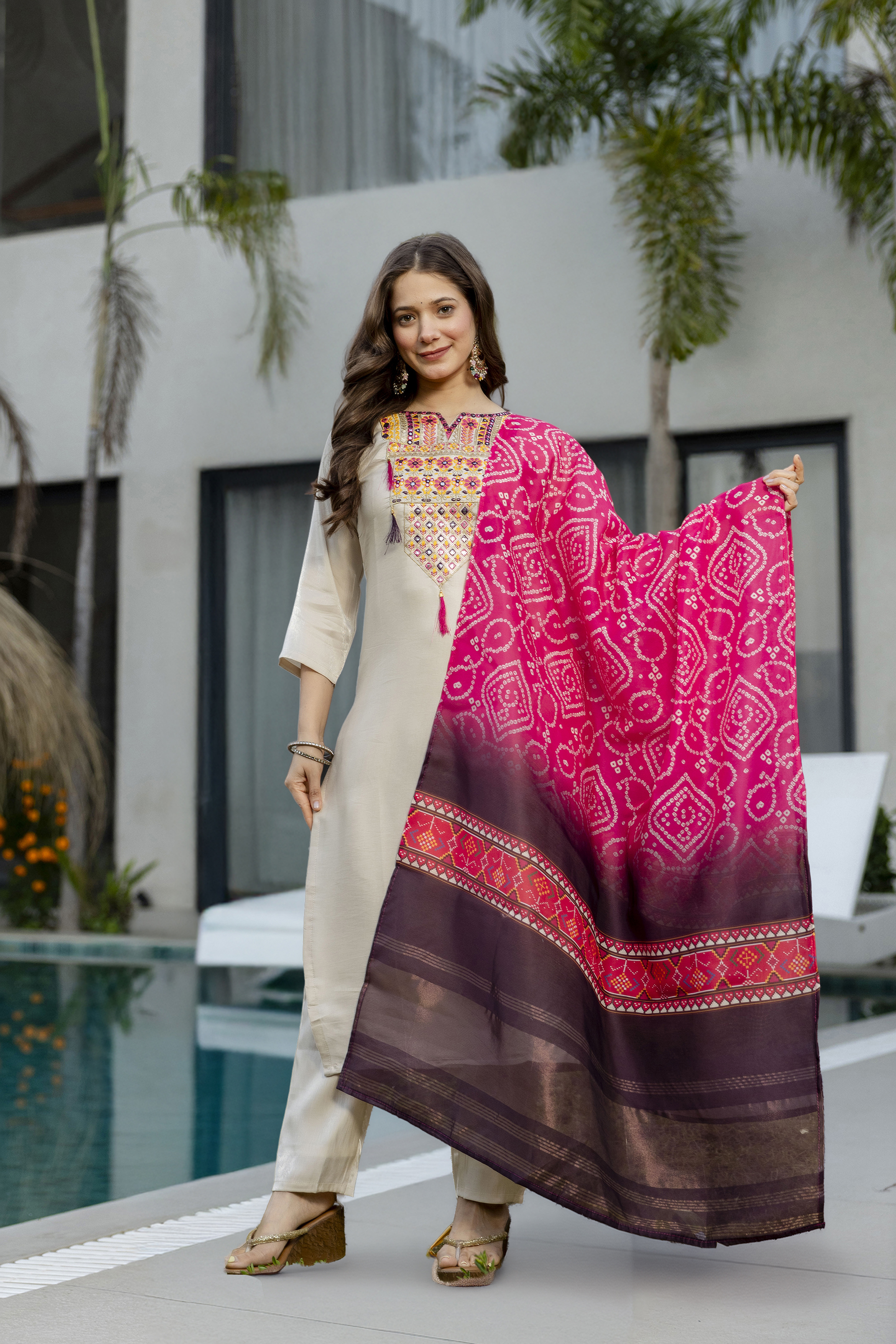
A gown can also work when the school theme calls for a pan-Indian presentation rather than a specific regional costume. Teal Blue Silk Embroidered Gown Set with Dupatta should be treated as a statement outfit, so the accompanying styling should remain quiet. A low-contrast bindi, small studs and flat sandals keep the look formal without making it resemble adult eveningwear.
Traditional Dresses for Girls at a School Annual Day Without Costume Excess: Which fabrics keep children comfortable?
Linen cotton, cotton, soft silk blends and lightweight georgette generally offer better comfort than heavily layered synthetic fabrics during a long school programme. Breathable fabrics reduce heat under stage lights, while a smooth lining prevents embroidery, zari or rough seams from irritating the skin.
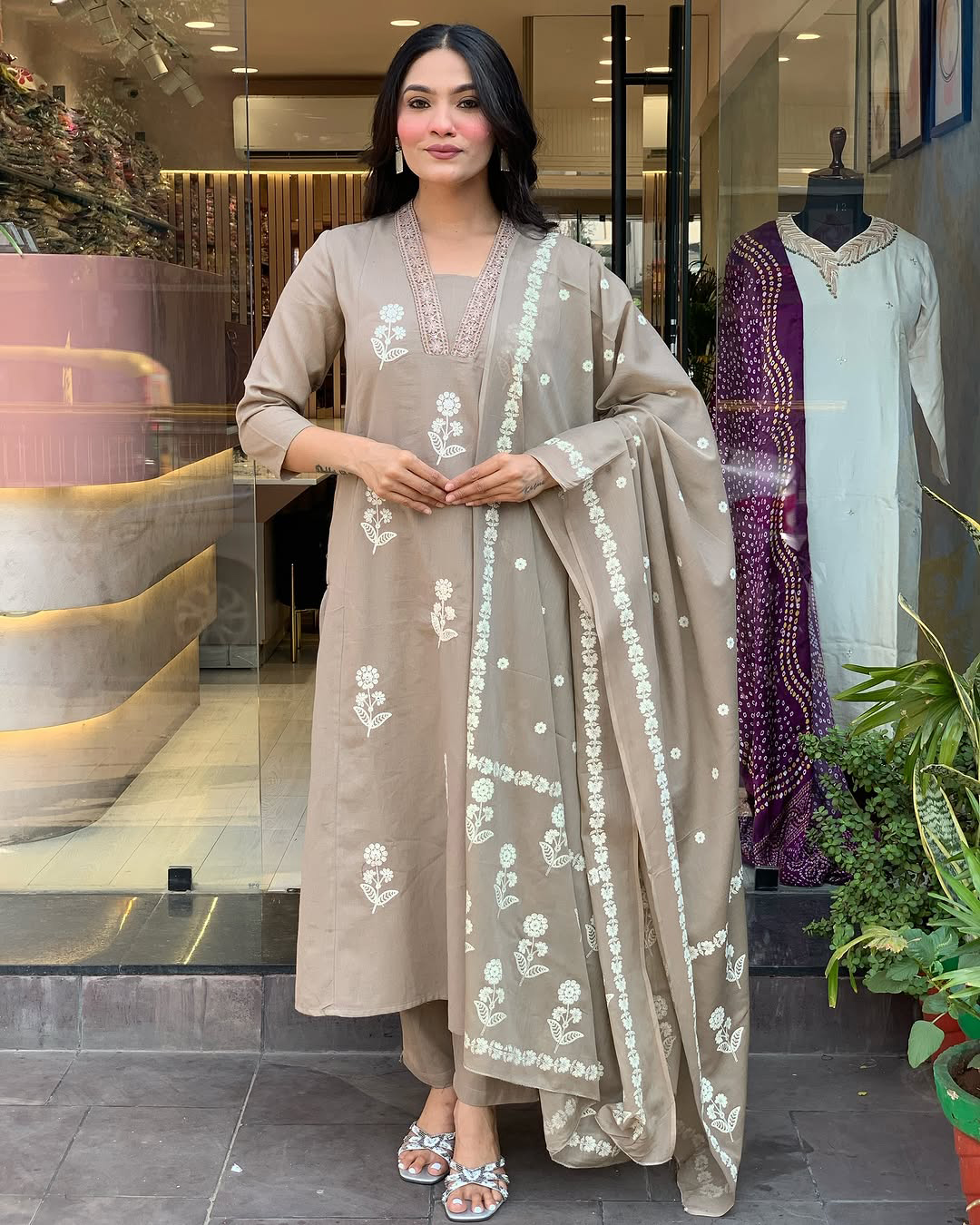
Linen cotton is especially useful for daytime events because it has a natural texture and doesn't feel as warm as dense polyester. White Floral Printed Linen Cotton Saree For Women Today shows how a small-scale floral print can create a traditional, graceful impression without heavy surface decoration. Although the saree is designed for women, its print-and-border idea can guide a girl's lighter ethnic ensemble.
Silk adds richness, but the weight and weave should be checked before purchase. Banarasi silk with dense zari can become warm and heavy for a child who must stand backstage, while a lighter silk blend may retain the festive appearance with less strain. Kanjeevaram-inspired borders can provide a strong traditional reference on a simpler fabric, especially when the event includes a cultural presentation.
Chanderi is another elegant option for older girls, but Chanderi fabric can be delicate and slightly sheer depending on the weave. A lined Chanderi Anarkali or skirt is more practical than an unlined piece. Parents should conduct a simple comfort test: ask the child to sit cross-legged, raise both arms, walk quickly and bend to pick up a bag while wearing the complete outfit.
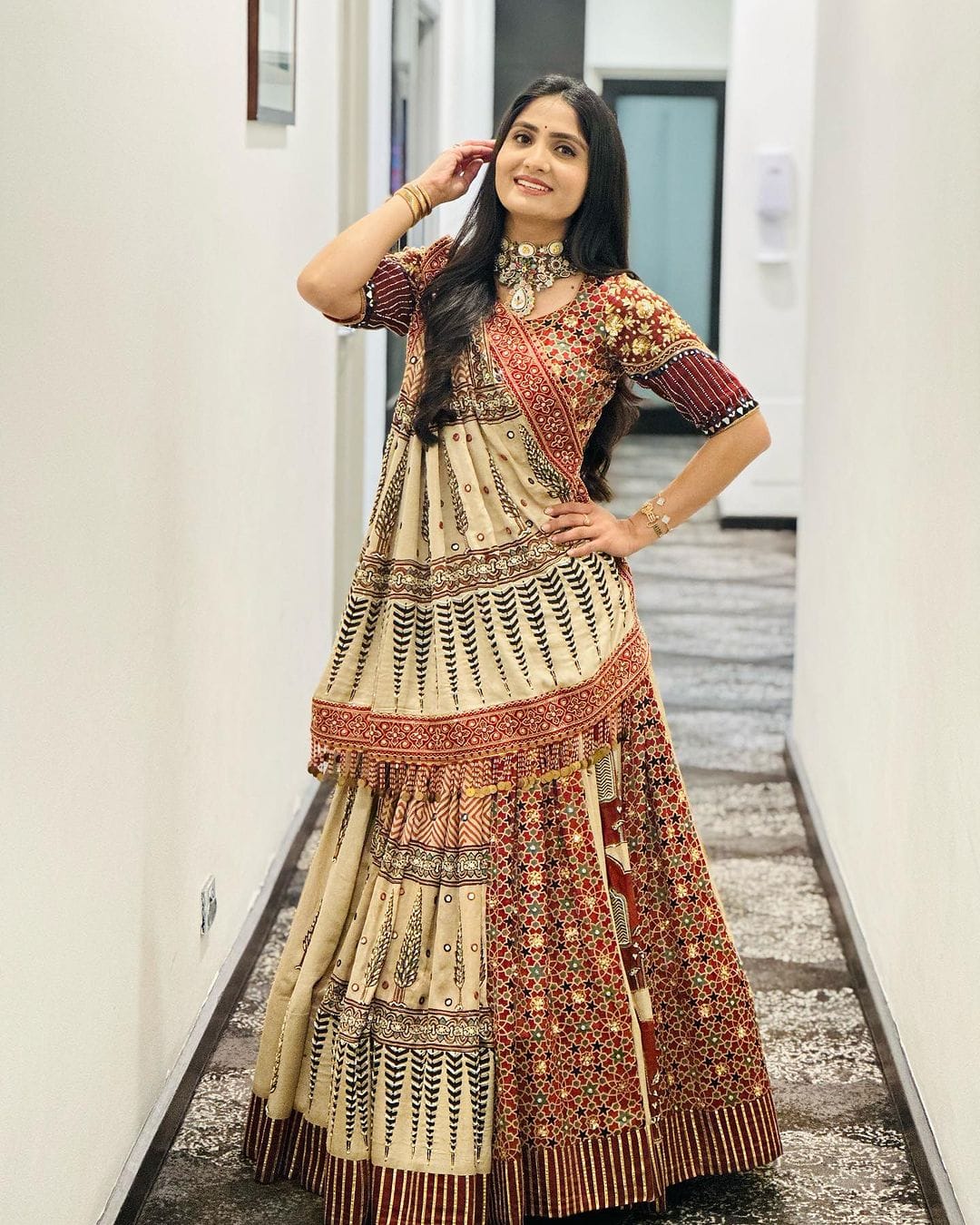
Beige Ethnic Printed Lehenga Set for Navratri and Garba demonstrates how an ethnic print can carry an outfit when the blouse, footwear and accessories are kept simple. A printed lehenga is often cooler and easier to manage than a heavily embellished skirt, particularly when the annual day includes a group dance and repeated movement across the stage.
Traditional Dresses for Girls at a School Annual Day Without Costume Excess: How should colour and cultural detail be balanced?
A restrained colour plan usually needs one dominant shade, one border colour and a small metallic accent. Teal with antique gold, ivory with coral, cream with maroon, or mustard with green can look festive without the visual intensity created by five contrasting colours.
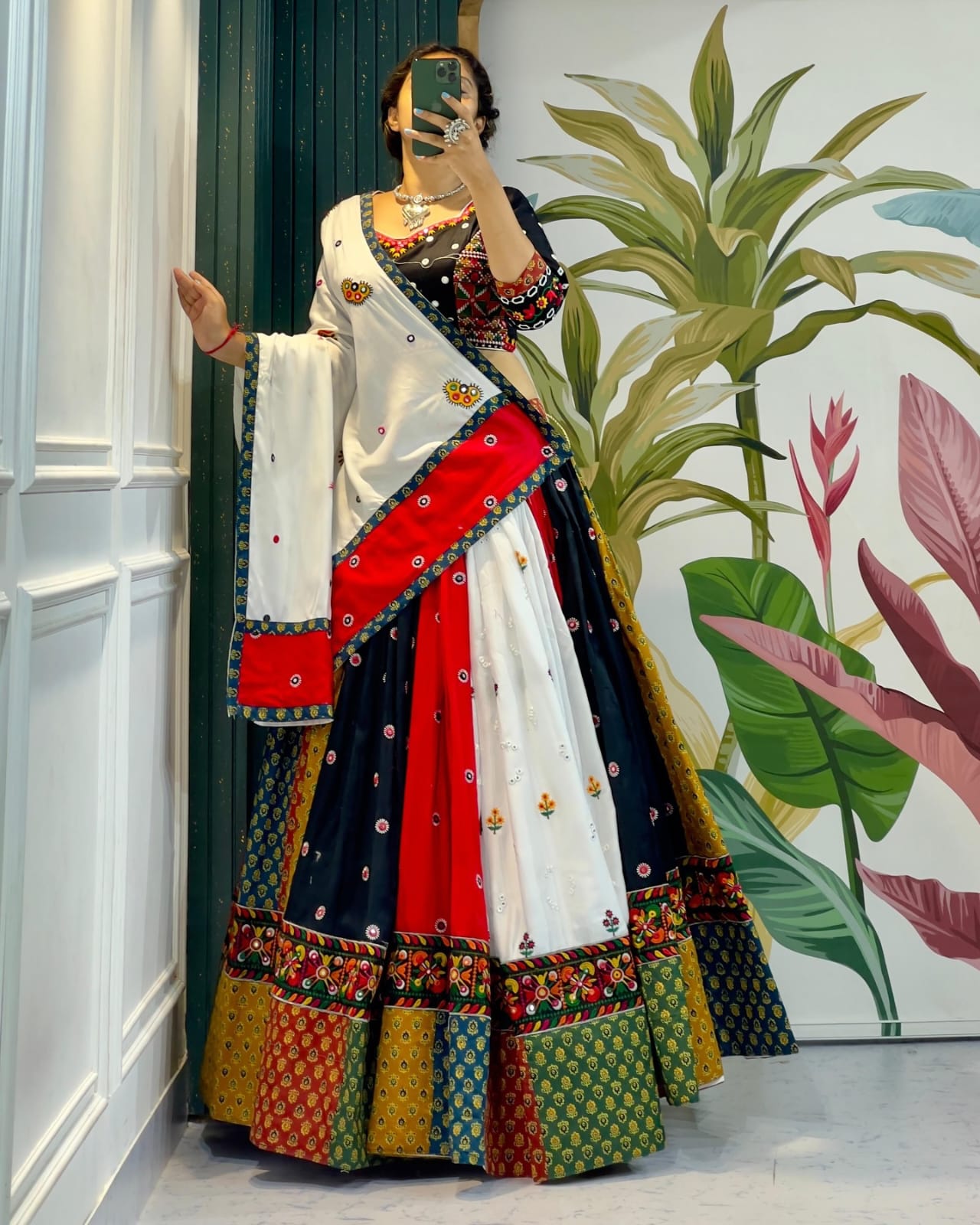
Prints are often more suitable than dense embellishment for a school function. Teal Floral Printed Linen Cotton Saree with Jacquard Border illustrates how a border can add structure and regional character while a floral field keeps the garment visually light. The same principle works for a girl's Anarkali, skirt or dupatta: let the border provide definition instead of adding sequins to every surface.
Regional references should be accurate enough to be respectful. A border inspired by Kanjeevaram weaving, a Banarasi silk texture, a phulkari-style motif or a Northeast Indian textile reference should not be mixed randomly with unrelated ceremonial accessories. Sikkim Traditional Women's Dress Collection and Traditional Northeast Indian Dress Occasion Collection can help families understand that Indian traditional clothing includes distinct textiles, silhouettes and ornament traditions rather than one generic ethnic look.
Regional dressing also deserves context when a school annual day includes a state-themed performance. Traditional Uttarakhand Dress for Women and Traditional Himachal Dress for Women can provide visual research for pahari-inspired colours, shawl use and headwear. Traditional Goa Dress for Women gives a different coastal reference. A child doesn't need to reproduce every adult layer; one accurate motif, border or draping detail is often enough for a respectful school interpretation.
VARNAVI Peach Linen Cotton Floral Saree with Border Tassels shows how tassels can add movement and festive texture without requiring heavy embroidery. For a child, a similar detail should be small and securely attached because long tassels can catch on chairs, stage props or another performer's costume.
Traditional Dresses for Girls at a School Annual Day Without Costume Excess: Which accessories and hairstyle are practical?
Accessories should support the outfit's cultural identity while leaving the child's face, hands and movement visible. Small jhumkas, fabric bangles, a modest bindi, a simple waist detail or a single flower in the hair are usually sufficient.
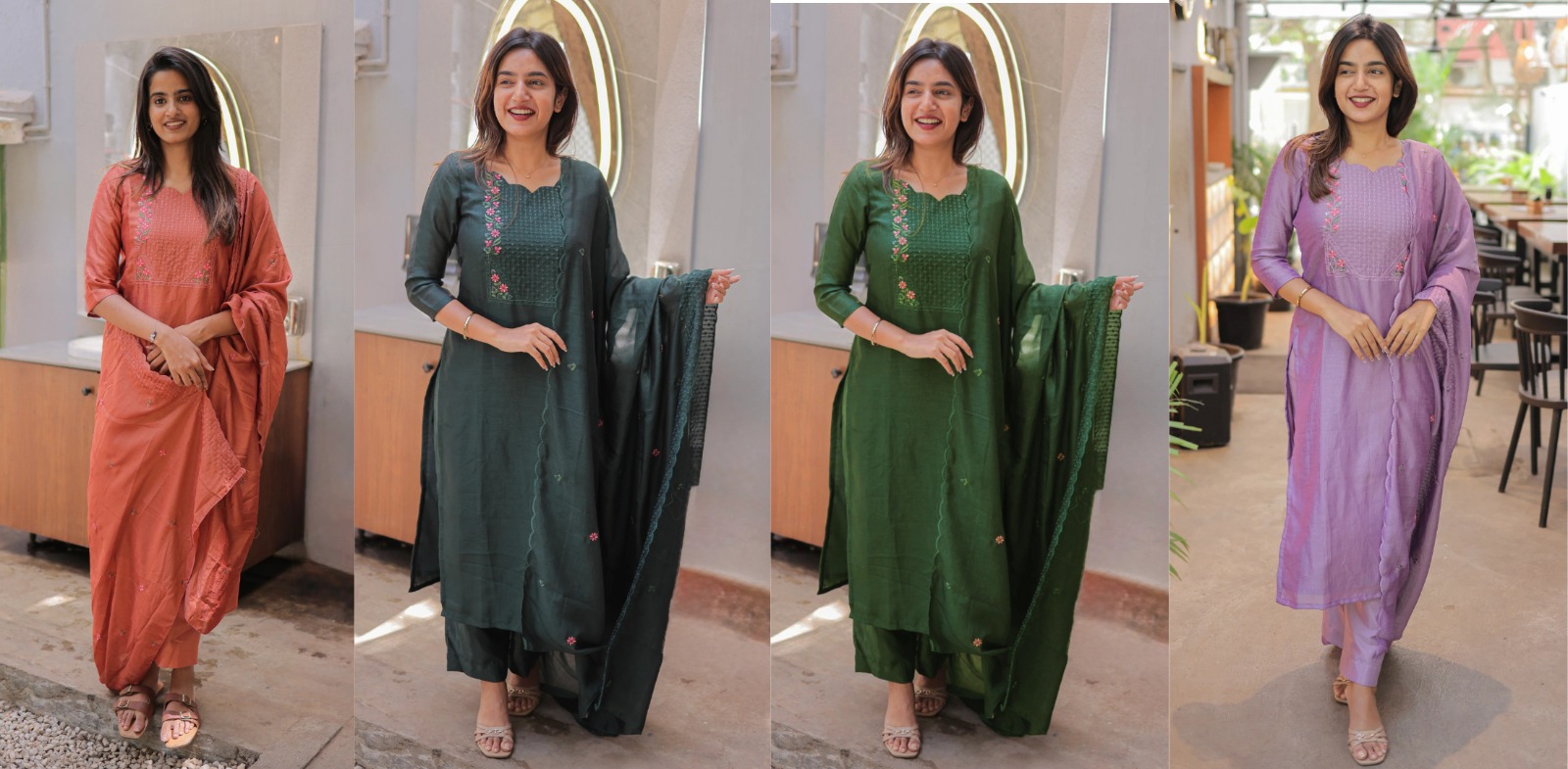
Heavy necklaces can catch on dupattas and become uncomfortable during dance movements. Long earrings can pull on the earlobe, and loose bangles can create noise that distracts from a performance. Choose lightweight imitation jewellery with smooth edges, and secure any necklace clasp with a small piece of fashion tape if the school allows it.
Footwear needs more testing than accessories. Flat juttis, soft sandals or low wedges with a secure strap are safer than slippery embellished footwear. The child should wear the shoes for at least 20 minutes at home before the event, including while walking up and down stairs. New shoes should never be introduced for the first time on annual day.
Hair styling can provide a traditional finish without adding costume drama. A braid with a ribbon, a low bun with a few flowers, or a half-up style with a fabric bow is easy to maintain. Hair spray, glitter, sharp hair accessories and elaborate false jewellery are rarely necessary for a school programme and may become uncomfortable under stage lights.
Traditional Dresses for Girls at a School Annual Day Without Costume Excess: How can parents test fit and movement?
The outfit should pass a movement check before it's approved for the annual day. A child should be able to walk ten steps, sit on a chair, raise both arms, turn around and climb a few stairs without stepping on the hem or pulling at the neckline.
Allow 1-2 centimetres of growing room at the side seams when possible, but don't compensate with an excessively long hem. A hem that's too long creates a tripping hazard, while an oversized bodice can shift during movement. Sleeve openings should permit arm rotation, and waistbands should remain secure without digging into the skin.
School rules can cover sleeve length, neckline depth, footwear, makeup, hair accessories and the use of safety pins. Confirm the rules before ordering an outfit, especially if the annual day has a state, folk dance or historical theme. A beautiful garment can still be unsuitable if it conflicts with the school's safety instructions or requires adjustments that can't be completed backstage.
Prepare an emergency kit containing two safety pins, a small sewing kit, stain-removal wipes, hair ties, tissues and a spare pair of socks. Keep the kit with an adult rather than inside the child's costume. Label the dupatta, shoes and accessories because identical items are common during school functions.
Traditional Dresses for Girls at a School Annual Day Without Costume Excess: What should the final outfit checklist include?
The final outfit checklist should confirm comfort, safety, cultural clarity and school suitability before decoration is considered. A child should feel able to perform rather than feel responsible for protecting an elaborate garment.
- Check the length: Keep the hem 2-3 centimetres above the floor for a child who will walk or dance.
- Check the fastening: Use secure hooks, covered elastic or discreet safety pins, and test every closure during movement.
- Check the fabric: Inspect seams, lining and embroidery for rough edges that could irritate the skin.
- Check the dupatta: Pin it at the shoulder and, when necessary, at the waist so it can't trail behind the child.
- Check the footwear: Test grip, straps and comfort on stairs before the event.
- Check the visual balance: Keep either the outfit, jewellery or hairstyle as the main statement, not all three.
- Check the rehearsal: Have the child wear the complete outfit for at least 20 minutes while practising the actual movements.
White Linen Cotton Saree with Bird Motifs and Orange Border brings another useful styling lesson: a distinctive border or motif can carry the identity of an outfit without demanding elaborate accessories. A child wearing a similar visual balance can appear festive, recognisably traditional and appropriately dressed for a school environment.
The strongest annual day styling respects the child's age, the performance and the meaning behind the clothing. Traditional detail becomes more memorable when it's allowed to remain visible alternatively of being buried under excessive ornament. Comfort also improves confidence, which is finally more valuable on stage than a heavier hem, brighter glitter or larger accessory.
Common Questions About Traditional Annual Day Dressing for Girls
What is the most comfortable traditional dress for a girl at a school annual day?
A lightweight Anarkali, cotton lehenga set or pre-stitched saree is usually the most comfortable choice. The best option has a soft lining, a secure waist, a short pinned dupatta and a hem that does not touch the floor.
Can a young girl wear a saree to a school annual day?
A young girl can wear a saree if the school permits it and the saree is pre-stitched or securely pinned. Children who will dance or change positions often manage an Anarkali or lehenga more safely than a loose saree drape.
How can traditional dress avoid looking like a costume?
Use one clear cultural reference, such as an ethnic print, woven border or regional silhouette, and keep the jewellery and hairstyle simple. Avoid combining heavy embroidery, a large headpiece, glitter makeup, multiple necklaces and a very wide skirt.
Which fabrics are best for a school annual day under stage lights?
Linen cotton, cotton, lightweight georgette and soft silk blends are generally more comfortable under warm stage lights. Dense polyester layers and heavy zari can feel hot, so lining, garment weight and ventilation should be checked before purchase.
What accessories are suitable for a girl's traditional school function outfit?
Small jhumkas, a modest bindi, a few fabric bangles and a braid or low bun with one flower are suitable choices. Lightweight pieces with smooth edges are safer than long earrings, heavy necklaces or loose bangles during a performance.
How should parents check whether an annual day outfit fits properly?
The child should walk, sit, raise both arms, turn, climb stairs and rehearse in the complete outfit before the event. The clothing should stay secure without restricting movement, and the hem should remain safely above the floor.