Traditional Clothing for a College Cultural Dance Competition has to do more than look beautiful in a dressing-room mirror. A successful costume must communicate a region or tradition from a distance, allow safe movement through fast choreography, stay comfortable for several hours and remain visually coordinated under stage lighting. The best choice usually begins with the dance form, not with a favourite colour or a heavily embellished garment.
College teams often perform Garba, Bhangra, Ghoomar, Lavani, Bengali folk dance, Koli dance, Himachali Nati or a medley representing several Indian states. Each style has its own visual language. A lehenga choli may suit Garba, while a saree with a secure pleat arrangement may better support a classical or regional presentation. Fabric weight, sleeve length, dupatta placement, footwear and jewellery all affect how confidently a dancer can perform.
What should traditional clothing for a college cultural dance competition achieve?
Traditional clothing for a college cultural dance competition should make the dance form recognisable while giving every performer unrestricted, secure movement. A costume succeeds when the audience can read its colours and silhouette quickly, the dancer can raise both arms and turn safely, and the outfit remains intact from rehearsal through the final pose.
Costume decisions should therefore be tested against four practical questions. Can the dancer take a deep step without splitting a seam? Can the dancer spin without the hem tangling around the ankles? Can the dupatta stay in place during jumps or arm sweeps? Can the audience distinguish the costume from the background at a distance of 15 to 20 metres?
Stage clothing also needs visual consistency. A group of eight dancers wearing different shades of red may look untidy under changing lights, even when each individual outfit is attractive. A defined palette, repeated border detail and similar silhouettes create a stronger team image than expensive decoration used without a plan.
Match the costume to the dance tradition
The dance form should determine the basic silhouette, fabric and accessories before the team chooses surface embellishment. Garba commonly benefits from a flared lehenga, choli and dupatta, while Bhangra may call for a kurta, salwar or Patiala-style lower garment with a contrasting waistcoat or dupatta. A regional dance medley can use coordinated colour blocks while changing one identifying element for each section.
Cultural accuracy doesn't require every dancer to reproduce a ceremonial outfit in full. It does require respectful research. Check the region associated with the choreography, identify the usual garment shapes and avoid combining unrelated symbols simply because they look colourful together. A short programme note or stage announcement can explain the regional inspiration without turning the costume into a vague "Indian" mix.
Which silhouettes allow the most movement on stage?
Lehengas, wide salwar trousers, palazzo pants and pre-secured sarees generally provide the most practical movement for college dance performances. The right silhouette depends on footwork, turning speed, floor level and whether the choreography includes jumps, kneeling or partner lifts.
A flared lehenga creates a clear visual circle during spins, but the flare should not be so wide that it catches another dancer. A hem circumference of roughly 3 to 4 metres often gives visible movement without becoming difficult to control in a group formation. The waistband should sit securely at the natural waist, and a cotton or lightweight lining can reduce friction during repeated turns.
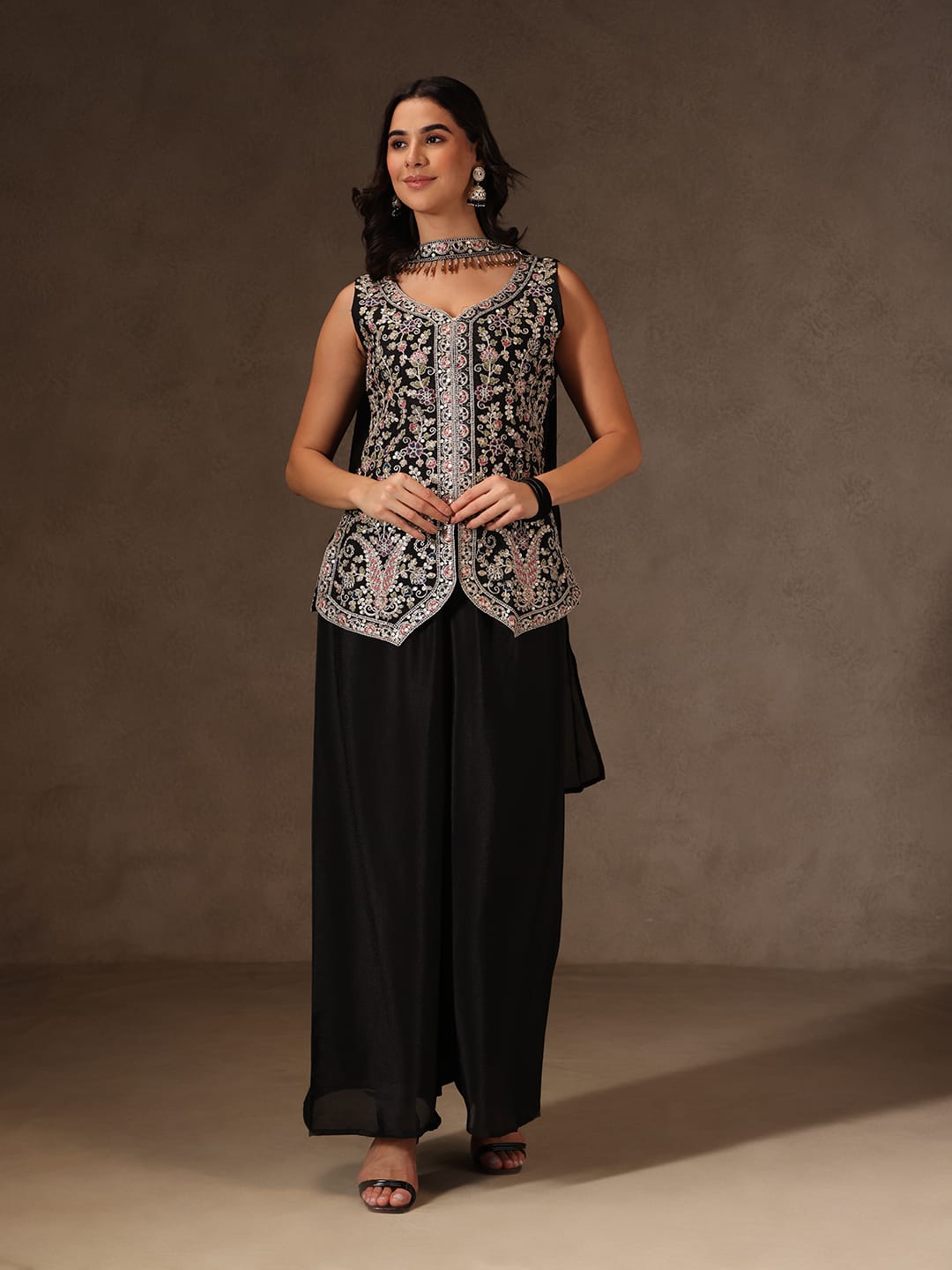
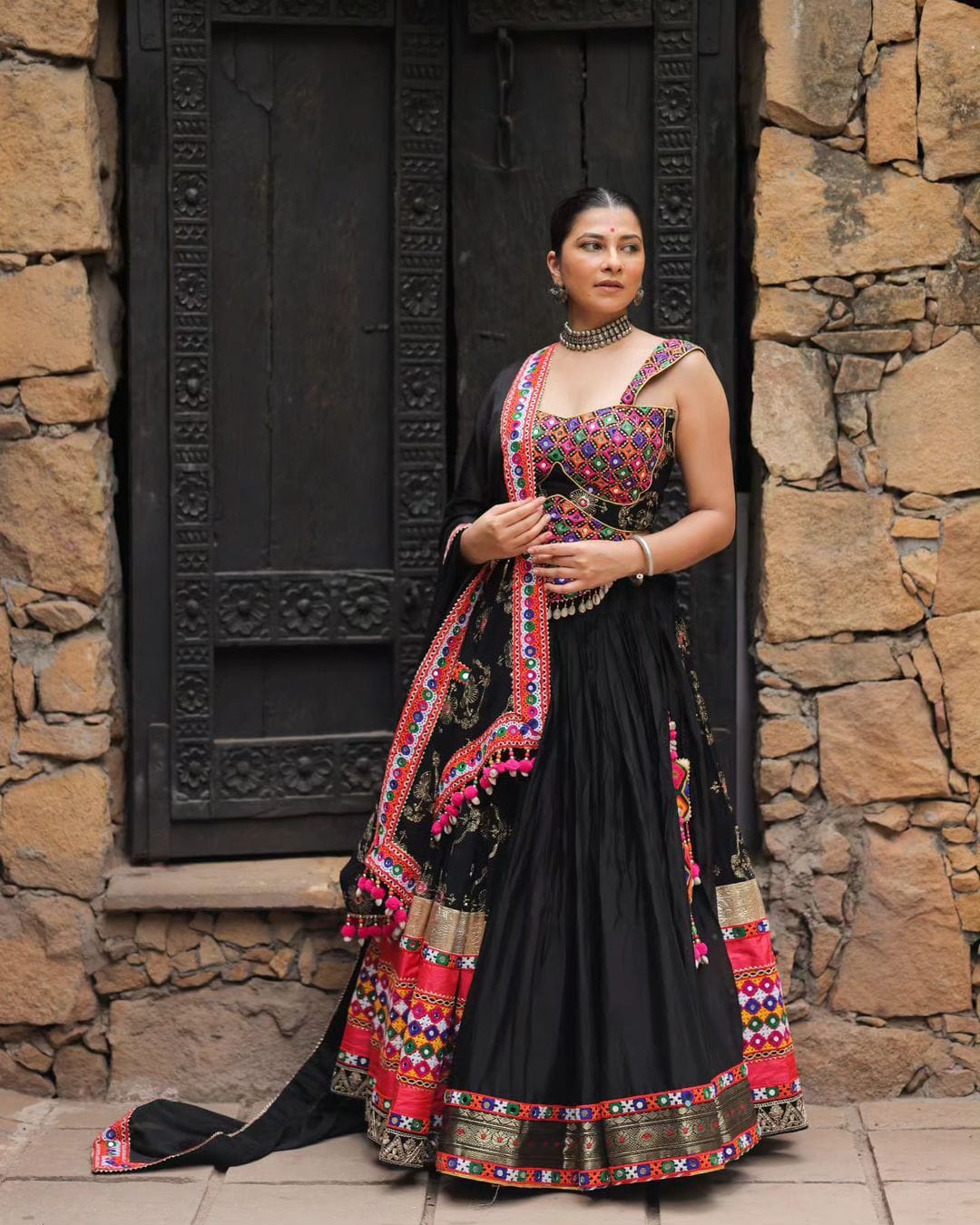
Sharara trousers offer dramatic volume while separating the legs for quick footwork. Black Chinon Sharara Set with Multicolour Embroidery for Women illustrates how a sharara can carry strong colour contrast without relying on a floor-length skirt. The team should still check whether the Chinon fabric slips or catches against footwear before approving it for choreography.
Palazzo suits are useful when the routine includes wide lunges, crouches or rapid directional changes. A kurta with side slits can improve stride length, but slits should not extend so high that the garment opens during kicks. A straight kurta and trouser combination may look less theatrical than a lehenga, yet it often performs better during complex footwork.
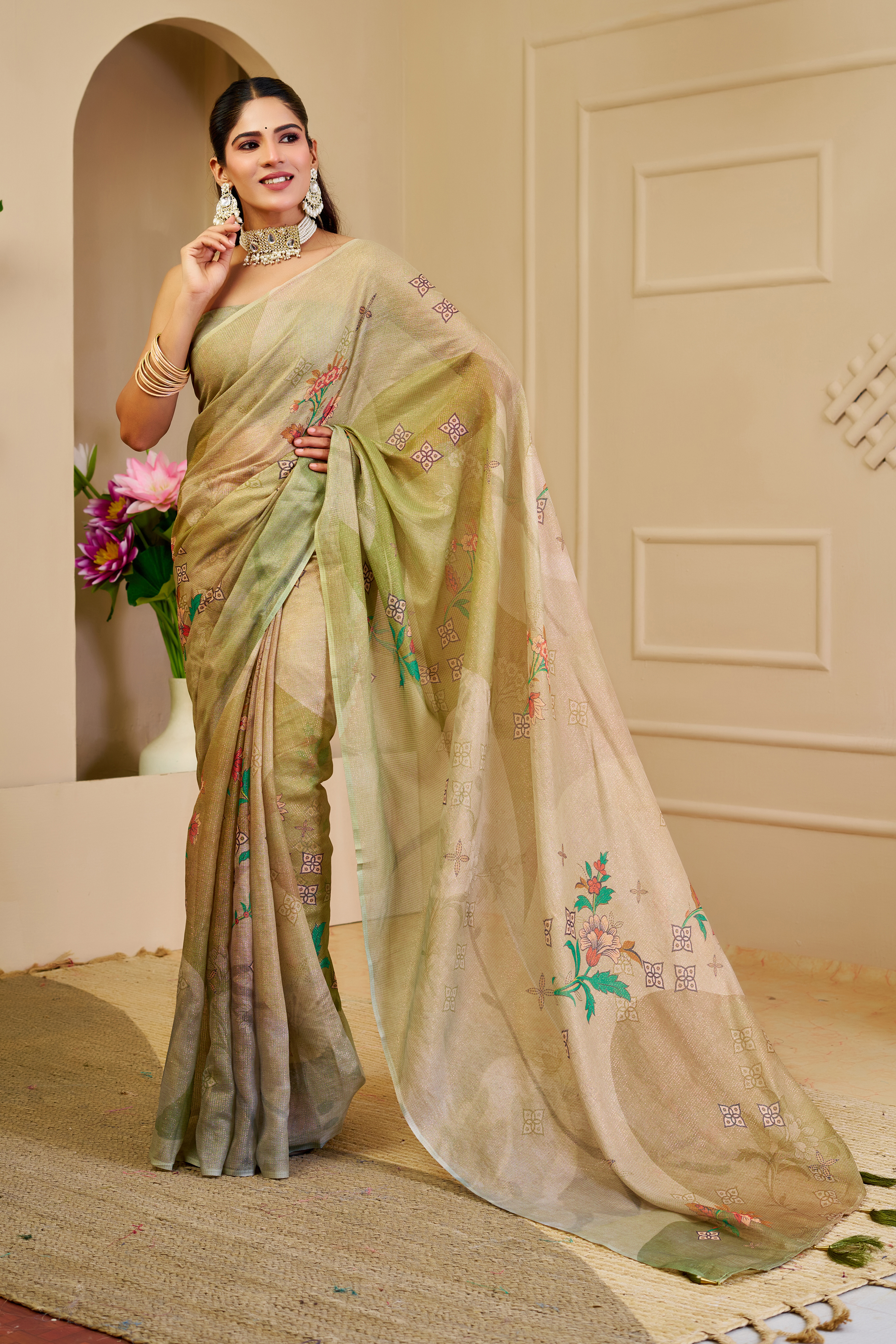
Sarees can work well when the drape is pre-pleated, pinned at the shoulder and secured at the waist. A loose everyday drape is unsuitable for vigorous choreography. A saree costume should include firm but comfortable pins, a fitted blouse with adequate arm movement and a petticoat or underskirt that doesn't slide while turning.
How should a team choose fabrics for heat, movement and lighting?
A breathable, moderately light fabric with a stable surface is usually the safest choice for a college dance costume. Cotton blends, lightweight silk blends, georgette, modal, linen-cotton and soft synthetic fabrics can work, but the final decision should account for venue temperature, costume weight and the amount of perspiration expected.
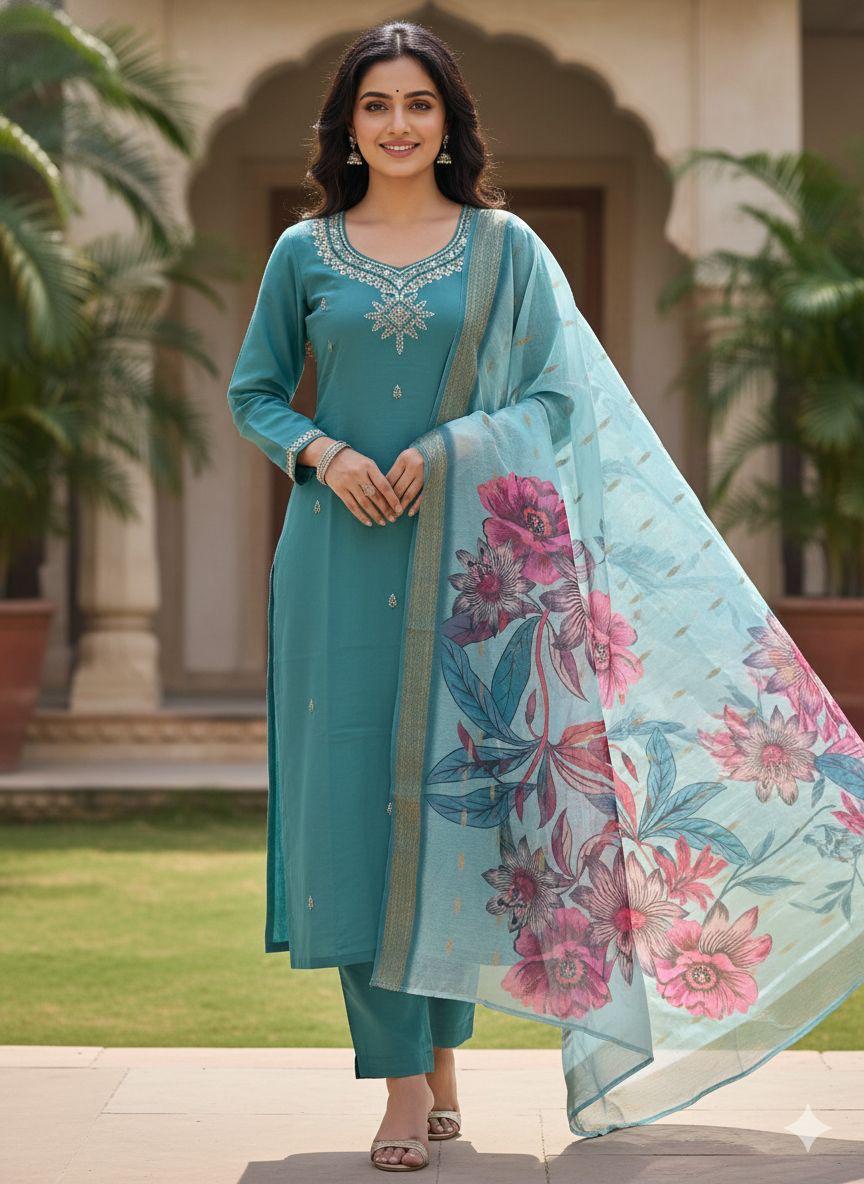
Cotton absorbs moisture and feels comfortable during rehearsals, although heavily starched cotton can restrict movement. Kanchi Cotton Zari Woven Kurti Set with Traditional Dupatta demonstrates the visual value of a woven zari border while retaining a more practical cotton-led base. Cotton garments may crease, so teams should steam or press them shortly before call time rather than packing them damp or tightly folded.
Chinon, georgette and chiffon create attractive motion in dupattas and skirts, but slippery fabrics need extra fastening. A lightweight fabric can also appear transparent under bright front lighting. Test every costume under the actual stage lights, because pale lining, embroidery and printed borders can look different in a rehearsal hall.
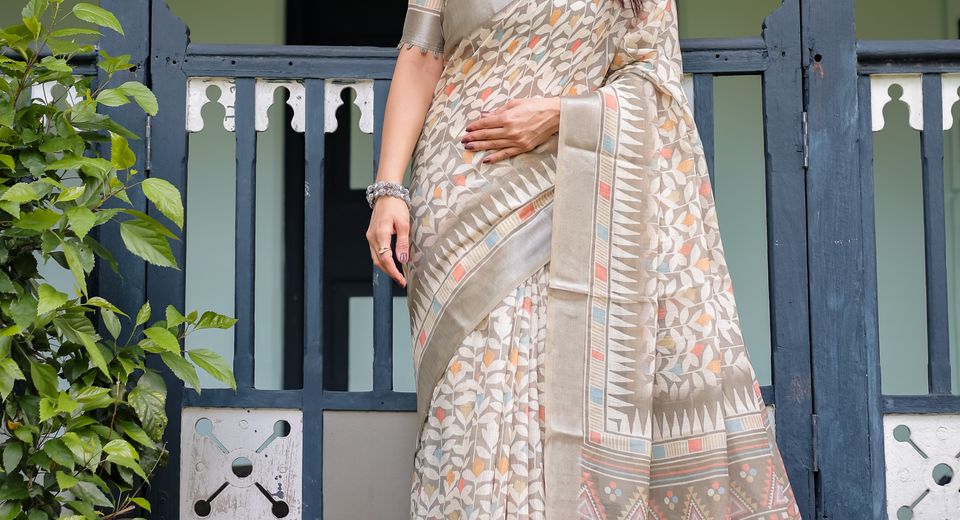
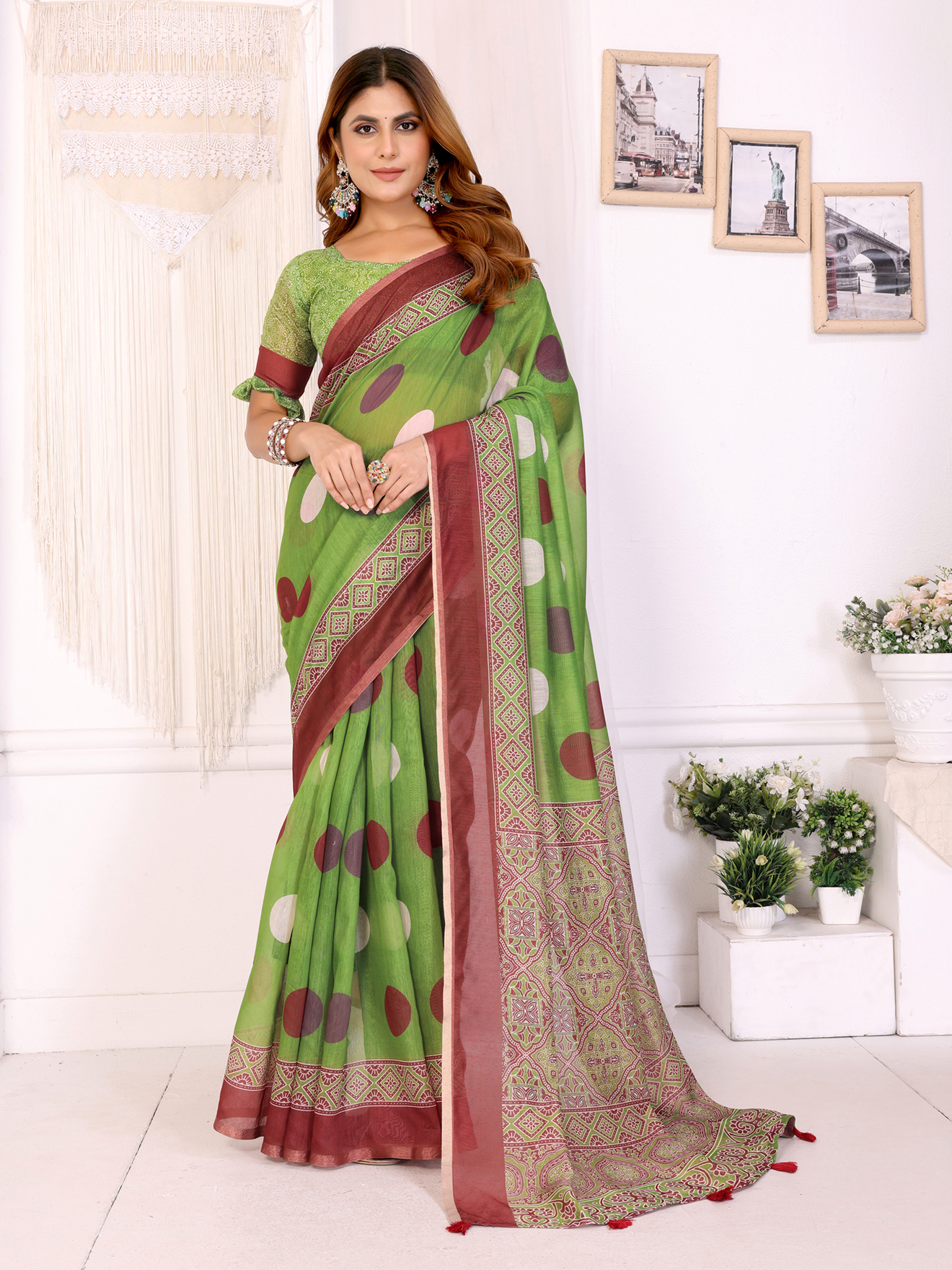
Linen-cotton blends provide structure and breathability for sarees and kurta sets. Taupe Floral Linen Cotton Saree with Printed Border Designs shows how a printed border can provide definition without the weight of dense embroidery. Blue Floral Linen Cotton Saree with Woven Border & Printed Blouse offers another useful reference for a coordinated saree appearance, especially when the performance needs a graceful rather than heavily embellished visual.
Use zari, sequins and mirror work strategically. Small reflective details help the audience read hand and torso movement, but dense metal embellishment can become heavy, scratch the skin or make a costume noisy. Avoid hard decorative pieces near the waist, underarm and neckline when the choreography includes floorwork.
How can colour make a group visible from the audience?
A strong stage palette uses two or three dominant colours, one repeated accent and enough contrast from the performance background. Colour blocking is more reliable than asking every dancer to find a nearly identical shade from different shops.
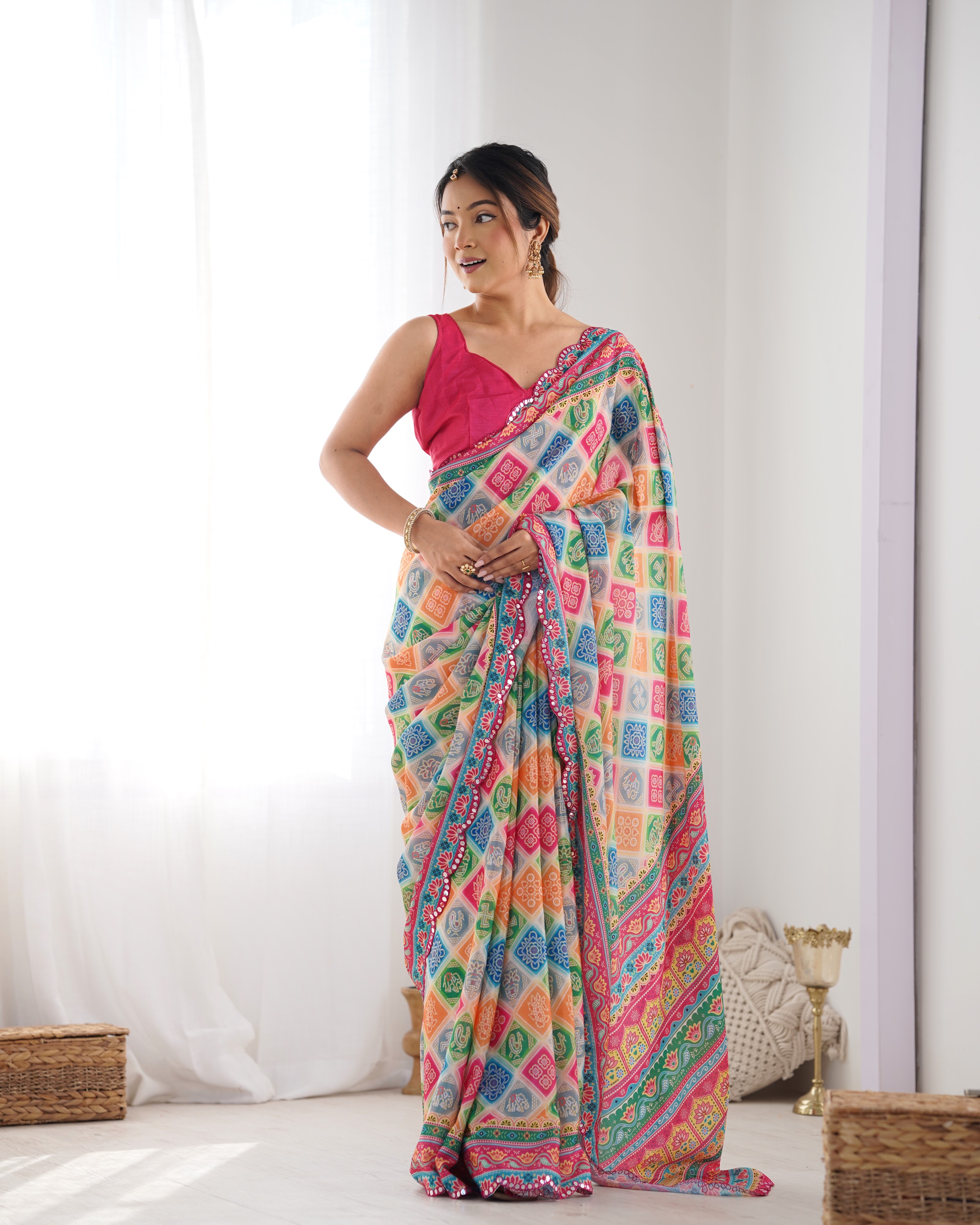
Red, royal blue, emerald, magenta, saffron and fuchsia usually retain visibility under common auditorium lighting. Very pale beige, grey and muted taupe can lose definition against a cream backdrop, while pure black may absorb detail unless it includes a bright border or multicolour embroidery. Beige Ethnic Printed Lehenga Set for Navratri and Garba can work on a darker stage when its print, dupatta and jewellery provide enough contrast.
Assign colours according to formation as well as complexion. If dancers form two lines, alternating colour families can make the pattern easier to read. If the choreography represents two regions, use a shared accent such as yellow or green to connect the costumes rather than dressing one group in unrelated colours.
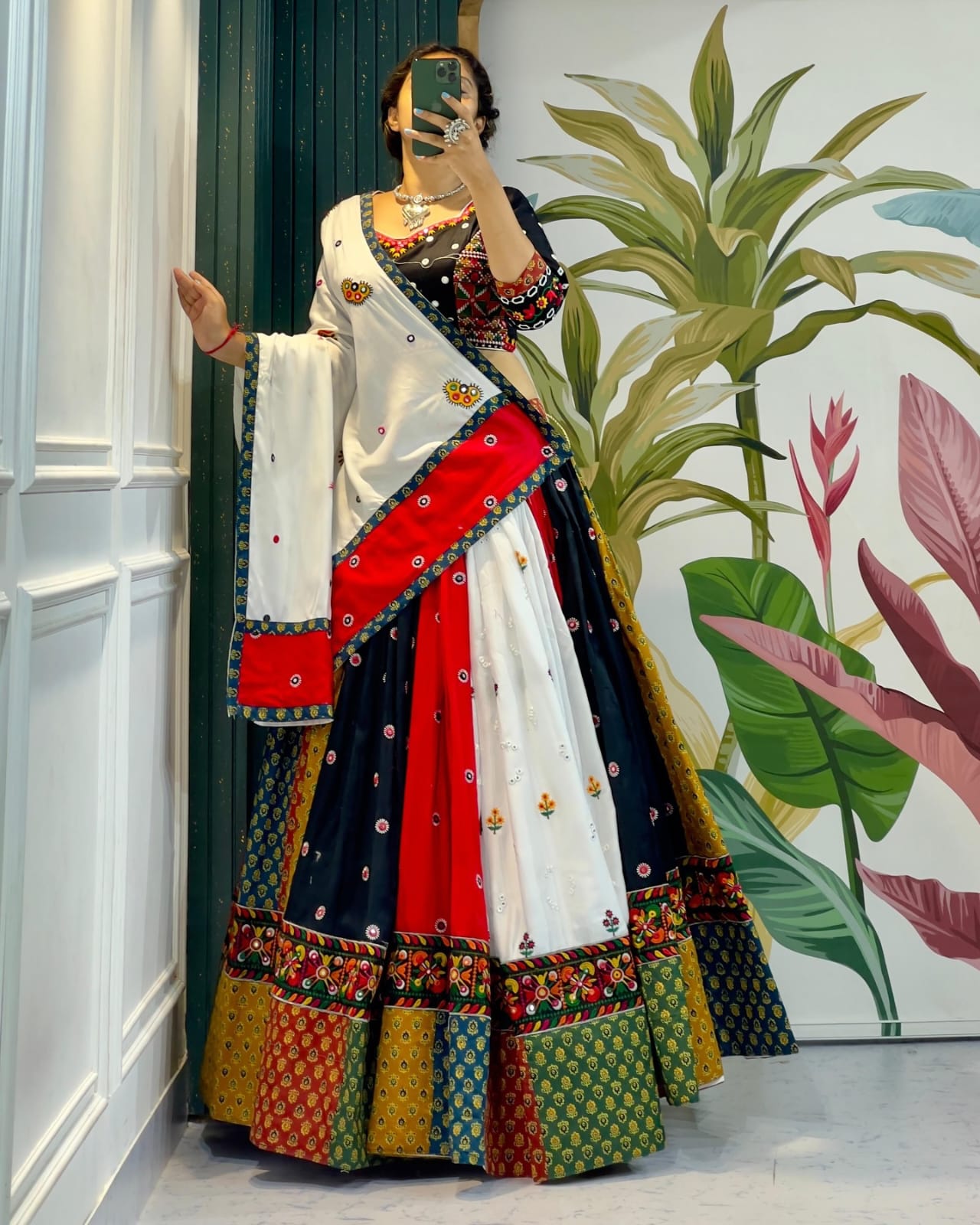
Vibrant Multicolor Navratri Lehenga Choli Set provides a useful model for a multicolour Garba-inspired palette. Multicolour clothing can look energetic in a cultural medley, but repeated colours should appear on at least three dancers so that the ensemble still looks intentional rather than randomly assembled.
How do regional references strengthen a college performance?
Regional references strengthen a college performance when the costume, music, movement and stage explanation point toward the same cultural context. A named region, recognisable garment shape and considered accessory choice communicate more clearly than a pile of unrelated ornaments.
The Sikkim Traditional Women's Dress Collection can inspire research into Himalayan layers, woven textures and restrained ornamentation for a Sikkim-focused presentation. The Traditional Northeast Indian Dress Occasion Collection can help a team compare textile patterns and styling references across Northeast India without treating the region as one single costume tradition.
Traditional Uttarakhand Dress for Women and Traditional Himachal Dress for Women offer useful starting points for teams presenting Himalayan folk themes. Woollen elements, patterned borders and head coverings may need adaptation for a warm indoor auditorium, so a lightweight cotton or blended substitute can preserve the visual cue without causing overheating.
Traditional Goa Dress for Women can guide a coastal or Konkani-inspired segment, particularly when the choreography uses bright colour, floral detail or a distinct saree drape. Research should include the difference between everyday clothing, festival clothing and performance adaptation. A costume doesn't become culturally accurate merely because it contains a printed motif associated with a region.
When a dance medley moves across several states, display a short title or projection identifying each section. Clear labelling helps the audience understand why the colours or silhouettes change and prevents a broad costume concept from being mistaken for one specific community's dress.
What should dancers secure before the first rehearsal?
Every costume should be tested in the full choreography at least twice before the final performance. A still photograph can't reveal whether a sleeve pulls, a hook opens, a dupatta slips or a hem catches under a dancer's heel.
- Raise both arms overhead and cross them in front of the body to test shoulder and sleeve ease.
- Complete five controlled turns to check whether the skirt, saree pleats or sharara legs twist around the feet.
- Perform the largest planned lunge, jump and floor transition while wearing the intended footwear.
- Secure dupattas at the shoulder and waist when the choreography includes spins, fast arm movements or lifts.
- Check hooks, zippers, elastic and decorative attachments after each rehearsal rather than waiting for show day.
Choose footwear with a flexible sole and a secure strap whenever the venue permits it. New shoes should be worn during at least one complete rehearsal. Smooth soles can be dangerous on polished floors, while heavy platform footwear can alter balance and make fast footwork harder.
Build a compact repair kit for the team. The kit should contain safety pins, strong thread, a needle, fashion tape, small scissors, spare hooks, hair ties, stain-removal wipes and one duplicate earring or fastening if possible. Assign one person to costume checks rather than expecting every dancer to solve a wardrobe problem while waiting backstage.
How can teams manage budget, fitting and changing rooms?
A sensible college costume budget prioritises fit, secure construction and consistent appearance before premium embellishment. A simple well-fitted kurta set can outperform a heavily decorated outfit that restricts the arms or requires constant adjustment.
Begin with a complete measurement list at least three weeks before the competition. Record bust, waist, hip, shoulder, armhole, sleeve length, trouser length and full height where relevant. Leave time for one fitting and one movement test, because alterations discovered on the performance morning are expensive and stressful.
Renting or borrowing can reduce cost for a one-day event, but inspect rented garments for missing hooks, loose zari, stains and worn elastic. Buying coordinated separates can make future performances easier because the same dupatta, blouse or trouser can be reused with another garment. A team may also save money by standardising one accessory, such as matching waist belts or fabric hair ribbons, instead of buying elaborate jewellery for every dancer.
Plan the backstage change around the least complicated garment. A pre-pleated saree, elastic-waist palazzo or kurta set can be changed more quickly than a full outfit requiring multiple pins. Keep each dancer's costume in a labelled breathable garment bag, with jewellery and accessories placed in a separate pouch. Avoid plastic bags for damp clothing because trapped moisture can create odour and weaken some decorative finishes.
The final costume should be comfortable enough for waiting, warm-up and travel between green room and stage. Traditional Clothing for a College Cultural Dance Competition becomes genuinely effective when dancers stop thinking about the outfit after the music begins. Cultural respect, visible design and physical freedom can coexist when the team researches the reference, tests the garment and plans for real performance conditions.
Common Questions About College Cultural Dance Competition Costumes
What should I wear for a college cultural dance competition?
Wear a costume that matches the dance tradition and allows unrestricted movement. A secure lehenga, sharara, salwar suit, kurta set or pre-pleated saree can work, provided the garment survives turns, jumps and arm movements during a full rehearsal.
Which fabric is best for a college dance performance?
Lightweight cotton blends, linen-cotton, georgette and stable silk blends are practical choices. Select breathable fabric for hot venues, add a lining when required for stage lighting and avoid heavy embellishment that causes discomfort or catches during choreography.
Can I wear a saree for a college cultural dance competition?
A saree can work when it is pre-pleated, firmly pinned and tested through the complete routine. Use a fitted blouse with armroom, a secure underskirt and a drape that cannot loosen during spins or floor movements.
How do I stop a dupatta from falling while dancing?
Pin the dupatta at the shoulder and secure a second point at the waist when the choreography is vigorous. Use small, flat safety pins or discreet costume fasteners, then test the arrangement during jumps, turns and overhead arm movements.
How many colours should a college dance team use?
Two or three main colours plus one repeated accent usually create the clearest group appearance. Test the palette under stage lights and against the backdrop, because pale shades and muted tones can lose definition from the audience.
How early should college dance costumes be finalised?
Finalise the design and measurements at least three weeks before the competition. Complete one fitting, two full movement rehearsals and a final repair check before performance day so that costume problems do not affect choreography.