Rain changes the practical rules of saree dressing. The Safest Saree Hem Length for a Monsoon Commute is usually 1.5 to 2.5 centimetres above the floor when you stand in your actual commuting footwear, rather than barefoot or in bedroom slippers. That small clearance helps prevent the lower edge from absorbing muddy water while preserving a graceful fall.
A monsoon-ready saree also needs a secure petticoat, compact pleats, sensible footwear and a pallu that can be managed around buses, scooters, staircases and crowded pavements. The right measurement isn't a universal number because body height, heel height, fabric weight and the route itself all change how close the hem comes to the ground.
What is the safest saree hem length for a monsoon commute?
The safest saree hem length for a monsoon commute is 1.5 to 2.5 centimetres above the floor while wearing the shoes used for daily travel.
That clearance is high enough to keep the saree border away from shallow puddles, road spray and damp stair edges, but low enough to avoid a visibly short drape. A hem lifted much higher can expose the ankles, make the saree look uneven and cause the lower pleats to lose their natural weight.
Measure the hem at the front, where the pleats end, and at the back, where the saree wraps around the ankles. The front should not brush the floor as you walk. The back may appear slightly lower because of the additional fabric gathered during draping, but it should still clear the ground when you take a normal step.
An useful test is to walk ten steps, climb one staircase and sit on a chair before finalising the length. If the fabric catches beneath your toes, folds under your heel or trails when you step up, raise the drape by another 0.5 to 1 centimetre. If the ankle area looks excessively exposed, lower it slightly while keeping at least 1 centimetre of clearance.
Why barefoot measuring gives the wrong result
Barefoot measuring often produces a saree that becomes too long once worn with flats, sandals or block heels. A 2-centimetre sole can remove most of the intended floor clearance and leave the hem vulnerable to dirty water.
Measure and pin the saree while wearing the lowest, most frequently used commuting footwear. If you alternate between flat sandals and 5-centimetre block heels, choose the flats for the main hem and use a slightly deeper tuck or a discreet saree clip with the heels.
How should you measure a monsoon-friendly saree hem?
Measure a monsoon-friendly saree hem from the waistline to the floor while wearing the shoes and petticoat that will be used for the commute.

- Put on the petticoat at the exact waist position where it will be tied, keeping the drawstring firm but comfortable.
- Wear your commuting footwear and stand upright on a level floor.
- Wrap the saree once without pulling the fabric upward at the front.
- Set the front pleats so that the lower edges form one even line.
- Ask someone to check the front, side and back clearance while you walk naturally.
- Mark the preferred tuck point with a safety pin before changing into your final blouse and accessories.
The petticoat matters because a low or loose petticoat can make the saree sit lower during the day. A drawstring that slips by 2 centimetres may turn a safe hem into a wet hem by the time you reach work. A cotton petticoat with a secure waistband generally offers better stability than a very smooth lining when the saree is light and slippery.
For regular commuters, the most practical approach is to maintain a standard hem position rather than redoing the entire drape every rainy morning. Keep one pair of commuting sandals and one pair of occasion footwear separate, because their sole heights can produce noticeably different saree lengths.
Which saree fabrics handle wet pavements better?
Light to medium-weight cotton, cotton-linen and linen-cotton sarees are generally easier to manage during a monsoon commute because they hold compact pleats and dry faster than heavy silk or densely embellished fabrics.
Fabric doesn't make a saree waterproof. Cotton absorbs splashes, and linen can retain moisture in its thicker yarns, but both are usually easier to wash and air-dry after a short exposure to rain. Banarasi silk, Kanjeevaram silk and heavy zari sarees can become cumbersome when wet, and their embellishments deserve more cautious care.
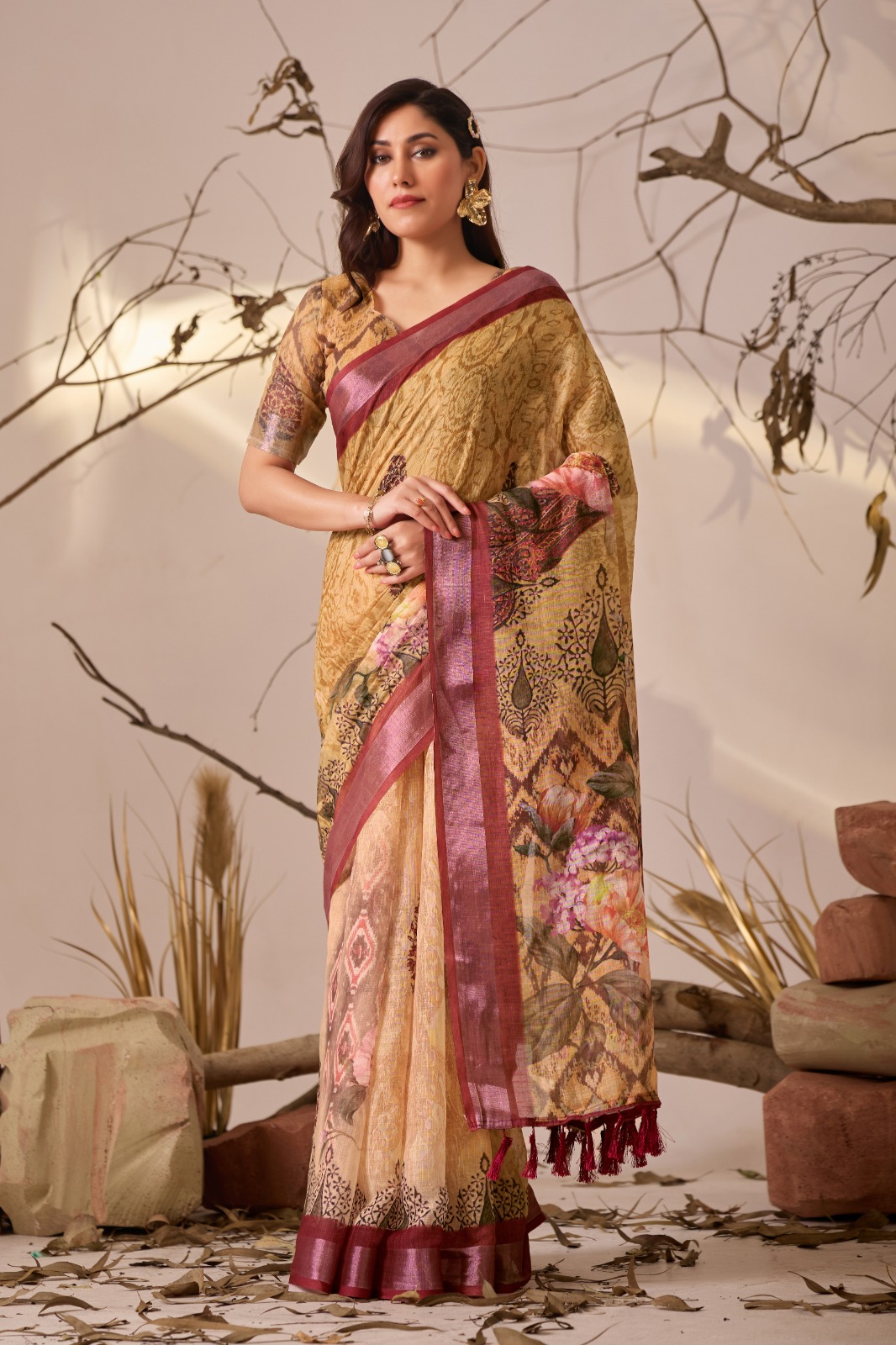
A printed saree can also be more practical than a pale, heavily embellished saree for a route with muddy spray. The Sky Blue Umbrella Print Linen Cotton Saree with Unstitched Blouse illustrates how a playful print can make minor road dust less visually obvious, while its linen-cotton structure remains suitable for a controlled, everyday drape.
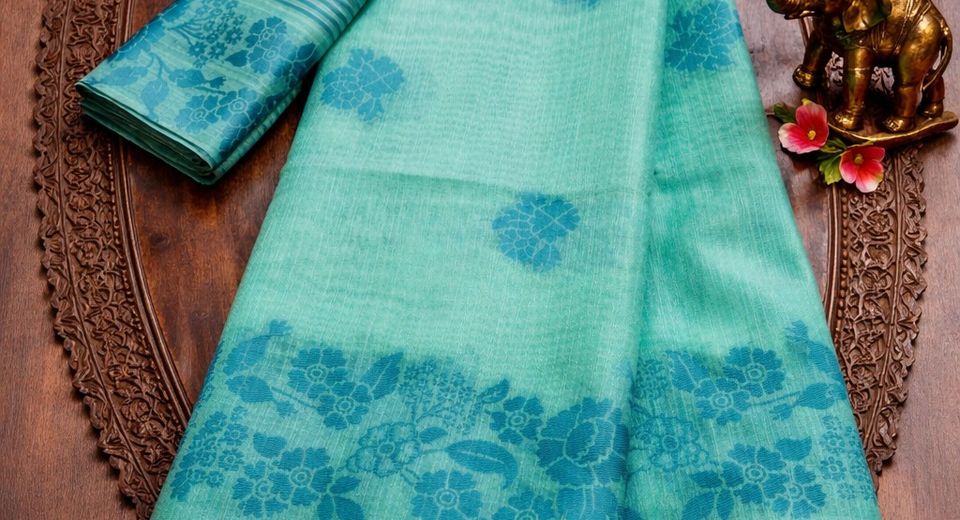
The Pink Floral Cotton Linen Printed Saree and Teal Green Cotton Saree for Women Online India are useful examples of lighter saree choices for office travel, provided the lower edge is measured above the floor and the saree is dried promptly after use. A darker border can help define the hem, but a border doesn't prevent water absorption.
When should you avoid delicate borders and heavy zari?
Avoid heavy zari, fragile embroidery and untreated silk when your route involves repeated puddles, motorcycle spray or long walks in rain.
Zari can tarnish or lose its finish if it remains damp, while dense embroidery may trap grit between threads. Banarasi silk and Kanjeevaram should be reserved for drier travel days or protected with reliable door-to-door transport when heavy rain is forecast.
Chanderi can be elegant and light, but its fine structure still needs careful handling around wet concrete and rough walls. If a Chanderi saree becomes damp, blot it with a clean towel, air it in shade and avoid pressing it while moisture remains.
How should the saree be draped for buses, scooters and stairs?
A secure waist tuck, narrow front pleats and a shortened working pallu make a saree safer in crowded transport and on wet stairs.

Begin with a firm first tuck around the waist and keep the remaining pleats between 4 and 5 inches wide. Very wide pleats spread near the feet and are more likely to catch on steps. Very narrow pleats can loosen quickly, especially in smooth synthetic or polished fabrics.
Use a small safety pin or saree clip at the waist and another discreet pin below the shoulder if the pallu keeps sliding. The goal isn't to pin every fold tightly; excessive pinning can restrict walking and create sharp, uncomfortable bunching when you sit.
For a scooter, keep the pallu on the side away from the wheel and tuck the free end securely over the shoulder or across the torso. Do not allow loose fabric to hang near the rear wheel, footrest or brake area. A passenger should lift the lower pleats before mounting rather than dragging the saree across a wet seat or road.
For buses and trains, gather the front pleats lightly with one hand while stepping up, then release them once both feet are on the platform. Avoid lifting the saree so high that the border brushes against dirty handrails or exposes more leg than feels comfortable.
The Mustard Yellow Linen Cotton Saree with Green Stripe Borders demonstrates why a defined border can help you judge the lower edge quickly. The border should remain level, not twist diagonally toward one ankle, because a twist often indicates that the saree has loosened at the waist.
What footwear works with a monsoon saree?
Closed-toe rubber-soled flats or low block-heeled sandals with a secure strap are usually safer than slippery, narrow-soled footwear during monsoon travel.
Choose soles with visible grip and a heel no higher than approximately 3 to 5 centimetres for regular walking. Thin leather soles can become slick on polished stone, while very soft foam may absorb water and become uncomfortable. Back straps reduce the chance of losing a sandal while climbing wet stairs.
Footwear changes the hem measurement. A 4-centimetre block heel can lift the saree away from the road but may also make you walk less steadily on uneven pavements. Stability matters more than extra height, so measure the saree with the shoes you can safely wear for the entire route.
Keep a compact waterproof pouch for spare socks, foot wipes and a small plastic bag for damp footwear. These accessories don't replace a safe hem, but they make the journey home more comfortable after unavoidable splashes.
Which colours and borders are practical during rainy travel?
Medium and deep colours, small prints and defined woven borders are generally easier to maintain during a rainy commute than very pale, plain surfaces.

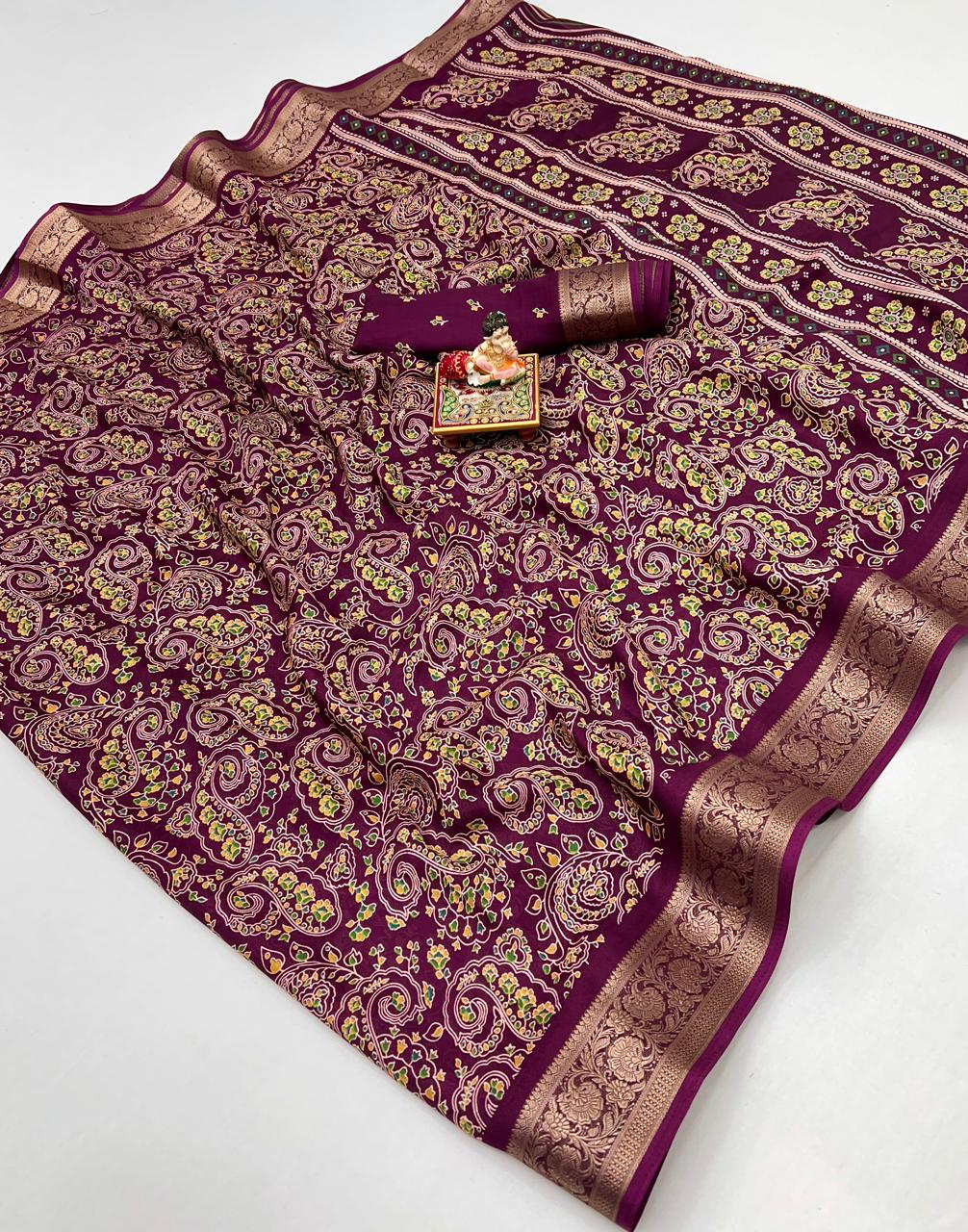
Rainwater itself may be clean, but road spray can contain dust, oil and soil. A faint grey mark is more noticeable on ivory than on teal, maroon, mustard or coral. Colour can't prevent staining, so prompt rinsing and correct washing remain essential.
The Maroon Floral Linen Cotton Saree with Jacquard Woven Border gives a practical visual balance because a darker ground can disguise minor splashes while the woven border gives structure to the drape. The Sea Green Floral Linen Cotton Saree with Border and Sunshine Yellow Linen Cotton Saree with Navy Striped Pallu show how borders and contrasting pallu details can keep a simple commute outfit visually defined without requiring heavy embellishment.
A bright saree isn't automatically impractical. A coral or sunshine-yellow saree can work well when the route is short, the forecast is light and the fabric can be washed according to its care label. The Coral Floral Linen Cotton Saree with Designer Border is better suited to that controlled situation than to a long walk through ankle-deep water.
How can you protect and dry a saree after rain?
Blot a wet saree, separate the layers and dry it in shade with airflow rather than wringing or placing it in direct, harsh sunlight.

Remove the saree from the damp petticoat as soon as possible. Spread the fabric over a wide hanger or clean drying rack so that the pleats don't remain compressed. Use a clean cotton towel to press excess water from the lower border; rubbing can push mud deeper into the weave.
If the saree has touched muddy water, allow heavy grit to dry only if the care label permits gentle brushing, then remove loose soil carefully before washing. Do not use bleach on coloured cotton, linen-cotton or printed sarees unless the manufacturer specifically permits it.
Wash printed cotton and linen-cotton sarees separately the first few times because excess dye may run. Use cool or lukewarm water, a mild detergent and a short soak. Avoid leaving a wet saree in a bucket overnight, since prolonged dampness can create odour and weaken some fibres.
Iron the saree only when it's nearly dry, using the heat setting recommended for the fibre. Store the saree completely dry, with the lower border free from contact with a damp cupboard floor or wall.
How do you choose a practical monsoon saree budget?
A practical monsoon wardrobe can be built with washable everyday sarees instead of relying on one expensive silk saree for every occasion.

Price should be considered alongside washability, replacement cost and how often the saree will face rain. A cotton or linen-cotton saree in the ₹1,000 to ₹1,500 range can be a sensible rotation piece for work travel when it has a manageable weight and a design that doesn't require delicate dry cleaning.
Collections such as Sarees from Rs 1000 to Rs 1500, Sarees Under 20% Off and Sarees Under 10% Off can help shoppers compare everyday options without treating a discount as proof of monsoon suitability. Check fibre content, border construction, blouse-piece details and care instructions before deciding.
Deeper discounts such as Sarees Flat 60% Off or Sarees Flat 50% Off may be useful for creating a backup saree, but inspect the product description carefully for fabric weight and washing requirements. A low-priced saree that needs expensive specialist care may cost more over repeated rainy-season use.
The safest routine combines a 1.5-to-2.5-centimetre floor clearance, stable footwear, secured pleats, a manageable fabric and prompt drying. A monsoon saree doesn't need to look utilitarian; it needs to be measured for real movement and treated according to its fibre.
Common Questions About Wearing a Saree in the Monsoon
How many inches above the floor should a saree be for the monsoon?
A saree should usually sit about 0.5 to 1 inch, or 1.5 to 2.5 centimetres, above the floor in your commuting footwear. Raise it slightly if your route includes deep puddles or muddy stairs.
Should a saree be shorter during the rainy season?
A saree can be slightly shorter during the rainy season, but it should not look noticeably cropped. Keeping the hem 1.5 to 2.5 centimetres above the floor is generally enough for shallow splashes while preserving a polished drape.
Which saree material is best for a rainy commute?
Light or medium-weight cotton, cotton-linen and linen-cotton sarees are usually practical for rainy commutes because they hold pleats and are easier to wash than heavy silk or zari sarees. No saree fabric is completely waterproof.
How can I stop my saree pleats from opening while travelling?
Secure the first waist tuck, keep the front pleats between 4 and 5 inches wide and use one discreet pin or saree clip at the waist. A firm petticoat drawstring and stable footwear also reduce shifting while walking.
Can I wear a silk saree during the monsoon?
You can wear a silk saree during light rain if travel is short and the saree is protected, but heavy rain and road spray increase the risk of water marks, tarnished zari and difficult drying. Banarasi silk and Kanjeevaram are better reserved for sheltered travel on wet days.
How should I dry a saree that got wet in the rain?
Blot excess water, remove the saree from the damp petticoat and air-dry the fabric in shade with good ventilation. Do not wring the saree, store it while damp or iron it at high heat before checking the care instructions.