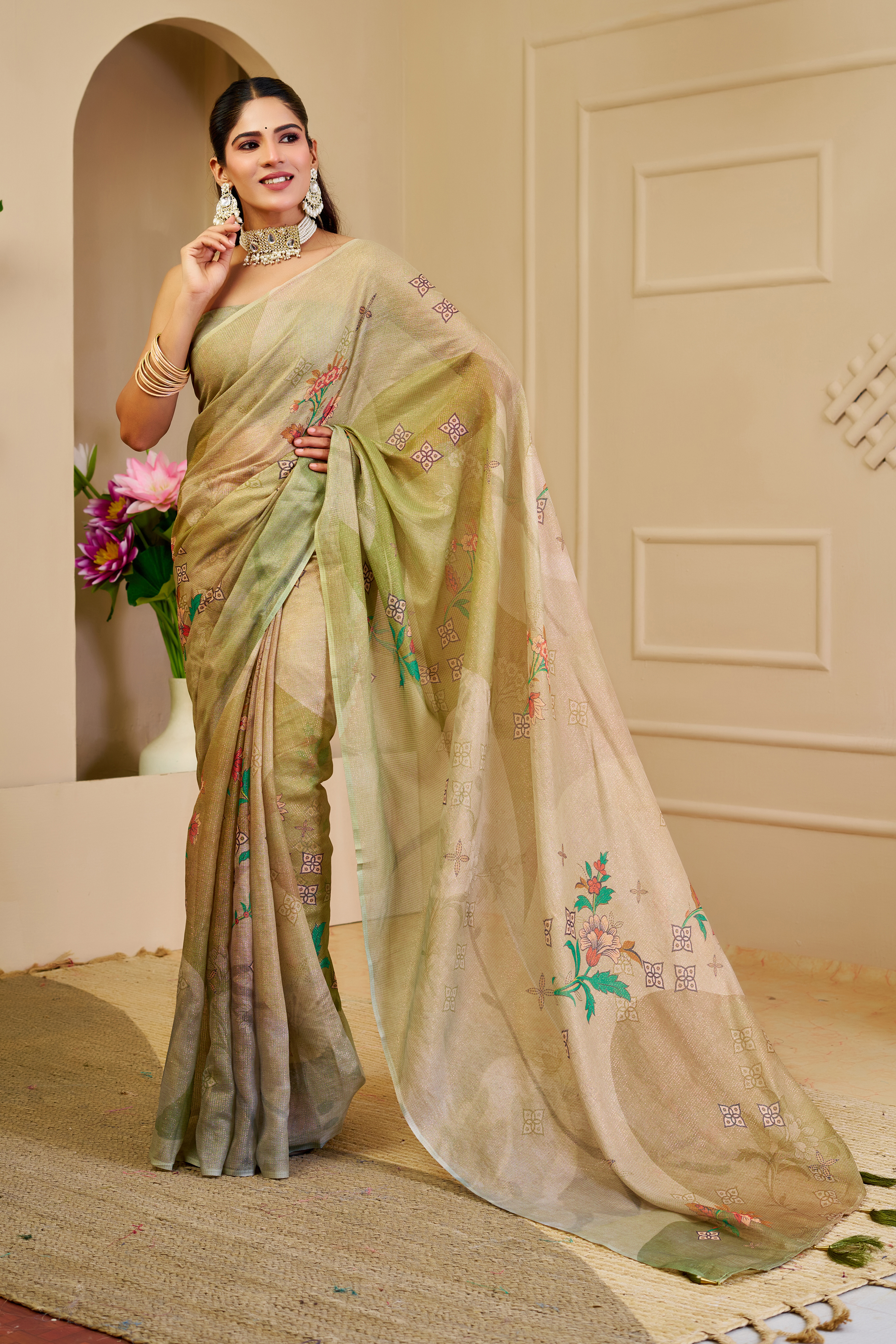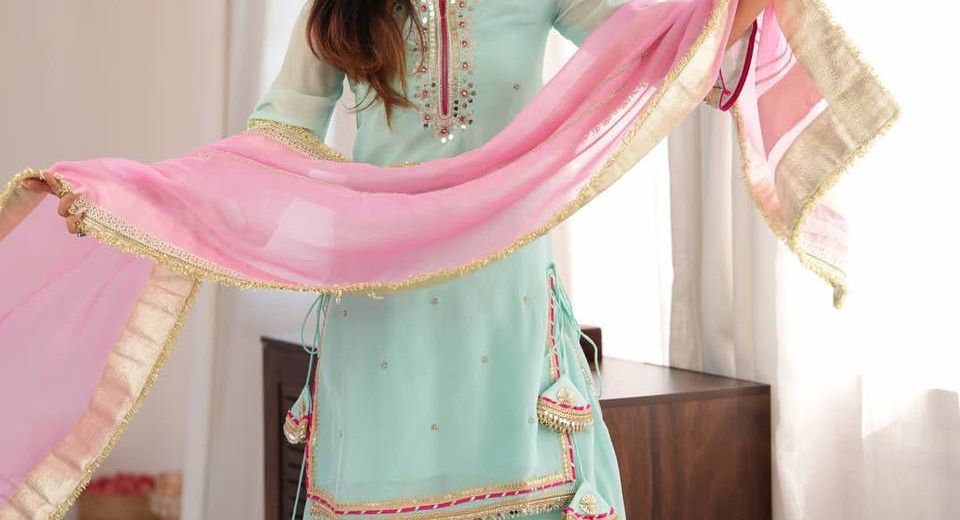
Sibling Rakhi outfits that coordinate through a single colour create a festive family picture without forcing a brother and sister into identical clothing. The practical trick is to select one shared colour family, then vary the fabric, silhouette, texture and accessories so each person still looks like themselves. Raksha Bandhan dressing becomes easier when colour does the connecting and personal style does the rest.
Sibling Rakhi outfits that coordinate through a single colour without looking identical
A single shared colour creates visual connection because the eye notices repeated colour before it notices differences in garment shape. A sister in a sharara and a brother in a kurta can therefore look coordinated even when their outfits have different levels of embroidery.
Exact matching often creates three problems. Identical fabrics may not suit different comfort preferences, identical shades may photograph unevenly under indoor lighting, and matching embroidery can make siblings look styled for a costume rather than a family celebration. Colour coordination avoids all three issues.
Colour coordination also accommodates age and occasion. A teenager may prefer a lightweight co-ord set, a younger child may need a soft cotton kurta, and an adult may choose a silk saree. When all three garments carry a related colour note, the group still appears considered.
For a Raksha Bandhan gathering, an useful rule is to share the main colour in roughly 20 to 40 percent of each outfit. The shared colour might appear across an entire kurta set, in a dupatta, through a blouse, or in smaller details such as a pocket square, hair ribbon or bangles.
Sibling Rakhi outfits that coordinate through a single colour by choosing the right shade
The right colour family depends on the time of day, the setting and the amount of natural light available for photographs. Bright daylight supports clear jewel tones, while warm indoor lighting generally flatters softened pinks, blues, greens and neutrals.
Soft colours for daytime celebrations
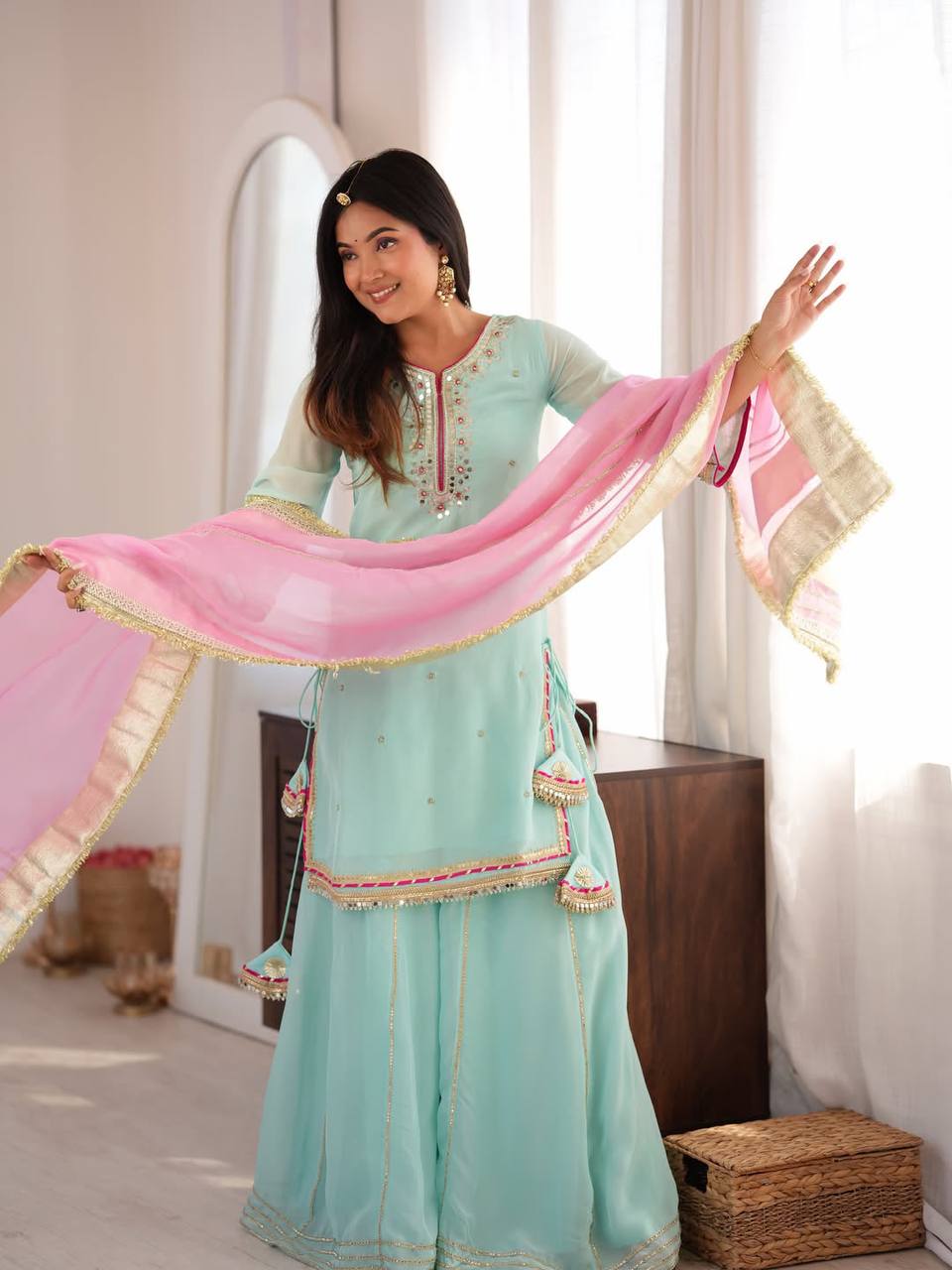
Pastel blue, mint, powder pink, ivory and pale yellow work especially well for a daytime Raksha Bandhan ceremony. Pastel Blue Chanderi Silk Embroidered Sarara Set for Women illustrates how a cool blue can look festive through weave and embroidery rather than through heavy colour saturation.
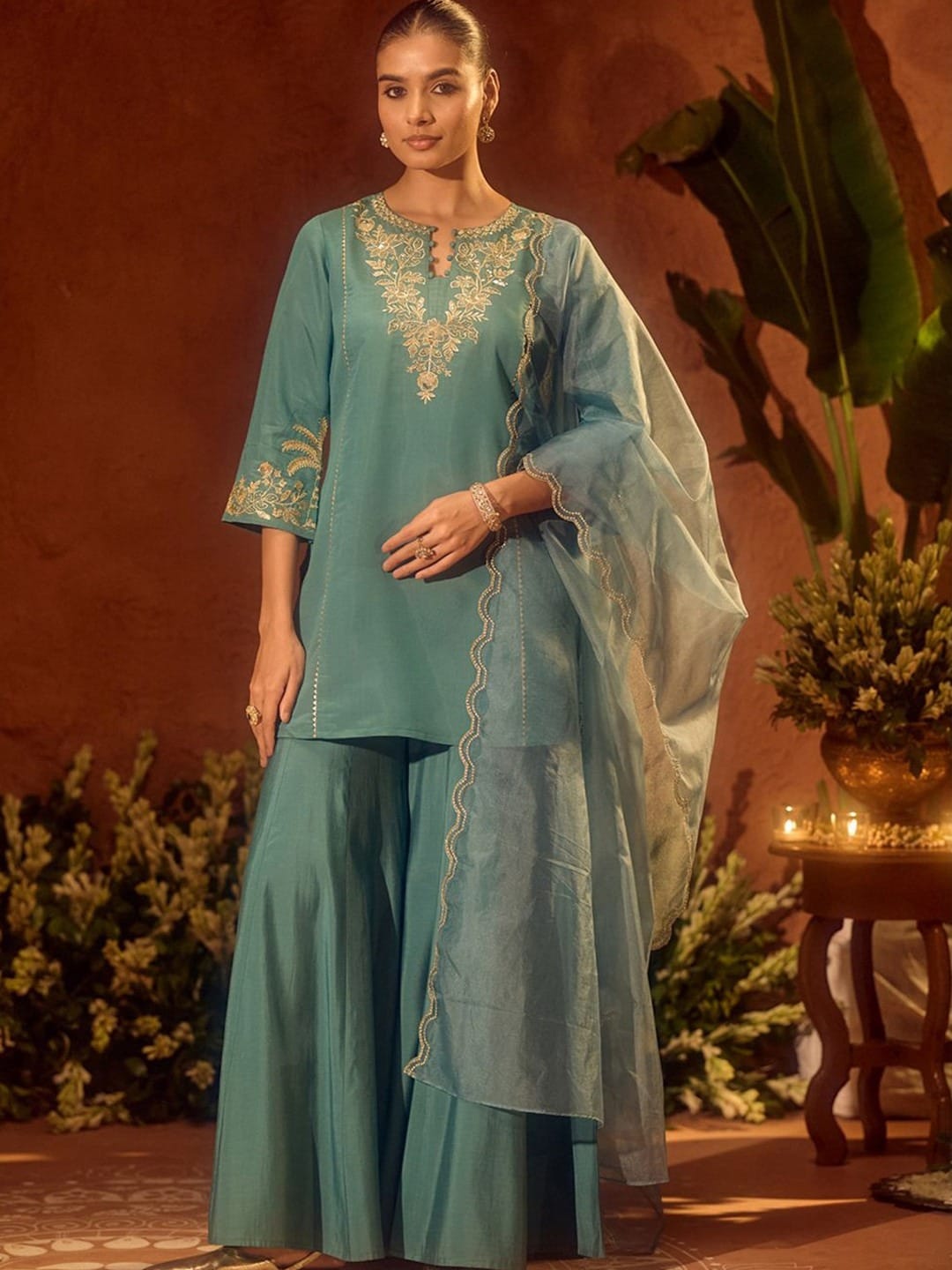
Mint and pale blue can be paired within the same family if one sibling wears mint as the dominant shade and another wears blue with a mint accent. Sky Mint Organza Silk Embroidered Sharara Suit Set offers an useful reference for this approach because the airy organza surface keeps a light shade from looking flat.
Richer shades for evening gatherings
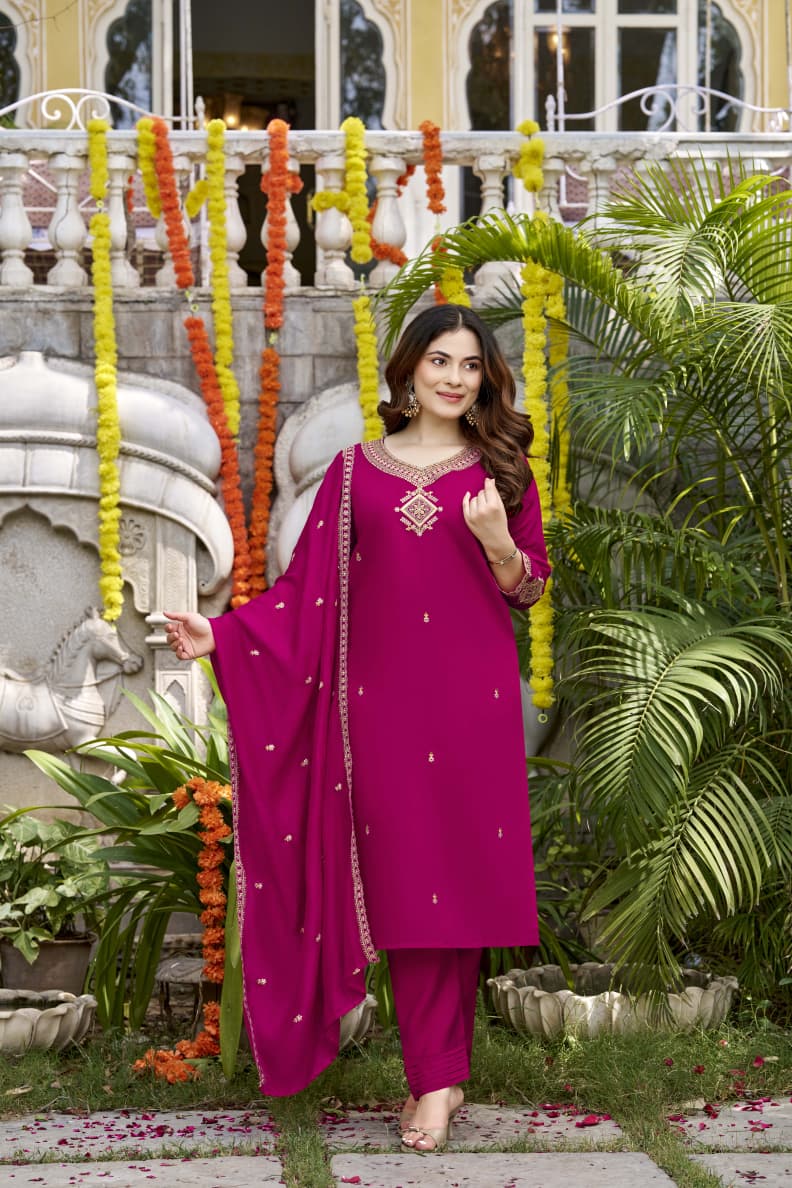
Wine, magenta, black, navy and deep teal provide stronger definition in evening photographs and festive interiors. Wine Pure Vichitra Silk Kurta Set with Sequin Work & Dupatta can anchor a deeper colour story, while a sibling can repeat wine through a dupatta border, blouse, stole or jewellery.
Magenta Viscose Chanderi Kurta Set with Embroidered Dupatta demonstrates why a saturated pink can serve as the shared colour without requiring the second outfit to duplicate the same shade. A brother might wear a neutral kurta with magenta accessories, while a sister wears magenta as the main colour.
Neutrals for a balanced family group
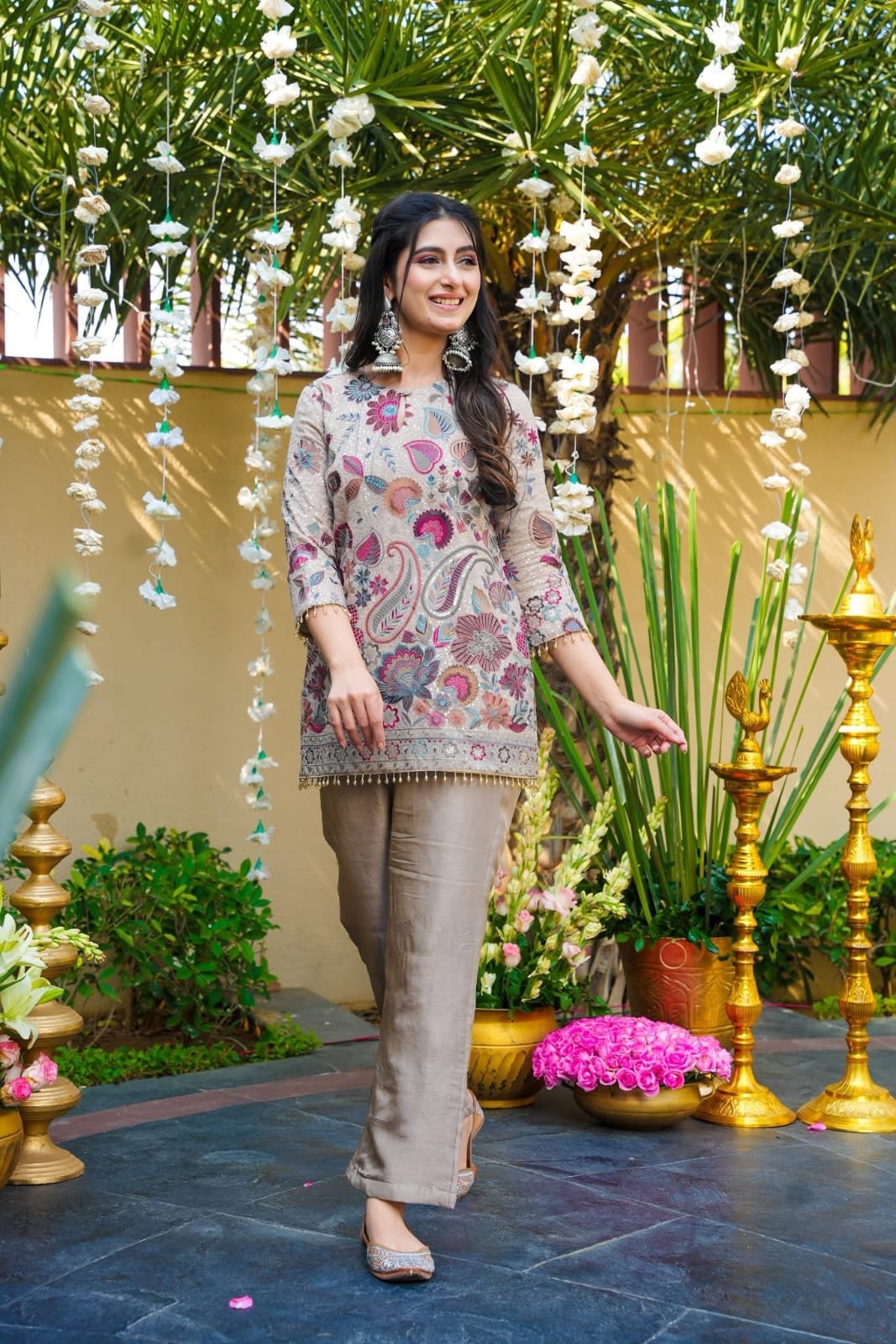
Taupe, charcoal, grey, cream and black are effective shared colours when siblings have very different taste levels. Modern Taupe Vichitra Silk Embroidered Co-Ord Set for Women shows how a muted neutral can retain a festive character through silk texture and embroidery.
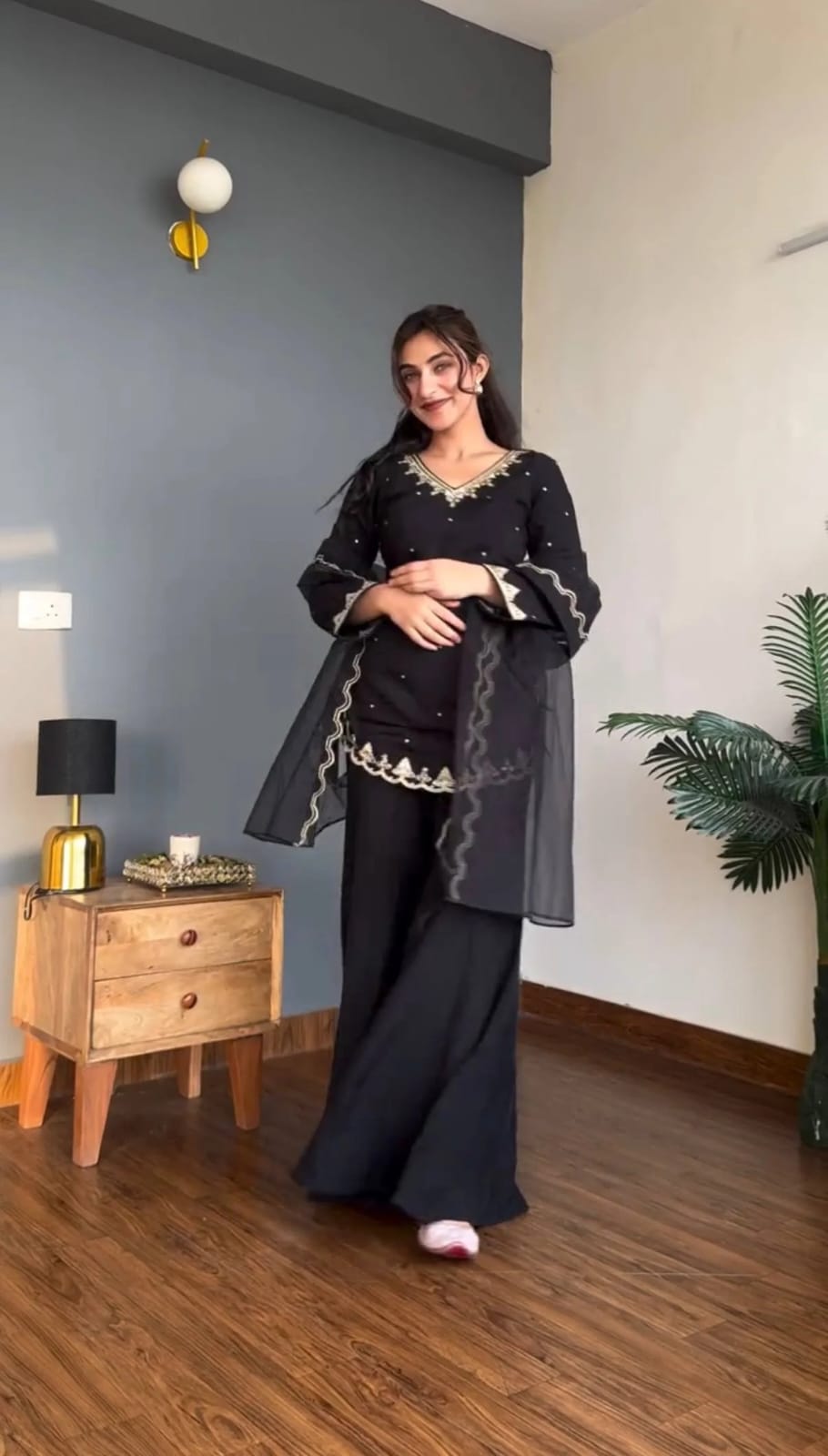
Black Heavy Silk Crepe Kurta Set with Sequence Embroidery can support a black-and-metallic palette for an evening celebration. Black should be balanced with gold, silver, ivory or a bright rakhi detail so the outfit feels celebratory rather than formal or sombre.
Sibling Rakhi outfits that coordinate through a single colour using different silhouettes
Use the shared colour in different visual roles: make it dominant in one outfit, secondary in another and an accessory accent in a third. This method creates a family palette while preserving distinct silhouettes and proportions.
For example, one sibling could wear a magenta kurta set, another could wear a cream outfit with a magenta dupatta, and a third could wear ivory clothing with magenta juttis. The colour repeats three times, but the visual weight changes each time.
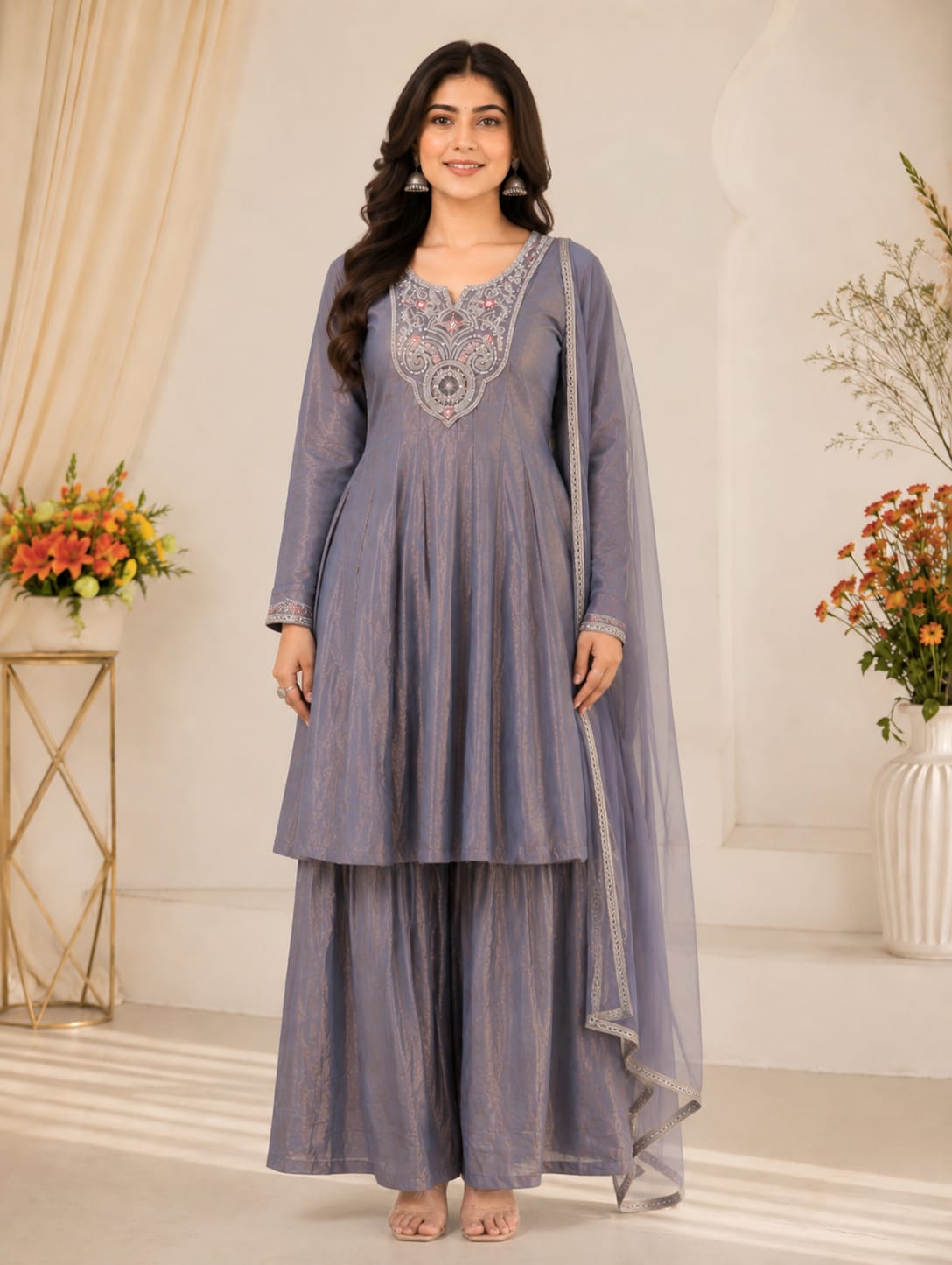
Silhouette is another reliable point of difference. A sister may choose a sharara, sarara or saree, while a brother may wear a straight kurta with trousers or a relaxed co-ord set. Grey Fandy Silk Sarara Set with Embroidery and Dupatta provides a more fluid, occasion-ready shape for one sibling, while a simpler kurta can carry the same grey through a stole or pocket square.
Texture can also separate coordinated looks. Pair organza with cotton, Chanderi with silk, or a matte kurta with a lightly reflective dupatta. Blue Tissue Handloom Cotton Saree With Zari | Varnavi's gives an example of how zari and a tissue-like surface can add festive light to a blue colour story without relying on dense embroidery.
Keep one element deliberately different when the outfits begin to look too similar. Different necklines, contrasting footwear, varied jewellery metals or separate embroidery patterns can restore individuality while the shared colour continues to connect the group.
Sibling Rakhi outfits that coordinate through a single colour with comfortable fabrics
Fabric matters because Raksha Bandhan may include a puja, family meal, travel between homes and several hours of sitting or standing. A beautiful colour palette becomes impractical if the garments trap heat, crease heavily or restrict movement.
Chanderi and organza for lightweight festive dressing
Chanderi brings a light handfeel with a subtle sheen, making it useful for warm-weather celebrations. Chanderi silk, including the construction used in Pastel Blue Chanderi Silk Embroidered Sarara Set for Women, works well when a sibling wants visible festive texture without a heavy layered outfit.
Organza gives a more structured, translucent appearance and suits shararas, dupattas and sleeves. Sky Mint Organza Silk Embroidered Sharara Suit Set can inspire a lighter ensemble, but organza dupattas should be secured carefully because their smooth surface may shift during rituals.
Silk and viscose for richer evening texture
Vichitra silk and similar silk-based fabrics create depth through their slightly textured surface and graceful fall. Modern Taupe Vichitra Silk Embroidered Co-Ord Set for Women and Wine Pure Vichitra Silk Kurta Set with Sequin Work & Dupatta show how one colour can appear layered through sheen, embroidery and drape.
Viscose Chanderi can offer a softer, more fluid alternative for a long family event. Magenta Viscose Chanderi Kurta Set with Embroidered Dupatta suits a colour-led approach because the fabric gives enough surface interest to keep the outfit from needing excessive jewellery.
Cotton for children and active celebrations
Handloom cotton and cotton-rich fabrics are practical for children, outdoor gatherings and humid weather because they generally allow more airflow than heavily layered synthetics. A cotton kurta can coordinate with a sibling's silk outfit through colour, zari accents or a matching stole rather than through identical fabric.
Sibling Rakhi outfits that coordinate through a single colour in photographs
A photo-friendly sibling palette usually contains one anchor colour, one supporting neutral and one metallic or light accent. The anchor creates continuity, the neutral prevents visual overload, and the accent adds the festive finish associated with Raksha Bandhan.
For a blue palette, combine sky blue with ivory and silver. For a magenta palette, use magenta with blush, cream or antique gold. For wine, add beige or muted gold. For taupe, introduce ivory and champagne. These combinations maintain contrast without competing with facial expressions and the rakhi ceremony.
Consider colour temperature before finalising the group. Cool blues, mint and silver create a crisp palette, while magenta, wine, rust and gold create warmth. Mixing warm and cool colours is possible, but one temperature should remain dominant so the photographs don't appear fragmented.
Lighting changes perceived colour. Yellow indoor bulbs can make cream appear more golden and can deepen wine or magenta. Take a phone photograph near the actual event lighting before finalising the outfits, especially when siblings are combining two close shades such as mint and pale blue.
Embroidery scale also affects photographs. Small threadwork reads as texture in a close portrait, while zari borders and sequins remain visible in full-length family photographs. If one sibling wears heavy embellishment, keep the shared colour quieter elsewhere through a solid kurta, plain trousers or an unembellished dupatta.
Sibling Rakhi outfits that coordinate through a single colour with accessories
Accessories should repeat the shared colour selectively rather than copy every ornament across the family. One or two coordinated details are usually enough for a polished Raksha Bandhan group look.
For sisters, a matching bindi, bangles, hair accessory or potli can echo the family colour. For brothers, a stole, pocket square, thread bracelet, juttis or even a watch strap can provide the same connection without making the outfit appear overly styled.
Gold jewellery complements magenta, wine, mustard, taupe and warm ivory particularly well. Silver or pearl accents suit pastel blue, mint, grey and cool pink. Antique gold can bridge warm and cool palettes when siblings are wearing slightly different versions of the same colour.
Footwear can complete the connection without adding another dominant shade. Choose tan or metallic sandals for a warm palette, silver or ivory juttis for a cool palette, and neutral brown or black footwear when garments already contain substantial embroidery.
Rakhi threads themselves can become a useful accent. A red-and-gold rakhi can introduce warmth into ivory or taupe outfits, while a blue, silver or pearl rakhi can reinforce a cool colour story. The rakhi should remain a meaningful detail rather than an excuse to force every accessory into the same colour.
Sibling Rakhi outfits that coordinate through a single colour with practical finishing checks
Check comfort, movement, lighting and care instructions before finalising coordinated Raksha Bandhan outfits. A ten-minute trial at home can reveal problems that are difficult to fix on the day.
- Test movement: Sit cross-legged, raise the arms for the rakhi ritual and walk up stairs while wearing the complete outfit.
- Check fastening: Secure slippery dupattas with concealed pins, test waist ties and confirm that jewellery doesn't catch on embroidery.
- Photograph the palette: Take one full-length phone photograph in daylight and another under the event's likely indoor lighting.
- Separate the colour roles: Decide which sibling will wear the shared colour as the dominant shade, secondary layer or small accent.
- Pack carefully: Fold embellished garments with tissue paper, keep zari away from rough surfaces and carry a spare safety pin, fashion tape and stain-removal wipe.
Care instructions should follow the fabric rather than the colour. Chanderi, organza, Vichitra silk and heavily embellished garments commonly benefit from dry cleaning or specialist care, while some cotton garments can be gently hand-washed if the label permits. Store sequined and zari garments in breathable fabric covers instead of sealed plastic for long periods.
The strongest sibling Rakhi outfits that coordinate through a single colour feel connected at first glance and individual on closer inspection. Choose one colour family, vary its intensity, let fabrics suit each wearer, and reserve matching details for small finishing touches. That approach produces a family look that photographs well and remains comfortable throughout the celebration.
Common Questions About Coordinating Sibling Rakhi Outfits by Colour
How can siblings coordinate Rakhi outfits without wearing the same clothes?
Choose one shared colour and assign it different roles in each outfit. One sibling can wear the colour as the main garment, another can use it in a dupatta or blouse, and a third can repeat it through footwear or accessories.
Which colours work best for coordinated Raksha Bandhan outfits?
Pastel blue, mint, ivory, magenta, wine, taupe and black all work well when matched with a suitable neutral or metallic accent. Select lighter shades for daytime celebrations and richer colours for evening gatherings, while checking the palette under the event lighting.
Can a brother and sister wear different fabrics and still look coordinated for Rakhi?
Yes, different fabrics can make the group look more natural and comfortable. Chanderi, organza, cotton, Vichitra silk and handloom cotton can share one colour family even when the garments have different textures and levels of shine.
How much of the same colour should siblings include in their Rakhi outfits?
A shared colour covering about 20 to 40 percent of each outfit is usually enough for visual coordination. The colour may appear in the main garment, a dupatta, a blouse, a stole, embroidery or a small accessory.
How do coordinated sibling outfits look good in family photographs?
Use one anchor colour, one supporting neutral and one metallic or light accent. Avoid putting heavy embroidery on every outfit, and photograph the garments in both daylight and the likely indoor lighting before Raksha Bandhan.
What accessories can connect sibling Rakhi outfits?
Bangles, bindis, juttis, stoles, pocket squares, hair ribbons, potlis and rakhi threads can repeat the shared colour. One or two coordinated accessories are generally enough; repeating every detail can make the outfits look overly matched.