Onam School Celebration Outfits That Respect Kerala Traditions should look festive without making students uncomfortable during assemblies, performances, games or classroom activities. Kerala's most recognisable Onam clothing uses off-white, cream and gold, especially in kasavu sarees and mundu-inspired garments, but respectful dressing involves more than choosing a colour palette. Fabric, length, coverage, movement, footwear and the school's own instructions all matter.
A thoughtful school outfit can acknowledge Kerala heritage while remaining practical for a full day. Cotton, linen-cotton, Chanderi and light silk blends offer useful alternatives to heavy embellishment. Small details such as a gold border, jasmine flowers, a neatly draped dupatta or a simple Kerala-style blouse can communicate a festive connection without turning a school event into a formal wedding.
Onam School Celebration Outfits That Respect Kerala Traditions: What Makes an Outfit Appropriate?
An appropriate Onam school outfit recognises Kerala traditions, suits the student's age, follows school guidelines and allows easy movement. The best choice is clean, modest, breathable and secure enough for sitting, walking, dancing and participating in group activities.
Onam celebrates the return of King Mahabali in Kerala's cultural memory and is associated with community, hospitality, harvest and equality. School celebrations often include pookalam-making, Thiruvathira performances, songs, feasts and traditional games. Clothing should support that shared atmosphere rather than compete with it.
Kasavu remains the clearest visual reference. A kasavu saree generally combines a white or cream ground with a metallic zari border, traditionally associated with Kerala handloom textiles. A child or teenager doesn't need a full saree to reflect that tradition. A cream kurta with a gold border, a simple mundu-inspired skirt or an ivory salwar suit with restrained zari can be more practical.
Respect also means avoiding costume-like styling. Kerala clothing includes many regional and community variations, so no single outfit represents every Malayali household. Wearing a garment accurately, keeping accessories manageable and acknowledging the cultural source is more considerate than exaggerating stereotypes.
Onam School Celebration Outfits That Respect Kerala Traditions: Which Colours Work Best?
Cream, white, gold and muted natural colours provide the most recognisable foundation for Kerala-inspired Onam dressing. These colours can be balanced with green, mustard, rust, teal or purple when the school permits more variety.

White and cream work well because they echo heritage kasavu sarees and mundu. Gold can appear as a narrow zari border, woven thread, small earrings or a hair accessory rather than covering the entire garment. Green connects naturally with Kerala's lush landscape, while mustard and rust add warmth without losing the classic mood.
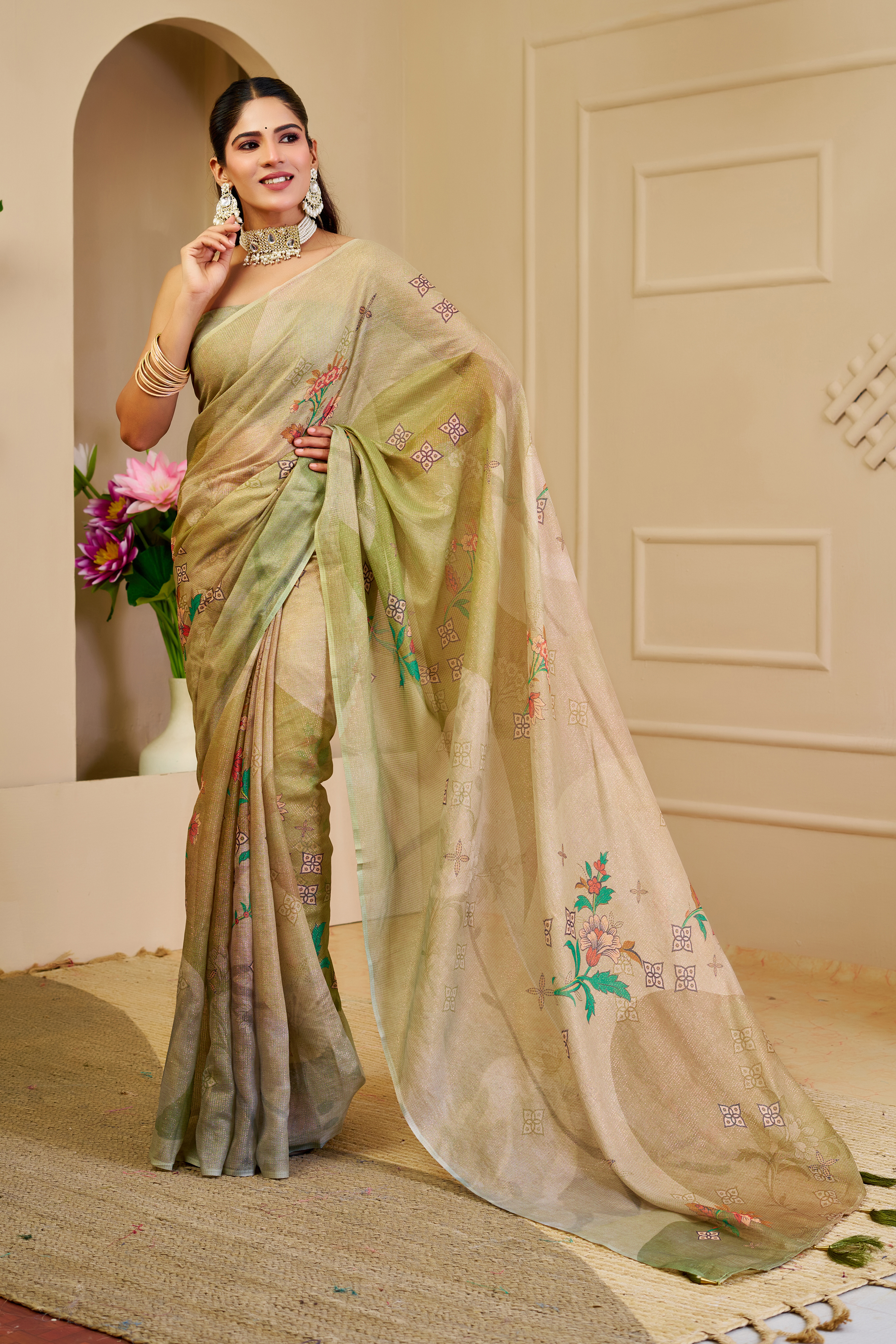
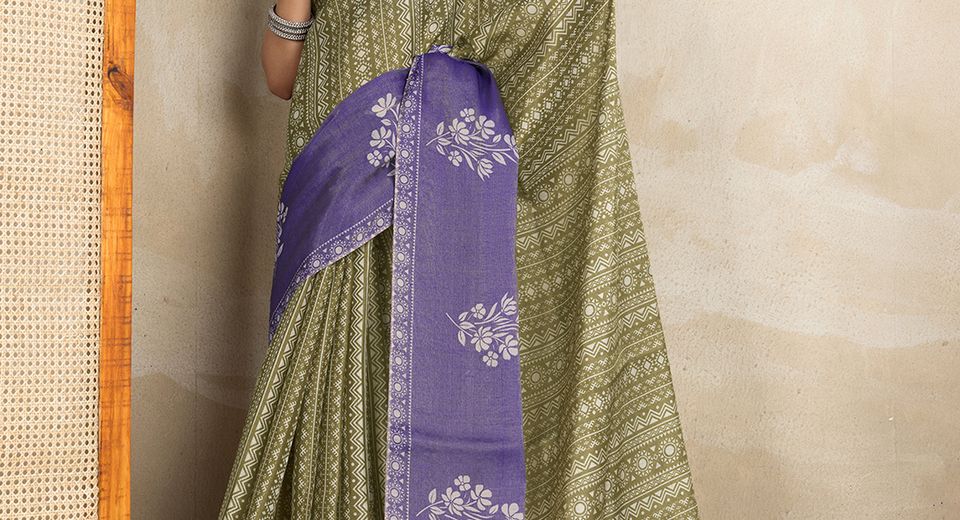
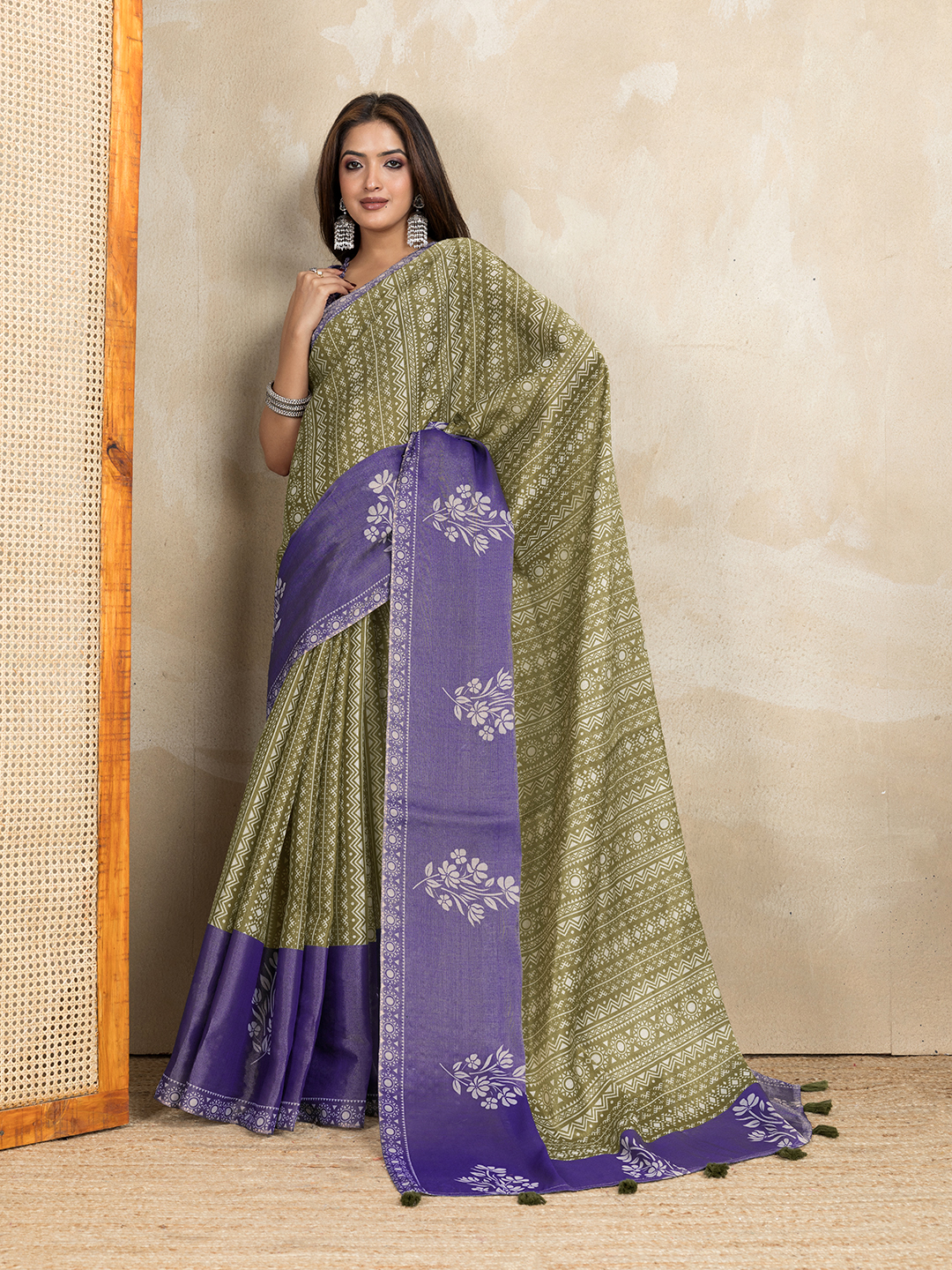
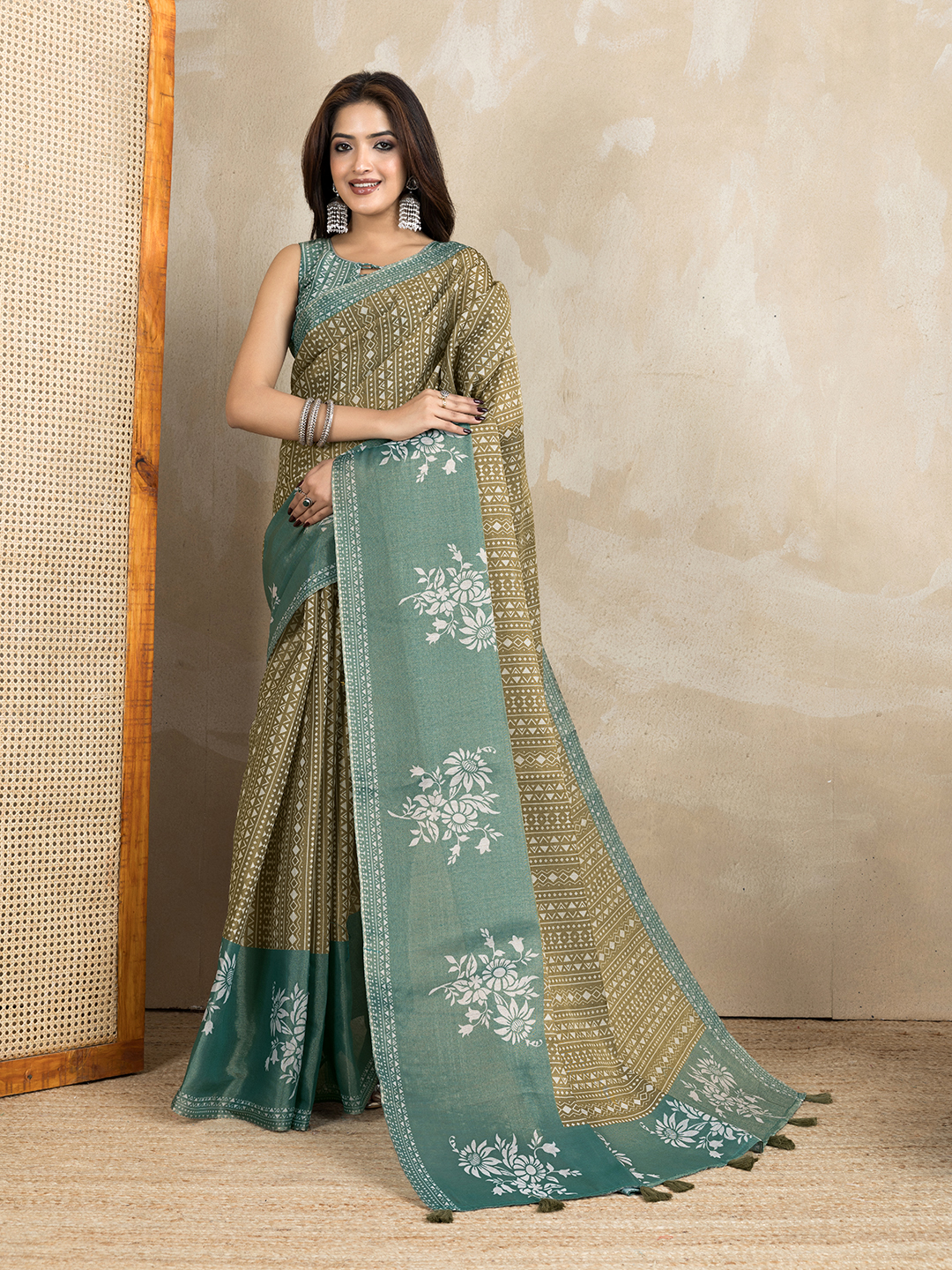
An Olive Green Erode Cotton Geometric Floral Saree demonstrates how a regional cotton texture and a restrained colour story can feel festive without relying on heavy shine. An Olive Green Erode Cotton Saree with Purple Floral Pallu Set offers another example of combining a grounded base with a brighter pallu. These colour combinations may suit older students or teachers who want an Onam reference beyond plain ivory.
Bright colour isn't automatically disrespectful, but styling should retain visual balance. A vivid saree can be paired with a plain blouse, minimal jewellery and a simple hairstyle. Conversely, an ornate gold outfit with large accessories may look less suitable for school even when the colours are time-honoured.
Onam School Celebration Outfits That Respect Kerala Traditions: Which Fabrics Suit a Full School Day?
Cotton, linen-cotton and lightweight Chanderi are among the most practical fabrics for an Onam school celebration because they offer breathability and easier movement. Fabric choice should account for classroom temperature, outdoor activities, the student's sensitivity to heat and the number of hours the outfit will be worn.
Cotton for movement and warm weather
Erode cotton and linen-cotton are useful for school because they're comparatively breathable and don't cling heavily in warm weather. Cotton sarees can be easier to manage than slippery synthetic fabrics, especially when the pleats are pinned correctly. A cotton kurta set also gives students freedom to sit cross-legged, walk between venues and participate in performances.
The Buy Teal Blue Kalamkari Linen Cotton Saree with Coral Border shows how printed linen-cotton can provide festive character while remaining less formal than a heavily embellished silk saree. Kalamkari motifs have a distinct textile-art history, so the garment can introduce students to Indian craft traditions as well as colour.
Chanderi for light festive texture
Chanderi is lightweight and often has a subtle sheen, making it suitable when a student wants a more dressed-up appearance without wearing dense embroidery. Chanderi can be delicate, so rough school benches, sharp jewellery and overloaded bags should be avoided.
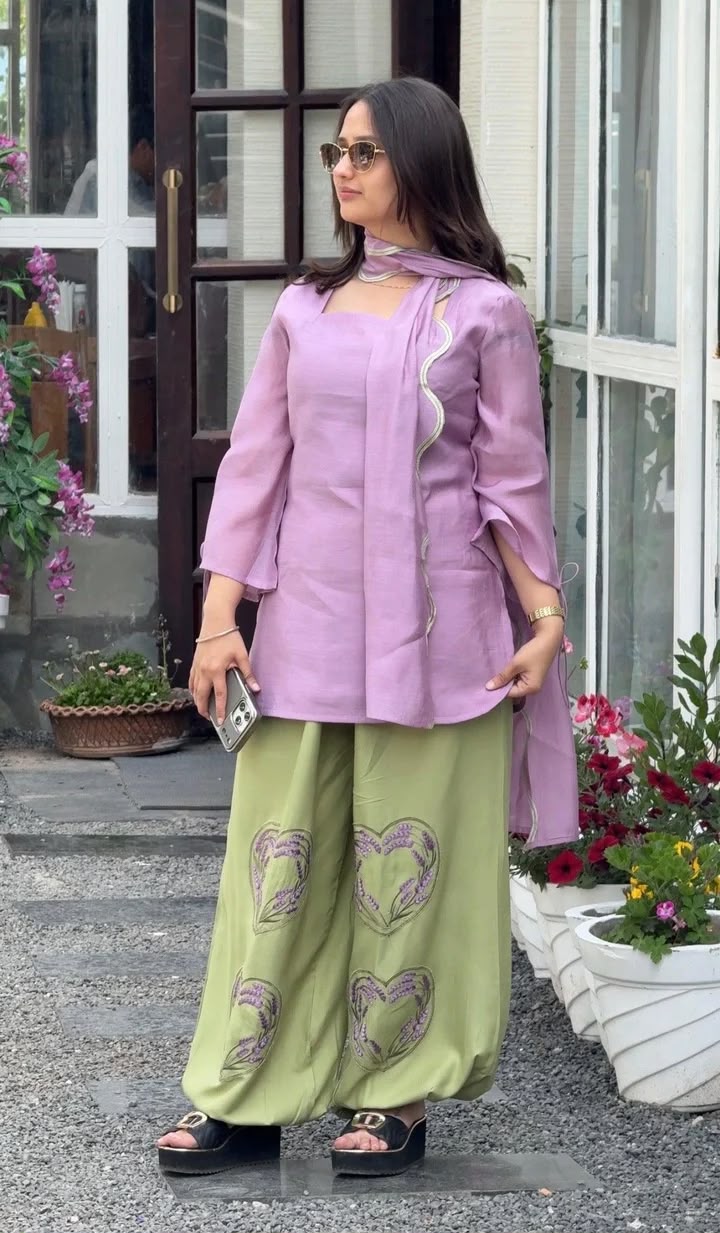
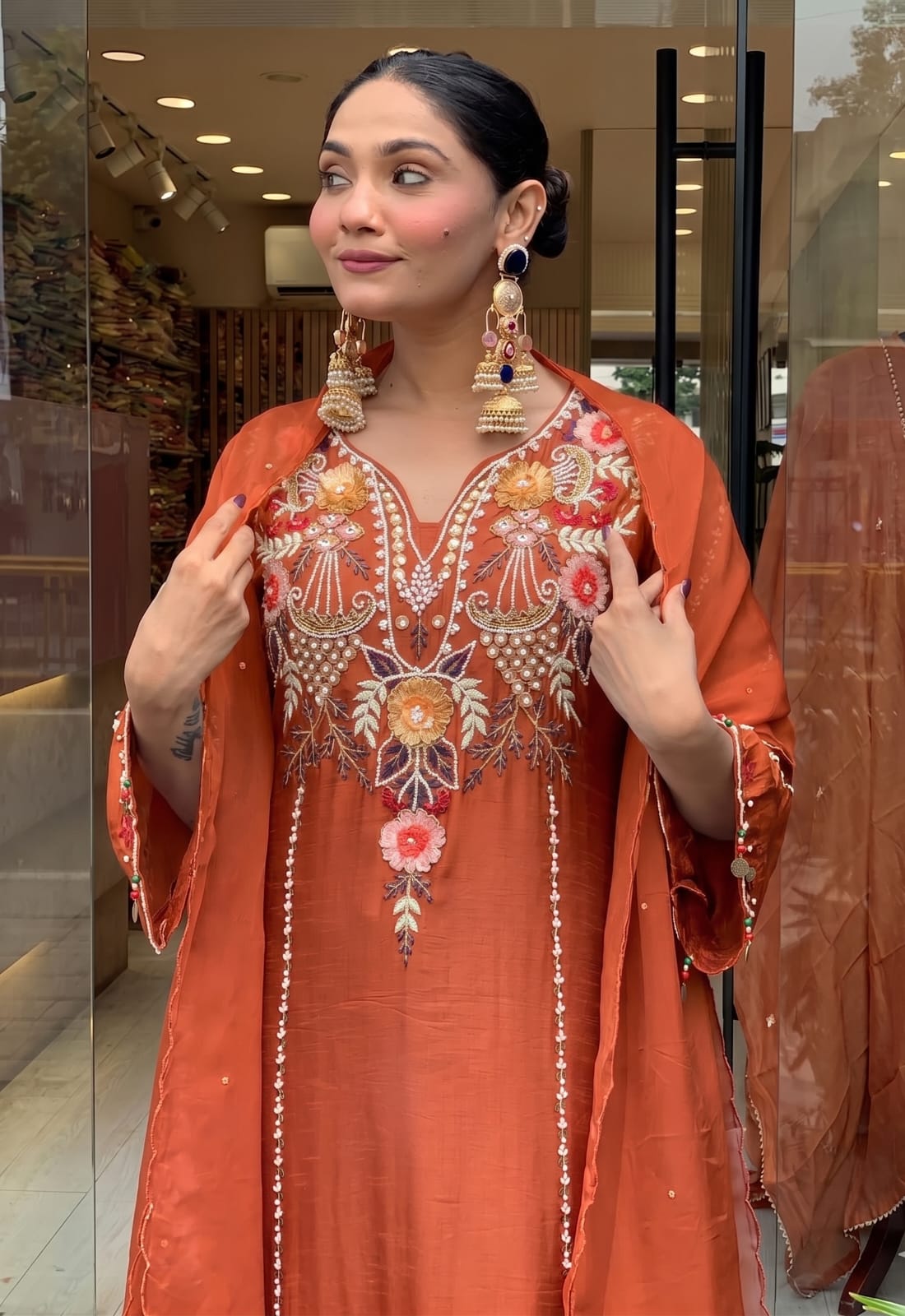
The Lavender Chanderi Kurta with Olive Embroidered Palazzo Suit uses a relaxed palazzo silhouette that can be easier to walk in than a narrow skirt or long, loose dupatta. The Rust Orange Chanderi Silk Embroidered Kurta Set for Women is better suited to an older student or adult because its embroidered finish may feel more formal than a basic school-day outfit.
Onam School Celebration Outfits That Respect Kerala Traditions: How Should Students Wear Sarees?
Students should wear sarees only when they can move confidently in them and when the school allows saree dressing; a pre-pleated, securely pinned or ready-to-drape style is usually safer than a loose drape. Younger students may be more comfortable in a skirt-and-top, salwar suit or half-saree-inspired set.

A saree for school should have a secure waist tuck, evenly arranged pleats and a pallu pinned near the shoulder. Two small safety pins at the shoulder and one at the waist can reduce shifting, but pins should be placed carefully and checked before the student leaves home. The blouse should provide comfortable coverage, and the pallu should not hang so low that it catches on chairs or bags.
Families should conduct a short movement test before the event. The student should sit on a chair, climb stairs, raise both arms, walk briskly and carry a school bag while wearing the complete outfit. Any pulling at the waist, slipping at the shoulder or tripping near the hem should be corrected at home rather than during the celebration.
Footwear is part of the practical decision. Flat sandals, juttis or low-profile ethnic shoes are safer for corridors and outdoor school grounds than high heels. A student participating in Thiruvathira or another dance item may need the exact footwear specified by the teacher instead.
The Mustard Brown Shimmer Linen Cotton Floral Saree with Border can be made more school-appropriate with a plain blouse, minimal jewellery and a firmly pinned pallu. The Buy Mustard Blue Ikat Print Linen Cotton Saree with Borders can create a craft-focused look, but the drape should remain neat and restrained so the print doesn't require additional accessories.
Onam School Celebration Outfits That Respect Kerala Traditions: What Can Boys and Gender-Neutral Dressers Wear?
Boys and gender-neutral dressers can choose a breathable kurta, a simple shirt with a mundu-inspired lower garment or a coordinated ethnic set in cream, white, gold or earthy colours. Comfort and secure construction matter more than reproducing a ceremonial adult outfit.

A cream or off-white kurta with a narrow gold border provides an easy kasavu reference. A cotton kurta paired with straight trousers is often more practical for a school timetable than a loose dhoti, especially if the student must climb stairs or join games. If a mundu is permitted, the fold should be secured properly and tested during walking before the event.
The Madhuri 2 Black Chanderi Silk Embroidered Kurta Set brings a darker, more contemporary alternative for an older wearer, although black may not be suitable for every school's Onam theme. The outfit can work when the dress code welcomes broader festive ethnic wear and the embroidery remains comfortable rather than scratchy.
Gender-neutral dressing doesn't require removing cultural references. A cream kurta, gold-bordered stole, cotton trousers, a small floral detail or a simple woven scarf can express the spirit of Onam without forcing students into a narrow idea of heritage clothing.
Onam School Celebration Outfits That Respect Kerala Traditions: Which Accessories Are School-Friendly?
Small, secure accessories and tidy hairstyles are the most suitable choices for a school Onam celebration. Accessories should complement the garment, stay in place during movement and avoid sharp edges, dangling chains or excessive weight.
Jasmine flowers are strongly associated with festive South Indian styling and can be worn as a small gajra or tucked into a braid. A low braid, side braid, bun or ponytail keeps hair away from the face during performances. Hairpins should be covered or positioned securely so they don't cause discomfort during classroom activities.
Simple jhumkas, small studs, thin bangles and a modest chain are usually enough. Students taking part in dance, sports or craft activities should avoid long earrings and multiple bangles. A small bindi may be worn according to family practice and school rules; no student should be pressured to adopt a religious or cultural symbol.
Make-up is rarely necessary for a school celebration. If stage make-up is required for a performance, the teacher's instructions should take priority. Comfortable footwear, a labelled water bottle and a compact bag are more useful additions than elaborate accessories.
Onam School Celebration Outfits That Respect Kerala Traditions: How Can Families Balance Cost and Rules?
Families can balance tradition and budget by adapting one versatile ethnic garment instead of buying a complete ceremonial wardrobe. A cotton saree, kurta set or plain cream outfit can be reused for Vishu, cultural programmes, family gatherings and other festive occasions.
Before shopping, families should check whether the school has specified a colour, garment type, footwear rule or performance costume. Some schools request classic dress, while others allow any modest ethnic wear. A student should not spend money on a saree if the school has asked participants to wear a kurta, uniform variation or dance costume.
An useful budget plan separates the essential garment from optional styling. The essential items are a comfortable outfit, suitable innerwear, secure footwear and any required performance accessories. Optional purchases include new jewellery, a special hairstyle, decorative bags and elaborate make-up, all of which can be skipped without weakening the cultural connection.
Fit should be checked at least two days before the event. A new garment should be worn indoors for 20 to 30 minutes to identify scratchy embroidery, loose hooks, transparent sections or slipping straps. Cotton and linen-cotton may crease, so ironing or steaming should be completed according to the care label before the celebration.
After the event, delicate garments should be aired away from direct sunlight before storage. Chanderi silk, zari borders and embroidered pieces should generally be folded with soft muslin or tissue rather than kept tightly compressed. Cotton sarees and kurta sets should be washed according to their care instructions, because colour bleeding and shrinkage can affect later use.
Onam School Celebration Outfits That Respect Kerala Traditions: A Practical Final Checklist
A suitable outfit should pass four tests: cultural connection, physical comfort, school compliance and secure movement. If any one of these tests fails, a simpler garment is usually the wiser choice.
- Cultural connection: Include a genuine reference such as kasavu colours, a zari border, Kerala cotton, jasmine flowers, a modest mundu-inspired silhouette or a craft textile.
- Comfort: Choose breathable fabric, non-irritating seams, a manageable length and enough room for sitting, walking and dancing.
- School compliance: Confirm the dress code, performance requirements, footwear rules and any restrictions on jewellery or make-up.
- Secure movement: Pin saree pleats and pallus, test dupatta placement, fasten footwear and remove accessories that swing or snag.
- Age-appropriate styling: Keep coverage, embellishment and accessories suitable for the student's age and daily school environment.
Onam dressing at school doesn't need to reproduce a ceremonial adult wardrobe. A breathable cotton kurta, a carefully styled saree, a cream-and-gold set or a small Kerala-inspired detail can be enough. The strongest outfit is one that lets students participate fully while showing genuine care for the festival's visual language and cultural meaning.
Questions Families Ask About Respectful School Onam Dressing
What should a child wear for an Onam celebration at school?
A child can wear a breathable cotton kurta set, cream-and-gold ethnic outfit, simple skirt-and-top combination or a securely styled traditional set. The garment should allow sitting, walking and participation in school activities without loose hems or uncomfortable embellishment.
Is a saree suitable for a school Onam celebration?
A saree is suitable when the school permits it and the student can move confidently in the garment. Pre-pleated or firmly pinned drapes, comfortable blouses and flat footwear are safer choices than loose pleats, long trailing pallus or high heels.
Which colours are traditional for Onam dressing in Kerala?
White, cream and gold are the most recognisable colours because they recall Kerala kasavu sarees and mundu. Green, mustard, rust, teal and purple can also work when they are styled with restraint and fit the school's dress instructions.
What fabric is most comfortable for an Onam school function?
Cotton, Erode cotton, linen-cotton and lightweight Chanderi are generally comfortable for warm weather and extended wear. Chanderi silk and zari can look festive, but students should test the garment for scratchy embroidery, heat and ease of movement before the event.
How can students wear Kerala-inspired clothing without looking like a costume?
Students can use one or two authentic references, such as a kasavu-colour palette, a narrow zari border, jasmine flowers or a Kerala cotton textile. Simple styling, modest accessories and accurate respect for the garment's source create a more natural result than combining many exaggerated elements.
What accessories are appropriate for a school Onam celebration?
Small earrings, thin bangles, a modest chain, a neat braid and a small jasmine arrangement are usually appropriate if school rules allow them. Students performing dance, sports or games should avoid long earrings, multiple bangles, unstable hair ornaments and heavy necklaces.