Odisha Wedding Guest Handlooms Beyond the Most Famous Ikats offer a wider vocabulary of texture, colour and occasion dressing. Odisha's textile culture includes tie-dyed ikat, fine cotton, silk, zari work, floral surfaces and regional weaving traditions that can suit a daytime Haldi ceremony as comfortably as an evening reception. The useful question isn't simply which saree looks festive, but how fibre, weave, colour and finish will behave across several hours of eating, greeting, sitting and dancing.
A wedding guest wardrobe can therefore move beyond a single idea of Odisha handloom. Sambalpuri ikat remains great, but it shares space with Bomkai, Khandua, Berhampuri and breathable cotton traditions. Contemporary handloom sarees may also combine cotton grounds with tissue-like sheen, floral prints or zari borders. Understanding those distinctions helps you choose a saree that looks rooted in craft while still feeling appropriate for the venue, season and dress code.
Odisha Wedding Guest Handlooms Beyond the Most Famous Ikats: What makes them distinctive?
Odisha wedding guest handlooms are distinctive because they combine regional textile identity with practical, breathable construction and expressive motifs. The most recognisable technique is Odisha ikat, called bandha in local weaving practice, where threads are resist-tied and dyed before weaving so that the pattern emerges through the structure of the cloth.
That process gives ikat its lightly feathered edges and makes every repeat slightly single. Sambalpuri textiles often feature traditional motifs such as shankha, chakra, flowers, birds and geometric forms. Bomkai sarees are associated with contrasting borders and woven motifs, while Khandua is linked to Odisha's silk weaving heritage and devotional textile history. Berhampuri silk, traditionally associated with Berhampur, is known for its characteristic borders and richer silk character.
Not every saree inspired by Odisha needs to display a large ikat field. A cotton saree with a restrained border can carry a regional sensibility through colour and handloom texture. A zari-accented cotton saree can provide enough celebration for a wedding guest without the weight of a heavily embellished silk garment. This breadth is especially useful when an invitation includes several functions with different levels of formality.
Odisha Wedding Guest Handlooms Beyond the Most Famous Ikats: Which weave suits each function?
A lightweight cotton or cotton-blend handloom works best for daytime rituals, while silk, stronger zari accents or deeper colours suit evening ceremonies and receptions. The choice should match both the function's visual mood and the amount of movement required.

Haldi ceremony and daytime rituals
For a Haldi ceremony, choose a breathable cotton saree in yellow, ivory, coral, pink, green or a soft floral combination. Haldi paste, water and outdoor heat make washable or relatively easy-care fabrics more practical than delicate silk with extensive surface embroidery. Pastel Floral Tissue Handloom Cotton Saree with Zari Weaves brings a festive glimmer while retaining the informal ease expected at a daytime ritual.
Keep the blouse simple and secure. A short-sleeved cotton blouse, a comfortable petticoat and a firmly pinned pallu reduce adjustments when guests move between seating areas and photo sessions. Avoid very long tassels or loose borders near turmeric trays, open flames and crowded dining spaces.
Mehendi and sangeet
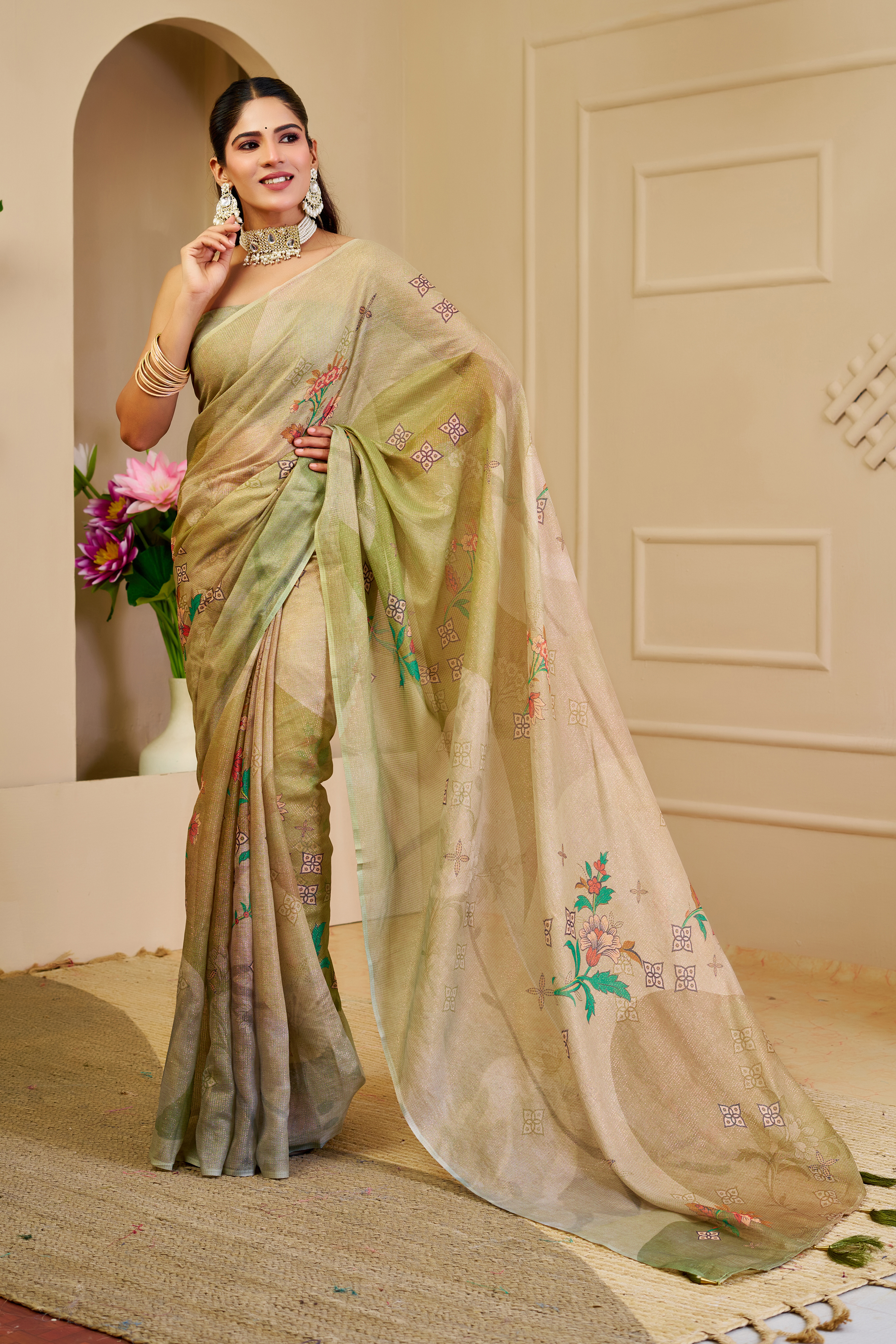
Mehendi and sangeet functions allow brighter colour, visible pattern and more movement-friendly draping. Floral prints, tissue surfaces and medium-weight cottons photograph well under mixed indoor lighting without requiring heavy jewellery. Olive Green Tissue Handloom Cotton Saree With Floral Prints can be styled with antique gold earrings and a contrasting pink, maroon or rust blouse for a lively evening look.
A belt over the saree can help hold the pleats during dancing, but the belt should sit comfortably over the natural waist and should not compress the torso while seated. Pre-pleating the saree at home and carrying a small packet of safety pins can save time at venues where changing rooms are limited.
Wedding ceremony and reception
An evening wedding or reception calls for richer contrast, more visible zari or a silkier surface. Cream, navy, wine, emerald and deep blue provide a formal base, while gold zari connects the saree to the celebratory setting. Cream Tissue Handloom Cotton Saree with Floral Zari Shimmer offers an useful middle ground: its luminous surface reads festive. But the cotton construction can feel less cumbersome than a heavily worked silk saree.
For a heritage ceremony, pair an Odisha handloom saree with a structured blouse, a low bun and gold jewellery. For a contemporary reception, a sleeveless high-neck blouse, sculptural earrings and a compact clutch can shift the same saree towards evening dressing without hiding its weave.
Odisha Wedding Guest Handlooms Beyond the Most Famous Ikats: How do cotton, tissue and zari differ?
Cotton controls breathability, tissue creates a light reflective surface, and zari adds metallic definition; these terms describe different aspects of a saree rather than interchangeable levels of quality. Reading the fibre and finish separately gives a clearer idea of comfort, care and formality.

Cotton absorbs moisture and generally feels comfortable in warm, humid conditions. Handloom cotton can also have small variations in slub, density or selvedge, which are normal signs of textile construction rather than defects. A fine cotton may fold compactly and drape close to the body, while a crisper cotton may hold pleats more visibly.
Tissue usually refers to a light, slightly translucent or luminous effect created through the yarn arrangement or surface finish. A tissue cotton saree can look more polished than a matte everyday cotton without becoming as warm as a dense silk. Cream Floral Tissue Handloom Cotton Saree with Zari Weaving demonstrates how a floral surface and metallic detail can create occasion value without relying on dense embroidery.
Zari is a metallic yarn or metallic-looking thread used in borders, motifs and woven accents. Classic zari may contain precious-metal content, but contemporary sarees often use tested metallic yarns or imitation zari. Ask about the composition when long-term care matters, because metallic threads can tarnish, lose brightness or react to moisture differently from cotton.
A saree with more shine isn't automatically more formal or more durable. A cotton ground with restrained zari may be ideal for a summer wedding, whereas a dense silk with broad zari may be better for a short evening event in an air-conditioned venue. The right choice depends on how long you'll wear it and how much movement the function requires.
Odisha Wedding Guest Handlooms Beyond the Most Famous Ikats: How should you style them?
Odisha handlooms look most considered when styling choices repeat one element of the saree without competing with its woven identity. Pick one dominant cue-colour, motif, metallic thread or regional jewellery-and let the remaining accessories provide balance.

Use the blouse to control formality
A plain blouse in a colour drawn from the border makes a patterned saree suitable for family ceremonies and daytime gatherings. A brocade, raw silk or velvet blouse raises the formality for an evening reception. But a heavily patterned blouse can obscure a saree's ikat or floral design. With a pale base, a jewel-toned blouse creates definition in photographs.
Cream Pink Tissue Handloom Cotton Saree with Zari can take a dusty rose, wine or muted gold blouse. A cream blouse keeps the effect delicate, while a darker blouse creates a sharper wedding-guest silhouette. Matching the blouse exactly to the saree isn't required; repeating one minor colour often looks more intentional than using the dominant shade everywhere.
Choose jewellery according to the weave
Antique gold, silver, filigree and terracotta jewellery can all work with Odisha textiles, provided the scale suits the saree. Silver or oxidised metal emphasises the craft character of cotton and ikat, while gold complements zari and warmer floral palettes. Avoid wearing a large necklace, oversized earrings and a dramatic maang tikka together when the saree already contains dense visual detail.
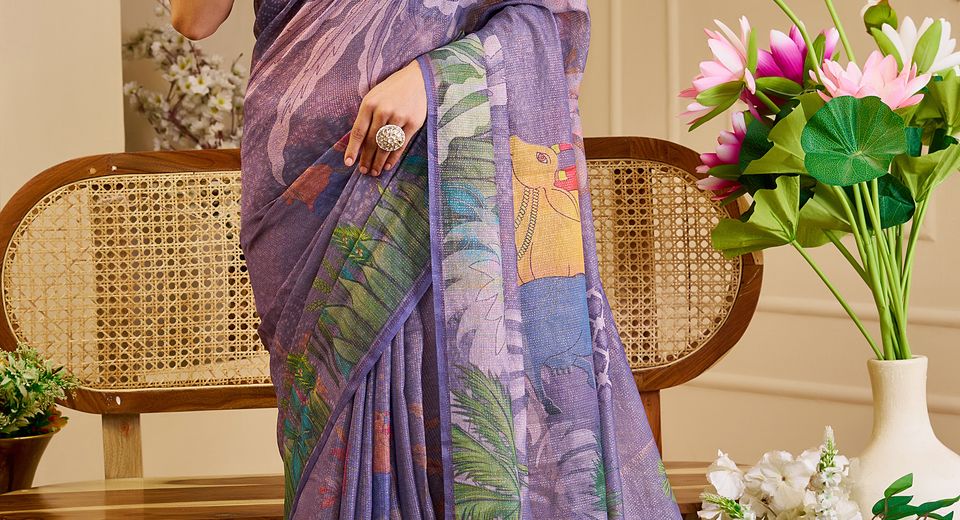
A blue saree with gold accents can be styled with kundan, gold jhumkas or a slim layered necklace. Blue Tissue Handloom Cotton Saree With Zari | Varnavi's provides that kind of adaptable base for an evening function. Blue Tissue Handloom Cotton Saree With Floral Print instead can take pearl, silver or enamel jewellery, depending on whether the desired result is restrained or playful.
Make the drape work for the venue
The Nivi drape remains the most practical choice for most wedding guests because its front pleats allow walking and its shoulder pallu can be pinned securely. A longer, open pallu creates movement for photographs, while a pleated pallu looks neater during meals and crowded rituals. For outdoor events, pin the pallu at the shoulder and near the waist to reduce wind movement.
Heels can change the fall of the saree by several centimetres, so complete the footwear decision before finalising the hem. A low block heel is usually more useful than a very high stiletto for lawns, uneven stone floors and long standing periods. Carrying foldable flats can prevent the lower edge from dragging once fatigue sets in.
Odisha Wedding Guest Handlooms Beyond the Most Famous Ikats: Which colours photograph well?
Medium-to-deep blues, olive, rose, coral, cream and controlled metallic accents photograph reliably at Indian weddings because they provide contrast without reflecting every light source. Colour should also respect the ceremony's lighting, background décor and customary dress expectations.

Cream and ivory show woven texture clearly, but bright white can appear stark under direct flash. Pink and coral bring warmth to daytime photographs, while olive and emerald offer depth without the intensity of neon green. Blue works across many settings: powder blue feels daytime-appropriate, royal blue suits a reception. Navy creates a more formal appearance.
Metallic zari can catch strong sunlight and produce bright highlights in photographs. If the saree includes substantial zari, choose matte jewellery or a quieter blouse so the overall outfit retains definition. Floral prints can soften a structured venue, while geometric borders look especially clear in full-length portraits.
Guests should also consider colours traditionally avoided by particular families or ceremonies. Some households reserve red or specific bridal shades for the bride, while other weddings welcome them freely. When an invitation is unclear, a rose, rust, green, blue or cream saree brings festive colour with less risk of appearing bridal.
Odisha Wedding Guest Handlooms Beyond the Most Famous Ikats: What should you check before buying?
Before buying an Odisha handloom saree, check the fibre composition, dimensions, transparency, zari placement, blouse-piece details and care instructions. Those practical specifications matter more than a generic description such as "premium" or "festive."

Ask whether the saree is pure cotton, cotton-silk, silk, tissue cotton or a blend. Check the approximate length and width because a shorter saree may provide fewer pleats for a taller wearer. Examine the reverse side for loose threads, inspect the selvedge for consistent finishing and confirm whether the blouse piece is attached or supplied separately.
Check the transparency against natural light before wearing a pale saree to a formal function. A lightweight cotton may need a matching or skin-toned petticoat to prevent the underskirt from showing through. A tissue surface may also require careful pin placement because sharp pins can catch reflective yarns.
Consider the number of hours the saree will be worn. A guest attending a morning ritual, afternoon meal and evening reception may need a lighter drape than someone attending a ninety-minute ceremony. Comfort is a design factor: a saree that requires constant adjustment will look less polished by the end of the event.
Odisha Wedding Guest Handlooms Beyond the Most Famous Ikats: How should you care for them?
Handloom cotton sarees with zari should be aired after use, stored away from direct sunlight and washed according to the fibre and metallic-yarn instructions. Immediate, gentle care prevents body moisture, perfume and food odours from becoming permanent problems.

don't place a worn saree directly into a sealed plastic bag. Air the saree in shade for several hours, then fold it with the zari side inward if the metallic surface is prone to rubbing. Refold stored sarees every few months to reduce permanent fold lines, and use clean muslin or another breathable fabric rather than newspaper or airtight plastic.
Dry cleaning may be appropriate for silk, heavy zari or sarees with unstable dyes, while a simple cotton saree may tolerate a gentle hand wash if the care label permits it. Test colour fastness only on an inconspicuous area and use cold water. Never wring zari borders, twist the pallu or expose metallic details to chlorine bleach.
Iron cotton on the reverse side using moderate heat and a pressing cloth over zari. Keep a hot iron away from tissue effects, metallic yarns and printed floral surfaces unless the care instructions specifically allow it. Stains should be treated quickly by blotting rather than rubbing, because friction can spread colour and disturb the weave.
The most successful Odisha wedding guest outfit balances textile knowledge with personal comfort. A breathable cotton, an intelligently chosen blouse, secure pleats and proportionate jewellery can look more memorable than a heavier saree selected only for shine. Odisha's handloom vocabulary gives wedding guests enough variety to dress for every function while keeping the craft visible.
Common Questions About Odisha Handlooms for Wedding Guests
Are Odisha handloom sarees suitable for summer weddings?
Yes, lightweight Odisha cotton and cotton-blend sarees are suitable for summer weddings because they allow airflow and absorb moisture more comfortably than dense synthetic fabrics. Choose tissue cotton or restrained zari for a festive finish without the weight of heavily embellished silk.
What is the difference between Sambalpuri ikat and other Odisha handlooms?
Sambalpuri ikat uses resist-dyed yarns that create patterns through the weaving process, often featuring traditional Odisha motifs. Other Odisha handlooms, such as Bomkai, Khandua and Berhampuri silk, differ in fibre, motif placement, border structure and weaving history.
Can I wear an Odisha cotton saree to an evening wedding reception?
You can wear an Odisha cotton saree to an evening reception when it has zari, a luminous tissue surface, a rich colour or a dressier blouse. Gold jewellery, a structured blouse and a secure Nivi drape can make lightweight cotton look appropriately formal.
How do I style a floral Odisha handloom saree for a wedding?
Style a floral Odisha handloom saree with a plain blouse that repeats one colour from the print and jewellery in a single dominant metal. Keep the drape neat and avoid adding another large floral pattern, since excessive pattern can hide the saree's woven or printed character.
Is zari on a cotton handloom saree difficult to maintain?
Zari on a cotton handloom saree needs more careful handling than plain cotton because metallic yarn can tarnish or catch on rough surfaces. Air the saree after wearing, store it in breathable fabric, keep direct heat away from the zari and follow the stated washing instructions.
Which Odisha saree colour is best for a wedding guest?
Blue, olive, rose, coral, cream and emerald are versatile wedding-guest colours because they look festive without automatically appearing bridal. The best choice also depends on the ceremony, lighting, family customs and whether the saree will be worn during the day or evening.