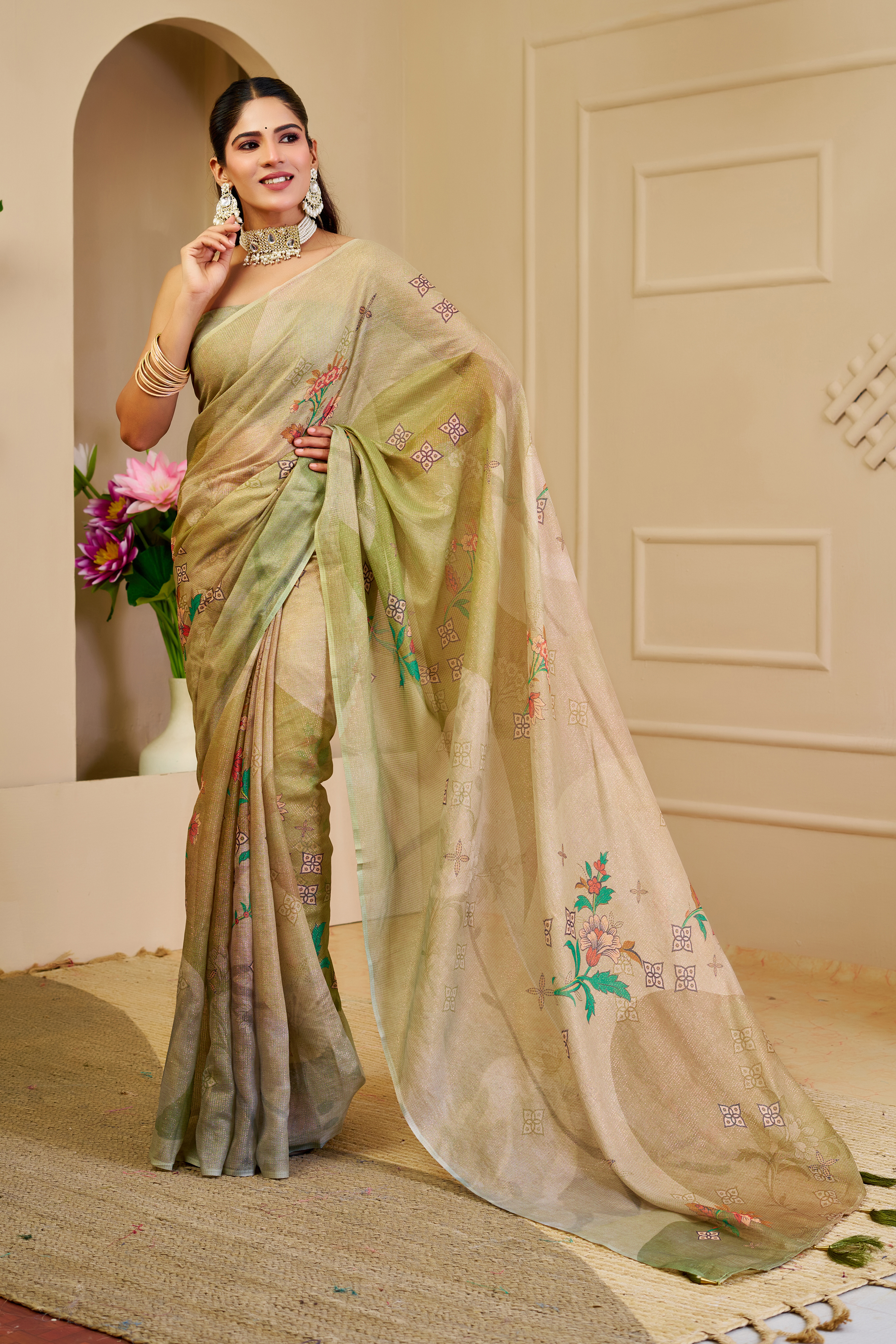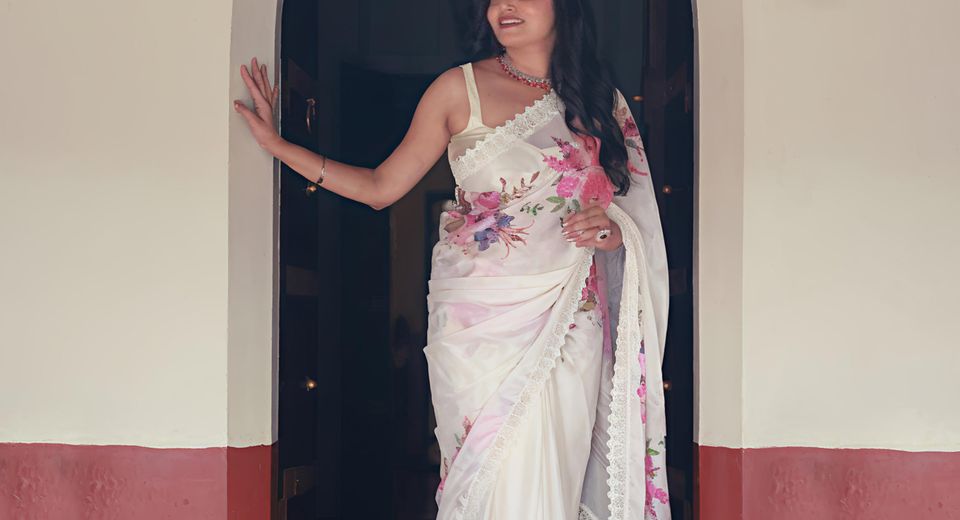
Matching festival accessories across mothers daughters and grandmothers can create a memorable family portrait without forcing three generations into identical outfits. The most successful approach connects the looks through a shared colour, metal, motif or textile while allowing each woman to choose her own silhouette, jewellery weight and comfort level. A grandmother might wear Banarasi silk with a classic brooch, a mother might choose a kurta set with heirloom earrings, and a daughter might carry the same colour into a contemporary lehenga with lighter accessories.
Family dressing works best when coordination is visible from a distance but personal style remains clear up close. A repeating maroon shade, gold zari detail, floral motif or mirror-work accent can do more than three identical necklaces. The result feels intentional at a Diwali gathering, Navratri night, wedding function or Haldi ceremony, while every generation remains dressed for movement, weather and personal taste.
Matching Festival Accessories Across Mothers Daughters and Grandmothers: What Creates Harmony?
Three-generation festival styling looks coordinated when the outfits share one or two visual links instead of matching in every detail. Colour, metallic finish, embroidery, print scale and accessory shape provide the strongest links.
An effective formula is to select one anchor colour and one supporting detail. Maroon with antique gold suits a traditional family portrait, while mustard with warm gold feels festive without appearing overly formal. Orange with ivory creates a brighter daytime combination, and brown with gold offers a grounded palette for an evening celebration.
Accessories should repeat the anchor detail at different intensities. A grandmother may wear a broad gold necklace, a mother may choose medium jhumkas and a daughter may use the same finish on a slim waist chain or embellished hair clip. All three looks communicate the same visual story without competing for attention.
Matching doesn't require identical fabrics. Banarasi silk, Chanderi, Chinon silk, georgette and cotton can sit together successfully when the colour family and finishing details are related. A structured Kanjeevaram-inspired border on one outfit can echo a small zari trim or woven dupatta border on another outfit.
Matching Festival Accessories Across Mothers Daughters and Grandmothers: How Should Colour Work?
Colour should be shared through a controlled palette of two or three shades, with each generation choosing a different proportion of the dominant colour. A grandmother can wear the deepest shade, a mother can wear the middle tone and a daughter can use the brightest version as an accent.
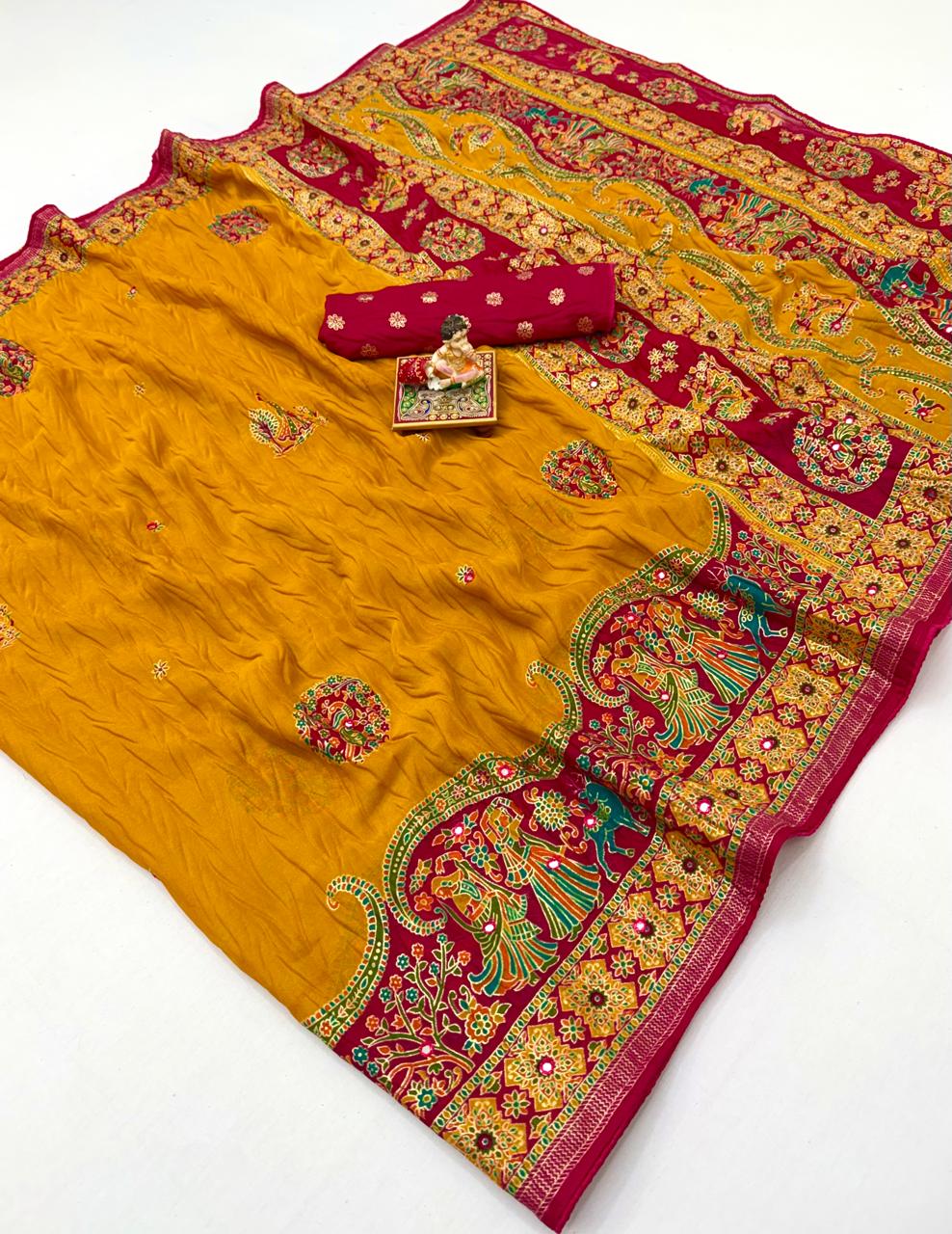
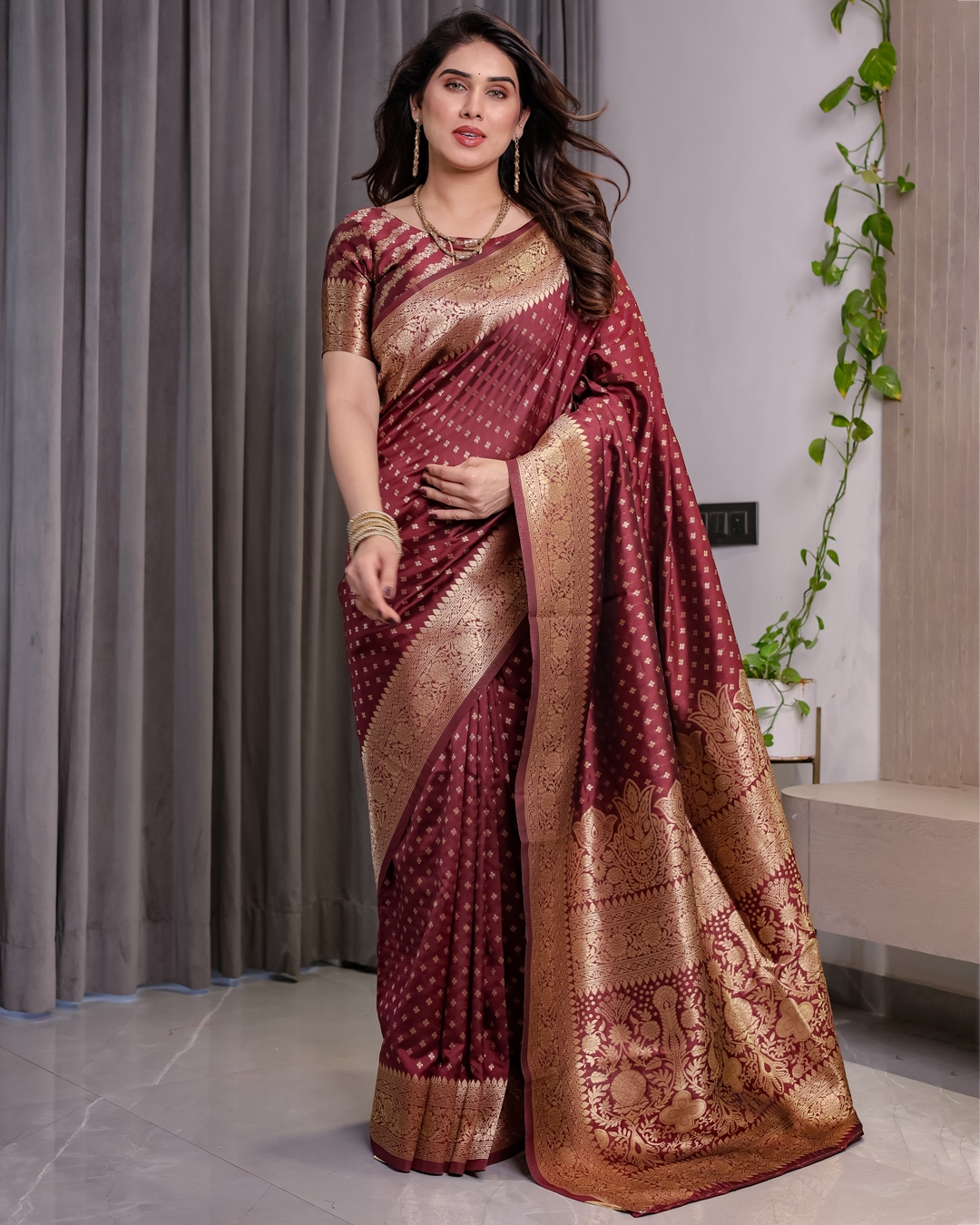
Maroon provides a particularly adaptable example. Maroon Banarasi Soft Silk Saree with Golden Zari Border gives a grandmother or mother a rich base, while a daughter can repeat maroon through bangles, a potli bag or embellished footwear. Gold zari connects all three appearances, even when one woman wears a saree, another wears a salwar suit and the youngest wears a lehenga.
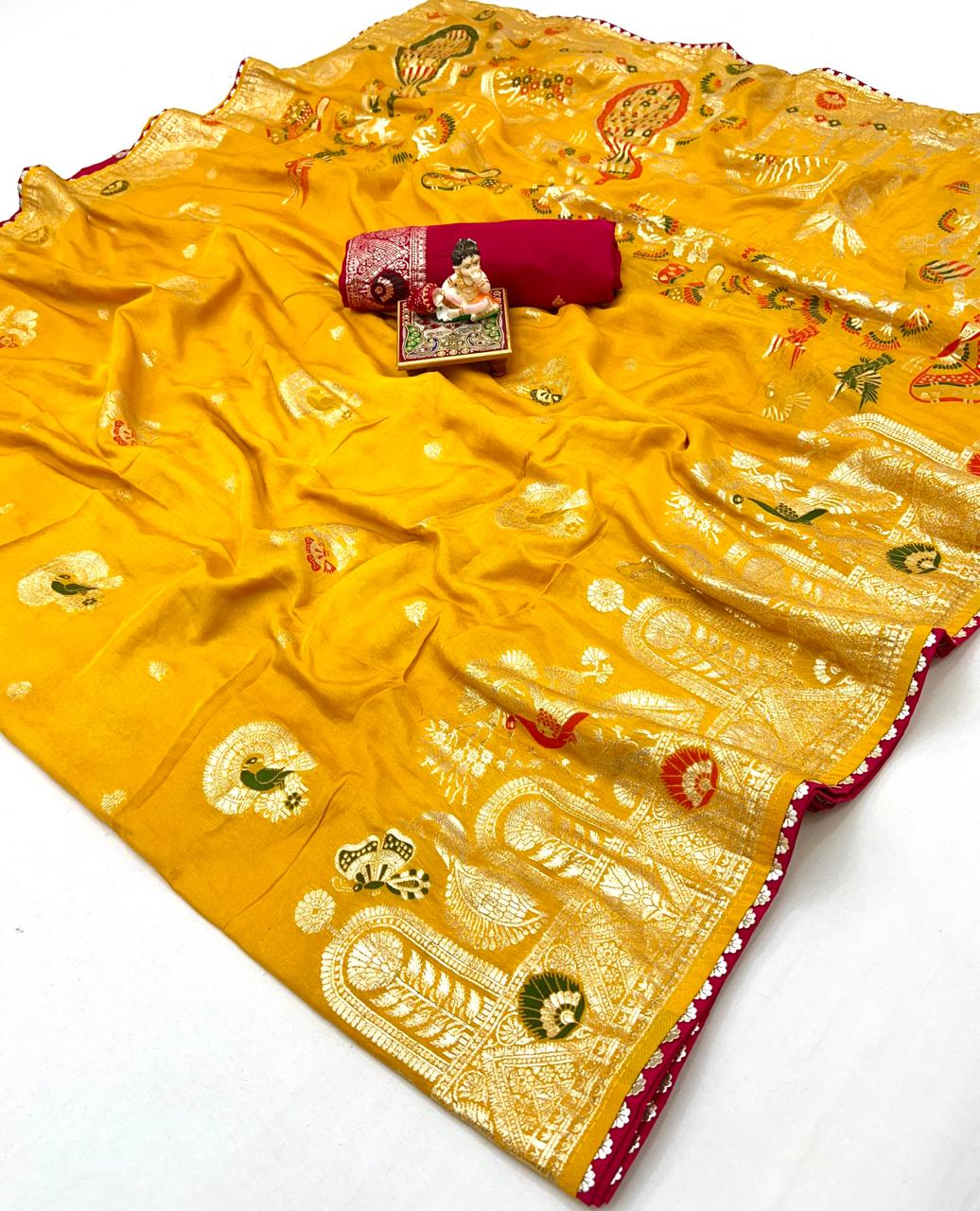
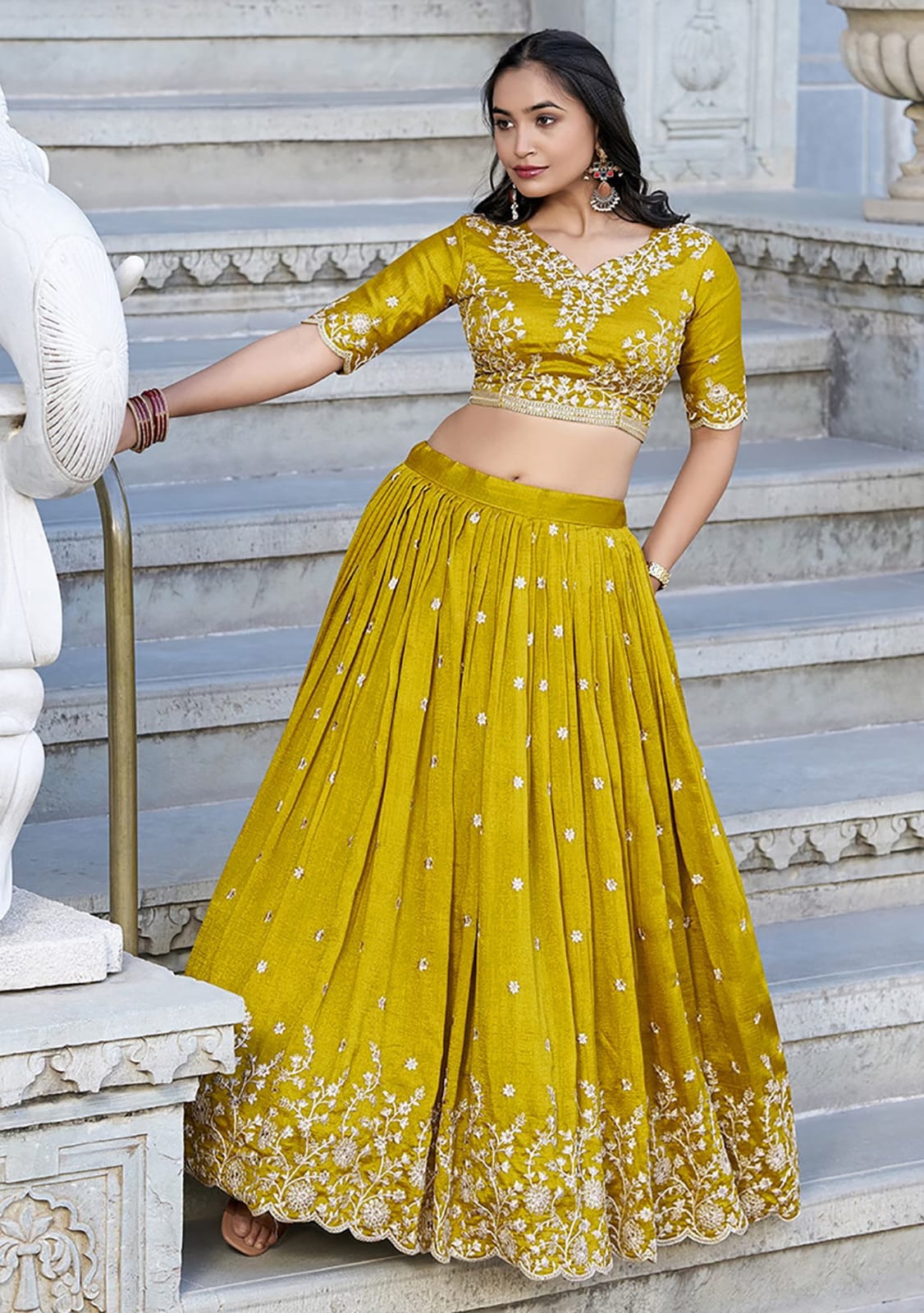
Mustard works well when the family wants a warm daytime palette. Mustard Floral Threadwork Chinon Lehenga Choli for Women brings a youthful floral surface, while Mustard Moss Georgette Silk Saree With Foil Work interprets a related shade in a more fluid, mature silhouette. A third family member can use mustard in a dupatta, clutch or earrings rather than wearing a full mustard outfit.
Colour temperature also matters. Warm gold jewellery generally supports maroon, mustard, orange and brown. Silver or oxidised metal can sharpen jewel tones, indigo, bottle green and plum. Mixing yellow gold, rose gold and silver across three people can look accidental unless one metal clearly dominates in the group photograph.
Photographs often reveal small colour differences more strongly than expected. Place the three outfits together in daylight before the event and check whether the shared shade appears in every look. A matching ribbon, scarf edge, bangle set or hair accessory can correct a palette that otherwise feels disconnected.
Matching Festival Accessories Across Mothers Daughters and Grandmothers: Which Jewellery Fits?
Jewellery suits every generation when its scale, fastening and weight are adjusted to the wearer while the metal or motif remains consistent. Shared craftsmanship matters more than identical pieces.
Grandmothers need heritage detail and secure fastenings
Grandmothers often benefit from jewellery that has a stable fit and a recognisable traditional form. Studded jhumkas with screw backs, a short rani haar, a broad kada or a vintage brooch can provide presence without requiring constant adjustment. A lightweight necklace is preferable to a very long layered design if the wearer will sit, move between rooms or attend a long puja.
Heirloom jewellery can become the anchor for the family palette. A grandmother's old gold pendant, kundan brooch or pearl strand can inspire the mother's earrings and the daughter's hair ornament. The shared reference gives the group emotional meaning that a newly purchased matching set can't create by itself.
Mothers can bridge traditional and contemporary styling
Mothers can bridge traditional and contemporary styling with medium-scale jewellery that repeats the grandmother's metal and the daughter's motif. A pair of gold jhumkas, a delicate layered necklace or a bangle stack can work with a saree, kurti set or sharara suit.
Kanchi Cotton Zari Woven Kurti Set with Traditional Dupatta already carries a woven festive detail, so a mother wearing it may need only zari earrings and a compact bangle stack. Excessive necklaces can compete with a traditional dupatta border. A medium maang tikka or a small brooch can connect the look to more heavily accessorised family members.
Daughters can interpret the family jewellery story
Daughters can interpret the family jewellery story through lighter, more mobile pieces. Ear cuffs, threader earrings, slim bangles, a beaded potli strap or a metallic hair bow repeat the family finish without making a young outfit look overly formal.
A daughter wearing Mustard Floral Threadwork Chinon Lehenga Choli for Women could pair floral earrings with a small gold bindi and a plain metallic clutch. The floral motif echoes the embroidery, while restrained jewellery lets the lehenga remain the visual focus. Younger wearers should avoid long necklaces or oversized earrings that catch on dupattas during dancing.
Matching Festival Accessories Across Mothers Daughters and Grandmothers: How Can Outfits Avoid Uniformity?
Outfits avoid a uniform effect when each woman has a different silhouette and only selected details are repeated. The same accessory category doesn't need to appear on everyone.
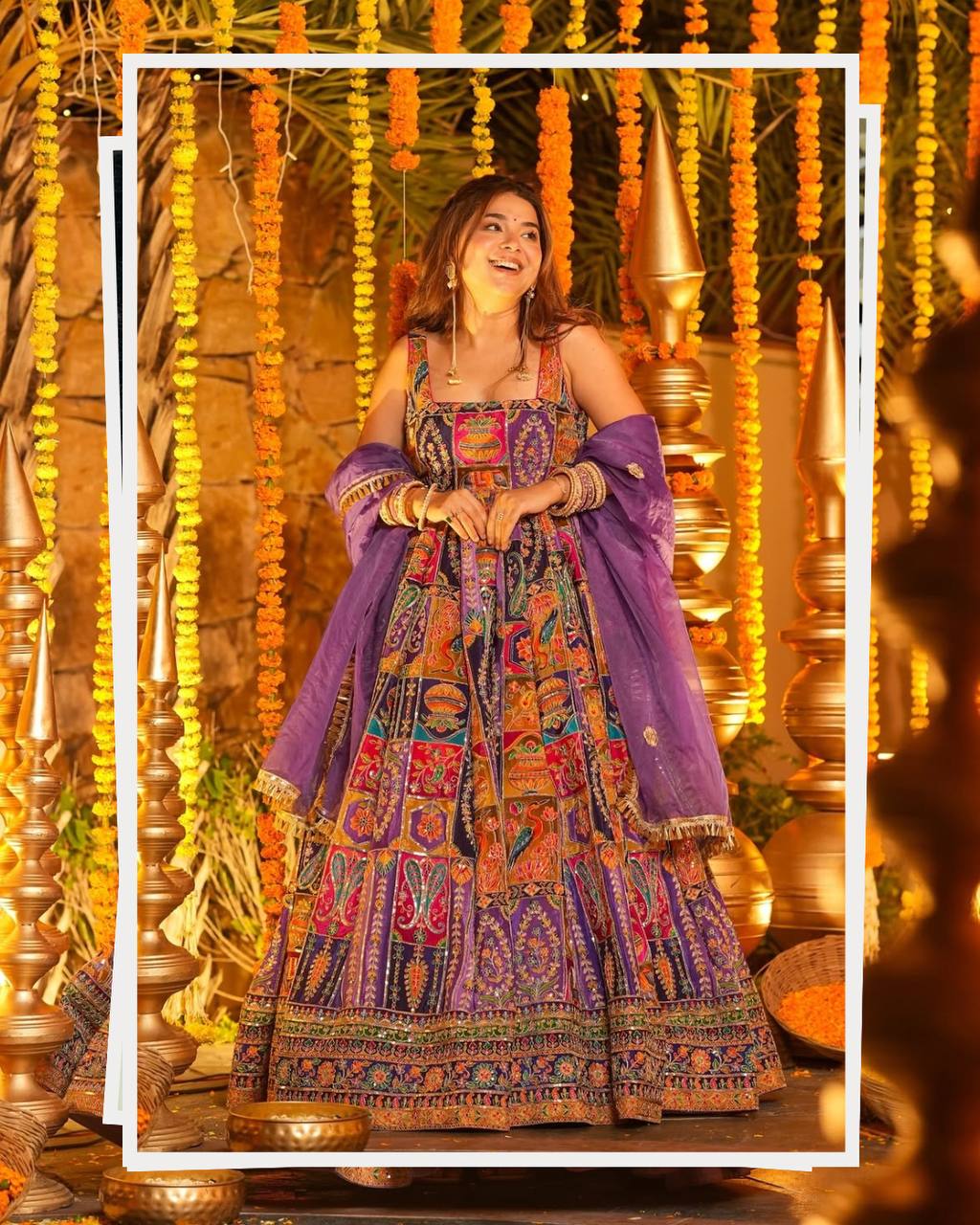
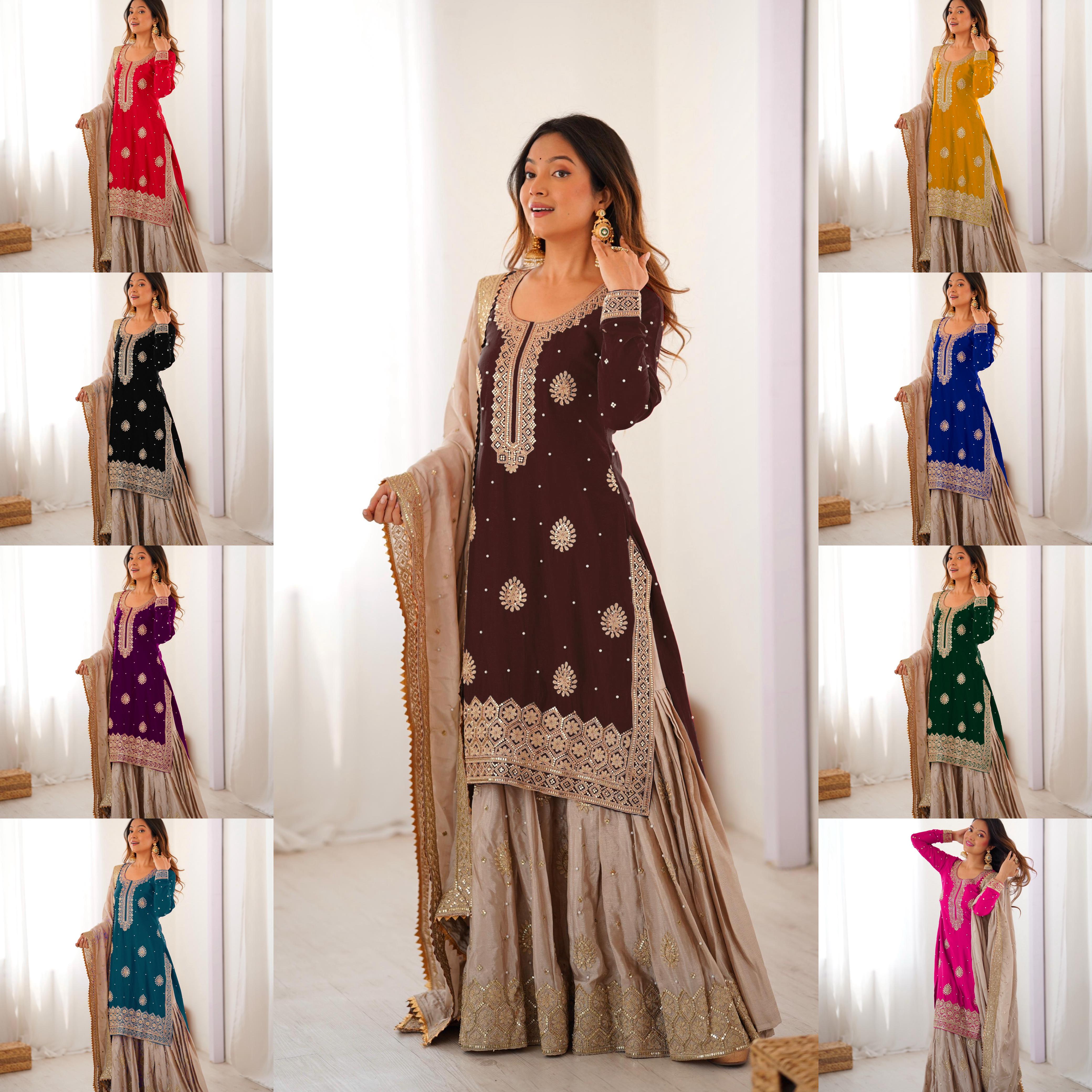
A saree, a kurta set and a sharara suit can form a cohesive trio when they share a border, colour or metal finish. Brown Chinon Silk Sharara Suit Set for Women brings a softer brown base that can connect to antique gold jewellery on an older family member and bronze-toned accessories on a younger one.
Silhouette can also express age and comfort. A grandmother may prefer a pre-pleated saree or a lighter silk saree with a securely pinned pallu. A mother may choose a straight kurta with a traditional dupatta, while a daughter may select a lehenga with a shorter, easier-to-manage dupatta. Matching the drape type rather than copying the complete garment keeps family styling practical.
Pattern scale should move strategically across the group. Larger motifs suit one main outfit, medium motifs suit the second, and small motifs or plain accessories suit the third. Maroon Heritage Weave Kurti Dupatta Set can carry a woven texture between a solid saree and an embroidered lehenga without creating three competing prints.
Necklines and sleeve lengths deserve attention because jewellery choices depend on them. A high-neck kurta may need earrings rather than a necklace, while a wide saree blouse neckline can support a pendant. A daughter's sleeveless lehenga can use a stack of bangles, whereas a grandmother's full-sleeved blouse may look more balanced with a brooch or ring.
Matching Festival Accessories Across Mothers Daughters and Grandmothers: What Is Practical?
Practical festive accessories are lightweight, securely fastened and comfortable for at least four hours of standing, sitting, eating and moving. Comfort should be tested at home before the event rather than assumed from appearance.
- Footwear: Low block heels, padded juttis and embellished flats are safer choices for long ceremonies than narrow high heels. A family can share a gold, maroon or mustard finish while choosing different heel heights.
- Bags: A small crossbody bag or wristlet gives a mother and grandmother easier access to medication, spectacles, tissues and a phone. A daughter can use a potli bag for a dressier look, provided the drawstring closes securely.
- Hair accessories: Fabric gajras, pearl pins, gold clips and embellished combs connect hairstyles without requiring identical hair lengths. Hairpins with broad, smooth backs are more comfortable for extended wear.
- Dupatta management: Brooches, concealed safety pins and lightweight chain clips prevent repeated adjustments. Sharp pins should be covered or placed away from areas where they may touch the neck or arm.
- Bangles: Four to six slim bangles often create enough movement and colour without the noise or weight of a large stack. Secure closures are preferable for active celebrations.
Orange Embroidered Kurta Pant Dupatta Set Women can be styled for a daytime family event with padded flats, a small gold watch and orange or ivory earrings. A grandmother can repeat the orange through a silk stole or bangles, while a daughter can use orange embroidery on a hair clip or bag.
Footwear should be broken in for at least two short walks before a festival. New embellished shoes can create pressure points after an hour, especially when a ceremony involves standing on hard floors. Carrying blister plasters and a spare pair of soft flats is a small preparation that protects the entire evening.
Matching Festival Accessories Across Mothers Daughters and Grandmothers: How Do Motifs Add Meaning?
Motifs add meaning when they connect the family to a festival, regional craft or shared memory without overwhelming the clothing. Floral, paisley, peacock, temple, mirror-work and geometric motifs each communicate a different mood.
Mirror work has a lively connection with Navratri and dancing. Elegant Mirror Work Navratri Lehenga Choli Set can lead a younger look, while the older generations repeat the reflective detail through a mirror-work potli, a small brooch or earrings with polished stones. The accessory repetition is enough; adding mirror work to every garment can make the group appear visually busy.
Floral motifs create a softer link for daytime pujas and family lunches. Floral threadwork on one outfit can be repeated through a fabric scrunchie, embroidered jutti or small floral pendant. Woven patterns feel more rooted and understated, making them useful when one family member prefers minimal embellishment.
Regional craft can also guide the metal choice. Zari woven borders pair naturally with warm gold, while oxidised silver complements mirror work and hand-blocked cotton. Chanderi's light sheen, Banarasi silk's formal richness and Kanjeevaram's temple-inspired vocabulary can all appear within one family wardrobe when accessories maintain a consistent finish.
Personal history is often the strongest motif. A grandmother's brooch, a mother's wedding bangles or a daughter's first festival bracelet can become three parts of one styling story. Such details make coordinated dressing feel like family expression rather than a staged costume.
Matching Festival Accessories Across Mothers Daughters and Grandmothers: A Final Planning Checklist
A coordinated family look can be planned in five steps: choose the palette, identify one shared craft detail, assign different accessory scales, test comfort and photograph the outfits together. This sequence prevents rushed purchases and unnecessary duplication.
- Choose two main colours: Select one dominant shade and one supporting neutral or metallic finish. Keep a third colour only as a small accent.
- Choose one repeated detail: Use zari, mirror work, floral embroidery, pearls, antique gold or a woven border as the visual bridge.
- Assign accessory scale: Give the grandmother the most heritage-focused piece, the mother the balancing detail and the daughter the lightest or most playful interpretation.
- Check movement: Sit, walk, climb stairs, eat and raise both arms while wearing the planned accessories. Adjust anything that pinches, catches or slips.
- Review in daylight: Place garments, jewellery, bags and footwear together before the festival. Remove one competing item if the group appears too busy.
The strongest family photographs usually contain variation rather than perfect repetition. A maroon saree, a mustard lehenga, a brown sharara suit and a woven kurta set can look connected through gold, shared accents and thoughtful styling. Matching festival accessories across mothers daughters and grandmothers succeeds when every woman feels recognised in the final look.
Common Questions About Matching Festival Accessories Across Three Generations
How can three generations match festival accessories without wearing the same outfit?
Use one shared colour, metal or motif and vary the garments and accessory scale. A grandmother can wear a gold brooch, a mother can choose gold jhumkas and a daughter can use a gold hair clip or bag detail.
Which colours work well for matching family festival outfits?
Maroon, mustard, orange, brown, ivory and gold are versatile choices for Indian festive dressing. Select two main shades and distribute them differently across the saree, lehenga, kurta set and accessories.
What jewellery is comfortable for grandmothers at long festivals?
Lightweight necklaces, screw-back jhumkas, secure kadas and brooches are practical choices for long events. Avoid very heavy earrings and necklaces that need frequent adjustment while sitting or walking.
How do you coordinate accessories with a saree, lehenga and salwar suit?
Repeat the border colour, metallic finish or embroidery motif across all three outfits. Use a necklace or brooch with the saree, medium earrings with the salwar suit and lighter earrings or bangles with the lehenga.
Can different fabrics look coordinated in a family photograph?
Different fabrics can look coordinated when their colours and finishing details relate clearly. Banarasi silk, Chinon silk, Chanderi, cotton and georgette can sit together when the family repeats zari, embroidery, pearls or another visible detail.
How many accessories should each person wear for a festive family look?
Most people need one prominent accessory and two or three supporting details. For example, pair a statement necklace with earrings and bangles, or choose statement earrings with a brooch, bracelet and practical bag.