Kids Salwar Suits With Dupattas That Do Not Get in the Way need more than a pretty print. A child should be able to walk, sit, climb steps and join a family photograph without repeatedly pulling fabric off the floor. The most dependable outfit combines a short or medium-length dupatta, a breathable kameez, a secure fastening method and trousers that stay comfortable during movement. This guide explains how to judge each detail before a wedding, festival, school programme or family celebration.
A dupatta can complete a salwar suit, but an unsecured length can catch on chair arms, door handles and footwear. Children also move more unpredictably than adults, so a drape that looks elegant while standing still may become inconvenient within minutes. Choosing the correct proportions and planning the drape before the event makes traditional dressing considerably easier.
Kids Salwar Suits With Dupattas That Do Not Get in the Way: What makes a dupatta practical?
A practical children's dupatta is lightweight, proportionate to the wearer and secured at the shoulder without restricting the arms. The safest choice for many younger children ends around the hip or upper thigh rather than reaching the ankles.
Dupatta width matters as much as length. A very wide dupatta creates more fabric around the hands and elbows, while a narrow rectangular style is easier to keep over one shoulder. A lightweight cotton, chiffon or soft blended fabric generally creates less bulk than a heavily embellished textile. The final choice should still match the outfit and occasion, because a festive silk suit may need a more polished drape than a cotton school-event set.
Look for a finished edge that does not scratch the neck or underarm. Stiff metallic borders, dense sequins and rough zari can irritate sensitive skin when a child wears the garment for three or four hours. A smooth hem and a soft lining at the neckline can make more difference than additional decoration.
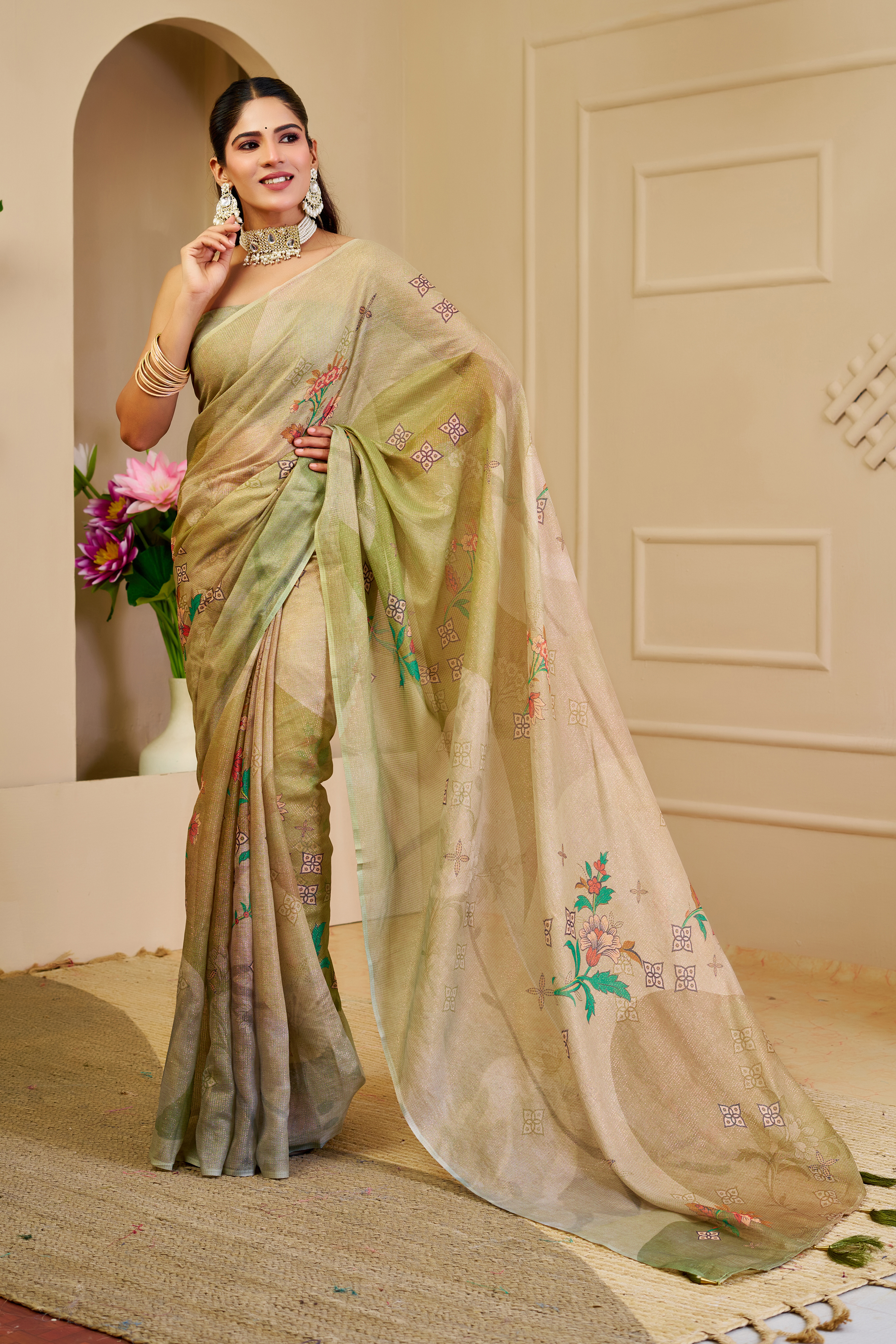
The Pink Flower Printed Salwar Suit shows how a clear floral motif can carry an outfit without relying on heavy surface decoration. A child's equivalent should use a shorter, lighter dupatta and enough ease through the armhole for comfortable movement.
Kids Salwar Suits With Dupattas That Do Not Get in the Way: How long should the dupatta be?
Measure from the child's shoulder to the point where the dupatta should finish, then add only enough length for the selected drape. For most children, a finish between the hip and mid-thigh is easier to manage than a full adult-length drape.
For a one-shoulder style, place the centre of the dupatta at the back of the neck and allow both ends to fall evenly before shortening one side. A child who is likely to run or play should wear the shorter end in front and have the longer end secured near the shoulder. The hem should remain well above the ankle when the child is wearing event footwear.
A two-shoulder drape distributes weight more evenly. Fold the dupatta lengthwise, place it around the neck or across both shoulders, and secure the fabric near each shoulder with small safety pins hidden beneath the top layer. This approach works particularly well for school performances because the dupatta is less likely to slide down one arm.
Width can be reduced without altering the garment by folding the dupatta lengthwise once or twice. A folded dupatta should not cover the child's hands while walking. If the fabric still reaches the fingertips after folding, the garment is probably too long or too broad for independent movement.
The Designer Cream Straight Kurti Set with Dupatta and Vertical Cotton Straight Kurta Set with Dupatta show two useful styling directions: a neat straight silhouette and a visually elongated vertical arrangement. For children, retain the clean lines but reduce the amount of fabric around the body. A simple fold often preserves the appearance while improving practicality.
Kids Salwar Suits With Dupattas That Do Not Get in the Way: Which fabrics suit active children?
Breathable cotton and light cotton blends are usually the most comfortable choices for daytime events, warm weather and long periods of sitting or walking. Silk blends and jacquard can suit shorter festive occasions when the fabric is not stiff, heavy or abrasive.
Daytime and outdoor celebrations
Cotton allows air circulation and is usually easier to wash after food spills or outdoor play. A printed cotton kameez with a light dupatta can work for a school celebration, a puja at home or a daytime family gathering. Avoid excessive layering in hot weather, because a child may stop wearing the dupatta altogether if the outfit becomes uncomfortable.
Kalamkari Print Salwar Suits offer a useful reference for choosing an expressive print without relying on heavy surface embellishment. Kalamkari-inspired motifs can provide visual interest through flowers, vines and traditional figures, while a simpler border keeps the overall outfit manageable. For a child, pair a printed suit with minimal jewellery and flat footwear.
Silk and festive textiles
Silk and silk-blend fabrics create a dressier appearance but require closer attention to weight and friction. The Elegant Silk Embroidered Kurta Pant Set with Jacquard Dupatta illustrates how embroidery and jacquard texture can make a set feel ceremonial. For children, choose the least bulky version of the same idea and avoid a dupatta so embellished that it pulls the shoulder down.
A child does not need an adult level of zari or dense embroidery to look festive. One decorated element is usually enough: a bordered dupatta, embroidered kurta or patterned trouser. Reducing competing details also makes stains, snags and lost accessories less noticeable during a busy celebration.
Kids Salwar Suits With Dupattas That Do Not Get in the Way: Which drapes stay secure?
The shoulder-secured drape is generally the most reliable option for children because it prevents the dupatta from falling while leaving both hands available. A small safety pin placed horizontally through the shoulder seam and dupatta edge provides more stability than a loose fold alone.
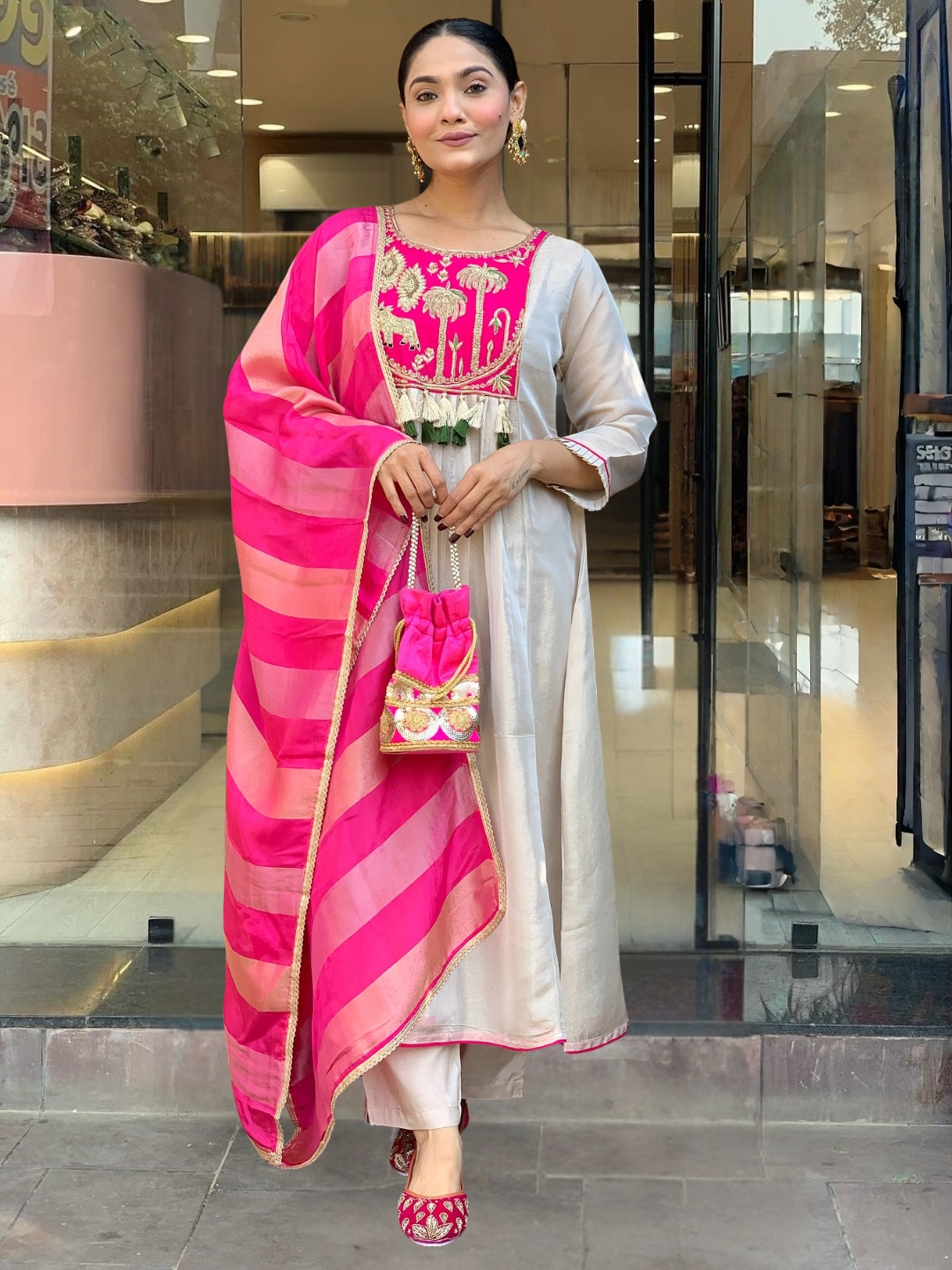
For younger children, secure the dupatta at one shoulder and create a shallow front pleat. The pleat should be broad rather than tightly compressed, because narrow pleats can become uncomfortable at the neck. Keep the lower edge clear of the knees if the child will climb stairs or sit on the floor.
For older children who want a more traditional appearance, a cross-body drape can work when the fabric is light. Bring the dupatta from one shoulder across the chest and secure the opposite side near the waist with a concealed pin. The fastening should be loose enough for normal breathing and arm movement. Never place a sharp pin where it can touch bare skin or press into the child while sitting.
Some children prefer the dupatta around the neck because both hands remain free. In that case, use a short folded length and check that the fabric is not tight. A neck drape should never be tied, knotted or fastened in a way that could restrict breathing. A soft fabric loop or two shoulder pins is safer than a tight wrap.
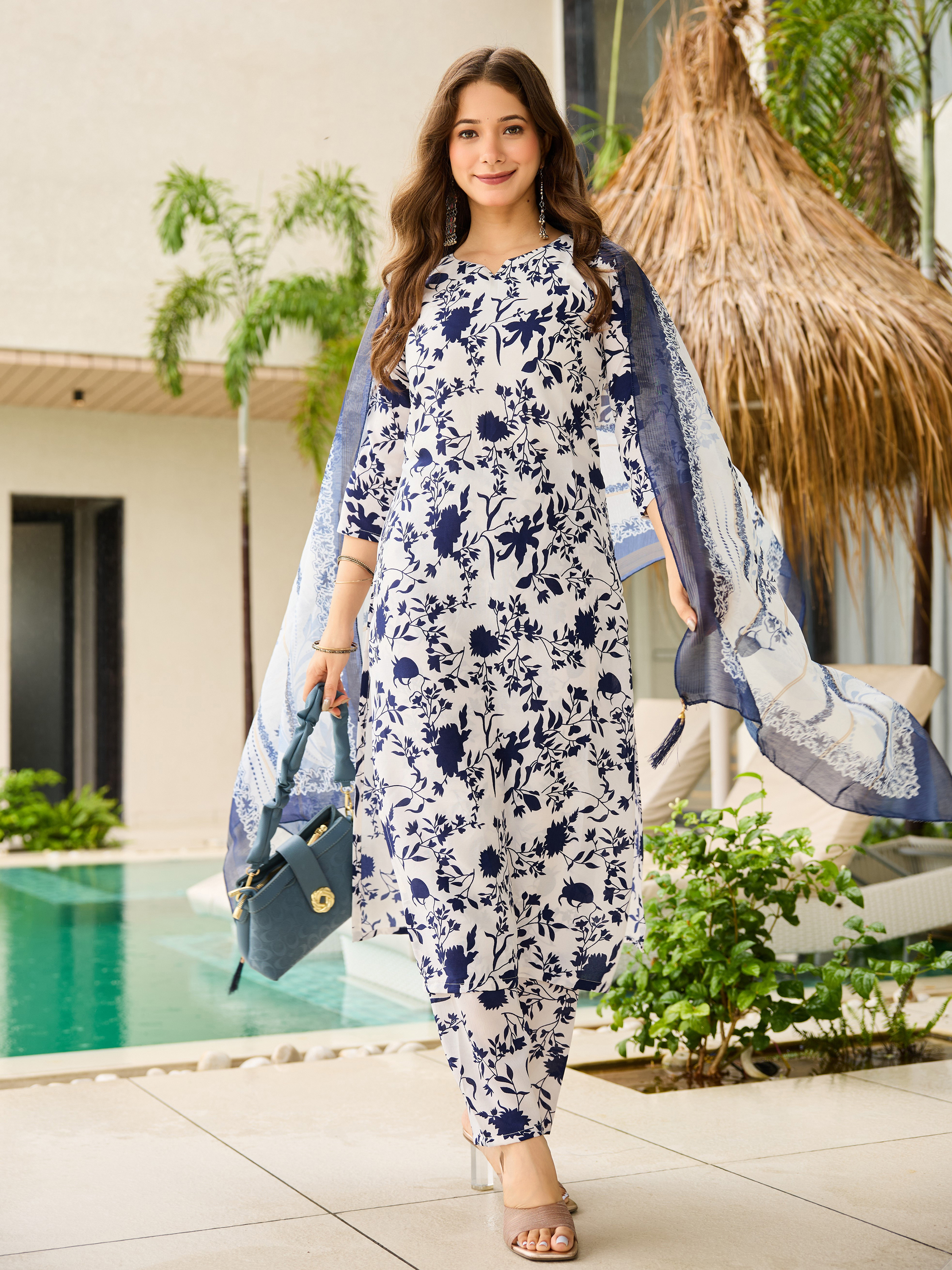
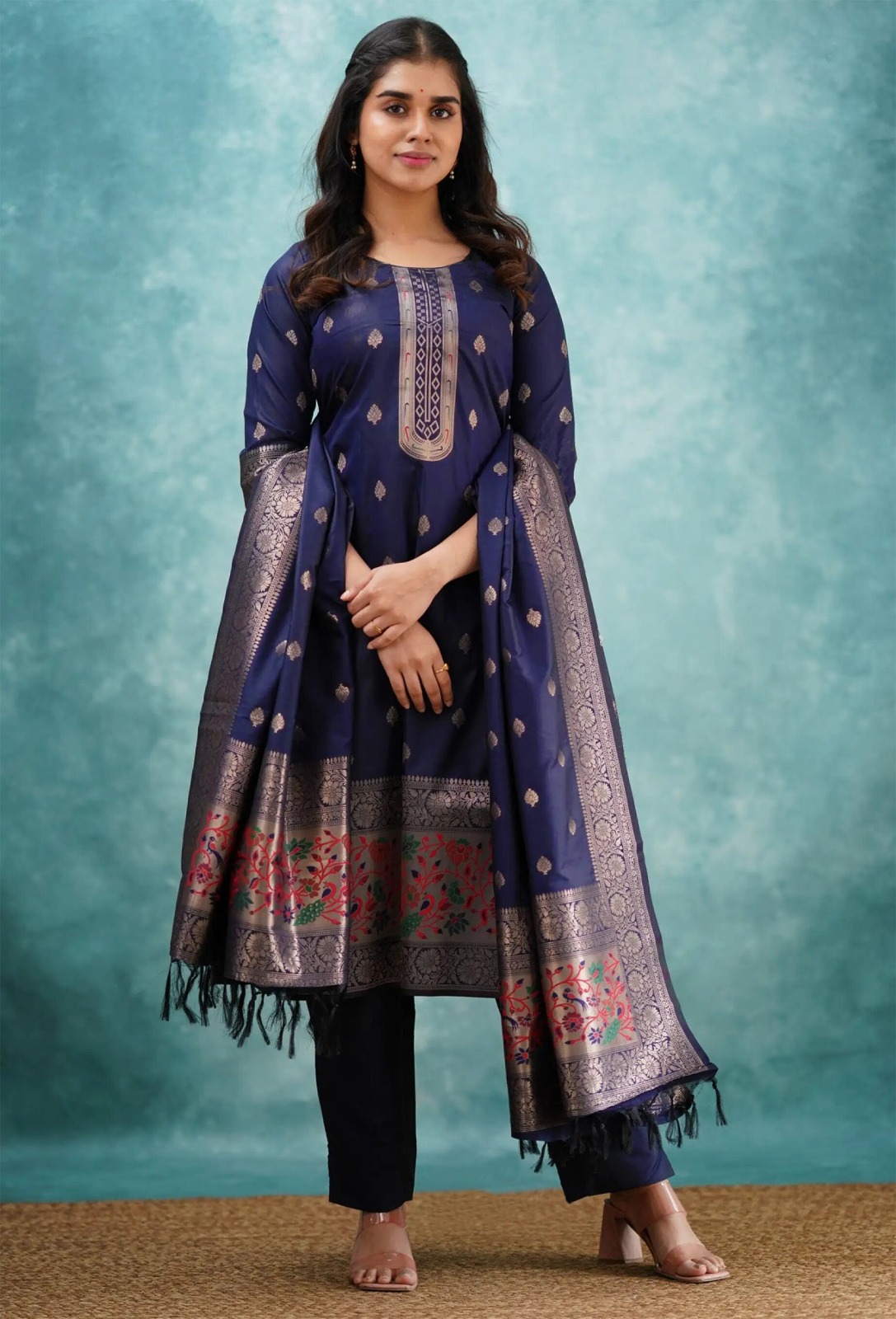
The Stylish Navy Floral Silk Kurta Pant Dupatta Set demonstrates how a darker base can make a patterned dupatta stand out. A child wearing a similar colour arrangement can use a simple shoulder drape rather than several decorative folds. The visual contrast will remain clear without adding fabric around the face or hands.
Kids Salwar Suits With Dupattas That Do Not Get in the Way: How should the outfit fit?
Check shoulder width, armhole ease, trouser rise, waistband comfort and dupatta length while the child is standing, sitting and raising both arms. A garment that fits only in a standing photograph is not a practical fit.
The shoulder seam should sit near the child's shoulder edge rather than sliding down the upper arm. The armhole should allow the child to lift both arms without the kurta pulling sharply across the chest. Ask the child to sit cross-legged if that posture is likely at a puja or family gathering. The kameez should not ride up excessively, and the trouser waistband should remain comfortable while seated.
Measure the child's current chest, shoulder and waist rather than relying only on age labels. Children of the same age can differ considerably in height and body shape. If choosing between two sizes, allow modest growing room through the side seams and trouser length, but avoid buying a dupatta several sizes too large. Extra length in the dupatta creates more safety problems than useful growing room.
Wide-leg palazzo trousers can be comfortable, but the hem must not drag under sandals or collect around the feet. Patiala-style trousers provide volume and movement, yet the folds can become cumbersome when combined with a long dupatta. Punjab Patiala Salwar Suits are a helpful style reference, but a child's version should have controlled volume and a shortened drape.
Check every hook, button, elastic and seam before the event. A loose button may become a choking hazard for a very young child, while a rough inner seam can cause irritation during a long ceremony. Wash or steam the garment according to its care instructions before the first full wear so that colour transfer, stiffness or finishing residue is identified early.
Kids Salwar Suits With Dupattas That Do Not Get in the Way: How can regional styles stay easy to wear?
Regional design remains comfortable for children when the signature motif is retained but the silhouette, embellishment and dupatta volume are simplified. Cultural detail does not require a heavy or complicated outfit.
Maharashtra Paithani Inspired Salwar Suits can suggest Paithani through jewel-toned colour combinations and traditional border ideas without reproducing the weight of a full silk sari. A child can wear one strong border with a plain kurta and light trousers. The result keeps the visual reference clear while reducing the fabric that needs to be managed.
Gujarat Bandhej Salwar Suits provide another practical direction because the tie-dye-inspired pattern supplies interest across a lightweight surface. A Bandhej-style dupatta can be folded narrowly and pinned at one shoulder. Small earrings or colourful bangles are sufficient accessories for a child wearing a lively print.
Odisha Sambalpuri Salwar Suits often suggest regional character through geometric borders and woven-looking motifs. Use the border as the focal point and keep the rest of the styling restrained. A flat sandal, a simple braid and a secure two-shoulder drape can support the outfit without competing with its pattern.
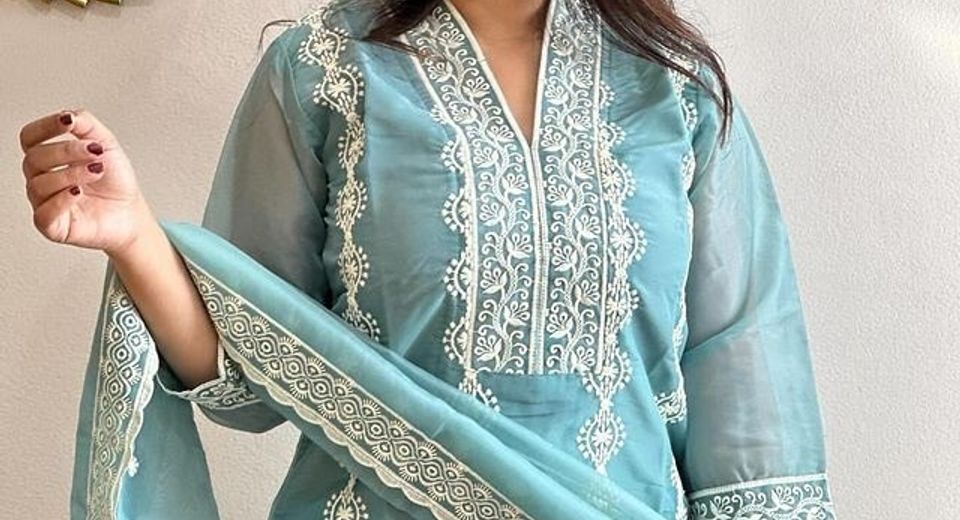
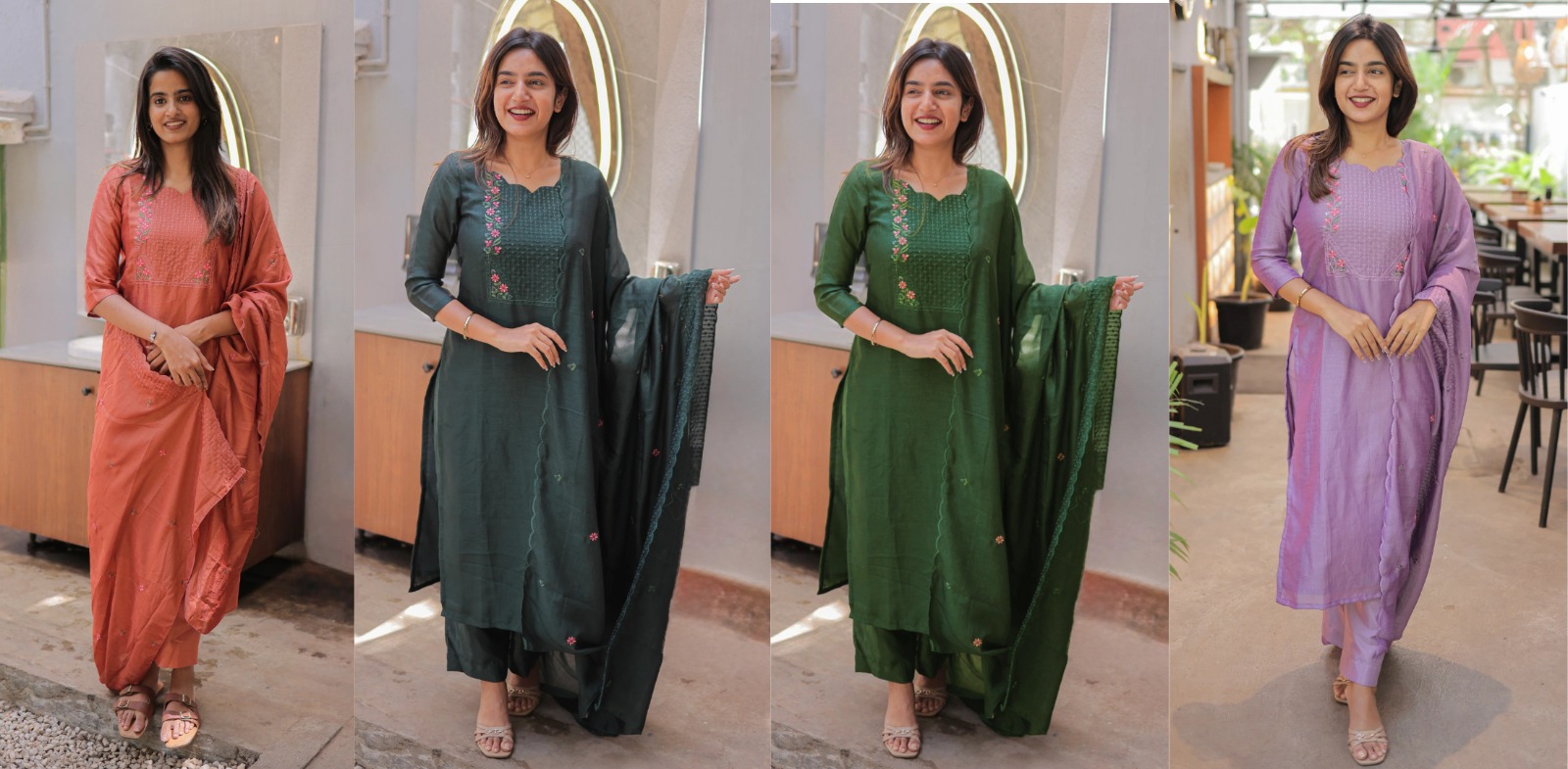
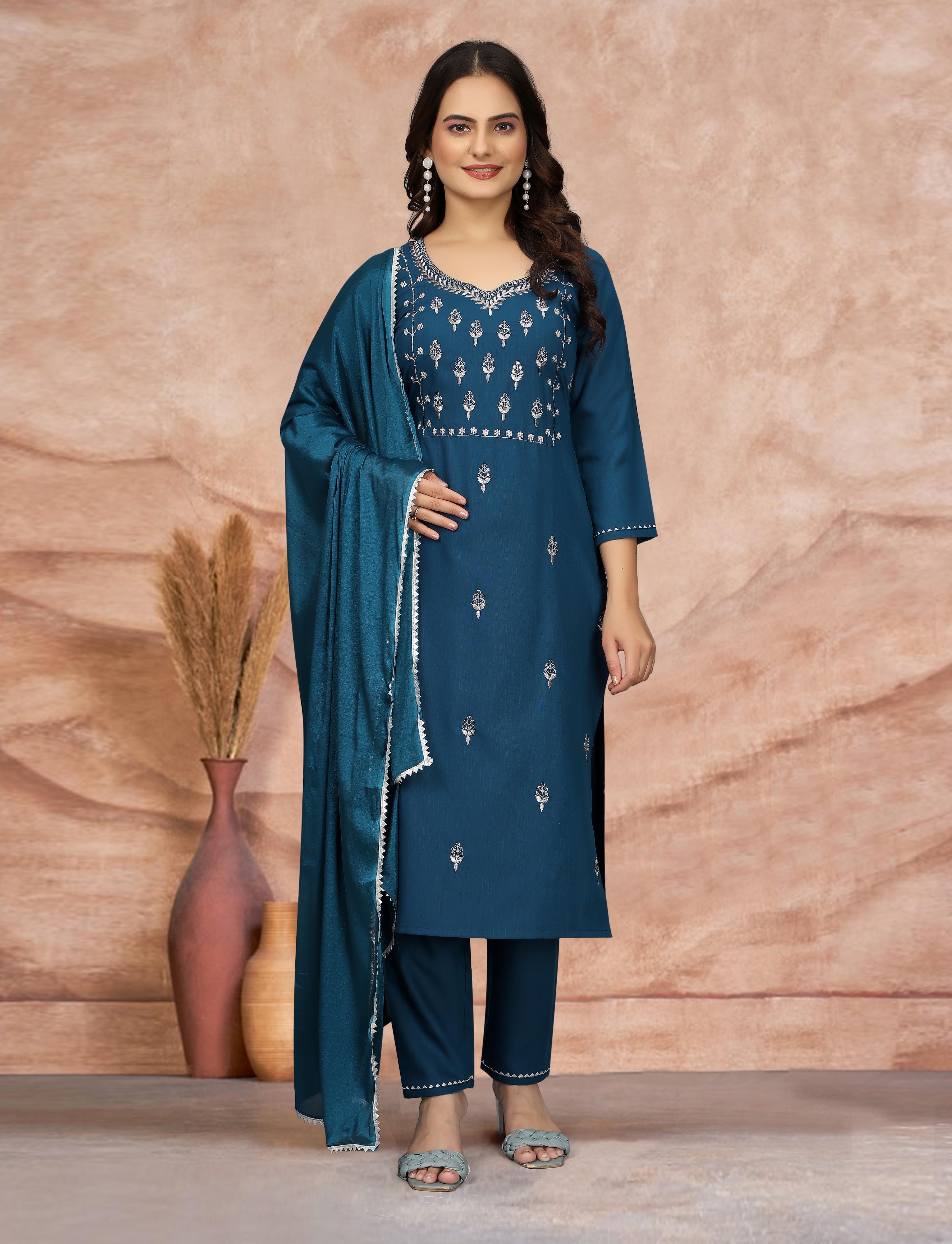
The Women's Mustard Silk Blend Kurta Set with Dupatta demonstrates how a single saturated colour can create a festive impression without multiple layers of embellishment. For children's styling, a similar mustard, teal or rose palette can be balanced with a contrasting but lightweight dupatta. The Elegant Teal Embroidered Kurta Pant Dupatta Set also shows why colour and selective embroidery can do much of the visual work.
Kids Salwar Suits With Dupattas That Do Not Get in the Way: What should parents check before the event?
Parents should complete a full movement test, secure the drape, check the footwear and pack a small repair kit before the child leaves home. A five-minute rehearsal can reveal problems that are not visible during a fitting.
Ask the child to walk quickly, sit on a chair, climb two or three steps, raise both arms and turn around. Watch for a dupatta sliding toward the feet, trousers catching under sandals or a neckline that pulls during movement. Adjust the garment before the event rather than expecting a child to manage repeated corrections independently.
Use blunt-ended child-safe fastening solutions where possible, and place safety pins between fabric layers rather than against the skin. Check the pins after the child sits and stands because movement can expose a sharp point. Avoid clips that are heavy enough to pull the dupatta sideways.
Flat sandals or closed shoes with secure straps are generally safer than slippery slip-ons. Footwear should be tested with the trouser hem and should not force the child to lift the garment while walking. Pack spare pins, a small sewing kit, tissues and a stain-removal wipe for longer celebrations.
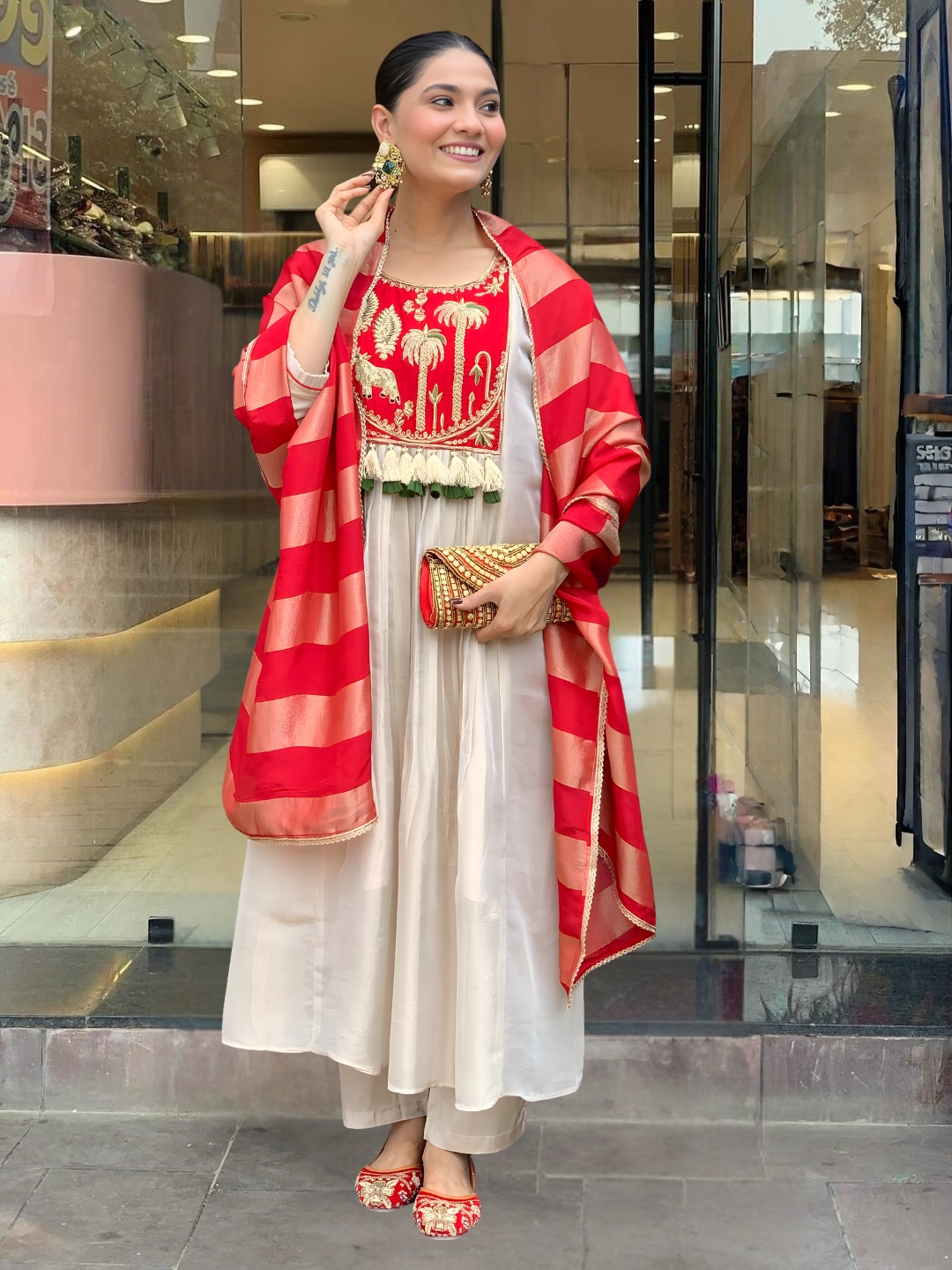
For a wedding or Haldi ceremony, consider the activity level before selecting silk, zari or pale colours. The Silk Festive Kurta Pant Set with Zari Jacquard Dupatta may suit a short, supervised photograph or ceremony, while a cotton or lighter silk-blend option is more sensible if the child will play outdoors. Matching comfort to the schedule produces better photographs and a happier wearer.
The most successful children's salwar suit is not necessarily the most elaborate one. A breathable fabric, well-measured fit, short secured dupatta and simple footwear allow the child to participate fully while still looking traditionally dressed. That balance is the practical standard to use when comparing prints, regional motifs, embroidery and festive fabrics.
Common Questions About Comfortable Kids’ Salwar Suits and Dupattas
How long should a dupatta be for a child?
A child's dupatta should usually finish around the hip or upper thigh and remain well above the ankle. The correct length depends on height, drape and footwear, but excessive fabric should be avoided for children who will walk or play.
How do you keep a child’s dupatta from slipping?
Secure the dupatta at one or both shoulders with small safety pins hidden between fabric layers. A folded two-shoulder drape is often more stable than a loose one-shoulder arrangement during school performances and active celebrations.
Which fabric is most comfortable for children’s salwar suits?
Breathable cotton and light cotton blends are generally the most comfortable for daytime events and warm weather. Silk blends, jacquard and zari can work for short festive occasions when the fabric is not stiff, heavy or scratchy.
Can children wear Patiala salwar suits comfortably?
Children can wear Patiala salwar suits comfortably when the trouser volume is controlled and the hem does not gather around the feet. Pairing a moderately sized Patiala with a shorter secured dupatta prevents excessive fabric around the legs.
How should a child’s salwar suit fit?
The shoulder seam should sit close to the shoulder edge, the armhole should permit both arms to rise, and the waistband should remain comfortable while sitting. Measure the child rather than relying only on age labels, and allow modest growing room without choosing an oversized dupatta.
What should a child wear to a Haldi ceremony?
A child should wear a breathable, easy-to-clean salwar suit with a short secured dupatta and comfortable footwear to a Haldi ceremony. Avoid trailing fabric, delicate embellishment and very pale textiles if the child will participate in turmeric rituals or outdoor activities.