Sand changes the rules of wedding dressing: a narrow heel sinks, a long hem collects grit, and a heavy synthetic outfit can feel uncomfortable within minutes. Knowing How to Dress for a Beachside Wedding With a No Heels Rule means balancing ceremony-appropriate polish with clothing that can handle salt air, uneven ground, sunlight and wind. The most reliable formula is a breathable Indian outfit, a controlled hemline, secure flat footwear and accessories that stay in place.
Start with the beach wedding conditions
A beachside wedding outfit should be chosen around the venue's surface, weather and ceremony timing before colour or embellishment. A sunset ceremony on firm sand allows more structure than a midday pheras ceremony near the waterline, where heat, glare and wind affect every layer.
Check the invitation for the setting. A resort lawn beside the beach is easier to dress for than loose sand, while a yacht deck needs shoes with a non-marking sole and a secure strap. Look at the forecast 24 hours before leaving. Coastal humidity can make silk, velvet and dense lining feel warmer, while wind can lift an unpinned dupatta or expose a very full skirt.
- Loose sand: choose broad, flat soles and keep the hem at least 2 to 3 centimetres above the ground.
- Firm sand or a boardwalk: sandals, juttis and low wedges are usually manageable if they have a stable base.
- Midday heat: favour linen cotton, Chanderi, lightweight georgette or breathable silk blends with minimal lining.
- Wind: use a dupatta with a narrow border, hidden pins and enough weight to prevent constant movement.
- Evening chill: carry a cropped jacket, silk stole or lightweight shawl rather than a bulky wrap.
A short walk from the hotel to the ceremony also matters. Test the complete outfit by walking for 10 minutes, sitting on a low chair and climbing a few steps. A simple trial reveals whether a skirt catches under the foot, whether a blouse rides up and whether a dupatta needs stronger fastening.
How to Dress for a Beachside Wedding With a No Heels Rule
The easiest answer is a lightweight saree, lehenga or kurta set paired with a supportive flat shoe and a hem that doesn't touch the sand. Elegance comes from proportion, fabric quality and deliberate finishing rather than height from footwear.
Choose the silhouette before the decoration
A pre-draped saree or ready-to-wear saree reduces the risk of a loose pleat opening in the wind. A regular saree can also work when the pallu is pleated, pinned at the shoulder and secured discreetly at the waist. For a lehenga, a moderate flare is easier to manage than a floor-pooling circular skirt, especially when walking across sand.
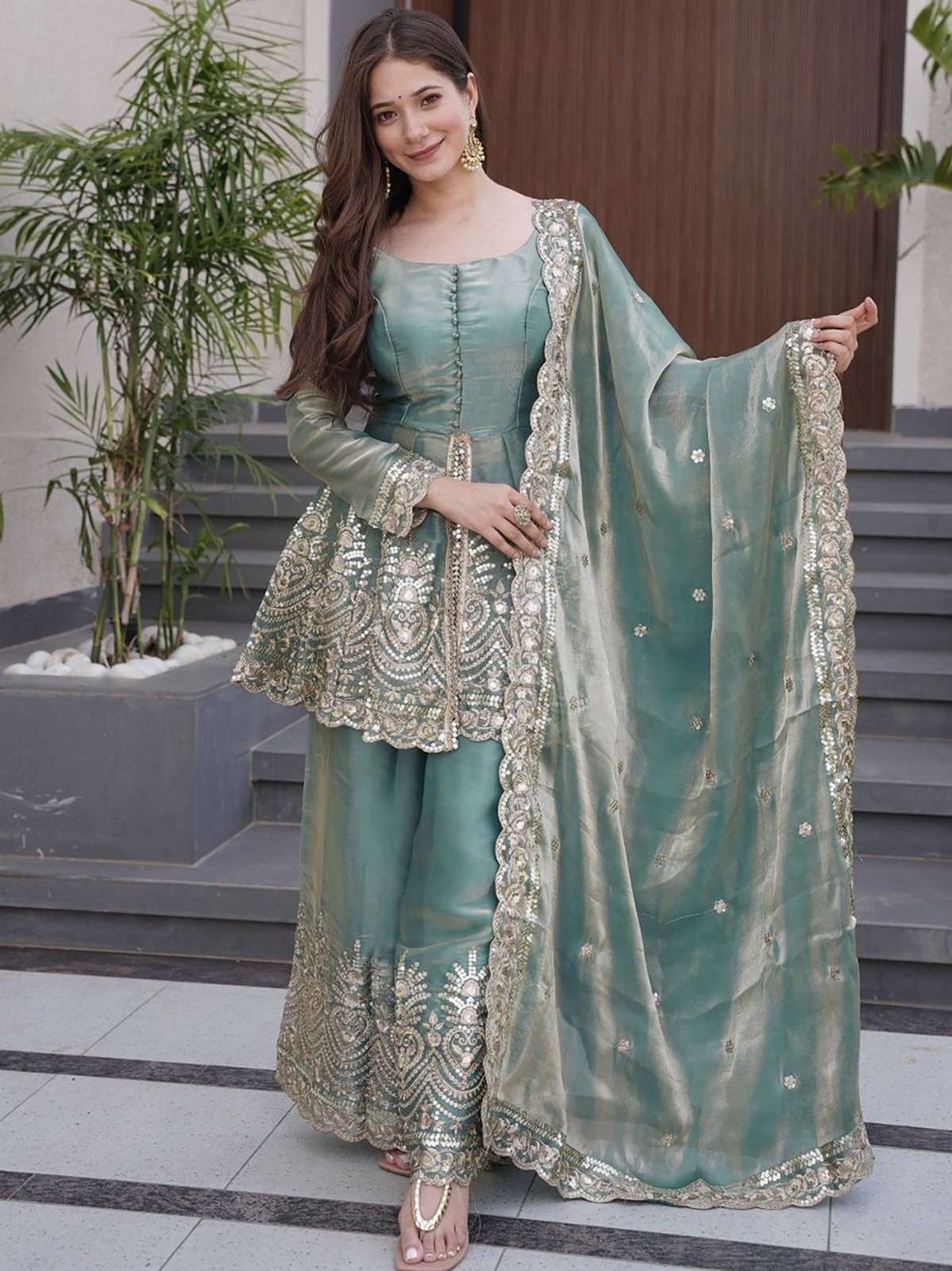
A straight kurta set is useful for guests who expect to walk, sit on low seating or move between indoor and outdoor spaces. Sea Green Embroidered Silk Kurta Set with Dupatta offers a structured alternative to a full skirt; pair it with tailored cigarette trousers or a narrow salwar and a dupatta pinned at both shoulders.
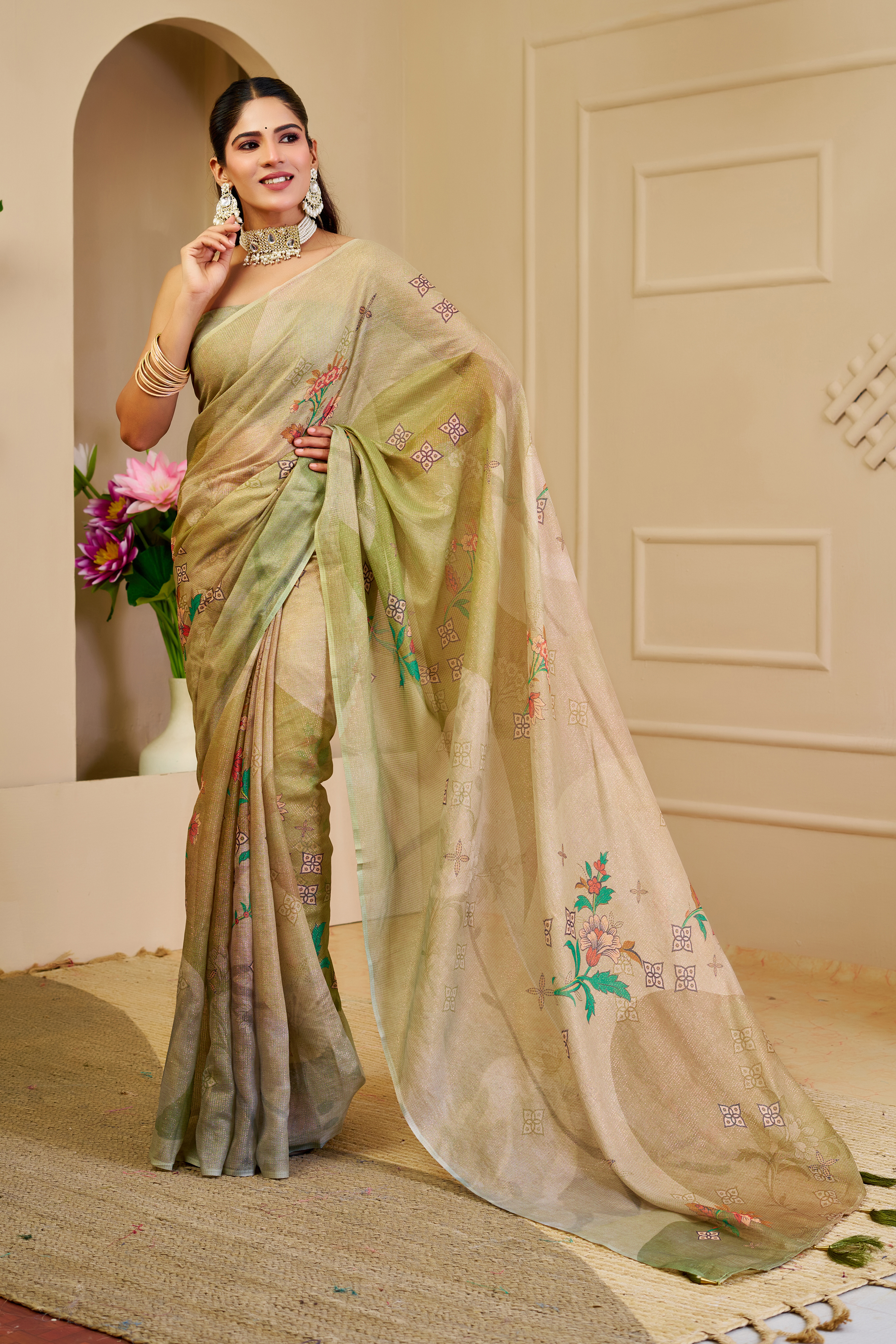
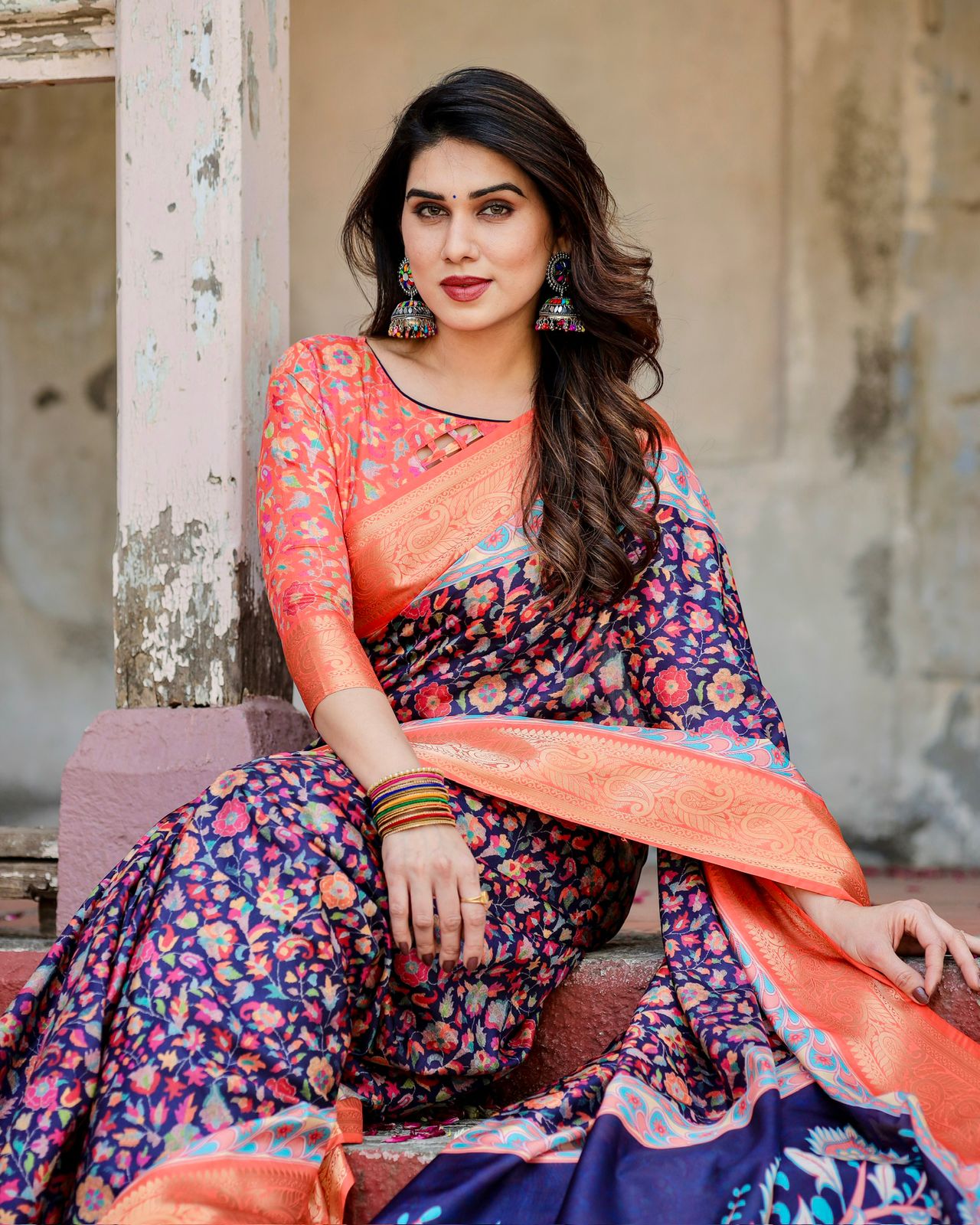
A saree in a soft, fluid fabric can look formal without demanding complicated movement. Coral Floral Paisley Chinnon Ready To Wear Saree by Varnavi illustrates how a printed drape can carry visual interest while leaving the feet free for practical sandals. Keep the blouse fitted enough to support the saree but not so tight that humid weather becomes uncomfortable.
A lehenga remains suitable when its waistband is comfortable and the skirt length is altered for flat footwear. Ask a tailor to shorten the hem while wearing the exact sandals planned for the wedding. A hem that sits 1 to 2 centimetres above the floor indoors may still be too long for shifting sand.
Which fabrics work best beside the sea?
Linen cotton, lightweight georgette, Chanderi and breathable silk blends work well for beach weddings because they allow airflow and don't create excessive bulk. Fabric choice should account for the time of day, lining and amount of embroidery rather than relying on fibre names alone.
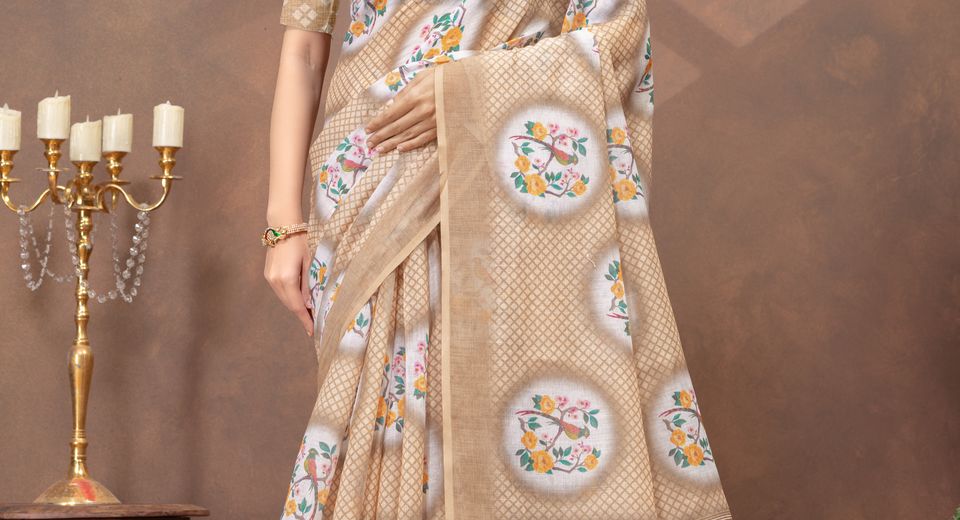
Linen cotton is a strong choice for a daytime ceremony because it absorbs some moisture and has a relaxed texture that suits a coastal setting. Peach Linen Cotton Floral Print Saree with Blouse for Women and Beige Linen Cotton Saree with Designer Pallu by Varnavi can be styled with a compact blouse, flat sandals and limited jewellery. Expect natural creasing; pressing the saree shortly before dressing gives a neater result than trying to prevent every crease.
Georgette and chinnon drape fluidly and usually stay lighter than heavily woven textiles. A georgette lehenga can be comfortable in warm weather if the skirt has a breathable lining and the blouse doesn't have thick foam or multiple inner layers. Chanderi adds a subtle sheen and holds a graceful shape, but very fine Chanderi may need careful pinning in strong wind.
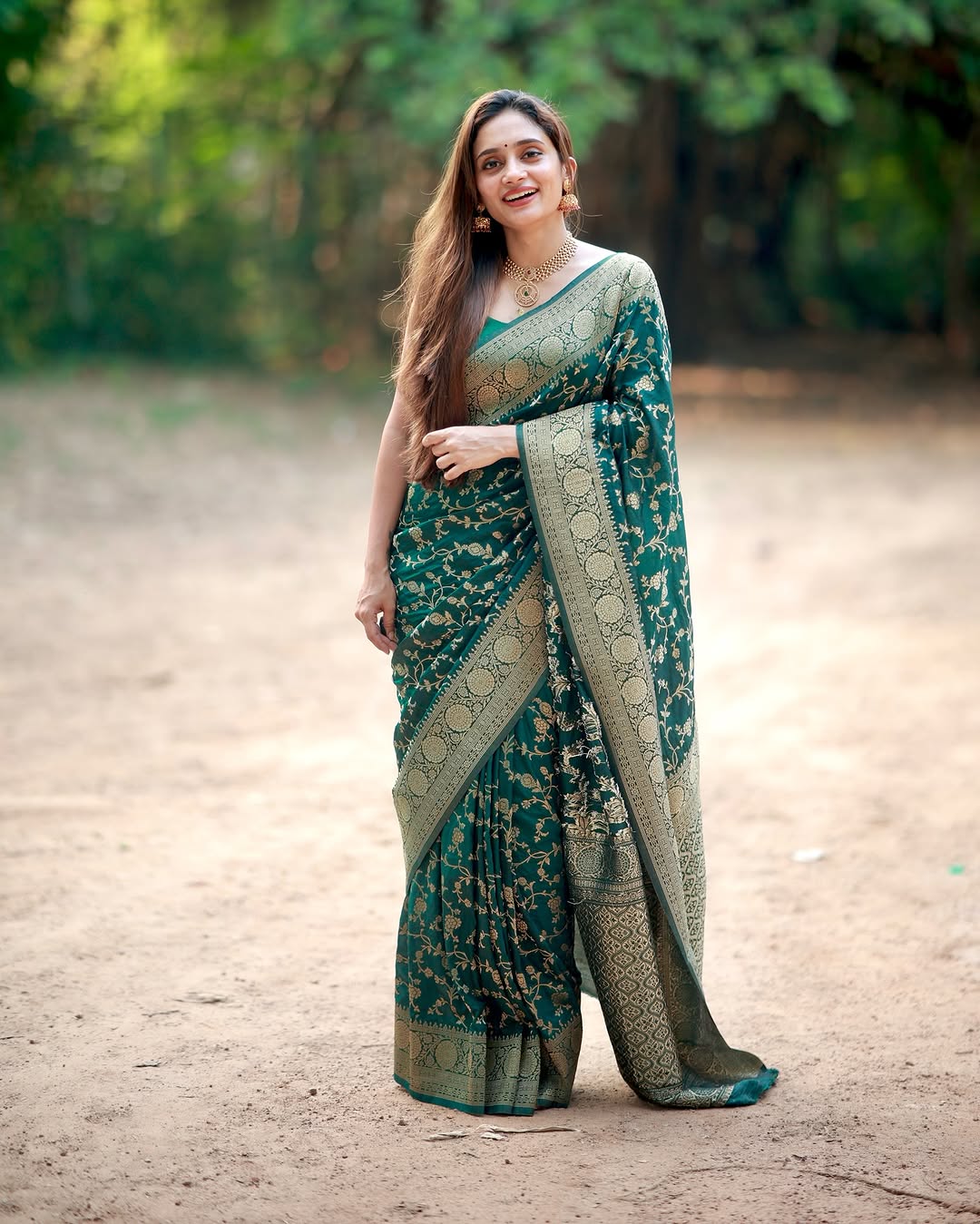
Banarasi silk and dense brocade can suit an evening reception, but both are less forgiving on hot sand because zari and tightly woven silk retain weight and warmth. Kanjeevaram is magnificent for a traditional indoor wedding, yet a full Kanjeevaram saree may be unnecessarily heavy for a casual seaside ceremony. If a silk look is required, select a lighter silk blend, a narrow zari border or a silk blouse with a breathable cotton or linen skirt.
Beware of lining. A polyester lining beneath a lightweight outer fabric can trap heat and make the garment cling to the legs. Ask whether the garment is lined, feel the inside seam and choose cotton voile or a light satin lining where possible. A garment that feels airy in a fitting room may become uncomfortable after two hours in coastal humidity if the inner construction is dense.
Flat footwear that still looks wedding-ready
Flat footwear for a beach wedding should have a wide sole, a secure upper and enough grip to prevent slipping on sand or polished floors. A decorative flat is more useful than a delicate slipper because stability protects posture and keeps the outfit moving cleanly.
- Embellished juttis: suitable for firm sand, lawns and indoor receptions; choose a flexible sole and break them in before the event.
- Flat strappy sandals: effective in hot weather when the straps cross the foot securely and the sole has traction.
- Kolhapuri-style sandals: work with cotton sarees and kurta sets, particularly for daytime ceremonies, but soften the leather before wearing them for hours.
- Closed-toe flats: useful when sand is coarse or the venue has gravel; select a breathable upper to reduce heat.
- Low block heels: suitable only when the invitation uses "no heels" loosely and the surface is firm; they're not practical for deep sand.
Match the footwear to the outfit's visual weight. Gold juttis balance zari, mirror work and warm-toned embroidery, while pearl or champagne flats complement pastel georgette. Neutral beige, tan or metallic footwear lengthens the line of a saree without competing with a printed pallu.
Carry a small cloth pouch for removing sand from the footbed. Do not wear new footwear for the first time at the wedding. A 20-minute indoor trial followed by a short outdoor walk can identify rubbing before the event, and adhesive heel strips can protect areas that are prone to blisters.
Colour, print and embellishment for sunlight
Soft coral, peach, sea green, ivory, powder blue and muted yellow photograph well in coastal daylight because these colours reflect rather than absorb intense sunlight. Colour also helps separate the guest's look from pale sand and a blue horizon.

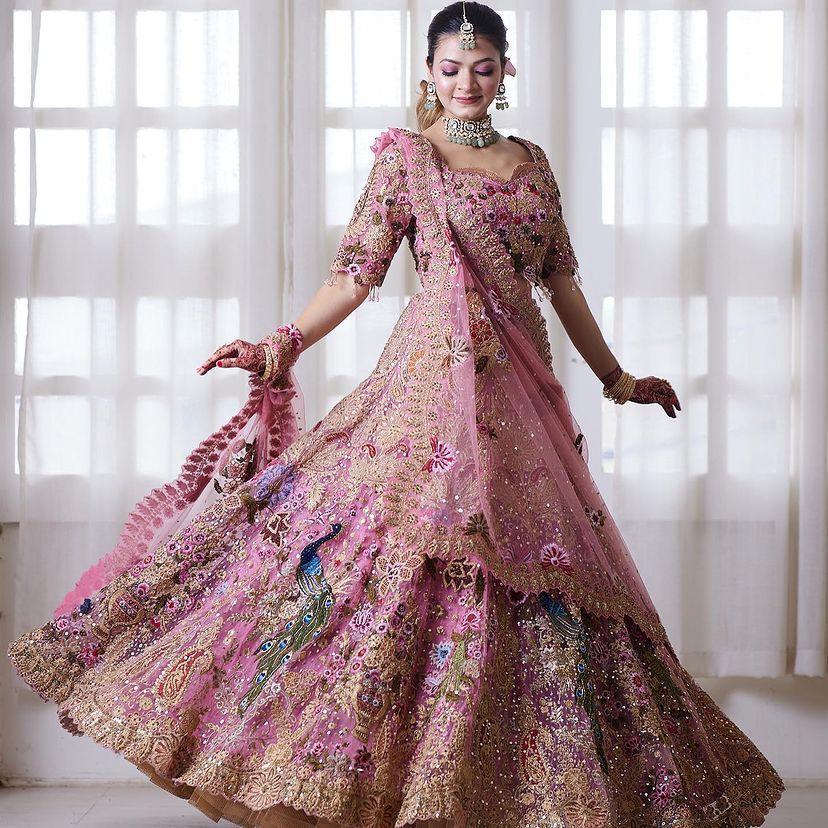
Cream Peacock Embroidered Net Lehenga Set for Women creates contrast through embroidery without requiring a dark palette. Keep the jewellery controlled if the net skirt already contains dense motifs. Coral Bloom White Georgette Lehenga Set gives a brighter floral direction; pair it with pearl, rose-gold or small kundan accents instead of adding a heavy necklace, oversized earrings and stacked bangles together.
Reflective embellishment needs moderation at a beach venue. Large mirror work can catch direct sunlight and appear harsh in photographs, while fine zari, small sequins and tonal embroidery create a more even finish. White and ivory outfits should be checked against the invitation's dress code because some couples reserve pure white for the bride or bridal party.
A printed saree can be elevated with a blouse in a single colour taken from the print. A solid blouse also makes rewearing easier and keeps the outfit from looking visually crowded against a bright outdoor background. Peach Floral Digital Print Shimmer Linen Cotton Saree works particularly well with understated earrings and a plain metallic sandal because the print already supplies movement.
Keep the dupatta, pallu and hair secure
A beach wedding requires at least two discreet points of anchoring for a dupatta or saree pallu: one at the shoulder and one at the waist or blouse edge. A single shoulder pin often fails when a sea breeze changes direction.
Use small safety pins that match the garment colour and place them from the inside so they don't catch on jewellery. A brooch can secure the shoulder elegantly, but test its weight first; a heavy brooch may pull delicate georgette or net. For a lehenga, pleat the dupatta narrowly rather than spreading the full width across the arm.
Hair should support the same practical approach. A low bun, braided ponytail or half-up style usually holds better than loose waves in coastal wind. Apply a light anti-frizz product, then carry a few pins and a small comb in a pouch. Avoid very long earrings if the hairstyle and wind can tangle them together.
Makeup also benefits from coastal planning. Waterproof mascara, a light setting spray and a lipstick formula that tolerates heat are more dependable than several thick layers of complexion product. Carry blotting paper, sunscreen and a small powder compact, but reapply sunscreen to exposed shoulders and arms according to the product instructions.
Build the outfit around movement and comfort
The best beach wedding guest outfit permits walking, sitting, eating and dancing without repeated adjustment. Movement tests are more valuable than a mirror check because sand exposes problems that a fitting room doesn't.

Put on the exact blouse, skirt or saree, undergarments, footwear and jewellery planned for the event.
Walk on a textured surface for 10 minutes and check whether the hem catches under the toes.
Sit on a low seat and confirm that the neckline, waistband and blouse remain secure.
Raise both arms briefly to test whether the sleeves and dupatta restrict movement.
Take photographs from the front, side and back to check whether the flat footwear changes the garment's proportions.
Underclothing deserves equal attention. A supportive, seamless blouse inner prevents visible lines under georgette, while breathable cotton-blend underwear reduces discomfort in humid weather. Choose shapewear only if it allows sitting and walking easily; tight synthetic layers can make a warm outdoor ceremony significantly less comfortable.
Pack a practical emergency kit with safety pins, fashion tape, blister plasters, a stain-removal pen, tissues, a small sewing kit and a spare hair tie. Keep the kit in a compact crossbody bag or fabric potli that can be closed securely. A phone, sunglasses and sunscreen also need space, so an ornamental micro-bag may be impractical for a long ceremony.
A simple formula for a polished no-heels look
A reliable beach wedding formula combines one breathable hero garment, one secure flat shoe, one controlled accessory story and one weather-ready layer. The formula prevents over-styling while preserving the celebratory character expected at an Indian wedding.
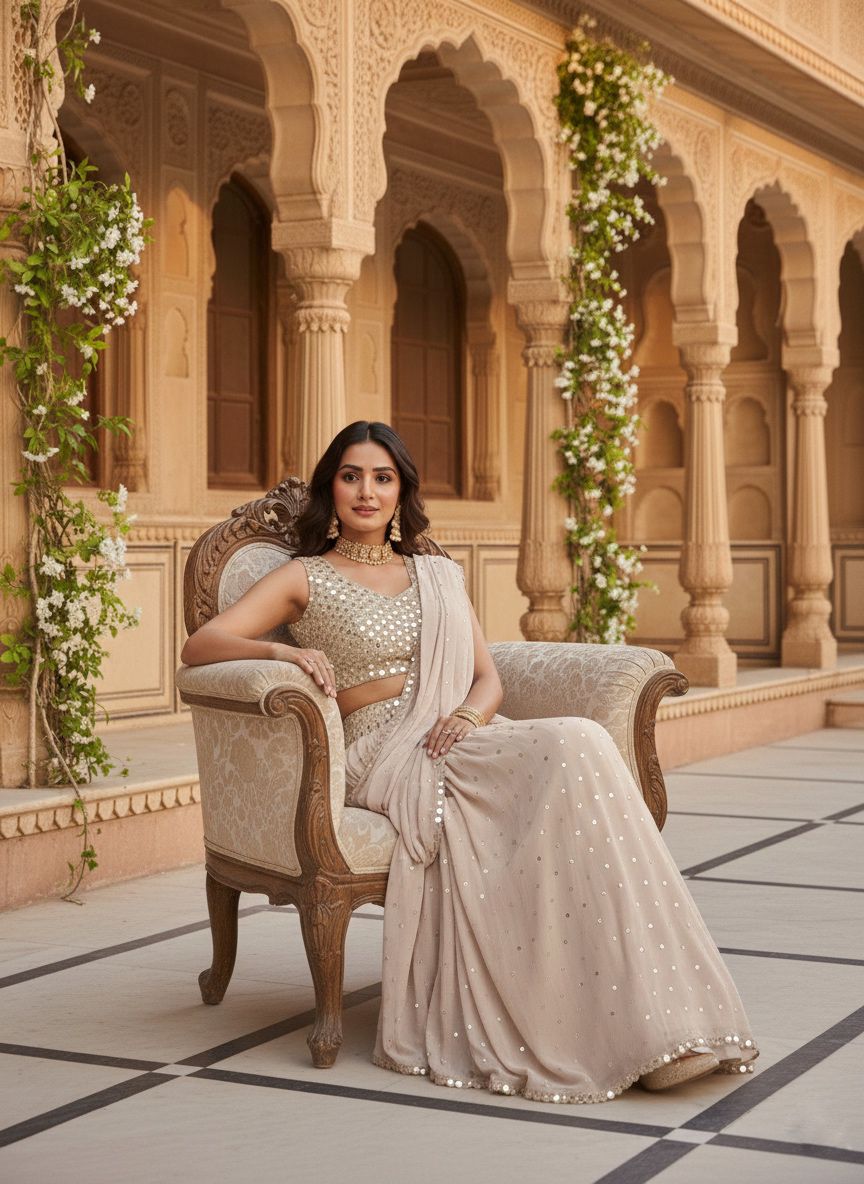
For a daytime ceremony, try a linen cotton saree with a sleeveless or short-sleeved blouse, metallic flat sandals, pearl studs and a pinned pallu. For a sunset ceremony, choose a lightweight georgette lehenga with a cropped blouse, embellished juttis, small chandelier earrings and a narrow dupatta. For a guest who prefers coverage and easy movement, choose a kurta set with cigarette trousers, embroidered flats and a compact silk stole.
Keep the palette to two or three related colours. Coral with ivory and gold looks festive, sea green with champagne and pearl feels fresh, and peach with beige and rose gold remains soft in daylight. Matching every accessory to the garment can look dated; repeating one metal tone is usually enough to make the complete outfit feel intentional.
Comfort doesn't make a wedding outfit less formal. A clean hem, well-fitted blouse, secure drape, considered jewellery and stable footwear create the visual finish that a beachside celebration requires. When the clothing responds to the venue, you can greet guests, walk across the sand and join photographs without spending the ceremony managing your outfit.
Common Questions About No-Heels Beach Wedding Dressing
What should I wear to a beach wedding if heels are not allowed?
Choose a lightweight saree, georgette lehenga or breathable kurta set with embellished juttis or supportive flat sandals. Keep the hem 2 to 3 centimetres above the ground and secure the dupatta or pallu at two points.
Which saree fabric is best for a beach wedding?
Linen cotton, lightweight georgette, chinnon and breathable silk blends are practical choices for a beach wedding. Avoid very heavy brocade or dense Kanjeevaram silk for a hot daytime ceremony because zari and tight weaves can add weight and warmth.
Can I wear a lehenga with flat shoes to a beach wedding?
Yes, a lehenga works with flat shoes when the skirt is hemmed for the exact sandals or juttis you will wear. Choose a moderate flare, a comfortable waistband and a breathable lining so the outfit remains easy to walk in on sand.
How do I stop a saree pallu or dupatta from blowing in beach wind?
Secure the pallu or dupatta at the shoulder and waist with discreet safety pins or a lightweight brooch. Narrow pleats, a modest border and a low bun or braid also reduce movement caused by coastal wind.
Are flat sandals formal enough for an Indian beach wedding?
Embellished flat sandals, metallic juttis and refined Kolhapuri-style footwear can look formal enough for an Indian beach wedding. Select a clean design with a stable sole, secure straps and enough decoration to balance the outfit's embroidery.
What colours look good for an Indian beach wedding guest outfit?
Coral, peach, sea green, ivory, powder blue and muted yellow work well in bright coastal light. Check the invitation before wearing white or ivory because some couples reserve those shades for the bride or bridal party.