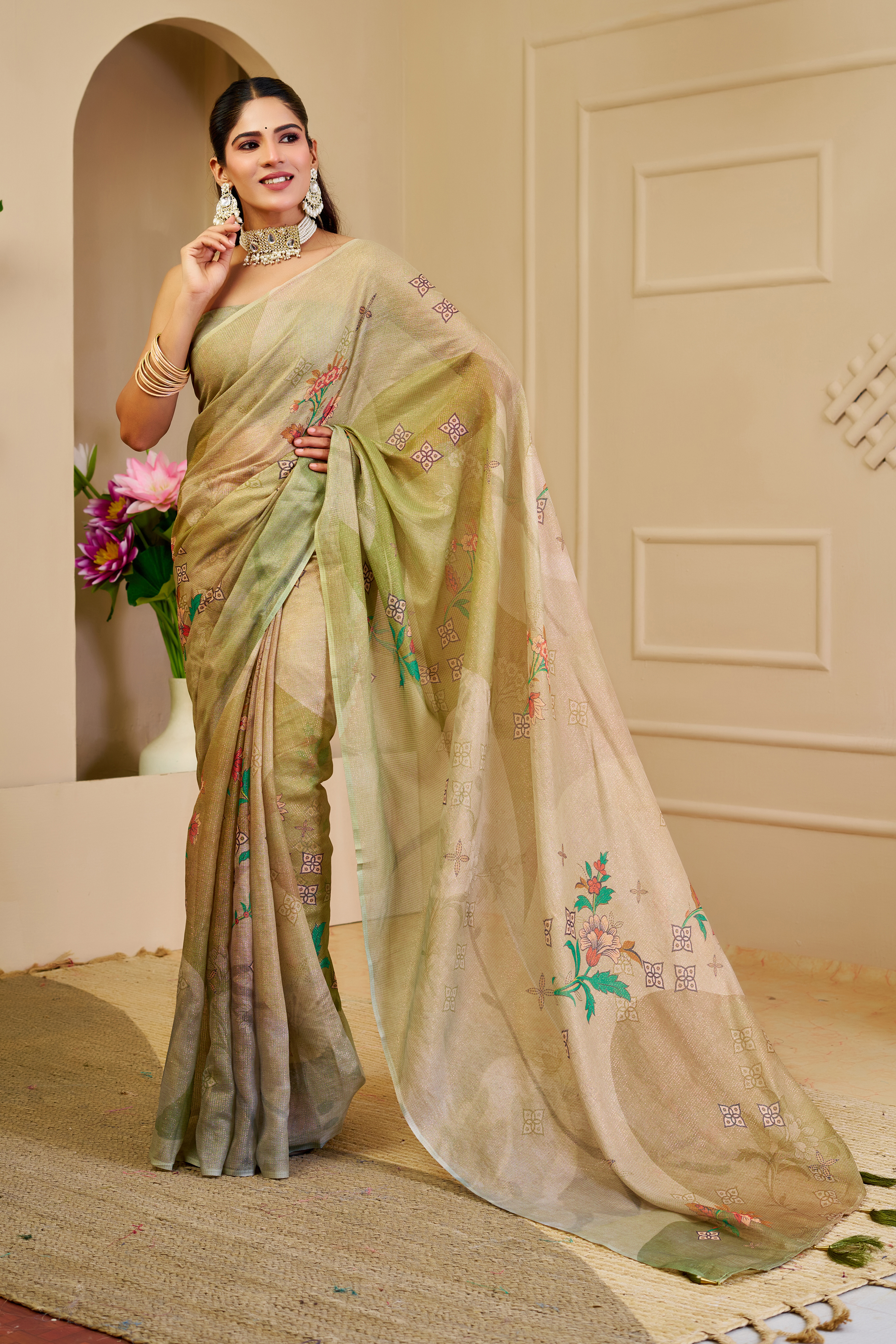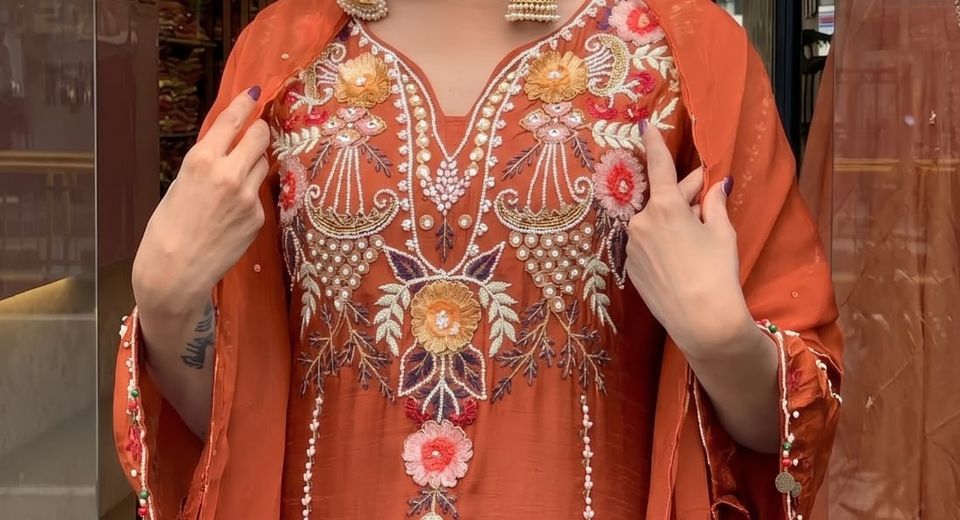
Festive Kurtas for Girls Who Prefer Trousers to Skirts can deliver the colour, embroidery and craft of Indian occasion wear without the volume or movement restrictions of a lehenga. A well-cut kurta with straight pants, cigarette trousers or a relaxed salwar gives you a familiar lower-half silhouette while a dupatta, zari border or woven texture adds celebration detail. The most useful choice depends on the fabric, trouser shape, event length and amount of movement your day involves.
That distinction matters because "festive" covers very different settings: a two-hour puja at home, a crowded Diwali gathering, a daytime Haldi ceremony and a formal evening reception don't demand the same outfit. A breathable cotton salwar suit can be ideal for a warm family lunch, while Chanderi silk or Vichitra silk gives a more structured finish for an evening event. The sections below explain how to make that choice rather than relying on decoration alone.
Why trousers make festive dressing easier
Trousers make festive dressing easier because they offer stable coverage, predictable movement and a defined waist-to-ankle shape. A skirt or lehenga usually needs more attention to volume, lining and footwear clearance, whereas a trouser-based kurta set stays closer to the body and is easier to sit, walk and travel in.
Girls who prefer trousers often want more than casual comfort. They may prefer the visual neatness of a straight leg, dislike fabric brushing against the ankles, or need an outfit that works on stairs, in a car and during long family photographs. A salwar suit meets those needs while retaining recognisable festive elements such as embroidery, a dupatta, silk texture and zari.
Readymade salwar suits festive shoppers can wear immediately are especially useful when tailoring time is limited. Even so, "ready-made" should not mean accepting a poor fit. Check the garment's bust and hip measurements, trouser rise, inseam and sleeve length before ordering. A kurta that fits the shoulders but pulls at the hips will look less polished than a slightly relaxed style with clean vertical fall.
Festive Kurtas for Girls Who Prefer Trousers to Skirts: choosing the silhouette
The best trouser silhouette depends on how much structure, ease and visual length you want from the outfit. Straight pants create a clean formal line, cigarette trousers look sharper and narrower, while a relaxed salwar gives more room around the thigh and knee.
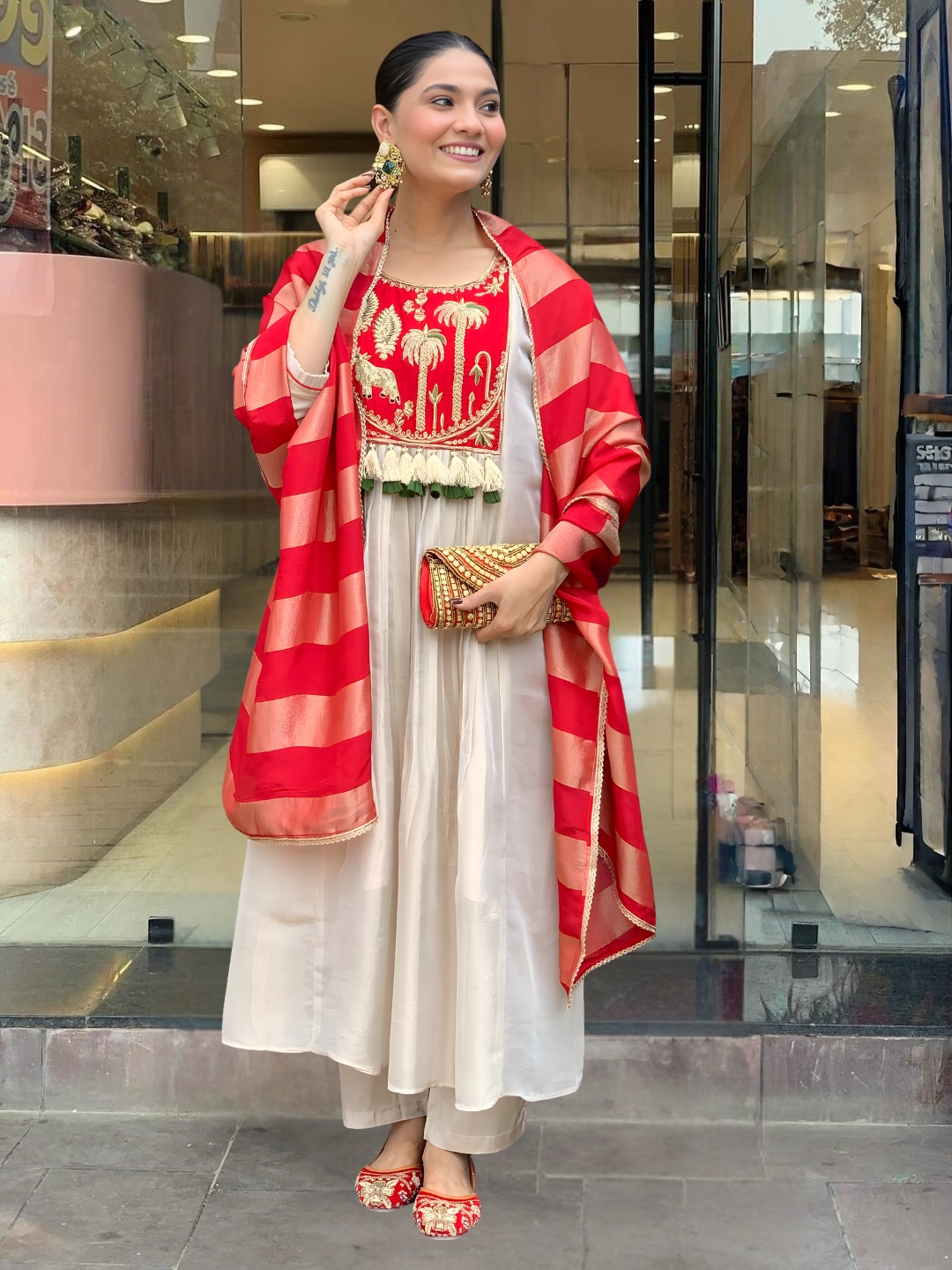
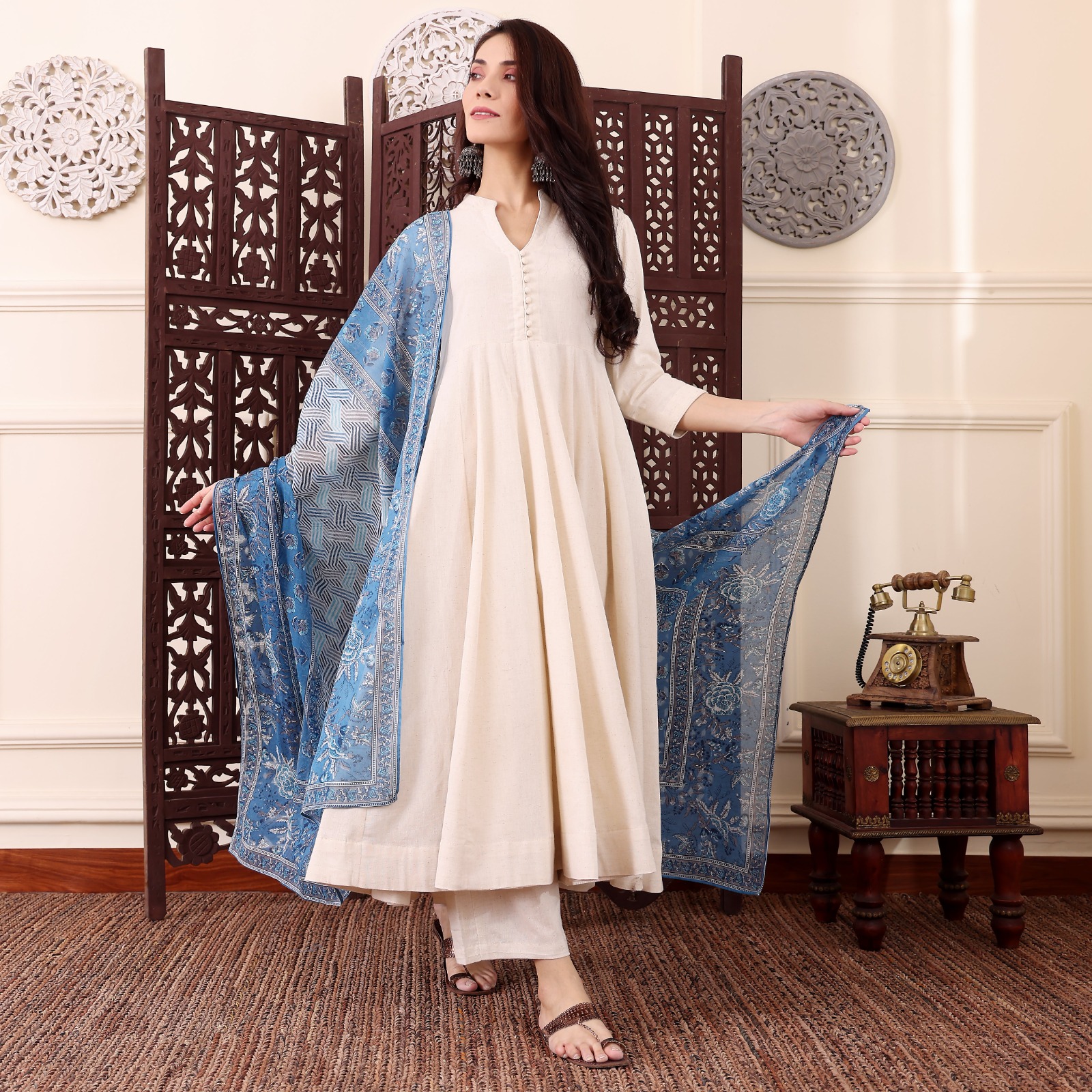
Straight kurta with straight pants
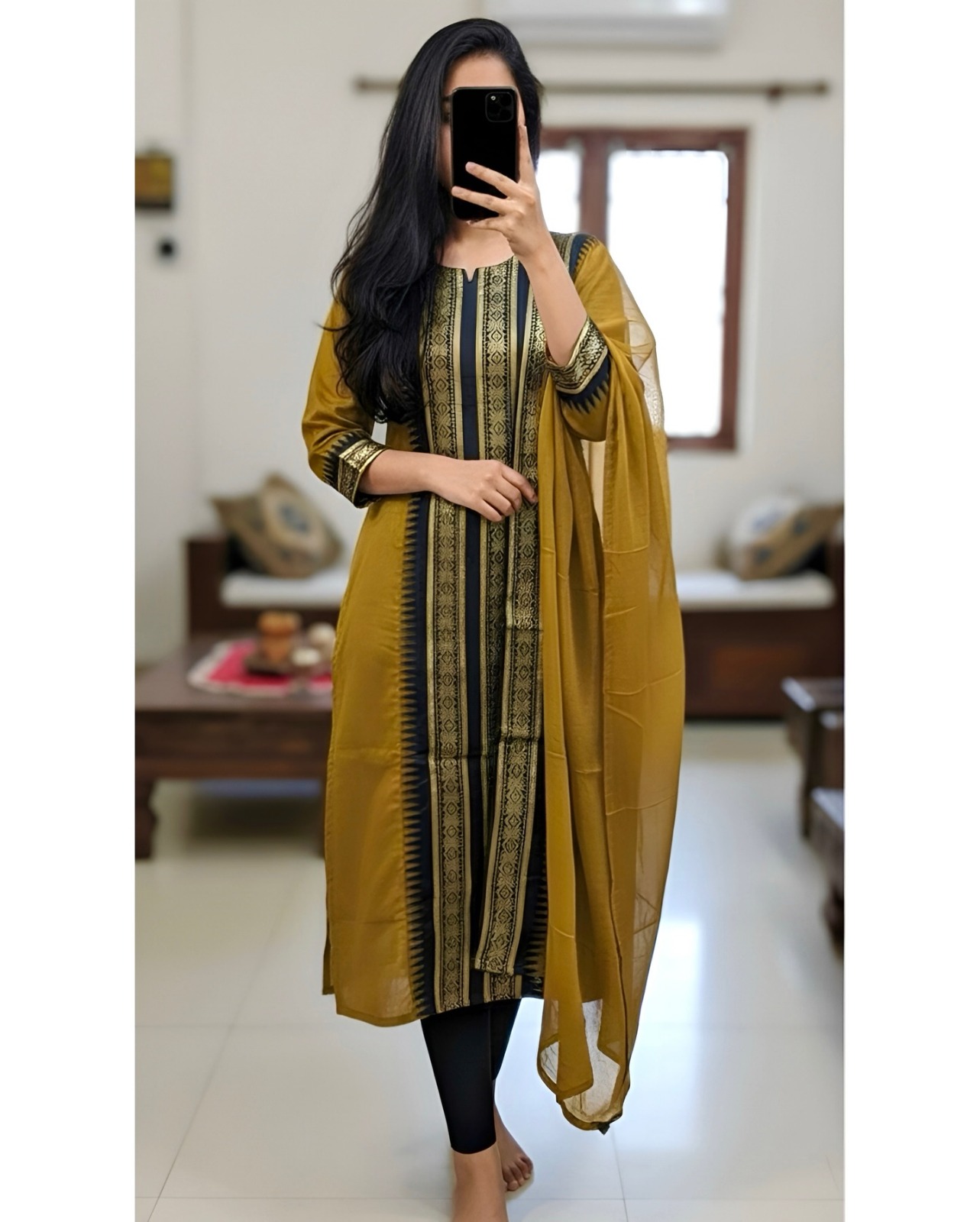
A straight kurta with straight pants is the most versatile choice for pujas, family lunches and semi-formal festive gatherings. The parallel lines make the outfit look composed without adding bulk, and the shape works particularly well with embroidered necklines or a bordered dupatta.
Look for a trouser hem that finishes close to the ankle bone rather than pooling over the foot. The correct length keeps sandals visible and prevents the lower leg from looking shortened. A kurta falling around the knee or slightly below the knee usually balances straight pants better than a very short top.
Short kurta with cigarette trousers
A short kurta with cigarette trousers creates a contemporary, tailored outfit for dinners, card parties and office-to-festival dressing. The narrower trouser works best when the kurta has enough ease through the torso, because a close fit in both pieces can restrict sitting and make embroidery feel visually crowded.
Use a longer dupatta, such as a lightweight jacquard style, when the short kurta needs additional vertical length. Wearing the dupatta over one shoulder and allowing one end to fall below the hip can make the proportion feel more balanced.
Long kurta with relaxed pants
A long kurta with relaxed pants gives the most forgiving fit for travel, extended celebrations and anyone who dislikes cling around the legs. The combination can resemble a palazzo suit when the trouser leg is wide, but it remains more practical than a full skirt because the two legs move independently.
Keep the kurta's hem relatively simple when the trousers are wide or heavily textured. A concentrated embroidered yoke, sleeve border or neckline gives the eye a focal point without making the whole outfit look busy.
How fabric changes comfort, structure and occasion suitability
Fabric determines how a trouser-based festive set feels after several hours, how sharply the kurta hangs and how much care the outfit requires. Chanderi silk, Banarasi silk, Vichitra silk, cotton and jacquard each create a different balance of breathability, sheen and structure.
Chanderi silk has a light, subtly crisp hand and a gentle sheen, making it suitable for daytime celebrations and dressy family events. The Rust Orange Chanderi Silk Embroidered Kurta Set for Women illustrates why warm Chanderi tones work well for festive dressing: the fabric supplies visual richness without requiring a very full silhouette. The Festive Red Chanderi Kurta Pant Dupatta Set Women offers a stronger colour direction for celebrations where red feels appropriate, including evening gatherings and traditional family functions.
Vichitra silk generally has a fuller, smoother appearance than very light dress fabrics, so it can give a straight kurta a more substantial fall. The Rust Orange Vichitra Silk Embroidered Kurta Pant Set and Taupe Beige Embroidered Vichitra Silk Kurta Set Online are useful references for choosing between a saturated festive tone and a quieter neutral palette. Taupe beige can be especially effective when the embroidery, earrings or dupatta is intended to provide the main contrast.
Jacquard introduces a woven pattern rather than relying only on printed or surface decoration. A set such as Silk Festive Kurta Pant Set with Zari Jacquard Dupatta gains much of its occasion character from the dupatta, where zari and woven texture catch light during movement. The Designer Roman Silk Kurti Set with Jacquard Dupatta follows the same useful principle: a relatively controlled kurta can become festive through the contrast and structure of the accompanying dupatta.
Cotton salwar suits festive shoppers should consider are practical for warm daytime functions, outdoor ceremonies and homes where the event involves frequent movement. Cotton usually needs less caution around heat than heavier silk blends, but embroidery and coloured borders can still require gentle care. Choose cotton when breathability matters more than sheen, not because cotton is automatically informal.
Matching the kurta set to the celebration
The right festive salwar suit matches the event's formality, time of day, weather and expected movement. An useful test is to ask whether the outfit must survive heat, floor seating, dancing, travel or several hours of standing.
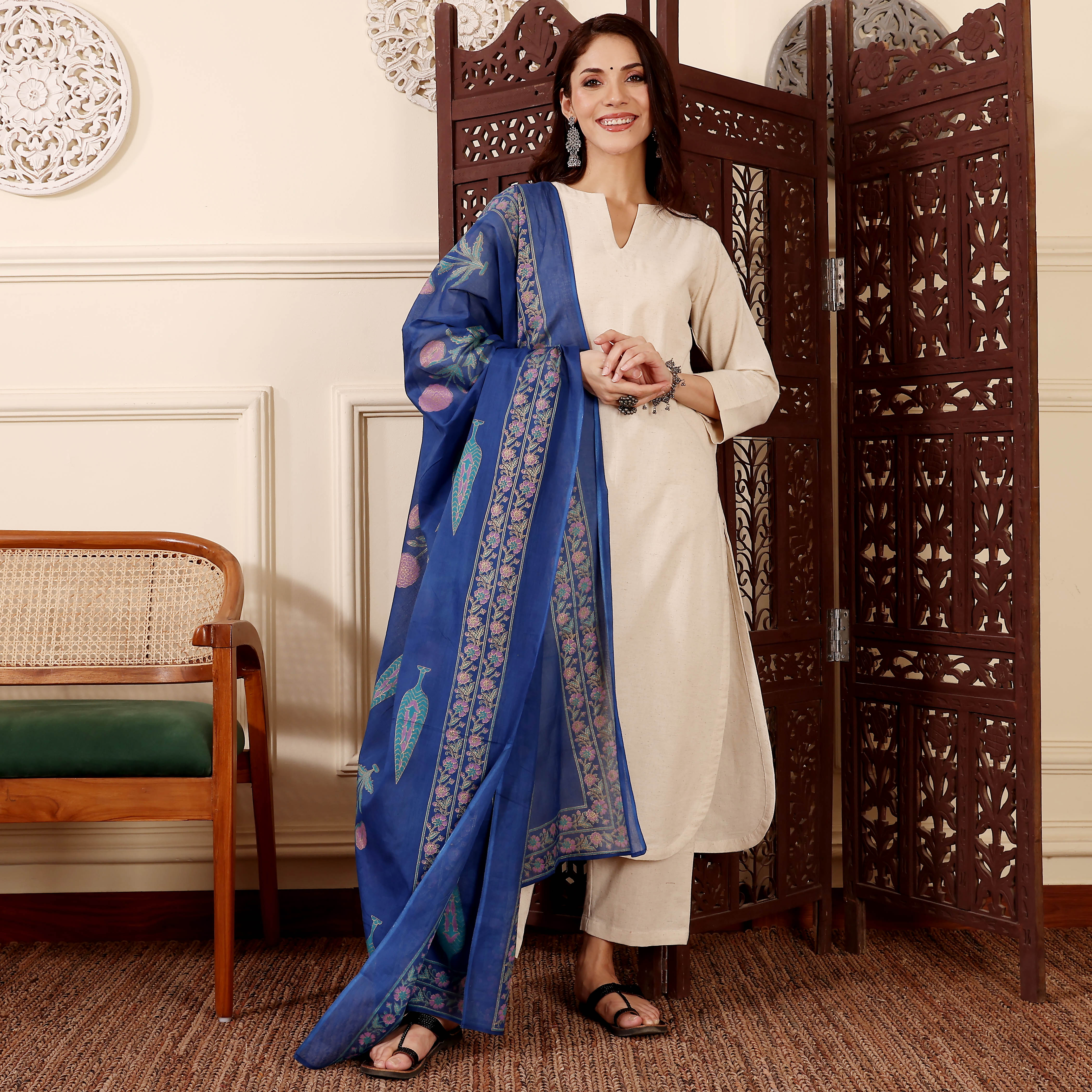
For puja and daytime family gatherings
Light-to-medium fabrics, moderate embroidery and colours such as mustard, rust, beige or soft green work well for daytime pujas and family lunches. The Mustard Embroidered Kurti Pant Set for Women Festive brings warmth without the visual intensity of a heavily embellished evening outfit. Pair it with small gold-toned earrings and comfortable sandals if the day includes walking or sitting on the floor.
A dupatta should remain manageable around lamps, food and children. Fold a lightweight dupatta into a narrow front drape or secure one shoulder with a small brooch so that the fabric doesn't trail near open flames.
For Diwali evenings and house parties
Evening festivities can support deeper colour, metallic accents and a more defined silhouette. Silk, zari, jacquard and concentrated embroidery reflect artificial light better than flat matte fabrics, especially in photographs taken indoors.
Choose one dominant statement rather than combining a highly decorated kurta, ornate dupatta, large necklace and glittering footwear. For example, a zari jacquard dupatta can remain the main focus while the jewellery stays close to the face and the trousers remain plain.
For Haldi ceremonies and outdoor events
Outdoor Haldi ceremony dressing needs washable practicality, secure styling and enough ease for movement. Yellow, marigold, pink and orange shades suit the setting, but delicate silk and elaborate surface work need protection from turmeric, water and crowded seating.
Wear trousers that allow a comfortable stride and choose footwear with a stable sole. A shorter dupatta drape or a pinned shoulder arrangement is safer than a loose back drape when the event includes games, dancing or outdoor activity.
For receptions and formal festive dinners
Formal dinners call for better structure, refined textile texture and controlled accessories rather than maximum embellishment. A darker Chanderi silk or Vichitra silk set with clean trousers can look more polished than an overly layered outfit.
For a formal salwar suit for ladies, inspect finishing details such as sleeve symmetry, lining, seam neatness and whether the trouser waistband lies flat under the kurta. These details matter more in an outfit photographed at close range.
Using regional craft references without making the outfit costume-like
Regional design references work best when one recognisable craft idea anchors the outfit and the remaining styling stays restrained. Gujarati Festive Salwar Suits may suggest bright colour, mirror-inspired accents or lively contrast, while Marwari Style Festive Salwar Suits often appeal to shoppers who want a richer, ceremonial mood.
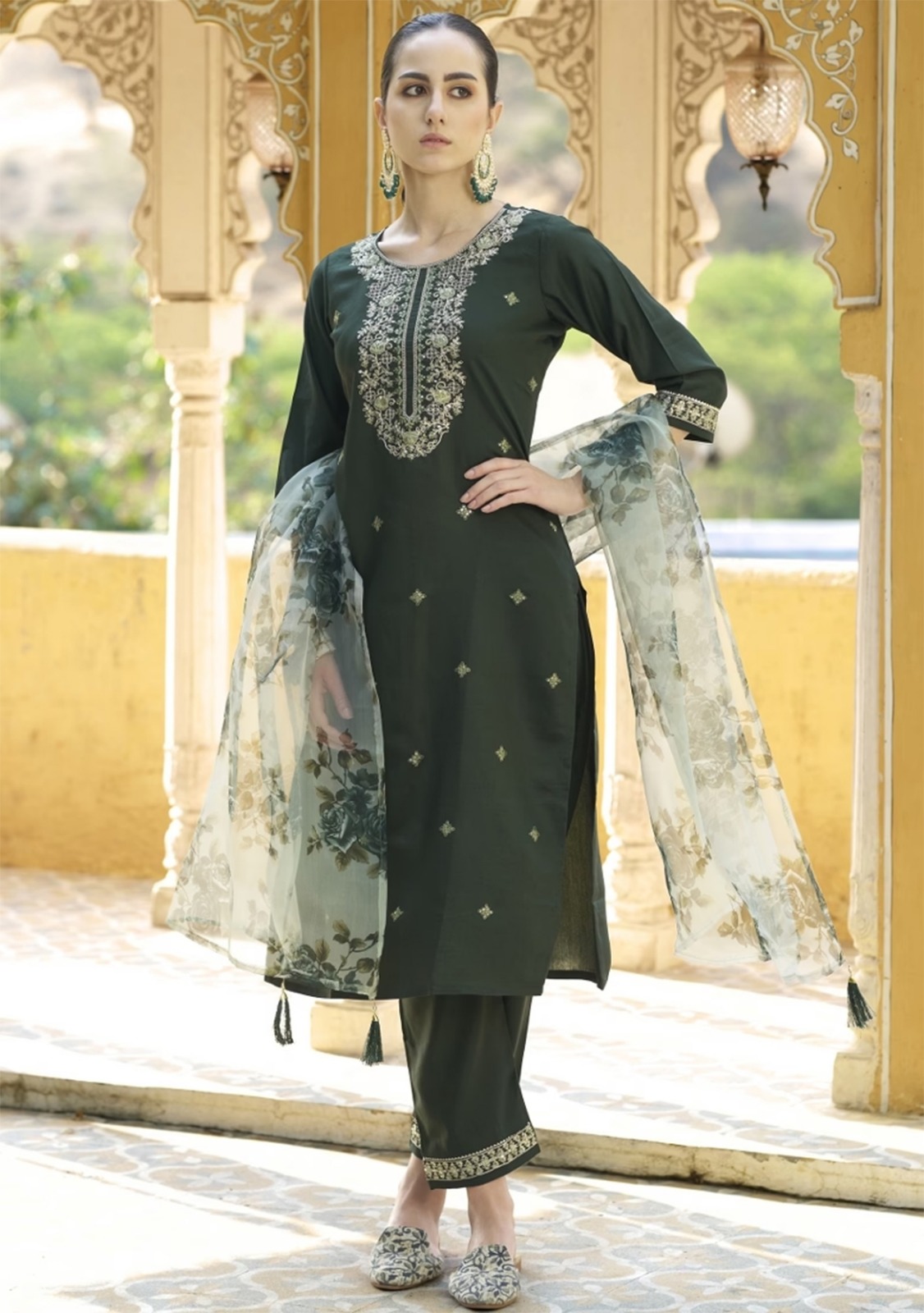
Maharashtra Paithani Inspired Salwar Suits can introduce the visual language of Paithani through jewel tones, pallu-inspired borders or peacock and floral motifs without requiring a sari drape. Pair such details with simple trousers and minimal jewellery so the weave-inspired element remains legible.
Punjab Phulkari Embroidered Salwar Suits are useful for readers who enjoy colourful floral embroidery and a more expressive surface. A Phulkari-inspired outfit can be balanced with neutral trousers or a plain inner layer, particularly when the embroidery already covers the yoke or sleeves.
Kalamkari Print Salwar Suits (Copy) offer another direction through narrative floral and nature-inspired prints. Printed Kalamkari-style surfaces usually need less jewellery than zari-heavy garments. Choose one colour from the print for the dupatta edge, footwear or earrings to create coordination without matching every detail.
How to style the dupatta when trousers are the priority
The most practical dupatta drape keeps the fabric secure while preserving the clean line of the trousers. A single-shoulder drape with the front end shortened to hip level works for walking, while a neatly folded front drape gives a more formal appearance for photographs.
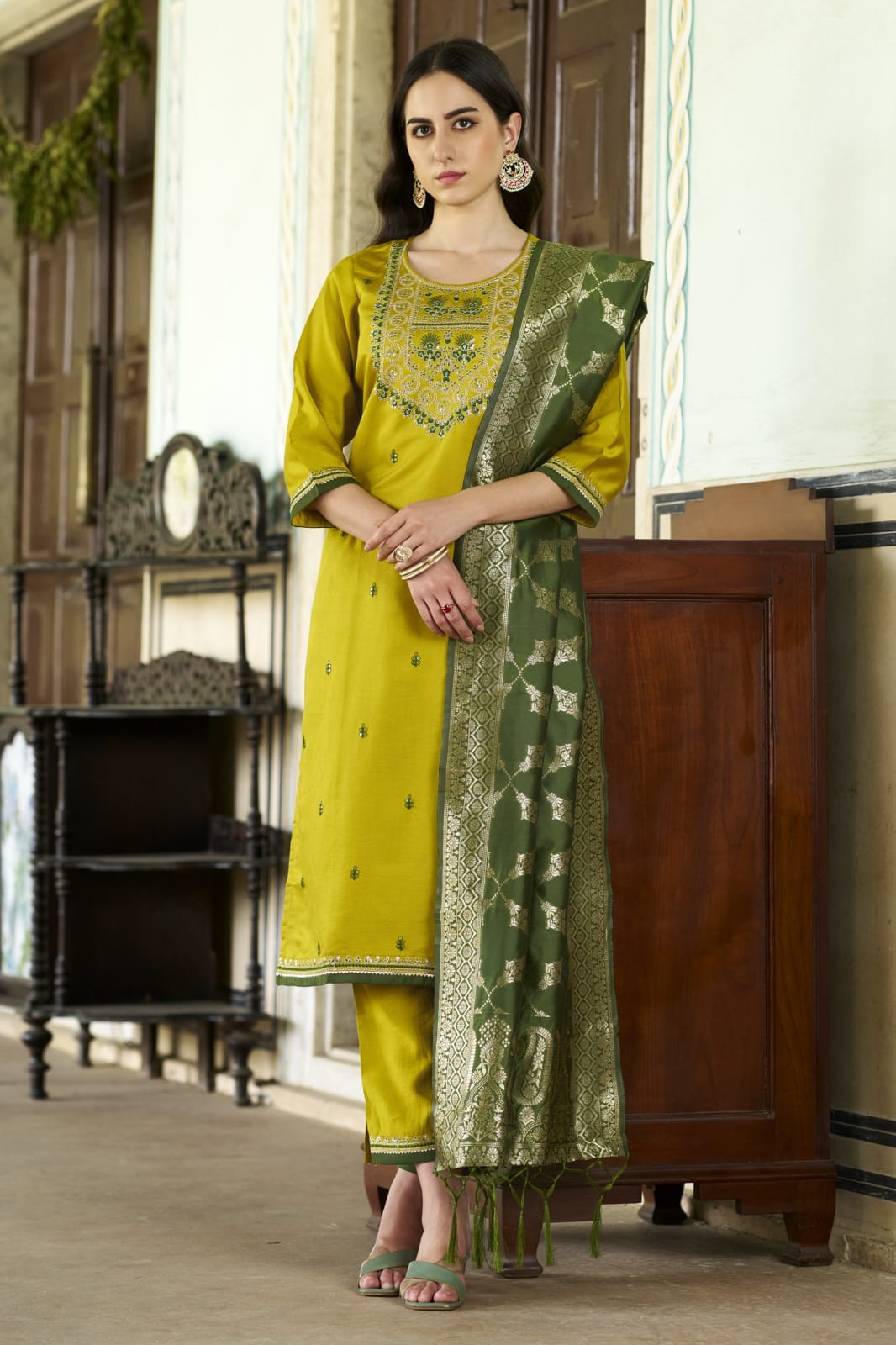
Use a concealed safety pin at the shoulder only after checking that the pin doesn't pull delicate silk or jacquard. A small brooch can secure heavier fabric, but avoid placing metal directly over fragile embroidery. For a ready-made salwar suit dupatta, check whether the length is sufficient for the preferred drape before styling the rest of the outfit.
Colour contrast can change the apparent proportions of the outfit. A dupatta close to the kurta colour creates a continuous vertical column, while a contrasting dupatta draws attention to the upper body. If the trousers are wide, a similar-toned dupatta often keeps the overall shape calmer.
For women salwar suits festive wardrobes, one flexible dupatta can extend the use of several plain or lightly embroidered kurtas. A zari border adds evening appeal, a printed cotton dupatta suits daytime wear, and a lightweight jacquard option can bridge the gap between family gatherings and formal dinners.
Fit, sizing and care checks before buying
Measure the body at the fullest bust and hip, then compare those measurements with the garment chart rather than choosing only by a familiar letter size. Trouser comfort depends particularly on hip ease, rise and waistband construction; a narrow waist doesn't compensate for insufficient hip room.
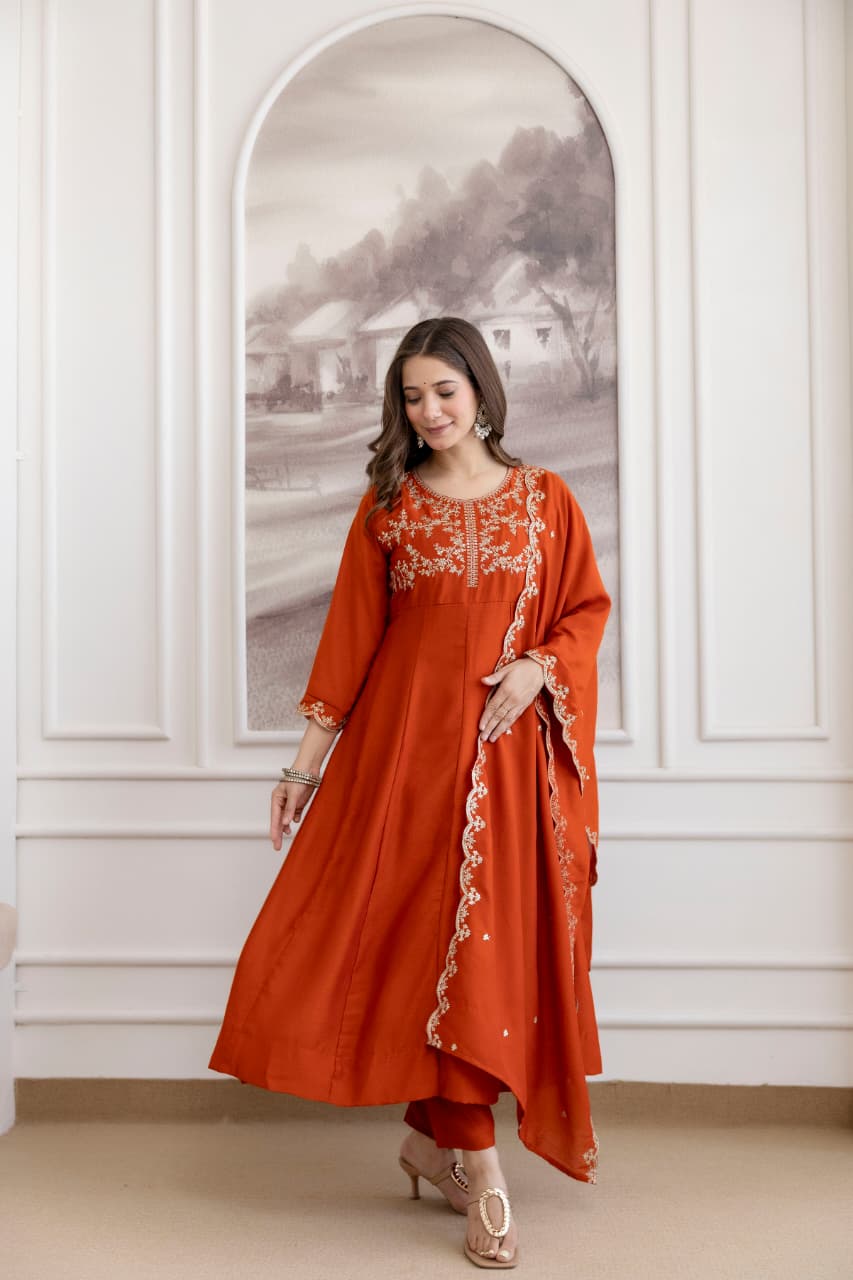
Check whether the kurta is lined, whether the fabric is described as sheer, and whether the embroidery adds weight to the shoulders. Chanderi silk and light jacquard may benefit from a lining or slip for opacity, while a heavier silk set may feel warmer during a daytime event.
Ask how the garment should be cleaned before wearing it to an important celebration. Many silk-based festive sets are safer with dry cleaning or gentle professional care, while cotton may tolerate a more straightforward wash if the embroidery and dye instructions allow it. Do not soak zari, metallic trims or strongly dyed fabrics for long periods.
Store silk and embellished outfits folded with a soft cotton or muslin layer between folds. Refold the garment every few months to reduce permanent crease lines, keep zari away from direct moisture and allow perfume to dry before the fabric touches the skin. These small habits protect the finish far better than hanging a heavy embroidered set on a thin wire hanger.
A simple decision method for choosing your set
Choose the fabric first when weather and event duration are important, the trouser shape second when movement and comfort are priorities, and the dupatta third when you want to adjust formality. This order prevents a beautiful but impractical outfit from becoming the centre of the decision.
- Identify the setting: mark the event as daytime, evening, outdoor, formal or movement-heavy.
- Select the fabric: consider cotton for heat and activity, Chanderi silk for light festive polish, and Vichitra silk or zari jacquard for a more substantial evening look.
- Choose the trouser line: select straight pants for versatility, cigarette trousers for tailoring, or relaxed pants for longer wear.
- Control the decoration: let one feature lead, such as embroidery, a woven dupatta, a regional print or metallic detail.
- Complete the comfort check: confirm the waist, hip, inseam, lining, footwear and dupatta security before the event day.
That approach makes festive dressing more personal and more functional. Trousers don't remove the cultural character of a salwar suit; they simply give the wearer a silhouette that feels natural. With the right fabric, proportion and drape, a trouser-based kurta set can move from a daytime puja to an evening celebration without looking like a compromise.
Questions About Choosing Festive Kurta Sets With Trousers
What should I wear to a festive event if I prefer trousers to skirts?
Choose a kurta with straight pants, cigarette trousers or relaxed salwar-style pants, depending on the amount of movement required. Add a dupatta, embroidery or zari detail to create a festive finish without wearing a skirt or lehenga.
Which fabric is best for festive kurta pant sets?
Chanderi silk is a good choice for lightweight daytime polish, while Vichitra silk and zari jacquard suit more structured evening dressing. Cotton is usually the more comfortable option for warm weather, outdoor events and long periods of movement.
Are readymade salwar suits suitable for formal parties?
Readymade salwar suits can suit formal parties when the fabric, construction and finishing match the event. Check the shoulder fit, lining, trouser waistband, embroidery quality and dupatta before relying on the outfit for a formal dinner or reception.
How can I style a dupatta with trousers without making it difficult to walk?
Pin the dupatta securely at one shoulder and keep the front end around hip level or fold it into a narrow drape. Avoid a loose trailing end for outdoor events, crowded gatherings, stair-heavy venues and Haldi ceremonies.
What colour festive kurta set works for a daytime family function?
Mustard, rust, beige, soft green, pink and other warm or medium tones work well in daylight. Select lighter fabrics and moderate embroidery so the outfit remains comfortable and does not look excessively formal.
How should I care for a silk or zari festive salwar suit?
Follow the garment's specific cleaning instructions, and choose professional dry cleaning when silk, zari or heavy embellishment requires it. Store the set folded in muslin, protect it from moisture and avoid prolonged soaking or direct high heat.