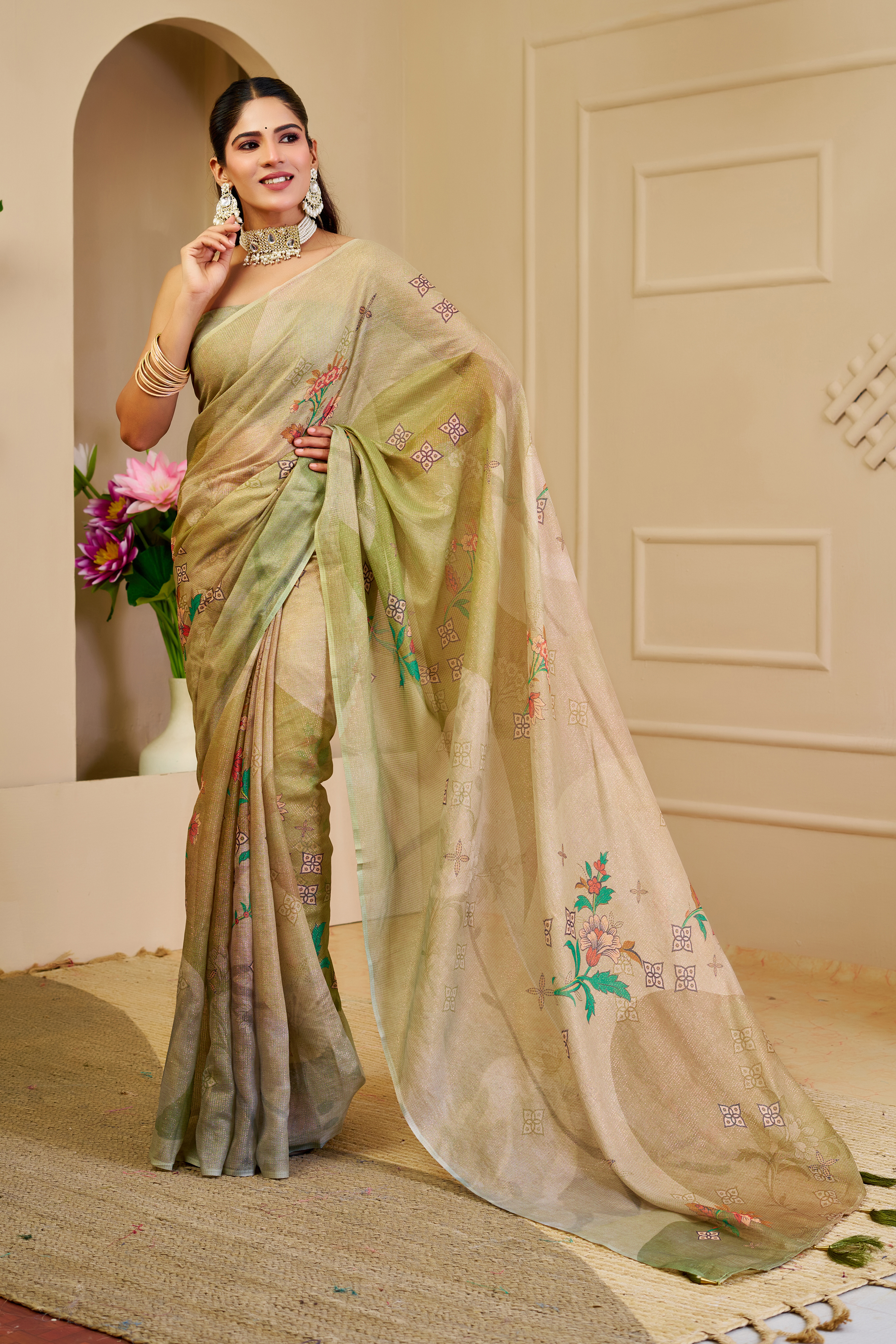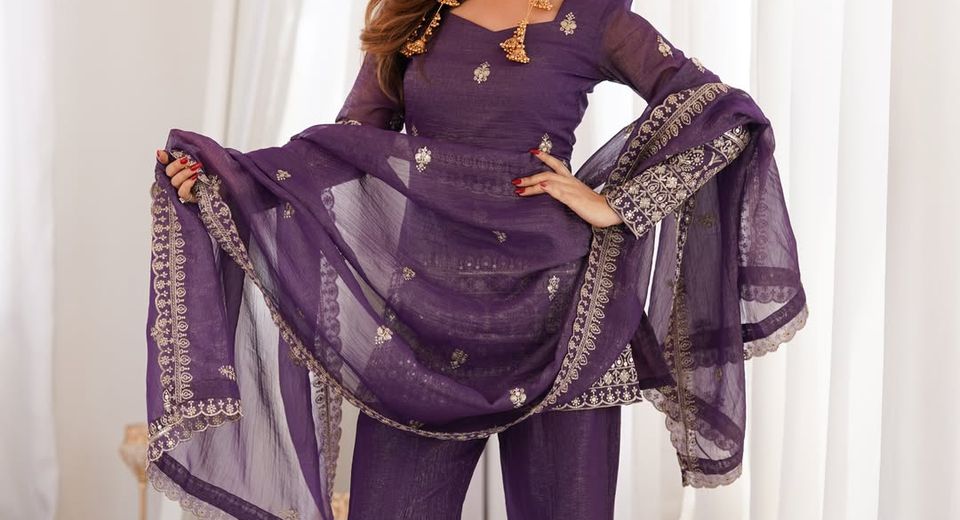
Family Eid Clothes That Share a Colour Story Without Matching Sets create photographs that feel coordinated while allowing every person to dress for their own age, comfort and personality. The simplest method is to choose three related colours, repeat one shade through accessories or details, and vary silhouettes between a kurta set, co-ord, sarara, palazzo suit or saree. A successful family palette doesn't require identical embroidery, identical fabrics or exact shade matching.
Eid dressing also has practical demands. Outfits may need to work for morning prayers, visiting relatives, receiving guests, travelling between homes and sitting comfortably through a long meal. A thoughtful colour plan helps the family look connected, but fabric weight, sleeve length, footwear and ease of movement determine whether the clothes remain enjoyable throughout the day.
Why a Shared Colour Story Works Better Than Matching Sets
A shared colour story works because related colours create visual unity even when garments have different shapes and surface details. Identical sets can look restrictive when family members have different preferences, body proportions and age-appropriate styling needs.
Colour coordination gives each person a separate role within the group. One person might wear a deep jewel tone, another a pale tint of the same hue, and a third use the colour only in a dupatta or embroidered border. The result looks intentional because the eye recognises a relationship between the outfits rather than searching for exact repetition.
A family palette built around purple can include lavender, plum, mauve, ivory and a small amount of silver. A warm palette can combine mustard, taupe, ivory and muted coral. A cooler palette can use magenta, lavender, grey and soft white. The colours don't need to be identical because undertone matters more than exact shade matching.
Photographs usually look most balanced when one or two people wear the strongest colour and the remaining outfits use quieter versions of the same palette. A group of five could follow a 40-30-20-10 colour distribution: the dominant shade appears across two outfits, the secondary shade appears on one or two people, and the final colours remain in accessories, dupattas or embroidery.
How to Choose a Family Eid Colour Palette
Choose one dominant colour, one supporting neutral and one accent shade before selecting individual garments. This three-part structure prevents a family wardrobe from becoming a collection of unrelated bright colours.

Start with the undertone
Warm undertones include mustard, rust, camel, olive, peach and warm ivory. Cool undertones include lavender, blue-grey, emerald, berry and icy pink. Taupe, charcoal, cream and soft white can work across both groups depending on the fabric and surrounding colours.
Families don't need to stay on one strict temperature scale, but the palette should have a reason for crossing over. Mustard with lavender can look considered when ivory or grey acts as a bridge. Magenta with gold feels festive, while magenta with lavender and silver creates a cooler evening direction.
Test colours in daylight
Daylight is the most reliable setting for checking whether Eid colours belong together. Artificial yellow lighting can make ivory look beige, turn lavender grey and make gold embroidery appear more dominant than it will outdoors.
Place fabric swatches, dupattas or garment images beside one another near a window. Look for a shared visual quality such as muted saturation, jewel intensity or a common neutral. Bright neon pink beside dusty mauve usually feels accidental, while two different pinks with similar saturation can look harmonious.
Build Individual Outfits Within the Same Palette
Assign each family member a different silhouette and a different level of embellishment within the chosen colour story. Varied garment shapes keep the group visually interesting and make the clothing more wearable after Eid.
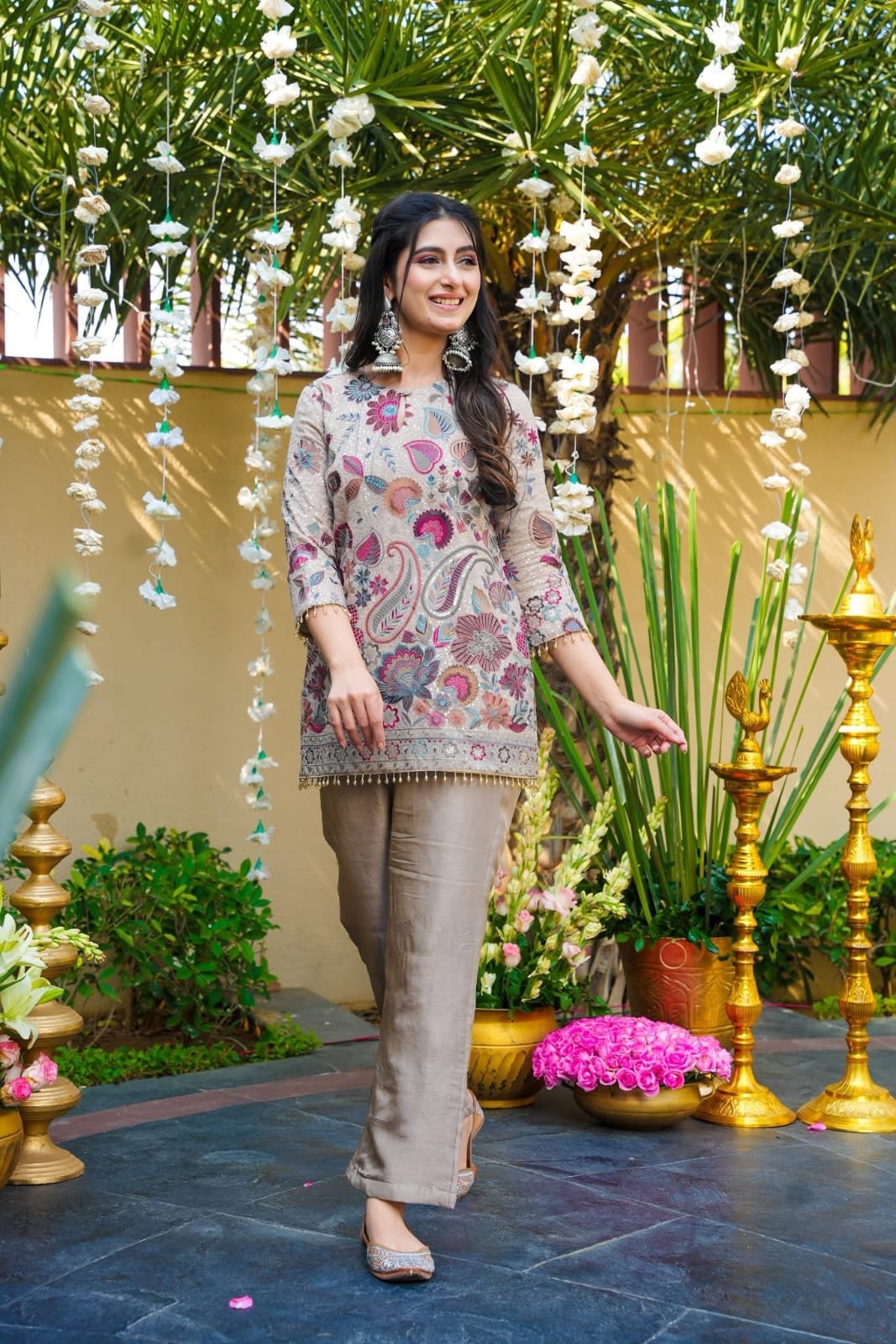
A woman who prefers a streamlined outfit could choose Modern Taupe Vichitra Silk Embroidered Co-Ord Set for Women. Taupe acts as a grounding neutral, while embroidered texture keeps the outfit festive enough for Eid visits. Another person could wear Mustard Viscose Chanderi Kurta Set with Sequence Embroidery, using mustard as the palette's focal colour rather than repeating it across the entire family.
Chanderi has a light, slightly crisp character that suits daytime gatherings, while Vichitra silk gives a smoother and more structured appearance. Using both fabrics in one group adds depth without requiring matching garments. The difference in texture also helps each outfit look deliberately chosen.
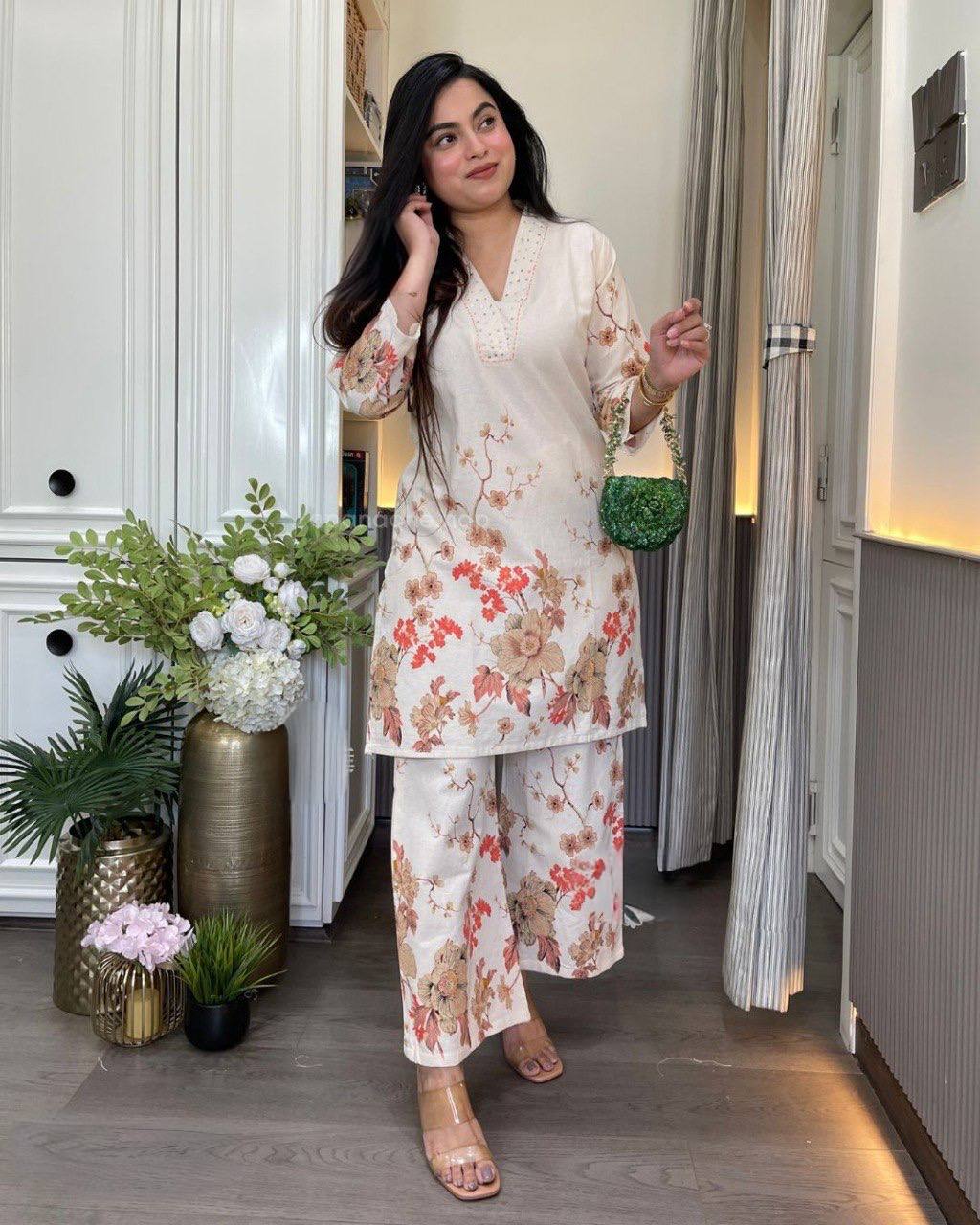
An ivory-based outfit can provide visual breathing space between stronger colours. Ivory Floral Linen Cotton Co-Ord Set for Women from Varnavi can sit between mustard, magenta or purple outfits and prevent a group photograph from appearing too saturated. Linen cotton also suits daytime Eid plans because the fabric generally feels lighter than heavily layered festive textiles.
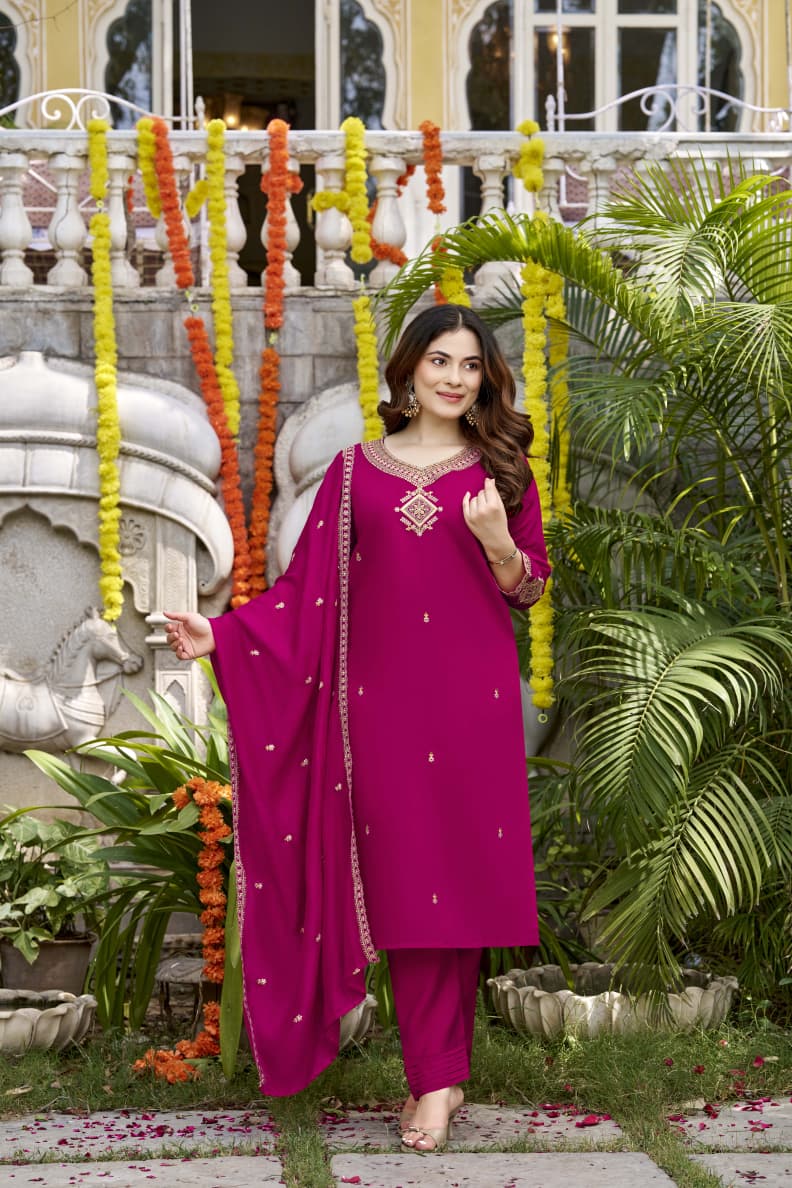
For someone who wants a stronger colour and more visible occasion detail, Magenta Viscose Chanderi Kurta Set with Embroidered Dupatta brings both colour and surface interest. The embroidered dupatta can carry the family accent shade, allowing the kurta itself to remain the main colour anchor.
Balance Fabrics, Embroidery and Shine
Balance fabric weight and embellishment so that the outfits look related without competing for attention. A family group appears more polished when only one or two garments carry dense shine or elaborate embroidery.
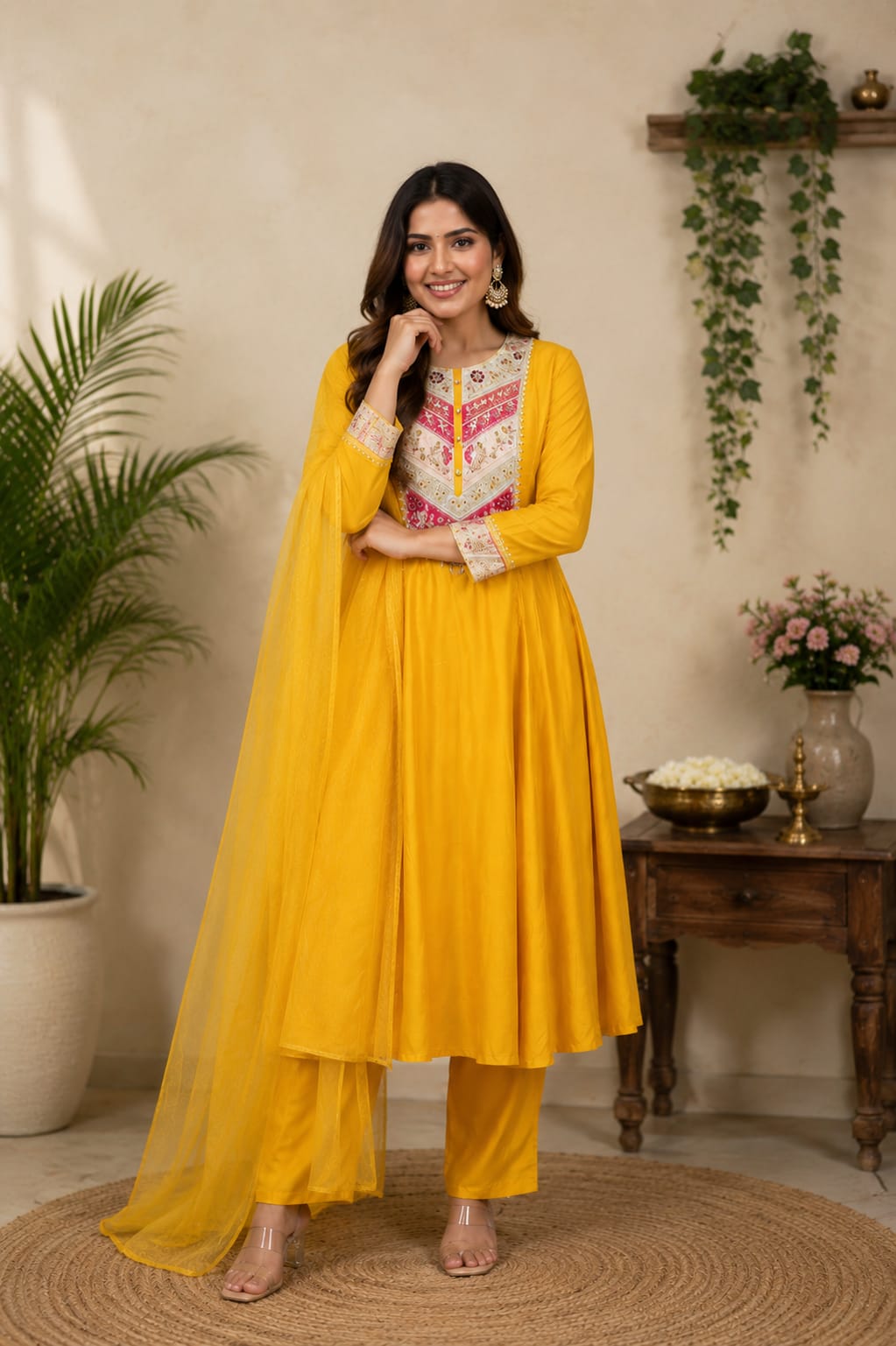
Vichitra silk, georgette, muslin, linen cotton and Chanderi create different visual effects. Silk tends to reflect light and look formal. Georgette falls softly and supports fluid draping. Muslin feels lighter and more relaxed. Linen cotton has a matte, breathable appearance. Chanderi can look festive while retaining a comparatively light hand, especially when the embroidery is restrained.
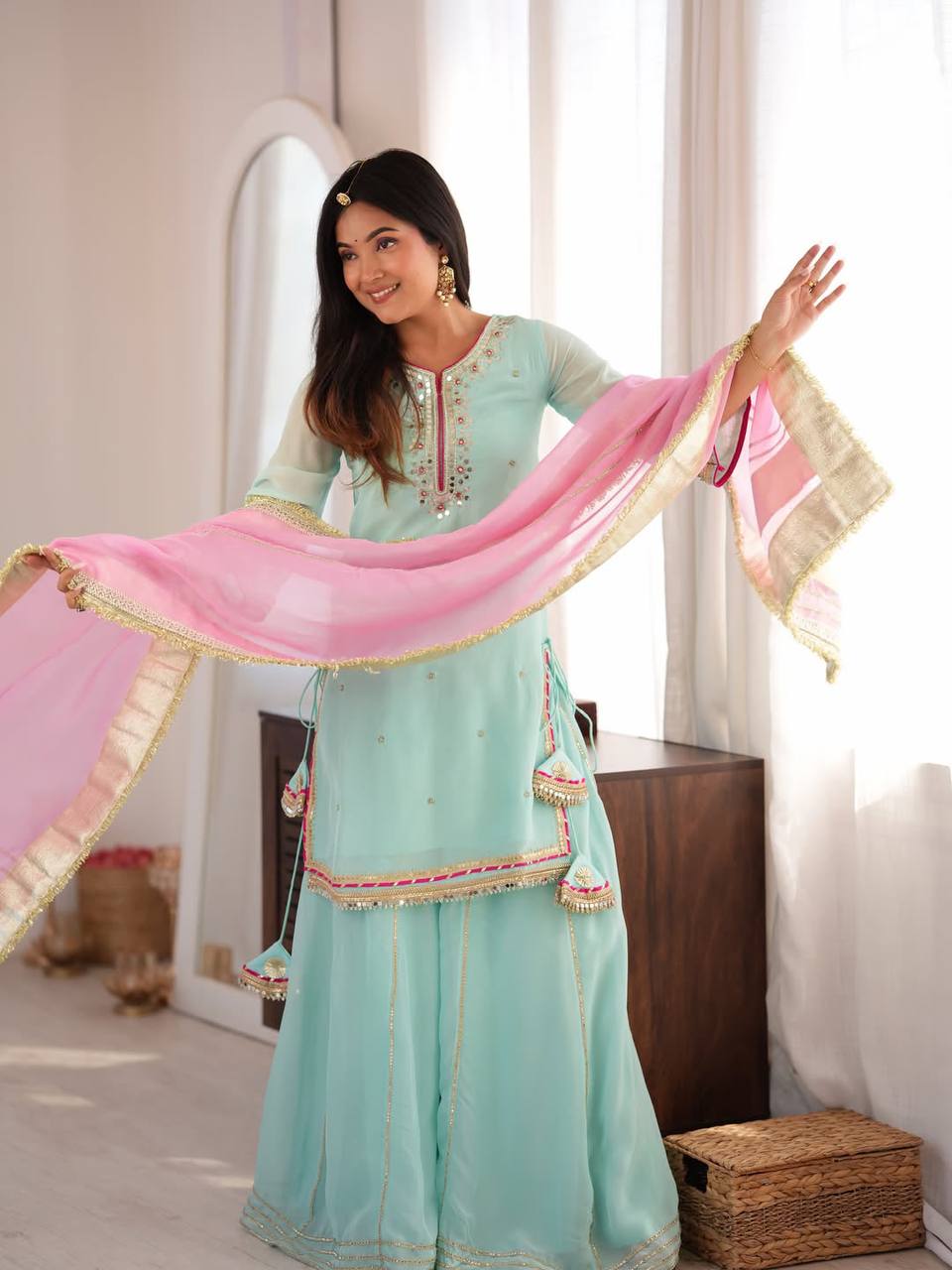
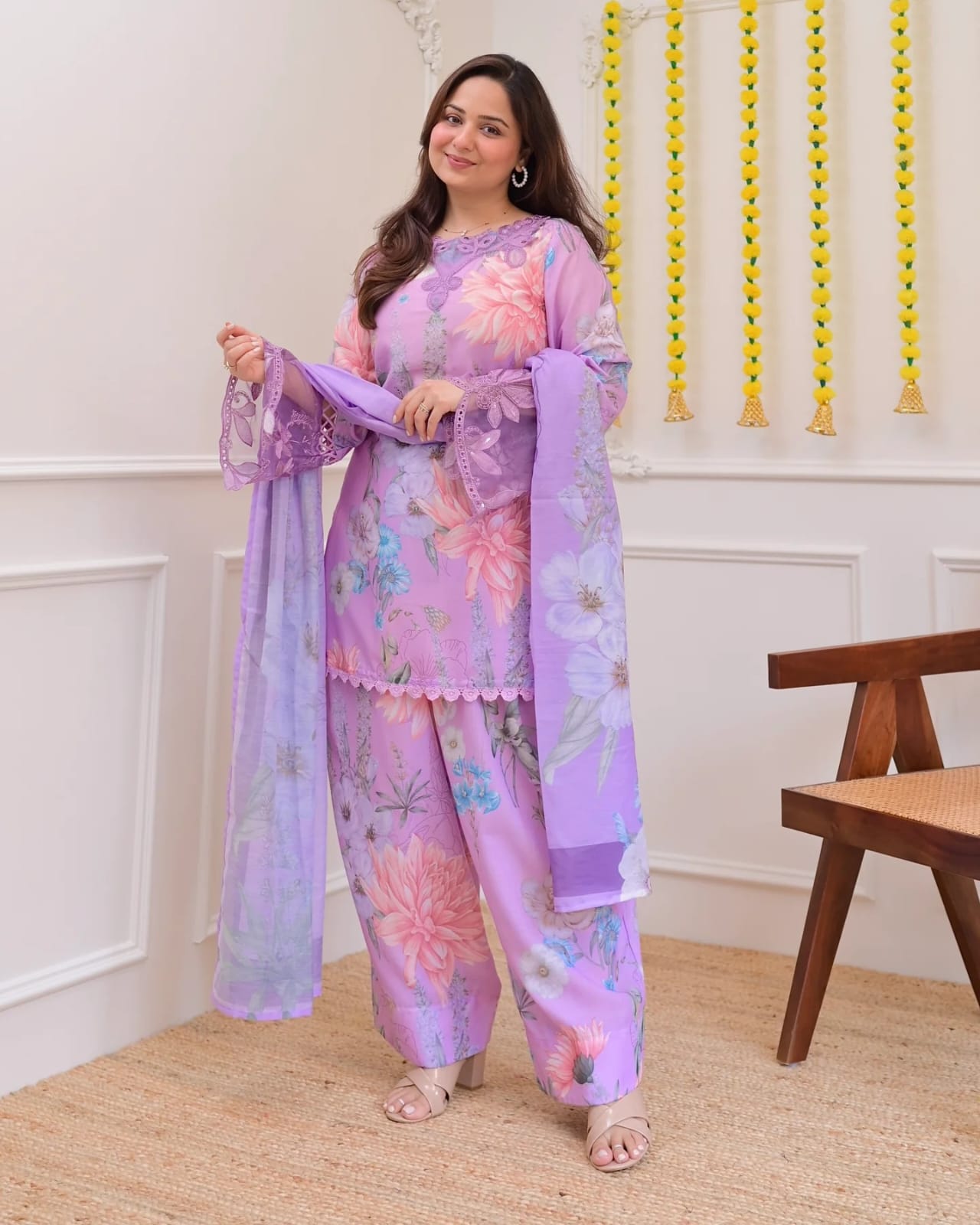
Lavender Georgette Kurti Pant Set with Embroidery & Dupatta introduces a pale colour and a fluid silhouette. The outfit can work as the quieter member of a family group that already includes mustard or magenta. Lavender also links naturally with silver, pearl, ivory and cool grey accessories.
Grey can perform the same balancing role without looking plain. Grey Fandy Silk Sarara Set with Embroidery and Dupatta offers a neutral foundation for families using purple, lavender or berry as accent colours. A grey outfit can also echo silver zari, metallic sandals or a grey border worn by another family member.
Use shine deliberately. Sequins, zari, metallic thread and reflective silk can sit together when one element leads and the others support it. If two outfits have heavy sequin work, keep the remaining garments simpler in finish. Repeating a small amount of metallic detail through earrings, footwear or a dupatta border is usually enough to connect the group.
Coordinate Silhouettes for Different Ages and Comfort Needs
Different silhouettes suit different ages, proportions and movement requirements, so family coordination should never depend on everyone wearing the same cut. A cohesive group can include a straight kurta, a co-ord set, a sarara, a palazzo suit and a saree.
Children often need shorter hems, secure necklines and fabrics that tolerate movement. Teenagers may prefer trousers, co-ords or lighter dupattas that don't require constant adjustment. Adults can choose the level of coverage, structure and drape that feels comfortable for prayer, hosting and travel.
A sarara creates volume below the hip and can become the statement silhouette within a quieter palette. Purple Crunchy Silk Sarara Set with Cording Embroidery Work uses texture and shape to make purple distinctive without needing a second identical purple outfit.
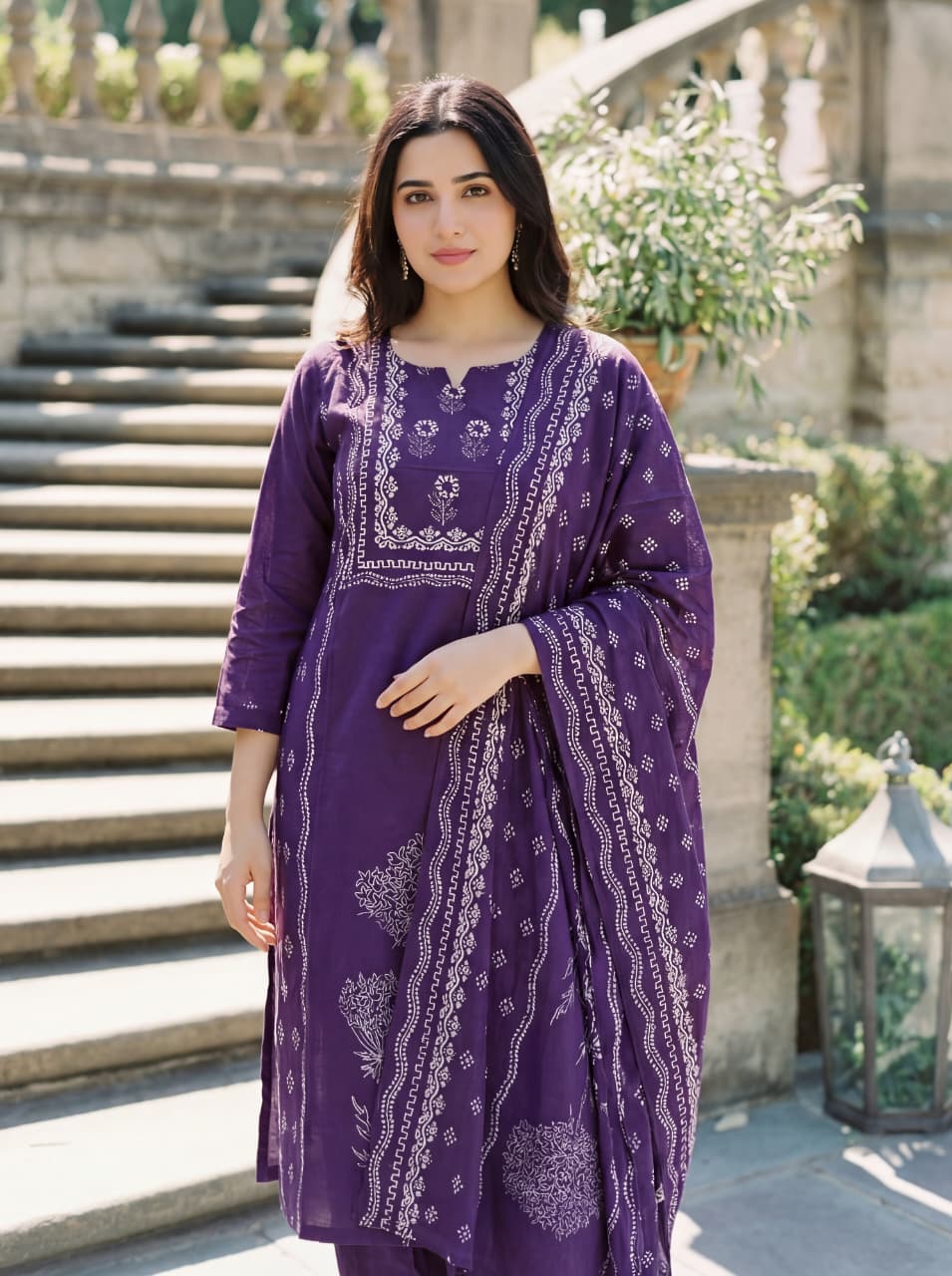
Purple Hand Printed Muslin Kurta Set Women | Varnavi Online gives a more relaxed route into the same colour family. The printed surface can be balanced against a plain ivory, grey or lavender outfit elsewhere in the group. Printed muslin is especially useful when one family member wants a festive look that feels less formal than silk or dense embroidery.
When coordinating a saree with ready-to-wear sets, match the saree's border or blouse colour to one detail in the other outfits. The saree doesn't need to copy the kurta fabric. An ivory saree with a magenta border can connect to a magenta kurta, while a taupe blouse can link to a taupe co-ord without making the garments look uniform.
Use Accessories to Repeat Colour Without Repeating Clothes
Accessories are the easiest way to repeat a family colour subtly. Dupattas, juttis, potlis, bangles, earrings, hair ribbons and embroidered footwear can carry a colour that doesn't appear as the main garment shade.
Choose one repeated accessory category rather than giving everyone the same complete accessory set. Three family members might wear ivory or pearl details, while only one person carries a magenta potli. Alternatively, everyone might use metallic footwear, with each person choosing a different silhouette and finish.
For a purple palette, silver jewellery and ivory footwear keep the styling fresh, while antique gold adds warmth. For mustard and taupe, gold, tan, cream and deep brown accessories create continuity. For magenta and lavender, silver, pearl and soft grey usually provide a cooler finish than bright yellow gold.
Dupattas are particularly useful because they can bridge two otherwise separate outfits. A lavender dupatta over an ivory kurta can connect to a purple sarara, while a mustard border can link that same group to a mustard Chanderi set. A dupatta also gives the wearer control over how much colour appears in photographs.
Plan the Eid Wardrobe Before Buying
A written palette plan prevents unnecessary purchases and makes family shopping more efficient. Record the dominant colour, neutral, accent, preferred fabrics, garment silhouettes and accessory gaps for each person.
- Choose the visual anchor: Select one colour such as purple, mustard, magenta or emerald for the strongest garment.
- Add a neutral: Use ivory, taupe, grey or soft beige to create space between brighter outfits.
- Assign silhouettes: Give different people a co-ord, kurta set, sarara, palazzo suit or saree rather than repeating one cut.
- Limit heavy detail: Keep dense embroidery, sequins or zari to one or two outfits.
- Check movement: Sit, walk and raise the arms in each outfit before Eid, especially when garments include fitted sleeves or long dupattas.
- Coordinate accessories last: Use footwear, jewellery or bags to repeat one colour after the clothing palette is settled.
Check fit at least seven to ten days before Eid if alterations may be required. A sleeve adjustment, trouser hem or waist alteration is easier to manage before the final week. Press or steam garments according to their care labels, and avoid storing embellished outfits tightly folded because sequins and zari can catch on neighbouring fabric.
Comfort should be measured across the full day, not only during a fitting. A georgette dupatta that looks elegant may require a discreet pin for visiting relatives. A voluminous sarara may require flat footwear if the family will walk between homes. A silk outfit may require a breathable cotton camisole or lining in cooler weather.
Common Mistakes in Family Eid Coordination
The most common mistake is treating colour coordination as exact colour duplication. Repeating the same shade, embroidery and silhouette across every person removes contrast and can make outfits look like uniforms.
The second mistake is choosing too many statement colours. A group containing bright mustard, hot pink, emerald, cobalt and orange may be festive individually but visually crowded together. Three main colours, supported by a neutral, usually create a clearer photograph.
The third mistake is ignoring fabric weight. A heavy silk outfit beside several very casual cotton garments can make the group appear unbalanced, even when the colours match. Texture variation is useful, but the overall level of formality should remain reasonably close.
The final mistake is leaving comfort until the day itself. Eid involves movement, greetings, food and long periods of sitting. A coordinated wardrobe succeeds when every person can participate comfortably rather than constantly adjusting a dupatta, waistband, sleeve or hem.
Common Questions About Coordinated Family Eid Clothes
How many colours should a family use for Eid outfits?
Three related colours plus one neutral usually provide enough variety for a coordinated family wardrobe. One colour should dominate, one should support it, and the third can appear in embroidery, dupattas or accessories.
A larger family can use lighter and darker versions of the same colours rather than adding many unrelated shades. Checking the palette in daylight helps prevent undertone clashes.
Do family Eid outfits have to match exactly?
Family Eid outfits don't have to match exactly to look coordinated. Shared colours, similar levels of formality and repeated accessory details create unity without requiring identical garments.
Different silhouettes also make the clothing more personal and practical. A kurta set, co-ord and sarara can belong to the same palette while serving different comfort and styling preferences.
Which neutral works best with bright Eid colours?
Ivory is the most versatile neutral for bright Eid colours because it softens magenta, mustard, purple and emerald without making the palette look dull. Taupe and grey are useful when the overall styling needs a more muted or modern finish.
The best neutral depends on undertone. Warm ivory pairs naturally with mustard and antique gold, while cool ivory or soft grey works well with lavender, silver and berry shades.
How can children's Eid outfits coordinate with adult clothing?
Children's Eid outfits can coordinate through one accent colour, a border, a printed motif or matching accessories rather than an identical garment. Comfortable cotton, muslin or lightweight blends are usually easier for active children to wear.
A child can wear an ivory kurta with a purple waistcoat, while an adult wears a purple kurta with ivory embroidery. The reversed colour balance creates connection without forcing the child into a formal adult silhouette.
How do you coordinate a saree with family kurta sets?
Coordinate a saree with family kurta sets by repeating the saree border, blouse colour or metallic detail in another outfit. The saree and kurta sets can use different fabrics as long as their colours and formality relate.
An ivory saree with a magenta border can connect to a magenta Chanderi kurta, while a grey silk saree can complement lavender, purple or silver-detailed outfits.
What should a family wear for Eid photographs?
Families should wear a controlled palette with one dominant shade, one neutral and one accent for Eid photographs. Avoid placing every person in dense embroidery or highly reflective fabric because the image may lose visual hierarchy.
Plan where the strongest colour will stand in the group photograph, and use quieter outfits around it. Coordinated footwear or jewellery can complete the picture without making the clothing appear identical.
Common Questions About Coordinated Family Eid Clothes
How many colours should a family use for Eid outfits?
Three related colours plus one neutral usually provide enough variety for a coordinated family wardrobe. One colour should dominate, one should support it, and the third can appear in embroidery, dupattas or accessories.
Do family Eid outfits have to match exactly?
Family Eid outfits do not have to match exactly to look coordinated. Shared colours, similar levels of formality and repeated accessory details create unity without requiring identical garments.
Which neutral works best with bright Eid colours?
Ivory is the most versatile neutral for bright Eid colours because it softens magenta, mustard, purple and emerald without making the palette look dull. Taupe and grey are useful for a more muted or modern finish.
How can children’s Eid outfits coordinate with adult clothing?
Children's Eid outfits can coordinate through one accent colour, a border, a printed motif or matching accessories rather than an identical garment. Comfortable cotton, muslin or lightweight blends are usually easier for active children to wear.
How do you coordinate a saree with family kurta sets?
Coordinate a saree with family kurta sets by repeating the saree border, blouse colour or metallic detail in another outfit. The saree and kurta sets can use different fabrics as long as their colours and formality relate.
What should a family wear for Eid photographs?
Families should wear a controlled palette with one dominant shade, one neutral and one accent for Eid photographs. Avoid placing every person in dense embroidery or highly reflective fabric because the image may lose visual hierarchy.