Choosing Clothes for an Outdoor Mehendi With Low Seating calls for more than selecting a festive green outfit. Grass, uneven flooring, afternoon heat and repeated sitting on cushions can expose problems that rest invisible in a formal indoor venue. The most dependable outfit combines breathable fabric, a controlled hemline, secure draping and enough room at the knees for sitting comfortably. Traditional dressing can remain colourful and celebratory while allowing you to bend, extend your legs and move between guests without constant adjustment.
Choosing Clothes for an Outdoor Mehendi With Low Seating Starts With the Venue
Choosing Clothes for an Outdoor Mehendi With Low Seating starts with checking the surface, weather, walking distance and seating arrangement. A lawn with floor cushions requires different clothing from a covered venue with chairs and a polished floor.
Ask four practical questions before opening your wardrobe. Will you sit immediately on a rug, or will a low chair be free? Will the Mehendi ceremony take place in intense sunlight or after sunset? Will you walk over grass, gravel, tiles or a temporary wooden platform? Will you want to keep both hands still while Mehendi paste dries? The answers influence fabric, sleeve length, footwear and the way a dupatta is secured.
- For hot afternoons: prioritise linen cotton, cotton, rayon or a light silk blend over dense synthetic layers.
- For uneven lawns: choose a hem that clears the ground and footwear with a stable sole.
- For floor cushions: select a skirt, palazzo or saree drape with ease around the knees.
- For active Mehendi application: keep sleeves, cuffs and dupatta edges away from the palms.
- For long ceremonies: test the complete outfit by sitting on the floor for at least ten minutes before leaving home.
Outdoor Mehendi dressing also benefits from a little visual restraint. Very long tassels, fragile borders and heavy hanging jewellery can catch on cane chairs, floral décor or another guest's outfit. A planned silhouette photographs better because you spend less time correcting it.
The Mehendi collection can be useful when you want a coordinated colour direction, but colour alone should not decide the outfit. A bright green garment in a stiff, heat-trapping fabric may feel less comfortable than a softer printed saree in blue, pink or mauve.
Choosing Clothes for an Outdoor Mehendi With Low Seating Means Selecting the Right Fabric
Choosing Clothes for an Outdoor Mehendi With Low Seating generally works best with linen cotton, cotton, rayon or light silk because these materials allow easier movement and better airflow. Heavy velvet, thick brocade and rigid polyester can feel restrictive during a warm daytime ceremony.
Linen cotton and cotton for daytime comfort
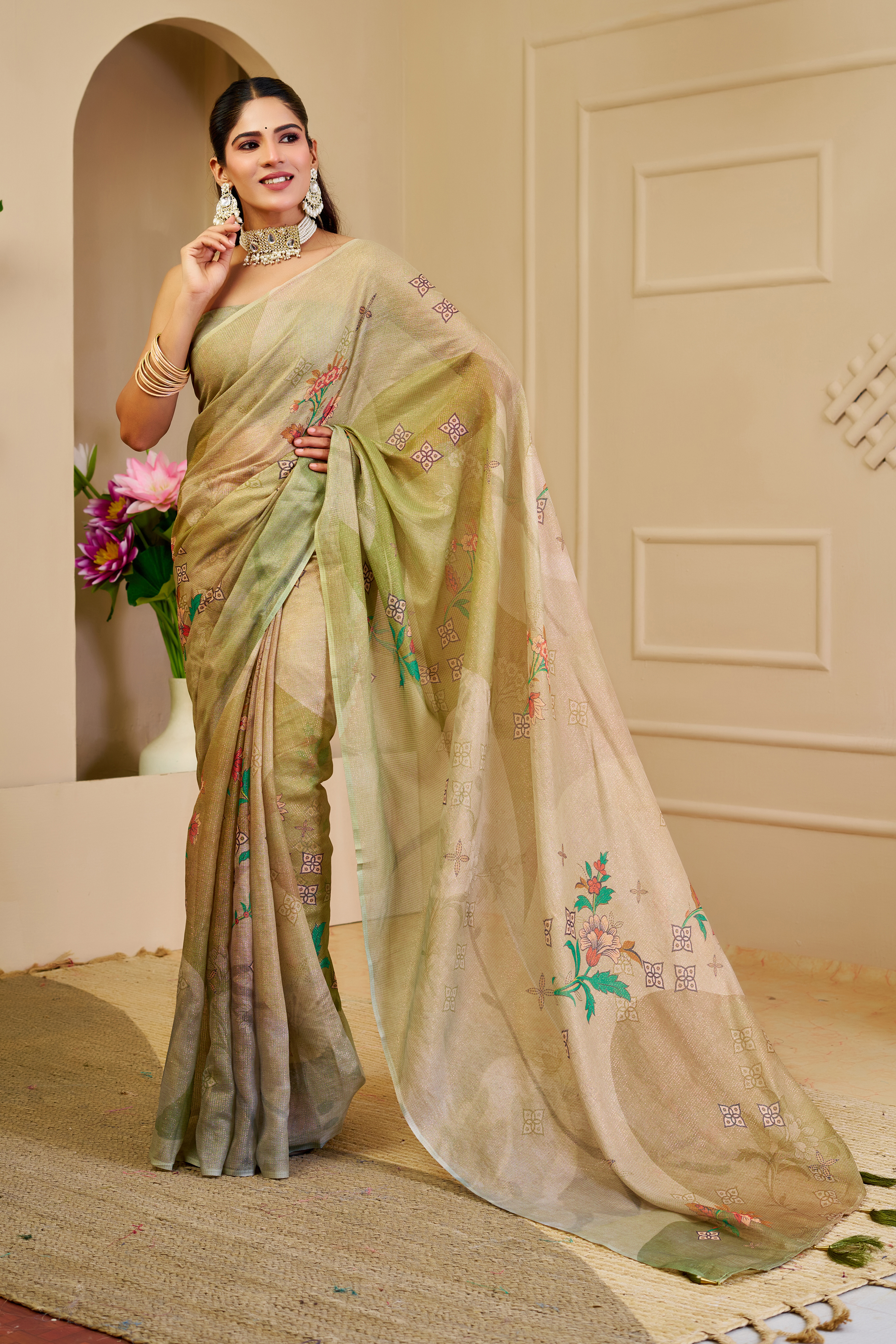
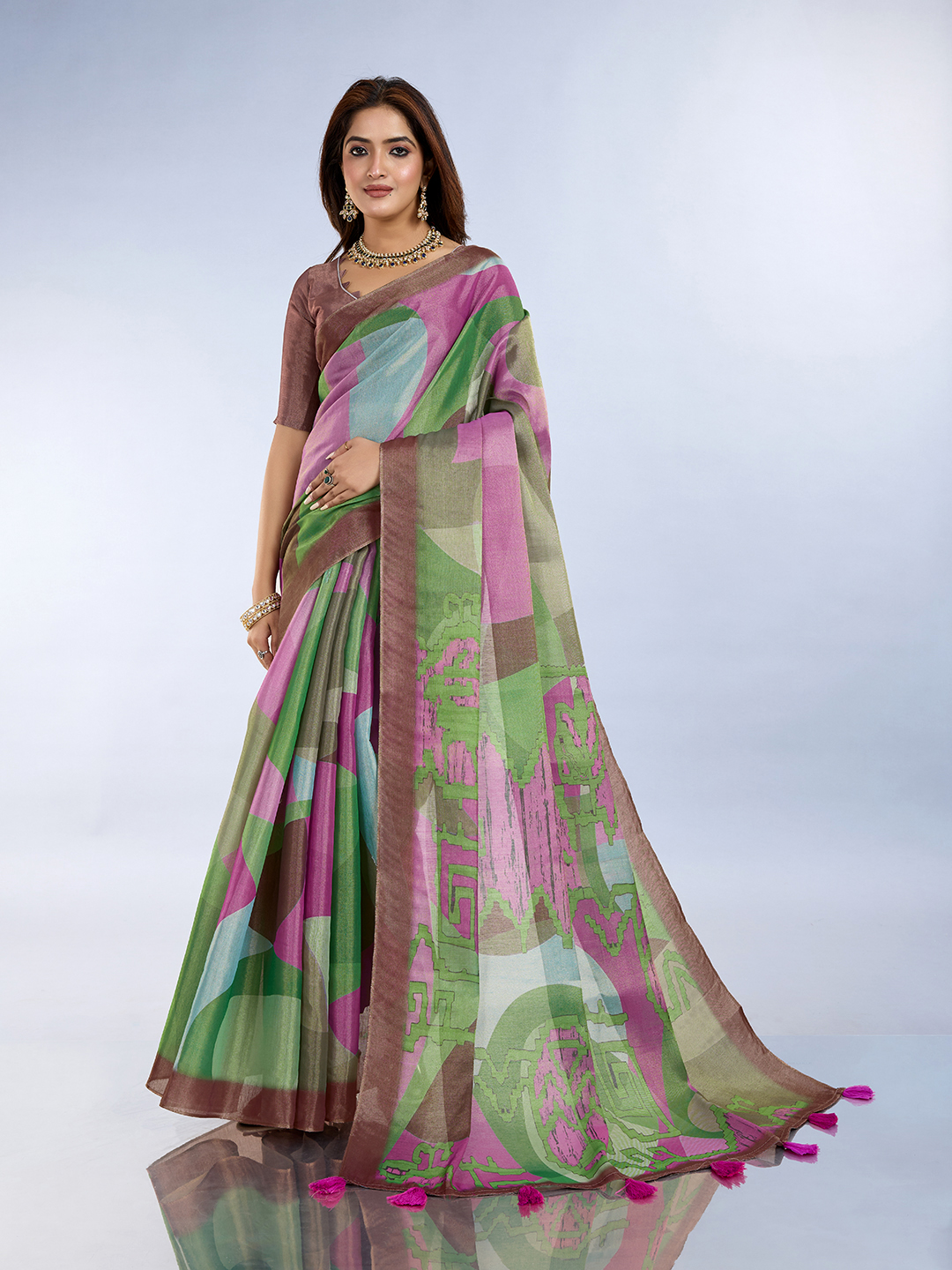
Linen cotton absorbs less heat than many dense embellished fabrics and usually feels airy against the skin. The Olive Green Linen Cotton Printed Saree with Dark Border shows how a printed saree can look festive without depending on heavy surface work. A cotton saree such as the Green Pink Erode Cotton Abstract Saree with Artistic Border gives the body structure while remaining easier to sit in than a heavily embroidered drape.
Blue Linen Cotton Floral Printed Saree With Contrast Border and Mint Green Floral Linen Cotton Saree with Pink Border Style demonstrate another advantage of breathable woven fabrics: prints can provide colour and visual interest without adding substantial weight. A printed linen cotton saree is particularly suitable for a daytime Mehendi because the pattern disguises small creases created by sitting.
Rayon and silk for a dressier finish
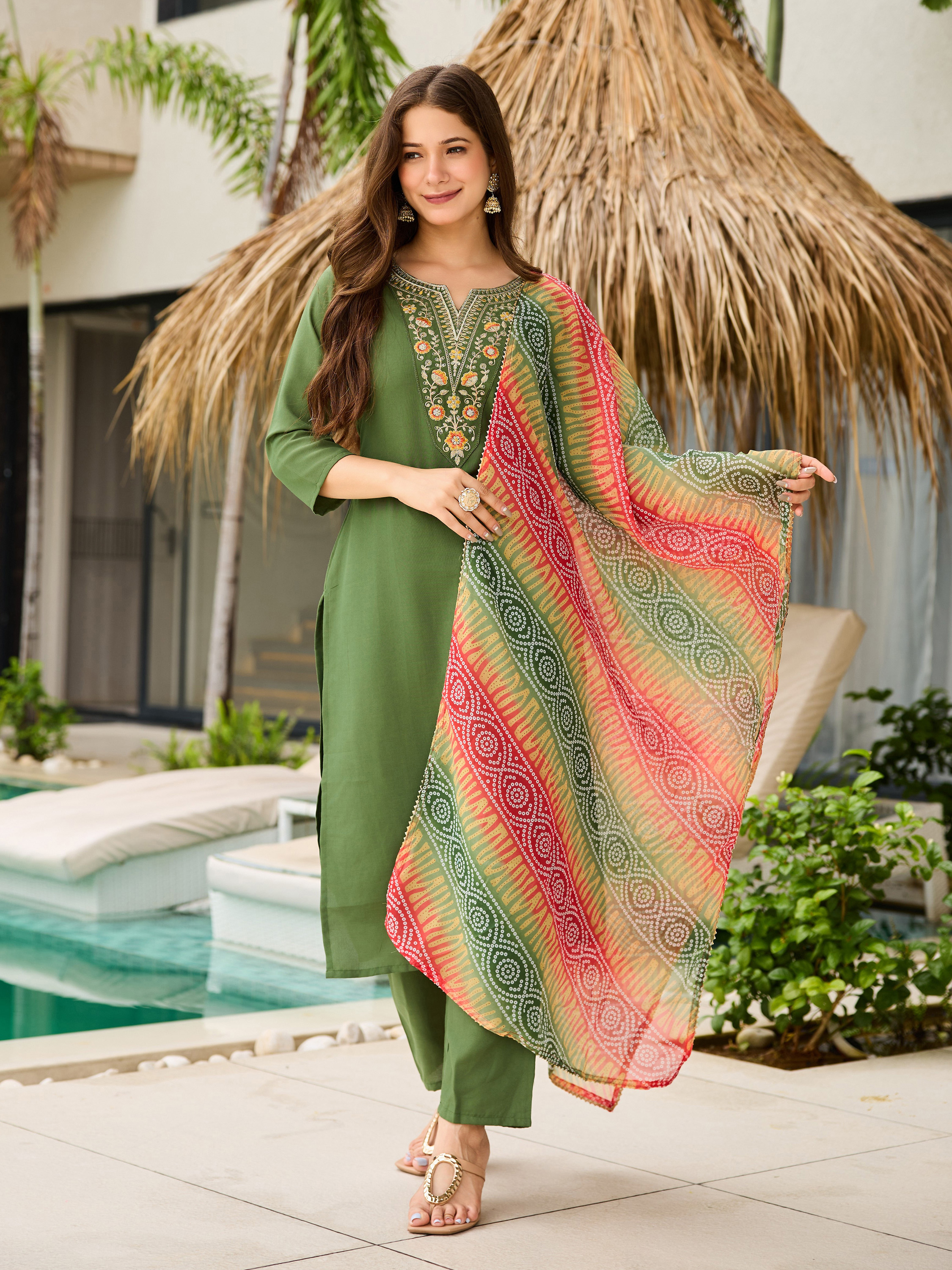
Rayon has a soft fall and moves easily around the knees, making a coordinated kurta set a sensible alternative to a saree. Mehendi Green Embroidered Rayon Kurta Set with Dupatta can work well when the dupatta is pinned at one shoulder and kept clear of the hands.
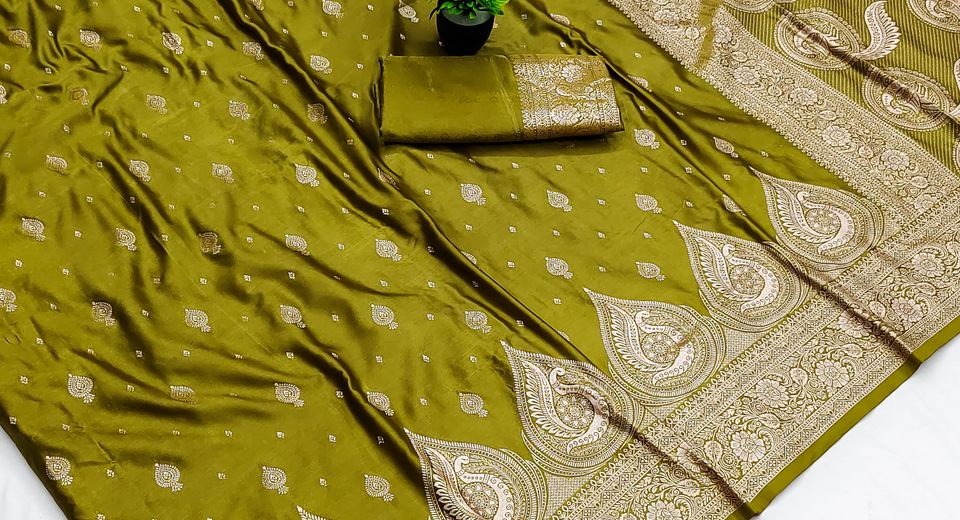
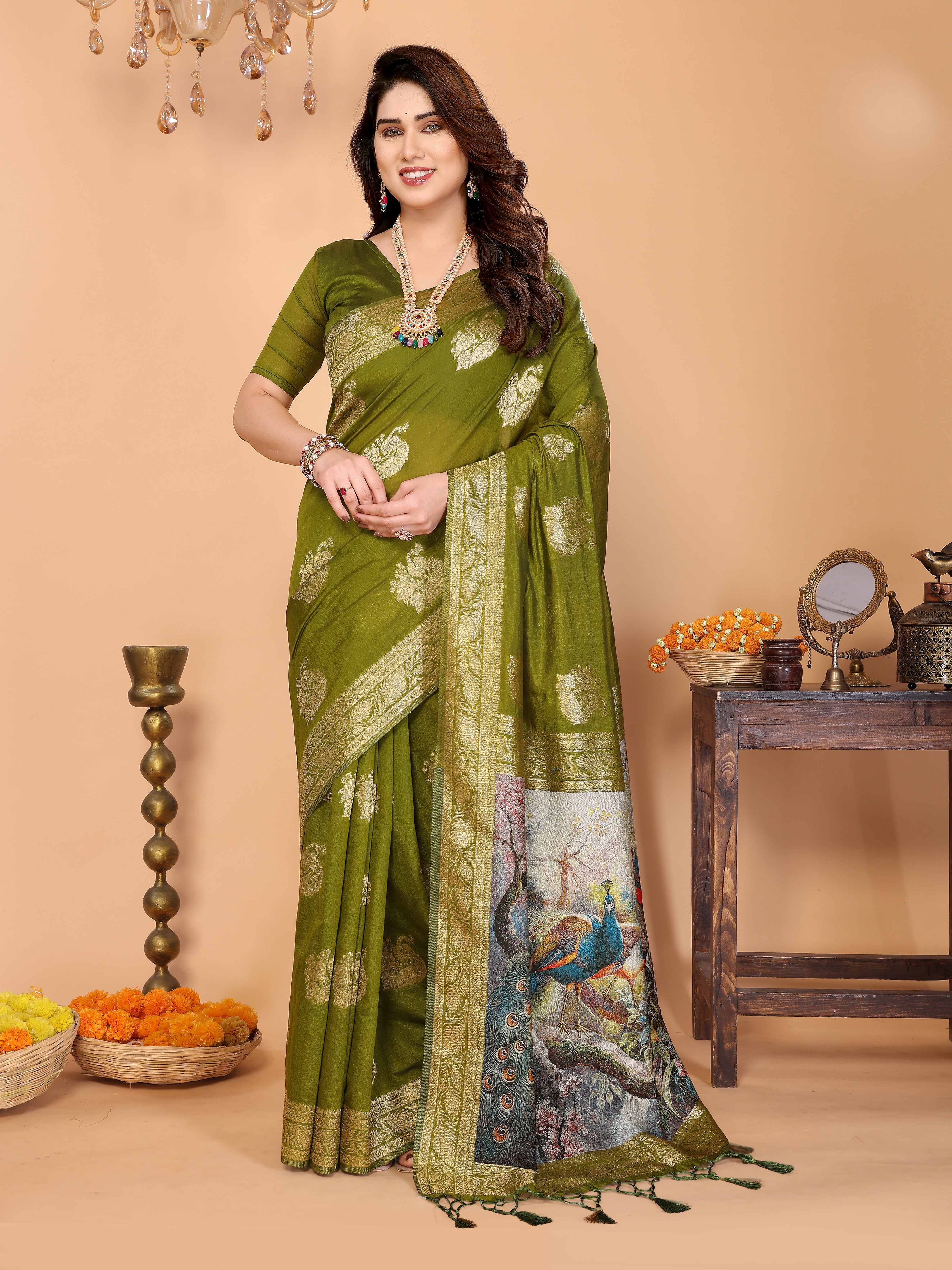
Banarasi silk and satin silk create a dressier finish, but both require more careful styling in warm weather. Mehndi Green Banarasi Silk Saree with Peacock Pallu | Varnavi has a strong pallu that can carry the festive look, so additional heavy jewellery isn't essential. Mehndi Green Satin Silk Saree with Golden Zari | Varnavi can suit an evening Mehendi, although a breathable lining and a lighter blouse will make prolonged floor seating more comfortable.
Chanderi can suit a Mehendi when the event has a polished daytime setting, but a delicate Chanderi weave needs protection from rough rugs and snagging décor. Examine the underside of any garment before buying or wearing it. Dense embroidery that feels scratchy against the skin can become uncomfortable after several hours, even when the outer appearance is attractive.
Choosing Clothes for an Outdoor Mehendi With Low Seating Requires a Manageable Saree Drape
Choosing Clothes for an Outdoor Mehendi With Low Seating requires a secure lower drape, a manageable pallu and enough ease around the knees to prevent pulling when you sit. The aim isn't to shorten the saree dramatically; the aim is to control excess fabric.

Prepare the lower half
Wear a petticoat or shapewear skirt with a firm but comfortable waistband, and set the saree hem just above the floor when standing in your chosen footwear. A hem that trails on grass collects moisture, while a hem that sits too high can reveal the ankle when you sit. Five to ten minutes of sitting, standing and walking in the complete outfit will reveal whether the length works.
Make the front pleats narrower and fewer if bulky folds press into your knees. Five to seven neat pleats often provide sufficient structure, although the exact number depends on the saree width and fabric. Pin the pleats at the waistband, but avoid making the pinning so tight that the saree can't shift slightly as you bend.
Control the pallu
Pin the pallu at the shoulder and secure one additional point near the waist for an outdoor Mehendi. A waist-level pin prevents the pallu from sliding onto the floor when you lean forward to greet someone or sit on a low cushion. Use concealed safety pins with rounded closures, and place them through the saree border rather than through a prominent zari motif.
A lighter pallu works better than a heavily layered one when Mehendi is being applied. A peacock pallu or golden zari border can provide enough detail without adding a second dupatta, cape or long scarf. Keep the pallu on the side opposite the hand receiving Mehendi so fabric doesn't brush against wet paste.
Choosing Clothes for an Outdoor Mehendi With Low Seating Can Favour Kurta Sets and Palazzos
Choosing Clothes for an Outdoor Mehendi With Low Seating can favour kurta sets and palazzo suits because separate garments often allow more natural movement at the knees. The best option still depends on the rise, width, waistband and hem of the trousers.
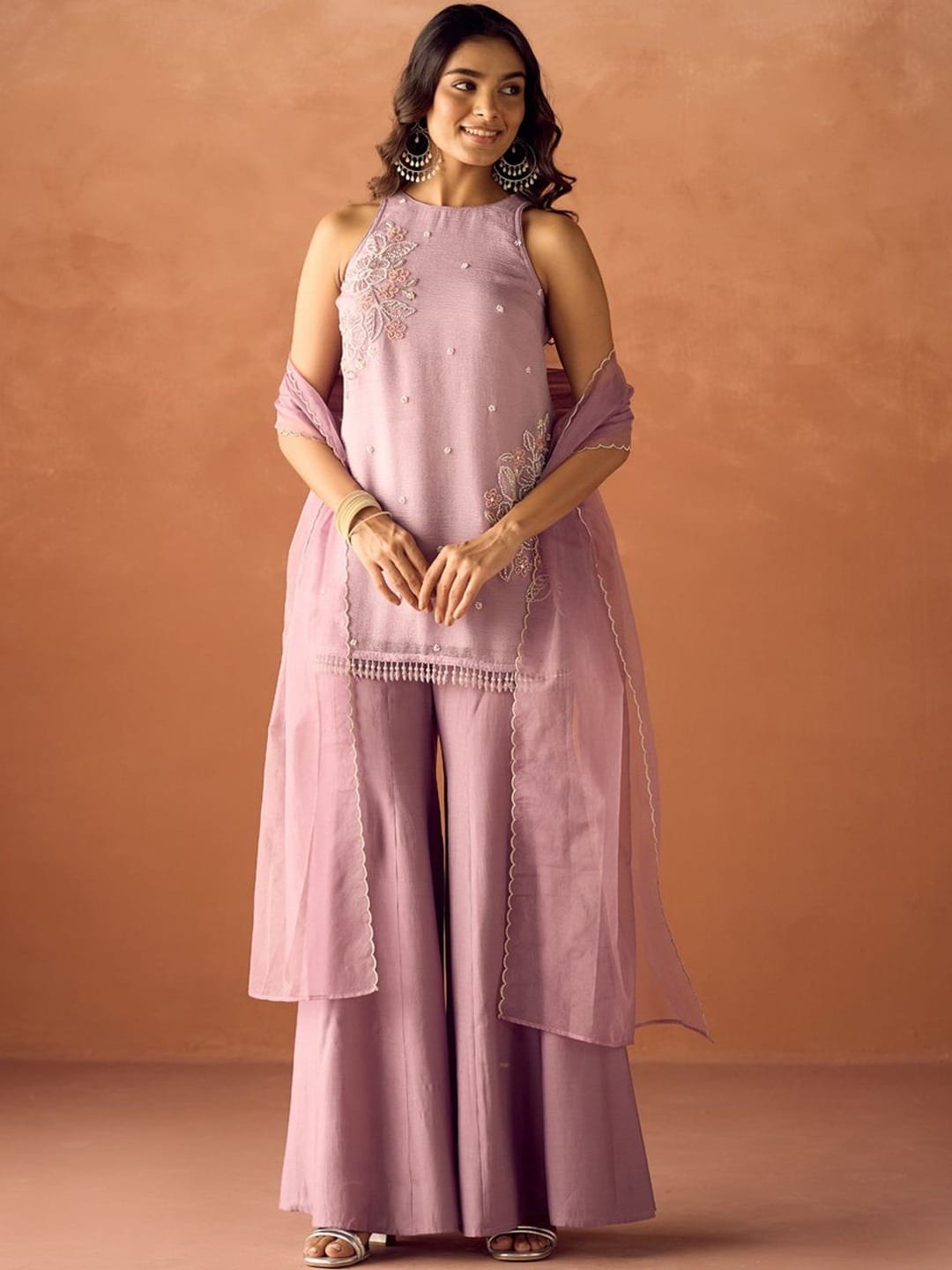
A straight kurta with narrow trousers can restrict cross-legged sitting if the fabric has little stretch. A palazzo silhouette usually creates more room, but an excessively wide hem can drag through grass or catch beneath a cushion. Mauve Crunchy Silk Embroidered Kurti Palazzo Set for Women offers a dressier palazzo direction; check the trouser length carefully before wearing it outdoors.
Mehendi Green Embroidered Rayon Kurta Set with Dupatta provides the visual unity of a coordinated outfit without requiring a full saree. Rayon drapes softly, and a kurta set can be adjusted with a small side slit or relaxed fit. The kurta should end around mid-calf or slightly above the ankle depending on height, while the trouser hem should remain clear of the ground by roughly one to two centimetres in footwear.
Palazzo trousers should not have a waistband that digs into the abdomen during seated meals. Sit on the floor with your back straight, cross one ankle over the other and lean forward as though receiving Mehendi. If the waistband rolls or the crotch pulls, choose a larger size or a softer elastic construction.
Sharara trousers can also work for a Mehendi if the flare is light and the hem isn't too long. A very wide sharara with multiple stiff panels may spread across shared seating and become difficult to manage. Salwar trousers offer more room but can bunch at the ankle, so test the complete outfit with the intended footwear.
Choosing Clothes for an Outdoor Mehendi With Low Seating Needs Secure Accessories
Choosing Clothes for an Outdoor Mehendi With Low Seating means keeping the dupatta close to the body, the sleeves clear of the palms and the jewellery light enough for repeated movement. Secure styling matters more than adding another decorative layer.

Pin a dupatta at the shoulder and, if the fabric is slippery, anchor it at the opposite side of the waist. A small brooch can secure the upper fold, but avoid heavy brooches that pull delicate fabric downward. Keep the dupatta end above ankle level and away from the area where Mehendi paste is mixed or applied.
Three-quarter sleeves are often more practical than loose full sleeves for Mehendi ceremonies. Cuffs with dangling beads, long tassels or stiff embroidery can touch wet Mehendi and become difficult to clean. If the blouse or kurta has full sleeves, push the sleeves back with discreet elastic loops before the ceremony begins.
Choose earrings, a slim bangle stack and one ring rather than multiple pieces that compete for hand space. Mehendi application may require both palms to remain open, and large rings can press into the skin or obstruct the artist. A maang tikka can remain comfortable if its chain is anchored securely, while a long necklace may shift forward when you bend.
Footwear should have a stable sole, a low block heel or a flat cushioned base. Thin stilettos sink into grass, slippery sandals can twist on uneven surfaces and very narrow straps may become uncomfortable after walking. Test the shoes on a similar surface before the event, especially when the saree hem has been adjusted to their height.
Choosing Clothes for an Outdoor Mehendi With Low Seating Works Best With Balanced Colour
Choosing Clothes for an Outdoor Mehendi With Low Seating works best with green, yellow, pink, coral, ivory or soft blue balanced against a clearly visible border. These colours echo foliage, marigolds and daytime celebration without requiring dense embellishment.
Mehendi green pairs naturally with gold, peach, pink and ivory. A dark border defines a saree against green grass, while a contrast border helps the garment remain visible in photographs taken under open shade. The Green Pink Erode Cotton Abstract Saree with Artistic Border uses colour contrast to create interest without relying entirely on metallic work.
Printed fabrics are especially useful when the ceremony includes floor seating because small creases are less noticeable on an abstract or floral surface. A border should not be so stiff that it digs into the ankles when you sit. Zari can provide festive detail, but a narrow zari border is usually easier to manage than a broad, heavily weighted panel.
Choose the blouse neckline and sleeve length according to the weather rather than only the saree colour. A breathable cotton lining can make a silk saree more wearable in daytime heat. A sleeveless blouse may feel comfortable outdoors, while a light elbow-length sleeve can offer more coverage if the event continues after sunset.
Choosing Clothes for an Outdoor Mehendi With Low Seating: A Final Fitting Checklist
Choosing Clothes for an Outdoor Mehendi With Low Seating is successful when the complete outfit passes a short movement test before the event. Clothing should remain secure while walking, sitting, leaning forward and standing without assistance.
- Wear the complete outfit, including innerwear, footwear, jewellery and hair accessories.
- Walk for five minutes and check whether the hem catches beneath the feet.
- Sit on the floor for ten minutes with knees bent and then stand without pulling the garment.
- Lean forward with both hands extended to simulate Mehendi application.
- Check whether the dupatta, pallu or sleeves touch the ground.
- Remove one layer if the outfit feels hot before the ceremony has begun.
- Pack two safety pins, a small stain-removal wipe, tissues and a flat pair of backup footwear.
Care also begins before dressing. Press linen cotton and cotton on the appropriate heat setting, steam silk from the reverse side and avoid spraying perfume directly onto zari or delicate embroidery. After the event, let a damp hem dry fully before storing the garment. Do not rub fresh Mehendi stains aggressively because friction can spread pigment into the weave.
The Mehendi collection can offer colour inspiration, but comfort should remain the final filter. A breathable saree with a secure pallu, a relaxed rayon kurta set or a well-fitted palazzo outfit will usually serve better than a beautiful garment that restricts your knees. Practical preparation lets you enjoy the music, food, photographs and Mehendi application without repeatedly adjusting your clothes.
Common Questions About Choosing Clothes for an Outdoor Mehendi With Low Seating
What should I wear to an outdoor Mehendi with floor seating?
Wear a breathable cotton, linen cotton or rayon outfit with enough room around the knees and a hem that clears the ground. A saree with pinned pleats and pallu, a relaxed kurta set or a palazzo suit can all work well.
Is a saree comfortable for low seating at a Mehendi?
A saree can be comfortable for low seating when the pleats are secured, the pallu is pinned and the hem is tested with the intended footwear. Avoid an excessively long trailing edge or a tight waistband that restricts sitting.
Which fabric is best for an outdoor Mehendi in summer?
Linen cotton, cotton and rayon are practical summer choices because they generally feel lighter and allow easier movement. Light silk can work for an evening event, but dense embroidery and heavy lining may feel warm during a daytime ceremony.
How can I stop my dupatta from touching Mehendi paste?
Pin the dupatta at the shoulder and anchor it near the waist so the loose end stays above the floor. Keep the dupatta on the side opposite the hand receiving Mehendi and avoid long tassels near the application area.
What footwear works for a lawn Mehendi with low seating?
Flat cushioned sandals or low block heels with a stable sole work best on grass and uneven surfaces. Thin stilettos and slippery soles are less practical because they can sink, twist or make standing difficult.
Can I wear Banarasi silk to an outdoor Mehendi?
Banarasi silk can suit an outdoor Mehendi, especially in the evening, when the saree has a lighter blouse and manageable drape. Keep jewellery selective and test the saree while sitting because zari can add weight to the pallu and border.