Bihari Tilak Function Sarees That Are Not Wedding Day Heavy should feel ceremonial, comfortable and visibly more dressed-up than everyday wear. A Tilak ceremony is an important pre-wedding family gathering, but it usually doesn't call for the dense zari, elaborate embroidery or heavily embellished drape reserved for the wedding day. The most versatile choice combines a breathable fabric, one clear festive detail and a blouse that looks intentional without becoming bridal.
Tilak customs change between families and communities across Bihar, Jharkhand and neighbouring eastern regions. In many households, the groom's family receives gifts, blessings and formal hospitality from the bride's family. Guests may sit for several hours, move between indoor and outdoor spaces, participate in photographs and eat a full meal. Saree selection therefore needs to balance cultural respect with dependable comfort.
What makes Bihari Tilak Function Sarees That Are Not Wedding Day Heavy suitable?
A suitable saree for a Bihari Tilak ceremony is festive but moderate, with manageable weight, a neat border and styling that allows comfortable movement.
Three visual signals usually create the right level of formality. The first is a refined border, such as a narrow zari edge, jacquard strip or contrast woven border. The second is a composed colour palette, including peach, cream, pastel pink, teal blue, lavender or muted purple. The third is a well-fitted blouse with a clean neckline and sleeves that suit the wearer's comfort.
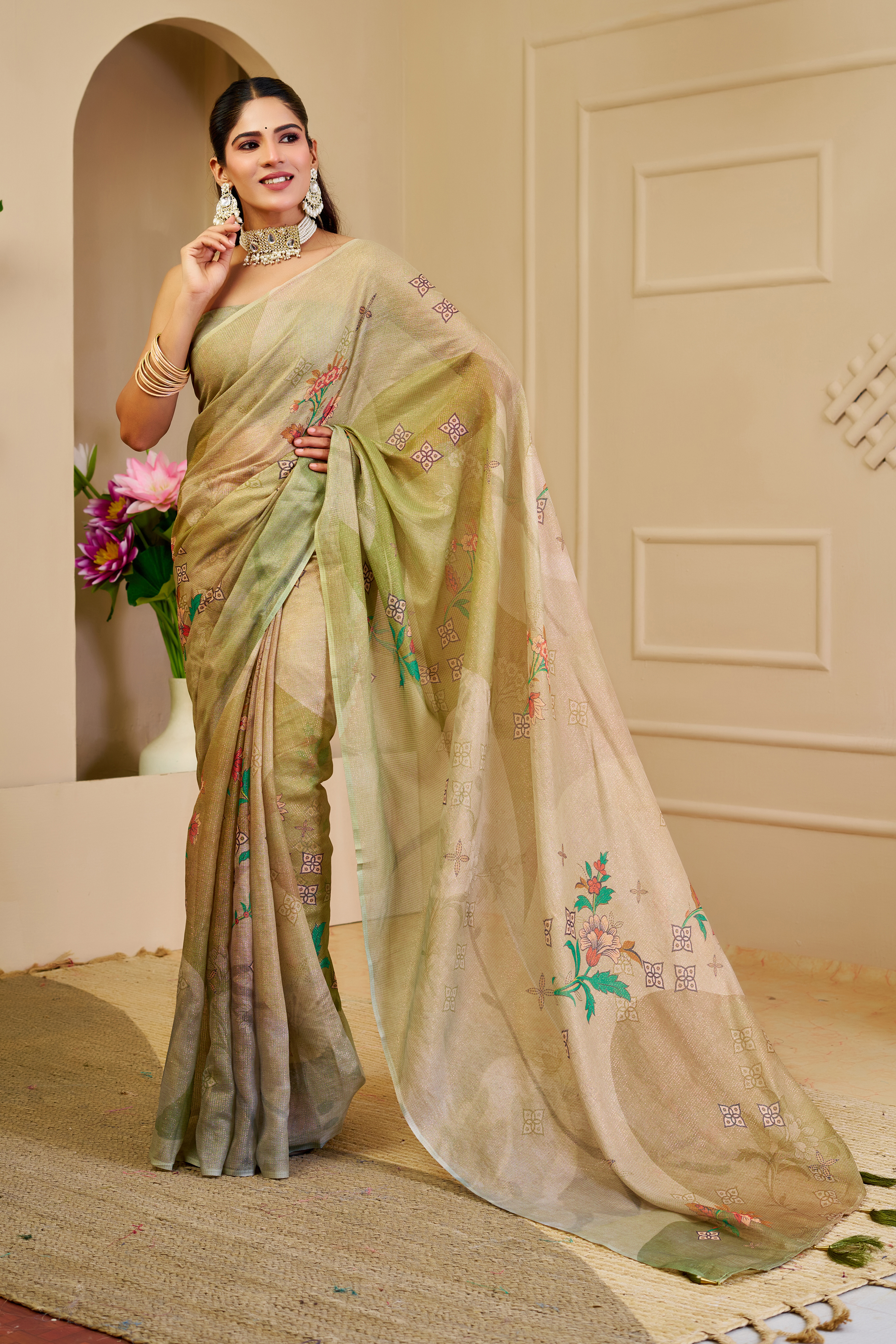
A Tilak ceremony saree doesn't need heavy gold work to look traditional. Pastel Floral Tissue Handloom Cotton Saree with Zari Weaves shows how handloom texture and restrained zari can create occasion appeal without the visual density of a bridal Banarasi silk saree. That balance works particularly well when several family members will be wearing bright or heavily embellished clothes.
Consider the ceremony schedule before choosing the fabric. A two-hour daytime gathering allows more flexibility, while a long evening event with travel, sitting and photographs makes linen cotton, cotton tissue or a light synthetic blend more practical than a thick silk saree.
How formal should the saree look?
The saree should look more polished than daily wear while leaving the most dramatic bridal details for the wedding day.
A small amount of zari, a woven border, a graceful floral print or a softly lustrous surface can establish the occasion. Broad metallic panels, dense sequins and ornate all-over embroidery are not necessary for a Tilak look. An useful rule is to select one main decorative feature and allow the remaining elements to support it.
Which fabrics suit Bihari Tilak Function Sarees That Are Not Wedding Day Heavy?
Linen cotton, tissue cotton, light georgette, satin and soft printed blends are useful choices when a Tilak saree needs ceremony-ready polish without wedding-day weight.

Linen cotton for daytime comfort
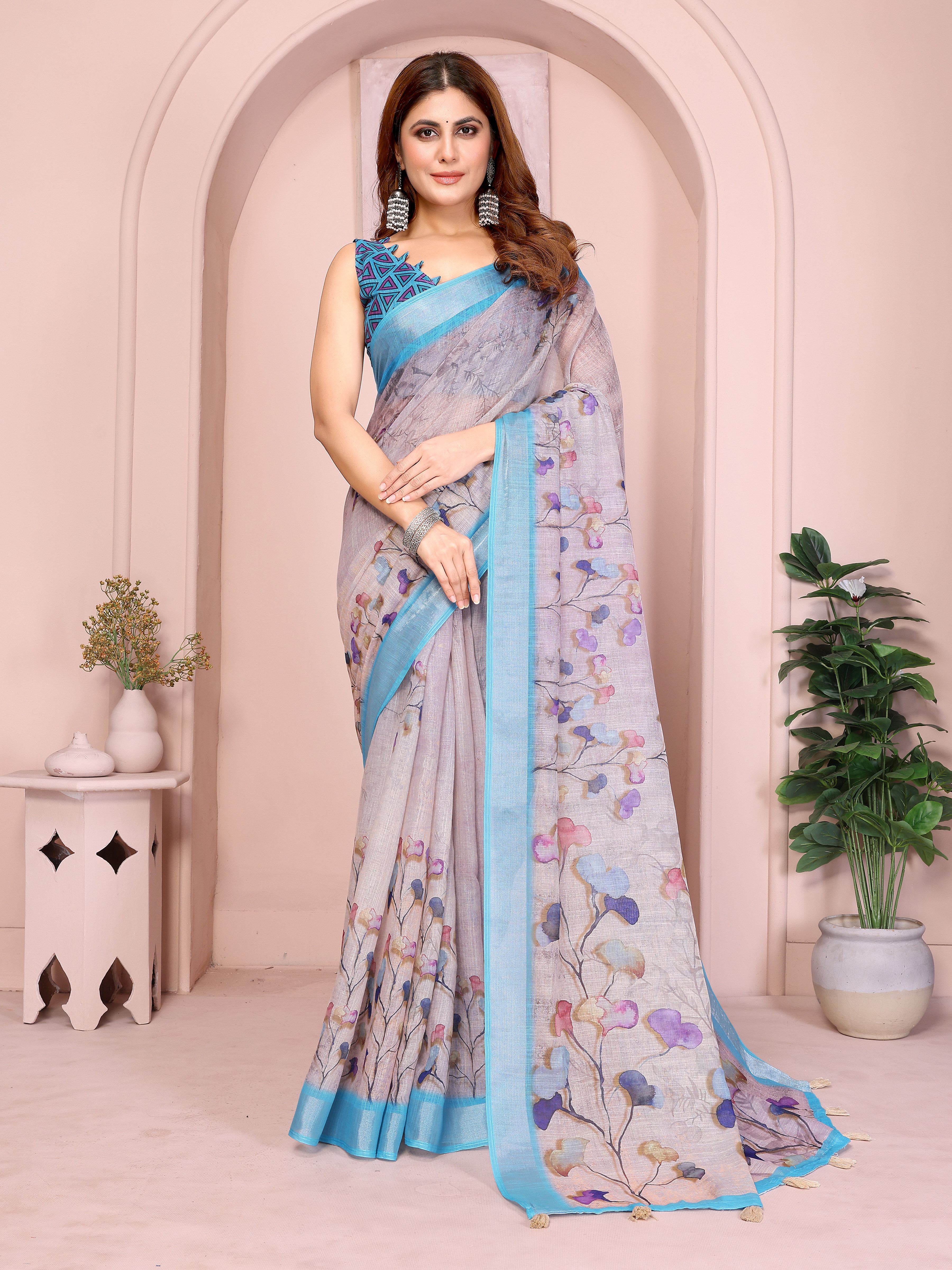
Linen cotton has a dry, breathable hand and usually drapes with enough structure to hold pleats neatly. The natural texture also prevents a simple saree from appearing flat. Pastel Linen Cotton Floral Print Saree with Designer Blouse demonstrates how a delicate floral print can supply visual interest when the border and embellishment remain understated.
Peach Linen Cotton Floral Print Saree with Blouse for Women suits a daytime Tilak particularly well because peach photographs warmly under natural light and coordinates easily with pearl, kundan-look or gold-toned accessories. Linen cotton may crease during long wear, so pressing the saree before draping and carrying a few safety pins for the pallu can make a noticeable difference.
Tissue cotton for a festive surface
Tissue cotton provides a subtle sheen and a slightly crisp fall, making it look more ceremonial than plain cotton while remaining lighter than many silk options. Cream Pink Tissue Handloom Cotton Saree with Zari uses a calm cream base, a soft pink accent and zari to create a family-function look without excessive ornamentation.
Tissue cotton can be a good compromise for guests who want heritage texture but don't want the weight of broad zari panels. The fabric may be more vulnerable to snagging than dense everyday cotton, so avoid rough bangles, sharp handbag hardware and jewellery with exposed prongs.
Satin and fluid printed fabrics for evening functions
Satin creates a smooth, fluid drape that works well for an evening Tilak, especially when the print or border does the decorative work. Purple Blue Floral Print Satin Saree with Designer Border can be styled with a plain blouse and minimal jewellery because the colour depth and border already provide definition.
Satin can slide more easily than cotton, so use a secure underskirt, tuck the saree firmly at the waist and pin the shoulder pleats close to the blouse. A comfortable petticoat with a stable waistband is more useful than adding extra layers under a fluid saree.
How should colour be chosen for Bihari Tilak Function Sarees That Are Not Wedding Day Heavy?
Choose a colour that looks festive in family photographs but doesn't visually compete with the bride's wedding wardrobe or make the wearer appear overdressed for a pre-wedding ritual.
Peach, blush pink, cream, powder blue, teal, lilac and muted lavender are reliable choices for a daytime or early-evening Tilak. These shades look polished with gold accents but can also be styled with pearls or silver-toned jewellery. A cream base with a pink or blue border gives definition without requiring heavy ornamentation.
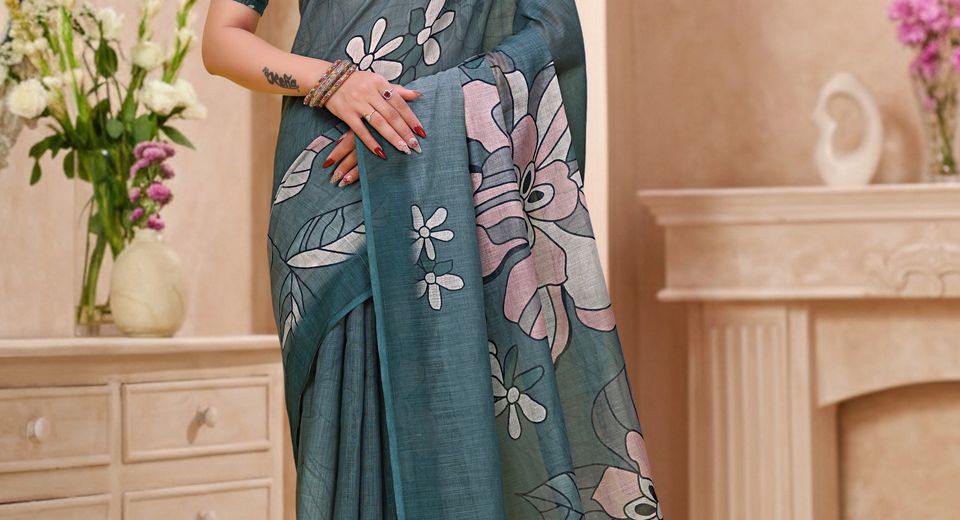
Teal Blue Linen Cotton Floral Printed Saree with Blouse Set offers a stronger colour option while retaining the ease associated with linen cotton. Teal works particularly well with antique gold, matte gold and pearl accessories. A coordinated blouse set also removes one common styling problem: trying to match a separate blouse to a printed saree.
Deeper colours are not automatically too heavy. Wine, navy, plum and brick red can work when the saree has a small print, a narrow border or a matte finish. The heavier impression usually comes from a combination of dark colour, broad metallic border, dense motifs and ornate jewellery rather than from colour alone.
Red Banarasi silk sarees are strongly associated with weddings in many North Indian wardrobes, so a red Banarasi silk saree with broad gold zari may read as wedding-day attire rather than Tilak attire. A muted red printed linen cotton saree or a red saree with a restrained border can preserve warmth while keeping the formality appropriate.
Which colours photograph well indoors?
Peach, rose pink, teal, cream and mid-tone blue usually photograph clearly under indoor lighting without appearing too stark.
Very pale beige can blend into cream walls, while intense neon shades may reflect colour onto the face under artificial lights. If the venue uses warm yellow lighting, teal, rose, plum and medium blue generally retain more definition than very light yellow or beige.
Which borders and prints work for Bihari Tilak Function Sarees That Are Not Wedding Day Heavy?
A narrow or medium border, a spaced floral print and limited metallic detailing keep a saree festive without giving it a bridal appearance.
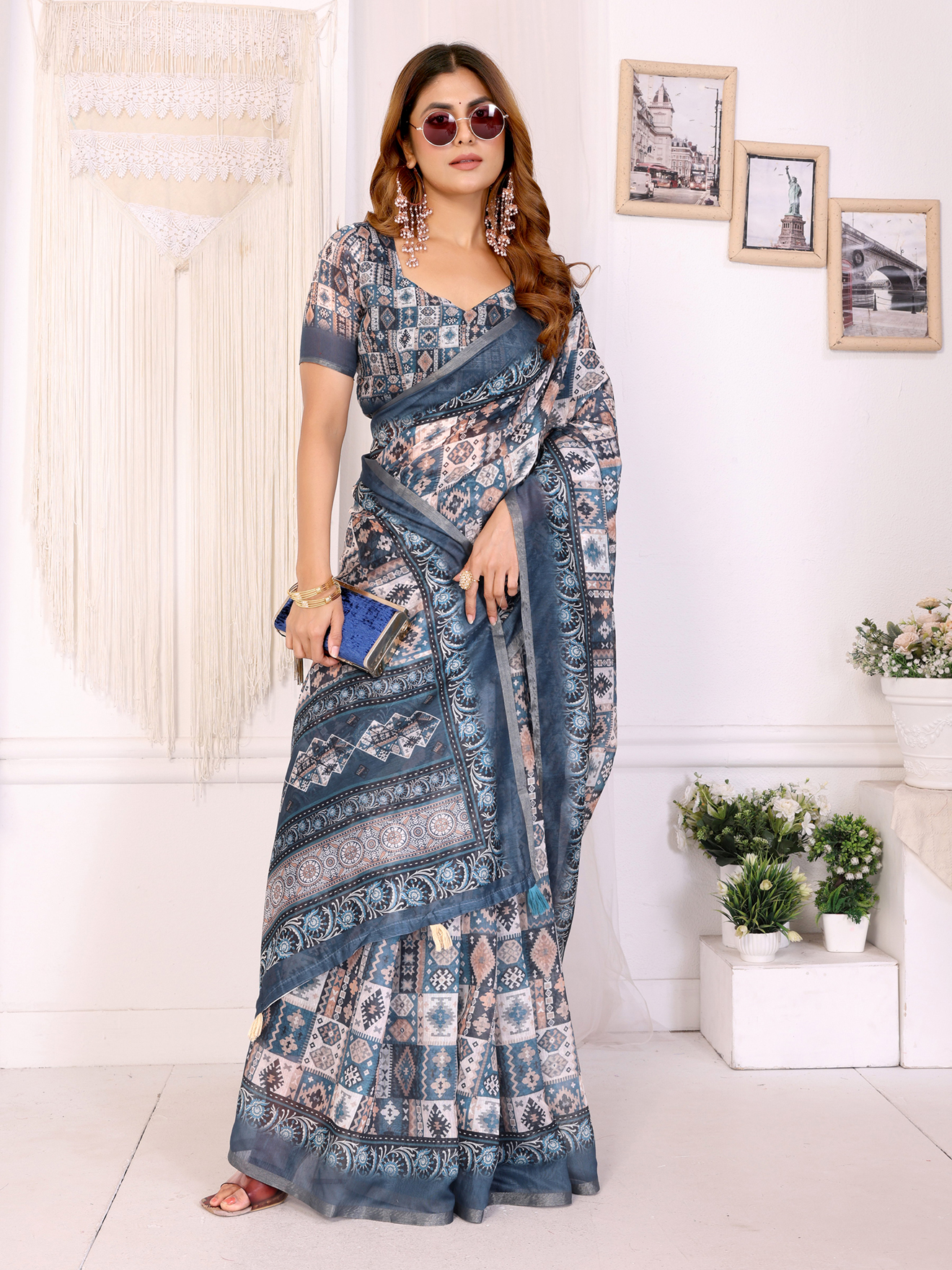
Broad zari borders, all-over woven butis, dense sequins and heavy pallu embroidery increase visual weight quickly. Those features can be beautiful, but using several of them together may make a Tilak outfit resemble a wedding reception look. For a lighter result, select one focal feature: a jacquard border, a tissue sheen, a floral print or a small amount of zari.
Buy Peach Printed Linen Cotton Saree with Jacquard Border demonstrates the value of a structured border. The jacquard edge gives the saree a finished, occasion-ready line, while the linen cotton base keeps the overall effect relaxed enough for a family ceremony.
Printed sarees are especially useful when the event includes several rituals and social interactions. A floral print can make a simple blouse look styled, and the saree can be worn again for a puja, anniversary lunch or festive gathering. Cream & Blue Floral Linen Cotton Saree with Contrast Border uses colour separation at the edge to create definition without relying on sequins or heavy embroidery.
When assessing a saree online, inspect the pallu, border width and print scale rather than judging only the base colour. A pale saree with a very broad gold pallu may look heavier than a medium-toned saree with a small contrast border. Full-drape photographs are more useful than close-ups of decorative details alone.
How can a border change the perceived weight?
A broad, shiny border makes a saree appear more formal and visually heavier, while a narrow matte or woven border creates a lighter impression.
Border width should also relate to body proportions and height. A very wide border can shorten the visual line on a petite wearer, while a medium border can add structure without overwhelming the drape. A narrow contrast edge is often the most adaptable choice for repeated family-function wear.
How should blouses complete Bihari Tilak Function Sarees That Are Not Wedding Day Heavy?
A well-fitted blouse with a deliberate neckline, sleeve length and colour match makes a lightweight saree appear complete and ceremony-appropriate.

A matching blouse creates a quieter, elegant effect, while a contrast blouse can add formality to a plain or lightly printed saree. For peach, cream and pink sarees, a blouse in the same family of shades usually looks softer than a stark black blouse. Teal and purple can support deeper contrast, including wine, navy or antique gold, when the saree itself has a restrained print.
Elbow-length sleeves, short sleeves with a modest neckline and three-quarter sleeves are practical for a family function. A high round neck or square neck looks polished without requiring elaborate embellishment. If the saree has a strong border, keep the blouse surface relatively plain so the outfit has a clear visual hierarchy.
Blouse fit matters more than extra decoration. Check shoulder width, armhole comfort, bust ease and the position of the blouse hem before the event. A blouse that pulls while sitting or raises the saree at the waist can affect both comfort and photographs. Wear the blouse with the intended petticoat and footwear during a trial drape at least two days before the ceremony.
Which accessories finish Bihari Tilak Function Sarees That Are Not Wedding Day Heavy?
One coordinated jewellery set, comfortable footwear and a compact handbag are enough to finish a non-heavy Tilak saree without making the outfit look underdressed.
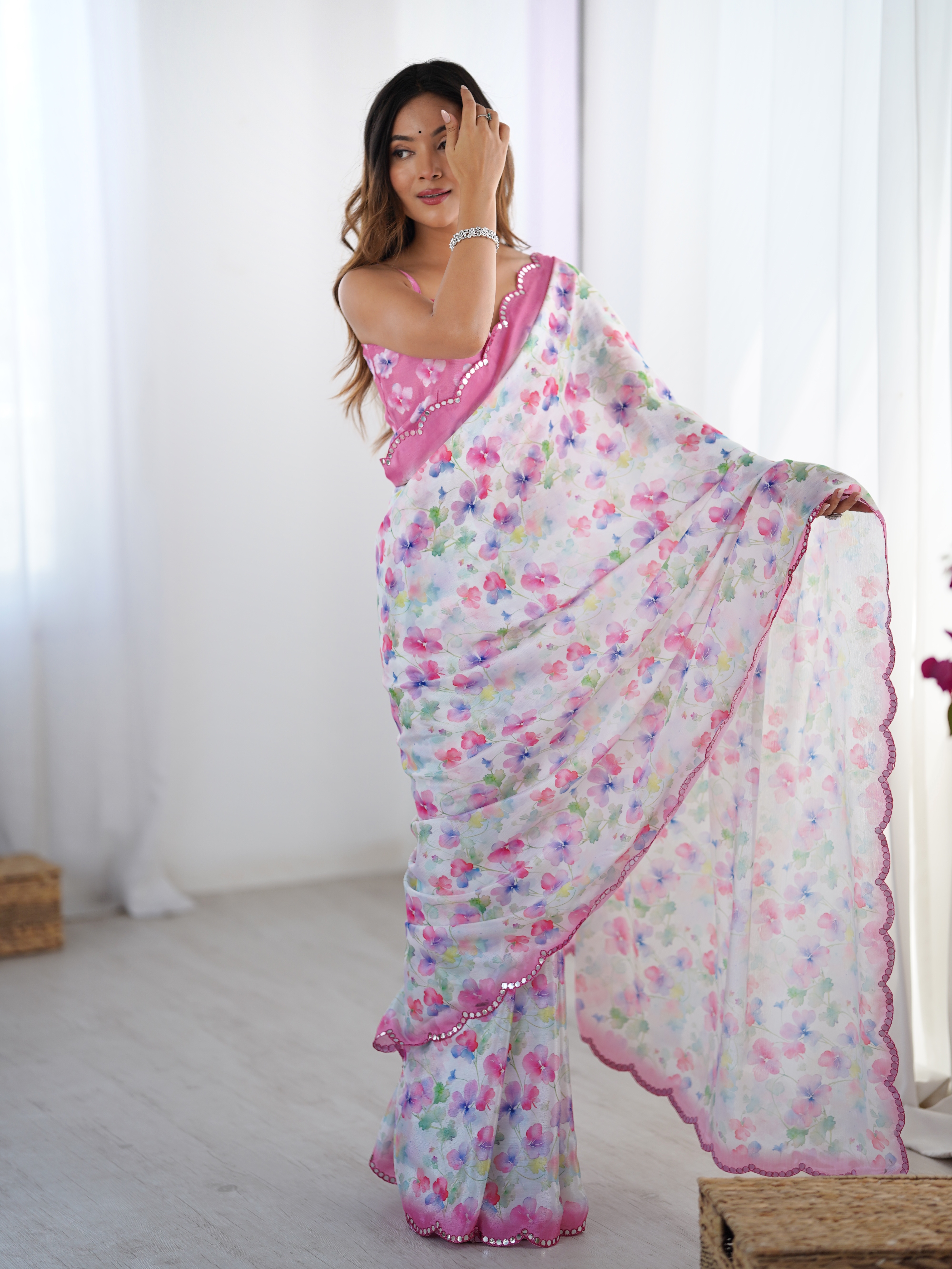
For pastel and cream sarees, pearl studs, a short gold chain, small jhumkas or a delicate kundan-look set provide polish. Teal, purple and blue sarees can support oxidised silver, antique gold or a single statement earring. Avoid stacking a heavy necklace, large earrings, multiple bangles and a prominent maang tikka unless the saree itself is exceptionally simple.
A small bindi, neatly arranged hair and a practical pair of low block heels can make a bigger difference than extra embellishment. Block heels between 1.5 and 2.5 inches are generally easier for standing, walking and sitting than narrow high heels. Choose a handbag that doesn't catch on tissue cotton or satin.
Collections such as Party Wear Sarees can offer useful styling references for evening colour and drape, while Pink Georgette Sarees may help when a wearer prefers a softer, fluid silhouette. Silk Sarees Under 3000 With Discount can be worth comparing for a modestly priced silk option, but check the saree's actual weight and zari coverage before assuming that every silk design will feel light.
How much jewellery is enough?
One statement element and two supporting details are usually enough for a moderate Tilak saree.
For example, pair a floral linen cotton saree with medium jhumkas, a slim bangle stack and a small bindi. For a tissue cotton saree with zari, choose a simple necklace and earrings rather than adding a heavily embellished waist belt. The goal is to let the saree's texture remain visible.
How can Bihari Tilak Function Sarees That Are Not Wedding Day Heavy be prepared and cared for?
Prepare the saree at least one day in advance by checking the blouse, pressing the fabric, testing the drape and packing suitable pins.

Press linen cotton and cotton tissue on the reverse side or through a thin cotton cloth, using a temperature appropriate to the care label. Avoid placing a hot iron directly on zari, metallic thread or synthetic satin. Steam can relax creases, but satin should be tested on an unseen edge first because heat and moisture can affect its surface.
After wearing, air the saree away from direct sunlight before folding it. Store zari sarees in a breathable cotton or muslin cover rather than airtight plastic. Fold the saree in a different direction every few months to reduce permanent crease lines, and keep heavy jewellery separately so it doesn't pull the fabric during storage.
Collections such as Gray Color Sarees Under 1000 may be useful for comparing understated colour ideas, while Red Banarasi Silk Sarees for Weddings Under 1100 is better treated as a reference for wedding-level colour and zari rather than a default Tilak choice. Price should never replace checking fabric composition, blouse details, border construction and return measurements.
How do you choose Bihari Tilak Function Sarees That Are Not Wedding Day Heavy?
Choose the saree by matching the event timing, expected movement, climate, colour intensity and amount of embellishment before considering accessories.
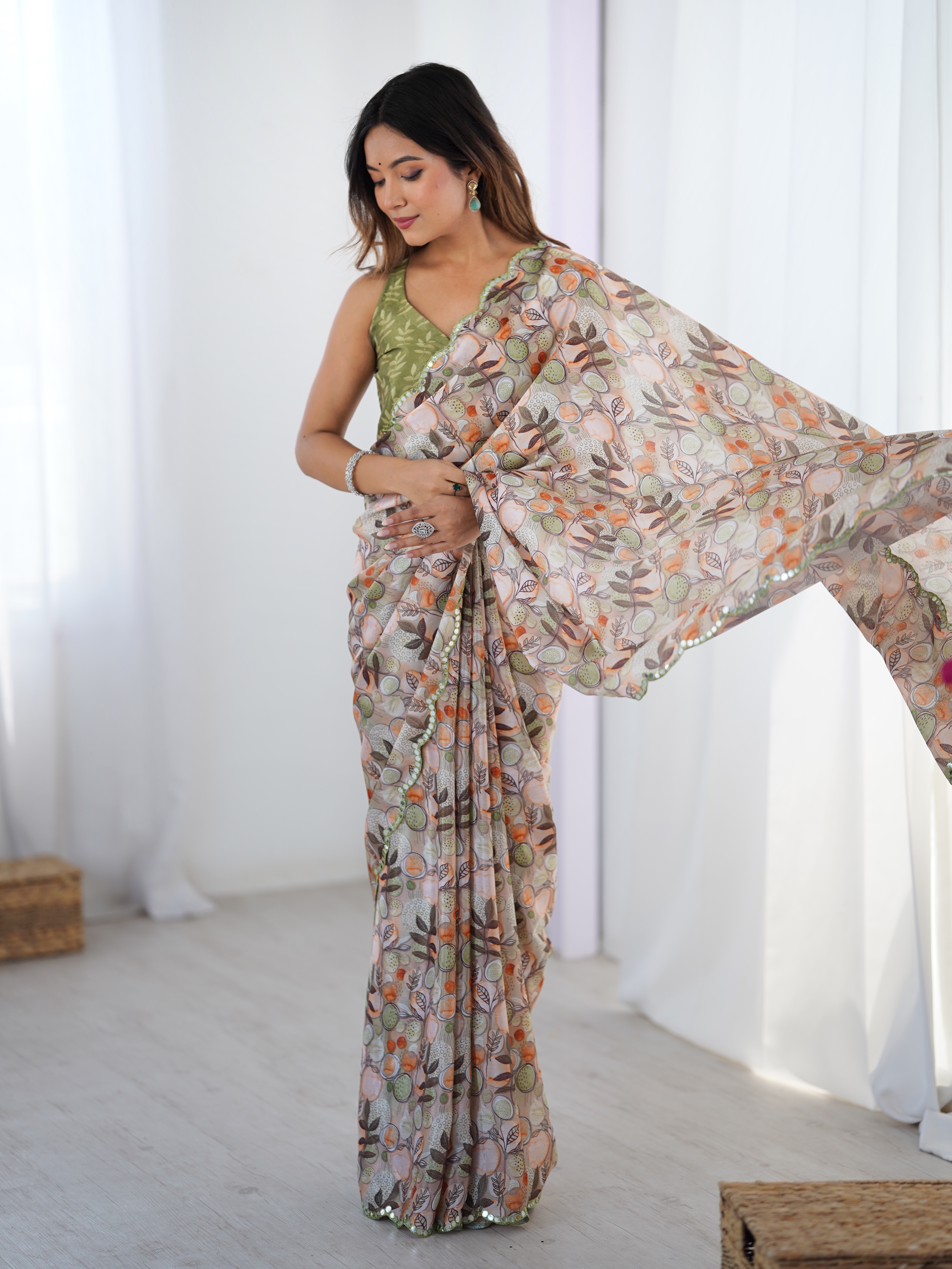
- Confirm the timing: choose linen cotton or cotton tissue for a warm daytime event and consider satin or light georgette for a cooler evening gathering.
- Set the visual limit: select one strong feature, such as zari, a jacquard border, a floral print or a lustrous surface.
- Check comfort: sit, walk and lift the pallu during a trial drape to confirm that the pleats and waistband remain secure.
- Coordinate the blouse: use a matching blouse for softness or a controlled contrast for definition, but avoid competing prints.
- Keep accessories proportional: let the saree, jewellery or blouse be the main focal point instead of making all three equally elaborate.
- Plan care: press the saree, test pins and pack the blouse and accessories at least one day before the ceremony.
The strongest Tilak outfit communicates respect for the ritual without borrowing every visual code of the wedding day. A breathable fabric, a thoughtful colour, a defined border and comfortable styling can look festive for photographs while remaining practical from arrival to farewell.
Common Questions About Choosing a Light Saree for a Bihari Tilak
What type of saree is suitable for a Bihari Tilak ceremony?
Linen cotton, tissue cotton, light georgette, satin and printed sarees with restrained borders are suitable for a Bihari Tilak ceremony. Choose a fabric that looks festive but remains comfortable for sitting, moving and taking photographs.
Can I wear a Banarasi silk saree to a Tilak function?
You can wear a Banarasi silk saree to a Tilak function if the silk is light and the zari coverage is moderate. A broad gold border, dense motifs and heavy jewellery together may make the outfit look more appropriate for the wedding day.
Which colours are best for a lightweight Tilak saree?
Peach, cream, blush pink, teal, powder blue, lilac and muted purple are strong choices for a lightweight Tilak saree. Medium-depth shades such as teal or plum can also work when the print and border are restrained.
How much jewellery should I wear with a simple Tilak saree?
One statement jewellery element with two understated supporting details is usually enough. Medium jhumkas with bangles and a bindi, or a short necklace with small earrings, can create a finished look without adding bridal heaviness.
Are linen cotton sarees comfortable for a long family function?
Linen cotton sarees are generally comfortable for long family functions because they are breathable and comparatively light. Linen cotton can crease, so press the saree before wearing it and secure the pleats and pallu with discreet pins.
How can I make a simple saree look more festive without heavy embroidery?
Use a well-fitted blouse, a defined border, coordinated jewellery and neat hair to make a simple saree look festive. A small amount of zari, tissue sheen or a floral print can provide occasion detail without dense embroidery.