Assamese Juron Ceremony Textiles Worth Understanding begins with a simple fact: clothing at a Juron is part of the welcome, the exchange of affection and the public presentation of family ties. Silk, cotton, zari, colour and the way a garment is folded or offered can carry meaning beyond appearance. A guest who understands those details can dress beautifully without treating Assamese customs as decoration.
Juron, also written as Juran in some English accounts, is an Assamese wedding ritual in which the groom's family visits the bride's home with gifts and ceremonial articles. The exact sequence varies among Assamese communities and families, but textiles commonly feature alongside clothing, ornaments, sweets, betel nut, cosmetics and other items prepared for the bride. The ceremony therefore offers an useful way to understand how Indian wedding textiles operate as social objects rather than simple outfits.
What happens during an Assamese Juron ceremony?
An Assamese Juron ceremony generally marks a formal visit by the groom's family to the bride's household, with gifts presented to the bride as part of the wedding observances.
The word Juron is connected with the act of bringing or presenting gifts, although families may use different spellings and follow different local customs. In many ceremonies, the groom's relatives arrive at the bride's home carrying trays or arranged offerings. The bride may receive a mekhela chador, saree, jewellery, toiletries, sweets and other auspicious articles. Elders oversee the exchange, while relatives help arrange and display the gifts.
The textile is important because clothing can signal both honour and participation. A garment given during Juron may become part of the bride's wedding wardrobe, but it can also represent the relationship between two households. The cloth's quality, border, colour and finishing communicate care without requiring a spoken explanation.
Regional and family variation matters. Some Assamese families use Juron as a distinct pre-wedding event, while others combine elements of the visit with related wedding rituals. A respectful guest should follow the host family's instructions about where to sit, when to photograph gifts and whether the bride or relatives will change into a gifted garment.
Which textiles belong to Assamese Juron traditions?
The most recognisable textiles associated with Assamese wedding dressing are the mekhela chador, Assamese silk sarees and handwoven fabrics, especially when the family has a strong connection to local weaving traditions.
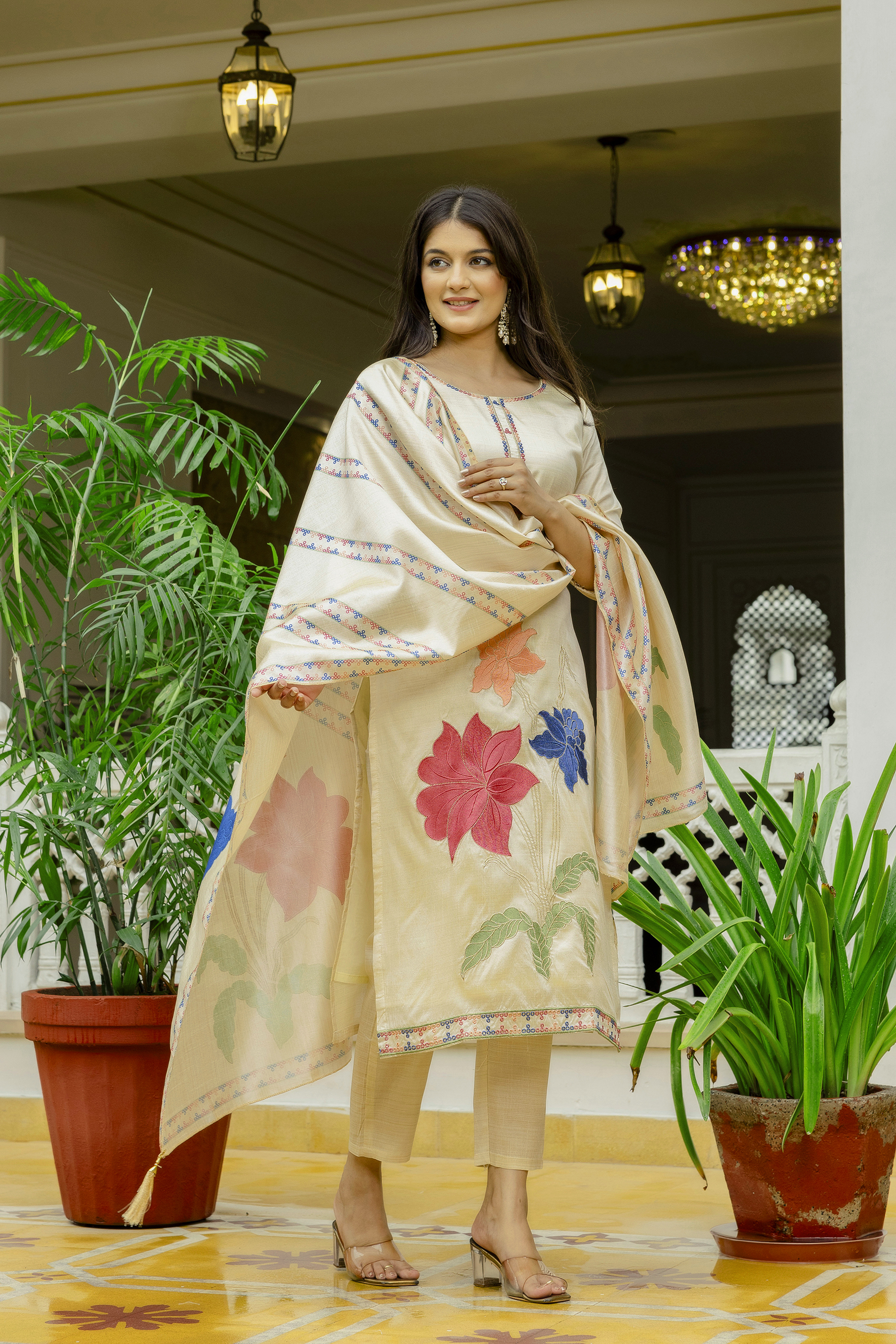
A mekhela chador consists of a low garment called the mekhela and an upper drape called the chador. The two-piece structure differs from a saree, although both garments use a long woven length and make a formal draped silhouette. Traditional Assamese weaving may include motifs such as floral forms, geometric borders and local decorative patterns. The exact weave, fibre and motif depend on the region, weaver and family preference.
Muga silk is especially associated with Assam because the golden-hued silk is produced from the silkworm Antheraea assamensis, native to the region. Muga silk has a naturally warm, lustrous appearance and can deepen in character with use. Pat silk, often called Assam silk, has a smoother pale appearance, while eri silk is known for its soft hand and distinctive production history. These names should not be treated as interchangeable: fibre origin, texture, shine and care can handled substantially.
Silk isn't mandatory for every guest or every family. Cotton handloom, blended silk and well-finished regional textiles can be appropriate, especially for daytime ceremonies, warm weather and gatherings where the family has not specified a dress code. The strongest choice is a garment that looks ceremonially considered, remains comfortable for several hours and doesn't imitate a bridal textile without understanding its context.
How do colour and zari communicate formality?
Colour and zari communicate formality through visual richness, cultural associations and the amount of attention a garment draws in the ceremony.
Red, cream, ivory, gold, yellow and soft green appear frequently in Indian wedding wardrobes, but no single colour code governs every Assamese Juron. Brides may wear family-selected colours, and guests should avoid assuming that a particular shade always belongs to one ritual. Ask a close family member if the invitation specifies a colour, coordinated dress or classic mekhela chador.
Zari refers to metallic thread used in woven or embroidered borders and motifs. Real zari may contain gold or silver, while imitation zari commonly uses metallic-coated synthetic material. Both can look attractive, but their care requirements differ. A saree with a broad zari border usually reads as more formal than a lightly woven everyday saree, especially under indoor lighting.
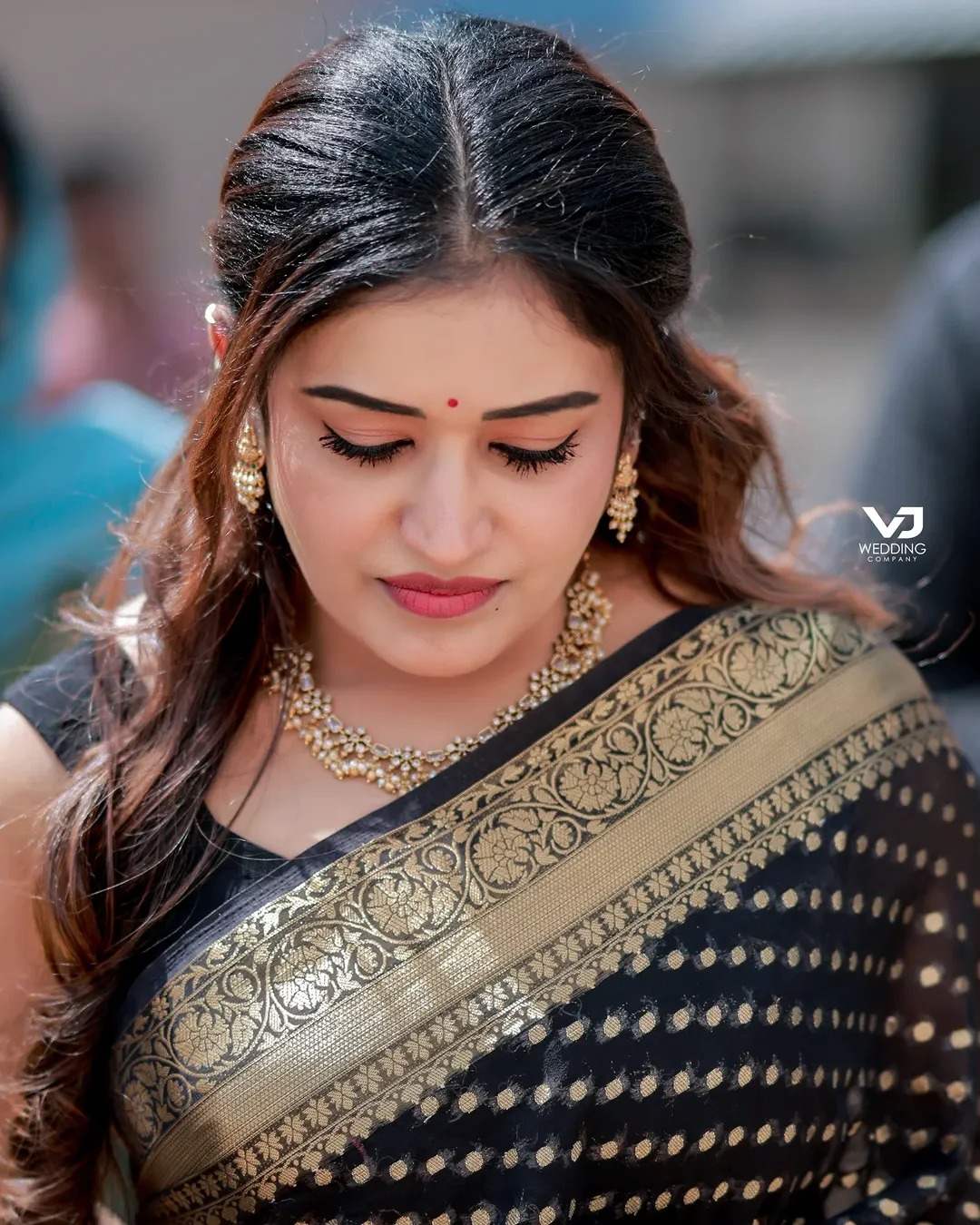
The Maroon Banarasi Soft Silk Saree with Golden Zari Border demonstrates how a deep ground colour and a defined metallic border create a ceremonial effect without requiring heavy embroidery. Banarasi silk comes from the weaving traditions of Varanasi and is distinct from Muga silk, even though both can suit festive dressing. A Banarasi saree can be a polished guest choice when the bride's family has not reserved a particular textile for the bride.
Gold doesn't automatically make a garment appropriate for every part of the ceremony. A heavily embellished outfit may be uncomfortable during a daytime home visit and can compete visually with the bride. Medium-width borders, restrained jewellery and a controlled drape often show more cultural sensitivity than maximum shine.
How should a guest choose a saree for Juron?
A guest should choose a breathable, moderately festive saree or mekhela chador that suits the time of day, the host family's instructions and the practical setting of a home ceremony.
Begin with the invitation and venue. A morning Juron at a family home usually calls for lighter silk, cotton, soft zari or a restrained print. An evening reception attached to the ceremony can support richer Banarasi silk, heavier borders or more elaborate blouse detailing. Climate also matters: Assam's humidity can make thick synthetic fabric uncomfortable, while breathable cotton, silk-cotton and lighter silk are easier to wear for long periods.
Check the saree before the event rather than assuming the online description tells you everything. Measure the blouse piece, test whether the border sits comfortably near the feet and confirm that the pallu is long enough for your preferred drape. A saree that needs constant adjustment can distract from the ceremony and create a safety problem on stairs.
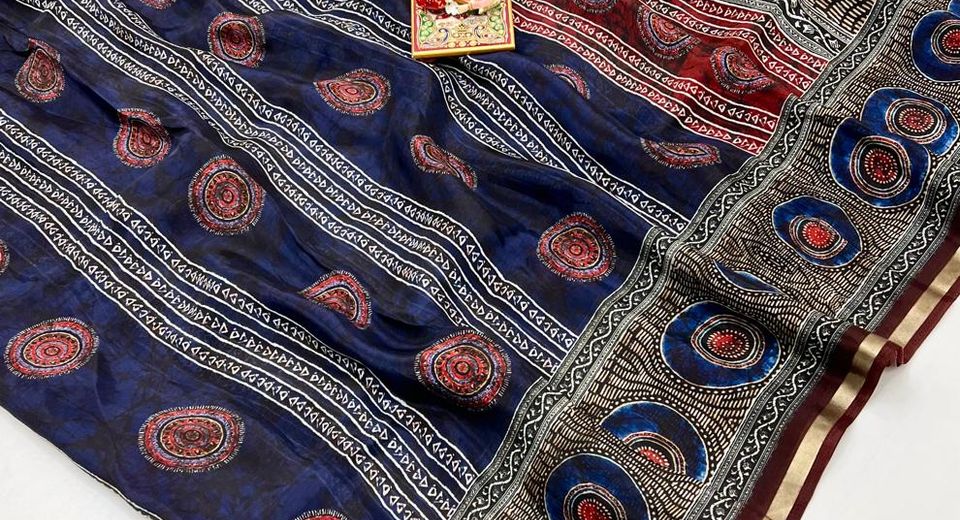
The Royal Blue Ajrakh Digital Uppada Silk Saree With Blouse combines a strong blue ground with a printed surface and a silk base. The garment can work for a guest who wants colour and textile interest without choosing an all-over bridal red. Ajrakh is associated with block-printing traditions, while Uppada silk refers to a silk-weaving tradition from Andhra Pradesh; a digital print inspired by Ajrakh should not be described as hand-blocked Ajrakh unless the product specification confirms it.
The Pastel Floral Tissue Handloom Cotton Saree with Zari Weaves gives a lighter route for a daytime Juron. Handloom cotton can be especially practical in warm weather, while tissue texture and zari weaves add enough structure for a formal family gathering. Use a well-fitted blouse and a neat pleat arrangement so the saree feels intentional rather than overly casual.
Which fabrics and motifs deserve closer attention?
Fabric choice matters because fibre, weave and surface treatment determine comfort, shine, drape, durability and the visual weight of a Juron outfit.
Silk and soft silk
Silk provides natural sheen, a fluid fall and a strong association with ceremonial dressing. Soft silk usually feels more pliable than stiff brocade, making it easier to pleat for a home-based ritual. Keep silk away from perfume spray, hair oil and damp storage, because concentrated moisture and oils can leave marks.
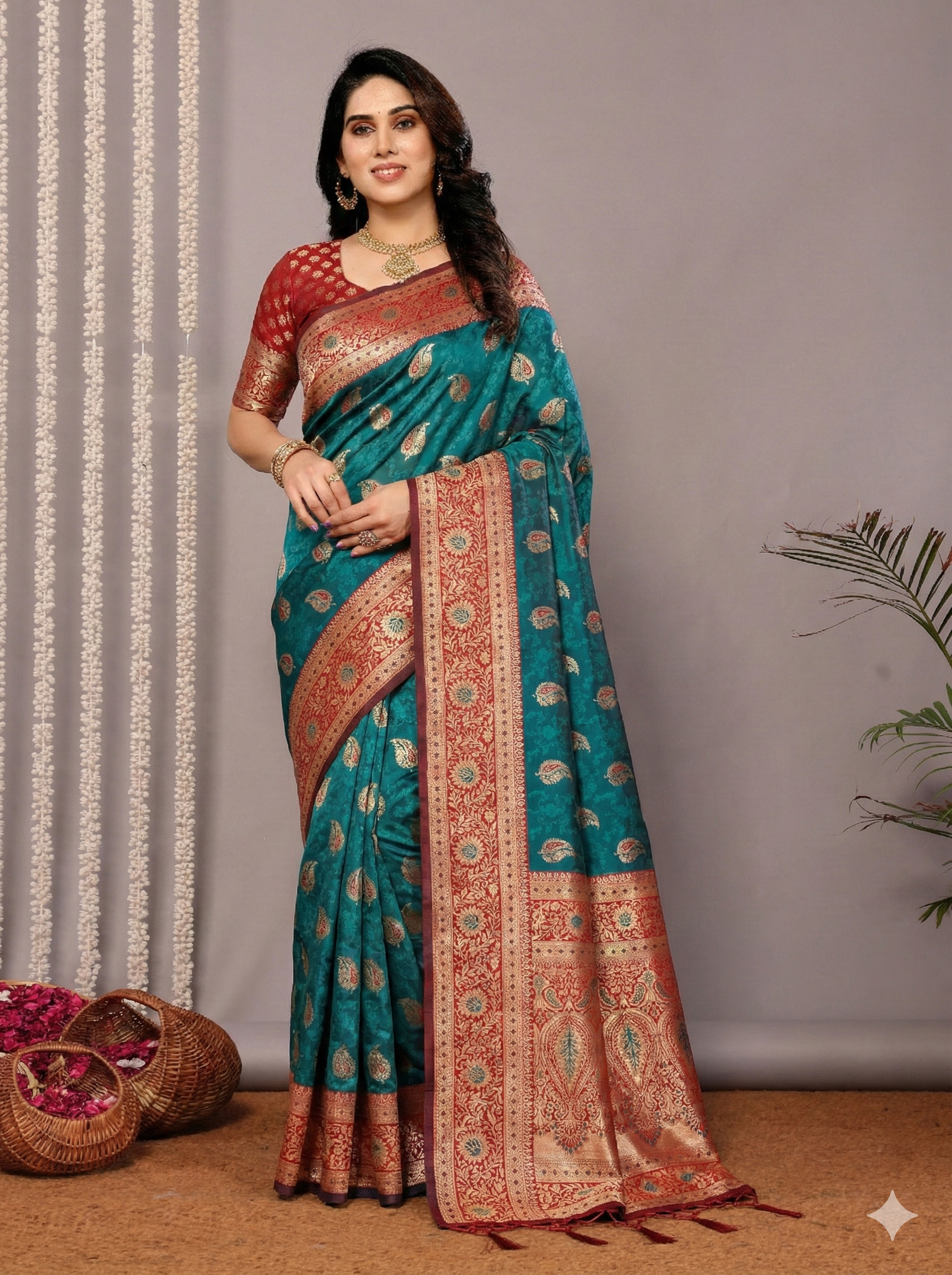
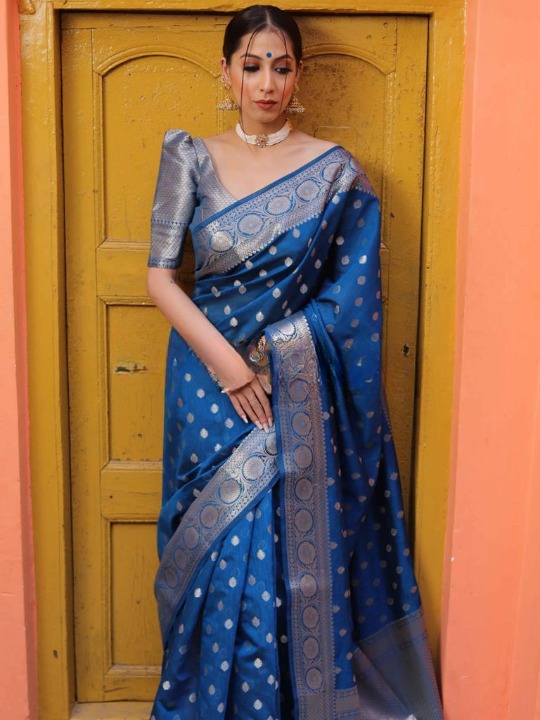
The eal Blue Banarasi Silk Saree with Jacquard Zari Border illustrates the effect of a woven jacquard border. A jacquard design is built into the fabric through controlled weaving rather than simply printed on top. The blue shade brings a formal alternative to red, while the zari border supplies a clear festive cue.
The Premium Grey Silk Saree with Pink Zari & Shibori Print shows how contemporary surface design can sit beside time-honoured silk dressing. Grey can be an elegant guest colour when paired with warm jewellery or a pink blouse, although very pale grey may photograph differently under cool indoor lights.
Bandhani, tissue and textured surfaces
Bandhani is a resist-dyeing technique created by tying small sections of fabric before dyeing, producing dotted or patterned effects. A digital print that resembles Bandhani doesn't have the same construction as tied-and-dyed Bandhani. Product descriptions should be read carefully before making claims about craft technique.
The Mustard Bandhani Viscose Gajji Silk Saree with Handwork and the Blue Bandhani Viscose Gajji Silk Saree with Gota Patti bring patterned surfaces and embellishment into the guest wardrobe. Gajji silk generally refers to a smooth, firm silk-like fabric used in western Indian textile traditions, while viscose is a regenerated cellulose fibre. The combination can offer a silk-like appearance at a different price and care level from pure silk.
Gota Patti uses metallic ribbon or appliqué work attached to the fabric. Because raised handwork can catch on jewellery, keep bangles smooth and avoid a handbag chain rubbing against the pallu. Fold embellished sarees with tissue paper between decorated areas and store them in a breathable cotton cover.
How can a Juron outfit remain respectful and practical?
A respectful Juron outfit remains polished without presenting another family's ceremonial symbols as costume or overpowering the bride's clothing.
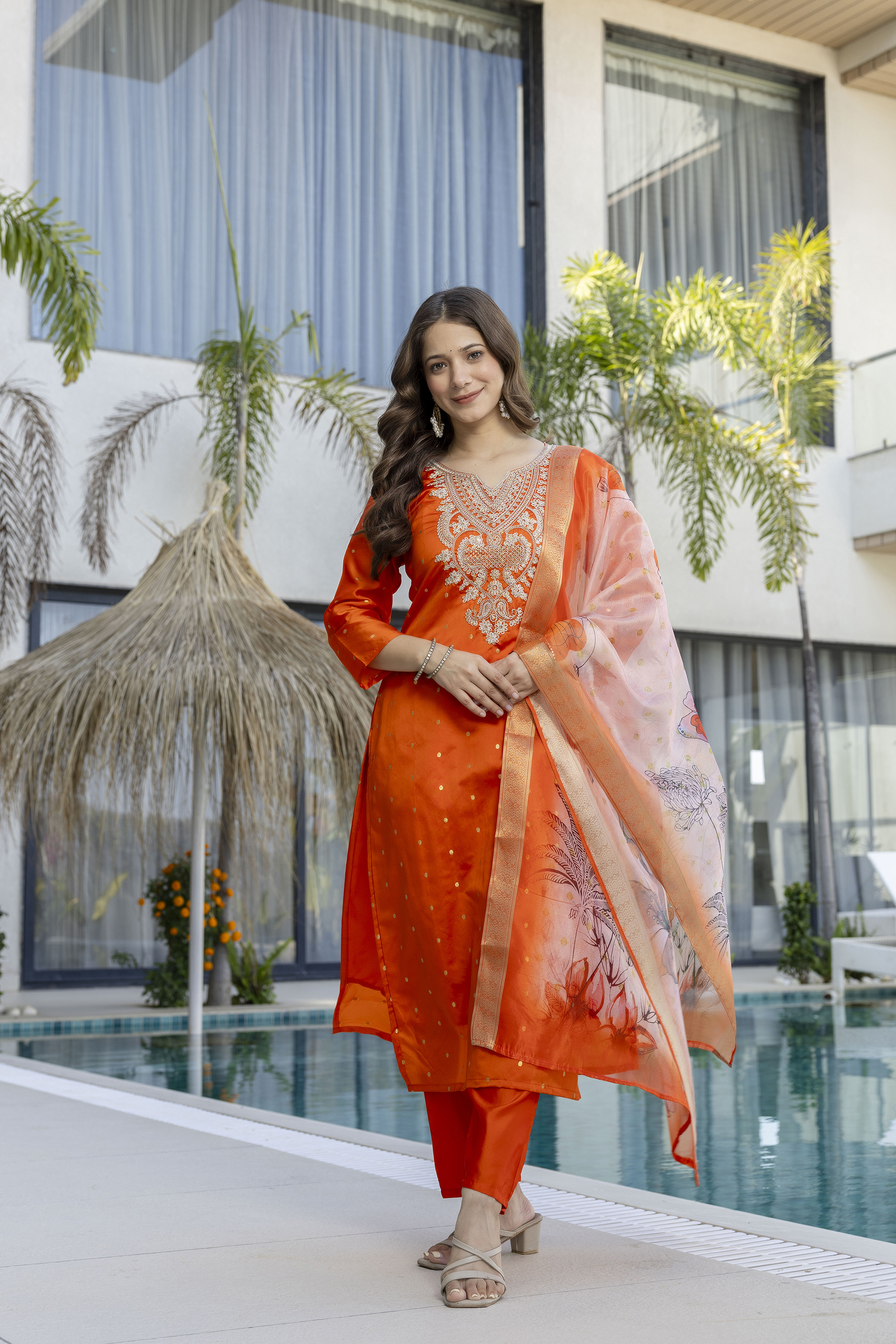
Choose one principal feature: a rich border, a distinctive weave, a statement blouse, an heirloom necklace or an artful drape. Combining a very heavy zari saree with dense jewellery, dramatic makeup and a large hair ornament can make movement difficult and shift attention away from the ritual. A moderate outfit also photographs more naturally during close family interactions.
Blouse construction deserves practical attention. Elbow-length sleeves can feel comfortable and formal for a home ceremony, while a secure neckline prevents repeated adjustments during greetings. Add hooks or discreet snaps to a slippery pallu if the fabric moves easily. A petticoat in a close colour, non-slip footwear and safety pins placed before leaving home can prevent most draping problems.
The Pastel Aqua Lichi Silk Saree with Rich Jacquard Border gives a soft, luminous palette for a guest who prefers pastel dressing. Lichi silk is commonly used to describe a textured silk-like fabric with a subtle grain, but fibre composition can vary by garment. Read the care label rather than relying on the fabric name alone.
Dress modestly for the family setting and avoid photographing gifts, elders or ritual moments without permission. Clothing etiquette includes behaviour: waiting before touching displayed garments, following instructions about footwear and keeping phones away during blessings are small actions that show respect.
How should Assamese Juron textiles be cared for after the ceremony?
Assamese Juron textiles should be aired briefly, cleaned according to fibre and stored away from direct light, humidity and rough contact.

don't place a worn silk saree immediately into a sealed plastic bag. Air the saree in shade for several hours, then fold it loosely with clean, acid-free tissue or soft cotton between heavy zari folds. Refold silk every few months so permanent crease lines don't form. Avoid hanging heavy Banarasi sarees for long periods because the fabric and zari can bear uneven strain.
Dry cleaning is generally safer for pure silk, zari, heavy handwork and colour combinations that may bleed. Test a small hidden area only if the care label permits it; home washing can damage zari, shrink cotton and alter the finish of viscose or tissue fabric. Keep naphthalene away from direct fabric contact, since strong chemicals can leave odour and marks.
Stains should be blotted gently with a clean, dry cloth rather than rubbed. Water rings, oil marks and sweets with colour should be shown to a professional cleaner quickly. Jewellery should be stored separately from the saree so hooks, stones and chains don't snag the weave.
Assamese Juron Ceremony Textiles Worth Understanding in one practical checklist
Assamese Juron Ceremony Textiles Worth Understanding becomes easier when a shopper checks the garment's role, material and care requirements before choosing colour or embellishment.

- Confirm the dress expectation: Ask whether the family prefers a mekhela chador, saree, handloom textile or a specified colour.
- Identify the fibre: Distinguish Muga silk, Pat silk, eri silk, Banarasi silk, viscose and cotton before estimating warmth, shine and care.
- Inspect the border: Check whether zari is woven, printed, embroidered or applied as Gota Patti, and examine the finishing near the pallu.
- Match the garment to the timing: Choose breathable cotton or lighter silk for daytime and richer silk or jacquard for a formal evening setting.
- Prepare the drape: Stitch or test the blouse, measure the petticoat, practise pleats and carry only the pins needed for a secure fit.
- Respect the household: Ask before photographing gifts, touching ceremonial objects or changing into a garment received during Juron.
- Plan aftercare: Air, fold and clean the saree according to its fibre, zari and surface work rather than using one method for every textile.
Textiles at Juron connect Assamese family practice with the wider language of Indian formal dressing. A Banarasi saree, handloom cotton saree or silk mekhela chador can each be appropriate when the wearer understands what the cloth communicates and how the family uses it. The most profound outfit is therefore not necessarily the most expensive one; it's the garment chosen with attention to material, setting, tradition and the people being honoured.
Questions Readers Ask About Assamese Juron Ceremony Textiles
What does the bride usually wear during an Assamese Juron ceremony?
The bride may wear a mekhela chador, Assamese silk saree or another garment presented by the groom's family. The exact textile and colour depend on community, region and family custom, so relatives should be consulted before making assumptions.
Is a mekhela chador compulsory for guests at Juron?
A mekhela chador is not compulsory for every guest unless the invitation or family specifically requests it. A neatly draped saree in silk, cotton or a suitable blend can be respectful and practical for most guests.
Which silk is traditionally associated with Assam?
Muga silk, Pat silk and eri silk are strongly associated with Assamese textile traditions. Muga silk is known for its naturally golden lustre, Pat silk for its smooth pale appearance and eri silk for its soft texture and distinctive production history.
Can I wear red to an Assamese Juron ceremony?
You can wear red if the family has not reserved the colour for the bride and the outfit is suitable for a guest. Ask a close family member when the ceremony has a coordinated dress code, because colour customs vary between households.
Is Banarasi silk appropriate for an Assamese wedding ceremony?
Banarasi silk can be appropriate for a guest at an Assamese wedding or Juron when the family has not specified an Assamese handloom textile. Choose a moderate border and avoid styling the outfit so heavily that it competes with the bride.
How should I store a zari saree after Juron?
Air the saree in shade, fold it with soft or acid-free tissue between heavy zari sections and store it in a breathable cotton cover. Avoid direct sunlight, sealed plastic, rough jewellery contact and prolonged hanging.