An Interfaith Wedding Guest Wardrobe for Two Different Ceremonies needs more thought than choosing two attractive outfits. A church service, nikah, Hindu pheras, Jewish ceremony or civil exchange can each carry different expectations around coverage, colour, head coverings and movement. The most useful approach is to build two distinct looks from a coordinated wardrobe: one respectful and composed for the ceremony, and another that can become more festive for the reception without looking like a completely unrelated purchase.
Successful dressing starts with the invitation, venue and timing rather than with a single garment. Check whether both ceremonies happen on the same day, whether guests move between indoor and outdoor spaces, and whether the couple has requested covered shoulders, modest hemlines or a head covering. A breathable base, one adaptable layer and carefully chosen accessories can solve most practical problems.
An Interfaith Wedding Guest Wardrobe for Two Different Ceremonies: Where should planning begin?
Plan an interfaith wedding guest wardrobe by identifying the ceremony with the most specific clothing expectations first, then adapting the same colour story and accessories for the second event. The ceremony with stricter expectations should determine the neckline, sleeve length, hemline and layering plan.
Begin with four details: the ceremony tradition, the venue, the time of day and the gap between events. A morning Hindu wedding in an open lawn may call for light linen cotton, while an evening reception in a hotel ballroom can support satin, silk blends or more elaborate embroidery. A church ceremony may make a shawl or jacket useful, while a mosque ceremony may require covered arms, legs and head depending on the venue's guidance.
An interfaith wedding doesn't follow one universal dress code. Couples often combine customs in a highly personal way, so the invitation and a direct question to the hosts are more reliable than generalised rules. Ask a member of the wedding party whether guests should carry a scarf, remove footwear, cover the head or avoid particular colours.
- For the ceremony: choose a polished silhouette with secure coverage and comfortable movement.
- For the reception: add brighter jewellery, a more decorative dupatta, a metallic belt or a change of blouse if time allows.
- For both: select fabrics that remain presentable after sitting, standing, walking and travelling.
An Interfaith Wedding Guest Wardrobe for Two Different Ceremonies: Which silhouettes work?
Sarees, salwar suits, kurta-and-pant sets and modest gown sets work well across two ceremonies because each silhouette can be adjusted through layering and accessories. The best choice is the garment that allows comfortable sitting, walking and small ceremonial movements without constant readjustment.
Can a saree work for both ceremonies?
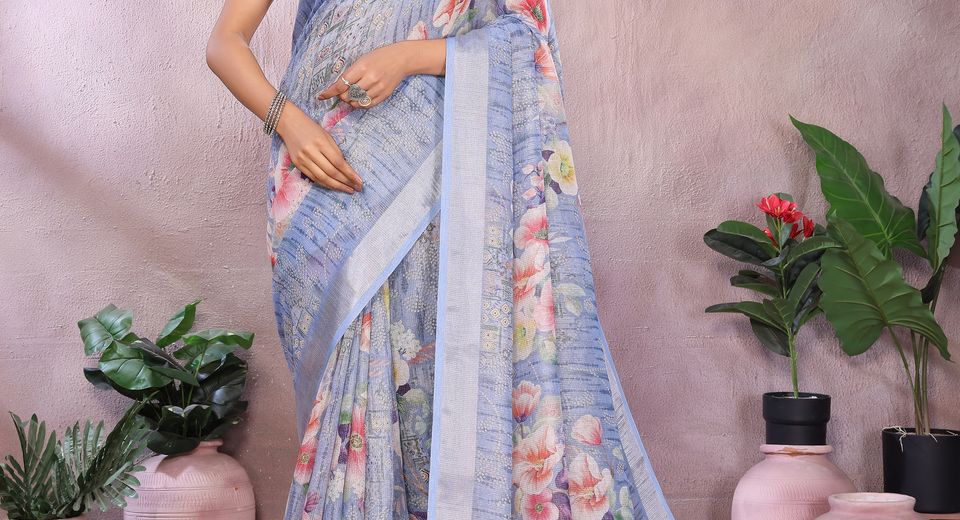
A saree can work for both ceremonies when the blouse has a comfortable neckline and the pallu can be pinned securely. A teal blue linen cotton saree with a floral print, such as the Teal Blue Linen Cotton Floral Printed Saree with Blouse Set, can look composed at a daytime ceremony with small earrings and a plain shawl. The same saree can move into a reception setting with a structured potli bag, layered bangles and more defined eye makeup.
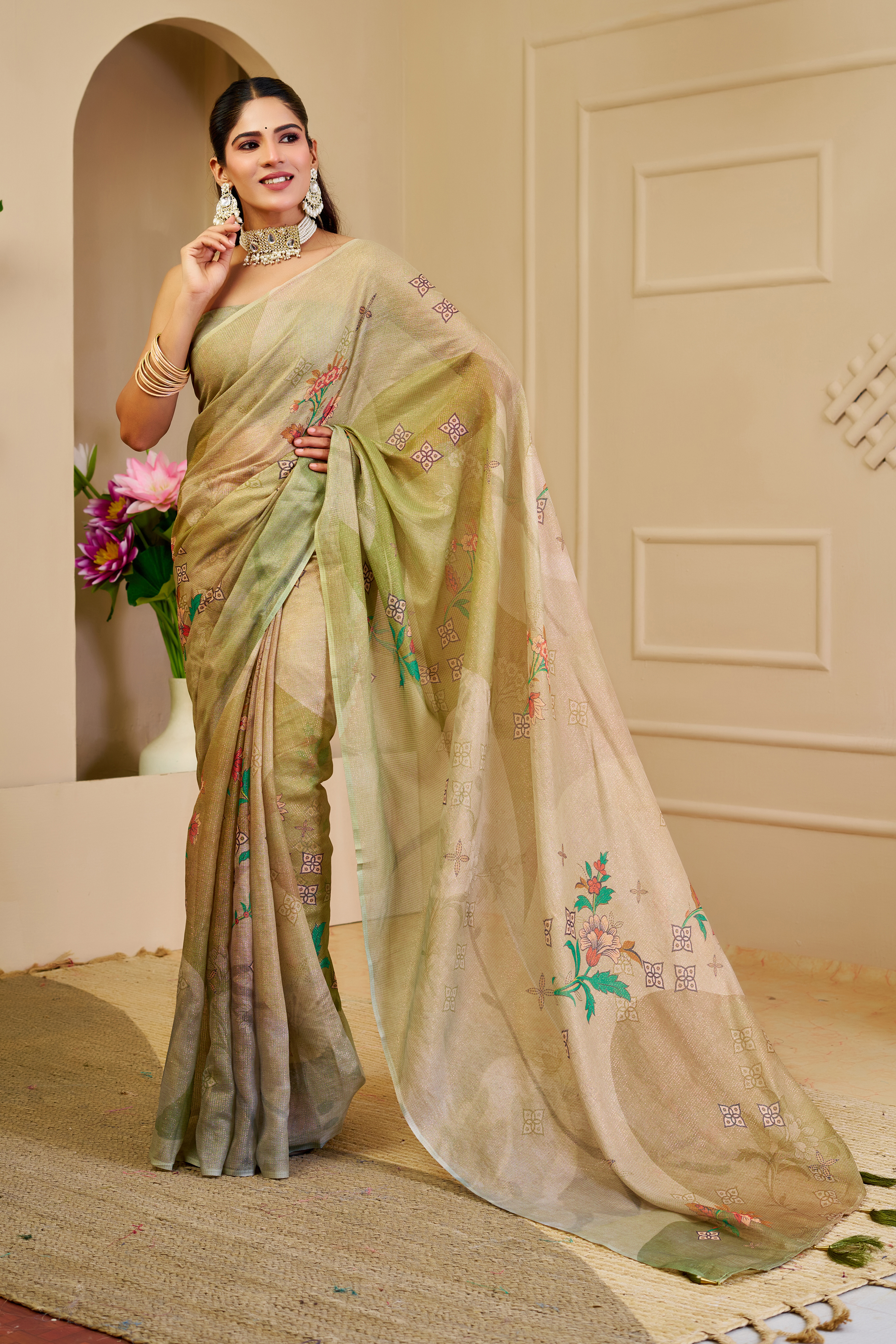
Printed linen cotton suits daytime ceremonies because the fibre blend generally feels lighter than heavily embellished silk, although comfort depends on the weave, lining and weather. The Buy Blue Floral Printed Shimmer Linen Cotton Saree offers a slightly dressier option when a venue calls for subtle shine without the weight of dense zari. Pin the pallu at the shoulder and secure the pleats from the inside so the saree remains neat during travel.
Are salwar suits practical for two wedding events?
Salwar suits and kurta-pant sets are practical for two wedding events because they support easy movement between venues and comfortable sitting for long periods. A straight kurta with trousers creates a clean line, while a dupatta supplies additional coverage at a religious ceremony.
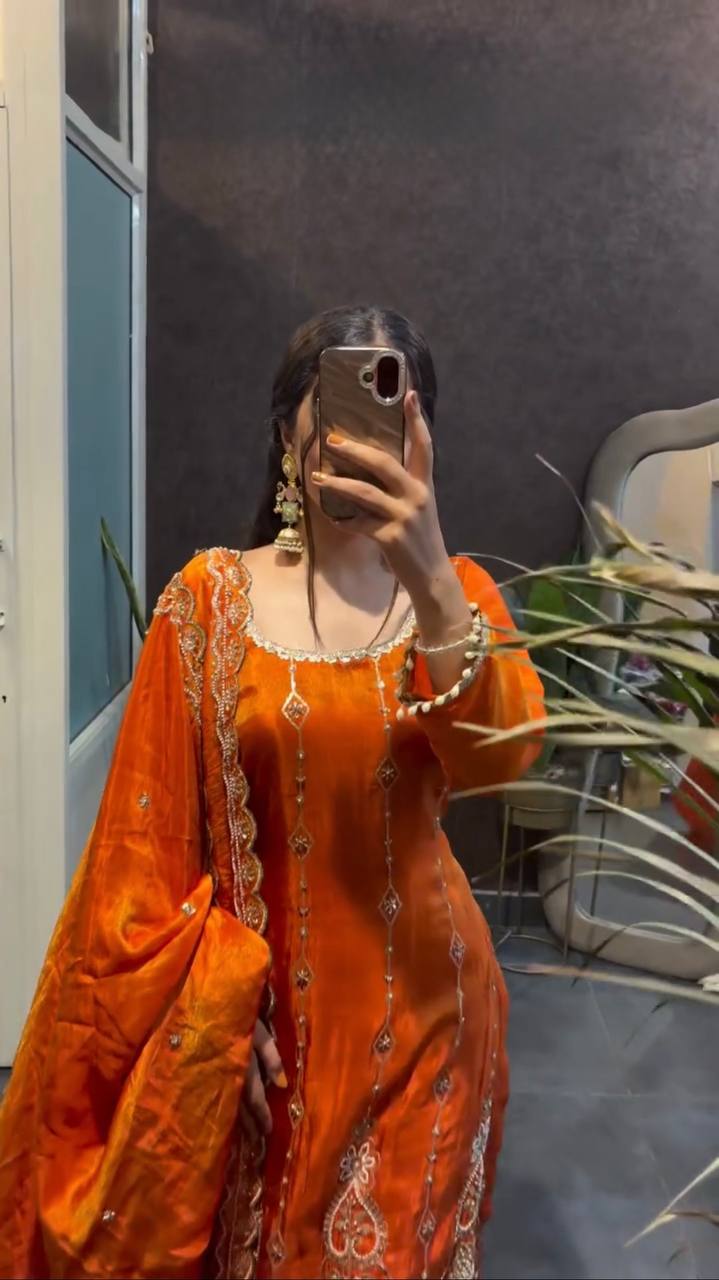
The Rust Orange Embroidered Readymade Suit Set for Women combines the practical advantage of a ready-made fit with enough surface detail for a wedding guest setting. A readymade suit also reduces last-minute tailoring risk, but check sleeve length, trouser fit and bust measurements before ordering.
The Rust Orange Vichitra Silk Embroidered Kurta Pant Set can work for an evening ceremony when paired with low block heels and restrained jewellery. If the ceremony involves floor seating, choose trousers with room through the knee and avoid a very long kurta that pools around the ankles.
When do gown sets and co-ords make sense?
Gown sets and co-ord sets make sense when the dress code is formal but the wearer prefers a single coordinated outfit. The Teal Blue Vichitra Silk Embroidered Gown Set Online Copy Title gives a gown-based alternative to a saree, but check the neckline, sleeve coverage and hem before selecting it for a place of worship.
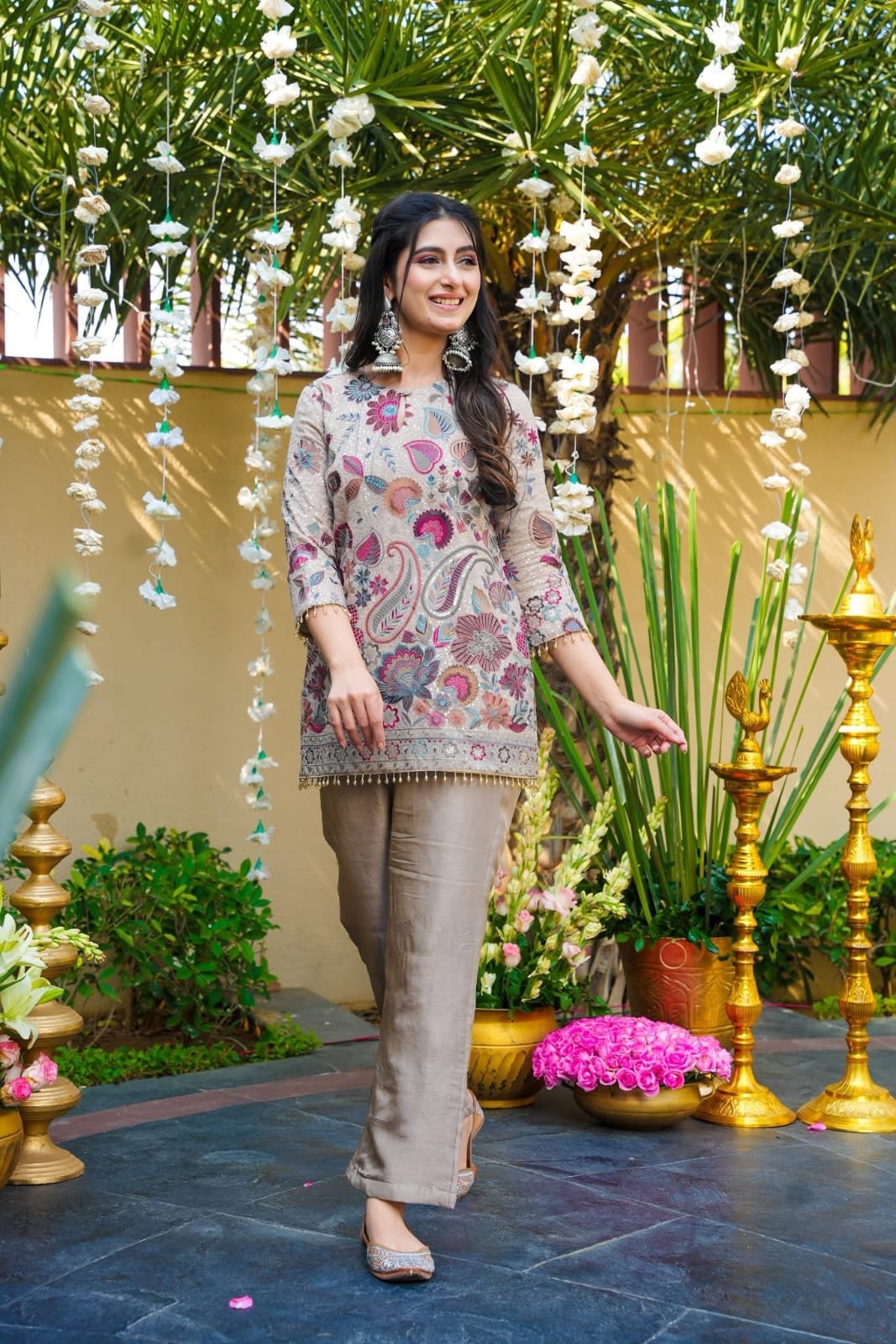
The Modern Taupe Vichitra Silk Embroidered Co-Ord Set for Women creates a quieter base for a ceremony where bright embellishment may feel excessive. Add a jewel-toned dupatta or colourful earrings for the reception rather than replacing the whole outfit. Taupe, teal, rust and blue also sit comfortably within one wardrobe palette, allowing accessories to travel between looks.
An Interfaith Wedding Guest Wardrobe for Two Different Ceremonies: How can colour work?
One colour palette suits two different ceremonies when the base outfit remains elegant and festive elements are added through texture, jewellery and a contrasting accessory. Coordinated colours prevent a two-look wardrobe from appearing assembled at the last minute.
Use one anchor colour and two supporting shades. Teal can be the anchor, with antique gold and rust as supporting colours. Blue can pair with silver, pearl and soft pink. Mustard can be balanced with pink, ivory or muted green. The combination should relate to the wedding's mood without copying the couple's clothing or wedding-party colours.
Bright colour isn't automatically inappropriate at a ceremony, but the amount of shine and ornament matters. The Bright Pink Floral Linen Cotton Saree with Jacquard Borders can be made ceremony-ready with a plain blouse, small gold studs and a restrained bun. Larger earrings, a metallic clutch and stacked bangles can make the same saree suitable for a celebratory dinner.
A mustard saree brings another adaptable route. The Mustard Satin Saree with Printed Pink Pallu & Blouse has a clear festive presence, so keep the first-ceremony accessories minimal and let the printed pallu provide the visual interest. For the second event, add pink or antique-gold earrings rather than introducing several new colours.
An Interfaith Wedding Guest Wardrobe for Two Different Ceremonies: What should you wear for a religious ceremony?
Wear clothing with covered shoulders, a secure neckline, an appropriate hemline and a removable layer when a religious ceremony's expectations are unclear. Modesty and practicality are safer starting points than trying to imitate ceremonial clothing belonging to another faith.
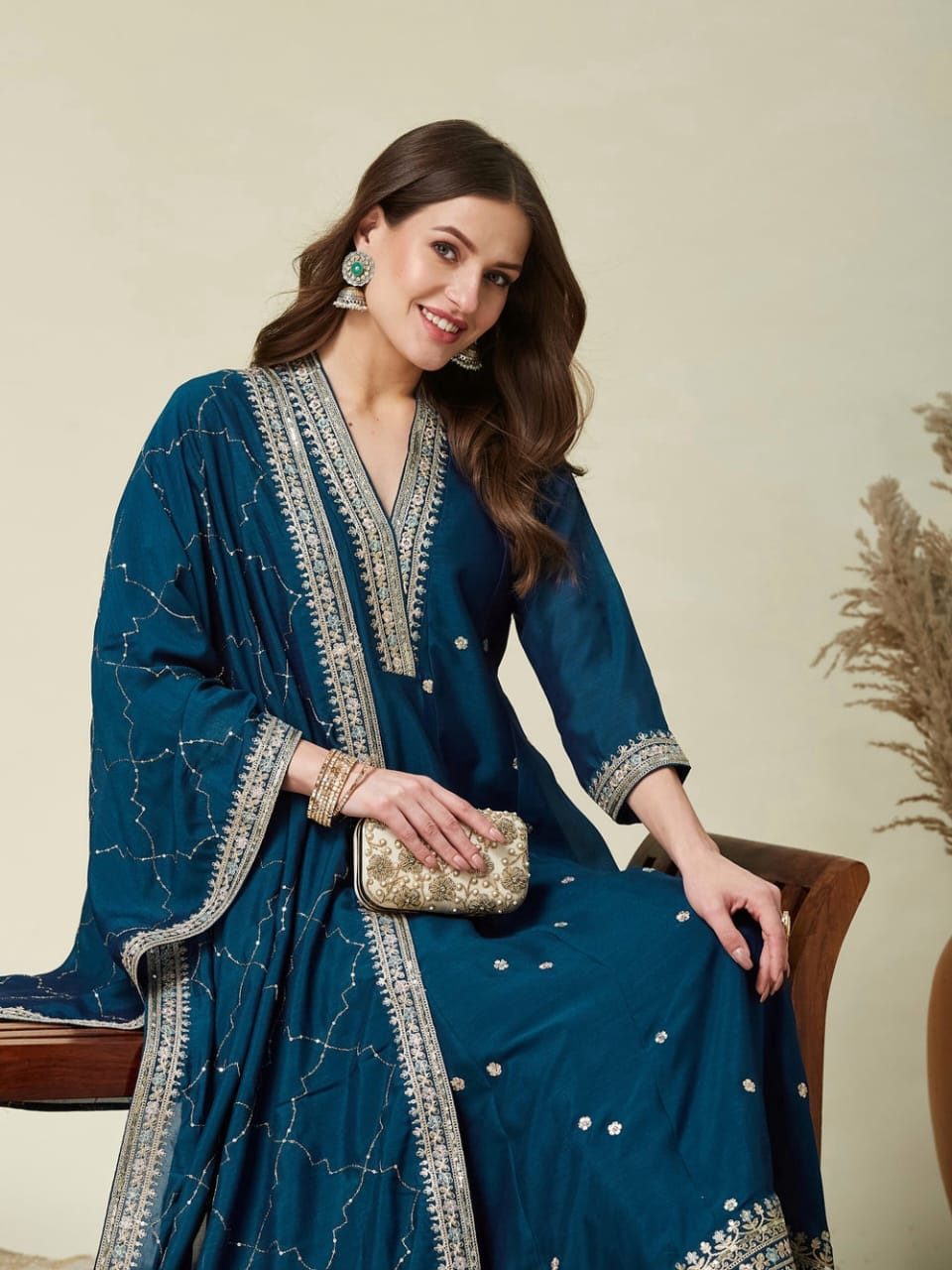
For a Hindu ceremony, guests commonly wear Indian festive clothing, but venue-specific customs still matter. A saree, salwar suit or kurta set with a dupatta is generally versatile. Avoid excessively long loose drapes if the event includes walking around a mandap, sitting on the floor or moving through crowded spaces.
For a church ceremony, a shawl, cropped jacket or full-length dupatta can provide shoulder coverage over a sleeveless blouse or gown. Choose a layer that stays in place while seated. A narrow scarf that slides off the shoulder repeatedly is less practical than a wider stole secured with a discreet pin.
For a nikah or mosque setting, ask the couple or venue about head covering and footwear expectations. A loose dupatta or opaque stole can cover the head and shoulders when required. Avoid transparent fabric as the only layer over a sleeveless or low-cut garment, because lighting can make sheer materials more revealing than expected.
For a Jewish ceremony, cultural practices vary by community and venue. Some synagogues may expect head coverings for men and women, while others provide guidance at the entrance. A compact scarf or shawl in a neutral colour can be carried without disrupting the outfit.
For a civil ceremony, the venue usually determines the dress code rather than religious practice. A structured suit set, graceful saree or modest gown can all work, with the reception level of formality signalled through jewellery and footwear.
An Interfaith Wedding Guest Wardrobe for Two Different Ceremonies: Which fabrics are practical?
Linen cotton, Chanderi, lightweight silk blends and breathable georgette are practical for a full wedding day because these fabrics balance appearance, movement and heat management. Dense velvet, heavily layered satin and extensive metallic embroidery are better reserved for shorter evening events or cooler venues.

Linen cotton handles daytime warmth well, but natural creasing is part of its character. Pack a linen cotton saree on a hanger or fold it along existing pleats, then use a low-heat iron if the care label permits. Satin photographs beautifully but can show water marks, pressure lines and perspiration, so wear a breathable lining and carry a small absorbent handkerchief.
Vichitra silk has a polished surface and works well for evening dressing, particularly when a garment has embroidery. The Modern Taupe Vichitra Silk Embroidered Co-Ord Set for Women and the Teal Blue Vichitra Silk Embroidered Gown Set Online Copy Title can be kept comfortable with cotton-blend inner layers and shoes that don't require constant balance.
Banarasi silk, Kanjeevaram silk and heavily woven zari sarees are visually significant choices, but their weight can become tiring during a long ceremony. A saree containing substantial zari may weigh more than a printed linen cotton saree, especially when paired with a structured blouse and multiple underskirts. Choose heavier weaves when the event is shorter, the weather is cooler or seating is readily available.
An Interfaith Wedding Guest Wardrobe for Two Different Ceremonies: How should accessories change?
Change accessories rather than the entire outfit when both ceremonies occur on the same day and the base garment already meets the dress code. A compact accessory kit can create a noticeably different second look in 10 to 15 minutes.

For the first ceremony, use small or medium earrings, a practical watch, a plain clutch and low block heels. Keep the dupatta or shawl secured with one or two hidden pins. For the reception, switch to chandbali earrings, a cuff, a metallic clutch or a brighter lip colour. One deliberate change usually looks more refined than adding every festive accessory at once.
Footwear deserves more planning than jewellery because wedding venues often involve grass, stone paths, stairs and long periods of standing. Block heels between 3 and 5 centimetres generally provide more stability than narrow stilettos. Flat juttis or embellished sandals are useful when the ceremony includes floor seating or extensive walking.
A small emergency kit should contain safety pins, fashion tape, blister plasters, a stain-removal pen, hairpins, tissues and a spare pair of earrings. Carrying a foldable scarf is particularly useful when the second venue has different coverage expectations from the first.
An Interfaith Wedding Guest Wardrobe for Two Different Ceremonies: What should you pack?
Pack the outfit in separate ceremony and reception components so that a quick change remains manageable. A labelled garment bag, breathable inner layer, secure shoe pair and compact accessory pouch can prevent most wedding-day wardrobe problems.

- Steam or press each garment 24 hours before departure, following the care label for satin, silk blends and embroidered fabrics.
- Photograph the complete outfit, including jewellery and footwear, so accessories can be matched quickly at the venue.
- Carry one neutral layer, such as an ivory, taupe or gold-toned shawl, for unexpected coverage requirements.
- Use tissue paper between embellished surfaces to reduce snagging during packing.
- Keep jewellery in individual soft pouches and place safety pins in a small sealed box rather than loose in the garment bag.
- Test sitting, walking, raising the arms and climbing stairs before the wedding day.
Garment care continues after the wedding. Air embroidered clothing before storing it, remove temporary pins, and avoid sealing damp garments in plastic. Dry-clean only when the care label recommends it, because repeated chemical cleaning can affect delicate finishes. Fold heavy sarees along different lines every few months to reduce permanent creasing at one fold.
A considered interfaith wedding guest wardrobe respects the ceremony without sacrificing personal style. Two compatible silhouettes, a flexible layer, comfortable footwear and a controlled colour palette are usually more valuable than buying separate outfits for every ritual. The result is a wardrobe that responds to cultural context while remaining wearable long after the wedding celebration ends.
Common Questions About Dressing for Two Interfaith Wedding Ceremonies
What should I wear to two different wedding ceremonies on the same day?
Choose one comfortable base outfit that meets the stricter ceremony's coverage requirements, then change the accessories or outer layer for the second event. A saree with a secure pallu, a salwar suit with a dupatta or a kurta-pant set can transition effectively.
Can I wear the same outfit to a church wedding and a Hindu wedding?
You can wear the same outfit when the garment provides suitable coverage and the invitation does not request separate dress codes. Add a shawl or jacket for a church ceremony, and use brighter jewellery or a more decorative dupatta for a Hindu wedding reception.
What should I wear to an interfaith wedding if I do not know the religious dress expectations?
Ask the couple or a member of the wedding party about shoulder coverage, head coverings, footwear and venue rules. Until you receive guidance, choose an opaque outfit with covered shoulders, a modest hemline and a removable scarf or dupatta.
Are sarees appropriate for an interfaith wedding guest?
Sarees are appropriate when the fabric, blouse and styling suit the venue and ceremony. Secure the pleats and pallu, choose comfortable footwear, and carry a shawl if a religious venue may require additional coverage.
Which fabrics are best for a long Indian wedding ceremony?
Linen cotton, lightweight silk blends, Chanderi and breathable georgette are practical for long ceremonies, especially in warm weather. Heavy Banarasi silk, Kanjeevaram silk, dense zari and velvet can work well for shorter or cooler evening events but may feel tiring over many hours.
How can I make a wedding guest outfit look different for the reception?
Change two or three visible elements, such as earrings, clutch, lipstick, footwear or dupatta styling. A more decorative accessory combination creates a fresh reception look without requiring a second full outfit.