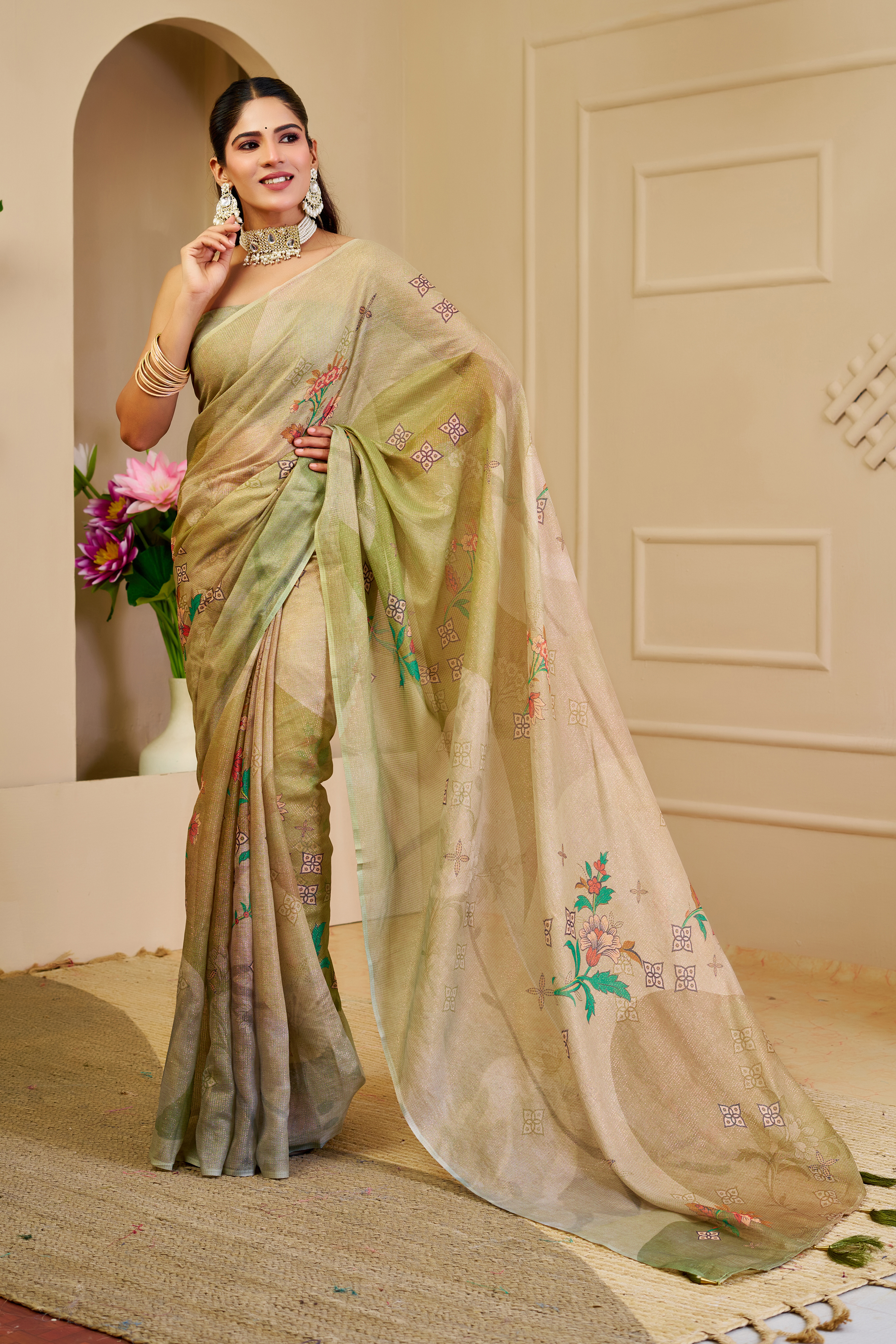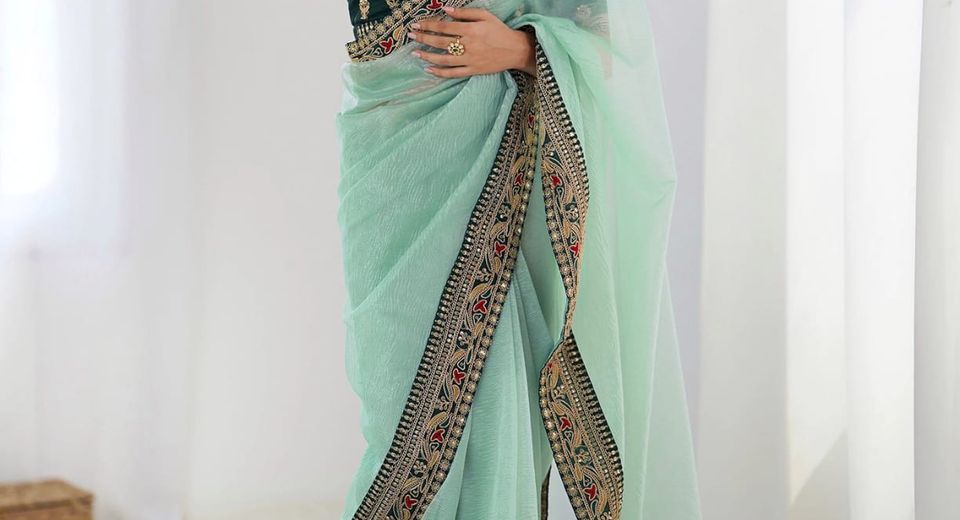
An Assamese wedding reception outfit beyond Mekhela Sador can combine regional respect with the freedom to wear a saree, Anarkali or coordinated ethnic set. A reception usually permits more experimentation than the wedding ceremony itself, but the strongest look still considers fabric, movement, colour, jewellery and venue. A polished outfit should feel festive without looking like a costume or competing with the couple.
Assamese clothing offers useful points of reference even when the final outfit isn't a traditional Mekhela Sador. Muga silk, paat silk, eri silk, gamocha-inspired borders, red accents and gold ornamentation can guide the styling. Banarasi silk, Chanderi and richly embroidered textiles also work beautifully when their shine and detailing are balanced for an evening celebration.
How should an Assamese wedding reception outfit beyond Mekhela Sador be chosen?
An appropriate Assamese wedding reception outfit beyond Mekhela Sador should match the venue, respect the celebration and allow comfortable movement for greetings, photographs and dinner. The outfit doesn't have to be a Mekhela Sador to look culturally attentive or reception-ready.
Reception dressing generally sits between ceremonial clothing and party dressing. A guest can choose a woven saree, silk-blend saree, embroidered Anarkali or kurta set, then bring in Assamese references through colour, texture or accessories. This distinction matters because a reception often includes long periods of standing, a stage or photo area and a lively dinner service.
For a hotel ballroom, heavier zari, velvet details and statement earrings can look proportionate. For a daytime or garden reception, Chanderi, lighter Banarasi silk or a breathable viscose blend is more practical. A family reception may call for more classic jewellery, while a contemporary urban venue can accommodate a structured co-ord set with Indian textiles or an embroidered dupatta.
Guests should avoid treating regional motifs as decorative shorthand without understanding their context. A simple silk saree with carefully chosen Assamese-inspired colours is often more tasteful than an overloaded outfit containing unrelated motifs, excessive jewellery and several competing borders.
Which fabrics suit an Assamese wedding reception outfit beyond Mekhela Sador?
Banarasi silk, Chanderi, muga silk, paat silk and well-finished viscose blends are strong choices for an Assamese wedding reception outfit beyond Mekhela Sador. Each fabric creates a different balance of shine, structure, weight and formality.
Why choose Banarasi silk?
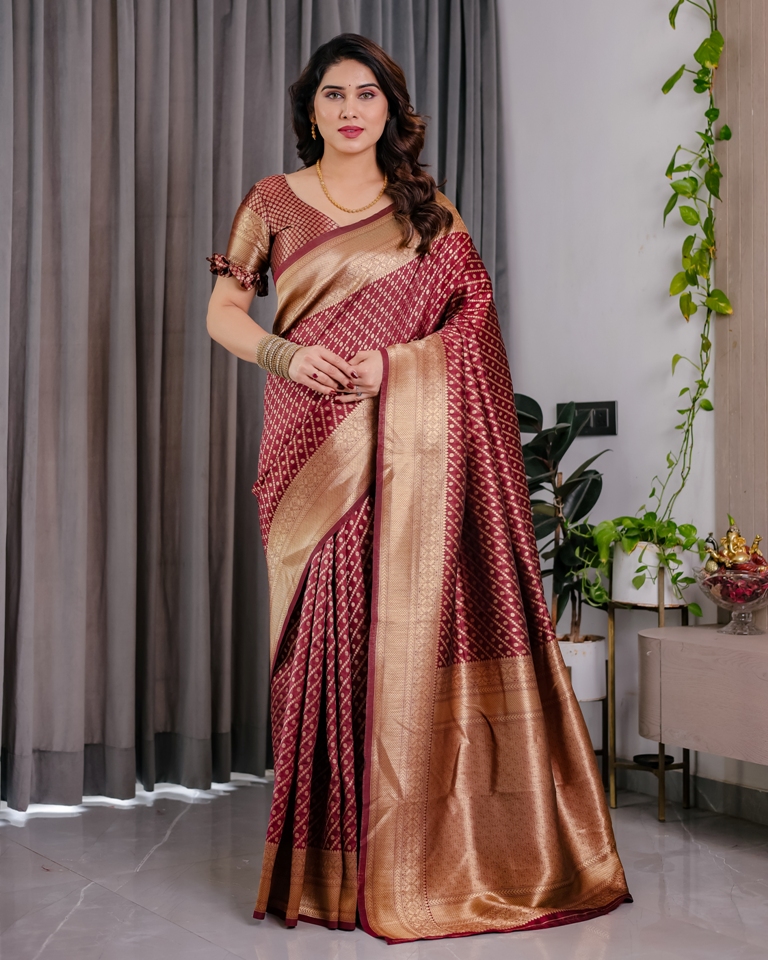
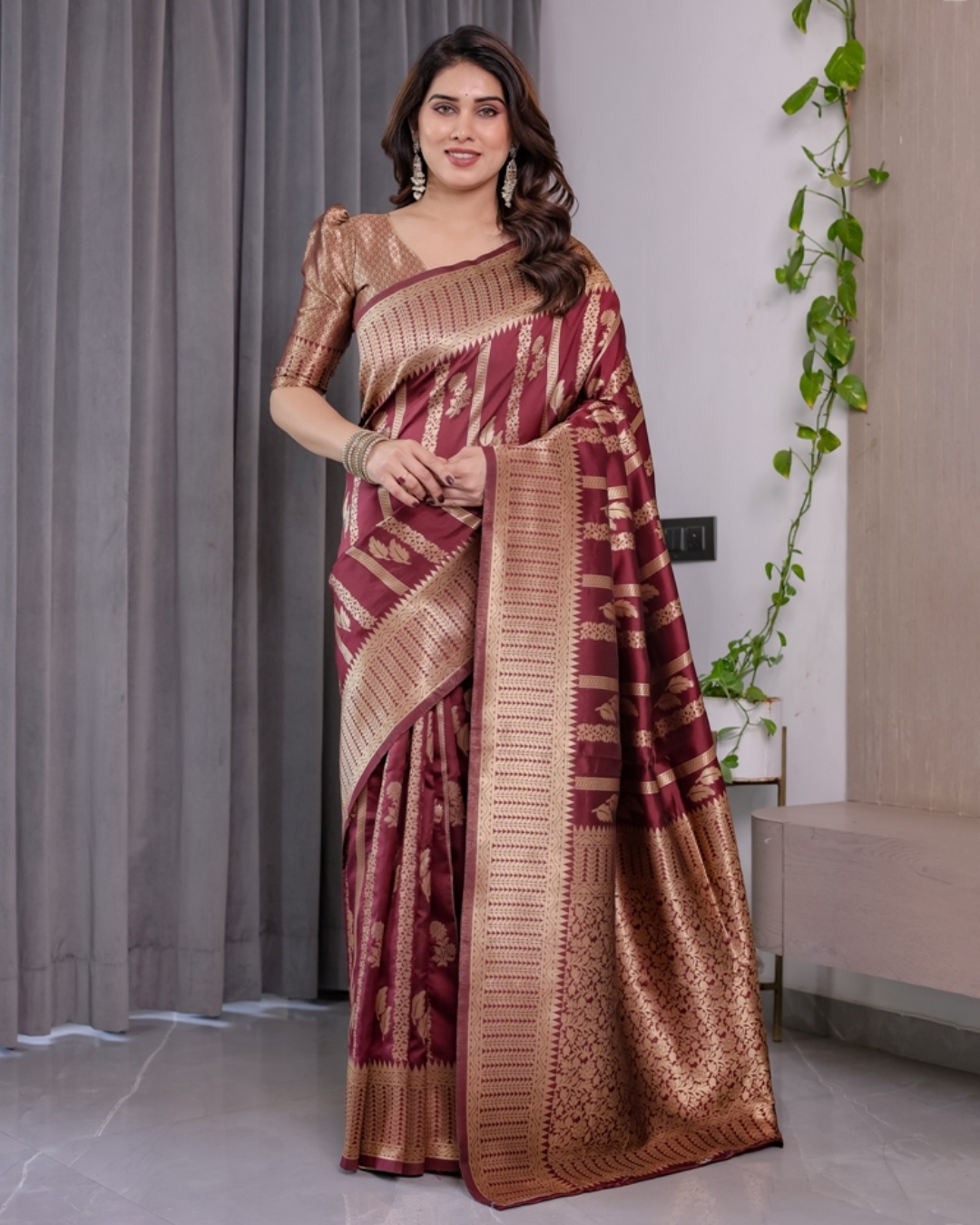
Banarasi silk brings visible zari, a firm drape and a formal evening presence. The Maroon Banarasi Soft Silk Saree With Golden Zari Border works when the reception dress code leans classic, because maroon photographs warmly under indoor lighting and golden zari creates definition without requiring a heavily embellished blouse. The Maroon Banarasi Soft Silk Saree with Golden Zari Border is another listed variation of the same visual direction, so product details should be checked carefully before choosing between similarly named versions.
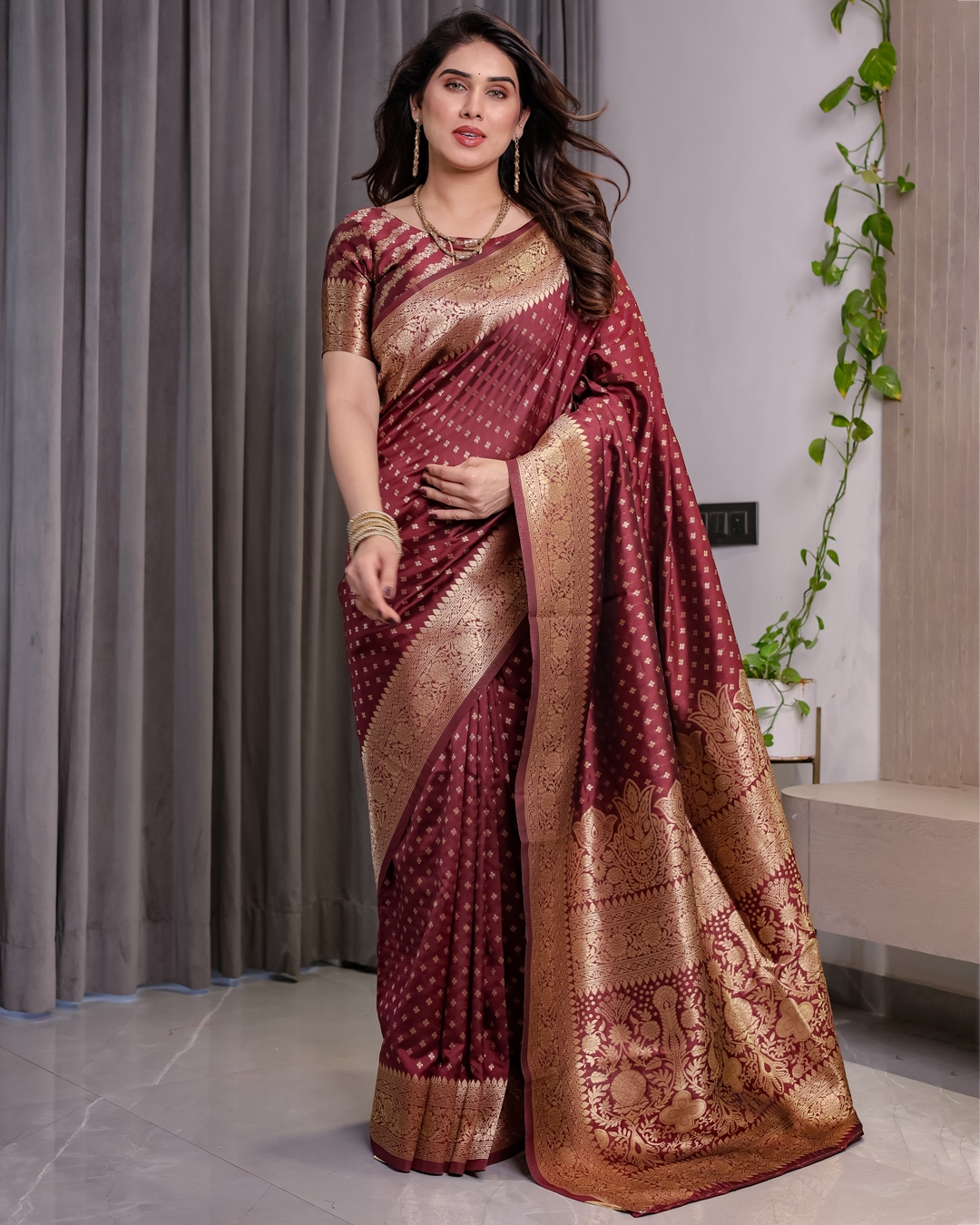
The Teal Blue Banarasi Soft Silk Saree With Golden Zari Border provides a cooler alternative to red and maroon. Teal works especially well with antique gold jewellery, kundan accents or a blouse in muted gold. The Wine Banarasi Soft Silk Saree With Golden Zari Border gives a deep, evening-friendly option for guests who want red-family warmth without choosing bright scarlet.
When do lighter textiles work better?
Chanderi brings a lighter handfeel and restrained sheen, making it useful when the reception includes travel, warm weather or extensive movement. The Maroon Viscose Chanderi Silk Embroidered Kurta Set for Women gives a more relaxed route to festive dressing than a fully draped saree, while embroidery supplies the visual richness expected at a reception.
Muga silk has a naturally warm golden tone and strong Assamese associations, although genuine muga silk can be expensive and requires careful sourcing. Paat silk has a smooth, lustrous finish and suits structured sarees or blouses. Eri silk is softer and more textured, making it better for a distinctive stole, dupatta or understated jacket than for a highly glossy party look.
How can an Assamese wedding reception outfit beyond Mekhela Sador use sarees?
A saree creates the most immediate formal impact in an Assamese wedding reception outfit beyond Mekhela Sador, particularly when the drape is neat and the accessories are restrained. A clean Nivi drape with five to seven narrow front pleats, a firmly pinned shoulder pallu and a matching petticoat gives a Banarasi saree a composed silhouette.
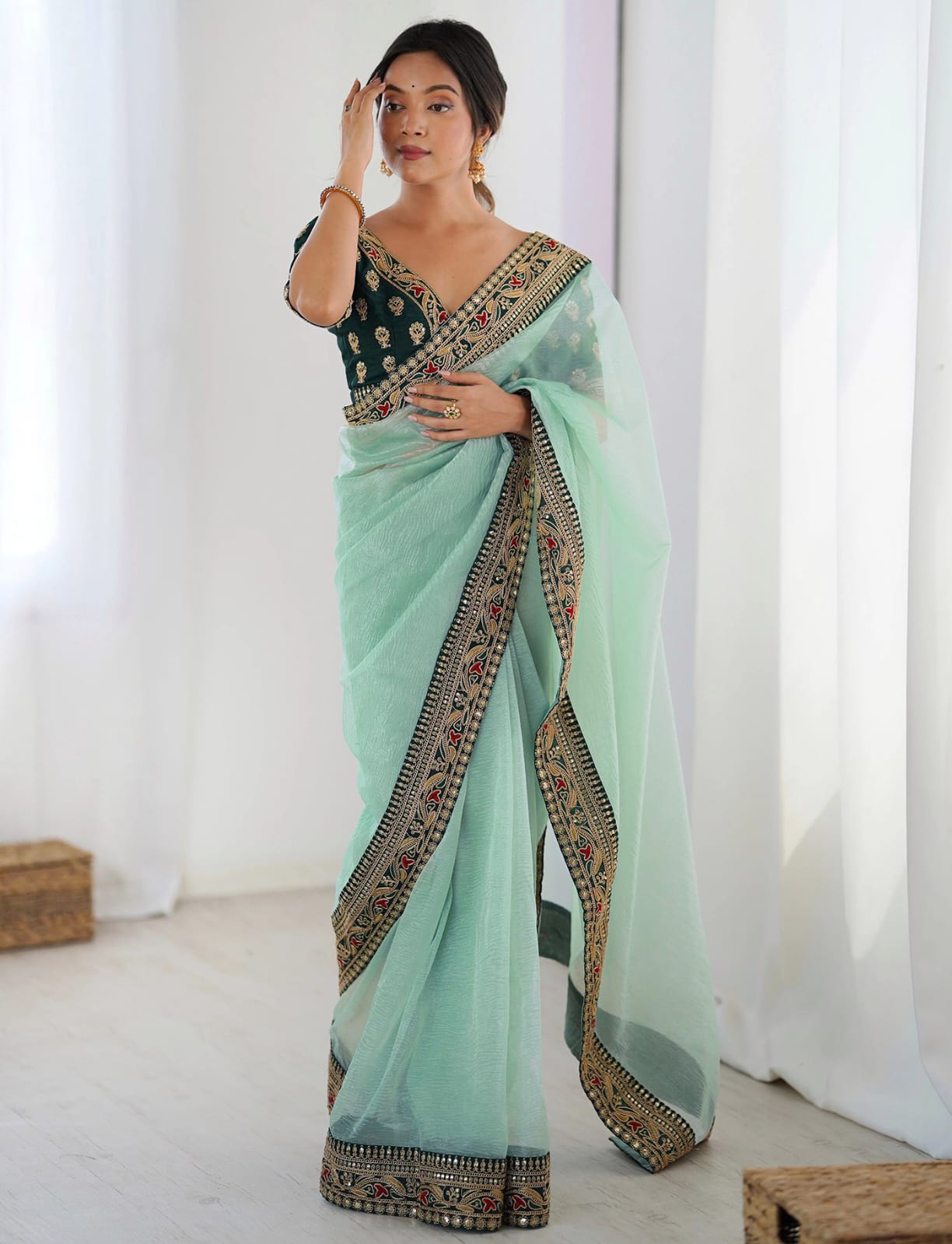
A blouse with a modest sweetheart, square or high neckline keeps the zari border central. If the saree already has a strong gold border, avoid adding a heavily sequinned blouse with a contrasting metallic finish. An elbow-length sleeve is practical for greeting guests and gives classic jewellery a stable visual frame.
The Maroon Banarasi Soft Silk Saree With Golden Zari Border pairs well with a plain maroon blouse, antique-gold blouse or blouse in muted beige. The Teal Blue Banarasi Soft Silk Saree With Golden Zari Border can be balanced with a teal, deep green or dull-gold blouse. The Maroon Banarasi Soft Silk Saree with Golden Zari Border brings the same broad styling direction for guests who prefer a deep red base.
A gamocha-inspired red-and-white detail can be introduced through a narrow scarf, hair ribbon or small woven potli rather than repeated across the entire outfit. That approach preserves the reference while allowing the saree to remain the main garment. Assamese-style earrings, a low bun and a restrained red bindi can reinforce the regional mood without requiring a complete heritage ensemble.
When are modern sets right for an Assamese wedding reception outfit beyond Mekhela Sador?
Modern sets are right for an Assamese wedding reception outfit beyond Mekhela Sador when comfort, sitting and movement matter more than a formal drape. Co-ord sets and Anarkalis are especially useful for guests who will travel, help family members, attend several functions or spend long hours on their feet.
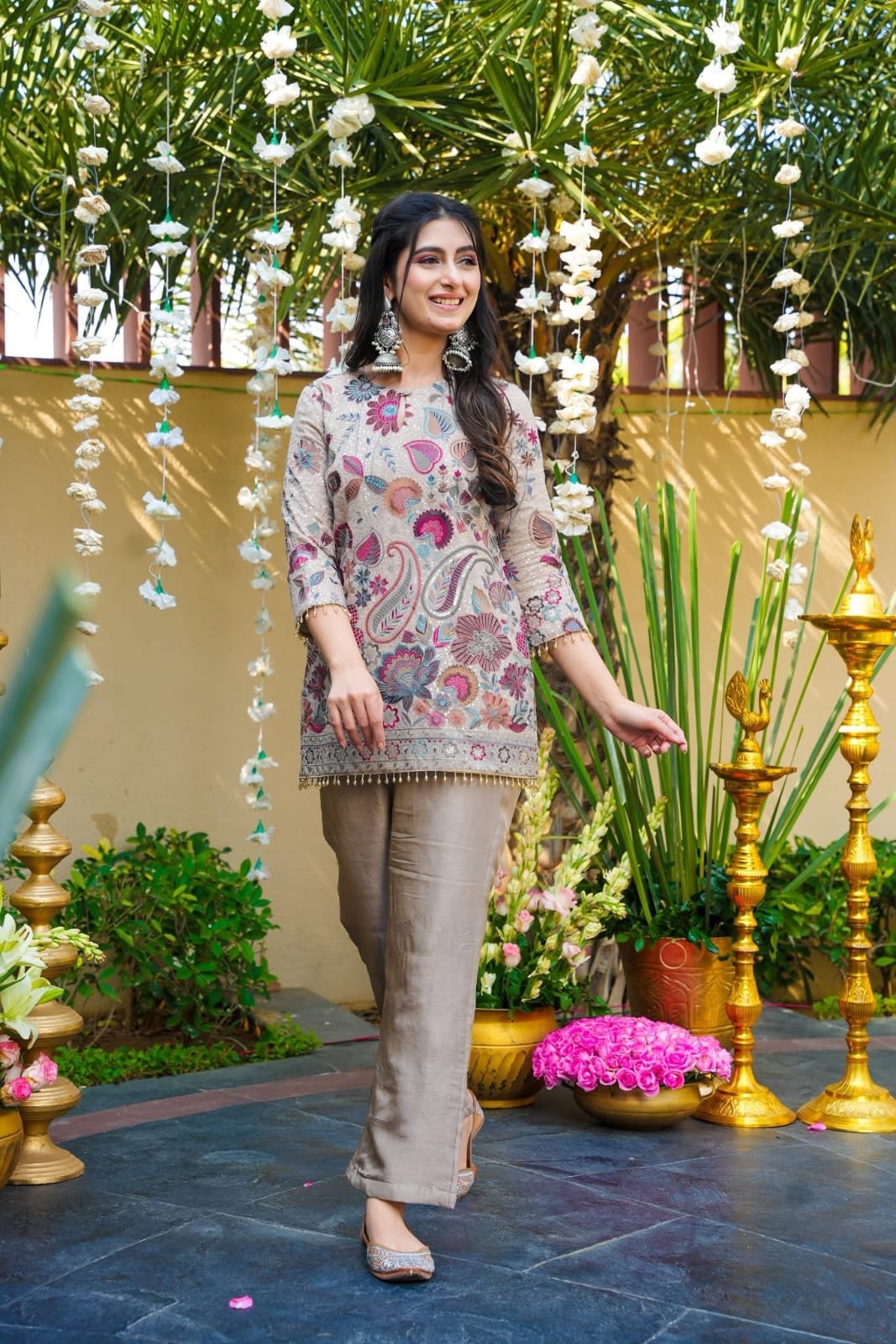
The Modern Taupe Vichitra Silk Embroidered Co-Ord Set for Women creates a contemporary silhouette through coordinated separates, while taupe gives jewellery and makeup room to add warmth. The neutral colour also works well with antique gold, pearl accents or a dupatta carrying maroon or teal detailing.
The Black Embroidered Anarkali Suit Set with Zari Work suits an evening reception with a more dramatic dress code. Black can look festive when the zari is clearly visible and the styling includes warm metallic jewellery, but a very dark outfit may photograph flat in a dim venue. Add a gold, wine or deep-red accessory, and check the hem length before the event so the Anarkali doesn't catch under the feet.
A kurta set is easiest to wear when the trousers or palazzos have enough room at the hip and knee. Measure the garment while sitting, not only while standing. A dupatta can be pinned at one shoulder and lightly secured at the opposite side with a hidden brooch, allowing the wearer to eat and move without repeatedly adjusting the fabric.
An Anarkali should be tested with the intended footwear before the event. A hem that barely clears the floor while standing can drag when the wearer climbs stairs or walks across a carpet. A two-inch block heel or embellished flat usually gives a safer balance than a very high, narrow heel.
Which colours and accessories strengthen an Assamese wedding reception outfit beyond Mekhela Sador?
Maroon, wine, teal, ivory, muted gold and deep green strengthen an Assamese wedding reception outfit beyond Mekhela Sador because they echo silk, foliage, ceremonial red and heritage metallic accents without forcing guests into one prescribed palette.
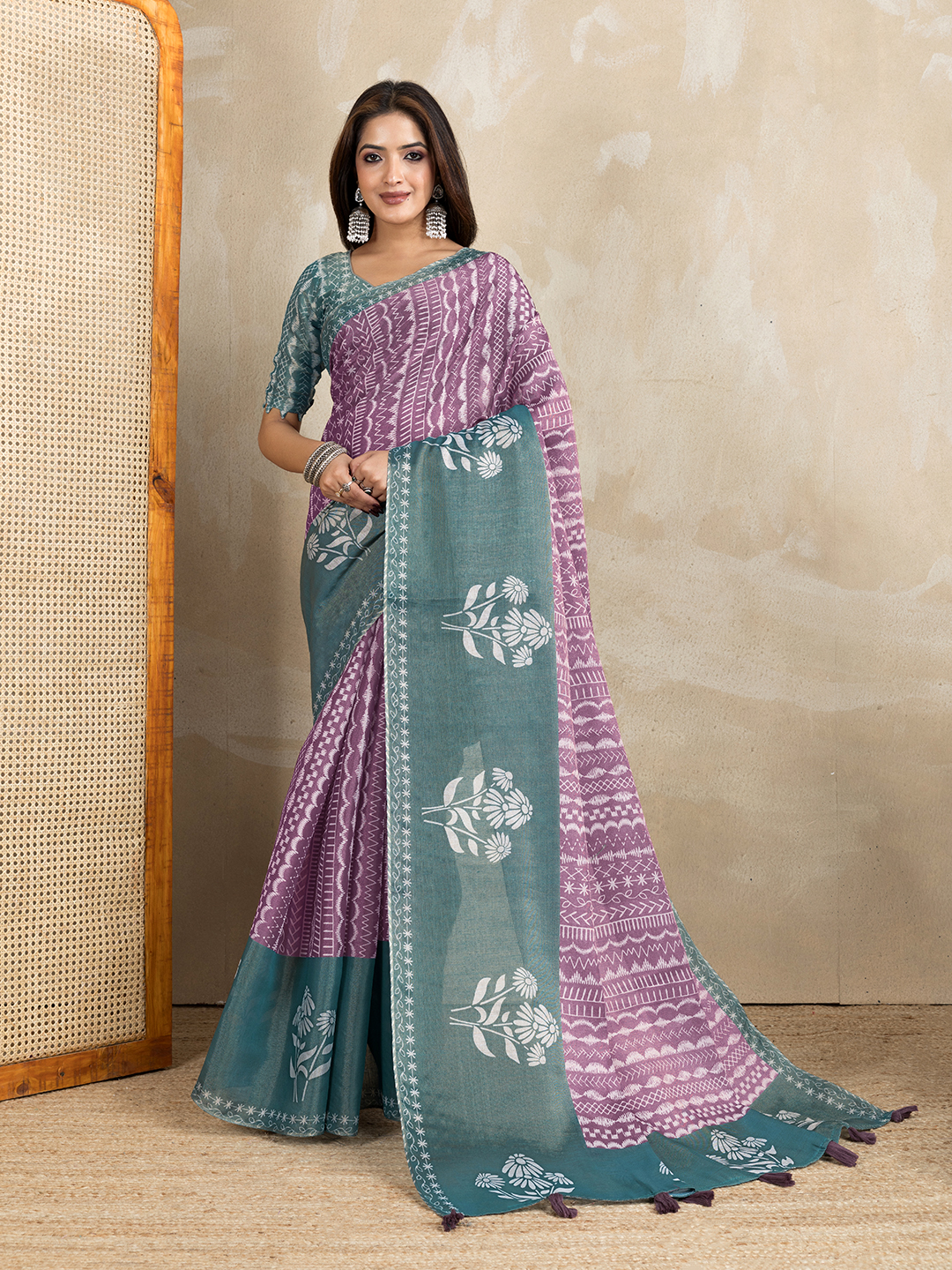
Maroon and wine are reliable for evening photography because they retain depth under warm artificial light. Teal creates a fresher contrast with gold and suits guests who prefer a jewel tone without wearing red. Taupe, black and ivory can look sophisticated, but each needs a clear festive element such as zari, embroidery, silk texture or a substantial accessory.
Jewellery should be chosen according to the neckline and border width. A broad saree border can support a longer necklace or layered gold chains, while a heavily embroidered neckline may need only earrings and bangles. Assamese jewellery often includes gold-toned pieces with distinctive forms such as gamkharu bangles, thuria earrings and pepa- or dhol-inspired motifs. Wearing one recognisable statement element is usually more effective than combining every available piece.
Gold works naturally with muga silk, maroon Banarasi silk and warm embroidery. Antique gold is often more harmonious with wine, teal and black than bright yellow gold. Silver or oxidised metal can suit a handloom-textured outfit, but the metal should relate to the zari or embroidery already present. Mixing metals is possible when one finish clearly dominates.
Footwear should have a stable sole and a heel height that can be managed for at least three hours. A two-inch block heel, embellished jutti or dressy flat is generally more practical than a narrow stiletto for venues with stairs, lawns or uneven flooring. Carry safety pins, fashion tape, a small sewing kit and blister patches in a compact pouch.
How should an Assamese wedding reception outfit beyond Mekhela Sador change with venue and weather?
Venue, weather and personal role should determine the weight, coverage and ornamentation of an Assamese wedding reception outfit beyond Mekhela Sador. A close family member may dress more richly, while a guest can choose one formal focal point and keep the remaining elements controlled.
For an air-conditioned ballroom, soft silk, Banarasi silk, velvet trims and layered jewellery are comfortable for longer periods. For a humid or warm venue, select a lighter saree, an unlined blouse where appropriate and a breathable cotton or silk-blend lining. Viscose Chanderi can provide festive texture without the concentrated weight of dense brocade.
For a reception held in Assam or another humid region, test the blouse and petticoat in advance. Tight synthetic lining can feel uncomfortable after an hour, especially under a saree with a firm waistband. A cotton lining, adjustable hooks and a well-fitted petticoat can make a bigger difference to comfort than changing the outer garment.
Outdoor receptions require a little more planning. Secure a saree pallu with two concealed pins rather than one, choose footwear that won't sink into grass and avoid extremely long dupattas near candles, buffet equipment or crowded seating. A compact shawl or embroidered jacket can help at winter evening receptions without hiding the main textile.
The Wine Banarasi Soft Silk Saree With Golden Zari Border suits a formal evening setting, while the Maroon Viscose Chanderi Silk Embroidered Kurta Set for Women can be more practical for a daytime gathering or a reception involving significant travel. The final choice should reflect the actual conditions rather than only the colour seen in an online photograph.
How can you prepare and care for an Assamese wedding reception outfit beyond Mekhela Sador?
An Assamese wedding reception outfit beyond Mekhela Sador should be prepared at least two days before the event and stored carefully after use. Early preparation reveals blouse-fitting, hemming, drape and footwear problems while there's still time to correct them.
Try the complete outfit with jewellery and shoes 48 hours before the reception. Sit, walk up a few steps, raise both arms and carry a small bag. These checks reveal whether a blouse pulls, a dupatta slips, a saree catches on the heel or a bangle interferes with movement. Photograph the final combination in both indoor and natural light.
Silk garments should be folded with soft, plain cotton or muslin between layers rather than stored tightly against plastic. Zari should be kept away from direct moisture, perfume and damp wardrobes. Air the garment after wearing it, then follow the care label; many Banarasi silk and embroidered garments are safest with professional dry cleaning rather than home washing.
don't iron zari directly at high heat. Place a thin cotton cloth over the garment, use low heat and test an inside seam first. Steam can relax creases, but excessive moisture may affect metallic thread, adhesive embellishment or colour transfer. Store heavy sarees flat or on a broad hanger so the folds don't develop sharp stress lines.
A considered reception look doesn't require abandoning Assamese identity or copying ceremonial dress exactly. Fabric choice, colour, jewellery and respectful restraint can create a polished outfit that feels personal, comfortable and appropriate for the celebration.
Common Questions About Assamese Wedding Reception Dressing Beyond Mekhela Sador
Can I wear a saree instead of a Mekhela Sador to an Assamese wedding reception?
Yes, a saree is an appropriate choice for many Assamese wedding receptions, especially when the invitation does not specify traditional dress. Banarasi silk, paat silk, muga silk and Chanderi can create a formal look, while Assamese-inspired colours or jewellery add a thoughtful regional connection.
Which colour is best for an Assamese wedding reception outfit?
Maroon, wine, teal, deep green, ivory and muted gold are versatile reception colours. Maroon and wine suit warm evening lighting, while teal offers a cooler alternative that pairs well with antique gold jewellery.
Is Banarasi silk suitable for a wedding reception in Assam?
Banarasi silk is suitable for a reception when the venue and weather allow a heavier, more structured fabric. In humid conditions, choose a lighter silk or silk blend, use breathable blouse lining and avoid excessive layering.
What jewellery goes with a modern Assamese reception outfit?
Gold-toned Assamese jewellery, gamkharu bangles, thuria earrings and antique-gold pieces work well with modern reception outfits. Choose one statement element if the saree or set already has zari or heavy embroidery.
Are Anarkali and kurta sets acceptable for an Assamese wedding reception?
Anarkali and kurta sets are acceptable when the reception dress code is festive or semi-formal and the garments include silk texture, embroidery, zari or another occasion detail. These silhouettes are particularly practical for guests who need to travel, sit comfortably or move around during the event.
How can I keep a silk reception outfit comfortable for several hours?
Wear the complete outfit with shoes and jewellery before the event, choose breathable lining and secure the saree or dupatta with concealed pins. A stable two-inch block heel, cotton underlayers and a small emergency kit can prevent common comfort problems.