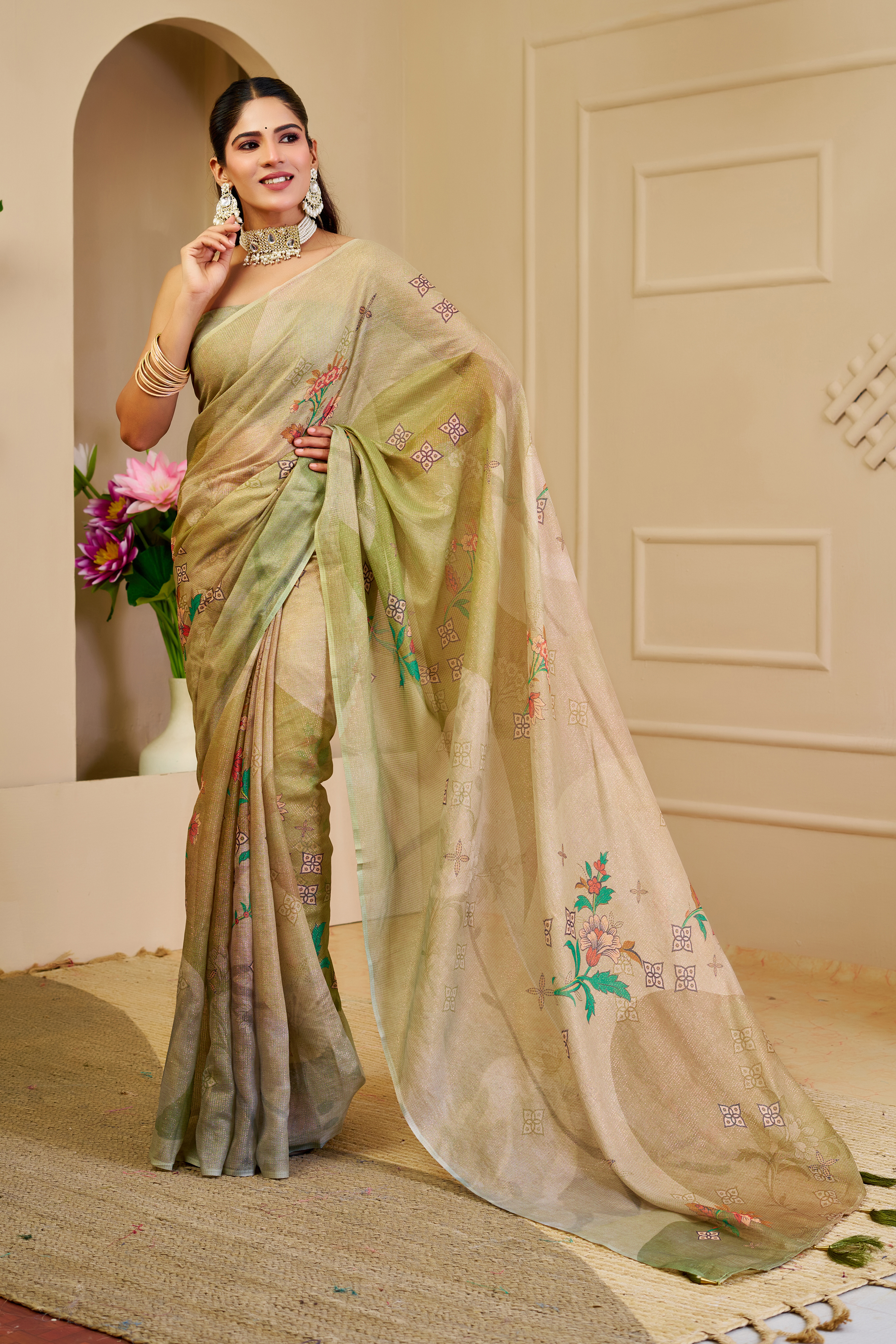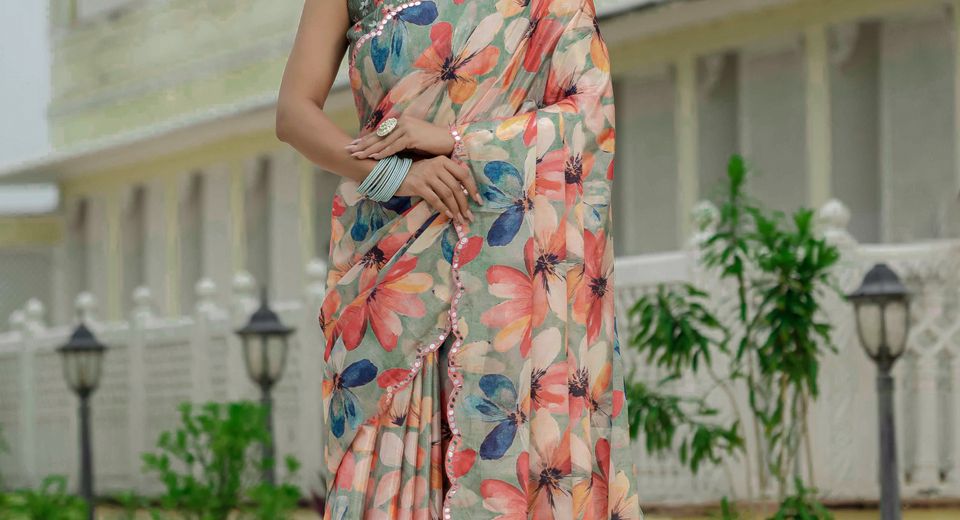
A Wedding Outfit That Packs Flat for a Train Journey needs the right fabric, a controlled fold and enough protection from pressure. A voluminous lehenga may look impressive on a hanger but become difficult to carry through a station, store under a berth or retrieve from an overhead rack. A structured silk kurta set, georgette suit or lightly embellished sharara can travel more reliably when the packing method matches the garment.
Train travel adds particular challenges to wedding dressing. Luggage may be moved several times, a suitcase may remain on its side for hours, and humidity inside a coach can affect tissue, silk and metallic embroidery. The practical goal isn't to eliminate every crease. The practical goal is to prevent deep compression marks, broken embellishments, colour transfer and moisture damage while keeping the outfit compact enough to manage alone.
How should A Wedding Outfit That Packs Flat for a Train Journey be chosen?
A wedding outfit suitable for train travel has a flexible silhouette, a fabric that tolerates careful folding and decoration placed away from high-pressure fold lines. Outfits made from georgette, crepe, chinon silk, lightweight cotton blends and many soft synthetics generally occupy less space than heavily layered velvet or stiff brocade garments.
Garment weight matters as much as packed volume. A 1.5-kilogram lehenga can consume less room than a bulky but lighter outfit if its can-can layers resist compression. Check whether the skirt contains multiple stiff linings, whether the blouse has hard cups or dense embroidery, and whether the dupatta has sequins that can snag surrounding clothes.
- Prefer adaptable silhouettes: straight kurta sets, palazzo suits, sharara suits, soft lehengas and gowns usually fold more efficiently than rigid bridal skirts.
- Check the surface: flat embroidery and woven motifs are easier to protect than raised stones, tassels and three-dimensional flowers.
- Assess the lining: slippery polyester or satin lining can crease sharply, while soft georgette and crepe often settle more naturally after unpacking.
- Limit separate pieces: a coordinated kurta, bottom and dupatta require less searching than a multi-layered look with a separate belt, jacket, can-can and shoulder drape.
Colour also deserves attention. Dark maroon, red and green garments can transfer dye when damp or pressed against pale dupattas. Pack a new or strongly dyed garment inside a clean cotton cover and keep it separate from cream, blush or ivory clothing.
Which fabrics suit A Wedding Outfit That Packs Flat for a Train Journey?
Georgette, crepe and chinon silk usually fold into a flatter package than stiff brocade, velvet or heavily layered net. Fabric choice doesn't guarantee a crease-free arrival, but it strongly influences how much pressure a garment can tolerate.
Georgette and crepe for low-bulk packing
Georgette has a fluid fall, moderate resilience and a relatively low packed volume, making it useful for wedding guest travel. Crepe also drapes smoothly and often hides minor handling marks because its pebbled surface doesn't show every fine fold. Pastel Floral Georgette Lehenga Set with Ruffle Blouse illustrates why a soft lehenga can be more practical than a heavily structured one: the skirt can be folded in broad layers rather than crushed into a narrow roll.
Crepe suits and maxi silhouettes are particularly useful when a traveller wants a festive appearance without carrying a separate petticoat or bulky underskirt. Multicolor Embroidered Crepe Maxi Suit Set for Festive Wear can be folded lengthwise, placed between tissue sheets and packed near the top of a suitcase.
Silk and woven fabrics require gentler folds
Silk should be folded with clean, soft tissue and kept away from direct moisture because prolonged dampness can encourage water marks and dye migration. Banarasi silk and Kanjeevaram are valuable examples of fabrics that deserve extra care, although their dense woven structure can also create a heavier, less compact travel bundle than georgette.
Chinon silk has a fluid hand and can pack relatively neatly, but embroidery and metallic thread still need a protective barrier. Brown Chinon Silk Sharara Suit Set for Women should be folded with the sharara legs aligned, rather than bundled randomly, so the creases follow the existing trouser seams.
Organza and net need surface protection
Organza and net should be packed with tissue because their crisp surfaces can develop visible pressure marks and their edges can catch on zari, hooks or sequins. Red Floral Organza Lehenga Set with One Shoulder Blouse benefits from a wide, shallow fold and a separate blouse layer instead of being compressed into a small cube.
Zari, sequins and stones can snag fabric during travel even when the garment itself is crease resistant. Turn embellished pieces inside out only when the lining is smooth and the decoration won't press against a zip or hook; otherwise place a clean tissue sheet over the decorated surface before folding.
What folding method protects A Wedding Outfit That Packs Flat for a Train Journey?
The safest folding method is to create broad, soft layers with tissue between embellished surfaces and avoid placing a sharp fold through a blouse neckline or dense embroidery. A flat fold usually protects wedding wear better than a tight roll when the garment has zari, stones or structured seams.
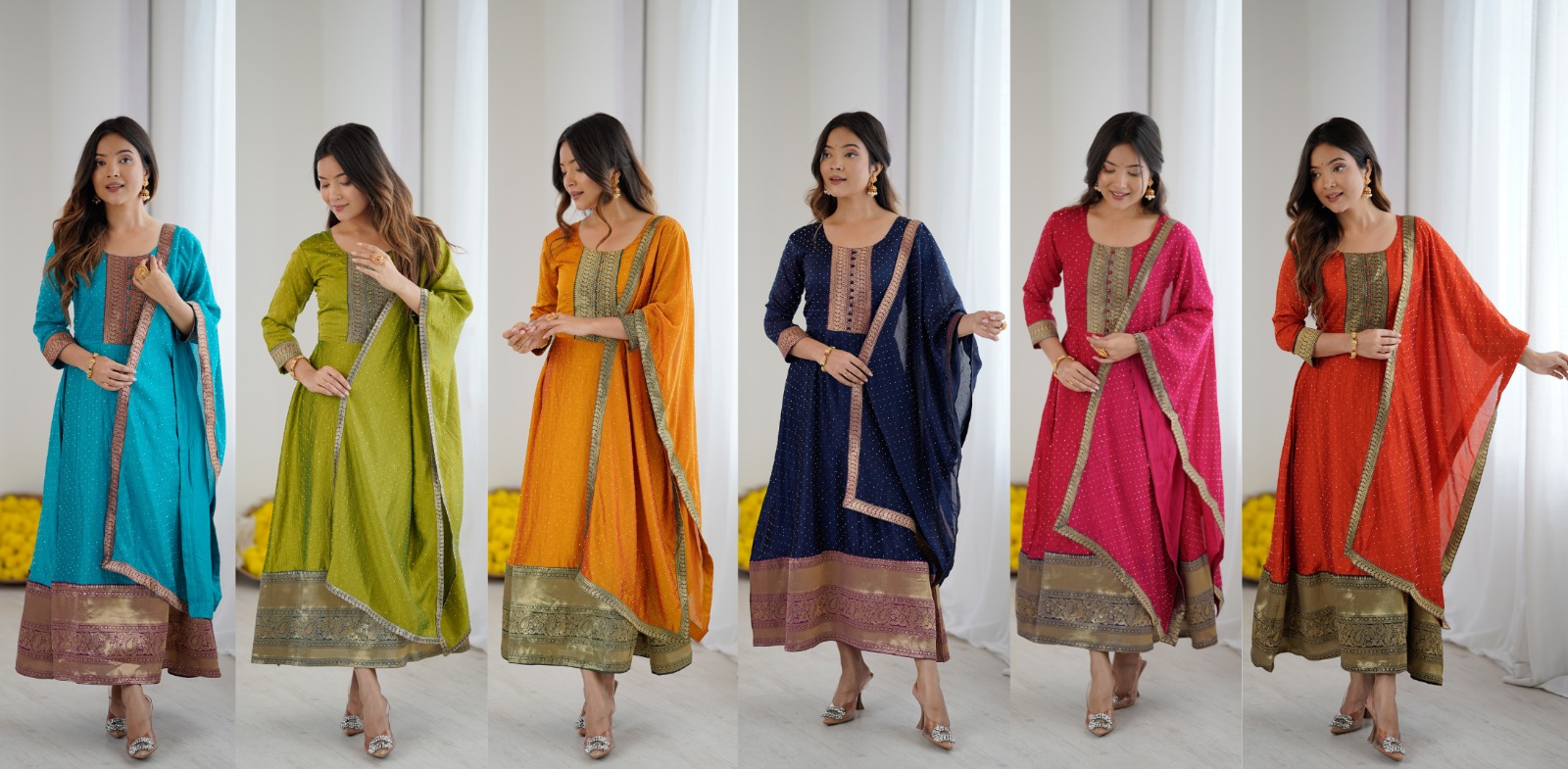
- Inspect and air the garments: make sure every piece is completely dry, odour-free and free of makeup, food or loose pins before packing.
- Close vulnerable fastenings: zip up skirts and blouses, fasten hooks, and tie removable cords so they can't snag the fabric.
- Place a tissue barrier: lay acid-free tissue or clean, unprinted white cotton over embroidery, especially zari, mirror work and sequins.
- Fold along construction lines: align side seams, trouser creases and skirt panels instead of creating random diagonal folds.
- Build a shallow rectangle: fold long garments into thirds or quarters, keeping the final bundle broad enough that no single fold bears all the pressure.
- Keep accessories separate: store jewellery, belts, brooches and hair accessories in a small pouch rather than inside the folded garment.
Dupattas need their own method. Fold a dupatta lengthwise first, then fold it across into a soft rectangle with tissue on both sides if it carries zari, sequins or a heavy border. A narrow roll can work for an unembellished chiffon dupatta, but rolling a stiff border may create persistent waves.
Blouses should not be stuffed inside a lehenga cup or pressed beneath shoes. Place a small amount of clean tissue inside the bust area to maintain its shape, then lay the blouse flat with the neckline facing upward. Hard moulded cups, hooks and dense embroidery can leave pressure impressions on a skirt or dupatta when packed together.
Which packing layers preserve A Wedding Outfit That Packs Flat for a Train Journey?
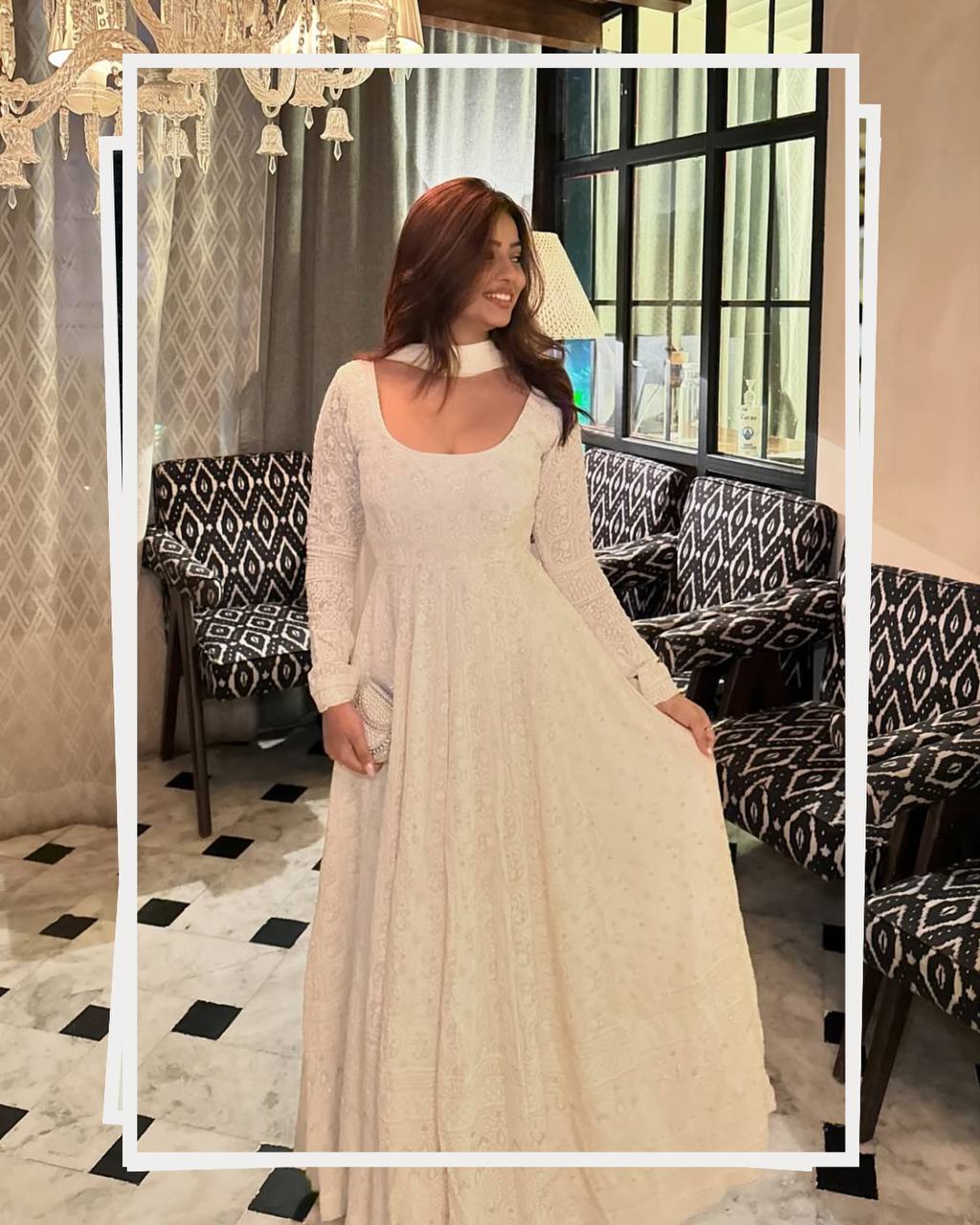
A breathable cotton cover, acid-free tissue, a waterproof outer pouch and one flat garment folder provide better protection than a single plastic bag. Each layer serves a different purpose, and sealing every layer in airtight plastic can trap humidity around silk, zari and lining fabric.
- Inner layer: use acid-free tissue or clean white muslin directly around the garment.
- Middle layer: place the folded outfit inside a cotton garment bag or breathable zip pouch.
- Moisture barrier: use a waterproof suitcase compartment or outer pouch, but don't seal a damp garment inside it.
- Shape support: add a flat, lightweight folder or a folded cotton towel around the bundle to prevent sharp compression.
- Identification: label the pouch with the outfit name and piece count, such as "kurta, pants, dupatta, earrings."
Plastic dry-cleaning covers are useful for short-term dust protection but are poor long-term storage because they restrict airflow. Remove the thin plastic cover before placing the garment in a breathable travel pouch. A reusable packing cube with a flat base is usually easier to handle on a train than a deep, overfilled garment bag.
Footwear should never share an unprotected compartment with wedding clothing. Even clean soles can transfer dust and odour, while decorative footwear can catch delicate fabric. Pack shoes in a separate cloth or shoe bag and place them beside, rather than on top of, the garment bundle.
How can A Wedding Outfit That Packs Flat for a Train Journey work across outfit types?
Each outfit type needs a slightly different packing arrangement because skirts, trousers, sleeves and dupattas create different pressure points. A good arrangement keeps the heaviest decorated piece near the centre of the suitcase and leaves the least-crushable layer on top.
Salwar suits, kurta sets and palazzo suits
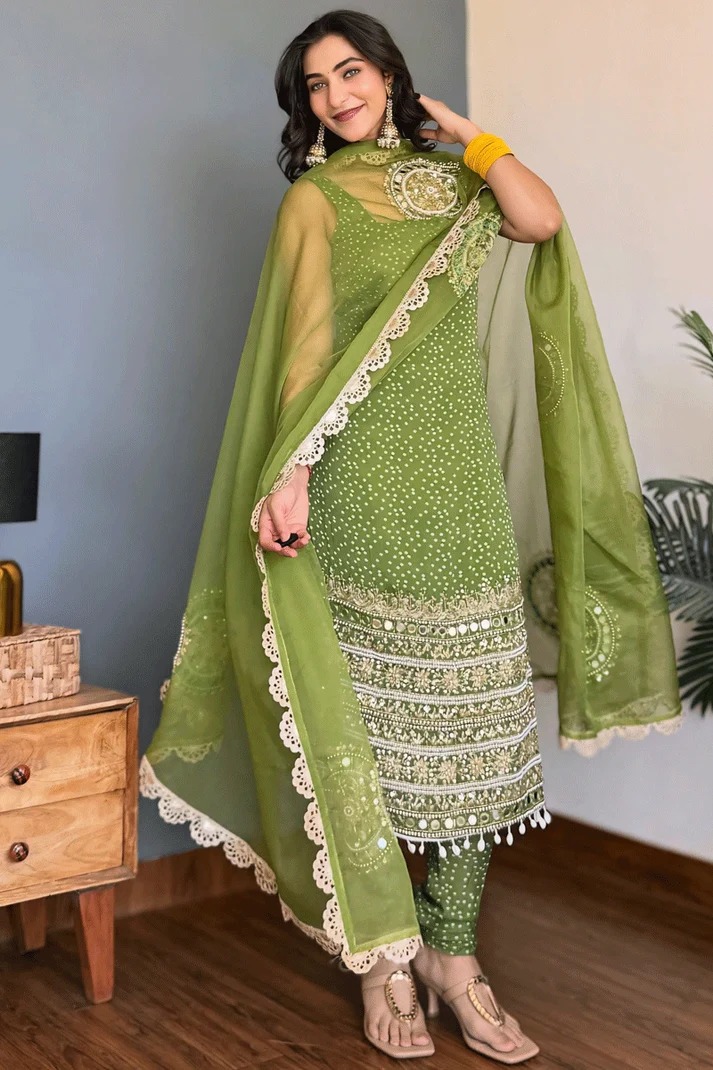
Salwar suits and kurta sets are among the easiest wedding outfits to pack flat because the kurta, bottom and dupatta can form three separate low-profile layers. Fold the kurta along the side seams, align palazzo legs or salwar pleats, and place the dupatta on top with tissue around its border.
Sea Green Embroidered Silk Kurta Set with Dupatta suits a compact travel plan when the kurta and bottom are folded separately rather than placed inside the dupatta. Green Georgette Embroidered Kurta Pant Dupatta Set is similarly practical for a guest who needs festive detailing without a wide skirt or bulky underskirt.
Lehengas and shararas
Lehengas should be folded panel by panel with the waistband protected, while shararas should be folded along the central seams of both legs. Do not compress a lehenga into a small cube if the skirt has can-can, stiff net or dense zari. Spread the skirt flat, fold the sides inward, and place tissue between the waistband and the embroidered hem.
Maroon Wedding Wear Embroidered Palazzo Suit Set can provide a wedding-ready alternative when a lehenga would occupy too much luggage space. A palazzo suit folds as two long trouser panels and one kurta layer, making the garment easier to retrieve without disturbing the rest of the suitcase.
Gowns and one-piece silhouettes
A gown should be folded from the hem upward in wide sections, with the bodice supported by tissue and the sleeves laid inward. Avoid putting a hard accessory or shoe beside the waist because pressure at that point can create a visible horizontal mark.
Vichitra Jacquard Woven Gown Dupatta Set should be packed with the gown and dupatta separated by tissue rather than tightly nested. The dupatta can sit on top of the gown if its woven surface is protected and its border isn't folded directly over a raised motif.
How should A Wedding Outfit That Packs Flat for a Train Journey be unpacked?
Unpack the garment as soon as practical, hang it in a shaded, ventilated room and allow 12 to 24 hours for minor folds to relax naturally. Immediate heat or aggressive ironing can set marks, flatten embroidery and damage synthetic fibres.
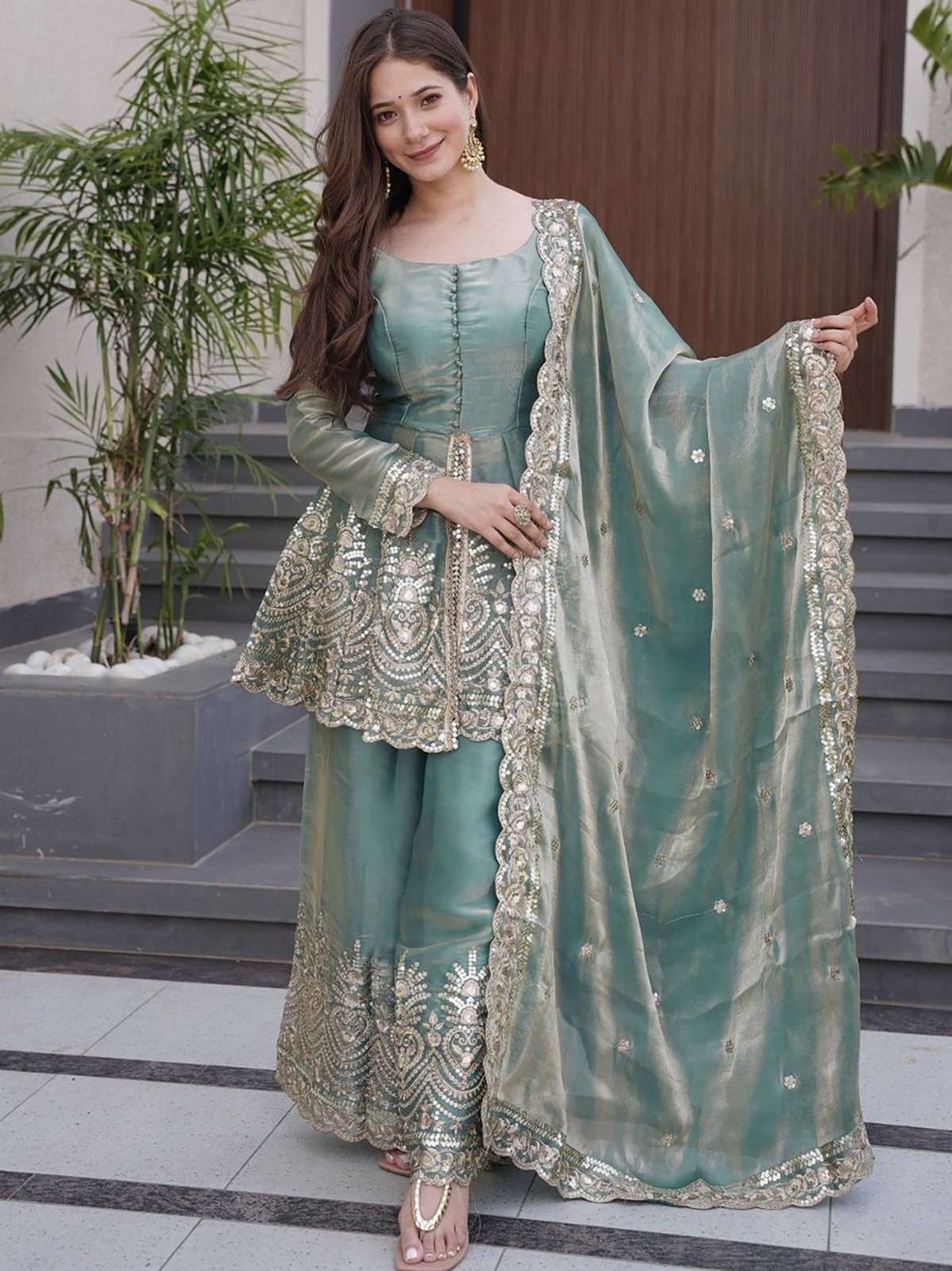
Remove the outfit from its travel pouch and inspect the hem, seams, closures and embellished areas before wearing it. Hang a kurta, gown or lehenga from a broad padded hanger. Support a heavy skirt with a hanger that has a strong clip, but place tissue between the clip and the waistband if the fabric is delicate.
Steam is usually safer than direct ironing for georgette, crepe and many synthetic blends, provided the steamer remains several centimetres away from zari, sequins and glued stones. Banarasi silk, Kanjeevaram, organza and heavily embellished garments should be tested on an inconspicuous area or handled by a professional cleaner before steaming.
If a train journey leaves a sharp crease in silk, don't spray water directly onto the mark. Direct water can create rings, uneven colour or tide marks. Hang the garment first, use gentle ambient humidity, and consult a specialist if the crease remains.
Keep wedding clothing away from direct sunlight during the recovery period. Strong sunlight can affect dyes, especially on red, maroon and dark green garments, while heat near a window can make synthetic lining and adhesive embellishments more vulnerable.
What is the final checklist for A Wedding Outfit That Packs Flat for a Train Journey?
The final checklist is simple: choose a low-bulk silhouette, protect decoration, separate accessories and unpack promptly. These four actions prevent most travel-related problems without requiring a large garment trunk.
- Confirm that every garment is dry and clean before packing.
- Check the outfit's total weight and whether the suitcase can close without force.
- Use acid-free tissue or clean white cotton around zari, sequins and raised embroidery.
- Fold along seams and panels instead of creating narrow, random creases.
- Keep footwear, jewellery and sharp accessories in separate pouches.
- Place the wedding outfit near the top of the suitcase, not under books or toiletry bottles.
- Carry a small emergency kit containing safety pins, a needle, matching thread, stain-removal wipes and a spare blouse hook.
- Unpack within a few hours of reaching the destination whenever possible.
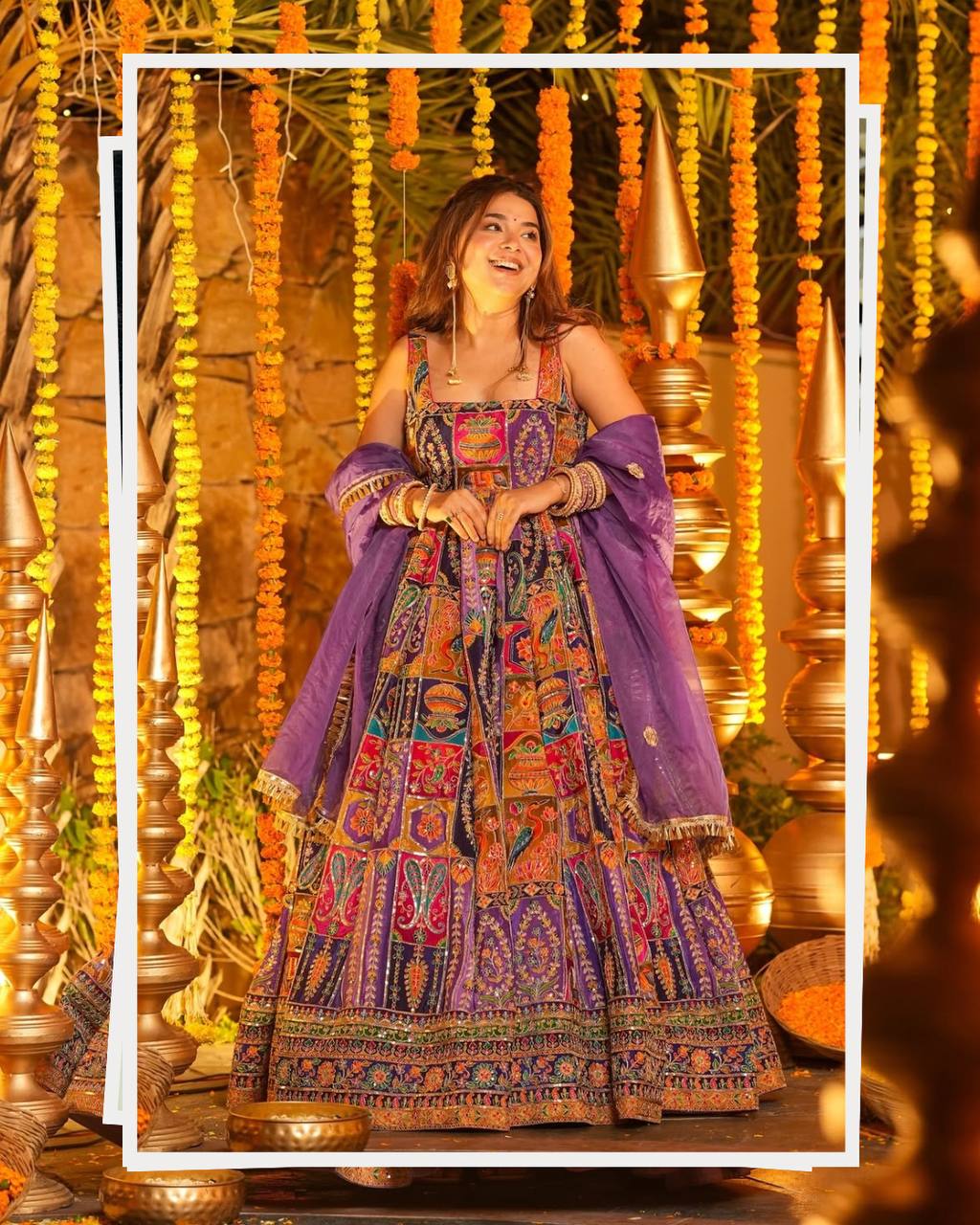
For a short wedding trip, a georgette kurta set, crepe maxi suit, palazzo outfit or soft sharara often offers the best balance between celebration dressing and manageable luggage. A heavily embellished lehenga can still travel by train, but the garment needs broader folds, more surface protection and a suitcase with enough depth to avoid compression.
Common Questions About Packing a Wedding Outfit Flat for Train Travel
What is the best fabric for a wedding outfit on a train journey?
Georgette, crepe and lightweight chinon silk are usually the easiest fabrics to fold and carry in a suitcase. Heavily layered velvet, stiff brocade and dense net need more space and are more likely to develop pressure marks.
How do I pack a lehenga without crushing it?
Fold the lehenga in broad panel-by-panel layers with acid-free tissue over the embroidery, rather than forcing it into a tight cube. Keep the waistband supported, place the skirt near the top of the suitcase and avoid stacking shoes or heavy items on it.
Can I roll a dupatta for train travel?
You can roll an unembellished chiffon or lightweight georgette dupatta loosely. A zari, sequin or heavily bordered dupatta should be folded into a soft rectangle because tight rolling can create waves along the border.
Should wedding clothes be packed in plastic?
Wedding clothes should not remain sealed in airtight plastic because trapped humidity can affect silk, zari and lining fabric. Use tissue and a breathable cotton garment bag, with a waterproof outer pouch only as temporary protection against spills.
How soon should I unpack my wedding outfit after travelling?
Unpack the outfit as soon as practical and hang it in a shaded, ventilated room for 12 to 24 hours. Gentle hanging often relaxes minor folds, while direct ironing or water spraying can make marks and damage embellishments.
Is a palazzo suit easier to carry than a lehenga for a wedding?
A palazzo suit is usually easier to carry because its kurta, trousers and dupatta form flatter, separate layers. A lehenga becomes more travel friendly when it has a soft skirt, limited can-can and embroidery that does not require bulky structural support.