A Sangeet Guest Outfit for Someone Who Does Not Dance can be festive, photogenic and easy to wear for four or five hours. The right choice gives you enough movement for greeting relatives, sitting through performances, eating comfortably and posing for photographs without requiring sequins, a short hemline or a choreographed entrance.
The most useful starting point is not the dance floor but the event schedule. A typical Sangeet may include standing at the venue entrance, moving between seating and buffet areas, watching performances, joining group photographs and travelling home late. A saree with a secure drape, a lightweight co-ord set or a breathable cotton-silk blend usually works better than a heavily embellished outfit that needs constant adjustment.
A Sangeet Guest Outfit for Someone Who Does Not Dance: what should you wear?
A non-dancer should wear a festive outfit with stable construction, breathable fabric and enough room at the waist, shoulders and hips. Sarees, pre-draped sarees, relaxed sharara sets and embroidered co-ord sets all work when the outfit supports sitting, walking and eating as easily as standing for photographs.
Festive dressing does not have to mean maximum sparkle. A strong colour, a woven border, a visible pallu, statement earrings or one carefully placed sequin detail can make an outfit look appropriate for a Sangeet. A guest who prefers not to dance can use texture and colour to create occasion value without wearing a stage-style costume.
A saree is a particularly flexible choice because the blouse, drape and jewellery can control the level of formality. A simple saree can look daytime-appropriate with a sleeveless blouse and small earrings, then become evening-ready with a structured blouse, metallic clutch and bolder jewellery. A co-ord set offers similar versatility with less wrapping and fewer pins.
The Sangeet Collection is a useful starting point when the invitation calls for Indian festive wear but does not specify heavy embroidery. A second look at the Sangeet Collection can help compare relaxed cotton sarees, dressier georgette and coordinated separates before choosing based on venue and duration.
A Sangeet Guest Outfit for Someone Who Does Not Dance: which saree fabric is easiest?
A comfortable Sangeet saree should weigh little enough for extended wear, have a manageable pallu and use a blouse that does not restrict the upper arms. Linen cotton, Chanderi cotton, mal cotton and lightweight georgette are useful choices because they balance airflow, drape and visual interest.

Choose the fabric around the venue
Indoor banquet halls with strong air-conditioning can accommodate georgette, silk blends or a lined blouse, while outdoor lawns and terrace venues usually favour linen cotton, cotton and mal cotton. Linen cotton has a crisp surface and good breathability, although natural creasing is part of its character. Chanderi cotton feels light and sheer, so a well-fitted lining or slip becomes important.
Georgette falls close to the body and photographs gracefully, but a slippery pallu needs a few concealed safety pins. Mal cotton has a soft, airy hand and a relaxed fall that suits guests who want to sit and move without feeling overdressed. Vichitra silk has more body than georgette and can give a two-piece outfit a polished shape.
Use the border and pallu as the festive detail
A bold border or patterned pallu can provide enough visual decoration without a heavily worked blouse. Beige Floral Printed Linen Cotton Saree with Blue Border demonstrates how a restrained floral print and contrasting blue edge can look festive with a cobalt blouse, silver jhumkas and a neat low bun.
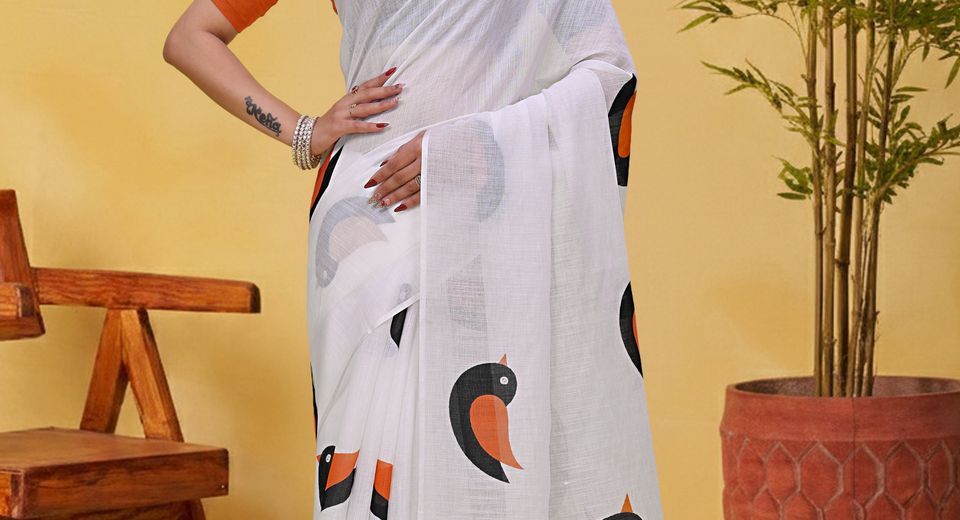
White Linen Cotton Saree with Bird Motifs and Orange Border offers a lighter interpretation for a daytime Sangeet or a venue with strong natural light. Orange glass bangles, a rust blouse and a small gold potli can connect the border to the accessories without making every element match exactly.
Black Chanderi Cotton Saree with Contemporary Checked Weave creates interest through structure rather than glitter. A jewel-toned blouse in emerald, magenta or sapphire can bring the outfit into evening territory, while a narrow belt at the waist can help keep the pleats aligned during photographs.
A Sangeet Guest Outfit for Someone Who Does Not Dance: which colours and prints work?
Jewel tones, saturated pastels and high-contrast borders look festive without requiring head-to-toe embellishment. Emerald, cobalt, fuchsia, marigold, wine, teal and deep plum photograph well under warm venue lighting and remain easy to repeat with different accessories.

Print scale matters when the outfit is being photographed from a distance. Medium floral motifs remain visible in group photographs, while very tiny prints can disappear under dim lighting. A checked weave, bird motif or woven pallu creates detail that the camera can register without the reflective glare of dense sequins.
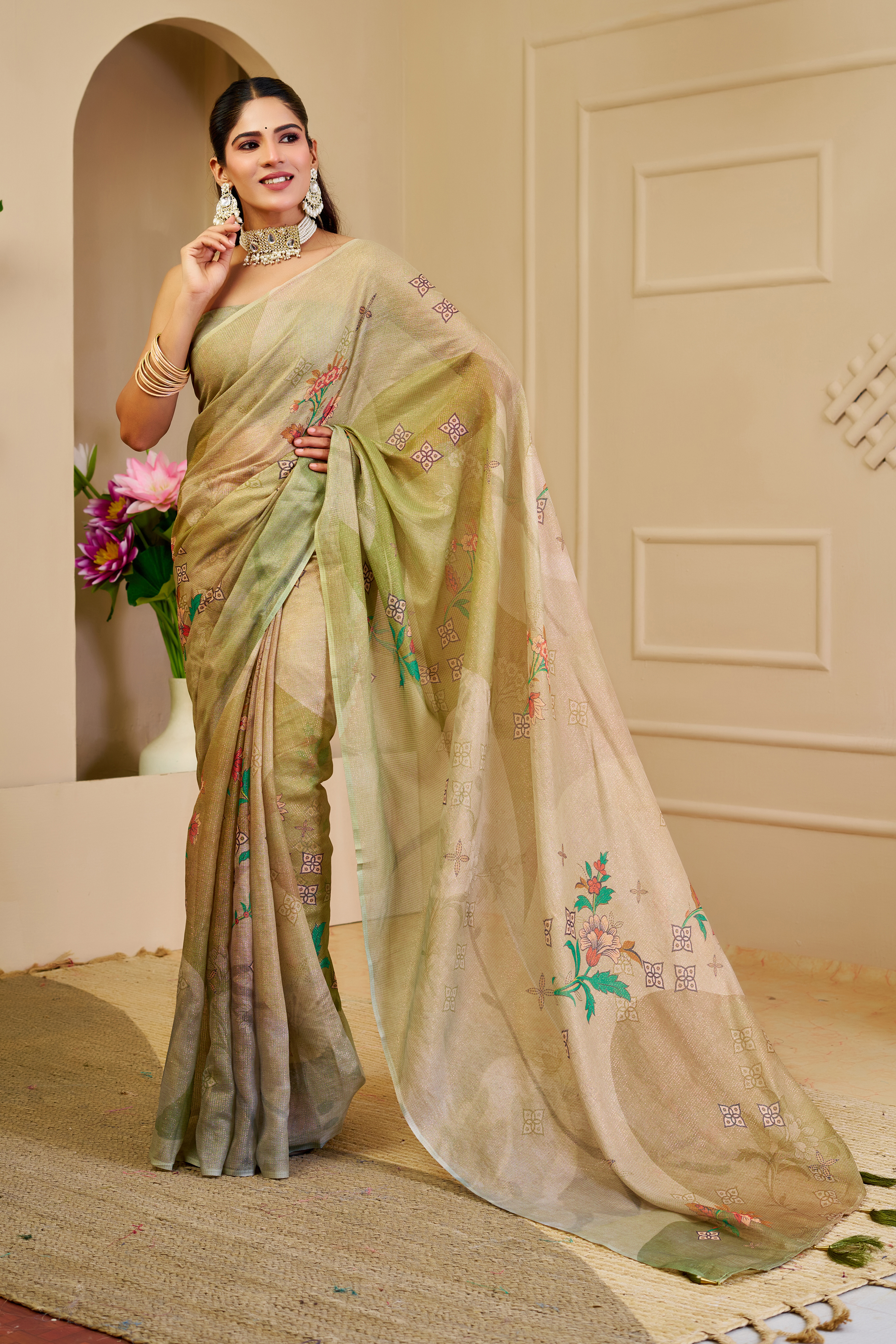
Olive Beige Floral Cotton Saree with Woven Pallu Border is useful for someone who prefers muted colour but still wants a recognisably festive finish. Gold-toned earrings and a coral or rust blouse can warm the olive and beige palette. Charcoal Floral Linen Cotton Saree with Maroon Woven Border gives a deeper, evening-friendly alternative with a maroon blouse and antique-gold accessories.
Navy Blue Mal Cotton Woven Saree With Blouse - VARNAVI provides a coordinated option when selecting a separate blouse feels inconvenient. Navy works particularly well with silver, pearl, gunmetal and controlled touches of fuchsia. The finished look can remain elegant and low-maintenance if the saree is pressed and the pallu is secured before leaving home.
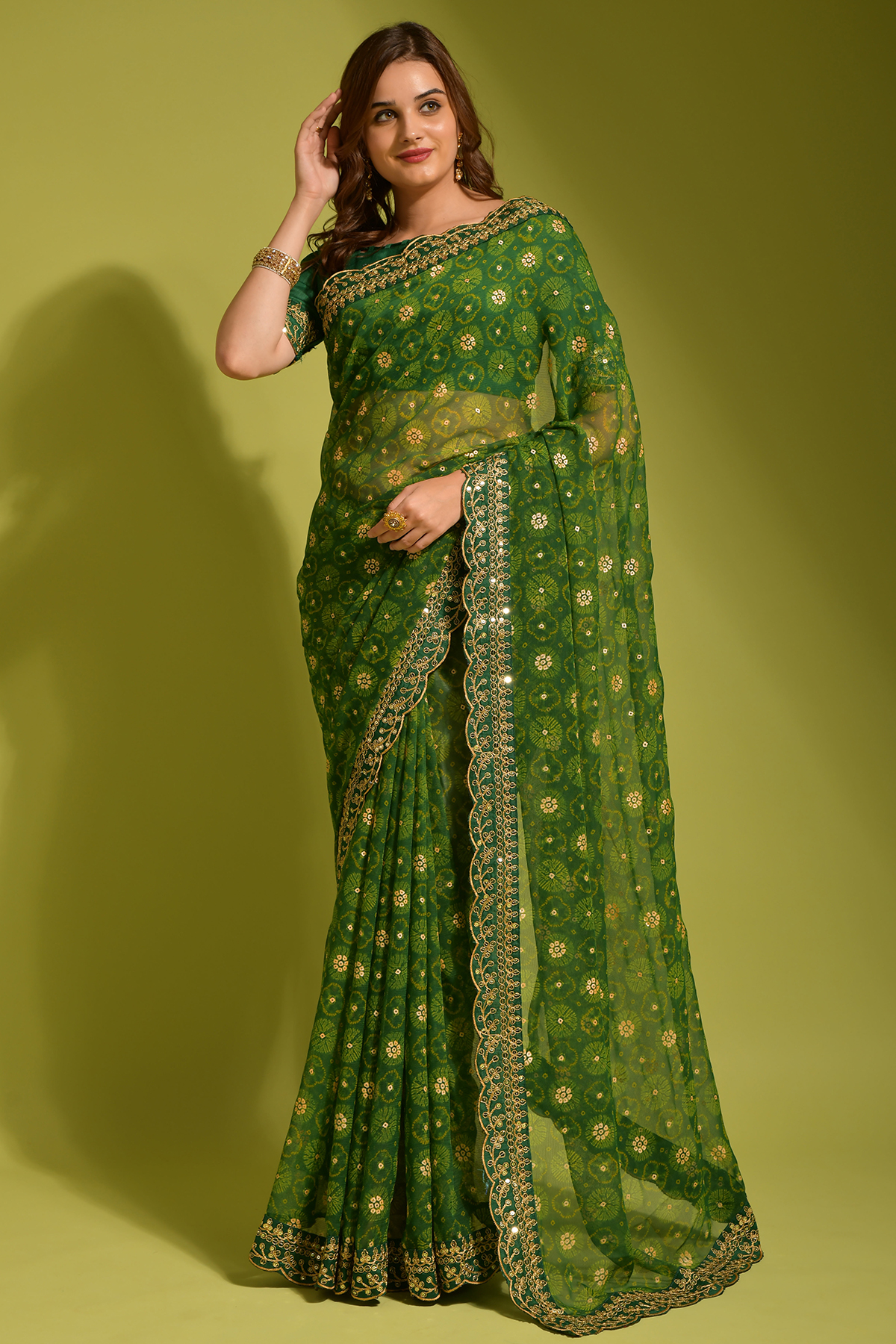
Designer Emerald Georgette Saree with Sequin Lace suits a guest who wants visible evening sparkle without wearing a fully sequinned outfit. Emerald georgette benefits from a secure shoulder pin and a blouse with enough support for standing, walking and sitting during a long programme.
A Sangeet Guest Outfit for Someone Who Does Not Dance: are co-ord sets easier?
Co-ord sets are usually easier than sarees for a seated Sangeet guest because the top and bottom stay aligned without repeated pleat adjustments. A well-cut set still needs a defined waist, a comfortable rise and enough ease through the hips for sitting on a low sofa or dining chair.
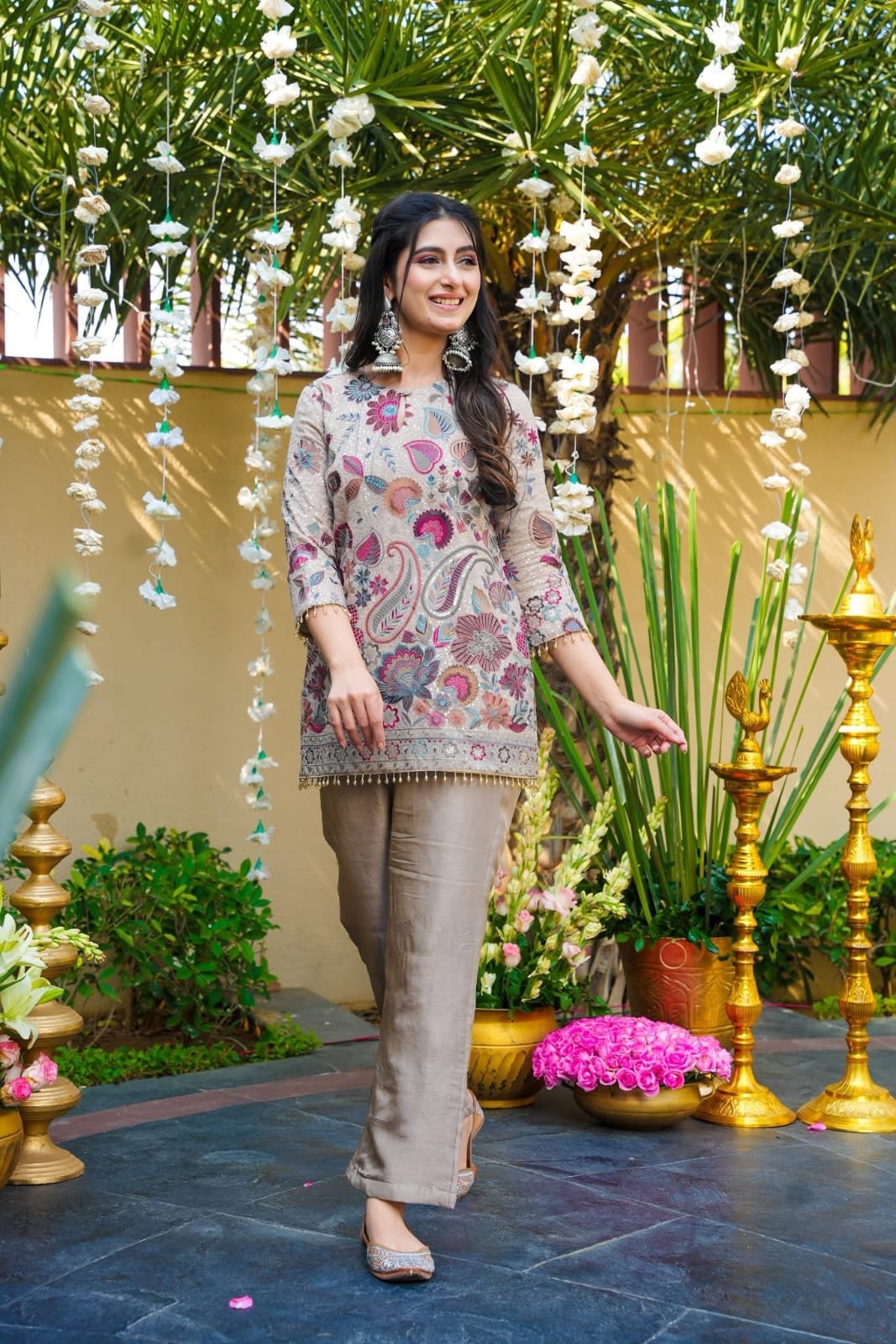
Modern Taupe Vichitra Silk Embroidered Co-Ord Set for Women offers a useful middle ground between a traditional saree and a highly embellished lehenga. Taupe allows embroidery to remain the focus, while Vichitra silk adds enough structure for photographs. Metallic sandals, a compact clutch and shoulder-length earrings can complete the look without adding weight around the neck.
Co-ord sets also make practical sense when the Sangeet includes travel between venues. A top that remains tucked or falls to the waistband reduces the need for safety pins. A wide-leg trouser or relaxed palazzo gives more room for walking than a narrow skirt, but the hem should stay at least 2 to 3 centimetres above the floor when worn with the chosen footwear.
A sharara or palazzo suit can serve the same purpose when the wearer wants more traditional detailing. A short kurta with a fluid bottom looks festive with gota, thread embroidery or a decorated neckline, while a dupatta can be pinned over one shoulder instead of repeatedly repositioned.
A Sangeet Guest Outfit for Someone Who Does Not Dance: how should you style it?
A non-dancer should style the outfit around polished posture, comfortable movement and one memorable accessory rather than around performance-ready drama. A secure drape, low-to-mid heel, compact bag and earrings that frame the face create a complete look without making the wearer feel disguised.
Secure the outfit before styling it
Pin saree pleats at the waistband and secure the pallu at the shoulder with a small safety pin hidden beneath the outer fold. A blouse with a firm shoulder seam prevents the pallu from pulling backward. Fashion tape can help with a slipping neckline, but tape should be tested on the skin and garment before the event.
Wear the shoes while setting the saree length. Saree pleats should skim the floor without dragging, and a palazzo or sharara hem should not catch beneath the heel. A low block heel between 3 and 5 centimetres is generally more stable for venue floors than a narrow stiletto.
Keep jewellery concentrated
Choose one focal area for jewellery: the ears, neck, wrists or hair. Large jhumkas with a bare neckline, a collar necklace with small studs, or stacked bangles with a simple pendant prevents the outfit from feeling visually crowded.
A metallic clutch, embroidered potli or small shoulder bag should hold a phone, keys, tissues, lipstick and a few pins without becoming heavy. A large tote can interrupt the line of a saree and becomes awkward during group photographs. A bag with a wrist loop is especially useful when both hands are needed for greeting guests or holding a dinner plate.
A Sangeet Guest Outfit for Someone Who Does Not Dance: what footwear is practical?
Low block heels, embellished flats and dressy juttis work best for a Sangeet guest who wants stability and comfort. Footwear should have a cushioned sole, a secure strap or a closed upper, and enough room for the feet to swell slightly during a long evening.

Thin stilettos can sink into lawn surfaces and create pressure under the ball of the foot. Completely flat footwear can also become uncomfortable if the saree or palazzo has been hemmed for a heel. Testing the full outfit indoors for at least 20 minutes reveals whether the hem, blouse and footwear work together.
Neutral footwear in champagne, tan, bronze or black can be reused with several Indian outfits. A coloured shoe is worthwhile when the outfit is otherwise restrained, such as a cobalt sandal with a beige saree or a maroon jutti with a charcoal-and-maroon drape.
A Sangeet Guest Outfit for Someone Who Does Not Dance: how can it photograph well?
A quiet Sangeet look feels special in photographs when the face, hands and outfit edge have clear points of interest. Good light, a visible border, a neat pallu and jewellery near the face often matter more than the total amount of embellishment.
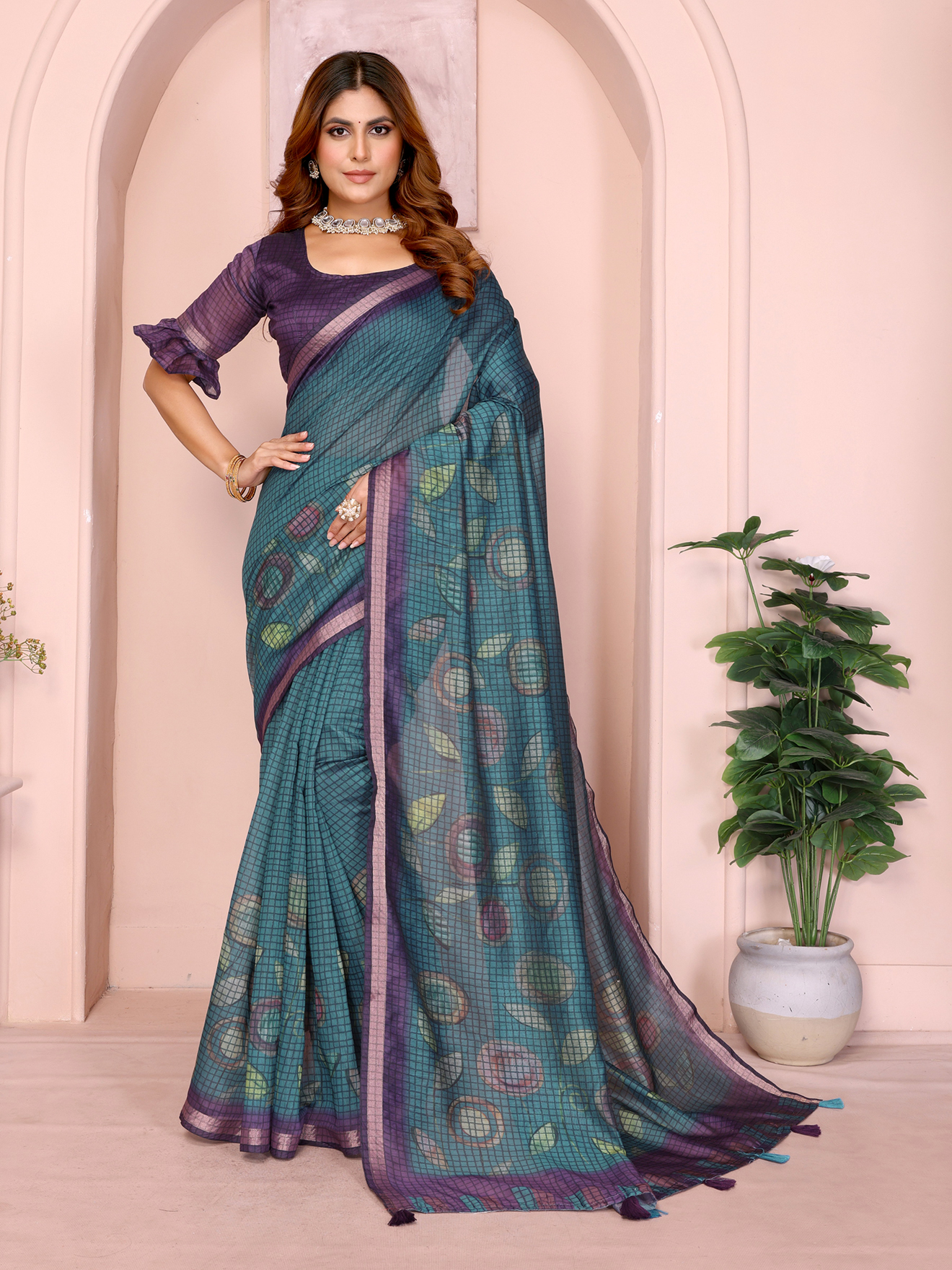
Ask for photographs near soft side lighting rather than directly beneath a harsh ceiling spotlight. Metallic zari and sequin lace can reflect overhead light, while textured cotton, Chanderi cotton and printed linen cotton usually show their detail more evenly in natural or diffused light.
Before leaving home, take a full-length photograph from the front and side. Check whether the pallu covers the main blouse detail, whether the hem falls evenly and whether the bag sits comfortably. A two-minute rehearsal of sitting, standing and walking can reveal problems that a mirror does not show.
Keep the pose natural if dancing is not your role in the evening. Turning the body slightly, placing one hand near the waist and allowing the pallu or dupatta to fall visibly creates shape without a theatrical gesture. Comfortable posture photographs better than a pose that requires holding the stomach, shoulders or arms rigidly.
A Sangeet Guest Outfit for Someone Who Does Not Dance: what should you pack?
Pack two safety pins, a small sewing kit, fashion tape, blotting paper, pain-free blister patches, a compact comb and a lipstick or tinted balm. These items solve the most common problems caused by loose pleats, slipping straps, humid weather and long periods of standing.

Carry a lightweight stole only if the venue is strongly air-conditioned or the blouse is sleeveless. A large shawl can overwhelm a delicate saree, while a thin solid-colour stole can add warmth without competing with the print or border.
Check the care label before pressing the outfit. Linen cotton and cotton sarees usually benefit from gentle ironing on the reverse side, while sequin lace, delicate embroidery and georgette should be protected with a pressing cloth and low heat. Store the saree folded along the existing pleats after the event rather than leaving it crumpled in a bag for several days.
The best Sangeet outfit for a non-dancer is the one that remains attractive after dinner, photographs and several hours of conversation. Choose the silhouette first, match the fabric to the venue, secure every moving layer and let one colour, border or accessory carry the festive emphasis.
Questions About Choosing a Sangeet Guest Outfit for Someone Who Does Not Dance
What is a good Sangeet outfit if I do not want to dance?
A lightweight saree, co-ord set, sharara or palazzo suit is a good choice because each can look festive while allowing comfortable sitting and walking. Choose stable footwear, secure the pallu or dupatta and avoid details that require constant adjustment.
Can I wear a cotton saree to a Sangeet?
Yes, a cotton saree works especially well for a daytime Sangeet, outdoor venue or warm weather. Linen cotton, Chanderi cotton and mal cotton can look festive when paired with a structured blouse, statement earrings, a defined border or a metallic accessory.
Which saree fabric is most comfortable for a long Sangeet?
Linen cotton, mal cotton and lightweight Chanderi cotton are among the most comfortable options for extended wear because they offer airflow and relatively low weight. Lightweight georgette is also comfortable, but the slippery pallu should be secured with concealed pins.
What footwear should I wear to a Sangeet if I will mostly sit?
Low block heels, embellished flats and dressy juttis are practical choices for a guest who will mostly sit. Select footwear with cushioning and a secure strap, and check the full hem length while wearing the shoes before the event.
How can I make a simple saree look festive for a Sangeet?
Use one strong styling element, such as a jewel-toned blouse, statement earrings, a metallic clutch, a woven border or a sequin-lace detail. A neat pallu, pressed pleats and well-chosen footwear often create more polish than adding several competing accessories.
Is a co-ord set appropriate for a Sangeet guest?
A co-ord set is appropriate when the event invitation calls for festive or Indian wear and the set includes occasion-appropriate fabric, embroidery or colour. Vichitra silk, embroidery, metallic accessories and a polished hairstyle can give a co-ord set the same evening presence as a saree.