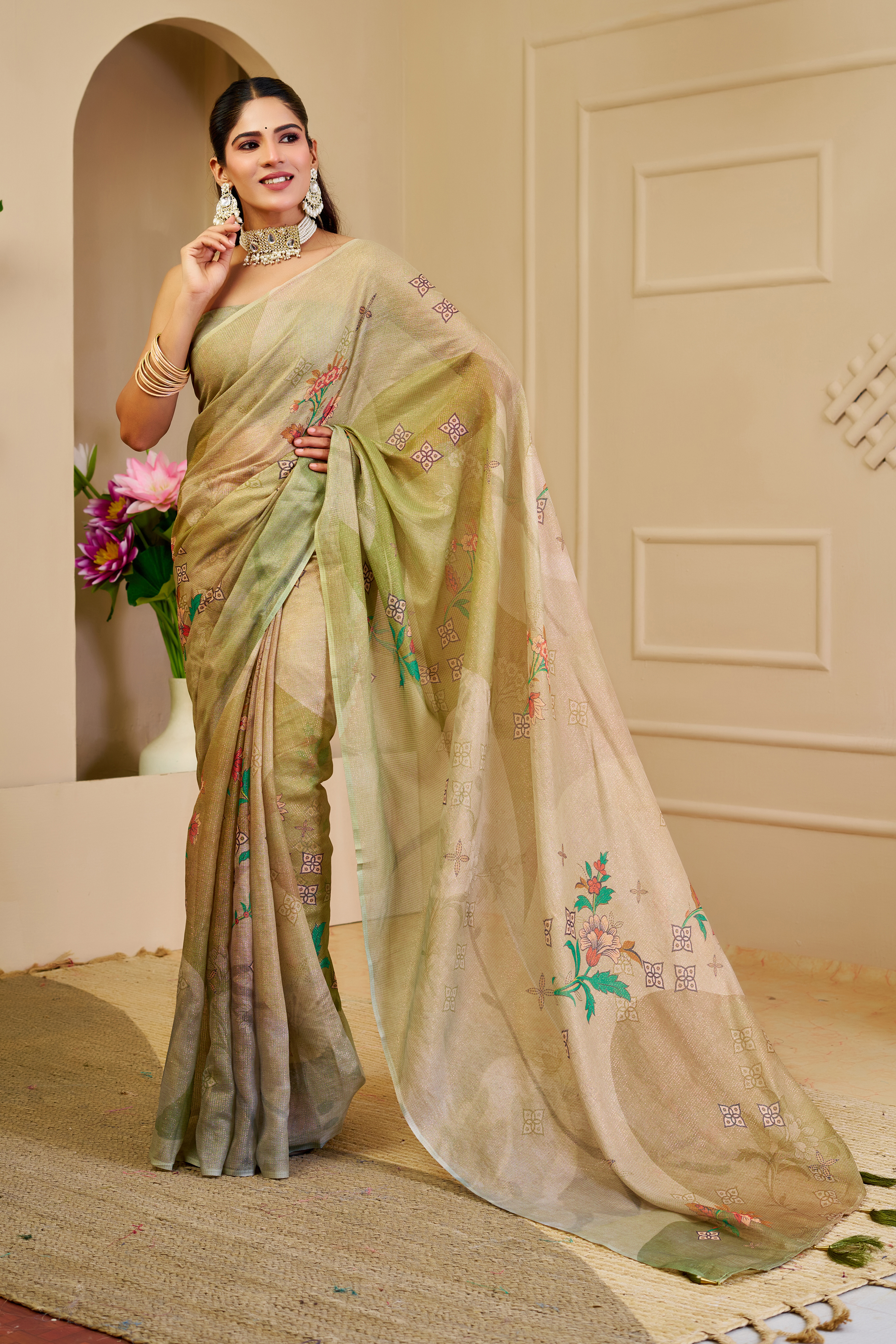
A Rajasthani Mayra ceremony look that leaves jewellery in focus begins with restraint: one clear colour story, one controlled surface treatment and enough open space around the face, neck and wrists for traditional ornaments to be noticed. The Mayra, also called Mamera in several North Indian families, is a maternal-family ritual in which the bride or groom's maternal relatives present gifts, clothing, sweets and other items. The ceremony is joyful, colourful and photograph-heavy, but a heavily embellished outfit can easily compete with the borla, rani haar, aad necklace, hathphool and bangles that give the look its Rajasthani identity.
How does a Rajasthani Mayra ceremony look that leaves jewellery in focus begin?
A Rajasthani Mayra ceremony look that leaves jewellery in focus should begin with a calm base outfit, one deliberate jewellery focal point and enough ease for greeting guests and taking part in rituals. The most reliable formula is a richly coloured saree or suit with limited embroidery, paired with jewellery that has a stronger shape or brighter finish than the garment.
The formula doesn't mean wearing plain clothing. Banarasi silk, tussar silk, satin silk and zari already provide visual interest through weave, sheen and borders. The useful distinction is between textural richness and competing decoration. A woven zari border can support a kundan necklace, while dense mirror work, sequins, contrast embroidery and a large printed motif may divide attention across the body.
Choose one primary jewellery feature before selecting the outfit. A borla or maang tikka makes the face the focal point; a rani haar or aad necklace draws attention to the neckline; a broad set of bangles and hathphool shifts emphasis to the hands. The saree, blouse and dupatta should then create a quiet frame around that feature.
Which colours and fabrics suit a Rajasthani Mayra ceremony look that leaves jewellery in focus?
Deep jewel tones, warm neutrals and controlled contrast suit a Rajasthani Mayra ceremony look that leaves jewellery in focus because they provide a stable background for gold, kundan, pearls and coloured stones. Rani pink, maroon, rust, ivory, muted orange and bottle green are especially useful for a traditional Mayra palette.
Match the metal to the undertone
Gold zari and antique gold jewellery work naturally with maroon, rust, saffron, orange, rani pink and warm beige. Silver-toned kundan, polki with cooler settings and pearl accents sit comfortably with dusty rose, mauve, ivory and soft blue. When a saree contains both gold zari and bright mirror work, choose jewellery with one dominant metal so the outfit doesn't look visually fragmented.
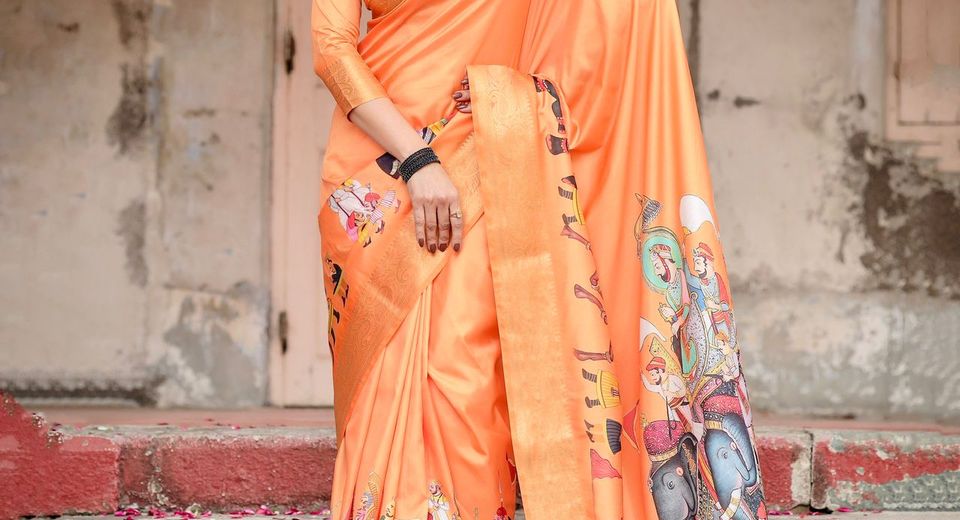
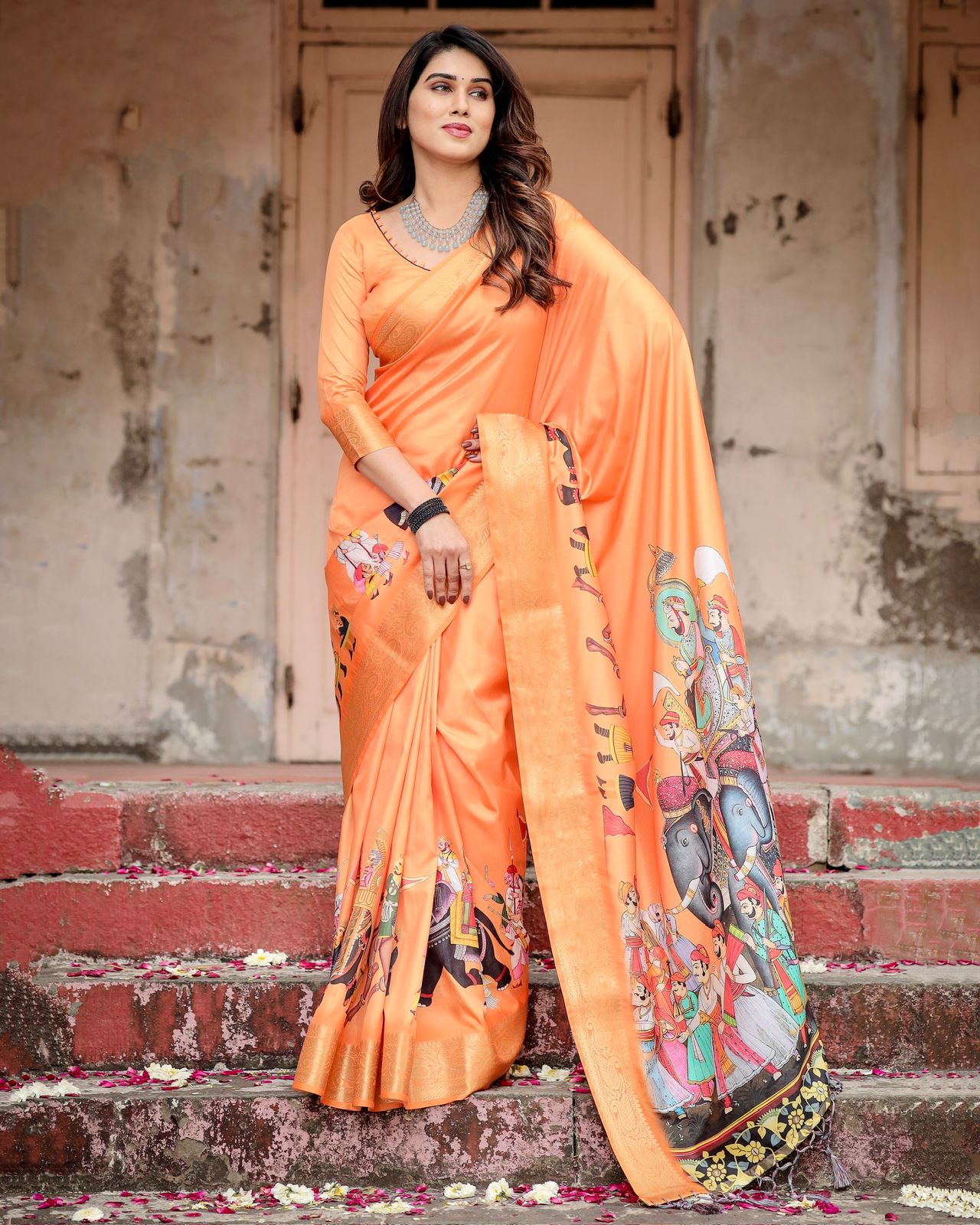
Orange Rajasthani Print Tussar Silk Saree with Zari demonstrates how a printed base can remain festive without requiring a heavily embroidered blouse. Tussar silk has a softly irregular texture, so a gold borla and medium-length necklace can stand out against the fabric. Keep the blouse close to one colour from the print instead of adding a second elaborate pattern.
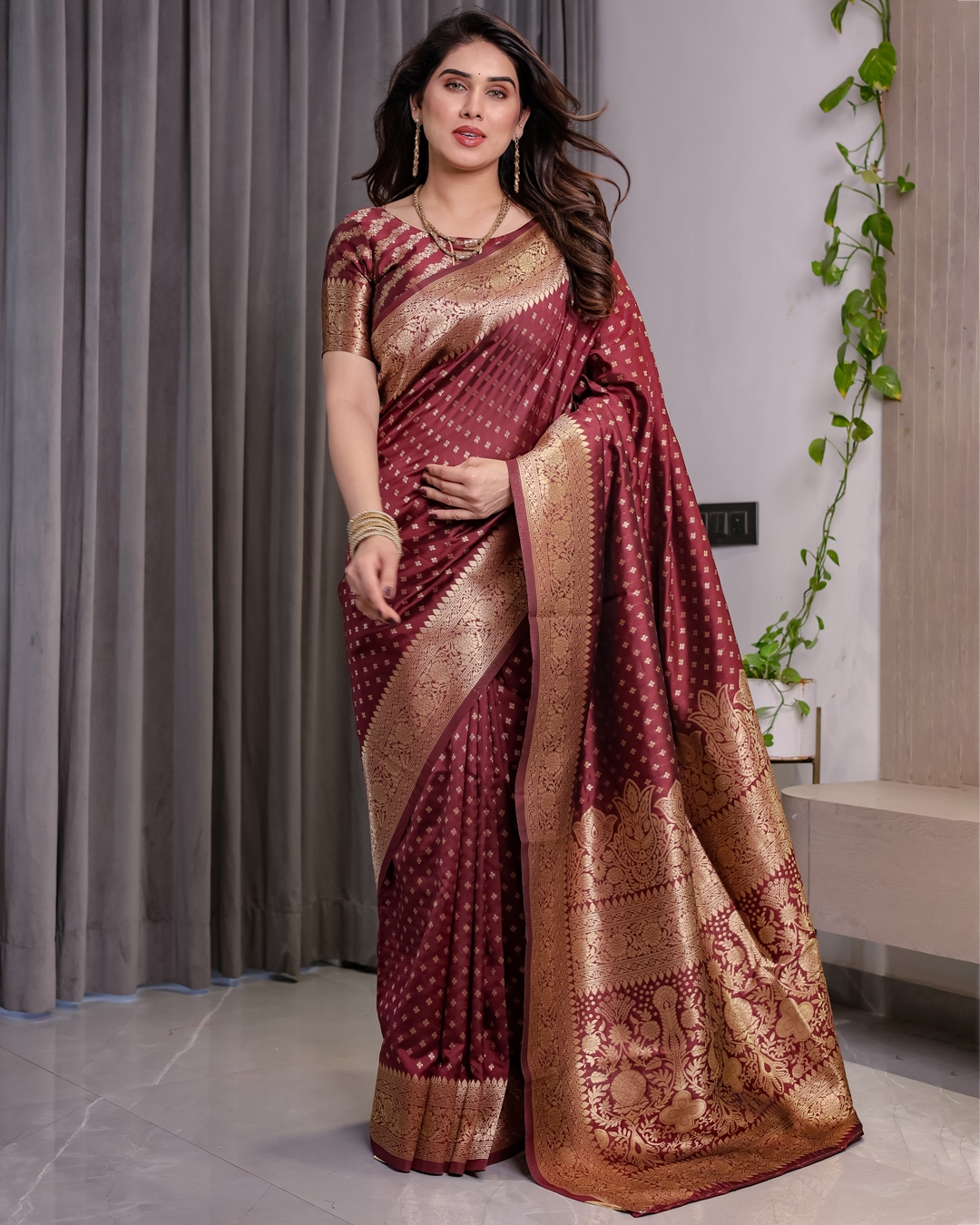
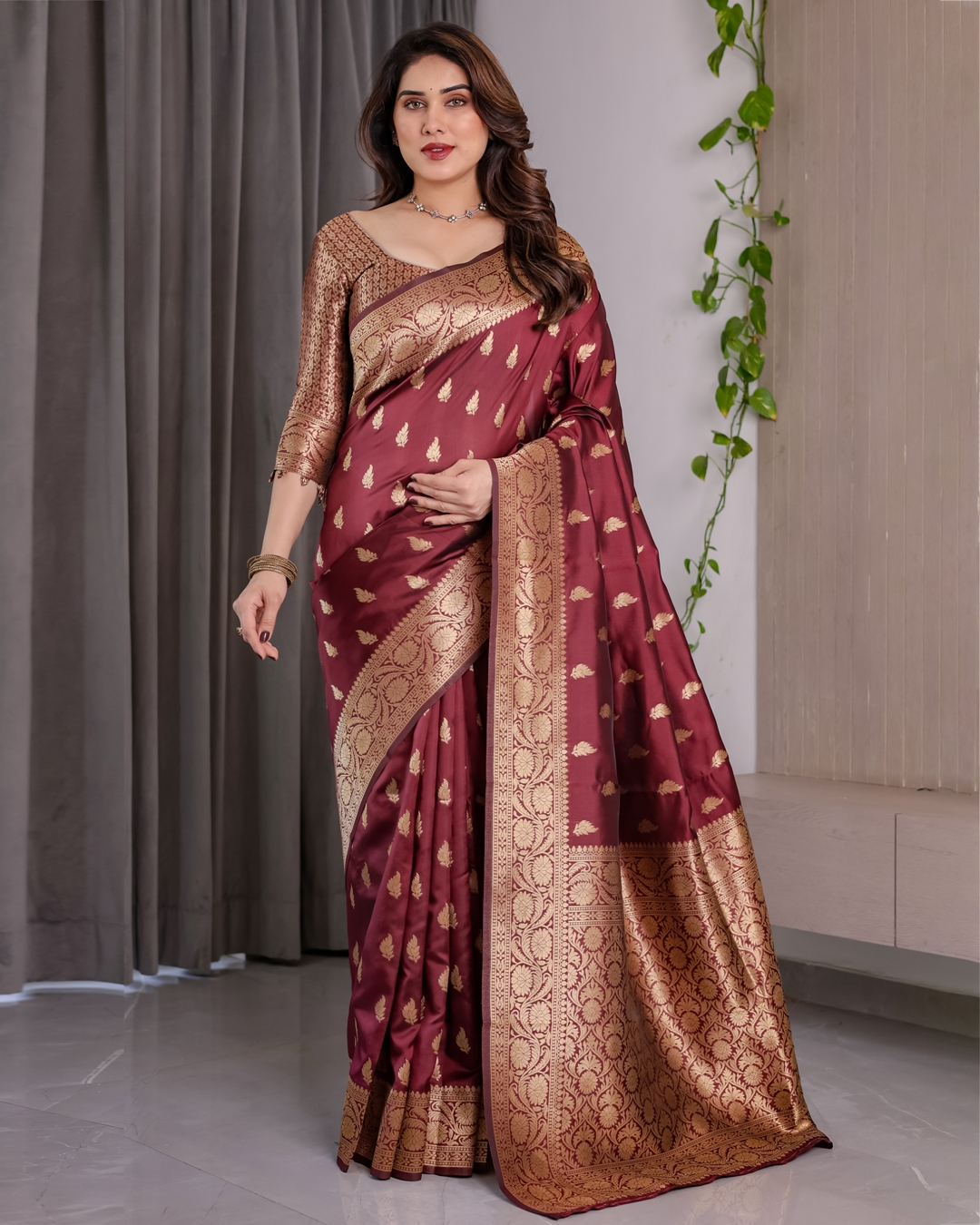
Maroon Banarasi Soft Silk Saree with Golden Zari Border offers a more concentrated background for antique gold jewellery. A maroon saree can support a statement rani haar, but the blouse should ideally repeat maroon or use a restrained antique-gold detail rather than introducing bright contrast.
Control shine for photographs
Silk sheen photographs attractively in indoor light, while excessive sequins can create bright spots that obscure jewellery details. A matte or softly lustrous saree is often more effective than a high-shine outfit when the intended focal point is a polki pendant, enamelled earrings or a layered necklace.
Rani Pink Satin Silk Saree with Golden Zari Paisley Border provides controlled shine through satin and a defined paisley border. Pair the saree with a low-embellishment blouse to leave the face and neck available for a borla, jhumka and necklace combination. Avoid adding a glittering belt or a heavily sequinned clutch to preserve the visual hierarchy.
Which silhouette supports a Rajasthani Mayra ceremony look that leaves jewellery in focus?
A clean saree drape with a defined neckline, or a straight suit with a moderate dupatta border, creates the most usable space for jewellery. The garment should fit securely at the shoulders and waist so accessories remain visible rather than being covered by constant adjustments.
For a saree, a medium-width border is easier to balance than a border that occupies most of the lower half. Pleat the front neatly and place the pallu over the left shoulder in a narrow fall, or use a seedha-pallu style if family customs and comfort allow. A narrow pallu exposes more of the blouse and necklace, while a seedha pallu can frame a large necklace beautifully when pinned away from the collarbone.
Rani Pink Banarasi Soft Silk Saree With Golden Zari Borders works well for a traditional silhouette because the border supplies ceremony-appropriate detail without requiring all-over embellishment. A blouse with a modest round, square or sweetheart neckline can accommodate a necklace, while a high neck is better reserved for earrings, maang tikka and bangles.
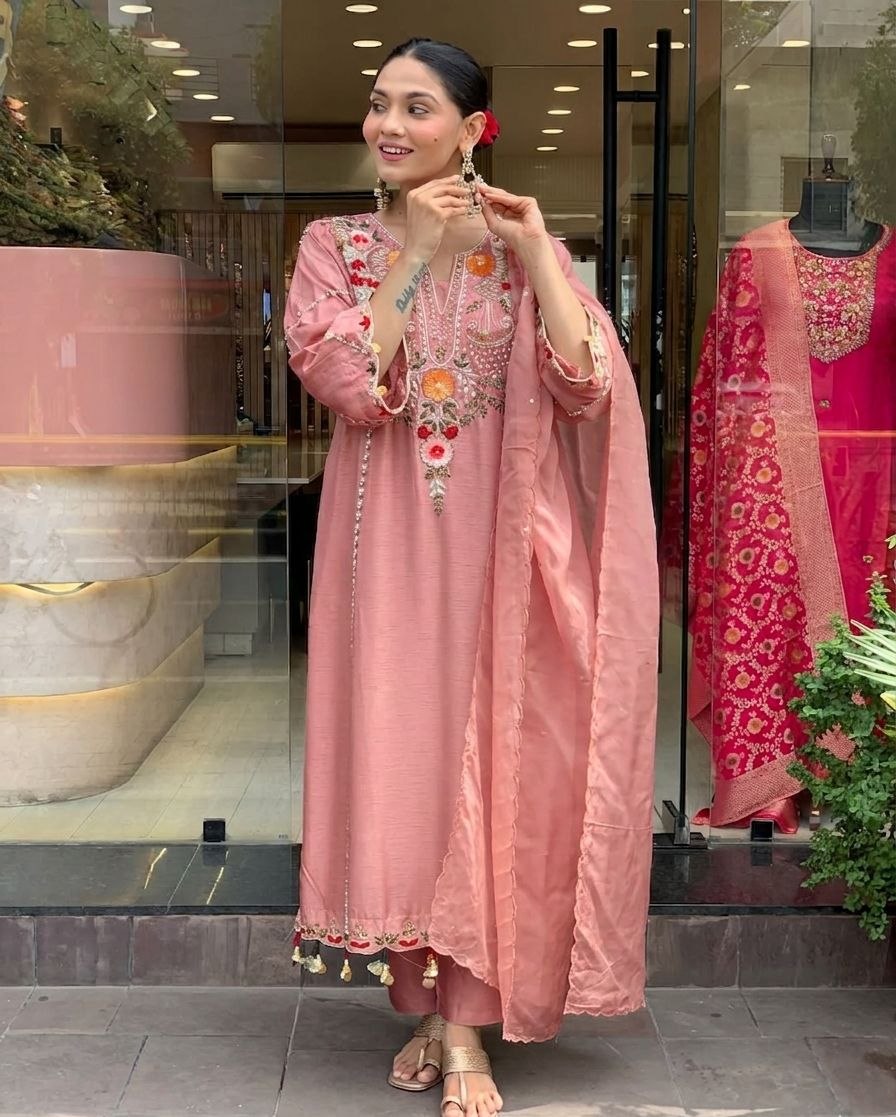
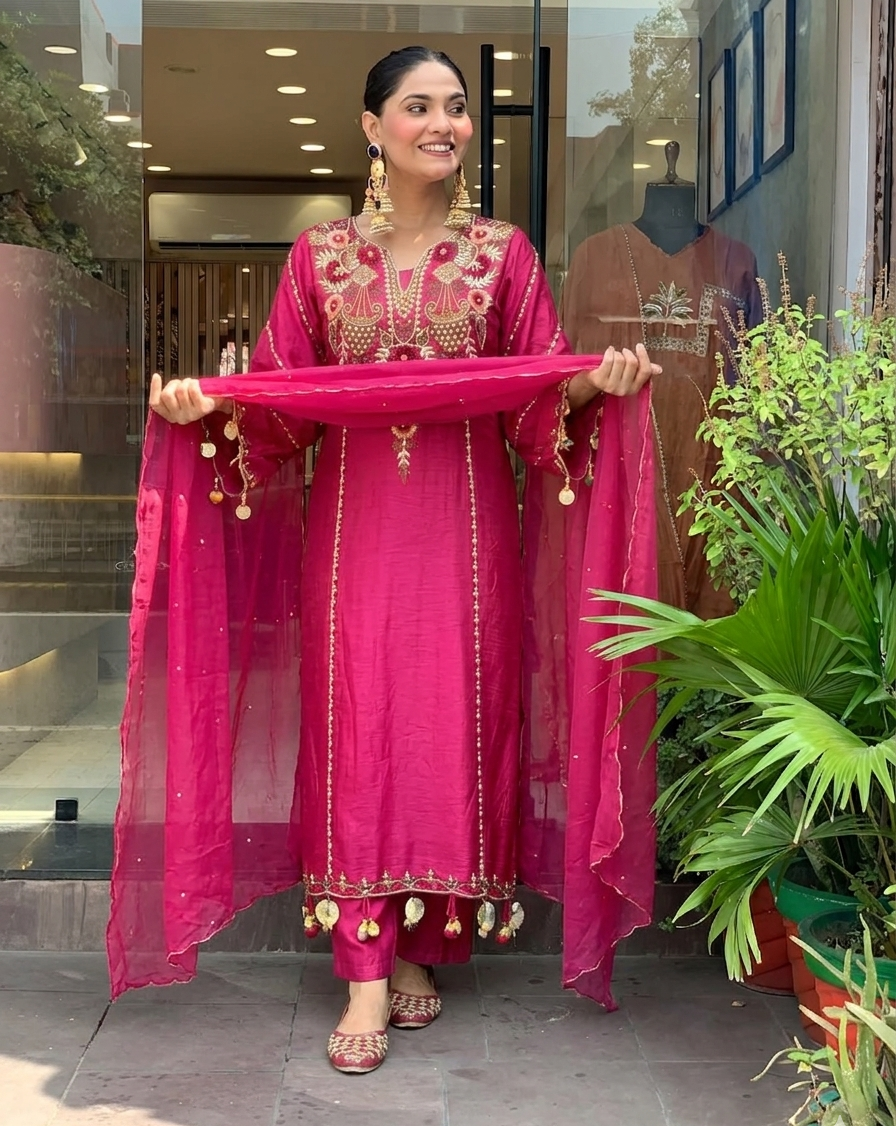
Salwar suits and sharara sets are useful when the Mayra includes extended standing, gift distribution or movement between indoor and outdoor spaces. Pink Mirror Work Zari Sharara Suit Set Online - Varnavi already carries reflective surface detail, so jewellery should be edited rather than layered indiscriminately. Choose either a statement necklace or a prominent maang tikka, then keep the remaining pieces medium-sized.
A sharara silhouette also changes the visual balance of jewellery. Wide trousers create volume below the waist, which means an oversized choker and very large earrings can make the upper body feel crowded. A long necklace, medium jhumkas and stacked bangles usually create a more elongated line.
How should jewellery be layered in a Rajasthani Mayra ceremony look that leaves jewellery in focus?
Jewellery should be layered by scale and function: select one hero piece, two supporting pieces and simple finishing details. A borla with jhumkas and bangles, a rani haar with small earrings and a maang tikka, or a hathphool with a single ring and slim bangles are balanced combinations.
Choose a face-focused arrangement
Use a borla or maang tikka as the hero piece when photographs and family rituals centre on the face. Pair a medium borla with jhumkas that end above the jawline, then keep the necklace short and delicate or omit it. A side-parted bun or braid gives the headpiece a clean background and prevents hair accessories from competing with the forehead ornament.
Choose a neckline-focused arrangement
Use a rani haar, aad necklace or kundan choker as the hero piece when the blouse has a low or open neckline. The necklace should sit flat against the fabric, and the pallu should be pinned far enough back to keep the pendant visible. Medium earrings are preferable because large earrings and a broad necklace can merge into one heavy shape.
Choose a hands-focused arrangement
Use bangles, hathphool and rings as the hero combination when you expect to exchange gifts, hold a thali or appear in close-up photographs of the ritual. Keep the saree border and sleeve embroidery quiet near the wrists. Four to eight bangles per wrist can look festive while remaining practical, but the exact number should allow the hand to bend comfortably.
Traditional jewellery doesn't need to be made from solid gold to look considered. Kundan, polki, meenakari, gold-plated alloys, pearls and imitation stones can all create a ceremonial effect when the proportions are coherent. Check the clasp, earring weight and necklace length before the event; an uncomfortable accessory is likely to be removed, breaking the planned look.
Which blouse and dupatta details work with a Rajasthani Mayra ceremony look that leaves jewellery in focus?
A jewellery-first blouse uses a clear neckline, controlled sleeve decoration and a colour that either matches the saree or repeats one small accent from it. A plain silk blouse isn't mandatory, but the blouse should avoid competing with the exact area where the hero jewellery will sit.
A round neckline suits a short necklace and pendant, while a square neckline gives a broad aad necklace or choker a defined boundary. A sweetheart neckline works with a longer rani haar, provided the necklace doesn't disappear beneath the pallu. High necklines are useful when the intended focal points are a borla, earrings and bangles rather than a necklace.
Keep blouse embellishment within a narrow band around the neckline or sleeve edge. Gold piping, small bootis, a woven border or subtle gota can connect the blouse to the saree without producing a second focal point. Avoid combining a heavy neckline, large shoulder motifs and a statement necklace unless the jewellery is deliberately minimal.
For a suit, place the dupatta so that it frames rather than covers the necklace. One-shoulder draping with a secure pin is practical for greeting guests, while a front drape can be used when the dupatta has a light border and the necklace is short. A long, heavily worked dupatta should be kept away from a large necklace because overlapping borders make the upper body look busy.
Rani Pink Frendy Silk Embroidered Sarara Suit Set with Dupatta can be styled with a shorter necklace if the dupatta is worn over one shoulder and the neckline remains visible. Rani Pink Embroidered Viscose Silk Kurti Set Online is better suited to a lighter jewellery arrangement, such as a borla, medium jhumkas and bangles, because a kurti set creates a more vertical and understated line.
How can a Rajasthani Mayra ceremony look that leaves jewellery in focus stay traditional?
A traditional Rajasthani Mayra ceremony look that leaves jewellery in focus needs one or two recognisable regional elements and proportionate supporting choices. A borla, lehariya accent, gota border, bandhani-inspired colour story or meenakari detail can establish cultural direction without requiring every accessory to be ornate.
Hair should support the jewellery's location. A low bun exposes the nape and supports a borla or mathapatti; a side braid works with jhumkas and a lighter headpiece; a half-up style can suit a smaller maang tikka when a full traditional arrangement feels too formal. Secure the style with pins that match the hair colour and test the headpiece for at least 20 minutes before leaving home.
Makeup should also protect the jewellery hierarchy. Warm brown liner, a defined brow, terracotta or rose lipstick and a restrained highlighter provide definition without adding another reflective surface. If the jewellery contains green or red stones, repeat one stone colour in the bindi or lipstick rather than using several unrelated shades.
Rajasthani dressing can be placed within a wider Indian festive wardrobe without flattening its identity. The Sikkim Traditional Women's Dress Collection and Traditional Northeast Indian Dress Occasion Collection show how regional clothing relies on distinctive silhouettes and textiles, while Traditional Goa Dress for Women demonstrates the impact of lighter, location-specific styling. Traditional Uttarakhand Dress for Women and Traditional Himachal Dress for Women similarly remind us that a ceremonial look can be rooted in regional details without becoming overloaded.
For the Mayra itself, practicality is part of elegance. Use fashion tape at the blouse edge, safety pins inside the pallu fold, a small pouch for spare earring backs and a low, stable heel or embellished flat. Keep the total jewellery weight realistic if the ceremony lasts more than two hours, particularly when a borla, layered necklace and hathphool are worn together.
What is the final checklist for a Rajasthani Mayra ceremony look that leaves jewellery in focus?
The final checklist is simple: select the jewellery focal point first, match the outfit's undertone to its metal, limit competing embellishment and test every fastening before the ceremony. These four decisions usually matter more than adding another accessory.

- Choose the hero piece: Decide whether the borla, necklace, earrings or bangles should receive the most attention.
- Check the neckline: Make sure the blouse or kurti leaves enough space for the necklace or keeps the face open when the jewellery is head-focused.
- Review surface detail: Remove one decorative element if mirror work, zari, sequins and embroidery are all competing in the same area.
- Secure the drape: Use concealed pins so the pallu frames the jewellery and doesn't cover the pendant during movement.
- Test comfort: Wear the complete outfit for 20 to 30 minutes, including footwear, before the event.
- Pack replacements: Carry spare earring backs, two safety pins, fashion tape and a small thread cutter in an emergency pouch.
The strongest result will look festive from a distance and detailed up close. A saturated saree, a defined border, a well-fitted blouse and one memorable piece of Rajasthani jewellery create a more polished Mayra ensemble than several unrelated statement elements worn together.
Common Questions About a Jewellery-Focused Rajasthani Mayra Look
What should I wear to a Rajasthani Mayra ceremony?
A saree, sharara suit or elegant salwar suit in rani pink, maroon, rust, orange, ivory or bottle green is suitable for a Rajasthani Mayra ceremony. Choose a garment with controlled embellishment so a borla, rani haar, kundan necklace or bangles can remain visible.
How do I style a borla with a saree?
Style a borla with a clean hair parting, a low bun or a neat braid and medium-sized earrings. Keep the necklace short or skip it if the borla is large, because a crowded forehead and neckline can weaken the face-focused effect.
Can I wear mirror work when I want jewellery to stand out?
You can wear mirror work when the jewellery is edited to one hero piece and the remaining accessories are moderate in scale. A mirror-work sharara with a large necklace, oversized earrings and a heavy maang tikka may create too many competing focal points.
Which blouse neckline is best for a statement necklace?
A square or moderately open round neckline is usually best for a statement necklace because it gives the necklace a visible boundary. A high neckline works better with a borla, earrings and bangles when the necklace is not intended to lead the look.
How many bangles should I wear for a Mayra ceremony?
Four to eight bangles per wrist can create a festive effect while allowing comfortable hand movement. Reduce the number when you are also wearing a broad hathphool, rigid kada or heavy rings, especially if the ritual involves holding a thali or exchanging gifts.
How can I keep my dupatta from covering my jewellery?
Pin the dupatta at the shoulder and place the fabric slightly behind the necklace rather than directly over it. A light one-shoulder drape usually keeps the neckline visible, while a heavily bordered front drape should be reserved for shorter necklaces.